The Los Alamos Historic Preservation Advisory Board (HPAB) met on Wednesday, September 2, 2026, at 5:30 PM in Room 110 of the Municipal Building, 1000 Central Avenue. The meeting was held in person with a Zoom option. After a quorum was established, the board addressed agenda amendments, approved prior meeting minutes, and discussed its 2026 Work Plan, including potential grant funding and consultant roles. A chair election was postponed due to absent members. Council Liaison Theresa Cull provided updates on county council actions, including a failed plastic bag ban, regional landfill talks, and ballot measures. Consent Calendar - The board voted to amend the agenda by striking the duplicate public comment section (Item V) that had inadvertently appeared due to a change in meeting software management after Granicus/Jeannie retired. - The minutes from the August 5, 2026 meeting were approved by a unanimous voice vote. Public Comments & Testimony - No members of the public offered comments on items not on the agenda. - A brief off‑record discussion occurred regarding the privately‑owned Oppenheimer House, which is not a county asset but is listed on the historic registry. Members noted it had raised private funds for renovation and would not require HPAB review since it is not receiving federal or county funding. Discussion Items - Chair Election (Item II-A): The board postponed the election of a permanent chair due to the absence of Chair Cruz (who was ill) and Member Carrie Gregory (who departed before the item). Members agreed to hold the election at the next meeting when all members could be present. Interim Chair Patrick Cruz presided until that time. - 2026 Work Plan (Item II-B): Planning Manager Danyelle Valdez presented the work plan status. Key discussion points included: - Need for a defined work plan for the remainder of the year and priorities for 2027. - The board’s role as county experts in historic preservation—not as the primary on‑call consultants for individual projects. - Options for grant funding: possible use for hiring an on‑call historic consultant, conducting surveys, or other activities. The board continued reviewing the New Mexico Certified Local Government (CLG) requirements. - Response to Member Gregory’s inquiry about staffing: Valdez explained that for capital improvement projects, contractors hire historic consultants; the county does not have a dedicated historic preservation staff member. An expert list is being compiled. A consultant will present a framework for the historic master plan in October. - Council Liaison Report (Item III-A): Councilor Theresa Cull updated the board on recent council actions: - Proposed plastic bag ban failed on a 3‑3 vote (needed 4 to pass). - Regional landfill feasibility study continues on 31 Mile Road (former pumice mine); talks with Española and Rio Arriba County are positive. - Approved: electric vehicle cooperation agreement; Friday concert contract for seven years with Small Grade Productions; gas rate ordinance; LEDA/MRA project in White Rock (former Pizza Hut/McDonald’s site). - Ballot measures for November: (1) remove political makeup requirements for most boards/commissions (except Personnel, Planning & Zoning, Board of Public Utilities); (2) allow a third term for commission members. Information will be provided to the public. - August 18 work session included quarterly Climate Action Plan update and discussion of plastic bag ban. - Informational Items (Item IV): None. Key Outcomes - Agenda amendment to remove duplicate public comment period was passed unanimously. - Minutes of August 5, 2026 were approved unanimously. - Chair election was postponed until the next meeting (October 7, 2026). - Work Plan discussion continues; board expects a consultant presentation on the historic master plan outline in October. - Next meeting scheduled for October 7, 2026 (note: originally stated as October 4th, but corrected to October 7th). Agenda items will include the historic master plan presentation and the chair election. - Staff will provide the county’s list of approved historic preservation experts and research archive management at county facilities.
The Public Meeting Index
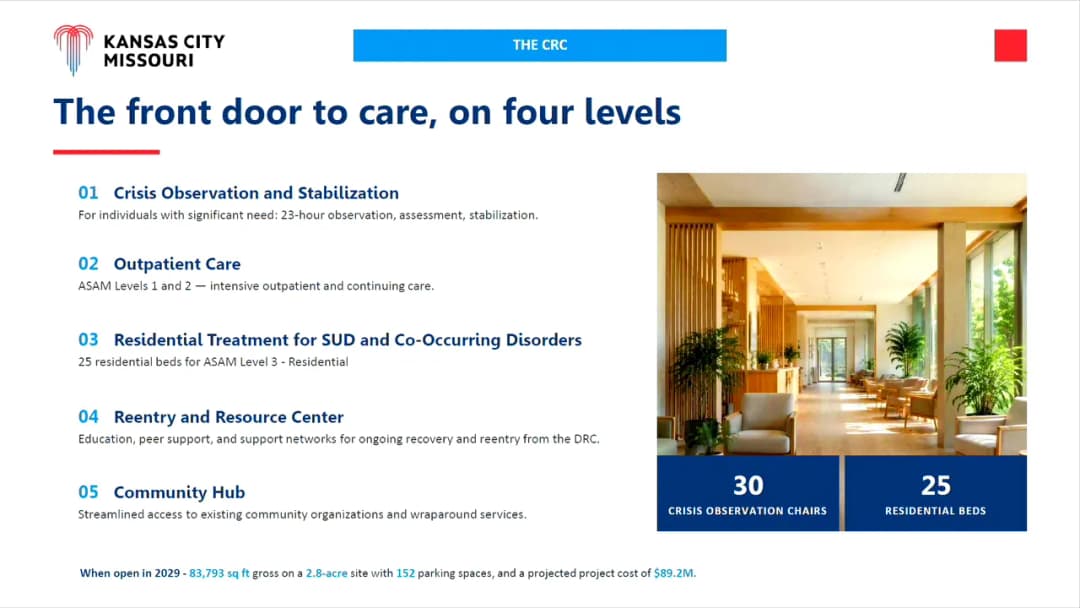
The Public Meeting IndexThis summary is based on the raw transcript; no agenda or minutes were provided. The main substantive item was a Community Safety update from the Department of Community Safety (DOCS), covering the temporary and permanent detention/rehabilitation center (DRC), the Community Resource Center (CRC), and public safety sales tax financing. Consent Calendar - The council approved the minutes of the August 13 business session by voice vote. Discussion Items: Community Safety Update System Overview - Director Diana Knapp introduced the DOCS leadership team and described the proposed system as one of treatment and accountability, incorporating restorative justice and ending reliance on detention as a behavioral health backstop. - Dr. Robin Timmy (Falcon Correctional and Community Services) said the system is for people at risk of or who have committed municipal ordinance violations, such as trespassing, domestic violence assault, and disorderly conduct; sentences are up to 180 days, reduced to 120 after good time. State crimes are handled by the county. The DRC and CRC are meant to work together across a continuum from deflection and diversion to in-custody treatment and re-entry. Detention and Rehabilitation Center (DRC) - Andy Pitts (Trainer) reported that the modular detention center at Front Street received its temporary occupancy permit; administrative offices are moving in and the permanent certificate of occupancy is pending. The impound/tow lot relocation is still being evaluated at several sites. - The permanent DRC is being planned for 272 beds, compared with 136 in the modular facility. Prior studies projected 191-306 beds with a preferred long-term range of 250-306; facility capacity is considered full at 80%. The increase reflects higher-than-assumed female population and classification needs: female beds rise from 36 to 64. - Design goals include restorative justice, no razor-wire perimeter, interior courtyards, natural light, and program spaces for counseling, workforce development, and education. Staffing is about 80% of operational cost, so efficiency is a design priority. Community Resource Center (CRC) - Sean Zotki (Multi-Studio/Perkins Eastman) said the CRC program is complete and includes crisis observation/stabilization, outpatient treatment, residential treatment, re-entry/resource services, and a community hub. The site is not yet selected; it should integrate with the neighborhood, connect to public transit, and be near the existing care network. - He cited precedent savings: San Antonio saw $96 million in taxpayer savings over 10 years; Yavapai County saw about $1.2 million over five years; Miami-Dade is beginning a similar facility. The presenters' position was that care outside detention is substantially less expensive. Finance and Public Safety Sales Tax - The finance presenter said the one-quarter cent public safety sales tax approved in April 2025 generates about $25 million annually. FY27 budgeted expenditures are just under $25 million, including $7.5 million in one-time transfers to the general fund. - Capital cost estimates currently include $201 million for the permanent DRC, $89.2 million for the CRC, $94 million for Central Patrol replacement, and $18.4 million for tow lot relocation. Annual debt service is $34.2 million, about $10 million more than annual tax revenue. Financing terms would be up to 19 years against the 20-year tax. - Estimated future operating needs include $3.8 million for permanent jail operations, $2 million for maintenance reserve, $1.1 million for CRC operations, and $700,000 for radio site controller equipment. - The five-year forecast shows a net surplus of about $75,000 in FY27 and about $9 million in FY28, but the finance presentation explicitly concluded that public safety sales tax revenues are insufficient to support debt service for all proposed capital projects plus additional operational expenditures. Options presented were prioritizing/adjusting scope, using other fund sources, or raising additional revenue. Council Questions and Positions - The mayor asked about the modular facility's opening and staffing. Director Knapp said she could not yet give a date; the first operational step would be taking over releases from KCPD after occupancy, and she was optimistic but cited hiring hurdles. - Councilman Curls raised safety concerns from his facility tour, especially upper bunks without ladders. Staff acknowledged the risk for an older, higher-need population, said the permanent facility will have floor-level bunks, and that temporary fixes are limited. On staffing, Interim HR Director Caleb Swaite described incentive pay, Local 500 wage negotiations, and hiring above the minimum; the goal is full staffing. - Councilman Bunch said the large group made it hard to hear and suggested quieter entry/signage options. - Councilman O'Neill questioned why the council is being asked to consider a roughly $400 million program when only about $100 million of bond capacity is available, and urged staff to scale the vision to a manageable budget. Staff responded that these are policy choices and noted draws on the fund have grown since the tax was renewed. - Councilwoman Patterson commended finance for stating clearly that revenues are insufficient and called for value engineering to reduce project costs and leave reserves for unforeseen needs. - Councilwoman Robinson said the temporary modular facility does not meet restorative-justice or expected standards of care and expressed opposition to using it for its full lifecycle. She asked for a clear timeline for the permanent facility and said an ordinance/direction is needed to prioritize what was promised to voters. She emphasized the CRC is critical infrastructure, particularly for the 3rd District. - Councilman Rogers said the $19.37 per hour starting wage makes hiring difficult and called for more competitive pay. - Councilman Ray argued that council has already given direction through multiple resolutions, that the permanent facility is a top priority, and that staff should come back faster with a staffing plan. The mayor directed staff to return with what they need to hire and open the facility. Key Outcomes - The only formal action was approval of the August 13 minutes. - No binding council decision was made on the DRC, CRC, Central Patrol, or tow lot relocation. - Council members generally expressed the need to prioritize projects, value-engineer costs, and address staffing shortfalls before opening the modular facility. - Staff was directed to provide an updated staffing/hiring plan and to identify what is needed to recruit and retain workers. The finance presentation will likely inform future budget and prioritization decisions.
This meeting encompassed two distinct proceedings: the final meeting of the Tulsa Metropolitan Area Planning Commission (TMAPC) and the inaugural meeting of the newly formed City of Tulsa Planning Commission (CPTC). The session included a farewell to outgoing TMAPC commissioners, election of CPTC officers, approval of a consent calendar, a public hearing on a rezoning request for a 17-acre multifamily development, and organizational matters for the new commission. Consent Calendar - Item 1 (CPTC): A routine item on the consent agenda was approved unanimously by the commission without being moved to a public hearing. The staff recommendation was adopted. Public Comments & Testimony - Item 2 – CO23 Rezoning (Southeast 71st & Union): More than 20 residents and stakeholders spoke, predominantly in opposition. Key concerns included: - Insufficient notice of the developer’s May 7 community meeting; many nearby residents reported not receiving letters. - Traffic congestion on two-lane Union Avenue and surrounding arterials, exacerbated by ongoing highway construction at 61st and 81st Streets. - High concentration of low-income housing in Council District 2; speakers argued this development would add to an existing burden. - Developer characteristics: out-of-state (Dominium from Dallas), past legal allegations (class-action regarding parking charges), and concerns about long-term property management. - Safety: proximity to a high-pressure Oneok gas line, impact on fire station response, and potential conflict with Jones Riverside Airport flight patterns. - Environmental impact: removal of mature native trees, stormwater runoff, and lack of sidewalks and bike lanes. - A few speakers supported the project, including a representative from Housing Forward, who cited the need for affordable workforce housing and noted that 60% of Tulsa residents qualify for the income levels proposed. - Councilor Archie (District 2) spoke, expressing concern about the lack of comprehensive community engagement and the concentration of subsidized housing. He requested a continuance to allow a community meeting on September 14. Discussion Items - Item 2 – CO23 Rezoning: Staff presented the proposal for up to 275 multifamily units on nearly 17 acres, with a development plan including 135-foot building setbacks, 8-foot concrete wall, 30-foot landscape buffer, and lighting restrictions. The applicant emphasized compliance with the comprehensive plan and West Highlands/Tulsa Hills Small Area Plan, which designate the area for higher-density development. The developer clarified the project is Low-Income Housing Tax Credit (LIHTC) affordable housing, not Section 8, and that tenants are working families. - Item 3 – Lucent Valley Preliminary Plat: A preliminary plat for a mixed-use development at 41st & 129th East Avenue, including single-family and commercial lots, with requested modifications for extended block lengths. Staff recommended approval. - Organizational Items: - Election of officers: Commissioner Walker as Chair, Commissioner Krug as Vice Chair, Commissioner Hood as Second Vice Chair. - Approval of meeting dates for remainder of 2026 and all of 2027. - Adoption of policies and procedures for the new CPTC. - Introduction of Comprehensive Plan amendments (to be voted on in October). Key Outcomes - Item 2 – CO23 Rezoning: Approved with a vote of 5-1-1 (Commissioners Bullmash, Garcia, Hood, Krug, Shivel voted yes; Commissioner Walker voted no; Commissioner Turner Addison abstained; Commissioner Humphrey was absent). The motion was to approve pursuant to staff recommendation. The decision is a recommendation to the City Council, which holds final authority. - Item 3 – Lucent Valley Preliminary Plat: Approved unanimously, including the requested modifications to subdivision regulations. - Item 5 – Meeting Dates: Approved unanimously. - Item 6 – Policies and Procedures: Approved unanimously. - Item 7 – Comprehensive Plan Amendments: Introduced for discussion; no vote taken; scheduled for formal action at the October 7 meeting. - Adjournment: The meeting was adjourned after the vote on item 8.
The Tulsa Metropolitan Area Planning Commission (TMAPC) held its final meeting on September 3, 2026, marking the dissolution of the joint city-county planning body. The meeting was brief, lasting only a few minutes, and consisted solely of approving the previous meeting's minutes and closing remarks by commissioners. No public comments or substantive discussion items were presented. Consent Calendar - The commission unanimously approved the minutes from Meeting No. 2967 (August 19, 2026) via a motion by Commissioner Hood, seconded by Commissioner Shivill. The vote was unanimous with no opposition. Key Outcomes - The commission approved the minutes as the only official action. - Chairman Walker and other commissioners expressed gratitude to departing members Commissioners Craddock, Whitlock, Q, Fugate, and staff (notably Susan Miller) for their service. - The commission adjourned with a motion by Commissioner Craddock, seconded by Commissioner Whitlock, concluding the final TMAPC meeting. Future planning functions will be handled by separate city and county commissions. Note: The meeting date of September 3, 2026, is used per the summary instructions, though the agenda listed September 2, 2026.
The Planning Commission met on Thursday, September 3, 2026, at 6:00 PM in Council Chambers at 2000 Main Street, Huntington Beach. The agenda included three identical public hearing items for a conditional use permit for a floating marina office and restroom, and a consent calendar to approve minutes from two prior meetings. The transcript provided with the source materials does not contain the meeting proceedings but instead a children's storytime recording from the Huntington Beach Public Library; therefore, no actual discussion, public comments, or decisions from the meeting are documented. Consent Calendar - Item 26-791: Approve Planning Commission Regular Meeting Minutes dated April 28, 2026. - Item 26-792: Approve Planning Commission Regular Meeting Minutes dated May 12, 2026. Public Hearing Items - Item 26-787, 26-788, and 26-790: Conditional Use Permit No. 25-033 for a floating marina office (580 sq. ft.) and restroom (420 sq. ft.) at an overall height of 12 ft. 6 in. at 16340 Pacific Coast Highway (Peter’s Landing Marina in Huntington Harbour). The recommended action was to find the project categorically exempt from CEQA (Class 3) and approve the permit with suggested findings and conditions. The agenda lists three separate agenda numbers for the same request, which may be a duplication error. Key Outcomes - No votes or decisions are recorded because the transcript does not contain the meeting's proceedings. The agenda indicates that the recommended action was approval, but the actual outcome is unknown.
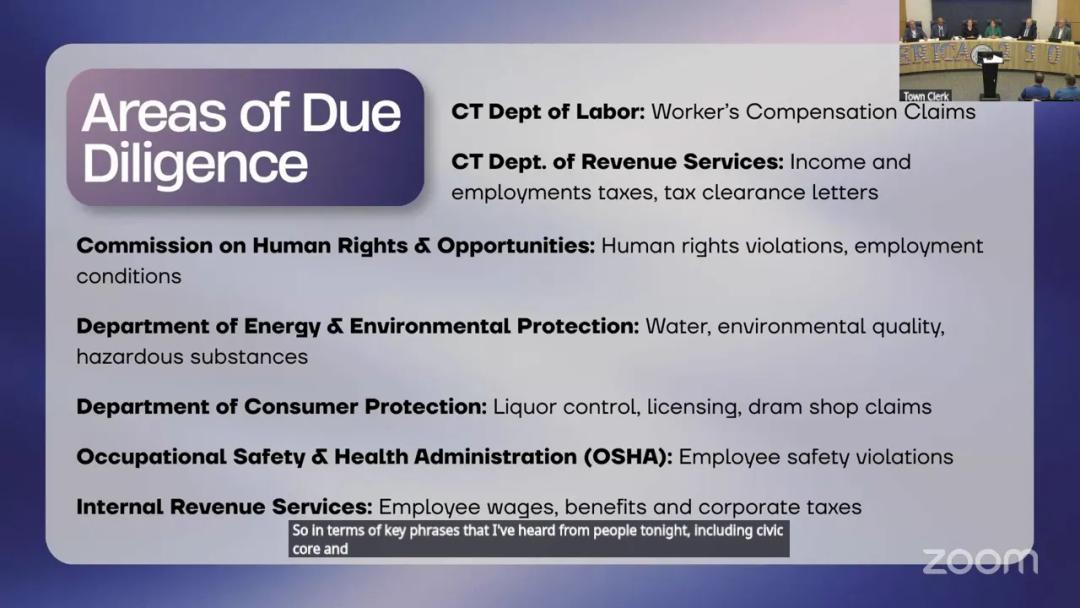
The Bristol City Council held a special meeting on Thursday, September 3, 2026 at 6:30 PM in the City Hall Council Chambers, with Council Member Kelley attending via Zoom. The meeting was convened to present information regarding the potential acquisition of Chippanee Golf Course and to receive public comment. Mayor Zoppo-Sassu and Parks and Recreation Superintendent Josh Medeiros provided a detailed presentation on the city's budget, due diligence, estimated tax impact, and management options. Following the presentation, the Council heard from over 20 members of the public and received written comments. No formal vote was taken; the Council plans to continue discussions in executive session at the regular September meeting and may schedule a special meeting for a vote. Discussion Items - Financial & Tax Impact: The city's total adopted budget for the fiscal year is $256,970,635. Debt service and capital transfers represent 8% of the budget. The proposed purchase price of $4,750,000 (down from the original listing of $6.5 million) for all 141 acres, clubhouse, fixtures, furniture, and equipment would be financed through 20-year municipal bonds. For a home valued at $300,000, the annual tax increase would be approximately $20; for a $500,000 home, about $34. If the full $5.5 million originally estimated were bonded, the increases would be $24 and $39 respectively. Overall, the tax impact is estimated to range from $20 to $60 annually per household depending on property value. - Due Diligence: The city conducted extensive due diligence over 8-9 months, including environmental reviews (with a grant from CT Brownfields Land Bank), appraisals (highest and best use as housing development, golf course, and development rights), and legal reviews covering leases, member accounts, trademarks, and vendor obligations. The current owner has agreed to assume environmental liabilities uncovered during the review. The city also received an appraisal comparing recent golf course sales (e.g., Stratford $4.3M, Wallingford $3.2M). - Management and Operations: Superintendent Medeiros presented findings from research into 8 municipal golf courses in Connecticut, noting that 36 municipally-run courses exist statewide, with 10 in Hartford County. Management models include fully municipal staffing, third-party management, or hybrid. The course would be operated in a special revenue fund (enterprise fund) to keep operations separate from the general tax fund. Future steps would include hiring a consultant for off-season review, transitioning from private to public access with possible memberships, and going out to bid for a management company for the first 1-2 years. - Community and Strategic Benefits: The acquisition aligns with the city's Plan of Conservation and Development goals for preserving open space, protecting natural resources, and enhancing community character. Chippanee is adjacent to a watershed and is in a neighborhood currently considered underserved per the 10-minute walk to a park standard. The property has been listed on the historic inventory. The Mayor emphasized that the purchase would preserve open space, and compared the investment to past municipal purchases that have revitalized downtown, such as the purchase of 17 acres across from city hall for $5 million in 2005. - Development Alternative: The Mayor presented a rendering showing the property could support 140 housing units under current zoning. A developer had proposed 360 single-family homes with an average price of $650,000, which could bring over 270 school-age children, imposing infrastructure and educational costs on the city. The city assessed the pros and cons of development versus open space. Public Comments & Testimony Opposition: - Robert Boudreau (41 Broadview St.) expressed concerns about the operating model, drainage issues, and long-term tax impact. - Michael LaMothe (186 Dino Rd.) questioned the golf course's financial performance, requested tax returns, and suggested signed and notarized conflict-of-interest statements from all involved. - Mathew Biadun (53 Buff Rd.) submitted a letter worrying about burdening the city with unaffordable maintenance. Support: - Marvin "Mickey" Goldwasser (171 Diane Ln.), former Economic and Community Development Commissioner, supported the purchase, stating a public golf course is a draw for the community. - James Collins (145 Fox Den Rd.) supported having a golf course as a community asset and expressed trust in the city's due diligence. - William Fontaine (51 Ashover Ln.), a 20-year member, valued the course as a "treasure" and urged preservation, while questioning the price and exit strategy. - Deborah Schur (6 Pilgrim Rd.) supported keeping the course as a "gem in our crown." - Nicole Elliott (Marsh Rd.) spoke in favor, citing growth in golf participation (29.1 million Americans playing on courses in 2025, women/girls up 46% since 2019) and noting the past owner had invested in drainage improvements. - Mary Ann Sirois (362 Shrub Rd.) supported preserving open space and stated that with proper management the course could be profitable. - Robert Marsh (68 Medford St.) supported acquiring the course for open space and recreation, comparing to Farmington's course. - Anthony Lorenzetti (150 Pinnacle Rd.), a 33-year resident, urged preservation to prevent housing development and highlighted the community value of the course for weddings, events, and family outings. - Stephen Repass (address unknown) supported keeping the course open for youth golf development, highlighting his 9-year-old son's achievements. - Brian Kelly (251 Pennwood Pl.), a 22-year member, described the course as a "family" and believed new management could improve financial performance. - Daniel Delcegno (906 Hill St.), a neighbor, supported preserving green space and requested walking trails and walkable infrastructure. - Denise Davis (371 Emmett St.) had accessibility concerns but expressed hope to play there in the future. - Thomas Selnau (9 Mano Ln.) strongly supported acquisition, noting the course has been in business for over 100 years and that the city should seize the opportunity. Additionally, the Mayor's Office received emails/phone calls in favor from Paul Wibley, Frank Stawski, Andrea Adams, Mark Moriarty, Robert Douglas, Hal Kilby, and Keith Odume. Several other attendees spoke in favor during the unscheduled public portion, emphasizing open space and community benefits. Questions/Neutral: - Jane Murdock (400 Shrub Rd.) asked whether an operating budget would be available before a vote and whether there would be another public forum; she did not state a position. - Additional comments from the floor included questions about the timeline for self-sufficiency and the exit strategy if the course fails. Key Outcomes - No formal vote was taken on the acquisition at this meeting. - The Mayor stated that an executive session on the topic will be added to the regular City Council meeting on the following Tuesday to discuss next steps. - A special meeting might be scheduled to allow for further public comment and possibly a vote, potentially combined with filling a Board of Education vacancy. - The presentation and financial projections will be made available online and upon request. - The meeting was adjourned at 7:59 PM on a unanimous motion.
The Crestwood Planning and Zoning Commission met on September 3, 2026 (recorded as 18:15:00 UTC; the agenda and transcript list the meeting date as Wednesday, September 2, 2026, 6:00 p.m.) in the Aldermanic Chambers at Crestwood Government Center, 1 Detjen Drive, Crestwood, MO. The Commission held a public hearing on the proposed Ridgewood Neighborhood Conservation Overlay District text amendment to Chapter 26 and reviewed progress on the 2017 Comprehensive Plan. Call to Order and Minutes - The meeting was called to order, and the August 5, 2026 Planning and Zoning Commission minutes were on the agenda for approval. No public comment was received on non-hearing items. Public Comments & Testimony - A public commenter stated that the overlay is “more than an overlay that encourages preservation” because it would create mandatory architectural requirements for Ridgewood homeowners that are not imposed elsewhere in Crestwood. - The commenter also said young families sometimes buy smaller Ridgewood homes, outgrow them, and sell; the speaker asked how the overlay would affect aging in place, referencing Crestwood’s 2026 strategic plan, and asked what would happen if the best architectural design satisfies the overlay’s intent but conflicts with a specific prescribed requirement. Hearing: Ridgewood Neighborhood Conservation Overlay District - Staff planner Danny presented the draft ordinance. It would add a conservation overlay district establishing design guidelines for future new construction in Ridgewood. - The text applies to lots in Ridgewood subdivisions 1, 2, 3, and 4 and any subsequent resubdivisions. - If staff denied a building proposal under the guidelines, the property owner could appeal to the Planning Commission in a public hearing; neighbors within 300 feet would be notified, and the Commission’s decision would remain subject to the Board of Aldermen’s power of review. - As drafted, the appeal would not include an additional fee, but would add roughly a 30-day public hearing process. - During discussion, a commissioner voiced concern about placing a burden on property owners even when a proposal “would meet city code in every single square inch of the city except for the overlay.” - Another commissioner noted that all 258 Ridgewood homes could not be expected to agree on the proposal. - A motion was made to recommend approval of the ordinance to the Board of Aldermen, with the caveat that the Board action be delayed at least one month to allow an additional survey of property owners. The survey would be sent to owners only, not tenants, to avoid duplicate votes, and the results would be included with the Board public hearing notice. 2017 Comprehensive Plan Progress Review - The Commission discussed the 10-year review of the city’s first Comprehensive Plan. Staff said parts of the update could be done in-house with volunteer support, such as updating data, and cited examples of action-plan frameworks in other municipalities’ plans. - Staff indicated that after the Board of Aldermen approves a budget allocation, an RFP would be drafted and brought back to the Planning Commission for review of scope. Aldermanic Report - An alderperson present said they were in favor of the Ridgewood overlay and wanted the proposal to continue to the Board of Aldermen. Key Outcomes - The Commission moved to recommend approval of the Ridgewood Neighborhood Conservation Overlay District text amendment to the Board of Aldermen, with a one-month/survey caveat. - No formal action was taken on the Comprehensive Plan; the item was informational and tied to future Board budget approval.
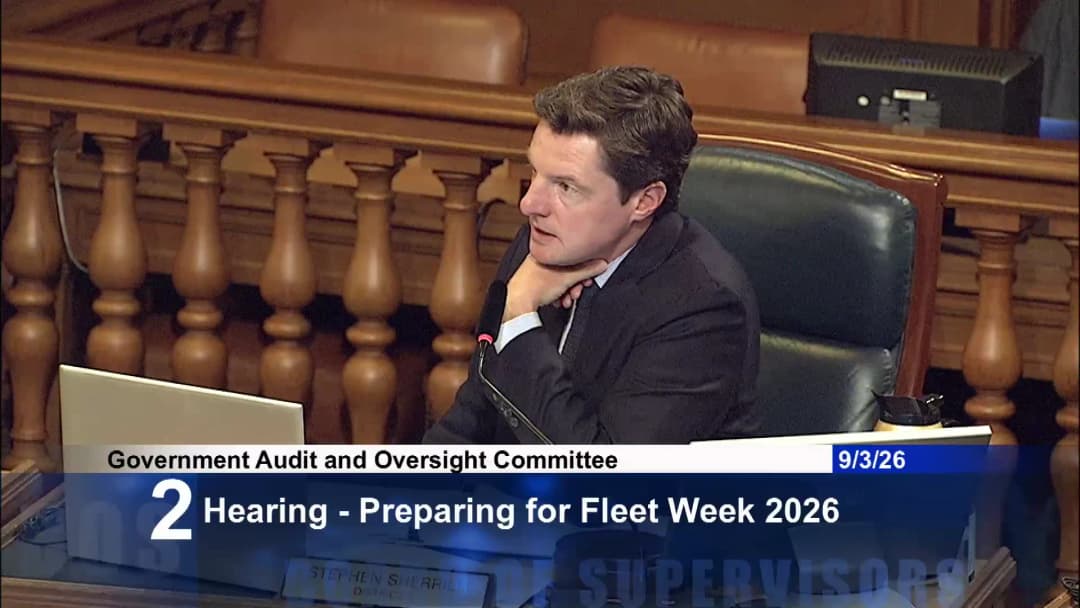
The Government Audit and Oversight Committee of the San Francisco Board of Supervisors met on September 3, 2026, to consider an ordinance amending the Airport Surveillance Technology Policy, hold a hearing on preparations for Fleet Week 2026, and approve multiple settlement agreements. The meeting was chaired by Supervisor Stephen Sheryl, with Vice Chair Jackie Fielder and Supervisor Alan Wong present. Consent Calendar - Settlement of Lawsuits and Claims (Items 3-19): The committee unanimously approved 17 settlements totaling approximately $19.5 million, covering various lawsuits and unlitigated claims against the city. The settlements were forwarded to the full Board of Supervisors with a positive recommendation. Public Comments & Testimony - Lewis Lewin, Executive Director, San Francisco Fleet Week: Expressed strong support for Fleet Week, emphasizing its 45-year track record of cooperation with city agencies and its community outreach, including over 40 band concerts and disaster response training programs. - David Flynn, Public Speaker: Spoke in favor of Fleet Week, highlighting its educational value in allowing civilians to tour naval vessels and meet service members. Discussion Items - Item 1: Ordinance 260658 – Amended Airport Surveillance Technology Policy: Deanna Bolich from San Francisco International Airport presented the ordinance, which authorizes the use of security cameras at off-airport remote check-in and baggage handling facilities, such as a pilot program at the Hilton San Francisco Union Square. The cameras record video only, with no live monitoring, and footage is retained for one year unless needed for investigations. Access is limited to trained SFO staff and law enforcement. The committee voted unanimously to forward the ordinance to the full board with a positive recommendation. - Item 2: Hearing 260801 – Preparing for Fleet Week 2026: The hearing focused on the city's preparedness for Fleet Week, scheduled for October 4–12, 2026, particularly in light of lessons learned from recent large events such as July 4th celebrations and the Outside Lands festival. Key points from presentations: - DEM Director Mary Ellen Carroll reported that Fleet Week planning includes the use of the Emergency Operations Center (EOC) as needed. She noted past peak crowds of 2,000 in 2025 and 7,500 in 2024, and that the event is expected to be smaller due to fewer ships and relocation of the humanitarian village. She emphasized lessons learned from July 4th, including the need for better autonomous vehicle (AV) mitigation, advanced planning, situational awareness, and integrated transportation planning. - SFMTA Director Julie Kirschbaum outlined transit and traffic plans, including bolstered service on key Muni lines (e.g., F Line with double service, 28 and 49 lines with 30–50% more capacity). She noted that Fleet Week's all-day nature and multiple viewing locations spread out demand. SFMTA is coordinating with AV companies to voluntarily restrict operations on certain streets (e.g., Lombard, Van Ness, Embarcadero) but compliance is voluntary. Parking Control Officers will be deployed at key intersections. - Fire Department Assistant Deputy Chief Erica Brown described planning for medical resources, water rescue, and coordination with the Coast Guard. She advocated for increased crowd size estimates and noted that additional EMS resources are being added to maintain citywide coverage. - Police Department Commander Chris DelGandio detailed staffing plans, including mandatory attendance for officers, and joint command posts with real-time communication via Teams. He emphasized lessons learned on traffic enforcement and emergency vehicle access from July 4th. - Rec Park Director of Policy and Public Affairs Beverly Ng reported that the permittee increased porta-potty availability by 20% (to 64 units at Marina Green, plus 14 scattered) in response to lessons learned from summer events. Five park rangers will patrol. - Chair Sheryl's Concerns: Chair Sheryl repeatedly expressed concerns about crowd size estimates, noting that past events (e.g., Red Bull, July 4th) had been significantly underestimated. He urged the city to take ownership of crowd size projections rather than relying solely on event organizers. He stated, "The city needs to take accountability for events... crowd size estimates [should not be] put on the heads of the event organizer." Key Outcomes - Item 1 (Airport Ordinance): Passed unanimously (3-0) to forward to the full board with a positive recommendation. - Item 2 (Fleet Week Hearing): Motion to file the hearing passed unanimously (3-0). Chair Sheryl stressed the importance of proactive planning and accountability. - Items 3-19 (Settlements): Passed unanimously (3-0) to forward to the full board with a positive recommendation.
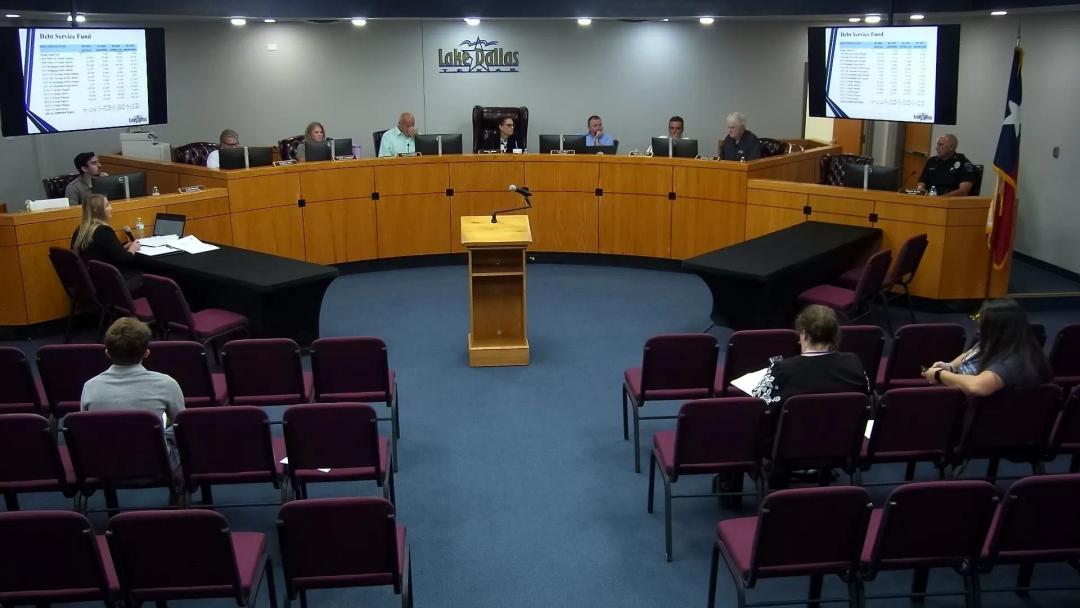
The City Council of Lake Dallas held a special called meeting on September 3, 2026, at 6:00 PM to conduct public hearings on the proposed tax rate for the 2026 tax year and the proposed budget for fiscal year 2026-2027. Finance Director Sarah Coffran presented the budget and tax rate details. No public comments were made during the hearings. Discussion Items - Tax Rate Presentation: Finance Director Sarah Coffran presented the proposed tax rate of $0.621953 per $100 valuation, an 11% increase over the prior year. The debt service portion of the rate is decreasing while the operations and maintenance portion is increasing, for an overall increase of $0.062242. For a home valued at the average of $306,000, the estimated annual increase is approximately $132. Councilmember Evans requested that future presentations include examples for homes valued at $400,000 and $500,000; the Finance Director agreed to add this. - Budget Overview: The proposed budget for fiscal year 2026-2027 (beginning October 1, 2026) includes revenue assumptions with property tax collections budgeted to increase by approximately 13% and sales tax growth assumed at 2% flat (after correcting a slide that initially showed 6%). Major expenditures include administrative services, public safety (police department budgeted at $308,000), development services, and parks and recreation. - Debt Service Discussion: Council discussed the city's debt obligations, noting that payments from 2008 and 2018 bonds have a few years remaining and will decline. The Finance Director confirmed, after consultation with the city's debt advisor, that it is not advantageous to pay off the low-interest debt early. Key Outcomes - Two public hearings were held: one for the proposed tax rate and one for the proposed budget. No members of the public spoke. - No votes were taken; the City Council is scheduled to vote on the proposed budget and tax rate at the regular meeting on September 10, 2026, at 6:00 PM at Lake Dallas City Hall (212 Main Street, Lake Dallas, TX 75065).
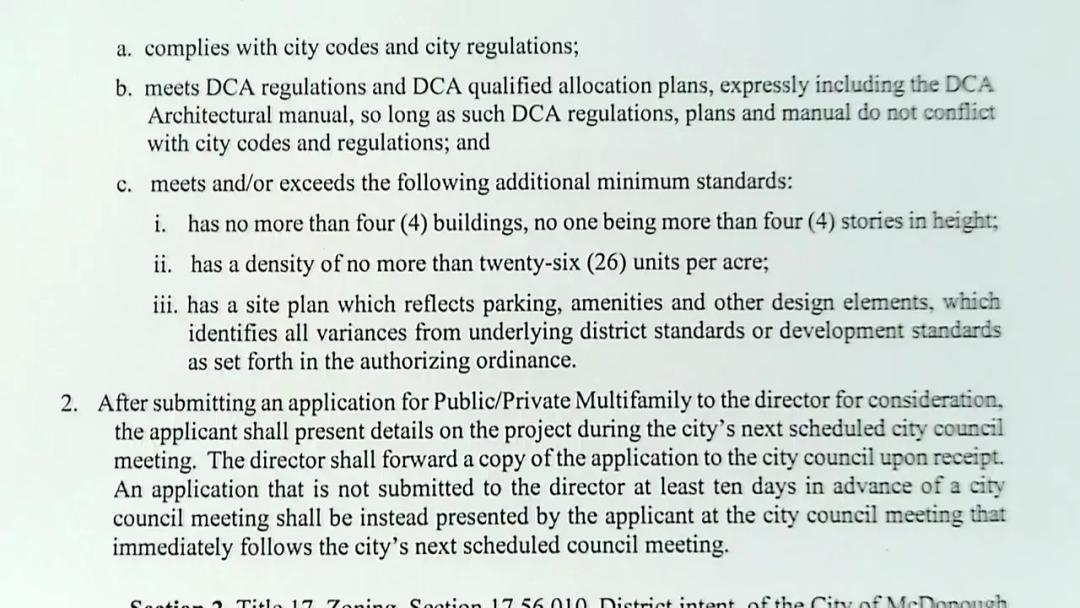
The McDonough City Council held a workshop on September 3, 2026, at 6:00 PM in McKibben Chambers, City Hall. The meeting covered a consent agenda, public comments, proclamations, and numerous discussion and action items, including a moratorium on mixed-use zoning, budgetary amendments, infrastructure projects, and rezoning requests. Several items were postponed or deferred to the next meeting on September 21, 2026. Consent Calendar - Items Approved as Amended: Items 6B (purchase of Bobcat compact excavator) and 6D (drone invoice) were moved to agenda items 8D and 8E for separate discussion and approval. The remaining consent items were approved unanimously with 5 in favor. - Items Approved in Consent: - Purchase of a 2026 John Deere Z920M mower from Ag-Pro for $11,873.57 (SPLOST VI). - Authorization to purchase a MX Drum Mulcher and kit for $15,977.16 (SPLOST VI). - Approval of August 10, 2026, Special Called Meeting Minutes. - Approval of August 17, 2026, City Council Meeting Minutes. Public Comments & Testimony - Jason O'Cady (130 Jonesboro Street): Expressed concern about recent graffiti around the square and near his property. Praised the city for cleaning up Jonesboro Street and improving empty lots. - Michael Williams (176 Reese Park Drive): Urged creation of a homeless task force and a cooling center for extreme heat (100+°F). Questioned the city's change in grass-cutting time from 7:00 AM – 10:00 PM to 6:59 AM – 8:01 PM, calling it unreasonable. Also criticized leaf-blowing enforcement and the lack of street sweepers. Requested a 15-minute speaking time limit instead of 5 minutes. - Scott Nyman (85 College Street): Questioned the proposed moratorium on MU zoning, specifically the meaning of "for rent" in the resolution. Asked whether the moratorium would apply to commercial/office rental spaces or just multifamily. Also asked about potential loopholes if a developer builds condos for sale but later sells to a rental corporation. Requested clarity and community input during the moratorium. - Eddie Smith (90 Ben Horton): Noted confusion between the agenda ("limited moratorium on M-U") and the resolution ("limited moratorium on for-rent M-U"). Expressed concern about insufficient time for residents to review the moratorium. Also referenced concerns about Geranium Park (no elected official present) and urged attention to ordinance 260205. Proclamations - Proclamation issued August 18, 2026: In Remembrance and Celebration of Mrs. Jennifer Maud Johnson. - Proclamation issued August 23, 2026: Recognizing the Grand Opening of the Tabernacle of Praise Church International Missions and Outreach Center. Discussion Items - Item 8A, 8C, 8B – Police Contracts: Chief Noble presented: - LexisNexis Solutions renewal (separated from Clearview AI) – invoice amount unchanged. - Amendment to Paladin Agreement: $20,000 to carry service through October 2026 (instead of original $82,000 annual contract) as the city transitions to Axon's Scotty O. Clarified it is not a termination fee. - Clearview AI renewal – same as previously discussed. All three items approved separately with 5 votes each. - Item 8D – Bobcat Excavator: Director VonDenBosch explained that one of two mini excavators broke down, with repair cost estimated at $90,000. The new purchase for $57,599.93 (SPLOST VI) replaces it. Approved 5-0. - Item 8E – Drone Invoice: Payment of $20,750 from Technology Services budget for drone-related expenses. Approved 5-0. - Item 9 – Moratorium on M-U (Mixed-Use) Zoning: - City Attorney Emilia Walker proposed a moratorium on for-rent MU developments until March 31, 2027 (amended from November 2026). Council expanded the moratorium to cover all MU zoning (not just for-rent) after Councilmember Reeves expressed broader resident concerns. The moratorium temporarily halts acceptance of new MU applications and allows staff to review regulations and gather community input. Approved 5-0. - Item 10 – Wing Wall Change Order: Director VonDenBosch detailed an emergency repair at 715 Industrial Boulevard (near fire department). Original project approved Feb 2025 at $300,000. Due to utility delays and need for a soil nail wall (cannot close road), a change order for $105,087.57 was requested ($50,000 from SPLOST VI, $55,087.57 from Capital Outlay). Approved 5-0, designated emergency repair. - Item 11 – Speed Control on Cabriolet Trail: Two options presented: speed bumps ($1,600, in-house) or speed tables ($18,000, contractor). Council selected option 1 (speed bumps) after discussion on cost and precedent. Approved 5-0. - Item 12 – FY2025-2026 Budget Amendment: Finance presented adjustments for payroll (increased medical premiums, certification increases) offset by salary savings in other departments, and non-personnel adjustments (courts, fuel). General fund uses $353,500 from fund balance. Other funds (SPLOST V, SPLOST VI, Impact Fee, Water/Sewer, Solid Waste) also adjusted. Resolution 26-09-03.1 approved 5-0. - Item 13 – Text Amendment for O-I Multi-Family: Henry County sought a text amendment to allow public-private partnership affordable housing on county-owned O-I and C-2 properties, as a permitted use rather than special use. Councilmember Johnson supported for District 1 seniors; Councilmember Reeves opposed due to bypassing normal rezoning procedures. After debate, council voted to postpone the decision to September 21, 2026 (5-0). A public hearing was held; the developer representative and the county's attorney spoke. Several public comments asked for clarity on age restriction and site-specific limitations. - Item 14 – Postponed: Case 260204 (Griffin St. & Highland Ave. PUD) was postponed to September 21, 2026, as noted in agenda approval. - Item 15 – Synchrony Terrace Rezoning: Request to rezone 11.82 acres at 1500 Avalon Parkway from C-2 to C-3 with conditions. The property is in District 4 (Councilman Blue not present, but councilmember spoke on his behalf). Conditions include a restrictive covenant prohibiting extended-stay hotels, halfway houses, gas stations, drive-thru restaurants, etc. Ordinance not effective until covenant filed with Henry Superior Court within 45 days. Approved 5-0. - Item 16 – Jonesboro Rd. Commercial Lots (Workshop): Applicant Kathy Thomas presented a request to rezone two parcels (2.37 acres) from C-2 to C-3 for better marketability. No vote taken; workshop only. Councilmember Burt asked for conditions similar to Item 15 and requested further discussion. - Item 17 – Comprehensive Planning & Zoning Approach: Deferred by Director Peaks until after the MU moratorium text amendment process is complete, allowing community engagement. - Executive Session: Council entered closed session for litigation and real estate. After returning, a motion passed to authorize the purchase of property at 62 Keys Ferry Street for up to $1.9 million from the general fund (5-0). Key Outcomes - Approved (all 5-0): Consent agenda as amended; LexisNexis, Clearview AI renewals; Paladin agreement amendment; Bobcat excavator purchase; drone invoice payment; moratorium on all MU zoning (effective until March 31, 2027); wing wall change order (emergency); speed bumps on Cabriolet Trail; FY2025-2026 budget amendment; Synchrony Terrace rezoning with conditions; purchase of property at 62 Keys Ferry Street. - Postponed to September 21, 2026: Item 13 (OI text amendment for public-private multi-family) and Item 14 (Griffin St./Highland Ave. PUD). - Deferred: Item 17 (comprehensive planning approach) until after MU review. - Workshop only: Item 16 (Jonesboro Rd. rezoning) – further discussion needed.