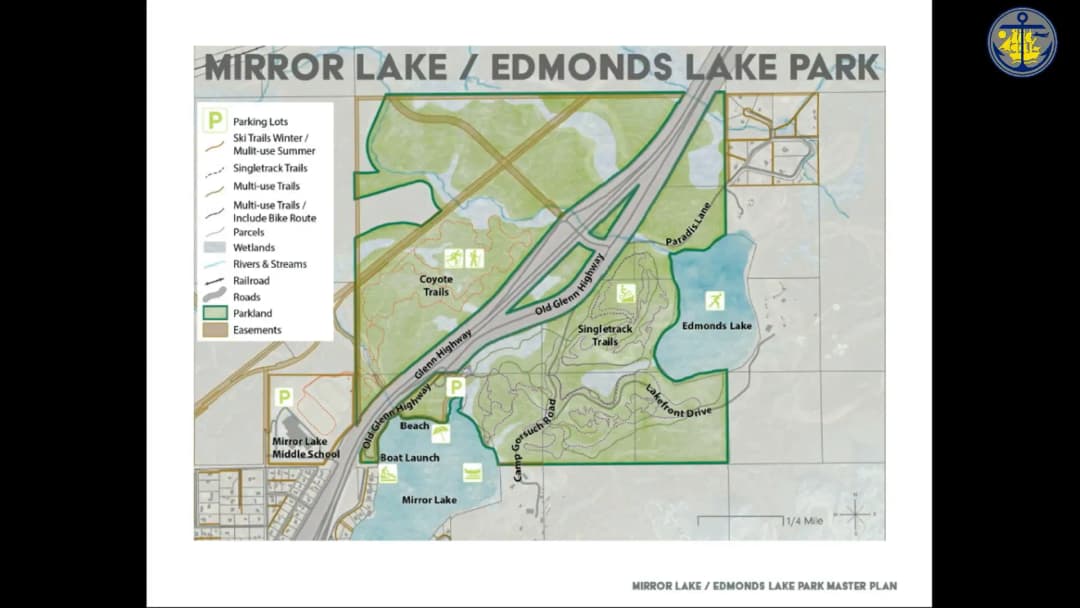
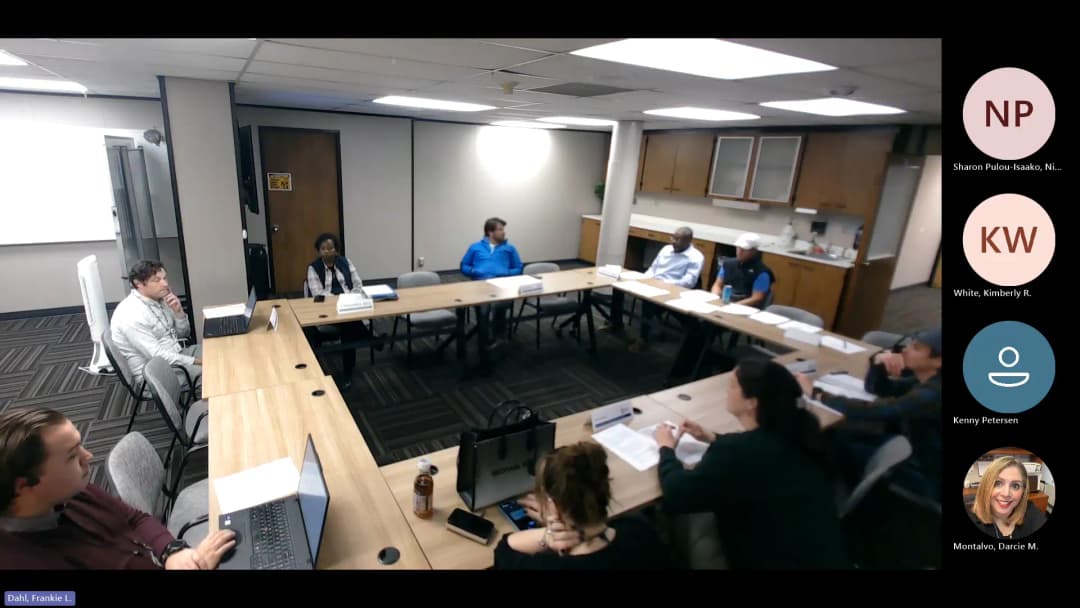
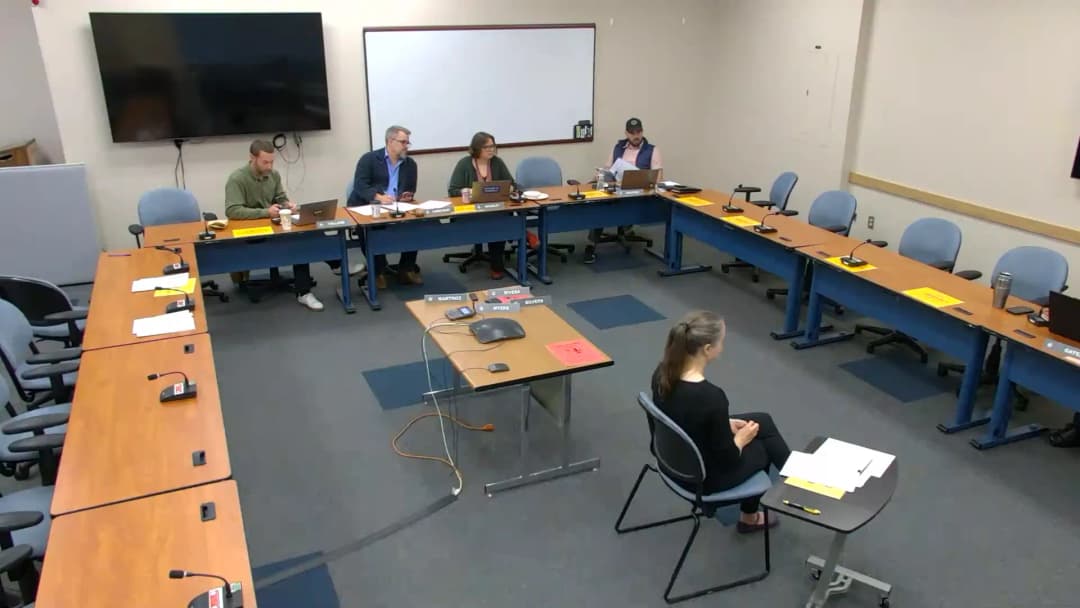
The Planning and Zoning Commission convened on November 3, 2025, to review the 2026 Capital Improvement Budget, approve the Mirror Lake Edmonds Lake Park Master Plan, and deliberate on a rezoning request from Cook Inlet Housing Authority. The Commission received staff presentations on capital budget priorities and park planning, heard public testimony, and rendered recommendations to the Anchorage Assembly. Consent Calendar - Approved the minutes from the October 6, 2025, meeting (motion by Commissioner Eber, seconded by Commissioner Pullis). - Approved the remaining items on the consent agenda, excluding Resolution 2025-29 which was pulled for discussion. Public Comments & Testimony - Brittany Redwine: Expressed significant concern regarding the proposed reclassification of Lakefront Drive as a private access road. She questioned who would be responsible for maintenance and existing damage, noting the road is a public right-of-way serving a trailhead and private property, and warned of public pushback if the reclassification proceeds without clear answers. - Will Tagan (Chugach Mountain Bike Riders): Expressed strong support for the Miror Lake Edmonds Lake Park Master Plan. He noted the plan reflects over a decade of community collaboration and volunteer maintenance, calling it a well-balanced compromise. - Brent Davenport: Expressed full support for the Park Master Plan as a "phenomenal use of tax money." He argued the plan enhances Anchorage's attractiveness, retains taxpayer value, and is critical for the community's quality of life and future bond support. - Jeff Rabanis (Eagle River Chugach Parks and Recreation Manager): In rebuttal, stated that Lakefront Drive and Gorsuch Road were constructed under permits for private access to Boy Scout parcels. He clarified that while the municipality considers there to be an access easement, the primary intended use remains private access to those specific parcels, and no new infrastructure is planned to change this management approach. Discussion Items - Case 2025-0144 (2026 Capital Improvement Budget): Staff presented the 2026 proposed capital budget, noting a $656.9 million operating appropriation and $90 million in capital investments. Commissioner Krishna delivered a soapbox speech expressing concern that community resources are insufficient for future needs, urging citizens to engage in revenue generation and community building. - Case 2025-29 (Resolution on Transit Supportive Development Ordinance): Commissioners moved to strike Item C.3 (limiting driveways to 20 feet) from the resolution. Commissioner Ron noted the 20-foot limit was impractical for larger multifamily developments and potential fire apparatus. The amendment to strike the item passed unanimously. - Case 2025-002 (Mirror Lake Edmonds Lake Park Master Plan): Staff and petitioner Lucy Barenko (Huddle AK) presented the 20-year plan. The Commission discussed the status of access roads, specifically confirming the existence of an access easement for the road serving private parcels while maintaining no new designated right-of-way for those sections. - Case 2025-0121 (Cook Inlet Housing Authority Rezoning): A debate ensued between the Planning Department, who recommended rezoning from R4 SL to R3 to align with the 2040 Land Use Plan's "compact mixed residential medium" designation, and the petitioner, Tyler Robinson (Cook Inlet Housing Authority), who argued R4 was necessary to accommodate his 3-story, 24-unit building design which exceeds R3 height limits (35 feet) and to avoid the costs/delays of a Conditional Use Permit (CUP). The petitioner offered to pursue a CUP if the Commission did not support the R4 recommendation, citing the financial risk of restarting the process. Commissioners Ron, Eber, Gardner, Pullis, and Krishna all expressed a desire to facilitate the development, with several noting the Comprehensive Plan map may not be "gospel" regarding density implementation.
Public Meetings - Anchorage, Alaska
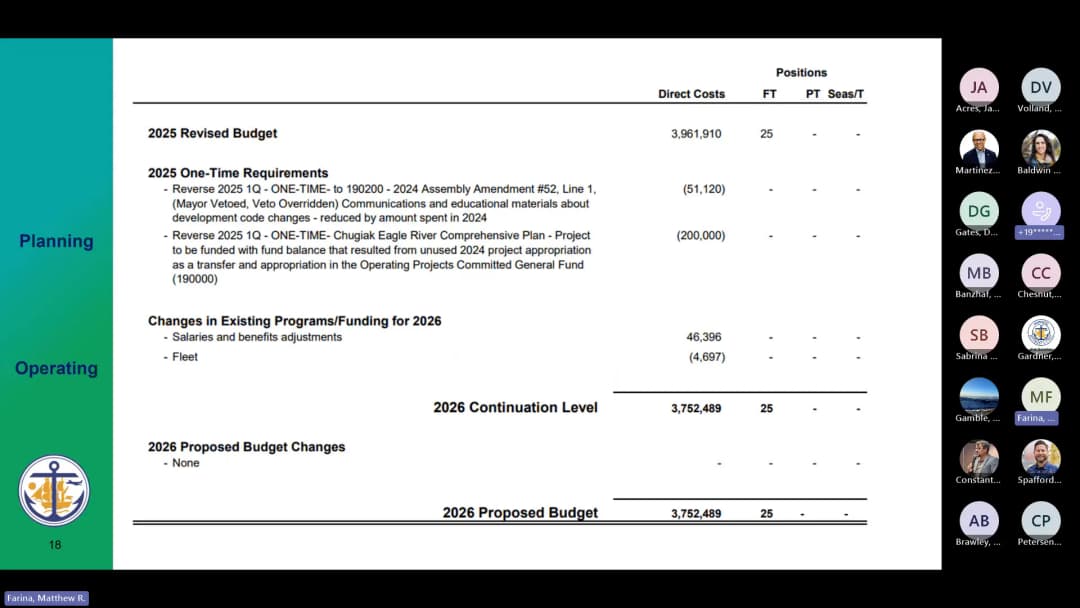
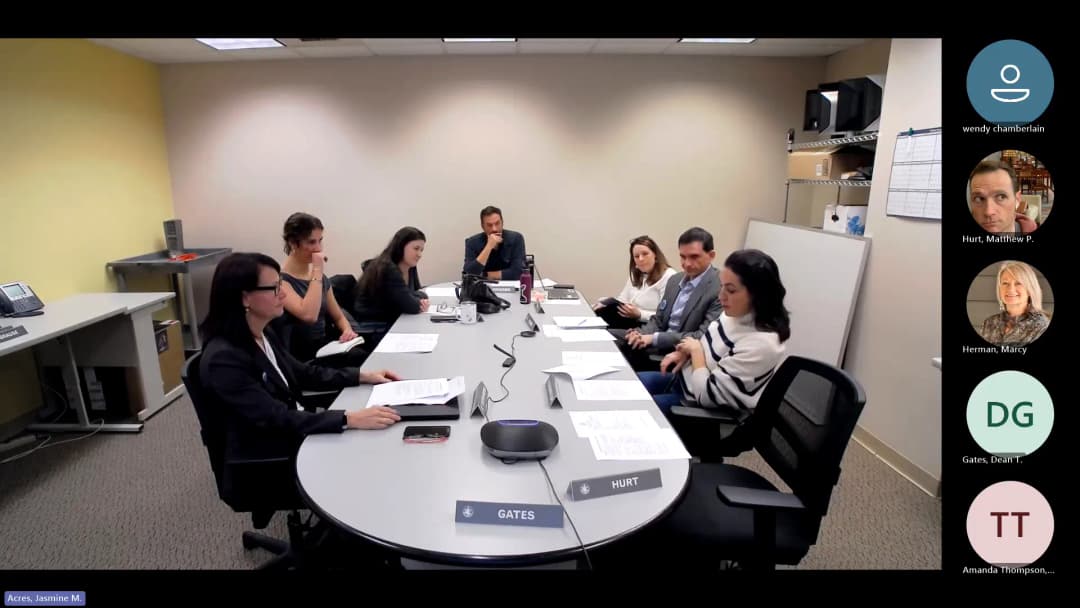
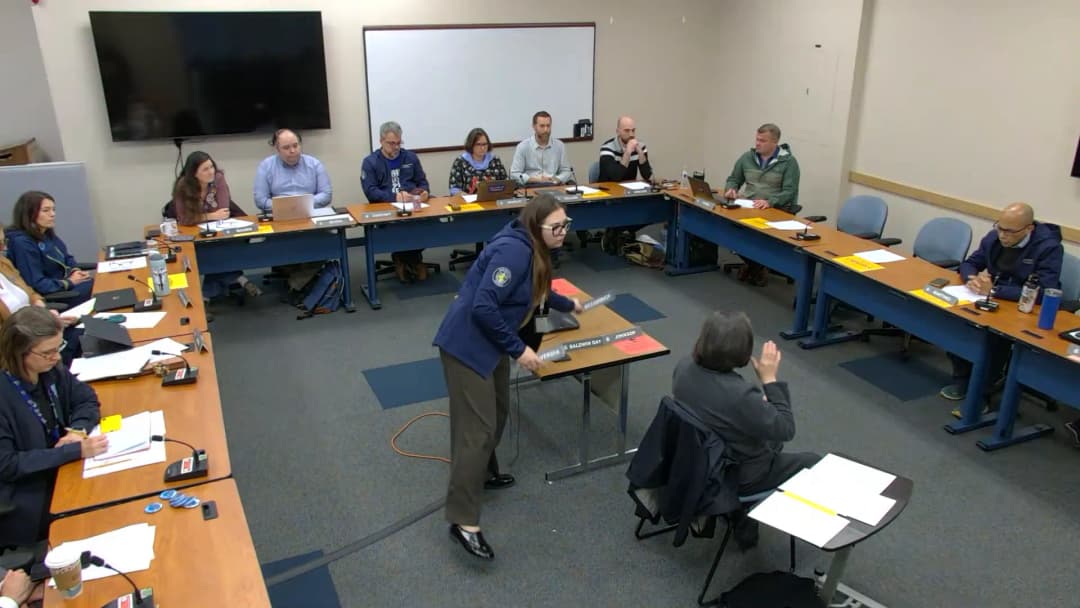
Public Meetings - Anchorage, AlaskaThis meeting marked the second of two work sessions dedicated to reviewing the FY26 proposed budget for the City of Anchorage. Held at the Mayor's Conference Room, the Assembly and administration discussed general government operating budgets, capital improvements, and specific enterprise allocations including utilities, the Anchorage Community Development Authority (ACE Fund), and public safety-related departments. Key topics included organizational restructures within Community Development, staffing challenges in Public Works and Development Services, and complex funding debates surrounding the ACE Fund and marijuana tax revenues. Consent Calendar - No routine consent calendar items were explicitly presented or voted on during this work session; the meeting proceeded directly to discussion and Q&A on budget line items. Public Comments & Testimony - No formal public comment period was conducted during this segment of the meeting; members of the public were informed that the session was being recorded and streamed via Teams, with further opportunities for public input to be scheduled for subsequent meetings or follow-ups. Discussion Items Library Department - Proposal: The Library seeks a 10.3 million dollar operating budget for FY26, featuring a net increase of approximately $300,000 from the FY25 revised budget. - Position: Director Harrison expressed full support for the addition of a new Youth Services Associate Librarian position, arguing it will enhance safety and customer service by covering the newly consolidated teen and youth areas. - Revenue Generation: The administration supports a proactive strategy to increase room rental revenue by $45,000, down from an initial target of $100,000, to fund the transition costs. Assembly member Mr. Johnson expressed cautious optimism regarding the ability to meet revenue targets given the current shortfall in the target. Public Transportation - Proposal: A budget proposal involving a new Public Safety Division with four additional staff positions, resulting in a net change of approximately $1 million. The proposal also includes capital bond requests. - Position: Director Barbara Public Transit advocated for maintaining current service levels while noting that making rides free for seniors over 65 would result in a $700,000 loss in fare revenue, though it could offset $200,000 in Anchor Rides costs. - Revenue Analysis: Assembly member Mr. Thompson noted a 20% revenue drop from 2024 to 2025; the administration attributed this to a shift from single-ride tickets to heavily discounted monthly/yearly passes and the inclusion of Providence Hospital employees in the UPass program. Assembly member Mr. Constant expressed concern regarding the potential displacement of fare-paying riders if rides were made free for seniors, questioning the net impact on the budget. Community Development Reorganization & Capacity - Proposal: The administration proposed reorganizing the department structure, splitting Planning, Development Services, and GIS from Public Works Administration to report under a new Community Development Director (Lance Wilbur), while Public Works Administration remains separate. - Position: Mr. Wilbur expressed support for the reorganization, stating it fosters better integration between land use, transportation, and housing policy. - Opposition/Concern: Assembly member Mr. Constant expressed strong opposition, arguing that the current structure has failed to address highway disparities in the Fairview neighborhood and warning that the new structure risks creating "another silo" without a concrete plan to break down barriers between transportation and housing policy. - Capacity & Staffing: Assembly member Ms. Baldwin Day expressed concern that the department lacks the staff capacity to meet the Mayor's goal of 10,000 homes in 10 years. She demanded a quantitative staffing study to avoid bottlenecks. Director Browse and Director Wilbur acknowledged the challenge but stated that staffing levels are tied to bond-funded project availability and revenue streams, making a definitive headcount projection difficult without knowing future revenue levels. Assembly member Mr. Presburdia (likely Presbury) reinforced the need for clear data linking resource investment to outcomes, contrasting the lack of visibility in development services with the clarity seen in police staffing plans. Development Services - Proposal: A $12.8 million operating budget, primarily affected by the removal of a one-time $100,000 nuisance abatement amendment. - Position: The administration clarified that nuisance abatement funding remains a priority and is replenished through recovered costs and new fines. Director Greg Soule expressed full commitment to continuing blight reduction efforts, including forensic accounting and lien foreclosure strategies. - Code Enforcement: Assembly member Mr. Perez Rodia inquired about the lack of a property maintenance code to enforce building upkeep; Director Soule confirmed the city does not currently have an ICC property maintenance code and that no enforcement exists for building disrepair unless it constitutes a danger. - Software Implementation: The department anticipates the rollout of a new online permitting system by September 2026, which is expected to reduce staffing needs for permit counters. Planning Department - Proposal: A budget of $3.75 million maintaining 25 employees. - Position: The administration reported difficulty recruiting a Senior Planner, leading to a position rewrite as an Associate Planner which reportedly dropped community engagement responsibilities. Assembly Member Mr. Gooker expressed concern that the department has lost critical engagement capacity, though the director noted success in recent recruitment by adjusting minimum requirements. - Comprehensive Plan: Director Babb indicated that a full comprehensive plan rewrite could cost $700,000 to $800,000 and require 7-8 new staff members, potentially taking eight years to complete. She stated the department is overdue for an update but prioritizes immediate housing and land use crises over the long-term planning process. Public Works & Transportation - Proposal: Public Works Administration budget reflects organizational changes to separate administration from Community Development. PM&E (Project Management and Engineering) faces significant vacancy challenges. - Position: Director Kent Colhays confirmed that 6 out of 20 PME positions are vacant, with engineering vacancies being particularly difficult to fill due to competitive private sector wages. He expressed full support for the vision to convert four-lane roads to three or two lanes (specifically citing the Spindler Road and Fireweed Lane projects) to improve safety and reduce speed. - Linkage: Director Colhays and Director Wilbur affirmed their commitment to maintaining a close working relationship between transportation and housing policy despite the structural separation, stating they meet daily to address shared goals. Human Resources (HR) - Proposal: A zero-change operating budget with the personnel count dropping from 41 to 40 due to internal realignment. - Position: Director Billingsley expressed satisfaction with the reduction of vacancies from 11 to 2, attributing the success to active recruitment and temporary employment contracts managed through the LAMe program. ACE Fund & Marijuana Tax - Proposal: FY26 budget projects marijuana tax collections of $300,000 (down from $800,000) and a total spend of $8 million, utilizing existing fund balance. - Position: Chair Brawley and Ms. Quinn Davidson expressed disappointment that the Alcohol Tax funds were shifted to pay for Anchorage School District prepaid classrooms ($2 million) under the ACE Fund, noting this bypasses the board's preference to spend additive funds on new child care programs. - Concerns: Assembly member Mr. Johnson raised concern that the depletion of the marijuana tax fund balance to zero by FY27 will result in a significant revenue reduction for the fund's programs in subsequent years. Director Browse noted that the fund's revenue is insufficient to cover the proposed spending unless new revenue streams are identified or the tax rate increases. Key Outcomes - Continued Deliberation: The Assembly and administration agreed to continue the budget review in a subsequent work session on November 7th, focusing on remaining departments and utilities. - Data Requests: Assembly members requested specific quantitative staffing studies and capacity analysis regarding the Community Development Department to address the 10,000 homes goal. The administration agreed to continue these conversations offline. - Policy Directives: Assembly members called for a deeper investigation into the lack of a property maintenance code and a comprehensive review of the comprehensive plan process and timeline. - Scheduling: The meeting concluded with a lunch break scheduled for 1:30 PM, to be followed by the remaining enterprise and utility budget discussions. The marijuana tax allocation for the Anchorage School District was noted as a point of contention to be revisited by the ACE Fund Board.
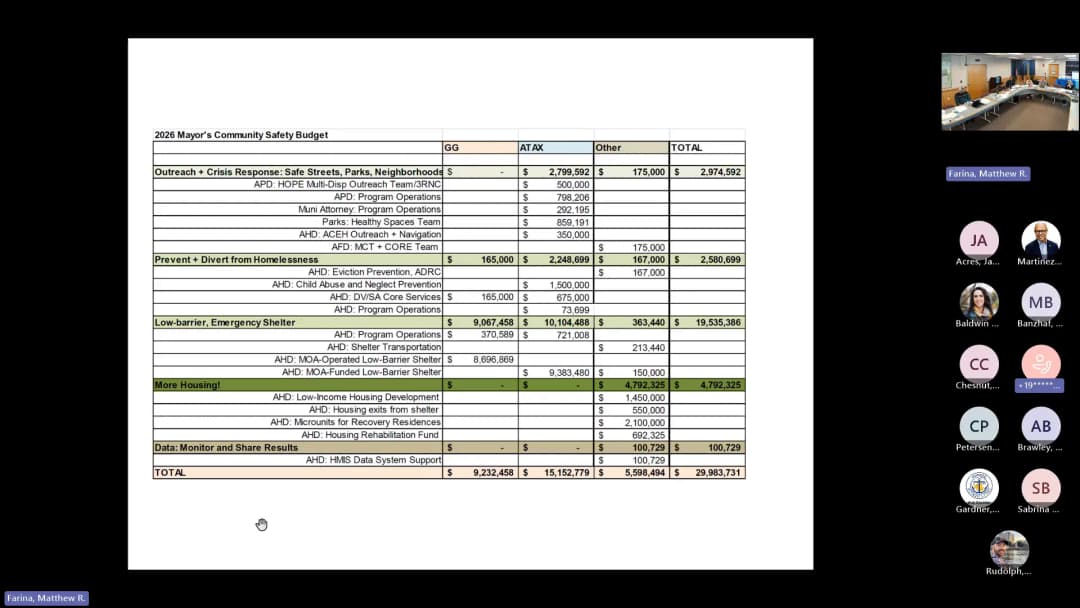
On October 25, 2025, the Anchorage Municipal Assembly convened for a comprehensive budget work session focusing on the 2026 proposed operating and capital budgets. The meeting covered all utilities and enterprise funds, including hydropower, water, wastewater, the Port of Alaska, airports, waste services, and ACDA, followed by an in-depth briefing on the alcohol tax strategy and the capital improvement program. The Assembly aimed to finalize budget amendments by November 5th, with discussions centered on staffing levels, infrastructure maintenance backlogs, homeless crisis interventions, and debt obligations. Consent Calendar - No specific consent calendar items requiring a separate vote were highlighted in the transcript; the session proceeded directly into the review of utility and enterprise budgets. Public Comments & Testimony - Member Johnson: Expressed curiosity regarding the efficiency and economics of the micro-unit housing model compared to hotel conversions for affordable housing, questioning if the lack of shared walls impacts cost-effectiveness. - Member Presridia (via Chair): Emphasized the critical need to address massive deferred maintenance on city roads, stating that the current state of roads, drainage, and glaciation issues represents a visible priority for constituents that often competes with other safety net priorities. Discussion Items Utilities and Enterprise Budgets - Anchorage Hydropower: The budget includes a one-time removal of a $700,000 dividend to general government. General Manager Mark Spafford noted a new partnership model splitting the General Manager position and a focus on fish and wildlife processes, including the pump storage hydro and portal valve agreements. - Water and Wastewater (AWW): Proposed budgets increased to $54.9 million (Water) and $56.6 million (Wastewater). Significant increases were noted for security services at the Clutson treatment facility and professional services due to inflation. Projects are driven by master plans rather than the standard CIP. - Port of Alaska: The 2026 budget increased to $28.3 million, largely attributed to $5 million in new debt for port work. The Acting Director confirmed that Ship Creek dredging remains within the Port's responsibility and that a capital amendment is expected in January to shift funds toward wharf pile enhancements and marine infrastructure. - Municipal Airports: The 2026 budget total is $2.9 million, reflecting the roll-off of an expiring CARES grant and anticipated revenue increases from a 10% fee adjustment approved via AO 2025-118. - Solid Waste Services: The 2026 budget is $31.3 million (Disposal) and $16.9 million (Refuse). Staffing is nearly fully utilized. The implementation of a surcharge for community cleanup (AO 2025-101) is not yet reflected in the budget and is expected to be addressed in the first quarter revisions. - Anchorage Community Development Agency (ACDA): The 2026 operating budget saw a slight decrease to $7.7 million. A capital proposal totals $3.1 million, including funds for the Anchorage Neighborhood Redevelopment Initiative and the JCPenney property acquisition. Alcohol Tax Strategy and Budget - Budget Adjustments: The proposed spend is $15.9 million, featuring a $500,000 reduction in evidence-based grants for providers (from $2M to $1.5M). Funding for the Multidisciplinary Team (MCT) was moved to the general operating budget. The alcohol tax enforcement and education line item was removed from the proposal. - Strategic Priorities: Mayor's Office director Thea Agnew Bevan presented a strategy focusing on "Safe Anchorage" and "Homelessness and Health." Key investments include a $500,000 allocation for a coordinated physical space for the HOPE team at the Third Avenue Resource and Navigation Center and increased funding for the Christian Health Association for overnight shelter. - Outcomes: The presentation highlighted a target to reduce unsheltered individuals, a goal to add 36 micro-unit homes, and the upcoming opening of crisis stabilization centers by South Central Foundation and Providence. Capital Budget and Bonds - Overview: The proposed 2026 capital budget totals $49 million. The "State" column in the budget is now zero, reflecting the end of expected state funding for capital projects. - Roads and Transportation: Public Works Director Kent Colhays and Traffic Engineering staff explained that the bond size is calibrated to annual maintenance needs (drainage, streetlights, repaving) which total over $50 million annually, rather than a fixed percentage of debt. There was a discussion on the feasibility of amending the Capital Improvement Budget (CIB) before the bonds are finalized in November. - Parks: The Parks and Recreation bond is approximately $7 million, focusing on completing long-standing projects like East Chester and athletic fields, while addressing critical bridge maintenance on trails. Key Outcomes - Hard Stop: A hard stop was set for the Alcohol Tax discussion at 3:25 PM to allow time for capital budget review. - Amendment Deadline: The deadline for Assembly members to submit budget amendments is Wednesday, November 5th, at 5:00 PM. The amendment work session is scheduled for Friday, November 7th. - Department Briefings: The Assembly voted to skip direct presentations for several departments (e.g., IT, Finance, Municipal Attorney) with minimal budget changes, offering to discuss them individually or at future work sessions upon request. - Commission Actions: The Budget Advisory Commission is preparing a resolution supporting the 2026 proposed budget, and the Planning and Zonation Commission will hear the capital budget on November 3rd. - Bond Constraints: It was clarified that bond funds can be used for design and construction but not feasibility studies or land acquisition without an ownership interest, per bond council guidelines. Amendments to the CIB in November are the preferred method for changing bond allocations.
The Anchorage Assembly Legislative Committee convened on October 23, 2025, to review the draft 2026 Legislative Program and discuss strategy for the upcoming session. The administration presented a resource-constrained outlook, citing a potential state deficit of $300 million and declining oil prices. Key deliberations focused on the feasibility of asking for capital support for the Port of Alaska modernization, requests for affordable housing and blight reduction, and the coordination of a joint visit to Juneau. The committee also heard public testimony regarding education funding and local voice concerns. Consent Calendar - No items were formally placed on the Consent Calendar; the meeting proceeded directly to business review. Public Comments & Testimony - Carol Tream (Government Affairs Manager, AML): Announced the upcoming Alaska Municipal League (AML) annual conference (Dec 8th week) and legislative line (February). Noted that Assembly members Rivera and Brawley currently serve on AML committees, with a recruitment effort underway if a vacancy occurs. - Nanda Thompson (ESD Teacher, Turnagain/Graduate Communities): - Expressed strong concern among teachers regarding high classroom numbers, calling for state accountability from ASD (Alaska Standards Council/Department) to reduce class sizes. - Highlighted a lack of support for special education, noting budget issues observed in previous sessions. - Urged the committee to protect the voice of community councils, citing concerns about restrictions on local voice at both municipal and state levels. Discussion Items - Review of 2026 Draft Legislative Program (Nolan Clouder, Mayor's Office): - Themes: The program is structured around "Safe, Secure, and Affordable." - Top Ask: Capital support for the Port of Alaska modernization program. - Safe Category Requests: Capital support for the Anchorage Police Department (APD) real-time crime center; $500,000 for blight reduction (nuisance abatement of 10-12 structures); inflation adjustment of the E911 surcharge; and funding for the Community Assistance Program. - Secure Category Requests: Increased rates for General Relief to expand assisted living bed capacity; support for the Chugach State Park Access Study; prioritizing winter road maintenance coordination with the DOT; a hiring freeze on the Alaska DOT Central Region noted as an issue; and amending utility rate statutes to allow AWU to recover infrastructure costs without a full rate case. - Affordable Category Requests: A $2 million application to the Renewable Energy Fund for the Waste-to-Energy project; gap financing/patient capital mechanisms for affordable housing via ADA and AHFC; allowing ADA loan participations for housing; and weatherization funding targeted at mobile homes. - Fiscal Context: Wendy Chamberlain (Mayor's Office) described the outlook as "bleak," estimating a $300 million state deficit due to natural disasters and potential oil price drops ($55/barrel), limiting flexibility for new appropriations. - Strategic Debate on Project Quantification and Priorities: - Blight Reduction: Council member inquired if $500,000 would address 200 derelict structures. Clouder clarified the funds would demolish approximately 10-12 structures, deemed a strategic low-dollar ask given budget constraints. - Affordable Housing vs. Infrastructure Bank: Members questioned why the program asks for patient capital rather than an infrastructure bank. The administration noted the current political reluctance to break out ADA funds and the likelihood that the Governor might veto larger housing-specific asks unless there is pre-agreement with AHFC and ADA. - Port of Alaska Ask: A debate ensued regarding the necessity of including a specific dollar amount for the Port. - Speaker Position (Council Member Silvers): Expressed skepticism about a small ask without a specific dollar figure, arguing that outside of a general obligation bond, a small contribution might be insufficient to move the needle or could invite political games. - Speaker Position (Administration): Acknowledged the need for a large-scale ask ($100M-$200M) but noted the difficulty of pinning a specific number if no General Obligation Bond is proposed. Clouder suggested a concrete ask with a rationale would be stronger than an open-ended request. - Speaker Position (Council Member): Argued that if a General Obligation Bond occurs, the Port should be an obvious inclusion, but without it, the administration should clarify if they want a specific ask or if they are taking a "pause" as they did last year. - District Priorities and Process: - The committee discussed limiting district-specific project lists to one or two per member to ensure strategic advocacy, noting that many past year's requests were either not funded or vetoed. - Action: Staff will coordinate with members to finalize lists of 1-2 projects per district that align with the CAP (Capital Improvement Program). - Emergency Planning Committee Request: A document from the Anchorage Local Emergency Planning Committee was received, requesting state funding to retain federal FEMA dollars. The committee agreed to distribute this as a public document for potential inclusion. - 2025 Legislative Visit to Juneau: - The committee discussed the strategy for a joint visit with the Mayor's office. Previous attempts to visit separately caused messaging confusion; the goal is a unified front. - AMAL Timing: It was noted that the 2026 Annual Municipal League (AML) conference in February may be difficult for Assembly members to attend due to scheduling conflicts, as it conflicts with the regular assembly meeting. Key Outcomes - Next Meeting: Scheduled for Wednesday, November 19, 2025. A work session to discuss the legislative program draft is tentatively targeted for November 21. - Voting Timeline: The legislative program is scheduled for formal adoption at the Assembly meeting in December (likely December 4). - Agreement to Coordinate: Staff will reach out to Assembly members to solicit 1-2 district priority projects each, with the final list to be reviewed before the work session. - Administrative Tasks: - The committee will send the Emergency Planning Committee document to the Clerk's office for distribution. - Staff will coordinate a follow-up meeting with the Mayor's administration to set a date for the Juneau visit. - Starting January 2026, the committee will meet on the fourth Wednesday of the month. - Public Action: Council member Silvers agreed to correspond with Nanda Thompson regarding concerns about classroom sizes, special education, and community council voices.
The Anchorage Salaries and Emoluments Commission convened on October 22, 2025, to address the agenda, approve minutes, and discuss compensation and benefits for elected officials. While the initial consensus leaned against immediate salary increases due to fiscal constraints, public testimony emphasized the need for cost-of-living adjustments to ensure diverse representation. The commission shifted focus to codifying existing practices regarding parking and vehicle usage for the Mayor and Assembly members. Consent Calendar - The agenda for the meeting was approved unanimously. - The minutes from the November 26, 2024, meeting were approved without amendment. Public Comments & Testimony - Emmy PVV (Alaska Center): Expressed strong support for a cost-of-living adjustment for Assembly members, arguing that the 2019 salary of approximately $60,000 no longer reflects the cost of living in Anchorage. They stated that without an increase (adjusted to $75,000), public service becomes unattainable for many, risking the loss of diverse, qualified candidates. - Lucian Dyer (Communications Director, Stand Up Alaska): Expressed that as a potential candidate with only $1,500 in monthly income, the current compensation structure creates barriers to diversity. They argued that stable housing, food security, and health care are prerequisites for running for office and urged the commission to increase transparency and compensation to attract a diverse cohort of leaders. Discussion Items - Elected Officials' Salaries: The commission initially discussed raising salaries for the School Board and Assembly. Members Pat Rieger, Kim, Karen, and Pat expressed opposition or hesitation to increase salaries at this time, citing the current fiscal situation and the principle of public service not demanding private-industry-level compensation. Kim noted she remains open to discussion pending more data. - Vice Chair Compensation: The commission reviewed a request to tier compensation for the Vice Chair of the Assembly to differentiate them from general Assembly members, though no specific proposal was detailed. - Parking for Assembly Members: The commission discussed the current unofficial practice where Assembly members park in public spaces using bags over signs, as they are not currently funded to use the city parking garage. Members Kim and Pat expressed support for codifying a policy to allow Assembly members to park in the garage with a portion of the cost reimbursed by the city, similar to executive employees. - Mayor's Benefits (Parking and Vehicle): The commission reviewed the codification of the Mayor's current benefits, which include a free designated parking spot and a take-home municipal vehicle. Members noted these are established precedents that have not been formally codified or treated as a taxable event in past resolutions. - Timeline and Research: Due to the requirement that compensation changes be finalized 30 days before the fiscal year-end (December 1, 2025), the commission discussed the urgency of scheduling a public meeting. They agreed to prioritize research to support a resolution on parking and vehicle usage to ensure timely codification. Key Outcomes - Motion Carried: The commission voted unanimously (Hayes, Redmond, Rieger, Norwood present) to instruct staff to draft a resolution covering: (1) codification of the Mayor's parking and municipal vehicle usage benefits, and (2) a provision for partially reimbursing parking costs for Assembly members allowing garage access. - Next Steps: The commission directed staff to schedule a public meeting to review the draft resolution and conduct necessary research. A tentative meeting date of November 25, 2025, was proposed to ensure compliance with the 30-day pre-fiscal-year-end deadline for any changes to apply to the upcoming election. - Commission Reorganization: Steve Rieger was appointed Chair and Kim was appointed Vice Chair for the current term. - Future Consideration: The matter of updating Assembly member base salaries based on public testimony was deferred for further research and data gathering, with no immediate action taken to increase base wages. - Adjournment: The meeting adjourned after the roll call on the motion to draft the resolution.
The Anchorage City Council convened to address routine administrative business, including the approval of the order of business and September meeting minutes. The Health Department provided a comprehensive update on the conclusion of the Emergency Rental Assistance (ERA) program, noting the distribution of funds to approximately 600 clients and the implementation of continued support for high-need individuals due to a federal government shutdown. The council engaged in public testimony regarding homelessness, shelter capacity, and outreach strategies, followed by a discussion on reviewing and potentially updating internal commission rules and procedures. Consent Calendar - Order of Business: Approved unanimously after moving Item D to the next month's agenda. - Minutes (September 3rd): Approved as written following minor clarification regarding virtual attendance notation. - Health Department Update (E1D): Accepted as a report with no additional updates requested beyond the ERA summary. Public Comments & Testimony - Kenny & Sharon (Stand-ins for Ron Oliva/Community Foundation): - Position: Stated that the "Good Neighbor Fund" is now established with the Anchorage Community Foundation to support outreach workers and address immediate needs (transportation, temporary housing, gas). They expressed excitement about the fund being community-supported and unrestricted. - Jamie (Outreach Worker): - Position: Expressed deep concern regarding a "slow-motion train wreck" resulting from the decentralization of homeless camps. Stated that approximately 232 fewer beds are available compared to the previous year, leading to increased displacement, lack of access to basic needs (food, water, electricity), and rising fatalities (loss of digits, limbs). - Recommendation: Argued for the necessity of "sanctioned camps" to allow providers to efficiently deliver services and reduce harm. Strongly advocated for separating outreach from police interactions to build trust, noting that ID requests by police often destabilize vulnerable populations. - Disputed Statistic: Claimed a reduction from 574 total beds two years ago to 400 (specifically citing a reduction to 200 before a recent approval) in the previous year, attributing specific frostbite losses to this reduction. - Thea (Health Department): - Position: Disputed Jamie's statistics, clarifying that the municipality currently operates 300 beds (an increase of 100 from the 200 beds available at this time last year). Expressed that the Health Department is 100% motivated by reducing deaths and aligns with the public's concerns regarding basic needs, while noting active work on surge bed funding. - Response to Recommendations: Stated that outreach should be relational rather than punitive to build trust. Discussion Items - Emergency Rental Assistance (ERA) Wrap-up (Health Dept.): - Reported that the ERA period ended yesterday with 600 clients served. A small amount of funds will be returned to the Treasury. - Continued Support: Announced an additional $260,000 grant to a specific grantee to provide up to one year of rental assistance for high-need clients transitioning from homelessness to housing. - Future Planning: Discussed plans to allocate $250,000 via regular HUD funding for ongoing tenant-based assistance and issuing a competitive RFP. - Government Shutdown: Confirmed that routine reimbursement draws will continue despite the federal shutdown; however, new grant agreements for the next fiscal year are delayed until the government reopens. - Reporting: Discussed limitations on follow-up reporting for ERA. The council noted the importance of data collection to evaluate efficacy and confirmed that the administration plans to conduct analysis of past programs and outcomes, as required by HUD, to inform the 2025 Action Plan. - Commission Rules and Procedures: - Discussed the current rules, which were written in 2018 and largely unused. - Decision: The council agreed that no immediate vote is required. Commissioners will propose specific changes via email, which will be compiled and potentially presented as an amended document for review in November or December. - Specific Notes: Clarified that while the current rules are internal documents changeable by a majority vote, future potential ordinances from the Assembly may require different procedures. Key Outcomes - Approved: Order of Business (with Item D rescheduled) and September 3rd Minutes. - Strategic Referral: Task Force recommendations on sanctioned camping and complex behavioral health were confirmed as foundational to the current RFP for micro-units at Tudor and Elmore. - Administrative Action: Commissioners committed to submitting written proposals for updating Commission Rules and Procedures for future consideration. - Clarification: Established that current shelter capacity is 300 beds, contrary to public testimony suggesting a reduction.
The Anchorage Assembly convened a special meeting to address the immediate aftermath of the Western Alaska storm disaster, specifically supporting the influx of evacuees seeking shelter and resources in Anchorage. The meeting featured urgent legislative actions to amend emergency codes and extend the Mayor's emergency proclamation, alongside detailed reports from the Mayor, Municipal Manager, and Anchorage School District on their response efforts. Public testimony included stark contrasts between the emergency relief for storm victims and the ongoing crisis of unsheltered residents in Anchorage. Public Comments & Testimony - Bryce Edman (Speaker, Alaska House) & Nelly Lenonguk Jimmy (Rep., District 38): Expressed deep gratitude to Anchorage for treating displaced villagers with dignity. Representative Jimmy shared traumatic accounts of residents fleeing the storm, including a grandfather saving a grandchild from rising waters. They emphasized that housing is the primary need for evacuees and implored the Assembly to support temporary lodging and long-term reunification. - Jamie Lopez (E. Sankridge, formerly homeless): Expressed strong opposition to current homelessness policies, describing them as a "death sentence." The speaker argued that while storm evacuees received immediate aid, unsheltered Anchorage residents are driven from shelters and face criminalization for basic survival acts (e.g., starting fires). The speaker criticized the Mayor's administration for prioritizing park safety over vulnerable populations and noted that winter conditions would likely lead to further deaths without a real plan for the homeless. - Pastor Adrian (Church of God and Saints of Christ): Expressed full support for the Mayor's administration, refuting claims of a "war on the homeless." The speaker highlighted active coordination with faith-based organizations to provide food and housing, asserting that the administration is acting as a good steward of funds. The speaker urged the public to focus on current solutions rather than past grievances. - Monicia Williams (President/CEO, Shiloh Community Housing): Expressed readiness to assist faith communities in coordinating resources for evacuees, citing experience with Katrina relocation. The speaker called for financial partnerships, requesting funding for housing start-up kits, food, and clothing, noting that evacuees arrived with nothing but the clothes on their backs. Discussion Items - Emergency Ordinance 2025-1 (Civil Emergency Definition): Discussed as a necessary technical amendment to allow municipal technical assistance for state disasters outside Anchorage boundaries. Vice Chair Brawley argued for its necessity to enable specific actions, while Mayor LaFrance noted the code change allows the Mayor to issue an emergency proclamation, reallocating resources and enabling reimbursement from state/federal entities without burdening taxpayers. A motion to reconsider this ordinance was made by Vice Chair Brawley but was voted down 0-12. - Mayoral Proclamation & Reimbursement: Mayor LaFrance stated the municipality is prepared for up to 1,600 evacuees, with 572 already arrived. She outlined collaboration with the Governor, Red Cross, and tribal leaders, noting that the Governor confirmed the municipality would be reimbursed for expenses to minimize the burden on the general fund. - Anchorage School District (ASD) Response: Superintendent Bryant reported that the School District is fully supporting displaced students, deploying school buses for transportation, and streamlining enrollment processes. He assured the Assembly that the Commissioner of Education has verbally confirmed these students will be fully counted for funding purposes, and the Governor has agreed to reimburse applicable expenses to the district. The Superintendent emphasized a trauma-informed approach to keep families and students together. - Assembly Member Comments: Members Martinez, Gerker, Vera, Baldwin Day, and Johnson expressed unified support for the response, emphasizing the need for long-term commitment, "radical hospitality," and maintaining focus on community kindness. Member Baldwin Day highlighted the need to recognize that local shelter availability is critical for future crises beyond just those caused by natural disasters. Key Outcomes - EO 2025-1 Passed: The Assembly voted 12-0 to approve Emergency Ordinance 2025-1, temporarily amending the definition of civil emergency to include out-of-bounds disasters requiring extraordinary measures within Anchorage. - Reconsideration Motion Failed: The motion to vote "no" on EO 2025-1 was ruled 0-12. - AR 2025-318 Passed: The Assembly voted 12-0 to approve the Resolution extending the Mayoral Proclamation of Civil Emergency (2025-01) until December 16, 2025. This extension allows for sustained emergency response efforts beyond the initial 48-hour limit. - Federal Alignment: Noted that the joint congressional delegation has submitted a letter to the President requesting an expedited federal disaster declaration to unlock FEMA funding.
The Board of Ethics convened on October 16, 2025, at 3:33 p.m. to review routine disclosures, approve the 2024 Annual Report, and address a specific request for an advisory opinion. The meeting proceeded with the approval of the agenda and previous minutes, followed by the unanimous processing of the consent agenda items regarding economic interests and public solicitations. Board member Paul recused himself before the executive session and subsequent vote on the advisory opinion draft. Consent Calendar - 5A1: Items A through D regarding the Disclosure of an Economic Interest by Public Servants were unanimously approved without discussion. - 5A2: Items A through D regarding Notices of Intent to Respond to Public Solicitations were unanimously approved. Clarification was provided that Christopher Schutz was included to ensure board visibility on contracts where the submission deadline (October 14) had already passed prior to the meeting; it was confirmed that members can submit such notices via the ethics officer even if the board's scheduled meeting does not occur in time. Public Comments & Testimony - No public comments or testimony were received from members of the public or board members regarding agenda items. The Chair noted that no individuals were present in the audience. Discussion Items - Board of Ethics 2024 Annual Report (Item 6A): Paul presented an update stating that the Assembly Rules Committee and the full Assembly were receptive to the Board's suggestions for code improvements found in the report's final page. Paul proposed drafting specific language for proposed clarifications to submit to the Assembly in the coming month. Board members expressed agreement with this path forward and discussed potential additional clarifications regarding past ambiguities (e.g., the City Hall office sign-in provision). - Request for Advisory Opinion (Item 6B - 2025 TAC 06): Following a closed session, the board discussed a request that required Mr. Busa to remain. The specific nature of the opinion was not detailed in the open transcript, but the discussion focused on the procedural next step of drafting a confidential opinion. Key Outcomes - Approval of 2024 Annual Report Recommendations: The Board directed Paul to draft specific language for code clarification suggestions to be presented and deliberated at the next month's meeting. - Motion Carried: A unanimous vote (5 'Aye's, 0 'No's) carried the motion for Mr. Busa to draft an amended confidential advisory opinion related to Request for Opinion 2025 TAC 06. Note: The transcript timestamp indicates the meeting occurred on October 16, 2025, whereas the summary title and agenda references consistently align with this date. There is no discrepancy between the transcript text and the stated date.
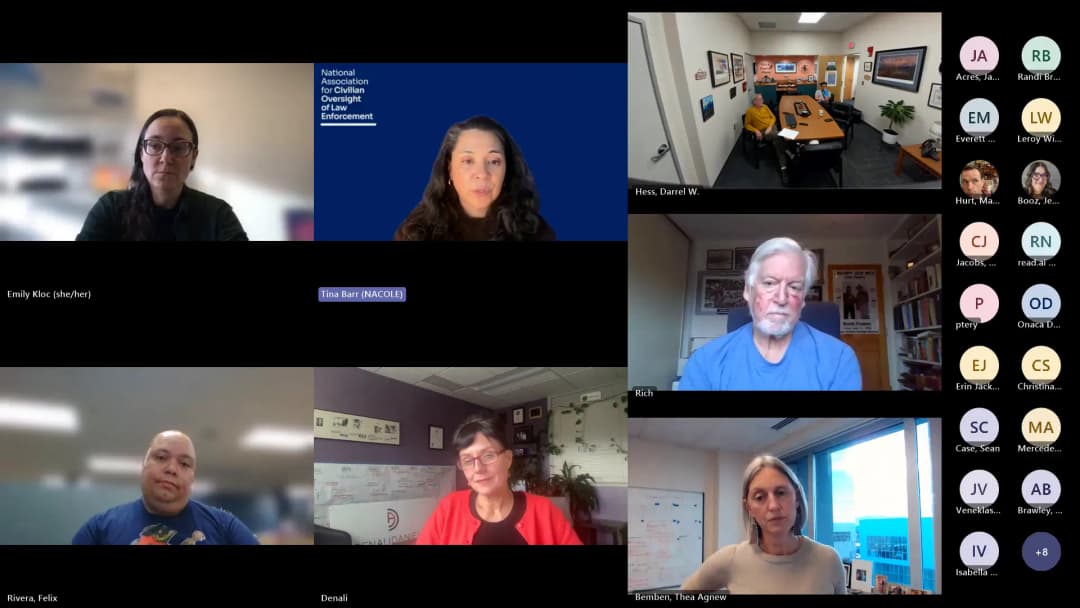
The Task Force to Reimagine the Public Safety Advisory Commission convened for its second of four information sessions to define the functions and models of a new advisory commission for Anchorage. Facilitated by Denali Daniels and Associates, the session included a presentation by Tina Barr from the National Association for Civilian Oversight of Law Enforcement (NACOLE) regarding national oversight models, followed by testimony from Anchorage Municipal Ombudsman Daryl Smith and Anchorage Equal Rights Commission Executive Director Jennifer Boos on local existing commissions. Consent Calendar - No items; the meeting proceeded directly to informational presentations and discussion. Public Comments & Testimony - Tina Barr (NACOLE): Presented an overview of civilian oversight models (review, investigation, audit/monitor, and hybrid). She expressed that independence and external oversight are critical principles. She stated that oversight bodies are not inherently anti-police but aim for objectivity to ensure accountability and effective policing. She noted that while smaller communities often utilize volunteer-only models, mid-sized cities increasingly adopt hybrid models with paid investigators and auditors. She emphasized that funding must be codified in ordinances or charts (e.g., a percentage of the police budget) to ensure sustainability. - Bruce (Community Member via chat): Submitted a written question noting accessibility issues preventing verbal participation. He inquired about potential gaps in the current system regarding the formation of a new public safety commission. - Daryl Smith (Municipal Ombudsman): Described his office's broad powers to investigate municipal agencies. He expressed the community's desire for a civilian body with a clear mission and defined roles, stating that the primary failure of past efforts was a lack of clarity regarding roles, responsibilities, and priorities. He noted the Ombudsman's office has been historically controversial regarding its subpoena power and independence. - Jennifer Boos (Anchorage Equal Rights Commission): Clarified that her commission's jurisdiction is strictly limited to discrimination based on protected classes (race, gender, sexual orientation, etc.) in employment, housing, and education, and does not cover general government misconduct. She suggested a "clearinghouse" function as a gap to be filled, where data from various bodies (Ombudsman, Internal Affairs, ERTC) could be aggregated to provide a holistic view of public safety issues. Discussion Items - Model Selection: Tina Barr outlined three primary models (review-focused, investigation-focused, auditor/monitor-focused) and a hybrid approach. She explained that hybrid models are increasingly common in mid-to-large cities (like Seattle and Chicago) to address both reactive complaints and proactive systemic audits. - Funding and Sustainability: Discussion covered funding mechanisms, including the practice of allocating a fixed percentage (1-1.5%) of the police department budget to the oversight body or basing it on the number of officers (e.g., one investigator per 50 officers) to ensure funding is not discretionary. - Relationship with Law Enforcement: Addressing concerns about officer morale, Tina Barr provided examples (Spokane, Alexandria) where effective working relationships exist between oversight bodies and police unions, noting these require deliberate work and clear roles. - Scope and Jurisdiction: The panel discussed the distinction between investigating specific complaints (Ombudsman, ERTC) versus broad systemic monitoring (Auditor/Monitor). The consensus among local officials was that the new body requires a clear strategic plan that defines what priorities it will track (e.g., the Mayor's public safety plan or alcohol tax strategic plan) rather than just existing as a reactive body. Key Outcomes - Public Feedback Form Release: A feedback form will be released early next week and remain open until November 3rd to gather community input on the information presented. - Upcoming Meetings: Two in-person decision-making sessions are scheduled for November 13th and November 20th (10:30 AM to 12:00 PM). Task force members and active participants will be invited to vote on recommendations during these sessions. - Next Steps: The facilitator team will compile the feedback form results and presentation data to draft agendas for the November meetings, focusing on defining the functions, membership, authority, and funding of the new commission. - Referral of Materials: Tina Barr has offered to share a list of 15+ communities with successful oversight-police relationships via email for further reference.
The Anchorage Assembly convened for a work session on agenda item AO 2025-97, focusing on a proposed charter amendment to authorize a 5% tax on short-term rentals (STRs). Sponsors, including Members Rolland and Constant, presented the initiative as a targeted measure to generate $4-5 million annually for housing development and infrastructure, explicitly stating that the proposal is not designed to reduce the number of existing short-term rentals. The session featured deliberation on the tax's economic impact compared to resort communities, flexibility in fund administration, and the scope of excluded uses. Consent Calendar - No consent calendar items were discussed or reported in the transcript. Public Comments & Testimony - No formal public testimony was recorded during this specific work session; however, Member Voland referenced questions previously submitted via the Clerk's office by Member Brawley, which were addressed as part of the agenda presentation. Discussion Items - Economic Projections & Comparisons: Sponsor Member Rolland presented data comparing Anchorage's proposed 5% STR tax (on top of the existing 12% lodging tax) to other resort towns. Comparisons included Carbondale, Colorado (aggregate 16.4%), Reno, Nevada (aggregate 13.5%), and Napa, California (aggregate 20.75%). The sponsors projected annual revenues of $4-5 million, though Member Constant noted that excluding owner-occupied units might lower initial estimates closer to $3 million. - Intent and Impact: Members emphasized that the tax is not intended to discourage short-term rentals. Member Voland and Member Constant argued that unlike hotels operating in commercial zones, STRs in residential zones directly reduce the availability of housing stock. The primary goal is to capture revenue from this specific zoning impact to fund housing solutions, rather than to suppress the market. - Funding Flexibility vs. Guardrails: Members Brawley, Kriger, and Rivera expressed concerns about future implementation constraints. - Member Brawley questioned whether the charter should be overly prescriptive, citing past issues with the ACE fund and CASA process where specific language limited flexibility. - Member Kriger worried about the "opportunity cost" of potentially capping the lodging tax at the current 12% for hotels while STRs sit at 17%, making future legislative changes difficult. - In response, Sponsors and Member Martinez supported a broad charter framework (limited to "housing and related infrastructure") to avoid tying the hands of future assemblies, preferring to handle specific exclusions, allocation formulas, and advisory structures via implementing city code. - Segregation of Funds (Amendment Discussion): Member Johnson proposed an amendment to segregate tax revenues and expenditures by region (Anchor Point, Girdwood, and Eagle River). Member Brawley questioned the administrative feasibility of segregating collections. Administration confirmed that with the parallel proposed mandatory registration ordinance for STRs, property identification would allow for revenue tracking by region, though it would be challenging while non-compliance persists. - Budget Amendment Context: Member Brawley asked Members Martinez and Voland about their previous proposal to create a Housing Trust Fund ($500k-$1.5M). Member Martinez replied that while the form may differ, the objective of "getting shit done" regarding housing supply aligns with this tax proposal. Key Outcomes - No Vote Taken: As this was a work session, no binding vote or ordinance adoption occurred. The Assembly agreed to circulate the written responses to Member Brawley's questions to the record in a memorandum or AIM (Agenda Item Memorandum). - Agreement on Process: The Assembly largely agreed that the charter amendment should remain broad, leaving the creation of advisory boards, specific fund allocations, and exclusions (such as owner-occupied exemptions) to be determined by future ordinances and code amendments. - Next Steps: The item is scheduled to proceed to further council readings and public hearings, with the target submission to the qualified voters occurring before the January ballot deadline. A special meeting was announced for the following day regarding civil emergencies in Western Alaska.