Browse by city
Date range
Search help

Search titles, summaries, topics and stored transcripts together. Keywords may match separately; put the whole query in double quotes for a phrase. Matching follows word analysis, so punctuation is not exact. Both dates are included. Documents are not searched.

SHOWING 221–230 ENTRIES
221
OCT 17, 2025 · ANCHORAGE, ALASKA · ASSEMBLY & COMMITTEE MEETINGS
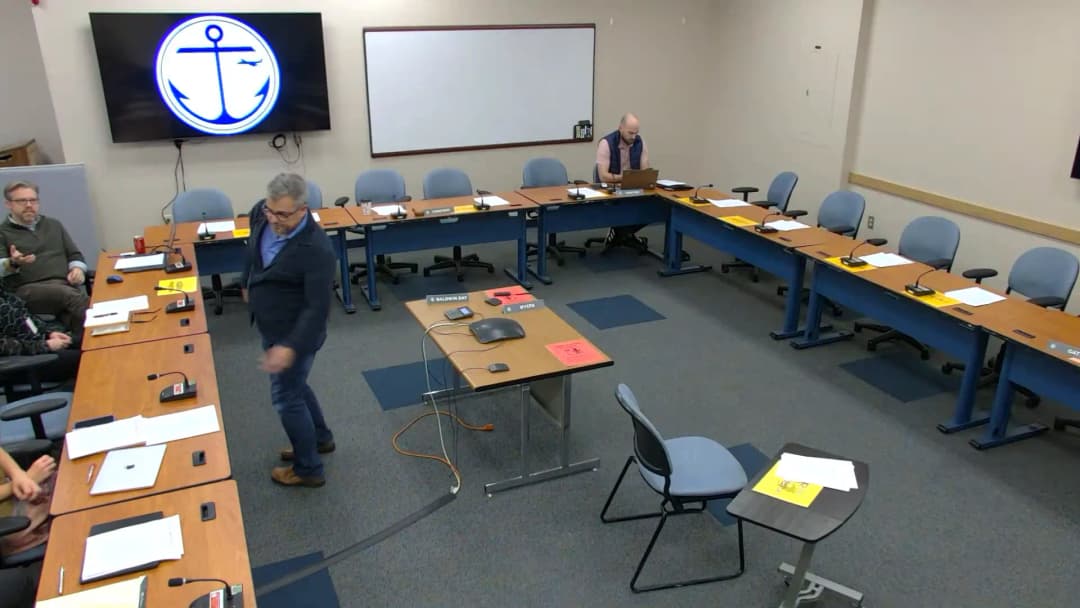
Task Force Reimagining Anchorage Public Safety Commission - Oct 17, 2025

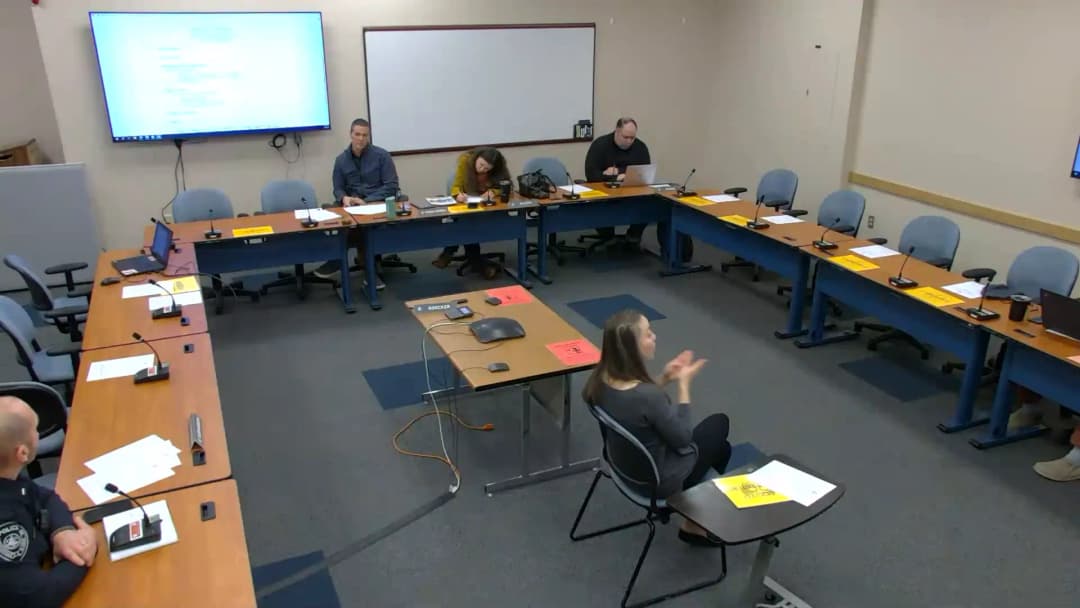
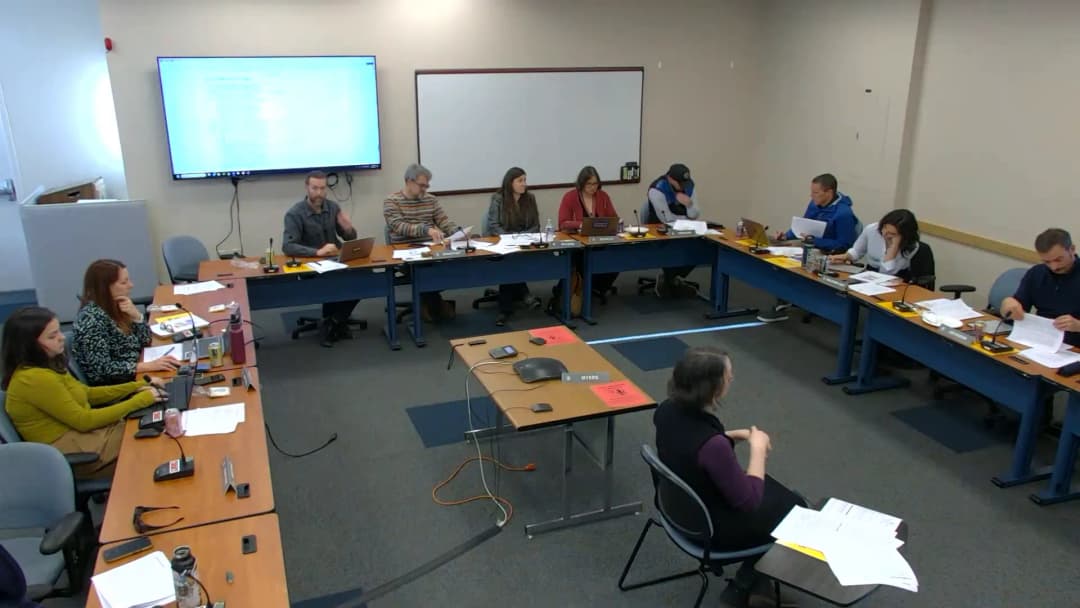
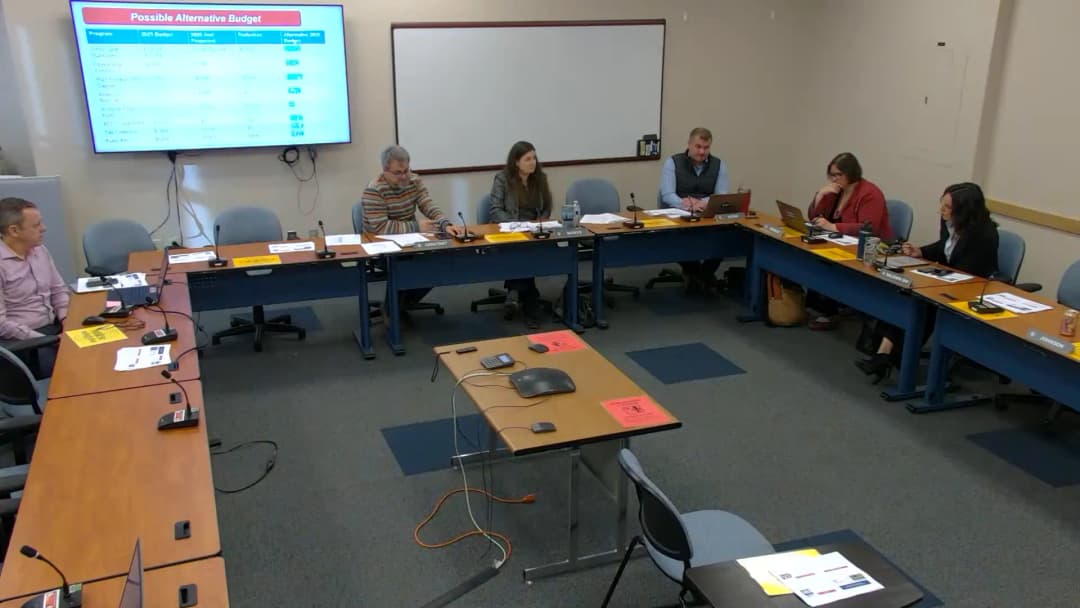
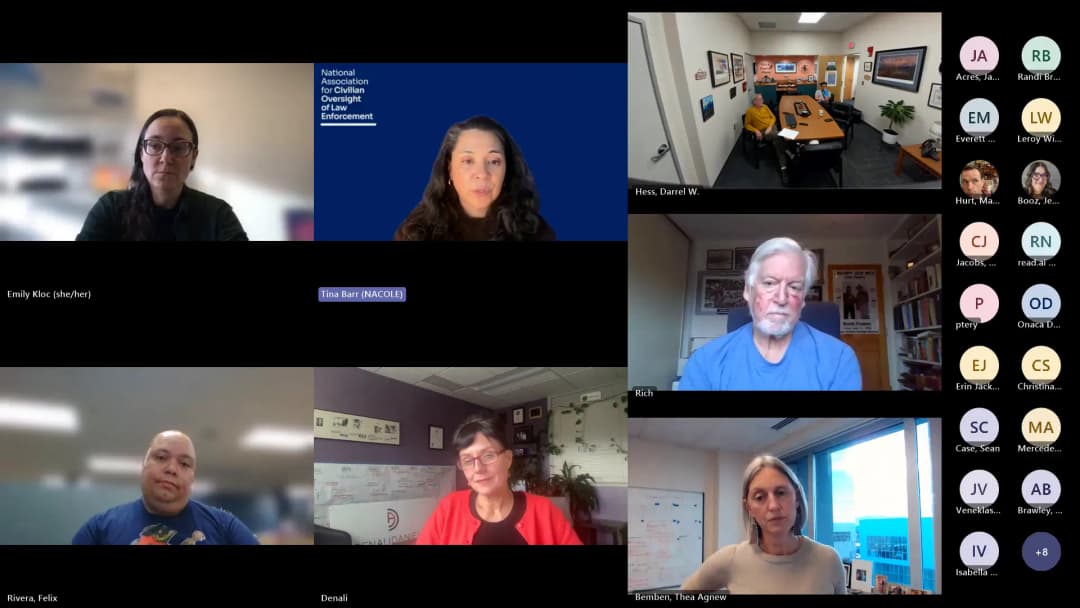
The Task Force to Reimagine the Public Safety Advisory Commission convened for its second of four information sessions to define the functions and models of a new advisory commission for Anchorage. Facilitated by Denali Daniels and Associates, the session included a presentation by Tina Barr from the National Association for Civilian Oversight of Law Enforcement (NACOLE) regarding national oversight models, followed by testimony from Anchorage Municipal Ombudsman Daryl Smith and Anchorage Equal Rights Commission Executive Director Jennifer Boos on local existing commissions. Consent Calendar - No items; the meeting proceeded directly to informational presentations and discussion. Public Comments & Testimony - Tina Barr (NACOLE): Presented an overview of civilian oversight models (review, investigation, audit/monitor, and hybrid). She expressed that independence and external oversight are critical principles. She stated that oversight bodies are not inherently anti-police but aim for objectivity to ensure accountability and effective policing. She noted that while smaller communities often utilize volunteer-only models, mid-sized cities increasingly adopt hybrid models with paid investigators and auditors. She emphasized that funding must be codified in ordinances or charts (e.g., a percentage of the police budget) to ensure sustainability. - Bruce (Community Member via chat): Submitted a written question noting accessibility issues preventing verbal participation. He inquired about potential gaps in the current system regarding the formation of a new public safety commission. - Daryl Smith (Municipal Ombudsman): Described his office's broad powers to investigate municipal agencies. He expressed the community's desire for a civilian body with a clear mission and defined roles, stating that the primary failure of past efforts was a lack of clarity regarding roles, responsibilities, and priorities. He noted the Ombudsman's office has been historically controversial regarding its subpoena power and independence. - Jennifer Boos (Anchorage Equal Rights Commission): Clarified that her commission's jurisdiction is strictly limited to discrimination based on protected classes (race, gender, sexual orientation, etc.) in employment, housing, and education, and does not cover general government misconduct. She suggested a "clearinghouse" function as a gap to be filled, where data from various bodies (Ombudsman, Internal Affairs, ERTC) could be aggregated to provide a holistic view of public safety issues. Discussion Items - Model Selection: Tina Barr outlined three primary models (review-focused, investigation-focused, auditor/monitor-focused) and a hybrid approach. She explained that hybrid models are increasingly common in mid-to-large cities (like Seattle and Chicago) to address both reactive complaints and proactive systemic audits. - Funding and Sustainability: Discussion covered funding mechanisms, including the practice of allocating a fixed percentage (1-1.5%) of the police department budget to the oversight body or basing it on the number of officers (e.g., one investigator per 50 officers) to ensure funding is not discretionary. - Relationship with Law Enforcement: Addressing concerns about officer morale, Tina Barr provided examples (Spokane, Alexandria) where effective working relationships exist between oversight bodies and police unions, noting these require deliberate work and clear roles. - Scope and Jurisdiction: The panel discussed the distinction between investigating specific complaints (Ombudsman, ERTC) versus broad systemic monitoring (Auditor/Monitor). The consensus among local officials was that the new body requires a clear strategic plan that defines what priorities it will track (e.g., the Mayor's public safety plan or alcohol tax strategic plan) rather than just existing as a reactive body. Key Outcomes - Public Feedback Form Release: A feedback form will be released early next week and remain open until November 3rd to gather community input on the information presented. - Upcoming Meetings: Two in-person decision-making sessions are scheduled for November 13th and November 20th (10:30 AM to 12:00 PM). Task force members and active participants will be invited to vote on recommendations during these sessions. - Next Steps: The facilitator team will compile the feedback form results and presentation data to draft agendas for the November meetings, focusing on defining the functions, membership, authority, and funding of the new commission. - Referral of Materials: Tina Barr has offered to share a list of 15+ communities with successful oversight-police relationships via email for further reference.
PUBLIC SAFETY 37% · POLICE ACCOUNTABILITY 28% · OMBUDSMAN SERVICES 14% · COMMUNITY ENGAGEMENT 11%
222
OCT 16, 2025 · ANCHORAGE, ALASKA · ASSEMBLY & COMMITTEE MEETINGS
Anchorage Assembly Work Session on STR Tax Charter Amendment (2025-10-16)

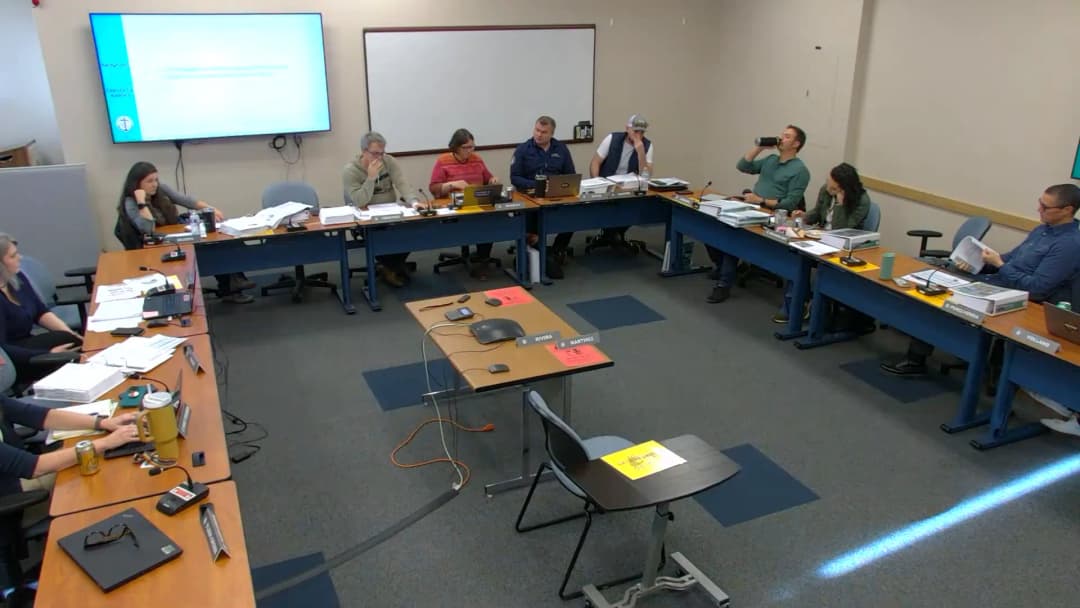
The Anchorage Assembly convened for a work session on agenda item AO 2025-97, focusing on a proposed charter amendment to authorize a 5% tax on short-term rentals (STRs). Sponsors, including Members Rolland and Constant, presented the initiative as a targeted measure to generate $4-5 million annually for housing development and infrastructure, explicitly stating that the proposal is not designed to reduce the number of existing short-term rentals. The session featured deliberation on the tax's economic impact compared to resort communities, flexibility in fund administration, and the scope of excluded uses. Consent Calendar - No consent calendar items were discussed or reported in the transcript. Public Comments & Testimony - No formal public testimony was recorded during this specific work session; however, Member Voland referenced questions previously submitted via the Clerk's office by Member Brawley, which were addressed as part of the agenda presentation. Discussion Items - Economic Projections & Comparisons: Sponsor Member Rolland presented data comparing Anchorage's proposed 5% STR tax (on top of the existing 12% lodging tax) to other resort towns. Comparisons included Carbondale, Colorado (aggregate 16.4%), Reno, Nevada (aggregate 13.5%), and Napa, California (aggregate 20.75%). The sponsors projected annual revenues of $4-5 million, though Member Constant noted that excluding owner-occupied units might lower initial estimates closer to $3 million. - Intent and Impact: Members emphasized that the tax is not intended to discourage short-term rentals. Member Voland and Member Constant argued that unlike hotels operating in commercial zones, STRs in residential zones directly reduce the availability of housing stock. The primary goal is to capture revenue from this specific zoning impact to fund housing solutions, rather than to suppress the market. - Funding Flexibility vs. Guardrails: Members Brawley, Kriger, and Rivera expressed concerns about future implementation constraints. - Member Brawley questioned whether the charter should be overly prescriptive, citing past issues with the ACE fund and CASA process where specific language limited flexibility. - Member Kriger worried about the "opportunity cost" of potentially capping the lodging tax at the current 12% for hotels while STRs sit at 17%, making future legislative changes difficult. - In response, Sponsors and Member Martinez supported a broad charter framework (limited to "housing and related infrastructure") to avoid tying the hands of future assemblies, preferring to handle specific exclusions, allocation formulas, and advisory structures via implementing city code. - Segregation of Funds (Amendment Discussion): Member Johnson proposed an amendment to segregate tax revenues and expenditures by region (Anchor Point, Girdwood, and Eagle River). Member Brawley questioned the administrative feasibility of segregating collections. Administration confirmed that with the parallel proposed mandatory registration ordinance for STRs, property identification would allow for revenue tracking by region, though it would be challenging while non-compliance persists. - Budget Amendment Context: Member Brawley asked Members Martinez and Voland about their previous proposal to create a Housing Trust Fund ($500k-$1.5M). Member Martinez replied that while the form may differ, the objective of "getting shit done" regarding housing supply aligns with this tax proposal. Key Outcomes - No Vote Taken: As this was a work session, no binding vote or ordinance adoption occurred. The Assembly agreed to circulate the written responses to Member Brawley's questions to the record in a memorandum or AIM (Agenda Item Memorandum). - Agreement on Process: The Assembly largely agreed that the charter amendment should remain broad, leaving the creation of advisory boards, specific fund allocations, and exclusions (such as owner-occupied exemptions) to be determined by future ordinances and code amendments. - Next Steps: The item is scheduled to proceed to further council readings and public hearings, with the target submission to the qualified voters occurring before the January ballot deadline. A special meeting was announced for the following day regarding civil emergencies in Western Alaska.

SHORT TERM RENTALS 62% · AFFORDABLE HOUSING 20% · PROCEDURAL 8% · TAX INCENTIVES 4%
223
OCT 16, 2025 · ANCHORAGE, ALASKA · ASSEMBLY & COMMITTEE MEETINGS
Work Session Summary for AR2025-308: Anchorage Performing Arts Contract Extension (Oct 16, 2025)

On October 16, 2025, the Anchorage Municipal Assembly held a work session to discuss Resolution AR2025-308 and Memorandum 759-2025 regarding the extension of the management agreement with the Alaska Center for Performing Arts (PAC) and the financing structure to support it. Administration officials provided a historical overview of the 1987 partnership, detailed a significant operational pivot in 2023 with the introduction of "Broadway Alaska," and proposed a solution to keep the facility open for the next 18 months without using general government tax dollars. The assembly members engaged in discussions regarding the sustainability of the current model, the adequacy of the reserve account, and comparisons to other regional facilities. Consent Calendar - No consent calendar items were discussed during this work session; the meeting focused entirely on deliberative discussion of AR2025-308. Public Comments & Testimony - Jared Kirker (Administration): Expressed concern regarding a recent public campaign by PAC leadership that he characterized as presenting a "one-sided argument" about the municipality failing to take care of the building, stating it was not a collaborative approach to problem-solving. He emphasized the need for the assembly and PAC to work together rather than pointing fingers. - Council Member Baldwin Day: Expressed appreciation for the briefing and stated she shares the goal of finding a way forward for the PAC. She acknowledged that the broader community shares responsibility for issues that could have been addressed decades ago, citing legacy projects like Project 80s. She specifically requested data on how the proposed operating model compares to similarly situated performing arts centers elsewhere in the country. - Cody Castellar (PAC): Offered to provide examples of operating agreements from similarly sized performing arts centers outside of the current meeting to address the council's inquiry regarding national benchmarks. - Council Member Vaughn: Supported the notion of exploring synergies between Visit Anchorage and the PAC, such as utilizing the PAC for convention keynote speeches to optimize facility usage. Discussion Items - Historical Operating Model (1987–2023): Administration explained that the original 1987 agreement envisioned the PAC becoming self-sustaining, with the municipality funding 60% of operations initially, declining to 50% by 2005, and dropping below 50% subsequently. This funding gap was historically filled by ticket sales, rentals, and philanthropy. - Impact of "Broadway Alaska" Pivot: Speakers discussed a dramatic spike in the PAC's operating budget starting in 2023 due to the introduction of "Broadway Alaska." While this increased the facility's profile, it did not generate sufficient revenue and resulted in a structural operating loss of approximately $550,000 to $600,000 annually for non-Broadway operations when isolated from the Broadway-specific revenues. - Proposed Management Fee Increase: The administration proposed increasing the annual management fee by $1,000,000, bringing the 2026 budget to roughly $2.6–$2.7 million. This increase is intended to: - Eliminate the non-Broadway structural operating loss ($580,000). - Fund general repairs and address vandalism ($150,000). - Cover CPI-driven compensation increases ($100,000). - Cover utility and security cost increases ($100,000). - Cover other non-discretionary cost increases ($104,000). - Funding Strategy (The "Four-Part Puzzle"): To fund the increase without general tax dollars, the administration outlined a package requiring: 1. Extension of the management agreement. 2. Use of MLMP (Municipal Lease and Management Proceeds) proceeds to defease (pay off) the 2005 roof bond, freeing up ticket surcharge revenues. 3. An ordinance to reprogram the $3 adult ticket surcharge from paying off debt to supporting contract costs. 4. Programming of approximately $750,000 annually in tourism-related bed taxes (from the 12% pool) to fill the gap if ticket surcharges fall short. - Capital Needs and Future Planning: Discussion noted that the PAC's capital reserve account is currently inadequate for aging infrastructure needs. Administration indicated a future bond proposal to address critical safety issues like the fire alarm system. There was also discussion about potentially restructuring the PAC's management under the same charter provisions that successfully fund the Denina and Egan centers in the long term. - Visit Anchorage Relationship: Members discussed the existing dual contract between the municipality and Visit Anchorage (managing convention centers vs. tourism promotion). The consensus was that Visit Anchorage would be a key partner in integrating PAC operations into the broader tourism strategy, potentially reallocating funds from traditional advertising to facility support. Key Outcomes - Decisions & Directives: No final votes were taken during this work session; the session served to inform the upcoming Tuesday meeting where formal consideration will occur. - Next Steps: - The administration will provide a detailed breakdown of the MLMP defeasance costs to public finance to confirm if there are any interest savings in retiring the debt early. - The PAC will provide data comparing the proposed fee structure to similar national performing arts centers. - The assembly will prepare to consider a four-part legislative package (resolution, debt ordinance, surcharge ordinance, and tourism tax programming) on Tuesday. - Stated Goals: The immediate goal is to secure 18 months of operation for the PAC while the municipality and PAC leadership conduct in-depth negotiations to determine a sustainable, long-term operational model.

ARTS AND CULTURE 52% · BUDGET EQUITY ANALYSIS 20% · PROCEDURAL 11% · CAPITAL IMPROVEMENT PLANNING 9%
224
OCT 15, 2025 · ANCHORAGE, ALASKA · ASSEMBLY & COMMITTEE MEETINGS
Assembly Housing and Homeless Committee Meeting – October 15, 2025

This meeting of the Anchorage Assembly Housing and Homeless Committee was called to order at 10:56 a.m. on Wednesday, October 15, 2025. Due to an initial lack of a quorum, the meeting proceeded informally until quorum was achieved at 11:03 a.m. The committee received updates from the Mayor’s Office on the Western Alaska disaster response, the Anchorage Health Department on upcoming funding contracts, and shelter operations by RRS. The Anchorage Police Department presented a live dashboard on the new camping and fire ordinances. Public testimony highlighted immediate needs for shelter capacity and concerns about enforcement. No formal votes were taken. Public Comments & Testimony - Charles White expressed frustration that enforcement efforts are not helping people and urged the committee to move from talk to action, especially for those who are unhoused and have no alternatives. - Brian Vaughan stated he has been arrested twice for self-sheltering despite no shelter beds being available. He noted that 300 million dollars have been spent since 2019 with little visible progress. - James Randy reported that his belongings were burned by a vigilante, that shelters were full, and that he had previously suffered frostbite. He pleaded for direction and help to avoid becoming a fatality. - Karen Barnard described being illegally evicted and denied reasonable accommodations for disabilities in shelters. She noted that HUD funds for Alaska Housing sat unused and that she was turned down for three apartments. She requested a solo room, citing health risks and bedbug issues. - Jamie Lopez (formerly with Coalition on Homelessness) criticized the approach of APD enforcement, stating people are being run into the ground and that there is no plan to keep people alive. He warned that without sufficient shelter, deaths will increase. Discussion Items Mayor’s Update on Western Alaska Disaster Response - Mayor presented an emergent request from the state to temporarily house up to 1,500 people from Western Alaska who lost homes due to a disaster. An additional 500 people would go directly to UAA. - The first wave is expected to be residents of Kipnack, including families, elders, and entire communities. - The city is exploring large-scale municipal facilities (Egan Center, Sullivan Arena, Denina Center) for shelter; the Denina Center is currently hosting AFN and is not the first choice. - Donations are being collected at Lyndon Transport (baby wipes, diapers, non-perishable food) and the Denina Center. The Alaska Community Foundation is accepting cash donations. The Alaska Native Heritage Center is also organizing a fundraiser. - The committee agreed to post donation information on the committee website. Anchorage Health Department Updates (Director Kimberly Rash) 1. Institute for Community Alliances (ICA) Contract: Proposed funding to ICA for comprehensive HMIS reporting, reducing administrative burden on grantees and AHD. The contract amount was not specified; it will come before the committee in November. 2. Anchorage Affordable Housing and Land Trust (AAHLT): Proposed $550,000 in HOME-ARP funds for supportive services at existing housing sites (Barrett and another location). This is a substantial amendment to the HUD plan; public comment period is open. Scheduled for the first meeting in November. 3. Micro-Unit Grant: The health department received $400,000 from Bloomberg Philanthropies for micro-unit development. Funds will flow to ACDA to add up to eight additional micro-units to an existing project (already funded with $1.2 million from opioid settlement funds). One unit will be ADA accessible. The project is on track for a November completion, with a slight delay for the new units. Shelter Operations Update (Emily Robinson, RRS) - Current shelter system (300 beds) is operating at or near capacity every night. - In October, nine individuals were moved directly to housing; three went to Providence House with community funds. Example of coordinated flight home for an individual to Minnesota. - Abatement scheduled for October 21 at Russian Jack and Willow; beds are held for abatement days to offer shelter. - Challenges: clients with behavioral health issues being shuffled between shelters; individuals unable to perform activities of daily living (ADLs) – shelter system lacks personal care attendants. The Anchorage Safety Center (capacity 45) is being used for drop-offs, but not as a warming center for all. - Bed bug treatment at East 56th Avenue location completed; follow-up treatment today. - Recommendation to activate surge capacity gradually (10 beds at a time, up to 150 total) rather than all at once, pending funding source. APD Dashboard and AO Update (Lieutenant Fuchs) - The APD dashboard is live (since about October 2) on the APD website, showing data on camping ordinance enforcement and fire ordinance arrests. Updated monthly. - Dashboard metrics: arrests, subjects who complied voluntarily, and subjects who accepted services (for camping ordinance). Fire ordinance only shows arrests due to data system limitations. - Enforcement process: officers respond to citizen reports, investigate, give reasonable time to leave (up to 24 hours), then follow up. Compliance is prioritized over arrest. - Hope Team and Impact Team engage with campers to offer services and connections to shelter. - From September data, four arrests were made under the camping ordinance; more arrests have occurred since then. - The police department is refocusing patrol response to manage these calls more effectively. Key Outcomes - No formal motions or votes were taken during the meeting. - The committee received updates and will consider the following items at upcoming meetings: - ICA contract (November) - AAHLT contract ($550K, first meeting in November) - Micro-unit grant acceptance (next agenda, possibly addendum) - The committee will post donation information for Western Alaska disaster relief on its website. - Surge capacity activation remains under discussion, pending funding and planning by the Health Department and RRS.

HOMELESSNESS 43% · PUBLIC SAFETY 17% · DISASTER RELIEF 14% · AFFORDABLE HOUSING 9%
225
OCT 15, 2025 · ANCHORAGE, ALASKA · ASSEMBLY & COMMITTEE MEETINGS
Zoning Board of Examiners and Appeals Meeting - October 15, 2025

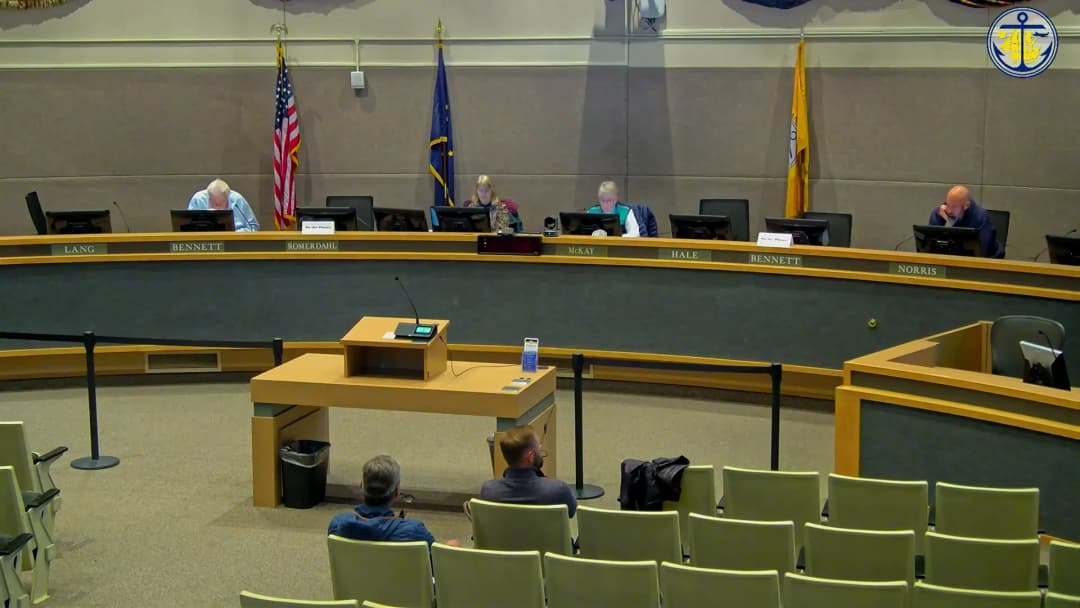
The Zoning Board of Examiners and Appeals convened on October 15, 2025, with seven members present (two vacancies). The meeting addressed roll call, approval of minutes from September 11, 2025, disclosures and recusal motions regarding two members, consent agenda approval of two resolutions, a request to defer a decision on Case 2025-0104 (unfinished business), and a public hearing on Case 2025-0113 involving two variance requests for a property at 11461 Hill Drive. The board granted the deferral but denied both variances. Consent Calendar - Resolution 2025-010 and Resolution 2025-011 were approved unanimously without discussion. Disclosures and Recusal Motions - Vice Chair Dave Hale disclosed a conflict of interest in Case 2025-0113 (his firm represented the petitioner). A motion to direct him to participate was defeated (1-6-1), allowing his recusal. - Board member Jonathan Lang disclosed that he had reviewed the September 11, 2025 meeting video and had client relationships with petitioners in two cases. For Case 2025-0104, a motion to direct him to participate passed (5-1-1); for Case 2025-0113, a similar motion failed (1-5-1), so he was recused from that case. - Board member Andrew Ramadal disclosed that technical difficulties during the September 11 meeting prevented him from hearing public testimony in Case 2025-0104; he subsequently listened to the audio and is prepared to participate. Unfinished Business: Case 2025-0104 - This appeal had been postponed from September 11 due to Mr. Ramadal's incomplete participation. The Municipal Attorney and the appellant jointly requested a stay of the vote and decision to a date uncertain, citing ongoing settlement discussions. The board voted unanimously (7-0) to grant the stay. Public Comments & Testimony (Case 2025-0113) - Susan Forbes (spelled S-U-S-A-N F-O-R-B-E-S), a Hillside resident since 1966, testified in opposition. She argued that the proposed large garage and driveway encroachment would harm the stream, set a bad precedent, and that current setbacks are appropriate. She supported the staff's recommendation for denial. Discussion Items (Case 2025-0113) - Variance 1: A request to allow a proposed 2,400-sq-ft detached garage to encroach into the required 25-foot south side setback. The petitioner argued the location was the only feasible spot due to topography, septic system, stream setback, and fire separation requirements. Staff found several standards unmet, particularly noting self-imposed hardship and that a smaller garage could comply. Board members debated alternative siting and whether the hardship was self-imposed. A motion by Brian Bennett to approve a 17.5-foot encroachment was made but not supported. - Variance 2: A request to allow an existing gravel driveway to encroach 25 feet into the required 50-foot Craig Creek stream setback. The petitioner offered to accept a 16-foot encroachment per watershed management's suggestion. Staff raised concerns about environmental impacts and that a reduced encroachment would suffice. Board discussion echoed concerns about stream protection and necessity. - Both variances were ultimately voted down after deliberation. Key Outcomes - Dave Hale recusal: The board voted 1-6-1 against directing him to participate; he was excused from Case 2025-0113. - Jonathan Lang recusal: Directed to participate in Case 2025-0104 (5-1-1); recused from Case 2025-0113 (1-5-1). - Stay of decision in Case 2025-0104: Approved unanimously (7-0) to a date uncertain. - Variance 1 (garage setback): Denied (0-5). - Variance 2 (driveway stream setback): Denied (1-4). - Meeting adjourned without further business.

LAND USE PLANNING 67% · PROCEDURAL 24% · CONFLICT OF INTEREST 7% · ENVIRONMENTAL PROTECTION 2%
226
OCT 10, 2025 · ANCHORAGE, ALASKA · ASSEMBLY & COMMITTEE MEETINGS
Anchorage Assembly Budget Work Session - October 10, 2025

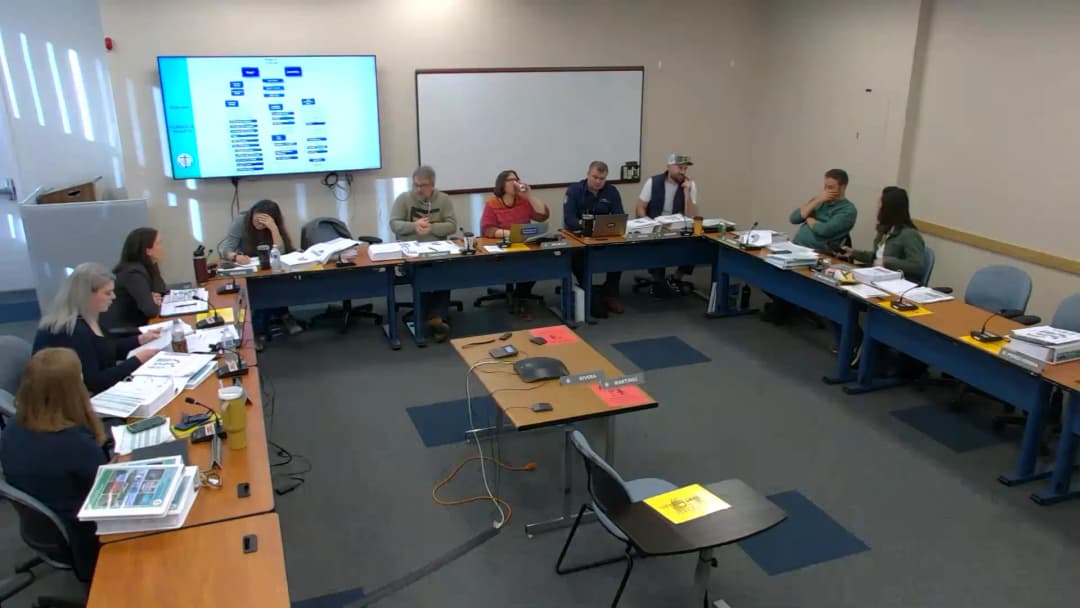
The Anchorage Assembly held a budget work session on October 10, 2025, beginning at 20:58 UTC, to review the proposed 2026 municipal budget. The session featured detailed presentations from the Office of Management and Budget (OMB) and several departments, including Fire, Police, Maintenance & Operations, Health, and Parks & Recreation. Discussions focused on historical funding trends, staffing challenges, infrastructure costs, and policy impacts. No formal votes were taken, but deadlines and future work sessions were established. Discussion Items Historical and Comparative Budget Overview (OMB) - Presenter: Ms. Browse (OMB) provided a historical analysis of Anchorage’s budget, noting that in 1984 the operating budget was $181 million, with 30% ($52.7 million) funded by the state. The tax cap adopted in 1983 was based on that funding mix. - Operating expenditures per capita have remained flat when adjusted for inflation, and the budget has grown little in real terms. - State capital funding for Anchorage dropped from $856 million (2005–2014) to $257 million (2015–2024); excluding the Port of Alaska, the latter falls to about $30 million. Revenue sharing also declined by approximately $100 million. - Density and land area: Anchorage ranks 75th in population among U.S. cities over 100,000 but 346th in density (171 people/sq mi) and first in land area (1,700 sq mi). It is 5.8% of the land area of all such cities but only 0.3% of their population. Members noted the high cost of serving a sprawling, low-density city that functions as both a city and borough. - Members discussed the need to connect spatial planning to operating costs and the impact of housing policy on budget. Fire Department - Budget: Proposed 2026 operating budget of $131.9 million, up from $123.3 million revised 2025. Increases are contractual, debt service, and a Girdwood service area adjustment; no discretionary changes. - Staffing: 408 full-time positions, 29 vacant (17 firefighters). Currently 13 ambulances on the road daily. Chief reported that a 4-person crew model would require 50 additional firefighters, and a 4-platoon system would require 125 more plus $100 million in infrastructure. - Federal Grant: A SAFER grant for 18 positions expires February 2026, but a new 3-year grant for 20 positions with a 33% match ($1.4M/year) has been awarded. This is not yet reflected in the budget; a first-quarter revision is planned. - Fleet: Ambulance and engine replacement is behind schedule. Two new ambulances went into service the day prior. The bond request includes three ambulance replacements ($1.14M) and two fire engines ($2.5M). The reserve fleet is inadequate. - Call Volume & Outdoor Fires: Call volume has increased steadily. Outdoor fires (dumpster, campfires) have surpassed all other fire types. Members and the chief discussed the effectiveness of a recent ordinance aimed at reducing outdoor fires and the need for interdepartmental coordination between fire and police for enforcement. - Performance Metrics: Members requested metrics on outdoor fire responses and a briefing on the police and fire retirement fund’s fiscal status. Police Department - Budget: Proposed 2026 operating budget of $151.2 million, up from $146.0 million revised 2025. Increases from debt service, wage adjustments (including police/fire retirement increase of $850,000), fleet charges, and Girdwood service area. - Staffing: 425 sworn positions authorized, 381 filled, 41 in training. A staffing study recommends 474 sworn. Chief cited that officers are spending well over 60% of time on calls, making the department reactive. Response times are 3 times the benchmark for all calls and priority 1 calls. - Fleet: No new fleet replacement funding in this budget; a ballot measure for police fleet levy was not approved. The department uses vacancy savings and grants to supplement outdated vehicles. - Technology & Real-Time Crime Center: The new Axon contract and real-time crime center are not funded in this budget. Staff increases needed for full operation will be addressed in future revisions. - Specialized Units: School resource officers and traffic units are at about 50% of needed capacity. The CSO program has 23 positions (mostly filled), with a desired future increase to 35. - Building: The police station (former KeyBank building) was purchased in 2023 from ACDA for $18.3 million, originally purchased for $14 million. The 30-year financing at 5.3% will result in an all-in cost over $40 million. The cost impact on the department budget is not fully analyzed. Maintenance & Operations (M&O) - Budget: Proposed 2026 operating budget of $112.7 million, down from $117.9 million revised 2025 due to roll-off of GEO bond debt ($6.6M). Increases include Mountain View Community Center full-year funding, room tax adjustment, and fleet charges. - Snow Operations: M&O Director stated that the department plows 1,600 lane miles. The current plow-out standard is 84 hours. Members asked about cost savings from slowing the plow-out to 96 hours; M&O will analyze. Sidewalk plowing covers arterials, collectors, school routes, and park-adjacent sidewalks, not all sidewalks citywide. New sidewalk equipment (six trackless tractors) will replace old units, not expand capacity. - CDL Workforce: The municipality is exploring “grow your own” CDL programs due to federal licensing changes and a tight labor market. Some positions are being reclassified to allow non-CDL operators. - Stormwater: A stormwater utility is under study, with a consultant and a revived commission. The cost of drainage issues is significant and appears in capital requests. - Fleet & Facilities: Deferred maintenance on facilities is not yet fully quantified but is expected to be large. No new fleet replacement for police in this budget. Health Department - Budget: Proposed 2026 operating budget of $20.6 million, essentially flat from 2025 revised. The only change is a $5,764 fleet increase. - Housing & Homelessness: The Housing and Homelessness account (244) increased from $3.8 million (2024 actual) to $9 million (2025 revised). Director Rash and OMB explained that costs for shelter and related services are being moved from one-time alcohol tax funding into the operating budget to make them recurring. The 2025 revised budget includes $8.6 million in contractual services, all recurring. Surge capacity for shelters is now funded separately in the alcohol tax budget ($1 million added). Members requested more detail on the components of the 244 account. - Staffing: The health department has 124 total staff (63 funded by operating dollars). Nine vacancies remain. The department shed the Safety Center contract and took on marijuana tax oversight, adding one position. - Community Outreach: A new health care provider has improved outreach and clinic services. Parks & Recreation - Budget: Proposed 2026 operating budget of $26.5 million, up from $28.8 million revised 2025 (decrease from one-time settlement recovery of $2.6 million removed). Increases from continuation of Mountain View Community Center, salary adjustments, and voter-approved service area changes. - Staffing: The department has many seasonal/part-time positions. Director Gamble noted that converting part-time to full-time positions improves efficiency and retention. Several conversions are already planned. For the Healthy Spaces team (camp cleanup), the ideal staffing would be 20 full-time employees (up from 5) plus 14 seasonals (currently 14 part-time). That team is funded through alcohol tax but may transition to SWS fee revenue. - Trash & Maintenance: Year-to-date, Healthy Spaces has picked up 1,069 tons (2.1 million pounds) of trash. Maintenance delays this year were attributed to late seasonal hiring. Converting to more full-time positions would reduce the hiring lag. - Capital Projects: Parks capital requests are included in the bond package. Members noted the need for better communication about project timelines and the fact that appropriation does not mean immediate delivery. Key Outcomes - Future Work Sessions: The next budget work session is scheduled for October 24, 2025, to cover utilities, enterprises, alcohol/marijuana taxes, and additional comparative data. A work session on the City Hall building purchase will be scheduled before introduction on October 21. Amendment work sessions are set for early November (likely November 5 or 7). - Amendment Deadlines: Assembly members should submit amendments for discussion before the November work session. The budget has $175,000 under the tax cap; amendments must be revenue-neutral, use cap room, or offset by reductions. No fund balance is available. - Bond Program: The administration indicated the bond program is light; members are encouraged to review past CIP/CIB projects for potential additions. The ballot deadline for bonds is end of January 2026. - School Budget: The school district’s budget and bond proposal will come later (December/January). - First Quarter Revisions: The SAFER grant match, police fleet, and Healthy Spaces funding transitions will be addressed in first-quarter 2026 budget revisions.

PUBLIC SAFETY 30% · BUDGET EQUITY ANALYSIS 27% · PUBLIC WORKS 11% · PUBLIC ENGAGEMENT 5%
227
OCT 10, 2025 · ANCHORAGE, ALASKA · ASSEMBLY & COMMITTEE MEETINGS
2026 Budget Work Session: Anchorage General Government Operating & Capital Budgets - October 10, 2025

On October 10, 2025, the Anchorage Assembly held a work session from 11:08 AM to 4:00 PM to review the proposed 2026 General Government Operating and Capital Improvement Budgets (Ordinance 2025-107). The meeting focused on the administration's flat budget proposal, a reorganization of community development and public works departments, and a reduced capital bond package. Key themes included the municipality's reliance on property taxes, a diminished state revenue stream, and the need to address a projected budget shortfall with one-time funds. The session also included discussions on the alcohol tax budget, the ACE fund, and the CASA program. Consent Calendar - No consent calendar items were noted in the transcript. Public Comments & Testimony - No public testimony was taken during this work session. Discussion Items - Budget Overview and Revenue Challenges: Mayor LaFrance and OMB Director Brough presented the 2026 proposed operating budget of $656.9 million in total appropriation ($666.17 million total operating budget). The budget is $175,000 under the state tax cap and includes a $7.4 million property tax increase over 2025, resulting in a $4 decrease in the tax rate per $100,000 of assessed value. The mayor emphasized that the budget relies heavily on one-time funds from the ML&P sale fund ($5.5 million) to close a shortfall and that the municipality has lost approximately $1 billion in state funding over the last decade. Assembly member Brawley noted the budget increase (1.3-1.4%) is below the inflation rate of 2.8%. - Reorganization of Community Development and Public Works: The administration presented AO 2025-11, which restructures reporting lines. The public works team (including Maintenance & Operations, Project Management & Engineering, and Traffic Engineering) will now report directly to the Municipal Manager, while community development (Development Services, Planning, Real Estate) will report to a new Community Development Director, Lance Wilbur. The mayor stated this is for efficiency and to align with housing priorities. Assembly members debated the potential siloing of transportation and land-use planning. Chair [name] suggested adding language to the ordinance to explicitly require cross-departmental coordination. - Capital Budget and Bond Package: The proposed 2026 capital budget totals $48.9 million in bonds—significantly smaller than previous years. OMB noted the removal of a state funding column, as no state capital funds are expected. The bond prioritizes annual maintenance programs (e.g., signals, lighting, flood/glaciation work) over new community road or drainage projects, leaving district-specific priorities to be added by the Assembly. PM&E staff are largely funded through capital projects, meaning fewer bonds could reduce staffing. - Alcohol Tax and Safe Anchorage Programs: Presentations were given on the alcohol tax budget and the Safe Anchorage program, with directors from the Health, Police, Fire, and Parks departments available for questions. - CASA Program Discussion: Chair [name] reported that a working group is progressing on the CASA (Community Area Service Area) program. A proposal was floated to fund a professional planning effort via a small levy (rather than bonds) to create a strategic asset plan, moving beyond the current “noisiest projects” approach. The administration agreed to consider the idea. Key Outcomes - No votes were taken; the work session was informational. The next work session is scheduled for October 24, 2025, to cover utilities, enterprises, and a deeper capital budget review. - The Assembly is expected to consider amendments to both the operating and capital budgets, including potential additions to the bond package and clarifying language in the reorganization ordinance. - A broader fiscal conversation on the municipality's revenue structure is planned for the coming months, with departments preparing scenarios for potential cuts. - The administration noted ongoing labor negotiations with AMEA, meaning wage increases for non-represented staff (including the assembly) are not yet budgeted and will need to be addressed in the first quarter of 2026.

BUDGET EQUITY ANALYSIS 38% · PUBLIC WORKS 16% · CAPITAL IMPROVEMENT PLANNING 13% · PUBLIC SAFETY 9%
228
OCT 9, 2025 · ANCHORAGE, ALASKA · ASSEMBLY & COMMITTEE MEETINGS
Municipality of Anchorage Public Naming Commission Meeting - October 9, 2025

Note: The transcript indicates the meeting took place on October 8, 2025, but the provided timestamp is October 9, 2025 23:47 UTC. This summary uses the date provided for the title. The Anchorage Public Naming Commission held its first meeting with a quorum since June 2025, approving several foundational documents and discussing upcoming naming proposals. Commissioners also elected a vice chair and initiated a work group to develop indigenous naming policies. Consent Calendar - Approved the agenda as amended (added item E under new business: review of public naming practices across US and Canada). - Approved minutes from June, July, August, and September 2025 meetings. Discussion Items - Naming Implementation Goals and Strategies: Approved after months of discussion. Commissioner Kevin noted he had no large comments and generally agreed. - Submission Form: Approved with a note to remove a duplicate vision statement and format to one page. - Bylaws: Approved with edits (election of officers changed to January, minor wording fixes). Annual review will be scheduled. - Calendar: Approved, including flexibility to skip monthly meetings if no business exists. Staff will post on website with submission forms. - Instructions Document (Public Handout): Draft presented by the chair. Commissioners suggested: - Adding a sentence under “Indigenous significance” recommending the definition of an indigenous word if proposed for naming. - Creating an interactive GIS map for public use to identify municipally-owned lands. Commissioner Britt volunteered to contact IT (Brendan) to explore development. - Document approved as amended. - Golden Lion Building Naming Request: The health department asked the commission to suggest names for the former Golden Lion restaurant (now permanent housing), which will become a treatment center. Commissioners debated the political sensitivity and decided not to provide name suggestions but rather to furnish the department with the newly approved submission form, instructions, and code. The chair will reach out to the health department director with these materials. - Review of Public Naming Practices (US and Canada): A commissioner presented a report finding that the commission’s work aligns with practices in other cities. Key highlights include indigenous naming pathways and signage options for honoring history when renaming is not possible. The discussion led to forming a work group on indigenous naming policies. - Indigenous Naming Policy Discussion: Commissioner Kevin raised questions about distinguishing between government-to-government consultation (with the Native Village of Eklutna) and engagement with other Alaska Native groups or individuals. The commission proposed creating a policy for consultation steps and public resources. Faith, acting tribal administrator for Eklutna, joined virtually and suggested presenting the topic at the upcoming joint Anchorage Assembly-Eklutna government-to-government meeting. The vice chair (Jennifer) and another commissioner volunteered to form a work group to research examples (e.g., Ontario Telham, Red Deer) and report back next meeting. The chair and vice chair will represent the commission at the joint meeting if it occurs. Key Outcomes - Election of Vice Chair: Jennifer Harrison was unanimously elected to fill the vacancy left by Christine’s resignation. - Appointments to Work Group: The vice chair and one other commissioner will develop draft indigenous naming policies and public resources, with a progress report due at the next meeting. - Representation at Joint Meeting: The chair and vice chair will attend the Anchorage Assembly-Eklutna government-to-government meeting (date TBD, originally scheduled for October 23 but may be rescheduled). - Next Steps: The chair will send the Golden Lion submission form and code to the health department. Staff will work with IT on a GIS map for public use.

NATIVE RIGHTS 38% · PUBLIC ENGAGEMENT 36% · PROCEDURAL 13% · PUBLIC WORKS 6%
229
OCT 9, 2025 · ANCHORAGE, ALASKA · ASSEMBLY & COMMITTEE MEETINGS
Anchorage Assembly Rules Committee Meeting - October 9, 2025

The Anchorage Assembly Rules Committee met on October 9, 2025, from 1:05 PM to approximately 3:00 PM. The meeting included introductions, reports from the mayor's office and clerk's office, discussions on committee procedures, a review of the annual work plan, and updates on various legislative projects. Key decisions included a pause on the TISDO overlay district, clarification of committee staffing roles, and the need to recruit for the Board of Equalization. Reports - Employee of the Quarter: Laza, deputy business licensing person, was recognized for her professionalism and contributions to alcohol licensing and process improvements. - Mayor's Representative (Barb Jones): Provided updates on the 50th anniversary celebration, Fur Rendezvous 2026 pins, and the employee incentive awards casino night on November 1st. She also noted the mayor's office is focused on the budget. - Clerk's Report (Jamie): The assembly branch completed review of 26,000 records for SharePoint migration. The clerk's office is preparing for short-term rental registration and needs a runway for implementation. New procedures for including news articles in legislation were established to ensure proper attribution. - Ombudsman (Daryl): Announced new associate ombudsman Drew Ford, who started September 30th despite a fractured arm. The office is now nearly fully staffed. Discussion Items - Committee Procedures: The clerk clarified that staff should not attend pre-agenda meetings; chairs must provide agenda wording directly to staff. The committee discussed standardizing procedures across all 10 committees. - Committee Schedule Adjustments: The legislative committee will move to the fourth week before Quality Municipal Services, starting January 2026. Public Health & Safety and Housing & Homelessness committees will move to 10:45 AM - 12:15 PM. - Quorum and Work Sessions: The chair raised the possibility of deeming committee meetings without quorum as work sessions, with further discussion expected. - Annual Work Plan Review: Legislative Services Director Claire led a review of the assembly's work plan. Members provided updates on projects including pre-approved ADU designs, ranked-choice voting (removed), and micro-unit developments. The plan will be revisited at the November retreat. - TISDO Pause: Member Aaron Baldenday announced a strategic pause on the Transit Supportive Development Overlay (TISDO) for at least 90 days to allow further community dialogue. The planning and zoning commission had recommended approval. Some members questioned the legal authority for an administrative pause on assembly-initiated legislation. - Project Updates: - Anna Brawley provided updates on the food code (AO 2025-114, public hearing moved to October 4th), non-conformities (AO94), and the Urban Design Commission sunset to February 2026. - Daniel Bulland discussed the ongoing public records update and a new ordinance allowing alarm penalty waivers when alarms deter crime. - George Martinez noted progress on the Casa Service Area funding proposal and food security ordinance. - Chris Constant mentioned updates on the Gaslight Lounge special land use permit, animal care code, marijuana licensing, and e-bike code concerns. - Ethics Disclosure: Anna Brawley disclosed her role as legislative aide for Representative Andrew Gray, noting that House Bill 13 (property tax exemptions) is unrelated to her duties. She consulted the ethics officer. Key Outcomes - Committee Procedures: Standardized that clerk staff will not attend pre-meetings; chairs are responsible for agenda content. - TISDO Pause: The overlay district will be paused for at least 90 days for further community engagement. - Board of Equalization: Recruitment for members is urgent; otherwise, assembly members may be required to serve. The clerk will distribute qualifications. - Budget Books: The draft main general government budget books were delivered to the assembly. - Next Meeting: The assembly will convene on October 10, 2025, at 11:00 AM for a budget work session.

PUBLIC ENGAGEMENT 37% · PROCEDURAL 15% · PUBLIC SAFETY 8% · OMBUDSMAN SERVICES 6%
230
OCT 9, 2025 · ANCHORAGE, ALASKA · ASSEMBLY & COMMITTEE MEETINGS
Anchorage Assembly Work Session on ACE Fund Budget and Strategic Plan, October 9, 2025

The Anchorage Assembly held a work session on October 9, 2025, from 11:50 AM to approximately 12:50 PM, to receive an update from the Anchorage Child Care and Early Education (ACE) Fund Board. The session covered the Executive Director search, a draft three-year strategic plan, the proposed budget for the upcoming fiscal year, and administrative challenges in distributing grants. Executive Director Search & Strategic Planning Trevor Storrs (ACE Fund Board Chair) reported that the hiring committee received 30 applications for the permanent Executive Director position. A two-tiered interview process will narrow the field to 2–3 finalists, with the goal of having the new director hired and transitioning with Interim Director Austin Quinn Davidson by January 2026. The board presented a draft three-year strategic plan developed with 23 community participants. The plan's vision is to stabilize the child care sector and position it for sustainable growth through five strategic initiatives, including program evaluation, investment strategy refinement, and sector collaboration. Data Collection and Accountability A major focus of the discussion was the lack of a clear data strategy to measure stabilization. Assembly Members Christopher Constant and Ms. Silver pressed the board on who would track workforce data and provider slot availability to measure the fund's impact. Ms. Silver stated the absence of a clear data holder represents a "potential pitfall." Mr. Constant argued the ACE Fund board or the Municipality must take a firm leadership role in ensuring data integrity. The board agreed to more clearly define data responsibilities in the final strategic plan, acknowledging deep data gaps in the sector. Budget Proposal and the $2 Million ASD Funding Shift A significant budget discussion centered on the administration's proposal to shift $2 million in funding for Anchorage School District (ASD) pre-K classrooms from the Alcohol Tax to the Marijuana Tax (ACE Fund). Bill Falsey (OMB Director) noted the shift was partly justified by a charter requirement to prioritize existing school district facilities. Assembly Member Constant provided historical context that Prop 14 was never intended to facilitate this shift. Assembly Members Silver and Brawley raised concerns about this reducing the ACE Fund's dollars for grants, especially since annual marijuana tax revenue ($5.9M) is lower than the current budget. Mr. Falsey confirmed the administration's alternative budget would lower retention bonuses to $400,000 and restore a $100,000 in-home startup fund, maintaining the same total spending level proposed by the ACE board. Grant Delivery Challenges (Bid Express and Insurance) Assembly members and the board extensively discussed barriers faced by small child care providers in accessing grant funds. The Bid Express online portal was described as "unnecessarily cumbersome" for non-native English speakers and small operators. Insurance requirements for grant contracts were found to contradict the Municipality's own licensing rules, leading to absurdities where a provider might pay $500 for insurance to receive a $700 grant. Bill Falsey acknowledged the system is a "round peg in a square hole" and formally committed the administration to reforming the grant application and contracting process for the 2026 cycle. The board is also exploring providing direct technical assistance to help applicants navigate the system. Key Outcomes - Executive Director Hiring: The ACE Fund Board will proceed with interviews, aiming for a January 2026 start date. - Strategic Plan: The board will finalize the strategic plan by November 6, incorporating Assembly feedback on establishing a data framework. - Budget Shift: The administration's budget proposal will include moving the $2 million for ASD pre-K from the Alcohol Tax to the Marijuana Tax, maintaining the total budget level proposed by the ACE board. - Grant Reform: The administration formally committed to working with purchasing and risk management to reform the grant process for 2026, addressing Bid Express usability and insurance requirements for small grantees.

CHILD CARE WORKER SUBSIDY 38% · BUDGET EQUITY ANALYSIS 24% · DATA MANAGEMENT 11% · STRATEGIC PLANNING 10%
OPENPUBLICA · PUBLIC MEETING INDEXUPDATED DAILY · openpublica.com