Browse by city
Date range
Search help

Search titles, summaries, topics and stored transcripts together. Keywords may match separately; put the whole query in double quotes for a phrase. Matching follows word analysis, so punctuation is not exact. Both dates are included. Documents are not searched.

SHOWING 241–250 ENTRIES
241
SEP 26, 2025 · ANCHORAGE, ALASKA · ASSEMBLY & COMMITTEE MEETINGS
Board of Ethics Meeting - September 26, 2025

The Anchorage Board of Ethics held a regular meeting on September 26, 2025, at 3:32 PM (though the transcript indicates the meeting was called to order at 3:32 PM on September 25, 2025, the provided meeting timestamp is September 26, 2025 01:25:04+00:00). The board approved the agenda, previous meeting minutes, and several consent agenda items. The main discussion item was a request for an advisory opinion (2025-06), which was taken into executive session and subsequently tabled to the next regular meeting. No public comments were received. Consent Calendar - Approved the agenda for the current meeting. - Approved the minutes from the July 17, 2025 meeting. - Approved Item 5A1 (Disclosure of Economic Interest in a Municipal Contract or Business by a Public Servant), items A through N, without discussion. - Approved Item 5A2 (Disclosure by an Elected Official of a Gift in Excess of $500), a single item A; it was noted that the gift was under $500. - Approved Item 5A3 (Notice of Intent to Respond to a Public Solicitation), items A through G; one member observed that the vast majority had no immediate family conflicts, but one presented sufficient protective measures. Public Comments & Testimony - No members of the public were present; no audience participation occurred. Discussion Items - Request for Advisory Opinion 2025-06: Ethics Officer Paul disclosed a conflict of interest due to his prior role as acting director of the Equal Rights Commission and recused himself. Deputy Municipal Attorney Joe Busa, serving as alternate ethics officer, advised the board. After brief discussion, the board unanimously voted to enter executive session (closed session) to deliberate on the matter. Returning from executive session, the board moved to review a proposed draft opinion and table the matter to the next regular meeting. Key Outcomes - The board voted unanimously to review a proposed draft opinion and table Request for Advisory Opinion 2025-06 to the next regularly scheduled meeting of the Board of Ethics. The motion carried with no opposition. - The next regular meeting was scheduled for October 16, 2025. - The meeting adjourned at 4:10 PM.

PENDING LITIGATION 59% · MEETING PROCEDURES 31% · ETHICS TRAINING 10%
242
SEP 25, 2025 · ANCHORAGE, ALASKA · ASSEMBLY & COMMITTEE MEETINGS
Task Force to Reimagine Anchorage Public Safety Advisory Commission Holds First Panel Session on Sept. 25, 2025

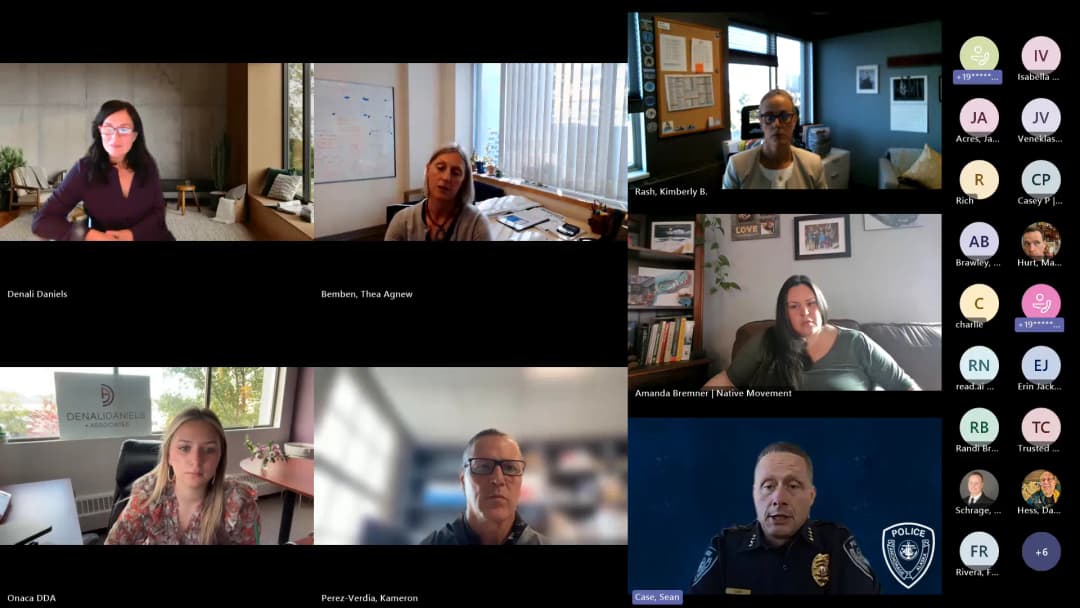
The Task Force to Reimagine the Public Safety Advisory Commission held its first of four information sessions on September 25, 2025, from approximately 10:30 AM to 12:00 PM. The meeting featured a panel of municipal leaders who discussed the current public safety system in Anchorage, how community voices are currently heard, and how a new commission could improve communication, collaboration, and trust. Facilitated by Denali Daniels and Associates, the session included structured panel questions followed by an open Q&A with the public and task force members. Current Public Safety Roles and Community Engagement Cameron Perez-Ferdia (Assembly Chair, Public Health & Safety Committee): Described the Assembly's role as developing policy and allocating funds. Stated that current community input channels are limited by speaking time and scope, creating a gap in communication, collaboration, and trust between the Assembly and the public. Chief Sean Case (Anchorage Police Department): Outlined APD's role as providing law enforcement and crossover services in public health and crisis navigation. Identified existing engagement through community councils, the APD Community Task Force, and an open-door policy. Identified gaps due to Anchorage's geographic diversity and the fear some residents have of formal, recorded public forums. Chief Douglas Straggy (Anchorage Fire Department): Described AFD's mission as serving the community before, during, and after emergencies, including medical response, dispatch, and the Safety Patrol. Reported receiving feedback through community councils, social media, and patient satisfaction surveys. Acknowledged that current feedback mechanisms rely on self-selection and miss large segments of the community. Director Kimberly Rash (Anchorage Health Department): Described the Health Department's role in addressing root causes of harm through public health, mobile clinics, and licensing. Cited gaps where demand for healthcare outpaces provider availability and a lack of access to translation services. Thea Agnew Benben (Special Assistant to Mayor Lafrance, Crisis Response Expert): Shared that the municipality is implementing the 'Crisis Now' model, focusing on someone to call, someone to respond, and a place to go. Stated that current public testimony formats are largely one-way and limited, contrasting this with the more open format of the Housing and Homelessness (HAND) Commission. Panelist Vision for a Future Commission Perez-Ferdia: Suggested a new commission could serve as a hub for community voices, conduct regular listening sessions, oversee a public safety dashboard, pilot projects, and provide policy recommendations and oversight. Chief Case: Emphasized the role of education to help the public understand the full scope of police work. Stated that a commission could facilitate collaboration on policies like use of force and create a safe, two-way avenue for feedback and accountability. Chief Straggy: Wanted the commission to ensure broad community representation and to be familiar with departmental performance data to provide data-informed advocacy to the mayor and assembly. Director Rash: Expressed that the commission could serve as a stronger advocacy partner for upstream solutions, housing, and healthcare, connecting individuals through a community health worker model. Benben: Hoped the commission could provide a forum for a shared, factual understanding of community safety data, allowing residents and the municipality to correctly identify problems and develop solutions together. Public Comments and Testimony Trust and Civilian Oversight: - A task force member (Mercedes): Challenged panelists on building trust, stating civilians feel trust is broken. Posited that agencies ask for trust while dismissing oversight, and described experiencing officer attitudes that she found frightening. - Chief Case: Replied that trust is a two-way street. He stated the department has dramatically increased transparency (use-of-force dashboard, critical incident info). He acknowledged historical cultural hurdles in law enforcement, specifically around race and ethnicity, and cited an internal training on boarding schools that shifted officers' perspectives. He stated it is 'not a valid answer... to say you got to be patient with us.' - Taffy Tolia Fua: Stated the core struggle is identifying where power lies in a commission, warning against creating a body whose recommendations lack implementation authority or funding. - Thea Agnew Benben: Agreed with Tolia Fua, stating a commission needs staffing and a connection to a department that can act on its recommendations to build trust through visible results. Education and Cultural Understanding (Alaska Native/BIPOC Communities): - Terry Light (Trusted Connections): Asked how education can be facilitated both ways and who teaches cultural understanding for Alaska Natives. - Felix: Asked how to overcome professional roadblocks where community members are told they are not police officers, so they cannot understand. - Thea: Responded that the municipality needs stronger connections with regional tribal organizations and home villages to help people who are stranded or in crisis. - Amanda (Native Movement): Suggested the commission could oversee transparency around how investigations into police incidents are triggered and who decides if a third party is involved. - Don Morse: Proposed bringing together Alaska Native people experiencing policing with current APD personnel. Chief Case responded 'Absolutely 100% will participate.' Reentry, Homelessness, and Public Safety: - Christina Scherr (Anchorage Reentry Coalition): Described that over 60% of those incarcerated have substance or mental health issues but less than 12% receive treatment. Asked Chief Case if there has been an uptick in arrests for homelessness and how community partners can best support the police. - Chief Case: Replied that arrests for homelessness-related issues are in the 'low single digits.' He noted efforts by the Hope Team and mobile intervention teams focus on connecting to services. Reflecting on a past pre-arrest diversion pilot, he stated the community lacked the behavioral health infrastructure, but now some infrastructure is in place. Representation: - Anna Brawley: Posed a question about what good representation looks like, asking panelists and attendees to consider what perspectives and communities should be included, not specific people or organizations. Key Outcomes and Next Steps - This was the first of four scheduled meetings aimed at developing recommendations for the new commission. - The next information session will take place on October 16, 2025, focusing on the mechanics and structure of the commission. - Two in-person deliberation sessions will be held on November 13 and 20, 2025 (10:30 AM to 12:00 PM). Community members who attended or viewed at least one information session can vote on recommendations. - A feedback form will be released after the second information session for public input. - Recordings of the sessions will be posted online for public access.

PUBLIC SAFETY 47% · PUBLIC ENGAGEMENT 17% · POLICE ACCOUNTABILITY 11% · PROCEDURAL 5%
243
SEP 24, 2025 · ANCHORAGE, ALASKA · ASSEMBLY & COMMITTEE MEETINGS
Anchorage Assembly Regular Meeting - September 24, 2025

The Anchorage Assembly held a regular meeting on September 24, 2025, beginning at 5:04 PM and continuing into the evening. Key actions included approval of a police technology package, a firefighters union contract, and several ordinances related to housing and public space maintenance. Public testimony addressed tenant protections, short-term rental taxes, and privacy concerns. Consent Calendar - Approved minutes from the regular meeting of September 9, 2025. - Adopted consent agenda minus three polled items (10D1, 10D12, 10D13). Public Comments & Testimony - Tenant Relocation Ordinance (14C): Multiple speakers expressed support, arguing it provides necessary tools to hold negligent landlords accountable and protects tenants from hazardous conditions. - Short-Term Rental Tax (14E): Testimony was mixed. Opponents argued the 5% tax would create an uneven playing field with hotels, harm local families, and reduce tourism. Supporters noted the revenue could fund affordable housing and that similar taxes exist in other communities. - APD Technology (14K/10D12): A speaker raised privacy concerns about data retention, facial recognition, and potential misuse of surveillance technology. - Firefighters Contract (14B): Justin Mack, president of the Anchorage Firefighters Union, spoke in support, highlighting the need for improved compensation and staffing. Discussion Items - Mayor’s Report: Highlighted a new $12 million contract for APD technology (body cameras, drones, tasers, etc.) and economic developments in the visitor industry and Joint Base Elmendorf-Richardson. - 14B – Firefighters Union Contract (AR 2025-235): Approved after debate. The 13% COLA and other provisions were justified as necessary for recruitment and retention. The contract runs through June 30, 2028, with a wage opener in 2027. - 14C – Tenant Relocation Assistance (AO 2025-93): Extensive debate on amendments. An amendment to require 24-hour notice for inspections failed (3-7). Another amendment to delay criminal penalties for failure to vacate failed (3-7). The item was postponed to October 21, 2025. - 14E – Short-Term Rental Tax Ballot (AO 2025-97): Public hearing held. Multiple amendments expected. Postponed to October 21, 2025, after discussion of economic effects and implementation details. - 14K/10D12 – APD Technology Appropriation and Contract (AR 2025-283S / AM 699-2025): The S version added safeguards: data retention limits, quarterly audits, and reporting on First Amendment events. A motion to postpone to a special meeting on Friday failed (6-5). The appropriation and contract were approved (11-1). - 14I – Community Cleanup Surcharge (AO 2025-101): Approved. Creates a $0.50–$0.75 per cubic yard surcharge at the landfill to fund cleanup of public spaces, estimated to generate $1.5 million annually. - Other Items: Approved lease extensions for the permit center and court space, Port of Alaska tariff update, easement for Inlet View Elementary, and alcohol/marijuana license renewals. Key Outcomes - Firefighters Contract: Approved (11-0, youth member yes). - Tenant Relocation Ordinance: Postponed to October 21, 2025. - Short-Term Rental Tax Proposal: Postponed to October 21, 2025. - APD Technology Package: Approved (11-1). Includes $1,997,530 appropriation and a $12 million five-year contract with Axon Enterprise. - Community Cleanup Surcharge: Approved (12-0). - All other consent and non-controversial items approved as noted.

PUBLIC SAFETY 20% · MISCELLANEOUS 10% · SHORT TERM RENTALS 9% · PROCEDURAL 8%
244
SEP 23, 2025 · ANCHORAGE, ALASKA · ASSEMBLY & COMMITTEE MEETINGS
Anchorage Unification 50th Anniversary Lunch and Learn: Mayor Begich Reflects on 2000s Achievements – September 23, 2025

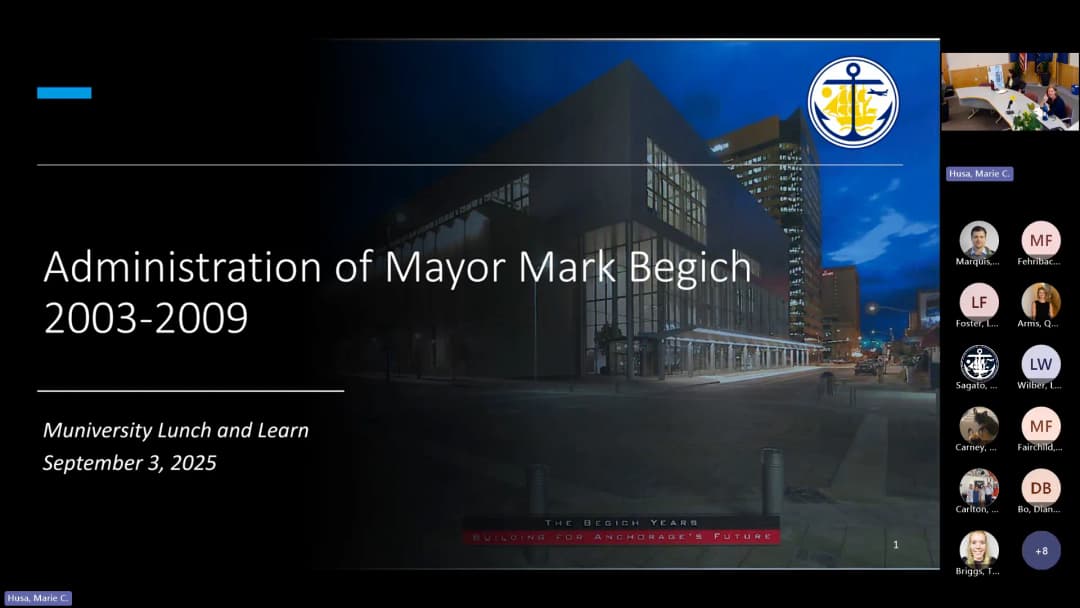
This lunch and learn event, held on September 23, 2025, commemorated the 50th anniversary of Anchorage’s unification. The featured speaker was former mayor and U.S. Senator Mark Begich, who served as mayor from 2003 to 2009. The session included opening remarks from Mayor Susan LaFrance and Municipal Manager Becky Wynn Pearson, followed by a wide-ranging presentation from Senator Begich about his administration’s major projects, fiscal challenges, and management philosophy. Public Comments & Testimony - An audience member praised Senator Begich for his inclusive leadership style and noted that his success came from talking to everyone and not closing anyone out. The speaker expressed hope that the current administration would redevelop that mindset in the community. - Another attendee, without asking a question, referenced the 2008 dedication ceremony for Martin Luther King Jr. Drive and asked Begich to describe how that street renaming came about. Begich shared the story of leveraging state legislative opposition to fund the road and naming it as a lasting legacy. Discussion Items - Fiscal Challenges and Budget Cuts: Begich described taking office facing a $33 million deficit that grew to $40 million. He recounted the difficult decision to lay off library staff, ultimately requiring union concessions through a threat to close city operations between Christmas and New Year’s. The “duct tape approach” led to a balanced budget and later enabled library renovations in Mountain View, Girdwood, and Eagle River. - Denina Center Convention Center: Begich noted that a first ballot measure for the convention center failed by nearly 70% of voters. A second campaign, featuring a commercial with hockey star Scotty Gomez, passed with 52% support. The center opened in October 2008 on time and under budget, with a dishwasher capable of cleaning 15,700 plates per hour—an important feature for emergency operations. The facility became a major economic engine during the 2008–2009 recession, losing no conventions. - Transportation Projects: Begich discussed the acquisition of land for the Lake Otis and Tudor intersection improvements, using a community development authority to purchase property before federal approvals were in place. He also described how he bought up corners for the future Martin Luther King Jr. Drive (then an unnamed road) before the required environmental studies. A separate project cutting a new road through a contaminated city lot to improve circulation was done without state permits over a weekend, drawing complaints from the Alaska Department of Transportation but achieving the desired result. - Midtown Park and Libraries: Begich shared the story of Midtown Park, which was essentially a drainage ditch. By using drainage funds and creative design, the city turned it into a lake and garden. He also recounted hiring Suzanne Flake, then running a conference at the Egan Center, to lead library revitalization. Private donations from BP ($750,000) and Bernie Gotstein ($250,000 for multilingual books) helped fund new library facilities. - Relationship with State Government: Begich emphasized the importance of not using one-time money for operating expenses and noted that state funding for municipalities has diminished. He recalled a meeting with then-Governor Sarah Palin where, despite her cutting municipal revenue sharing, she publicly supported the mayors’ request. Begich argued that city governments are the “end of the line” and that the state, despite being one of the richest, should fulfill its obligations. - Management Philosophy: Begich emphasized empowering talent, hiring people regardless of political affiliation (e.g., keeping Dennis LeBlanc from the previous administration as city manager), and not being afraid to promote from within (e.g., making union leader Rob Hume deputy chief and later chief of police). He encouraged a focus on “what it means” rather than “how much it costs” when evaluating projects. - Vision for the Next 50 Years: Begich urged the community to believe in itself, attract and retain people aged 25–45, and leverage Anchorage’s unique combination of urban amenities and wilderness access. He noted that the fastest dropping population segment is that age group and that the city must focus on opportunities rather than negativity. Key Outcomes - No formal votes or decisions were made at this commemorative event. The session served as a reflection on past accomplishments and a call to action for the future. Senator Begich received a gift (apparently a lunch) and a round of applause at the conclusion. - The event concluded with an invitation to participate in future 50th anniversary celebrations of the Municipality of Anchorage’s unification.

COMMUNITY ENGAGEMENT 16% · ENGINEERING AND INFRASTRUCTURE 15% · FISCAL SUSTAINABILITY 15% · PERSONNEL MATTERS 12%
245
SEP 23, 2025 · ANCHORAGE, ALASKA · ASSEMBLY & COMMITTEE MEETINGS
Former Mayor Rick Maystrom Addresses Anchorage Assembly on 2025-09-23

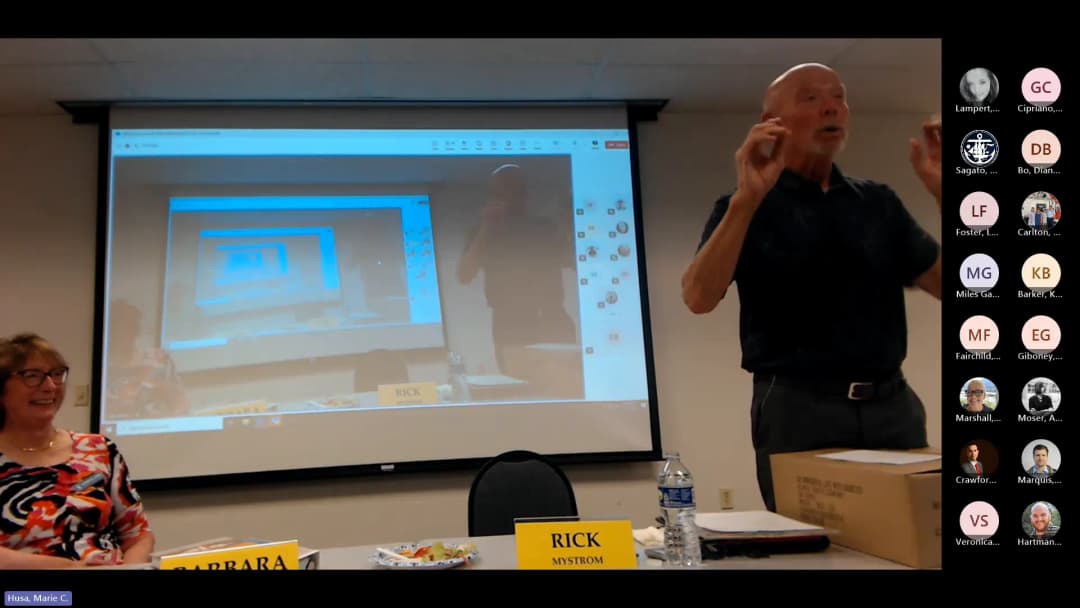
Former Mayor Rick Maystrom (1994–2000) addressed the Anchorage Assembly on September 23, 2025, at 6:25 PM. His presentation focused on his six-year tenure, including his goals of making Anchorage safer, cleaner, and more attractive, and his signature initiatives such as the Downtown Partnership, Bridge Builders, and the 'City of Lights and Flowers' campaign. The meeting included a Q&A session where assembly members and attendees asked about vision-setting, homelessness, diversity programs, and neighborhood quality of life. Presentation by Former Mayor Rick Maystrom - Leadership and Vision: Maystrom described his philosophy that cities succeed in the 21st century by attracting people through quality of life. He set a goal to make Anchorage a safer, cleaner, more attractive city with more activities, and measured success by whether residents were prouder of the city when he left office. - Downtown Revitalization: After learning about Business Improvement Districts (BIDs) at a conference of northern mayors, Maystrom led the creation of Anchorage's first BID, which later became the Downtown Partnership. This required over 50% property owner approval and a small property tax increase. He noted that downtown was described as 'dying' in 1994, but the BID helped transform it. - Crime Reduction: Maystrom initiated a Community Action Plan on Crime (CAP crime) that included removing 9,000 junk cars, graffiti removal within 24 hours, foot and bike patrols, and a new jail. He set a goal of cutting crime in half and achieved a 43% reduction. Anchorage rose from the 50th safest city to the 19th safest among the top 100 U.S. cities, and was second safest in its size category. - Bridge Builders Program: Maystrom described the creation of Bridge Builders, a cross-cultural friendship program started after a dinner with community leaders. It began with 45 people in his backyard and grew to 450 by the end of his term. The program continues to operate, with a potluck event scheduled for September 27, 2025, at the Spenard Rec Center. - City of Lights and Flowers: Maystrom promoted winter lighting and summer flower displays to counter the perception of Anchorage as cold and dark. He encouraged residents to leave Christmas lights up until the last Iditarod musher arrived, and the initiative became a community fixture. - Service Area Expansion: Maystrom recounted the controversial expansion of police service to the Hillside area, which required a citywide vote because of its tax impact. The measure passed, and a judge upheld it as legal. - Westchester Lagoon and Cuddy Family Park: He shared stories of overruling staff to create the Westchester Lagoon skating area and securing a $300,000 private donation from Dan Cuddy to help create Cuddy Family Midtown Park. Q&A Session - Vision-Setting (Claire): Asked who is responsible for the city's vision. Maystrom responded that under Anchorage's strong-mayor charter, it is primarily the mayor's role to articulate a vision and build support by first explaining the problem. He emphasized the importance of a positive, visionary mayor. - Hillside Service Area (Jane): Maystrom provided background on the service area expansion, noting that 80% of city residents supported it while 20% (the Hillside residents) were intensely opposed. He credited City Attorney Mary Hughes for the legal strategy. - Sustaining Programs Beyond One Term (John): Maystrom advised that mayors should actively campaign for successors who will continue key programs and prepare transition reports. - Homelessness (Online question): Maystrom acknowledged he did not have a solution but criticized the current administration for not engaging with the Homeless Commission. He noted that his son resigned from the commission due to lack of communication. He expressed concern that current policies may attract more homeless individuals to Anchorage. - Diversity and Inclusion (Attendee): Asked about continuing Bridge Builders in a challenging political climate. Maystrom stressed the need for public leaders (mayor, governor) to enthusiastically embrace the program, citing former Governor Bill Walker's support as a successful period. - Neighborhood Quality of Life (Daryl): Maystrom emphasized the role of community councils in communicating neighborhood issues to the mayor. He gave an example of reducing gravel on subdivision roads to improve safety and aesthetics. - Big Brothers Big Sisters (Online question): Maystrom shared his personal involvement in founding the Anchorage chapter in 1973, which has since matched an estimated 15,000 mentor-mentee pairs. - Closing Remarks: Several attendees thanked Maystrom for his positive attitude and lasting influence, including one who noted he still picks up trash inspired by Maystrom's example. Key Outcomes - No formal votes or decisions were taken. The meeting served as a presentation and Q&A session with the former mayor.

PUBLIC SAFETY 21% · PROCEDURAL 19% · COMMUNITY ENGAGEMENT 18% · ECONOMIC DEVELOPMENT 11%
246
SEP 18, 2025 · ANCHORAGE, ALASKA · ASSEMBLY & COMMITTEE MEETINGS
Assembly IEOC Meeting – September 18, 2025: Port Updates, AWWU Emergency Projects, and Bond Ratings

The Assembly Infrastructure, Enterprise, and Utility Oversight Committee met on September 18, 2025, at 19:17 UTC to discuss port updates, emergency water and wastewater projects, and strategic planning for utilities. The meeting began with introductions, including Mike Gabbott, the new interim Port Director (day five/six on the job). Chair Constant noted the recent rededication of the Track J public park and requested that fence-moving continue with available budget. Consent Calendar - No consent calendar items were presented. Public Comments & Testimony - No members of the public provided testimony. Discussion Items USACE 7001 Requests - Chair Constant introduced a request to extend the U.S. Army Corps of Engineers’ operating authority for the Municipality of Anchorage, to be included in the 2026 Water Resources Development Act. This would allow future partnerships on water-related projects (e.g., erosion, drainage, port, hydropower). - Member Brawley asked about potential downsides (strings attached). Eric Adams (Program Manager) explained that if the Corps acts as a contractor (pay-for-service), few strings are attached; if there is a cost share, more regulations apply, but the Corps does its own permitting. Port of Alaska Updates (General PAMP Update) - Fender Repair Project: Change order authority request of $85,000 (made the addendum for next Tuesday’s agenda). The total contract value is $1.2 million. A future $30,000 change order will follow. The repair addresses rusted steel beams discovered when fenders were removed. - POL2 Condition Assessment: An RFP for a condition assessment was issued yesterday (September 18, 2025), with expected completion by end of 2024 (corrected to 2025). - PAMP Construction: North Extension Stabilization 1 marine base dredging completed; shoreline revetment using Armor Rock expected completion October 12, 2025. Terminal 1 construction meeting on September 16 was positive; Merit Grant Agreement unlocking $50 million federal funds to be completed shortly; site work to begin in 2026. Congestion anticipated; stakeholder coordination ongoing. - Pile Driving Concerns: Member Constant requested that pile driving not occur on Sundays (6–8 a.m.) to give Government Hill neighbors a break. Adams noted the contractor’s baseline schedule shows six days per week, but they will be responsive to constituents. - Crane Agreement: Request to continue the agreement for two more meetings to allow for further negotiation amid port leadership transition. Member Constant suggested inviting Matson’s new primary contact to introduce themselves to the committee. - PCT (Petroleum Consolidation Terminal): Adams reported that the goal is to put “P in PCT” (i.e., begin petroleum product use) as soon as possible; anticipated ready by mid-late October. Chair Constant requested a celebration event when the first commercial gallon flows. - Port Director Recruitment: Municipal Manager Wynn Pearson stated the position has been widely posted, over a dozen applicants passed initial screening, first-round interviews underway, hoping to make an offer by end of October, with someone potentially in place by end of year. Anchorage Water & Wastewater Utility (AWWU) Emergency Projects - 42-Inch Transmission Main Break (August 29, 2025): Occurred on North Pine Street near the Glenn Highway. A privacy fence post likely damaged the pipe 30 years ago, causing failure. No private property damage, minor DOT fence damage. Specialized repair needed ($500k estimated, operating cost). Fire flow concerns mitigated with AFD coordination. - Sewer Line Break at Airport (August 14, 2025): 21-inch concrete trunk sewer line failed, likely earthquake-related (2018). Temporary repair ($250k) completed; permanent repair may require pilings (cost not yet determined). No overflow occurred. Member Brawley asked if FEMA reimbursement is possible; Persinger said the ship has sailed. - Alley Break Behind Glacier Brewhouse: Leak into basement. Temporary water system being set up; estimated repair cost $150k (operating). Property lines likely at building face, so public expense. - Eagle River Leak: New leak on pipeline that feeds correctional facility, possibly earthquake-related. Fire protection concerns; slope stability being evaluated. Permanent repair likely next summer. - Water Main Break at Furrow Creek: Occurred in June, isolated with valves. Trenchless construction needed; scheduled for 2026 construction season. No customers out of service but reduced fire redundancy. - System Condition and Planning: Persinger noted breakage is back to normal after a post-2018 earthquake dip. AWWU is updating water and wastewater master plans. Members requested a future presentation on how projects are prioritized and financed, including strategic planning and condition assessments. - Fire Hydrant Backlog: Persinger explained that bagged hydrants are prioritized based on radius coverage; some old downtown hydrants lack parts and are scheduled for replacement in 2026. - Bond Ratings: Fitch reaffirmed double-A bond ratings for both Anchorage Water Utility and Anchorage Sewer Utility, with stable outlook. - Aspen Permit: Biological evaluation submitted to EPA Region 10. Persinger requested a joint work session with the assembly and administration in coming months. Informal tribal engagement ongoing. - Waste Energy RFP: Multiple RFPs issued for site selection, air quality, and financial viability; evaluations underway. These are not for construction, but to inform a go/no-go decision. - Stormwater Utility: Persinger had no update; deferred to Deputy Municipal Manager Spafford. An account exists but the utility has no body. Other - AWWU unveiled a pink jet truck (employee-led fundraiser) debuting October 4 at the Making Strides Walk. Key Outcomes - Change Order Authority Request: $85,000 for fender repair will be on the next Assembly agenda (September 23, 2025). - Crane Agreement: Continued for two more meetings (expected end of October) pending further negotiation. - AWWU Supplemental Appropriation: Possible request late 2025 for emergency project costs. - Future Presentations: AWWU will provide a strategic planning and project prioritization presentation; Chair Constant will request a work session on the Aspen permit. - Port Director: Recruitment ongoing with goal to have someone in place by end of year. - Meeting Adjourned: No audience participation.

WATER AND WASTEWATER MANAGEMENT 42% · PORT MANAGEMENT 22% · PUBLIC ENGAGEMENT 5% · ENGINEERING AND INFRASTRUCTURE 5%
247
SEP 18, 2025 · ANCHORAGE, ALASKA · ASSEMBLY & COMMITTEE MEETINGS
Assembly Budget and Finance Committee Meeting - September 18, 2025

The Assembly Budget and Finance Committee of the Whole met on Thursday, September 18, 2025, from 10:00 to 11:05 a.m. The committee received updates from the Budget Advisory Commission, the MOA Trust Fund, and administration on revenue and budget to actuals, discussed fund balance implications of the 2023 ACFR, and heard a presentation on a proposed short-term rental tax. No formal votes were taken. Budget Advisory Commission Update - Chair Mills reported the commission is drafting a resolution on the budget, aiming to finalize it at a special meeting for timely submission. They are short on members and encouraged applications. MOA Trust Fund Update - Mr. Slifka reported the fund achieved a 9.4% trailing three-year return through June 2025, exceeding the inflation+4% target by over 200 basis points. Fund value at end of August was $467 million. The expected payout to MOA next year may increase by $400,000 to $16.9 million (from $16.5 million). - The board is hiring a director of investment operations (applications due September 19). An RFP for a consultant selected Callan; the contract (item 11B on the September 23 agenda) requires assembly approval. - Discussion: Member Constant noted Callan’s bid was roughly double the lowest bidder and requested a memorandum explaining the value differential and minority opinion before the vote. The board agreed to provide that by Tuesday, September 23, or Constant would move to postpone. - Ms. Baldwin Day asked about applicant numbers for the director position; the hiring process is ongoing and not yet public. OMB Director Revenue and Budget-to-Actuals Update - The budget-to-actuals report was delayed due to technical issues. Through 66% of the fiscal year, the municipality spent 58% of the budget; some debt service entries will bring that closer to 66%. - FEMA and ARPA closeout is progressing; ARPA projects expected to finish by year-end. The ML&P closeout communication regarding the Golden Lion requirement is expected in October. - Revenue Report (presented by Mr. Cipriano): - Property tax collected at 99.7% of the $351 million budget ($349.9 million collected). The 0.3% shortfall ($1.06 million) requires further detail. - Route tax down 17% from 2024 record of $45.7 million; third quarter expected to be largest but slightly down. - Motor fuel excise tax rate is 11.5 cents per gallon. At member Constant’s request, staff will provide a projection of revenue from an increase matching the Mat-Su Borough’s 10-cent increase. - Building safety at 102.6% of projection partly due to a prior mill rate increase in the building safety service area. - Cash pool earnings negative $1.4 million due to market valuation; a recent Fed rate cut may improve returns. - APD counterfines lagging but considered de minimis; PFD garnishments are collected through court referrals. - Municipal assistance from the state (historically up to $4 million) depends on annual legislative appropriation and submission of the ACFR. Fund Balance Presentation - Mr. Falsey explained the “10 and 2” fund balance policy: 10% of current year expenditures for major funds plus 2% working capital reserve. The 2023 ACFR shows unassigned fund balance of negative $51 million, meaning no spendable fund balance and non-compliance with the policy. - Historical context: the 2019 earthquake and COVID drew down reserves deeply; by 2023 the balance recovered to the working capital level (2%) but still shows a deficit. FEMA reimbursements received after the ACFR close were not fully transferred; if corrected, 2023 would have been close to compliant. - Deficits in the Building Safety Service Area and IT fund affect the roll-up. The administration is analyzing how these should be represented. - The 2024 closeout (expected March 2026) may show a surplus due to vacancy savings and FEMA receipts, potentially creating a positive spendable fund balance. Short-Term Rental Tax Proposal - Mr. Volan and Mr. Constant presented a proposed charter amendment (AO 2025-?) to impose an additional 5% tax on short-term rentals (STRs) on top of the existing 12% room tax, with revenues dedicated to housing and associated infrastructure. Exemptions for owner-occupied properties are under consideration. - A complementary registration project (requiring STRs to register and provide unit-specific data) is being developed to address compliance gaps – third-party booking platforms have not provided per-property tax data as required by existing code. - Discussion: Sponsors stated the tax is intended to generate resources to offset neighborhood impacts, not to punish STRs. Member Silvers asked about evidence of STR-to-long-term rental conversion in other jurisdictions; data was not available. Ms. Baldwin Day requested revenue estimates (requested just before adjournment) and clarified where the housing fund would be established – it does not currently exist and would require a follow-up ordinance if the charter amendment passes. - No vote taken. A public hearing is scheduled for the September 23, 2025 assembly meeting. Sponsors may introduce an amended version before then. Key Outcomes - No formal votes were held. - The MOA Trust Fund board will provide a written cost-differential memo regarding the Callan contract by September 23, or the item will be postponed. - The administration will provide a revenue estimate for a motor fuel excise tax increase. - Detailed budget-to-actual review deferred to a future meeting due to document distribution timing. - The committee acknowledged that no spendable fund balance is available from the 2023 ACFR; the 2024 ACFR is expected to inform future budget decisions. - The short-term rental tax proposal will proceed to public hearing on September 23, with potential amendments.

FUND BALANCE 22% · BUDGET EQUITY ANALYSIS 20% · SHORT TERM RENTALS 20% · FISCAL SUSTAINABILITY 16%
248
SEP 17, 2025 · ANCHORAGE, ALASKA · ASSEMBLY & COMMITTEE MEETINGS
Assembly Housing and Homeless Committee Meeting – September 17, 2025

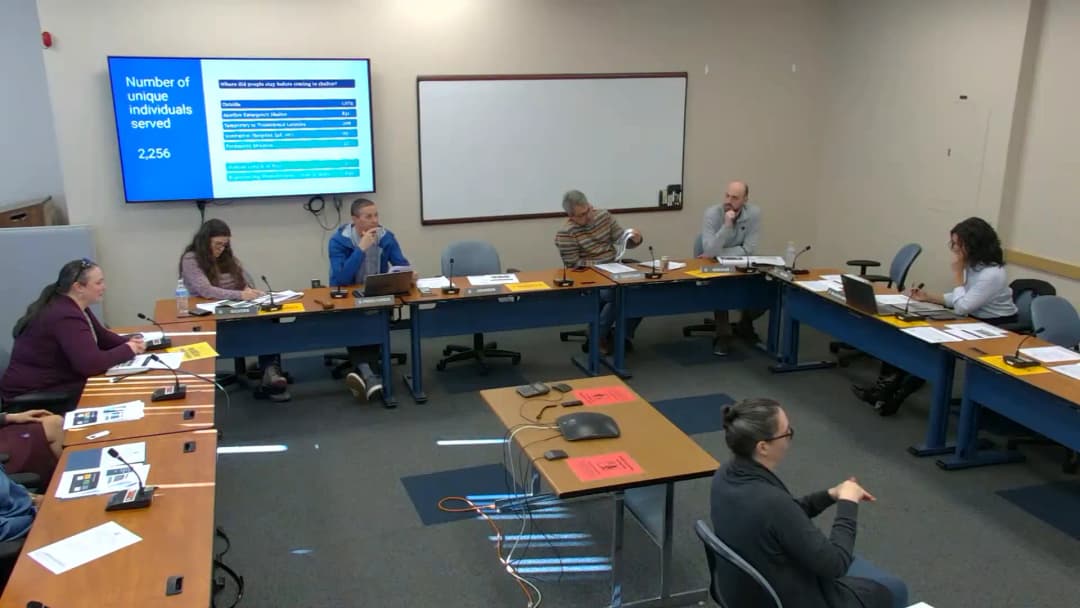
The Assembly Housing and Homeless Committee met on Wednesday, September 17, 2025, at 2:00 PM to receive updates from the Mayor's Office and Health Department on shelter and housing initiatives, hear a data presentation from the Anchorage Coalition to End Homelessness, and take public testimony. No formal votes were taken, but several action items and data requests were discussed. Public Comments & Testimony - Kenny Peterson (16-year advocate) expressed strong support for the proposed "Good Neighbor Fund," comparing it to the concept of fast offerings and urging the committee to adopt it as a way for the community to help individuals experiencing homelessness. - Roger Branson (District 3, mental health advocate) praised the availability of data from HMIS and encouraged the committee to continue tracking and using data to inform decisions. - Shine Williams (President/CEO of Shine Community Health) requested that sustainability become a funding priority, noting that their prevention services (including a furniture bank) have operated without support for over a year, serving over 100 families. - J (unhoused individual) expressed concern about the disconnect between people in houses and those outside, stating that the plans do not adequately address basic survival needs (water, food, electricity). He also criticized the camping maps, saying they are not legally binding and that police are enforcing them without providing access to information or charging stations. - Dave Piper (Christian Health Associates) reported that during the 2024-2025 winter season, their program served 108 unique individuals in a single site and 247 in a hotel overflow, with 41 and 58 housing exits respectively. He thanked the city for support. - Lina (no affiliation stated) expressed optimism about the system's compassion and acknowledged the difficult work of the committee and staff. Discussion Items - Mayor's Office & Health Department (Thea Egging, Special Assistant; Frances Camerly, Increased Health Department) presented an overview of the coordinated safety net shelter system, emphasizing integration with crisis response, the HOPE team, mobile crisis team (moving toward 24/7), and the safety center (now accepting voluntary participants). They reported that as of August 31, Henning took over East 56th Avenue shelter, transitioning from 200 to 100 individuals, and Linda's Place opened on September 2. Alex Place has been at capacity, with beds turning over every two days. They also discussed housing updates: reallocation of HOME-ARP funds to extend rental assistance for grantees serving the most people exiting homelessness, microunits for recovery residences (construction under contract, 8 additional units likely), and a proposed relocatable dwelling unit ordinance. The Good Neighbor Fund (established at Alaska Community Foundation) was introduced as a mechanism to cover small expenses that divert people from homelessness. The committee asked detailed questions about diversion, turnaway numbers, data quality, and the sustainability of rental assistance programs. - Jessica Marks (Interim Executive Director, Anchorage Coalition to End Homelessness) presented data from the 2024-2025 winter shelter season (October 2024 through June 30, 2025): 532 beds across five shelters served 2,256 unique individuals. Of those, 849 had been homeless for one year or more (500+ for two years or more). Key demographics: 111 veterans (40 chronic), 575 survivors of domestic violence (106 within last three months), 142 aged 65+. Exits: 208 to permanent housing, 315 to another shelter, 253 to outside, 56 to institutions, and over 1,000 to unknown destinations. Committee members asked about coordinated entry, vacancy rates, returns to homelessness, and the distinction between shelter exits and exits from homelessness. Discussion also touched on the challenge of housing individuals completing residential treatment programs. Key Outcomes - No formal votes were taken during the meeting. - The committee requested additional data on: (1) unique individuals unable to find shelter (turnaways) and how quickly they are later sheltered, (2) returns to homelessness after exits to permanent housing, and (3) the percentage of housing options that go through coordinated entry versus other programs. - The Mayor's Office will bring forward reallocation of HOME-ARP funds for rental assistance and a proposal for the Anchorage Affordable Housing Land Trust. - The relocatable dwelling unit ordinance is expected to come to the Assembly soon. - The Good Neighbor Fund will be publicly announced shortly; the committee noted the need to review legal implications for municipal involvement. - The next Project Homeless Connect event is scheduled for Tuesday, September 23, 2025, at the Egan Center (10 AM – 4 PM), with 82 service providers and nearly 100 volunteers. - The committee will receive a data dashboard (likely quarterly) from the Health Department and the Coalition.

HOMELESSNESS 72% · AFFORDABLE HOUSING 15% · MENTAL HEALTH AWARENESS 4% · TRANSPORTATION SAFETY 3%
249
SEP 17, 2025 · ANCHORAGE, ALASKA · ASSEMBLY & COMMITTEE MEETINGS
Assembly Housing and Homeless Committee Meeting – September 17, 2025

The Assembly Housing and Homeless Committee convened on Wednesday, September 17, 2025, at 2:00 PM. The meeting featured updates from the Mayor's Office and the Anchorage Health Department on the coordinated shelter system and crisis response, a data presentation from the Anchorage Coalition on Homelessness on the 2024–2025 winter shelter season, and public testimony. No formal votes were taken. Mayor's Office & Health Department Presentation Thea Agnew Bemben, Special Assistant to Mayor LaFrance, and Kimberly Rash from the Anchorage Health Department provided an overview of the administration's 2026 priorities. Shelter Operations Updates: - Henning took over the East 56th Avenue shelter, maintaining 200 individuals until September 2nd. When Linda's Place (1911 East Fifth Avenue) opened, East 56th decompressed from 200 to 100 individuals voluntarily. - Linda's Place opened a third floor exclusively for women, providing 29 beds. - Alex Place changed its attendance policy to flip beds every two days instead of three to ensure maximum utilization. - MASH housed 6 individuals in July, 8 in August, and is on track to house 10 in September. Crisis Response and Diversion: - The Mobile Crisis Team is close to achieving 24/7 operation and began transporting individuals. - The Safety Center broadened its criteria to allow voluntary stays, previously limited to incapacitated individuals under a Title 47 hold, to facilitate connections to detox and treatment. - The Good Neighbor Fund, a project by Kenny Peterson established at the Alaska Community Foundation, was announced to cover finite expenses (e.g., hotel nights, plane tickets, license fees) not covered by other funds. Housing Funding: - The Health Department is reallocating HOME ARP funds to extend rental assistance for grantees serving the highest volume of people exiting homelessness, as ERA2 funds expire September 30, 2025. Committee Discussion: - Yaro Silvers requested data on unique individuals unable to find shelter, distinguishing it from total turnaway events. (The Health Department noted there were 75 total turnaway requests over a weekend, but that these were not 75 unique individuals.) - Christopher Constant questioned whether the Safety Center's new voluntary function is a permanent component or a stopgap until the crisis stabilization center opens. He highlighted that seeking residential treatment can risk one's shelter bed, acting as a barrier to care. - Aaron Baldwin Day emphasized the need for long-term sustainability in rental assistance programs, including case management for stable employment and transportation, and requested data on returns to homelessness. Anchorage Coalition on Homelessness Data Presentation Jessica Parks, Interim Executive Director of the Anchorage Coalition on Homelessness, presented data from the 2024–2025 winter shelter season (October 2024 to June 30, 2025). System Utilization Statistics: - 5 shelters with 532 beds served 2,256 unique individuals. - The median shelter stay was 22 days. - 849 individuals had been homeless for one year or more; almost 500 had been homeless for two years or longer. Demographics: - Prior to entering shelter, 831 came from unsheltered locations, 206 from temporary or transitional locations, 85 from an institution, and 32 from a permanent situation. - 111 veterans were served (40 chronically homeless). - 182 transition-age youth (age 18–24) were served. - 575 survivors of domestic violence or sexual assault were served (106 reported this occurring in the last 3 months). - 142 individuals aged 65 or older accessed the shelters. Health Conditions: Self-reported disabling conditions included mental health disability (41%), alcohol or drug use (26%), chronic health conditions (25%), and physical disability (28%). Shelter Exits: Of recorded exits, 208 exited to a permanent housing situation, 315 to another emergency shelter, 253 to unsheltered locations, and 56 to an institution. Exits for over 1,000 individuals were marked as unknown. Committee Discussion: - Jared Kirker recommended the label "chronically homeless veterans" instead of "chronic veterans" for accuracy. - Aaron Baldwin Day requested aggregate data from all HMIS-participating shelters to understand homelessness beyond municipally operated sites, and reiterated the need for data on returns to homelessness. Public Comments - Kenny Peterson expressed full support for the Good Neighbor Fund, invoking scripture to frame it as a community responsibility. - Roger Branson expressed appreciation for the availability of reliable HMIS data and advocated for support for his furniture bank serving over 100 families without municipal support. - Jamie Lopez criticized a disconnect between policy and on-the-ground reality for unsheltered individuals, citing enforcement actions contradicting city maps and the restriction of basic survival needs like phone charging. - Dave Kuiper (Christian Health Associates) expressed gratitude for city support, reporting 108 individuals served in a single site and 247 in a hotel overflow, with 58 and 41 exits to housing respectively. - Phil Cannon expressed optimism about the compassion within the community and the system. Key Outcomes - The Committee received reports and took no formal actions. - The Health Department will provide more specific data on unique individuals turned away from shelter. - The Good Neighbor Fund will be announced publicly for community donations. - The data dashboard is expected to be released soon. - The meeting adjourned.

HOMELESSNESS 80% · AFFORDABLE HOUSING 7% · DATA MANAGEMENT 6% · PUBLIC ENGAGEMENT 4%
250
SEP 17, 2025 · ANCHORAGE, ALASKA · ASSEMBLY & COMMITTEE MEETINGS
Anchorage Assembly Legislative Committee Meeting - September 17, 2025

The Anchorage Assembly Legislative Committee met on September 17, 2025, to begin discussions on the 2026 state legislative program. The meeting focused on developing a focused, short list of priorities centered on the Port of Alaska modernization and three thematic areas: safe, secure, and affordable. No votes were taken, but the committee established a timeline for drafting, introduction, and adoption. Discussion Items - Mayor LaFrance Opening Remarks: The mayor outlined her goal for a short legislative program zeroing in on issues where legislative action can make the biggest difference. The top priority is funding for the Don Young Port of Alaska modernization, with a plan of finance splitting costs equally between federal funds, state funds, and surcharge-supported revenue bonds. The other priorities are grouped into three themes: safe (public safety and first responders), secure (resilience and critical infrastructure), and affordable (policies to lower cost of living). - Mr. Clauda’s Presentation: Staff presented guiding principles—focusing asks that have a direct fiscal impact on the municipality, prioritizing the port, and using the safe/secure/affordable format. Key municipal code requirements were noted: the legislative program must be introduced before budget adoption and adopted by December 10th. Examples of possible items under each theme were given, such as community assistance funds, capital requests for public safety, housing and energy affordability, and transit. - Discussion on Scope and Feasibility: Assembly Member Constant raised concerns about asking the state for money given the bleak fiscal outlook, but acknowledged the Port is a special case due to a potential geobond. He also noted that behavioral health and education have been historically important municipal priorities that should not be dropped. He asked for examples of items being removed from last year’s program; staff replied they would review. - Member Rivera’s Questions: She asked about a temperature check from legislators on the upcoming session (an election year) and whether the administration had reviewed the Anchorage School District’s 2026 priorities. The mayor and staff agreed on the importance of education and behavioral health, even if they are not direct municipal expenditures. - Lobbyist Wendy Chamberlain Insights: Chamberlain identified two major opportunities: (1) a federal rural transformation project providing $250 million/year for five years for new behavioral health programs—Anchorage qualifies as rural—and the administration has already submitted a proposal; (2) the potential announcement of a natural gas pipeline project in December/January, which could include funding for the port via “analysis” or bonding capacity. She noted that the fiscal plan remains an ongoing issue. - District Priority List: Members discussed whether to keep a list of district-specific capital projects attached to the legislative program. Chamberlain advised that direct conversations by assembly members with their legislative counterparts are more effective than a paper list. The administration suggested the list could be a separate attachment but noted that keeping legislators focused on one page was a prior concern. - School Transportation Funding: Member Ross inquired about supporting the Anchorage School District’s priority on changing the transportation funding formula. Chamberlain noted it is a contentious battle and the school district’s top priority is likely a state fiscal plan. Key Outcomes - The committee will meet next on October 15, 2025 to review a near-complete draft of the legislative program. - The goal is to introduce the program before the budget adoption meeting (likely October 18, 2025) and have final assembly action by December 2, 2025 (the code deadline is December 10th). - Municipal departments are being asked to submit items for consideration, which will be vetted and slotted into the three themes. - The administration will incorporate feedback from the committee, including consideration of behavioral health and education as indirect but critical priorities. - The district-specific project list may be handled separately; the committee will continue refining the format.

LEGISLATIVE SERVICES 55% · PUBLIC SAFETY 16% · PROCEDURAL 10% · PUBLIC ENGAGEMENT 10%
OPENPUBLICA · PUBLIC MEETING INDEXUPDATED DAILY · openpublica.com