Browse by city
Date range
Search help

Search titles, summaries, topics and stored transcripts together. Keywords may match separately; put the whole query in double quotes for a phrase. Matching follows word analysis, so punctuation is not exact. Both dates are included. Documents are not searched.

SHOWING 91–100 ENTRIES
91
JUN 10, 2026 · BOSTON, MASSACHUSETTS · CITY COUNCIL
Boston City Council Regular Meeting - June 10, 2026

The Boston City Council held a regular meeting on June 10, 2026, at 12:00 PM in the Christopher Iannella Chamber. The meeting included two presentations celebrating Pride Month and recognizing June 19, 2026, as Napoleon Jones-Henderson Day, followed by approval of several consent agenda items, committee reports, and a lengthy debate on the Fiscal Year 2027 budget. The council passed a $8.1 million amendment package to restore funding for housing vouchers, senior services, youth jobs, arts, and other programs, and approved the FY2027 budget as amended. Consent Calendar - Approval of Minutes: The minutes from the June 3, 2026 meeting were approved unanimously. - Consent Agenda Resolutions: The council approved a consent agenda containing 15 resolutions recognizing individuals and events, including Glenway Musicians, Dorchester Day Award winners, and several centenarians. Presentations - Pride Month Celebration: Councilor Santana led a presentation featuring speakers Christian Gardet (artist and mental health specialist), Tina Jushi Caruso (artist and advocate), and a third speaker who emphasized the need for sustained support for LGBTQ+ communities, including restoring funding to the Office of LGBTQIA+ Advancement. - Napoleon Jones-Henderson Day: Councilor Mejia presented a resolution declaring June 19, 2026, as Napoleon Jones-Henderson Day, honoring the late artist and mentor who helped bring Juneteenth celebrations to Boston. Akua Holmes spoke about his legacy. Communications from the Mayor - Docket 1181: A $1,000,000 Cummings Community Safety Grant from the Cummings Foundation to support community safety, public health, community events, and youth engagement initiatives. Passed unanimously (12-0). - Docket 1182: A $3,220 MassAbility/Rehabilitation Commission grant to fund employment and training assistance for disabled individuals at Boston's MassHire Career Centers. Passed unanimously (12-0). Reports of Public Officers and Others - Dockets 1183-1185: Placed on file, including a notice of Mayoral actions, election results for the Boston Retirement Board, and a communication from Councilor Flynn regarding elevator failure protocol at BHA developments. Reports of Committees - Appointments to Landmarks and Historic District Commissions (Dockets 0796-0800, 1037-1040): The council confirmed eight appointments and reappointments to the Boston Landmarks Commission, Back Bay Architectural District Commission, and Fort Point Channel Landmark District Commission, following a committee hearing on June 5, 2026. All passed with 11-0 or 12-0 votes. - Revolving Fund Limits (Dockets 0741-0754): The council approved 14 revolving fund limits for FY2027, covering Boston Public Schools facilities, transportation, technology, environmental conservation, energy, BERDO, BCYF child care, Law Department property repairs, Police Department fitness center and K-9 training, Arts & Culture public art and Strand Theatre, Tourism, and the Transportation Department bikeshare program. All passed unanimously with roll call votes ranging from 11-0 to 12-0. Discussion Items: FY2027 Budget (Docket 0733) - The council debated the FY2027 operating budget, which grew by 2.1% (the slowest since the Great Recession). Councilor Weber, Chair of Ways and Means, introduced a substituted committee report totaling $8.1 million in amendments, restoring cuts to housing vouchers ($2 million), senior programming ($1.2 million), youth jobs ($750,000), Black Male Advancement ($555,000), LGBTQ+ Advancement ($200,000), Women's Advancement ($100,000), arts and culture ($600,000), small businesses ($600,000), food access ($400,000), returning citizens ($750,000), and other programs. - Amendments Considered: - Councilor Coletta Zapata moved to restore $1.2 million for the Mayor's Office of Immigrant Advancement but withdrew the motion after discussion. - Councilor Fitzgerald offered a $1.4 million amendment (funded by cuts to Boston Transportation Department personnel) to support the coordinated response team, age-strong grants, food justice, EMS health and wellness, legacy business awards, MWBE procurement readiness, youth jobs, arts and culture, human rights commission, veterans, and fair housing testing. Passed 10-3. - Councilor Fitzgerald offered a second amendment restoring $140,000 for MOIA ESOL and miscellaneous grants from various department cuts. Passed 12-0. - Councilor Flynn offered three amendments (total $1.5 million) funded by cuts to Neighborhood Services for BPD crime lab equipment, BPD health and wellness, and firefighter cancer screening. All three were defeated (2-10 or 2-9). - Councilor Mejia offered three amendments (total $3.08 million) funded by cuts to BPD personnel and housing services for food justice, housing, arts, veterans, and youth jobs. All three were defeated (3-9 or 4-9). - Councilor Culpepper offered an amendment ($200,000) funded by BTD contractual services for PFAS-free turnout gear for firefighters. Defeated 5-7. - After debate, the council passed the amended budget (Docket 0733) by a vote of 12-1, with Councilor Mejia voting no. The final budget includes the Fitzgerald amendments and the original chair's package. Motions, Orders, and Resolutions - Dockets 1186-1196 (except 1192): Tabled to the next regular meeting on June 24, 2026, by a 10-1 vote (Councilor Mejia opposed). - Docket 1192 (17F Order): Councilor Flynn's order requesting data on housing units and affordable units approved over the last ten years by neighborhood and council district passed unanimously (10-0). Late Files and Consent Agenda - Late Files: Ten personnel orders were added and passed unanimously. - Consent Agenda: The previously listed 15 resolutions were approved. Adjournment - The council adjourned in memory of several individuals: Mildred "Millie" Driscoll, William "Billy" Michael Sullivan Sr., Helene L. "Betsy" McDonough, and Richard Sullivan. The next meeting is scheduled for Wednesday, June 17, 2026, at 10:00 AM. Key Outcomes - Approved $1,003,220 in grants (Cummings Community Safety Grant and MassAbility grant). - Confirmed eight appointments to historic and landmarks commissions. - Approved 14 revolving fund limits for FY2027. - Passed the FY2027 operating budget ($4.9 billion) with $8.1 million in amendments, restoring funding for housing, seniors, youth, arts, small businesses, and equity offices. - Passed a 17F order for housing data. - Adjourned in memory of four individuals.
PROCEDURAL 55% · FISCAL SUSTAINABILITY 18% · PUBLIC SAFETY 4% · YOUTH PROGRAMS 4%
92
JUN 10, 2026 · BOSTON, MASSACHUSETTS · CITY COUNCIL
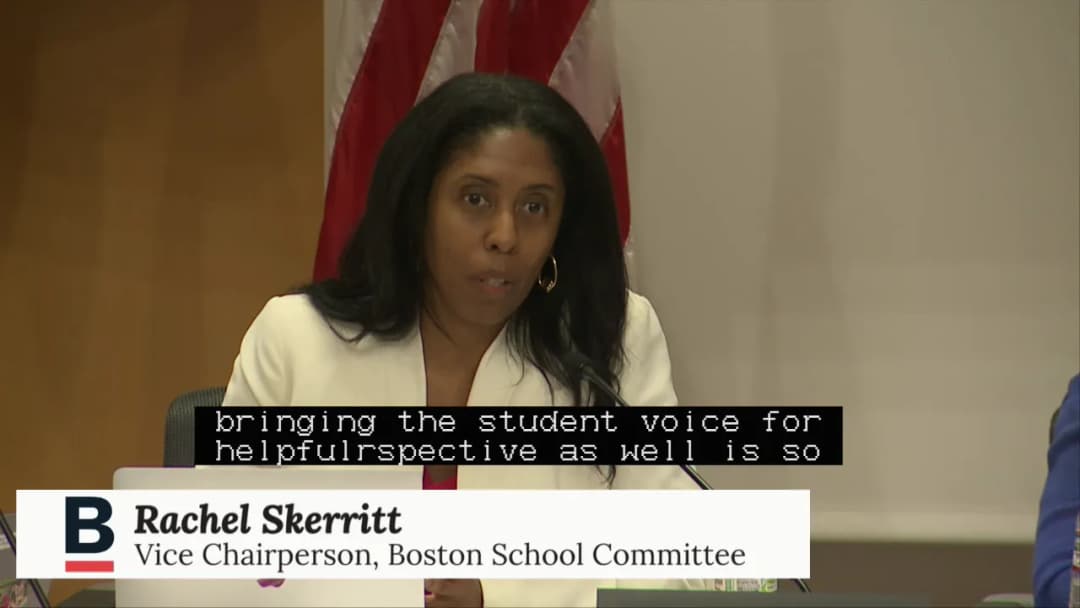
Boston School Committee Meeting – June 10, 2026: Budget, Policy Votes, and Community Concerns on Special Education and SLIFE Programs

The Boston School Committee met on June 10, 2026, starting at 5 p.m. to accommodate a packed agenda. Chaired by Jerry Robinson, the meeting included the superintendent's report, public testimony from 27 speakers, action on multiple grants, policies, and charter renewals, as well as presentations on special education, the superintendent's evaluation, and a new private school application. The meeting adjourned after 11 p.m. Consent Calendar - Approval of Minutes: The minutes from the previous meeting were approved by unanimous consent. - Grants and Donations: 14 grants totaling $5,039,061 and two in-kind donations valued at $5,225.49 were approved by unanimous consent. Grants focused on social-emotional learning, health and wellness, career and technical education (including $920,000 for Madison Park), and community preservation (over $3.5 million for schoolyard improvements at Conley, Everett, Trotter, and UP Academy Dorchester). Public Comments & Testimony - SLIFE Program Cuts: Multiple educators and advocates (Beth Nivrich, Jen Hayes, Ana Velarde, Alicia Silva, Ariana Sicairos McCarthy, Shaina Gilbert, Robin Kelly, Juan Gutierrez, Myra de Rocha, Kimberly Hirsch) opposed the district's decision to exit students from the SLIFE (Students with Limited or Interrupted Formal Education) program after two years and to cut native literacy teacher positions. They argued that the two-year timeline contradicts research on language acquisition, that exits are being made without individualized assessments, and that cuts to native literacy instruction violate the Medias consent decree. They urged the district to stop forced exits and preserve staffing. - Special Education and Inclusion: Several parents (including a parent speaking on IEP placement, another on lack of inclusive capacity, Camille Stubb, Courtney Freely Carp, Anne Marie Baduva, and others) criticized the placement process for students with IEPs, the lack of clear information on inclusive practices, and the disproportionate burden on Black students and multilingual learners. They called for meaningful inclusion with appropriate staffing, resources, and family partnership. - Exam School Admissions: Deirdre Manning raised concerns about the tier system for exam school admissions, arguing it disadvantages students from under-resourced neighborhoods like Mattapan. - SLIFE Student Exits: Teachers highlighted that the district lowered the ACCESS score requirement from 2.5 to 1.7, exited students based on time rather than readiness, and cut positions without consulting educators. One speaker noted that her SLIFE program at Charlestown High School was closed last August, wasting curriculum and expertise. - School Closures: Cheryl Buckman expressed gratitude for the community engagement during the Dever school closure process but called for carrying its values forward. - Bilingual Programs: April Bo Wong criticized the district for denying citywide access to the low-incidence bilingual Chinese program at Josiah Quincy Elementary, calling it inequitable and wasteful of capacity. - Facility Issues: Eugenia Corbo and Jessica Cortez highlighted that classrooms at the Mario Umana Academy reached 95°F in May because central air could not be activated until mid-May due to a scheduling failure. They urged the district to speed up the cooling startup process. Discussion Items - Superintendent's Report: Superintendent Mary Skipper reported on the FY27 budget approval, noting an enrollment decline of 3,000 students over two years (including a drop in multilingual learners due to federal immigration policy). She stated that 368 permanent educators were initially accessed, with 66 still unassigned; 205 paraprofessionals were accessed, with 46 unassigned. There will be no layoffs of permanent teachers or paras. Staff diversity reached 58.8% people of color, and educator language fluency rose to 42.7% (up from 31% in 2021). Summer programming: 4,631 students enrolled in summer learning (capacity 5,850), 2,856 in high school credit recovery, 625 in middle school recovery, and 277 in the exam school initiative. The district received a $12.8 million Bloomberg Philanthropies grant for skilled trades at Madison Park. A video highlighted the 2025–26 school year. - AI Policy: The committee discussed the proposed AI policy, which includes guidelines for safe and ethical use, student safety protections, academic integrity, and required training. Staff noted updates based on community engagement, including guidance on AI detection tools and student voice on steering committees. The policy was approved unanimously. - OAG Policy: The 2026 Opportunity and Achievement Gaps policy was presented as a North Star for closing gaps for historically marginalized groups. The policy includes SMART goals for literacy, bilingual education, and teacher diversity. Members expressed hope that implementation and strategic plan alignment would follow. The policy was approved unanimously. - Private School Approvals: Two new private schools were approved to operate in Boston: Alpha School (K-8, AI-personalized learning) and Douglas Ridley School (K-2 to 6, Reggio Emilia approach). Both were approved on 5-1 votes (one member voted no on each, citing concerns about oversight and district resources). The committee acknowledged the administrative nature of the approval but called for a review of the process with DESE. - Dudley Street Neighborhood Charter School Renewal: The committee approved the charter renewal, accountability plan, MOU, and revised expulsion policy. One member recused themselves due to a relationship with the school, and one member abstained. The vote was 5-0-1. - Horace Mann Charter Updates: Presented updates to MOUs, accountability plans, and expulsion policies for five Horace Mann charter schools (EMK, BDEA, Boston Green, UP Academy Dorchester, and Dudley Street). The expulsion policies were revised to comply with a 2020 SJC ruling requiring superintendent-level appeal hearings. The items will be voted on at the July 8 meeting. - SPEDPAC Presentation: SPEDPAC Chair Edith Bazile, Vice Chair Shanique Marino, and student Elijah presented concerns from families of students with disabilities. Key themes: lack of transparent placement processes, disproportionate seclusion and suspension of Black students (Black students are 29% of enrollment but 51% of seclusion incidents), need for authentic family partnership, urgency of literacy instruction, and preservation of successful inclusion models. Six recommendations were offered, including stronger family engagement, clear inclusion definitions, sustained investment in educators, and racial equity impact analysis for school closures. - Superintendent's Summative Evaluation: Vice Chair Scarrett and Dr. Alkins presented the evaluation, which averaged a score of 4.0 out of 5 (consistently exceeds expectations). Strengths included institutional stability, gains in graduation rates (81.3%), early college enrollment (38% increase), and workforce diversity. Areas for growth included family and community engagement (need for earlier, more transparent communication), accelerating student proficiency (only one-third of students meet MCAS expectations), and reducing out-of-district placements. The final vote on the evaluation will occur at the July 8 meeting. - South End Village Academy (SIVA) Private School Application: Head of School Christina Lopez presented the proposed independent school (preschool to grade 6) at the former Croft School site. The school was formed after the Croft crisis; it has 81 enrolled students, 42% on financial aid, and a $1 million gift to cover deficits. The review team found it meets criteria with conditions. A vote is scheduled for July 8. Key Outcomes - Votes Approved: - Consent agenda (minutes, grants, in-kind donations) – unanimous. - Fiscal Year 2027 school trust funds – approved 7-0 (roll call). - FY27 interim salary and non-personnel payments on external funds – approved 7-0. - Dudley Street Neighborhood Charter School renewal, accountability plan, MOU, and expulsion policy – approved 5-0-1 (one abstention, one recusal). - Alpha School private school – approved 5-1. - Douglas Ridley School private school – approved 5-1. - Artificial Intelligence policy – approved 7-0. - 2026 Opportunity and Achievement Gaps policy – approved 7-0. - Next Steps: The superintendent's summative evaluation and the South End Village Academy application will be voted on at the July 8, 2026 remote meeting. The committee will also receive updates on SLIFE program decisions and inclusion implementation.

DISABILITY RIGHTS 25% · PROCEDURAL 17% · YOUTH PROGRAMS 12% · PERSONNEL MATTERS 11%
93
JUN 5, 2026 · BOSTON, MASSACHUSETTS · CITY COUNCIL
Boston City Council Committee Hearing on Historic Commission Appointments - June 5, 2026

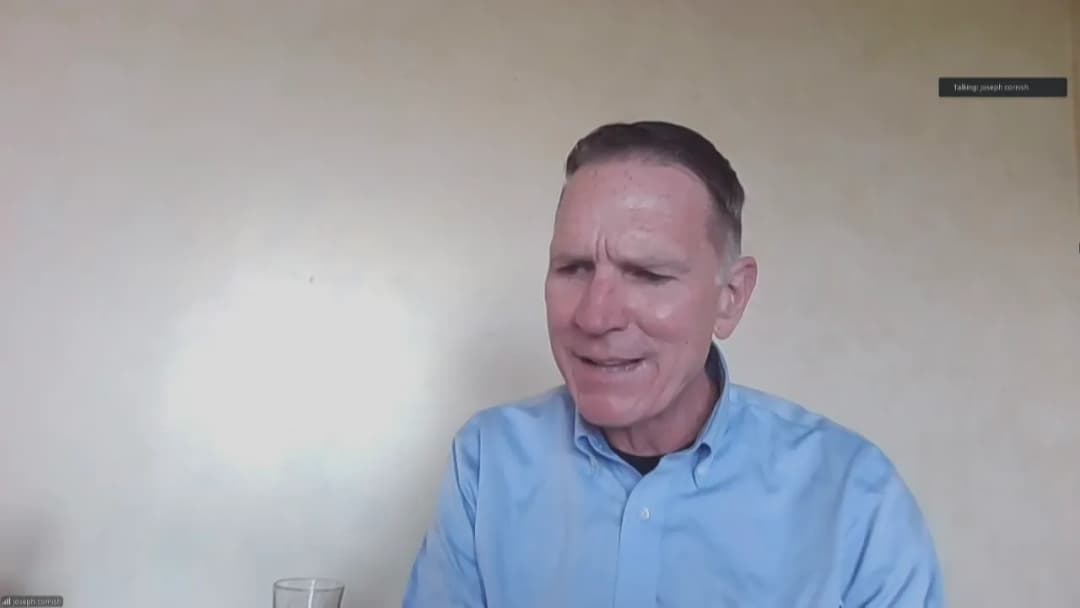
The Boston City Council Committee on Planning, Development and Transportation, chaired by District 8 City Councilor Durkin, held a virtual hearing on June 5, 2026, at 10:01 AM to consider the confirmation of multiple appointments and reappointments to the Boston Landmarks Commission, Back Bay Architectural District Commission, and Fort Point Channel Landmark District Commission. No public testimony was offered, and the committee heard remarks from the Director of Design Review, staff, and the appointees themselves. Discussion Items - Joe Cornish, Director of Design Review for the Boston Landmarks Commission, expressed strong support for all appointees, highlighting their qualifications and contributions. He noted David Sampson's role in fundraising to remove scaffolding at the First Baptist Church in the Back Bay and Kirsten Hoffman's extensive service across multiple commissions. - Elizabeth Serva (unclear title) also voiced support for all candidates, stating they bring expertise that will complement the commissions. - Councilor Durkin praised the work of the commissions and the importance of historic preservation, noting May 2026 was recognized as National Historic Preservation Month and the 50th anniversary of the Boston Landmarks Commission. - Rob Weintraub (reappointment to Back Bay Architectural District Commission) spoke of his honor serving, his 45-year career in historic preservation, and his near-perfect attendance record over ten years. - David Sampson (reappointment as alternate to Back Bay Architectural District Commission) shared his enjoyment of learning the commission's work and his role in raising nearly $100,000 to remove scaffolding from the First Baptist Church. - David Dixon (new appointment to Boston Landmarks Commission) emphasized the value of interdisciplinary collaboration and his experience planning for historic cities like New Orleans, Memphis, and Leesburg, Virginia. - Kirsten Hoffman (reappointment to Boston Landmarks Commission and appointment to Fort Point Channel Landmark District Commission) described her background in archaeology, law, and real estate development, and her appreciation for the city's commitment to preservation. - Venit Gupta (new appointment as alternate to Boston Landmarks Commission) noted his career as an architect and transportation planner for Boston, his focus on context and urban fabric in development review, and his eagerness to contribute to Boston's evolving history. - Two appointees were absent: Susan Goganian (appointment to Boston Landmarks Commission and Fort Point Channel Landmark District Commission, previously served) and Kathleen Connor (reappointment to Back Bay Architectural District Commission, long-time chair representing the Back Bay Association). Councilor Durkin indicated she would move forward their nominations based on their known qualifications. Key Outcomes - Councilor Durkin announced her intention to forward all appointments and reappointments to the full City Council for confirmation at the next meeting. - No formal votes were taken during the hearing. - The hearing was adjourned after confirming there were no questions or public testimony.

HISTORIC PRESERVATION 78% · PROCEDURAL 22%
94
JUN 4, 2026 · BOSTON, MASSACHUSETTS · CITY COUNCIL
Boston City Council Hearing on Civil Rights & Surveillance Implications of BRIC - June 4, 2026

On June 4, 2026, at 2:14 PM, the Boston City Council Committee on Civil Rights, Racial Equity, and Immigrant Advancement, chaired by Councillor Minyard Culpepper, held a hearing on Docket 0409 to examine the civil rights, constitutional, and legal implications of the Boston Regional Intelligence Center (BRIC), the Social Violence Information System (AVIS), Automated License Plate Readers (ALPRs), and participation in federal joint task forces. The hearing was co-sponsored by Councillors Mejia, Santana, and Culpepper. Present were Councillors Flynn, Worrell, Santana, Peppin, and later Councillor Braden. The hearing featured two panels of experts and community members, followed by public testimony. Public Comments & Testimony - Alex Matthews (Co-chair of Digital Forth): Highlighted federal pressure on BRIC to target individuals perceived as anti-Christian, anti-capitalist, or critical of traditional gender binaries, and warned that new AI technologies enable analysts to surface entire online footprints to assess threats. - Susan Moyer (Old Dykes Against Billionaire Tech Bros): Argued that environmental destruction and authoritarianism are bigger threats than domestic terrorism, criticized the uneven distribution of BRIC resources across nine cities/towns, and noted that the Trump administration has labeled “extreme trans ideology” as domestic terrorism. - Bernadette Murphy (Roslindale resident, retired teacher): Expressed concern about BRIC’s broad social media monitoring without specific policies or documentation, worried that students and young people of color are pulled into databases and labeled, and referenced the danger of giving up freedom for security (quoting Benjamin Franklin). - Nathan Phillips (Professor, Boston University, virtual testimony): Described an incident where FBI agents visited his home seeking him, and when he called the FBI Chelsea office, they hung up without explanation. He warned that even privileged individuals are not safe from untrustworthy federal actors. Discussion Items - Panel 1: Researchers and Affected Individuals - Brenda McQuaid (Professor, author of Pacify in the Homeland): Described BRIC as a “spy center” focused on social control, not crime prevention. Noted that 84% of BRIC intelligence products are crime blotters, it tracks protesters and political dissent, fabricates threats (e.g., Occupy, Black Lives Matter, Palestine solidarity), and that $4 million annually goes to Centra Technology—BPD’s largest contract. She argued BRIC is beyond reform and should be abolished. - Fatima Ahmed (Muslim Justice League): Presented findings from a new Brennan Center report showing BRIC uses aliases to monitor social media without documentation, engages in over-collection, and shares information broadly. She highlighted that Brookline is the first town considering pulling out of BRIC, and that the UASI grant requires border enforcement and election security cooperation with DHS. - Heather Perez Arroyo (Immigration attorney, MLRI): Explained that DHS’s mass deportation campaign relies on data sharing via BRIC. She cited a client whose single Field Interview Observation (FIO) for being near a suspected gang member led to $15,000 bond and later detention risk. She argued that once information is in BRIC, it cannot be fully removed and continues to harm individuals in immigration proceedings. - Maya Schaefer (Investigative journalist): Recounted being surveilled by BRIC in real time at the 2015 Boston Marathon for exercising First Amendment rights. Her internal complaint went unanswered for six years and was closed without redress. She stated that BRIC’s privacy council is a fiction and that data once shared cannot be recalled. - Panel 2: Policy Experts and Community Members - Allie Finn (AI Now Institute): Testified that the UASI grant functions as a Trojan horse, diverting funds from emergency services to policing and surveillance. DHS requires 35% for law enforcement terrorism prevention, and the Trump administration now mandates 10% for border enforcement collaboration with ICE. She urged the council to reconsider participation in UASI. - Sarah Stokes (Clinical Professor, BU Law): Shared the case of Orlando, a Boston high school student put in the BRIC gang database based on a rumor, then arrested by ICE, detained for nearly two years, and deported to El Salvador. She noted that 98% of people in the gang database are people of color, and that fusion centers have not demonstrated public safety benefits. - Wendy Lazo (Community leader, Nube): Expressed fear in the immigrant community, citing a case where someone called police for a neighbor dispute and was handed over to ICE. She asked that funds for BRIC be redirected to youth programs. - Reverend Annie Gonzalez (Unitarian Universalist minister): Told the story of Maria, whose son was put in the gang database because of the color of his shirt (a gift from her). He was deported and now lives in hiding in El Salvador. She emphasized that community members are afraid to attend court dates due to information sharing, and that BRIC’s surveillance fuels deportation. - Councillor Questions and Discussion - Councillor Mejia asked about BRIC’s mission evolution, evidence of public safety benefits, types of data collected, transparency gaps, and potential oversight frameworks. Panelists responded that BRIC’s mission drifted from counterterrorism to “all crimes, all hazards,” that no evidence connects BRIC to crime reduction, and that accountability mechanisms are inadequate. - Councillor Peppin inquired about license plate readers and traffic enforcement. Panelists noted that Flock ALPRs were installed without council approval, and that traffic enforcement should be moved to a civil process to avoid racial profiling and ICE contact. - Councillor Braden asked about legal authority for BRIC, independent oversight, and control over data shared with federal partners. Panelists explained that fusion centers operate under Code of Federal Regulations Part 23, that informal information sharing between embedded federal agents is impossible to regulate, and that localities lose control once data is shared. - Councillor Santana questioned whether Boston can accept UASI funding while protecting immigrants. Allie Finn responded that the city’s allocation of the required 10% under BRIC already aids immigration enforcement, and there is no safe way to accept the grant. - Councillor Flynn asked about the relevance of a knife attack in Paris to BRIC. Panelists stated BRIC acts as a “third-rate news aggregator” chasing headlines, and that such reports serve to justify Islamophobic surveillance. Key Outcomes - No formal votes were taken, but Councillor Mejia announced she will request a second hearing with the administration and BRIC representatives to further discuss the findings before any decision on the UASI grant. - Panelists and multiple councillors consistently called for the abolition of BRIC, citing irreparable harm to civil rights, lack of transparency, and the impossibility of reform. - The hearing emphasized that all 13 city councillors are responsible for votes that affect the entire city, and that oversight of BRIC and related surveillance must be a priority regardless of district. - Written comments may be submitted to ccc.civilrights@boston.gov for inclusion in the record.

PUBLIC SAFETY 42% · CIVIL RIGHTS 41% · COMMUNITY ENGAGEMENT 8% · PROCEDURAL 3%
95
JUN 4, 2026 · BOSTON, MASSACHUSETTS · CITY COUNCIL
Boston City Council Committee Hearing on Parking Minimums for Residential Development - June 4, 2026

On Thursday, June 4, 2026, the Boston City Council Committee on Planning Development and Transportation, chaired by Councilor Sharon Durkin, held a hearing on Docket 0809, a proposed text amendment to the Boston Zoning Code to eliminate off-street parking minimums for new residential development citywide. The hearing featured opening statements from councilors, expert testimony from a panel, and extensive public comment. The committee heard both strong support and opposition, with discussions covering housing affordability, parking utilization data, climate resilience, and neighborhood-specific concerns. Public Comments & Testimony - In-Person Testimony: Many residents spoke in favor, citing affordability, flexibility for car-free households, and the need to reduce development costs. Speakers included Neil (Mattapan tenant), Ryan (Dorchester pedestrian safety advocate), Fred Watts (Lower Mills resident who noted a civic group vote in favor), Eli Weiner (Roslindale renter), Colin Dimer (Allston renter), and Vivian Girard (Dorchester developer and property manager). They argued that parking minimums artificially raise rents and that market forces should determine parking supply. - Opposition Testimony: Some residents opposed the change, raising concerns about increased street parking demand and impacts on families, seniors, and disabled residents. Connie Forbes (Roxbury resident) argued that new developments with minimal parking push cars onto already crowded streets. Kate Phelps (Roxbury) called for a neighborhood-by-neighborhood approach. Luann O'Connor (South Boston) opposed, citing a lack of resident permit parking enforcement and the need for a legal ban on new residents obtaining street parking permits. - Online Testimony: Several online speakers supported the amendment, including Kobe Frangillo (Brighton), Grace Fletcher (Brighton), Alex McVay (Brighton), and Jonathan Cohn (South End). One opponent, Pam Beale, supported the amendment, arguing that flexibility leads to better community negotiations. Discussion Items - Councilor Opening Statements: Chair Durkin and Councilors Santana, Braden, Peppen, and Flynn each presented their positions. Councilor Flynn strongly opposed, arguing that the city's housing production slowdown is due to other factors (affordable housing requirements, rent control fears, interest rates, tariffs) and that removing parking minimums will worsen street parking crises. Councilor Fitzgerald expressed skepticism. Councilor Morel advocated for exempting District 4 and criticized the lack of community input in drafting. Councilor Peppen and Braden supported the policy as a tool for housing affordability and flexibility. - Expert Panel Testimony: Professor Sarah Bronin (zoning law expert and former Hartford Planning & Zoning Chair) presented research showing that only 3% of Boston's zoned acreage currently has no parking mandates. She recommended extending the amendment to non-residential uses and streamlining remaining mandates. Hassan Faruqi (Boston Climate Action Network) emphasized climate resilience benefits (reducing heat islands and stormwater runoff). Jesse Kansen Beninov (Abundant Housing Massachusetts) cited research showing each mandated parking space adds $200/month to rent. Lizzie Wyant (MAPC) presented data that 3 in 10 off-street parking spaces are vacant overnight, indicating overbuilding. Mike DeMaio (Better Parking for Boston) explained the draft amendment's technical structure. Jerry (BU Urbanist) spoke for young renters who want walkable, car-free neighborhoods. - Key Discussion Points: Councilors questioned panelists on history of parking minimums, impact on families, data on parking utilization, and examples from other cities (Austin, Hartford, Salem). Panelists argued that eliminating minimums does not ban parking and that developers will still build parking where demanded. Councilor Flynn and others expressed concern that without parking, new residents would park on streets, worsening existing congestion. - Planning Department Statement: Chair Durkin read into the record that the Boston Planning Department reviewed the amendment and found it technically sound, though minor numbering changes may be needed after the June 17, 2026 Zoning Commission meeting. Key Outcomes - The hearing remained in committee; no vote was taken. Chair Durkin announced plans for a working session to address technical edits and further discussion. - The committee received both support and opposition letters from organizations. Supporters included MAPC, Abundant Housing Massachusetts, NAIOP Massachusetts, Greater Boston Real Estate Board, Pioneer Institute, and others. Opponents included Greater Mattapan Neighborhood Council, Audubon Circle Neighborhood Association, Cedar Grove Civic Association, and City Point Neighborhood Association. - Councilor Morel indicated he would advocate to exempt District 4 from any citywide amendment, citing community opposition. - The committee will continue to accept written comments and schedule a future working session before any vote to petition the Zoning Commission.

HOUSING 40% · AFFORDABLE HOUSING 35% · TRANSPORTATION SAFETY 15% · ENVIRONMENTAL PROTECTION 2%
96
JUN 3, 2026 · BOSTON, MASSACHUSETTS · CITY COUNCIL
Boston Zoning Board of Appeal Hearing - June 3, 2026

The Boston Zoning Board of Appeal conducted a virtual hearing on June 3, 2026, hearing a range of zoning relief requests including residential infill, a hotel, senior housing, and a wireless facility. The board approved all items, including several deferrals and a court-remanded case. Key decisions included unanimous approvals for a 96-room hotel at 393 Cambridge Street and a 41-unit affordable senior housing project in Jamaica Plain. Consent Calendar - Approval of Minutes: Minutes from May 14 and May 19, 2026 were approved unanimously. - Extensions: Five extension cases were granted without opposition: 13 Alexander Street, 110-118 Terrace Street (two cases), 2-10 Hitchborne Street, and 252-252A Shaman Avenue. - Deferrals: - Case BOA 183-9863 (841-847 Morton Street): Deferred to a later date due to incorrect advertising and a required NPC notice of project change. - Case BOA 183-7592 (3 Morse Street): Deferred to July 28, 2026 to allow a full five-member board. - Case BOA 181-4618 (163-165 Hillside Street): Deferred to June 16, 2026 for additional plan review. - Case BOA 183-3514 (176 L Street): Deferred to June 16, 2026 at 11:30 a.m. (noted without separate motion). Discussion Items - 1 Westminster Terrace (BOA 182-46-53): Applicant sought to finish an existing basement into a playroom, guest room, bathroom, and hobby space. No footprint expansion. The Brighton Alston Improvement Association and a neighbor expressed support. Approved unanimously. - 5-7 Aldi Street (BOA 182-55-52): Conversion of a two-family to three-family house with two additional parking spaces. The Allston Civic Association supported, asking for no building code relief and no undergraduate tenants. Approved unanimously. - 393 Cambridge Street (BOA 183-8237): Proposal for a 7-story, 96-room hotel with an FAR of 5.68 (max 1.0) and height of 93 feet (max 35 feet), with no rear yard setback. The site is currently an auto parts store. The BPDA board had previously approved the project. Public testimony included the Office of Neighborhood Services deferring, Allston Civic Association deferring with concerns about parking and traffic, and the Carpenter's Union supporting. The applicant argued the project is transit-oriented and provides streetscape improvements. Board members questioned parking costs and timeline; the developer estimated $350,000 per underground space. Approved unanimously. - 57-59 Riversdale Street (BOA 176-0086): Addition of three two-bedroom units in the rear of an existing three-unit building, plus six parking spaces. The Allston Civic Association supported with conditions. Approved unanimously. - 80 Gardner Street (BOA 183-9746): Construction of a 6-story infill building with 36 units (16 two-bedroom, 16 three-bedroom, 3 one-bedroom, 1 studio), including 6 income-restricted units. The BPDA board approved in October 2025. Public testimony: ONS deferred, Allston Civic Association supported, Planning Department supported. Approved unanimously. - 11 Beaufort Road and 434 Jamaica Way (Companion cases BOA 182-69-29 and 182-69-39): Rogerson Communities proposed a 6-story building with 41 affordable senior housing units, a memory care facility, and a social day program. The project was scaled down from 71 units after community feedback. Public testimony: ONS deferred, Jamaica Pond Association non-opposition, Jamaica Plain Neighborhood Council support, a neighbor opposed citing height and parking. The board questioned parking costs ($350,000 per space for underground staff parking). Approved unanimously. - 69 Rent Street (BOA 181-0476): Finishing an existing basement for a family room, bathroom, and closet. Public testimony: ONS deferred, Councilor Fitzgerald's office supported. Approved unanimously. - 102 Gale Street (BOA 182-982): New 3-story, 3-family residential building on a vacant lot. Relief needed for lot area, width, FAR, side yard, and parking. One unit will be affordable. Public testimony: ONS noted community process, Councilor Wells' office expressed concern about no homeownership units. The applicant clarified units are for sale. Approved unanimously. - 24 Nyland Street (BOA 181-19-10): Second floor and rear addition to a single-family home. Neighbor raised privacy concerns; applicant noted no windows on the extension side. Approved unanimously. - 33 Hawthorne Street (BOA 184-2748): Conversion of a two-family to three-family by adding a basement unit and attic dormer, plus three parking spaces. Public testimony: ONS reported neighbor concerns about parking, density, and tenant impact. Applicant responded that existing tenant would remain and parking was added. Approved unanimously. - 36-44 Broad Street (BOA 1813-09): Verizon Wireless sought to install rooftop antennas enclosed in canisters, with relief from setback and height limits. Public testimony: ONS deferred (one opposition letter), Wharf District Neighborhood Association supported. Approved unanimously. - 22 Hanover Street (BOA 135-94-3): Court remand hearing. The Suffolk Superior Court directed the board to review rooftop structures previously approved. The abutter opposed due to loss of light and air. The board affirmed its prior decision, noting the roof deck and head house are typical for the area. Approved unanimously. Key Outcomes - All zoning relief requests were approved, including deferrals and the court-remanded case. - Adoption of Proposed Rules and Regulations: The board unanimously adopted new rules and regulations for the board, with a comment to fill remaining vacant positions. - Next Steps: Deferred cases will be rescheduled; approved projects must comply with provisos, including BPDA design review where applicable.

HOUSING 30% · PROCEDURAL 29% · COMMUNITY ENGAGEMENT 18% · ENGINEERING AND INFRASTRUCTURE 11%
97
JUN 3, 2026 · BOSTON, MASSACHUSETTS · CITY COUNCIL
Boston City Council Meeting – June 3, 2026: Budget Votes, Paraprofessional Recognition, and Policy Hearings

The Boston City Council convened on June 3, 2026, at 5:30 PM to address a full agenda including supplemental budgets, the fiscal year 2027 operating and school budgets, the capital plan, and numerous hearing orders. The meeting began with presentations honoring BPS paraprofessionals and the BPS cross-country state championship teams. Extensive debate centered on the BPS budget, which passed 8–5, while the operating budget vote was postponed to June 10. Several grants, resolutions, and committee reports were approved unanimously. Consent Calendar - Minutes Approved: Minutes from May 20, 2026, were approved. - Grants and Supplemental Appropriations (all passed unanimously): - Docket 1083: $80,000 community safety initiative grant to reduce gun, gang, and youth violence. - Docket 1084: $39,000 grant for a patrol boat transfer from MSP to BPD. - Docket 0969: $12,573,604 FIFA World Cup grant for security and preparedness (12 votes in favor). - Docket 1030: $47,120,292 supplemental for snow and winter management. - Docket 1031: $22,845,672 supplemental for BPS operating expenses (health insurance and utilities). - Docket 0735: $40 million for Other Post-Employment Benefits (OPEB) trust fund. - Dockets 0736–0737: $3.5 million capital grant fund and $5 million surplus property disposition fund. - Landmark Designation: Docket 1096 (Swallow Mansion, Charlestown) passed unanimously. Public Comments & Testimony - Paraprofessional Recognition: Colleen, a BPS paraprofessional, accepted a council resolution honoring paraprofessionals and implored the council to vote no on the BPS budget, citing the proposed elimination of 161 positions. Councillor Mejia noted the majority of paraprofessionals are women, single mothers, and people of color. - Boston Teachers Union Letter: Councillor Mejia read a BTU letter opposing the BPS budget, stating it eliminates more than 400 student-facing positions and calling for a preemptive supplemental budget using reserves or transfers. Discussion Items - BPS FY27 Operating Budget (Docket 0734): Councillor Weber (Ways & Means Chair) recommended passage of the $1.73 billion budget (2.7% increase), noting rising health care costs and enrollment declines. Opponents (Flynn, Culpepper, Mejia, Murphy, Worrell) argued against cutting paraprofessionals and special education supports, with some calling for rejection to force reallocation. Supporters (Colletta Zapata, Durkin, Louijeune, Penn, Santana, Weber) cited fiscal constraints and the need for stability. The budget passed 8–5 (Yes: Braden, Colletta Zapata, Durkin, Fitzgerald, Louijeune, Penn, Santana, Weber; No: Culpepper, Flynn, Mejia, Murphy, Worrell). - Capital Budget (Dockets 0738–0740): First reading of the $4.4 billion five‑year capital plan covering 321 projects. Councillors highlighted district needs, with some calling for equitable investment. All three dockets passed unanimously and were assigned for further action. - Operating Budget (Docket 0733): Councillor Murphy moved to postpone the operating budget vote to the June 10 council meeting, citing insufficient review time and incomplete working sessions. After debate, the motion passed 10–3 (Yes: Braden, Culpepper, Fitzgerald, Flynn, Louijeune, Mejia, Murphy, Penn, Santana, Worrell; No: Colletta Zapata, Durkin, Weber). The second part of the motion scheduling a June 17 meeting for the mayor’s response carried as part of the vote. Key Outcomes - BPS Budget (0734): Passed 8–5. - Operating Budget (0733): Postponed to June 10, 2026. - Capital Budget First Reading (0738–0740): Unanimous approval; second reading scheduled. - Hearing Orders Referred to Committees: - Docket 1102: Hearing on council’s budget amendment/rejection authority. - Docket 1103: Examining elimination of minimum lot size requirements in District 4. - Docket 1104: Examining elimination of the Boston Human Rights Commission. - Docket 1105: Exploring public bathroom facilities. - Docket 1106: Discussing the 2025 Firearm Trafficking Report. - Docket 1107: Discussing the 2025 Disability Commission annual report. - Docket 1101: Hearing on Boston Main Streets programs and Wolf & Company audit. - Docket 1108 (17F order): Request for parking meter revenue data passed 8–0. - Resolutions Adopted (unanimous): - Docket 1109: Recognizing Asian American and Pacific Islander Heritage Month. - Docket 1110: Affirming commitment to green infrastructure. - Docket 1111: Recognizing Juneteenth; calls for annual banner program (passed 10–0). - Docket 1112: Recognizing Caribbean American Heritage Month (passed 10–0). - Other Actions: - Docket 0307 (resolution for BHA Elevator Safety Commission) failed to secure the required seven votes to discharge from committee (6–4). - Personnel orders and consent agenda approved. - Memorials: Council adjourned in memory of Firefighter Robert Kilduff Jr., Eileen Kenner, Terry Paroda, and others.

PROCEDURAL 42% · PUBLIC EDUCATION 19% · FISCAL SUSTAINABILITY 8% · RACIAL EQUITY 5%
99
MAY 27, 2026 · BOSTON, MASSACHUSETTS · CITY COUNCIL
Boston City Council Committee on Ways and Means Hearing on BPS Supplemental Appropriation - May 27, 2026

On May 27, 2026, the Boston City Council Committee on Ways and Means, chaired by Councilor Ben Weber, held a hearing on Docket 1031, a supplemental appropriation of $22,845,672 for Boston Public Schools (BPS) to cover operating expenses for fiscal year 2026 (ending June 30, 2026). The hearing began at 3:30 PM and was live-streamed. BPS Chief Financial Officer David Bloom presented the request, which was approved by the Boston School Committee on May 6, 2026. The appropriation addresses projected deficits in health insurance ($18,087,750) and utility spending ($4,757,922). Councilors discussed the causes of the deficit, the impact of layoffs, and future budget accuracy. Public Comments & Testimony - George Lee (Center for Teen Empowerment) thanked Councilor Weber for accommodating youth testimony at a prior hearing and asked for confirmation of a scheduled 5:30 PM meeting with youth organizers. He emphasized the importance of youth voices in the budget process. - Nate Nichols (Program Director, Center for Teen Empowerment) reiterated the request for the 5:30 PM meeting and urged councilors to prioritize teachers and administrative staff, as cuts often affect those who work directly with students. - Naval Moore (11th grade student, Weston High School, and youth organizer) testified that the budget cuts expose a contradiction in city investment: spending on managing inequality rather than reducing it at its source. He argued that youth employment programs are effective for economic mobility, public health, and violence prevention, and urged the council to protect such programs. Discussion Items - Supplemental Appropriation Request: David Bloom explained that BPS identified $26 million in savings through a pause on discretionary spending (central and school-based) and $6 million in other cost management strategies, leaving a $28.3 million overage. The $22.8 million supplemental covers health insurance and utility overruns; the remaining $5.5 million will be managed through continued savings and grant revenue. - Health Insurance Costs: The $18.1 million deficit resulted from higher-than-expected premium increases (nearly 40% over two years) and increased employee usage (from 70% to 75%). Bloom noted that GLP-1 medications and rising utilization were key drivers. Councilors discussed moving BPS health insurance into the city pool, but Bloom indicated it would be a technical shift with no net savings for FY27. - Utility Costs: The $4.7 million utility overrun was driven by rate increases (especially electricity, $3.7 million) and a cold winter increasing natural gas usage. Councilor Culpepper requested data on rate increases and the impact of data centers. Bloom noted that the city’s renewable energy projects are ongoing but face long timelines. - Structural Budget Issues: Councilor Braden asked about recurring deficits. Bloom cited two main miscalculations: underestimating health insurance premium increases and vacancy rates. He said projections for FY27 have been revised with more accurate assumptions. - Teacher and Paraprofessional Layoffs: Councilor Fitzgerald and others expressed concern about layoffs. Bloom clarified that permanent educators (with over 3 years) will not be laid off, but about 150 fewer paraprofessional positions and 190 fewer teaching positions exist system-wide. Some provisional educators (less than 3 years) may lose their jobs. The reductions are partly due to three school closures and declining enrollment (3,000 fewer students). - HVAC and Building Conditions: Councilor Fitzgerald highlighted classrooms reaching 90+ degrees, stating that the HVAC system is not fixed. Bloom acknowledged six to seven schools with electrical issues preventing window air conditioning units. He said the capital budget, not this supplemental, addresses infrastructure. - Youth Employment Programs: Multiple testifiers urged protection of youth employment programs, citing their proven benefits. Councilor Weber noted that youth programs are not cut in this supplemental but are part of ongoing budget discussions. Key Outcomes - The hearing provided a forum for councilors to question BPS leadership on the supplemental appropriation and broader budget issues. - No vote was taken at the hearing; the council will vote on the supplemental appropriation on Wednesday, June 3, 2026 (as stated by Councilor Weber). - Councilor Bloom committed to providing detailed data on utility costs, health insurance plan breakdowns, and the number of provisional educators losing their jobs. - Councilor Weber agreed to meet with youth organizers after the hearing to discuss their concerns. - The supplemental appropriation is expected to pass, but some councilors expressed reservations about teacher layoffs and building conditions.

PUBLIC EDUCATION 45% · PROCEDURAL 21% · FISCAL SUSTAINABILITY 17% · ENGINEERING AND INFRASTRUCTURE 6%
100
MAY 27, 2026 · BOSTON, MASSACHUSETTS · CITY COUNCIL
Boston City Council Ways & Means Committee Hearing on FY26 Supplemental Budget (May 27, 2026)

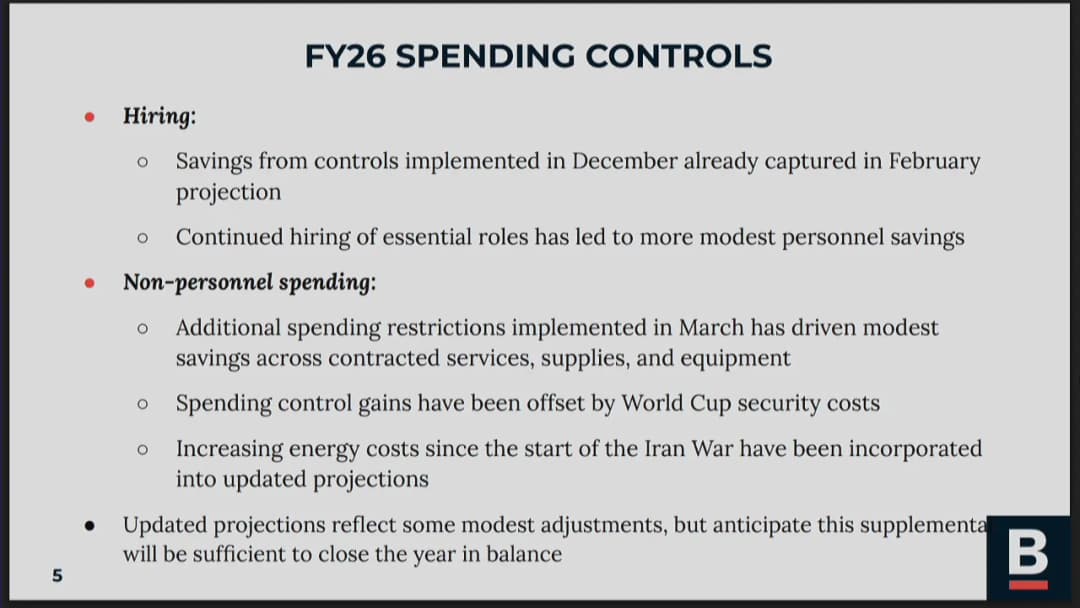
On May 27, 2026, the Boston City Council Ways and Means Committee, chaired by Councillor Ben Weber (District 6), held a hearing to discuss two supplemental appropriations: Docket 030 (47.1 million dollars for snow and winter management) and Docket 0131 (22.8 million dollars for Boston Public Schools health insurance and utilities). The hearing featured a presentation from Budget Director Jim Williamson and Chief Financial Officer Ashley Graffenberger, followed by questions from councillors and public testimony. The administration requested council approval to draw these funds from the city's free cash balance to close projected deficits by June 30, 2026. Discussion Items - Snow and Winter Management Supplemental (47.1 million dollars): Williamson explained that the city experienced 61.6 inches of snow during the winter of 2025–2026, the coldest and snowiest in 11 years. Two major storms—January 25–26 (23.2 inches) and Winter Storm Hernando in early March (17.1 inches)—required extensive contractor services, staff overtime, equipment repair, snow melting (via rented melters), and other costs. The city responded to 20 distinct winter weather events. Unlike 2015 (110 inches, 20 million dollar deficit partially offset by 3 million in FEMA reimbursement), the city was not eligible for FEMA assistance this year because Suffolk County did not meet the threshold. The administration characterized the snow spending as an extraordinary, one-time event, noting that the last five of six years ended with a surplus of 1–2 million dollars in the snow budget. - Free Cash Usage and Fiscal Policy: Williamson and Graffenberger detailed that the combined 70 million dollar supplemental, plus the annual 40 million dollar draw for OPEB (retiree health care) carried forward from FY26 into FY27, results in a total draw of 150 million dollars from the city's certified free cash balance of 601 million dollars (about 24%). They cited guidance from the state Division of Local Services that free cash should be used for one-time, non-recurring expenses. Councillor Culpepper questioned whether snow removal is truly non-recurring, arguing that it recurs every few years. Graffenberger acknowledged snow is a recurring expense but emphasized that the budget covers typical years (22 million dollars); the 47.1 million dollar overage is extraordinary and thus appropriate for free cash. The city's overall unassigned fund balance stands at 1.2 billion dollars (about 24% of expenses), exceeding both the city's own policy (15%) and Moody's recommended level (25%) for triple-A rated municipalities. - Health Insurance Overspending and Forecasting: Gregory Maynard, co-founder of the Boston Policy Institute, testified that the root cause of the FY26 deficit is overspending on health insurance, not snow. He pointed to a letter from the mayor acknowledging a spike in health insurance costs. Maynard criticized the city's forecasting process and noted that BPS added 16 million dollars to its health insurance budget on March 25, 2026, just before adopting its FY27 budget. He also noted that the council did not hold a budget hearing on health insurance costs or the People Operations cabinet. Councillor Flynn pressed for month-to-month health insurance spending data to track cost increases in real time, stating that his request for such data had not been fulfilled. Graffenberger confirmed that the city is negotiating a successor contract with public employee unions for FY28 and that a utilization management agreement yielded savings in the current contract. - Revolving Fund and Snow Reserve Exploration: Chair Weber asked whether a revolving fund or special stabilization fund could smooth out snow costs. Graffenberger confirmed the mayor has expressed interest in creating a snow reserve, and her team is exploring the legal and operational requirements. Councillor Fitzgerald asked about replenishing free cash reserves, with Graffenberger noting that replenishment depends on year-end surpluses (e.g., 192 million in FY23, driven by high interest income) and that a multi-year buildup is likely given declining interest rates and limited new growth. - Comparison to FY2015 and Contractor Payments: Councillors Fitzgerald and Flynn compared the current snow costs to FY2015 when 110 inches of snow resulted in a 20 million dollar overage (17 million after FEMA). Williamson attributed the higher cost in FY2026 to a decade of cost growth in labor, equipment, and contractor rates, fewer snow storage locations (requiring rented melters), and a reduced internal workforce due to challenges hiring CDL-licensed drivers. Flynn asked about unpaid contractor bills; Williamson estimated that a small number of contractors (in the low millions) have not yet been paid pending contract amendments. He agreed to provide a list. - BPS Supplemental and Coordination: The hearing acknowledged that a separate hearing on Docket 0131 (22.8 million dollars for BPS health insurance and utilities) would occur later that day. Councillor Flynn advocated for merging BPS health insurance with the city system to achieve economies of scale, but Graffenberger stated that both entities already use the same health plans; the budget is simply split, so merging would not yield savings. - Retiree COLA Increase: Councillor Flynn raised the retirees' request for a COLA increase (3 percent) and an increase in the COLA base. Graffenberger noted that raising the COLA base by 3,000 dollars would increase the pension system's unfunded liability by 90 million dollars, requiring a 45 million dollar increase in the operating budget for FY27 and FY28 to stay on schedule for full funding by 2028. She confirmed the city supported 3% COLAs in recent years and a 5% voluntary increase in 2023, but expressed concern about the fiscal impact of a base increase. Public Comments & Testimony - Gregory Maynard (Boston Policy Institute): Stated that the real driver of the FY26 deficit is health insurance overspending, not snow. He criticized the accuracy of the city's health insurance forecasting, noting that the mayor's letter identified a spike in health insurance costs as a current-year issue. He urged the council to investigate why FY26 health insurance spending was underestimated and why the FY27 BPS budget required a last-minute 16 million dollar addition on March 25. He also noted the council did not hold a FY27 budget hearing on health insurance or the People Operations cabinet. Key Outcomes - No votes were taken during the hearing; it was a discussion session. The committee is expected to consider formal approval of the two supplemental appropriations before the end of the fiscal year (June 30, 2026). - The administration committed to providing: (1) a breakdown of snow spending categories (contractors, overtime, equipment, snow melters) requested by Councillor Culpepper; (2) month-to-month health insurance spending data for FY26 requested by Councillor Flynn; (3) a list of unpaid contractor snow bills requested by Councillor Flynn; and (4) the FY26 year-to-date revenue numbers through March 31 requested by Councillor Flynn. - The city will continue exploring the creation of a snow reserve (special purpose stabilization fund) to better manage variable snow costs in future years. - The fiscal impact of the 150 million dollar draw on free cash (including the 40 million OPEB draw) will be monitored at year-end; replenishment is expected to occur over multiple years through budget surpluses and balance sheet management.

FISCAL SUSTAINABILITY 75% · ENGINEERING AND INFRASTRUCTURE 13% · PERSONNEL MATTERS 12%
OPENPUBLICA · PUBLIC MEETING INDEXUPDATED DAILY · openpublica.com