Browse by city
Date range
Search help

Search titles, summaries, topics and stored transcripts together. Keywords may match separately; put the whole query in double quotes for a phrase. Matching follows word analysis, so punctuation is not exact. Both dates are included. Documents are not searched.

SHOWING 161–170 ENTRIES
161
APR 14, 2026 · BOSTON, MASSACHUSETTS · CITY COUNCIL
Boston City Council Ways and Means Hearing on FY27 Operating Budget - April 14, 2026

The Boston City Council Committee on Ways and Means, chaired by Councillor Ben Weber, held a hearing on April 14, 2026, at 10:05 AM to review the FY27 operating budget (Docket 0733-0740). The hearing marked the start of the city’s budget review process, with presentations from Chief Financial Officer Ashley Graffenberger and Budget Director Jim Williamson. The $4.9 billion recommended budget shows 2.1% growth, the lowest in recent years, driven by rising health insurance and public education costs. Councilors raised concerns about cuts to discretionary grants, youth jobs, and community services, while the administration emphasized preserving core city services without layoffs. Public Comments & Testimony - Gregory Maynard, co-founder and executive director of the Boston Policy Institute, requested standalone public hearings on revenue forecasting and health care costs, citing a $100 million current-year deficit and a four-billion-dollar drop in commercial assessed values. - Laurie Radwin, a resident of Rosendale, expressed concern about the displacement of small businesses due to zoning changes and called for accounting of lost business tax revenue in budget projections. Discussion Items - Budget Presentation: CFO Graffenberger and Director Williamson presented the FY27 operating budget of $4.9 billion, with revenues growing 2.1% ($99.4 million). Property tax accounts for 73.1% of revenue, while state aid is 10.9%. Expenditure growth is driven by a $97.3 million increase in health insurance costs and $50 million in public education costs (including BPS and charter schools). City department budgets decreased by 1.3% ($20.4 million) through vacancy reductions, salary savings, and cuts to discretionary grant programs ($12 million). - Revenue Constraints: Property tax growth is limited by Proposition 2.5, with new growth assumed at $40 million. Interest income is projected at $40 million, a 50% drop from FY26 due to expected federal rate cuts. Permit and license revenues continue to decline. - Expenditure Reductions: To balance the budget, the city reduced pension contributions by $25 million using a revised glide path (still fully funding by 2028) and saved $13 million from debt refunding. The budget eliminates 57 long-term vacant positions and assumes salary savings equivalent to 785 positions. No layoffs of filled city positions are planned, but BPS will see position eliminations. - Discretionary Grants and Youth Jobs: The $12 million in grant cuts affect community-based organizations, including the Office of Black Male Advancement. Year-round youth jobs funding was reduced by $5 million; summer jobs remain uncapped for all BPS students. The administration noted efforts to supplement youth jobs with private philanthropy. - Health Insurance and GLP-1 Costs: Health insurance costs rose sharply due to increased GLP-1 medication usage (almost $48 million in calendar 2025). A new utilization management agreement with unions aims to moderate growth. The deficit in FY26 was partly attributed to underestimated health insurance expenses. - Debt Service Policy: The city updated its debt repayment policy to allow slightly slower principal retirement (no less than 30% retired in 5 years, 55% in 10 years), which does not produce immediate savings but offers future flexibility. - Councilor Concerns: Multiple councilors questioned the process for determining cuts, requested lists of affected grant recipients and eliminated positions, and expressed worry about the impact on services for youth, seniors, and public safety. Councillor Murphy and others highlighted calls from constituents losing jobs and chess club funding. Councillor Flynn raised concerns about Proposition 2.5 reform, the Mass and Cass issue, and a request for an audit of BPS central office. Councillor Culpepper pressed for details on who makes budget cut decisions and asked about external financial advisors. Councillor Louie Jen advocated for more aggressive debt service flexibility to free up funds. Key Outcomes - No votes were taken; the hearing was informational. - The administration committed to providing the following to the council: (1) a list of all grant programs and organizations whose funding was reduced or eliminated, (2) a breakdown of long-term vacant positions removed by department, (3) details on the percentage cuts by department, (4) information on the debt repayment policy change, (5) a list of external investment advisors used by the Treasury Department, and (6) a multi-year budget forecast. - Further departmental hearings will be held throughout the spring, including a capital budget hearing later on April 14. - The next public testimony hearings are scheduled for April 28 and May 26, 2026.

FISCAL SUSTAINABILITY 70% · BUDGET EQUITY ANALYSIS 5% · PUBLIC SAFETY 4% · PUBLIC EDUCATION 4%
162
APR 13, 2026 · BOSTON, MASSACHUSETTS · CITY COUNCIL
Boston City Council Committee on Public Safety Hearing on BPD Grants - April 13, 2026

The Boston City Council Committee on Public Safety and Criminal Justice, chaired by Councilor Henry Santana, held a hearing on April 13, 2026, at 7:00 PM to consider three dockets: a port security grant (Docket 0320), a counter-unmanned aircraft systems grant (Docket 0759), and an order for hearings on all BPD grants (Docket 0476). The committee also discussed the VAWA grant for domestic violence advocates. The hearing featured presentations from BPD officials, council questions, and public testimony. Public Comments & Testimony - Clifton Braithwaite (Hyde Park): Asked how local media and the public would be notified about drone restrictions during large events, whether there would be a permit system for non-police drones, and whether the public would be advised to use see-through bags again for security. He requested clear communication for both residents and visitors. - John (last name not given): Thanked the committee and speakers, urged support for all technology grants to enhance safety, and expressed hope that councilors would vote to protect the public. Discussion Items - Overview of BPD Grants (Maria Shivers, BPD Office of Research and Development): Explained that BPD administers approximately $28 million in grants annually, with about $13 million in new funding each year. Grants support programs including domestic violence advocates, mental health clinicians, youth outreach, lab equipment, data analysts, hub coordinators, and community safety initiatives. - Port Security Grant (Deputy Martin): A federal grant of $577,500 with a required match of $192,500 to fund a new 31-foot life proof boat (replacing a 27-foot boat from 25 years ago), replacement engines for two older boats, replacement of leaking dock caller sections, and ice rescue training for the harbor unit. The harbor unit is the only 24/7 law enforcement agency patrolling Boston Harbor and works with the Coast Guard, state police, and neighboring cities. - Counter-UAS Grant (Superintendent Lanita Cullinane and Director Ryan Walsh): A $10,925,140.07 grant from DHS to establish a deployable counter-unmanned aircraft systems capability for major events like the 2026 FIFA World Cup and America250 celebrations. Funding breakdown: $289,982 for a full-time program manager salary, $300,000 for overtime, $10,035,158.07 for equipment (multi-layered detection, tracking, and mitigation sensors), and $300,000 for training. The technology is intended to detect and track drones, identify pilots, and provide electronic mitigation options in coordination with federal partners. This is the first time the city has received this grant; future funding may be competitive nationwide. - VAWA Grant (Lt. Nicole LePoint): A $150,327.96 grant (with a $50,109.32 match) to fund one full-time domestic violence advocate and overtime for all six advocates. The grant supports the one Spanish-speaking advocate (who also assists citywide for Spanish-speaking survivors). The unit currently has no advocate in Districts C6 (South Boston), A1 (downtown), A7 (East Boston), and E18 (Hyde Park). Advocates work closely with survivors and partner organizations. - Other Grants Discussed: Deputy Martin also noted a $50,000 municipal road safety grant for overtime patrols, $50,000 for ADA-compliant barriers for District 1, and $50,000 for directed business district patrols in B2 and C11. Key Outcomes - The committee will recommend approval of Dockets 0320 (port security grant), 0759 (counter-UAS grant), and 0476 (order for hearings on all BPD grants) to the full City Council for a vote during the upcoming green sheets. - The VAWA grant was presented for potential expedited approval without a separate hearing; councilors indicated support. - Councilors raised several concerns for follow-up: - Councillor Weber requested copies of the grant application and implementation plan for the counter-UAS technology. - Councillor Louijeune asked whether the new detection technology triggers the city's surveillance ordinance; BPD officials indicated they believe it is an expansion of already approved capabilities but will comply with the ordinance. - Councillor Culpepper asked about vulnerability to drone attacks; BPD acknowledged current limitations and stated the grant will enhance detection and response. - Councillor Flynn emphasized the importance of preventing unauthorized drones at large public events. - Councillor Murphy asked about training and sustainability of the counter-UAS equipment; BPD expects 3–5 years of sustainment through procurement contracts. - Councillor Gen requested a deep dive on domestic violence reporting trends by neighborhood, especially among immigrant communities. - No formal votes were taken during the committee hearing; the matter advances to the full council.

TECHNOLOGY AND INNOVATION 44% · PUBLIC SAFETY 35% · DOMESTIC VIOLENCE 12% · PROCEDURAL 5%
163
APR 13, 2026 · BOSTON, MASSACHUSETTS · CITY COUNCIL
Boston City Council BRJP Hearing on Workforce Equity - April 13, 2026

The Boston City Council Committee on Labor and Economic Development, chaired by Councillor Brian Worrell, held a hearing on April 13, 2026, to review the effectiveness of the Boston Residents' Job Policy (BRJP). The BRJP sets employment standards for Boston residents (51% work hours), people of color (40%), and women (12%) on private development projects over 50,000 square feet and all public projects. The hearing featured public testimony, a presentation from the administration, and detailed questioning by councillors. Public Comments & Testimony - Wheezy Waldstein, Jobs Co-Director at Action for Equity and former union welder, testified. She expressed strong support for the BRJP but urged deeper data analysis to understand differences between union and non-union contractors, job quality, and potential inclusion of emerging technical occupations at construction sites. She emphasized that diversity numbers may come from low-quality jobs and called for practical discussions respectful of union obligations. Discussion Items - Opening Remarks – Councillor Worrell noted declining trends: Boston resident hours dropped from 28% (2018) to 21% (May 2025), women's hours have steadily decreased since 2022, and people of color hours are projected at 40% for FY26 (a slight decrease). He stressed the link between job quality and displacement risk. - Administration Presentation – Jody Sugarman Brosnan (Deputy Chief, Office of Labor Compliance) and Christopher Brown (BRJP Manager) presented: - The worker empowerment cabinet, founded in 2022, enforces BRJP along with living wage, prevailing wage, wage theft, and heat illness ordinances. - A new Salesforce database now collects certified payroll records, enabling better tracking of wages and compliance. - Compliance data (Oct 2025 – Mar 2026): 142 projects monitored (99 public, 43 private). Overall: 19% Boston residents, 42% people of color, 7% women. - Public projects: 22% Boston residents, 57% people of color, 5% women. - Private projects: 18% Boston residents, 39% people of color, 7% women. - White Stadium Project: East Grandstand (public): 35% Boston residents, 49% people of color, 14% women. West Grandstand (private): 28% Boston residents, 47% people of color, 12% women. Equipment operators on East side had 0% across all categories. - The dashboard now allows filtering by trade, contractor, and developer; wage data will be available soon from certified payroll records. - Councillor Q&A: - Councillor Flynn questioned low women percentages in Parks and Recreation (0% women, 17% people of color). Administration acknowledged gaps but noted progress from 4% to 7% overall for women. - Councillor Braden asked about leverage over private contractors; administration explained that general contractors are held responsible for subcontractors via seven administrative requirements (e.g., timely payroll submission). Sanctions of up to $300 per violation have been rarely needed after warnings. - Councillor Murphy raised concerns about vendors with past violations continuing to receive contracts; administration noted limitations under procurement law but is developing a biannual report to share performance data with awarding authorities. - Councillor Louie Jen asked about the discrepancy between public (57% people of color) and private (39%) projects. Christopher Brown cited non-union contractors' flexibility to hire locally and noted that union hiring halls can limit direct recruitment of Boston residents. - Councillor Weber highlighted a specific project (361 Centre Street) with 51% people of color but only 6.5% Boston residents and 5.5% women; administration said it triggers a corrective action meeting but no fine for missing hiring goals. - Councillor Coletta Zapata asked about workforce pipeline efforts; administration described Project Labor Agreement at Madison Park High School guaranteeing pathways for up to 50 students per year into 17 trades, and ongoing work with unions and BPS. Key Outcomes - No votes or sanctions were issued; the hearing was informational. - The administration committed to adding neighborhood and disaggregated racial/ethnic data to the BRJP dashboard. - The Office of Labor Compliance will release a biannual report of completed projects and final BRJP numbers to help awarding authorities improve procurement decisions. - Wage data from certified payroll records will be reported in future updates, enabling analysis of pay levels by trade. - The city continues to invest in workforce development, including free OSHA 10/30 training in multiple languages and expanded pre-apprenticeship programs. - Councillors emphasized the need for stronger enforcement of hiring goals and better data transparency to address persistent disparities, especially for women and Boston residents.

WORKFORCE DEVELOPMENT 41% · MINORITY AND WOMEN-OWNED BUSINESS 35% · LABOR 20% · ECONOMIC DEVELOPMENT 2%
164
APR 10, 2026 · BOSTON, MASSACHUSETTS · CITY COUNCIL
Boston City Council Committee Hears Testimony on Real Estate Transfer Fee and Senior Tax Relief (April 10, 2026)

On April 10, 2026, the Boston City Council Committee on Government Operations, chaired by Councillor Gabriela Coletta Zapata, held a hearing on Docket 0163, a home rule petition for a special law authorizing a real estate transfer fee and expanded senior property tax relief. The hearing began at 10:18 AM and included opening remarks from council members, testimony from housing and aging officials, and extensive public comment. The petition would allow the city to impose a fee of up to 2% on the value of real estate transactions above $2 million, with exemptions for family transfers and affordable housing. The estimated revenue over the past four years would have been $180 million. The fee would fund affordable housing programs and increase the 41C senior property tax exemption. Public Comments & Testimony - Jenny Huang (Chinese Progressive Association): Expressed support, noting that Chinatown residents face displacement from development and need affordable housing funds. - Ma Bing Xiang (Chinatown resident): Described personal experience of forced displacement after a building sale, urged passage to deter speculation and fund affordable housing. - Michael Kane (Mass Alliance of HUD Tenants): Supported the petition, emphasizing that large commercial transactions (e.g., Skanska flipping 101 Seaport) generate the bulk of potential revenue, not homeowners. Urged help to overcome State House obstacles. - Cortina Van (Maha – Massachusetts Affordable Home Ownership Alliance): Supported the petition, noting that 72% of Maha's 1,800 home buyers in 2025 had incomes below 80% AMI. Urged passage to reduce the racial homeownership gap. - Adam Block (Commonwealth Land Trust): Supported the petition, stating that city funds unlock additional state and federal resources, and that the transfer fee would provide critical flexible financing for deeply affordable housing. - Lily Bryan (Mass Senior Action Council): Expressed strong support, describing fixed-income seniors' struggles with rising costs and the need for both the transfer fee and expanded 41C exemption. - Aliana Dalvenaire (testimony read by Amira Settles): An eighth grader described personal experience of food insecurity and housing instability, forcing her family to move out of Boston, causing long commutes. - Michelle Delima (Dudley Street Neighborhood Initiative): Supported the petition, noting that revenue would support community land trusts and the Acquisition Opportunity Program (AOP) to fight displacement. - Mary Celeste Brown (Southwest Boston Community Development): Supported the petition, explaining that AOP saved 68 families, but funding gaps now threaten rehab projects. Urged passage to sustain local funding. - Meredith Levy (Boston Neighborhood Community Land Trust): Supported the petition, stating that permanent affordability requires public subsidy and that the transfer fee is a fair tool to fund AOP and other programs. - Lydia Lowe (Chinatown Community Land Trust): Supported the petition, calling it a "flippers tax" that would fund preservation of existing affordable housing and removal of properties from the speculative market. - Phil Cohen (in-person): Supported the petition, emphasizing the need for consistent funding as federal sources are uncertain. - Marqueisha Moore (Boston Neighborhood Community Land Trust): Supported the petition, stressing that it targets developers and investors, not small homeowners, and would provide permanent affordability. Discussion Items - Opening Remarks: Councillor Santana (lead sponsor) stated the city is in a housing emergency and that the fee targets high-value transfers to fund senior relief and affordable housing. Councillor Louis Jean noted this is the third time the council has heard this matter, emphasizing the urgency under current federal funding cuts. Councillor Braden highlighted that developers flip projects in Alston-Brighton, extracting wealth without benefiting neighborhoods. Councillor Flynn expressed interest in learning more and noted public safety challenges in BHA developments. Councillor Coletta Zapata (chair) committed to moving the petition expeditiously. Councillor Culpepper raised questions about sustainability, equity, and impact on housing production. Councillor Weber supported the need for local revenue control. - Panel Testimony (Chief of Housing Sheila Dillon, Commissioner Emily Shea, Administrator Kenzie Bach): - Chief Dillon presented the policy: a 2% fee on the value above $2 million per transaction, exempting family transfers and affordable housing. She estimated $180 million in foregone revenue over the past four years. She noted 43,000 rent-burdened households, including 14,000 seniors, and declining federal funding. - Commissioner Shea detailed the proposed 41C exemption expansion: income limit increased to 50% AMI, asset limit doubled to $80,000 (individual) / $110,000 (couple), and exemption amount increased to up to $3,000. She cited that two-thirds of seniors over 65 living alone have incomes below the elder index. - Administrator Bach stressed the importance for BHA: the fee would fund capital improvements to convert aging public housing to voucher-based subsidy, enabling better operating budgets. She noted that Boston spent more ARPA dollars on housing than any other city, and that the infrastructure to use funds effectively is in place. - Council Questions: - Councillor Santana asked how the fee fits into the city's housing strategy. Chief Dillon replied that it would fund a long pipeline of projects currently delayed. Commissioner Shea said expanded senior relief would directly help those on fixed incomes. Administrator Bach said the fee would allow transformative investments in senior public housing. - Councillor Louis Jean asked about the comparative lens of other cities. Chief Dillon noted that many Massachusetts cities have filed similar home rule petitions. Administrator Bach added that the fee is narrowly tailored (only at time of sale) and avoids broad-based tax increases. - Councillor Braden asked about the anticipated demand from aging baby boomers. Commissioner Shea cited a 61% increase in older population over 25 years, and that the fee would help address the growing housing challenge. - Councillor Flynn asked about lessons from previous failed attempts. Chief Dillon answered that the largest change is exempting the first $2 million, and that the petition was popular at the State House last time but fell short due to a few individuals. She also clarified that the fee only applies to sales over $2 million; family transfers are exempt. - Councillor Culpepper discussed the federal 202 program (HUD Section 202) that provided capital and operating subsidies for senior housing, now largely eliminated. He asked if the transfer fee could replace that. Chief Dillon said the fee would be a consistent source for capital, but operating subsidies remain a challenge. - Councillor Weber asked about impact on homeless students. Chief Dillon said affordable housing construction includes a 10% set-aside for homeless families, and additional funds could support supportive services. - Councillor Fitzgerald raised concerns about future home values for middle-class families and the message to developers. Chief Dillon noted that the exemption is adjusted every five years to keep pace, and that the city needs the revenue to avoid saying no to projects. Councillor Coletta Zapata clarified that only 10% of sales would be affected. - Community Panel (Tanya Hinnell – East Boston CDC, Angie Liu – Asian CDC, Lily Bryan – Mass Senior Action, Intia Ambrogi Isaza – Madison Park Development): - Tanya Hinnell described the rising cost of construction (from $350k to $750k per unit) while federal resources stagnate. She noted that the Acquisition Opportunity Program (AOP) is now unable to keep up with market prices, and her organization has 57 permitted units awaiting funds. She argued the fee is a fair investment of profit. - Angie Liu stated that there is "no one else coming to save us" and that the fee would enable her CDC to acquire and preserve existing affordable housing, preventing displacement of longtime residents. - Lily Bryan reiterated the struggles of seniors on fixed incomes, with many still working into their 90s. - Intia Ambrogi Isaza underscored that the fee would provide flexible funds for homeownership projects, noting a 35-unit project in Nubian Square that could be permitted within six months if funding were available. Key Outcomes - The chair, Councillor Coletta Zapata, announced her intention to move the petition through committee with a vote on Wednesday, April 15, 2026, and urged the full council to pass it quickly so it can be sent to the State House. - The hearing was adjourned at approximately 12:30 PM. - No formal vote was taken during the hearing; the next step is a committee vote followed by a full council vote.

AFFORDABLE HOUSING 87% · SENIORS 3% · PUBLIC HOUSING 3% · HOUSING 2%
165
APR 9, 2026 · BOSTON, MASSACHUSETTS · CITY COUNCIL
Boston City Council Hearing on Reviving Red Shirts Program - April 9, 2026

The Boston City Council Committee on Labor and Economic Development, chaired by Councilor Brian Warrell (District 4), held a hearing on April 9, 2026, at 2:05 PM to examine the feasibility of reviving Boston's Red Shirts program. The hearing was sponsored by Councilor Kaletta Zapata and referred on January 28, 2026. Councilors Louis Jen and later Councilor Peppin also participated. The discussion focused on whether a modern version of the program—originally launched under Mayor Menino to deploy young people for tasks like emptying trash barrels, sweeping sidewalks, and clearing hydrants—could supplement existing workforce and youth employment initiatives, particularly SuccessLink and PowerCorps, while being financially responsible. Public Comments & Testimony - Alex DeFranzo (Executive Director, Pierce Park Sailing Center, East Boston) testified in support of integrating a revived Red Shirts program into existing youth employment efforts. He noted that his organization employs about 205 young people and works in coalition with other groups. DeFranzo emphasized that youth employment provides meaningful mentorship and professional development, and expressed support for making cleanup activities a component of current programs. He also highlighted a proposed $6 million cut to school year jobs and immigrant youth advancement in the budget, calling it an existential crisis for his program and urging the city to dip into reserves to level fund those positions. Discussion Items - Councilor Kaletta Zapata (sponsor) opened by stating the program’s history and the need to address litter and service demands in neighborhoods like East Boston. She stressed that the goal is not to recreate the 1990s program exactly, but to design a modern version that supplements—not replaces—existing workforces and integrates with SuccessLink and PowerCorps. - Joyce Joseph Lee (Chief of Staff for Worker Empowerment) acknowledged the pride associated with the Red Shirts program but noted that youth programming has grown more robust, with 10,000 youth activated each summer. She suggested leveraging existing programs (e.g., PowerCorps) and proposed integrating civic duty days, such as a citywide activation day, rather than a standalone program. She raised concerns about safety, supervision, and career development. - Alison Vernere (Executive Director, Office of Youth Employment and Opportunity) provided context: SuccessLink pays $15/hour for ages 14–18 and $20/hour for ages 19–24; PowerCorps offers a stipend of $550/month (first four months) and $625/month (academies). She noted that many current programs already include beautification and cleanup (e.g., Speak for the Trees, The Food Project, George Wright Golf Course). She suggested that a revival could better work as a component of SuccessLink rather than a standalone program, but acknowledged challenges like budget, logistics, and ensuring young people are placed in desirable roles. She also mentioned that youth receive a minimum of 15 hours of career readiness training, though specific certifications (CDL, OSHA) are not systematically offered. - Councilor Zapata pressed for more direct action on litter, noting that East Boston has only one seasonal hokey and that frozen positions have worsened service. She asked about the cost savings of employing youth at $15/hour versus city workers at higher rates, and advocated for career pathways (e.g., CDL licenses, OSHA certifications) tied to city jobs. She also requested data on how many youth are placed in city departments and in which neighborhoods. - Councilor Brian Warrell suggested coordination with Love Your Block and PowerCorps for low-hanging fruit like cleanup days. - Councilor Peppin expressed support, noting that the Red Shirts program is fondly remembered in her district (Hyde Park) and praising PowerCorps work at Mattahunt Woods. - Panelists responded that they cannot currently provide data on seasonal hokey numbers or frozen positions, and that tracking youth placements into city jobs long-term is not yet systematic. They emphasized that PowerCorps is open to more cleanup-focused recruitment days and that a civic duty component could be integrated. Key Outcomes - No formal votes or decisions were made; the hearing was informational and exploratory. - Councilor Zapata committed to continued advocacy for integrating a modern Red Shirts component into SuccessLink and PowerCorps, particularly to address litter in neighborhoods like East Boston and the North End. - Panelists agreed to follow up with data on youth placements and explore potential collaborations with Public Works and Parks departments for supervision and training. - The next steps include further discussions with PowerCorps, Public Works, and the administration to refine logistics, costs, and career development opportunities. - The hearing was adjourned.

YOUTH PROGRAMS 58% · WORKFORCE DEVELOPMENT 23% · PUBLIC WORKS 9% · COMMUNITY ENGAGEMENT 5%
166
APR 9, 2026 · BOSTON, MASSACHUSETTS · CITY COUNCIL
Boston City Council Hearing on TPS for Haitian Immigrants and City Preparedness - April 9, 2026

On April 9, 2026, the Boston City Council Committee on Civil Rights, Racial Equity, and Immigrant Advancement, chaired by Councilor Minor Culpepper (District 7), held a hearing on Docket No. 0299 to confront the determination of federal protective status for Haitian immigrants and examine the City of Boston's response. The hearing was co-sponsored by Councilors Julia Mejia and Ruthine Lugeon (lead co-sponsor). Councilors Ed Flynn, Murphy, Durkin, Peppen, Weber, and Santana also participated. The meeting focused on the potential termination of TPS for Haitians, affecting 3,700 TPS holders among 55,000 Haitian immigrants in Boston. The Supreme Court is set to hear oral arguments on April 29, 2026, with a decision expected in late June or early July. Opening Remarks - Councilor Lugeon thanked advocates, philanthropists (e.g., United Way, Boston Foundation), and Congresswoman Ayanna Presley for the discharge petition that reached 218 signatures. She emphasized ongoing advocacy and the need for coordinated city-state response. - Councilor Flynn recalled the 2010 Haiti earthquake and stressed TPS as a civil rights and moral issue. - Councilor Murphy affirmed the contributions of Haitian residents and expressed concern for their fear. - Councilor Durkin thanked Councilor Lugeon for her leadership and noted the economic and social importance of immigrants. First Panel: Monique Noujian, Director, Mayor's Office for Immigrant Advancement (MOIA) - Noujian reported that MOIA has invested $880,000 this fiscal year for legal services grants to 18 organizations. An additional $5 million in state funding exists through the Massachusetts Access to Council Initiative. - She acknowledged that legal aid capacity is insufficient and is challenged by low pay and a chilling effect on large law firms under the current federal administration. - The city is targeting high-need neighborhoods (Hyde Park, Dorchester, Mattapan) through community office hours at libraries and partnerships with Boston Public Schools (BPS) and immigrant information corners. - Pathways to legal status: MOIA offers free immigration consultations twice monthly; many TPS holders may qualify for adjustment through employment or family-based petitions. - For workforce disruptions: Community groups are educating employers about retaining workers despite TPS uncertainty. Noujian emphasized that TPS remains valid and urged employers not to lay off workers. Mutual aid and faith networks (Bethel AME, Boston Flourish) are coordinating rent, food, and diaper assistance. - On the budget: MOIA’s total FY26 allocation is $1.8 million. Noujian declined to specify a needed increase, noting reliance on state-level funding. Second Panel: Community Advocates - Liz Sweet, Executive Director, MIRA Coalition: Noted that Haitian TPS holders in Massachusetts contribute $481 million annually in economic activity, $88 million in federal taxes, and $59 million in state/local taxes. She warned that a surge in immigration enforcement is possible and urged coordination. She also identified a chilling effect on law firms’ pro bono involvement compared to 2016. - Dr. Gabo, Immigrant Family Services Institute (IFSI): Emphasized the severe mental and emotional toll on families, including stress-related hospitalizations and isolation. She noted that families are already losing jobs, facing rent and mortgage pressures, and that the state Homebase rental assistance program ends in June. She called for direct cash assistance and culturally competent mental health support. - Pastor Kiki Jean-Frédorissant, Haitian American United (HAU): Stated that many TPS holders with Commercial Driver’s Licenses (CDL) have lost jobs because the RMV refuses to renew licenses due to work authorization card expiration. He reported a backlog of 150 pending TPS renewals at his office, and that employers often demand cards with longer expiration dates. He advocated for sustained legal representation, noting that pro bono lawyers are overwhelmed and private attorneys charge $7,000–$10,000. - Wilson Telemot Louis, CEO, ITI Haiti: Highlighted the language barrier: 100% of Haitians speak Haitian Creole, but education in Haiti is in French, leading to low literacy. He called for English classes and job training for unemployed TPS holders. He also noted that many nonprofits face funding cuts and that the city should fund organizations directly rather than relying on philanthropy. Key Outcomes and Next Steps - Councilors committed to supporting budget amendments to restore MOIA funding (proposed cut to $1.8 million) and to expand legal services. - Councilor Lugeon provided phone numbers for legal help: Massachusetts Access to Council Initiative (508-505-458), MIRA Immigration Helpline (508-293-1871), and MOIA (617-635-2980). - An upcoming legal clinic will be held on Saturday, April 11, at the Marahunt School (Matahunt/Matapan) from 11:30 a.m. to 2:30 p.m., with attorneys from Lawyers for Civil Rights, MIRA, GBLS, and others. No pre-registration required. - Councilors urged law firms to publicly step up pro bono representation, and Councilor Weber offered to help mobilize the legal community. - The city council will continue to advocate for the federal TPS extension and support the discharge petition. Councilor Lugeon also urged community members to attend a rally on April 21 at the federal building. - No formal votes were taken; the hearing was informational and preparatory for budget negotiations.

IMMIGRATION 77% · LEGAL SERVICES 9% · COMMUNITY ENGAGEMENT 4% · CIVIL RIGHTS 3%
167
APR 9, 2026 · BOSTON, MASSACHUSETTS · CITY COUNCIL
Public Improvement Commission Hearing - April 9, 2026

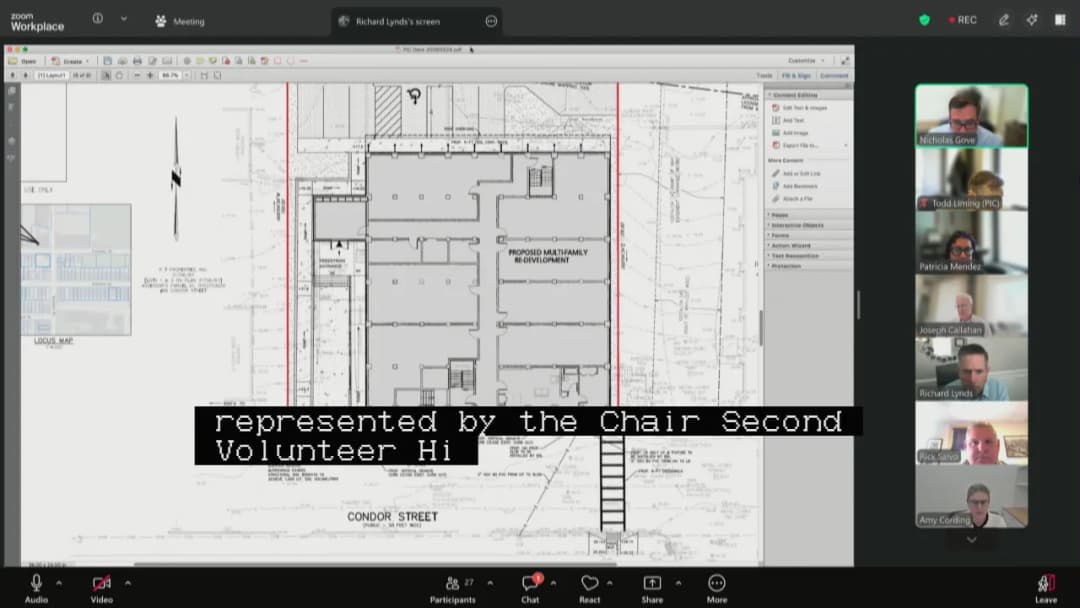
The Public Improvement Commission (PIC) held a hearing on April 9, 2026, chaired by Dick Gove, interim chief of streets. The commission approved eight public hearing items related to street widening, discontinuance, specific repairs, and projection licenses, primarily for the MBTA Ruggles Station project and two private developments. New business items were presented for future consideration at the April 23, 2026 hearing. Public Comments & Testimony - David Wein, representing the Southwest Corridor Park Alliance, commented on the Ruggles Street bike path and Columbus Avenue pedestrian/cycle conflicts. He noted the proposed bike path is only a short segment and questioned how cyclists and pedestrians will navigate the narrowed area near the new canopy pillars and ramp. He urged the Boston Transportation Department (BTD) and Public Works to prioritize resurfacing and proper striping of Columbus Avenue to improve safety for cyclists and pedestrians, though he stated he did not want to hold up the project. Discussion Items - Item 1 – Ruggles Street Widening & Relocation (MBTA & Boston Housing Authority): The proponent (Melissa, AECOM) confirmed all prior PIC comments were incorporated. The commission approved the joint petition for widening and relocation of Ruggles Street right-of-way and acceptance of a highway easement. - Item 2 – Ruggles Street Vertical Discontinuance (MBTA): The proponent stated subsurface areas where MBTA has infrastructure would be excluded from the city easement. A legal description will be provided. Approved. - Item 3 – Forsyth Street Widening, Relocation & Extension (MBTA): The proponent noted a small sidewalk portion would be brought into the city layout. Approved. - Item 4 – Specific Repairs on Ruggles, Forsyth, & Columbus Ave (MBTA): Roger from the project team detailed improvements including a new bike path, sidewalk adjustments, a planter, crosswalks, pavement markings, and a ramp with canopy columns. Surface-mounted bollards (non-crash-rated) and crash-rated bollards were discussed; the project team confirmed signs will be BTD standard. A commissioner noted alternative treatments for surface-mounted bollards may be sought but would not delay approval. Public comment from David Wein raised concerns about bike path continuity and pedestrian conflicts. Approved. - Item 5 – Projection License for Canopy on Columbus Ave (MBTA): The proponent described a canopy supported by columns within the sidewalk. Commissioners asked about foundation details. Approved. - Item 6 – Specific Repairs on Hancock and Trell Streets (Hancock Street Realty Trust): Pierre Vanco, architect, presented a plan for a three-story housing addition above existing retail, including sidewalk repairs, curb raising, and two new red oak trees. Approved. - Item 7 – Projection License for Building Cornices on Hancock Street (Hancock Street Realty Trust): The proponent sought relicensing of existing awnings and a new projection 55 feet above grade overhanging the sidewalk. Approved. - Item 8 – Specific Repairs on Condor Street (Condor Street Investment LLC): Rick Salve presented plans for sidewalk reconstruction, two street trees, bicycle racks, a new crosswalk, and street lighting infrastructure. Approved. New Business (Presented for future hearing on April 23, 2026) - Item 1 – Amory Street Roxbury (25 Amory Street Apartments LLC, et al.): Colin Horsey presented a joint petition for widening, relocation, specific repairs, and a grant location, including a driveway turnaround for fire access. Commissioners noted the next hearing date. - Item 2 – 279 Maverick Street East Boston (279 Maverick Street Realty LLC): Pavel Hunts and Giovanni Federa presented a 32-unit mixed-use development with streetscape improvements including a new curb cut, pedestrian crosswalk, ADA ramps, bike racks, street trees, and street lights. Nineteen off-street parking spaces will be provided. The project team is addressing PIC plan comments. - Item 3 – 262 St. Botolph Street Roxbury Earth Retention License (Northeastern University & Suffolk Construction): Caitlin Tripp presented plans for temporary tower cranes and a personnel hoist for a new athletic facility. The cranes will be founded on piles driven to bedrock; water lines will be temporarily relocated and vibration monitoring conducted. Pedestrian and vehicular traffic changes are already in place under the larger construction management plan. Commissioners requested confirmation of discussion with BTD. Key Outcomes - All eight public hearing items were approved unanimously by voice vote with no recorded opposition. - New business items were presented for public hearing on April 23, 2026. The commission will consider them at that meeting. - The meeting adjourned following a motion.

ENGINEERING AND INFRASTRUCTURE 61% · ACTIVE TRANSPORTATION 21% · PROCEDURAL 12% · PUBLIC SAFETY 2%
168
APR 8, 2026 · BOSTON, MASSACHUSETTS · CITY COUNCIL
Boston City Council Regular Meeting Summary – April 8, 2026

The Boston City Council held its regular meeting on Wednesday, April 8, 2026, at 12:14 PM in the Christopher Iannella Chamber. President Breadon presided, with 12 councilors present (Councilor Mejia absent). The meeting covered approval of prior minutes, referral of major FY2027 budget and appropriation orders, reports from committees, introduction of new motions and resolutions, and votes on several items. Debates focused on independent audits for Boston Public Schools and city operations, child care access, and late-filed matters. Consent Calendar - Approved the minutes of the April 1, 2026 meeting. - Adopted the consent agenda (Resolutions 0785–0791) recognizing individuals and commemorations. Discussion Items - FY2027 Budget and Appropriations: Mayor's messages (Dockets 0733–0763) for the annual appropriation, school department budget, OPEB trust fund ($40 million), transportation network fees ($3.5 million), coastal resilience ($5 million), citywide capital improvements ($384.7 million), BPS capital ($13.855 million), equipment lease agreements ($28.5 million), multiple revolving fund limits (BPS facilities, transportation, technology; Environment Conservation, Distributed Energy, BERDO, BCYF child care, Law, Police fitness and K9, Arts & Culture, Tourism, Bikeshare), Parkman Fund ($1.4 million), PEG access fund ($3.6 million), Community Preservation Act ($1.76 million admin + $39.59 million reserve), C-UAS grant ($10.93 million), Cemetery Trust ($860,000), Red Sox Arts grant ($375,000), VITA grant ($250,000), and MSBA statement of interest for Melvin H. King South End Academy – all referred to committees. - Committee Reports: - Docket 0257 (Commercial Acquisition Assistance Program grant, $500,000 from BRA) – passed. - Docket 0630 (Bussey House landmark designation) – passed unanimously (12-0). - Hearings Remaining in Committee: - Docket 0178 (Tunney Lee Plaza naming) – heard on April 6; community members testified about Tunney Lee's legacy; remained in committee. - Docket 0290 (Summer Safety and Youth Programming) – heard on April 7; administration discussed summer strategy; remained in committee. - Docket 0325 (Road Safety for Delivery Providers) – heard on April 7; administration preferred letting original ordinance take effect; public speakers supported implementation; remained in committee. - Docket 0638 (Police body/dash camera footage release) – heard on April 7; remained in committee. Public Comments & Testimony - During the hearing on Docket 0178 (Tunney Lee Plaza), community panel members (Alice Kane, Dr. Carolyn Crockett, Angie Liu, Lydia Lowe, Kayla Lee) and public speakers emphasized Tunney Lee's contributions and the need for open space in Chinatown. - During the hearing on Docket 0325, public testimony supported allowing the existing delivery provider ordinance to take effect before amendments, and called for accountability for two-wheeled delivery drivers. Key Outcomes - Passed: Docket 0257 (CAAP grant), Docket 0630 (Bussey House landmark), Docket 0779 (information request on BPS bus insurance), Resolutions 0782 (Autism Acceptance Month), 0783 (Louis D. Brown Day of Civic Engagement), and 0784 (Protect SNAP and support DTA workers – 12-0). - Not Adopted: Resolution 0780 (Independent performance audit of BPS) failed 6-5-1 (yeas: Breadon, Culpepper, FitzGerald, Flynn, Murphy, Worrell; nays: Durkan, Louijeune, Pepén, Santana, Weber; present: Coletta Zapata). Resolution 0781 (Independent performance audit of city operations) failed 4-8 (yeas: Culpepper, Flynn, Murphy, Worrell; nays: 8 including Breadon, Coletta Zapata, Durkan, FitzGerald, Louijeune, Pepén, Santana, Weber). - Referred to Committees: All other items (budget, revolving funds, grants, new motions/orders) were assigned to appropriate committees. Late-filed items (mayor's absence letter and two orders) were objected to and will be rescheduled for the next meeting. - Adjourned: The meeting adjourned at 2:52 PM in memory of Rosalie Giglio, Herman D. Greenfield, Nancy Metayer, Claudette Mentor, Sonia Lyle, and Anna Mae Cole, to reconvene on April 15, 2026 at 12:00 PM.

PROCEDURAL 35% · DISABILITY RIGHTS 8% · PUBLIC EDUCATION 7% · FISCAL SUSTAINABILITY 7%
169
APR 7, 2026 · BOSTON, MASSACHUSETTS · CITY COUNCIL
Boston City Council Hearing on BPD Body Camera Footage Release Protocols - April 7, 2026

On April 7, 2026, at 2:00 PM, the Boston City Council Committee on Public Safety and Criminal Justice, chaired by Councilor Henry Santana, held a hearing on Docket 0638 to examine the Boston Police Department's (BPD) protocols for releasing body-worn camera (BWC) and dashboard camera footage. The hearing featured three panels: BPD General Counsel Dave Frederick; Evandro Carvalho, Executive Director of the Office of Police Accountability and Transparency (OPAT); and Dr. Christopher Schneider, a sociology professor and expert on police body cameras. Councilors expressed frustration over the absence of BPD leadership and emphasized the need for clearer timelines, consistent standards, and greater transparency to build public trust. Discussion Items Panel 1: BPD General Counsel Dave Frederick - Frederick stated that BPD receives approximately 800 BWC requests per year and releases about 500 of them. He noted that Rule 405 defers to the Massachusetts Public Records Law (MGL c.66) and that decisions are governed by legal exemptions, particularly in death investigations (MGL c.38 s.4). - Councilor Culpepper questioned whether the police commissioner has independent authority to release footage under Rule 405, even in death investigations. Frederick argued that in death investigations, the district attorney's control takes precedence, but acknowledged that the law does not explicitly grant the DA authority to direct the commissioner. - Councilor Murphy raised concerns about inconsistent access to footage and reports, and asked whether the decision to release footage lies with BPD, the law department, or the district attorney. Frederick stated that elected officials are treated no differently than the public. - Councilor Flynn and Councilor Fitzgerald pressed on the need for a written, consistent policy. Frederick explained that the investigative exemption (Exemption F) and other exemptions (A, C) are commonly used to deny requests, especially when a grand jury is involved. - Councilor Louijeune and Councilor Weber explored the distinction between investigations and prosecutions, and whether the current rules account for a situation where a police officer has been charged. Frederick confirmed that the release of footage is always denied if the case is headed to a grand jury. - Councilor Murphy and Councilor Flynn questioned whether BWC footage is retained indefinitely. Frederick clarified that in death investigations, footage is saved indefinitely and moved into a case file. Panel 2: OPAT Executive Director Evandro Carvalho - Carvalho expressed sympathy to the families of victims and stated OPAT supports the public's right to see BWC footage while protecting the integrity of investigations. He noted that OPAT has requested access to the footage in the King case but was denied by the DA and commissioner. - Councilor Culpepper asked about OPAT's authority to access footage. Carvalho said OPAT can access footage for routine complaints but has not seen footage from officer-involved shootings. He explained that OPAT cannot conduct investigations that interfere with criminal proceedings, and will monitor the ongoing criminal case before conducting its own review. - Councilor Louijeune clarified that OPAT's ordinance does not explicitly prohibit parallel investigations, but historically OPAT has not conducted concurrent investigations when a criminal case is active. Carvalho agreed that the current situation is a matter of first impression. - Councilor Weber asked whether the rules contemplated a scenario where criminal charges are filed before administrative review. Carvalho said the rules are not explicit, and OPAT is working to develop regulations. - Councilor Culpepper asked how the council can strengthen OPAT. Carvalho suggested that establishing timelines for the commissioner to respond to OPAT recommendations would be helpful, and noted that OPAT is developing more comprehensive regulations. Panel 3: Dr. Christopher Schneider - Dr. Schneider, author of "Police Body Worn Cameras, Media and the New Discourse of Police Reform," explained that the concepts of transparency and accountability are often undefined and interpreted differently by police, community members, and oversight bodies. - He highlighted Chicago's Civilian Office of Police Accountability (COPA) as a model: COPA has direct access to BWC footage within 24 hours of docking, authority to release video, and a 60-day timeline for release (with a possible 30-day extension by court order). He contrasted this with BPD's Rule 405, which gives the commissioner sole discretion to release footage. - Dr. Schneider emphasized that body camera programs are only as good as their policies. He recommended clear, enshrined definitions of transparency and accountability, proactive release timelines, and stronger third-party oversight to build public trust. Key Outcomes - No formal votes were taken during the hearing. - Councilors expressed a commitment to pursue clearer timelines for the release of BWC footage, likely through amendments to Rule 405 or new ordinances. - Several councilors indicated they would work with OPAT to strengthen its authority, including requiring the BPD commissioner to respond to OPAT recommendations within a set timeframe. - The hearing highlighted the need for a neutral third-party oversight body with direct access to BWC footage, similar to Chicago's COPA model. - Councilors will continue discussions with BPD, the district attorney's office, and community advocates to develop a consistent, transparent policy for footage release.

PUBLIC SAFETY 91% · TECHNOLOGY AND INNOVATION 4% · PROCEDURAL 2% · PERSONNEL MATTERS 1%
170
APR 7, 2026 · BOSTON, MASSACHUSETTS · CITY COUNCIL
Boston City Council Hearing on Ordinance to Ban Mopeds and E-Bikes for Food Delivery – April 7, 2026

The Boston City Council Committee on Government Operations, chaired by Councillor Gabriela Caleta Zapata, held a hearing on April 7, 2026, at 10:08 AM to discuss Docket 0325, an ordinance amending City of Boston Code Section 17-22 (Road Safety and Accountability for Delivery Providers). The proposed amendment would ban the use of mopeds and e-bikes for third-party food delivery. Councillor Ed Flynn, the lead sponsor, argued the measure is necessary to address public safety hazards, while several colleagues, the Boston Police Department, and many public speakers opposed the ban, urging implementation of the existing 2025 ordinance first. Public Comments & Testimony - Carmen Blyden (Boston Cyclist Union): Opposed the ban, stating it disproportionately harms immigrant and low-wage workers, would increase traffic congestion and emissions, and undermines the current ordinance set to take effect April 11, 2026. Called for data-driven regulation. - Tim Cook (Downtown resident): Supported the ban, describing repeated traffic violations by e-bikes and mopeds on sidewalks and the wrong way, creating hazards for pedestrians. - Richard Cohen (Beacon Street resident): Supported the ban, citing dangerous driving on sidewalks, bike lanes, and private ways, and noting that delivery apps incentivize speed over safety. - Walter O'Neill (Tremont Street resident): Supported the ban, reporting daily violations including wrong-way driving, high speeds, and a personal incident of road rage by a moped driver. - Christian Cullen (Back Bay resident and surgery resident): Supported the ban, stating he has witnessed trauma from moped crashes in the ER and that delivery platform incentives reward unsafe behavior. - Cassandra (North End resident, disability advocate): Supported the ban, expressing concerns for vulnerable pedestrians and noting near misses with mopeds on sidewalks. - Matt Ryan (Beacon Hill resident): Supported the ban, describing a near miss with his fiancée and asserting the problem is widespread. - Lauren Flaherty Rossi (South Boston mother): Supported the ban, stating she fears crossing the street with her children due to dangerous moped driving, and referenced two child pedestrian fatalities in her neighborhood since 2018. - Chase Dustin (Boston resident): Opposed the ban, arguing it would harm workers' livelihoods, increase car use and congestion, and that the council should focus on enforcement of existing laws instead. - Eduardo (immigrant advocate, district unspecified): Supported the ban, reporting reckless driving and hate speech/harassment by moped drivers, including against the LGBTQ community and women. - Jen Starr (Beacon Hill, Traffic & Parking for Beacon Hill Civic Association): Opposed the ban, supporting Councillor Durkin's proposed fee to fund enforcement, and called for regulation rather than a ban. - Elijah Evans (JP resident, CEO of Bike Stomp Bombs): Opposed the ban, calling micromobility a lifeline for low-income and immigrant workers and arguing cars pose greater dangers. Accused the proposal of creating “mobility apartheid.” - Montell Caleb (Back Bay resident, community organizer): Opposed the ban, arguing it conflates mopeds with e-bikes, fails to address infrastructure, and urged the council to focus on enforcement and education. - Clifton Braithwaite (Roxbury/Dorchester resident): Opposed a blanket ban but supported identification requirements for delivery drivers to enhance safety, especially for seniors, and stressed job preservation. - Janiel Hart (Jamaica Plain resident): Opposed the ban, stating cars are a greater danger and better infrastructure is needed instead of bans. - Eric Cortell (South End resident): Opposed the ban, clarifying that most delivery vehicles are 150cc motorcycles (not mopeds) and are often unregistered, and pointed to an existing 1998 state law governing bicycle messengers that includes insurance and badge requirements but is not enforced. - Tiffany Cogell (Executive Director, Boston Cyclist Union): Opposed the ban, citing data that 30–35% of food delivery car drivers have been in crashes, and 20% of work-related motor vehicle fatalities are delivery drivers. Argued cars cause the vast majority of crashes and that the ban is punitive and inequitable. - Luann O'Connor (President, City Point Neighborhood Association, South Boston): Supported the ban, describing dangerous driving behavior and stating food delivery is a convenience that can be done by car. Discussion Items - Councillor Ed Flynn (lead sponsor): Argued the ban is needed because moped and e-bike deliveries have made streets unsafe, citing a fatal crash near Copley Square, a 300% increase in e-bike injuries nationally, and 525 crash reports involving scooters in 2025. He stated that enforcement by BPD is unrealistic due to staffing shortages and that the existing ordinance (passed 2025) has not yet taken effect. - Councillor Erin Murphy: Supported balancing safety and convenience, noted the police staffing crisis, and emphasized the need for strong enforcement of traffic laws for all vehicles. - Councillor Michael Durkin: Opposed the ban, citing a letter from BPD warning that enforcement could be arbitrary and harm community trust. He advocated letting the current ordinance be implemented first to collect data, and reiterated his support for a 15-cent fee per delivery to fund enforcement. - Councillor Henry Peppen (Fenway): Opposed a blanket ban, calling for more conversation, inclusion of delivery drivers, and data from the upcoming ordinance before drastic measures. - Councillor John Fitzgerald: Questioned whether the city is ready to embrace moped culture, noted enforcement capacity issues, and suggested a need for more guardrails before a ban. - Councillor Louis Jesus: Supported regulation over a ban, emphasizing the importance of data and implementation, and noted that cars also pose safety and environmental problems. - Councillor Michelle Wu (via letter): Noted climate and micromobility goals, and stressed that delivery drivers use these vehicles as an accessible job. - Councillor Kendra Lara: Asked about data collection and the timeline for receiving it; noted concerns about enforcement equity and the impact on restaurants and workers. - Councillor Julia Mejia: Advocated for automated enforcement and state-level action; opposed a ban, preferring the current regulatory approach. - Chair Gabriela Coletta Zapata: Summarized that she takes BPD's concerns seriously, noted the difficulty of distinguishing delivery drivers from private users, and emphasized the need to include delivery drivers in future conversations. She stated the topic will remain in committee. - Mia Capone (Director of Parking and Curbside Management): Representing the administration, she opposed the ban, arguing it would increase congestion and car use, harm low-wage workers, and conflict with climate and micromobility goals. She detailed the existing ordinance's requirements (insurance, data reporting, permits) and noted that Grubhub is already permitted, Uber Eats' application is under review, and enforcement begins April 11, 2026. Key Outcomes - No vote taken. The hearing was informational, and the topic will remain in committee for further discussion. - The existing ordinance (passed in 2025) is set to go into full enforcement on April 11, 2026, with the city continuing to work with delivery providers on permits, insurance, and data reporting. - Several councilors expressed intent to oppose the proposed ban and prioritize data collection from the existing ordinance before considering amendments. - The Boston Police Department's letter, read into the record, opposed the ban, citing enforcement challenges and potential damage to community trust.

TRANSPORTATION SAFETY 63% · PUBLIC SAFETY 21% · PROCEDURAL 5% · ECONOMIC DEVELOPMENT 4%
OPENPUBLICA · PUBLIC MEETING INDEXUPDATED DAILY · openpublica.com