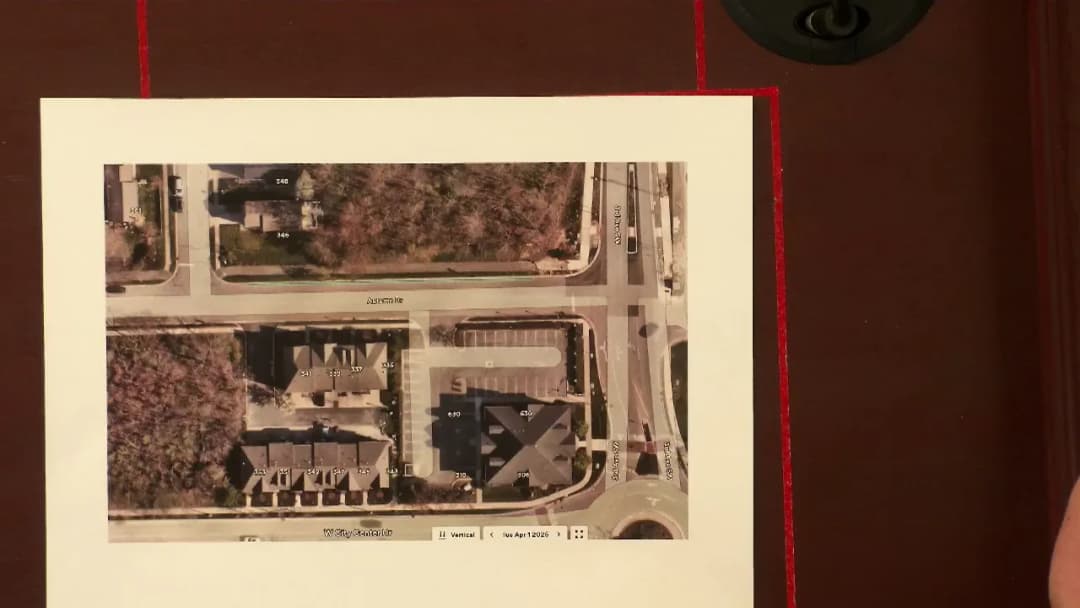
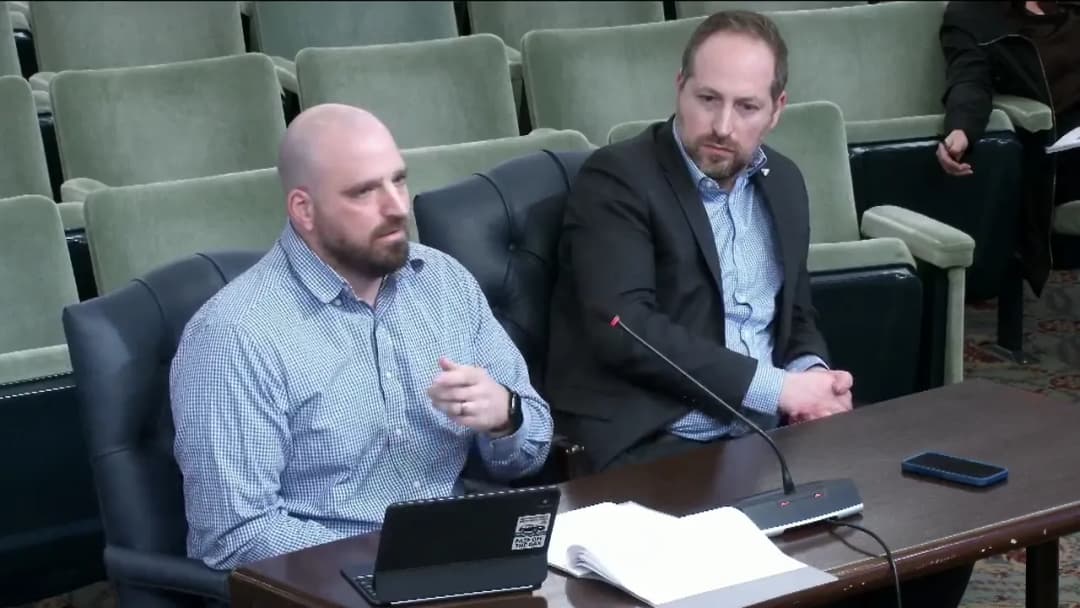
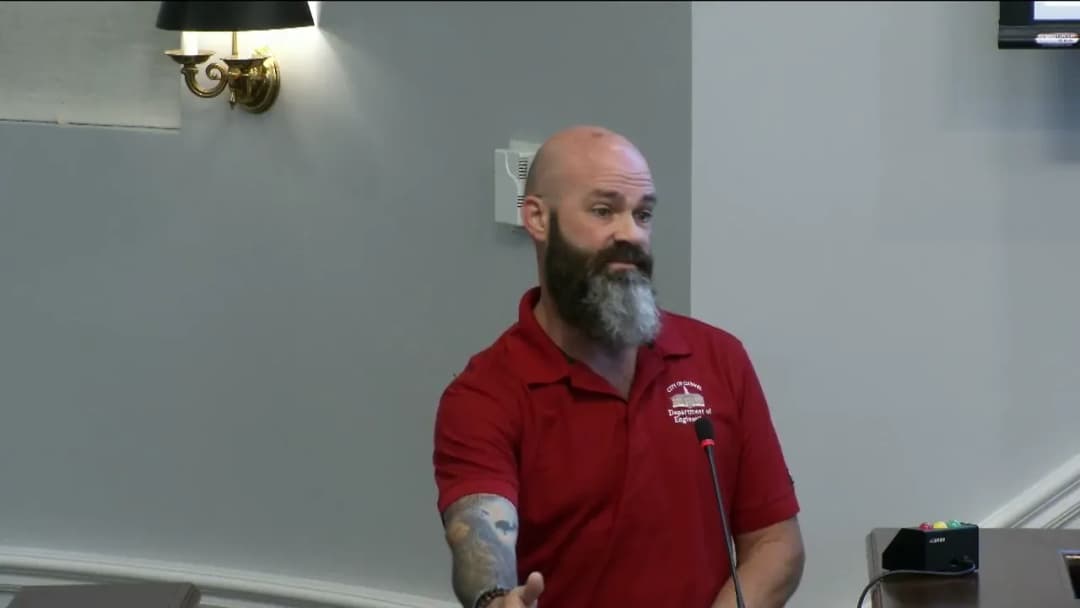
The Committee met on Wednesday, March 11, 2026, to consider Ordinance D-2811-26, which would amend parking regulations on Autumn Drive by allowing parking on the north side of the street between Third Avenue Southwest and Atherton Drive. After discussion and public comment, the Committee voted unanimously to send a positive recommendation to the full Council. Discussion Items - Ordinance D-2811-26 – Parking on Autumn Drive: The ordinance proposes to remove “no parking” signs on the north side of Autumn Drive from the intersection with Third Avenue Southwest to its intersection with Atherton Drive. Currently, parking is prohibited on both sides. Director Pease noted the road is 36 feet wide and that allowing parking on one side would reduce vehicle speeds and improve safety. The change would create approximately 10 parking spaces (roughly 220 feet of curb). No parking would be allowed within 30 feet of crosswalks. Engineering assessed police/fire access and found no issues. - History and Concerns: Councilmembers discussed that parking was previously removed about 10 years ago. Recent confusion arose because some drivers parked illegally on Third Avenue near the Chris Kindle Market. The HOA and some residents raised concerns about the number of spaces, potential traffic turning around, road wear, and the lack of notification. Director Pease clarified that engineering decisions are objective and not driven by individual requests. The city will maintain the street regardless. Enforcement of the residential parking sticker program was also discussed; the city is developing a new technology system for enforcement, to be phased in starting with midtown/main street areas. - Public Comment: Brent Borham, Director of Strategic Growth and Partnerships at Senior Home Companions in Story Cottage (owner/occupant of 630 3rd Avenue SW), expressed support for the additional parking. He noted that the business, along with other tenants (an eye care business and a dentistry office), would benefit from more spaces for clients and staff, especially during events at the nearby Booth Tarkington and Fehrtz Theatre. Key Outcomes - The Committee voted unanimously to advance Ordinance D-2811-26 to the full City Council with a positive recommendation. - Director Pease provided an update that the disability committee ordinance and audit committee suggestions are expected to be discussed at the next meeting. - The meeting adjourned at 5:48 p.m.
Public Meetings - Carmel, Indiana
Public Meetings - Carmel, IndianaThe Carmel City Council convened on March 2, 2026, for a brief meeting dominated by a ceremonial proclamation recognizing the city's 50th anniversary, a visit from sister city representatives from Nagano, Japan, and the approval of dates for suspending the short-term rental ordinance. No public comments were received, and most agenda items were routine or informational. Ceremonial Items & Recognitions - 50th Anniversary Proclamation: Indiana House Resolution 29 was presented by Representative Victoria Garcia Wilburn and Representative Danny Lopez, celebrating Carmel's transition from a town to a city in 1975. The resolution noted the city's growth from 13,500 to 99,757 residents, its ranking as 2 by U.S. News and World Report, and key investments like the $80 million Center for the Performing Arts and 130 corporate headquarters. - Sister City Visit: Council member Andris Berzans introduced guests from Nagano High School in Japan—Principal Kazumi Fujiwara and International Studies Director Kyoshi Moramoto—who are establishing a sister school partnership with University High School. Public Comments & Testimony - None. Consent Calendar - Minutes: Approved from February 16, 2026 (no roll call noted). - Claims and Payroll: Approved totaling $4,800,783 (payroll) plus $217,718.58 (CDD vacation/sick day buyback), $2,946,222.13 (general claims), and $24,003.10 (purchase card). Committee Reports - Land Use and Special Studies (Counselor Joshi): Two PUDs—Illinois Street Townhomes and Restoracy project—are under discussion; a meeting on March 3, 2026 (Wednesday) at 5:30 PM at the Carmel Library will address them and finalize the US 31 plan. - Finance and Rules (Counselor Taylor): Next meeting scheduled for March 11, 2026, at 5:30 PM. - Redevelopment Director Report (Henry Mistetsky): Updates on Monon Square North (three cranes on site), Magnolia (retail filled), Hamlin Crossing/Republic Airways hotel, AT&T site with Merchants Bank expansion, and the Carmel Small Business Network first meeting on March 24, 2026. Also noted that the 106th Street Bridge project was fully reimbursed by insurance ($1,074,842.23). - Mayor's Advisory Commission on Senior Living (Counselor Taylor): An AARP age-friendly community assessment has been completed by IU School of Medicine; results will be presented April 2, 2026 (5:30 PM, Council Chambers). Council Comments & Mayor's Report - Deputy Mayor Report (6th grader Sam Henry): Mayor Finkam’s activities included National School Breakfast Week, all-team meetings, and creation of a Mayor’s Advisory Commission on Food Access (led by Councilor Warell). - Councilor Jeff Worrell announced a community conversation on housing challenges using new software (All Sides) via ProjectCivility.com on March 26, 2026 (2 PM and 7 PM). - Councilor Teresa Ayers congratulated Carmel High School’s swim team for its 12th consecutive state title, noting 205 overall team titles and five state championships this school year. - Councilor Richard Taylor clarified that the 106th Street Bridge project insurance claim was paid in full. New Business (Public Hearing & Vote) - Resolution CC 0302-2601: Suspension of the short-term rental residential rental ordinance (UDO 5.72) for specific dates in 2026, to accommodate visitors during major events. Dates include April 3-4, 17-18, 21-24; May 8-9, 23-25; July 3-5, 24-26; August 21-23, 28-29; September 5-6; October 10; and November 25, 27. Motion to approve was made and seconded; passed without further discussion. Key Outcomes - Approved: Suspension dates for short-term rental ordinance for 2026. - Approved: Consent calendar items (minutes and claims). - Acknowledged: Proclamation and sister city visit; committee reports noted. - Upcoming: Land Use meeting March 3; Finance meeting March 11; Housing Commission meeting March 26; Senior Living Commission meeting April 2.
The Carmel City Council met on Monday, February 16, 2026, at Carmel City Hall. The meeting included the swearing-in of two new police officers, the introduction of a new CEO for the Carmel Christkindlmarkt, a student council report, extensive public comment regarding U.S. Immigration and Customs Enforcement (ICE) leasing office space in the city, a comprehensive presentation from the Carmel Clay Public Library director, and a financial update including a vote to proceed with a major Enterprise Resource Planning (ERP) system project. Several land-use items were referred to committees. Consent Calendar - Agenda approved unanimously. - Consent agenda approved: minutes from January 22 special claims meeting (with a note to correct a misspelled name) and February 2 regular meeting; claims and payroll totaling $8,472,760.36; wire transfers of $4,269,618.28. Public Comments & Testimony - Sally Peeler (Carmel resident since 1989) expressed serious concern about the ICE administrative office leasing space near residential areas. She stated that while local government cannot prevent federal agencies from operating, Carmel can adopt clear non-cooperation policies to protect residents from entanglement with federal immigration enforcement. She urged the council to require full public disclosure of the lease, affirm non-cooperation policies, ensure no city resources are used for immigration enforcement, and slow the process until the community is fully informed. - Mark Roger spoke about safety, transparency, and trust. He expressed concern about federal agents operating without clear identification and asked the council to limit police cooperation with federal agencies, require written authorization for joint operations, prohibit local officers from participating in immigration enforcement, require public reporting on federal assistance requests, and strengthen civilian oversight. - Joey Basso (Carmel native and parent) stated his views are his own. He expressed concern after learning ICE is expanding to Carmel. He asked what protections exist for residents if constitutional rights are violated. He noted the mayor assured him Carmel will stay welcoming and Chief Sterling assured him Carmel Police do not stand for unconstitutional behavior, but he said there are more questions than answers regarding SB 76 (mandating cooperation with ICE). He urged the council to establish clear policies ensuring Carmel police will intervene to protect constitutional rights regardless of state or federal mandates. - Micah Alejandra Mora (16-year-old resident) stated she is concerned about the ICE office, saying it sends a message of fear and uncertainty for immigrant families. She asked the council to consider the human side, make clear that Carmel values all residents, and that Hispanic and immigrant families are not outsiders. She noted she carries her passport out of fear. - Another speaker (name not clearly stated) criticized the mayor and four council members for not issuing statements on the ICE news for four days, saying "it's hard to lead from behind." They also mentioned Hamilton County Sheriff Quakenbush has a mandate to assist ICE and that two American citizens lost their lives in Minneapolis due to ICE violence. - Ron Hauck (President of Spring Mill Place HOA) spoke in support of the Illinois Street Townhomes PUD, noting it is residential and compatible with their neighborhood. Discussion Items - Swearing-In of Police Officers: Chief Sterling swore in two new certified officers: Zach Graham (from Wabash County Sheriff's Office) and Rodica Choudry (from IU Indianapolis Police Department). - Introduction of New Christkindlmarkt CEO: Council President Snyder introduced Jason Adamowitz as the new CEO of the Carmel Christkindlmarkt, noting his experience and vision. - Student Council Report: Fifth grader Nafeg Singh delivered the Mayor's Council Report, announcing removal of planter boxes on Rangeline Road to create a 10-foot-wide path for walkers and cyclists (construction July 4 to November), a traveling exhibit at the Carmel Clay History Museum, a utilities program, and the Carmel Arts and Design District nomination in USA Today's 10 Best Reader's Choice Awards. - ICE Office Discussion: Council President Snyder read a lengthy statement addressing the ICE leasing. He stated the city has no legal authority to prevent a federal agency from leasing private property, confirmed the location is administrative only (not enforcement/detention), and urged civility and respect for differing views. He emphasized fear should be acknowledged and that the Carmel Police Department remains the public safety authority. - Mayor's Comments: Mayor Finkam confirmed the city was informed ICE has leased privately owned office space as overflow for administrative personnel from its Indianapolis office. He said the city has no legal authority to restrict the action. He emphasized the Carmel Police Department's commitment to safety and that the city will follow the law while maintaining open communication. He stated, "Others do not write our story. We do." He highlighted Carmel's diversity (residents from 90 countries, 110 languages) and commitment to respect. - Council Comments: Several council members expressed appreciation for public engagement and acknowledged limitations of local authority. Councilor Worrell asked for transparency and a pipeline of factual information, pledging to work with the mayor. Council President Snyder noted the council is operating in uncharted territory and welcomes input from residents. Councilor Taylor echoed support for thanking speakers. - Library Director Presentation: Bob Swainey, Director of Carmel Clay Public Library, presented a comprehensive 10-year history and current status. Key points: 2.1 million circulation, $10 million working budget (55% salaries, 20% materials – a gold standard), record visits (540,000+ at main library), new library card issuance at 8,000-10,000 per year (January 2026 was a record month), popular gadget collection (hiking poles, ukuleles, board games), digital media lab with 3D printing expo scheduled for February 28, teen artist-in-residency program (35 artists, over 1,000 studio visits), partnership with Hamilton County elections for early voting, and library after dark event March 21. The library also hosted the National Civility Summit. - Financial Update – 2025 Results & ERP Project: CFO Zach Jackson presented the 2025 general fund financial picture: revenues of $141.4 million, expenses of $138 million, operating surplus of $3.3 million; rainy day fund unchanged at $14.6 million; combined reserves of $29.1 million. He then presented Project Cornerstone, an ERP system to replace outdated financial and administrative systems. Estimated implementation cost $500,000 to $2 million (likely $1 million) with ongoing licensing fees of $250,000–$400,000, partially offset by replacing existing contracts (e.g., accounting $50,000, payroll $250,000). The project would be phased, hiring a project manager, selecting a vendor, and implementing modules over time. Council discussed and voted to proceed with Phase 1 (selection and procurement). - PUD Items: - Illinois Street Townhomes PUD (Pulte Homes): 27 for-sale three-story townhomes on 4.4 acres, priced from mid-$500s. Plan Commission gave a 6-3 negative recommendation due to location and building materials concerns. Applicant noted more than 40% open space, tree preservation, and rental restrictions. Public comment from HOA president in support. Sent to Land Use and Special Studies Committee. - Greenhouse Cottages PUD Amendment (Restoracy of Carmel): Two new skilled nursing cottages (12 beds each) for a total of 24 new beds, with dedication of right-of-way and additional buffering. Plan Commission unanimous positive recommendation. Sent to Land Use Committee. - Amendment to parking regulations on Autumn Drive: first reading, sent to Finance and Rules Committee. Key Outcomes - ERP Project (Project Cornerstone): Council voted unanimously (consensus) to move forward with Phase 1 – selection and procurement of an ERP system and implementation partner. The finance committee's recommendation was approved. - Illinois Street Townhomes PUD: Public hearing closed; matter referred to Land Use and Special Studies Committee for further discussion on Wednesday, February 19, 2026 at 5:30 PM at the Carmel Public Library. - Restoracy of Carmel PUD Amendment & New PUD: Public hearings closed; both ordinances referred to Land Use Committee. - Parking Amendment (Autumn Drive): First reading completed; referred to Finance and Rules Committee. - Council Announcements: Council recognized the Carmel Girls Swim team's 40th consecutive state championship. - Adjournment: Meeting adjourned at approximately 8:52 PM.
On February 16, 2026, the Carmel City Council Committee of the Whole met to receive a presentation from IP Services on a downtown parking study. The study, led by James O'Connell, Director of Operations for IP Services, was a briefing with no immediate decisions. The central finding was that Carmel does not have a system-wide parking capacity crisis, but pressure is concentrated in specific areas, particularly midtown and along Main Street during evening dining and major events. Available capacity exists but is not always visible to visitors. The study outlined three tracks of action: improve curb management and valet coordination, make existing capacity visible through technology, and plan ahead for future capacity as redevelopment occurs. Council members engaged in extensive discussion on enforcement, residential parking, valet operations, wayfinding, and future planning. Discussion Items - Presentation by James O'Connell: IP Services found that peak demand concentrates in midtown garages while city center and other garages have capacity. Visitors perceive a shortage when front-door spaces are full, even when garage capacity remains. Recommendations include improving curb turnover, enhancing visibility of available parking (e.g., electronic signs, apps), coordinating valet operations, and monitoring long-term supply. No immediate need for new structured parking, but future capacity may be needed as downtown grows. - Enforcement and Curb Turnover: Councilor Taylor emphasized that time limits on street parking are rarely enforced, leading to abuse. He suggested outsourcing parking enforcement, as Noblesville does, or using license plate recognition (LPR) technology. Brad Pease (City Engineer) noted that the police department has advertised for a dedicated parking enforcement position and is exploring LPR systems. Councilor Jeff Worrell highlighted that enforcement is key to changing behavior, and that many garages have time limits that are not enforced. - Residential Parking: Councilor Snyder raised concerns about overflow parking from businesses into residential streets, particularly around Sophia Square. He noted that residential parking permits exist but are not well-enforced. Henry Mestevsky (Redevelopment Director) explained that the study trimmed residential parking data, but LPR enforcement could help. Councilor Green suggested that on-street parking in residential areas needs a holistic review, not just complaint-driven responses. Brad Pease indicated that without enforcement, residential permit programs are not viable, but with new technology, they could be implemented. - Valet Coordination: Councilor Taylor criticized valet operations that use public street parking for private profit without moving vehicles. He supported a valet licensing program with fees and cost recovery. President Snyder noted that valet coordination is a recommendation in the study, and staff will work on an ordinance. Councilor Green mentioned the possibility of private partnerships for valet parking. - Wayfinding and Technology: Councilor Taylor asked about electronic signs showing available parking in garages. Henry Mestevsky stated that new garages (e.g., Portrait on ATD site, Subunkland project) will have parking counters, and IT is working on an app to aggregate data from all garages. Retrofitting existing garages with counters varies in cost. Councilor Green suggested using in-vehicle technology (e.g., dashboard apps) to direct drivers to available parking. - Garage Maintenance and ADA: Councilor Worrell noted that aging garages require ongoing maintenance, which can displace parking. Councilor Green raised ADA compliance issues, questioning how accessible parking spaces are allocated on streets and in garages. Brad Pease clarified that different rules apply to public streets vs. site development, and architects certify garages for ADA compliance. - Outdated Signage: Councilor Green pointed out that many old signs restricting parking near Carmel High School are still up but no longer valid. He requested their removal. Henry Mestevsky said the city removed most when the ordinance changed, but some may remain on the west side. Key Outcomes - No formal votes were taken; the meeting was a briefing for discussion. - Council directed staff (Brad Pease and Henry Mestevsky) to: - Continue developing enforcement strategies, including the new parking enforcement position and LPR technology. - Work with the CRC on a valet ordinance and coordination. - Explore residential permit parking solutions using the new enforcement system. - Evaluate costs and feasibility of retrofitting existing garages with parking counters. - Remove outdated school parking signs. - The police department has already advertised for a parking enforcement position. - IT is developing an app to display real-time parking availability across garages. - Future discussions will consider incremental capacity as redevelopment projects occur.
The Carmel Land Use and Special Studies Committee met on October 8, 2025, at the Carmel Clay Public Library. The committee considered two primary agenda items: proposed amendments to Ordinance D 2784-25 regarding residential rental caps and a discussion of a proposed micromobility ordinance. The rental cap ordinance was approved with amendments and sent to the full council with a positive recommendation. The micromobility ordinance was discussed but not voted on; staff was directed to prepare a comprehensive draft for introduction at the next council meeting. Discussion Items Ordinance D 2784-25 – Residential Rental Caps Benjamin, a staff member, presented Version B of the ordinance, incorporating amendments discussed at the previous Land Use meeting on October 1, 2025. Amendments included: - Changing the certificate of occupancy requirement to “ready to be let for occupancy” on line 44 to accommodate homes without certificates. - Refining language regarding civil judgments and criminal convictions (lines 44–48). - Adjusting appeal procedures for denial and revocation to align with city processes. - Updating penalties and remedies: violations for advertising without registration, a $1,000 per day fine for continuing violations (up from $100), and verification of correction by city enforcement officers. - Adding a provision that intentionally providing false or misleading information in the application shall be cause for immediate revocation or denial (added as subsection A6 on line 183, and also applied to revocation in section 4503). Committee member Matt raised concerns about penalties for perjury and the need for language allowing permit revocation for false information. The committee agreed to add the provision. After discussion, the committee voted unanimously (with all present members in favor; member Anita was absent) to send Version B with all amendments to the full council with a positive recommendation. Micromobility Ordinance Committee member Matt presented the latest iteration of a proposed micromobility ordinance. Key discussion points included: - The definition of “micromobility” and whether electric-assist e-bikes (pedal-assist) qualify as “human power.” Legal staff noted the definition already covers “wholly or in part by mechanical or electrical motor.” - Age and helmet requirements: current version requires age 16 and helmet for Class 3 e-bikes; Matt suggested extending to all e-bikes. - Speed limits and road use: a staff comment noted that limiting micromobility to roads with speed limits ≤35 mph would effectively ban bikes on 40 mph roads. Legal pointed out that state law already allows e-bikes wherever bicycles go, which may conflict. - Committee members expressed desire to get an ordinance introduced to council so public feedback could be gathered. Legal recommended including language to clean up other city code sections (e.g., skateboard, bike lane, parking ordinances) to avoid conflicts. - Discussion on impaired operation: state law prevents imposing criminal penalties; the committee agreed to treat violations as civil ordinance violations rather than criminal. Staff recommended using the Ordinance Violation Bureau (OVB) process for first offenses (fine only, no court costs). - A final decision to remove some internal language (lines 238-240) was recommended by legal out of concern that it bypassed publication requirements. No vote was taken. The committee directed staff to prepare a comprehensive draft ordinance that consolidates and resolves overlapping city code sections, and to submit it to the council clerk by Monday, October 13, 2025, for introduction at the next council meeting. Key Outcomes - Ordinance D 2784-25 (Rental Caps): Approved as Version B with all amendments (including the new false information provision). Recommendation to the full council passed unanimously (all present members in favor). - Micromobility Ordinance: No vote; staff instructed to draft a consolidated version addressing code conflicts and to submit by October 13 for council introduction. The committee emphasized the need to move forward to allow public and council input. The meeting adjourned at 6:23 PM after the committee noted member Anita’s prior support for the rental cap changes.
The Carmel Common Council met on October 6, 2025, at 7:00 PM. The meeting included a public hearing on the 2026 budget, extensive public comments regarding funding for Prime Life Enrichment, and discussion of several ordinances and resolutions. Key actions included rejection of the 2025 salary ordinance, approval of amended ordinances on zoning notice and parking, and passage of a resolution to study the energy center. The 2026 budget was introduced but not voted on. Consent Calendar - Approved the minutes of the September 15, 2025 regular meeting. - Approved claims totaling $11,241,345.73, including payroll ($4,104,628.06), general claims ($6,983,188.07), purchase card ($26,382.00), and retirement ($127,147.10). Passed unanimously. Public Comments & Testimony - Prime Life Enrichment Supporters (Blue Card Section): Sixteen speakers addressed the council, including Gary Wagner (Executive Director of Prime Life), Marcia Clairbaugh (Board President), Lisa Brooks (water therapy instructor), Lisa Brandt (healthcare executive), Angela Coven (daughter of a member), Andrew Ingall (widower of a former member), Cynthia Kirawak (with 94-year-old mother-in-law Pearl), Beth Napik, Jan Hurlbutt, Mark Jones, Matt Carroll, Mary Wignall, and Winnie Nessel. All expressed strong support for continued city funding of Prime Life Enrichment, highlighting its role in providing senior services (transportation, exercise, social connection) and the impact of potential funding cuts. Gary Wagner noted that $50,000 is less than 0.03% of the proposed 2026 general budget. Angela Coven shared a personal story of how Prime Life helped her father after his wife’s death and during dialysis. Several speakers referenced campaign promises to provide dedicated funding. - Jan Hurlbutt also spoke critically about the city’s “She Leads” conference, calling it discriminatory to men and questioning its taxpayer funding. - Public Hearing on 2026 Budget: Two speakers testified. Sean Sutton (President, Carmel Firefighters Union) expressed support for the fire department budget, emphasizing needs for training, hiring 25 firefighters, and mental health funding. Jim Spelpring (Carmel city employee) voiced concern about pay disparity between sworn and civilian employees. Discussion Items - 2026 Budget Presentation: CFO Zach Jackson and Mayor Finkham presented the proposed $144.263 million general fund budget. Revenues were forecast at $144.265 million (flat compared to 2025). The budget avoids a property tax increase, uses $5.2 million in underspend from 2025 to pay down capital leases, and reduces 15 positions. A three percent COLA for most employees (excluding senior leadership) was included. The mayor emphasized collaboration and fiscal discipline. - Council Budget Questions: Councilors Locke, Schneider, Minard, and Taylor asked detailed questions about revenue forecasts, personnel reductions, food and beverage tax usage, arts funding, and the proposed Enterprise Resource Planning (ERP) system. Councilor Minard expressed frustration about lack of transparency on the ERP, which could cost up to $2 million in one-time implementation plus ongoing costs. Councilor Taylor highlighted the impact of Senate Enrolled Act 1 on future property tax revenues. - 2025 Salary Ordinance (D-2779-25): Returned from committee with a negative recommendation. After debate, the council rejected the ordinance 8-0. Discussion centered on eight employees who were promised pay adjustments tied to title changes. Council expressed intent to bring a separate ordinance to address those employees at the next meeting. - Ordinance D-2780-25 (Zoning Notice): Amended to require proof of notice publication at least two business days prior to Plan Commission hearings. Passed unanimously. - Ordinance D-2781-25 (Parking on 2nd Street SW): Amended to create two 15-minute loading/unloading zones on the south side of 2nd Street SW near Monon Boulevard. Passed unanimously. - Ordinance D-2784-25 (Rental Ordinance): Held and sent back to committee for consolidation of amendments. - 2026 Salary Ordinances: - Clerk’s office (D-2789-25): Passed 8-0 after suspension of rules. - Executive branch (D-2790-25): Held at the dais, with discussion continued. - Elected officials (D-2791-25): Held without action. Debate centered on whether to accept the three percent COLA; mayor, clerk, and judge declined their increases. Councilors expressed frustration that last year’s attempt to depoliticize the process failed. - Historic District Designations (D-2792-25 and D-2793-25): Held to allow the historic preservation officer to attend the next meeting. - Street Vacation (D-2787-25): Approved unanimously after suspension of rules. - Resolution CC-1006-2501 (Energy Center Study): Approved, transferring $150,000 within the finance department to hire consultants to evaluate the energy center’s chiller and boiler capacity. - Resolution CC-1006-2502 (Property Tax Rate Cap): Held for further information on the impact of capping the rate at 0.7783%. Key Outcomes - 2025 Salary Ordinance rejected (8-0) – Council will bring a separate ordinance to address eight employees’ pay adjustments. - Zoning notice and parking ordinances amended and passed unanimously. - Clerk’s salary ordinance passed (8-0). - Energy center study resolution passed. - Street vacation approved. - Public hearing on 2026 budget concluded; no vote taken. The budget remains under consideration. - Council confirmed that $50,000 for Prime Life Enrichment for 2025 will be paid shortly via the Board of Public Works and claims process. The 2026 budget does not currently include this funding; discussion will continue. - Gazebo concerts funding of $15,000 was approved via a council sponsorship from its own budget (7 yes, 1 abstain).
The Finance, Utilities and Rules Committee met on Monday, October 6, 2025, at 3:02 p.m. to discuss two ordinances: D-2780-25, amending the zoning map change notice requirements, and D-2781-25, regulating public parking spaces. Both ordinances were amended and sent back to the full council with positive recommendations. Discussion Items - Ordinance D-2780-25 (Zoning Map Change Notice): The ordinance removes the requirement for the common council to publish notice for zoning map changes, as the Plan Commission already does so. The new language requires notice "in conformance with Indiana law" and adds a buffer requiring proof of publication at least 48 business hours (later amended to two business days) prior to the hearing date. Councilors discussed the need to preserve public notice and the 90-day statutory clock. Councilor Austin explained the ordinance aims to give the council more flexibility and time to discuss PUDs before the 90-day deadline. Councilor Locke raised concerns about a potential for moving items too quickly and suggested a 10-day waiting period, but the committee ultimately supported the flexibility of aligning with state law. The motion to amend the ordinance with the two changes (conformance language and two business days) passed unanimously. - Ordinance D-2781-25 (Public Parking Spaces): The ordinance regulates the use of public parking spaces. Councilor Rawl raised a separate issue about loading zones on 2nd Street Southwest and 3rd Street Southwest, which had been previously discussed with the city engineer. He proposed adding two 15-minute loading/unloading zones on the south side of 2nd Street Southwest and one on 3rd Street Southwest. City engineer Mr. Pease had previously agreed to the proposal. The committee approved an amendment to include these loading zones. The motion to amend passed. Subsequently, a motion to send the ordinance back to the full council with a positive recommendation passed unanimously. Key Outcomes - Ordinance D-2780-25: The committee voted unanimously to recommend amending the ordinance to incorporate language requiring notice "in conformance with Indiana law" and a two-business-day buffer for proof of publication. The amended ordinance will be presented to the full council as Version A. - Ordinance D-2781-25: The committee voted to amend the ordinance to include 15-minute loading/unloading zones on 2nd Street Southwest (east end, two spots) and 3rd Street Southwest (one spot). The amendment passed, and the ordinance as amended was sent back to the full council with a positive recommendation.
The Commission on Senior Living met on September 24, 2025, at 5:30 PM in Carmel City Hall. The meeting focused on updates on a community survey, a new senior resource website, transportation options, housing developments, outdoor spaces, and the upcoming senior conference. The commission also discussed the resignation of a member and future ideas for affordable senior housing. Discussion Items - Survey Update (Monica): Monica reported that as of the meeting, 496 surveys had been completed out of 10,000 mailed to registered voters aged 55+ in Carmel. The response rate is low (5%), but the survey is still collecting data. A follow-up mailing is planned once responses plateau, likely in 2-3 weeks. The survey is funded by Dr. Malaz Mustani's personal research funds, with no cost to the city. Monica noted that the first wave of responses may skew toward more engaged residents, and weighting will be used to adjust for demographics if needed. - Website/Resource Page (Lisa): Lisa presented a plan for a new city webpage that organizes senior resources by need-based categories (e.g., housing, social services, health, transportation). The page would link to approved external partners, but the city would not manage those partners' content. A video from the mayor is proposed to welcome users. The subcommittee recommends vetting all links through the commission and marketing department before going live. Lisa requested 30 days to reach out to partners and come back with a proposal. - Transportation (John): John reported that the transportation committee is ready to move forward with Hamilton County Express (HCE) and Carmel Clay Schools. A bus would be parked in Carmel to avoid deadheading from Noblesville. The service costs $3 one way/$6 round trip, operates 6 AM-6 PM weekdays, 7 AM-3 PM Saturdays, with 24-hour advance notice required. John plans to personally test the service. Concerns about staffing and cancellations were raised. A bus will be displayed at the conference. - Housing Update (Carol): Carol provided updates on several 55+ housing projects: The North Inn (rental, $2,000/month, concierge, not yet started); BHI expansion at Barrington/Hoosier Village; Signature 55 (200 apartments, 4 acres for veterans, funded by TIF bonds, approved by City Council); Metalstone (at 146th and Gray, now taking applications, prices $700k-$900k). Carol noted Carmel is landlocked, limiting new senior communities. - Outdoor Spaces (John): John discussed using AARP's livability index and toolkits to enhance parks and public spaces. He noted Carmel has 20 city departments and 37 committees/boards/commissions that could be leveraged. The goal is to make existing resources more visible to seniors. - Conference Update (Chair): The senior conference will be held October 10, 2025, at Carmel Public Library, 10 AM-3 PM. About 60 people have registered, with expectations of 100-150. Speakers include fire/police departments, Dr. Bastani, library, Medicare fraud, SHIP, and HCE. Six thousand dollars in sponsorships have been secured, covering costs. The mayor will attend. Volunteers are needed for setup, food, and registration. A commission table will be staffed to answer questions. - Resignation: The chair announced that Steve Gross has resigned from the commission effective immediately. Members are asked to suggest potential replacements. - New Business (Lisa): Lisa proposed the idea of a "block of rooms" model where the city could reserve a small number of apartments (5-10) at a fixed, non-increasing rental rate for long-term seniors, as an affordable housing strategy. The chair encouraged further exploration. Key Outcomes - The survey will continue collecting responses until a plateau, then a follow-up mailing will be sent. No timeline for final analysis was set. - The website/resource page plan was approved for further development; Lisa will return in 30 days with partner commitments. - Transportation: The committee will finalize an agreement with HCE and Carmel Clay Schools, with a goal to launch the service soon. The bus will be at the conference for promotion. - Housing: The commission will monitor ongoing projects and continue exploring affordable options. - The conference will proceed as planned; volunteers are needed. - The commission will seek a new member to replace Steve Gross. - The idea of a fixed-rate senior housing block will be discussed further by the housing committee.
This meeting of the Finance Utilities Rules Committee focused on a proposed overhaul of the city's civilian employee compensation system, including changes to salary structures, job titles, and the elimination of the step-and-grade system. The presentation and subsequent discussion drew significant public comment from employees concerned about inadequate communication, loss of overtime opportunities, and pay equity compared to sworn positions. After extensive debate, the committee voted to return the salary ordinance to the full council with a negative recommendation, effectively pausing the changes until a revised plan can be developed for 2026. Public Comments & Testimony - Jim Spelpring, a 45-year street department employee, expressed that the salary study was inaccurate and a "slap in the face," noting that the department does much more than snow plowing and road paving. He highlighted the lack of overtime opportunities and that comp time does not help pay bills. - Karen Sutton, a 20-year CSI with the Carmel Police Department, echoed concerns about pay disparity with sworn counterparts who received large raises. She noted that CSIs are trained to the highest level and face the same traumatic experiences but are not compensated equally. She also mentioned losing her take-home vehicle. - Adam Schreiner, a 25-year right-of-way inspector in Engineering, expressed skepticism that the new system would actually result in higher pay, calling it "a facade." He noted that in 25 years he has never seen a director award a raise for exceptional performance. - Fraser Jones from Engineering stated he does not agree with the job title changes, citing poor communication with HR after his initial meeting. Discussion Items - HR Director Nicole and Christy presented the salary study process, explaining why the city moved away from the contractor NFP and pivoted to an internal JAQ (Job Analysis Questionnaire) process. They highlighted that the current step-and-grade system causes employees to max out after five years, leading to compression and no way to reward performance or additional certifications. - The proposed solution replaces steps with wider pay bands (e.g., Grade 10 minimum lowered from $65,969 to $59,000, maximum raised from $79,000 to $86,000), allowing more room for growth. No current employees would see salary reductions. Only two positions were moved down a grade, but their pay was not affected. - Council members expressed concerns about the lack of a clear strategy, poor communication with employees, and the perception that the changes are designed to save money ($318,000 in 2027) rather than improve compensation. Counselor Locke questioned the need for such a massive change without a performance management plan in place. Counselor Snyder noted the creation of high-paying executive positions (over $200,000) while staff are asked to sacrifice overtime. - Several council members emphasized the need to rebuild trust and involve employees in the process before implementing structural changes. Key Outcomes - A motion to return the 2025 salary ordinance to the full council with a negative recommendation was made, seconded, and carried unanimously. - The chair suggested using the first quarter of 2026 to refine job titles, develop a performance management system with employee feedback, and then introduce a revised ordinance for 2026. - No other agenda items were addressed; the meeting adjourned at 8:02 p.m.
The council held its final pre-meeting before the formal budget introduction on October 6. Mayor Sue Finkel and CFO Zach Jackson presented updated proposals addressing council feedback, primarily removing the Experienced Carmel grant and reducing economic development funding, with no tax increase planned. Discussion covered arts funding, bonding capacity, reserves, and potential further cuts. Discussion Items - Budget Adjustments: Council President Austin noted two major changes: removal of the Experienced Carmel grant from the 2026 budget (reallocated to the MAC department) and a $120,000 reduction in the Department of Economic Development (also moved to MAC). Mayor Finkel stated she still supports the Experienced Carmel concept and will work with council over 12 months to develop a model for the next budget. - Arts Support and Operations: CFO Zach Jackson presented arts support lines totaling $6.4 million for 2026, a 3.1% decrease from the current $6.6 million appropriation. Operations funding dropped 64.5%, but $1.23 million of that reflects a shift to food and beverage tax revenues. The arts grants line is proposed at $1.25 million, down from $1.47 million this year. Council members Minard and Bernard expressed hope that resident companies remain a priority, but Mayor Finkel noted her first priority for any restored funds is Fire Station 7 and the chiller system. - Economic Development: Funding for the Indy Partnership (Indy Chamber) was scaled down; the remaining $120,000 will cover contract costs and travel. Work previously planned for Indy Partnership—such as sector mapping, business visits, and lead response—will be split between the Mayor’s office and the Carmel Redevelopment Commission (CRC). Councilor Rowe asked about the cluster analysis; Mayor Finkel said it would be contracted through OneZone. Councilor Snyder questioned the need to attract more residents given growth limits under Senate Enrolled Act 1; the Mayor replied that the focus is on feeding the pipeline for future corporate moves. - Capital Planning and Reserves: CFO Jackson reported that the recertified net assessed value (CNAV) dropped from $12.689 billion to $12.4 billion, reducing bonding capacity from an estimated $4 million to $1.25 million. The city maintains 15% unappropriated reserves (including a 10% rainy day fund), with a rainy day balance of $14.3 million. Councilor Taylor suggested selling the for-profit component of the James Building to generate revenue for capital needs. Councilor Minard encouraged creative use of the rainy day fund for long-term capital asset needs. Councilor Taylor also noted that high reserves support the city’s double-A+ bond rating. Key Outcomes - Removal of Experienced Carmel Grant: The $1.8 million grant for Experienced Carmel is removed from the 2026 budget; funds redirected to the MAC department. The Mayor will work with council over the next year to develop a community-based model for possible inclusion in the 2027 budget. - Reduction in Economic Development Funding: $120,000 cut from the Department of Economic Development, with those dollars also moved to MAC. The Indy Partnership contract is not renewed; work will be handled in-house and through CRC and OneZone. - No Tax Increase: The proposed budget keeps property tax rates unchanged. Total general fund revenues are $144.265 million, with appropriations of $144.263 million, leaving an annual surplus of under $1,700. - Salary Increases: A 3% cost-of-living adjustment (COLA) for most city staff, except Mayor and senior leadership. Step increases and sworn matrix increases are also budgeted. - Bonding Capacity: Only $1.25 million in new bonding capacity is available, down from an earlier estimate of $4 million due to the county’s NAV recertification. Taking on additional debt would adversely affect the 2027 operating levy. - Next Steps: First reading of the budget ordinance is scheduled for October 6; second reading and a vote are planned for October 20. Council may suggest further cuts before then; Councilor Austin raised the possibility of reducing outside legal services to free up funds.