Browse by city
Date range
Search help

Search titles, summaries, topics and stored transcripts together. Keywords may match separately; put the whole query in double quotes for a phrase. Matching follows word analysis, so punctuation is not exact. Both dates are included. Documents are not searched.

SHOWING 41–50 ENTRIES
41
SEP 17, 2025 · CARMEL, INDIANA · CITY COUNCIL
Carmel Land Use Committee Discusses Rental Cap and Right-of-Way Permits – September 17, 2025

The Land Use and Special Studies Committee met on Wednesday, September 17, 2025, at the Carmel Clay Public Library. The committee discussed two major items: an amendment to the rental cap ordinance (Ordinance D 274-25) and a proposed right-of-way permit fee and fine structure. Key topics included the inclusion of condominiums in the rental cap, HOA approval requirements, and enforcement of right-of-way violations. Public Comments & Testimony - Cindy (Timber Creek Condominium Board): Speaking as a board member of Timber Creek, Cindy noted that her HOA already has a 10% rental cap. She expressed mixed feelings about rentals, stating that renters do not always maintain properties as well as owners, but acknowledged that the HOA tolerates it. She supported requiring HOA approval for rental permits and suggested that the city should require a letter from the HOA, not just a checkbox, to ensure compliance. Discussion Items - Rental Cap Ordinance Amendment (D 274-25): The committee reviewed amendments to the rental cap ordinance, which originally aimed to include condominiums. Councilor Rich Taylor, the sponsor, was absent. Attorney Sergey explained that condominiums are governed by Indiana Code 32-25 (Condominium Act) and that some aspects are preempted by state law. The committee debated whether to include condominiums. Cindy’s testimony and comments from councilors led to a consensus that requiring an HOA approval letter (for initial permits and annual renewals) could address concerns about condominium inclusion. The committee also discussed the need for a formalized letter, possibly under penalty of perjury, to reduce fraud. Councilor Matt expressed concern about city involvement in HOA enforcement, but others argued that the city only needs to verify that HOA approval exists, not the reasons behind it. The committee also discussed requiring a three-year ownership period before renting (versus the proposed one-year) and the need for HOA clearance on fence permits, similar to building permits. - Right-of-Way Permit Fee and Fine Structure: The committee reviewed a new fee structure for right-of-way permits proposed by Brad (Engineering). The proposal includes a $175 application fee, a $500 street cut fee, and a $200 path/sidewalk cut fee. A fine structure was also introduced: $250 for first violation, $500 for second, and $1,000 for third, with six defined failure points (e.g., failure to provide notice, failure to restore right-of-way). Fines would accumulate per violation per day. The committee discussed the need for a non-reverting fund to track revenue, enforcement mechanisms (e.g., withholding future permits), and the importance of addressing utility vehicles blocking paths without detours. Councilor Jack raised concerns about the lack of standardized traffic control on multi-use paths and the need to include MS4 (stormwater) violations in the fine structure. The committee agreed to review the final language in a subsequent administrative meeting. Key Outcomes - Rental Cap Ordinance: The committee voted unanimously to move the ordinance out of committee with a favorable recommendation, pending the insertion of language requiring robust HOA approval (a formal letter) before a city permit is issued. The ordinance will go to the full council for further discussion. - Right-of-Way Permit: The committee did not take a final vote but agreed to continue discussions in an upcoming administrative meeting, focusing on legal review of the language, software functionality, and possible inclusion of MS4-related fines. The goal is to have the ordinance ready by January 1, 2026.

ENGINEERING AND INFRASTRUCTURE 32% · SHORT TERM RENTALS 26% · LAND USE PLANNING 11% · PUBLIC SAFETY 8%
42
SEP 16, 2025 · CARMEL, INDIANA · CITY COUNCIL
Carmel City Council 2026 Budget Workshop – Day Two (September 16, 2025)

On September 16, 2025, the Carmel City Council held the second day of budget workshops for the proposed 2026 budget. Departments presented their requests, with discussions focusing on staffing, overtime, capital needs, an enterprise resource planning (ERP) system, a potential seventh fire station, and efforts to reduce expenses amid projected revenue constraints. Council members provided feedback and requested additional data, with a follow-up meeting scheduled for September 23, 2025. Discussion Items City Court - Judge Quindexter presented a budget with a roughly 1% increase. Key items included the public defender fund (100% increase due to accumulated funds), the record perpetuation fund (including a $15,000 transfer to IT for maintenance contracts), and the judicial salaries fee fund (10% increase due to postage and office machine costs). The court is losing a senior public defender (retirement) and anticipates increased caseload from new police officers. City Clerk - Jacob reported a 0% increase ($2,000) for the clerk's office. Notable items: ordinance codification will move to Civic Plus for real-time updates; streaming services and OpenGov are included. He requested retaining a visual/digital specialist as a full-time employee at a cost of $106,000 (12% increase in the clerk's budget). Discussion covered the position's duties (managing PEG channel, Midtown TV, streaming) and potential value. Tuition reimbursement was also addressed; the city plans to centralize this in HR. City Council - Vice President Snyder presented the council's budget (over 7% increase). Increases were primarily in personal services, with a new line item for dental. Deferred compensation was estimated based on historical data. The budget was reorganized to align with current council initiatives, such as funds for reviews and studies. Board of Public Works - Zach presented a minimal budget: $9,000, based on per diem multiplied by annual meetings and members. No questions. Parks and Recreation - Director Michael Klitzing presented the 2026 budget for the nationally accredited system, which served 5.7 million visits last year. General fund request: $6,740,000 (5% increase, $324,314). Top drivers: Monon Boulevard phase 3 ($121,000), health insurance ($66,000), additional Midtown cleaning ($60,000), splash pad water and trailhead restrooms ($49,000), and general insurance ($25,000). Personnel: 34 full-time positions (no net change), with two new park custodial positions funded by moving HR positions to enterprise funds. The non-reverting parks capital fund request is $338,190 for trail repairs, hazard tree removal, and security improvements. Enterprise funds (Monon Community Center, extended school enrichment) are self-sufficient. Council praised the department's thoroughness and urged careful expansion. Human Resources - Director Nicole Murphy presented the HR budget. No new positions. Key changes: centralized tuition reimbursement ($40,000 annually), new Employee Assistance Program (Lyra) with 10 visits, workmen's compensation increased to reflect actual costs, and retiree health insurance ($900,000). The department houses citywide costs. Discussion covered employee recognition, leadership development, and the unfunded liability ($30 million) for retiree health benefits. Council requested historical tuition reimbursement data and expressed interest in strategic planning for retiree benefits. Corporation Counsel - Samantha Carn presented the legal and code enforcement budget (0.5% increase, largely flat). Personnel: 75% of budget; one attorney vacancy not being filled. Professional services ($600,000) cover outside counsel and lobbyists (federal and state). Code enforcement decreased right-of-way signs and increased compliance. Council questioned outside counsel costs, lobbyist value, and training reductions. Carn noted the office manages about five primary outside law firm relationships. The department also handles over 1,100 records requests annually. Fire Department - Chief Joel Thacker presented a 10% increase overall. Staffing: 170 sworn, 12 vacancies; 18 new positions proposed (40 needed by end of 2026). First lateral process brought 13 experienced firefighters. Overtime budgeted at $570,000 (down from $5.2M pace) due to planned hiring. Capital needs: aging apparatus and buildings; requested two engines and one ladder truck. Health and safety funding increased to $60,000 for mental health and cancer screening. The safe house program (Corson Safe House) continues. Discussion centered on the need for a seventh fire station, overtime philosophy, and civilian staff compensation. Council noted the importance of long-term planning for station expansion. Finance - Chief Financial Officer Zach presented the finance department budget (down 13.6% to $15.2 million, mainly due to moving insurance to food/beverage tax). Proposed an ERP system implementation: $2 million one-time cost, $300,000–$400,000 annual licensing. The system would integrate purchasing, payroll, and accounting to reduce manual processes. Council expressed support for exploring ERP but requested a detailed business case and vendor demonstrations. The transparency portal was discussed; council noted year-to-date comparisons could be misleading and requested clearer labeling. Golf Course (Brookshire) - Bob presented the golf course budget. Personnel: $1.08 million (slightly up). Capital leases reduced from $341,000 to under $50,000, aiming for break-even. Over 40,000 rounds expected. A business plan recommendation to adjust season pass pricing was noted. Council requested a copy of the business plan and updates on capital projects (patio shade, parking expansion). Facilities Management - Zach presented the facilities budget (down $400,000). City Hall maintenance, including a new generator and dumpster enclosure. Staffing reduced from five to two (custodians moved to police and fire departments). Utility costs and the energy center payment were moved to the food/beverage tax fund. Council asked for a comprehensive list of all funds used for reoccurring expenses. Redevelopment - Director Henry Mustatsky presented a budget decreased 41% (excluding personnel). Reduced professional services ($88,000) moved to CRC, and travel budget cut by 70%. The team (five people) remains intact. Carrying costs for properties like the former Old Town headquarters and IT building. Council praised the department's work and encouraged continued innovation amid changing TIF dynamics. Key Outcomes - No formal votes were taken; this was a workshop to receive feedback. - Council requested additional data from multiple departments (e.g., tuition reimbursement history, outside counsel spending, business plan for golf course, ERP details). - The next meeting is scheduled for September 23, 2025, at 9:00 a.m. to discuss potential budget adjustments before formal introduction on October 6, 2025. - Council expressed the need for clear communication on budget cuts and long-term planning for fire department staffing and station expansion. - The mayor's office acknowledged feedback and will consider adjustments before the next meeting.

BUDGET EQUITY ANALYSIS 14% · PERSONNEL MATTERS 14% · PUBLIC SAFETY 14% · PARKS AND RECREATION 13%
43
SEP 15, 2025 · CARMEL, INDIANA · CITY COUNCIL
Carmel City Council 2026 Budget Workshop – September 15, 2025

The Carmel City Council convened a two-day budget workshop on September 15, 2025 to review the proposed 2026 city budget. Due to state property tax reform (SEA 1), the city faces significant revenue constraints. Mayor Sue Finkam's administration presented a $143.3 million general fund budget, $300,000 less than the 2025 appropriation. The workshop covered multiple departments, with major discussion on the proposed “Experience Carmel” nonprofit, fleet management and take-home vehicle policy, and outsourcing of economic development functions. Discussion Items - Mayor's Office – Budget requested $1,158,149, an 11% decrease from 2025, achieved by eliminating one FTE (deputy chief). Council questioned the position elimination and the purpose of a $28,000 consulting fee for strategic planning. Fleet management discussion included rollout of Geotab GPS tracking on all city vehicles, with a goal to improve efficiency and reduce costs. Council expressed concerns about employee privacy and the impact of potential take-home vehicle policy changes. - Marketing & Communications (MAC) – The administration proposed creating a new nonprofit entity, “Experience Carmel,” to take over event planning and marketing, with a first-year grant of nearly $1.8 million. The MAC department budget would be reduced to $773,671 for four remaining communications staff. Council members (Snyder, Locke, Minor, Green, Joshi, Taylor) overwhelmingly opposed the nonprofit, citing lack of detail, insufficient cost savings documentation, governance concerns, and the rushed timeline. Mayor Finkam argued it would allow more flexibility and oversight. No alternative budget was presented by the administration. - Arts Support and Operations – The budget includes $1.25 million for arts grants (15% reduction from 2025), a $2.15 million management fee for the Center for the Performing Arts (down $100,000), and $759,000 in utility costs. Council members Schneider and Locke urged better contractual clarity between the city and the center. Counselor Taylor recommended funding the full management fee and renegotiating agreements to create a capital reserve fund. - Department of Community Services (DOCS) – $3.381 million general fund request, with three open positions. Urban forester moved to Street Department; landscape plan review will be contracted out. Council worried about quality of contracted services and the loss of institutional knowledge. - Technology – $4.2 million request (9% increase) for network switches, cybersecurity, and a new $40,000 AI pilot program. Council questioned why flock cameras are in the IT budget rather than police, and whether the AI pilot could be deferred. - Street Department – $9.39 million in personnel costs (68 FTEs). Overtime cut by $250,000, offset by $150,000 part-time increase. Fleet consolidation and Geotab implementation ongoing. Council expressed concern about service levels and vehicle policy impacts. - Engineering – $5.78 million request, reduced by not backfilling the chief infrastructure officer. Council praised the presentation and sought clarity on inspection workloads. - Police – $24.5 million request (2.9% increase), but operational costs down $209,000 after matrix/COLA increases. Professional staff (non-sworn) did not receive raises beyond 3% COLA, leading to equity concerns. Council discussed mental health funding and take-home vehicle policy for civilians. - Economic Development – Proposed elimination of the director position, replaced with $165,000 in consulting fees to OneZone and Indy Partnership. Council was strongly opposed, arguing that economic development should remain in-house and that outsourcing does not serve Carmel’s interests. Councilor Snyder noted the $654,000 budget this year had $417,000 unspent. Key Outcomes - No formal votes were taken; however, council members clearly stated they would not support the Experience Carmel nonprofit and economic development consulting fees in their current form. - Council requested a detailed breakdown of cost savings for Experience Carmel and a list of core MAC communications functions. - Council directed staff to provide consolidated citywide training/travel and furniture/fixture spending data. - Council expressed intent to potentially redirect unspent funds from other departments to restore arts funding or other priorities. - The workshop will continue on September 16, 2025, with additional departments. The budget must be adopted by October 20, 2025.

BUDGET EQUITY ANALYSIS 20% · ENGINEERING AND INFRASTRUCTURE 14% · ARTS AND CULTURE 10% · ECONOMIC DEVELOPMENT 10%
44
SEP 15, 2025 · CARMEL, INDIANA · CITY COUNCIL
Carmel Common Council Meeting - September 15, 2025

The Carmel Common Council held a regular meeting on September 15, 2025, to address a range of legislative and administrative items. Key actions included approving Tax Increment Financing (TIF) bonds for the Signature 55 development (which includes a veterans park), adopting a school zone sign modernization project, passing several budget transfers, and amending the city code on rental registration and noise exemptions. The council also recognized the addition of two new police canines and heard public comments on arts funding and the city budget. Presentations and Recognitions - Introduction of New Police Canines: Lieutenant Katie Malloy, Canine Unit Coordinator, introduced two new K9 teams: Officer Mark Parshall with K9 Atlas (a 2-year-old Malinois from France) and Officer Willow Height with K9 Rook. K9 Atlas had over 60 deployments and seized narcotics including fentanyl; K9 Rook had 19 deployments and confiscated two firearms from prohibited individuals. The additions bring the department to one dog per shift. Community supporters Becky Wanick, Jack Reinhardt, Jeff and Pamela Greenwalt, and the Heroes Club were thanked. Public Comments - Rose Popovich: Expressed strong support for arts funding and urged the council not to start new initiatives given impending budget cuts. - Kate Gaither: Criticized Republican-led state tax cuts (SEA 1) for creating budget shortfalls and told council to stop whining, accept responsibility, and craft an efficient budget. - Jeff McDermott (speaking for the arts community): Raised concerns about the proposed "Experience Carmel" nonprofit, stating that $1.8 million in arts funding would be diverted to it without a feasibility study, governing documents, or IRS application. He asked three questions: (1) why create Experience Carmel if the marketing department is already efficient; (2) why fund it from the arts budget when it is not an arts organization; and (3) why reduce arts funding given its proven economic and cultural value. - Krish Gajaria (Carmel High School senior): Described founding nonprofits Pages for Progress (1,500 books distributed to refugees) and LaunchBed (microgrants for students). He thanked the community and asked about opportunities for student collaboration with the city on social issues. Consent Calendar - Approval of minutes from the August 18 and August 28, 2025 meetings. - Approval of claims: payroll $4,166,574.62; general claims $2,160,558.88; purchase card $31,496.96; wire transfers $2,683,431.44. (All passed unanimously.) Council and Mayoral Comments - Councillor Worrell promoted the upcoming National Civility Summit (September 26-27) and offered a scholarship to Krish Gajaria. - Councillor Locke thanked Kate Gaither for her remarks, emphasizing the positive aspects of the city. - Councillor Schneider echoed those sentiments and affirmed that council members prioritize community over politics. - Councillor Snyder and others endorsed the civility initiative, noting its importance given recent national events. Discussion Items School Zone Speed Limit Signs (Ordinance D2782-25) Director Jeremy Pease presented a proposal to upgrade school zone signs at 32 locations with flashing LED signs, radar feedback displays, and remote-control technology. The ordinance changes the speed limit enforcement from a fixed 7 a.m.–7 p.m. schedule to a "when flashing" system with a schedule of 7 a.m.–6 p.m. (except one middle school with 7 p.m.). Cost estimated at $450,000, with $50,000 contributed by Carmel Clay Schools. - Council debate focused on whether to include more schools, control over scheduling, and the need for data collection. - Motion to approve second reading passed 7-1 (one abstention). Rental Registration Program Amendments (Ordinance D2784-25) Corporation Counsel Sergey Grunchuk presented clarifications to the rental cap ordinance. Key amendments included: requiring a certificate of occupancy; no homestead exemption for rentals; legacy dwellings must register by December 31, 2025; ownership changes after that date forfeit legacy status; a $5 annual registration fee (per Indiana Code) with up to $200 late fee. Condominiums were excluded due to legal and logistical complexities, drawing concern from some councilors about a potential loophole. The ordinance was sent to the Land Use Committee for further vetting. Noise Exemption for Eve of Diwali (Ordinance D2786-25) Councillor Joshi introduced an amendment adding the night before Diwali to the noise exemption ordinance, allowing fireworks from 5 p.m. to 11 p.m. Police and fire chiefs expressed support. The ordinance was approved on first reading with suspension of rules. Designated Outdoor Refreshment Area (DORA) Amendments (Resolution CC0915-2504) Councillor Worrell presented a resolution to exclude certain locations and hours from DORA for specific events (Winter Games, Gazebo Concerts, Christkindlmarkt) where alcohol sales are not available. The DORA committee had vetted the changes. The resolution passed with 6 in favor and 2 abstentions. Key Outcomes - Approved TIF bonds for Signature 55 development (Ordinance D2778-25): Authorized the issuance of developer TIF bonds to finance improvements for the age-restricted apartment project and the creation of a veterans park. Passed. - Approved land acquisition for veterans park (Resolution CC08-1825-01): Authorized the acquisition and transfer of real property to the parks department. Passed. - Passed school zone sign modernization (Ordinance D2782-25): Vote 7-1 (one abstention). - Approved police vehicle barriers purchase (Ordinance D2783-25): $94,374 from the law enforcement aid fund for vehicle mitigation barriers for special events. Passed unanimously. - Adopted UDO Article 1 update (Ordinance Z701-25): Amended unified development ordinance foundations; passed on first reading with suspension of rules. - Approved vacation of Calvert Place right-of-way (Ordinance D2777-25): Passed on first reading with suspension of rules. - Approved Diwali noise exemption (Ordinance D2786-25): Passed on first reading with suspension of rules. - Approved budget transfers: Within police department ($87,000), engineering department ($60,000), and street department ($394,000, partly for vehicle barriers). All passed. - Approved DORA amendments (Resolution CC0915-2504): Passed 6-2 with two abstentions. - Approved petition to vacate a public way at 571 First Avenue SE: Public hearing held; petition approved; formal ordinance to be presented at a future meeting. - Sent rental registration amendments (Ordinance D2784-25) to the Land Use Committee for further review. - Acknowledged new police canines and recognized community supporters.

LAND USE PLANNING 20% · TRANSPORTATION SAFETY 16% · PROCEDURAL 14% · COMMUNITY ENGAGEMENT 8%
45
SEP 8, 2025 · CARMEL, INDIANA · CITY COUNCIL
Carmel City Council 2026 Budget Presentation and Workshop Kickoff – September 8, 2025

The Carmel City Council held a public budget workshop on September 8, 2025, from 9:00 a.m. to approximately 11:30 a.m. to receive a high-level overview of the proposed 2026 city budget. Mayor Sue Finkam and CFO Zach Jackson presented the budget, emphasizing a structurally balanced plan with no tax rate increase, strategic investments in public safety and infrastructure, and the creation of a new nonprofit, Experience Carmel, to manage events and marketing. The council will hold detailed department workshops on September 15 and 16, with a final vote anticipated by October 20. Discussion Items - Budget Overview and Fiscal Philosophy: The mayor stated that the budget reflects Carmel's values: safety, fiscal responsibility, transparency, quality of life, and community. The budget was built without raising the tax rate for 2026, but the mayor acknowledged that the flat tax rate likely cannot be sustained beyond 2026. - Impact of Senate Enrolled Act 1 (SEA1): Jackson explained that SEA1 decreases property taxes for homeowners through increased homestead deductions. Since 91% of Carmel's property tax revenue comes from homesteads, the impact is significant. For a household with a $568,000 home and $176,000 annual income, property taxes will decrease over the next several years. For a senior with a $300,000 home and $40,000 income, taxes also drop. The city's forecasted property tax revenue post-SEA1 is significantly lower than pre-SEA1 projections. A local income tax increase to 1.2% could offset some revenue loss but would increase income taxes for most residents, except seniors with low income. - Revenue and Expenditure Details: General fund revenue for 2026 is forecasted at $144.3 million, down from $147.2 million in 2025. The decline is due to SEA1, a reallocation of MVH (Motor Vehicle Highway) fund, lower local income tax (LIT) receipts, and a change in food and beverage tax deposit rules. The 2026 budget appropriations total $144.264 million, leaving a structural surplus of $1,300. The combined general fund and rainy day fund reserves are projected to be 17.7% of expenditures, exceeding the 15% target. - Department Budget Changes: To close the budget gap, the administration reduced 2026 debt payments, used savings from 2025 to pay off capital leases, held some civilian positions vacant, and focused on service delivery innovation. Five positions were eliminated (four layoffs), including one in the mayor's office, one in the street department, one in the police department (vacant administrative position), and two in other departments. The fire department will outsource EMS billing, reducing three positions. The MAC (Marketing and Community Relations) department is being restructured: a new nonprofit, Experience Carmel, will receive a $1.8 million grant to handle festivals, events, and marketing. The remaining in-house communications team will have four people and a budget of $800,000. - Experience Carmel Nonprofit: The mayor and CFO proposed creating a 501(c)(3) nonprofit with a board appointed equally by the mayor and city council (two each) plus three community members. The nonprofit will serve as the city's official destination marketing organization, contracting with the city to manage defined events. The 2026 funding plan includes $275,000 for city contract management, $848,000 for incumbent event and marketing staff, $600,000 in grant support for impact events, $227,000 from the 825 gift fund, and $1.2 million from the 902 non-reverting fund. The nonprofit will also receive rent-free office space. The administration expects the nonprofit to eventually reduce its reliance on city grants through fundraising, but no fundraising is required for 2026 to maintain current event levels. Councilors expressed concerns about loss of direct city control, transparency, potential pay-to-play dynamics, and whether the savings are real or merely shifting costs. - Food and Beverage Tax Change: A state law change effective July 1, 2025, required food and beverage tax revenues to be deposited into a separate fund instead of the general fund. The city is now depositing $3.6 million annually into the food and beverage tax fund. The 2026 budget proposes using that fund to pay off capital leases and reduce ongoing operating costs, effectively lowering the city's structural spending. The food and beverage tax can be used for any legal government purpose per the city's ordinance. - Paving and Infrastructure: The 2026 budget includes $8.5 million for paving from four sources: $4.5 million from MVH, $500,000 from local road and street fund, and $3.5 million from wheel tax and surtax funds. The city also has about $4 million in bonding capacity that could be used for priority projects like Station 47 design and energy center chiller replacement. - Other Funds and Efficiencies: The administration highlighted several efficiency measures, including centralizing utility location services within the utilities department, creating a public safety quartermaster position, and pooling tuition reimbursement ($70,000 savings). The city is also exploring refunding callable bonds in 2026, which could generate additional savings but not yet included in the budget. - Enterprise Resource Planning (ERP) System: The budget includes a critical investment in a new ERP system to streamline operations and improve transparency. A detailed white paper will be provided to the council. Key Outcomes - No formal votes were taken; the meeting was a workshop for discussion and questions. - The council will hold detailed budget workshops on Monday, September 15, and Tuesday, September 16, 2025, to review individual department budgets. - The administration will provide additional documentation, including: - A simplified comparative spreadsheet of 2024, 2025, and 2026 budgets. - A citywide org chart. - A detailed breakdown of the arts support and operations budget for 2024-2026. - A white paper on the ERP system. - A summary of the food and beverage tax ordinance and its uses. - The council requested more information on the Experience Carmel nonprofit, including a full list of events and how the $1.4 million in savings is achieved. - The Finance Committee will discuss an ordinance to establish guidelines for nonprofits receiving substantial city support, which may affect Experience Carmel. - The final budget vote is expected at the October 20, 2025, City Council meeting.

BUDGET EQUITY ANALYSIS 42% · NONPROFIT OVERSIGHT 22% · ARTS AND CULTURE 9% · PUBLIC SAFETY 5%
46
AUG 27, 2025 · CARMEL, INDIANA · CITY COUNCIL
Carmel Commission on Senior Living Meeting - August 27, 2025

On August 27, 2025, the Carmel Commission on Senior Living convened with two agenda items: a presentation by Dr. Joanne Burke, Chair of the Indiana Commission on Aging, and an update on the upcoming Senior Resources Conference planned for October 10, 2025. The meeting focused on how Carmel can adapt to population aging, urbanization, and public policy devolution, with Dr. Burke sharing local survey data, historical context, and a proposal for a dementia village model. Public Comments & Testimony - No public comments were made during the meeting. The discussion was limited to commission members and the invited speaker. Discussion Items - Dr. Joanne Burke's Presentation: Dr. Burke presented on population aging, urbanization, and public policy devolution, using data from a Hamilton County survey of adults over 65. Key statistics included: only 4% believed there was good ease of public transportation; 15% thought there was good availability of public places for older adults; 74% reported not knowing what services are available; 64% cited staying physically fit as a problem; 61% reported feeling depressed; 39% believed there was good availability of affordable housing; 47% believed there was good availability of accessible housing; and 40% thought there was good availability of mixed-use neighborhoods. She traced the historical evolution of social support from the 1800s (poorhouses) to the 1900s (federal programs) and argued that current policy devolution is shifting responsibility back to local communities without adequate infrastructure. She emphasized the importance of social connection, referencing Dr. Stefan Porges' polyvagal theory and her own experiences with horses. She proposed that Carmel consider building a dementia village modeled after the Netherlands' Hogeweyk, with small cottages, a safe enclosed environment, and community amenities (e.g., grocery, restaurant, movie theater) to support people with dementia and their caregivers. She also suggested incorporating an adult day service. Dr. Burke noted that the story of her granddaughter, who has special needs and thrived in a Carmel apartment with support, illustrates the power of community integration. - Q&A and Commission Discussion: Commission members raised concerns about transportation, trust-building with seniors, and the need to understand what older adults want. Dr. Burke advised engaging the community through open forums, asking questions, and inviting critique of proposed ideas. She highlighted that adult day services can help families keep older adults at home longer and reduce costs. The commission discussed challenges in reaching seniors who are isolated in their own homes. - Conference Update: The commission chair announced the Senior Resources Conference on October 10, 2025 (changed from October 9). The conference will feature: Carmel Fire Department (fall prevention), Carmel Police Department (senior scams), Dr. Bustani (Medicare caregiver program), Carmel City Library (senior programs), Shepherd Center (guardianship and counseling), Dr. Burr (medical issues), and an update on the commission's survey. A free lunch and vendor tables (approximately 15) will be provided, including resources from Cardon, Hassen Hassen Donaldson (legal), Nancy Moore (Medicare fraud), Palladium (perfect harmony), and Joey's House (daycare). Sponsorships include $3,000 from Cardon, $1,500 from BHI, and donations from Hassen Hassen Donaldson, Just Love Coffee, and Jimmy John's. The chair noted that 74% of seniors lack awareness of available resources, making this conference a key outreach effort. Key Outcomes - No formal votes were taken. The commission received Dr. Burke's presentation as informational and will consider her proposal for a dementia village as a potential future initiative. - The commission will hold its next meeting to receive committee reports on transportation, housing, and other topics. - The Senior Resources Conference is scheduled for October 10, 2025, and commission members were advised to expect assignments for setup and cleanup.

SENIOR SERVICES 53% · HEALTHCARE FACILITIES 14% · MENTAL HEALTH AWARENESS 8% · TRANSPORTATION SAFETY 7%
47
AUG 26, 2025 · CARMEL, INDIANA · CITY COUNCIL
Central Dora Committee Meeting Summary - August 26, 2025

The Central Dora Committee met on Tuesday, August 26, 2025, at 4:30 p.m. with a quorum present. One excused absence was noted. The meeting began with the introduction of new member Matt Fry, owner of Bubs Burgers. The committee addressed routine updates on cup availability and signage, and focused on proposals to exclude certain dates and events from Dora operations. Public Comments & Testimony - No members of the public provided comments. Discussion Items - Cup Update: The committee reaffirmed its previous decision to remain with aluminum cups, citing availability, cost, community value, and recyclability. A vendor had requested a move to plastic, but the committee deemed the matter settled after a motion did not carry at a prior meeting. - Signage Update: No significant issues with signage slipperiness or adhesion were reported. The street department will be asked to monitor any future problems. Legal confirmed no tort claims were received. - Exclusion of Dates from Dora Operations: The committee discussed excluding specific events from Dora operations to accommodate unique traditions, branding needs, and enforcement concerns. Events considered included Chris Kindle Markt, Winter Games, Diwali, and Gazebo Concerts. - Diwali: The event organizer requested exclusion to serve branded cans of beer and wine. Some members opposed, arguing it would undermine Dora uniformity and set a precedent. Others noted the event’s small footprint at Carter Green. No motion was made. - Gazebo Concerts: The committee supported exclusion due to the tradition of patrons bringing their own wine, which conflicts with Dora’s open-container rule. Legal and police noted enforcement challenges, and excluding the event would reduce pressure on officers. - Chris Kindle Markt: The event was supported for exclusion due to its unique collectible cups, festival license use, and roped-off area. - Winter Games: Exclusion was supported due to low beverage demand in winter and the event’s small location at Carter Green. - Enforcement and Complaints: The committee discussed handling complaints about vendors allowing Dora cups to leave their establishments. It was agreed that complaints should be directed to the legal department or the MAC department, with a designated staff member to handle them. Key Outcomes - Motion Passed (unanimous): The committee voted to recommend excluding Gazebo Concerts and Chris Kindle Markt from Dora operations. Specific dates for Gazebo Concerts in 2026 were listed (May 27 through September 23, including rain dates). For Chris Kindle Markt, the 2025 dates (November 19 to December 24, with specific operating hours) were approved for exclusion. - Motion Passed (unanimous): The committee voted to recommend excluding Winter Games from Dora operations on January 24, 2026. - No Action: The committee took no action on excluding Diwali, pending further discussion. - Process Established: Complaints about Dora policy violations will be directed to the legal department or MAC department for follow-up.

FOOD AND BEVERAGE TAX 30% · CANNABIS REGULATION 24% · PUBLIC SAFETY 17% · PROCEDURAL 10%
48
AUG 20, 2025 · CARMEL, INDIANA · CITY COUNCIL
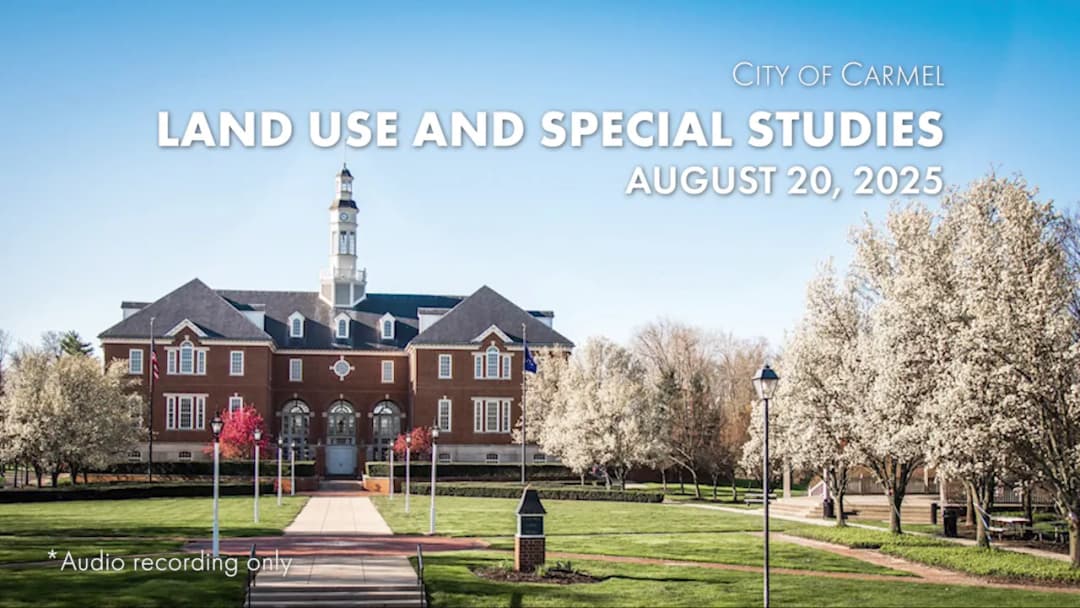
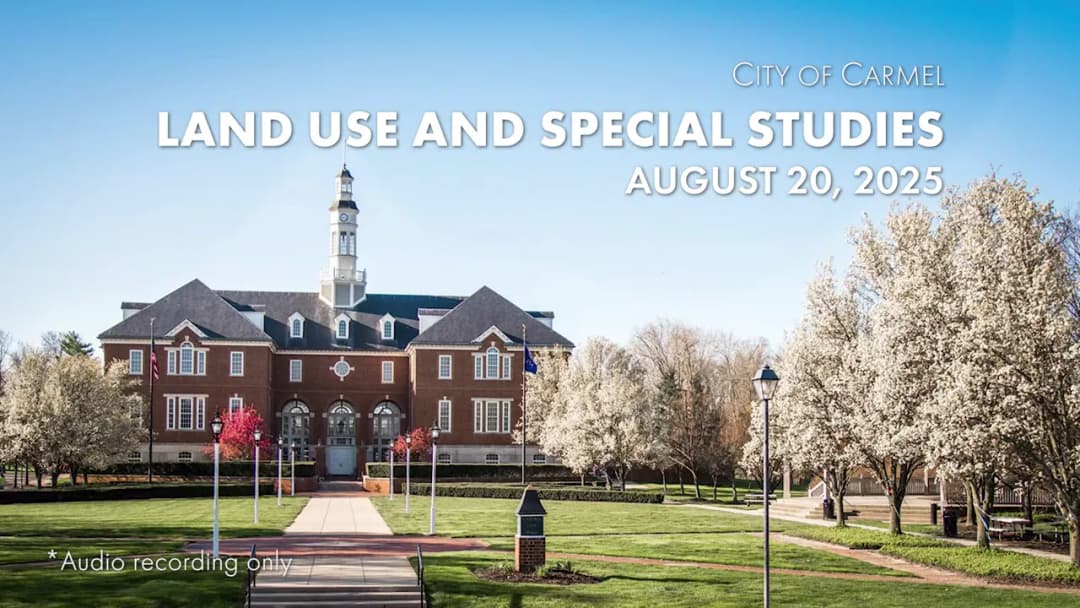
Carmel Land Use Committee Discusses Signature 55, Micromobility, Infrastructure – August 20, 2025

The Carmel Land Use and Special Studies Committee met on August 20, 2025, at 5:30 PM at the Carmel Clay Public Library. The primary agenda items were two ordinances related to the proposed Signature 55 Carmel development (a 55+ age-restricted apartment project on Old Meridian Street), an update on a micromobility ordinance, and a review of multiple infrastructure projects funded by a 2024 bond. The committee voted unanimously to recommend the development ordinances to the full City Council with caveats regarding veteran incentives and continued collaboration with the VFW. Public Comments & Testimony - VFW Commander (speaking on behalf of the VFW's 437 members): Expressed 100% support for the Signature 55 project, stating that development in the area has boosted VFW membership (from 25 breakfasts to over 200) and financial stability. Noted the VFW is open to the public seven days a week and that increased foot traffic helps veterans. Supported the trail and park, and mentioned willingness to give up a small portion of their parking lot in exchange for hundreds of new public parking spots. - Dakota (Strong Towns Carmel / micromobility advocate): Spoke in favor of careful regulation of e-bikes, urging the committee not to ban class three e-bikes (pedal-assist up to 28 mph) because reckless riding typically comes from throttle-equipped bikes or electric motorcycles. He noted that most people do not feel comfortable riding at maximum speed, and that a ban would penalize responsible riders. He asked that the ordinance reflect that class three bikes are not inherently dangerous and that enforcement should focus on behavior, not bike class. Discussion Items Signature 55 Carmel Development - The project, known as Signature 55 Carmel, is an $88 million, 208-unit age-restricted apartment building (80% of leases must be with persons 55 or older per federal law). It will include 356 parking spaces, of which 75% will be open to the public (subject to reasonable rules). The developer, Henry, explained that the project will transfer 1.54 acres to the city’s parks department (valued by two appraisals) for a veterans-centric park and will construct public restrooms maintained by the developer. The park and building drainage will be coordinated to create a water feature. - The development is located adjacent to the Carmel VFW and American Legion, intended to anchor a “flower district” with a north-south trail. The VFW commander confirmed the post is 100% supportive and noted that the VFW already offers a veteran service officer and a quiet space for veterans with PTSD. - Council members questioned the absence of retail; the developer responded that retail could harm the VFW’s business and that parking ratios are tight. They also discussed parking ratios (1.2 persons per unit for 55+), the need for public restrooms near the VFW, and a potential roundabout at Old Meridian and the hotel entrance. - Councilor Anita Joshi and others asked the developer to study financial incentives for veterans (e.g., discounted units). The developer agreed to take the request seriously but noted that the pro forma is “razor thin” and that even a small discount program would be feasible. - The two action items were: (1) a bond resolution for up to $11 million (amended to a maximum rate of 9% from 8.5%) and (2) a land transaction where the CRC would purchase and transfer the 1.54 acres to the city. Councilor Matt called for an MOU to ensure the land is transferred to the parks department within a set timeframe; the committee agreed to pursue an MOU rather than amending the resolution to avoid complicating the intergovernmental transfer. Micromobility Ordinance - The committee discussed the draft ordinance regulating e-bikes on multi-use paths. Councilor Matt acknowledged that the current draft prohibits class three e-bikes, but this language will be changed. The intent is to give police discretion to cite reckless riders rather than banning specific bike classes. The ordinance will be introduced at a future City Council meeting (likely September 15) and then return to the Land Use Committee for further work. Infrastructure Project Updates - Councilor Matt led a review of the 19+ projects funded by the 2024 infrastructure bond, noting that many are behind schedule or have unclear budgets. Key points: - 136th and Ironwood Drive roundabout: Design ongoing; utility marking delayed; pool demolition expected by end of August/early September. - Carmel Drive/Kinzer connection: Design funding allocated at recent BPW; engineering wants a narrower road to slow traffic. - Greenway Trail (Autumn): Designers hired; alignment meeting next week; land acquisition may be needed. - Bear Creek Park: RFP to be issued next month, with goal of selecting developer by fall. - Fire station 45 improvements: Contracts awarded; design kickoff imminent; construction targeted for spring 2026. - River Road streetscape: Trail by Parks (Prairie) will be completed by year-end; coordination with Prairie’s work ongoing. - 116th and River Road roundabout: Long-pending; status unclear. - Monon crossings (106th and 116th): $250k stop-gap improvements; full tunnels/bridges (projects 18 and 19) are $10M+ each, awaiting federal funding. - Councilor Matt expressed frustration that many projects lack final cost accounting and that $14 million originally allocated for a CCNO facility (project 29) must be reallocated because that project is delayed. He suggested using the funds for other infrastructure priorities, such as completing the Hazel Dell path or improvements to 116th Street. - The committee agreed to request a comprehensive spreadsheet from the city engineer showing original budgets, contract amounts, and current status for all funded projects. Key Outcomes - Vote on Signature 55 Ordinances: The committee voted unanimously (4-0) to send the two ordinances to the full City Council with a positive recommendation, subject to the following caveats: 1. The developer will research and propose financial incentives for veteran residents. 2. The city will continue collaborating with the VFW on potential enhancements (e.g., public restrooms, signage, trail connections). 3. An MOU will be developed to ensure the 1.54-acre park land is transferred to the parks department within a reasonable timeframe. - Bond Resolution Amendment: The committee approved amending the bond resolution to allow a maximum interest rate of 9% (up from 8.5%) to give the developer flexibility in a volatile market. - Micromobility Ordinance: The committee acknowledged that the current draft prohibition on class three e-bikes will be removed; the ordinance will be revised to focus on rider behavior. It will be introduced at City Council on September 15 and return to Land Use on September 17 for further refinement. - Infrastructure Report: The committee requested that city staff provide an updated spreadsheet for all Tier 1 and Tier 2 projects, including original allocations, contract amounts, and completion status. Councilor Matt recommended reallocating $14 million from the stalled CCNO project to other ready-to-build infrastructure projects, such as the Hazel Dell path or 116th Street corridor improvements.

ENGINEERING AND INFRASTRUCTURE 25% · VETERANS AFFAIRS 16% · LAND USE PLANNING 11% · PARKS AND RECREATION 7%
49
AUG 20, 2025 · CARMEL, INDIANA · CITY COUNCIL
Carmel Land Use Committee Meeting on Signature 55 Carmel Development – August 20, 2025

The Land Use and Special Studies Committee met on August 20, 2025, to discuss two ordinances related to the proposed Signature 55 Carmel development, a 200-unit age-restricted (55+) apartment project on Old Meridian Street. The project includes public amenities such as a 1.54-acre park transfer, public parking, restrooms, and a trail connection. The committee also reviewed the status of numerous infrastructure projects funded by a previous bond. Public Comments & Testimony - Dakota, representing Strong Towns, spoke about the pending micromobility ordinance. He advocated for not prohibiting Class 3 e-bikes, arguing that reckless riding is more often associated with throttle-equipped bikes. He requested that the ordinance not classify Class 3 bikes as prohibited, and that enforcement be based on behavior rather than bike class. Council members acknowledged the feedback and noted the ordinance would be revised and brought back for further discussion. - The VFW post commander (speaking on behalf of 437 members) expressed 100% support for the Signature 55 Carmel project. He stated that the development would increase awareness of the VFW, boost membership, and improve financial stability, ultimately helping veterans. He also mentioned the VFW's desire to build its own public restroom and noted that the project's parking would benefit VFW events. Discussion Items - Signature 55 Carmel Development Overview: The project is an $88 million, 200-unit age-restricted (80% of units must be leased to persons 55 or older) apartment building with 356 parking spaces, 75% of which will be open to the public. The developer will transfer 1.54 acres to the city for a park, maintain public restrooms, and maintain the park. The design includes a trail connection to the VFW and a fire lane that doubles as a public walkway. - Age Restriction and Law: The developer explained that federal law (Housing for Older Persons Act) allows age restriction to 55+ provided 80% of units are occupied by at least one person 55 or older. The developer intends to lease only to 55+ residents to avoid legal complications. - Lack of Retail: The developer and architect argued that retail is not needed because the site sits between two major retail nodes (Providence and future Icon/Signature developments). Adding retail would require more parking and risk empty storefronts, which would detract from the project. The VFW commander also opposed retail, fearing it would draw customers away from the VFW. - Veteran Incentive Discussion: Council members requested that the developer explore a program to offer discounted rents or dedicated units for veterans. The developer agreed to consider it, noting that even a few units would be feasible. - Bond Resolution and Land Transfer: The committee reviewed the bond resolution (up to $11 million; rate amended to 9% to provide flexibility) and the land transfer from the Carmel Redevelopment Commission (CRC) to the city. The transfer is conditional on the project proceeding. A council member requested an MOU to ensure the land is promptly transferred to the parks department. The committee agreed to work on an MOU to satisfy that concern. - Infrastructure Project Updates: Council member Matt Fyfe led a detailed review of the 45+ infrastructure projects funded by the 2024 bond. Concerns were raised about slow progress, lack of final cost tracking, and potential reallocation of funds. Specific projects discussed include the Ironwood Drive roundabout, the Autumn Greenway Trail, the Veterans Trail, fire station upgrades, and the CCNO (Central City Neighborhoods) project. The committee requested a comprehensive spreadsheet showing original budgets, contract amounts, and status for all projects. Key Outcomes - Unanimous Positive Recommendation: The committee voted unanimously (all ayes) to send the two ordinances (bond resolution and land transfer) to the full City Council with a positive recommendation, subject to the developer returning with research on a veteran incentive program and continued collaboration with the VFW on site improvements. - Bond Rate Amendment: The committee approved increasing the maximum bond interest rate from 8.5% to 9% to provide market flexibility. - Land Transfer MOU: The committee agreed to develop a memorandum of understanding to ensure the 1.54-acre park land is transferred to the parks department within a set timeframe. - Infrastructure Tracking: The committee directed staff to provide a detailed project tracking spreadsheet with original budgets, contract amounts, and status for all 2024 bond-funded infrastructure projects.

ENGINEERING AND INFRASTRUCTURE 20% · VETERANS AFFAIRS 17% · LAND USE PLANNING 15% · PARKS AND RECREATION 11%
50
AUG 18, 2025 · CARMEL, INDIANA · CITY COUNCIL
Carmel Common Council Meeting Summary - August 18, 2025

The Carmel Common Council met on Monday, August 18, 2025, for a regular meeting. The agenda included committee reports, quarterly reports from Parks and the Allied Solutions Center for the Performing Arts, a report from Carmel Utilities regarding a recent water main break and boil advisory, and introductions of several ordinances. No action was taken on the performing arts center funding or water utility report; these were informational items. Multiple ordinances were introduced and referred to committees. Consent Calendar - Approved the agenda. - Approved minutes from the August 4, 2025 regular meeting. - Approved claims, payrolls ($4,242,634.19), general claims ($4,071,414.29), purchase cards ($31,247.61), retirement ($127,147.10), and wire transfers ($4,130,244.14). Approval was unanimous. Public Comments & Testimony - Allie Mistler (speaking as herself): Expressed strong support for continued funding of the Allied Solutions Center for the Performing Arts. She cited a 2022 Americans for the Arts study showing Carmel's nonprofit arts sector generated $42.7 million in economic activity, supporting 981 jobs and over $30 million in household income. She noted that attendees spend $31.77 per person per event beyond the ticket, and nearly half travel from outside Hamilton County. She stated the center attracts over half a million visitors annually and has helped catalyze over $300 million in redevelopment around City Center. She highlighted personal benefits, including training that led to performing in Paris during Men's Fashion Week. She also urged support for the Transportation Fund that enables schools to bring children to performances, noting that as a foster parent of over 998 children, many children from families with limited means are "gobsmacked" by live performances. Discussion Items - Economic Development Commission Semi-Annual Report (Jeff Moore, council appointee): The commission met on June 2, 2025, re-elected officers (President Ed Bukovich, Vice President Nikki Felix, Secretary Jeff Moore), and unanimously approved a $75 million developer-backed bond project (North End Phase Two). Councillor Snyder asked for clarification that developer-backed bonds do not represent taxpayer risk. Moore confirmed the bonds are developer debt, not taxpayer liability. - Parks Department Quarterly Report (Michael Klitzing, Director/CEO of Carmel Clay Parks & Recreation): - Summer camps had just over 7,500 participants (a 4% increase); 87% of camp weeks were at maximum enrollment; 88% of campers were enrolled in Carmel Clay Schools. - The water park had over 106,000 visitors through August 3rd, on track for 120,000–125,000 for the season. The park is open weekends through Labor Day. - Brookshire Golf Course: A business plan has been developed and is under city review; no decisions made yet on future operations or funding. - Infrastructure bond projects update: Bear Creek Park (new park at 146th & Shelburn; $6.2M in bond funds; $8M total phase one; schematic plans due at park board September meeting; RFP for build-operate-transfer process); Autumn Greenway (east-west from Monon Greenway to Old Meridian Corridor; public meeting in September/October); Veterans Greenway and Park (east side of Old Meridian connecting to Autumn Greenway; design teams to meet at end of August); New neighborhood park at Smoky Row & Ironwood Drive (public input after roundabout location is finalized); White River Greenway enhancements (north extension progressing; completion expected before end of year; includes boardwalks, trailhead, restrooms). - Hazel Landing Park bridge (connecting to Fisher's Heritage Park) will be named Burr Oak Bridge, named after two 100+ year old oak trees saved during construction. The name was coordinated with four federally recognized tribes (Delaware, Miami, Shawnee, Peoria). - Founders Park refresh: Replacing playground safety surfacing, relocating sand play area, structural reinforcement of a retaining wall, new fencing, parking lot and sidewalk repairs. Construction started; playground closed; completion expected by end of October. - Founders Park boardwalk project: A floating boardwalk over the pond (pending pricing; installation likely spring 2026). - New playground at Monon Community Center opened (features a "Lucky Climber" with dynamic lighting – first of its kind worldwide; also two slides). - Question from Councillor Green: 88% of campers were Carmel Clay School students; achievement linked to early registration for Extended School Enrichment (ESE) program participants. - Question from Councillor Joshi: Sunscreen dispenser program – a pilot at one park; exploring expansion to West Park. Director Klitzing welcomed sponsorship. - Councillor Snyder praised collaboration between Parks and CRC (Carmel Redevelopment Commission) on Veterans Park. Councillor Green expressed concern about a $36 million maintenance shortfall; Director Klitzing said conversations with the state legislature are ongoing. - Allied Solutions Center for the Performing Arts Report (Jeff McDermott, President/CEO): - The center is a nonprofit managing three venues (Palladium, Studio Theater, Tarkington Theater) on behalf of the city. Annual budget $10 million, funded through earned revenue (tickets, food/beverage, rentals), contributed revenue (donors, sponsors), and a management fee from the city. - The city owns the facilities; the center manages operations. The $1.7 million in maintenance/repair costs are reimbursed by the city – not income to the center. The current management fee is $2.25 million (flat or increased over a decade). - Economic impact: A study by the Indiana Business Research Center (Kelley School of Business) found the campus (Allied Solutions Center, Great American Songbook Foundation, six resident companies) generates $23 million in annual economic activity for Carmel (nearly $27.5 million for Hamilton County) and $4 million in state & local tax revenue. - Cultural impact: 25,000 participants in free/heavily subsidized educational programs in two years; free matinees for schools (transportation fund removes barriers); naturalization ceremonies, free military concerts, Holocaust remembrance events, and other public events. - The center operates with approximately 77% occupancy rate. - Expense: The center operates at $581 less per seat than peer venues. - McDermott urged the administration to maintain current funding levels for the center, its resident companies, and the Great American Songbook Foundation. - Councillor Snyder expressed strong personal support for the arts and the center, but noted a perception gap. He requested a long-term (5-10-20 year) plan, simplified public communications explaining the center's value, and investments to generate additional revenue. He also acknowledged the center faces competition from new venues (Fishers Event Center, Noblesville arena). - Councillor Green: Asked about earned revenue ceilings and competition impact. McDermott acknowledged competition but noted the city's venues offer a nonprofit, diverse programming model different from for-profit competitors. - Council President Austin and Councillor Locke emphasized the center's quality-of-life and placemaking contributions, and the importance of strategic communication. Councillor Locke urged the center to develop a long-term sustainability narrative. - Carmel Utilities Report (Lane, Utilities Director): - Briefing on a water main break and subsequent boil advisory on Monday, August [date not given in transcript]. - A 36-inch water main break near Haverstick Road and 106th Street caused a pressure drop below 20 PSI, triggering a boil advisory per IDEM regulations. The advisory affected the west side of the city. - The team isolated the break within 20-25 minutes and restored pressure within two hours (with help from Citizens Westfield). The water system was never contaminated, but the advisory was precautionary. - The primary failure was communication: The utilities department lacks direct text/email notification to customers (a new system was planned but not yet operational). The city's marketing department was not fully utilized; EOC was activated only briefly. Many residents first learned of the advisory through schools or social media, causing confusion and panic. - Multiple council members (Austin, Snyder, Locke, Warrell, Joshi) criticized the vague and delayed communication, noting that a clear explanation of the low contamination risk could have calmed the public. - The after-action report, posted on the utilities website, includes recommendations for better internal communication protocols, expanding pressure sensors to narrow affected areas, better use of the EOC for emergencies, and implementing the new customer notification system. - Questions about infrastructure planning: Councillors noted the west side relies on a single 36-inch main and a new groundwater tank (at 146th & Shelburn) is under construction. A $750,000 infrastructure condition study is underway. Snyder stated the utility does not contribute fully to city overhead and suggested the utility should either pay more or be integrated more formally. - Snyder also asked about a hydrant blowing off; Lane explained it was due to pressure and a lack of restraint bolts, which will be retrofitted. - Lane confirmed rates are not being raised in the upcoming budget. Key Outcomes - Introduction of Ordinances: All introduced ordinances were referred to committees as noted. - Ordinance D-2762-25 (13th reading) – Amending city code regarding parking/traffic (remained in Land Use and Special Studies Committee). - Ordinance D-2772-25 (8th reading) – New Article 8 under Chapter 2 (remained in Finance, Utility, and Rules Committee). - Ordinance D-2778-25 – Issuance of economic development TIF revenue bonds to support the Rebar Old Meridian Project (forwarded to Land Use and Special Studies Committee). - Resolution CC8182501 – Acquisition of real property for public use (forwarded to Land Use and Special Studies Committee). - Ordinance D-2779-25 – Fixing salaries of appointed officers and employees for 2025 (forwarded to Finance, Utility, and Rules Committee). - Ordinance D-2780-25 – Removing requirement to publish notice for zoning map changes (forwarded to Finance, Utility, and Rules Committee). - Ordinance D-2781-25 – Regulating use of public parking spaces (forwarded to Finance, Utility, and Rules Committee). - Ordinance D-2782-25 – Amending speed limits in school zones (tabled by request, with option to send to committee later). - No action taken on the Allied Solutions Center funding or water utility report; these were informational. - Councilmembers expressed the need for better crisis communication protocols, updates to the utilities notification system, and a long-term capital plan for the performing arts center. Meeting adjourned.

ARTS AND CULTURE 21% · WATER AND WASTEWATER MANAGEMENT 17% · PARKS AND RECREATION 11% · PERSONNEL MATTERS 9%
OPENPUBLICA · PUBLIC MEETING INDEXUPDATED DAILY · openpublica.com