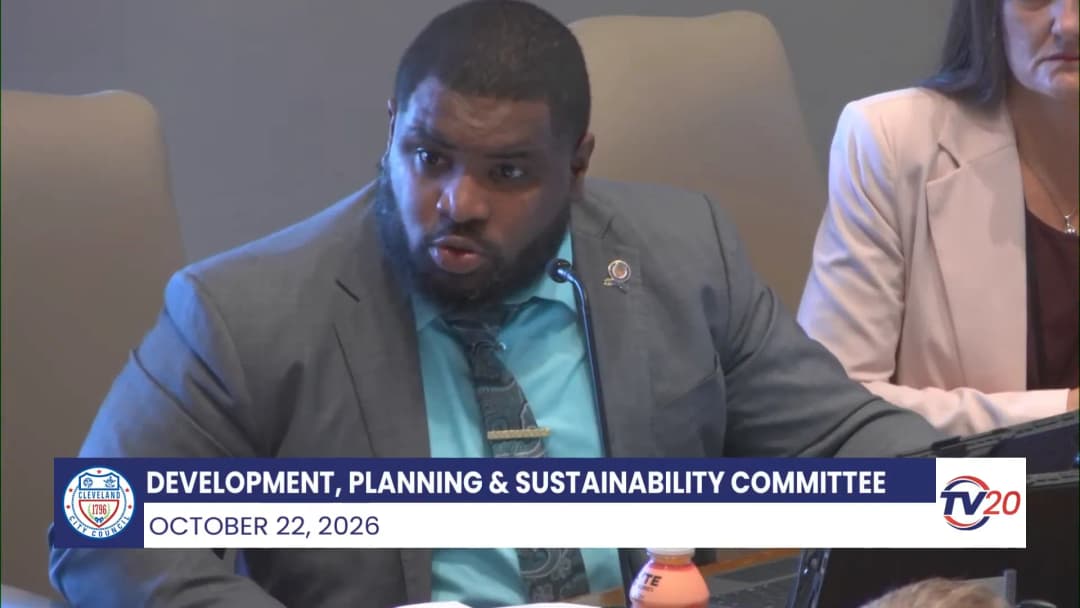
The Development Planning Sustainability Committee convened on October 22, 2026, to hear the Community Development Department's presentation on the Program Year 2026 budget, the five-year Consolidated Plan (2026–2030), and proposed changes to grant administration. The meeting, chaired by Councilwoman Santana, lasted from approximately 1:00 PM to 4:30 PM. A second day of hearings was scheduled for October 23, 2026, at 9:30 AM. The department is administering approximately $28.1 million in federal HUD grants, including $19.656 million from the Community Development Block Grant (CDBG). The presentation and discussion focused on HUD compliance issues, the need for improved citizen participation, a restructuring of how Council-directed funds are allocated, and ongoing challenges with contract processing and monitoring. Discussion Items - Opening Remarks and Context: Vice Chair (Councilman Harsh) noted that due to federal delays, the city received its CDBG allocation much later than in previous years, compressing the timeline. He acknowledged the department has been understaffed and is rebuilding. - Director’s Presentation: Director Aaron Miller Tate introduced the department’s mission, organizational structure (77 staff, six general-funded positions), and the $28.1 million in federal grants. She outlined three primary HUD compliance challenges: insufficient citizen participation in planning, a backward allocation process that lumps activities together without proper procurement, and unpredictable project initiation cycles. Proposed solutions include holding two citizen workshops (in addition to required public hearings), developing plain-language documents, and creating a more structured project-based approach with earlier identification of projects and outcomes. - Five-Year Consolidated Plan Priorities: The director presented five priority needs: affordable housing (preservation and production), housing stability and homelessness prevention (including rapid rehousing), neighborhood revitalization and reinvestment, access to housing and opportunity (financial empowerment, down payment assistance), and public services/resident capacity building. Grant administration was also noted as a priority due to rising salary costs and the 20% administrative cap. - Council Questions and Concerns: Multiple council members expressed frustration with slow contract processing, lack of transparency, and the impact of funding restrictions on neighborhood development. Councilman Starr asked about the possibility of using CDBG dollars for grocery store development in Ward 5. Councilwoman Hudson questioned the process for determining which projects are taken on by the department versus CDCs. Councilman Jones highlighted the decades-long struggle with funding CDCs and the need for faster payment turnaround. Councilwoman Gray emphasized the need for better CDC accountability and home repair programs. Councilman Shell requested a report card on the 10-Year Housing Equity Plan and a public dashboard to track spending. Councilwoman House Jones advocated for more robust citizen engagement, including using mailers, social media, and existing ward meetings. - Proposed Process Changes: Assistant Director Melissa Levinger detailed the proposed changes for 2027: a collaborative process with Council to identify projects early (by November 2026) to include them in the Annual Action Plan before public comment. The department plans to fully fund CDCs for 2026 and 2027 but will require that all Council-directed projects be clearly described and aligned with the Consolidated Plan. For sub-recipients (e.g., CDCs managing programs), a non-competitive process with an application may be used; for contractors (e.g., service providers), competitive procurement (RFPs) will be required unless a sole-source justification applies. The department also committed to spending down existing NDA balances by March 2027. - Discussion of General Fund Swap: Several council members discussed the possibility of a "swap"—using general fund dollars to support CDCs, freeing CDBG funds for capital projects. The director noted this would change procurement requirements but could allow more flexibility. Councilman Starr emphasized the urgency of moving CDBG dollars into projects like the Auburn Park Plaza grocery store. - Public Dashboard and Monitoring: The director stated that the department is working with Urban AI to create a public-facing Power BI dashboard to track key performance indicators, including units served and geographic breakdowns. The dashboard will be updated regularly. Additionally, a Salesforce system will be used to monitor grant applications and contracts internally. Key Outcomes - The committee did not take any votes. The hearing was informational, with plans to continue on October 23, 2026, at 9:30 AM to review specific programs and housing projects. - The department committed to working with council members individually or through their staff to identify projects for the 2027 Annual Action Plan by November 2026. - The director agreed to provide a report on the 10-Year Housing Equity Plan, though noted it may take time to compile the data. - The department will provide a breakdown of council ward balances and outstanding funds to help prioritize spending. - No formal decision was made on the general fund swap; further discussion is expected.
Public Meetings - Cleveland, Ohio
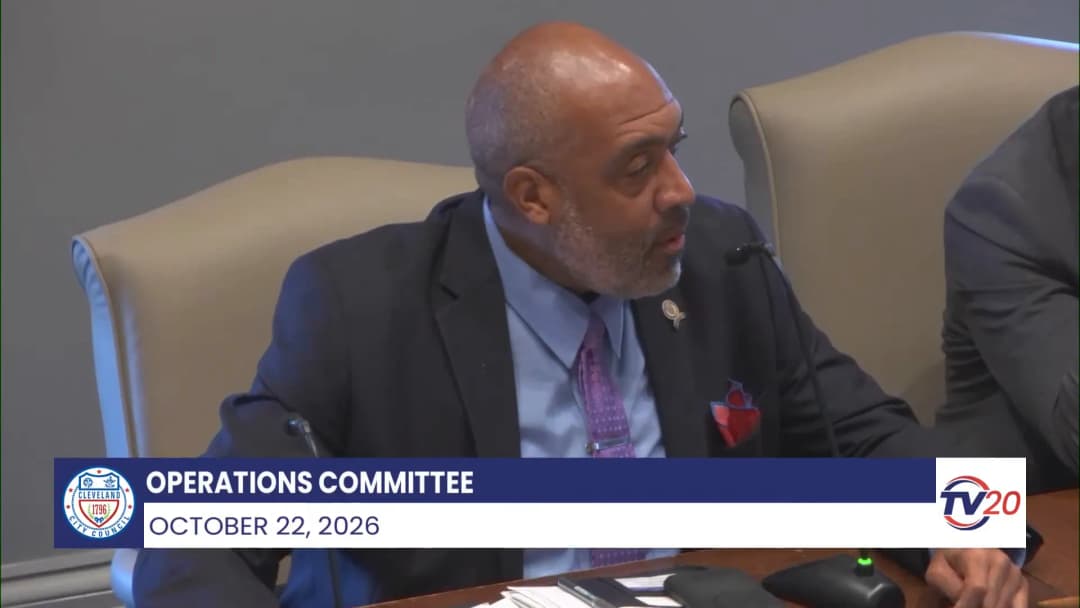
Public Meetings - Cleveland, OhioOn October 22, 2026, the Cleveland City Council Operations Committee held a public hearing to discuss ethics in government, focusing on the distinction between helping constituents and bribery. The hearing featured expert testimony from four professors and included remarks from council members. No legislation was considered, and no votes were taken. Discussion Items - Opening Remarks (Councilman Chris Harsh, Chair): Harsh set the context by noting Cleveland's 28% poverty rate (over 100,000 people) and the ethical tension between alleviating suffering and avoiding political corruption. He referenced a recent promise by President Trump (Sept. 9, 2026) to give $5,000 to every American if the Republican Party wins, and Ohio Senator Bernie Moreno's pledge to draft legislation, as a national example raising the question: when is helping a bribe? He introduced four experts: Professor Rabinovich Fox (Case Western, history), Professor Kelly Coble (Baldwin Wallace, ethics), Professor Abigail Moncrief (CSU Law, law/policy), and Professor Jeremy Bendick-Keemer (Case Western, philosophy). - Professor Rabinovich Fox – History of Corruption: She discussed how corruption is ingrained in U.S. government, from George Washington buying alcohol for votes (1758, $8,000 today) to the spoils system and Tammany Hall. The Pendleton Act (1883) reformed federal civil service, but local governments remained vulnerable. She argued that corruption can be curtailed through transparent, independent systems based on clear rules and public oversight. - Professor Kelly Coble – Ethical Distinction (Helping vs. Buying Votes): Coble applied Kantian deontology to the gift card issue. He argued that helping constituents is not equivalent to buying votes, even if re-election is a motive. The key is a transparent process: in Cleveland, council members allocate funds, but the Department of Community Development contracts nonprofits to distribute cards. Problems from the June 2025 Auditor's letter (1,500 missing/incomplete eligibility forms, 88 cards to out-of-Cleveland addresses, and staff distributing cards) reflect process failures, not corruption. He suggested better communication and proportionate safeguards to avoid the appearance of impropriety. - Professor Abigail Moncrief – Legal Perspectives: Moncrief (utilitarian) explained that federal and state laws (18 USC §597, Ohio Rev. Code §3599.01) prohibit exchanging money for votes, but enforcement is difficult because motivation (public policy vs. personal gain) is subjective. She noted that prosecuting bribery is rare, and recent presidential immunity expansions make it harder. She argued that food card programs are likely legal and that law departments often overreach to avoid the appearance of impropriety. She emphasized that all three branches must cooperate for law to be effective, and ultimately voters must decide. - Professor Jeremy Bendick-Keemer – Ethics and Democratic Trust: He urged a focus on the public good and dignity of citizens. He argued that ethical discretion requires clear intention toward public good and raising citizens to a level where they can participate in governance. He warned that the current national climate of cynicism undermines trust, and recommended that council members tell the story of their work to build trust, including acknowledging systemic racism and historical injustices. - Council President Blaine Griffin: He stressed that council members are closest to constituents and need discretionary dollars to address unique ward needs (e.g., speed tables, cameras, the Myers supermarket). He asked: "Who is government supposed to serve?" and questioned whether council-set rules are sufficient. Professors responded that government should serve everyone, with priority to those in need (utilitarian/Rawlsian views) and that rules need to be clear and trustworthy. - Councilman Dean Palencick (14 terms): He highlighted the equity fund he created 26 years ago (now $1 million per ward) and regretted the lack of documentation. He noted skyrocketing constituent needs (roofs, hot water tanks, food) and criticized insufficient enforcement of existing laws (health, building codes). He agreed that most council members act ethically. - Councilman Conwell: He argued that gift cards are no different from ribbon cuttings or championing projects—all are part of council members' jobs. He accused critics of dehumanizing African American communities, citing historical racism (e.g., Woodrow Wilson firing Black civil servants after the Pendleton Act). Professor Fox agreed Wilson was one of the worst presidents and acknowledged systemic racism. - Councilwoman Stephanie House Jones: She read the Cleveland Charter's first power: "May define, prohibit, abate, suppress, and prevent all things detrimental to the health, morals, comfort, safety, convenience, and welfare of the inhabitants of the city." She argued that the law department misinterpreted the auditor's letter (which only said elected officials should not assist with distribution, not that they cannot attend events). She noted 2025 municipal voter turnout was 9-27% by ward (18% for mayor), refuting the idea that gift cards buy votes. She cited a $71,000 needed yearly for a single parent with one child, while the average household income is $56,000, calling $25 or $50 gift cards insufficient but necessary. - Councilman Slife, Jones, Shaw, Starr: Slife urged distinguishing cynicism from corruption and asked about accountability. Shaw criticized the law department and noted that millions are given to billionaires while small gift cards are scrutinized. Starr requested a future hearing in Ward 5, where 71% of residents live near/in poverty and 52,000 households earn under $25,000. He objected to singling out any ward. Key Outcomes - Consensus: All participants agreed that food gift cards are a legitimate and ethical tool to help constituents, provided a transparent process is followed. - Criticism of Law Department: Several council members expressed frustration that the law department overinterpreted the auditor's guidance, creating unnecessary barriers and misrepresenting the word "assist." - Next Steps: Councilman Starr requested that a future operations committee hearing on ethics be held in Ward 5 to include community input. The chair (Harsh) agreed to consider the request. - No formal votes or legislation were taken; the hearing was purely informational.
On 2026-10-21 (source transcript timestamp 13:50:22 UTC), the Transportation Mobility Committee met to consider six emergency ordinances and a port-control discussion. No agenda or minutes were available; this summary is based solely on the raw transcript. The committee approved all six ordinances: three Ohio Department of Transportation (ODOT) consent projects, one Hopkins airport capital project, and one airport firefighting training contract. Warren Road Bridge Deck Replacement – Ordinance 1168-2026 - The committee approved an emergency ordinance consenting to ODOT replacing the Warren Road Bridge deck over I-90. ODOT will pay 100% of the $7,115,500 cost. There will be no impact to I-90 traffic, but bridge traffic will be diverted to other bridges. Construction is estimated from April 2028 through October 2029, about two construction seasons. - Councilman Casey asked whether ODOT had funding in place; the director said ODOT had funding, though the information was not on hand, and offered to provide it. Stokes Boulevard Resurfacing – Ordinance 1169-2026 - The committee approved the ODOT consent for resurfacing a 1.1-mile stretch of Stokes Boulevard from Martin Luther King Jr. Drive to Chester Avenue. The project includes new striped bicycle lanes on the east side between Chester Avenue and Ambler Park, ADA curb ramps, signage, striping, and enhanced crosswalks. - Funding: NOACA is contributing almost $4 million; the city share is approximately $946,229. Construction is anticipated from May 2027 through July 2028. The road will remain one-way; a two-way conversion was explored, but a traffic analysis concluded the street serves the community better as one-way. - Councilman Gray asked about colored or artistic roadway treatments; the director said the project has no roadway coloring, and the bike lane will be a two-way path in the roadway from Ambler Park down toward University Circle. Council President was noted as supporting the project. Wade Park Avenue Resurfacing – Ordinance 1175-2026 - The committee approved the amended ODOT consent for resurfacing Wade Park Avenue from East 66th Street to East 118th Street, approximately 2.2 miles. Work includes asphalt surfacing and base repairs, five mini roundabouts, median islands, protected bike lanes with delineators, ADA-compliant curb ramps, curb extensions, sidewalk depaving, removal of an unused drive connection on Ansel Road, and signal, signing, and pavement-marking updates. - Funding: NOACA $4.6 million, safety fund $3.3 million, Issue 1 funds $4.25 million, and local match $165,000. Construction is anticipated from May 2027 through June 2028. The law department amendment strikes the phrase “and future road and bridge bonds that include this purpose” from Section 12. - Councilman Davis praised similar improvements already in his community on Franklin, calling them fantastic and safe. The chair asked staff to proactively consider traffic diversion onto Superior and Huff from people who currently speed on Wade Park. St. Clair Avenue Target Speed Pilot – Ordinance 1174-2026 - The committee approved the amended ODOT consent for the target speed pilot countermeasures on St. Clair Avenue. Staff corrected the legislative summary: the city contribution is $1,628,937, not $2.1 million, and the project area header was corrected as well. - Presenters described St. Clair as Cleveland’s most dangerous street, with about 15 fatalities over a typical five-year period. St. Clair segments appear on the city’s 100 most dangerous segments list at ranks 1, 3, 6, 5, 70, and 31. The Woodworth/St. Clair intersection is the second most dangerous intersection in Cleveland and the most dangerous in East Cleveland. - Project elements include restriping, partial resurfacing, curb ramp upgrades, signal upgrades, a four-to-three road diet, center turn lane, medians, pedestrian refuge islands, raised crossings, physically separated bike lanes, floating bus stops, and simplification or closure of certain intersections, including closing the Woodworth crossing to vehicles while retaining pedestrian and bicycle access. The budget is $7.3 million, mostly state safety funds, with local funds supporting repaving. Construction is scheduled from early 2027 through the end of 2027, with a target speed of 25 mph. - St. Clair carries about 13,000 vehicles per day; staff noted a four-to-three road diet is typically used up to 25,000 vehicles per day. Raised crossings are planned near East 106th, Glenville High School, East 147th, and East 150th. - Councilman Conwell expressed support, saying he hoped City Council would approve it. During discussion, a council member said he lost a friend at the Woodworth/St. Clair intersection and asked about the steel bridge hazard; staff responded that outside lanes would be closed and striping and delineators would guide drivers before reaching the steel posts. - The chair asked about maintaining access near Woodworth through an available property and about snow removal for hardened bike lanes and bus-stop access. Staff said traffic engineering and parks are coordinating snow removal, with two units currently available and a third expected in December. Hopkins Airport Glycol Collection / Nuisance Biofilm Treatment Plant – Ordinance 1170-2026 - Port Control presented a design-build project to replace aging glycol collection equipment at the centralized aircraft de-icing facility at Cleveland Hopkins International Airport. The project prevents propylene glycol from reaching stormwater and creating nuisance biofilm that degrades local creeks. Estimated design cost is approximately $375,000; eventual construction is estimated at $3.75 million. The committee approved the ordinance authorizing the director of port control to seek bids and enter into contracts. Fire Force FAA Certification Training – Ordinance 1173-2026 - Port Control requested authorization for a one-year contract with Fire Force Inc. for annual FAA certification training for airport rescue and firefighting personnel, with three one-year renewal options, at approximately $35,000 annually. The director said the increase from the previous roughly $27,500 annual amount reflects time since the last agreement and a growing firefighting team. The committee approved. Miscellaneous: IX Center Parking and Airport Land - Councilman Keyson reported that a tour of the IX Center showed parking extends only about two rows before becoming airport property on the west side. He asked whether Port Control had any conversations with external parties about using airport parking for outside events. The director said no; the acreage west of the IX Center returned under the new lease will be marketed to aviation and aerospace firms needing airfield access. - The chair said the city should guard against event parking spilling into airport lots or Snow Road contract lots and raised concerns about Brook Park’s planning commission reducing on-site parking. He asked for a deeper understanding of Port Control’s contractual relationship with the Snow Road lots. Key Outcomes - Committee approved Ordinances 1168-2026, 1169-2026 (as amended), 1175-2026 (as amended), 1174-2026 (as amended), 1170-2026, and 1173-2026. - Amendments to Ordinances 1175 and 1174 strike the phrase “and future road and bridge bonds that include this purpose” from Section 12. - Staff will confirm ODOT funding for the Warren Road Bridge project and provide corrected legislative summaries for the St. Clair Avenue project. - Port Control will not pursue airport-parking arrangements for outside events and will continue plans to market returned IX Center-area acreage to aviation and aerospace tenants.
Cleveland City Council convened a regular meeting on October 19, 2026, at Cleveland City Hall. Council President Blaine Griffin opened the meeting with the standard warning regarding disruptions. A quorum of 12 members was present. The council passed numerous emergency ordinances and resolutions, including an extension of the data center moratorium and a resolution opposing a U.S. Census Bureau proposed rule. Extended public comment featured a wide range of concerns, including housing conditions, police recruitment, surveillance expansion, and domestic violence services. Public Comments & Testimony - Sabrina Otis expressed frustration over the lack of resident notification regarding upcoming changes to waste management rules. She also alleged that city employees have retaliated against her by discussing her with other residents and labeling her "difficult." - Daryl Houston (Bedford resident) raised multiple concerns about the Cleveland Fire Department, alleging racism, hazing connected to the death of firefighter Simeon Williams, and a failure to address complaints. He also criticized Safety Director Drummond for a lack of security at police precincts and other responsibilities, calling for accountability. - Matthew Strazinski (Slavic Village resident) noted the absence of his ward council members and urged the city to improve police officer recruitment through stronger marketing campaigns, including "Evergreen hiring." He advocated for updating patrol vehicles, stating that a clean vehicle is a motivating factor for employees. He praised Alex Nichols and Brenda Nelson for maintaining Kowalski Field. - Bridget Smith Jackson (East Cleveland resident) thanked the Mayor and Council President Griffin for prior responsiveness. She raised serious plumbing issues at Lake Shore properties, including raw sewage backing up into bathtubs. She proposed that each of the 15 council members contribute $1,000 ($15,000 total) to fund a centralized oversight position to handle housing complaints and prevent landlord retaliation against tenants. - Brynn Adams (Ward 12, Flock No campaign) strongly opposed the expansion of surveillance technology in Cleveland. She detailed specific statistics over the last five years: audio surveillance expanded from 3 to 13 square miles, the drone fleet grew from 0 to 9, license plate readers increased from 0 to 100, and integrated cameras grew from 350 to "several thousand." She noted the city does not have an active, legally enforceable contract with Flock and that the required transparency portal has not been activated, calling the situation a "complete lack of trust" between City Hall and residents. - Latalia Fontaine (Garden Valley, Rainbow series properties) described the living conditions in her complex as a "plantation" and a "hazard." She stated the property is at risk of another disaster on behalf of the 44 families living there and demanded immediate action. - Nia C. Holland (Euclid, Rise and Rebuild Foundation) advocated for emergency funding and safe housing for domestic violence survivors. She questioned the status of "Asia's Law," stating that strangulation has not been made a felony despite promises following a high-profile murder in Shaker Heights. - President Austria Everson (Buckeye Woody, Project Love Movement) alleged retaliation by the city for filing a federal lawsuit. She stated that the day after the lawsuit was filed, she was notified her organization was no longer being considered for a Neighborhood Safety Fund grant, despite positive feedback during the application process. Consent Calendar & Legislation Council suspended the rules to consider a large block of emergency ordinances and resolutions on final passage. First Reading Emergency Ordinances (Approved 12-0): The council unanimously approved several items, including: authorizing the donation of city fleet vehicles to Roadworthy Inc. for a workforce development initiative (1280-2026); amending short-term rental regulations (1282-2026); funding for the "Creative Fathers Connected Families Project" via the Center for Arts Inspired Learning (1289-2026); and emergency meal distribution through the Famicos Foundation (1290-2026). A resolution objecting to a liquor permit transfer (1307-2026) was also adopted. Second Reading Emergency Ordinances: - Data Center Moratorium (1246-2026): An ordinance extending the moratorium on permits for data centers until January 29, 2027, or the effective date of new regulations, was passed with 11 yeas and 1 nay. Councilwoman House Jones dissented over concerns regarding applications pending before the moratorium. Councilman Casey clarified the moratorium applies to both new and pending applications. - IX Center Lease (1042-2026): An amended lease agreement with the IX Center Corporation was approved with 11 yeas and 1 nay. - Other Actions: Approved included clinical EMS agreements (745-2026), a grant from the Cleveland Guardians (911-2026), a contract with the County Medical Examiner (1149-2026), lease renewals for the Police Commission (1162-2026) and impound services (1165-2026), and an amendment to compensation for the Cleveland Commission on Black Women and Girls (1245-2026). Resolutions - Census Resolution (1247-2026): Councilmember House Jones introduced a resolution opposing the U.S. Census Bureau's proposed rule that would exclude non-citizens from the apportionment count and restrict the collection of race, ethnicity, and sexual orientation data. Council President Griffin ordered all members added as co-sponsors, and the resolution was adopted unanimously (13-0). Key Outcomes - Data Center Moratorium Extended: The moratorium on data center permits was officially extended until January 29, 2027. - Census Opposition Formalized: City Council formally opposed the federal census rule changes in a unanimous resolution. - Housing Oversight Suggested: Resident Bridget Smith Jackson's proposal for a $15,000 housing oversight fund was raised during public comment. - Unanimous Consent Items: Numerous routine contracts, grants, and agreements were passed by unanimous consent. - Next Meeting: Adjourned to the call of the chair, with the next regular meeting scheduled for October 26, 2026.
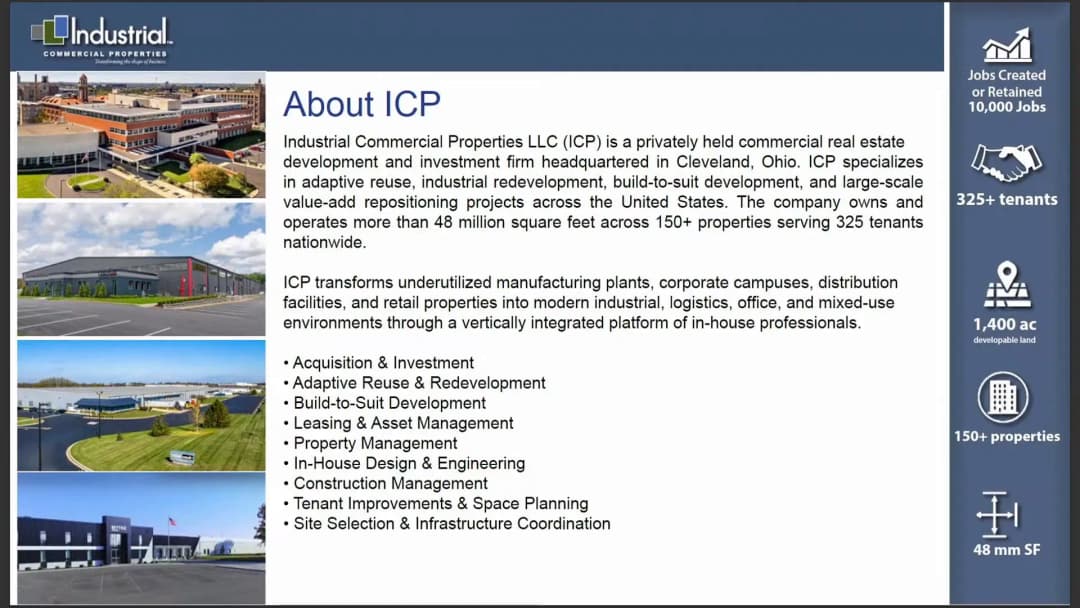
The Committee of Finance, Diversity, Equity, and Inclusion was called to order at 2:00 PM on Monday, October 19, 2026. The committee reviewed and approved several ordinances related to city contracts, grants, real estate, public safety, and zoning. Major discussions centered on equitable funding for youth sports, the future of data centers in the city, and a complex lease incentive deal for the IX Center aimed at attracting large-scale manufacturing jobs. Consent Calendar / Unanimous Approvals - Ordinance 748-2026: Authorizing a contract with Ohio City, Inc. for family and youth programming. - Ordinance 911-2026: Accepting an $80,000 grant from Cleveland Guardians Charities for baseball and softball youth programs. - Ordinance 745-2026: Expanding EMS clinical training agreements to include educational and vocational centers. - Ordinance 1116-2026: Authorizing a contract with the Cuyahoga County Medical Examiner's Office for forensic services (up to $500,000 with an option for $522,500 the following year). - Ordinance 1165-2026: Renewing a contract with TMT Consolidated LLC for vehicle impound services. - Ordinance 1279-2026: Adjusting salary schedules for non-bargaining unit employees by 3.6% based on the Consumer Price Index (CPI). - Ordinance 1245-2026 (as amended): Broadening membership categories on the Cleveland Commission on Black Women and Girls to include healthcare professionals and school-age youth, replacing specific designations for business and union representatives with general community member seats. - Resolution 1247-2026: An emergency resolution opposing the U.S. Census Bureau's proposed rules that would exclude non-citizens and prohibit the collection of race, ethnicity, and sexual orientation data. Discussion Items Youth Programs and Funding Equity (Ordinances 748 & 911) - Councilmembers Casey and Polensek raised concerns about equity in funding youth sports, specifically noting the Tri-City Baseball League and B. Buzz Baseball. They requested a landscape analysis of recreational needs to identify gaps, particularly in areas like Collinwood. - The Director of Parks and Recreation stated the 2023 Master Plan assessment identifies community needs and noted the city funds other organizations, including Community Football. - Councilman Casey highlighted a perceived disparity between the city accepting an $80,000 grant from the Guardians while providing $100,000 to Ohio City Inc., a separate independent league that also benefits from Guardians support. Police Commission Lease (Ordinance 1162-2026) - The committee approved a one-year lease extension with a one-year option for the Cleveland Police Commission (CPC) at 3631 Perkins Avenue, formally removing unused space (Unit 3CE) to correct the rent baseline. - Council President and Councilman Polensek suggested exploring city-owned or nonprofit shared spaces to reduce operational costs, which the CPC Executive Director stated they are open to. - Councilman Slife supported the idea, stating that co-location could improve collaboration and reduce a sense of mutual contempt between the CPC and the administration. Data Center Moratorium Extension (Ordinance 1246-2026) - The committee approved a 90-day extension of the moratorium on data center permits until January 29, 2027, or until permanent zoning regulations are enacted. - Councilmembers Casey and Slife stated the extra time is needed to finalize regulatory language. - Councilman Polensek requested data on existing centers' impacts (noise, utilities) and warned against hindering current business operations. Administration representatives confirmed only one permit is pending. IX Center Lease and Payroll Credit Incentive (Ordinance 1042-2026) - The committee approved a major lease restructure for the IX Center. The current lease expires in 2039; the proposed lease would run for 49 years from execution. - Incentive Structure: To attract major manufacturers with high payrolls, a sliding payroll credit against base rent is offered. Credits begin when total annual payroll exceeds $25 million (10% rent reduction) up to a 20% reduction for payrolls over $75 million. Director McNair explained this is necessary to make the lease rate competitive at fair market value as determined by the FAA. - Financial Projections: The city will pay Brook Park $650,000 annually as part of a settlement, but modeling shows the city will generate significantly more revenue than the current $228,000 generated from the site, potentially over $2 million net annually. - Land & Parking: Approximately 50 acres will revert to Port Control for development. The agreement explicitly prohibits parking on the property for non-tenants or non-events without city consent, directly addressing concerns over use for Cleveland Browns parking. - Reactions: - Councilman Polensek expressed strong skepticism, citing failed past deals and a lack of transparency. He stated he wants a fair shake for the city and called for protection against land use for the Haslam Sports Group. - Councilman Casey questioned the timeline and the lack of a secured tenant, expressing distrust in the process. - ICP stated the Brook Park settlement was a necessary precursor to a viable lease, and that multiple companies are in the pipeline now that the structure is clear. - Councilman Conwell supported the project, emphasizing the need for meaningful jobs (citing a target tenant with 700 jobs averaging $75,000 per year). Key Outcomes - Approvals: All items were passed out of committee to the full City Council for consideration. - Directives: The administration was urged to provide a landscape analysis of youth recreation gaps and data on current data center impacts. - Next Steps: The full City Council will consider the legislation. The committee is scheduled to meet next Monday on the call of the chair.
The Health, Human Services and Arts Committee of the Cleveland City Council met on October 19, 2026, to consider two major legislative items: a comprehensive update to the lead-safe certificate law (Ordinance 1444-2026) and the establishment of a Good Food Retailer Certification and job retention income tax credit program (Ordinance 1230-2026). The meeting featured public testimony, detailed presentations from city administration and the Lead Safe Cleveland Coalition, extensive discussion, and final votes on both ordinances. Public Comments & Testimony - Mike Burkans, a lead risk assessor, expressed general support for the proposed changes to lead standards, noting that extending the certification interval from two to five years is good for the program even against his self-interest. He raised a concern about the lack of inspector discretion in the current standard, arguing that no house is perfect and that minor imperfections that pose no real risk should not necessarily cause a property to fail. - Zach Ravinelli, a local landlord from Slavic Village, stated his full support for the changes. He highlighted that the every-two-year requirement was expensive and contributed to rent increases, and that landlords who make meaningful investments should be rewarded. He also noted that he replaces wood windows and porches to reduce lead hazards. Discussion Items Lead-Safe Certificate Law Amendments (Ordinance 1444-2026) - Presentation by Rebecca Moore (Senior Advisor for Lead Accountability) and Dr. David Margolius (Director of Public Health) outlined five strategic pillars, with the first three requiring legislative changes: 1) graduated certificate timelines, 2) local risk assessment standards and inspection licenses, and 3) administrative improvements and alignment with federal rules. - The key change moves the base lead-safe certificate from a two-year to a three-year cycle, with incentives for replacing lead-hazard components: - Properties that replace all movable and accessible windows receive a five-year certificate. - Properties that also replace exterior doors and porches receive a ten-year certificate. - Full abatement yields a twenty-year certificate (unchanged from current law). - Properties built after 1960 can receive ten years; consecutive passing certificates extend terms. - The administration has hired a Lead Safe Ombudsman to handle resident complaints and resolve disputes informally. - An XRF lending program will allow risk assessors to borrow XRF analyzers from the city to more precisely identify lead-based paint, reducing assumptions and improving assessment quality. - Enforcement is being strengthened through additional personnel in Building and Housing, with plans to double enforcement capacity via civil tickets and faster processing of appeals. - Councilmember Questions included concerns about funding, accountability, and the balance between carrots and sticks. Councilmembers Jones and Harsh pressed for clearer metrics on enforcement and a flowchart of responsibilities; Councilwoman Hudson inquired about the ombudsman and testing of children; Councilman Shaw emphasized the need for tenant feedback and affordability criteria. - The Lead Safe Cleveland Coalition (represented by Ayana Blue Donald) expressed qualified support for the changes after a membership vote, noting that the coalition will continue to advocate for a strong implementation framework. Good Food Retailer Certification and Tax Credit Program (Ordinance 1230-2026) - Deputy Director of Business Growth David Lucas and Dr. David Margolius presented the proposal to create a "Good Food Retailer" certification for grocery stores that demonstrate financial need and meet criteria such as selling at least 40% fresh food, accepting SNAP/WIC, hiring local residents, paying above minimum wage, using environmentally sustainable practices, donating excess food to pantries, and sourcing from local Ohio producers. - Certified retailers would be eligible for a job retention income tax credit of up to 100% of the city income tax paid by the grocer, for a term of two years. The credit can be renewed if the grocer continues to meet the criteria. - The estimated budget impact is $500,000 to $1 million annually, based on a rough calculation of current income tax collections from grocers (at least $2 million). - The program is designed as a retention tool (rather than attraction), and the administration plans to seek outside grants and philanthropic funding to create a Good Food Retail Fund to supplement the tax credit. - Councilmember Concerns: Councilman Shaw expressed deep reservations about opening a "Pandora's box" and noted the lack of affordability criteria; Councilman Jones supported the program but cautioned about general fund spending; Councilman Harsh noted the need to compare this with other city tax credits; Councilwoman House Jones questioned the long-term revenue generation and the equity of property-tax reliance. In response, the administration committed to incorporating affordability into the evaluation rubric when presenting future recommendations for certification. Key Outcomes - Ordinance 1444-2026 (lead-safe certificate program amendments) passed unanimously (voice vote, all ayes). - Ordinance 1230-2026 (Good Food Retailer certification and tax credit program) passed with a vote of 3-2 (on a roll call, "Yes. Yes. No. Yes. No."). - Both ordinances are emergency measures and will be forwarded to the full City Council for final approval.
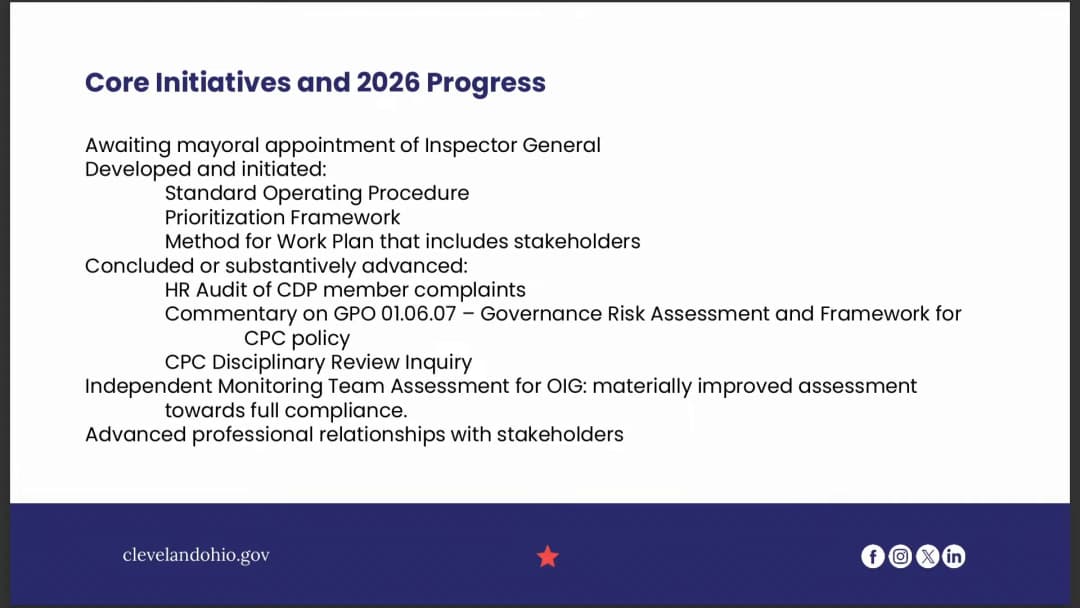
The Cleveland City Council Public Safety Committee met on October 14, 2026, for an operations review of the House of Corrections, the Office of the Inspector General, and the Division of Emergency Medical Services (EMS). The committee also passed two emergency ordinances related to forensic laboratory services and vehicle impound services. The meeting heavily focused on budgets, staffing, department performance, structural independence of police oversight, and recruitment diversity. Legislation - Ordinance 116-2026: Authorized the Director of Public Safety to enter into an agreement with Cuyahoga County for law enforcement-related forensic science testing through the regional lab. The cost is $500,000 for 2026, with a one-year renewal option not to exceed $522,500 for 2027. Approved. - Ordinance 1165-2026: Authorized the renewal of the impound services contract with TMT Consolidated LLC (Cleveland Vehicle Detention Center) for non-commercial vehicles. The contract is funded entirely by impound fees. The city receives a $30 fee per vehicle for most tows and $10 for stolen vehicle recoveries. Approved. Discussion Items House of Corrections - Lisa Scavidi, Manager, presented the division's operations. Under the agreement with Cuyahoga County, the city pays a per diem of $143 per prisoner and covers pre-booking medical costs. The division has a budget of $4.5 million and 3 employees. - The average daily population paid for by the city is 43 prisoners. Overall costs have decreased despite the per diem increase due to process changes with police, saving roughly $52,000 this year. - The Chair expressed strong opposition to the jail's move to Garfield Heights. The administration confirmed the city is not responsible for inmate transportation costs, which is the county's responsibility. - Council members expressed frustration over a potential $50 million city contribution for court renovations at the Justice Center, noting the council has not been formally consulted by the administration. - Councilwoman Hudson questioned post-release protocols for inmates, citing reports of individuals being dropped off in neighborhoods without adequate resources. Office of the Public Safety Inspector General (IG) - Acting IG James Morrison outlined the office's role under the federal consent decree: reviewing CDP policies, performing audits, and analyzing disciplinary trends. - The office has 1 of 3 budgeted positions filled. The administration stated a permanent IG has been identified and is undergoing background checks. - Councilman Starr strongly criticized the IG reporting structure (under the Director of Public Safety) as a structural conflict of interest, arguing for an independent office with a broader scope. - Councilman Slife and Councilwoman Hudson discussed the overlapping and conflicting roles of the IG, the Community Police Commission (CPC), and the Police Accountability Team (PAT). - Councilwoman Hudson announced her intention to lead an effort to draft a charter amendment to create a fully independent, city-wide inspector general, a proposal that drew support from several members. Emergency Medical Services (EMS) - Commissioner Wheeler and Deputy Commissioner Chapin reported on 2026 initiatives: an expanded whole blood program (administered to 100+ patients), the Community Crisis Response Bureau, and a nurse navigator pilot program with Metro Health. - Staffing stands at 305 out of a budgeted 315. The division is experiencing a new trend of retirements (8 in 2026) and plans to hire more classes in 2027. - The EMS fleet is in its best condition in 33 years, with average mileage on frontline vehicles under 100,000 miles. Priority 1 response times averaged 7 minutes 41 seconds, beating the national average. - Recruitment diversity was a major point of contention. Councilman Jones highlighted that only approximately 80 of 305 employees are African American (roughly 26%), calling it critically low for a city that is nearly 50% Black. - Overtime is currently 8% over budget, representing roughly $400,000. - Councilman Starr issued a strong warning regarding the upcoming Fire Division recruitment class, stating he would introduce legislation to mandate diversity if the class fails to reflect the city's demographics. Key Outcomes - Ordinances Approved: 116-2026 and 1165-2026 were approved. - Future Operations Hearings: The Chair committed to providing the administration with a detailed guide for required information (full budget breakdowns, production data, staffing demographics) prior to the next hearing on October 28, 2026, which will cover Police, Fire, Animal Care, and DOJ. - Legislative Action Pledged: Councilman Starr announced his intent to draft legislation reforming firefighter recruitment and hiring to mandate diversity. - Charter Review Initiated: Councilwoman Hudson announced plans to work with council leadership and the committee on a charter amendment to establish a fully independent, city-wide office of the inspector general. - Data Requests Made: Multiple council members requested specific demographic breakdowns, recruitment/retention statistics, and detailed production metrics for the divisions reviewed.
The Workforce Education, Training, and Youth Development Committee convened on Tuesday, October 13, 2026, at 1:30 PM to consider three ordinances: a partnership with Premier EMS Training Academy to build a paramedic training pipeline, a $100,000 contract with Ohio City Incorporated for youth recreation programming, and an $80,000 grant from Cleveland Guardians Charities for baseball and softball. All three ordinances were approved, with an amendment added to the grant ordinance requiring notification of cooperative purchases. Discussion Items Ordinance 745-2026 – Partnership with Premier EMS Training Academy - Commissioner Orlando Wheeler presented the ordinance, which allows the Cleveland Division of EMS to partner with Premier EMS Training Academy. The agreement enables Premier students to ride along with EMS and provides an opportunity for the division to start an in-house paramedic training program for its EMTs, reducing out-of-pocket costs for employees (currently reimbursed up to $5,000 through a prior ordinance). - Councilwoman Nikki Hutzer asked about the impact if the ordinance failed—commissioner noted it would shift costs back to employees—and confirmed that no ride-alongs are currently occurring without an agreement. She asked how the partnership expands candidate pools; commissioner responded it creates a pipeline and exposes trainees to Cleveland EMS’s capabilities. - Commissioner highlighted that Cleveland EMS provides whole blood (over 100 transfusions with a 71% increase in survivability), automated ventilators, and region-leading CPR and first-aid training. - Councilman Town A. Shaw expressed strong support, noting he appreciates bringing training in-house rather than privatizing. He asked about relationships with area hospitals; commissioner clarified they work with Cleveland Clinic, University Hospitals, and Metro Health, but Premier is a separate entity. Commissioner emphasized his goal to establish Cleveland EMS as a premier pre-hospital care provider. - Ordinance 745-2026 was approved unanimously. Ordinance 748-2026 – Contract with Ohio City Incorporated (Near West Recreation Program) - Director of Parks and Recreation presented the ordinance alongside Carrie La Palma of Ohio City Inc. The Near West Recreation Program offers affordable recreational activities for youth and families across eight near-west side neighborhoods. In its recent fiscal year, it served over 1,500 youth with 200 volunteer coaches. The city has supported the program for several years; the ordinance authorizes a $100,000 general fund contribution. - Council Chairman noted the program fills a gap because Ohio City lacks a recreation center, originally championed by former council member Kerry McCormick. - Councilwoman Nikki Hutzer shared that her son played baseball with Near West Rec and her husband volunteered as a coach, praising the program. - Councilman Chris Harsh praised the program’s inclusive nature, recounting a story of a child who was immediately added to a team without paperwork. He invited the program to use new pickleball courts in Old Brooklyn. - Councilman Shaw asked about low participation in family yoga programming. Carrie La Palma explained they adjust timing, age groups, and marketing; they surveyed families and added day camps based on feedback. The program is still growing. - Ordinance 748-2026 was approved unanimously. Ordinance 911-2026 – Grant from Cleveland Guardians Charities for Baseball/Softball Program - Chairman provided context: the Guardians (formerly Indians) have long supported inner-city baseball and softball. The grant, up to $80,000, is an annual award to the city with no match requirement. Funds cover equipment, uniforms, and umpire services. - Director added that the city does not pay field fees due to its own athletic fields. - Chairman asked about usage of the new baseball diamond at Zelma George (built after MLB All-Star weekend 2019) and requested data on how often city youth play there. - Councilman Joe Jones asked how the $80,000 is allocated—director clarified it goes directly to the city, not to other organizations (though the Guardians also support groups like B Buzz Baseball). Jones expressed interest in directing councilmanic funds to B Buzz; chairman offered to collaborate on a process using a Program Identification Form (PIF) and council approval. - Councilman Shaw made a statement welcoming the grant but criticizing incoming owner David Blitzer (net worth $3.6 billion) for tax avoidance, urging him to pay fair taxes instead. Chairman responded by noting the opportunity to engage new ownership. - Councilwoman House Jones moved to amend the ordinance by adding at the end of Section 3: “The Director of Parks and Recreation shall provide written notice to the Clerk of Council whenever any purchases made through the cooperative process, which notice shall include the details of such cooperative purchases.” The amendment was seconded and supported by comments that the Board of Controls makes decisions behind closed doors, and council wants transparency. - Ordinance 911-2026, as amended, was approved unanimously. Key Outcomes - Ordinance 745-2026 (EMS Training Partnership): Approved unanimously. - Ordinance 748-2026 (Near West Recreation Program): Approved unanimously. - Ordinance 911-2026 (Guardians Grant): Amended to require notification of cooperative purchases, then approved unanimously. - Next Steps: Chairman invited committee members to submit goals for the fall and offered to work with Councilman Jones to allocate councilmanic funds to the B Buzz baseball program.
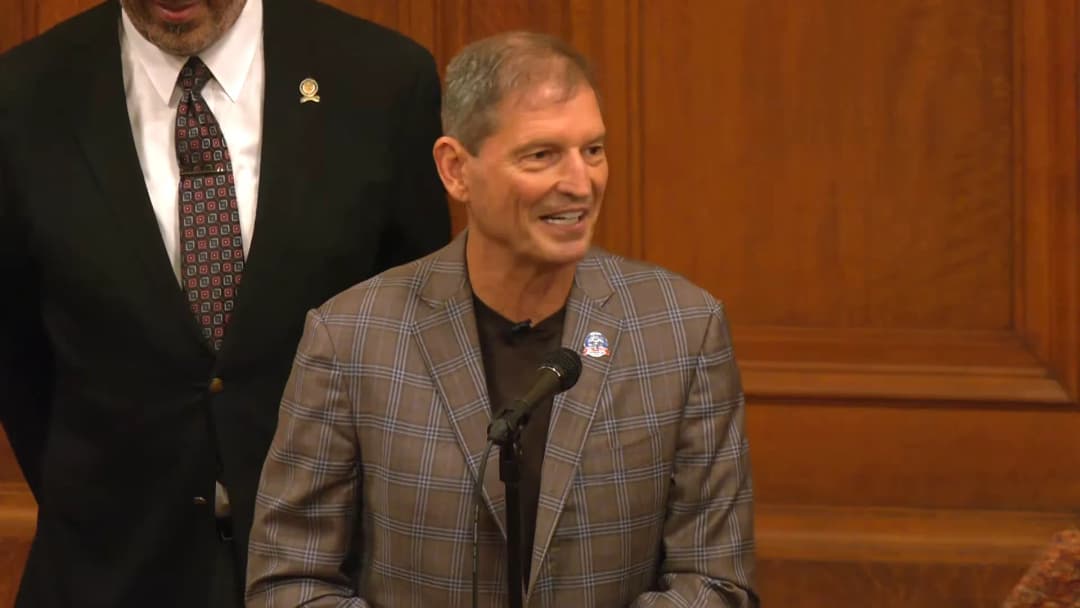
The Cleveland City Council met on October 12, 2026, to conduct regular business. The meeting featured presentations recognizing Down Syndrome Awareness Month and declaring October 13 as Bernie Kozar Day. Council also heard public comments on various issues including housing, transparency, and public safety, and passed several emergency ordinances and resolutions. Down Syndrome Awareness Month Recognitions - Councilman Brian Casey led the recognition, highlighting the theme of education. He introduced five educators: Gina Michner, Casey Brown, Amy Siverton, Lauren Galanka, and Mora Jameson, who were honored for their work with individuals with Down syndrome. Casey expressed full support for inclusive education and shared a personal story about his daughter Brianna being denied admission to a Catholic school due to her disability, and his family's successful civil rights complaint with the USDA, which resulted in the school being required to educate her. - Three graduates were recognized: Kellen Donahue (Kent State University), Eve (PACS program), and Brianna Casey (St. Joseph Academy), who also celebrated her 20th birthday. Kellen Donahue spoke about her graduation and current work as a Gear Life Ambassador for the Cuyahoga Board of Developmental Disabilities, advocating for inclusion and diversity. Eve also spoke briefly, expressing love for Brianna and Brian. Bernie Kozar Day Proclamation - Council President Blaine Griffin introduced former Cleveland Browns quarterback Bernie Kozar, recounting his career highlights and his connection to Cleveland. Council declared October 13, 2026 as Bernie Kozar Day in Cleveland. Bernie Kozar spoke about his personal struggles, including addiction and mental health, and emphasized the importance of second chances, education, and community support. He thanked the city and acknowledged his family. Public Comments & Testimony - Saint James Singleton (Ward 9): Thanked council for their hard work and expressed appreciation, noting that he wanted to be in the room to recognize them. - Tyresha Thompson (Ward 9): Spoke about community responsibility using the analogy of group projects. She urged officials to do their part to address crime, affordable housing, schools, and youth opportunities, emphasizing that children are often the ones who pay the price when officials fail. - Daryl Houston (Bedford Heights): Criticized Mayor Bibb's leadership and the law department, calling for accountability. He urged the black community to pay attention and support young leaders, and questioned the lack of elderly black men at a recent community event. - Sabrina Otis (Cleveland): Addressed transparency, stating that officials only use the term after residents complain. She urged council to use transparency properly and not as a cover-up. - James Box (Ward 6): Filed charges against someone for threatening him, reported his tires were stabbed. He called for resignations and requested that police districts have bloodhounds and cadaver dogs to assist in searching for missing persons. - Kiana Bell (Garden Valley): Expressed her family's distress after the Rainbow Terrace explosion, seeking help and accountability. She stated her children are traumatized and struggling. - Bridget Smith Jackson (East Cleveland): Detailed the ongoing housing crisis for Rainbow Terrace families, nearly 16 months after the explosion. She asked for leadership, collaboration, and accountability from the administration, including individualized family plans. She noted she cannot continue as an unpaid substitute for a coordinated government response. - Unnamed speaker (Slavic Village): Concerned about harassment at City Hall and lack of security cameras. He noted the Fourth District has a backlog of 100 pending assignments and urged the mayor to learn from Virginia Beach, the safest U.S. city. - Austria Everson (Ward 5): Addressed the need for accountability and transparency after her prosecution for a boycott. She stated that Detective Timothy Hannon testified that before charging her, he had a phone call with Mayor Bibb, Chief of Police Dorothy Todd, and council members to decide on pressing charges. She called for an independent investigation into city officials. Key Outcomes - Council passed numerous emergency ordinances and resolutions, including: road resurfacing projects (Shaker Boulevard, State Road), the purchase and lease of Miles School for a new Fire/EMS administration building, a grant for the Nora Village Project, a lead safety certificate program, and an extension of the moratorium on building permits until January 29, 2027. - Ordinance 923-2026 (Regional Infrastructure Accelerator Program) passed with 12 yes and 1 nay. - Resolution declaring October 13, 2026 as Bernie Kozar Day passed unanimously. - All other ordinances and resolutions passed with 13 yes. - Council also adopted condolence resolutions for Robert A. Valavin, Dr. Javier Lopez, Mosella P. Thomas Wiggins, Yahwa Ryan, and Jane Sheets. - Council adjourned to the call of the chair, with the next meeting scheduled for October 19, 2026.
The Finance, Development, Equity, and Inclusion Committee of the Cleveland City Council met on October 12, 2026, to consider several ordinances and resolutions. Key actions included approval of a $1.15 million federal grant for regional infrastructure acceleration, funding for temporary seasonal workers, an increase in funding for the right-to-counsel eviction defense program, and a resolution declaring October 13 as Bernie Kozar Day. A significant debate occurred over proposed amendments to the use of casino revenue funds, with the item being held for further discussion. Consent Calendar - No consent calendar items were identified; all items received discussion and individual votes. Public Comments & Testimony - No public comments or testimony were recorded in the transcript. Discussion Items Ordinance 923-2026: Regional Infrastructure Accelerator (RIA) Grant - The committee considered an emergency ordinance authorizing the directors of development and/or finance to apply for and accept a $1.15 million grant from the U.S. Department of Transportation’s Regional Infrastructure Accelerator Program. The grant requires no local match and is intended to hire technical advisors to assist the city in leveraging its Shorter Quarter Shore TIF (tax increment financing) district and other potential projects. - Councilman Brian Casey questioned whether the grant would pay consultants to advise the city on how to spend its own money, noting the city has not yet secured TIFIA or RIF loans. Other council members expressed concerns about transparency and the scope of the grant, with Councilman Polenzik requesting quarterly reports on consultant activities and fund usage. An amendment requiring quarterly reports to council was approved. - The ordinance was approved as amended. Ordinance 1043-2026: Temporary Employment Agencies for Seasonal Personnel - The committee authorized contracts with temporary employment agencies for seasonal workers in Parks, Public Works, and Finance, primarily using Snyder Blake. Councilman Casey proposed an amendment requiring contracts to prohibit possession of weapons or illegal substances, with termination after two infractions. - Despite discussion about already-existing background checks and drug tests, the amendment passed. Councilman Jones questioned the long-term contract with Snyder Blake and requested information on the company's history and competition from other bidders. - The ordinance was approved with the amendment. Ordinance 688-2026: Easements for Northeast Ohio Regional Sewer District (Big Creek Storage Tunnel) - The committee considered granting easements at Emory Park and Estherbrook Park for the Big Creek Storage Tunnel, part of Project Clean Lake. The sewer district will pay $670,400 for improvements at Emory Park and $56,400 at Estherbrook Park. Councilman Casey expressed dissatisfaction but supported the effort after securing restoration commitments. - Discussion included concerns about methane gas release, but officials noted modern tunneling methods prevent methane issues. - The ordinance was approved as amended. Ordinance 1037-2026: Removal of Cap on Easement Acquisition Costs - The committee approved removing the cap on the amount the director of public utilities can pay for easements, as determined by the board of control. Approved. Ordinance 1135-2026: Concession Agreement for Carl Stokes Building - Authorized the director of public utilities to enter into a concession agreement for food and beverage service at 1201 Lakeside. Approved. Ordinance 1038-2026: Electrical Test Equipment for Cleveland Public Power - Authorized purchase of electrical test equipment for Cleveland Public Power for two years. Approved. Ordinance 1137-2026: Vehicle Purchases for Department of Public Utilities Enterprise Funds - Authorized purchase of on-road vehicles, apparatus, and off-road equipment. Discussion included fleet condition and maintenance concerns, particularly regarding bucket trucks. The three-year lead time for bucket trucks was noted. Approved. Ordinance 1031-2026: Legal Aid Eviction Defense Program (Right to Counsel) - The committee approved an increase from $750,000 to $1.25 million for the Legal Aid Society to provide legal services in eviction proceedings under Cleveland’s right-to-counsel ordinance. Discussion centered on program effectiveness and accessibility. Councilman Jones reported difficulty in obtaining assistance from Legal Aid; the council president arranged a meeting to improve intake processes. The ordinance was approved. Ordinance 1034-2026: Lease of Five Points Building to Famicos Foundation - Authorized leasing the Collinwood Community Center (Five Points Building) to Famicos Foundation for two years with two renewal options. Councilman Polenzik requested to review the final lease before signing, and Councilman Conwell’s name was added as a co-sponsor. Approved. Resolution 1235-2026: Bernie Kozar Day - Declared October 13 as Bernie Kozar Day in Cleveland, honoring the former Browns quarterback. Approved unanimously with all council members added as sponsors. Ordinance 950-2026: Casino Revenue Amendments (Held) - This item generated extensive debate. Councilwoman House Jones proposed amendments to strike language requiring council staff and the law department to determine whether projects constitute a proper public purpose, arguing that under case law, only the legislative body should make that determination. She cited past denials of professional development and other uses. - Councilman Slife and others argued that removing law department oversight could expose council members and staff to legal liability and that guardrails are necessary to prevent improper spending. - Council President Griffin held the item for further discussion and to include the law director and additional input. - The committee approved clerical amendments to fix errors in the ordinance but held the substantive changes. Key Outcomes - Ordinances 923, 1043, 688, 1037, 1135, 1038, 1137, 1031, and 1034 were approved. - Resolution 1235 was approved. - Ordinance 950 (casino revenue) was held for further discussion. - An ordinance (1042-2026) was held for further notice at the start. - Councilman Polenzik’s request for quarterly reports on the RIA grant was adopted as an amendment. - Councilman Casey’s amendment to seasonal worker contracts regarding weapons and substances was adopted. - A request for information on Burke Airport lobbying was noted. - The committee agreed to schedule a future hearing on proper public purpose and ethics.