Browse by city
Date range
Search help

Search titles, summaries, topics and stored transcripts together. Keywords may match separately; put the whole query in double quotes for a phrase. Matching follows word analysis, so punctuation is not exact. Both dates are included. Documents are not searched.

SHOWING 231–240 ENTRIES
231
JAN 14, 2026 · DENVER, COLORADO · COUNCIL COMMITTEES
Denver City Council Health and Safety Committee: Prosperity Denver Fund & Flavored Tobacco Ban – Jan 14, 2026

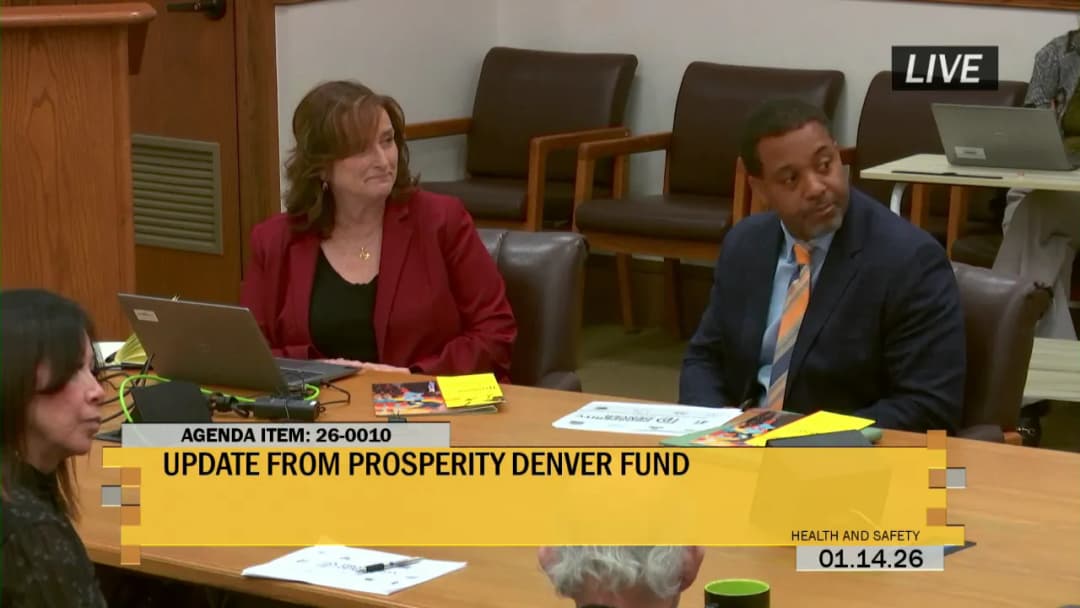
The Health and Safety Committee of the Denver City Council, chaired by Councilmember Darrell Watson (District 9), held two briefings: an update from the Prosperity Denver Fund and a presentation on the implementation of the flavored tobacco ban from the Department of Public Health and Environment (DDPHE). No votes or consent items were taken. Prosperity Denver Fund Update - Rebecca Arno (CEO), board chair Teresa Pena, and chair-elect Felicia Houston presented the fund’s progress since its 2019 inception. - Key statistics: 89 partner organizations, over 15,000 scholarships, 1,100 credentials, 47,000 high school students served, and $65 million distributed. In 2023–24, $16.3 million was disbursed; the first cycle of 2024–25 already reached $16.6 million. - Programs: college/technical school scholarships, career training (apprenticeships/credentials), and high school support services (mentorship, financial aid, family connection, academic support, mental health). - Fund balance: Approximately $30 million in 2024, with $2.6 million spent in the past year. The board projects full expenditure by fiscal year 2027. A commitment reserve was established to support current students through college in case the program sunsets in 2030 without reauthorization. - Outcomes: Investment increased college attendance and graduation rates in Denver by 8% per year. The Denver Scholarship Foundation increased scholarships by 41% and the amount per scholarship by 28%. - Future plans: Expand partner organizations, create evaluation cohorts to measure student outcomes (especially for small nonprofits), conduct an economic impact study, and strengthen the post-secondary ecosystem through a learning community. - Discussion: Councilmember Cashman asked about high school support services; Arno explained the five focus areas. Council President Pro Tem Romero Campbell praised the acceleration of funding distribution and the commitment to students. Council President Sandoval questioned whether the ordinance requires a vote of the people for reauthorization, citing the Denver Preschool Program’s experience with a council-sponsored ordinance to remove sunset. She advised the fund to exhaust all options before pursuing a ballot measure. Teresa Pena noted a separate reauthorization committee is being formed. Flavored Tobacco Ban Implementation - Teddy Montoya (Tobacco Program Manager) and Brendan Gentry (Tobacco Program Supervisor) presented on the enforcement of the flavored tobacco ban, effective January 1, 2026, after 70.5% of Denver voters approved Referendum 310 in November 2025. - Evidence base: CDC recommends comprehensive bans (including menthol) to reduce youth initiation. Flavors mask harsh tastes, and menthol increases addiction. Disproportionate targeting of Black, Latino, and LGBTQ communities. - Youth data: Past 30-day vaping dropped from 19.5% (2019) to 6.5% (2023); flavored product use declined from 27% to 19%. However, menthol use remains around 30% among youth (statewide). Retail compliance is a concern: youth not refused when purchasing rose from 72% to 87% (2023). - Enforcement: DDPHE conducts undercover age inspections (two to four per retailer annually; 578 retailers). Updated fine schedule (April 2025) treats flavored tobacco sales as a critical violation. If sold to a minor, two violations apply: $1,000 and $2,000 fines plus a 30-day suspension. A look-back period expands from 12 months (2026) to 24 months (2027) to 36 months (2028). - Retailer education: Bulletins, FAQs, direct mail, window clings, point-of-sale decals, and a forthcoming compliance video. In-person outreach will resume after a pause in Q3 2025. - Discussion: Councilmember Sawyer reported that her teenager purchased flavored vapes from the back of a store on Colfax, highlighting continued black-market sales. She asked how to report (311) and if the ordinance language may need tightening; DDPHE agreed to return with recommendations. Council President Pro Tem Romero Campbell asked about measuring youth reduction; DDPHE noted reliance on biennial Healthy Kids Colorado data (lagging) and a pilot vape waste diversion program with five Denver high schools (tracking brands and flavors). Daniel Neiman explained the environmental hazards of discarded vapes. Key Outcomes - The committee received both briefings as information items; no formal votes were taken. - Prosperity Denver Fund will continue individual district meetings with council members and provide newsletter content. - DDPHE will deliver an annual evaluation report on the flavored tobacco ban to the council in June or July 2026. - Councilmember Sawyer and staff will follow up with DDPHE on potential ordinance amendments to address enforcement gaps. - The committee chair, Darrell Watson, thanked co-sponsors of the flavored tobacco ordinance (Sawyer, Gonzalez-Gutierrez, Lewis) and the supporting agencies.
PUBLIC HEALTH POLICY 29% · WORKFORCE DEVELOPMENT 23% · YOUTH PROGRAMS 16% · PROCEDURAL 14%
232
JAN 13, 2026 · DENVER, COLORADO · COUNCIL COMMITTEES
Denver Community Planning & Housing Committee Meeting – January 13, 2026

The Community Planning and Housing Committee of the Denver City Council met on January 13, 2026, at 2:00 PM local time, chaired by Councilmember Diana Romero-Campbell (District 4). The committee reviewed and voted on three major agenda items: approval of Housing Central Command contracts for 2026, a rezoning request at 12150 East Andrews Drive to expand an assisted living facility, and a complex rezoning and Planned Unit Development (PUD) for the Tramway Nonprofit Center to preserve the historic building and allow a 63-unit affordable housing development. Housing Central Command (HCC) Contracts - The committee received a presentation from Evie Benja (Assistant Director of Homelessness Resolution) and Midori Higa (Director of Homelessness Resolution Programs) on the 2026 operations of Housing Central Command (HCC), a crisis response model to rapidly house individuals experiencing homelessness. - Three contracts were presented for approval: - 25-2152 with Community Economic Defence Project for HCC navigation: $1,243,974 in 2026 (total three-year $3,762,388). - 25-2154 with Colorado Coalition for the Homeless for HCC stabilization: $2,231,731 in 2026 (total three-year $6,448,595). - 25-2153 with Housing Connector for rent payment and unit acquisition: $2,049,386 in 2026 (total three-year $9,581,406). - In 2025, HCC served 426 households (exceeding the goal of 399), housed clients in an average of 46 days, and saw 138 households exit to permanent/stable housing. The goal for 2026 is to reduce time to housing to 30 days and increase permanent exits to 75%. - Councilmembers questioned coordination with coordinated entry, landlord relationships, and data systems. Councilmember Watson requested a heat map of placements. - Key Outcome: The committee unanimously approved the three contracts in a block motion (moved by Councilmember Sawyer, seconded by Councilmember Torres). Rezoning: 12150 East Andrews Drive - Edson Ibanez of Community Planning & Development presented a request to rezone 12150 East Andrews Drive from a Multi-Unit (MS-3) to a Mixed-Use (SMX-3) zone district, both up to three stories. - The property is a 3.5-acre assisted living facility (30 beds) that seeks to add 63 beds. The current zoning does not allow residential care facilities larger than 40 beds (Type 3), necessitating the rezoning. - The site is in Council District 8 (Councilmember Lewis) in the Montbello neighborhood, adjacent to industrial and single-family zones. The proposal aligns with Plan Denver 2040 and Blueprint Denver for infill and affordable housing—the expansion will serve residents at 60% or less of Area Median Income (AMI). - The planning board approved the rezoning unanimously. One letter of support from the Montbello 2020 RNO and three additional letters were received; no opposition letters were noted. - Key Outcome: The committee approved the rezoning by unanimous vote (moved by Councilmember Lewis, seconded by Councilmember Sawyer). Rezoning and PUD: Tramway Nonprofit Center - Edson Ibanez presented a rezoning and PUD application for properties at 1620, 1625, 675 East 35th Avenue, and 3532, 3580 North Franklin Street, and 3558 North Gilpin Street, known as the Tramway Nonprofit Center. - The site is currently zoned under former Chapter 59 (RMU-20 with waivers and PUD 534). The requested PUD (PUD G38) creates three sub-areas: Sub-area A (the historic Tramway building) rezoned to UMX-2x with conservation requirements; Sub-area B (vacant portion) rezoned to URX-3 with a height of four stories (45 feet) for a 63-unit affordable housing development at 80% AMI with a 99-year covenant; Sub-area C (surface parking) rezoned to USU-A. - The applicant, Urban Land Conservancy (represented by Andrea Burns), stated the rezoning is needed to bring the existing nonprofit center into compliance (currently exceeding office space limits and containing non-permitted uses such as workforce development), preserve the historic building, and allow affordable housing using Low-Income Housing Tax Credits (LIHTC) awarded in November 2025. - Public comments: 44 letters in support (including from Historic Denver, Catholic Charities Housing, and others), and 45 letters in opposition (citing height, parking, density, traffic). The Cole Neighborhood Association took a neutral position after mediation failed to resolve differences over the four-story height. - The planning board recommended approval unanimously. Councilmembers questioned the rationale for four stories given existing entitlements and the mediation process. A neighbor, Katie Hanna, spoke to the impasse: neighbors sought three stories to better fit the residential character. - Key Outcome: The committee approved the rezoning and PUD by unanimous vote (moved by Councilmember Lewis, seconded by Councilmember Sawyer), sending it to the full City Council. The vote included a note that the existing zoning already allows four stories, and the PUD is necessary to preserve the Tramway building and enable affordable housing.

AFFORDABLE HOUSING 46% · HOMELESSNESS 29% · COMMUNITY ENGAGEMENT 10% · HISTORIC PRESERVATION 9%
233
JAN 13, 2026 · DENVER, COLORADO · COUNCIL COMMITTEES
Denver Finance Committee Reviews Bond Issuance for Vibrant Denver Projects (Jan 13, 2026)

On Tuesday, January 13, 2026, the Denver City Council's Finance and Business Committee, chaired by Council Member Serena Gonzalez-Kietas, met to discuss the first bond issuance for the recently approved Vibrant Denver bond. The committee reviewed a proposed $410 million bond issuance, a program management contract with TriUnity Inc., and the timeline for project implementation. Council members asked questions about taxable vs. tax-exempt bonds, communication protocols, and specific district projects. Public Comments & Testimony - Council Member Lewis noted that constituents Mr. Murray and Ms. Ann, who were pioneers in securing the Senior Tech Lab, asked her to confirm that the space will still be used for the senior tech lab expansion. Lewis stated she told them, "over my dead body" that the project would not happen, and staff confirmed the project is in the first issuance and will move forward. Discussion Items - Bond Issuance Authorization: Bond Program Managers Molly Scarborough and Patrick Riley, along with Capital Financial Administrator Christopher Federico, presented an ordinance authorizing two series of bonds (taxable and tax-exempt) for the Vibrant Denver program. The first issuance of $410 million is designed to carry the program through the end of 2027, with a closing target of March 5, 2026. A second issuance of $440 million is planned for late 2027, and a third issuance of $99 million is projected for around 2029. The tax-exempt bonds require 85% spend within three years and 100% within five years, which is why all bonds are not issued immediately. - Program Management Contract: The committee reviewed a resolution approving a seven-year, $45 million contract with TriUnity Inc., a Denver-based company, to provide program management services. The contract includes a 20% MWBE participation goal, increased from the 9% goal in previous bonds (Elevate and Rise), where 15% was achieved. - Project Timelines and Prioritization: Staff outlined Mayor Johnson's three promises: all bond projects will start by the end of 2026, a public project dashboard will be online by end of Q1 2026, and all projects will be complete by December 31, 2031. Projects are categorized into four buckets: big complex projects (e.g., West 38th, Park Hill, first responders training center), early wins (e.g., traffic signals), partner-led projects (e.g., art museum, zoo), and standard projects (e.g., libraries, pools, rec centers). - Community Engagement: Staff committed to quarterly Mayor Council briefings, project-specific community meetings, and one-on-one briefings with council members. They also expressed a desire to "co-create" communication plans with council. - Taxable vs. Tax-Exempt Bonds: Council Member Lewis asked about private use components causing some projects to be taxable. Staff explained that facilities with management contracts not qualifying as "qualified management agreements" (e.g., zoo, botanic gardens, Denver Health Westside, Denver Children's Advocacy Center) require taxable bonds to avoid private use limits. Lewis also clarified that the average annual debt service for the bonds is $15.8 million (tax-exempt) and $14.8 million (taxable) until maturity. Key Outcomes - The committee voted unanimously to advance the bond issuance ordinance and the program management contract to the full City Council. The motion was made by Council President Sandoval and seconded by Councilman Heinz. The ordinance will go to first reading on February 2, 2026, and second reading on February 9, 2026, with the program management contract going to one reading on February 2, 2026.

FISCAL SUSTAINABILITY 45% · COMMUNITY ENGAGEMENT 45% · PARKS AND RECREATION 7% · PROCEDURAL 3%
234
JAN 13, 2026 · DENVER, COLORADO · MAYOR-COUNCIL MEETING
Weekly Joint Meeting of Mayor and Denver City Council – January 13, 2026

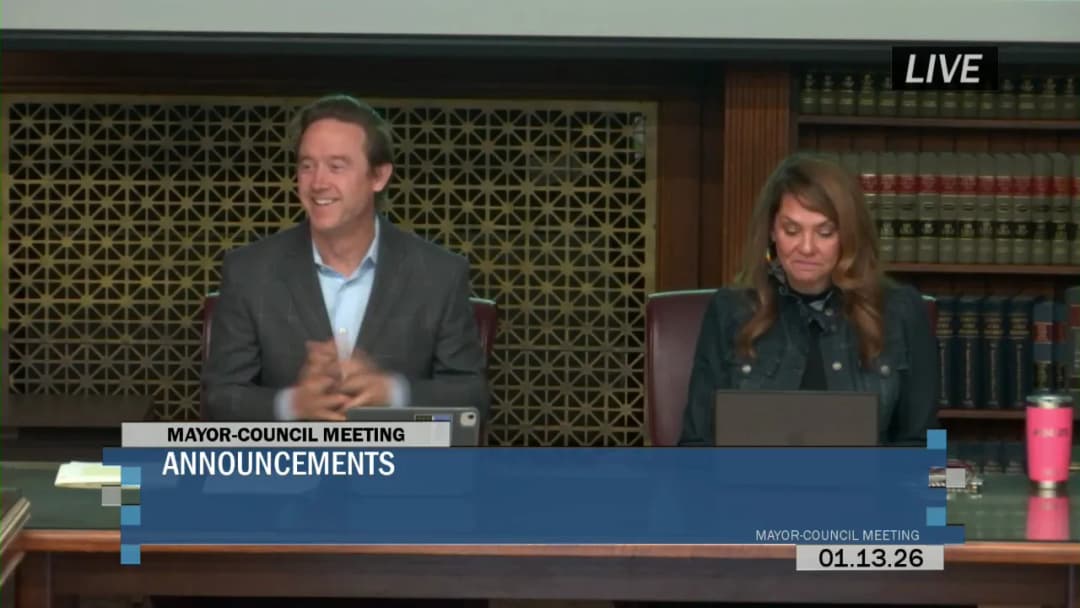
This weekly joint meeting of Mayor Mike Johnston and Denver City Council included a formal proclamation for the 40th anniversary of the Dr. Martin Luther King Jr. Marade, announcements from council members, and an extended discussion on cold‑weather sheltering operations, centering on the 4040 Quebec site and the city’s capacity to bring people indoors during extreme cold. Proclamation – MLK Marade 40th Anniversary - Mayor Johnston proclaimed January 19, 2026, as Denver Marade 40th Anniversary Day, recognizing the state holiday effort and the annual parade as the largest Dr. King celebration in the nation. Councilmember Darrell Watson (District 9) introduced and read the proclamation. The event takes place on Monday, January 19, 2026. Discussion Items – Cold Weather Shelter Update - Cole Chandler, Senior Advisor on Homelessness, presented an update. Key points: - Prior to this season, the cold‑weather activation threshold was lowered from 20°F to 25°F (thanks to council advocacy). - Last year the city provided 24/7 shelter services for the first time citywide. - For the current season, the city aimed for 900 single‑adult beds; 670 24/7 beds were created, with the remainder to be covered by overflow beds. - After a no vote on the 4040 Quebec contract on December 8, 2025, capacity dropped from 670 to 470 24/7 beds. People in northeast Denver, especially, have stayed outside. - Proposed commitments for 4040 Quebec: - Begin a planning process to fully activate full navigation center services by next cold‑weather season, meaning the ballrooms would not be used for shelter in future winters. - Lower occupancy from 200 to 100–150 and limit intake to northeast Denver residents who can walk to the site. - Maintain separate entrances and physical barriers between shelter and existing Urban Alchemy programming. - Councilmember Shontel Lewis (District 8) expressed strong concerns: - Stated that the commitment had been no cold‑weather shelter at 4040 Quebec, yet the site was opened anyway. - Argued the district is already overburdened with long‑term shelters. - Called for more creative citywide solutions (e.g., the Dream Center, the Coliseum, Salvation Army, McNichols building) rather than defaulting to 4040 Quebec because it is easiest. - Noted that the proposed capacity reduction to 150 is not good‑faith negotiation. - Mayor Johnston acknowledged the need for other options but explained contract limitations: the on‑call provider (Bayaud Works) can only staff seven facilities, and adding many small sites is not feasible this winter. He agreed this should be the last winter using 4040 Quebec for cold‑weather shelter. - Lisa Lumley, Division of Real Estate, added that finding public‑assembly space is difficult due to code, life‑safety, and partner resistance. - Councilmember Chris Hines asked about services beyond shelter; Jeff Kositsky (HOST Deputy Director) replied that resources are limited—medical care is provided when shelters are open 2 days, but no comprehensive assessments or pathways are offered. - Councilmember Amanda Sawyer identified a gap between the 25°F activation threshold and the zero‑degree emergency threshold, and asked about using a recent $50M emergency provider contract; Kositsky said that contract is reserved for polar‑vortex emergencies and is much more expensive. - Council President Amanda Sandoval urged solidarity and fair distribution of shelters across all districts, noting she has been searching for sites for years and is willing to take on more. - Councilmember Darrell Watson stressed the need for year‑round, transparent dialogue with all council members about cold‑weather planning. Key Outcomes - The MLK Marade 40th Anniversary Day proclamation was officially signed and read; a group photo was taken. - No formal vote was taken on the 4040 Quebec changes. The administration requested council support for a new agreement with Bayaud Works but acknowledged that the contracting process will outpace weather deadlines, so the site will be activated in the interim on the next cold‑weather activation to save lives. - Councilmember Lewis reiterated that she rejects the current approach and called for genuine negotiation and a citywide search for additional sites. - The meeting concluded with a motion to enter executive session (pursuant to DRMC Sections 3 and 6) to receive legal advice on contract negotiations.

HOMELESSNESS 71% · PROCEDURAL 13% · RACIAL EQUITY 13% · FISCAL SUSTAINABILITY 2%
235
JAN 12, 2026 · DENVER, COLORADO · COUNCIL COMMITTEES
Denver Budget and Policy Committee Meeting – January 12, 2026: Anti-Masking Ordinance and Sentencing Parity Update

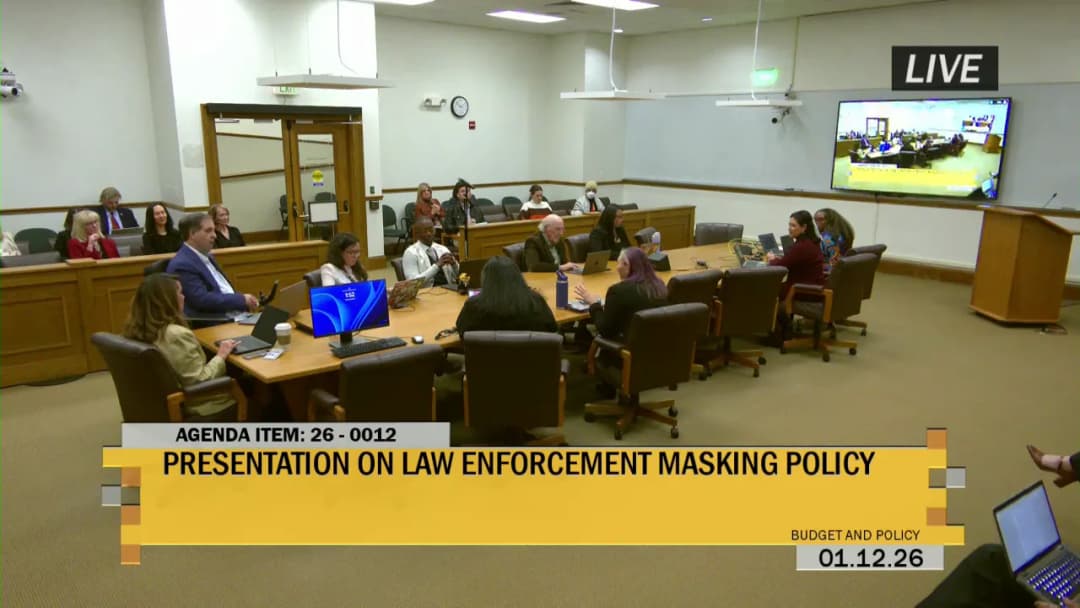
The Budget and Policy Committee of Denver City Council, chaired by Council President Amanda Sandoval, met on January 12, 2026, to discuss two major agenda items: a proposed ordinance to prohibit federal law enforcement from wearing masks while conducting operations in Denver, and an update on municipal sentencing parity following a Colorado Supreme Court ruling. The meeting included detailed presentations, legal analysis, and councilmember debate, with no public testimony or consent calendar items. Discussion Items Anti-Masking Ordinance - Councilmember Alvidrez and Councilmember Torres presented the ordinance, arguing that concealed federal law enforcement undermines public trust, due process, and public safety. They cited a federal judge’s opinion comparing masked ICE agents to the Ku Klux Klan, and noted that the Cato Institute has also raised concerns. - The proposed ordinance would prohibit law enforcement from wearing facial coverings while detaining, arresting, or restraining individuals, and inside city facilities. Exemptions include SWAT operations, Emergency Response Unit (ERU), medical masks, transparent face shields, protective eyewear, and tactical operations as agreed with Denver Police Chief and Sheriff. - Deputy Legislative Counsel Jonathan Griffin noted that applying the ordinance to all law enforcement (not just federal) is legally safer, and that a similar California law is being challenged under the Supremacy Clause. The city attorney’s office added that enforcement by Denver Police could raise concerns about interfering with federal duties, but citations (rather than arrest) may be an option. - Councilmember Sawyer questioned enforceability, noting that Denver Police may be prohibited from participating in immigration enforcement under the 2017 Public Safety Priorities Act. Councilmember Hines emphasized the importance of holding law enforcement to a higher standard and expressed concern about mutual aid partners from other jurisdictions. - Councilmember Parity suggested adding badge and identification requirements, similar to the proposed federal “No Secret Police Act.” Councilmember Cashman asked for clearer language that masking is only allowed when necessary to preserve life and limb. Councilmember Watson supported the ordinance as a necessary stance against masked terror. - Councilmember Torres raised concerns about how Denver Police would enforce the law if ICE agents claim an exemption (e.g., tactical operations). Griffin noted that the exemptions came from local law enforcement and mirror California’s law. Councilmember Sandoval recommended looking at DPD’s existing identification standards and ensuring the ordinance takes effect immediately upon passage, not January 1, 2027. - No vote was taken; staff will continue discussions with DPD and Mayor’s Office through January and February, then the ordinance will go to a committee and two council readings. Municipal Sentencing Parity (Update on Colorado Supreme Court Ruling) - Councilmembers Lewis, Parity, and Flynn presented an update on the December 22, 2025, Colorado Supreme Court ruling in City of Westminster v. Camp and City of Aurora v. Simon. The court held that municipal sentences for conduct identical to state offenses cannot exceed state penalties. - Chief Municipal Public Defender Colette Tevet and Senior Attorney Rachel Mercer explained that Denver’s current code—often 300 days jail and $999 fine for low-level offenses like trespass, theft, and shoplifting—now conflicts with state law (e.g., trespass max 10 days). They warned of chaos in municipal courts as judges and attorneys must interpret the ruling case by case. - The proposed solution is to revise the Denver Revised Municipal Code (DRMC) to align sentences with comparable state statutes, and to set a uniform 10-day maximum for petty offenses that have no state equivalent (e.g., park curfew violations). They also recommend clarifying the language of certain offenses (e.g., assault) to ensure they match state statutes that allow higher penalties. - Deputy Legislative Counsel Jonathan Griffin noted that a catch-all provision would address rarely charged offenses. Councilmember Hines raised concerns about public perception of reduced penalties for drug-related crimes. Councilmember Romero-Cumbo asked about the scope of affected offenses; Tevet confirmed a comprehensive chart will be included in the draft ordinance. - Councilmember Cashman requested a comparison to Boulder’s broad interim ordinance. Marlee Bordowski (city attorney) described Boulder’s approach but noted it still leaves uncertainty. Councilmember Lewis emphasized that the draft ordinance will provide clear guidance and avoid years of litigation. - Next steps: staff will produce draft language by the end of January, schedule one-on-one briefings with councilmembers, and then bring the ordinance to committee and council for two readings. Key Outcomes - Anti-Masking Ordinance: No vote. Staff will continue stakeholder discussions with DPD, Sheriff, and the Mayor’s Office through January–February, then move to committee and council readings. Councilmembers recommended adding identification requirements and ensuring immediate effectiveness. - Municipal Sentencing: No vote. The sponsors will work with OMPD and city attorney to draft an ordinance aligning municipal sentences with state maxima, including a catch-all for minor offenses. One-on-one briefings will be scheduled upon completion of the draft, followed by committee and council action.

PUBLIC SAFETY 62% · PENDING LITIGATION 37% · PROCEDURAL 1%
236
JAN 12, 2026 · DENVER, COLORADO · CITY COUNCIL
Denver City Council Meeting – January 12, 2026: Proclamations, RISE Bond Debate, and Zoning Correction

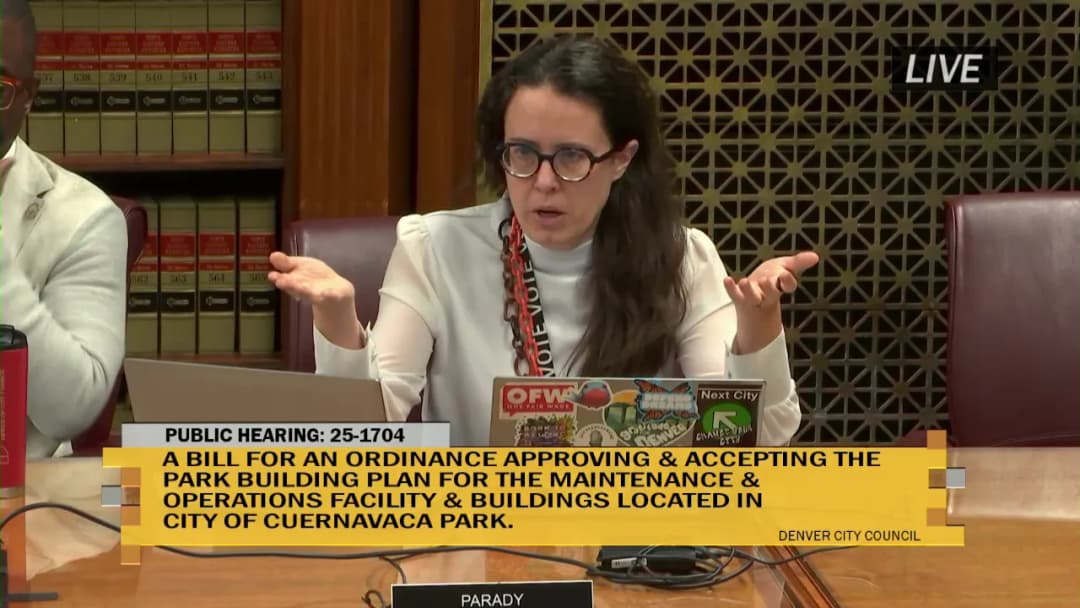
Denver City Council convened on Monday, January 12, 2026, at 10:30 AM. The meeting included a land acknowledgement, roll call (13 members present), approval of prior minutes, council announcements, two proclamations, a consent calendar with multiple resolutions and bills, and two required public hearings. Key topics included recognition of retiring City Treasurer Steve Ellington, honoring the West East Neighbors United coalition for a community benefits agreement, a contested park maintenance facility plan funded by RISE bonds, and a zoning correction for a property in Central Park. Consent Calendar - Council Resolution 25-2059: Resolution to establish 44 parcels as public right-of-way in Stapleton Filing No. 45 (amended from No. 49 to correct a drafting error). Amended and adopted (11 ayes). - Council Resolution 25-2112: Amendatory agreement with Colorado Coalition for the Homeless to continue housing services at All-In Mile High Shelters and micro communities. Questions from Councilmember Lewis (continuity of care, performance metrics) and Councilmember Watson (outcomes measurement). Adopted as part of block vote. - Council Resolution 25-2070: Seventh amendatory agreement with US Motels Denver North, Inc. for STAR program units and non‑congregate shelter. Councilmember Lewis requested a full list of motels owned by the provider. Adopted as part of block vote. - Multiple other items (including proclamations and bills on final consideration) were approved in a block vote of 13 ayes. Public Comments & Testimony - During the afternoon general public comment session (held before the regular evening meeting), a speaker requested donations for a family with a one‑month‑old who needed shelter. - Public Hearing – Council Bill 25-1704 (Cuernavaca Park maintenance facility): Six individuals signed up to speak. Stefania Eskridge (former deputy executive director of Parks and Recreation) opposed the plan, arguing that the RISE bond originally promised $7.9 million for each of two maintenance shops (District 1 and District 11) and that the current proposal diverts $5.4 million from District 11 (Montbello/Green Valley Ranch) to District 1. She described the proposed Northeast satellite facility as a "glorified tough shed." Scott Gilmore (former councilmember and community member from Montbello) echoed that the template shop model used at Rosedale and Central Park cost $7.9 million, while the Cuernavaca facility has grown to $13.3 million, creating inequity for the growing Northeast area. Other speakers either did not have recorded remarks or were not transcribed. Discussion Items - Proclamation 26-0014 – Steve Ellington Retirement: Recognized 37 years of service as City Treasurer. Councilmembers praised his responsiveness and steady leadership. Adopted unanimously (13 ayes). Steve Ellington accepted the proclamation, thanking staff and noting plans to visit remaining Colorado craft breweries. - Proclamation 26-0021 – West East Neighbors United: Honored the coalition that negotiated a community benefits agreement for the NWSL stadium. Councilmembers Alvarez, Hines, Torres, Cashman, and others commended the inclusive, cross‑neighborhood effort and noted that the agreement includes robust sustainability and equity standards. Adopted unanimously (12 ayes). Co‑chairs and steering committee members spoke, thanking council and emphasizing the importance of community‑led engagement. - Council Bill 25-1704 – Park Building Plan at Cuernavaca Park: The proposed maintenance facility (11,000 sq ft operations building, plus equipment and storage buildings) would serve as a regional headquarters for the Northwest and Downtown maintenance districts, replacing a rented space at Park Avenue. A satellite facility in Green Valley Ranch (Northeast District) is planned for $2.5 million. Debate focused on how the $15.8 million RISE bond bundle was split ($13.3 million for Cuernavaca, $2.5 million plus land acquisition for Green Valley Ranch). Councilmember Gilmore argued that the bond documentation and micro‑priority spreadsheet showed equal $7.9 million allocations, and that the shift shortchanges a high‑need community of color. Parks staff (Joel Clark, Jill Kaufman, Emily Ziegler, Nicole Doheny) explained that projects within a bundle are scoped based on operational needs, not equal splits; that the Cuernavaca site is constrained and must be two stories; and that the satellite facility will reduce drive time for staff serving the Northeast. Councilmember Parity requested documentation of how the $15.8 million was originally scoped. Councilmember Flynn noted the lack of a comprehensive master plan for maintenance facilities. After a motion to postpone to March 16, 2026 failed (1‑11), the bill passed 11‑1 (Councilmember Gilmore dissenting). - Council Bill 25-1991 – Zoning Correction at 8250 East 40th Avenue: The property was mistakenly zoned OSA (public open space) during the 2010 citywide rezoning. Staff (Fran Peña Fiel) recommended rezoning to IB (Industrial Business) to correct the error. The site is currently vacant and used for parking/storage by the owner, who has been paying taxes. The rezoning is consistent with Blueprint Denver, the Central Park Boulevard Station Area Plan, and the Central Park Development Plan. Councilmembers Torres and Lewis asked about the error and ownership. Passed unanimously (11 ayes). Key Outcomes - Proclamation 26-0014 (Steve Ellington) adopted unanimously. - Proclamation 26-0021 (West East Neighbors United) adopted unanimously. - Council Resolution 25-2059 adopted as amended (filing number corrected). - Council Resolution 25-2112 and 25-2070 adopted as part of block consent vote. - Council Bill 25-1704 (Cuernavaca maintenance facility) passed 11‑1 after failed postponement. Parks Department will provide council with: 1) the breakdown of irrigated acres per maintenance district, 2) documentation of the original $15.8 million scope for the RISE bond bundle, and 3) a list of all motels owned by the US Motels provider. - Council Bill 25-1991 (zoning correction) passed unanimously. - Next regular meeting will be Tuesday, January 20, 2026 (Monday is Martin Luther King Jr. holiday). General public comment sign‑up opens Thursday, January 15, 2026 at 5 PM.

PARKS AND RECREATION 41% · COMMUNITY ENGAGEMENT 15% · PROCEDURAL 8% · ECONOMIC DEVELOPMENT 8%
237
JAN 7, 2026 · DENVER, COLORADO · COUNCIL COMMITTEES
Health and Safety Committee Meeting Summary - January 7, 2026

This meeting of the Denver City Council Health and Safety Committee featured two briefings: one from the Denver Department of Public Health and Environment on animal bite enforcement and community programs, and another from the Fresh Low Market Initiative (formerly Denver Table Consortium) on a nonprofit grocery model to address food insecurity. The Office of the Municipal Public Defender also presented concerns about strict liability in animal ordinances. No votes were taken; the meeting was informational with requests for follow-up data and future collaboration. Discussion Items Denver Animal Protection (DAP) Briefing on Animal Bites and Attacks - DAP Director Melanie Sobel, Lieutenant Josh Rolfe, and City Attorney Marlee Bordovsky presented on how the department handles animal bites using a tiered enforcement approach based on the Dr. Ian Dunbar Bite Scale (Levels 1-6). Level 4+ bites are considered serious; Level 5 and 6 often lead to euthanasia recommendations. DAP emphasized a community-based, proactive, and equitable enforcement philosophy aimed at maintaining the human-animal bond. - National statistics: approximately 4.5 million reported bites annually in the U.S., half involving children, with 30-40 fatalities per year. In Denver (Oct 2024-Oct 2025), most reported bites occurred in adults aged 21-40. Many bites go unreported. - DAP uses two codified designations: "potentially dangerous animal" (less serious injury) requiring a permit and management conditions, and "dangerous animal" (serious bodily injury or death) which is illegal in Denver. A non-codified "animal of concern" category allows proactive intervention for concerning behavior. - Enforcement focuses on education and behavior change; the City Attorney's Office collaborates weekly with DAP to decide charges. Jail time is rarely sought—none imposed in 2025 for dog bite cases. Most cases result in deferred judgments or dismissals. - DAP provides free or low-cost services: spay/neuter, vaccines, microchips, a pet food pantry, temporary pet housing for crises, and soon free training. They report a 63% return-to-owner rate for dogs (national avg. 16%) and a 44% increase in animal intake since pre-COVID. - The top five reported biting breeds in Denver (known) are Labrador Retriever, American Pit Bull Terrier, German Shepherd, American Bulldog, and Chihuahua. DAP noted breed identification is often inaccurate and that behavior-based laws (rather than breed-specific) are more effective. Statement by Office of the Municipal Public Defender (OMPD) - A representative (Colette) requested that the City Council review Chapter 8 animal violations, noting that many offenses (including strict liability animal bites) expose owners to up to 300 days in jail and a $999 fine, even when the owner had no knowledge or negligence (e.g., out of town when a dog sitter caused a bite). OMPD suggested that minor violations be made civil infractions and that criminal violations require a "knowing" element (mens rea) for culpable owners. Council Member Questions - Councilmember Parady expressed concern about the mismatch between the 300-day maximum penalty and actual practice (no jail sentences in 2025). She asked Marlee Bordovsky to provide data on sentences sought and imposed over the past 3-5 years. Bordovsky agreed to provide statistics. - Councilmember Sawyer raised issues about enforcement across jurisdictional borders (e.g., Aurora/Denver border) and the role of Parks and Rec in leash law enforcement. She requested stronger collaboration with surrounding counties and cities. Chair Watson offered to connect with metro county commissioners. - Councilmember Gonzalez-Gutierrez asked about including the Public Defender in systemic conversations about enforcement and prosecution, and requested additional data on how penalties are negotiated. Marlee Bordovsky confirmed that conversations already occur in court but that broader collaboration is welcome. Fresh Low Market Initiative Briefing - Donna Garnia (CEO of fellow organizing committee and president of Fresh Low Market governing board) presented alongside Willie Shepard (Flow Development), Annie Hancock (Denver Housing Authority), and Lane Zabowski (community member). The initiative aims to create a nonprofit grocery model with a hub-and-spoke structure to serve food-insecure "inverted L" communities in Denver. - The model will offer 15-35% discounts on healthy food, accept SNAP/WIC and Double Up Food Bucks, create local jobs, and be data-driven with community benefits agreements. Four stores are slated to open by summer 2026: Montbello, Mariposa, Sun Valley (operated by DHA), and Clayton. A central warehouse and storage (with help from We Don't Waste) will provide buying power. - Denver Housing Authority's Annie Hancock noted that DHA's existing stores (Decatur Fresh, Osage Mercado) have 43% of sales from SNAP/Double Up Food Bucks, and employ neighborhood residents. They see this partnership as a way to sustain and scale these operations. - The initiative seeks $1 million to launch the nonprofit entity; a city contribution of $426,000 was requested via a budget amendment (introduced by Councilmember Lewis). Additional philanthropic support is being pursued from foundations. - Councilmember Torres questioned the data underlying a map of food insecurity (noting gaps in West Denver) and asked about city department engagement (DDPHE, DOF). She noted the council has long advocated for a Food Justice Fund, and that the Fresh Low model needs sustainable funding beyond one-time grants. Council President Sandoval clarified that council does not approve contracts under $500,000 and that the presentation was informational. Councilmember Lewis stated that meetings with agencies and a competitive bidding process would follow. Key Outcomes - No formal votes were taken. The meeting was informational. - DAP and City Attorney's Office will provide statistics on sentences and penalties in animal bite cases over the past 3-5 years to Councilmember Parady. - Chair Watson committed to reaching out to metro county commissioners to improve cross-jurisdictional coordination on animal enforcement, as requested by Councilmember Sawyer. - Councilmember Gonzalez-Gutierrez requested additional data from the Municipal Public Defender's Office on how penalties are negotiated. - The Fresh Low Market Initiative will continue discussions with city agencies (DDPHE, DOF) regarding potential funding and programmatic support. Councilmembers stressed the need for transparent, competitive processes.

ANIMAL WELFARE 47% · PUBLIC HEALTH POLICY 25% · PUBLIC SAFETY 7% · FISCAL SUSTAINABILITY 7%
238
JAN 6, 2026 · DENVER, COLORADO · COUNCIL COMMITTEES
Denver Community Planning & Housing Committee – Jan 6, 2026

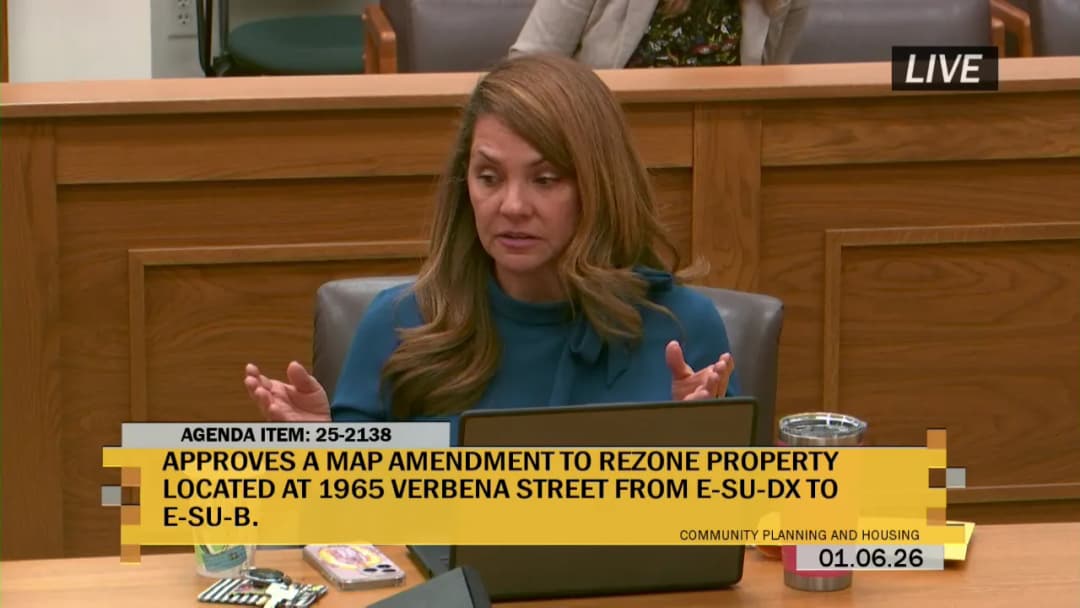
The Community Planning and Housing Committee of Denver City Council met on January 6, 2026, to consider three action items: a rezoning for Cross Purpose at 3050 North Richard Allen Court, a mini-bundle of text amendments to the zoning code, and a rezoning at 1965 North Virginia (1965 Verbena Street). All items were advanced to the full council. Public Comments & Testimony - Cross Purpose Rezoning: Eight letters of support were received, including one from the Skyland Neighborhood Association and one with 21 signatures from community members. No opposition was reported. Bob Schofield, Vice President of Campus Operations for Cross Purpose, stated the rezoning is needed to comply with state Behavioral Health Administration licensing requirements. - Mini‑Bundle Text Amendments: Nine public comments were received during the 30‑day comment period; 60% related to ADUs. Commenters raised concerns about fairness of exempting Denver Housing Authority (DHA) from owner‑occupancy requirements and asked about permitting for self‑contracting ADUs. No testimony was given at the hearing. - 1965 Virginia Rezoning: The applicant, Pavel (property owner), conducted door‑to‑door outreach and obtained a letter of support from the East Colfax Neighborhood Association, along with names and contact information of 41 supportive neighbors. No opposition was submitted. In his testimony, Pavel stated his goal was to add housing to help with the city’s housing crisis and noted his personal experience housing Ukrainian refugees. Discussion Items - Cross Purpose Rezoning (Legislative Rezone 25‑21‑47): Applicant requested rezoning from former Chapter 59 (R2A with waivers) to EMX‑2X (mixed‑use up to two stories, limited commercial) for a 67,000‑square‑foot site owned by Cross Purpose, a nonprofit serving over 1,000 graduates per year (87% employed after one year). Councilmember Watson (District 9) sponsored the rezoning. Staff noted the existing zoning does not permit behavioral health services as required by state license; EMX‑2X allows those uses by right. Planning Board approved unanimously on December 17, 2025. The committee voted unanimously to approve. - Mini‑Bundle Text Amendments (Items 25‑2163 & 25‑2164): Fritz Clausen presented four topic areas: (1) expedited reviews for affordable housing under Proposition 123; (2) wireless telecommunications modifications per state law; (3) accessory dwelling unit (ADU) changes—exempting DHA from owner‑occupancy requirement and clarifying PUD allowances; (4) extending site development plan approval periods to 30 months. Council President Sandoval raised concerns about design review exemptions for fast‑track affordable projects and potential proliferation of wireless facilities; Councilmember Torres noted the 30‑month extension merely codifies existing practice. Councilmember Watson requested a one‑page clarifying document on ADU impacts. Staff recommended approval. The committee voted unanimously to advance to full council (motion by Torres, second by Sandoval). - 1965 Virginia Rezoning (1965 Verbena Street): Applicant requested a change from ESU‑DX (minimum 6,000 sq ft lots) to ESU‑B (minimum 4,500 sq ft) to allow subdivision of a 9,000‑sq‑ft lot. Staff recommended denial, finding no established pattern of smaller lots in the surrounding blocks as required by Blueprint Denver. Planning Board recommended approval unanimously on December 3, 2025, citing consistency with growth strategy and gentle density. Councilmember Sawyer expressed reservations but supported moving the item to the full council for a broader conversation. Council President Sandoval noted the risk of setting a precedent that could circumvent the citywide “Unlocking Housing Choices” process. Applicant Pavel testified about his community engagement and desire to add housing. The committee voted unanimously to advance to full council (motion by Alvidrez, second by Lewis). Key Outcomes - Cross Purpose Rezoning: Approved unanimously; will go to full council for second reading and public hearing. - Mini‑Bundle Text Amendments: Moved to full council unanimously (first reading tentatively January 20, public hearing February 17). - 1965 Virginia Rezoning: Moved to full council unanimously; full council will deliberate on the staff‑planning board split recommendation.

AFFORDABLE HOUSING 71% · COMMUNITY ENGAGEMENT 16% · TECHNOLOGY AND INNOVATION 5% · PROCEDURAL 4%
239
JAN 6, 2026 · DENVER, COLORADO · COUNCIL COMMITTEES
Denver Parks, Arts and Culture Committee Meeting – January 6, 2026

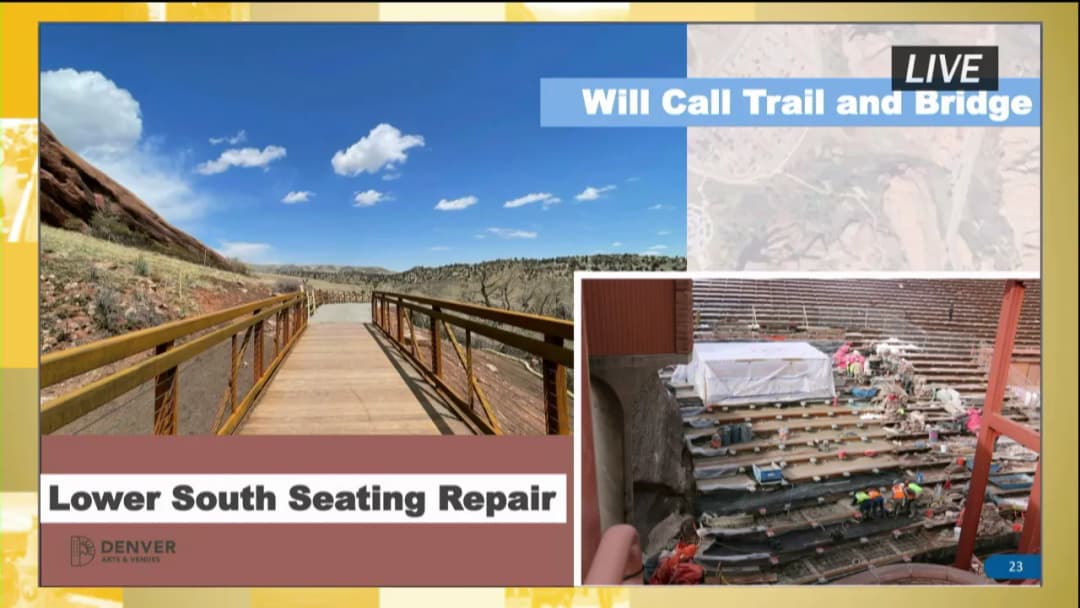
The Parks, Arts and Culture Committee of Denver City Council met on January 6, 2026, to consider two major agenda items: a proposal to consolidate the Office of Special Events (OSE) into Denver Arts and Venues (DAV), and a presentation on Red Rocks Amphitheatre’s operations and capital improvements. The committee heard presentations from DAV Executive Director Gretchen Hallra, OSE/DAV Director of Administration Rose Watts, and Red Rocks Venue Director Tad Bowman. The public hearing for the consolidation item had no sign-ups. Public Comments & Testimony - No members of the public testified; a public hearing was held with no sign-ups. Discussion Items - Consolidation of Office of Special Events into Denver Arts and Venues: - Rose Watts presented a proposal to repeal Chapter 2, Article 21 of the Denver Revised Municipal Code (the OSE ordinance) and transfer all permitting authorities to DAV. The consolidation is expected to save the general fund approximately $1.1 million annually through administrative efficiencies and staff absorption. - The definition of “special event” would be changed to “public permitted event,” granting the executive director discretion to determine which events require a full permit. Events with fewer than 350 participants, no street closures, no alcohol, and no fireworks or drones would be exempted from the full OSE/DAV permit, reducing application steps by four and saving about two hours for small event organizers. This exemption aligns with Denver Parks and Recreation’s permit tiers, including the “Waste No More” program. - Committee members expressed strong support for reducing bureaucracy and burden on small community events. Council President Sandoval noted that she had previously voted against creating OSE due to layered bureaucracy and shared concerns about the AED (automated external defibrillator) checkout process, which she felt placed liability on council offices. DAV staff confirmed that events under 350 participants would no longer require that process, and DDPHE is reviewing the broader AED rule for larger events. - Councilman Watson asked about insurance requirements for nonprofits under 350 participants; staff clarified that insurance requirements remain tied to the underlying park or street permit, not the DAV permit. He also raised concerns about equity in permitting for large parks like City Park, where for-profit organizations often outpace nonprofits in securing permits. Staff noted this would need further coordination with Parks and Recreation. - Councilwoman Lewis asked about neighbor notification; staff stated it would not be required for low-impact events but could be voluntarily provided. Councilwoman Torres praised the discretion and noted the change addresses long-standing concerns. - The committee voted unanimously (via thumbs up) to approve the repeal and transfer. - Red Rocks Amphitheatre Presentation: - Gretchen Hallra outlined DAV’s social cultural enterprise model: Red Rocks, the Buell Theater, and venue sponsorships generate net revenue that supports cultural programming, operations, and capital maintenance across the agency. In 2024, Red Rocks generated nearly $75 million in total revenue, with expenses of approximately $37 million, yielding $37 million in net revenue. A Jacobs study estimated annual capital needs at $45 million; the gap is partially filled by a 10% seat tax (Facilities Development and Admissions Tax) and bond funds. - Tad Bowman provided a detailed history and overview of Red Rocks’ operations and capital investments. He highlighted recent projects including a new loading dock (with restrooms and showers for truck drivers), a stage roof replacement (capacity increased from 30,000 lbs to 200,000 lbs), the East Terrace (built per original Burnham Hoyt drawings), ADA compliance improvements, a visitor center refresh with new AV exhibits and a land acknowledgment medallion, and a planned backstage expansion to improve performer amenities and ADA access. He noted that over 3 million visitors come annually: 2 million for daytime activities (hiking, touring) and about 1 million for concerts. - Committee members asked about the seat tax (10% of ticket price, use-restricted to capital), relationships with indigenous communities (no ongoing program but openness to events), local small business opportunities with concessionaire Aramark (staff noted use of local vendors like Machete Tacos and Rolling Smoke), stagehand labor (provided via Legends Global under collective bargaining), and multimodal transportation efforts (Councilman Watson highlighted collaboration with Jefferson County to reduce car traffic). Councilwoman Romero Campbell praised the venue’s daytime accessibility and free entry. - Councilwoman Parity requested the Jacobs study and backstage feasibility study; staff agreed to provide them. Key Outcomes - The committee unanimously approved the repeal of Chapter 2, Article 21 of the DRMC and the transfer of OSE authorities to Denver Arts and Venues (action item). - No other formal votes were taken. - Staff will communicate policy changes to stakeholders in 2026 and provide requested studies and contract details to councilmembers.

ARTS AND CULTURE 41% · PARKS AND RECREATION 15% · ENGINEERING AND INFRASTRUCTURE 13% · FISCAL SUSTAINABILITY 12%
240
JAN 6, 2026 · DENVER, COLORADO · MAYOR-COUNCIL MEETING
Weekly Joint Meeting of Mayor and Denver City Council - January 6, 2026

The Mayor and Denver City Council convened a weekly joint meeting on January 6, 2026, for a short general session that included announcements from council members and a unanimous vote to adjourn into an executive session for legal advice and discussion of real estate matters. Announcements - Councilman Watson (District 9) invited the public to the kickoff of the Western Stock Show beginning Thursday, January 8, highlighting over $300,000 in scholarships for youth interested in agriculture careers. - Councilwoman Romero Campbell noted that today is her daughter's birthday. - Councilwoman Albedras announced a District 7 kickoff event for the National Western on Thursday at 5:30 PM at Desert Social on South Broadway, featuring ticket giveaways, food, music, dancing, and a book exchange. - Council President noted that her son's birthday is also today, and that the date is the Feast of the Three Kings (Epiphany), marking the end of the 12 days of Christmas. - Councilwoman Gonzalez-Cutierrez reminded residents to recycle Christmas trees, which become free mulch, and that the Sloan's Lake location is available for north side residents. Key Outcomes - The council voted unanimously (all in favor, none opposed) to move into executive session pursuant to DRMC 2-34A sections 4, 6, and 7 for the purpose of receiving legal advice and discussing the acquisition, sale, or use of real estate by the city.

PROCEDURAL 100%
OPENPUBLICA · PUBLIC MEETING INDEXUPDATED DAILY · openpublica.com