The City of Frederick Zoning Board of Appeals held a meeting on June 25, 2013, to approve minutes, elect officers, grant continuances, and decide on a variance application and an administrative appeal. The board also received public comments on the appeal process. Consent Calendar - Approved the minutes of the April 23, 2013 meeting as written. Officer Elections - Re-elected the current Chairman for the coming year (motion by Mr. Patchant, seconded by Ms. Colby, 4 votes in favor). - Elected Ms. Colby as Vice Chair (motion by Mr. Patchant, seconded by Mr. Kennedy, 4 votes in favor). - Elected Mr. Patchant as Secretary (motion by Ms. Colby, seconded by Mr. Kennedy, 4 votes in favor). Continuances - Case CBA 13-304 CU (conditional use for family meal at 880 Northeast Street) continued to July 23, 2013 due to improper public notice. - Case ZBA 13-301 CU (conditional use for vote at 228 North Market Street) continued to July 23, 2013 due to improper public notice. Discussion Items Variance at 201 Magnolia Avenue (CBA 13-337 V) - Applicant Lee Lushbaum requested two variances from Section 405 of the Land Management Code to reduce the required street setbacks on a corner lot at Magnolia Avenue and West 2nd Street. The property is an irregularly shaped corner lot with three frontages, and the existing house was built in 1940. The variances would allow a 626-square-foot addition and a two-car garage. - Staff recommended approval, finding that the lot's size and shape create a practical difficulty, and the variances would not be contrary to public interest. - A neighbor (adjacent property owner) asked about the zero lot line and potential removal of trees. The applicant clarified the zero lot line applies only at two points adjacent to city right-of-way, and the house will remain about 35 feet from the street. - The board approved the variances (4-0), with a condition that the applicant had received approval from the Historic Preservation Commission for demolition of existing structure portions. Appeal of Zoning Administrator Decision at 329 East 2nd Street (ZBA 13-347A) - The appellant (Chapin Family LLC, represented by Ann Rollins) sought to reverse the zoning administrator's determination that the proposed "Exotic Lumber" business should be classified as "building supplies and lumber" (not permitted in the DB district) rather than "retail sales not otherwise listed" (permitted). The business sells exotic and domestic hardwoods to hobbyists, woodworkers, and artists, not to contractors or large-scale builders. - Staff defended the zoning administrator's decision, arguing that the classification matrix prefers specific over general categories, and the business sells lumber, which falls under building supplies. - The appellant argued that the business is a specialty retail store with low traffic, no outdoor storage, and a different clientele, and thus should be classified under the catch-all category "retail sales not otherwise listed." - The board discussed the four criteria for appeal and debated whether the zoning administrator's decision was arbitrary or capricious. Ultimately, the board voted 4-0 to reverse the determination, reclassifying the use as "retail sales not otherwise listed." The board found that the zoning administrator had not properly interpreted the code given the unique nature of the business. Public Comments & Testimony - At the conclusion of the appeal case, a resident from 328 East 3rd Street expressed frustration that the public was not given an opportunity to speak during the appeal process, despite signs and notices being posted. The resident argued that the process was unfair because the applicant was allowed to testify while residents were not. - Another resident, John Daniels from 335 East 3rd Street, echoed the concern and suggested that if the board was conducting an administrative review, it should not accept testimony from anyone, including the applicant. He also expressed concern that the classification of the business as "retail" could allow more intensive uses in the future without public input. - The Chairman acknowledged the frustration and noted that the board is bound by the Land Management Code and a prior circuit court ruling that prohibits taking public testimony in such appeals. The board encouraged the residents to raise their concerns with the Mayor and Board of Aldermen. Key Outcomes - The board approved the minutes of April 23, 2013. - Officers were elected for the coming year: Chairman (re-elected), Vice Chair (Jenny Colby), Secretary (Brian Patchant). - Two conditional use cases were continued to July 23, 2013. - Variance at 201 Magnolia Avenue (CBA 13-337 V) granted with conditions. - Appeal at 329 East 2nd Street (ZBA 13-347A) reversed; the use is reclassified as "retail sales not otherwise listed." - The board discussed drafting a letter to the Mayor and Board of Aldermen regarding enforcement and standards for restaurants with entertainment, following a recent article.
Public Meetings - Frederick, Maryland
Public Meetings - Frederick, MarylandNote: The transcript of this meeting is dated March 19, 2013, but the meeting date is specified as April 23, 2013. The Zoning Board of Appeals (ZBA) met on April 23, 2013, to consider a continuance, a variance request, and a conditional use application. The board approved the minutes from the previous meeting, granted a continuance for a non-conforming use case, discussed a variance for a home addition, and approved a conditional use for a winery. Consent Calendar - Approved the minutes of the February 26, 2013, ZBA meeting. Public Comments & Testimony - No general public comments were made. - For the variance case (1102 Evergreen Ave), applicant Teresa May spoke in support of her request for a variance to construct an in-law suite addition. - For the conditional use case (221 North East St), Mr. Miller, representing Roarsville Vineyards, spoke in support of the application. Discussion Items - Continance (ZBA 13-87 NCI): The board granted a request from the applicant for a 30-day continuance to the April 23, 2013, hearing for a substitution of non-conforming use at 329 East Second Street. Staff supported the request. The board noted concerns about multiple continuances and the parking requirement issue. - Variance (ZBA 13-88V): The board heard a request for variances from the front and rear setback and impervious surface ratio requirements at 1102 Evergreen Avenue to construct a 1,150-square-foot addition for an in-law suite. The property is odd-shaped due to the construction of US 15. Staff recommended approval, finding that the lot shape and orientation present unique practical difficulties. The applicant, Teresa May, explained the need to care for her aging parents. Public testimony was none. The board did not take a vote on this case in the transcript provided. - Conditional Use (ZBA 13-180CU): The board considered a conditional use application for a winery, tasting room, and entertainment at 221 North East Street, formerly occupied by Frederick Sellers. The applicant, Roarsville Vineyards, plans to operate a wine production facility with retail sales and limited entertainment. Staff recommended approval with conditions. The board discussed the reduced scale of operations compared to the previous use. The applicant's representative, Mr. Miller, emphasized the winery's asset to the city. Key Outcomes - Minutes approved: The February 26, 2013, meeting minutes were approved. - Continance granted: ZBA 13-87 NCI was continued to April 23, 2013. - Conditional use approved: The board approved the conditional use for Roarsville Vineyards (Big Cork wines) at 221 North East Street with the following conditions: 1. The applicant must obtain a zoning certificate within two years (per LMC §312G). 2. Entertainment is limited to Sunday–Thursday until 10:00 PM, Friday–Saturday until midnight, and New Year's Eve until 1:00 AM. Music is limited to live performances. These restrictions must be noted on the zoning certificate. - Variance case: No decision was recorded in the transcript for the variance at 1102 Evergreen Avenue. Additional Notes - The board discussed the issue of multiple continuances for ZBA 13-87 NCI, noting that more than 90 days would require new notice. Staff clarified that the parking requirement interpretation had caused delay. - The applicant for the conditional use mentioned that the wine will be sold under the label "Big Cork."
The Zoning Board of Appeals met on Tuesday, March 19, 2013, at 7:00 p.m. at City Hall in Frederick, Maryland. Chair Jim Racheff presided. The board approved minutes from February 26, 2013, granted a continuance for a non-conforming use case, and approved setback variances for an in-law suite addition after extensive discussion. Note: The transcript refers to some board members as Ms. Colby, Mr. Patchon, and Mr. Dacey, which do not match the agenda roster (Jim Racheff, Lawrence Aronow, Bob Sisson, Dixon Hicks, Stephen Colar, Lee Hand), likely due to transcription errors. Consent Calendar - Approval of the February 26, 2013 minutes: Moved by "Ms. Colby," seconded by "Mr. Patchon," approved without opposition. (Name discrepancy noted above.) Public Comments & Testimony - General public comments: None offered. - ZBA13-88V public comment: Donald Lee, a candidate for mayor of Frederick (address 119 East Fifth Street), spoke in favor of the May family and builder Joe Devilbiss, citing his 30 years of work at the I-70 truck stop. Discussion Items - ZBA13-87NCI (Substitution of Non-Conforming Use, 329 East Second Street): The applicant requested a one-month continuance to the April 23, 2013 ZBA meeting. Staff supported the request. The board voted unanimously to grant the continuance. - ZBA13-88V (Variance, 1102 Evergreen Avenue): Applicant Teresa May requested variances from the R6 district requirements: rear setback (30 ft required), front setback (25 ft required), and impervious surface ratio (ISR, 50% max). The proposal is a 1,150 sq ft addition for a handicapped-accessible in-law suite for her parents. Staff's report recommended approval, finding that the lot's shape and orientation (resulting from US 15 construction) created practical difficulties. Staff noted the lot is currently 51% impervious; the addition would increase it to 59% or 63% depending on driveway work. Discussion focused on whether permeable paving could reduce the ISR to 50% or below, making the ISR variance unnecessary. Board members also considered limiting the ISR variance with conditions. The board decided to separate the setbacks from the ISR and vote on setbacks only. - The motion for setback variances was amended to specify "a one-story handicapped accessible in-law suite" to preserve the use, and to incorporate the seven findings of fact from the staff report. Key Outcomes - Minutes approved. - ZBA13-87NCI continued to April 23, 2013. - ZBA13-88V: Variance for front setback (25 ft) and rear setback (30 ft) approved, with the addition specified as a one-story handicapped accessible in-law suite. Vote was 4-0 in favor. The ISR variance was not voted on; it may be avoided if the applicant uses permeable materials to keep impervious surface at or below 50%. The board encouraged permeable options and did not grant a specific ISR variance. The case will proceed with that understanding.
The Zoning Board of Appeals of the City of Frederick met on February 26, 2013, at 7:00 PM in the City Hall Boardroom. The sole contested item was a variance request for a property at 706 West Patrick Street. The board voted 4–0 to approve the variance, allowing the applicant to connect an existing garage to the principal structure for a commercial office conversion. The meeting also included approval of prior minutes, a farewell to a departing board member, and an announcement of the next meeting date. Consent Calendar - Approval of December 18, 2012 Minutes – Approved as written. One member abstained due to absence at that meeting. Public Comments & Testimony - Richard Griffin, Director of Economic Development, spoke in support of the variance. He argued that the existing garage constitutes a unique condition on the property, the adaptive reuse supports job creation and neighborhood stabilization, and the proposal meets the criteria for a variance. He noted the city’s desire to retain and attract businesses. Discussion Items - ZBA13-52V – Variance, 706 West Patrick Street – The applicant, Lorreen Pragenzer, requested a variance to reduce the required interior side setback from 10 feet to 1.8 feet along the eastern lot line. The purpose is to connect an existing three-car brick garage (built between 1970 and 1983, no building permit found) to the principal dwelling as part of converting the property from residential to a professional office. The connecting addition would house an accessible bathroom and wheelchair lift (required by ADA). - Staff recommendation: Not in support. Staff found the lot dimensions are not exceptional; the garage’s nonconformity does not constitute an extraordinary condition; alternatives exist (demolish garage and build a compliant addition). The variance would perpetuate a nonconformity and is not the minimum necessary if the garage is not considered a fixed constraint. - Applicant’s testimony: The garage is a fixed, well-built structure that would be reused as office/training space. Demolishing it would be financially wasteful, eliminate turning space for a handicapped van, and remove a fence-like buffer for the neighbor. The proposed addition is the only feasible way to meet ADA requirements while preserving the residential streetscape from the front. Without the variance, the applicant stated the project would not proceed. - Board discussion: Members noted the garage as a fixed impediment, the ADA compliance requirements, and the desire to maintain the rear addition and streetscape. The motion to approve cited that the literal interpretation of the code would deprive the applicant of rights commonly enjoyed, that the variance is the minimum necessary, that it is not contrary to public interest, and that the applicant did not create the situation. Key Outcomes - Variance Approved (4–0) – Motion to approve ZBA13-52V passed unanimously. The board found that the existing garage constitutes a fixed constraint, that the variance is the minimum necessary to overcome the practical difficulty imposed by the structure’s location, and that granting the variance is in harmony with the purpose of the RO district (to allow office conversions while preserving residential character). - Next Meeting – The March meeting will be held on March 19, 2013 (third Tuesday) instead of the usual fourth Tuesday due to the Passover holiday. A field trip for board members will be scheduled the Friday prior. - Farewell to Board Member – The board recognized and thanked departing member Ed Hazlitt for his years of service, presenting him with a gift of local photography.
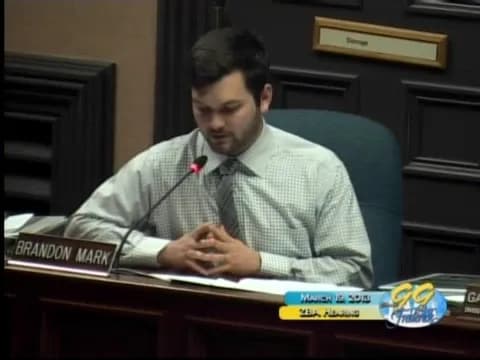
The Zoning Board of Appeals of Frederick, Maryland, met on December 18, 2012, at 7:00 PM at City Hall. The board approved minutes, heard public comments, and considered two requests: a conditional use amendment to expand entertainment hours for JoJo's Restaurant & Tap House and a variance to subdivide a historic property at 119-125 W. South Street into four fee-simple lots. Both requests were approved unanimously. Consent Calendar - Approval of October 23, 2012 Minutes – Motion by board member, seconded, all in favor (unanimous). - Approval of November 27, 2012 Minutes – Motion by board member, seconded, all in favor (unanimous). Public Comments & Testimony - General Public Comments: A member of the public asked whether a speaker must be a city resident to testify. Assistant City Attorney Rachel DePoe confirmed that anyone from the public at large may speak. - JoJo's Restaurant & Tap House Public Comment: - John Brock (Frederick resident) expressed support for the expanded entertainment hours, stating that entertainment is a key factor in choosing where to go downtown and that he would likely go elsewhere on New Year's Eve if entertainment stopped at 10 PM. He noted that the acoustics at JoJo's are well-contained. - Darren Wigfield (Frederick county resident) urged the board to support JoJo's because the current owners maintain a reputable atmosphere, unlike past establishments at that location, and that approving the request would help keep the building occupied and prevent a potentially less responsible operator from taking over. Discussion Items - ZBA12-620CU – JoJo's Restaurant & Tap House (16 E. Patrick Street) - Staff Report (Brandon Mark): The applicant sought to amend a previous conditional use approval (granted October 23, 2012) that restricted entertainment hours to 7–10 PM Sunday–Wednesday and 7 PM–1 AM Thursday–Saturday. The new request would allow entertainment at any time during normal operating hours (Sunday 11 AM–2 AM; Monday–Saturday 11:30 AM–2 AM). Staff found the proposal consistent with the Land Management Code (LMC) and recommended approval with three conditions: (1) obtain a zoning certificate within two years; (2) submit quarterly revenue statements for one year starting in Q1 2013 to ensure alcoholic beverages and entertainment do not exceed 40% of revenue; (3) a six-month review of police calls for service. - Applicant (Jeff Button): Presented letters from former residents of the building and an upstairs worker stating they never experienced noise issues. Argued that restricted hours hinder competitiveness (e.g., New Year's Eve 2012 fell on a Monday when entertainment must end at 10 PM) and prevent events like fundraisers with the Frederick Keys. Stated the owners are rule-abiding and willing to comply with conditions. - Board Discussion: Board Member Gail Colby highlighted a staff report passage noting that additional conditions beyond LMC criteria should be based on unique property characteristics (e.g., proximity to residences). Chair noted that the six-month police call review condition was included. The board found no evidence of likely nuisance and saw the request as reasonable. - ZBA12-756V – Variance, 119-125 W. South Street - Staff Report (Brandon Mark): The property contains an 1885 building with four residential units (townhome style), each with separate utilities, but legally is a single lot. The applicant requested a variance from the minimum lot width of 15 feet (required in the Downtown Residential (DR) zone) to allow subdivision into four fee-simple lots. The existing lot is 58.95 feet wide; three of the four proposed lots would be 14.48 feet wide (a variance of less than one foot). Staff supported the variance, finding it would enable home ownership, preserve historic structures, and meet all LMC variance conditions. - Applicant (Laura Melia, representative): Explained that the subdivision will allow unit owners to purchase their homes, increasing stability and property values. The variance is minimal and necessary because the building’s configuration (party walls) makes it impossible to meet the 15-foot width. The alley provides vehicular access with on-site parking. - Board Questions: Board members asked about parking access; the applicant confirmed that cars can use the alley and a portion of the back lot for parking. Key Outcomes - ZBA12-620CU (JoJo's) – Approved Unanimously (4-0) - Motion by Gail Colby, seconded by Philip Dacey. The board found that the request met all LMC criteria and that no additional conditions beyond staff’s recommendations were warranted. The approval allows entertainment at any time during the restaurant’s normal operating hours, subject to: obtaining a zoning certificate within two years, providing quarterly revenue reports for one year, and a six-month police call review. - ZBA12-756V (119-125 W. South Street) – Approved Unanimously (4-0) - Motion by Gail Colby, seconded. The board approved a variance from the minimum lot width of 15 feet to not less than 14.48 feet for three lots, enabling the subdivision into four fee-simple townhouse units. The findings of fact cited the historic nature of the structure, the practical difficulty of meeting current dimensional requirements, and consistency with the public interest and LMC intent. No further business was raised; the meeting adjourned.
The City of Frederick Zoning Board of Appeals met on November 27, 2012, to consider a six-month review of compliance for Mysterio Bar and Italian Grill, a request to expand its entertainment hours, and a new conditional use application for Mexicali Cantina. The board also approved minutes and the 2013-2014 meeting schedule. Consent Calendar - Approved the August 28, 2012 minutes as written. - Continued the October 23, 2012 minutes to December for revision to include testimony from Sergeant Roca. - Approved the 2013-2014 meeting schedule with a change moving the March 26 meeting to March 19 due to Passover. Discussion Items Mysterio Bar and Italian Grill – Six-Month Review (ZBA11-277CU) - The board reviewed calls for service since the July 2011 conditional use approval allowing live entertainment on Fridays and Saturdays from 10 PM to 12:30 AM. - Police Lieutenant Grossman reported 16 calls for service, 14 during business hours, with half being noise complaints. Two noise complaints occurred outside permitted hours. Notable calls included a weapon complaint, disorderly conduct, and assault. The officer noted that calls have decreased since a change in management. - Three qualifying calls (bona fide violations under the excessive use of police services ordinance) were recorded since April. - Public testimony: Neighbors expressed concerns about noise, trash, and disorderly conduct, but many acknowledged improvement under new management. The applicant (General Manager Giovanni Faldale) stated they have had only three calls since June and are cooperating with police. - The board decided to take no action at this time but will review again in 12 months, noting the improvement and urging continued vigilance. Mysterio Bar and Italian Grill – Request to Expand Entertainment Hours (ZBA12-690CU) - The applicant requested expanding entertainment to Thursdays through Saturdays until 2 AM (instead of Friday-Saturday until 12:30 AM). - Staff recommended approval with conditions, but the board heard extensive public opposition from neighbors citing increased noise, trash, and safety concerns. - The applicant argued for equity and need for business viability. - The board voted 4-0 to deny the request, based on findings that the proposal would negatively impact the peaceful enjoyment of adjacent homes (criterion 8) and cause noise and nuisance (criterion 14) under Section 312E. Mexicali Cantina – Conditional Use for Entertainment (ZBA12-675CU) - The applicant sought approval for a DJ and live music on Saturdays from 10 PM to 2 AM. - Staff recommended approval with standard conditions. - No public testimony was offered. - The board unanimously approved the conditional use with findings that the use complies with Section 856 and that the proposed entertainment will not create adverse impacts if conducted with conditions, including a seating capacity of 80% at tables, quarterly revenue reporting, and automatic revocation for violations. Key Outcomes - Mysterio Bar's six-month review: No action taken; review to continue in 12 months. - Mysterio Bar's expansion request: Denied (4-0). - Mexicali Cantina's conditional use: Approved (4-0). - The board expressed support for a potential text amendment to the Land Management Code to provide uniform regulations for restaurants with entertainment, to be explored by staff.
The Zoning Board of Appeals met on October 23, 2012 at 7:00 PM at City Hall to consider a single conditional use application for JoJo's Restaurant & Tap House, approve prior meeting minutes, and receive general public comments. The meeting was chaired by Jim Racheff, with all five voting members present. Staff recommendations and public testimony guided the board's deliberations. Consent Calendar - Approval of August 28, 2012 Minutes: Motion to table approval to the November 2012 meeting carried unanimously. - Approval of September 11, 2012 Minutes: Approved as written by a voice vote. - Approval of October 2, 2012 Minutes: Approved as written by a vote of 5-0. Public Comments & Testimony - No general public comments (non-case-related) were offered. - Sergeant Old Rocka (Frederick Police Department, NAC 11 coordinator) testified in opposition to the requested entertainment hours (1:00 AM close on weekends). He recommended a 11:00 PM end time due to ongoing noise and public order issues downtown, noting that multiple other establishments with 1:00 AM entertainment have contributed to nuisance complaints. He acknowledged the police department's new sound measuring devices and education-first enforcement policy. Discussion Items - Case ZBA12-620CU – Conditional Use for JoJo's Restaurant & Tap House (16 E Patrick Street): - Applicant Jeff Button requested approval for live entertainment (bands, solo acts) on Thursdays, Fridays, and Saturdays from 9:00 PM to 1:00 AM, and other entertainment (karaoke, trivia, open mic) on other evenings from 7:00 PM to 10:00 PM. - Staff report by Jeff Love found the proposal compliant with Land Management Code Sections 308, 312, and 856, recommending approval with three conditions: (1) submit quarterly revenue statements for one year beginning Q1 2013 to verify that alcohol/entertainment does not exceed 40% of total revenue; (2) apply for zoning certificate within two years; (3) a six-month review of police calls for service to identify any violations. - Board members questioned the applicant about sound monitoring, seating capacity (87.5% at tables), and prior entertainment at the location. The applicant stated they would purchase a sound meter if needed and would comply with all conditions. - Debate centered on whether to restrict hours to 11:00 PM (as suggested by police) or maintain the request. Some members expressed concern about fairness to this applicant versus other downtown establishments operating until 1:00 AM. Sergeant Rocka argued for consistency but acknowledged the board's discretion. Applicant noted that most downtown restaurants with entertainment go until 1:00 AM any night of the week. - A motion for approval with the recommended conditions and the applicant's proposed hours (Thurs-Sat 9 PM-1 AM; other nights 7-10 PM) was made by Ms. Colby and seconded by Mr. Dacey. An amendment to end entertainment at 10 PM Sunday through Thursday was suggested by Mr. Hazlet but withdrawn after discussion. The motion passed with four affirmative votes (4-0). Key Outcomes - Conditional use approved for JoJo's Restaurant & Tap House to provide entertainment at 16 E Patrick Street. - Hours approved: Live music Thursdays, Fridays, Saturdays 9:00 PM to 1:00 AM; other entertainment (trivia, karaoke, open mic) Sunday through Wednesday 7:00 PM to 10:00 PM. - Conditions: 1. Applicant must apply for and receive a zoning certificate within two years, specifying days and times of entertainment. 2. Quarterly revenue statements must be submitted to the planning department for one year (starting Q1 2013) to demonstrate compliance with the 40% cap on alcohol/entertainment sales. 3. A six-month review of police calls for service will be conducted and provided to the board to monitor potential nuisances. - Next steps: Applicant to work with staff on revenue reporting schedule; board to receive police call data at the six-month mark.
The Zoning Board of Appeals met on October 2, 2012 at 7:00 PM to continue deliberations on appeal ZBA12-76, which challenged the Planning Commission's January 9, 2012 approval of the Warman's Mill Master Plan (PC11-493PND). The board discussed procedural requirements, the need for a four-vote supermajority to overturn the Planning Commission, and ultimately adopted a letter of findings, conclusions, decision, and order. No public testimony was taken. Consent Calendar - None. Public Comments & Testimony - No public testimony was taken as this was a continued deliberation session. Discussion Items - The board reviewed proposed findings of fact and conclusions of law prepared by Chair Jim Racheff, which addressed three key issues: (1) whether procedural requirements (e.g., signatures of all property owners) were needed, (2) whether the Planning Commission had authority to approve an increase in overall density, and (3) that the prevailing minority concluded the Planning Commission failed to follow proper procedures under LMC Section 310F and the 1986 zoning ordinance Section 1607. - Mr. Dacey suggested clarifying language regarding the four-vote supermajority requirement under LMC Section 312D and ZBA rules of procedure. - The board discussed that without reaching a four-vote supermajority to overturn, the Planning Commission's decision stands as not in error. Key Outcomes - The board adopted (motion by Chair Racheff, second by Mr. Dacey) the letter of findings, conclusions, decision, and order as read into the record, with the added clarification that the appeal failed to achieve the necessary four-vote supermajority under LMC Section 312D. - Consequently, the Planning Commission's January 9, 2012 unconditional approval of the Warman's Mill Master Plan was upheld, and the appeal was denied. - The meeting adjourned after the motion was approved.
This special meeting of the City of Frederick Zoning Board of Appeals, originally scheduled for September 11, 2012, continued deliberation on appeal case ZBA 12076 concerning the Warman's Mill Planned Neighborhood Development (PND). The board reviewed whether the Planning Commission erred in three actions taken on January 9, 2012: approving modified setbacks under two different code sections, and unconditionally approving an amendment to the PND master plan that increased density in a section by more than 10%. Public Comments & Testimony No new public comments or testimony were received, as the meeting was a continuation solely for board deliberation based on the existing record. Discussion Items Consensus on Setback Approvals: The board unanimously agreed that the Planning Commission correctly exercised its authority in approving the two setback modifications. The first modification was authorized under Section 1610-5 of the 1986 zoning ordinance, and the second under Section 910E of the current Land Management Code (LMC). Board members noted that the Planning Commission cited appropriate authority and conducted thorough discussions, including testimony from city staff and public hearings. Disagreement on Master Plan Amendment: The central dispute concerned the Planning Commission’s unconditional approval of the master plan amendment, which involved transferring dwelling units that resulted in a greater than 10% increase in density within a section (the village center). Board members split on whether the Planning Commission had the authority to approve this change without following the full procedures for an original master plan application. - Majority view (Members Hazlett, Colby, and a third member): They argued that LMC Section 310F explicitly states that any amendment to a master plan that exceeds the thresholds (overall density increase, land use change, or 10% increase in dwelling units in a section) must be processed in accordance with the procedures for approval of the original master plan. These procedures include a requirement under Section 1603 of the 1986 code that the application be signed by all owners of parcels within the planned neighborhood. The majority concluded that the Planning Commission erred by not requiring these signatures and by failing to adequately cite authority for the master plan amendment. They emphasized that the code is clear and that the Planning Commission cannot ignore or modify code provisions. - Minority view (Members Dacy and Kennedy): They contended that the Planning Commission had implied authority under Section 910E of the LMC to revise master plans based on applicant requests. They argued that the signature requirement for all property owners is impractical and could not have been intended by the Board of Aldermen, especially in a large development like Warman's Mill with over 1,000 units sold. They noted that the Planning Commission had followed past precedent and relied on city legal staff advice that the commission had authority to approve the transfer. They asserted that the intent of the PND flexibility was to allow adjustments in response to market conditions. Key Outcomes - The board reached no final decision on the appeal at this meeting. - It was agreed that the two setback modifications were properly approved (unanimous consensus). - On the master plan amendment, the board was deadlocked with a majority of three members finding that the Planning Commission erred, and two members dissenting. - A motion was made and seconded to continue the meeting to September 25, 2012, at 7:00 PM to allow time for drafting a written opinion and further deliberation. The motion passed unanimously. - Board members noted that regardless of the outcome, the issue could be addressed by the Mayor and Board of Aldermen through a text amendment to the LMC if they disagreed with the board's interpretation. Note: The transcript indicates the meeting date as September 11, 2012, but the official meeting date provided for this summary is October 1, 2012.
The Zoning Board of Appeals (ZBA) convened a special continuation meeting on September 27, 2012, at 3:45 PM UTC, to deliberate on case ZBA 12076, an appeal of the Planning Commission's decision (PC 11493 PND) regarding amendments to the Warman's Mill Planned Neighborhood Development (PND) master plan. The board reviewed the Planning Commission's three actions from January 9, 2012, under the criteria of Section 315D of the Land Management Code (LMC): whether the commission applied correct legal principles, whether its decisions were supported by substantial evidence, and whether it properly interpreted the code. No public testimony was taken; the board relied on the written record, briefs, and testimony from the August 28, 2012 hearing. Consent Calendar - No consent items were considered. Public Comments & Testimony - No public comments were received at this deliberation. Discussion Items Setback Modifications (Actions 1 and 2) The board reviewed the Planning Commission's unanimous approvals to modify front and side setbacks, first under the 1986 zoning ordinance (Section 1610.5) and second under the current LMC (Section 910E/410E). The board found that the Planning Commission correctly cited authority, conducted thorough discussion, and followed proper procedures. All board members agreed that the Planning Commission did not err in either of these two actions. Master Plan Amendment (Action 3) The board extensively debated the Planning Commission's 4-1 approval to amend the Warman's Mill master plan, which included density transfers that increased dwelling units in some sections by more than 10% and altered land uses. The central legal issue was whether the amendment exceeded thresholds in LMC Section 310F, thereby requiring it to be processed as a new master plan application (with signatures from all property owners in the PND), or whether the Planning Commission had authority under Section 910E to approve the revision without such requirements. Positions of Board Members: - Members Hazel and Kennedy argued that Section 310F is clear: amendments exceeding the 10% density threshold must follow procedures for an original master plan application, which under the 1986 code (Section 1603) requires signatures of all owners of parcels in the PND. They stated that the Planning Commission did not cite specific authority for the amendment and omitted required steps (e.g., obtaining property owner signatures). - Members Colby and Dacey contended that the Planning Commission acted under the broad revisionary authority of Section 910, which allows revisions to any plan component rationally related to the applicant's request. They argued that the signature requirement was impractical after many homes had been sold and that the city council never intended it to apply to amendments. They pointed to past practice and the city attorney's opinion that the commission had implied authority. - The board chair noted that the Shakespeare case precedent requires the board to adhere to the code's plain language and not legislate. The chair suggested that any concerns about the code's fairness should be addressed by the mayor and Board of Aldermen through a text amendment. The board was unable to reach consensus on this issue after extensive discussion. Key Outcomes - Consensus on Setback Modifications: The board unanimously determined that the Planning Commission did not err in approving the two setback modification requests (Actions 1 and 2). - No Decision on Master Plan Amendment: The board remained divided on Action 3. A formal vote was not taken. - Continuation: The board voted unanimously to continue the deliberation to a future meeting to allow members to further review the LMC and code sections, and to attempt to resolve the impasse. - Recommendation to Mayor and Aldermen: Several members suggested that the mayor and Board of Aldermen may wish to consider a text amendment to clarify the applicable procedures for master plan amendments that exceed density thresholds. Note: The meeting commenced at 3:45 PM UTC and adjourned after approximately four hours of deliberation.