Browse by city
Date range
Search help

Search titles, summaries, topics and stored transcripts together. Keywords may match separately; put the whole query in double quotes for a phrase. Matching follows word analysis, so punctuation is not exact. Both dates are included. Documents are not searched.

SHOWING 31–40 ENTRIES
31
FEB 23, 2026 · LAKE OSWEGO, OREGON · PLANNING COMMISSION
Lake Oswego Planning Commission Meeting: February 23, 2026

The Lake Oswego Planning Commission met on Monday, February 23, 2026, at 6:30 PM at an unspecified location. Chair Najak called the meeting to order with Vice Chair Bruce and Commissioners Moreno, Mitchell, Guinea, and Slade present. Commissioner Twing was absent. Councillor Rachel Verdick attended. Consent Calendar - Approval of Minutes (January 26, 2026): Commissioner Moreno moved to approve the minutes as written; Commissioner Guinea seconded. The motion passed unanimously with all in favor. Public Comments & Testimony - No members of the public signed up to speak. Council Updates - Councillor Verdick reported that the City Council passed the rezoning of 4000 Cruiseway Place. Key outcomes from recent council goal setting included inheriting Pioneer Cemetery, completing the pathway between George Rogers Park and Foothills, and proceeding with hiring a new city attorney and city manager. She announced the upcoming Lunar New Year Festival on Saturday, February 28, from 12:00 PM to 3:30 PM at Lake Ridge High School. Commission for Citizen Involvement Update - The annual general meeting of the Commission for Citizen Involvement is scheduled for Tuesday, March 3, 2026, at 7:00 PM at West Ridge Elementary School. Agenda items include a new online directory and guest speakers from the South Shore Fire Station (discussing rebuilding the fire station) and the Lake Oswego Sustainability Network (helping homeowners reduce yard maintenance pollution). Discussion Items - Housing Needs and Production Update (PP22-0005): Long-Range Planning Manager Eric Olson presented an overview of the new statewide Oregon Housing Needs Analysis (OHNA) framework, adopted by the state in late 2024. He contrasted the city's current 2023 Housing Needs Analysis (HNA), which projected a 20-year need of 1,968 units (about 1% growth over 20 years), with the new OHNA methodology that estimates Lake Oswego's 20-year need at approximately 4,850 units – more than double. The new methodology accounts for historical underproduction, homelessness, second homes, and regional allocation via Metro. Olson emphasized that while the city is legally bound to implement its Housing Production Strategy (HPS) rather than hit a specific unit target, the higher figure is a signal to “think bigger” as the city begins rezoning and code audit efforts. He noted that the city’s next HNA cycle is 2029, and that the state may use model codes or a “housing acceleration program” as sticks for non-compliance. - Commissioner Bruce asked about the Housing Acceleration Program and potential punitive actions. Director Namangalou explained that the state’s intervention could involve requiring model codes or providing grants; specifics are still evolving. - Commissioner Moreno (likely Jessica) highlighted that market conditions, not just zoning, control construction, and that Portland has record low housing starts, making planning adaptable. - Commissioner Guinea suggested that the commission should help educate the community about the need to “think big” to avoid state takeovers that reduce local control. Key Outcomes - No formal vote was taken on the housing update; it was informational. - The commission acknowledged the need to incorporate the higher projected housing need (4,850 units) into upcoming work items, including a citywide rezoning study and code audit. - Next meetings scheduled: - March 9, 2026: Work plan review based on city council goal setting. - March 23, 2026: Continued discussion on Foothills redevelopment, transitioning from opportunities/constraints to vision and goal setting. - The meeting adjourned after the schedule review.

HOUSING AND DEVELOPMENT 63% · AFFORDABLE HOUSING 25% · PROCEDURAL 12%
32
FEB 17, 2026 · LAKE OSWEGO, OREGON · CITY COUNCIL
Lake Oswego City Council Meeting: Fire Station Bond, Housing Needs Analysis - February 17, 2026

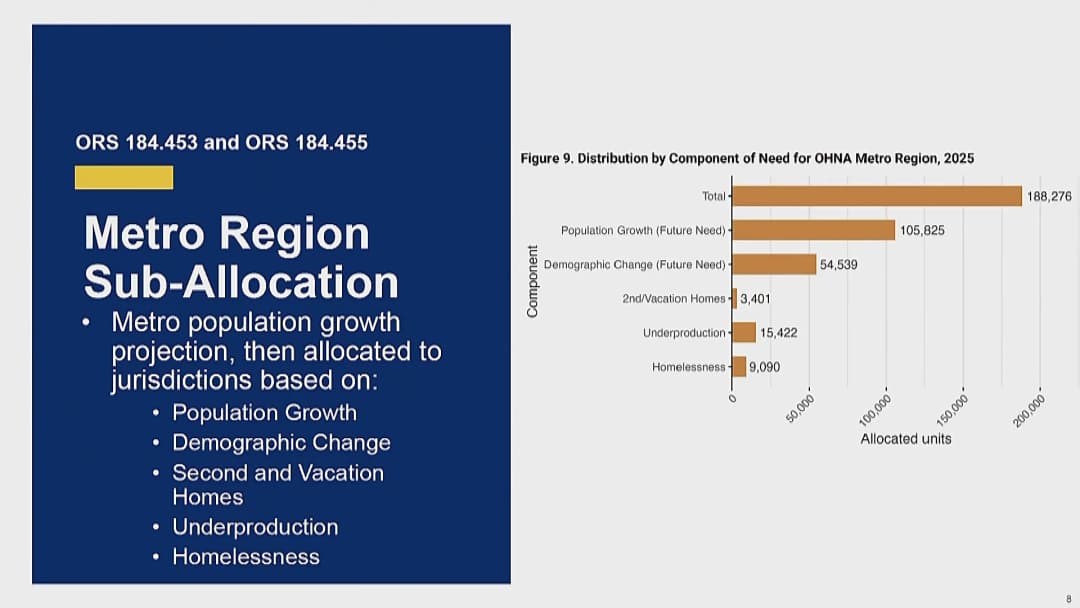
The Lake Oswego City Council met on February 17, 2026. The agenda included public comment on Lusher Farm, the unanimous passage of the consent calendar, the adoption of a home occupation code ordinance (4-1-1), and the unanimous referral of a $20.6 million bond for the South Shore Fire Station to the May 2026 ballot. A significant work session was held on the updated Oregon Housing Needs Analysis (OHNA), revealing a projected housing need of 4,850 units over 20 years, more than doubling the previous estimate. The meeting concluded with council reports and an executive session. Consent Calendar - Unanimously adopted (6-0), approving the minutes from November 18, December 2, and December 16 of 2025; Ordinance 2971; Resolutions 26-04, 26-07, and 26-11; and a public improvement contract for Work Order 355. Public Comments & Testimony - Stephanie Halleck, President of the Board of Friends of Lusher Farm, expressed deep concern over the legal status of programs at Lusher Farm. She stated that the 100-plus acres are zoned exclusive farm use (EFU), rendering most Parks and Recreation activities illegal under state land use laws. Ms. Halleck reported that an official complaint was filed in 2022 and that the city is preparing a plan amendment for Clackamas County, warning that without it, all non-commercial agricultural activities must cease. Discussion Items Ordinance 2964 – Home Occupation Code Amendments - Council enacted Ordinance 2964 and adopted findings for the home occupation code amendments. The motion passed 4-1-1 (Councilor Corrigan nay, Councilor Winland abstaining). Resolution 26-08 – South Shore Fire Station Bond Referral - Assistant Fire Chief Chris Artman presented the resolution to refer a $20.6 million bond measure to the May 19, 2026, ballot to replace the South Shore Fire Station. - The council expressed unanimous and enthusiastic support. - Mayor Buck praised the South Shore Fire Station Task Force, Councilor Corgan, and the community for thoroughly vetting the solution. - Councilor Winland moved to adopt, noting former Councilor Jeff Goodman's approval after exhaustive review. - Councilor Raff defended the project's cost, stating "progress has costs" and insisting the council manages taxpayer money tightly. - Councilor Mboop tied the project to escalating wildfire risks driven by climate change and stated the campaign should aim for 90% voter approval. - Councilor Corgan described the current station as a growing hole in the safety net and expressed confidence in the project. - The resolution passed unanimously (6-0). Study Session: Oregon Housing Needs Analysis (OHNA) Update - Eric Olson, Long-Range Planning Manager, and Samuel Goldberg, DLCD Housing Policy Analyst, presented the new statewide housing methodology. - The new methodology accounts for underproduction, homelessness, and second homes. Lake Oswego's projected 20-year housing need has more than doubled from 1,968 units (2023 HNA) to 4,850 units, with a front-loaded first-year target of 322 units. - A controversial "inverse weighting" factor assigns higher housing targets to cities that have historically underproduced. - Councilors held a starkly divided debate on the implications: - Councilor Afkin raised significant concerns about the feasibility of the targets, particularly the front-loaded requirements and specific AMI breakdowns. - Councilor Winland argued the "math doesn't work," pointing out the city's median income ($140,441) versus average household income ($27,000) and the lack of any clear funding path for the required low-income units without massive subsidies. - Councilor Raff strongly opposed the premise, stating, "Not everybody should be able to move to Lake Oswego. You should earn the right to live here by hard work and saving." He expressed concern that increasing supply would devalue existing homes and opposed the inverse weighting concept. - Councilor Mboop strongly disagreed, stating the city must face the reality that Oregon builds 20,000 units per year but needs 36,000. He emphasized the moral imperative to house essential workers (teachers, bus drivers) and argued the problem cannot be ignored. - Councilor Corgan questioned the state's broader strategy, including the lack of major UGB expansions or investment, making city-level goals seem unsupported. - Staff explained the data is a dynamic dashboard updated yearly, the existing 2023 HNA (2,000 units) remains the legal basis until 2029, and the numbers guide planning rather than being rigid mandates. Key Outcomes - Consent Calendar adopted (6-0). - Ordinance 2964 (Home Occupation Code) adopted (4-1-1). - Resolution 26-08 (South Shore Fire Station Bond Referral) adopted (6-0), placing a $20.6 million bond on the May 19, 2026 ballot. - Received OHNA update; no formal action taken. - Boards and commissions recruitment announced (applications Mar 1 – Apr 5; interviews Apr 27 – May 1). - Council goal setting session scheduled for Saturday, February 21, 2026, at 9:00 AM. - Council recessed into executive session under ORS 192.660(2)(h) to consult with legal counsel regarding litigation, and subsection (f) to consider exempt records.

AFFORDABLE HOUSING 49% · PUBLIC SAFETY 9% · HOUSING AND DEVELOPMENT 7% · ECONOMIC DEVELOPMENT 6%
33
FEB 17, 2026 · LAKE OSWEGO, OREGON · CITY COUNCIL
Lake Oswego City Council Meeting – February 17, 2026

Note: The raw transcript begins with the date March 3, 2026, but the provided metadata indicates the meeting took place on February 17, 2026. This summary uses the given date in accordance with instructions. The Lake Oswego City Council convened on February 17, 2026, to recognize proclamations, hear public comments, adopt the 2026 council goals, receive a legislative update, and appoint a city manager pro tem. The council voted unanimously on all actions, including adding a goal to explore phasing out gas-powered leaf blowers. Proclamations - Disability Awareness Month: Mayor Buck proclaimed March 2026 as Disability Awareness Month, with the theme "the power of support." - Nowruz (Persian New Year): The council recognized Nowruz, celebrating renewal and hope. Councilor Afgan added remarks condemning terrorism and injustice, emphasizing inclusivity and community values. Lake Oswego Reads Presentation - Nancy Nyland, library volunteer and special events coordinator, presented the 20th annual Lake Oswego Reads selection: "TILT" by local author Emma Patti. The book focuses on post-Cascadia Earthquake Portland. The two-month event includes 40 programs, 800 copies distributed, and themes of sustainability and disaster preparedness. The author event will be held at Lake Ridge High School on April 1st (tickets free). Public Comments & Testimony - Michelle Moore (with husband Hunter and daughters) expressed deep concern over the city's failure to enforce building and stormwater codes at a neighboring property, alleging 16 violations, improper driveway slopes, missing stormwater features, and a DEQ permit violation. She stated the city engineer called the violations a “private matter” and told her to stop emailing staff, which she argued unfairly burdens neighbors and risks the city’s MS-4 permit. - Stefan Ripson urged a ban on gas-powered leaf blowers, citing noise, air pollution, and health risks. He referenced a field trip where children were affected, and noted that Portland and hundreds of other communities have enacted bans. He asked for at least a seasonal ban and said enforcement concerns are not a valid reason to delay. - Chris Durkey (chair, Lake Oswego Fire Station Rebuild campaign) and Jenny Cherry Tree announced the campaign has over 100 individual endorsements and 23 organizational endorsements. They launched an art contest for K-12 students to celebrate firefighters, with winners’ artwork displayed at the new fire station. Submissions due April 21. - Jeff Weens asked for a ban on gas-powered leaf blowers, emphasizing the carcinogenic emissions from two-stroke engines, comparing them to secondhand smoke. He noted that Portland landscapers already use electric blowers there but gas in Lake Oswego, and urged reinstatement of the 2025 landscape equipment goal with a two-year phase-out. - Stephanie Halleck (president, Friends of Lusher Farm) urged the council to add a priority for the Lusher Farm land use application to the 2026 goals, noting that without Clackamas County approval, recreational activities at Lusher must cease. - Mark Pullman (board member, Lake Oswego Sustainability Network) asked the council to reinstate the gas-powered landscape equipment phase-out goal, calling it a life-saving project. Consent Calendar - Approved minutes of January 6 and 20, 2026, and Resolution 26-12 authorizing a facility use agreement with the Lake Oswego School District for Oak Creek Elementary and Lake Ridge Tennis Courts. Motion passed 6-0. Councilor Verdick noted a desire to explore reciprocal facility use agreements to avoid taxpayer-funded fees between government entities. Discussion Items - Adoption of 2026 Council Goals: City Manager Pro Tem Phelan presented the proposed goals and initiatives, noting revisions from the goal-setting retreat (e.g., adding “advocate for” to the first initiative, adding language about west side urban renewal for a library facility, and rewording fiscal sustainability and transit access goals). - Amendment to Add Gas Leaf Blower Goal: Councilor Boop moved to amend the goal list to add: “Explore and continue outreach and policy research in regard to phasing out gas powered lawn equipment and to bring recommendations to city council in early 2027.” He stated the goal was removed from the list but remained a priority, and the amendment recognizes ongoing staff and advisory board work. Councilor Afgan noted the community commitment made in 2025 and that over 50% of residents support the ban. Councilor Corgan supported staying the course, noting technology improvements and lessons from Portland. Councilor Verdick expressed concern about overloading the goal list (21 initiatives already) but supported the amendment as an exception. Councilor Boop noted his own goals were voted out but this one deserved inclusion. The motion passed 6-0. - Tentative Adoption of Goals: The council then tentatively adopted the 2026 goals as amended, with a final version to be brought back. Motion passed 6-0. Legislative Update - Deputy City Manager Madison Thiesing provided a brief update on the final days of the 2026 short legislative session, noting the constitutional deadline of March 8. Key items: - A $4 million funding request for South Shore Fire Station (sponsored by Rep. Wen) was not included in the end-of-session bill, but further efforts may be pursued. - The Oregon federal tax disconnect will preserve about $30 million for the state budget. - A gas tax repeal vote is currently planned for May 2026, potentially coinciding with the South Shore Fire Station bond measure. Staff will coordinate messaging. - Councilor Verdick noted that the lodging tax bill passed with a 50/50 split between tourism and cities, and the state lodging tax increase (for wildlife habitat) was controversial. The Oregon Ethics Commission fixes were mostly addressed except for serial meetings. Councilor Thiesing will continue work on South Shore funding and Emerald Ash Borer advocacy for the long session. City Manager Pro Tem Appointment - Mayor Buck announced the formal process to recruit a permanent city manager. For the interim, he nominated Lynn Peterson as city manager pro tem. Peterson, a 30-year resident of Lake Oswego, has served as Clackamas County Board Chair, Washington DOT Secretary, interim executive director of a nonprofit, and Metro Council President. She stated her first priority is listening and learning, and her motto is “get stuff done.” She intends to apply for the permanent position. Council members expressed strong support. Consensus was reached to negotiate a contract and bring it to a special meeting for approval. (Note: Councilor Raf was excused; the vote was not taken at this meeting; only consensus to proceed.) Key Outcomes - Consent Agenda: Approved 6-0. - 2026 Council Goals: Amended to include a gas leaf blower phase-out exploration goal, with recommendations due early 2027. Tentatively adopted 6-0; final version to be presented. - City Manager Pro Tem: Consensus to negotiate contract with Lynn Peterson; special meeting to be called for approval. - Council Vacancy: Councillor Raf’s resignation effective April 1. Process outlined: during March 31 meeting, council will review timeline and criteria; applications open after April 7, interviews in May. Appointee serves through January 1, 2027; the remaining two-year term will be filled by election in November 2026. Board and commission recruitment also open. - Other: The South Shore Fire Station bond will be on the May ballot, possibly alongside the gas tax repeal vote. Staff will coordinate messaging.

PROCEDURAL 36% · PUBLIC ENGAGEMENT 15% · LIBRARY MANAGEMENT 13% · PERSONNEL MATTERS 13%
34
FEB 6, 2026 · LAKE OSWEGO, OREGON · CITY COUNCIL
Lake Oswego City Council Special Meeting - February 6, 2026

The Lake Oswego City Council held a special meeting on Friday, February 6, 2026, at 8:00 AM to consider Resolution 26-10, authorizing the mayor to sign a separation agreement and general release with City Manager Martha Bennett. The meeting was called to order by Mayor Buck, with Councilors Burdick, Maboo, and Wenlin present; Councilors Corrigan, RAF, and Afkin were excused. The resolution passed unanimously 4-0. Discussion Items - Mayor Buck opened discussion by expressing gratitude for City Manager Martha Bennett's service, noting her strong, steady, and forthright management over the years. He emphasized that her departure is for personal reasons and asked the community to refrain from speculation. He praised Bennett's accomplishments in navigating complex projects and supporting city departments. - Mayor Buck announced that Assistant City Manager Megan Phelan will serve as city manager pro tem upon Bennett's departure later in February, a role she has filled before during the 2019 transition. The council will then appoint a longer-term interim city manager while conducting a broader recruitment process. Mayor Buck thanked Megan Phelan and Deputy City Manager Madison Thesing for stepping up. - Councilor Burdick concurred with the mayor's comments, reaffirming confidence in the city's leadership team, including legal counsel Erica. He noted the city has a strong administrative team and has handled transitions before. - Councilor Maboo thanked Martha Bennett for her work, wished her well, and expressed confidence in Megan Phelan, having known her for a long time. He also praised the city's legal team and stated that the city will continue to function effectively. Key Outcomes - Resolution 26-10, authorizing the separation agreement and general release with City Manager Martha Bennett, was adopted by a vote of 4-0 (all in favor, none opposed). - The meeting was adjourned following the vote.

PROCEDURAL 53% · PERSONNEL MATTERS 47%
35
JAN 26, 2026 · LAKE OSWEGO, OREGON · PLANNING COMMISSION
Lake Oswego Planning Commission Meeting - January 26, 2026

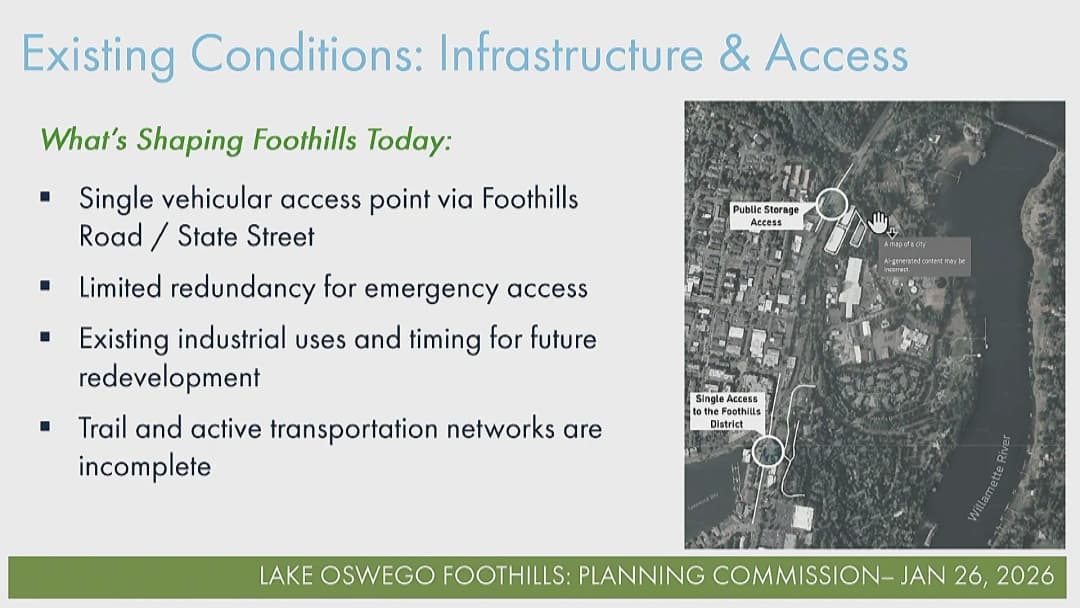
The Lake Oswego Planning Commission met on January 26, 2026, at 8:00 AM. The meeting included a city council update from Councillor Verdick, unanimous approval of the January 12, 2026 minutes, and a detailed work session on the Foothills District Plan Update led by Planning Manager Eric Olsen. No public comments were received. The commission discussed opportunities and constraints for the district, received direction from city council, and addressed next steps for visioning and alternatives. Consent Calendar - Minutes Approval (January 12, 2026): Motion by Commissioner Moreno, seconded by Commissioner Mitchell, approved unanimously as written. Public Comments & Testimony - None. Discussion Items - City Council Update (Councillor Verdick): Councillor Verdick reported on recent council study sessions, including the need for a new library. She noted the existing library (built in the 1980s at approximately 28,000 square feet) was already 25% under the recommended size of 37,000 square feet at the time. While an ideal 70,000 square foot library is unaffordable, a new site is needed because the current building is deteriorating and cannot be expanded. Discussions with the school district about the Lake Grove Elementary site are ongoing. Councillor Verdick also mentioned updates on pedestrian improvement projects (Lakeview Boulevard, Meadowlark Lane, Treetop Lane), the stormwater manual, an economic development strategy update, and continued discussion on home occupancy. The library will host a makerspace event on March 14, 2026. - Foothills District Plan Update Work Session: Eric Olsen presented the opportunities and constraints analysis, informed by technical studies, community advisory committee (CAC) input, developer interviews, and a January 6, 2026 council study session. Key constraints include steep topography, floodplain (1996 flood inundation area), sensitive lands along Tryon Creek, a single vehicular access point, and the rail corridor. Opportunities include the proposed relocation of the Tryon Creek Wastewater Treatment Plant (opening redevelopment land), potential second access from the north (e.g., via Public Storage site or Terwilliger Boulevard), district-wide cut-and-fill balancing for flood resilience, and enhancing trail connections to downtown and Tryon Creek State Park. The frog ferry concept was also discussed as a potential long-term water access. Council direction emphasized prioritizing a second vehicular access point, balancing cut and fill at a district scale, protecting watershed and riparian habitat, introducing mixed-use redevelopment (including housing and ground-floor commercial), maintaining parks as central to the area’s identity, and focusing on catalytic initial projects. Affordable housing is obligated through the city’s Housing Production Strategy and will be integrated into the urban renewal plan. Commissioner Moranio stressed the importance of pedestrian connectivity from downtown to Foothills. Commissioner Guinea highlighted the timing opportunity of the expiring East End Redevelopment Area (late 2027/early 2028) aligning with the new urban renewal area for Foothills. - Other Business: Introduction of new contracting attorney Sivani Miller (Miller Nash) who will support the commission. Key Outcomes - Minutes Approved: Unanimously approved as written. - Foothills Plan Direction: The commission will continue to develop a vision statement and guiding principles, informed by council direction and community input. Next steps include an open house on February 26, 2026, a planning commission work session on March 9, 2026 (to refine vision), and a council presentation on March 3, 2026. The February 9, 2026 planning commission meeting is canceled due to council goal setting; the work plan meeting for the commission is tentatively moved to March 23, 2026. - New Legal Counsel: Sivani Miller introduced as contracting attorney for the planning department for the next year.

URBAN PLANNING 50% · LIBRARY MANAGEMENT 8% · PROCEDURAL 8% · ENVIRONMENTAL PROTECTION 6%
36
JAN 20, 2026 · LAKE OSWEGO, OREGON · CITY COUNCIL
Lake Oswego City Council Meeting – January 20, 2026: Metro Update, Home Occupation Code, Library Needs

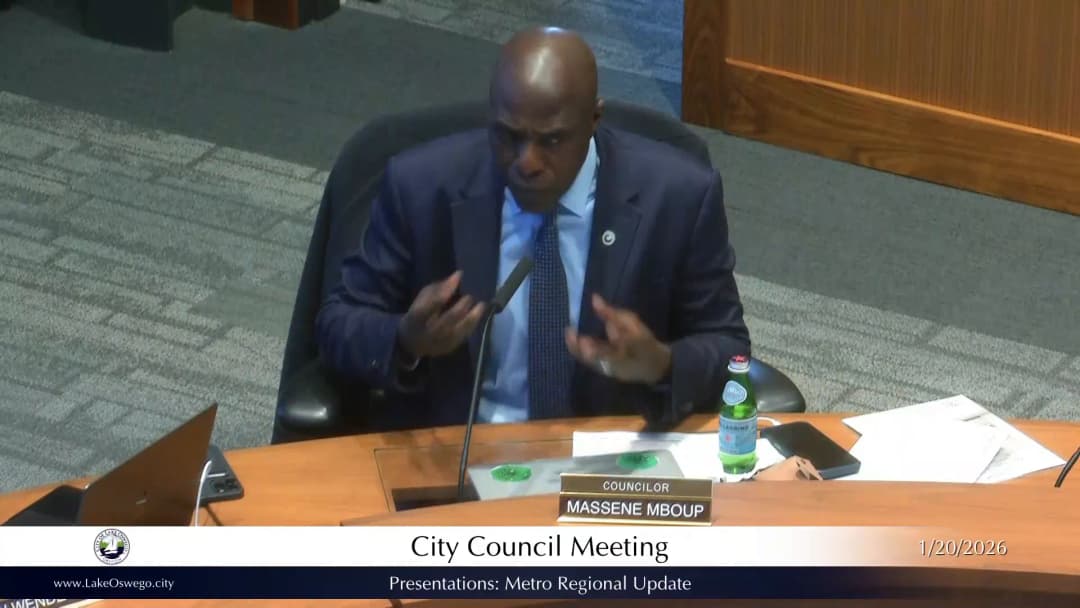
The Lake Oswego City Council met on Tuesday, January 20, 2026, at 8:00 AM. The meeting included a Metro regional update from Metro Councilor Christine Lewis, public comment, approval of a consent agenda, a public hearing on code amendments for home occupations and urban agriculture (continued to February 3, 2026), and a study session on community needs for a new library. Councilor Raf was excused. The meeting then moved into executive session for labor negotiations and exempt information. Consent Calendar - Resolution 26-02: Intergovernmental agreement with Clackamas County and a public improvement contract for the Carmen Drive Sidewalk Project. Adopted unanimously (6-0). The project received 15 bids, with costs lower than estimated. Public Comments & Testimony - Matt Johnson (Bryant neighborhood resident): Spoke in support of the Lake Oswego Swim Club’s use of the Lorac facility, requesting rule adjustments to allow more swim meets and training sessions. Cited a backlog of 60 children awaiting membership due to current constraints. Also urged increased traffic enforcement on Rosewood and other streets, citing safety concerns from speeding vehicles. Discussion Items Metro Regional Update (Councilor Christine Lewis) - Presented Metro’s 2026 priorities: housing, economic development, and parks/nature. Updated on the 2018 affordable housing bond: region on track to deliver 5,381 affordable homes (exceeding original goal of 3,000), with Clackamas County expected to deliver 1,185 units (exceeding its 800-unit target). Lake Oswego has two examples: Mercy (completed) and El Nito (underway). - Reviewed supportive housing services (SHS) reform: a single oversight body with city representation will be established in April 2026, with KPIs to measure program effectiveness. Clackamas County has already begun tapering voucher issuance in anticipation of potential wind-down. - Economic development: Metro is developing a site-selector readiness initiative to attract industrial investment. - Transportation: Expressed concern over TriMet’s proposed service cuts, noting six lines in her district are first to be cut. Urged cities to submit public comments. Highlighted the need for community-level shuttle service in Clackamas County and broader transit funding reform at the state level. - Councilors raised concerns about TriMet’s financial viability, lack of adaptation to changing commute patterns, and the mismatch between payroll taxes paid by Lake Oswego residents and services received. Councilor Wendlin emphasized that TriMet must adapt or face a “death spiral.” Public Hearing: Ordinance 2964 – Home Occupation Code Amendments & Urban Agriculture Regulations - Associate Planner Michael McNemy presented the proposed code changes: replacing a vague “residential character” standard with objective criteria, creating a three-tier classification for home occupations (Type A: no clients onsite; Type B: clients allowed with outdoor activity limits; Type C: short-term rentals), and establishing urban agriculture as a conditional use in R-10 and R-15 zones (minimum 1 acre, max 20,000 sq ft or 35% of lot). - The Planning Commission recommended removing three proposed restrictions: limits on hazardous substances, commercial vehicle parking off-site, and an indoor client cap of eight. Staff also recommended excluding from urban agriculture any use qualifying as a home occupation. - Council discussion centered on outdoor activity limits, parking, noise enforcement, and the balance between supporting home businesses and preserving residential character. Councilors Corrigan and Wendlin expressed preference for no outdoor client activity. The public hearing was continued to February 3, 2026, to allow further deliberation. Study Session: Community Needs for the Library - Director Melissa Kelly and Library Advisory Board Chair Patrick Walsh presented findings from the 2025 community survey (2,790 responses) and a teen survey (355 respondents). Key community priorities: multi-purpose rooms (79%), children’s play areas (79%), small group rooms (72%), makerspace (70%), teen spaces, auditorium, and outdoor space. - Highlighted critical facility deficiencies: seismic issues, water intrusion, failing systems, accessibility barriers, and undersized space (27,000 sq ft vs. voter-approved 35,000 sq ft). Multiple studies since 1988 have recommended larger facilities (most recently 77,000 sq ft in 2024). The current site lacks room for expansion. - Council consensus strongly supported a new library but stressed fiscal realism. Councilors noted that renovating the existing building is not cost-effective and that a single library is the only viable option. Challenges include community nostalgia, concerns about site location, and funding. Councilor Corrigan pointed to the Lake Grove Urban Renewal Area as a potential funding source. The Library Advisory Board will continue developing a communications plan and community engagement strategy, with targeted focus groups planned for summer 2026. Key Outcomes - Consent agenda (Resolution 26-02) adopted 6-0. - Public hearing on Ordinance 2964 continued to the February 3, 2026, council meeting. - No formal action taken on the library study session; council directed staff and the Library Advisory Board to refine the communications plan and engage the community on site, scope, and funding options.

LIBRARY MANAGEMENT 32% · URBAN PLANNING 19% · AFFORDABLE HOUSING 9% · COMMUNITY ENGAGEMENT 8%
37
JAN 6, 2026 · LAKE OSWEGO, OREGON · CITY COUNCIL
Lake Oswego City Council Meeting Summary - January 6, 2026

The Lake Oswego City Council met on January 6, 2026, at 8:00 AM UTC (actual meeting start time was in the evening local time). The agenda included public comments, updates on pedestrian improvement projects, the Foothills District vision, an economic development strategy, and a stormwater management manual update. The council voted unanimously to approve revisions to the stormwater manual and discussed forming a subcommittee to advance economic development priorities. Public Comments & Testimony - Wheelchair user (speaker not named) described dangerous crossing at the Williamette Shore trolley tracks, requiring complex maneuvers that take 15-30 seconds, leaving them in a hazardous position. They also noted the crossing is dangerous for visually impaired individuals due to missing tactile pavers, and requested installation of the three missing pavers. - Matt Johnson (Lake Oswego Swim Club) reported that the club has 255 swimmers, 92% of whom live in Lake Oswego. He stated that the move from Lake Oswego High School pool to LORAC has resulted in lack of lane availability, forcing most squads to practice at Lewis & Clark College, which will be closed in April and May. He argued that LORAC's lap lanes are underutilized and that concentrated use by the swim club would optimize pool usage. He also emphasized swimming as a public safety issue, noting it is the leading cause of accidental death for children ages 1-4 and second for ages 4-14. - Deborah Davis urged the council to craft and sign a letter strongly renouncing the federal government's violation of international rule of law, citing the recent invasion of a sovereign country and the five-year anniversary of the January 6 attack. She called for the letter to be published in local newspapers. - Jeff Goodman (Oswego Heritage Council) invited the council and public to a grand reopening of the exhibit hall on Friday, January 16 at 7:00 PM, following a bequest-funded infrastructure upgrade. - Tom Kurtz (Lake Oswego Water Polo, LOPO) stated the program has 160 kids, the vast majority being Lake Oswego residents. He highlighted limited pool time at LORAC, forcing teams to travel to distant outdoor pools (e.g., Elks Lodge in Milwaukee) in winter. Proposed solutions: extending pool hours to 9:30 PM, reworking the contract with the district to allow shared use of the competition pool during high school, and designating lap swim in blocks. - Corinne Beaumont (LOPO administrator) echoed Kurtz's concerns, noting that LOPO is an inclusive program that does not cut players. She stressed the need for deep water for water polo training and reiterated the three proposed solutions: extended hours, shared competition pool, and block scheduling for lap swim. - Dorothy Atwood (Lake Oswego Sustainability Network, LOSN) expressed support for the Foothills district redevelopment. She requested the council evaluate a clean energy district, leverage the wastewater treatment plant for district heating and water reuse, include electric vehicle infrastructure, and ensure pedestrian/bike-friendly pathways with diverse high-density housing including middle-income and affordable options. Discussion Items Pedestrian Improvement Projects Update - Assistant City Engineer Mort Anisharani and Senior Associate Engineer Heka Shipton presented an update on three recently completed sidewalk projects: Lakeview Boulevard, Treetop, and Meadowlark. Since 2022, the city has designed and constructed over two miles of sidewalk in six neighborhoods, focusing on safe routes to school. - Lakeview Boulevard: Full scope included 0.5 miles of new concrete sidewalk, nearly one mile of reconstructed roadway, new stormwater pipe and treatment system. Total construction cost was $4.8 million. The project addressed frequent flooding and included a raised mid-block crossing near Lake Grove Swim Park. Challenges included rock excavation and coordination with residents. - Treetop and Meadowlark: Treetop sidewalk length was 1,400 feet; Meadowlark and Overlook combined was 900 feet. The projects required flexible construction to accommodate resident access (e.g., electric vehicles, Airbnb). The team added a 200-foot connection along Overlook Drive to close a gap. - Upcoming projects: Carmen Drive, Pilkington Road, and McEwen Road near River Grove Elementary. Carmen Drive construction is expected to start in spring 2026 with completion by August; McEwen Road sidewalk construction anticipated summer 2026. - Council members praised the engineering team's communication and quality of work, noting no complaints received. Foothills District Vision and Goals - Long-range planning staff and consultants from First Forty Feet presented an overview of the inventory and analysis phase, including existing conditions, opportunities, and constraints. Key themes from community engagement: improving access and connectivity, desire for mixed-use development, fear of losing public access to the waterfront, and the need for a connection to downtown. - Access: The project team emphasized that secondary vehicular access is critical for safety and redevelopment. Two potential north access points were discussed: through the public storage site (2012 plan) or connecting to Terwilliger Boulevard, which would create a four-way intersection but require a costly bridge over Tryon Creek. The culvert project at Tryon Creek, previously led by the Bureau of Environmental Services, is in limbo; the city may need to step in to maintain progress on fish habitat. - Floodplain and Cut/Fill: The project team recommended a district-wide balance of cut and fill to avoid building in the floodplain. The old wastewater treatment plant site could provide fill for development areas, while lower areas could be used for park expansion or parking. Environmental protections, especially for Tryon Creek and salmon habitat, were deemed important. - Land Use and Intensity: Council members expressed support for a mix of housing (including market-rate options for downsizing seniors) and commercial ground floors, but cautioned that financial feasibility must be assessed early. The formation of an urban renewal area and sequencing of public investments (e.g., secondary access) were highlighted as key to catalyzing private development. - Councilor Afkin suggested considering a tram or gondola to connect downtown to Foothills, similar to Oregon City. The team will return in March 2026 with vision and guiding principles. Economic Development Strategy Update - Consultant Mary Bosch presented a summary of the retail and office analysis and proposed a strategic framework based on business retention, diversification, customer attraction, and expanding employment lands. - Key strengths: Lake Oswego is the second largest office market outside of downtown Portland, with premier location and quality suburban office settings. Major employers like Biotronic Microsystems (550 employees, $40 million payroll) are committed but need active engagement. The city's industrial space is fully occupied. - Challenges: Land constraints, need for clearer economic development leadership, and lack of a formal business retention program. Bosch recommended starting with low-cost, relationship-building activities: showing up for major employers, clarifying the city's role versus the Chamber of Commerce, and creating a marketing message. She also suggested a subcommittee to prioritize actions. - Council members agreed to form a subcommittee to work with the incoming economic development manager to prioritize goals and define partnerships. Stormwater Management Manual Update - City staff presented proposed revisions to the stormwater manual, the first major update since 2016. Changes include reorganization for easier use, updated precipitation depths based on the last 30 years of local data (reflecting more intense storms), relaxed flow requirements with technical analysis of downstream impacts, and added source controls for water quality. - The revisions apply primarily to larger projects (10,000 sq ft or more), which represent about 10% of annual projects. The updates aim to reduce localized flooding and improve water quality in Lake Oswego and streams. - The council moved to authorize the city manager to approve the recommended revisions as allowed by LOC35-25-11. The motion passed unanimously (7-0). Key Outcomes - Stormwater Management Manual: Council voted 7-0 to authorize the city manager to approve the recommended revisions. Implementation will be communicated via email, newsletter, and staff training. - Economic Development Strategy: Council agreed to form a subcommittee of three members to work with the incoming economic development manager and prioritize actions from the strategy, including clarifying roles with the Chamber of Commerce and establishing a business retention program. - Foothills District: The project team will return to council in March 2026 with vision and guiding principles, informed by community input and council's direction on access, floodplain management, and land use mix. The council emphasized the need for early financial feasibility analysis. - Pedestrian Improvements: The council expressed strong support for the completed projects and the upcoming 2026 sidewalk construction. The engineering department will continue to prioritize projects based on the city's capital improvement plan and safe routes to school.

URBAN PLANNING 21% · ECONOMIC DEVELOPMENT 16% · ENGINEERING AND INFRASTRUCTURE 15% · WATER AND WASTEWATER MANAGEMENT 12%
38
DEC 16, 2025 · LAKE OSWEGO, OREGON · CITY COUNCIL
Lake Oswego City Council Meeting – December 16, 2025: Wastewater IGA, Fire Station Study, and Public Comments

The Lake Oswego City Council met on Tuesday, December 16, 2025, at 8:00 AM UTC (afternoon local time) to consider a consent agenda, a public hearing on fee revisions, an intergovernmental agreement with Portland for wastewater treatment, and a study session on the South Shore Fire Station project. The meeting also included public comments on several topics and council member reports. Consent Calendar - Approval of Minutes: The council unanimously (6‑0) approved the meeting minutes from October 21, 2025, and November 4, 2025. Public Comments & Testimony - Sean Christensen and Michael Harrison (Portland Festival Symphony): Encouraged the city to use a large concert performance shell stored by the city, proposed a piano donation for council meetings, and expressed support for continued partnership. They noted that the symphony’s founder, Laosh Ballot, is aging and has a sense of urgency about his legacy. - Chris Turkey (Lake Oswego Fire Station Rebuild PAC): Provided an update on the citizen‑led campaign to fund the South Shore Fire Station. The PAC was certified Dec. 5, 2025, has 25 members, $650 on hand, and pledges for $3,000. They plan a website launch in January, 10 speaking engagements, and goal of 10 arguments in favor in the voter guide. They will seek council endorsements. - Jeff Goodman and Travis Duncan (Mary’s Woods): Introduced Travis Duncan as the new CEO. Duncan pledged to increase Mary’s Woods’ engagement with the broader Lake Oswego community, noting it is the 24th largest standalone senior living community in the U.S. and the second largest employer in the city. Councilor Bennett thanked them for past partnership on vaccination clinics and the bookmobile. - Jeff Weens: Urged the council to ban gas‑powered landscaping equipment, arguing it would force city employees, school districts, and large landscaping companies to switch to electric, improving public health. He cited growing adoption of battery equipment in Portland. - Diane Cassidy: Commented on zoning at Kruse Way Plaza, alleging that owners are intentionally vacating suites to justify a zone change to residential R0. She expressed concern that the city is not adhering to the comprehensive plan and that rising water/sewer fees hurt fixed‑income residents (31% of Lake Oswego is over 60, with 5% of those over 65 living in poverty). She also testified during the public hearing on fees, urging the council to consider affordability. Discussion Items - Resolution 25‑10 – Revising Fees and Charges (Public Hearing): Finance Director Sean Cross presented the updated master fees schedule, unchanged from the Nov. 18 study session. After public testimony, the council adopted the resolution 6‑0. Councilor Winland suggested exploring options in spring to reduce pressure on the street fund without decreasing resources. - Resolution 25‑49 – Intergovernmental Agreement with Portland for Wastewater Treatment: Director Stefan Brottis explained the 2025 IGA, which replaces the 1984 IGA and governs cost‑sharing for design, construction, operation, and maintenance of a new wastewater treatment plant. Key points: cost shares based on flow (Lake Oswego 70%, Portland 30%), a de minimis floor, and biosolids trucking to Columbia Boulevard. The city will lead the project. Council approved the resolution 6‑0. Councilor Afkin asked for a follow‑up memo on capacity comparisons and demolition/remediation costs. Councilor Winland inquired about bond flexibility if project costs come in under the authorized amount. - Study Session – South Shore Fire Station Project Cost Range: Assistant Fire Chief Chris Artman, architect Michael Scott, owner’s rep David Lynz, and contractor Spencer Bradley presented the conceptual design and cost estimate of $21.2 million (hard costs $13.2M, soft costs, contingencies, escalation). The site has bedrock, retaining walls, and a 20‑foot grade change. The total bond cost would be $21.2M, equating to $114 per year for a $600,000 assessed‑value home (60‑66% voter support per polling). The team identified three cost‑saving options: removing the community room (save $960,000), reducing bunkrooms from 8 to 6 (save $175,000), or reducing apparatus bays from 4 to 3 (save $500,000). Staff recommended removing the community room, as it was not a high priority in polling. Councilor Corrigan noted that community rooms can create extra work for firefighters. Councilor Maboup questioned the need for four bays, but the chief justified it for future reserve apparatus and maintaining ISO rating. Councilor Afkin asked about alternative building designs (e.g., Butler buildings) and the 6% escalation rate. The council directed staff to remove the community room, retain four bays, keep eight bunkrooms, and proceed with final conceptual design and bond cost for the January 20, 2026 meeting. The temporary station cost of $430,000 was praised. The team will return with polling results on Feb. 3 and a final decision on Feb. 17. Key Outcomes - Consent Agenda: Approved 6‑0. - Resolution 25‑10: Adopted 6‑0, effective Jan. 1, 2026. - Resolution 25‑49: Adopted 6‑0, authorizing the IGA with Portland for wastewater treatment. - South Shore Fire Station: Council directed staff to remove the community room, retain four apparatus bays and eight bunkrooms, and continue to final design. The temporary station will be purchased and installed. Next milestones: Jan. 20 – final conceptual design and bond cost; Feb. 3 – updated polling results; Feb. 17 – decision on whether to refer the bond to voters. - Council Reports: Councilor Corrigan updated on the Arts Council’s “Respond to Racism” project (kicking off in January). Councilor Winland reported on the Chamber holiday event and the Youth Leadership Council’s AI project. Councilor Bennett noted the new bookmobile arrival and library advisory board goals. Mayor Buck provided updates on the Foothills Task Force, TriMet service reductions, and Metro’s supportive housing services governance reform. He also expressed gratitude to departing City Attorney Ellen Osnak for her service.

ENGINEERING AND INFRASTRUCTURE 27% · WATER AND WASTEWATER MANAGEMENT 19% · PUBLIC ENGAGEMENT 11% · PROCEDURAL 9%
39
DEC 8, 2025 · LAKE OSWEGO, OREGON · PLANNING COMMISSION
Lake Oswego Planning Commission Meeting – December 8, 2025

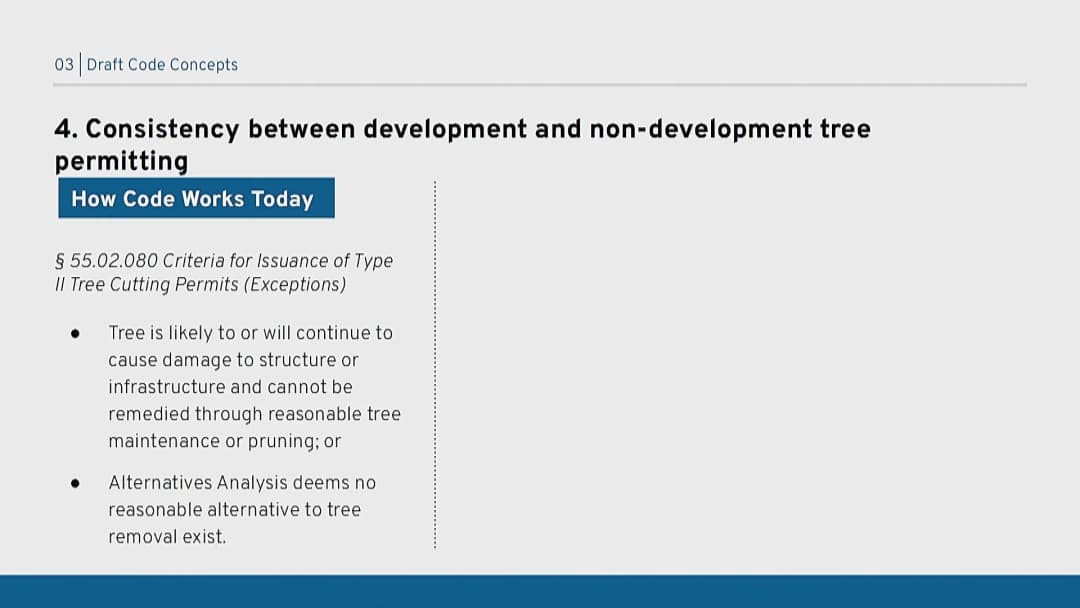
The Lake Oswego Planning Commission met on December 8, 2025, at 6:00 PM (local time) to consider routine approvals, a continued rezoning hearing, and a work session on tree regulation amendments. The meeting included approval of previous minutes, unanimous endorsement of a rezoning recommendation, and extensive discussion of four code concepts aimed at updating the city’s tree code. Consent Calendar - Approval of Minutes (October 27, 2025): The commission unanimously approved the minutes from the October 27, 2025, meeting as written. (Motion by Commissioner Mitchell, seconded; all in favor, no opposition.) Public Comments & Testimony - No public comments were offered for items not on the agenda. The public hearing portion for the 4000 Cruiseway Place rezoning (LU 25‑0029) was closed at the previous meeting; no new testimony was taken. Discussion Items 1. Findings for Home Occupation Standards (LU 25‑0002) - Staff presented draft findings, conclusions, and order for the previously approved home occupation code amendments. The commission voted to approve the draft findings as written. Vote: 6–1 (Commissioner Mitchell voted no; all others voted yes). The findings will be forwarded to the City Council for final adoption. 2. Continued Hearing – 4000 Cruiseway Place Rezoning (LU 25‑0029) - Staff Recap: Senior Planner Ellen Davis summarized the application to change the comprehensive plan designation from OCR3 to OCR0 and the zoning from OC to R0 for three parcels. The proposal does not include specific development. Staff found the rezoning compatible with surrounding uses, aligned with the Waluga Neighborhood Plan, adequate public facilities and traffic capacity, and feasible tree preservation. The proposal also supports the city’s housing production strategy. - Commission Deliberation: Commissioners acknowledged community opposition but noted their role as a quasi‑judicial body is to evaluate whether the applicant met the criteria. All agreed the criteria were satisfied. Chair Mitchell moved to approve the staff recommendation and adopt findings; the motion was seconded and passed unanimously. This is a preliminary decision; final adoption will occur after written findings are prepared. 3. Work Session – Tree Regulation Amendments (PP24‑0006) - Consultant Sarah Goldstein (Cascadio Partners) and arborists Christine Johnson and Morgan Holin presented four code concepts to address state clear‑and‑objective standards, tree preservation incentives, appeals process, and consistency between development/non‑development permits. The tree task force and city council had provided prior feedback. - Concept 1: Clear and Objective Standards for Residential Development – Three parts: (a) two options for retention (percentage of total trees or total DBH), (b) exemptions for small lots (≤5,000 sq. ft.), (c) bonus credits for native trees. Commissioners supported the direction, noting potential to incentivize middle housing. They requested data on how percentages would affect different lot sizes. - Concept 2: Incentives for Tree Preservation – Options include exemption from public notice/appeals, small dimensional adjustments, and stormwater credits for developers who retain ≥50% of trees. Commissioners favored stormwater credits and exemption from public notice, but expressed caution about dimensional adjustments. They also suggested a higher retention threshold (e.g., 70%) for the exemption. - Concept 3: Appeals Process – Proposed reducing notice period from three to two weeks, using a hearings officer instead of the Development Review Commission (DRC), and eliminating further appeal to city council. Commissioners supported the streamlined approach, noting only 1 of 15 appeals in five years was overturned. They confirmed that decisions could still be challenged in circuit court. - Concept 4: Moderate Risk Tree Removal – A new exemption allowing removal of moderate‑risk trees (classified by a certified arborist) when no alternatives exist or there is a history of similar tree failure. Commissioners endorsed the concept while emphasizing the need for education and monitoring. They agreed with the city council’s preference for a two‑track system (clear‑and‑objective for housing, discretionary for non‑development). - Next Steps: Staff will incorporate commission feedback, refine percentages and case studies, and present draft code amendments to the planning commission in May 2026. Other Business - Election of Chair and Vice Chair: The commission will elect a new chair and vice chair at the next meeting (January 12, 2026). Term is one year. - Holiday Reception: Inquired about the mayor’s holiday reception; staff will follow up. - Schedule Review: Next meeting January 12, 2026 (work session on Foothills Plan update and adoption of findings for 4000 Cruiseway Place). The Boards and Commissions Summit is scheduled for January 15, 2026. Key Outcomes - Approved: Minutes of October 27, 2025 (unanimous). - Approved: Draft findings for home occupation standards (LU 25‑0002) – 6‑1. - Approved (Preliminary): Recommendation to approve the 4000 Cruiseway Place rezoning (LU 25‑0029) – unanimous; final findings to be adopted later. - No votes taken on tree code concepts; feedback will inform draft code amendments. - Next Steps: Tree code draft to return in May 2026; chair/vice chair election at January 12 meeting.

URBAN PLANNING 42% · URBAN FOREST MANAGEMENT 26% · PROCEDURAL 12% · HOUSING AND DEVELOPMENT 12%
40
DEC 2, 2025 · LAKE OSWEGO, OREGON · CITY COUNCIL
Lake Oswego City Council Meeting - December 2, 2025

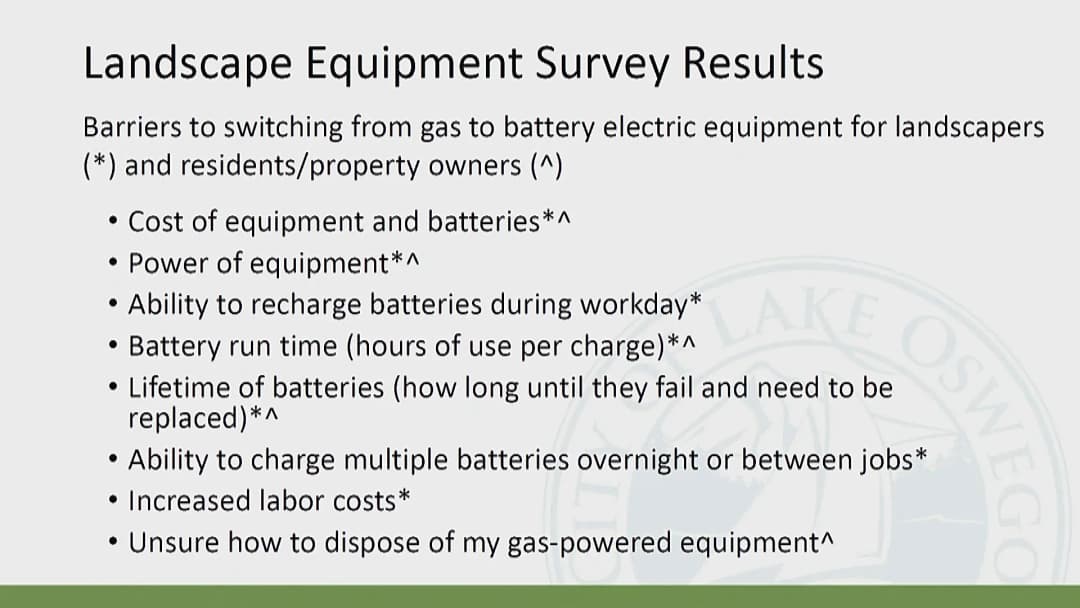
The Lake Oswego City Council met on Tuesday, December 2, 2025, at City Hall. The meeting included public comments, consent agenda, a chamber of commerce annual report, community survey results, DEI programming update, and a study session on gas-powered landscaping equipment. Key decisions included adopting the consent agenda and setting direction for future policy work. Consent Calendar - Approved the meeting minutes from October 7, 2025, with a 7-0 vote. Public Comments & Testimony - Mr. Blow (age 94, Lake Oswego resident) proposed placing a piano in City Hall for pre-meeting music and suggested expanding summer concerts to West Lake Park to serve the growing population. He expressed support for community cooperation and youth engagement. - Mark Pullman (retired nurse practitioner, board member of SAB and LOSN) thanked the council for the grant to transition from gas-powered landscape equipment and urged the council to move quickly in the next 14 months, citing health risks (cancer, cardiovascular disease, hearing loss) from gas-powered equipment. - Betsy Wasco (Old Town Neighborhood Association secretary, LOSN volunteer) supported the phase-out of gas-powered landscaping equipment, arguing that the upfront costs for electric equipment are offset by health and environmental benefits within 10.5 months. She urged comprehensive action. - Jeff Wiens (Lake Oswego resident, retired firefighter) advocated for banning gas-powered leaf blowers, comparing noise to an iceberg tip and toxic emissions to the underwater mass. He referenced the council's previous decision on pickleball noise as a precedent for doing the right thing. Discussion Items - Chamber of Commerce Annual Report (Matt Evans, Chamber of Commerce): Reported that 270 new businesses registered in the first 10 months of 2025, 73% have fewer than 5 employees, and office vacancy rates are low (downtown 4.3%). Recommendations included a robust shop-local marketing effort, digital outreach, and a full-page ad in the Travel Oregon Guide (cost $8,500 after subsidy, plus design). Council members expressed support for increased marketing and economic development, noting alignment with council goals. - Community Survey Results (Jason Morado, ETC Institute; Madison Thiesing, Deputy City Manager): Presented results from a statistically valid survey of 400 residents (margin of error ±4.9%). Key findings: 95% rate Lake Oswego as an excellent/good place to live or raise children; satisfaction with city services increased in 56 of 95 areas since 2023; top priorities for the next two years include economic development, public safety, development services, sustainability, equity, neighborhood street maintenance, housing planning, and bicycle/pedestrian travel. Council discussed the need to focus on the 3% dissatisfied and explore the "development services" category further. - Diversity, Equity, and Inclusion (DEI) Programming Update (Gillian Del Rio, Equity Program Manager; Perrin Tiemann, DEI Advisory Board Co-Chair; Vedant Ramakrishnan, Youth Board Member): Presented six focus areas for forward-looking recommendations: building a representative community, diverse workforce, youth engagement, DEI data and accountability, institutional capacity and policy alignment, and equitable resources and infrastructure. Recommendations include establishing baseline demographic data, launching a leadership academy, piloting student shadow days, and engaging an external consultant to develop a comprehensive equity plan. Council expressed support and noted the need to communicate DEI work effectively. - Gas-Powered Landscaping Equipment Study Session (Amanda Watson, Sustainability Program Manager; Jeff Monroe, Interim Parks Director): Provided an update on the two-year council goal to phase out gas-powered equipment. Reported on health and environmental impacts, comparison of electric vs. gas equipment, and stakeholder outreach (397 resident surveys, 23 landscaper surveys, focus groups). Key findings: 55% of residents support regulations to phase out gas equipment; 62% support educational efforts; 56% support financial incentives for small businesses. The presentation highlighted challenges for commercial landscapers (cost, battery life, charging infrastructure). Council discussed equity concerns, enforcement, and the need to monitor Portland's ordinance before proceeding. Councilmember Raf expressed opposition, while others favored continuing education and incentives. Council agreed to stay the course with next steps including continued outreach, education, and leading by example in city operations. Key Outcomes - Consent agenda adopted (7-0). - Chamber of Commerce report: Council expressed support for the recommendations, particularly the marketing proposals, and directed the city manager to explore funding for the Travel Oregon ad. - Community Survey: Council requested a deeper dive into the "development services" priority and agreed to share the report with boards and commissions. - DEI Recommendations: Council acknowledged the recommendations and will incorporate them into 2026 goal setting. - Gas-Powered Landscaping Equipment: Council agreed to continue the current approach: more outreach, education, monitoring Portland's implementation, and phasing out city-owned gas equipment. No formal vote was taken; direction was given to staff.

ENVIRONMENTAL PROTECTION 29% · PUBLIC ENGAGEMENT 22% · ECONOMIC DEVELOPMENT 13% · COMMUNITY ENGAGEMENT 12%
OPENPUBLICA · PUBLIC MEETING INDEXUPDATED DAILY · openpublica.com