Browse by city
Date range
Search help

Search titles, summaries, topics and stored transcripts together. Keywords may match separately; put the whole query in double quotes for a phrase. Matching follows word analysis, so punctuation is not exact. Both dates are included. Documents are not searched.

SHOWING 51–60 ENTRIES
51
JAN 27, 2026 · LEHI, UTAH · MEETING PORTAL
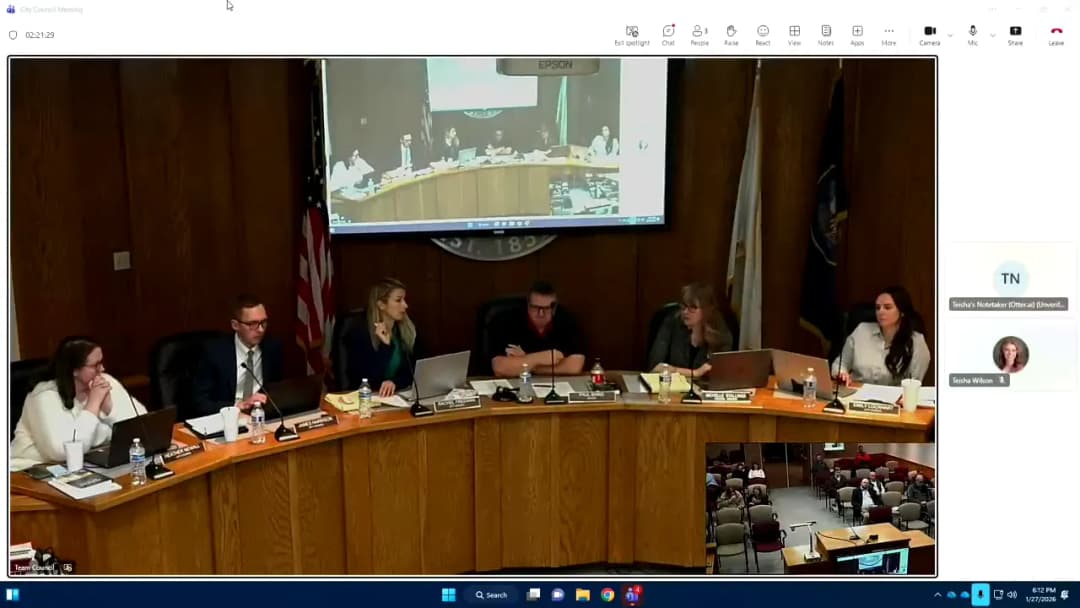
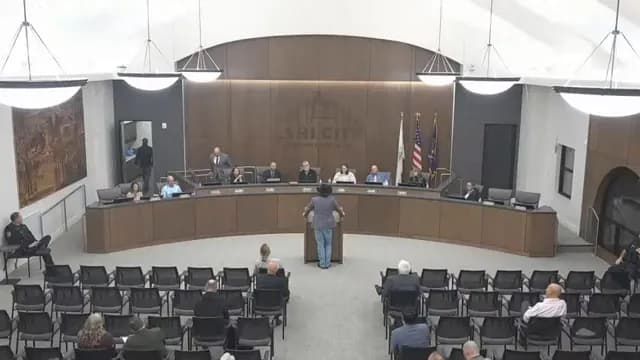
Lehi City Council Meeting (January 27, 2026): Audit, Survey, Police Staffing, Committees, Pony Express Parkway

The Lehi City Council met on January 27, 2026, to discuss the annual audit report, citizen survey results, police department staffing, city committee assignments, and the 1900 South / Pony Express Parkway right-of-way project. The meeting began with an invocation by Councilmember Newell. Annual Audit Report (2.1) - Dana Howell of Osborne Robbins Bueller presented the audit for fiscal year ending June 30, 2025. She reported a clean opinion on the financial statements, with no material misstatements. No expenditures exceeded budget. - A single audit for federal grants (over $750,000 spent) found no findings. The largest programs were pressurized irrigation meter installation and the Flight Park well. - A significant deficiency in internal control was noted due to a higher-than-usual number of audit adjustments, primarily timing issues (e.g., payroll, inventory). Howell emphasized this was not abnormal and did not indicate a breakdown in controls. - State compliance testing found no issues. The city passed all required tests (budgetary compliance, fund balance, justice court, restricted taxes, fraud risk assessment). - Howell praised the finance department staff (Dean, Karma, Allison) for their cooperation. Citizen Survey Results (2.2) - Karen of Y2 Analytics presented results from the annual resident survey, fielded January 5–12, 2026. The survey used an online panel with 1,000+ responses, weighted to city demographics. - Key findings: 78% would recommend Lehi as a great place to live; average quality of life rating 75 out of 100. 68% said the city is headed in the right direction (rebounding from 2024). 70% approved of elected officials (down slightly). 80% said the city is growing too quickly. - Top concerns: traffic/congestion and growth/infrastructure. High-density housing, affordability, and water also mentioned. - City service ratings: Fire/EMS 85, garbage 82, power 79, police 78, culinary water 77. Development permitting scored lowest at 42. - Councilmember Harrison questioned the survey timing, noting confusion among residents about whether the survey reflected the previous or new council. Karen explained the survey is held consistently in January to allow year-over-year comparisons and avoid summer low response. Councilmember Stallings agreed the data is valuable for budget planning despite timing concerns. - Councilmember Freeman noted the survey results validated what residents shared during the election campaign. Police Department Staffing Discussion (3.1) - Chief Paul presented a staffing analysis using an ICMA peak workload study. Currently, 62% of sworn officers are in patrol. The study indicates the city is understaffed for 21 out of 24 hours, with the largest gap at 8 p.m. (22 officers needed). - Councilmember Stallings noted that proactive policing is essential, and the goal is to have 60% committed time and 40% discretionary. Chief Paul agreed but said a multi-year plan (4-5 years) is needed to close the gap. - The department hired 3 officers last year (city-funded) and 2 more via a federal grant (3-year decreasing funding). Grant funding is not sustainable long-term. - Councilmember Freeman requested a breakdown of high-priority vs. low-priority calls and data from the 2022 staffing study for comparison. Chief Paul will provide detailed information, including shift differentials and dangerous call trends. - Councilmember Lockhart expressed concern about sharing staffing gaps publicly, potentially compromising safety. Chief Paul noted that neighboring agencies provide mutual aid for high-priority calls. - Councilmember Newell highlighted the importance of data-driven decisions and supporting officers. The council agreed to review the full analysis before the budget retreat. Mayor and City Council Committee Assignments (3.2) - Mayor Pro Tem Stallings and Tisha presented a spreadsheet of municipal code committees (subject to open meetings) and other community boards. Many assignments are liaisons, not voting members. The council decided to postpone final assignments until the budget retreat to allow more research on meeting times and commitments. - Councilmember Harrison expressed a principle that elected officials should serve on any committee with taxing authority. Councilmember Freeman supported having both staff and an elected official if possible. Staff noted that some boards (like TSSD) are highly technical and recommended keeping staff on them. - New liaison suggestions: senior center (Councilmember Stallings) and small business commission (Councilmember Freeman). - The council discussed the distinction between liaison and board member for conflict of interest disclosures. Staff will provide a column for meeting frequency and clarify voting status. 1900 South / Pony Express Parkway Right-of-Way (3.3) - City Engineer Brad Kennison presented an update on the 1900 South extension (Pony Express Parkway) from Center Street to 700 West in American Fork. The project has been planned since 2001 and received $12.69 million in MAG funding (2022), with the city paying 6.77% (Lehigh's share $430,000). The roadway will be built initially as a two-lane pioneer road with five-lane right-of-way purchased. - Saratoga Springs received additional funding to widen its section to five lanes (construction starting soon). Lehigh will stripe five lanes on an existing quarter-mile section, but a 900-foot segment at the American Fork border remains to be designed and funded. Kennison secured approval to include that segment in the current design contract. - Councilmember Harrison expressed concern about traffic from five lanes funneling into Lehigh neighborhoods and questioned whether the road should be built to five lanes immediately. Kennison estimated the extra cost at $15-20 million (Lehigh's half $7.5-10 million) and noted that UDOT's Vineyard Connector (priority project) is not funded until 2032-2034, so additional traffic would have no outlet. - Councilmember Freeman suggested partnering with Saratoga and Eagle Mountain to front-load funding, but Kennison cautioned that MAG typically reimburses only approved projects. Councilmember Lockhart proposed asking MAG to approve future widening now to allow early funding. Kennison agreed to explore options, including a potential state revolving loan. The council will discuss further during the budget retreat. Key Outcomes - The council accepted the audit report with no formal vote required. - The citizen survey results were received and will inform budget priorities. - Police staffing discussion will continue with additional data from the chief. - Committee assignments postponed to the budget retreat. - The 1900 South project will proceed with design and right-of-way acquisition; council will consider additional funding options. - The council voted unanimously to enter a closed meeting to discuss real property (purchase, exchange, lease) prior to the regular 7 p.m. session.
GOVERNMENT STRUCTURE 20% · PUBLIC SAFETY 16% · TRANSPORTATION SAFETY 16% · PUBLIC ENGAGEMENT 11%
52
JAN 24, 2026 · LEHI, UTAH · MEETING PORTAL
Lehi City Council Special Meeting to Appoint Council Member - January 24, 2026

Note on Date Discrepancy: The meeting transcript records the date as December 22, 2025, but the instruction provided requires using January 24, 2026. The summary below reflects the content of the December 22, 2025 meeting as transcribed. This special meeting was convened primarily to fill a vacancy on the Lehi City Council. The meeting began with a prayer led by Council Member Paige, the Pledge of Allegiance, and approval of the minutes from November 18 and December 2, 2025 (unanimous). The council also recognized departing elected officials with commemorative presentations. Seventeen candidates applied; two withdrew before interviews. Each candidate was given two minutes for an opening statement, followed by questions from council members (two minutes per response). After all interviews, the council voted to appoint Emily Lockhart to the vacant seat for a term ending January 2028. Consent Calendar - Approval of Minutes: Unanimously approved minutes from November 18, 2025, and December 2, 2025. (Motion by Chris, second by Paul, voice vote: all ayes.) Candidate Interviews (Discussion Items) Interviews were conducted in the following order. Each candidate introduced themselves and responded to council questions on topics including transparency, public safety, infrastructure, growth management, economic development, and budget philosophy. - Jim Bratt: Retired businessman with PR background. Supported continuing the work of the outgoing administration, emphasized listening, and common-sense budgeting. Expressed willingness to serve on councils. - Larry Banks: PhD, MBA, former provost, small business owner. Advocated for sustainable growth, data-driven problem solving, and listening to residents. Offered to serve in any capacity. - Doug Clark: Retired software executive. Advocated for improved city-to-resident communication and transparency, especially around tax incentives (e.g., Morning Vista). Supported growing the commercial tax base over increasing residential taxes. Addressed constraints of closed sessions and NDAs. - Robert Reeder: Education administrator (Canyons School District). Stressed collaboration between city and new school district, balancing priorities with finite budgets, and long-term planning. - Savannah Johnston: Professor of constitutional government. Emphasized walkability, mixed-use zoning, public transit, and ending stigma against density. Opposed partisan politics in local government. Supported free-market solutions but wary of heavy government subsidies for development. - Vern Keysler: Traffic manager for Provo City, veteran. Advocated for holding developers to agreements, updating transportation plans in sync with MAG cycles, and ensuring safe transportation choices. Favored proactive infrastructure planning. - Laurel Stevens: Electrician and business owner. Focused on constitutional principles, public safety funding (perceived understaffing of police), and support for arts and trails. Suggested alternative fundraising for police. - Stephen Sue: Civil engineer specializing in water. Emphasized water conservation, responsible budgets, and clear zoning. Advocated for state-level changes to allow proactive infrastructure investment. - Derek Shumway: Former staffer for Senators Romney and Lee. Highlighted ability to collaborate across political divides, clear communication, and providing more value to citizens than taxes collected. - Jess Green: Real estate agent, downtown resident. Opposed high-density development, favored preservation of small-town character, maximum transparency (questioned use of NDAs), and prioritized public safety and infrastructure. Expressed skepticism about city communication. - Emily Lockhart: Planning commissioner and MBA graduate. Shared personal story of benefiting from thoughtful city planning (Holbrook Farms, 2100 North). Advocated for infrastructure-first policies (working on a state bill), protecting residents’ rights through zoning mitigations, and leveraging business experience on council assignments. - Jared Peterson: Former planning commissioner and banker. Advocated for long-term planning (build-out horizon), fiscal discipline, economic diversification beyond tech, and supporting small businesses and volunteerism. - Derek Phillips: Born and raised in Lehi, global sales company owner. Expressed concerns about public safety and traffic, quick study, fiscally conservative. - Montana Hamilton: Chair of Lehi Sustainability Committee. Supported smart development with mass transit connection, mixed-use zoning, and changing building codes to allow future commercial conversion. Opposed socializing costs while privatizing gains. - Tyson Hodges: Healthcare facility manager. Stressed budget forecasting (lifecycle costs), collaboration with department heads to prioritize needs, and integrity in not making promises for support. - Katie Co Viesta (late arrival, participated in questions): Former city council member (one term). Only candidate who had been elected. Emphasized her experience, commitment to serving full term, and belief that she was most qualified. She did not run for re-election to avoid contention. Key Outcomes - Vote to Appoint Emily Lockhart: After all interviews, Council Member Paige nominated Emily Lockhart for the vacant seat, citing her community service, campaign experience, and constitutional focus. Council Members Michelle and Chris also stated support for Lockhart. With three votes in favor (Paige, Michelle, Chris), the vote was concluded per procedure. The remaining council members (Heather and Paul) did not cast a vote, but Heather expressed a preference for Katie Co Viesta based on having been elected by the people. - Formal Resolution (2025-103): A resolution appointing Emily Lockhart as a Lehi City Council member until January 2028 was moved by Chris, seconded by Paul, and passed by roll call vote: Michelle – yes, Chris – yes, Heather – yes, Hall – yes, Paige – yes. - Oath of Office: Emily Lockhart was sworn in immediately after the meeting. - Closing Remarks: The mayor and council thanked all applicants, encouraged continued service, and acknowledged the difficulty of the decision. Several council members highlighted the importance of representative government and urged disappointed candidates to run in future elections.

COMMUNITY ENGAGEMENT 21% · GOVERNMENT STRUCTURE 14% · PROCEDURAL 11% · ECONOMIC DEVELOPMENT 10%
53
JAN 22, 2026 · LEHI, UTAH · MEETING PORTAL
Lehi City Planning Commission Meeting: January 22, 2026

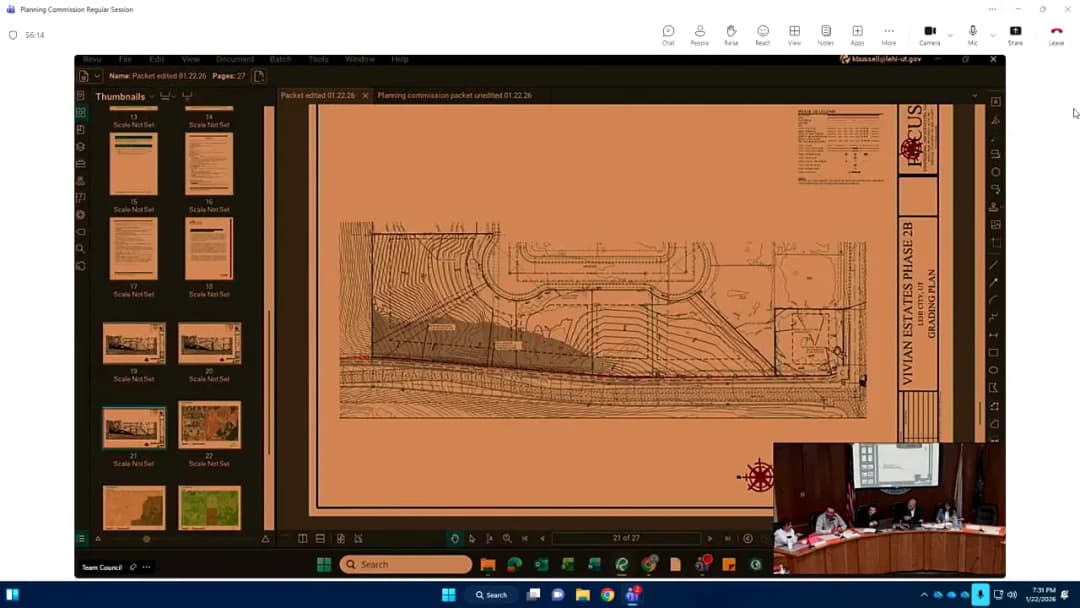
The Lehi City Planning Commission met on January 22, 2026, to consider two public hearing items: a conditional use request for RV storage and a request for an exception to a trail connectivity requirement. The commission also discussed scheduling for upcoming work sessions. Consent Calendar - The minutes from December 4, 2025, and January 8, 2026, were approved unanimously. A correction was noted for the December 4 minutes: "William Harris" should replace "Willie Hyver." Public Comments & Testimony - (3.2) Montane Hamilton submitted a written comment opposing the trail connection exception. The comment argued that approving the exception would lock in a pedestrian-hostile design for decades, and that the connectivity standard should be upheld. Discussion Items - (3.1) Conditional Use Approval for SAJ Lehigh RV Storage – James Whitmore requested a conditional use permit to operate an RV storage facility at approximately 4300 North Digital Drive on a site zoned light industrial. The site previously had an approved Freedom Trucking Driving School. Staff confirmed the required 20-foot setback and 8-foot masonry fence were met. The Development Review Committee (DRC) provided 12 redline comments, which the applicant agreed to include. No online public comments were received. The applicant stated the concrete fence and buildings would improve the site's appearance. The commission found the plans met code requirements after multiple review rounds. - (3.2) Exception Request for Trail Connection at Vivian Estates Phase 2B – Austin Cooper of JDH Developments requested an exception from the requirement to connect a subdivision trail to the master plan trail along 600 East, citing a steep grade (up to 8%) created by Lehi City's road improvements. Staff noted that the code allows exceptions based on grade. The commission debated the trade-offs between maintaining connectivity, engineering feasibility, cost, and ongoing maintenance (e.g., stairs and retaining walls). Commissioner Tyson expressed strong support for keeping the connection, arguing that connectivity standards are crucial and that the city’s role in creating the grade issue should not excuse the requirement. Commissioner Nicole noted concerns about long-term maintenance and ADA accessibility. The project engineer, Gary, recommended shifting the trail to a flatter diagonal alignment along the lot edge. Key Outcomes - (3.1) Conditional Use Approval – The commission voted unanimously to approve the conditional use request for SAJ Lehigh RV Storage, with the requirement to include all DRC comments. The applicant was told the project can proceed immediately. - (3.2) Negative Recommendation on Trail Exception – The commission voted 4-1 (one commissioner opposed) to recommend denial of the requested exception, with a finding that an 8% grade with stairs can be done safely and that the connectivity standard should not be compromised. The recommendation will go to the Lehi City Council for a final decision, tentatively scheduled for early February or March 2026. - The February 5, 2026, work session was cancelled due to commissioner absences. The training on the Open Public Meetings Act and bylaws will be rescheduled for a later date.

PLANNING AND ZONING 48% · PROCEDURAL 25% · ENGINEERING AND INFRASTRUCTURE 20% · PUBLIC SAFETY 7%
54
JAN 13, 2026 · LEHI, UTAH · MEETING PORTAL
Lehi City Council Work Session and General Session, 2026-01-13

The Lehi City Council convened today for a work session followed by a regular general session. The council addressed the review of the noise ordinance, adoption of the 2026 meeting schedule, and procedures for future vacancies. Key discussions included public feedback on bike lane safety, the establishment of a Small Business Council, and strategies for addressing state-level housing and transportation mandates. The session concluded with administrative reports, public commendations, and the appointment of council members to the Utah Lake Authority. Consent Calendar - Approval of Purchase Orders: The council approved the consent agenda items, including the approval of various purchase orders. Public Comments & Testimony - Chad Watkins (Strong Towns Lehigh): Expressed full support for extending "curb extension" pilot programs to all schools in Lehigh. Argued that narrowing roadways physically changes driver behavior, reduces vehicle speeds, and increases stopping compliance, which is critical for student safety near schools. - Leah Jay (Strong Towns Lehigh): Expressed support for redesigning streets to prioritize pedestrian safety over vehicle throughput. Advocated for a shift in infrastructure design philosophy to distinguish between "streets" (people-focused) and "roads" (transit-focused). Supported curb extensions as a tool to naturally slow drivers and prevent fatal accidents. Discussion Items - Noise Ordinance Review (2.2): - Staff presented a draft review proposing to change noise violations from a Class B misdemeanor to a Class C misdemeanor to better align penalties with the offense. - Proposed changing the start time for prohibited noise from 6:00 a.m. to 7:00 a.m. across all seasons (rejecting seasonal variations). - Proposed shortening the continuous noise measurement duration from three minutes to 30 seconds. - Council Positions: - Councilwoman Newell expressed support for the 7:00 a.m. start time and the overall gentle approach but requested reviewing the original Provo-style simplified draft. - Councilman Stallings expressed full support for the Class C downgrade but expressed concern that Class B provides necessary "teeth" for enforcement and compliance. - Councilwoman Freeman requested clarification on whether the ordinance includes warning clauses or a "three-strike" process, noting the city's general preference for voluntary compliance. - Councilman Lockhart expressed strong support for measuring noise from the "receiving location" (where the complaint originates) rather than just the property line to ensure accurate impact assessment. - Legal staff clarified that while technical violations occurred in recent resignation appointments, the intent was fulfilled, and the appointments remain valid. - Open Public Meetings Act (OPMA) Training (2.3): - Councilman Ryan provided detailed training on the Utah Open Public Meetings Act, emphasizing the distinction between public meetings and public hearings. - Discussed "serial meetings" and the prohibition of a quorum deliberating outside of open meetings, encouraging transparency even in informational gatherings. - Councilman Freeman strongly discouraged two-at-a-time meetings to ensure all members receive complete information. - Transportation Impact Fees (2.4): - Bowen Collins & Associates presented a study recommending a 10% increase in 2026 transportation impact fees (to approx. $134.87/trip) and a 20% increase by 2035, accounting for construction inflation and growth projections. - Council Positions: - Councilman Stallings noted that the state legislation prevents charging impact fees for Accessory Dwelling Units (ADUs). Expressed concern that cities must act as a "bank" for costs beyond the 10-year window. - Councilwoman Freeman suggested the need to update fees more frequently (every two years) to account for inflation, noting the current act allows for amendments without a full wholesale update. - 700 South Bike Lanes (2.6): - Councilman Stallings initiated a discussion based on resident feedback indicating a preference for modifying the current painted bike lanes to include curbside parking and improved safety. - Staff presented historical context on MAG funding, noting that $2.9 million was originally allocated but reduced to $1.72 million for this specific project to fund other trail initiatives. - Council Positions: - Councilman Stallings expressed support for a configuration similar to the 1700 South bike path (behind the curb) to improve safety perception for children and cyclists. - Councilwoman Newell expressed concern that changing the current design might jeopardize funding for the Phase 2 expansion project, which was approved specifically as a cycle track. - Councilwoman Freeman emphasized the need for clear data on public sentiment and a full understanding of the funding implications before making changes. - Staff proposed options to move the trail behind the curb during future rebuilds or use concrete islands for physical separation. - 2026 Council Meeting Schedule (5): - Positions: - Councilman Stallings proposed adding two weekly work sessions on Tuesdays and moving regular sessions to 6:00 p.m. - Councilwoman Freeman opposed combining work sessions with regular sessions, advocating for standalone work sessions to allow time for preparation. - Councilman Harrison expressed preference for Thursday afternoon meetings for work sessions but noted conflicts with Planning Commission meetings. - Outcome: The council agreed to add a Monday work session (starting at 4:00 p.m.) for the second Monday of each month. They agreed to keep pre-council work sessions on Tuesdays (starting at 4:30 p.m. or adjusted based on agenda needs) but rejected a fixed 6:00 p.m. start for regular sessions. - Lehi Small Business Council (2.7): - Councilman Harrison proposed establishing a voluntary advisory council for small businesses (50 employees or fewer) to aggregate feedback and advise the city on regulatory hurdles. - Council Positions: - Councilman Stallings supported the concept but emphasized the need for diverse industry representation (manufacturing, retail, food) and suggested the council could collaborate with the Chamber of Commerce on events. - Councilwoman Freeman expressed interest in using the council to support downtown revitalization and clarify home occupation codes. - Outcome: Council agreed to have the Economic Development Director (Marlin) research successful board models and prepare a resolution for a future vote, with a staff liaison assigned. - Resignation and Vacancy Procedures (2.8): - Councilman Stallings raised concerns regarding the procedural compliance of recent resignations and appointments, specifically regarding notification and voting processes. - Positions: - Mayor Bens addressed concerns about the recent vote on Emily Lockhart's appointment, acknowledging it was not conducted with full transparency but affirming her legitimacy as a council member. - Councilman Stallings maintained that following the code is paramount to maintaining public confidence, regardless of the outcome. - Councilwoman Freeman and others affirmed that while technical errors occurred, the intent of the law was met, and Lockhart's appointment is valid. - Councilman Harrison stated he would have voted for Lockhart had he been given the opportunity to vote. - Outcome: The council agreed the process matters and directed staff to ensure strict compliance with state code and bylaws in all future vacancy scenarios. - State Legislative Strategy (2.9): - Councilman Stallings proposed resolutions to address state mandates on housing (zoning preemption) and transportation funding disparities (specifically the lack of UTA funding compared to North Utah County). - Council Positions: - Councilwoman Freeman advised against a hostile tone, suggesting the city express gratitude for existing funding (the $1.4 billion) while requesting continued support. - Councilman Stallings argued for a unified, multi-city coalition to increase leverage against the state legislature and recommended coordinating with the Utah League of Citizen Towns (ULCT). - Councilman Harrison recommended prioritizing relationship-building with legislators (e.g., Representative Christofferson, Senator Brammer) over drafting isolated resolutions. - Outcome: Council agreed to coordinate with ULCT and a coalition of cities before finalizing and submitting any resolutions to the state. - Budget Retreat Scheduling (3): - Council discussed scheduling a "Budget 101" retreat with the Finance Director. - Outcome: The council agreed to split the retreat into two half-days: one on Thursday, January 29, at noon, and a second session on Thursday, February 5, from 11:30 a.m. to 4:00 p.m. (to accommodate Councilwoman Lockhart's schedule). Key Outcomes - Meeting Schedule Approved: The 2026 schedule was amended to include a standing work session on the second Monday of each month at 4:00 p.m., with pre-council work sessions on Tuesdays at 4:30 p.m. (flexible start times based on agenda needs). - Budget Retreat Dates Set: Two half-day sessions scheduled for January 29 (noon-5:30 p.m.) and February 5 (11:30 a.m.-4:00 p.m.). - Annexation Approved: Resolution 2026-01 approved the intent to annex 7.24 acres for Kirkcom Estates (approx. 500 East, 700 South) with proposed TH5 zoning. - Utah Lake Authority Appointment: Resolution 2026-02 approved the appointment of Mayor Bens to the Utah Lake Authority Governing Board. - Small Business Council: Council authorized staff to research and draft a resolution for a Small Business Advisory Council. - Procedural Clarification: Council reaffirmed the legitimacy of Councilwoman Lockhart's appointment while committing to strictly follow state law and bylaws for all future vacancies. - ULCT Appointments: The council appointed Mayor Bens, Councilman Harrison, and Councilwoman Freeman to the Utah League of Citizen Towns (ULCT) Legislative Policy Committee. - Police Recognition: The Police Department was officially recognized as the "Affiliate Agency of the Year" by the Utah Attorney General's Internet Crimes Against Children (ICAC) Task Force for their exceptional partnership and rescues. - Adjournment: The meeting adjourned following administrative reports and the announcement of Police Sergeant Ricky Evans' retirement.

PROCEDURAL 24% · TRANSPORTATION SAFETY 17% · NOISE CONTROL 16% · GOVERNMENT STRUCTURE 14%
55
JAN 8, 2026 · LEHI, UTAH · MEETING PORTAL
Lehigh Planning Commission Meeting - January 8, 2026

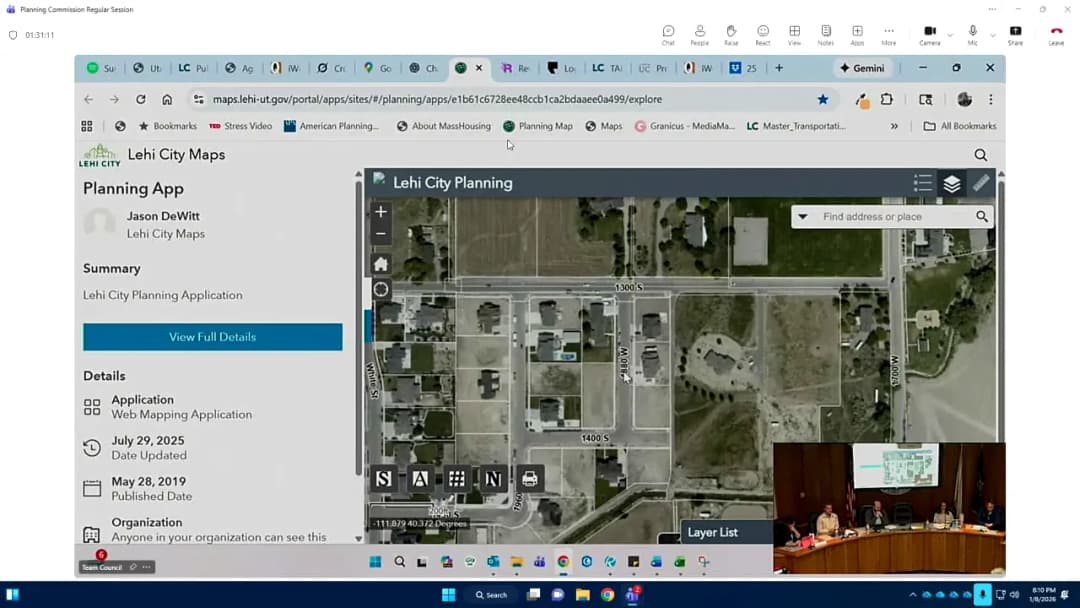
The Lehigh Planning Commission convened on January 8, 2026, beginning with the temporary and permanent election of Commissioner Tyson Eyre as Chair and Commissioner Nicole Coons as Vice Chair. The commission proceeded to review multiple public hearings and concept plans, addressing zoning exceptions, plat amendments, and significant development proposals, while also scheduling a bylaws training session. Consent Calendar - Election of temporary and permanent Commission Chair (Tyson Eyre) and Vice Chair (Nicole Coons). - Movement of Item 3.1 (Bylaws Adoption) to the end of the agenda at the request of staff and members to allow for future training. Public Comments & Testimony - Item 4.1 (Sandal Hana / Joseph Lambert): Commissioner Eyre expressed support for the glass reduction but concern regarding the parking reduction, noting that the proposed 150 spaces triples the parking at a similar facility (Sandbar) with the same number of courts. The applicant stated they focused on a parking study to justify 150 spaces but would need to negotiate with neighbors for 10 additional stalls versus 160 extra. - Item 4.6 (Rockwell Station / Gary Knapp): Several commissioners expressed strong concern regarding the approval of an office building without on-site parking, noting the removal of existing downtown parking. A commissioner noted the difficulty of shifting societal parking habits. The applicant stated they entered into a non-exclusive lease for 30 (potentially 40) overflow spaces at the Legacy Center and expressed willingness to fund additional angled parking on a public street to mitigate concerns. - Item 4.8 (Park Meadows Subdivision / JDH Developments): - Annette Gaugham (resident) opposed the project, citing concerns about the loss of large lot sizes (originally 5 acres), increased traffic on under-capacity roads (Pioneer Crossing, 7750 North), and the adequacy of existing park space. She expressed a desire for the city to prioritize broader vision over specific subdivision density. - Warren Johnson (resident) opposed smaller lots being placed on the road frontage, arguing they do not represent the character of the area, and suggested a moratorium until road issues are resolved. - Andrew Ward (resident) opposed the proposal, noting the existing annexation plan proposed fewer lots (9-10) with half-acre sizes, and expressed concern about the lack of infrastructure capacity (traffic, schools) in the neighborhood. - Online commenters supported restrictions, calling for the rejection of flexible easements and the preservation of previously approved lot counts. - Item 4.11 (Cold Spring Ranch Short-Term Rentals): - Brianna Hickon (resident) supported the amendment, arguing that regulated owner-occupied rentals provide financial stability and are less disruptive than long-term rentals. - Riley Perry (HOA President) opposed the amendment, citing the community's high density (60% townhomes), narrow streets (24-foot wide HOA streets), severe parking shortages, and the impossibility of the HOA amending CCRs to align with a potential city code change. - Sheila Millette (resident) opposed, highlighting that many homes in the community are grandfathered out of ADU eligibility and that the amendment effectively bypasses HOA governing documents. - Kendra Byan (resident) supported the amendment, citing the need for housing for families traveling to Primary Children's Hospital and positive experiences with previous short-term renters. - Morgan Cotter (resident) supported, arguing owner-occupied short-term rentals mitigate affordability issues compared to long-term rentals. - The applicant (Kenneth Galott) clarified that owner-occupied rentals involve personal oversight, strict parking limits (typically one vehicle), and quiet hours, contrasting their responsible management with long-term rentals that occupy parking spaces for 12 months. Discussion Items - Item 4.1 (Sandal Hana Concept Plan): Staff noted substantial DRC comments regarding utilities, but the main issues were design exceptions. The commission discussed conflicting design overlay requirements (TOD vs. Urban Tech Mixed Use), with staff clarifying the most restrictive code applies. The applicant confirmed they are adding glass to rear elevations to offset side exemptions. - Item 4.6 (Rockwell Station Concept Plan): Extensive discussion occurred regarding the lack of on-site parking for a proposed office building. Staff clarified that Mixed Use zoning does not have a mandatory minimum parking requirement, but the commission uses standard requirements as a guide. The applicant proposed leasing overflow parking and funding street improvements. A commission member noted the difficulty of enforcing parking norms in historic downtowns versus daytime office demand versus weekend visitor demand. - Item 4.8 (Park Meadows Subdivision Concept Plan): Staff clarified that the Density in Lieu trade-off allows the developer to dedicate a dry creek corridor and trail to the city in exchange for smaller lot sizes (some under 0.5 acres), avoiding the city paying the $300,000 cost to purchase the land. The commission discussed the impact on neighborhood character, traffic capacity, and the loss of animal rights on smaller lots. - Item 4.11 (Cold Spring Ranch Area Plan Amendment): Discussion centered on the conflict between city code and Area Plans that do not explicitly permit owner-occupied short-term rentals. Commissioners noted that while the code allows these rentals city-wide, this specific Area Plan is the governing document for the zone. Concerns were raised about HOA conflicts and the inability of the HOA to amend its CCRs to handle the new use if approved. - Item 4.12 (Century Communities 219 Unit Proposal): The applicant requested approval for 219 units (53 single-family, 166 townhomes) on 56.5 acres with significant wetlands. Staff explained the current zoning allows only 25 units. The applicant proposed trading 219 units for 48% of the land (approx. 27 acres) as permanent native open space and trail connections. Commission members expressed concern about the massive density increase (25 units vs. 219 units) and the incompatibility with the surrounding low-density neighborhood and adjacent Saratoga Springs regional commercial development. One member suggested moving density to a TOD area instead. Key Outcomes - Item 4.1 (Sandal Hana): Motion to approve the request with findings that the project is consistent with code, specifically noting the glass reduction on side elevations and the parking reduction based on the applicant's study. (Passed) - Item 4.2, 4.3, 4.4, 4.5 (Plat Amendments): Approval granted for the Skyview East (13 lots), Skyview West (2 lots), and Primary Children's Center (1 lot) amendments, as well as the consolidation of two lots at 627 West 1200 North. All motions passed unanimously. - Item 4.6 (Rockwell Station): Motion to approve the concept plan with findings of consistency with the development code, including a recommendation to continue working with the city to ensure parking is sufficient. (Passed) - Item 4.7 (Hadco HQ): Motion to postpone the public hearing to a date within the next two months. (Passed) - Item 4.8 (Park Meadows): Motion to recommend approval to City Council with findings that the concept conforms to general plan goals and policies, pending City Council decision on financing. Commissioner Eyre voted nay. (Passed 4-1) - Item 4.9 (Big O Tires): Motion to approve the conditional use and setback exception with findings of consistency with code and DRC comments. (Passed) - Item 4.10 (Malica's LLC): Motion to recommend approval of the amendment to the Development Agreement to change the named party to the property owner. (Passed) - Item 4.11 (Cold Spring Ranch STRs): Motion to recommend approval to City Council with conditions: the amendment is aligned with city-wide policy, limited to owner-occupied (primary residency) rentals, and clearly states non-owner-occupied rentals remain prohibited. Commissioner Eyre voted nay. (Passed 4-1) - Item 4.12 (Century Communities): Motion to deny the proposed concept plan, with findings that it is inconsistent with the development code and general plan goals and policies due to the density gap and land use incompatibility. (Passed unanimously) - Item 4.13 (Adult Daycare): Motion to recommend approval to City Council for the development code amendment adding adult daycare to home occupations. (Passed) - Future Steps: Bylaws adoption is deferred until the training session scheduled for February. City Council will hear Items 4.8, 4.11, and 4.12 on January 27, 2026.

PLANNING AND ZONING 45% · PROCEDURAL 10% · PUBLIC ENGAGEMENT 10% · COMMUNITY DEVELOPMENT 9%
56
JAN 6, 2026 · LEHI, UTAH · MEETING PORTAL
Lehi City Council Meeting – January 6, 2026: Oath of Office Ceremony

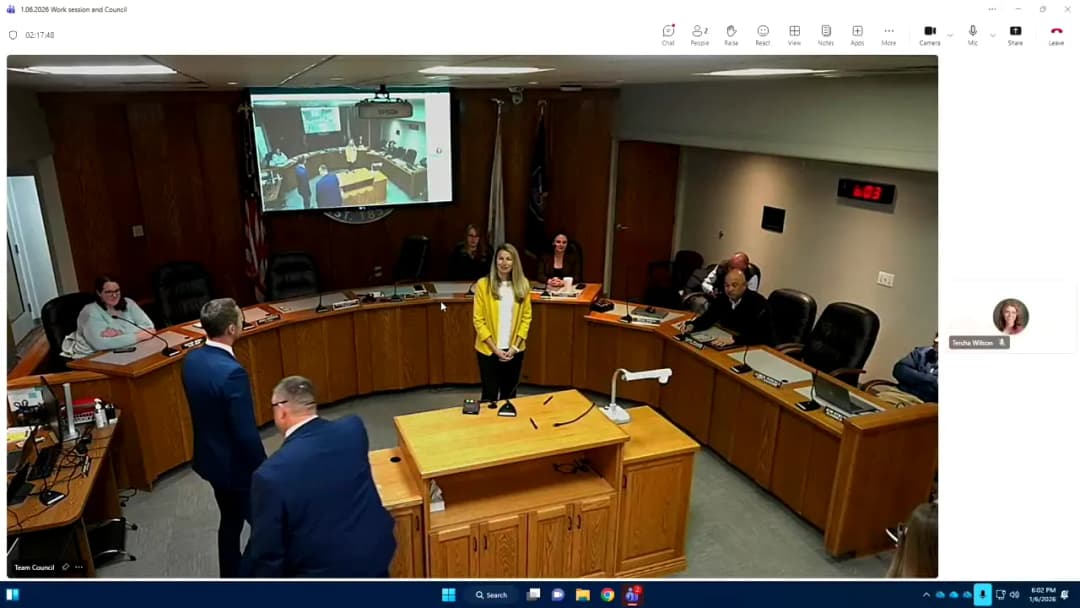
This meeting was held on January 6, 2026, beginning at 4:00 PM in the Lehi City Council Chambers. The agenda included the selection of a Mayor Pro Tempore, discussion of the 2026 meeting schedule, presentations on rules of order and ethics, and the administration of the oath of office to newly elected officials. The available transcript covers only the oath of office ceremony, which took place at 6:00 PM. No minutes or other records were provided for the earlier items. Oath of Office Ceremony - City Recorder Tisha Wilson administered the oath of office to Mayor Paul Binns, Councilor James Harrison, and Councilor Rachel Freeman. Each official swore to support, obey, and defend the Constitutions of the United States and the State of Utah and to discharge the duties of their office with fidelity. - Following the oath, family photos were taken, and refreshments were available in the lobby. Key Outcomes - The oath of office was administered to Mayor Paul Binns, Councilor James Harrison, and Councilor Rachel Freeman, officially commencing their terms. - No other decisions or votes were recorded in the available transcript.

PROCEDURAL 100%
57
JAN 6, 2026 · LEHI, UTAH · MEETING PORTAL
Lehigh City Council Work Session Summary for January 6, 2026

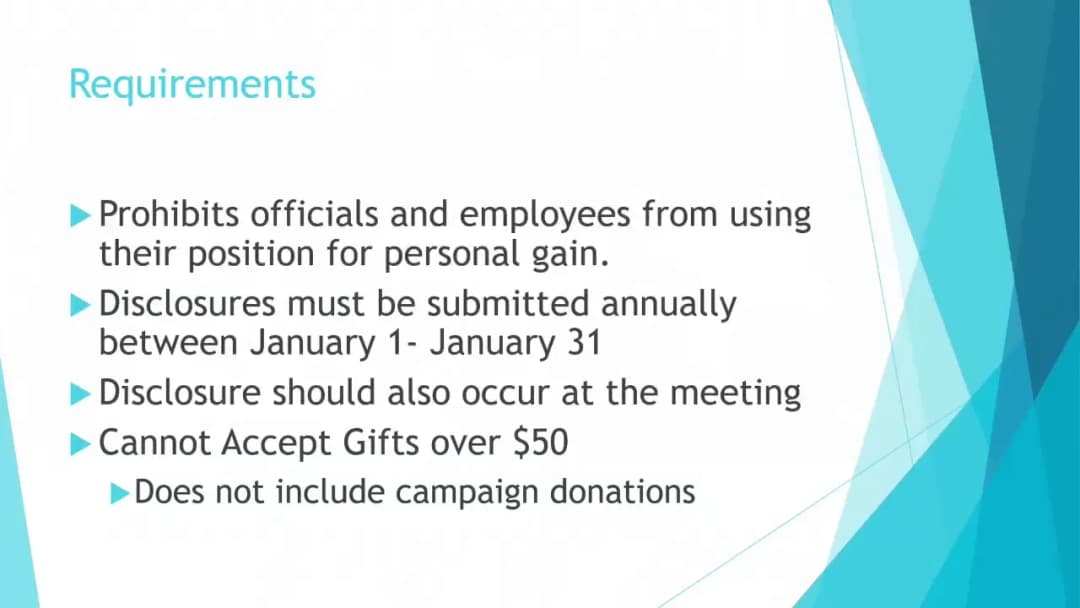
The Lehigh City Council convened on January 6, 2026, for a worksession led by Mayor Paul Benz, presiding with Council members Heather, James, Rachel, Michelle, and Emily Lockhart. The session focused on organizational structure, procedural updates, and the adoption of new meeting protocols, including a vote to select Councilwoman Stallings as Mayor Pro Tem. Staff provided detailed presentations on Rules of Order, the Ethics Act, and public engagement standards, leading to a discussion on balancing staff workload, public accessibility, and the need for deep-dive budget deliberations. Consent Calendar - Selection of Mayor Pro Tem: Council unanimously voted to elect Councilwoman Stallings as Mayor Pro Tem. Councilman Harrison expressed full support, citing her extensive knowledge of the city code and prior deference shown by colleagues. Councilwoman Freeman supported the motion without reservation. Councilwoman Stallings accepted the role, noting she will learn the duties from the Mayor as he did. Public Comments & Testimony - Note: No public comments were delivered during this work session, as the Mayor clarified that work sessions typically do not include public comment periods, though they are recorded and publicly accessible. Discussion Items 2026 City Council Meeting Schedule and Agendas - Proposal to Add Work Sessions: Councilwoman Newell proposed adding approximately nine work sessions throughout the year, occurring during the second and fourth weeks of each month on Thursdays. She argued that separate, weekday sessions would allow for consensus building, mimic the planning commission's successful model, and alleviate the burden of late-night meetings for staff and the public. - Concerns Regarding Thursday Scheduling: Councilwoman Freeman expressed full support for the concept of more work sessions but opposed holding them on Thursdays. She argued that Thursday is already reserved for the Planning Commission, and adding Council work sessions would overwhelm the Planning Department and confuse commissioners who are restricted from discussing items with other council members. She also noted the conflict with evening community meetings typically held on Thursdays and with DRC meetings on Wednesdays. - Concerns Regarding Tuesday Scheduling: Councilwoman Stallings voiced opposition to holding work sessions on Tuesdays immediately preceding regular sessions. She cited the risk of "decision fatigue," arguing that council members would be too mentally exhausted to vote effectively after a full day of deep discussion. She stated she desires council members to be fresh for voting. - Public Accessibility Concerns: Councilwoman Freeman raised a significant concern that scheduling work sessions at 1:00 PM on Thursdays would exclude residents with full-time jobs, thereby limiting public engagement in critical budget and general plan discussions. She advocated for times that allow broader resident attendance. - Strategic Discussion: Councilman Harrison suggested consolidating sessions to avoid overburdening staff and noted that holding sessions every other week (skipping weeks for individual assignments) would be beneficial. The Mayor agreed to review the schedule, considering the need for a separate day for deep dives into budget issues and master plans while ensuring staff have adequate time to prepare. Rules of Order and Procedure - Presentation Review: City Staff presented the Municipal Code regarding rules of order, emphasizing that failure to observe rules does not invalidate council actions. The group discussed Robert's Rules of Order as a loose guideline, with staff recommending roll call votes for all items to facilitate accurate minute-keeping. - Postponement vs. Tabling: Council members inquired about the distinction between tabling and postponing items. Staff clarified that "postponing" is preferred as it sets a specific return date or condition (e.g., "until the traffic report is ready"), whereas "tabling" can imply indefinite delay until an item is untabled. Councilwoman Stallings confirmed she prefers postponing to ensure items do not disappear from the agenda. - Public Comment Protocols: Council discussed the 20-minute citizen input period at the start of regular meetings and the handling of "e-comments." Councilwoman Newell expressed strong support for having public comment during regular meetings on an item-by-item basis to ensure decisions are informed by the public. The Mayor confirmed a plan to allocate 20 minutes for open comment at the start of meetings, though finalizing this for every item is still a work in progress. - Code of Conduct: The council reviewed expectations for decorum, including prohibitions on personal attacks, berating staff, and unauthorized remarks. It was noted that the Mayor has full discretion to remove disruptive individuals and that unauthorized disruption can be prosecuted as a Class B misdemeanor. Council members discussed the nuance of free speech versus decorum, with the Mayor and staff agreeing that threats of violence or continued refusal to obey time limits would result in removal, whereas content-based disagreements are protected. - Individual Authority: Staff reminded the council that no single member can represent the body without a vote. Councilwoman Stallings and others discussed the best practice of clearly stating "this is my opinion" during media interviews to avoid the impression of speaking for the entire council. Ethics Act and Conflict of Interest - Financial Disclosures: Staff reminded new members that financial disclosure forms must be submitted between January 1st and January 31st. Council members discussed the nuance of the $50 gift limit, with the Mayor noting that the "safe harbor" exists but that the actual legal standard focuses on whether a gift appears to influence a decision. - Recusal Protocols: Through hypothetical scenarios (e.g., a neighbor to a rezoned property, a spouse working for a developer), the council discussed when to disclose conflicts versus when to recuse. The consensus was that if there is any potential for personal financial or economic benefit, the council member must recuse themselves entirely from discussion and voting. Councilwoman Stallings noted her policy of meeting residents and developers pre-meeting but emphasized the necessity of disclosing such meetings publicly during the council session. - Electronic Communication: The Mayor clarified the exception to the Open Meetings Act allowing council members to share information electronically (email/text) without discussing it, provided there is no group deliberation. However, staff warned that sharing opinions or soliciting responses via group email could violate the spirit of the Open Meetings Act and recommended one-on-one conversations for safety. - Criminal Penalties: Staff emphasized that using public office for personal gain, if not disclosed and potentially involving felonious amounts, could result in a second-degree felony charge, underscoring the severity of ethical compliance. Key Outcomes - Election of Mayor Pro Tem: Councilwoman Stallings was unanimously elected Mayor Pro Tem (5 Yes votes: Heather, James, Rachel, Michelle, Emily). - Schedule Study Group: The Mayor agreed to take the proposed 2026 meeting schedule under advisement. He committed to meeting with staff (Jason and Cam) to finalize a schedule that balances the need for work sessions, staff workload, and public accessibility, with a target to distribute the finalized schedule within a few weeks. - Budget Retreat Adjustment: The council addressed a scheduling conflict regarding the all-day budget retreat on January 29th. Councilwoman Freeman noted a council member cannot attend due to a family commitment. The Mayor agreed to meet with staff to either extend the retreat to two days or move it to the 5th of February to ensure 100% attendance. - Information Distribution: Staff committed to providing council members with necessary information at least one week in advance of meetings, rather than leaving items until the day of, to allow for adequate review and preparation. - Procedural Adoption: The council generally accepted the proposed Rules of Order and Ethics Act guidelines, with an agreement to conduct a formal Open Meetings Act training with Ryan in the coming weeks.

GOVERNMENT STRUCTURE 31% · PROCEDURAL 29% · PUBLIC ENGAGEMENT 23% · ETHICS AND CONDUCT 15%
58
DEC 16, 2025 · LEHI, UTAH · MEETING PORTAL
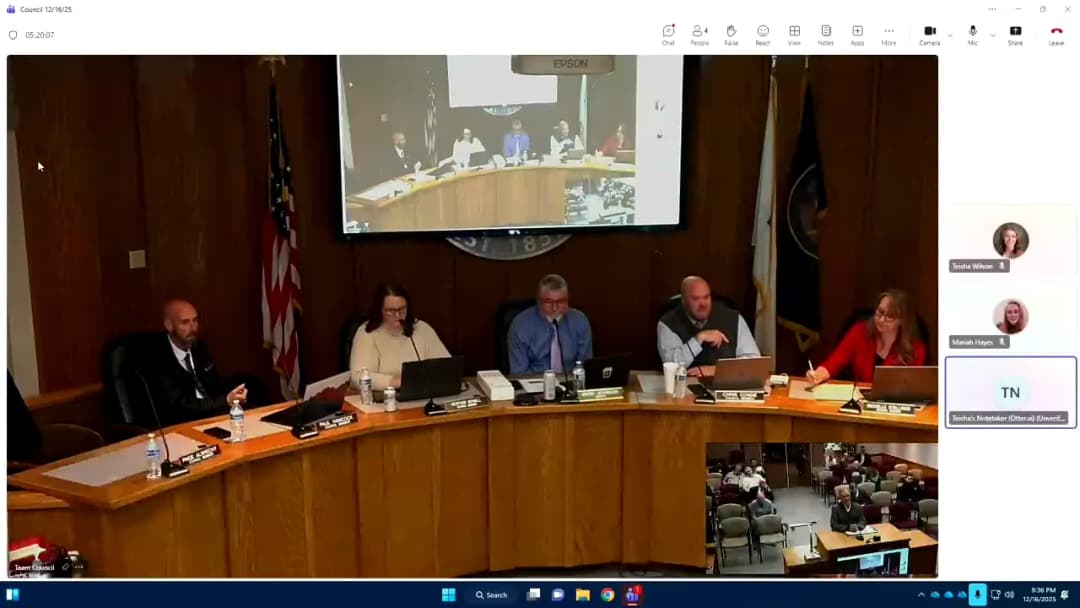
Lehigh City Council Meeting Summary - December 16, 2025

The Lehigh City Council convened for a regular session to address a wide array of agenda items, including development agreements, zoning changes, budget amendments, and the approval of the Downtown Revitalization Plan. A significant portion of the meeting was dedicated to discussing the proper procedures for initiating development agreements, ensuring land use applications are filed first, and reviewing the JDH property amendment. The council also voted on the Water's Edge development agreements, which were approved contingent on specific traffic and access conditions, while denying the associated zone changes. Additionally, the council adopted procedures for appointing a replacement council member to fill a current vacancy. Consent Calendar - Approved General Agenda items with exceptions: Item 4.4 (Real Estate Purchase Contract) and Item 4.13 (Planning Commissioner appointments) were pulled for separate discussion. - The council approved resolutions to purchase land at 174 East 100 North for future police parking expansion (Resolution 2025-98) via roll call vote. - The council appointed Ken Roberts and Bo Jones as Planning Commission members, overriding procedural objections regarding the nomination process made by Council Member Paul. Public Comments & Testimony - Housing and Traffic Concerns: Members of the public expressed strong concern regarding the Downtown Revitalization Plan. Speakers argued that adding housing to the downtown core would exacerbate traffic congestion, contradict the city's driving culture, and that the survey data used (representing only 0.5% of the population) did not accurately reflect resident sentiment against increased density. - Support for Conservation: Representatives from Payson City and the Four Bay committee presented testimony in support of the conservation easement, emphasizing the need to preserve recreational space in Payson Canyon and trusting Lehigh to act as a neutral guardian. - Homeless and Safety Concerns: Residents raised specific concerns about the Water's Edge development, citing potential homelessness, security issues, and inadequate lighting in secluded areas, as well as fears about parking overflow affecting nearby businesses. Discussion Items - Development Agreement Process: Council members debated the procedural requirements for development agreements. The consensus was reached that a formal land use application must be filed first to satisfy state code (Utah Code 10-9A-532), followed by potential direction to staff to enter into a development agreement if the council finds the specific use appropriate but the code restrictive. This discussion arose from a proposal by a startup for light manufacturing in a mixed-use zone. - Downtown Revitalization Plan: The council debated Ordinance 67-2025. Council Member Chris argued that tabling the visionary document due to a new council administration was unnecessary fear-based governance, while Council Member Paul and others expressed concerns about traffic, parking, and the lack of public transit in the proposed Transit-Oriented Development (TOD) areas. The motion to table failed, and the vote proceeded. - Water's Edge Development Agreements: Extensive discussion occurred regarding Resolution 2025-92. Council Member Michelle Stallings raised concerns about lack of parking if TOD standards were reduced without the promised transit, and questions were raised about securing access to American Fork and the phasing of the hotel vs. residential units. Modifications were made to require a parking study inclusive of surrounding uses and to mandate that if American Fork access is not secured, the applicant must return to council for re-evaluation. - JDH Property Amendment: Discussion focused on the amendment to the West Development Agreement (Resolution 2025-93) to add 30 units. Questions were raised regarding whether the city received sufficient compensation for the increased density and the need to maintain trail connectivity. Staff confirmed that previous negotiations involving the Hospital and Sanctuary agreements provided the necessary infrastructure swaps. - Vacancy Appointment Procedures: The council adopted Resolution 2025-95 to govern the appointment of a new council member. A discussion ensued regarding the interpretation of state statutes concerning the Mayor's role in breaking ties during the candidate narrowing process, resulting in a reference to the broader statutory provisions (20A-5-10(1)) rather than a specific method. - Water Use and Preservation Element: Council reviewed Ordinance 71-2025, which mandates a water conservation element under state law. Discussion included the technical aspects of aquifer strata, park strip maintenance, and the ongoing process for determining future water rates based on new metering data. Key Outcomes - Approved: Ordinance 67-2025: Downtown Revitalization Plan and State Street Station Area Plan (Vote: 4 Yes, 1 No). - Approved: Ordinance 71-2025: Water Use and Preservation Element of the General Plan (Vote: 4 Yes, 0 No). - Approved: Ordinance 68-2025: Gurney Property Zone Change (TH5 to R122) (Vote: 4 Yes, 0 No). - Approved: Ordinance 69-2025: Lease-Meet-Lee Zone Change (RA1 to Commercial) (Vote: 3 Yes, 1 No). - Approved: Resolution 2025-91: Hammond Development Agreement (Light Office/Warehouse) (Vote: 4 Yes, 0 No). - Denied: Ordinance 70-2025: Hemond Zone Change (Mixed Use to Heavy Commercial) (Vote: 4 Yes, 0 No) - Denied based on the prior approval of the Hammond Development Agreement. - Approved: Resolution 2025-92: Water's Edge Development Agreement (330 ERUs/Hotel) (Vote: 4 Yes, 0 No) - Approved with modifications requiring a parking study and re-evaluation if American Fork access is not secured. - Denied: Ordinance 72-2025: Water's Edge General Plan Amendment (Vote: 4 Yes, 0 No) - Denied to align with the approved development agreement. - Approved: Resolution 2025-93: JDH Property Development Agreement Amendment (+30 units) (Vote: 3 Yes, 2 No). - Approved: Resolution 2025-94 (implied): Four Bay Recreation Area Conservation Easement (Vote: 4 Yes, 0 No). - Adopted: Resolution 2025-95: Procedures for Filling Council Vacancy. - Budget: Approved Resolution 2025-90: Budget Amendment No. 3 for Fiscal Year 2025-26, including water revenue bond issuance for irrigation meters and fiber network infrastructure integration. - Public Hearing: Held for water revenue bonds (5.1) and budget amending (5.2); no votes required, only comments received.

PLANNING AND ZONING 30% · PROCEDURAL 18% · COMMUNITY DEVELOPMENT 10% · PUBLIC ENGAGEMENT 5%
59
DEC 4, 2025 · LEHI, UTAH · MEETING PORTAL
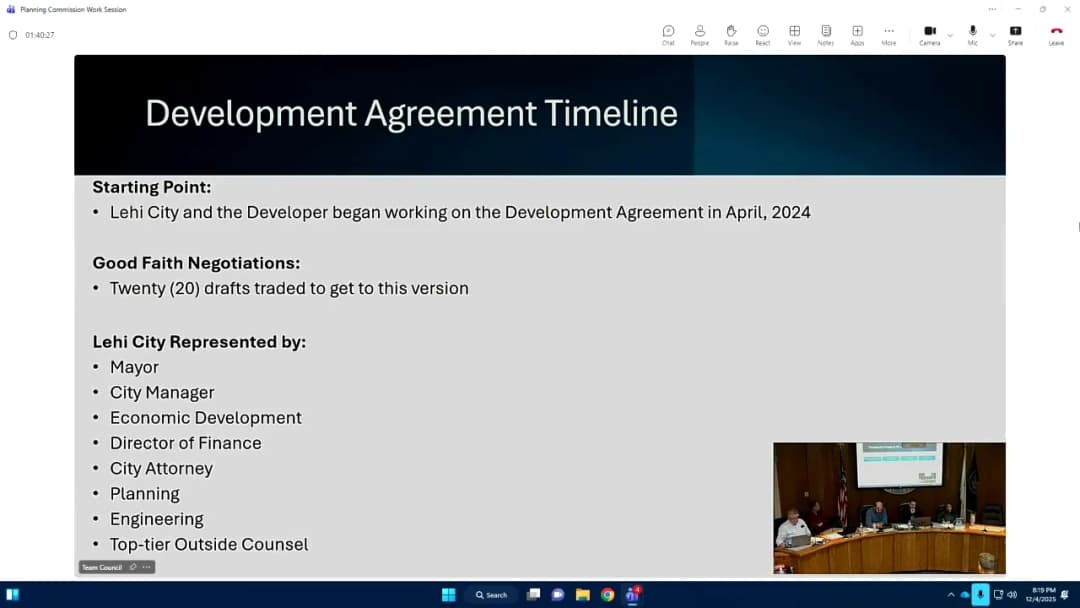
Lehigh Planning Commission Meeting - December 4, 2025

The Lehigh Planning Commission convened on December 4, 2025, to review a variety of development proposals, including property plat amendments, concept plans for residential subdivisions, and complex development agreements tied to the Housing and Transit Reinvestment Zone (HTRZ). The meeting featured significant public testimony regarding lot sizes, parking issues, road impacts, and concerns over water usage, school capacity, and financial obligations associated with high-density developments. Following extensive deliberation, the commission approved routine consent items and a specific plat amendment, denied a high-density concept plan, and provided mixed recommendations on two HTRZ development agreements. Consent Calendar - Approved the Minutes from the October 23rd, 2025, and November 13th, 2025 meetings, including a correction to the November 13th voting record to include Commissioner Brent Everett who voted in favor. - Approved the 2026 Planning Commission Meeting Schedule unanimously. Public Comments & Testimony - James Hall: Expressed a desire for information regarding a reported fence line movement near the Boyd Stewart plat amendment site, clarifying that he was not objecting but seeking verification that the existing fence would remain in place. - Camp Grover: Expressed concern that the Boyd Stewart plat amendment would restrict front yard space for homeowners and potentially allow a property across the street to become a "junkyard" due to business vehicle parking; he requested assurances regarding parking and business operations. - Brendell Clement: Requested the installation of a six-foot agricultural fence between his property and the new 14-lot development to protect children from animals, noting he did not object to the lot sizes despite the lack of dedicated open space in the proposal. - Terry Bishop: Acknowledged the changing nature of the neighborhood with no new large animals being kept, supported the fence request, and explained that the specific road configuration made conforming to the 22,000 sq ft minimum lot size impossible for two specific corners without the proposed variance. - Kenneth Dale: Expressed opposition to increasing density, arguing that it removes the agricultural heritage of the area by significantly reducing the number of large animals the neighborhood can support. - William Harris: Expressed support for the Thanksgiving Station project, commending the city for setting traffic triggers and the upcoming freeway. - Rachel Freeman: voiced concerns on behalf of residents regarding the transfer of taxing authority to a non-elected entity, the vagueness of long-term financial obligations, and the opposition to Clubhouse Drive previously expressed at MAG meetings. - Geneva Rivera (Kenneth Sale): Urged the commission to table the Thanksgiving Station and Soccer Field agreements, citing concerns about rushed processes, lack of transparency, and the transfer of 80% of property taxes to a private entity over 50 years. - Cody Black: Requested a negative recommendation for the Thanksgiving Station development, citing confusion over the slides, potential liability to the city, and a lack of time to review complex legal language. - Bradley Anderson: Expressed deep concern regarding the city's water supplies, citing declining groundwater levels, excessive reliance on imported water, and the lack of smart growth planning as a critical issue. - Laura Stevens: Submitted written comments expressing confusion over the financial commitments and tax transfers in the development agreement, requesting clarification before future voting. - James Harrison: Raised concerns regarding tax implications, the requirement for the developer to promote an unpopular Clubhouse Drive extension, water supply impacts, and the potential need for a new elementary school due to the 2,000-unit project. - Gene Rivera: Expressed support for the project's vision but urged caution regarding the speed of the process and potential impacts on water and resources. - Kenneth Glade: Spoke forcefully against the timing of the meeting, accusing the city of shadiness for attempting to pass these agreements before the new administration took office, and argued that the financial math presented by the developer did not support the project as beneficial to the city. Discussion Items - Boyd Stewart Plat Amendment (Item 4.1): Staff explained the plat amendment is necessary to reconfigure a lot line so the existing home fits on one lot and the second lot becomes buildable, correcting a historical subdivision issue where a home was built over a lot line. Staff clarified that the "jog" in the line accommodates a deck removal and ensures frontage compliance. The commission determined the proposal meets the development code. - Final Spur Ranch Concept Plan (Item 4.2): Jaron Davis requested approval for a 14-lot subdivision on 7.17 acres, seeking to reduce lot sizes from the general plan's 22,000 sq ft (R122) to approximately 15,000 sq ft (RA1). He argued wider lots in the area are less marketable and functional. Commissioner Jackson argued that matching existing neighborhoods is inappropriate when those neighbors have dedicated open space, while Davis argued that smaller lots without open space are more marketable and the project would still utilize community open spaces. Commissioner Kuhn expressed concern that reducing lot sizes removes the ability for owners to keep large animals, diminishing the area's agricultural heritage. The commission voted 4-1 to deny the concept plan as it is inconsistent with the General Plan and Development Code. - Epiphany Point Preliminary Subdivision (Item 4.3): Staff presented a three-lot flag lot subdivision. The applicant requested a minor adjustment to the driveway alignment to gain more easement width on Lot 1. Staff indicated only about 1.4 feet of flexibility existed due to frontage requirements. The commission noted the proposal meets code and approved the preliminary subdivision. - Thanksgiving Station Development Agreement (Item 4.4): The applicant proposed a development agreement to secure HTRZ funding for a 2,000-unit transit-oriented development. The applicant explained the 80% property tax retention for 25-50 years is a tool to close a $237 million infrastructure gap, asserting strong safeguards exist including personal guarantees, bond reserves, and city sales tax pledges. The commission noted concerns regarding the 10-year project start window, the requirement for the developer to support Clubhouse Drive, and the transfer of taxing authority. Commissioner Roberts suggested shortening the start window to 5 years and removing contentious legal clauses. The commission voted 3-2 to provide a positive recommendation to City Council with suggested text changes, noting the strong public dissent regarding the timing and complexity of the agreement. - Soccer Field Development Agreement (Item 4.5): A separate development agreement for 3.64 acres with nearly identical terms to the Thanksgiving Station proposal was reviewed. Public comment heavily criticized the timing of the meeting, arguing it was rushed to pass before the new council took office. The commission struggled to reach a consensus, with the initial motion for a negative recommendation failing. A subsequent motion for a positive recommendation was made with the same suggested text changes (5-year window, reviewing Recital C) as the previous item. The commission voted to provide a positive recommendation to City Council. Key Outcomes - Item 4.1 (Boyd Stewart): Approved by unanimous vote (Motion passed). - Item 4.2 (Final Spur Ranch): Denied by a 4-1 vote. Findings included non-conformance with the General Plan and Development Code. - Item 4.3 (Epiphany Point): Approved by unanimous vote. The preliminary subdivision meets R1 Flex zone requirements. - Item 4.4 (Thanksgiving Station): Sent a positive recommendation to the City Council (3-2 vote) with findings that include: inclusion of all DRC comments; a recommendation to shorten the project start window from 10 years to 5 years; and a recommendation to revise Recital C and the Clubhouse Drive support language. - Item 4.5 (Soccer Field): Sent a positive recommendation to the City Council (3-2 vote) with the same recommended text changes as Item 4.4. - Item 4.6 (Water Use and Preservation): Sent a positive recommendation to the City Council unanimously. Findings include compliance with state code and a commitment to increasing long-term water sustainability through usage measurement and reduced water goals. - Commissioner Adjournment: The commission honored Commissioner Brent Everett for over nine years of service before adjourning.

PLANNING AND ZONING 44% · PROCEDURAL 13% · WATER AND WASTEWATER MANAGEMENT 10% · COMMUNITY ENGAGEMENT 9%
60
DEC 2, 2025 · LEHI, UTAH · MEETING PORTAL
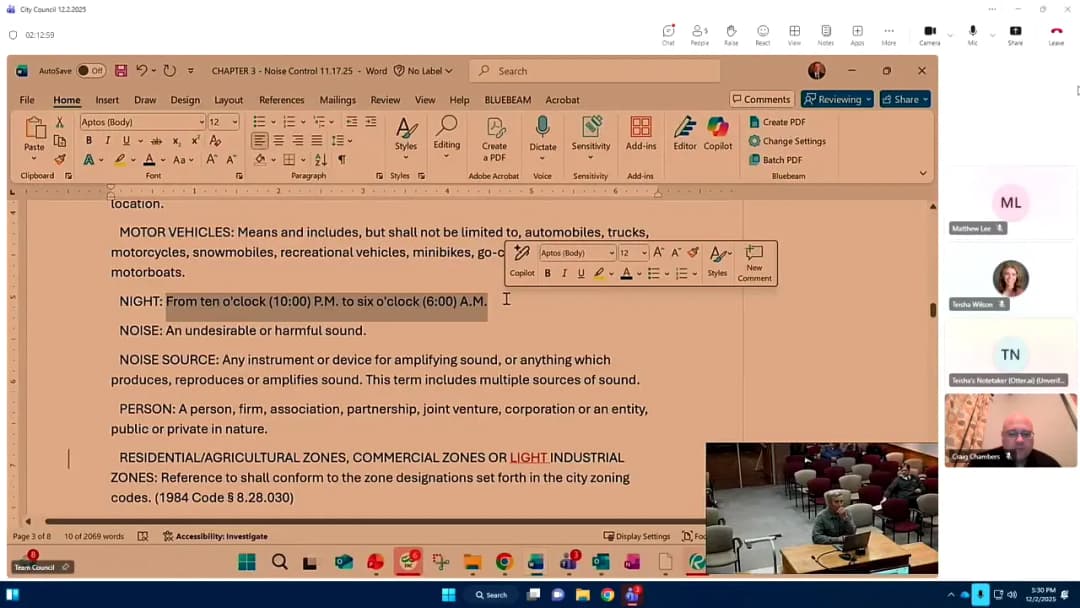
Lehigh City Council Meeting Summary - December 2, 2025

The Lehigh City Council convened on December 2, 2025, to review presentations from park tax grant recipients, approve a sports field maintenance agreement, and discuss updates to the noise control ordinance and capital projects. The meeting featured detailed reports from seven non-profit organizations regarding their use of funds for arts, athletics, and community programs, alongside administrative updates on infrastructure development. Consent Calendar - Resolution 2025-85: Approved by motion (Council Members Paul, Heather, Chris, Michelle, and Paige) to establish an agreement with Arsenal for sports field maintenance and associated costs. Public Comments & Testimony - Wasatch Contemporary Dance Company (Jessica Heaton): Expressed deep gratitude for the funding, stating that the arts are a crucial component of "unity" and a "cure" for the public health crisis of loneliness. Position: Full support for ongoing city investment in immersive dance to foster community connection. - Hutchings Museum (Leah): Expressed sincere appreciation for the grants, noting they enabled the hiring of educational staff, the replacement of hazardous glass panels with acrylic, and the upgrade of security and storage. - Lehigh Area Music Association (Tracy Price): Expressed overwhelming thanks for support that enabled the purchase of a trailer and additional rehearsal space, highlighting the honor of representing Lehigh's heritage. Position: Grateful for the continued funding of historical music programs. - Lehigh City Arts Council (Curdy Listen): Expressed humility and appreciation, noting that the funds allowed for critical infrastructure upgrades (flooring, popcorn machines, light boards) and the expansion of digital arts and special needs programs. Position: Strongly supportive of the park tax's impact on arts accessibility. - Arsenal Soccer Club (Bart Preston): Expressed pride in the use of the fields as a community hub for dog owners and passive recreation, not just organized soccer. Position: Supportive of the community partnership and the maintenance standards provided by Arsenal. Discussion Items - Park Tax Grant Recipients (Items 2.1 - 2.5): - Kids of Utah County (Michelle): Reported on the $93,000 grant used for deficits at the Curtis Center, including stage sound (a 69% volume increase via sound pull) and a back-projection screen. Position: Acknowledged the funds were "very humbly" accepted and noted the high volunteer engagement (1,376 hours). - Wasatch Contemporary Dance: Presented on "Intwine," an immersive performance reaching 200 patrons and commissioning 22 artists. Position: Emphasized the transformative nature of the art on the "monumental" issue of loneliness. - Hutchings Museum: Reported on hiring an educator, returning "Magical Museum Night," and upgrading safety panels. - Lehigh Area Music Association: Reported a 25% growth in non-parade audiences and the successful purchase of a trailer. - Lehigh City Arts Council: Reported on six stage shows, 661 youth participants, and critical infrastructure upgrades including a new light board and electrical circuits ($9,000). Position: Highlighted the necessity of funds for basic amenities like popcorn and safety floors. - Noise Control Ordinance Discussion (Item 5): - Penalty Reduction: Staff and Council discussed downgrading violations from a Class B misdemeanor (DUI parity) to a Class C misdemeanor. Position: Council generally agreed a Class C is more appropriate for community policing. - Responsibility: Clarified that business owners, individuals causing noise, and property owners can be held jointly or individually responsible. - Measurement Standards: Updated to reference current international and US standards (ANSI) rather than outdated 1970s versions. Clarified that measurements must be field-calibrated and taken by police or code enforcement officers. - Continuous Noise Threshold: Council members raised concerns about the proposed 3-minute duration for continuous noise, suggesting it may be too long or too short (e.g., 30 seconds). Position: Leaning toward a middle ground (2-3 minutes) and requesting staff research on other jurisdictions' timeframes. - Nighttime Hours: Discussed extending the quiet hours start time from 10:00 PM to 10:00 PM and potentially adjusting the morning start time from 6:00 AM to 7:00 AM. Position: Concerns raised regarding landscaping businesses that require early morning (6:00 AM) work; request for staff to research surrounding cities and seasonal variations. - Exemptions: Discussion on exempting roadway noise, athletic events, and federal mandates (railroad horns). Position: Agreed to include generic exemptions for state/federal mandates and roadway noise. - Conservation Easement (Item 6): - Four Bay Recreation Area: Discussed the potential for Lehigh City to hold the conservation easement for the property. Position: Council expressed strong support, noting the ripple effect of the Draper easement and the potential to preserve 300+ additional acres of open space. - Capital Projects Update: Director Lauren provided updates on: - Sixth East: Currently paved with gas lines being installed; sight distance issues required tree removal. Position: Project is near completion with utilities in place. - Dry Creek Reservoir: Curb and sidewalk work is underway; water aeration nozzles installed for fish health. Position: Project is progressing well, with significant underground utilities and new equipment installed. Key Outcomes - Approved Resolution 2025-85: Agreed to the terms of the sports field maintenance agreement with Arsenal. - Staff Directives for Ordinance: Directed staff to research nighttime hour precedents in surrounding cities, investigate the optimal duration for continuous noise detection (30 seconds vs. 3 minutes), and draft a plan for summer vs. winter noise exemptions. - Next Steps: Scheduled a public work session to review the refined noise ordinance draft before a final vote. Scheduled a future meeting (December 16) for the conservation easement agreement with Payson City. - Informational: No further action items required; presentation completed on park tax grant recipients.

ARTS AND CULTURE 31% · YOUTH PROGRAMS 20% · NOISE CONTROL 17% · PARKS AND RECREATION 8%
OPENPUBLICA · PUBLIC MEETING INDEXUPDATED DAILY · openpublica.com