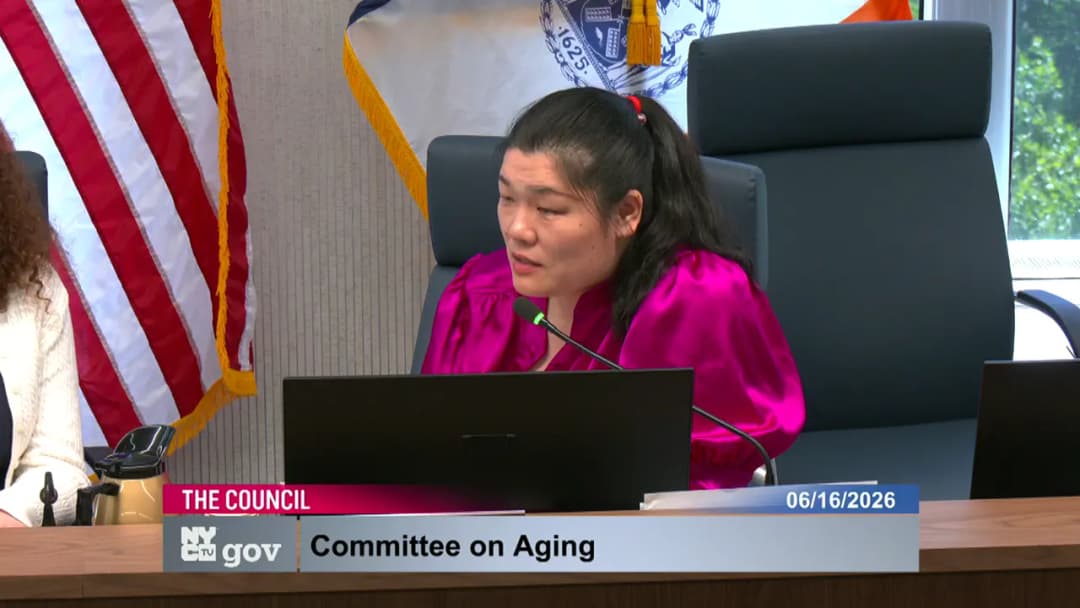
On June 16, 2026, the New York City Council Committee on Aging, chaired by Council Member Susan Zhuang, held an oversight hearing on interagency coordination for older adults and heard two pieces of legislation: Intro 230 (financial assistance for in-home preventative adaptations) and Res 0373 (supporting state long-term care benefits). The committee received testimony from NYC Aging Commissioner Dr. Lisa Scott McKenzie, Assistant Commissioner Janine Ventura, and multiple public witnesses. No votes were taken; both bills were laid over by committee. Public Comments & Testimony - Jessica Fredrik Brodsky (SPOP) testified on the need for mental health services for older adults, noting SPOP serves 1,000 clients annually. She urged continued support for mental health programs. - Anita Quak (United Neighborhood Houses) reported that many providers are unaware of the NYCHA liaison at NYC Aging and that interagency coordination on repairs, cooling centers, and intergenerational programs is inadequate. She called for a designated weather-emergency coordinator. - Kathy Kaprowski (LiveOn NY) emphasized that older adults (20% of NYC population, projected 40% increase by 2040) are disproportionately affected by climate, homelessness, and food insecurity. She advocated for the Cabinet for Older New Yorkers to focus on specific policy areas, increase transparency, and expand to include external stakeholders. She supported Intro 230. - Janine Cahill Jackson (Legal Aid Society) detailed how lack of home modifications leads to eviction, hospitalization, and nursing home stays. She supported Intro 230 but recommended including landlord approval requirements, a fair hearing process, clearer disability documentation standards, and assistance with modification assessments. - Carl Johnson presented data on elevator outages: 146 chronic-offender buildings are within a quarter-mile of a NORC site; 33 have only one elevator. He urged data-sharing between DOB and NYC Aging to trigger proactive wellness checks. - Martha Kember (YWCA Brooklyn) stated that 90% of her 300 formerly homeless residents struggle with mental illness, and 160 are seniors aging in place. She described obstacles accessing city services. - Krista McManus (AARP New York) urged a deputy mayor for older adult issues, a one-stop-shop for benefits, and $30 million in additional funding for seven-day home-delivered meals. She supported opening Cabinet meetings to outside groups. - Ramona Ferreira (Safe Section 9) opposed NYCHA’s PACT/RAD privatization, stating it doubles evictions and increases rents. She argued Section 9 public housing is a critical aging-in-place program and called for a moratorium on PACT pending an impact study. Discussion Items - Oversight – Interagency Coordination for Older Adults: Commissioner McKenzie detailed the Cabinet for Older New Yorkers (30 member agencies, four subcommittees), which since 2022 has launched initiatives on anti-ageism education, walkability audits (30 neighborhoods, 900+ participants), employment discrimination training (750+ workers), and health-care training (1,800+ frontline staff). She reported 72% completion rate on NYCHA-related repairs. Council Members questioned coordination on housing, mental health, immigration, and LGBTQ+ issues. Chair Zhuang pressed for proactive NYCHA repairs and a designated interagency contact list. - Intro 0230-2026 (Council Member Hudson): Would require NYC Aging, with the Mayor’s Office for People with Disabilities, to create a program for in-home preventative adaptations for low-income older adults and people with disabilities. Commissioner McKenzie supported “the intent” but cited operational concerns. Public witnesses overwhelmingly supported the bill. - Res 0373-2026 (Council Member Wang): Calls on the state to pass A.1499/S.1179 providing long-term care benefits. No testimony specifically addressed it; it was laid over. Key Outcomes - Oversight hearing filed by committee. - Intro 0230-2026 and Res 0373-2026 were each heard and laid over by committee. - Chair Zhuang committed to following up with NYC Aging on the NYCHA liaison contact list and documentation of interagency failures. - Commissioner McKenzie agreed to put Mitchell-Lama housing (Local Law 44 of 2024) and LGBTQ+ commission progress on the June 25 Cabinet agenda, and to provide metrics for Cabinet initiatives. - Written testimony may be submitted within 72 hours of the hearing.
Public Meetings - New York City, New York
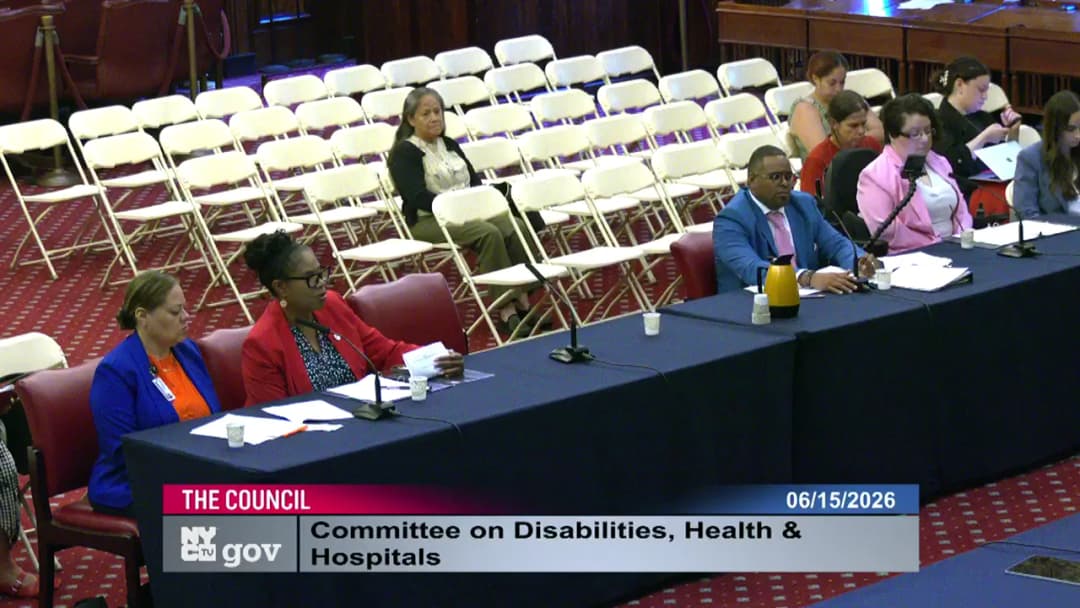
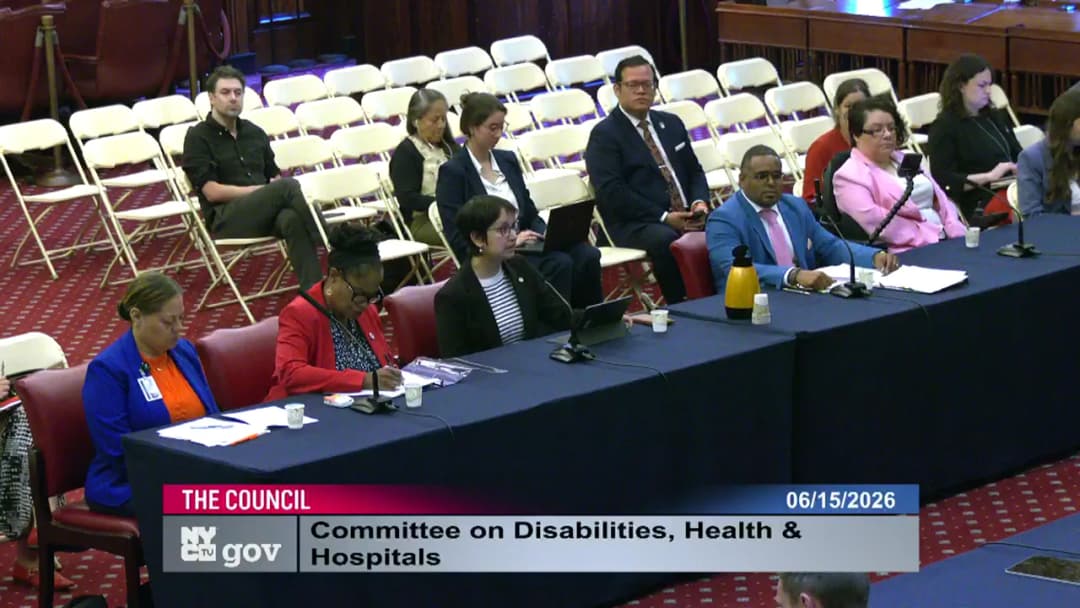
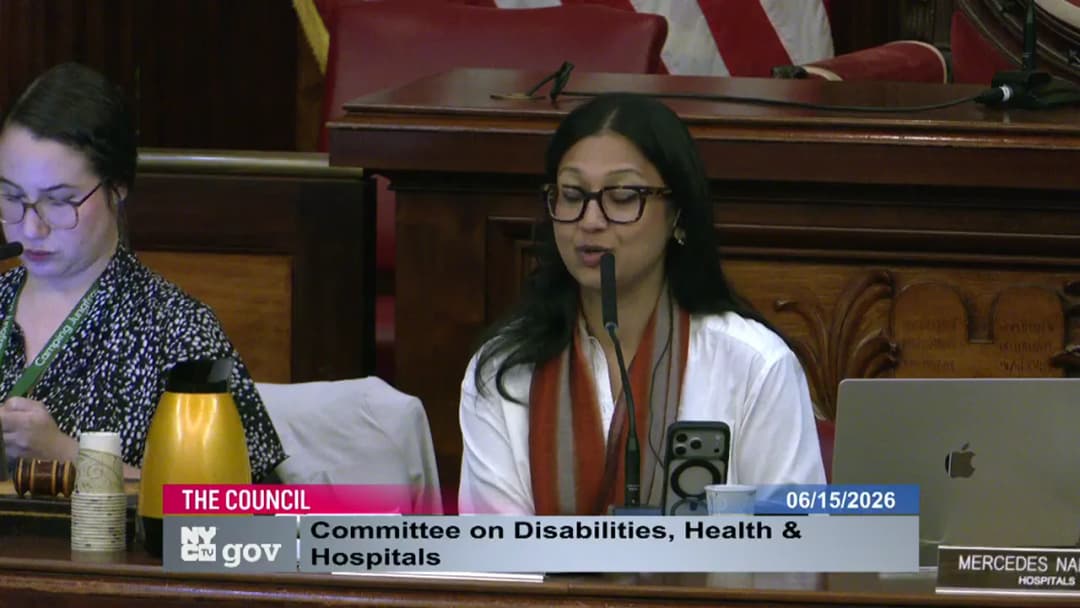
Public Meetings - New York City, New YorkThe New York City Council Committees on Health, Disabilities, and Hospitals held a joint oversight hearing on June 15, 2026, at 10:00 AM in Council Chambers to examine access to reproductive health care for New Yorkers with disabilities. The committees also considered a package of legislation addressing doula resources, fertility treatment information, insurance coverage for pre-implantation testing for city employees, disability competency training for healthcare providers, medication abortion availability at all sexual health clinics, and resolutions calling on state action for emergency contraception vending machines at SUNY/CUNY, refundable tax credits for IVF, and insurance coverage for preimplantation genetic testing. All oversight and legislative items were heard and laid over by the committee. Public Comments & Testimony - Tracy Moreno (NYLPI) – Supported Intro 941, emphasizing that healthcare providers lack disability competency training, which leads to delayed care and poorer health outcomes. She urged passage of the bill to create standardized training and resources. - Brittany Miskey (Care Design NY) – Supported Intro 941, noting that formal training on intellectual and developmental disabilities is minimal in health professions education, resulting in inconsistent care. She highlighted barriers to preventive screenings and mental health care for individuals with IDD. - Ramona Ferreira (Safe Section 9) – Supported the entire legislative package and stressed that 43% of NYCHA households include a person with a disability. She opposed proposed budget cuts to public housing, arguing that stable housing is critical for disabled New Yorkers. - Mbake TM (CIDNY) – Thanked the committee and committed to submitting written testimony on reproductive justice barriers for people with disabilities. Discussion Items - Oversight on Reproductive Health Care Access for New Yorkers with Disabilities – Councilmember Hanif opened with statistics: nearly 1 in 6 New Yorkers lives with a disability; women with disabilities are 11 times more likely to die during pregnancy; only 40% of medical offices have accessible exam tables and weight scales. The August 9, 2026 federal deadline requiring accessible medical diagnostic equipment in city health facilities was a central focus. Agency witnesses reported progress but acknowledged gaps in accessible scales, provider training, and data collection on disability status. - Intro 200 (Doula Bill of Rights) – Sponsored by Councilmember Gutierrez. DOHMH supported the intent but noted implementation challenges. Laid over. - Intro 211 (Fertility Treatment Information) – Sponsored by Councilmember Hanif. DOHMH expressed concerns because fertility services are not within its expertise and insurance varies widely. Laid over. - Intro 840 (Pre-implantation Testing Coverage) – Sponsored by Councilmember Santosuoso. Heard and laid over. - Intro 941 (Disability and Accessibility Training) – Sponsored by Councilmember Linda Lee. DOHMH supported intent but noted they do not oversee healthcare providers. H+H described existing training programs (not mandatory). Laid over. - Intro 953 (Medication Abortion at All Sexual Health Clinics) – Sponsored by Deputy Speaker Williams. DOHMH raised concerns about cost, capacity, and clinic space; currently no plans to expand beyond four clinics offering medication abortion. Laid over. - Resolution 0089-A (Emergency Contraception Vending Machines) – Amended by committee, then laid over. - Resolution 0108-A (IVF Tax Credit) – Amended by committee, then laid over. - Resolution 0447 (PGT-A Insurance Coverage) – Heard and laid over. Key Outcomes - All introductions and resolutions were heard and laid over by the committee (no final votes taken). The oversight item T2026-2010 was filed. - The committee will continue to monitor compliance with the August 9, 2026 federal accessibility deadline and requested follow-up data on training participation and accessible equipment availability. - Councilmember Hanif invited further collaboration on disability justice definitions and coordination among agencies.
This joint oversight hearing of the New York City Council Committees on Disabilities, Health, and Hospitals examined barriers to reproductive health care for New Yorkers with disabilities. The committee heard testimony from the Mayor's Office for People with Disabilities (MOPD), the Department of Health and Mental Hygiene (DOHMH), and NYC Health + Hospitals (H+H), and considered a package of eight pieces of legislation and three resolutions aimed at expanding access to doula services, fertility treatment information, medication abortion, emergency contraception, and disability competency training. Nearly one in six New Yorkers lives with a disability, and data presented showed that women with disabilities face significantly higher risks of severe pregnancy complications and death. The August 9, 2026 federal deadline for accessible medical diagnostic equipment was a recurring focus. No items received a final vote; all introductions were laid over, and two resolutions were amended and laid over. Public Comments & Testimony - Tracy Moreno (NY Lawyers for the Public Interest): Expressed strong support for Intro 941, which would require DOHMH to develop disability and accessibility resources and training for healthcare providers. She noted that legal protections alone are insufficient and that many providers lack formal disability competency training, leading to delayed care and poorer outcomes. - Brittany Miskey (Care Design New York): Supported Intro 941, highlighting that formal training on intellectual and developmental disabilities (IDD) is minimal in health professional programs. She noted that individuals with IDD often experience diagnostic overshadowing and barriers to preventive care due to provider bias. - Ramona Ferreira (Safe Section 9): Testified as a person with a disability and public housing resident. She expressed support for the legislation package but also opposed the mayor's proposed budget for public housing, arguing it would harm disabled New Yorkers who rely on Section 9 housing for stability and accessibility. She noted that 43% of households in public housing include a person with a disability. - Mbake TM (Center for Independence of the Disabled New York): Thanked the chair and indicated she would submit written testimony on challenges people with disabilities face regarding reproductive justice from preconception to postpartum care. Discussion Items - Oversight – Access to Reproductive Health Care for New Yorkers with Disabilities: Chair Shahana Hanif opened by citing statistics: nearly 1 in 6 New Yorkers has a disability; women with disabilities are twice as likely to develop severe preeclampsia, six times as likely to experience thromboembolism, and 11 times as likely to die during pregnancy. Only about 40% of medical offices have accessible exam tables, and 17% of OB/GYNs reported training on caring for patients with disabilities. The Chair noted the August 9, 2026 federal deadline requiring at least one accessible exam table and weight scale in covered facilities. DOHMH reported that its sexual health clinics have ADA-compliant power beds and phlebotomy chairs but do not have accessible weight scales because weight is assessed via self-report. H+H stated its facilities are ADA compliant but could not confirm all weight scales were accessible. MOPD Commissioner Nisha Agarwal shared personal experience and emphasized the need for anti-bias training and accessible equipment. - Intro 200 (Gutierrez) – Doulas: Would create a doula bill of rights, a feedback form, and a doula advisory council. DOHMH supported the intent but noted operational impacts still under assessment. - Intro 211 (Hanif) – Fertility Treatment Information: Would require DOHMH to conduct a public education campaign on fertility treatment and insurance coverage. DOHMH expressed concerns about lacking expertise since it does not provide fertility services and insurance varies widely. Chair Hanif pushed back, noting the bill focuses on education, not service provision. - Intro 840 (Santosuoso) – Pre-implantation Testing Coverage for City Employees: Would require health insurance coverage for pre-implantation genetic testing for city employees. No specific testimony or questions were directed at this bill during the hearing. - Intro 941 (Lee) – Disability & Accessibility Training: Would require DOHMH to develop and offer resources, clinical guidance, and training on disability and accessibility in healthcare settings. DOHMH supported the intent but noted it has no oversight role over private providers and lacks subject matter experts. Several public witnesses strongly supported this bill. - Intro 953 (Deputy Speaker Williams) – Medication Abortion at All Sexual Health Clinics: Would require DOHMH to provide medication abortion at no cost at all its sexual health clinics. DOHMH supported expanding access but cited operational concerns including space, hiring, and cost; it currently has no plans to expand beyond the four clinics offering medication abortion. Chair Hanif read Deputy Speaker Williams's statement in support. - Res 89-A (Gutierrez) – Emergency Contraception Vending Machines at SUNY/CUNY: Calls on the state to require SUNY and CUNY to have at least one vending machine with emergency contraception. The resolution was amended and laid over. - Res 108-A (Morano) – IVF Tax Credit: Calls on the state to create a refundable tax credit for up to three cycles of IVF not covered by insurance. Councilmember Morano gave an opening statement emphasizing that access to parenthood should not depend on wealth. The resolution was amended and laid over. - Res 447 (Santosuoso) – Insurance Coverage for Preimplantation Genetic Testing: Calls on the state to require insurance to cover preimplantation genetic testing for aneuploidies. The resolution was laid over. Key Outcomes - All introductions (Int 200, 211, 840, 941, 953) were heard and laid over by the committee. No final votes were taken. - Resolutions 89-A and 108-A were amended and laid over. Resolution 447 was laid over without amendment. - The oversight hearing on access to reproductive health care for New Yorkers with disabilities was filed by committee. - Agencies committed to providing follow-up data: H+H will share numbers on staff participation in disability training, MOPD will coordinate a roundtable with women with disabilities, and DOHMH will explore tracking disability data and weight scale accessibility. - Written testimony may be submitted within 72 hours to testimony@council.nyc.gov.
The New York City Council Committees on Hospitals, Disabilities, and Health held a joint oversight hearing on June 15, 2026, to examine access to reproductive health care for New Yorkers with disabilities. The hearing also considered a package of legislation aimed at expanding reproductive health services, including doula resources, fertility treatment information, insurance coverage for pre-implantation testing, disability training for healthcare providers, and medication abortion access. The meeting featured testimony from city agencies (Mayor's Office for People with Disabilities, Department of Health and Mental Hygiene, NYC Health + Hospitals) and public witnesses. No final votes were taken; all bills and resolutions were laid over after hearings and, in two cases, amendments. Consent Calendar - No consent calendar items were noted. All agenda items were discussed individually. Public Comments & Testimony - Tracy Moreno (NY Lawyers for the Public Interest) testified in strong support of Intro 941, emphasizing that legal protections alone are insufficient and that healthcare providers lack disability competency training, leading to delayed care and poorer outcomes. She urged passage of the bill. - Brittany Miskey (Care Design New York) testified in support of Intro 941, sharing her experience as a nurse practitioner with minimal formal training on intellectual/developmental disabilities (IDD). She highlighted barriers to preventive care and diagnostic overshadowing for individuals with IDD. - Ramona Ferreira (Safe Section 9) testified in support of the legislative package and stressed that 43% of public housing households include a person with a disability. She opposed proposed budget cuts to NYCHA, arguing that stable housing is critical for disabled New Yorkers' health and well-being. - Mbake TM (Center for Independence of the Disabled New York) thanked the committee and noted she would submit written testimony detailing challenges from accessibility to postpartum care. Discussion Items - Oversight – Access to Reproductive Health Care for New Yorkers with Disabilities: Councilmember Shahana Hanif (Chair, Disabilities Committee) opened with statistics: nearly 1 in 6 New Yorkers has a disability; women with disabilities are 11 times more likely to die during pregnancy; only 40% of medical offices have accessible exam tables; and only 17% of OB-GYNs receive disability training. She highlighted the August 9, 2026 federal deadline requiring accessible medical diagnostic equipment. Agency representatives testified on current accessibility efforts and gaps. - Intro 0200-2026 (Gutiérrez) – Doula resources: DOHMH supported the intent but noted operational impacts to assess. - Intro 0211-2026 (Hanif) – Fertility treatment information: DOHMH expressed concerns about lacking expertise and the complexity of insurance coverage; they do not provide fertility services. - Intro 0840-2026 (Santosuoso) – Insurance coverage for pre-implantation testing for city employees: Heard and laid over. - Intro 0941-2026 (Lee) – Disability and accessibility training for healthcare providers: DOHMH supported intent but noted no oversight role over providers and lack of subject matter experts. - Intro 0953-2026 (Williams) – Medication abortion at all DOHMH sexual health clinics: DOHMH supported expansion but cited operational concerns (cost, capacity, clinic space, medication supply). Currently, medication abortion is available at 4 of 6 clinics. - Res 0089-2026 (Gutiérrez) – Emergency contraception vending machines at SUNY/CUNY: Amended by committee (Proposed Res 89-A) and laid over. - Res 0108-2026 (Morano) – Tax credit for IVF cycles: Amended by committee (Proposed Res 108-A) and laid over. Councilmember Morano argued that infertility is a medical condition and that cost should not determine family-building opportunities. - Res 0447-2026 (Santosuoso) – Insurance coverage for preimplantation genetic testing: Heard and laid over. Key Outcomes - Oversight hearing held and filed (T2026-2011). - All introductions (Int 0200, 0211, 0840, 0941, 0953) had hearings held and were laid over by committee. - Resolutions 0089 and 0108 were amended (Proposed Res 89-A and 108-A) and then laid over. - Resolution 0447 was heard and laid over without amendment. - No final votes were taken on any legislation; all items remain in committee for further consideration. - Agency commitments: DOHMH and H+H will continue to work on accessibility improvements, including meeting the August 9, 2026 federal deadline for accessible medical diagnostic equipment. MOPD will convene a roundtable on women with disabilities and healthcare. H+H will explore making disability training mandatory and will share training attendance data. DOHMH will consider tracking disability status in patient data and will assess the feasibility of expanding medication abortion to all clinics.
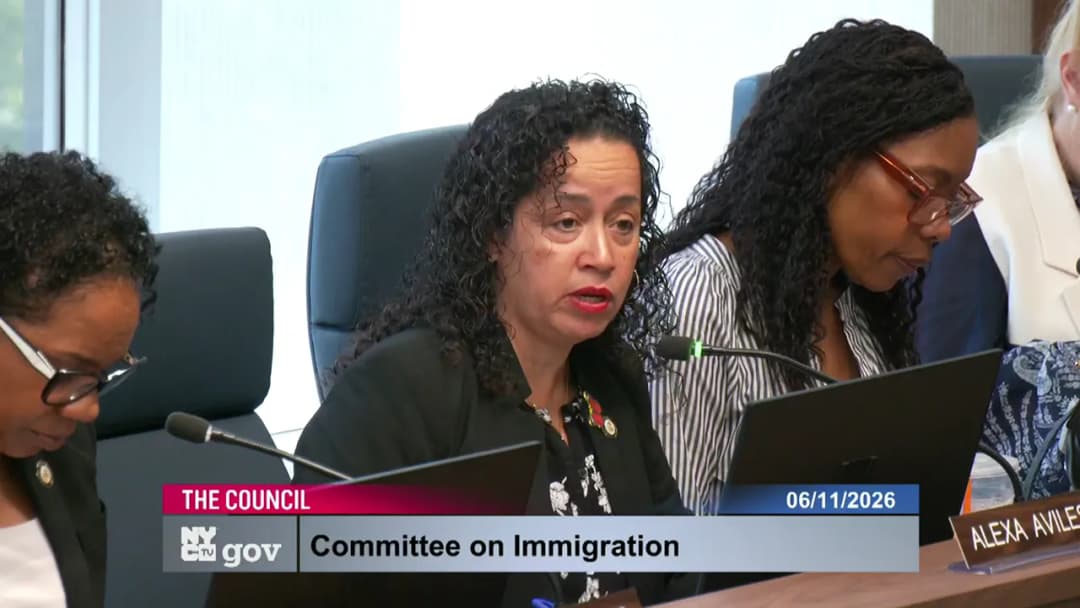
The New York City Council Committee on Immigration, chaired by Councilmember Elsie Encarnación, met on June 11, 2026, to vote on proposed Introduction 55-A (the "New York City Know Your Rights Act"), sponsored by Councilmember Alexa Avilés. The bill requires the Mayor's Office of Immigrant Affairs to develop and display signage on city property informing individuals of their constitutional rights and protections under local sanctuary city laws, particularly regarding interactions with federal immigration authorities. The committee had previously held a hearing on the bill on March 9, 2026, receiving ample testimony in support. After remarks from Chair Encarnación and sponsor Avilés, the committee voted unanimously to approve the legislation. Discussion Items - Chair Encarnación's opening remarks: She highlighted the context of aggressive federal immigration enforcement under the second Trump administration, including warrantless arrests and ICE agents entering homes without judicial warrants. She stressed the importance of reinforcing protections for immigrant communities and ensuring they know their rights and city agencies' obligations. - Sponsor Avilés's remarks: She emphasized the critical timing—noting that the House had just added $70 billion to ICE's budget and that ICE agents had threatened to flood New York City. She described the bill as a tool to provide clarity and confidence for individuals to assert their rights, while also calling for baseline and expanded funding for legal services in the upcoming budget. - Vote: Chair Encarnación recommended a yes vote. The clerk conducted a roll call. Key Outcomes - Vote on Int 55-A: The committee voted 5–0 in the affirmative (Encarnación, Avilés, Brewer, Hanks, Joseph) with zero negatives and no abstentions. The motion to approve the introduction was passed by roll call. - Next steps: The approved bill will proceed to the full City Council for consideration. The meeting was adjourned after the vote.
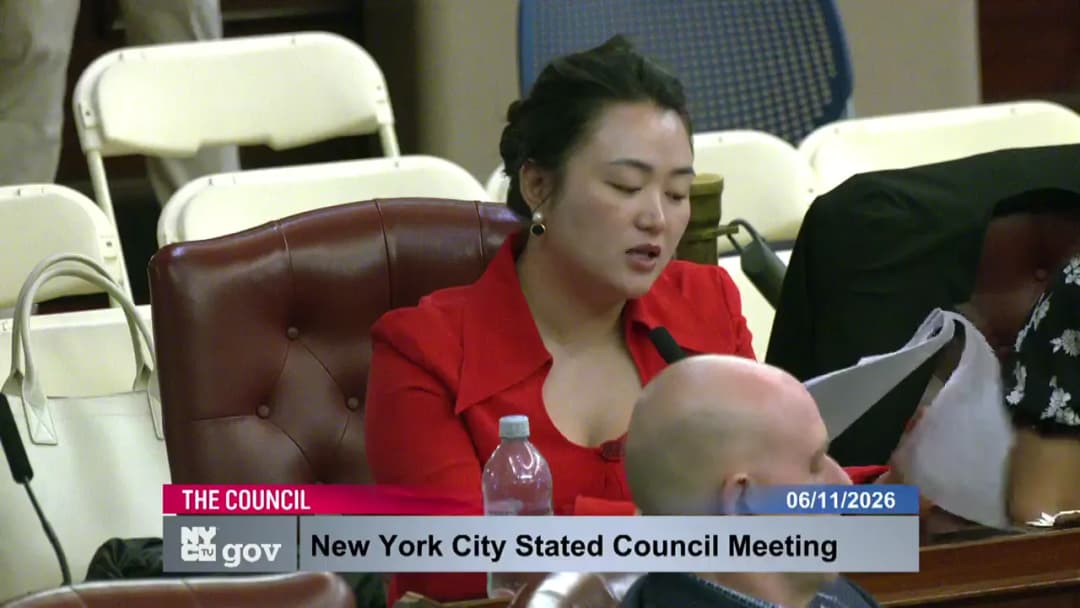
The New York City Council held a stated meeting on June 11, 2026, at 1:30 PM in Council Chambers. The meeting included adoption of minutes, reports from standing committees, approval of numerous tax exemptions and local laws, introduction of new legislation, and discussion of key priorities including affordable housing, the city budget, and animal welfare. The meeting also featured a reunion of former council members and an invocation by former Council Member Deborah Rose. Consent Calendar - Minutes of May 14 and May 20, 2026 adopted. - Communication from Public Advocate appointing Mark Winston Griffith to the Civilian Complaint Review Board (CCRB) received and filed. - Communication from the Office of Management & Budget on FY2027 revenue appropriation (M 0078-2026) referred to the Committee on Finance. - Reports of Committees on Aging, Education, Finance, and Immigration adopted by consent, including: - Int 0821-A: requiring the Department for the Aging to maintain non-digital access to forms and services. - Int 0009-A: requiring a study on child care program permit and licensing processes. - Int 0579-A: mandating an education and outreach campaign to enroll children in early childhood education programs. - Res 0514 through Res 0523: approving property tax exemptions for multiple developments under the Private Housing Finance Law (Section 577). - Res 0524: approving a budget modification (MN-8) pursuant to Charter Section 107(e). - Int 0055-A: requiring signage describing local laws and know-your-rights information regarding immigration enforcement (passed by separate roll call; see Key Outcomes). - Appointment of a Commissioner of Deeds (T2026-0001) approved. Key Outcomes - The consent agenda and all coupled items (including the resolutions and introductions listed above) were adopted by a vote of 50 in the affirmative, 0 in the negative, and 1 absent, with the exception of Intro 55-A. - Intro 55-A (New York City Know Your Rights Act) was adopted by a roll call vote of 44 in the affirmative, 6 in the negative (Council Members Ariola, Carr, Morano, Paladino, Vernikov, and Wong), and 1 absent. - Four resolutions were adopted by voice vote: - Res 0165-2026: calling on the New York State Legislature to allow unused Paid Family Leave to be transferred to grandparents and other designated caregivers. (Five Council Members formally noted intent to vote negative: Ariola, Morano, Paladino, Vernikov, and Carr.) - Res 0365-2026-A: calling on the state to remove minimum wage and hours requirements for child care assistance applicants. (Same five negative notes.) - Res 0421-2026-A: calling on the Governor to sign legislation authorizing the New York State Office for the Aging to establish and maintain transportation programs for seniors. (Adopted unanimously.) - Res 0508-2026: recognizing the history of Juneteenth and affirming the City's commitment to its legacy. (Adopted unanimously.) - Over 30 new pieces of legislation were introduced and referred to committees, including: - Int 0929: requiring a security perimeter plan adjacent to educational facilities (Preconsidered – Public Safety). - Int 0935: requiring weekly reporting on confirmed firearm discharges (Preconsidered – Public Safety). - Int 0936: establishing a Department of Coastal Protection. - Int 0937: regulating horse-drawn carriages (health and safety reforms). - Int 0938: establishing municipal grocery stores. - Int 0940: pilot program for a baby opportunity fund (baby bonds). - Int 0943: prohibiting operation of horse-drawn cabs (ban bill). - Int 0945: requiring ranked-choice voting in general elections for municipal offices. - Int 0951: preventing policymakers and their relatives from insider trading on prediction markets. - Int 0954: requiring signs regarding penalties for assaulting retail, bodega, deli, and dukkan workers. - Int 0955: accelerating business openings by coordinating required inspections (Preconsidered – Small Business). - The meeting adjourned to the next stated meeting on Monday, June 29, 2026. Discussion Items - Speaker Menin announced a new initiative to redevelop aging public library sites with 100% affordable housing atop, calling for $60 million in capital funding in the upcoming city budget. She also highlighted the council's June 2026 tax revenue forecast of nearly $2 billion above the mayor's projection, enabling priorities like CityFHEPS expansion, Fair Fares, and NYC Kids Rise. - Councilmember Pierina Sanchez expressed concern that Article 11 tax exemptions approved for Bronx buildings did not include electrical work, noting that fires in the Bronx have doubled in three years; she urged a more rigorous review of these tax expenditures. - Councilmember Alexa Avilés introduced Resolution 494 opposing Proyecto Esencia, a $2 billion luxury resort in Cabo Rojo, Puerto Rico, citing environmental destruction and displacement of local residents. - Councilmember Chris Banks introduced Int 0926 (monthly reporting on NYCHA unit vacancies and unauthorized occupancies) and Res 0495 (calling for improvements to the housing access voucher pilot program). - Councilmember Carmen De La Rosa and others emphasized the need for significant expansion of CityFHEPS rental assistance in the budget, echoed by Council Members Gale Brewer, Sandy Nurse, Shahana Hanif, Lincoln Restler, Tiffany Cabán, and Rita Joseph. - Councilmember James Gennaro defended the horse carriage industry and introduced Int 0937 (reforms including a decennial safety study, earlier work start times, and a new advisory board), in contrast to Councilmember Christopher Marte who called for a full ban after a carriage horse collapsed and died. - Councilmember Shanel Thomas-Henry introduced Int 0951 to ban insider trading by policymakers on prediction markets, noting New York City would be the first city in the nation with such a law. - Councilmember Susan Zhuang introduced the “Red Tape Relief Act” (Int 0955) to reestablish an interagency inspection coordination program for small businesses, and Res 0512 to restore SCRIE/DRIE benefits after temporary income increases. - Councilmember Lynn Schulman introduced Int 0949 requiring a citywide LGBTQ+ health services map and gender-affirming care resources. - Councilmember Inna Vernikov introduced Int 0952 requiring NYPD quarterly reporting on First Amendment events at houses of worship. - Councilmember Julie Won introduced Int 0954 (Al-Washi Worker Protections Law) requiring signs that assaulting a retail worker is a felony, and Res 0510 declaring June 18 as Autistic Pride Day.
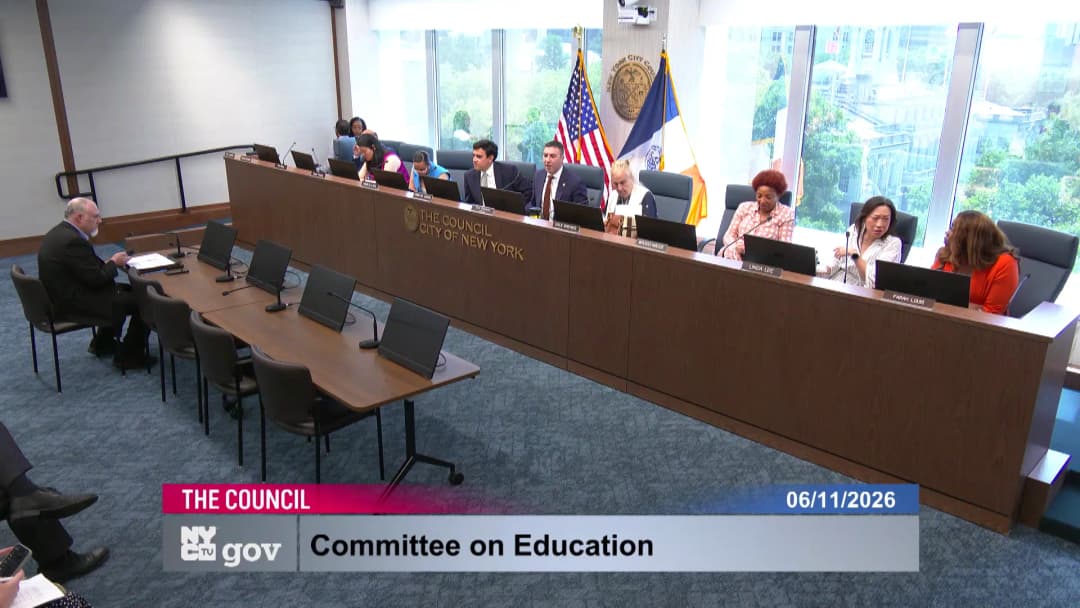
The New York City Council Committee on Education, chaired by Councilmember Eric Dinowitz, met on Thursday, June 11, 2026 at 10:30 AM to vote on a package of four early childhood education-related items. The package included two proposed local laws and two resolutions aimed at improving child care permitting, enrollment outreach, paid family leave transferability, and child care assistance eligibility. The committee voted to approve all four items with 11 affirmative votes, 0 negative, and 2 absent (Councilmembers Farías and Schulman). The package had previously been passed by the Subcommittee on Early Childhood Education on June 10, 2026. Consent Calendar / Voted Items - Proposed Int. No. 9-A (sponsored by Councilmember Linda Lee): A local law requiring a study and report on the processes for obtaining permits, licenses, or registrations to operate a child care program in New York City. The study would involve the Office of Childcare and Early Childhood Education, Department of Health and Mental Hygiene, Department of Buildings, and Fire Department. - Proposed Int. No. 579-A (sponsored by Councilmember Jennifer Gutiérrez): A local law requiring the Department of Education to develop and implement an annual outreach and education campaign to enroll students in early childhood education programs, targeting families with eligible children. - Resolution 0165-2026 (sponsored by Deputy Speaker Nantasha Williams): A resolution calling on the New York State Legislature to amend the Workers' Compensation Law to allow unused Paid Family Leave to be transferred to grandparents and other designated caregivers. - Resolution 0365-2026-A (sponsored by Councilmember Kevin Riley): A resolution calling on the New York State Legislature to pass S.1994/A.2218, which would remove minimum wage and hours requirements for applicants of child care assistance. Discussion Chair Dinowitz delivered opening remarks emphasizing the importance of early childhood education, noting that during the first years of a child's life, the brain forms more than one million neural connections every second. He highlighted the recently passed state budget that significantly boosts funding for early childhood education in New York City, and stated that the package of bills would further strengthen the system for expansion. No other committee members or members of the public provided testimony or debate; the meeting proceeded directly to a vote. Key Outcomes - All four items were approved by the committee with a final roll call vote of 11 in the affirmative (Dinowitz, Brewer, De La Rosa, Gutiérrez, Joseph, Krishnan, Lee, Louis, Narcisse, Wong, and Zhuang), 0 in the negative, and no abstentions. Councilmembers Farías and Schulman were absent. - The roll call was initially held open after a vote of 10 affirmatives, and was later closed with Councilmember Gutiérrez casting the 11th affirmative vote. - The approved items will now proceed to the full New York City Council for consideration.
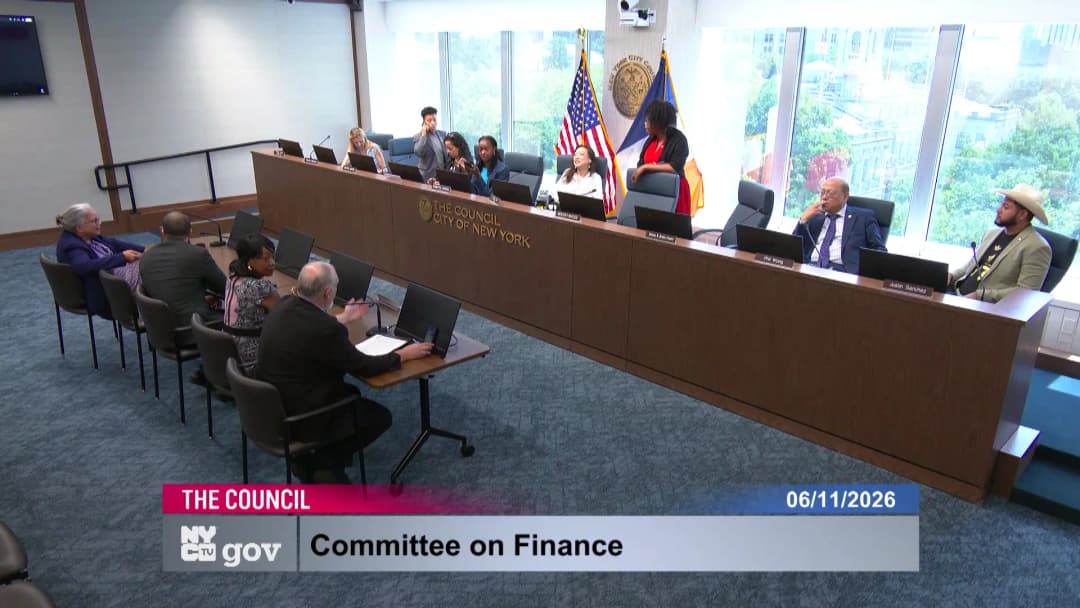
The Committee on Finance of the New York City Council, chaired by Councilmember Linda Lee, met on June 11, 2026, to vote on a pre-considered resolution to modify the city's budget and on ten pre-considered resolutions approving real property tax exemptions for housing development projects. The meeting included a roll call vote on all items coupled together, resulting in unanimous approval with 15 affirmative votes, 0 negative, and 0 abstentions. Councilmembers Gennaro and Marte were absent. Consent Calendar - T2026-2126 / M 0078-2026: Communication from the Office of Management & Budget to appropriate $504.4 million in new City revenues in Fiscal Year 2027, pursuant to Section 107(e) of the New York City Charter. Approved with companion Resolution Res 0524-2026. - T2026-2125 / Res 0524-2026: Resolution approving the modification (MN-8) under Section 107(e). - Ten Land Use Applications (LU 0081-2026 through LU 0090-2026): Pre-considered resolutions approving requests from the Department of Housing Preservation and Development to grant real property tax exemptions under Article 11 of the Private Housing Finance Law for the following projects: - St. John’s Flats (Brooklyn, CD 16 & 18) - NY Pacific Street (Brooklyn, CD 16) - TBK 1001B St. Nicks Alliance - 315 Harman Street (Brooklyn, CD 4) - The Pearl (Manhattan, CD 9) - 84-04 126th Street (Queens, CD 9) - CB Manager (multiple blocks in Manhattan and Brooklyn) - Westbeth Artist Housing (Manhattan, CD 2) - TBX901-RSE (Bronx, CD 3) - DY Heights (Manhattan, CD 12) - CSP Third Street (Manhattan and Bronx, multiple CDs) Key Outcomes - All 12 agenda items were approved by a roll call vote of 15 in favor, 0 opposed, with 2 absent (Gennaro and Marte). The vote was initially recorded as 14–0, but after clarifying Councilmember Morano’s vote, the final tally was 15–0. - The committee approved the $504.4 million revenue appropriation for Fiscal Year 2027 and the corresponding budget modification. - The ten property tax exemption resolutions were approved, enabling the listed housing projects to receive tax benefits.
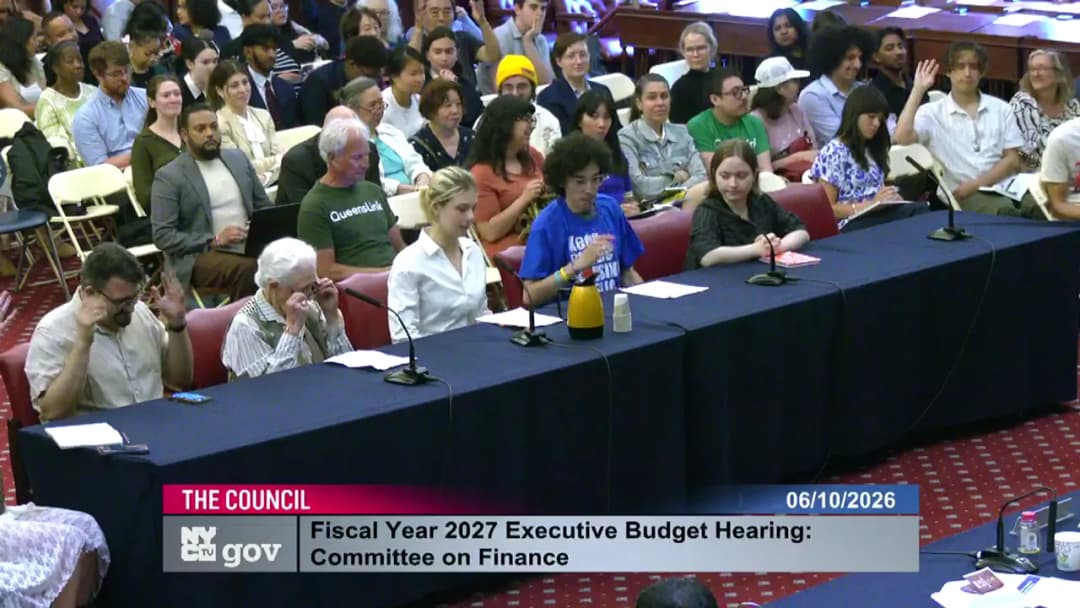
The New York City Council Committee on Finance, chaired by Linda Lee, held a day-long public hearing on Wednesday, June 10, 2026, to review the Fiscal Year 2027 Executive Budget. The hearing began at 9:30 AM and extended into the evening, featuring testimony from dozens of speakers representing a wide range of community organizations, unions, advocacy groups, and affected residents. Key themes included the need for increased funding for after-school programs, libraries, EMS pay parity, public housing preservation, immigrant legal services, and youth development initiatives. Council members expressed strong support for many of the requests and committed to fighting for funding during budget negotiations. Public Comments & Testimony - After-School Programs: Multiple speakers, including students and parents from Girls Inc. of Astoria and Manhattan Youth at MS 177 and Wagner Middle School, urged the council to restore funding for after-school programs that were not renewed by the Department of Youth and Community Development (DYCD). They described the programs as life-changing and emphasized the importance of trusted providers and continuity for children's development. - UFT and Paraprofessionals: Karen Alford, Mary Vicaro, and other United Federation of Teachers (UFT) representatives testified in support of the "Power Professional Respect Check" legislation to improve pay for paraprofessionals. They also requested continued funding for United Community Schools, the Teacher Center, and other UFT programs, citing their impact on student achievement and family support. - Youth Justice and Alternatives to Incarceration: Representatives from Exalt Youth, Youth Justice Network, and other organizations called for increased funding for alternatives to incarceration (ATI) and reentry services, noting that these programs save the city money and reduce recidivism. They requested an additional $2.4 million in discretionary funding. - Libraries: Speakers from the Queens Library Guild, NYC Plan, and young students testified in favor of allocating 0.5% of the city's expense budget to libraries. They noted that the executive budget's $526 million falls short of that goal and does not keep pace with inflation, leading to reduced programming, staffing, and infrastructure. - EMS and FDNY: EMS officers and union leaders testified about a crisis in the workforce, with low pay leading to high turnover and long response times. They reported that EMTs start at $39,000 and that the average age of the workforce is 23. They urged pay equity and increased funding to address a projected 70% turnover rate within five years. Council members expressed strong support and committed to fighting for pay parity. - Public Housing: Tenants and advocates from Safe Section 9, the Chelsea Public Housing Coalition, and others called for reallocation of $1.5 billion from HPD's PACT/RAD conversion fund to NYCHA Section 9 comprehensive modernization. They argued that privatization through PACT leads to harassment, displacement, and poor conditions, and that the money should instead be used for direct repairs to keep public housing public. - Environmental and Parks: NYLCV, the Playfair Coalition, and others praised the baselining of $15 million for parks but urged additional funding for urban forest plan implementation and stormwater infrastructure. They also requested full funding for the remaining $8 million to retain 115 park staff. - Education: Speakers from the Coalition for Equitable Education Funding, the Dignity in Schools Campaign, and parents of students with disabilities called for restoration and baselining of programs such as restorative justice, mental health continuum, SEED, and immigrant family communications. They also demanded increased investment in special education services and school accessibility. - Immigrant Services: Multiple organizations, including CUNY Citizenship Now, the ICARE Coalition, and the New York Immigration Coalition, requested continued and increased funding for immigration legal services, adult literacy, and the NYC Benefits program. They highlighted the increased need due to federal policies and immigration enforcement. - Queensway vs. Queenslink: A large number of transit advocates and residents testified against the $43 million allocation for the Queensway park project and in favor of the Queenslink proposal, which would combine rail transit and park space on the former Rockaway Beach Branch right-of-way. They argued that building a park now would preclude future rail reactivation and that Queenslink would provide much-needed north-south transit in a transit desert. - Other Testimony: Additional testimony addressed funding for animal welfare, senior services, small business support, HIV prevention, domestic violence survivor housing, CUNY transportation, and the Mayor's Office for People with Disabilities. Discussion Items - Council members engaged with many testifiers, asking questions and expressing support. Councilmember Brooks-Powers questioned EMS representatives about the impact of Peninsula Hospital's closure on Rockaway response times. Councilmember Dinowitz discussed DOE procurement issues with a vendor who alleged misconduct. Councilmember Wonf followed up on allegations of missing evidence in an SCI investigation. Councilmember Narcisse expressed support for teachers and EMS workers. - Chair Lee and other members acknowledged the emotional weight of the testimony, particularly from young people and frontline workers, and committed to continued advocacy. Key Outcomes - No formal votes were taken, as this was an oversight hearing to gather public input for budget negotiations. - Council leaders, including Speaker Menin and Finance Chair Lee, expressed strong support for EMS pay parity, library funding at 0.5%, and restoration of after-school program contracts. - Several council members committed to pushing for increased funding for public housing preservation, alternatives to incarceration, and youth programs. - The committee agreed to continue reviewing the concerns raised, including the DYCD contract award process and the Queensway/Queenslink issue, and to consider them in final budget discussions. - The public was reminded that written testimony can be submitted within 72 hours of the hearing for inclusion in the record.
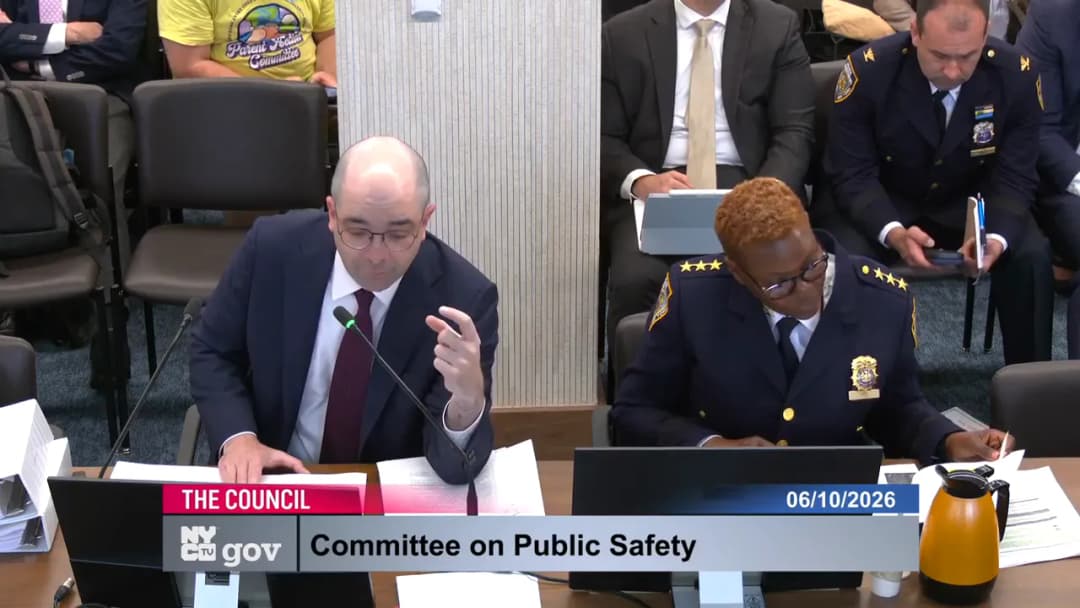
The New York City Council Committee on Public Safety, chaired by Councilmember Oswald Feliz, held a hearing on Wednesday, June 10, 2026, at 10:00 AM in Hearing Room 3 at 250 Broadway. The committee heard testimony on seven pieces of legislation addressing towed vehicle databases, fraudulent license plates, tow pound capacity, school emergency alerts, police officer age limits, security perimeters near schools, and weekly reporting on confirmed firearm discharges. All bills were laid over by the committee after hearing testimony from the NYPD and the public. Public Comments & Testimony - Support for Security Perimeter Bill (T2026-2052): Multiple speakers from Jewish community organizations (JCRC, UJA-Federation, ADL), Catholic schools, and 92nd Street Y testified in favor, citing rising anti-Semitic incidents and the need for transparency and safety for students entering and exiting schools. They argued the bill codifies existing NYPD practices and provides public accountability. - Opposition to Security Perimeter Bill: Representatives from Legal Aid Society, Neighborhood Defender Service, NYCLU, Dignity in Schools, Alliance for Quality Education, and parent advocates opposed the bill as currently written. They argued it does not achieve transparency but instead grants NYPD new authority to create plans, potentially chilling student protest and disproportionately impacting Black, brown, and immigrant communities. They urged amendments to require NYPD to report existing policies and affirm First Amendment protections. - Other Bills: No public testimony was offered on the remaining six bills. Discussion Items - Int 0489-2026 (Towed Vehicle Database): Sponsored by Councilmember Vernikov. NYPD Deputy Commissioner Gerber testified that the city already maintains an online database (CTOPS integrated into NYC 311) for vehicles towed by NYPD, sheriff, and marshals, but not private tow operators. NYPD opposed creating a separate database and suggested private tow operators report directly to 311. Chair Feliz noted personal experience with a towed car and stressed the need for a centralized system. - Int 0551-2026 (Fraudulent License Plates): Sponsored by Chair Feliz. NYPD had no objection. Discussion focused on enforcement challenges and the prevalence of ghost cars. NYPD reported 21 joint operations in 2026 with 1,320 vehicles seized, and over 104,000 summonses for obstructed plates year-to-date. - Int 0552-2026 (Tow Pound Capacity): Sponsored by Chair Feliz. NYPD expressed no objection but sought clarity on reporting scope. Chief O'Bay detailed current capacity: Bronx (350 regular+28 heavy duty, inventory 414+23), Brooklyn (392+15, inventory 852+24 including 443 motorcycles), Queens (250+12, inventory 196+23). Most vehicles are reclaimed within 1-2 days; only 767 of 21,610 towed in 2026 remained unclaimed. Councilmember Brewer raised the need for a Manhattan tow pound after the 2021 closure. - Int 0843-2026 (School Emergency Alert System): NYPD had no objection but stated primary responsibility lies with NYC Emergency Management and Department of Education. Chair Feliz noted the role of NYPD in communicating school emergencies. - Int 0913-2026 (Police Exam Age Limit): Sponsored by Councilmember Farias. NYPD strongly supported raising the maximum age from 35 to 43, aligning with state law. Councilmember Farias noted that about 80 candidates per year are lost due to the age cap and the change expands the applicant pool with more mature candidates. - T2026-2052 (Security Perimeters at Educational Facilities): Sponsored by Councilmember Encarnacion. NYPD testified they have no written guidance specific to schools but apply legal principles (content-neutral, time/place/manner restrictions) on a case-by-case basis. They supported the bill's principle but requested a one-year effective date and quarterly reporting instead of weekly. Chair Feliz and Councilmembers Gutiérrez, Joseph, and Sanchez questioned the need for new plans given existing practices. Public testimony was sharply divided. - T2026-2058 (Weekly Reporting on Confirmed Firearm Discharges): Sponsored by Chair Feliz. NYPD raised concerns about feasibility of weekly reporting, requesting quarterly. Deputy Commissioner Gerber explained the complexity of tracking confirmed shots fired across many complaint categories. Councilmember Gutiérrez questioned the reliability of ShotSpotter data. NYPD confirmed their contract with ShotSpotter runs through 2027. Key Outcomes - All seven bills were heard by the committee and laid over (no final vote taken). The committee will continue to work with the NYPD and stakeholders to refine the legislation. - For T2026-2052, multiple council members indicated willingness to amend the bill to a pure transparency measure requiring NYPD to publicly report existing policies rather than create new plans. - Written testimony may be submitted within 72 hours after the hearing via email to testimony@council.nyc.gov. - The committee expressed interest in further discussions on Manhattan tow pound options and improving data collection on firearm discharges.