Browse by city
Date range
Search help

Search titles, summaries, topics and stored transcripts together. Keywords may match separately; put the whole query in double quotes for a phrase. Matching follows word analysis, so punctuation is not exact. Both dates are included. Documents are not searched.

SHOWING 181–190 ENTRIES
181
DEC 2, 2025 · ROCHESTER, MINNESOTA · BOARDS AND COMMISSIONS
Police Policy Oversight Commission Meeting - December 2, 2025

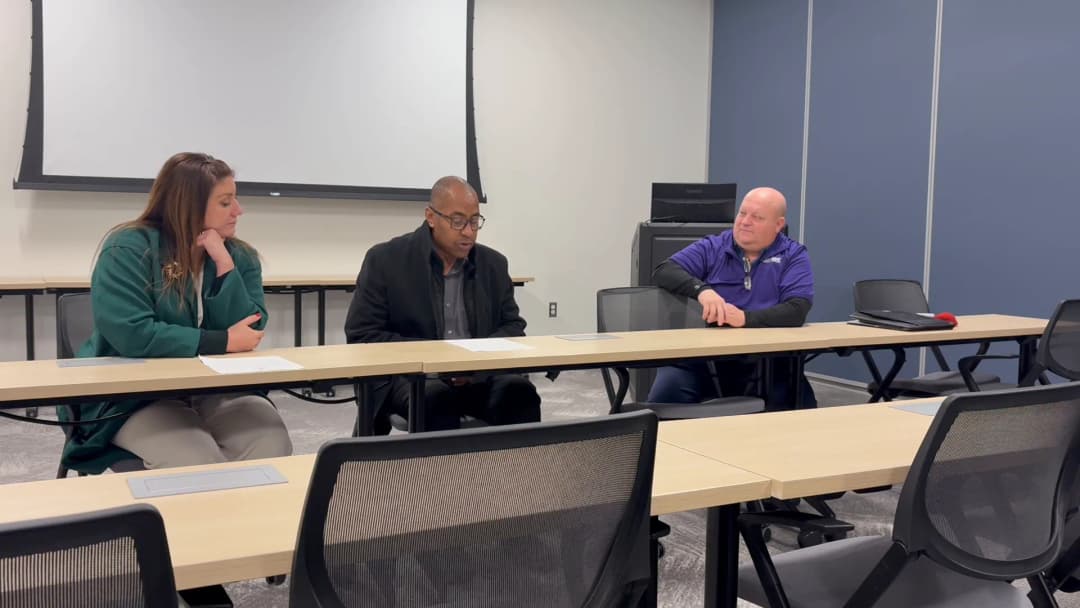
The final meeting of the 2025 calendar year for the Rochester Police Policy Oversight Commission convened to review the Drone as a First Responder program and address ongoing debates regarding the Commission's governing rules of procedure. Commissioner Kyle Fisher presided over the session, which began with the unanimous approval of the September 9th minutes and the adoption of the current agenda. The meeting focused on a detailed presentation by the Rochester Police Department regarding their drone operations, followed by a significant deliberation on the Commission's bylaws, which resulted in a decision to defer further rule amendments pending legal and operational clarity. Consent Calendar - Minutes Approval: The Commission unanimously voted to approve the minutes from the September 9, 2025 meeting. - Agenda Adoption: The agenda for the December 2, 2025 meeting was unanimously adopted without discussion. - Public Comment: No members of the public stepped forward to offer testimony during the 15-minute public comment period. Public Comments & Testimony - The Commission Chair noted a potential media representative in attendance but determined no public testimony would be offered. Consequently, the meeting proceeded directly to agenda items. Discussion Items Drone as a First Responder Program Commissioner Kyle Fisher and City Attorney provided context for a presentation by Rochester Police Department detectives Alex Kendrick and management analyst Jeff Savaki regarding the department's drone program. Presentation Highlights: - Program Overview: The program, operating under the brand "drone as a first responder," utilizes a "crawl, walk, run" implementation strategy. Currently, two SkyDio dock-based drones are deployed at the Police North Precinct and the Art Center downtown, allowing for approximately 20-23 minutes of flight time per charge. - Statistics: As of December 3, 2025, the program had logged 573 flights since mid-September. - The drone arrives on scene before officers in approximately 60% of calls. - Drones cleared calls entirely without an officer's physical presence in approximately 14% of instances. - Operational Impact: Commissioners and speakers noted the drone acts as a "force multiplier," allowing a single pilot to cover the city remotely and reducing the need for multiple officers to secure perimeters. The system includes thermal and visual sensors that record simultaneously, with footage uploaded to the evidence server upon landing. - Policy and Compliance: - Statutory Adherence: Police Chief Kendrick affirmed that the department's policy strictly mirrors Minnesota statute, which permits drone use only under 11 specific conditions (e.g., risk of death, bodily harm, missing persons, or specific criminal activity). General surveillance is prohibited. - Transparency: The department maintains a public portal on the police website displaying flight paths and statutory reasons for flights, which undergoes a delay to protect ongoing criminal investigations. - Data Deletion: Recordings not deemed evidence in a criminal case are mandated by statute to be deleted within seven days of landing. - Capabilities and Limitations: - The drones operate beyond visual line of sight due to an FAA Part 107 waiver. - Safety features include automatic return-to-home if connectivity is lost and parachute deployment to protect people on the ground in the event of a battery failure. - The system does not currently allow for officers in the field to autonomously launch or control the drone without a certified pilot; however, control can be transferred between certified pilots. Bylaws and Rules of Procedure The Commission discussed the conflict between its current "Rules of Procedure and Operation" and a standardized document adopted by the City Council for all advisory boards, which was labeled "Rules of Procedure and Operation" rather than "Bylaws." - Confusion and Discrepancy: City Attorney highlighted that the Commission had been operating under a customized document without realizing a City Council-mandated standardized version exists. The Mayor noted that while the Council prefers standardization to ensure a consistent experience across all boards, the Commission's specific ordinance grants it the authority to set its own rules to address nuances like incident review. - Scope of Authority: - The City Attorney and Mayor clarified that substantive changes (such as quorum definitions or ratification requirements) likely require City Council approval, whereas minor procedural adjustments (like meeting times) could be handled as addendums. - Commissioner Fisher expressed concern that the Commission had been reviewing potential bylaw amendments for a year without full clarity on the governing framework. - Key Concerns: - The integration of the Commission's incident review role and the definition of the Professional Standards Manager's role were identified as high-priority but complex issues that require further understanding. - Commissioner Fisher and others noted that the current rule regarding an 80% attendance requirement is impractical given the shift to monthly meetings for a seven-member commission. Key Outcomes - Tabled Bylaw Discussion: The Commission voted unanimously to table all discussions regarding changes to the Rules of Procedure/Bylaws. The motion was carried to allow the Commission to: 1. Receive a clearer understanding of the Professional Standards Manager's role and the current complaint process. 2. Obtain official review and guidance from the Mayor's Office and City Council regarding which document governs the Commission and the scope of their authority to amend rules. - Next Steps: - The Commission will request input from the City Council and Mayor regarding the specific documents they must operate under before the next meeting. - Professional Standards Manager representation is requested for the next meeting to explain the complaint investigation role. - Adjournment: The meeting concluded with a motion to adjourn, with the Commission aiming to have a definitive governing document identified before proceeding with bylaw amendments in 2026.
TECHNOLOGY AND INNOVATION 49% · BOARD AND COMMISSION OPERATIONS 36% · PUBLIC SAFETY 14% · PERSONNEL MATTERS 1%
182
DEC 2, 2025 · ROCHESTER, MINNESOTA · BOARDS AND COMMISSIONS
Police Civil Service Commission Meeting - December 2, 2025

The Police Civil Service Commission of Rochester, Minnesota, met on December 2, 2025, at 3:00 p.m. at the Rochester Police Department North Station. Commissioners Brad Trahan, Courtney Dugstad, and Jeffery Boyd were present. The meeting was brief, with no public comments, and focused on approving prior meeting minutes and a candidate background check. Consent Calendar - Minutes: The commission unanimously approved the minutes from the November 20, 2025, meeting. (Moved by Courtney Dugstad, seconded by Brad Trahan; all ayes.) Public Comments & Testimony - No members of the public were present for comment. Discussion Items - Background for Candidate A: Commissioners reviewed the background check for an unidentified candidate (referred to as "Candidate A"). No discussion was needed beyond confirming that each commissioner had reviewed the materials. Key Outcomes - Motion to Approve Background for Candidate A: The commission voted unanimously to approve the background for Candidate A. (Moved by Brad Trahan, seconded by Courtney Dugstad; all ayes.) - Adjournment: The meeting adjourned with a unanimous vote, lasting only a few minutes. The chair wished everyone happy holidays. Note: The meeting date as provided in the source materials is December 11, 2025, but per the directive, the date in this summary reflects the specified date of December 2, 2025.

PROCEDURAL 100%
183
DEC 1, 2025 · ROCHESTER, MINNESOTA · CITY COUNCIL
Rochester City Council Meeting Summary (December 1, 2025)

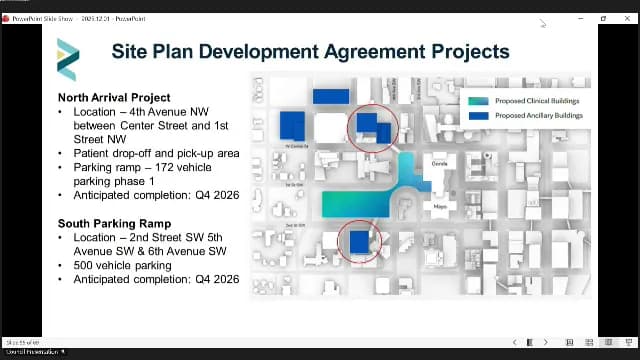
The December 1, 2025, Rochester City Council meeting began with public comments regarding business licensure enforcement and property taxes. The Council proceeded to approve the agenda and consent calendar before holding a public hearing on the 2026 property tax levy, operating budget, and capital improvement plan ( Consent Calendar - Items F1–F7 and F9–F10: Unanimously approved to be blocked and passed without separate deliberation. - Item F8 (poll item by Councilmember Palmer): Approved as part of the consolidated block. Public Comments & Testimony - James Acklin: Expressed strong opposition to the proposed property tax increase, stating that local taxes are his largest expense and are aggravating the lack of affordable housing. He argued that public officials should adopt a "cost down" mentality similar to private corporations and expressed concern about major investment firms acquiring local rental properties. - Molly Dennis: Expressed strong opposition to the property tax levy increase, citing a lack of transparency and details regarding wasteful spending, cronyism, and conflict of interest. She stated she was unable to speak during the initial open comment period and compelled the council to disclose exactly where every dollar is being spent before voting to raise taxes, noting the increase would disproportionately hurt senior citizens and working families. Budget & Public Hearing (2026 Levy and Budget) - Administrator Zelms: Presented the recommended 2026–2027 operating budget ($693.4 million total), the 2026–2031 Capital Improvement Plan ($1.1 billion total investment), and the 2026 property tax levy. He clarified that the $6.6 million increase in the tax levy represents a 5.95% increase in levy dollars, not a tax rate increase, and noted the net tax capacity rate is projected at 50.39%. He also outlined a 4% electric rate increase and a 9% water rate increase. - RPU General Manager Tim McCullough: Explained that utility rate increases are driven by capital investments (advanced metering, power supply) and community growth, noting that unlike Austin, MN, Rochester is investing in new capacity and reliability. - Councilmember Palmer: Proposed a series of amendments to cut costs by $1.1 million (a portion of the proposed 5.8% increase). He moved to: (1) use $500,000 from the 2025 contingency fund; (2) not fund an ADA management coordinator ($153,000); (3) delay funding for a North maintenance position ($134,000); (4) delay funding for an arborist position ($124,000); and (5) reduce the library budget by $245,000. - Council Response to Amendments: - Mayor Norton and Councilmember Keene opposed the ADA coordinator cut, stating a single expert is required by law and necessary for compliance. - Councilmember Wall and others argued against the arborist cut, citing public safety concerns regarding tree maintenance and long-term city growth plans. - Councilmember Miller supported the original budget, emphasizing the need for service levels and noting that transit is not funded by the tax levy. - Vote: All amendments proposed by Councilmember Palmer failed. Mayor Norton and Councilmembers Keene, Miller, Fredericks, and Wall supported the original budget, while Councilmember Palmer and Councilmember Doring opposed it. Discussion Items - Mayo Clinic North Arrival Center & South Parking Ramp (Item H1): - Deputy City Administrator Cindy Steinhauser: Recommended approving a conditional site development agreement for the Mayo Clinic project. She explained that a "campus approach" is necessary due to the scale of the 2.4 million square foot project. The agreement allows construction to proceed before a fully complete site plan is finalized, with conditions requiring design completion and a funding mechanism for the city to build public site items if Mayo fails to do so. - Councilmember Palmer: Expressed confusion regarding the need for such a complex agreement and financial security clauses for a developer like Mayo, and questioned the necessity of funding a $20,000 study for Second Avenue. - Councilmember Miller: Moved to remove the $20,000 Second Avenue study portion of the motion. The amendment to remove the study was voted down. - Outcome: The Council approved the conditional site development agreement for the North Arrival Center and South Parking Ramp, allowing construction to proceed while final design elements are completed. - Salvation Army Security and Rental Assistance (Council Initiated Action): - Councilmember Palmer: Moved to instruct staff to enter a micro-contract ($20,000) with the Salvation Army from the 2025 contingency fund to address security needs at their health/dental clinic and fund rental assistance. - Councilmember Keene: Expressed concern that this action sets a precedent for direct funding of specific nonprofit programs rather than supporting existing grant funds, noting the $20,000 will run out quickly. - Administrator Zelms: Clarified that existing CDBG funds for this year were depleted and the Salvation Army may not be eligible for 2026 funds due to prior receipts, suggesting this as a one-time stopgap. Key Outcomes - Budget Adoption: The 2026–2027 Operating Budget, 2026–2031 Capital Improvement Plan, and 2026 General Tax Levy ($118,284,623) were unanimously adopted via a six-to-five vote (Councilmember Palmer voted nay). - Utility Rates: Approved electric rate increase of 4% and water rate increase of 9% as part of the budget package. - Mayo Clinic Project: Approved conditional site development agreements for the North Arrival Center and South Parking Ramp to allow construction to proceed under a phased approval process. - Salvation Army: Approved a $20,000 micro-contract from the 2025 contingency fund for security and rental assistance. - Ordinances: First reading of text amendment CD 2025-001 TA; Second reading and approval of ordinances amending license fees (K1) and special events chapter (K2) passed unanimously. - Adjournment: The meeting adjourned after the ordinances were approved and the final motions were passed.

INFRASTRUCTURE AND CAPITAL PROJECTS 25% · BUDGET EQUITY ANALYSIS 22% · FISCAL SUSTAINABILITY 12% · PROCEDURAL 9%
184
NOV 26, 2025 · ROCHESTER, MINNESOTA · BOARDS AND COMMISSIONS
RST Airport Commission Meeting Summary - December 2, 2025

The Airport Commission convened at 2:00 PM on December 2, 2025, to review operational and financial reports, approve routine maintenance projects, and vote on significant lease agreements. The meeting addressed a series of proposals ranging from facility upgrades to major capital development with United Therapeutics. No members of the public were present for the open comment period. Consent Calendar - Minutes Approval: The Commission unanimously approved the minutes from the October 7th meeting. Public Comments & Testimony - No public comments or testimony were received during the meeting as no members of the public were in attendance. Discussion Items - Operational and Financial Reports: Staff presented data showing steady passenger growth (6% year-over-year) and revenue increases, noting that passenger retention rates are currently below the 20% target but have historically peaked in the 30s. Financial reports highlighted the removal of pandemic-era COVID funds from the budget for the upcoming year and the need to recoup funds from active FAA and state projects. - FAA Tower HVAC Replacement (Item 7A): Discussion focused on replacing aging air conditioning and heating equipment in the FAA air traffic control tower to manage extreme humidity and temperature fluctuations caused by the large glass structure. The project includes a boiler for dehumidification and an upgrade to the Johnson Controls HVAC software for monitoring. Staff noted this was an unbudgeted, unexpected expense. - Mayo Clinic Employee Lease (Item 7V): Staff proposed leasing 744 square feet of previously unused space near Gate One to Mayo Clinic for an employee lounge. Mayo is funding all construction and improvements. The lease is for five years plus a five-year option at $0.2596 per square foot. Staff noted the space will include food and drink provided by Mayo, relieving a potential revenue loss for the airport, and will offer free Wi-Fi to patients via the clinic's network. - United Therapeutics Land Lease (Item 7C): Discussion centered on a 40-year land lease with United Therapeutics for the construction of a 40,000 square foot hangar and base infrastructure. United Therapeutics agreed to invest a minimum of $9 million for the hangar and $5.5 million for infrastructure (taxiways, apron, utilities, roads), with the airport securing a $1 million grant from MnDOT to offset infrastructure costs. The lease includes a 75% rental credit for the tenant's investment in infrastructure. The agreement allows for future development of additional hangars on adjacent land. - Engineering Services Notice: Staff provided an informational update on the upcoming five-year solicitation for engineering and architectural services, a requirement by the FAA. No vote was required as this is a prerequisite for future projects rather than a specific project approval. - Other Business: - International Relations Committee (IRC): Staff confirmed the IRC has requested a discussion regarding the installation of a display or flags identifying Rochester's sister cities. - Zoning Update (Jazzby): Staff provided an update on the joint zoning committee (JAZZBY). The first meeting to elect leadership occurred on November 21st. The next technical meeting is scheduled for January 23rd to discuss the custom zoning ordinance. A public hearing is expected in February or March before final adoption. Key Outcomes - Motion Approved (Item 7A): The Commission voted unanimously to approve the replacement of the FAA tower's HVAC and humidity control systems. - Motion Approved (Item 7V): The Commission voted unanimously to approve the five-year lease agreement with Mayo Clinic for the employee lounge. - Motion Approved (Item 7C): The Commission voted unanimously to approve the land lease and development agreement with United Therapeutics for the new hangar and infrastructure. - Next Steps: Staff will return to the Commission in March with the selected engineering firm and in early 2026 with the final Zoning Ordinance for public hearing and adoption.

AIRPORT OPERATIONS 48% · ECONOMIC DEVELOPMENT 26% · ENGINEERING AND INFRASTRUCTURE 16% · ZONING REGULATIONS 4%
185
NOV 26, 2025 · ROCHESTER, MINNESOTA · BOARDS AND COMMISSIONS
Rochester Heritage Preservation Commission Meeting Summary - November 25, 2025

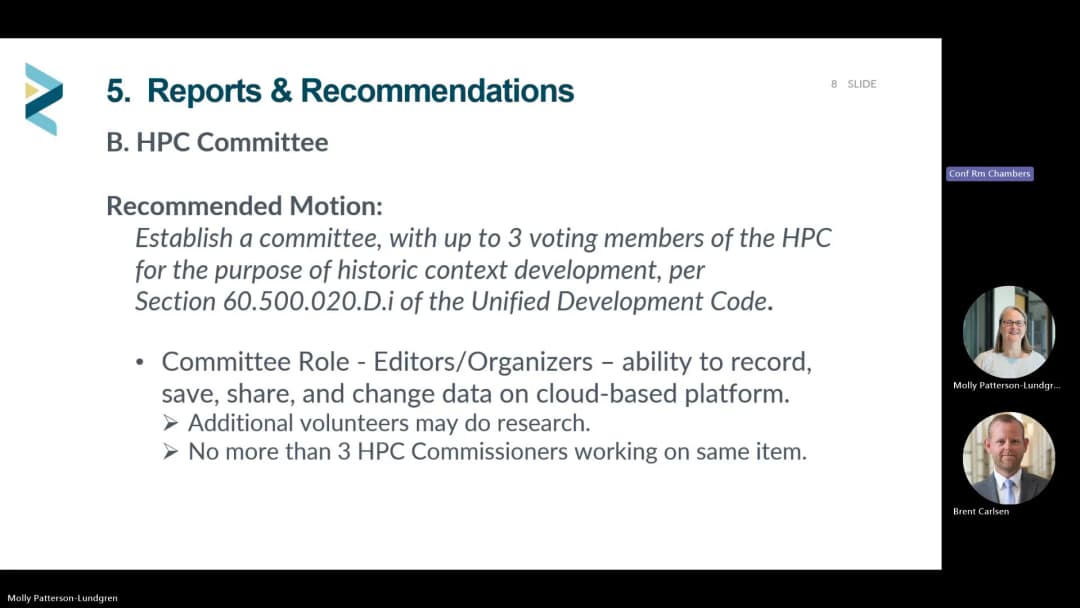
The Rochester Heritage Preservation Commission convened on November 25, 2025, at 5:07 p.m. for a meeting focused on reviewing a proposed statue installation in Central Park, establishing a special committee for historic context development, discussing the potential reinstatement of the Louise Hill Award, and clarifying the economic hardship process for landmark status removal. Commissioner Bedaker, Gandhi, Schable, and Wasmer were absent, excused, or absent without excuse; Commissioners Connell, Dobmeyer, Mutchler, Poyer, and Chair Zastro were present. Consent Calendar - The order of the agenda was approved by unanimous consent. - The minutes from the previous meeting were approved by unanimous consent. Public Comments & Testimony - Mr. Skullnick: Expressed full support and congratulations to the Commission for the recent landmarking approval. He offered strong support for the Central Park certification, emphasized the importance of the new HPC committee focusing on relevant inventory buildings to avoid wasted effort, hoped the downtown historic vision report would address reducing demolition by neglect and assisting property owners, and requested specific timelines for the Indian Heights Park consultant selection and work completion. He also expressed hope that the Louise Hill (rescale) award would continue. - Ms. Hudson: Expressed strong concern regarding the delay in landmarking Indian Heights Park, noting it has been over a year since the work was promised to begin. She urged the Commission to utilize the existing 150-page ethnographic review conducted for Silver Lake Park to avoid duplicating the $30,000 cost and to expedite the process for Indian Heights Park. Discussion Items - Central Park Statue (Agenda 5A): Coordinator Patterson Lundgren presented a Certificate of Appropriateness for a new bronze statue of Amelia Hatfield Weatherstein in the southeast corner of Central Park. Lundgren noted the project is consistent with Secretary of Interior Standards for rehabilitation, as memorabilia and statues are typical for public squares. Commissioner Poyer inquired about maintenance and tree removal; Lundgren confirmed the Parks Department will maintain the site and that the selected location required no tree removal. Commissioner Mochler was satisfied that no trees were impacted. - HPC Committee Formation (Agenda 5B): The Commission discussed and voted to establish a special ad-hoc committee with a maximum of three voting members to develop historic contexts under the Unified Development Code. The committee will utilize a cloud-based sharing platform (likely Google Docs) to maintain communication without violating open meeting laws, while non-voting volunteers may assist with research. Commissioner Poyer noted this is an ad-hoc committee, while Chair Zastro clarified the Chair will appoint members based on volunteer interest if no one else steps forward. - Project Updates (Agenda 7A): - Downtown Historic Vision: The final report is being finalized for an internal city review, with presentation to City Council scheduled for February 23, 2026. A subsequent HPC meeting on February 24 is planned to review the full document and discuss a vote on the recommendations. - Indian Heights Park: The Commission is awaiting feedback from the State Preservation Office regarding a questionnaire submitted for potential National Register listing. The decision remains pending on whether to pursue local landmarking or National Register designation, with a plan to hire a consultant with specific Native American cultural expertise. - Louise Hill Award (Agenda 7B): Following community reports of a forgotten plaque in City Hall, the Commission discussed reintroducing the Louise Hill Award given from 2009 to 2014. The award recognized leaders displaying courage and dedication in preserving the city's history and culture. Commissioners debated the frequency of the award (suggesting it not be annual to maintain meaning) and the lack of original criteria documents. Commissioner Poyer recommended forming a subcommittee to manage nominations and proposed timing the award during Preservation Month in May 2026. - Economic Hardship and Entitlement Process: Coordinator Lundgren addressed questions regarding two recent applications to remove landmark status based on economic hardship. She clarified that property owners bear the full burden of proving hardship under the ordinance and that Staff does not assist in constructing that case. Commissioner Poyer expressed a need for greater transparency in notifying applicants of inadequate submissions well before hearings. Commissioner Dobmeyer questioned if the ordinance provides sufficient clarity to prevent political persuasion from influencing decisions; Lundgren affirmed the ordinance is sufficiently detailed and balanced, though she acknowledged the inherent subjectivity and political nature of the City Council's final decision. Key Outcomes - Approval of Central Park Statue: The Commission unanimously approved the Certificate of Appropriateness for the installation of the Amelia Hatfield Weatherstein statue in Central Park (Motion by Commissioner Poyer, Seconded by Commissioner Dobmeyer). - Establishment of History Committee: The Commission unanimously voted to establish a special ad-hoc committee with up to three voting members for the purpose of historic context development (Motion by Commissioner Poyer, Seconded by Commissioner Mutchler). - Scheduling Decisions: The Commission decided to keep the December 16th meeting on the calendar but will review for cancellation if no business arises; a preliminary survey will be conducted regarding next year's calendar, specifically regarding the May Memorial Day date.

HISTORIC PRESERVATION 60% · PROCEDURAL 19% · PUBLIC ENGAGEMENT 12% · ECONOMIC DEVELOPMENT 5%
186
NOV 26, 2025 · ROCHESTER, MINNESOTA · BOARDS AND COMMISSIONS
Rochester Public Utilities Board Meeting - November 26, 2025

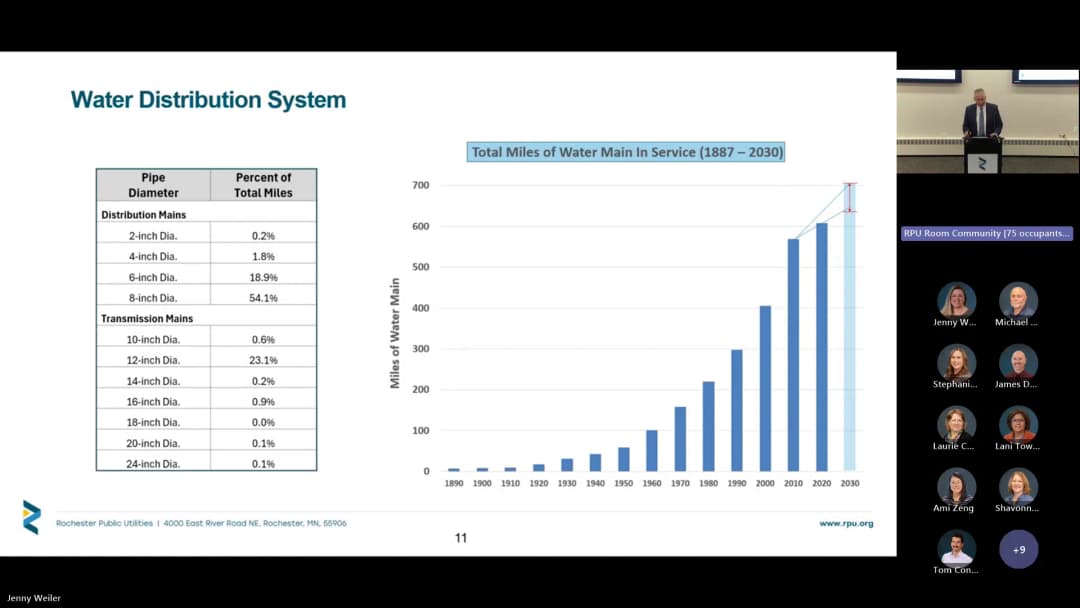
The Rochester Public Utilities Board convened at 4:00 PM for a regular meeting focused on budget amendments, energy storage authorization, and utility rate adjustments. The meeting opened with a safety moment regarding impaired driving during Thanksgiving Eve, followed by unanimous approval of the agenda and the consent calendar. The board addressed significant public concerns regarding a newly implemented grid access fee for solar customers before proceeding to approve a budget amendment for water infrastructure and a major battery storage project. Consent Calendar - Unanimously approved the consent agenda, including resolutions found on pages 121, 124, 129, and 132 of the meeting packet. Public Comments & Testimony - James Rentz (Rochester resident and solar owner): Expressed strong opposition to the new grid access fee, characterizing it as a tax that discourages solar adoption. He requested clarification on the redacted documents supporting the fee and argued that the fee works against the encouragement of solar energy, especially given the removal of federal subsidies. - Evan (DER customer): Opposed the current implementation of the grid access fee, arguing it creates a short-term fix that leads to worse long-term costs for the community. He described DER systems as public-private partnerships and requested a six-month pause on the fee to allow for further discussion on how to slow rate increases and keep energy dollars local. - Sarah Dukek (Rochester resident and recent solar panel purchaser): Expressed surprise and concern regarding the fee, noting it negatively impacts the financial viability of solar for new installers. She questioned whether the fee signals a trend of continuous rate hikes and inquired about strategies to decrease dependence on non-local energy sources. Discussion Items - Safety Moment: Safety Manager Bob Cook presented on the dangers of "Blackout Wednesday" (Thanksgiving Eve), highlighting statistics regarding impaired driving fatalities and urging staff and the public to commit to driving sober. - 2025 Water Utility Budget Amendment (Item 4A): Director Todd Blomstrom presented a recommendation to reclassify $1.075 million in trunk water main oversizing reimbursement costs from the general capital expense fund to the water connection discharge fund. The presentation detailed that accelerated development and specific fringe projects (Badger Heights, Prairie Ridge) caused a substantial budget deficit in oversizing reimbursements. Staff explained that absorbing this cost would deplete fund balances and drive up rates for existing customers, whereas using connection charges aligns costs with the developers causing them. - Battery Energy Storage Authorization (Item 4B): Director Bill Bullock proposed authorizing a 20-megawatt battery storage project via a tolling agreement at the RPU Service Center and Zumbro Station. The discussion clarified that the battery would operate on energy arbitrage (buying low, selling high) and provide capacity credits, aiming for cost neutrality. Board members questioned the tolling structure, security measures (specifically that the vendor does not have access to the SCADA system), asset removal liabilities at the end of the 20-year term, and insurance coverage. Staff confirmed the project is a pilot to gather experience before potential future scaling. - Lead Service Line Replacement Update (Item 5A): Director presented an update on the lead service line replacement program, noting that state funding for 2026 was reduced from a requested $12 million to approximately $1.5 million due to new state funding tiers. The board discussed strategies to focus on removing "unknown" lines and managing carrying costs, while acknowledging the unfunded mandate challenges posed by the federal Lead and Copper Rule. - Cybersecurity Professional Development (Item 5B): Director Kelchin provided a presentation on RPU's cybersecurity strategy, emphasizing the multi-layered defense against ransomware and nation-state actors. Staff outlined their use of tabletop exercises, risk assessments, and a Security Operations Center (SOC). The board prioritized cybersecurity as a key business function and committed to funding and training. - General Manager's Report: General Manager McCullough provided updates on: - SIMPA Membership: Discussed the Energy Cost Adjustment (ECA) mechanics, confirming that wholesale costs are determined by the SIMPA board and passed through to RPU customers, with RPU managing the retail calculation. - Solar and Grid Access Fee: Addressed public pushback by explaining the economic necessity of recovering wire costs from net-metered customers who oversize their systems. He noted that while the fee reduces the subsidy for excess generation, customers still retain 70-90% of the value of their systems. He acknowledged communication gaps regarding the fee's 2025 delay and promised further outreach. - Municipal Solar Grants: Announced that RPU secured an additional $2 million in state grants to install solar on seven additional municipal buildings. Key Outcomes - Approved Resolution 4A: The board voted unanimously to amend the 2025 water utility budget, moving $1,075,000 from the general fund to the water connection charge fund to cover trunk main oversizing costs. This resolution will be forwarded to the City Council for approval on December 1, 2025. - Approved Resolution 4B: The board voted unanimously to authorize the 20-megawatt battery energy storage agreements at the Service Center and Zumbro Station, contingent on final SIMPA approval. Staff agreed to report on the battery's technical and financial performance after one year of operation. - Informational Updates: The board received reports on reduced lead service line funding, cybersecurity protocols, and the rationale behind the grid access fee. - Adjournment: The meeting adjourned with no further business.

WATER AND WASTEWATER MANAGEMENT 28% · ENERGY INDEPENDENCE 27% · TECHNOLOGY AND INNOVATION 15% · FISCAL SUSTAINABILITY 9%
187
NOV 25, 2025 · ROCHESTER, MINNESOTA · BOARDS AND COMMISSIONS
City Council Meeting Summary: Outside Agency Oversight Committee - Nov 25, 2025

The Outside Agency Oversight Committee convened on November 25, 2025, to review the financial performance and operational status of various non-profit organizations and city partners, including 125 Live, the History Center, and the Rochester Arts Center. Council members discussed financial stability ratios, noted significant regional outreach by the Small Business Development Center, and raised concerns regarding the Civic Theater's ticket scalping issues and fundraising activities. The meeting concluded with a directive to standardize future financial reporting formats and the approval of the 2026 committee calendar and Q4 disbursements. Consent Calendar - The Order of Agenda was approved unanimously. - Minutes and video recording of the previous committee meeting were approved unanimously. - The 2025 Fourth Quarter Disbursement of funds to allocated agencies was approved unanimously based on the stability of the organizations reviewed. Public Comments & Testimony - No public comments or testimony were recorded during this meeting. Discussion Items - 125 Live & History Center: Staff reported both organizations are financially stable with strong current and operating reliance ratios. The History Center noted increased youth participation and a solid equity position of approximately $1.3 million. Council members noted the 125 Live reports are "very stable" with younger demographics joining. - Human Rights Commission (County Partnership): Staff clarified that the City's $5,400 contribution for the youth line is slated to disappear in the 2026 budget request, being reallocated to the Youth Council as part of a budget-neutral shift. The County is reducing focus on a youth council line due to low call volumes (approx. six calls/month) in favor of directing concerns to the Minnesota Department of Human Rights. - Ready & Small Business Development Center (SBDC): Staff presented finances for Ready ($75,000 city contribution) and SBDC ($15,000 city contribution). SBDC reported 494 clients advised and 400+ hours of professional development. Council members discussed consolidating the SBDC activity report into the Ready item or creating a separate digestible impact report, noting the current report includes extensive regional outreach beyond Rochester. - Our Neighbors: The organization is financially strong, trending well post-COVID restructuring. Staff noted they function closely as a city department extension, handling tree plantings and neighborhood support. A 2026 budget increase is recommended to handle salt needs. - Rochester Arts Center: The organization shows strong financial trends with net operating income of nearly $19,400 and is launching an annual appeal campaign. Council members discussed potential future moves to a different location and the implications for city support, though details remain speculative. - Civic Theater: While the current ratio is strong, the net revenue for the period was negative $36,000. Council members raised concerns regarding: (1) a lackluster opening show that has since recovered with added performances; (2) significant ticket scalping issues where tickets for "Frozen" were resold for hundreds of dollars against face values of $30-$40; and (3) alarming ongoing fundraising during the season. Council directed Civic Theater leadership to provide further financial insight at the next meeting. - Rochester Development Authority (RDA): RDA reported a positive position with a spike in current ratio due to a one-time grant. Council members praised the reporting format, specifically the inclusion of a budget comparison and year-over-year analysis. - Southeastern Minnesota Initiative Fund: Financials show a significant increase in operating reliance ratio due to receiving state grants in different cycles. The fund hosts multiple state grant programs and maintains a robust current ratio of nine. Staff noted this reporting may not continue in the future if the Council does not vote to invest further. - Youth Council: The organization is on budget with current city funding of $10,000, with an expectation of an increase to $15,000 in the 2026 budget (budget neutral shift from Human Rights). An update from the Mayors' Japan Trip participants is scheduled for December 8th. - Reporting Standardization: Council members expressed a lack of consensus on the consistency of financial reports (specifically for 3M/3D items). Preferences were voiced for formats similar to the RDA report, including current and one prior year comparisons and budget variances. Staff will work with agencies to transition to a standardized format where possible, prioritizing organizations capable of the change immediately. - SBDC Data Privacy & Format: Due to privacy concerns regarding the SBDC database, staff proposed a limited meeting between one council member and the organization's representative to explore reformatting data or hosting a periodic study session update to improve digestibility. - 2026 Calendar: The proposed calendar for the Outside Agency Oversight Committee for 2026 was reviewed and approved. Key Outcomes - Report Format Directive: Staff are directed to work with the Finance department and individual organizations to standardize financial reporting formats. The preferred format includes a balance sheet and profit and loss statement comparing the current period to the prior year, alongside approved budget figures where available. - Civic Theater Follow-up: Civic Theater leadership is requested to appear at the next committee meeting to provide additional context regarding their operating model, the fundraising push, and the ticket scalping mitigation strategies. - SBDC Restructuring: Council members agreed to a working group (limited to one member for open meeting compliance) to meet with SBDC representatives (Mr. Dine) to determine if data can be reformatted for council use or if a periodic study session update is preferable. - Budget Reallocation: Council is notified that the $5,400 Human Rights youth line will be removed and transferred to the Youth Council contribution in the 2026 budget process. - Votes Passed: Motion to approve the 2026 calendar passed unanimously; Motion to approve Q4 disbursements passed unanimously.

COMMUNITY ENGAGEMENT 40% · PROCEDURAL 17% · ECONOMIC DEVELOPMENT 14% · FISCAL SUSTAINABILITY 13%
188
NOV 25, 2025 · ROCHESTER, MINNESOTA · CITY COUNCIL
Rochester City Council Study Session - November 24, 2025

The Rochester City Council convened a study session to review three primary agenda items: a proposed engagement strategy for natural gas franchise fees, a 20-year update to the Destination Medical Center (DMC) development plan, and a closed session for the city administrator's performance review. Presenters from the City of Rochester and DMC outlined strategies to generate stable funding for sustainability and health innovation while seeking community input on controversial fees and urban development priorities. Consent Calendar - No items were placed on the consent calendar for this session. Public Comments & Testimony - Councilmember Fredericks: Expressed the position that the process is vital for statewide economic health but voiced a specific concern that residents often only pay attention to such issues when they encounter the fees directly on their bills, suggesting a need for robust public awareness campaigns. - Councilmember Palmer: Stated strong opposition to the addition of franchise fees, characterizing them as regressive taxes that burden lower-income residents. He expressed that the community is already overtaxed and noted that existing rebates (like Conserve and Save) are already underutilized by many. - Councilmember Keene: Noted that the community's feedback and engagement were necessary to move forward but questioned the fairness of the mechanism, suggesting it functions more as a tax than a fee, particularly because natural gas is an essential utility rather than an optional service like cable. Discussion Items - Natural Gas Franchise Fee Engagement Strategy - Staff Presentation: Officials presented a strategy to gather community input on natural gas franchise fees, noting that 50% of proposed revenue would fund community programs (e.g., weatherization, energy efficiency) and 50% would fund organizational efforts (e.g., municipal fleet electrification). The engagement period is planned for January–March 2026, with a recommendation for implementation to be brought back in April. - Councilmember Miller: Stated support for the engagement process but expressed concern regarding the trade-off between environmental stewardship and affordable living. He noted that new housing stock built after 1990 is already energy-efficient and questioned the program's utility for owners of newer homes, though he acknowledged a gap in capacity for retrofitting older homes. - Councilmember Palmer: Expressed concern that the proposal ignores the reality of existing energy efficiency programs and argued that adding fees to residents who are already financially strained would not be effective or equitable. He requested that discussions on the fee be halted until the property tax situation can be addressed. - Councilmember Fredericks: Articulated the position that a franchise fee on natural gas is a "regressive tax" that disproportionately impacts low-income households who cannot easily reduce gas usage. He argued that essential utilities should not be subject to fees, citing the lack of taxation on clothing and food as a parallel. - Mayor Norton: Expressed comfort with the proposed engagement process, rejecting the characterization of the fee as inherently regressive by arguing that usage-based fees are commensurate with consumption. He emphasized that the fee structure allows residents to control their costs by reducing usage, unlike flat taxes. - Councilmember Wall: Requested clarification on whether the engagement was seeking permission to implement a fee or if the fee was a foregone conclusion, noting that previous presentations had been more detailed. He argued that because residents cannot opt out of gas usage, the fee effectively acts as a tax. - Councilmember Doring: Expressed support for the proposal's potential to incentivize environmental sustainability in older homes but sought more details on how the funds would specifically support equity and affordable housing. - DMC 20-Year Development Plan Update - Staff Presentation: DMC representatives presented a 178-page update focusing on three strategic priorities: accelerating health innovation, designing for well-being, and driving purposeful growth. The plan serves as a strategic framework rather than a project-specific document. - Councilmember Miller: Expressed appreciation for the plan's alignment with community needs, particularly regarding anti-displacement strategies and the unique needs of students. He emphasized the need for programs that allow renters to build equity and wealth. - Councilmember Palmer: Expressed frustration over the lack of home ownership incentives in the plan, citing data on the wealth disparity between owners and renters. He questioned the absence of condominiums and noted that the report failed to acknowledge City contributions to bringing UMR to Rochester. He also raised concerns about empty storefronts and the potential loss of tree canopy during road reconstruction. - Councilmember Doring: Critiqued the document for a lack of humility, stating it failed to acknowledge mistakes or failures from the first decade of DMC, and requested that future iterations include lessons learned from setbacks. - Mayor Norton: Clarified that the DMC initiative was legally and financially distinct from housing and general city safety, which are the City's responsibility. He expressed frustration that the community often scapegoats DMC for general city issues like safety and housing shortages, emphasizing that the funding was legally designated for infrastructure and cannot be diverted to solve unrelated statewide problems. - Councilmember Keene: Supported the shift in language to "drive purposeful growth" and emphasized that DMC is a partner to the city, not a separate entity, noting that all development ultimately benefits the broader community. Key Outcomes - Natural Gas Franchise Fee: The Council did not vote to implement the fee. The consensus was to proceed with the proposed community engagement strategy (January–March 2026) to determine community interest, desired fee levels, and program uses. Staff were directed to refine metrics and reporting on equity impacts prior to returning in April. - DMC Plan: The Council received the update and requested further detail on success metrics, specifically regarding housing diversity (ownership models), safety initiatives, and anti-displacement strategies. No action was taken to formally approve the plan; it is scheduled to return to the Council for action in February 2026 after further community input. - Closed Session: The Council adjourned to a closed session at 5:35 PM in Room 104 pursuant to Minnesota Statute 13D.05 subdivision 3A for the performance review of the City Administrator. - Next Meeting: The first study session of 2026 is scheduled for January 12, 2026, covering transit and sustainability.

ECONOMIC DEVELOPMENT 30% · PUBLIC ENGAGEMENT 27% · SUSTAINABILITY INITIATIVES 12% · DESTINATION MEDICAL CENTER 9%
189
NOV 17, 2025 · ROCHESTER, MINNESOTA · CITY COUNCIL
Rochester City Council Meeting Summary - November 17, 2025

The November 17, 2025, Rochester City Council meeting was held before a full house, focusing primarily on public concerns regarding First Avenue parking changes, the approval of the 2026 Special Service District charges, and various zoning and operational matters. The session featured extensive public testimony from local business owners and residents expressing strong opposition to proposed bike lane installations that would eliminate diagonal parking spaces, citing negative impacts on tourism and small business viability. Council members addressed multiple public hearings regarding tax assessments, historic landmark designations for Central Park, and growth management map amendments to accommodate sewer capacity expansions. Consent Calendar - Approved items F1 through F15 and F17 in a block vote; Item F16 was pulled for separate discussion later in the agenda. Public Comments & Testimony - Natalie Victoria (Co-owner, Tap House/Victoria's Restaurant): Expressed full opposition to the proposed changes on First Avenue between 4th and 2nd Street, stating that eliminating over 40 diagonal parking spaces would create serious disruption. She requested the city reconsider the plan and lower speed limits instead of removing parking to protect customers, employees, and medical patients. - Pascual Preza (Owner, Pascual's Pizzeria): Stated strong opposition to the removal of parking spots, arguing that the changes would eliminate 36 spots while claiming safety concerns were ignored. He criticized the council for advocating small businesses while simultaneously enacting policies that harm them. - Christy Halmasco (Manager, Victoria's Restaurant): Expressed concern that parking issues and construction have caused a significant decline in customer traffic, with patrons telling her they will no longer visit downtown due to the "ongoing craziness." She emphasized the difficulty residents and visitors face navigating the area. - Christine Stahl (Owner, The Tap House): Opposed the potential loss of nearly 40 diagonal parking spaces, stating that parking has been a major complaint since 2018 and that accommodating a small percentage of bikes at the expense of businesses that generate tax revenue makes no sense. - Don Hanson (Owner, Indigo Hotel/Center Plaza condo): Expressed strong opposition and surprise regarding the cancellation of his reserved parking spot effective December 1st. He stated this decision was made in the dark without notification, impacting his ability as a disabled veteran near Mayo Clinic. - Linda Smith (Owner, Optical Visual Flair): Expressed strong opposition, noting that customers are unhappy with downtown, and citing specific issues with parking meters being used by Marriott employees rather than customers. She also highlighted safety hazards regarding trip-and-fall risks on city bricks. - Thomas Kramer (Retailer, 41 years experience): Expressed disappointment in the degradation of downtown over the last 15 years, specifically regarding the lack of parking. He argued that current council members who do not visit downtown businesses cannot understand the reality of the situation. - David Curry (Owner, City Market, Tilda's Pizzeria, Redwood Room): Expressed strong opposition to the removal of angled parking, stating it would negatively impact small businesses and comparing it to losses experienced elsewhere. - Jason Baelbach: Expressed concern regarding constitutional rights, detailing an experience with the Sheriff's Department that he characterized as a disregard for the constitution. He expressed support for holding law enforcement accountable. - Sammy Lowe (Owner, Bipap Corn It): Expressed strong opposition to the removal of parking, stating that without parking, businesses would have to close down. - Molly Dennis: Expressed opposition to current city leadership, criticizing the Mayor for blocking social media and the council for not proposing solutions to affordability issues like rent control or utility freezes. Discussion Items - 2026 Special Service District (SSD) Charges: Staff proposed a 4% increase ($409,419.78) to fund the Rochester Downtown Alliance (RDA). RDA Executive Director Sean Fagan highlighted increased marketing efforts (19% of budget) and event activations (Over 67 events in November, including CastleCon and Zumba), noting a goal to increase social media following and activate vacant spaces. - First Avenue Parking & Safety: Public hearing testimony highlighted a disconnect between staff vision and business needs. John Creese noted a lack of coordination between the First Avenue, Sixth Avenue, and 6th Street projects, urging for a collective approach to bicycle traffic and urban density. - Historic Designation of Central Park: Staff and historic preservationists testified in favor of designating Central Park as a historic landmark. Barbara Hudson and Bunny Kettlecamp highlighted its history as a gift for a public square since 1856 and its role in reconciling Upper and Lower Town. Michael Coop, who had previously expressed concern about the Whiting House's historical integrity, was noted as having a "borderline" view but supporting the designation. - Growth Management Map Amendment: Staff proposed amending the map to reflect the completion of the West Zumbro Phase One sewer extension and to create a new "Near-Term Capacity Constrained" designation. Taryn Edens explained this allows for flexible, smaller-scale development (e.g., dry commercial) in specific areas without immediate full infrastructure upgrades, while reserving large-scale urban expansion for future sewer funding. - Olmsted Medical Center Right-of-Way Vacation: A petition was presented to vacate a 450-foot stretch of 19th Avenue Southeast to allow OMC to incorporate the land into a future parking lot expansion, subject to recording utility easements for existing infrastructure. - Legislative Priorities and Bonding: The council adopted the 2026 legislative priorities. An amendment by Councilmember Miller to include support for automated speed camera legislation passed (4-3), allowing the city to join the queue for state authorization. Councilmember Palmer and Wall opposed it, citing a need for more study and observation of other pilot programs first. - Transit Services RFP: Interim Director Rachel Fouch presented the RFP for the management and operations of public transit, aiming for a unified contract covering fixed route, Link BRT, and ZIPS paratransit services. The proposal includes new performance metrics, such as penalties for failure to log on to the real-time tracking system and enforcing suspension of service for no-shows in ZIPS. - Opposition to County Land Use Plan Amendment: Council opposed a request by Adler Metals LLC to remove 140 acres from the city's urban service area, citing the need for high density to meet housing goals, environmental concerns regarding septic systems, and the waste of existing sewer investment. - Administrative Citations Enforcement: The Council decided to move forward with designating the Office of the City Clerk to administer administrative citations. Councilmember Wall and Palmer voted "nay," requesting further outreach to non-licensee critics, but the motion passed 5-2. - Polling Places: Councilmember Miller proposed including the Pedestrian Bicycle Advisory Commission and Citizens Advisory on Transit in the process of assigning polling places for 2027 to better consider transportation access. Key Outcomes - SSD Charges: Motion passed to adopt a resolution authorizing the imposition of $409,419.78 in service charges for the 2026 Downtown Special Service District (6-1, with Councilmember Wall opposed). - Tax Assessments: Motion passed to adopt the assessment roll for weeds, snow, rubbish, tree removal, and secure property. An amendment passed (4-3) to remove four specific properties (1303 6th Street SW, and properties associated with Joe Jenkins and Justin Rudquist) from the assessment roll due to extenuating circumstances or work already completed by property owners. - Central Park Landmark: Motion passed to approve the historic landmark designation for Central Park (7-0, with Councilmember Wall and Council President Schubring absent or not voting, though the text indicates unanimous support after discussion). - Vacation Petition: Motion passed to approve the vacation of the public right-of-way for Olmsted Medical Center (7-0). - Growth Management Map: Motion passed to adopt the amendment to the Growth Management Map, including the new "Near-Term Capacity Constrained" designation (7-0). - Legislative Priorities: Motion passed to adopt the 2026 legislative priorities, including the amended section supporting automated speed camera authorization (8-1, Councilmember Wall opposed the amendment but the final motion passed). - Transit RFP: Motion passed to authorize the solicitation of responses for the management and operations of public transit services (7-0). - County Land Use: Motion passed adopting a resolution opposing the removal of 140 acres of land from the city's urban service area (7-0). - Disconnection Analysis: Motion passed directing staff to refine the GIS analysis of disconnected parcels and trail networks for a spring 2026 study session (7-0). - Administrative Citations: Motion passed designating the Office of the City Clerk to regulate and administer administrative citations and enforcement (5-2). - Ordinance Second Reading: Motion passed approving the renaming of a section of 36th Street Northwest to 22nd Avenue Northwest (7-0). - Adjournment: The meeting was adjourned following the Other Business discussion on polling place assignments and First Avenue transit options.

PUBLIC ENGAGEMENT 18% · URBAN DESIGN 14% · PROCEDURAL 10% · PUBLIC TRANSPORTATION 7%
190
NOV 10, 2025 · ROCHESTER, MINNESOTA · CITY COUNCIL
Rochester City Council Study Session: 2025-11-10

This study session focused on two primary agenda items: the "Reimagining Sixth Avenue" project to create a neighborhood Greenway Corridor and reconnect the downtown mobility network, and a report on the city's "Supporting Transformation" initiatives. Council members engaged in extensive deliberation regarding street designs, parking removal, interim solutions for First Avenue, and the potential inclusion of Second Avenue in the mobility study. The session concluded with a report on construction wayfinding strategies and a motion to enter an executive session regarding real property evaluation. Consent Calendar - No items were listed on the consent calendar for this study session. Public Comments & Testimony - Councilmember Palmer: Expressed strong opposition to removing diagonal parking on First Avenue, characterizing the proposal as "anti-business" and potentially harmful to commercial viability. He questioned the data regarding declining bike commuting numbers, arguing they were incomplete. He also expressed skepticism about studying Second Avenue due to a lack of retail and potential conflicts with valet operations near Kaler. - Councilmember Wall: Emphasized the need for streets to be destinations that encourage public engagement, referencing a visit to Elmhurst, Illinois. He advocated for providing places to visit to attract people to the street level. - Councilmember Doring: Reported personal safety concerns regarding the congestion on First Avenue during peak hours (7-9 a.m.) due to deliveries, having been "hit probably a half a dozen times." He requested a study to limit deliveries or traffic during these times. - Councilmember Keene: Expressed concern that the exclusion of Second Avenue from the study appeared to be a decision made privately rather than through public process. He supported adding Second Avenue to the scope for review, noting that private property ownership and valet issues might make it less viable but insisted on transparency. - Mayor Norton: Highlighted that the community has raised concerns about the project, specifically regarding Second Avenue, and expressed confusion that the public was told earlier they would have more options considered later. She noted that the "place of respite" on Annenberg Plaza is currently being used for vehicle traffic due to construction, which she finds inappropriate. - Councilmember Miller: Noted that freight deliveries are vulnerable road users and advocates for cooperative planning rather than restrictive measures. He questioned whether the city has sufficient guidance on delivery management in the broader downtown. - Councilmember Fredericks: Praised the innovative wayfinding design, specifically the use of "Rochester logo blue," and suggested investigating the reuse of sign bases for other city events. Discussion Items - Reimagining Sixth Avenue (Interim and Long-Term) - Proposed Design: Staff proposed a "double boulevard" concept retaining two vehicle travel lanes north and south of Civic Center Drive. The design includes sidewalks, boulevards, and a two-way bikeway to negotiate the relationship between the growing institutional edge (Mayo) and residential neighborhoods. Councilmember Palmer asked about the absence of parking on the diagram; staff clarified the focus is on person throughput rather than vehicle throughput. - Parking and Deliveries: Councilmember Palmer advocated for retaining diagonal parking, while staff proposed shifting angled parking to parallel parking on First Avenue to create space for a two-way bikeway. Discussion ensued regarding the removal of diagonal parking, with Councilmember Palmer stating, "I'm not in favor of that," while others noted that many businesses in the segment already utilize alleyways for deliveries. - Truck Traffic: Councilmember Miller and others sought data on semi-truck frequency from the West Logistics Center. Councilmember Palmer noted that developers projected up to 60 vehicles, but the specific mix (boxing vs. semi) was unknown. Staff clarified that box trucks would primarily enter via First Street Southwest between 6th and 7th Avenue, though occasional semis might use First Street. - Reconnecting the Downtown Mobility Network - First Avenue Interim Solution: Staff proposed an interim solution on First Avenue involving the conversion of angled parking to parallel parking and the incorporation of a two-way bikeway with a buffer. Staff noted this would be implemented without removing concrete curbs. Councilmember Keene expressed concern about the transition from a four-lane road to a shared lane in front of Central Park. - Second Avenue Study: Multiple Councilmembers (Keene, Miller, and implicitly Fredericks) requested that Second Avenue be added to the scope of study to determine its viability as a north-south connection, including through the privately owned Annenberg Plaza. Staff explained that Second Avenue was excluded from the current contract based on the prior street vacation approval (which designated it as a pedestrian-only easement) and the desire to maintain Annenberg Plaza as a ped-only respite. However, staff confirmed a study for Second Avenue could be conducted for approximately $20,000, drawing from the existing $38 million "Unbound" budget. - Funding and Scope: Councilmember Keene indicated council support to study Second Avenue, potentially reallocating funds from the $38 million pot. Staff cautioned that doing so would require reducing the scope of other Unbound projects or finding additional funding. - Traffic and Safety: Discussions covered traffic volumes (4,000-4,300 cars/day on 6th Avenue), the need for raised crosswalks, and the challenges of navigating intersections for emergency vehicles and large trucks. Councilmember Palmer expressed strong support for Sixth Avenue but skepticism regarding the necessity of the First Avenue interim build and the study of Second Avenue, stating, "we're a little bit ahead of our time planning for this road." - Supporting Transformation Report - Infrastructure and Funding: Deputy City Administrator Cindy Steinhauser reported on unprecedented growth, including $5 billion in Mayo investment and $1 billion in private building permits. The $38 million Unbound infrastructure fund is being leveraged to coordinate with Mayo's underground work. - Link BRT Updates: The project is 20% complete. All but one contract (driver bathrooms) has been let. Federal funding drawdowns have begun. - Wayfinding and Construction Navigation: Staff introduced an interim wayfinding program with the theme "Detours lead to discoveries." This includes "trailblazer" signs, portable posts with maps and QR codes, and branded signage for bus stops and barriers. The program aims to reduce visual noise and create an intuitive pedestrian experience. Staff noted they are investigating accessibility options for the visually impaired, including audible devices. - Data Collection: Staff mentioned the purchase of PED counters and Streetlight data to improve tracking of pedestrian and traffic patterns post-construction. Key Outcomes - Second Avenue Study Direction: Council expressed strong support to include Second Avenue in the scope of review to determine viability as a north-south connection. Staff acknowledged this would require reallocating funds from the $38 million Unbound budget or identifying a new funding source, and will bring a cost proposal back to the council. - Interim Project Status: No final approval was granted for the interim solution on First Avenue at this time due to the new directive to study Second Avenue and the desire for a more complete analysis. Staff confirmed the final recommendation on all corridor designs will be presented in January. - Sixth Avenue Direction: Council members expressed general comfort with the direction of the Sixth Avenue design profile and the goal of creating a pedestrian-friendly greenway, though concerns about the hill south of 2nd Street and delivery logistics remain. - Wayfinding Implementation: Staff to proceed with prototyping the interim wayfinding program, with the theme "Detours lead to discoveries" and "Skyways lead to discoveries," to be deployed by December. Further investigation into ADA-compliant accessibility features for the visually impaired will be conducted. - Executive Session: The council voted to enter a closed executive session to evaluate real property near 611 40th Street Southeast.

URBAN DESIGN 35% · PUBLIC ENGAGEMENT 23% · PUBLIC TRANSPORTATION 15% · TRANSPORTATION SAFETY 9%
OPENPUBLICA · PUBLIC MEETING INDEXUPDATED DAILY · openpublica.com