Browse by city
Date range
Search help

Search titles, summaries, topics and stored transcripts together. Keywords may match separately; put the whole query in double quotes for a phrase. Matching follows word analysis, so punctuation is not exact. Both dates are included. Documents are not searched.

SHOWING 1581–1587 ENTRIES
1581
MAY 16, 2011 · SACRAMENTO, CALIFORNIA · DISABILITIES ADVISORY COMMISSION
Sacramento Redistricting Citizens Advisory Committee Meeting - May 16, 2011

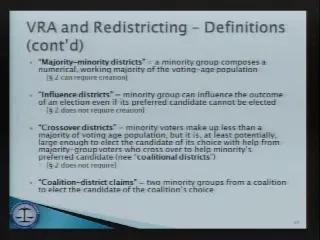
The Sacramento Redistricting Citizens Advisory Committee met on May 16, 2011, to receive educational presentations on redistricting with sensitivity to minority interests and on race and ethnicity in redistricting. The committee heard extensive public testimony from the Latino and LGBT communities, who urged recognition as communities of interest. The deadline for public map submissions was that day, with 29 maps submitted by 4:30 PM and 31 by the meeting's end. The committee approved the minutes of the previous meeting and agreed to agendize a discussion on recognizing the LGBT community as a community of interest. Staff Presentations - Weekly Report Out of Redistricting Activities: Staff reported on media articles about redistricting, reminded the committee that May 16 was the map submission deadline, and noted 29 submissions as of 4:30 PM (later rising to 31). An upcoming community outreach meeting with the Robla Park Community Association on May 18 was announced. The report was received and filed. Presentation: Redistricting with Sensitivity to Minority Interests - Dr. Jesse Mills (PhD, Ethnic Studies, USD San Diego) delivered a 1-hour 55-minute presentation on structural racialization, historical residential segregation in Sacramento, and the implications for redistricting. He emphasized the difference between descriptive and substantive representation, and argued that redistricting can foster community empowerment and counter structural racialization. Committee members asked questions about applying the framework to redistricting constraints and about the Latino community's representation. Public Comments & Testimony - On the Latino Community: - Arnulfo Hernandez (attorney, Latino Redistricting Group) presented a map showing Latino population density (30%–57% in some areas) and argued that the Latino community (27% of the city population) lacks representation on the committee and city council. He stated that a redistricting plan that excludes Latino communities would be "dead on arrival" if challenged in court. - Eric Guerra (Latino working group) elaborated on the data, noting that the map identifies two concentrated areas of Latino households, and that the community shares cultural, linguistic, and socioeconomic ties. - Gustavo Arroyo (school board president) highlighted the Latino community's efforts in the 2010 Census and urged that their work be reflected in the final map. - David Deluz (Greater Sacramento Urban League, African American Leadership Coalition) argued that the issue is not merely descriptive representation but substantive representation of priorities like police protection, predatory lending, and schools. He supported creating districts that enable communities of color to elect representatives of their choice. - On the LGBT Community: - Bonnie Osborne (Sacramento Rainbow Chamber of Commerce) described the LGBT community's economic power and the need for a voice on the city council, urging recognition as a community of interest. - Paul Mitchell (redistricting consultant, working with Equality California) presented a map based on 850,000 data points (donor lists, domestic partner data, Prop 8/22 voting patterns) showing the LGBT community concentrated in the urban core (river to river, freeway to freeway). He stated that within that area, residents are six times more likely to be members of LGBT organizations and voted 50 points differently on Prop 8 than the surrounding area. - Derek Lawson (resident, business owner) described the difficulty of having three council members representing the downtown/midtown area and asked for the urban core to be kept together. - Gail Mancarti (Sacramento Gay and Lesbian Center) supported the LGBT community as a community of interest and noted the center's location in the Central City. - Dan Roth (Stonewall Democratic Club) argued that the city's Convention and Visitors Bureau already recognizes the LGBT community as a distinct community, and that the city council has historically led on LGBT rights. - Rosanna Herber (LGBT redistricting committee) presented a map of the urban core and asked the committee to recognize the LGBT community as a community of interest. - Eireann Flannery (LGBT commission, cycling advocate) noted that LGBT institutions and the cycling community overlap in the same geographic area. - Ben Phillips-Lesenana (Rainbow Chamber of Commerce) emphasized the visibility of the LGBT community and urged the committee to use the provided data. - Mary Helen Doherty (California Faith for Equality) identified at least 60 faith congregations in the Sacramento area that support LGBT rights, 90% of which are located in the urban core. - On Race and Ethnicity in Redistricting (item 3): - Darrell Roberts (African American Leadership Coalition) presented a map that connects South Natomas with Del Paso Heights, noting it was done in consultation with the LGBT, Asian, and Latino communities. He asked the committee to consider the map and recognized that District 1 might be left short due to anticipated future growth. - Additional speakers included Bonnie Osborn, Paul Mitchell, Darrick Lawson, Gail Mancarti, Dan Roth, Rosanna Herber, Eireann Flannery, Mary Helen Doherty, and Ben Phillips-Lesenana (some of these spoke on both items). Discussion Items - Race and Ethnicity in Redistricting Presentation: Staff (Scot Mende) presented demographic data: whites constitute 45% of the city population (49.1% voting age), Latinos 26.9% (23.2% voting age), Asians 18%, and Blacks 15%. He noted that it appears unlikely to create a majority-minority district for any single group, but that communities of interest can be considered. The presentation emphasized that the Voting Rights Act does not require minority influence districts and that the city has district elections. The committee discussed the need for disaggregated data (e.g., within Asian and Latino communities) and the possibility of using voter registration data to identify finer ethnic or linguistic communities. Staff indicated they would investigate data availability. - Committee Questions and Ideas: - Members asked about the availability of data on Asian sub-ethnicities and linguistic groups. Staff said they would look into obtaining and presenting such data. - Members discussed the potential for considering future growth when evaluating district deviations, but City Attorney Matthew Ruyak cautioned that concrete evidence would be needed to support growth projections. - The committee agreed to agendize a discussion on recognizing the LGBT community as a community of interest, with a motion to place it on the next agenda. Key Outcomes - Minutes Approval: The minutes of the May 9, 2011 meeting were approved by a vote of 14–0 (1 absent, Julius Cherry). - Recognition of LGBT Community of Interest: The committee agreed to agendize a formal discussion and vote on recognizing the LGBT community as a community of interest for the redistricting process. - Data Requests: Staff will investigate the availability of disaggregated data (e.g., Asian sub-ethnicities, voter registration country of origin) and report back to the committee. - Next Steps: The committee will begin reviewing submitted maps at the next meeting. Public map submitters are encouraged to speak (2 minutes each) at that meeting. The committee also discussed possibly grouping multiple speakers on the same map to manage time.
REDISTRICTING 33% · RACIAL EQUITY COMMITTEE 30% · LGBTQ INCLUSION 14% · IMMIGRATION POLICY 4%
1582
MAY 9, 2011 · SACRAMENTO, CALIFORNIA · DISABILITIES ADVISORY COMMISSION
Sacramento Redistricting Citizens Advisory Committee Meeting – May 9, 2011

The Sacramento Redistricting Citizens Advisory Committee (SRCAC) met on Monday, May 9, 2011, at 6:03 p.m. in the City Council Chamber at New City Hall, 915 I Street. The meeting was called to order by Chair Julius Cherry. Thirteen members were present; Bill Camp and Phil Pluckebaum were absent. The committee received staff presentations on redistricting history, neighborhoods, communities of interest, and the Voting Rights Act. Public testimony was heard on all three substantive topics. The committee approved the minutes of the May 2 meeting. No votes on substantive redistricting decisions were taken, but the committee received direction to continue outreach ahead of the May 16 map submission deadline. Public Comments & Testimony - John DeGlow (College Glen Neighborhood Association) expressed full support for keeping neighborhoods intact as a redistricting criterion. He described College Glen’s well-defined boundaries (American River, Folsom Boulevard, Watt Avenue, Howe Avenue), its active 400‑member association, and its preference to remain whole within either District 6 or District 4. - Darrell Roberts (African American Leadership Coalition) stated the coalition’s position that traditional African American neighborhoods—Oak Park, Meadowview, Del Paso Heights, and newer areas such as South Natomas—should be kept intact. He noted the coalition is working on maps and plans to meet with other groups to present a broader community perspective. - Nick Abdis (Valley View Acres Community Association) expressed a strong desire for his neighborhood to remain in District 1, citing its long history (annexed in the mid‑1960s), shared interests with North Natomas, and ongoing issues (levee improvement, panhandle development, Twin Rivers school district security). - Rick Bettis (resident of Friedmont Park) cautioned that not all neighborhood associations are equally active; some exist only on paper. He urged the committee to verify functional associations before using them as redistricting building blocks. - David Lindner (pastor, Bridge of Life Church; Gardenland Northgate neighborhood) pleaded for the committee not to overlook Gardenland Northgate, a historic and diverse neighborhood that has felt “skipped over” by the city. He asked that the neighborhood not be fragmented by redistricting. - Mario Guerrero (Equality California, registered lobbyist) urged the committee to recognize the LGBT community as a community of interest, citing 16,953 LGBT individuals in the city and California Supreme Court precedent. He said they would submit maps later that week showing a geographically compact population in the central city. - Greta Lassen (River District Board) requested that the River District be included in a united central city district, noting shared redevelopment goals with downtown and the downtown partnership. - Wendy Hoyt (Downtown Sacramento Partnership) advocated for uniting the central city (bounded by the American River, Sacramento River, Highway 50, and I‑80) into one council district. She emphasized the 32,000 residents and 75,000 employees and argued that the area’s common urban policy issues are currently splintered across three districts. - Rosanna Herbert (Rainbow Chamber of Commerce) supported uniting the central city and urged the committee to recognize the LGBT community as a community of interest. She stated the chamber would present data next week demonstrating a high concentration of LGBT individuals downtown and midtown. - David DeLeon (Greater Sacramento Urban League; African American Leadership Coalition) listed several African American communities of interest (North/South Natomas, Del Paso Heights, Oak Park, Meadowview, Glen Elder, Lemon Hill). He stressed that the coalition will advocate to prevent these core communities from being split. - Dr. James Reed (former chair of 1991 and 2001 African American redistricting committees) reported that the African American coalition has prepared maps balanced within plus or minus one percentage point and will submit them next Monday. He noted that the coalition successfully reunited Meadowview in 1991 after it was illegally split in 1981. Discussion Items Item 1: Weekly Report of Redistricting Activities (Oral Report) Staff reported on media corrections (a newspaper inaccurately described population growth as 5% instead of 14.6% and claimed no eligible Latino applicants for the committee—in fact, two Latinas serve). Staff stated the committee has completed extensive outreach, including updates to the redistricting webpage, a reminder to 4,500 neighborhood service list members, flyers at city libraries and community centers, and a presentation to Sacramento State political science classes. The deadline for map submissions is May 16. IT Manager Maria MacGunigal was announced as the recipient of the “2011 Best of California Outstanding IT Service and Support Award.” Received and filed. Item 2: Sacramento Redistricting History Scot Mende presented a chronological overview from 1921 (at‑large election) to 2001. Key statistics: in 1971 each district averaged 31,801 people (variance under 1%); today each district will represent an average of 58,311 people—an 83% increase. The city population grew 14.6% between 2000 and 2010 (increase of 59,740). The presentation highlighted how maps varied in complexity over the decades and noted that 14 maps have been submitted so far. Received and filed. Item 3: Neighborhoods as a Redistricting Criterion Derrick Lim (Neighborhood Services Director) explained that neighborhoods can be defined by many factors (geography, social interaction, subdivision maps, business corridors, council districts). He noted the city uses a general reference map and that neighborhood associations are self‑defined; there are well over 100 active groups. Committee members asked about overlapping boundaries, mapping accuracy, and how neighborhood viability is verified. Public testimony emphasized the importance of keeping neighborhoods whole. Received and filed. Item 4: Communities of Interest as a Redistricting Criterion Ellen Marshall (Senior Planner) reviewed the seven charter criteria and defined communities of interest as populations with common social, economic, or political interests that should not be divided. She gave examples such as Little Saigon (recognized by Council Resolution 2010‑051). She noted communities of interest can be identified through demographic data, surveys, or community testimony. Received and filed. Item 5: Overview of Voting Rights Act (Oral Report) Deputy City Attorney Matt Ruyak presented a legal overview of the federal Voting Rights Act of 1965 (as amended), emphasizing Section 2, which prohibits vote dilution. He explained key terms: majority‑minority districts, influence districts, crossover districts, packing, and cracking. He clarified that Sacramento is not covered by Section 5 (preclearance) and that the primary redistricting standard is equal population (one person, one vote). He noted that Section 2 violations require proof of three Gingles factors: a sufficiently large and compact minority group, political cohesion, and white bloc voting that usually defeats the minority’s preferred candidate. He also discussed racial gerrymandering under the 14th Amendment and the possibility of state equal protection claims regarding sexual orientation. Received and filed. Item 6: Approval of May 2, 2011 Committee Minutes Moved by Porter, seconded by Bowler. Approved unanimously (13 yes; 2 absent: Camp, Pluckebaum). Key Outcomes - All staff presentations were received and filed as recommended. - The minutes of the May 2, 2011 meeting were approved (13‑0). - The committee acknowledged the May 16 deadline for map submissions and noted that 14 maps had already been received. - No substantive redistricting decisions or votes were taken; the committee will continue to gather input and review maps in upcoming meetings. - Correspondence received during the meeting will be posted to the city website the next morning.

REDISTRICTING 27% · VOTING RIGHTS ACT 21% · LAND USE PLANNING 15% · COMMUNITY ENGAGEMENT 10%
1583
MAY 2, 2011 · SACRAMENTO, CALIFORNIA · DISABILITIES ADVISORY COMMISSION
Sacramento Redistricting Citizens Advisory Committee Meeting - May 2, 2011

The Sacramento Redistricting Citizens Advisory Committee met on May 2, 2011, at 6:03 p.m. in the City Hall Council Chamber. Chair Julius Cherry presided. The committee received updates on redistricting activities, a software demonstration, approved previous meeting minutes, and debated the meeting schedule. A motion to extend the map submission deadline failed, while the original schedule was approved. Consent Calendar - Weekly Report Out of Redistricting Activities: Received and filed. - Redistricting Software Demonstration and Map Submittal Process: Received and filed. - Approval of April 25, 2011 Committee Minutes: Unanimously approved (15-0). Public Comments & Testimony - No public comments were made on matters not on the agenda. Discussion Items - Review of Committee Schedule: Two motions were considered. - Motion by Hansen/Porter to add a week to the map submission schedule. Failed (7-8: Yes: Porter, Hansen, Maviglio, Hom, Perry, Wallace, Leal-Carillo; No: Bowler, Camp, Frye-Lucas, Motmans, Pluckebaum, Rubalcava, Shah, Chair Cherry). - Motion by Pluckebaum/Bowler to approve the schedule without alteration. Passed (13-2: Yes: Bowler, Camp, Frye-Lucas, Leal-Carillo, Maviglio, Motmans, Perry, Pluckebaum, Porter, Rubalcava, Shah, Wallace, Chair Cherry; No: Hansen, Hom). Key Outcomes - Approved the April 25, 2011 meeting minutes. - Rejected the proposal to extend the map submission deadline by one week. - Approved the original meeting schedule without changes. - Member Hansen requested that map review priorities be addressed at the next meeting. Note: The chair indicated that public comment on non-agenda items may be allowed between agenda items at the will of the body, but none were offered at this meeting.

REDISTRICTING 62% · PROCEDURAL 14% · PUBLIC PARTICIPATION 12% · VOTING RIGHTS ACT 5%
1584
APR 25, 2011 · SACRAMENTO, CALIFORNIA · DISABILITIES ADVISORY COMMISSION
Sacramento Redistricting CAC First Meeting – April 25, 2011

The Sacramento Redistricting Citizens Advisory Committee (SRCAC) held its inaugural meeting on Monday, April 25, 2011, from 6:00 p.m. to 8:29 p.m. in the New City Hall Council Chambers. The committee, consisting of 15 members, was sworn in, briefed on legal and procedural frameworks, and began setting its work plan. Key actions included the election of Julius Cherry as Chair and Linn Hom as Vice Chair, and a discussion about extending the public map submission deadline beyond May 16. Staff Presentations/Information - Introductions and Oath of Office: Staff introduced themselves, and City Clerk Shirley Concolino administered the oath of office to all committee members. - Brown Act and Meeting Protocols: Supervising Deputy City Attorney Matt Ruyak reviewed the Brown Act’s open meeting requirements, prohibitions on serial meetings, and proper use of email and electronic communications. Committee members asked clarifying questions about attending community meetings and discussing redistricting outside of formal sessions. - Roles and Responsibilities: Principal Planner Scot Mende explained the committee’s advisory role to the City Council, including reviewing public map proposals, analyzing them, and delivering a formal recommendation by July 12, 2011. A progress report is due to the Council on June 14, 2011. The committee can also prepare its own composite recommendations. - Committee Schedule and Work Program: IT Manager Maria MacGunigal outlined the 10-meeting schedule running through July 9, 2011, with education sessions in April/May and evaluation in June/July. A significant portion of the meeting was spent debating whether to extend the May 16 deadline for public map submissions. Several members (Roman Porter, Stephen Hansen, others) argued for a two-week extension to allow more community input, citing the delay in the committee’s start. Staff noted that the deadline was a staff judgment and that changing it could compress later evaluation and council deliberation. The committee did not take a vote but directed staff to bring an analysis of options to the next meeting. - Review of Redistricting Criteria: Senior Planner Ellen Marshall presented the criteria: equal population (primary), contiguity, compactness, communities of interest, topography/geography, neighborhoods, and stability. Attorney Ruyak explained that total population deviation of up to 10% is generally acceptable at the local level, but the goal should be as close to equal as possible. Voting Rights Act considerations (majority-minority districts, vote dilution) were noted as more important than charter criteria and will be covered in a dedicated session on May 16. Committee members asked about socioeconomic class (Bill Camp) and examples of non-contiguous districts. Election of Chair and Vice Chair - The committee elected Julius Cherry (D-4 representative, retired fire chief) as Chair by unanimous voice vote after a motion by Bill Camp and second by Bernard Bowler. - For Vice Chair, two nominees emerged: Michelle Rubalcava (at-large) and Linn Hom (at-large). A substitute motion to elect Rubalcava failed on a roll call vote (6 yes, 9 no). The original motion to elect Hom then passed (14 yes, 1 no). Hom is a District 1 resident and secretary of the Natomas Community Association. Public Comments - No members of the public spoke. One eComment was received regarding the compactness test being disabled in the online mapping software. Staff explained that multiple compactness models exist and were turned off to avoid confusion, but could be turned on later if the committee wishes. Committee Ideas and Announcements - Roman Porter suggested moving public comment to the beginning of future meetings to accommodate attendees. The chair accepted the suggestion for consideration. Key Outcomes - Chair and Vice Chair Elected: Julius Cherry (Chair) and Linn Hom (Vice Chair). - Map Submission Deadline: Staff will analyze the feasibility of extending the May 16 public map submission deadline and present options at the next meeting (May 2). - Future Meeting Structure: The committee will continue with education sessions; public comment may be moved earlier in the agenda. - Next Meeting: Scheduled for Monday, May 2, 2011, at 6:00 p.m. in the same location.

PUBLIC PARTICIPATION 25% · REDISTRICTING 24% · PROCEDURAL 18% · COMMITTEE FORMATION 12%
1585
MAR 9, 2011 · SACRAMENTO, CALIFORNIA · UTILITIES RATE ADVISORY COMMISSION
Utilities Rate Advisory Commission Meeting Summary - March 9, 2011

Meeting held March 9, 2011, from 5:37 p.m. to 7:58 p.m. at New City Hall, 915 I Street, Council Chambers. Present: Chair Steven Archibald, Commissioners Douglas Brown, Scott Brown, Steve Harriman, and Carolyn Veal-Hunter (arrived 5:54 p.m.); Karen McBride was absent. Consent Calendar - Approved the August 25, 2010 minutes on a motion by Douglas Brown, seconded by Steven Archibald, with all present in favor. The minutes were corrected to clarify that Dr. Lehr abstained rather than voted against the August motion. Public Comments & Testimony - Jeff Dunlevy, a College Glen resident and recycling industry employee, said residential solid waste, recycling, and green waste rates are about 30 to 50 percent higher than surrounding jurisdictions. He asked the efficiency audit to consider a rate rollback for the suspended neighborhood cleanup program, and he opposed flow-controlling commercial waste to the BLT facility, citing legal questions and warning that residents could end up paying the region's highest trash rates if the city cannot direct commercial tonnage. - John Deglow, Vice President of the College Glen Neighborhood Association, questioned the $26 per month differential between street pickup and containerized service and said his association had requested the supporting numbers. He raised odor concerns from enclosed green waste containers, noted existing subsidy precedents (transit, enterprise zones, sports facilities, bike lanes), and urged that the seasonal leaf pickup "claw" service be valued for reducing storm drain clogging. Discussion Items - Commissioner and staff introductions were received and filed. New commissioners Steve Harriman and Scott Brown introduced themselves; staff also introduced key Department of Utilities personnel. - Joe Robinson, Senior Deputy City Attorney, reviewed the commission charter: review and comment on utility rate proposals, no authority over utility service levels (set by Council), conduct Proposition 218 rate hearings, and act as a community liaison. This item was received and filed. - Efficiency Audit Update, heard out of order: City Auditor Jorge Oseguera reported that the City Council authorized a professional services agreement on February 22, 2011, with Public Financial Management Inc. (PFM), joined by EMA and GBB, to perform an operational efficiency and cost-savings study. The audit will first target three to five opportunities for immediate savings; consultants are already interviewing Utilities staff. An electronic resident survey is being handled in-house rather than through the $116,000 audit contract. A formal report is expected between April 24 and early May, and an additional special audit committee meeting will be scheduled. - Budget Status and Review: Jamille Moens, Business Services Manager, presented the FY10, FY11, and FY12 budget outlook. The Council reduced the commission's recommended 12 percent average weighted rate increase to about 9 percent for each of two years, increasing a typical single-family utility bill by $7.73 in the first year and $8.62 in the second. FY10 performance was better than budgeted due to lower water production, lower bad debt (after a $5 million spike), and savings from layoffs and furloughs. Service impacts included reduced preventive maintenance, suspended neighborhood cleanup, reduced/eliminated illegal dumping response, and street sweeping cut from weekly to bi-monthly. FY11 revenues are trending down, but contingency reserves of about $1.4 million are not expected to be used; solid waste reserves are increasing, while reserves remain below the 45-day prudent target (consultants advise 180 days). Utility staffing has dropped from 696 FTE in FY03 to 684 in FY11, or 672 when adjusted for the transfer of 12 utility billing staff. Roughly 42 percent of residential connections are metered; about 22,000 meters were installed last year using ARRA and other grant funds. FY12 assumes no across-the-board rate adjustments, continued furloughs except for solid waste drivers, no additional meter program funding, and incorporation of efficiency audit findings. The department's work plan includes loose-in-the-street rates/Measure A, BLT tiered pricing, water and fluoride Council workshops, a drainage rate/revenue requirement study, a four-year rate plan that includes a $150 million water treatment rehabilitation project, and development review fees. - Utilities Rate Structure Review: Staff reviewed water, sewer, drainage, and solid waste rates for residential and commercial customers. Water rates include flat and metered components; the metered rate is 75 cents per 100 cubic feet, with a structure about 60 percent volumetric and 40 percent fixed. Staff noted that better conservation can require higher rates because most costs are fixed. Sewer rates are mostly flat, but commercial customers already have a metered sewer component; the commission discussed possible future volumetric sewer pricing. Solid waste rates are separately set for garbage, green waste, street sweeping, and recycling, with loose-in-the-street service priced at $13.71 per month versus containerized service. Discussion covered the cross-subsidy from loose-in-the-street service and the legal options for tiered water rates under Proposition 218 and the 2008 state conservation water pricing law. Staff also reviewed Measure B, the November 2010 ballot measure that would have rolled rates back and capped future increases at inflation; it was defeated by roughly 68 to 70 percent of voters. Key Outcomes - The consent calendar was approved, and the minutes of August 25, 2010 were accepted. - Items on the charter/responsibilities, efficiency audit, budget status, and rate structure were all received and filed; no rate changes were adopted. - Staff will return to the City Council on April 5, 2011, for direction on loose-in-the-street service levels, after which a rate recommendation may come back to this commission. - The City Auditor is expected to deliver the efficiency audit report between late April and early May 2011; the commission may receive an update at a future meeting. - Commission meetings are required at least quarterly and no more than 12 times per year. Additional meetings on the loose-in-the-street rate may be scheduled for April or May 2011.

BUDGET AND FINANCE 28% · WATER MANAGEMENT 16% · SOLID WASTE MANAGEMENT 11% · PROCEDURAL 9%
1586
AUG 25, 2010 · SACRAMENTO, CALIFORNIA · UTILITIES RATE ADVISORY COMMISSION
Utilities Rate Advisory Commission Meeting - August 25, 2010: Measure B Discussion

The Utilities Rate Advisory Commission met on August 25, 2010, at 5:08 PM (adjourned at 8:45 PM) to discuss Measure B, the Utilities Rate Hike Rollback Act of 2010, which would roll back recent rate increases and cap future increases to CPI. The commission heard presentations from proponents and city staff, received public comments, and ultimately voted to recommend that the City Council oppose Measure B. Consent Calendar - Approval of Minutes for May 12, 2010: Motion to approve by Douglas Brown, seconded by Karen McBride. All present in favor, none opposed. Minutes approved. Public Comments & Testimony - Dale Skoglund: Supported Measure B, expressed frustration with past rate increases and misuse of funds, and urged the commission to recommend the measure to voters. - Lee Middleton: Opposed rising utility bills (personal increase from $104.15 in January 2009 to $120.48 in August 2010) and complained about lack of storm drainage service on his block despite paying fees. Called the Department of Utilities "totally incompetent." - Stanley Benson: Strongly supported Measure B, called the utility department "crooks" and cited scandals and lack of storm drainage. Criticized the commission for being absent and not taking action. - Greg Hatfield (Co-president South Pocket Homeowners Association, co-sponsor of Measure B): Supported the measure, cited inefficiencies in the department (e.g., nine employees to fix a small water leak), praised potential for contracting out services, and asked the commission to take a stand. - Ray Garcia (Sacramento County Taxpayers League): Supported Measure B, citing the Grand Jury report on financial mismanagement and the burden on seniors and low-income residents. - Clyde Macdonald (Watermaster Plan Advisory Committee member, speaking as an individual): Opposed Measure B, argued that capping rates to CPI is no way to run a utility and would hamper long-term infrastructure investment and regulatory compliance. Discussion Items - Measure B: Utilities Rate Hike Rollback Act of 2010 Impact Report - Proponent Presentation (Craig Powell, Sacramento County Taxpayers League): Presented history of rate increases far exceeding CPI, alleged scandals (scrap metal, lost meters, illegal fund diversions of $21–$35 million per Grand Jury), and argued the department can operate within a CPI cap by renegotiating labor contracts, contracting out services, and using federal stimulus funds. Claimed Sacramento has among the highest regional utility rates. - City Staff Presentation: - Marty Hanneman (Utilities Director): Introduced the department's role and emphasized that costs average about $3 per day per customer. - Dave Brent (Engineering Manager): Detailed aging infrastructure: 100+ year-old water pipes, 120 miles of distribution mains over 100 years old, $120 million needed for water treatment plant rehab. Highlighted regulatory mandates (water meters, combined sewer system, solid waste recycling) and consequences of non-compliance (fines, moratoriums, lawsuits). - Jamille Moens (Business Services Manager): Presented financial impacts of Measure B: $22 million immediate budget reduction (from rate rollback and cost increases), leading to workforce cuts, reduced services (e.g., bi-weekly recycling instead of weekly), closure of wells/pumping stations, and loss of matching grant opportunities. Noted current reserves are only 2–3% of budget (prudent level is 12%). Presented regional rate comparisons showing Sacramento water and sewer rates are among the lowest, with solid waste being mid-range due to twice-weekly service. - Commission Questions & Discussion: - Commissioners asked about $40,000 in TV ads (staff clarified it was grant-funded water conservation PSAs), Prop 218 violations (staff stated issues are being resolved via phased settlement), and labor costs (staff noted union concessions not taken resulted in 70+ position cuts). - Debate over CPI as a cap: Supporters argued it provides fiscal discipline; city staff and some commissioners argued it fails to cover actual cost drivers (electricity up 6.1%/yr, chemicals up 22.9%/yr, labor up 7%/yr). - Greg Hatfield responded for proponents, defending CPI cap as transparent and noting the city already uses CPI for some fees. He stated the department can find efficiencies and that voters should decide on increases above CPI. - Commissioner McBride (state-certified wastewater operator) expressed concern that CPI cap would hinder long-term planning and grant eligibility. - Commissioner Brown noted the burden of rate increases on residents but argued reliable utility service is essential for businesses. - Commissioner Lehr raised questions about fund transfers and asset management, indicating unanswered questions about budget execution. Key Outcomes - Motion by Commissioner Brown: That the Utilities Rate Advisory Commission recommend to the City Council that the Council oppose Measure B on the November 2, 2010 ballot. Seconded by Commissioner Veal-Hunter. - Vote: Commissioners Archibald, Brown, McBride, and Veal-Hunter voted in favor. Commissioner Lehr abstained. Motion passed (4-0-1). - Action: The commission formally recommends that the City Council oppose Measure B. - Commissioner Announcements: Commissioner Lehr indicated he would submit written questions about specific budget items for future discussion.

BUDGET AND FINANCE 19% · WATER MANAGEMENT 17% · UTILITIES 16% · PUBLIC COMMENTS 11%
1587
MAY 12, 2010 · SACRAMENTO, CALIFORNIA · UTILITIES RATE ADVISORY COMMISSION
Utilities Rate Advisory Commission Meeting - May 12, 2010

The Utilities Rate Advisory Commission met at New City Hall, 915 I Street - Council Chambers, on May 12, 2010, from 5:03 p.m. to 6:29 p.m. Commissioners present were Chair Steven Archibald, Vice Chair Tess Kretschmann, Karen McBride, Melvin Johnson, Douglas Brown (arrived at 5:10 p.m.), and Carolyn Veal-Hunter (arrived at 5:10 p.m., left at 5:50 p.m., and returned at 6:25 p.m.). Dr. Ernest Lehr was absent. The Commission approved prior meeting minutes, received a water conservation presentation, and voted to support staff's recommended rate restructuring for Loose-in-the-Street garden refuse collection for inclusion in the Proposition 218 notification. Consent Calendar - Approved the minutes for the prior meeting. The written minutes identify this item as 'Approval of Minutes for February 3, 2009,' while the meeting transcript refers to 'approval of the minutes from our April 21st meeting.' This discrepancy is noted. Motion by Melvin Johnson, seconded by Karen McBride; all present voted in favor. Public Comments & Testimony - Ellen Robinson, a property owner with a single-family home remodeled into a triplex, objected to paying three times the street sweeping charge and double the green waste charge for the same parcel, and to requirements that would force her to have multiple containers. Staff responded that the proposed green waste restructuring would set a minimum service level of one, and that they would follow up on street sweeping. Discussion Items Water Conservation Workshop - Terrance Davis, Program Manager, presented an overview of the Water Conservation section. It has 7 full-time employees responsible for Best Management Practices (BMP) compliance, water waste complaints, ordinance enforcement, customer outreach, and education. - The City is a signatory to the California Urban Water Conservation Council MOU and implements 14 BMPs, divided into foundational and programmatic categories. Staff noted that budget and staffing limitations have prevented meeting some BMP targets. - Peak-season water waste service requests (May through September) increased 133% over the last two years. Two additional staff were added in fall 2009, and two additional seasonal water-waste inspectors will be added in June 2010. - Outdoor conservation ordinance revisions in 2009 included weekend watering flexibility during the wet season, an exemption for drip irrigation systems, and changing the prohibited watering window from 10 a.m. - 6 p.m. to 10 a.m. - 7 p.m. - Outreach and education efforts include the RWA Blue Thumb program, Spare Sac water alerts, approximately 12 conservation workshops, a volunteer ambassadors program, and a water-efficient landscape garden at the Glenn Ellen facility expected to be completed in the fall. - Next steps include automated meter reading infrastructure (AMI), future leak detection options, council direction on further ordinance revisions in August 2010, and a possible fall update to the Commission. - Commissioner Kretschmann asked about moving from individual BMP compliance to an overall water reduction approach and about cost-effectiveness of programs such as toilet rebates versus cash-for-grass. Staff said they are analyzing cost-effectiveness and considering more flexible strategies. - Chair Archibald asked about meter technology and customer access. Staff said the new AMI system provides daily wireless reads; customers may request access to older meters, and online daily usage access is expected in the future. Proposition 218 Notification - Loose-in-the-Street Garden Refuse Rate - Jamille Moons, Business Services Manager, presented a proposed rate restructuring and adjustment for Loose-in-the-Street collection of garden refuse. The proposal simplifies the rate structure to a single rate and moves toward full cost recovery. - Staff clarified that service is currently mandatory for residential customers with 50 units or less; a future code revision is being considered to make service optional for 3+ units. The bi-weekly service option is not included because only the City Council can reduce service levels. - Commissioners discussed the size of the rate increase and its potential political impact on the rate rollback initiative. Commissioner Brown raised enforcement concerns if larger multi-unit properties opt out and dispose of green waste in garbage cans; staff noted existing city code prohibits this. - The Commission initially voted 5-0 to support staff's recommended rate for the Proposition 218 notification. Commissioner Veal-Hunter returned and requested reconsideration; the Commission voted to reconsider, then voted 6-0 to support staff's recommendation. Commission Ideas, Questions and Announcements - Staff reminded the Commission of a Water Conservation workshop on Saturday from 10 a.m. to 12 p.m. at 601 Alhambra. - Staff are examining what would be needed to repeal Measure A and will bring it to the City Council with the budget in June. - There was concern that only one meeting will be held before the August Rollback Initiative workshop; staff will check whether the Commission can take a position on the initiative. - Staff reported on the independent cost-of-service study: an RFQ was issued, a review panel was convened, proposals were received, and results are expected by September 1, 2010. - Commissioner Kretschmann announced a water-efficient bike ride event at Folsom Lake. Key Outcomes - Approved prior meeting minutes unanimously. - Received and filed the Water Conservation Workshop presentation. - Passed a motion (6-0) supporting staff's recommended rate for the Proposition 218 notification for Loose-in-the-Street garden refuse collection. - Staff will follow up on street sweeping rates for multi-family properties and on the Commission's ability to take a position on the Rate Rollback Initiative.

WATER MANAGEMENT 43% · PUBLIC COMMENTS 14% · RATE INCREASES 9% · PUBLIC PARTICIPATION 8%
← PREVIOUS
01…158159
OPENPUBLICA · PUBLIC MEETING INDEXUPDATED DAILY · openpublica.com