Browse by city
Date range
Search help

Search titles, summaries, topics and stored transcripts together. Keywords may match separately; put the whole query in double quotes for a phrase. Matching follows word analysis, so punctuation is not exact. Both dates are included. Documents are not searched.

SHOWING 121–130 ENTRIES
121
MAR 18, 2026 · SAN DIEGO, CALIFORNIA · RULES COMMITTEE
San Diego Rules Committee Meeting - March 18, 2026: SB 707, Ballot Measures, and Reform Proposals

The Rules Committee met on March 18, 2026, to consider non‑agenda public comments, approve minutes, and discuss multiple docket items including amendments to comply with state Senate Bill 707, and eight ballot measure proposals for the November 2026 election. Key topics included transit‑occupancy tax reform, parking fees in Balboa Park and at beaches/bays, a rideshare congestion tax, fiscal accountability charter amendments, and campaign finance reform. Consent Calendar - Item 1 – Approval of Minutes: The committee unanimously approved the minutes from the February 18 and February 25, 2026 Rules Committee meetings. Public Comments & Testimony - Several speakers praised former Councilmember Donna Frye and urged current members to champion issues such as environmental protection and revenue generation. - Speakers expressed concerns about a recently passed anti‑Semitism resolution, urging caution on enforcement and definitions. - Becky Rapp opposed expanding marijuana retail (the SEED program), warning of public health costs similar to tobacco. - John Stump requested withdrawal of a NOPA for a heliport in Los Peñasquitos Reserve, arguing improper process. - Others commented on paid parking, meeting management, and federal policy updates on cannabis. Discussion Items - Item 2 – Amendments to Rules of Council (SB 707 Compliance): The committee reviewed proposed changes to Rules 2.6, 2.7, and new Rule 2.15 to align with SB 707, including equal time for virtual/in‑person speakers, organized presentations, and a disruption policy. The City Clerk advised a minimum of three to five participants for group presentations to prevent abuse. The motion directing the Council President’s Office to work with the City Attorney to draft an ordinance effective July 1, 2026 passed unanimously. - Item 3 – Ballot Measure Proposals: - 3A & 3B – Transient Occupancy Tax (TOT) on Online Travel Companies: Catherine Rhodes (presented by Mandy Havlik) and Zachary Russam (Booking Holdings) proposed updating the municipal code to treat online travel companies as hotel operators and apply TOT to all hotel fees. The committee voted to direct the City Attorney to draft ballot measure language, including exploration of rate increases and converting TOT to a general tax. Motion passed unanimously. - 3C – Repeal Paid Parking in Balboa Park (Shane Harris): No presenter; no motion; item dispensed. - 3D – Prohibit Parking Fees for General Revenue in Balboa Park (John Stump): No motion; item dispensed. - 3E – Traffic Congestion and Mobility Impact Tax on Rideshare (Jason Moore): Committee members opposed due to potential burden on vulnerable riders and drunk‑driving avoidance; no motion. - 3F – Free Parking at Beaches and Bays (Councilmember Campillo): Motion to direct the City Attorney and IBA to analyze a ballot measure codifying free parking in city‑owned beach/bay lots. Passed 3‑2 after debate on coastal access and potential charter conflicts. - 3G – Fiscal Accountability and Transparency Reform (Council President Pro Tem Lee): Proposal to consider charter amendments establishing a COO, mid‑year budget adjustment authority for the Council, and baseline funding for independent oversight offices. Councilmember Moreno successfully amended the motion to remove term limits for the City Auditor. Motion passed 4‑0. - 3H – Campaign Finance and Ethics Reform (Councilmember Ilo Rivera): Proposal to draft a ballot measure addressing disclosure of dark money, lobbying‑campaign funding, shadow campaigns, and self‑funded candidates. Motion passed 3‑0 (with two members absent). Key Outcomes - Item 2: Directed drafting of ordinance amendments for SB 707 compliance by July 1, 2026. - Item 3A/B: City Attorney to prepare TOT ballot measure language; return to Rules Committee. - Item 3F: City Attorney and IBA to analyze free beach/bay parking measure; return to Rules Committee. - Item 3G: City Attorney to draft charter amendment language on fiscal accountability, including COO, mid‑year budget adjustments, and oversight funding floors; return to Rules Committee. - Item 3H: City Attorney to draft campaign finance and ethics reform ballot measure; return to Rules Committee. - Consent minutes approved. - Next Rules Committee meeting scheduled for April 22, 2026.

PARKING MANAGEMENT 16% · PUBLIC COMMENT 15% · PROCEDURAL 14% · ECONOMIC DEVELOPMENT 12%
122
MAR 18, 2026 · SAN DIEGO, CALIFORNIA · COMMUNITY & NEIGHBORHOOD SERVICES COMMITTEE
Community and Neighborhood Services Committee Meeting - March 18, 2026

The Community and Neighborhood Services Committee met on March 18, 2026, to discuss an information item on hunger and nutrition insecurity, approve grants for park lighting and a new neighborhood park, and consider a resolution supporting state legislation to protect Mission Bay Park. All agenda items passed unanimously. Consent Calendar - Approval of Minutes (Item 1): The committee approved the minutes from the November 19, 2025 meeting by a vote of 4-0. Public Comments & Testimony - Non-Agenda Comments: Multiple speakers addressed the committee. Speakers expressed support for the youth workforce program (Terry Ann Skelly, Joyce), urged an emergency ban on marijuana and tobacco smoking in public spaces (Terry Ann Skelly), opposed new cannabis dispensaries citing youth mental health risks and Rady's Children's Hospital data showing a rise from 20-30 to nearly 600 adolescent marijuana-related ER visits per year (Peggy Walker, Kathleen Lippitt, Becky Rapp), shared concerns about smoke shop oversight (Kathleen Lippitt), and raised issues about pension costs, park maintenance, and civil rights (Catherine Rhodes, Andrea Ebbing, John Stump). - Item 5 (Hunger Coalition): Blair Beekman requested positive dialogue on summer programs; Allegedly Audra advocated for community gardens; Andrea Ebbing supported the program but urged due diligence; Joyce praised the work and asked about collaboration with 500 partners; Catherine Rhodes suggested TOT revenue for funding. - Item 2 (Parks Lighting): Allegedly Audra expressed concerns about LED health effects; Madison emphasized park safety; Joyce thanked HUD and Rep. Scott Peters; Mandy Havlik supported; Blair Beekman raised biometric tech concerns; Kathleen Lippitt asked for security; Francine Maxwell supported and requested restroom upgrades. - Item 3 (Grove Park): Allegedly Audra questioned park costs; Catherine Rhodes suggested TOT funding for phase 2; Blair Beekman urged careful implementation. - Item 4 (AB 2525): Fred Tick, Robert Audley, Allegedly Audra, Stephanie Saitov supported the bill; Catherine Rhodes noted surplus land act allows park/open space priority; Mandy Havlik supported; Joyce supported; Blair Beekman emphasized truly affordable housing. Discussion Items - Item 5: Overview of San Diego Hunger Coalition: Alondra Alvarado and Joseph Kendrick presented. Key findings: In December 2025, 25% of city residents were nutrition insecure, including nearly one in three children and one in four older adults. The coalition partners with 500 organizations. CalFresh provides 60% of food assistance. The meal gap is about 3 million meals per month, and only two-thirds of eligible families are enrolled, leaving 81,000 eligible but unenrolled. Due to HR1 changes, 25,000 people have already disenrolled (likely due to fear), and 67,000 more will lose access starting April 2026, increasing the meal gap by 3.6 million meals per month. The coalition provides free trainings and outreach. Councilmembers asked about enrollment strategies, summer feeding programs (Sunbucks), and how people can find help (e.g., libraries). Councilmember Campillo expressed concern about senior poverty and HR1 impacts. - Item 2: Clean and Safe San Diego Parks Initiative: Presentation on accepting $850,000 in HUD grant funds for lighting improvements in parks within the 50th Congressional District (districts 1,2,3,5,6). The grant requires no matching funds. Funds will be used for LED or solar lighting repairs and replacements. The deadline is 2032. Staff will coordinate with affected council offices. The committee voted 4-0 to accept the grant. - Item 3: Grove Neighborhood Park Funding: Presentation on accepting $4.3 million in state grant funds for Phase 1 of a new park on an 11-acre city-owned site in Otay Mesa. Phase 1 includes a children's play area, picnic facilities, utilities, lighting, walkways, and stormwater infrastructure. Total project cost is $12.1 million; the grant fills the shortfall. Design is underway, with construction expected to begin summer 2027 and deadline March 2030. The committee voted 4-0 to accept the grant. - Item 4: Resolution Supporting AB 2525 – Surplus Lands, Mission Bay Park: Staff presented a request to draft a resolution in support of Assembly Bill 2525, which would exempt land within Mission Bay Park from the California Surplus Land Act. The Surplus Land Act requires offering surplus properties to affordable housing developers, but Mission Bay Park is dedicated parkland under the city charter and residential development is prohibited. The bill is authored by Assemblymember Chris Ward and sponsored by Mayor Todd Gloria. The committee voted 4-0 to direct staff to draft the resolution for full Council consideration. Key Outcomes - Approved minutes from November 19, 2025 (4-0). - Accepted and appropriated $850,000 HUD grant for Clean and Safe San Diego Parks Initiative (4-0). - Accepted and appropriated $4.3 million state grant for Grove Neighborhood Park (4-0). - Directed staff to draft a resolution in support of AB 2525 (Surplus Lands – Mission Bay Park) for City Council consideration (4-0). - The next regularly scheduled meeting is Wednesday, April 22, 2026, at 2 p.m.

MISCELLANEOUS 100%
123
MAR 17, 2026 · SAN DIEGO, CALIFORNIA · CITY COUNCIL
City Council Meeting, March 17, 2026: Proclamations, Housing, and IHRA Vote

The San Diego City Council met on March 17, 2026, to consider proclamations, a consent calendar, a housing authority update, a Barrio Logan community plan amendment, and a resolution to adopt the International Holocaust Remembrance Alliance (IHRA) working definition of anti-Semitism. The meeting spanned from morning into evening, featuring extensive public testimony and council deliberation. Consent Calendar - Item 50: Awarded as-needed dam design services agreement (HDR Engineering) – approved 7-1 (Councilmember Foster voted no). - Item 51: Reduced software service agreement for smart energy water web portal from $16.3M to $5.5M – approved. - Item 100: Accepted state funding for youth internship program (Employ and Empower) – approved. - Item 101: Reappointed Michael Zuquette to San Diego Unified Port District Board of Commissioners – approved. - Item S504: Accepted $2.5M state grant for Rancho Bernardo Community Park – approved. - Other consent items (10, 50–52, 100–102, S504–S507) approved unanimously with the above noted exception. Public Comments & Testimony - Proclamations: Public comments supported Transgender Day of Visibility, National Nutrition Month, Ramadan Month, Captain Jerry Hara Day, and Shane Hog Day. One speaker opposed the transgender proclamation; others voiced concerns about food safety and police response times. - Consent Calendar: Speakers supported Lake Hodges dam replacement and youth workforce programs; some opposed software contracts and raised concerns about data privacy and government accountability. - Housing Authority: Union members (SEIU) and employees protested layoffs of 33 staff, urging equitable cuts across management and frontline workers. Management cited $23.5M projected deficit. - Non-Agenda Public Comment: Residents discussed tax fraud in construction, public safety training, homelessness, sea lion protection at La Jolla Cove, Torrey Pines Gliderport disputes, and tobacco/marijuana regulations. - Barrio Logan Amendment: Community members and organizations (Environmental Health Coalition, Chicano Park Steering Committee) urged approval to correct zoning errors and protect parks; some demanded consultation with the Steering Committee. - IHRA Anti-Semitism Definition: Over three hours of testimony: supporters (including Jewish organizations, ADL, Holocaust survivors) argued the definition is a necessary educational tool to combat rising anti-Semitism; opponents (including ACLU, Jewish Voice for Peace, Palestinian advocates) claimed it conflates criticism of Israel with anti-Semitism and threatens free speech. 271 e-comments in favor, 169 opposed. Discussion Items - Proclamations (Items 30–32, S501, S502): Councilmembers spoke in support of Transgender Day of Visibility, Ramadan Month, National Nutrition Month, Captain Jerry Hara Day, and Shane Hog Day. Approved unanimously (8-0; Moreno absent). - Housing Authority Update: CEO Lisa Jones reported on a 14% workforce reduction (33 layoffs, 25 vacant positions eliminated) due to federal funding cuts and rising costs. No motion required; council members expressed concern and encouraged continued dialogue with staff. - Barrio Logan Community Plan Amendment (Item 331): Staff presented technical corrections to land use maps and rezones to align with the 2021 plan, protecting Chicano Park and Boston Avenue Linear Park. Approved 8-0 (Campbell absent). - IHRA Definition Resolution (Item S500): After hours of public comment, Councilmember Whitburn moved adoption. Councilmembers debated: supporters (Campillo, Campbell, Von Wilpert, Lee, LaCava) emphasized the rise in anti-Semitic incidents and the non-binding, educational nature of the definition; opponents (Ela Rivera) argued it has been weaponized to silence legitimate criticism of Israel and lacks inclusive process. An amendment by Councilmember Lee to request the Human Relations Commission address other forms of hate was incorporated. Key Outcomes - Proclamations: Adopted unanimously (8-0). - Consent Calendar: Adopted with Item 50 passing 7-1 (Foster dissenting); all other items passed 8-0. - Housing Authority Update: Received as information; no vote. - Barrio Logan Amendment: Approved 8-0 (Campbell absent). - IHRA Definition Resolution: Approved 8-1 (Ela Rivera dissenting). The resolution adopts the IHRA working definition, condemns anti-Semitism, and requests the Human Relations Commission to address and define other forms of hatred (e.g., Islamophobia, anti-LGBTQ hate, anti-Asian hate).

PUBLIC COMMENT 36% · PUBLIC SAFETY 14% · PUBLIC ENGAGEMENT 9% · RACIAL EQUITY 9%
124
MAR 16, 2026 · SAN DIEGO, CALIFORNIA · CITY COUNCIL
San Diego City Council Meeting: Crime Briefing, Appeals, Speed Limits – March 16, 2026

The San Diego City Council convened on Monday, March 16, 2026, at 9:00 a.m. for a full-day meeting. The agenda included a crime briefing for 2025, an appeal of an environmental determination for a streetery at 710 Garnet Avenue, a speed management plan update, closed session items, and non-agenda public comment. The meeting was recessed into closed session in the morning and reconvened at 2:00 p.m. Technical difficulties affected virtual public comments during the closed session period. Public Comments & Testimony - Closed Session Items (CS1, CS2, CS3): Several callers spoke on flooding litigation, cybersecurity, and Brown Act issues. Blair Beekman urged cooperation on flood litigation and criticized the city's counter-suing. Another caller (presumably Joyce Sunyata) emphasized the need for transparency and care. A speaker (original DRA) echoed concerns about infrastructure and technology insecurity. - Crime Briefing (Item 200): Multiple community members spoke in support of the police department's work. Pastor Sandoval, Robert Ontiveros, and others highlighted the role of credible messengers and gang prevention programs. Scott Chipman praised the chief but noted the 10% officer vacancy rate. Bob Kazuski shared an experience of being unable to report a crime. Virtual speakers included Catherine Douglas (support), Joy Sunyata (support), and others expressing mixed views on enforcement and tent city issues. - Appeal of 710 Garnet Streetery (Item 202): Opponents (including condo residents, Crystal Pier Hotel owner) described decades of noise, safety issues, and parking loss. Supporters (including business owners, patrons, and community groups) cited the bar's community contributions, compliance with noise regulations, and the streetery's economic benefits. Blair Beekman urged a cooperative approach. The appellant (Scott Chipman) argued the CEQA exemption did not apply due to unusual circumstances and cumulative impacts. - Speed Management Plan (Item 201): Nearly all speakers supported the plan. Aria Grossman (Circulate San Diego), Ian Hembry (Bike Coalition), and others emphasized that lower speeds save lives. Some asked for additional infrastructure and enforcement. One speaker opposed, arguing enforcement alone is needed. - Non-Agenda Public Comment: Topics included flock cameras, pension issues, glider port management, cannabis regulation, behavioral health, and diversity in SDPD. Several speakers criticized council members' conduct. Discussion Items - Item 200 – City of San Diego Crime Briefing 2025: Chief Scott Wall and crime analyst Jordan Penckhauser presented. Key statistics: overall crime down 6.3% (fourth consecutive year), homicides down 25% (lowest since 1968), vehicle thefts down 22%, hate crimes down 32%, nonfatal shootings down 63% since 2021. Clearance rates near 49% for crimes against persons (above national average). Councilmembers thanked staff and asked about training, overtime reduction, technology (ALPRs), prostitution enforcement, and hate crime data. Councilmember Campillo requested future data on case outcomes. Councilmember Von Wolpert emphasized privacy and transparency. No motion was required. - Item 202 – Appeal of Environmental Determination for 710 Garnet Avenue Streetery: The appellant (Scott Chipman, representing neighbors) argued the CEQA categorical exemption (infill) did not apply due to unusual circumstances (noise complaints, mediation history), cumulative impacts, and coastal access. The applicant (Scott Slaga, owner of 710 Beach Club) defended the project, citing 36 years of operation, noise mitigation investments, and community work. Staff recommended denying the appeal, noting the appeal form lacked supporting evidence. Council President LaCava moved to grant the appeal, citing substantial evidence of unusual circumstances and cumulative impacts not addressed. The motion passed 8–1 (Councilmember Campillo opposed). The project will require further CEQA analysis and permitting. - Item 201 – Speed Management Plan / Vision Zero Update: Staff presented the plan to reduce speed limits on approximately 680 miles (20% of the network) using AB 43 authorities. Categories include safety corridors, pedestrian/bicycle generators, business activity districts, and school zones (15 mph when children present). Implementation requires $2.4 million in FY27 for 3,000 new signs. Councilmembers supported the plan, emphasizing school zone prioritization, enforcement, and pairing with infrastructure improvements. Councilmember Whitburn moved to adopt the staff recommendation; seconded by Councilmember Campillo. The motion passed unanimously 8–0 (Councilmember Moreno absent). Key Outcomes - Vote on Item 202 (Appeal): Motion to grant the appeal and set aside the environmental determination passed 8–1. The project will undergo a new CEQA review and must obtain additional permits. - Vote on Item 201 (Speed Management): Motion to adopt the staff recommendation (approve the speed management plan) passed 8–0. The plan will be implemented in FY27 contingent on budget approval. - Closed Session: No reportable actions. - Next Meeting: The council adjourned to Tuesday, March 17, 2026, at 10:00 a.m.

PUBLIC SAFETY 32% · PUBLIC COMMENT 18% · TRANSPORTATION SAFETY 10% · PROCEDURAL 7%
125
MAR 12, 2026 · SAN DIEGO, CALIFORNIA · ENVIRONMENT COMMITTEE
San Diego Environment Committee Meeting Summary - March 12, 2026

The Environment Committee of the San Diego City Council met on March 12, 2026, at 9:00 AM (originally scheduled) to discuss several agenda items, including the approval of an updated Utilities Undergrounding Program (UUP) master plan, utility pole and overhead line exception requests, and a regional wastewater disposal agreement. The meeting was chaired by Councilmember Ela Rivera, with Vice Chair Campbell and Council President Lacava present. The committee took public testimony on multiple items and unanimously approved all consent and action items. Consent Calendar - Item 1: Approval of the committee minutes from February 12, 2026. - Item 2: Authorization to execute the final two option years of an existing contract with Badger Meter Incorporated to purchase water meters. The contract will extend through August 2028, allowing time for a new RFP. - Item 3: Water district boundary annexation agreement with Santa Fe Irrigation District for Highland Court Properties (District 1). Council President Lacava noted the unique location near Solana Beach and thanked staff for the extra effort. - All consent items were approved unanimously (3-0) after a motion by Council President Lacava and second by Vice Chair Campbell. Public Comments & Testimony - Non-Agenda Public Comment: Speakers addressed several topics: - Melanie Mendoza (Policy Research Center for Tobacco and the Environment) and Carlos Donati described the environmental impact of tobacco product waste, including microplastics and toxic chemicals, and urged the committee to prioritize this issue. They noted their research covers San Diego County waterways and offered to share resources. - Blair Beekman discussed national security concerns related to potential drone threats from Iran/Mexico, and urged focusing on peace-oriented projects. He also mentioned e-bike issues and the potential use of geofencing, referencing Councilmember Lee’s earlier work on scooter issues. - Kathleen Lippitt criticized the city’s zero-carbon agenda, arguing it is unscientific, economically devastating, and based on political consensus rather than evolving science. She emphasized the essential role of CO2 for life. - Madison highlighted cigarette butts as the most littered item worldwide, explaining that filters are plastic that leach toxins (arsenic, lead, nicotine) and that e-cigarette waste contains lithium batteries and hazardous materials. - Terry Ann Skelly recommended a presentation by the Policy Research Center for Tobacco and the Environment, noting the threat to coastal marsh habitats and endangered bird species. - Peggy Walker urged support for AB 762 (Irwin), which would ban single-use battery-embedded vapes in California, citing lithium waste, fire risks, and environmental harm. - Joy Sanyata (phonetic) discussed the Colorado River Water Deal, mentioning the 1944 treaty with Mexico and the 2026 deadline for sharing terms. - Consent Agenda Public Comment: Blair Beekman praised the water meter purchase process and the efforts of Councilmembers Wilbert and Campbell to improve organizational efficiency. A remote caller (phone ending 8700) commented on workforce diversity and EEO plan monitoring related to Badger Meter. - Item 4 (UUP Master Plan): - Blair Beekman questioned how underground wiring would connect with smart tech in the East Village park project and urged open discussion. - Joy Sanyata (remote) praised the presentation and staff report, asked about SDG&E’s cooperation, and inquired if the Office of Race and Equity (Kim Desmond) was involved in prioritization. She commended the equity components. - Clinton Solo (remote) criticized SDG&E’s monopoly and the high costs of undergrounding, noting that repairs are more disruptive and expensive, and questioned whether the real motivation is profit rather than safety. - Item 5 (Pole Exceptions): - Blair Beekman connected the item to tech accountability for streetlight repair and replacement, and praised the equity discussion in the prior item. - Joy Sanyata (remote) applauded the committee and presenters for the previous item, and asked about shared utility trench space and finite capacity. - Clinton Solo (remote) raised environmental and infrastructure risks of underground systems (flooding, saltwater corrosion, earthquake damage, construction disruption) and questioned the efficiency of asking for exceptions now and dealing with consequences later. - Item 6 (Wastewater Agreement): - Jerry Jones, Chair of the Metro Wastewater JPA, spoke in support, noting the collaborative four-year process and calling the agreement “generational” for protecting environment, water reliability, and ratepayers. - Blair Beekman asked about public input and billing changes, and also raised stormwater revenue issues. - Joy Sanyata (remote) expressed interest in the cost-sharing approach for Pure Water phases, and noted confusion about how conservation affects water rates. - Clinton Solo (remote) criticized the concept of recycling sewage into drinking water, arguing that water scarcity is a manufactured narrative, and suggested alternatives like stormwater capture and natural aquifer recharge. A subsequent caller echoed concerns about rising rates and chemical contamination. Discussion Items - Item 4: Approval of Updated UUP Master Plan - Chelsea Clacius (Deputy Director, Transportation) and Jenny Reynolds (UUP Program Manager) presented. They explained that the CPUC ended Rule 28 work credits in December 2022, leaving only the surcharge program. The update merges 132 unfunded Rule 28 projects into surcharge projects: 126 absorbed, 6 became two new independent surcharge projects. The new plan uses a year-by-year selection process based on available funds, rather than a fixed five-year schedule. Projects are prioritized using equity and multi-asset benefit criteria (including street condition, streetlight circuits, and historic investment). The presentation also noted that the program has improved transparency, customer communications, and coordination with SDG&E. - Council President Lacava praised the revitalized process, noted the historical backlog, and asked about the new prioritization model and updates on Project 1M1 (La Jolla). Staff confirmed that the geotechnical study for 1M2 is complete, and the project will proceed to permitting by December 2027. Councilmember Ela Rivera asked about cost control: staff explained that SDG&E does not get a rate of return on these projects, and the city’s MOU provides accountability. However, staff noted that recommendations to reopen the MOU may strengthen oversight. The council also discussed integration with stormwater and complete streets projects, and the use of a “one-dig” policy. Vice Chair Campbell seconded the motion. - Motion: Council President Lacava moved to adopt the master plan as recommended by staff. Vice Chair Campbell seconded. Passed unanimously (3-0). - Item 5: Utility Pole and Overhead Line Exception Requests - Chelsea Clacius and Jenny Reynolds presented two exception requests under Statute 61.0512. - Block 1J Phase 1 (La Jolla): SDG&E requested one pole and four overhead lines remain because they serve distribution lines outside the district. The pole will be picked up with the adjacent Hoy-S1 project. - Residential Block 1Y (Del Mar Terrace): One pole needs to remain because it is the only viable connection point, avoiding trenching through marshland. The pole will be picked up with an adjacent project boundary. - Staff noted that these exceptions keep projects on schedule, and that they will return with approximately 22 older projects needing exception status later in 2026. The committee also discussed the new SOP and boundary walk checks. - Council President Lacava confirmed the details and appreciated the cleanup. Vice Chair Campbell seconded the motion. Passed unanimously (3-0). - Item 6: Second Amended and Restated Regional Wastewater Disposal Agreement (SARA) - Lisa Salaya (Executive Assistant Director, Public Utilities) and Adam Jones (Finance Deputy Director) presented. The agreement updates the 2021 version, modernizes cost allocation, and establishes a 40-year governance framework. Key changes: a new billing methodology that includes fixed charges based on peak wet-weather flow (addressing declining average flows due to conservation and Pure Water projects), a cost-sharing approach for Pure Water Phases 1 and 2, and administrative agreements that can be amended by two-thirds approval rather than unanimous vote. The city of San Diego’s share of the bill is projected to decrease slightly (from 67% to 66%). The agreement has been unanimously approved by all participating agencies that have voted so far. - Committee discussion: Vice Chair Campbell praised the collaborative effort, noting that 13 entities (12 cities plus the city of San Diego) are working together on a system that has been in development for four years. She moved to accept the agreement. Council President Lacava seconded, emphasizing the importance of the regional wastewater system and the risks of returning to localized dumping. Councilmember Rivera asked about rate impacts: staff clarified that the agreement does not directly set rates, but ensures stable funding for infrastructure, preventing steep future increases. The motion passed unanimously (3-0). Key Outcomes - Consent Agenda (Items 1-3): Approved unanimously. - Item 4 (UUP Master Plan): Approved unanimously. The updated plan will guide undergrounding efforts using a year-by-year selection process, with equity and multi-asset benefit prioritization. - Item 5 (Pole Exceptions): Approved unanimously. Two exception requests granted; staff will return with additional projects later in 2026. - Item 6 (Wastewater Agreement): Approved unanimously. The agreement will take effect on July 1, 2026, pending approval by all participating agencies. - Next Meeting: The Environment Committee’s next regular meeting is scheduled for Thursday, April 16, 2026, at 1:00 PM.

ENERGY AND UTILITIES 29% · WATER AND WASTEWATER MANAGEMENT 22% · PUBLIC COMMENT 16% · PROCEDURAL 10%
126
MAR 11, 2026 · SAN DIEGO, CALIFORNIA · AUDIT COMMITTEE
San Diego Audit Committee Meeting Summary - March 11, 2026

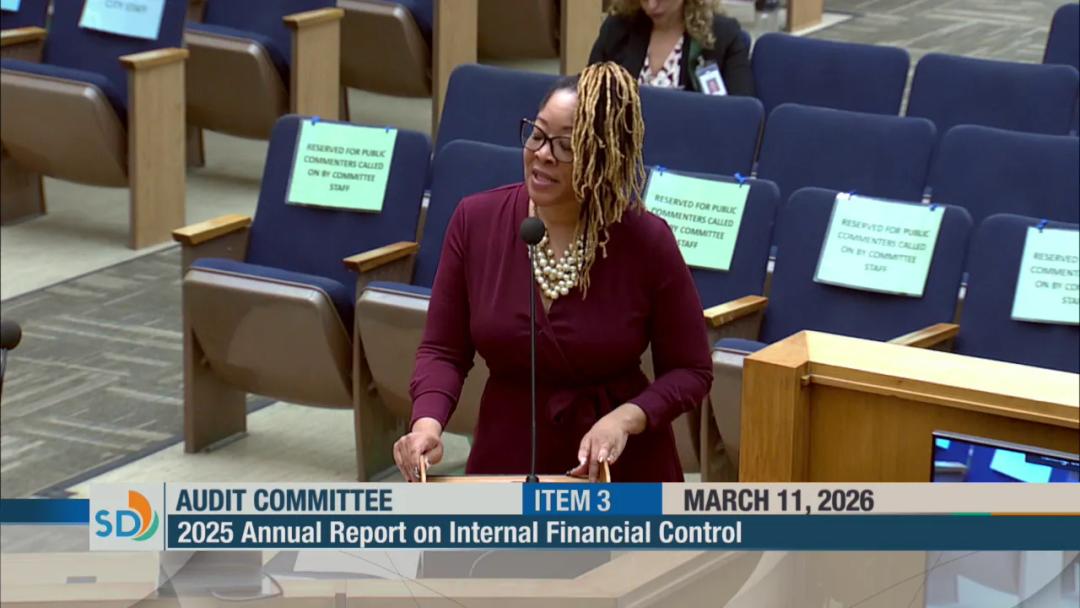
The Audit Committee of the San Diego City Council met on March 11, 2026, to discuss the consent agenda, a performance audit of the Fire-Rescue Department's emergency medical response, the annual report on internal financial controls, and the City Auditor's monthly activity report. The meeting included public testimony on non-agenda items and each agenda item, with committee members deliberating and voting on recommendations. Consent Calendar - Item 1: Approval of Committee Minutes from February 11, 2026 – The committee approved the minutes unanimously (motion by Councilmember Foster, seconded by Committee Member Tapsuri, passed unanimously). Public Comments & Testimony - Non-Agenda Public Comments: - Joy Sanyata (CD3) requested an audit of the city's structural budget deficit, suggesting the CIP gap may be hardwired to the deficit, and asked the City Auditor to "audit the audits." - Judy Strang urged an examination of city leases, specifically the Fairbanks Ranch soccer lease, questioning whether the city is fairly negotiating on behalf of citizens. - A speaker (self-identified as "the original") criticized the city's contracts with Dreams for Change and Downtown Partnership for safe sleeping sites, alleging code violations, poor food, fire hazards, and lack of accountability, and warned of potential class-action lawsuits. - Blair Beekman spoke about the importance of local governance during wartime and encouraged the committee to focus on long-term issues and best practices. - Public Comments on Item 2 (Fire Rescue Audit): - A speaker (phone ending 870) expressed concern about the complexity of the dispatch process and urged faster ambulance dispatch without involving police. - "The original" called the report "horrific" for showing a 4-minute-20-second delay before crews leave the station, and linked slow response times to city policies (e.g., dense development, roundabouts, bike lanes). - Kathleen Lippett noted that policies like streeteries in Pacific Beach block fire truck access, citing a specific building at 710 Garnet. - Blair Beekman suggested improving response times through better coordination with the city's Domain Awareness Centers and urged open discussion of technology practices. - Public Comments on Item 3 (Internal Financial Controls): - Joy Sanyata praised the hybrid zero-based budget but expressed concerns about internal controls, accountability, and transparency. - "The original" questioned how the city can receive awards for fraud prevention when fraud, waste, and abuse continue, and noted that recommendations are not enforced. - Hector called for audits of NGO contracts (e.g., daycares, hospice, transportation) and cited Mission Bay Park tenants being 30% behind on rent. - Blair Beekman linked the internal controls report to the city's five-year capital projects and emphasized the need for community-focused best practices. - Public Comments on Item 4 (Auditor's Activity Report): - "The original" urged audits of safe sleeping sites and nonprofits like Dreams for Change, alleging fraud and lack of housing outcomes. - Ernie Casco (La Jolla) demanded an audit of Torrey Pines Gliderport, claiming insurance and waiver fraud, and illegal commercialization of a public park. - Blair Beekman raised several points: brush management should consider man-made fire causes, questioned off-payroll income mentioned by Andrea Ebbing, and asked about cybersecurity and art funding in East Village. - A speaker (phone ending 870) thanked the committee for upcoming audits on police internal affairs, the unsafe camping ordinance, and cybersecurity, and suggested building metrics to monitor whether red flags are honored. - Hector suggested using AI for audits, including lease compliance at Mission Bay Park, and asked the auditor to publish lease status. Discussion Items - Item 2: 2026 High-Risk Re-Review Performance Audit of the Fire Rescue Department's Emergency Medical Response Process - The City Auditor's office presented findings from a review of over 300,000 level-one dispatches (FY23–FY25). Key findings: - The current dispatch process (dispatch ambulance immediately, then triage before dispatching fire units) adds an average of 1 minute 26 seconds to fire unit dispatch, resulting in an estimated 1-minute delay in arrival compared to the previous process. - Fire rescue crews take nearly three times longer than national standards for turnout time (time from alert to leaving station), averaging 2 minutes 54 seconds vs. NFPA standards of 1 minute. Turnout time met internal standards only 3–6% of the time. - Fire rescue does not report on each phase of response, limiting transparency for city leaders and the public. - Three recommendations were made: (1) create an internal policy requiring an annual report on response performance to be presented to the Public Safety Committee, (2) establish a standardized metric for turnout time, and (3) improve reporting on trade-offs of the triage process. Fire rescue agreed to all recommendations. - Committee discussion focused on the need for outcome data (e.g., lives saved vs. delays), the impact of fire station locations, and the complexity of measuring response times. Fire rescue staff noted that for the most critical (echo-level) calls, the dispatch delay is only 11 seconds, and that a standards of coverage study is forthcoming. - A motion was made by Councilmember Halpern to accept the report and forward it to City Council, with a friendly amendment (accepted) requiring fire rescue to return in June 2026 with an implementation plan. The motion passed unanimously. - Item 3: 2025 Annual Report on Internal Financial Controls - The Department of Finance presented the report, which concluded that internal financial controls are effective. Highlights included a clean audit opinion for FY25, 11 consecutive GFOA awards, and progress on resolving lease audit and invoicing issues in the Economic Development Department. - Committee members discussed workforce management challenges, federal grant reporting timeliness (FFATA compliance), and the upgrade of the leasing administration software (version 11 by June 30, 2026, with a long-term RFP in fall 2026). - Councilmember Foster raised concerns about expired contracts and manual processes, questioning how the city maintains strong audit results despite systemic issues. Staff acknowledged the need for accountability and process improvements. - A motion to accept the report and forward to City Council as an informational item was made by Chair Marino, seconded by Councilmember Foster, and passed unanimously. - Item 4: City Auditor's Monthly Activity Report - The City Auditor reported one issued report (fire rescue audit), two audits in report writing (brush management on private property, unsafe camping ordinance), five audits in fieldwork (cybersecurity, police internal affairs, arts and culture funding, citywide vehicle rentals, street light repair), and upcoming audits (police armory, business tax, Mission Bay). - The auditor also noted recruitment progress, outreach for audit requests (due April 10, 2026), and a request for the committee to share the public survey on social media. - No formal action was taken; the item was informational. Key Outcomes - Item 1: Consent agenda approved unanimously. - Item 2: Audit report accepted and forwarded to City Council; fire rescue directed to return in June 2026 with an implementation plan for the three recommendations. - Item 3: Annual report on internal financial controls accepted and forwarded to City Council as informational. - Item 4: No action required; the activity report was received. - Next Meeting: The next regularly scheduled Audit Committee meeting is April 15, 2026, at 9 a.m.

PUBLIC SAFETY 23% · AUDIT FOLLOW-UP 22% · PUBLIC COMMENT 21% · EMERGENCY MANAGEMENT 12%
127
MAR 11, 2026 · SAN DIEGO, CALIFORNIA · PUBLIC SAFETY & LIVABLE NEIGHBORHOODS COMMITTEE
Public Safety Committee Meeting Summary - March 11, 2026

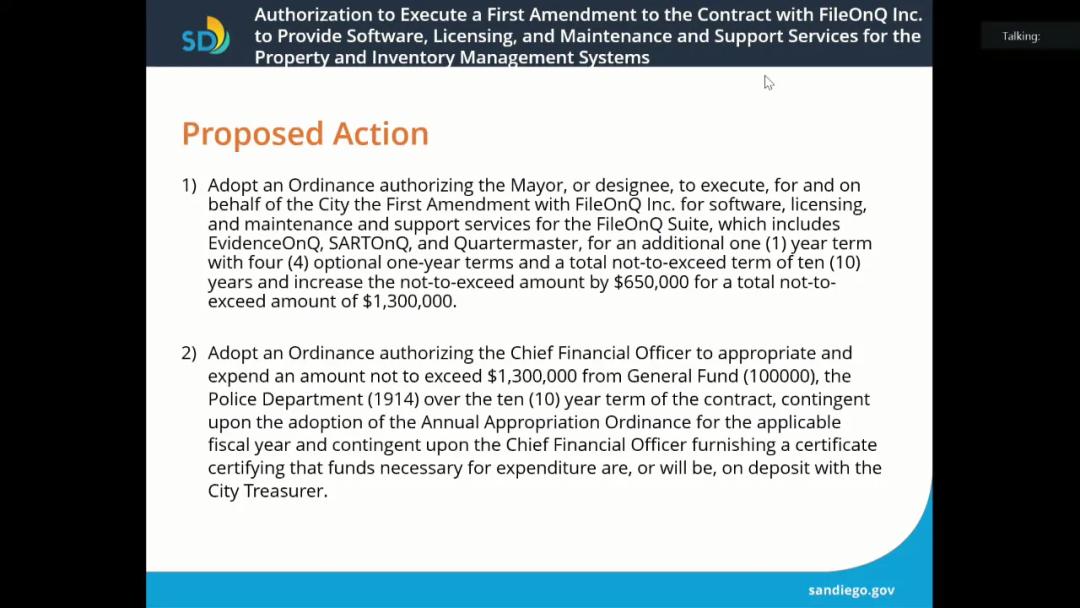
The Public Safety Committee of the San Diego City Council met on March 11, 2026, at 10:00 AM. The meeting was chaired by Councilmember Sarah Von Wilpert and included members Councilmember Raul Campillo (Vice Chair), Councilmember Jennifer Campbell, and Councilmember Stephen Whitburn. The committee considered a consent item, four action items, and one informational update. Key items included electric bicycle safety regulations, contracts for alarm permit software, firing range rental, and property management software, as well as an update on the No Shots Fired violence intervention program. All votes were unanimous 4-0. Consent Calendar - Item 1: Approval of Minutes from January 30, 2026 – Approved unanimously after public comment. A member of the public requested that data retention center discussions be included in future public processes. Another speaker urged equitable prosecution of hate crimes and opposed ghost gun regulations. Public Comments & Testimony Non-Agenda Public Comment: - Paul Scott, a participant at Lot B safe sleeping site, complained about a care coordinator issuing write-ups for minor tent infractions and alleged a dog-stealing scheme. He requested intervention. - John, representing Conservante Valve, presented a patented device to prevent water loss from damaged fire hydrants, urging the city to adopt it. - Derek Baker, a participant at safe sleeping lot B, stated he received a termination letter for storing belongings (including a walker) outside his tent, alleging ADA violations. He requested investigation. - Blair Beekman urged the city to adopt best practices for safe sleeping sites and to reconsider Flock ALPR technology, citing Oakland's approach. - Catherine Rhodes highlighted that police department expenses increased from $533 million (2022) to $719 million (2025), a 35% rise, and questioned budget monitoring. She also noted the city budgeted $144 million for underground surcharge but spent only $44 million. - Becky Rapp opposed the SEED program (Social Equity and Economic Development) for marijuana retail, arguing it contradicts substance use prevention efforts. - Madison warned about 7-hydroxy mitragynine (7-OH), a psychoactive compound sold in gas stations and vape shops, urging stronger protections. - The original DRA (caller) criticized safe sleeping sites run by Dreams for Change, alleging neglect and ADA compliance issues, and called for Councilmember Whitburn to act. - Francine Maxwell requested a budget review and presentation from the Community Policing Program (CPP), noting staffing changes and the need for updates. - A caller (phone ending 8700) thanked the committee and raised concerns about the audit committee's discussion on emergency medical response, urging clearer focus on ambulance services. - Terri Ann Stelly supported e-bike safety regulations and opposed marijuana sales, citing impaired driving risks. - Peggy Walker urged a ban on marijuana billboards and opposed the SEED program, citing normalizing effects on youth. - Judy Strang shared personal experience with marijuana-related health issues and opposed expanding marijuana retail. Public Comment on Specific Items: - Item 5 (E-bike safety): 19 in-person speakers (including Girl Scout Troop 4343) and 13 virtual speakers. Supporters included Girl Scouts who described their "Walk Your Wheels" campaign, Mandy Havlik (Peninsula Community Planning Board), Ross Tritt (representing Assemblymember Tasha Berner), and Deborah Adams. Opponents included Leaf Gensert, Zach Sturgeon (citing San Jose State study), Harry Bubins, Arya Grossman (Circulate San Diego), and Ian Hembry (San Diego County Bicycle Coalition), who argued the ordinance targets the wrong bikes and lacks data on class 1/2 e-bike incidents. - Item 2 (Alarm permit software): Blair Beekman and Joyce (supportive, with workforce diversity notes) spoke; the original DRA criticized the permit system. - Item 3 (Firing range rental): Blair Beekman questioned contract cost increases; Joyce supported the training; the original DRA and ConSola criticized spending and gun control. - Item 4 (Property management software): Blair Beekman commented on Flock and data sharing; the original DRA raised data privacy concerns; Joyce noted workforce diversity. - Item 6 (No Shots Fired): Blair Beekman praised Oakland's approach; the original DRA argued for addressing root causes of violence; Joyce expressed compassion for gang members; ConSola criticized the program as incremental gun control. Discussion Items Item 5: Electric Bicycle Safety Regulations (AB 2234) – Presented by Carrie Shaw (Councilmember Campillo's office). The proposed ordinance would prohibit children under 12 from operating class 1 and class 2 e-bikes, establish an education-first enforcement model, and reinforce existing state laws. Data showed e-bike injuries among children increased over 300% from 2019 to 2023. The pilot program requires a 30-day public information campaign before enforcement. Several cities in San Diego County have already adopted similar ordinances. The committee voted to direct Council District 7 to work with the City Attorney to draft code amendments and forward to City Council. Motion by Vice Chair Campillo, seconded by Councilmember Campbell, passed 4-0. Item 2: Alarm Permit Software Contract (PMAM Corporation) – Presented by Lt. Dan Hall. The contract for $946,383 over 10 years (5+5) would replace the current system (CRIWOOF) with a software-as-a-service platform to manage alarm permits, false alarms, fee collection, and appeals. The current system is being discontinued. Motion by Councilmember Campbell, seconded by Councilmember Whitburn, passed 4-0. Item 3: Firing Range Rental Contract Amendment (POWA Weapons and Gear) – Presented by Capt. Mike Ramsey. The amendment increases the not-to-exceed amount by $1.1 million to $4.1 million for five years of exclusive use (now five days/week) due to the continued closure of the Home Avenue range. The contract runs through September 2027. Motion by Vice Chair Campillo, seconded by Councilmember Campbell, passed 4-0. Item 4: Software Licensing for Property and Inventory Management (File on Q) – Presented by Joseph Schneider. The amendment extends the contract for up to 10 years and increases the not-to-exceed amount by $650,000 to $1.3 million. The software supports evidence tracking (Evidence on Q), sexual assault kit tracking (SART on Q), and asset management (Quartermaster). Motion by Vice Chair Campillo, seconded by Councilmember Campbell, passed 4-0. Item 6: No Shots Fired Intervention and Prevention Program Update – Informational presentation by Bishop and Amanda. They reported on the cost of violence study (by the National Institute for Criminal Justice Reform), which found each homicide costs an estimated $4 million and each non-fatal shooting $1.3 million. The program targets high-risk gang-involved individuals, serving 40-50 participants in a gun diversion program, and reported 97% of participants were not rearrested within six months. They also described their work with the Hillcrest pellet gun hate crime incident, partnering with San Diego Pride for restorative justice. No action required. Key Outcomes - All action items (Items 1-4) were approved unanimously (4-0). - Item 5 (e-bike safety) was forwarded to the full City Council for consideration. - Item 6 was received as an informational update. - The next regular Public Safety Committee meeting is scheduled for April 15, 2026, at 2:00 PM.

PUBLIC SAFETY 34% · TRANSPORTATION SAFETY 10% · YOUTH PROGRAMS 9% · TECHNOLOGY AND INNOVATION 8%
128
MAR 10, 2026 · SAN DIEGO, CALIFORNIA · CITY COUNCIL
San Diego City Council Meeting - March 10, 2026: Budget, Infrastructure, and Proclamations

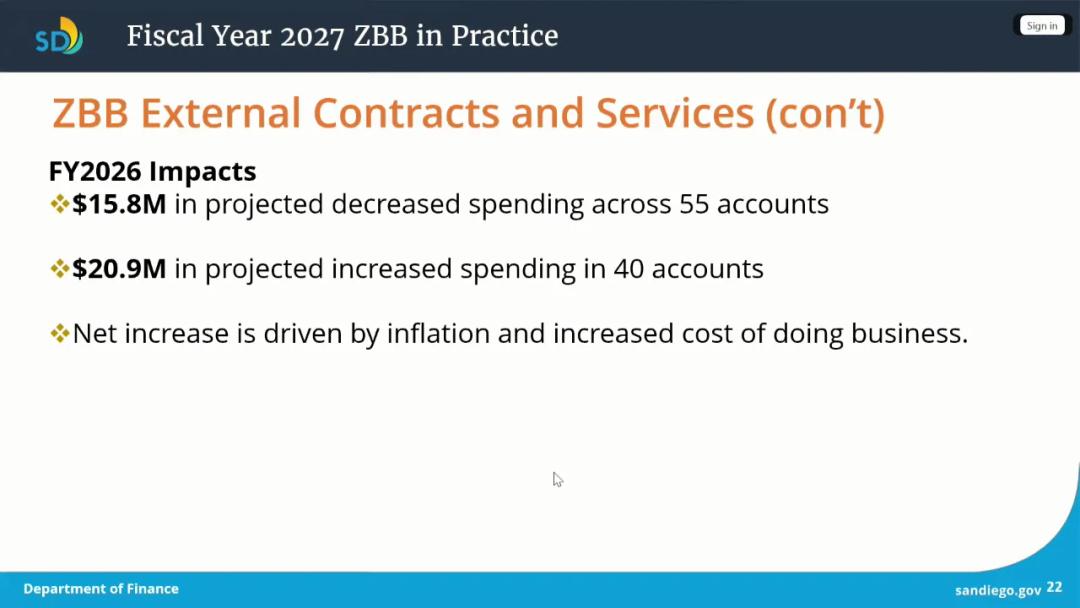
The San Diego City Council met on March 10, 2026, in three sessions (morning, afternoon, and evening) to consider ceremonial recognitions, proclamations, consent calendar items, and key informational reports on the city's capital infrastructure outlook and zero-based budgeting. The evening session was dedicated to public input on the Fiscal Year 2027 budget. The meeting featured extensive public testimony on a range of topics including the city's structural budget deficit, stormwater funding, cannabis social equity, public safety, and community services. Consent Calendar - The council approved a consent calendar that included ceremonial proclamations: Diversionary Theater 40th Anniversary Day, Women's History Month, St. Patrick's Day Parade and Festival Day, Lowrider Stamp Day, and Jeff Davis Day. All proclamations passed unanimously (9-0) after a motion by Councilmember Von Wilpert and second by Councilmember Moreno. - Council President LaCava registered no votes on item 55 (Preservation of Progress) and item 50A (related to a prior vote on a state of construction), citing concerns about the de novo hearing process and consistency with prior votes. Councilmember Von Wilpert registered a no vote on item 53 (an expired contract). The remainder of the consent calendar passed unanimously. - Item 105 (reappointment of Dr. Joan Chen to the Privacy Advisory Board) and other routine items were approved. Public Comments & Testimony - Non-Agenda Public Comment (carried over from March 9): Six speakers addressed topics including the need for racial equity reporting in city contracts (John Stump), the management of Torrey Pines Glider Port and calls for a waiver and advisory board (Bob Kazuski), e-waste disposal resources (Anish), alleged irregularities in city payroll (Andrea Ebbing), and opposition to the Socially Equitable Cannabis (SEED) program citing statewide data showing low business opening rates (Becky Rapp). - Ceremonial Items (Women of Distinction): Public speakers praised the honorees but also called attention to broader issues of women's rights and systemic problems (Lori Saldania, Andrea Ebbing, others). - Proclamations: Public comment included support for the St. Patrick's Day parade, Lowrider Stamp Day, and Women's History Month, as well as criticism of the city's handling of homelessness and housing (speaker 'the original'). - Consent Agenda: Speakers commented on Liberty Station leases (Gary London, Joe Heisler, Mitch Mulanix), East Village Green Phase 1 project (Blair Beekman), the Tijuana sewage crisis, and the need for dedicated stormwater funding (Lori Saldania, Andrea Ebbing, Bob Kazuski). - Item 330 (CIP Outlook): Speakers emphasized the urgency of stormwater funding and the need for dedicated revenue (Courtney Brown, San Diego Coastkeeper) and discussed equity in project distribution (John Stump, Hector). - Item 331 (Zero-Based Budgeting Training): Public comments were mixed, with some supporting the ZBB approach and others criticizing it as a control mechanism (Blair Beekman, John Stump, 'the original', and a speaker concerned about globalist agendas). - Evening Budget Hearing (Item 332): Over 20 speakers provided input on FY2027 budget priorities, urging funding for libraries, rec centers, LGBTQ+ substance use programs (Jacob Duarte, Karina Pugh from The Center), cannabis social equity (Andrew Bañez, Eduardo Bautista), and public safety. Others called for cuts to middle management, police overtime, and non-core services (Natalie Rashke, Catherine Douglas, Stephen Schmoll). Discussion Items - Item 330: Fiscal Year 2027-2031 Five-Year Capital Infrastructure Planning Outlook - Staff from Engineering and Capital Projects and the Department of Finance presented the outlook, showing $12.82 billion in identified needs over five years, with only $5 billion in projected funding, leaving a $7.8 billion gap. Stormwater needs ($5.5 billion) dominate, driven by aging assets and regulatory deadlines. The Office of the Independent Budget Analyst (IBA) highlighted that 66% of projected funds are for water and wastewater, and that the funding gap grew $1.3 billion from the prior year. - The Division of Race and Equity (Kim Desmond) noted that only 23% of funded CIP projects (45 out of 504 requests) were in structurally excluded communities, raising equity concerns. She recommended setting targets and improving data tracking. - Council discussion focused on the need for dedicated stormwater revenue, creative financing (e.g., environmental impact bonds), and the impact of a proposed ballot measure that would cut $100 million in core services. Councilmember Campbell stressed the inadequacy of the current 98-cent monthly stormwater fee. - Item 331: Zero-Based Budgeting (ZBB) Training - The IBA and Department of Finance provided a training on ZBB principles, citing examples from Georgia, Chicago, and Calgary, and noting that the city already applies ZBB to about 40% of the general fund (non-discretionary accounts, IT, hourly positions, etc.). A pilot in FY2017 led to budget additions, not cuts. - For FY2027, departments conducted a zero-based review of external contracts and services, identifying $15.8 million in identified decreased spending and $20.9 million in increased spending, netting a $5 million increase driven by inflation. A citywide review of unclassified positions is underway. - Councilmembers discussed the need to define core services and align resources with priorities. - Item 332: Public Input on FY2027 Budget - Council President LaCava and IBA Charles Mónica opened the hearing, noting a $100–120 million structural deficit that will require cuts. Councilmember Foster emphasized strategic reductions. The public offered a wide range of priorities and suggestions. Key Outcomes - Proclamations approved (9-0) with registered no votes on specific items as noted. - No formal votes were taken on informational items 330, 331, and 332. These items provided guidance for upcoming budget decisions. - Next steps: The council will continue budget deliberation with additional public hearings scheduled for May 4 and May 18, 2026. The IBA's budget crash course is set for March 24. The mayor's proposed FY2027 budget is expected in April.

BUDGET EQUITY ANALYSIS 13% · PUBLIC COMMENT 11% · PUBLIC ENGAGEMENT 8% · PROCEDURAL 7%
129
MAR 9, 2026 · SAN DIEGO, CALIFORNIA · CITY COUNCIL
San Diego City Council Meeting - March 9, 2026

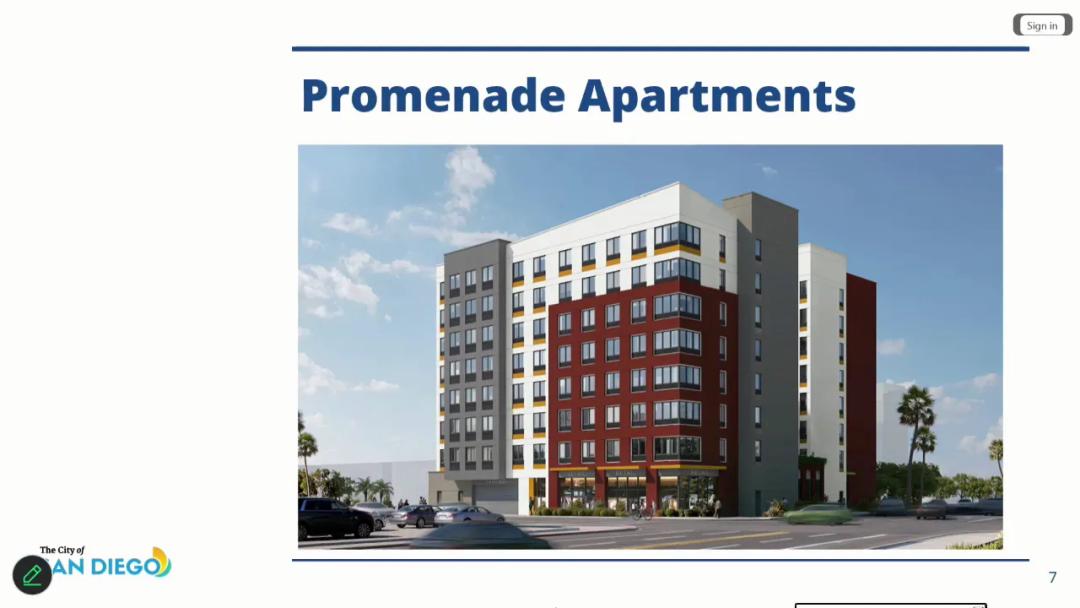
On Monday, March 9, 2026, the San Diego City Council convened at approximately 9:00 a.m. (with a recess into closed session and reconvening at 2:00 p.m.) to consider a closed session agenda, a climate action implementation plan update, a lease amendment with the San Diego Zoo, and an affordable housing loan agreement. The meeting was chaired by Council President Joe LaCava, with Council President Pro Tem Marni von Wilpert attending remotely due to family health care needs. All eight present council members were in attendance for votes; Councilmember Lee was absent. Closed Session Items - The council recessed into closed session to discuss five items: litigation and potential claims (CS1–CS5). Public comment was heard on the closed session agenda before the recess, including comments on the city's wastewater spill (CS4) and Proposition 218 concerns (CS3). No reportable actions were taken; the city attorney stated there was nothing to report. Public Comments & Testimony - Closed Session Public Comment (morning): - Blair Beekman thanked the council for providing explanations on the closed session items, particularly the significant exposure to litigation regarding the January 2023 wastewater spill (9.9 million gallons). - Susie (caller 8700) spoke on items 1–4, urging bicyclists and pedestrians to be their own safety advocates and expressing support for Proposition 218 as a public voice tool, but argued it is time to share the money to meet the city's budget needs. - A speaker (original) criticized the council for grouping consent and discussion items together, claiming it circumvents the will of the people. She also opposed Proposition 218 as unconstitutional and faulted the city for failing to maintain roads and for the wastewater spill. - Lori Saldaña spoke on CS3, CS4, and CS5. She noted ongoing problems with the city's bin delivery program, including out-of-state contractors. She described the January 2023 sewage spill as an early warning of infrastructure failures linked to sea level rise and urged the council to examine underground infrastructure shifts, as seen in the San Francisco Bay Area. - John Stump urged the council to review city policies on lease and use of city property, noting that several lawsuits could have been avoided if council policies on liability insurance, profit sharing, and capital improvement pre-approval had been followed. - Item 200 – Climate Action Implementation Plan (afternoon): - Lori Saldaña (co-author of AB 32) criticized the lack of local solar generation on city buildings and noted that SDG&E profits are among the highest due to ratepayer costs. She questioned the absence of solar installation goals in the report. - John Stump asked the city to stop using visuals that focus on downtown CO2 and instead show city employee efforts. He urged reducing climate impacts at the city's airports and the zoo, and called for changing the SDG&E franchise. - Livia Wark Bowden (Coast Law Group, representing SURF) echoed the IBA's call for more transparency. She argued the city's 2025 annual report came late, fails to meet the settlement agreement, and that the 2030 and 2035 goals are unlikely to be met without more candid acknowledgment of shortcomings. - Blair Beekman connected closed session items to sea level rise concerns, urging the council to address sea level rise in the climate action plan and to learn from the San Francisco Bay Area's approach. - Joyce (caller 8700) thanked presenters and noted that “society” is key to meeting climate goals, acknowledging the difficulty of the work. - Bob Kazuski warned that the “panic” over climate change could train AI and youth to believe humanity needs to be exterminated. - Jay Powell appreciated the IBA comments and recommended that the city use its representative on San Diego Community Power to create local renewable microgrids, and asked whether the climate advisory board had reviewed the report. - Item S400 – Zoo Lease Amendment: - Numerous speakers (mostly zoo volunteers) expressed strong support for the lease extension, citing the zoo's economic impact, conservation, education programs (e.g., free second-grade field trips), and community benefits. Speakers included Susie Tig, Jennifer Roy, Craig Sanders, Kelly Madden, Marsha Didier, Philip McMullen, Beverly McKinney, Rodolfo Serene, and Ed Fuller. - Opposition speakers (remote): - A caller (gambler) accused the council of threatening the zoo and questioned the need for a lease extension now. - John Stump urged the council to send the item back to committee, citing the lack of discussion about employee demographics, a lungworm infection risk, and the $2 billion value of the deal. - Shane Harris raised concerns about the length of the extension and whether the city is receiving fair value given budget challenges. - Lori Saldaña asked for more time to review economic details, and noted the zoo's large parking lot has not been covered with solar panels. - Joyce (caller 8700) requested updated EOC and workforce reports before approval, and argued the lease should be aligned with current labor and equity standards. - Bob Kazuski described a hypothetical scenario of negligence and retaliation, drawing a parallel to the Torrey Pines Glider Port lease. - Jay Powell asked for the item to be referred to the climate advisory board, noting the parking lot could be used for solar and rainwater capture. - Item S401 – Affordable Housing Loan: - Joyce (caller 8700) praised the project for 94 affordable apartments, noted the per-unit subsidy of about $70,745, and expressed hope for tax credit award. - A caller (8813) accused the project of being part of a UN agenda to control people. - Andrea Ebbing expressed neutrality, but questioned the impact on trash fees and highlighted a city employee's high pay. - Lori Saldaña supported the project, but urged the city to enforce that all housing units (including short-term rentals) are used for permanent housing to close the housing gap. - John Stump asked whether the project is zero-emission (Zembop) and whether it includes subsidized parking, and urged that workers meet city wage standards. Discussion Items Item 200 – 2025 Status Update for the Climate Action Implementation Plan (Information Item) - Staff Presentation (Kelly Stonko, Deputy Director; Andrew Martin, Chief Sustainability Officer): - The update uses best available data (2023 emissions) to evaluate progress toward the 2030 goal. Since 2019, emissions are down 19%, but a slight uptick occurred from 2022 to 2023 (3.5% above the linear path to 2030). - Over half of emissions come from vehicles; buildings account for 41%. The city has completed or underway 75% of the 190 actions, but many are continuous. - Major challenges: federal funding rollback, weakened clean car standards, court decisions favoring natural gas, and tight city budgets. Staff is seeking alternative funding sources. - Next steps: Annual progress report in spring 2026; begin CAP update with SANDAG grant. - IBA Comments (Jordan Moore): - Acknowledged progress but noted the 2023 emissions increase. Recommended shortening the reporting window and better attributing emissions reductions to city actions vs. external factors (e.g., SDCP's renewable mix). - Council Discussion: - Councilmember Ela Rivera (Environment Committee Chair) asked about barriers to building electrification (funding, court rulings, costs). Staff noted the Berkeley case and the need for alternative funding. She also asked about lessons for the next CAP update: prioritizing actions within city control and overlapping with highest emission sources. - Councilmember Whitburn highlighted transit-oriented housing (e.g., Skylined project in Rancho Bernardo). - Councilmember von Wilpert questioned why 2024 data is not yet available (staff cited delays in receiving data from other agencies). She expressed frustration with the lack of granularity in the report, especially on EV charger installations, Zenbop goals, and tree canopy. Staff agreed to provide a written report to committee. - Council President LaCava praised staff for integrating climate action across departments despite limited resources and federal headwinds. He emphasized the importance of the ESCO contract and the need for shorter reporting turnarounds. Item S400 – Second Amendment to Lease Agreement with the Zoological Society of San Diego (Zoo) - Staff Presentation (Casey Smith, Chief of Housing and Community Development): - The amendment extends the lease by 52 years (to 2078) for a total of 99 years. The zoo will pay an annual minimum of $3 million (with 3% escalator starting in 2030) and a 50-50 revenue split from parking (capped at $700,000/year, fixed). The $3 million can be reduced if the city eliminates paid parking in Balboa Park. - Community benefits: At least 250,000 complimentary daily admission tickets annually to nonprofits, schools, and children. New provisions include prevailing wage and the city's zero-emission building policy (Zembop). - The zoo's economic impact: 3.9 million visitors in 2024, $571 million in guest spending, $925 million total economic impact, 6,500 jobs. - IBA Comments (Noah, not named in transcript but referenced): - Estimated net present value of the lease extension at $98.5 million (over 52 years). Noted risks: revenue dependent on parking policies, lease silent on dispute resolution, and the planned undergrounding of the parking lot for exhibit expansion. Offered three options: approve, send back for further negotiation, or reject. - Council Discussion: - Councilmember Campbell made the motion to approve, citing the zoo's economic and community value. - Council President LaCava seconded, noting the $3 million will go into the Balboa Park Paid Parking Program Fund. He also noted that the zoo pays for its own water (unlike other park tenants). - Councilmember Moreno supported the motion, but expressed regret over paid parking and noted the zoo's free admission for second graders. - Councilmember von Wilpert praised the zoo's volunteers and the recent Elephant Valley opening. She questioned the use of council policy 700-10, arguing 700-04 (Balboa Park) should govern. She also urged the city to complete lease renewals for farmers in the San Pasqual Valley. She confirmed with staff that no appraisal was needed because no rent is charged. She noted the Teamsters represent zoo workers and that the collective bargaining agreement was approved. She supported the motion. - Councilmember Campillo asked about the Wounded Warrior program; zoo representative Adam Day confirmed they will work to minimize parking impacts for military members. Campillo supported the motion. - Vote: Unanimous 8-0 (Lee absent). Item S401 – Affordable Housing CDBG Loan Agreement with Community Revitalization Development Corporation (Promenade Apartments) - Staff Presentation (Christine Marcella, Deputy Director, Economic Development Department): - The project will provide 94 affordable apartments (1-, 2-, and 3-bedroom) for families earning 30-70% of area median income, plus one manager's unit. Located in Uptown (Council District 3), a high-resource area and transit priority area. Total project cost $60.3 million; city loan of $6.65 million (CDBG) at 3% simple interest, 55-year term, with 55-year affordability covenants. - The developer expects to apply for tax credits in May 2026; construction could begin in Q4 2026 and last 26 months. - Council Discussion: - Councilmember Whitburn (district representative) made the motion to approve, noting the project's proximity to transit, grocery, and schools. - Councilmember Campbell seconded, praising the building's design and cultural contribution. - Councilmember Ela Rivera highlighted the mix of bedrooms (33 one-bedroom, 33 two-bedroom, 28 three-bedroom) and noted the per-unit cost ($635,000) and per-bedroom cost ($326,000) are reasonable. She also acknowledged Councilmember Whitburn's commitment to housing. - Councilmember Campillo commended the project for being in a state-designated highest resource area, furthering fair housing. He noted that the developer received bonus points for this location under the Round 6 NOFA. He also noted the depth of affordability (30-70% AMI). - Council President LaCava added that the project includes rooftop solar, all-electric appliances, and exceeds Zembop standards (though Zembop does not apply to private projects). He clarified that the city is meeting its RHNA obligations for above-moderate housing and that the affordable units are needed. He supported the motion. - Vote: Unanimous 8-0 (Lee absent). Key Outcomes - Closed Session: No reportable actions. - Item 200 (Climate Action Plan): No motion required; information item only. Staff will provide a written report to committee on EV charger installations and other metrics. - Item S400 (Zoo Lease): Approved 8-0. The second amendment to the lease (52-year extension) is executed, with annual payments of $3 million (escalating) and a 50-50 parking revenue split (capped). The zoo will provide free admission tickets and follow prevailing wage and Zembop requirements. - Item S401 (Promenade Apartments): Approved 8-0. The city will execute a $6.65 million CDBG loan for the 94-unit affordable housing project. - Non-Agenda Public Comment: Cut short due to loss of quorum; continued at the next meeting on March 10, 2026.

CLIMATE CHANGE 19% · PUBLIC COMMENT 17% · PUBLIC ENGAGEMENT 12% · LEASE REVENUE MANAGEMENT 11%
130
MAR 5, 2026 · SAN DIEGO, CALIFORNIA · CIVIL SERVICE COMMISSION
San Diego Civil Service Commission Meeting - March 5, 2026

The Civil Service Commission met on March 5, 2026, at 11:15 AM under President Nico Portillo. Commissioners Merrill and Moore were present; Commissioners Pham and Freeman were absent. The meeting included a closed session for appeals of employment disqualifications and disciplinary actions, followed by a public session with approval of the consent agenda, a discussion item on personnel manual revisions, and an informational update from the Personnel Director. No public comments were received. Consent Calendar - Items 3 through 7 were approved unanimously, including the minutes from the February 5, 2026, commission meeting. The motion passed 3-0 (Commissioners Pham and Freeman absent). Public Comments & Testimony - No public comments were made on Zoom or in person for any agenda item or non-agenda item. Report from Closed Session (Appeals Outcomes) - The commission reported out the following votes on appeals heard in closed session (all appeals under California Government Code § 54957(b)(1) unless noted): - Item 1 – Garrett and Abeta (conviction record disqualification, laborer): Motion to grant appeal passed 2-1 (Commissioner Moore voting no). - Item 2 – Decree L. Atkins Jr. (conviction record disqualification, liability claims representative 1): Motion to deny appeal passed 3-0. - Item 3 – Richard L. Dueno (conviction record disqualification, laborer): Motion to grant appeal passed 3-0. - Item 4 – D. Edward L. Cunningham (conviction record disqualification, recreation aide 8): Motion to deny appeal based on California Public Resources Code § 5164 passed 3-0. - Item 5 – Kevin D. Mitchell (conviction record disqualification, grounds maintenance worker 1): Motion to grant appeal passed 3-0. - Item 6 – Jose C. Rodriguez Jr. (conviction record disqualification, laborer): Motion to grant appeal passed 3-0. - Item 7 – Trey O. Sinegal (conviction record disqualification, laborer): Motion to grant appeal passed 3-0. - Item 8 – Trevor H. Bennett (medical disqualification, lifeguard 1): Motion to deny appeal passed 3-0. - Item 9 – Case 2024-2 (suspension, police officer 2): Motion to uphold suspension passed 3-0; item was trailed (continued). - Item 10 – Stephen Glover (termination, sanitation director 2): Motion to trail (continue) the item passed 3-0. - Item 11 – Derek Whitlock (termination, associate department human resources analyst): Motion to trail (continue) the item passed 3-0. - A point of order was raised regarding the public availability of findings and recommendations for items 9-11 under Charter Section 1.9; it was confirmed these are public records. Discussion Items - Item 9 – Revisions to Personnel Manual Index Codes G7 and G7A: Staff (Carissa Rosemore) presented proposed revisions requested by the Fire-Rescue Department and Local 145 to transition the employee performance review program for Local 145-represented employees from index code G7 to G7A, aligning them with other classified employees. Index code G7 would be deleted. The revisions also clarify that G7A applies to classified unrepresented employees and update the lifeguard union name from Teamsters Local 911 to Local 986. The commission approved the revisions unanimously (3-0). - Item 10 – Update on Personnel Department Initiatives: Personnel Director David Delagar provided updates on: - Online Transfer Applications in NeoGov: A soft launch in mid-February 2026 enables city employees to apply for transfers electronically and self-schedule interviews. Paper applications remain available. The system has over 800 transfer exam plans. Monitoring is ongoing for non-city applicants submitting applications in error. - Contracting Out Exemption List Review (AB339): Personnel is conducting a line-by-line review of more than 600 exemption list items to identify duties that could be performed by classified employees. Approximately 500 items have been reviewed as of the meeting; completion expected by May 2026. A new dedicated email inbox allows departments to request determinations. This advisory function will be ongoing. - Commissioner Merrill requested copies of memos sent to 25 departments regarding the annual EEO report update; staff confirmed no departments had yet responded and agreed to provide the documents. Key Outcomes - Appeals: Seven appeals were granted (Items 1, 3, 5, 6, 7, and two trailed items continued). Three appeals were denied (Items 2, 4, 8). One suspension was upheld (Item 9). Two termination appeals were trailed (Items 10, 11). - Consent Agenda: Approved unanimously (Items 3-7). - Personnel Manual Revisions: Approved unanimously (Item 9). - Information Items: No action taken on Item 10; updates noted. - Next Steps: The regular business meeting was scheduled for 1:00 PM the same day; the commission adjourned the special meeting.

PERSONNEL MATTERS 75% · RACIAL EQUITY 9% · PROCEDURAL 8% · TECHNOLOGY AND INNOVATION 8%
OPENPUBLICA · PUBLIC MEETING INDEXUPDATED DAILY · openpublica.com