Browse by city
Date range
Search help

Search titles, summaries, topics and stored transcripts together. Keywords may match separately; put the whole query in double quotes for a phrase. Matching follows word analysis, so punctuation is not exact. Both dates are included. Documents are not searched.

SHOWING 761–770 ENTRIES
761
FEB 13, 2020 · SAN DIEGO, CALIFORNIA · ENVIRONMENT COMMITTEE
San Diego Environment Committee Meeting - February 13, 2020

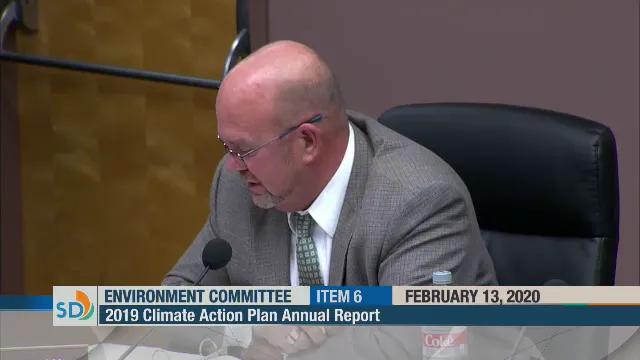
The Environment Committee of the San Diego City Council met on February 13, 2020, at 1:00 PM. Chair Campbell presided, with Council Members Moreno, Bree, Sherman, and Campbell present. The meeting covered a range of environmental topics, including public comments on various issues, presentations on vaping and cigarette butt waste, approval of routine contracts, discussion of committee priorities for 2020, the 2019 Climate Action Plan annual report, and the new Climate Equity Index. Consent Calendar - Item 1: Authorized an agreement with Allied Waste Systems (Republic Services) for trash and recycling collection at city facilities. Approved unanimously after waiving presentation. - Item 2: Approved a sewage transportation agreement between the City of San Diego and the City of El Cajón. Approved unanimously after waiving presentation. Public Comments & Testimony Public comments were heard on non-agenda items and specific agenda items. Key speakers and positions: - Non-Agenda Public Comments: - Martha Welsh: Criticized city and county governance, alleging corruption and lack of accountability. - Tracy Andrea (La Jolla Shores resident): Requested a ban on wood and charcoal fires at La Jolla Shores Beach and Kellogg Park, citing health and safety risks. - Dr. Meinrod Andrea (atmospheric chemist, Scripps): Presented air quality data showing PM2.5 levels from beach fires comparable to Beijing and wildfire conditions. - Carolyn Marsden: Urged a ban on gas-powered leaf blowers, citing noise, air pollution, and climate action plan benefits. - Ann Feige (Community Forest Advisory Board Chair): Supported the creation of a broader environmental advisory group and highlighted the board's accomplishments. - Robin Davidoff (SEAL Society docent): Requested enforcement of laws protecting sea lions at La Jolla Cove, with better signage and movable ropes/cones. - Andrew Meyer (San Diego Audubon Society): Thanked council members for prioritizing wetland restoration in Mission Bay's Northeast corner. - Jim Pugh: Supported wetland restoration and carbon sequestration analysis. - Group on Right to Rescue (Kevin Luna, Doreen Nasser, Cameron Mehta, Christopher Hayward, Shannon Sears): Presented graphic footage of animal cruelty on farms, requested a "Right to Rescue" resolution to protect activists rescuing farm animals. They emphasized they have been engaging with the city for eight months. - Virginia Wilson (Community Forest Advisory Board): Opposed consolidating advisory boards, arguing the forestry board's expertise is valuable. - Tommy Howe: Supported wetland restoration in Northeast Mission Bay, noting benefits for water quality and recreation. - Gabriela Sosa: Advocated for banning gas-powered leaf blowers, citing health and environmental impacts. - Public Comments on Vaping (Item 4): - In favor: Becky Rapp (public health educator) highlighted the environmental hazard of disposable e-cigarettes (Puff Bars) as hazardous waste. Kathleen Lippett supported the county's ban and criticized industry misinformation. - Opposed: Molly Sylvester (Communities for Safer Vaping) argued that CDC recommends against THC-containing products, not nicotine; James Mitchell said big tobacco causes youth use, not local vape shops; Ramon Monsour noted FDA already banned flavored pod systems; Giselle Torres stated vape shops are heavily regulated. - Additional speakers: Arkan Samo (Neighborhood Market Association) urged the city to gather data before enacting bans; Rami Gergis (vape shop owner) said his store checks IDs and passes decoy tests; George Johnson (hookah manufacturer) requested an exemption for traditional hookah due to cultural heritage. - Public Comments on Cigarette Butt Waste (Item 5): - Alexander Farron (Surfrider Foundation): Reported that cigarette butts are 20% of litter picked up at beach cleanups, with 47,000 collected in 2019. - Patrick McDonough (San Diego Coastkeeper): Noted that smoking bans on beaches have not reduced butt litter, and filters are toxic. - Kathleen Lippett: Supported the ban on filters but opposed hookah exemptions, calling hookah harmful to public health. - Public Comments on 2020 Committee Priorities (Item 6): - Virginia Wilson: Requested funding for street trees, tree care, and arborist staff. - Ann Feige: Encouraged deeper attention to urban forestry, code compliance, and tree planting. - Patrick McDonough: Supported stormwater funding and integrated water management. - Jay Powell (Sustainable Energy Advisory Board): Urged prioritizing the municipal energy strategy and franchise agreement. - Martha Welsh (opposition): Criticized the city for acting as a county and failing to address sewage issues. - Public Comments on Climate Action Plan (Item 6): - Virginia Wilson: Noted tree maintenance is not enough; tree canopy goals are downplayed. - Ann Feige: Called for a tree canopy analysis, tree care, and organized planting. - Matthew Vasilakis (Climate Action Campaign): Said emissions reductions are largely from state actions; city is not on track for 2035; requested a performance audit and five-year outlook. - Carolina Martinez (Environmental Health Coalition): Asked for funding transparency, inclusion of air quality in CAP, and a mobility equity specialist. - Public Comments on Climate Equity Index (Item 7): - Carolina Martinez (Environmental Health Coalition): Praised the index but urged immediate improvements in top communities and inclusion of air quality data. - Sarah Bolton (Business for Good San Diego): Supported equitable CAP implementation. - Fabiola Lau (Center for Sustainable Energy): Applauded the community engagement in developing the index. Discussion Items - Item 4: Youth Vaping and Environmental Impact – Supervisor Nathan Fletcher presented the County of San Diego's policies, including a ban on flavored tobacco products and a temporary moratorium on e-cigarette devices in unincorporated areas. He cited a doubling of youth vaping to 5 million, environmental harms from disposable pods, and the tobacco industry's targeting of kids. Council members discussed the need for data on effectiveness, the environmental impact of disposable devices, and state legislation SB 424 (cigarette butt waste). - Item 5: Cigarette Butt Pollution – Dr. Thomas Novotny (SDSU) presented on the environmental toxicity of cigarette filters, which are non-biodegradable plastic and contain heavy metals and nicotine. He noted that filters are the most common litter item, with 20,000 butts collected in one hour on SDSU's campus, and that they are toxic to aquatic life. He proposed banning the sale of filtered cigarettes (SB 424). Council members expressed interest in the study and noted the ineffectiveness of current bans. - Item 6: 2020 Environment Committee Priorities – Chair Campbell opened discussion on member-submitted priorities. Council Member Moreno highlighted priorities including addressing Tijuana River Valley pollution, pursuing grant funding, stormwater capture, blue carbon studies, and the Pond 20 wetland mitigation bank. A motion to adopt a work plan based on input was passed unanimously. - Item 7: 2019 Climate Action Plan Annual Report – Staff (Cody Hoovin, Ashley Rosia Tramonti) reported a 24% reduction in greenhouse gas emissions from 2010 levels, exceeding the 2020 interim goal of 15%. Key progress: 15% residential energy reduction, 14 gallons/day water savings, establishment of San Diego Community Power, 42 miles of bike lanes, 8,800 linear feet of sidewalk, 65% waste diversion rate, and 23,000 trees maintained. Challenges remain in mode share (biking/walking), tree canopy, and waste diversion. Council Member Moreno urged more investment in active transportation and green waste bins. Council Member Sherman noted mode share has not changed despite investments and called for better data and leading by example. - Item 8: Climate Equity Index – Staff (Roberto Carlos Torres, Mark Steele) presented the first-ever Climate Equity Index, developed with 23 community organizations. The index assigns census tracts a score from very low to very high access to opportunity. Key findings: 13 tracts with very low access (Barrio Logan, Lincoln Park, Tijuana River Valley) are 96% people of color. Recommendations include pursuing grants, community engagement, an ambassador program, and incorporating equity into city programs. Council Members praised the tool and requested timelines for implementation. Key Outcomes - Consent items 1 and 2 approved unanimously. - Motion to adopt 2020 committee work plan passed unanimously (Council Member Sherman absent). - Informational items (vaping, cigarette butt waste, CAP report, equity index) were received and filed; no votes were taken. However, council members gave direction to staff on future updates. - Right to Rescue – Chair Campbell stated that the city has no factory farms and suggested the group work with the county and state. She noted that the committee is not the proper forum and that the city has been engaging with the group for eight months. - Next meeting scheduled for March 22, 2020, at 1:00 PM.
TOBACCO REGULATION 15% · PUBLIC HEALTH 14% · CLIMATE CHANGE 14% · CLIMATE ACTION PLAN 11%
762
FEB 12, 2020 · SAN DIEGO, CALIFORNIA · PUBLIC SAFETY & LIVABLE NEIGHBORHOODS COMMITTEE
Public Safety and Livable Neighborhoods Committee Meeting - February 12, 2020

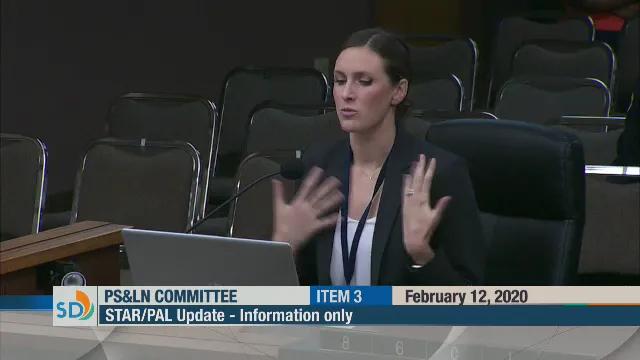
The Public Safety and Livable Neighborhoods Committee met on February 12, 2020, at 9:00 AM (local time) to discuss the 2020 work plan, receive a presentation on de-escalation training from the San Diego Police Department, and hear an update from Star PAL. The meeting was chaired by Councilmember Monica Montgomery, with Vice Chair Brie and Councilmember K present. Also in attendance were representatives from the City Attorney's Office, Mayor's Office, and SDPD. Consent Calendar - The committee unanimously approved the actions of the January 29, 2020, Public Safety and Livable Neighborhoods Committee meeting. Public Comments & Testimony - Francine Maxwell, a resident of Southeastern San Diego (District 4), spoke multiple times. She expressed concerns about the mayor's lack of engagement with the Citizens' Advisory Board on Police/Community Relations, criticized the proposed reduction of buffer zones between marijuana outlets and schools/churches from 1,000 to 600 feet, and raised a case of a senior who had his door kicked in during a welfare check and was denied compensation by risk management. She also praised Star PAL's executive director for addressing busing issues and requested a "caught being good" card program for police to give to youth. - Savannah Dudar, policy associate with the ACLU of San Diego and Imperial County, commented on the de-escalation training presentation, urging the committee to examine measurable outcomes and disparities in police practices. - A speaker (likely from Racial Justice Coalition) read the names of individuals killed in police encounters, including Alfred Olango, Toby Diller, Furman Vincent Valenzuela, E.J. Smith, and Robert Branch, and criticized the council for not banning neck restraints. - Manuel and Jana did not wish to speak. Discussion Items - 2020 Work Plan: Chairwoman Montgomery introduced the work plan, focusing on police reform and building trust. Francine Maxwell raised concerns about page three regarding increased engagement with the citizens' advisory board, stating the mayor does not meet with them. The work plan was moved by Vice Chair, seconded by Councilmember Moreno, and passed unanimously. - Response to Resistance and De-escalation Training: Assistant Chief Keith Lucas and Captain Kevin Jordan presented SDPD's de-escalation curriculum, noting it meets or exceeds state standards (AB 392). They highlighted training in crisis intervention, mental health, and implicit bias, and noted the department began a 40-hour crisis intervention team training a year ahead of the state mandate. They stated the use of force policy incorporating de-escalation language is near final approval. Councilmember Moreno asked about measuring training effectiveness and disparities; Captain Jordan responded that no definitive study has shown implicit bias training changes behavior, but research is ongoing. Councilmember Kate asked about the Star PAL program's approach to addressing disparities in communities of color; Executive Director Claire Lebaux and Lieutenant Kevin Mayer responded that officers from District 4 help tailor programming, and they emphasize relationships and trust-building. - Star PAL Update: Executive Director Claire Lebaux and Lieutenant Kevin Mayer provided an update on Star PAL, a police-led youth program. They highlighted new infrastructure, support from CPPS funds and police department personnel, and successful events like a triathlon. Councilmember Kate shared her positive experience at the event. Public comment from Francine Maxwell thanked the director for responsiveness and called for a "caught being good" card initiative. Key Outcomes - The 2020 committee work plan was approved unanimously. - The committee received the de-escalation training presentation and noted SDPD's progress in meeting AB 392 requirements, with an expectation that the finalized use of force policy will be published online soon. - The Star PAL update was received and acknowledged; the committee expressed continued support for the program. - No other formal decisions or votes were taken.

MISCELLANEOUS 31% · PUBLIC SAFETY 22% · POLICE OVERSIGHT 14% · YOUTH PROGRAMS 11%
763
FEB 12, 2020 · SAN DIEGO, CALIFORNIA · ECONOMIC DEVELOPMENT & INTERGOVERNMENTAL RELATIONS COMMITTEE
San Diego Economic Development and Intergovernmental Relations Committee Meeting - February 12, 2020

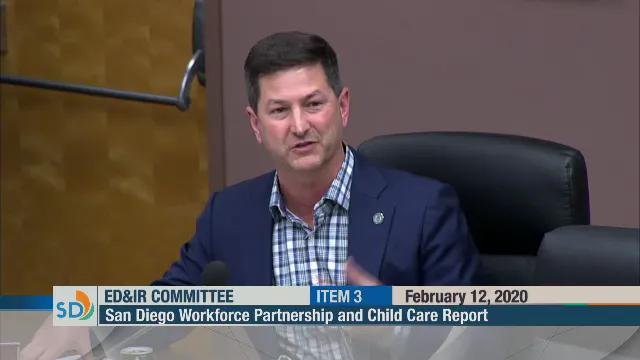
The Economic Development and Intergovernmental Relations (EDIR) Committee of the San Diego City Council met on February 12, 2020, at approximately 2:00 p.m. (noted in the transcript as 'good afternoon') to discuss the 2020 state and federal legislative platform, a workforce and child care report from the San Diego Workforce Partnership, the fiscal year 2019 Tourism Marketing District performance report, and the committee's 2020 priorities. The committee heard public testimony on multiple topics, including animal rights, child care, and marijuana policy, and adopted several amendments to the legislative platform. Public Comments & Testimony - Martha Welch (first speaker) criticized city and county officials, alleging mismanagement and lack of action on water, transportation, and building projects. She claimed that buildings are empty and that jobs are insufficient. - Joy Signata praised the committee's detailed reports and emphasized the link between housing and economic growth, citing a Union-Tribune article titled "Local Economic Future Seen as Bright Except for Housing." She urged the committee to anchor housing and economics together. - James Ferguson (Citizens Climate Lobby) requested that San Diego endorse H.R. 763 (Energy Innovation and Carbon Dividend Act) and include it in the legislative platform. He argued it is a market-based solution that aligns with the city's climate goals and protects consumers. - Cameron Meta, Kevin Luna, Melanie Bazell, Chris Tarzan, Margarita Bella, Malvina Lende, Cammy, and Daniela Kelling (all speaking in favor of adding animal rights to the legislative platform) presented four specific asks: (1) support growth and funding of plant-based consumer goods and technologies, (2) support enforcement of Proposition 2 and Proposition 12 (animal welfare laws), (3) support funding to enforce animal welfare laws, and (4) support new and existing laws protecting a citizen's right to rescue animals from abuse. They noted that Los Angeles and San Francisco already include animal rights in their platforms. - Martha Welch (second appearance) reiterated concerns about audits and alleged tax evasion, stating that the FBI has evidence. - Rob Gordon (speaking against the child care report) criticized the San Diego Workforce Partnership for past inefficiencies and a costly homeless program, and questioned the cost of the report. - Joy Signata (second appearance) thanked the presenters and emphasized the need to not leave any federal or state money unclaimed. - Courtney Baltiski (YMCA Child Care Resource Service) supported the workforce partnership's findings and commended the committee for addressing child care, noting that families spend 40% of income on child care compared to a recommended 7%. - Kelly McCormick (youth mentoring program) urged the committee to consider the impact of marijuana use on workforce readiness, citing the Monitoring the Future study showing 36% of 12th graders used marijuana in the past year and increased daily use among younger students. - Kathleen Lippett expressed concern that permitting marijuana businesses in promise zones could harm communities and displace churches, which she noted are valuable resources for child care. - Rob Gordon (second appearance) shared his personal struggles with employment and health, and criticized Assembly Bill 5 (AB5) as harmful to independent contractors. Discussion Items - 2020 State and Federal Legislative Platform (Item 2, taken out of order): Patrick Mitteller, Denise Garcia, and Ali Barenter (Government Affairs) presented the platform, highlighting seven policy categories. Key updates included community choice aggregation, medical/behavioral health, immigrant affairs, homelessness (over $34 million secured from state programs), housing policy, Pure Water Program funding ($9 million from BOR, $646 million loan from State Water Board, $285 million credit from MWD), and transportation. The committee received public testimony and then discussed amendments. Councilmember Kercy proposed adding: support for the trusted traveler program (Global Entry) in California, a legislative fix for paper publication of charter amendments, and enhanced infrastructure finance districts. Councilmember Ward proposed adding: support for funding and enforcement of animal welfare laws, support for growth of plant-based consumer goods, support for climate resilience legislation, support for legislation to protect against housing discrimination (including income), support for election security and voter access, support for flexible subsidy pools for homelessness, and inclusion of the taxicab industry in TNC regulations. Vice Chair Montgomery proposed adding: support for federal legislation enhancing the Community Reinvestment Act and the Workforce Innovation and Opportunity Act (for opportunity youth). Chair Kate proposed adding: a study and pilot program for online sales tax allocation, and support for legislation to combat robocalls. - San Diego Workforce Partnership Child Care Report (Item 3): Laura Cohn presented the report, which found that San Diego County has 335,000 children with all parents working, but only 145,000 licensed child care slots—a gap of 190,000. Two-thirds of children live in child care deserts. The average cost of infant care is over $17,000 per year, and preschool over $11,000. A family of four with two children needs an income over $107,000 to afford child care, while median income is $83,000. Child care workers earn a median of $26,290 annually. San Diego has the second-lowest female labor force participation among 10 competitor cities; matching Boston's rate would add 74,000 women to the workforce. Recommendations included: expand supply, make jobs more family-friendly, leave no federal/state money on the table, link early childhood education with elementary grades, serve whole families, and spark innovation. - Tourism Marketing District Performance Report (Item 4): Colleen Anderson (TMD) and Carrie Kapich (Tourism Authority) presented FY2019 results. Total TOT collected was $249 million, with $86 million from TMD-funded programs. Tourism supports nearly 200,000 jobs. The return on investment was 19.4 to 1. Funded events included Navy vs. Notre Dame football (63,000 attendees), Kids Free October, and various sports and cultural events. Carrie Kapich noted challenges: a softening market, record rain in February 2019, and the off-cycle of the American Society of Hematology convention. A new national broadcast campaign and focus on shoulder seasons were planned. - Committee Priorities for 2020 (Item 2, last): Councilmembers submitted priorities. Councilmember Kercy highlighted expediting small business loan approvals and creating a veterans' preference program for city contracting. The committee voted to direct the chair's office to produce a work plan. Key Outcomes - Motion to adopt the 2020 legislative platform with amendments passed unanimously. Staff was directed to work with council offices to incorporate all proposed amendments (including animal rights, climate resilience, housing discrimination, election security, homelessness, taxicabs, online sales tax study, robocall legislation, CRA, WIOA, trusted traveler, charter amendment publication, and enhanced infrastructure finance districts) before forwarding to full council. - Motion to direct the chair to produce the committee's 2020 work plan passed unanimously, incorporating priorities from all members. - The child care report and tourism report were informational items, no votes taken. - The next meeting was scheduled for April 8, 2020, at 2:00 p.m.

CHILD CARE 20% · TOURISM 14% · ANIMAL WELFARE 13% · MISCELLANEOUS 10%
764
FEB 5, 2020 · SAN DIEGO, CALIFORNIA · BUDGET & GOVERNMENT EFFICIENCY COMMITTEE
Budget and Government Efficiency Committee Meeting - February 5, 2020

The Budget and Government Efficiency Committee met on February 5, 2020, with Vice Chair Kate and Council Members Montgomery and Campbell present. Staff from the Finance Department, Purchasing and Contracting Department, and the Independent Budget Analyst (IBA) also attended. The meeting covered three agenda items: the mid-year budget monitoring report and sidewalk repair fee waiver, a fleet vehicle replacement discussion, and the annual business diversity report. All motions passed unanimously. Consent Calendar - Approval of Minutes: The committee unanimously approved the minutes from the January 22, 2020 meeting, on a motion by Vice Chair Kate, seconded by Councilmember Montgomery. Public Comments & Testimony - No public comments were received. Discussion Items - Item 1: Fiscal Year 2020 Mid-Year Budget Monitoring Report and Sidewalk Repair Permit Fee Waiver - Sarah Mahan, Assistant Director of Finance, presented the mid-year budget update. Key financial changes include: general fund revenues exceeding budget by $12.6 million, expenditures exceeding budget by $6.8 million, resulting in a net projected increase of $5.8 million. Property tax revenue increased by $2.7 million due to a shift in the enforceable obligation schedule (offset by a reduction in FY21), while Transient Occupancy Tax (TOT) decreased by $3 million due to underperforming months and a revised Tourism Authority forecast (growth rate reduced from 3% to 2%). Process improvements included directing departments to account for attrition in projections and developing a benchmarking tool. The item also included a request to waive fees for sidewalk repair permits through December 2020 and to transfer appropriations. A motion to approve both subitems, with the condition that they be separated into two distinct items for full Council consideration (each with its own staff report, resolution, and presentation), was made by Vice Chair Kate, seconded by Councilmember Campbell, and passed unanimously. - Item 2: Fleet Vehicle Replacement and Total Cost of Ownership Discussion - The committee discussed the replacement of old vehicles, auction proceeds, and total cost of ownership (TCO). Staff noted that older vehicles fetch less at auction and that a regular replacement cycle would reduce TCO. Questions were raised about electric fire trucks, which are not yet available from OEMs. A motion to approve the item was made by Vice Chair Kate, seconded by Councilmember Campbell, and passed unanimously. - Item 3: Fiscal Year 2019 Business Diversity Report - Christiana Gauger, Deputy Director of Purchasing and Contracting, and Christian Silva, Program Manager of the Equal Opportunity Contracting Program (EOC), presented the annual report on business diversity. The presentation covered the department's efforts in promoting diversity among contractors. No further discussion or vote was recorded in the transcript. Key Outcomes - Item 1: Approved with the condition to separate into two Council items (fiscal year 2020 mid-year budget monitoring report and sidewalk repair permit fee waiver) – unanimous. - Item 2: Approved (fleet vehicle replacement) – unanimous. - Item 3: Presented; no action taken (informational). - Meeting Adjourned: After completing the agenda, the committee adjourned.

BUDGET 19% · EQUAL OPPORTUNITY CONTRACTING 17% · FLEET MANAGEMENT 13% · HOMELESSNESS 9%
765
FEB 5, 2020 · SAN DIEGO, CALIFORNIA · RULES COMMITTEE
San Diego City Council Rules Committee Meeting - February 5, 2020

The San Diego City Council Rules Committee met on February 5, 2020 at 10:15 AM. The committee discussed the 2020 work plan, received an informational presentation from the Funds Commission, considered an ordinance on disclosure of business interests, and received an update on the Get It Done program. Public comments were heard on non-agenda items and on the Get It Done program. Public Comments & Testimony - An unidentified speaker criticized the committee for being a "rubber stamp" and stated that rearranging deck chairs will not change the direction of a ship. - Joy Singata spoke in support of open government, thanked Councilmember Montgomery for recommending a reprogrammed CGB fund item and Councilmember Campbell for using words like transparency, collaboration, and including all communities. She urged better collaboration, especially given the $90 million deficit. - Joy Singata also testified during the Get It Done update, expressing support for the program but urging fiscal caution due to the upcoming budget deficit, requesting more data on implementation and costs. Discussion Items 1. Committee's Priority Development of the 2020 Work Plan Chair Gomez highlighted the committee's responsibilities including charter, open government, elections, ballot measures, boards and commissions, communications, and public outreach. Councilmember Montgomery moved to direct the chair to create a 2020 work plan. The motion was seconded and passed unanimously. 2. Informational Presentation: Funds Commission (Council Policy 00-26) City Treasurer Liz Crea, Funds Commission Vice Chair John Peel, and investment consultant Mike Lavin presented an overview of the Funds Commission, its seven trust funds, and their investment performance. Key points: - The commission oversees seven funds: Edwin A. Benjamin Memorial, F.E. Sargent Memorial, Los Peñasquitos Canyon Preserve, Gladys Edna Peters Memorial, Jane Cameron, Philip L. Green Memorial, and Mount Hope Cemetery Perpetuity Fund. - Investment policy: 65% stocks, 35% bonds for most funds; Mount Hope Cemetery has 35% stocks, 65% bonds due to charter requirements. - Year-to-date 2019 returns: Los Peñasquitos Fund up 21%, outperforming its benchmark. Mount Hope Cemetery Fund up 15.7%. - Over 10 years, the funds with higher equity allocation returned 8% annualized, outperforming 72% of peers. - Councilmember Montgomery asked about public outreach for fund creation and requested information on disbursement impacts. Council President Pro Tempore asked about income distribution for Mount Hope Fund; Chair requested a breakdown of income distributions for all funds. 3. Proposed Ordinance on Disclosure of Business Interests (Charter Section 225) George Katskaris and Sabelle Thompson from Real Estate Assets Department presented a proposed ordinance to implement the voter-approved Charter Section 225 (amended by Measure J in 2018). The ordinance requires disclosure of names and identities of persons receiving more than 10% of contract amount or owning more than 10% of the entity for contracts over certain thresholds. Chair Gomez moved to amend the threshold from $500,000 to $250,000 to match the mayor's contract authority, and to request monthly updates to council members on disclosures. The motion was seconded by Council President Pro Tempore and passed unanimously. 4. Get It Done Program Update Kerry Bailey, Alison Hand, and Marcus Postraco from the Performance and Analytics Department presented an update. Highlights: - The system has been expanded to nine departments since 2016. - Mobile app downloaded nearly 100,000 times, with 12,500 active monthly users and 75 new users per day. - Top 2019 reports: 72-hour violations (4,500), illegal dumping (3,300), graffiti (3,100), potholes (2,100), streetlights (1,900), and sidewalks (1,700). - Average resolution times: 23 days for 72-hour violations, 23 days for graffiti, 91 days for streetlights, 119 days for sidewalks. - New features: Encampment reporting (since December 2019, over 1,400 reports), container payment portal (12,000 online payments), Spanish mobile app and scooter reporting to launch in February 2020. - Future plans: Expansion team, integration with parks and recreation, improved after-photos, and a potential 311 phone number. - Councilmembers discussed response times, duplicate reports, district-level data, and the need for better communication with residents. Key Outcomes - Motion on 2020 Work Plan: Approved unanimously to direct the chair to create a 2020 work plan. - Motion on Disclosure Ordinance: Approved unanimously with amendment to $250,000 threshold and monthly reporting requirement. - Get It Done Update: Informational only; no action taken. Chair requested future breakdowns by district, public vs. private property, and duplicate reports.

PUBLIC ENGAGEMENT 24% · FUNDS COMMISSION 21% · TECHNOLOGY AND INNOVATION 19% · TRANSPARENCY 11%
766
JAN 29, 2020 · SAN DIEGO, CALIFORNIA · PUBLIC SAFETY & LIVABLE NEIGHBORHOODS COMMITTEE
Public Safety and Livable Neighborhoods Committee Meeting - January 29, 2020

The Public Safety and Livable Neighborhoods Committee of the San Diego City Council met on January 29, 2020, to consider a consent item, discuss a draft policy on streetlight sensor data use, approve reprogramming of CDBG funds for homeless services, and set committee priorities for 2020. Public comment covered tobacco/vaping bans, chokehold prohibitions, police reform, and technology oversight. Consent Calendar - Item 1 (Consent): Approved unanimously. Motion by Councilmember Moreno, second by Vice Chair Bree. No public pull. Public Comments & Testimony - Manuel Andrade (tobacco prevention advocate): Expressed support for banning all flavored tobacco products, citing youth vaping rates and health risks. Provided data on declining smoking rates and rising vaping among high school students. - Yusuf Miller (Racial Justice Coalition): Urged the committee to add a chokehold ban to the 2020 priorities, referencing the "I Can't Breathe" campaign. Noted previous lawsuits and deaths in Orange County. Requested action by February 3rd docket. - Anita Turner (community member): Called for a chokehold ban, highlighting racial disparities in police stops (Black people stopped 219 times more than white people; Hispanic people 60 times more). Asked for evening sessions to hear from affected communities. - Seth Hall (opponent of streetlight policy): Opposed the draft streetlight sensor data policy, arguing it was flawed and needed an independent advisory commission. Cited discrepancies with city attorney statements. - Lily Irani (UC San Diego professor): Raised concerns about the streetlight technology, noting lack of transparency and potential for misuse. Advocated for broader technology policy rather than just streetlights. - Downtown San Diego Partnership representative: Expressed support for the draft streetlight sensor data policy, highlighting safety benefits. - Kathleen Lippett (public health practitioner): Urged an all-out ban on flavored tobacco, citing CDC data on vaping-related lung injuries and deaths. Emphasized youth addiction. - Chelsea Bergenstock (ACLU of San Diego and Imperial Counties): Requested that the 2020 work plan include limits on police stops and searches, referencing the Campaign Zero and SDSU reports on bias policing. - Other speakers: Several additional community members spoke in support of chokehold bans and against the streetlight policy. Discussion Items - Item 2: Draft Council Policy on Streetlight Sensor Data Use – Presented by Cody Hooven, Director of Sustainability, with support from Chief Nislet. Discussion and extensive public comment both for and against. No formal vote was taken during the meeting; the item was heard but not decided. - Item 3: Use of Reprogram Funds for CDBG Homeless Services – Presented by staff. Four homeless-related projects: two already under contract (funded), two proposed for reprogramming to close out agreements. Motion to approve passed 3-1 (Councilmember Moreno moved, Vice Chair Bree seconded; one opposed). - Item 4: 2020 Committee Priorities – Discussion of priorities submitted by members, including fire/EMS, Gang Commission, police, human trafficking, and community-oriented policing. Public input requested. Motion to direct the chair to compile a work plan incorporating priorities and public comment. Moved by Vice Chair Bree, seconded by Councilmember Kate; passed. Key Outcomes - Consent item approved unanimously. - CDBG reprogramming for homeless services approved 3-1. - Committee directed chair to create a 2020 work plan based on member priorities and public input. - No action taken on streetlight sensor data policy or chokehold ban, but public comments were recorded for future consideration. - Public testimony highlighted strong community interest in flavored tobacco bans, police reform (chokeholds, stops, bias), and technology oversight.

SURVEILLANCE TECHNOLOGY 33% · PUBLIC SAFETY 15% · COMMUNITY DEVELOPMENT BLOCK GRANTS 14% · MISCELLANEOUS 8%
767
JAN 29, 2020 · SAN DIEGO, CALIFORNIA · ACTIVE TRANSPORTATION & INFRASTRUCTURE COMMITTEE
Active Transportation and Infrastructure Committee Meeting - January 29, 2020

The Active Transportation and Infrastructure Committee of the San Diego City Council met on January 29, 2020, at 10:00 AM. The meeting covered the FY20 CIP mid-year budget report, the five-year capital infrastructure outlook, approval of design-build contracts for golf course improvements, and setting committee priorities for 2020. All votes were unanimous. Consent Calendar - Approved meeting minutes from December 11, 2019. - Approved one consent item (no details provided) unanimously. Public Comments & Testimony - Non-Agenda Public Comment: - Nicole Burgess spoke on street safety, noting that SB1 funds for resurfacing should include pedestrian and bike improvements. She cited specific streets (e.g., Copley Drive) missing these elements and argued that some streets scheduled for overlay do not need it, calling it wasteful spending. - Nebo Magezi echoed concerns, referencing City Council Resolution 312383 and stating that many streets being repaved (e.g., Texas Street, West Chy Primera, Copley Drive) lack planned bike lanes or pedestrian improvements despite being listed for complete streets elements. - Martha Welch made disjointed comments about federal audits, checks, and alleged misconduct by officials, asserting that the city is not following rules for bonds and federal funding. - Braer Marsh (North Park resident) shared a letter about Texas Street, where two fatalities occurred in the past year, urging safety improvements as the street is set to be repaved under SB1. - Public Comment on Agenda Item (CIP Mid-Year Report): - Marshall Anderson (Downtown San Diego Partnership) requested that a CIP project be created for the Gaslamp Promenade, noting $1.5 million in community parking district revenue allocated but needing a formal project account. - Public Comment on Committee Priorities: - Andy Hanshaw supported prioritizing bike facilities and Vision Zero strategies, urging adoption of modern design standards and pursuit of grants. - Nicole Burgess (Bike SD) emphasized that resurfacing should be aligned with safety and bike infrastructure, not just car-oriented pavement. She suggested reallocating some of the $80 million resurfacing budget to bike/pedestrian projects. - Jennifer Hunt (San Diego County Bicycle Coalition) supported comments on hiring processes, design costs, and the need for flexibility in project planning. Discussion Items - FY20 CIP Mid-Year Budget Monitoring Report and Revisions: - Tracy McCraner (Finance Director) and Karen McGriff presented the consolidated budget action, including $19.7M in new appropriations (71% from sewer funds and developer fees), $49.1M in transfers (92% from public utility funds), and $22.3M from fund balance. Key allocations: $1.9M for median installations, $1.9M for Olive Street Park acquisition, $1M for Torrey Pines golf course improvements. TransNet fund balance reduced from $55M in FY16 to an estimated $25.4M by end of FY20. All gas tax funds fully allocated. Also requested $1.4M from general fund for drainage projects. - Councilmember Kate moved to approve the report and budget revisions, but asked to delay a $957,621 transfer from the Mira Mesa Community Fund to the Wagenheim Joint Use Facility, citing community plans for that fund. The motion passed unanimously. - Councilmember Ward and staff requested that a CIP project be opened for the Gaslamp Promenade to allow the $1.5M parking district revenue to be used. The motion included this request; staff agreed to work on it. - Five-Year Capital Infrastructure Planning Outlook (FY21-FY25): - Myrna Dayton and Mark Nassar (Public Works) presented the sixth annual outlook. Total capital needs: $6 billion; available funding: $3.86 billion; resulting gap: $2 billion (a 70% increase over three years). Priority needs (health/safety, mandates, core services): $4.76 billion with $3.47 billion funding, leaving a $1.29 billion gap. Discretionary needs: $1.27 billion with $393 million funding, gap $876 million. Stormwater infrastructure needs grew to about $1 billion, making up 40% of the total gap. Enterprise funds (water, wastewater, pure water) are fully funded. The report highlighted capacity constraints: Public Works has a 20% vacancy rate (over 150 positions), and external consultant/contractor shortages limit growth. - Councilmember Moreno expressed concern about street light backlog ($44 million) and proposed dedicating a percentage of gas tax to street lights. She also raised issues with unimproved streets policy. - Councilmember Kate noted the capacity challenge and asked about street reconstruction history (about 1 mile per year at millions of dollars per mile). He also inquired about the timing of upcoming developer impact fee (DIF) formula changes, which staff said would take effect next year. - Councilmember Ward highlighted the growing disparity and the need for long-term solutions, questioning the priority/discretionary categorization that places bike facilities, sidewalks, and some building repairs as discretionary. - Chair Kirsey questioned the methodology for determining priority vs. discretionary, noting that for bike facilities it was based on funding source (grants) rather than need. He also stressed the need to reform hiring processes to reduce vacancy rates. - Approval of Design-Build Contracts for Golf Course Improvement Projects: - The committee voted unanimously to forward the staff recommendation to the full council for approval. - Committee Priorities for Calendar Year 2020: - Councilmembers presented priorities: - Councilmember Moreno: update Council Policy 200-01 on unimproved streets; dedicate gas tax funding for street lights; prioritize sidewalk repair; advance Harbor Drive multimodal corridor study (seek federal/state grants); conduct San Ysidro Boulevard mobility study; pursue grant funding more aggressively; address the $1.29B priority funding gap; request an infrastructure investment report by council district. - Vice Chair Ward: focus on Vision Zero, complete streets policy updates, promenade creation process, and sidewalk funding policy updates. - Chair Kirsey: improve hiring processes, quality controls for street resurfacing, and project coordination/outreach. - The committee passed a motion (Ward/Kate) directing Chair Kirsey to develop a 2020 work plan incorporating these priorities and transmit it to the Council President. Key Outcomes - Approved FY20 CIP mid-year budget revisions and monitoring report, with the exception of the $957,621 transfer from Mira Mesa Community Fund to Wagenheim Joint Use Facility (unanimous). - Directed staff to open a CIP project for the Gaslamp Promenade to enable use of $1.5 million in parking district revenue. - Approved design-build contracts for golf course improvement projects (unanimous). - Directed the creation of a 2020 committee work plan based on the priorities discussed (unanimous).

CAPITAL IMPROVEMENT PLANNING 39% · BUDGET 17% · PROCEDURAL 11% · PUBLIC WORKS 10%
768
JAN 23, 2020 · SAN DIEGO, CALIFORNIA · LAND USE & HOUSING COMMITTEE
Land Use and Housing Committee Meeting - January 23, 2020

The Land Use and Housing Committee of the San Diego City Council met on January 23, 2020, at 9:00 AM (scheduled; meeting began at approximately 20:45 UTC). Chair Ward presided, with Councilmembers Campbell, Sherman, and Vice Chair Kersey present. The committee approved minutes from December 5, 2019, and heard public comment on non‑agenda items and two major agenda items: the 12th Code Update Phase Three (cannabis regulations) and a discussion of the committee’s 2020 priorities. Key decisions included forwarding the cannabis code update to full Council without a recommendation, subject to staff revisions, and directing the Chair to develop a 2020 work plan. Consent Calendar - Approved minutes of December 5, 2019 (unanimous). - Accepted recreational trail easements from Carmel Valley Neighborhood 10 North Homeowners Association (Item 1). - Authorized a 20‑year nonprofit lease with Educational Enrichment Systems, Inc. at 6960 Linda Vista Road, with waiver of certain Council Policy requirements (Item 2). Both items passed unanimously. Public Comments & Testimony Non‑Agenda Public Comment - Martha Welch spoke about alleged corruption in housing and bribery, and expressed anger about reduced meeting time. - Terry Ann Skelly (mother of three, attends three planning groups) expressed two concerns about the municipal code update: (1) the 19‑page, 102‑item document is too voluminous for public review; (2) proposed changes to marijuana regulations originate from attorneys and businesses with financial interest in the marijuana industry, not from planning groups or community members focused on public health. - Clovis Honore (Office of the President, San Diego NAACP) called attention to single‑family zoning and covenants that perpetuate racial segregation and redlining, urging the council to eliminate discriminatory zoning laws. - Ricardo Flores (Executive Director, [organization]) noted that minimum lot sizes historically excluded people of color and poor whites from certain communities. He proposed amending the 2015 Small Lot Subdivision Ordinance to allow four‑unit subdivisions on single‑family lots citywide (not just in multifamily zones), arguing this would create middle‑class housing and address segregation. - Rachel Stevens (California YIMBY) announced amendments to SB 50 (More Homes Act) that allow local communities to create alternative housing plans. She supported amending San Diego’s small‑lot subdivision ordinance to apply citywide. - Marissa Tucker (renter in North Park) shared personal canvassing experience highlighting that small, incremental development (garden apartments) previously allowed workers and teachers to live in the community. She noted that 60–65% of San Diego is zoned single‑family only, which restricts opportunity. Public Comment on Item 3 (Cannabis Regulations) - William Perno (Central Region Prevention Coalition) provided detailed historical context: the 2013 city council increased sensitive‑use buffer from 600 to 1,000 feet and added a 100‑foot residential zone buffer. He argued the city has been incorrectly measuring distances (using property lines instead of zone boundaries), citing two Cycle Reports that recommended denial of marijuana outlets within 60 feet of a residential zone. He criticized a December 12, 2019, planning department memo that changed language from “100 feet from a residential zone” to “100 feet from the property line of a residentially zoned property” without public notice. He also opposed the proposed “legal path of travel” measurement, stating it removes all barriers and could allow closer proximity to sensitive uses. He urged the committee to reject the changes. - Carrie Jacquis (Hope United Methodist Church, Rancho Bernardo) opposed the code changes, stating the church runs a state‑licensed preschool and minors use the campus year‑round. She said the current applicant argued churches are not sensitive uses, and that changing to path‑of‑travel measurement could allow dishonest interpretations (e.g., an unpermitted wall built by the applicant). She urged retention of the 1,000‑foot property‑line‑to‑property‑line measurement, as recommended unanimously by the Planning Commission. - Ricky Brown (property manager, Hollywood Palms Apartments) described challenges with a nightclub near their property (Pearl Laundry) and expressed concern about a proposed cannabis outlet. The city attorney reminded the speaker to avoid commenting on specific pending projects; the speaker then discussed general community safety. - Lisa Bridges (North City Prevention Coalition) argued that the shortest distance between two points is a straight line, and that path‑of‑travel measurements would increase allowable distances, potentially placing marijuana businesses nearer to children’s frequented locations. - Kathleen Lippett (community advocate) stated changes were influenced by five marijuana attorneys working together, and that a last‑minute memo from industry advocates likely violated the Brown Act (not seen by the public). She supported the Planning Commission’s recommendation to keep current language. - Rob Rienza (District 5 resident) opposed the changes, saying the ordinance was only enacted in 2017 and amendments so soon favor the industry. He cited health impacts from Colorado (e.g., quadrupled marijuana charges, tripled hospitalization rates). His wife and children would be neighboring a proposed outlet. - Kelly McCormick (parent and youth mentoring program director) said families feel railroaded, with city staff accommodating marijuana industry requests behind closed doors. She said an unpermitted fence should not be used to manipulate distance. She supported retaining the 1,000‑foot property‑line measurement. - Becky Rapp (parent and public health advocate) supported the Planning Commission’s recommendation to keep current language, citing examples where a functional walkway was blocked by a wall from a marijuana applicant, and where a drainage ditch was argued to block a direct path. - Phil Rath (United Medical Marijuana Coalition, trade association) supported the three proposed changes, particularly the renewal process (Item 3c). He argued that path‑of‑travel would reduce confusion and that renewals need clarity on crime statistics and code violations. He suggested focusing on tax compliance and resolved code violations rather than attributing crime to businesses. He requested more specificity on standards for renewals. Discussion Items Item 3: 12th Code Update Phase Three – Amendments to Cannabis Regulations Staff (Renee Mezzo and Edith Guterres) presented three proposed amendments: 1. Path of travel for sensitive receptors: Change from 1,000‑foot straight‑line property‑line measurement (with barriers) to “legal pedestrian pathway” at street corners and crosswalks. 2. Residential zone distance: Change from 100‑foot straight‑line measurement (with barriers) to a pure straight‑line property‑line measurement (no barriers). 3. Expiration of existing MMCC permits: Change from an extension‑of‑time (Process 2) to an amendment to a Conditional Use Permit (Process 2, appealable to Planning Commission), maintaining previously conforming rights and allowing expansion within the same premises. Applicants would provide police criminal activity and code enforcement data; staff promised revisions on language before Council. The Planning Commission recommended approval of items 2 and 3, but for item 1 recommended retaining the existing 1,000‑foot straight‑line measurement and clarifying barriers, rejecting the path‑of‑travel approach. The Deputy City Attorney noted the ordinances are still under legal review and wording may change before Council. Committee Discussion: - Vice Chair Kersey raised concerns about path‑of‑travel: two dispensaries across the street would be allowed if pedestrian path exceeded 1,000 feet. Staff confirmed that state 600‑foot straight‑line requirement still applies for state‑defined receptors (schools, daycare, youth centers). For locally defined receptors (e.g., churches, parks), the change could allow closer proximity if path‑of‑travel exceeds 1,000 feet. - Councilmember Sherman questioned the renewal process and requested clarity on crime statistics and code violations; he cautioned against weaponizing code enforcement. Councilmember Campbell suggested adding “resolved” to code violations to avoid holding unresolved issues against applicants. - Chair Ward suggested considering a 600‑foot straight‑line or 1,000‑foot path‑of‑travel alternative for cases with vertical relief or freeways. Staff agreed to develop improved language. - Councilmember Sherman moved to send the item to full City Council without recommendation, subject to staff incorporation of committee comments and city attorney review. Councilmember Campbell seconded. The motion passed unanimously. Item 4: Committee Priorities for 2020 Chair Ward began the discussion, seeking public and member input. Public speakers offered suggestions: - Matthew Vasilakis (Climate Action Campaign) asked the committee to consider climate‑conscious land use, community plan updates that align with Climate Action Plan targets for mode shift, and coordination with the forthcoming Mobility Action Plan. - Molly Kirkland (Southern California Rental Housing Association) cautioned against piling additional regulation on rental housing, noting new state rent control and just‑cause requirements (AB 1482) and source‑of‑income ordinance. She warned that adding complexity could drive mom‑and‑pop landlords out of the market. - Andrew Malik (small‑scale developer) noted that the average multifamily lot in San Diego yields only eight units, and urged the committee to consider impacts on small developers when crafting policy. - Rami Cortez (small‑scale infill developer) recommended prorating development impact fees by square footage rather than flat fees, arguing flat fees are regressive and hinder small projects. He also mentioned that the double‑density bonus for micro‑units has not been used due to high impact fees. Committee Member Comments: - Councilmember Sherman listed his priorities: housing production goals; ADU ordinance for movable tiny homes; biennial updates to housing inventory; middle‑income density bonus; Huffman six‑pack rezoning; restructuring development impact fees (per square foot); certification of architects/engineers to expedite permitting; and hiring an economist for the Planning Department. - Councilmember Campbell moved that the Chair develop a 2020 work plan based on member and public input. She added priorities: ensuring Claremont community plan update benefits residents; recalculating development impact fees by square footage; conducting a housing vacancy study; passing a comprehensive short‑term vacation rental ordinance; and setting housing goals (the state requires 13,000 units/year). - Vice Chair Kersey supported dif recalculations, tiny homes on wheels, middle‑income density bonus, Huffman six‑pack concept, and renewed efforts on short‑term rentals. - Chair Ward added priorities: preserving affordable housing; routine reporting on housing goals; vacancy study (already underway by Housing Commission); incentivizing housing in transit‑rich areas; age‑friendly living for seniors; and smart use of city‑owned land (updating Council Policy 700‑10). The motion passed unanimously. The Chair will present a finalized 2020 work plan at the February 27 meeting. Key Outcomes - Item 3 (Cannabis Regulations): Moved to full City Council without recommendation (8‑0). Staff will incorporate committee comments on: (a) alternative distance measurement for sensitive receptors (600‑foot straight‑line or 1,000‑foot path‑of‑travel based on barriers/vertical relief); (b) clarifying crime statistics and code violation standards for permit renewals. Final language subject to city attorney review. The Planning Commission’s recommendation to keep existing 1,000‑foot property‑line measurement for sensitive receptors was not adopted; the committee left the resolution to Council. - Item 4 (2020 Priorities): Chair Ward directed to develop a work plan incorporating all member and public input; work plan to be presented for adoption at the February 27 committee meeting. - Schedule: Next meeting rescheduled to February 27, 2020 at 9:00 AM.

CANNABIS REGULATION 30% · NULL 20% · PROCEDURAL 14% · LAND USE AND PLANNING 10%
769
JAN 22, 2020 · SAN DIEGO, CALIFORNIA · BUDGET & GOVERNMENT EFFICIENCY COMMITTEE
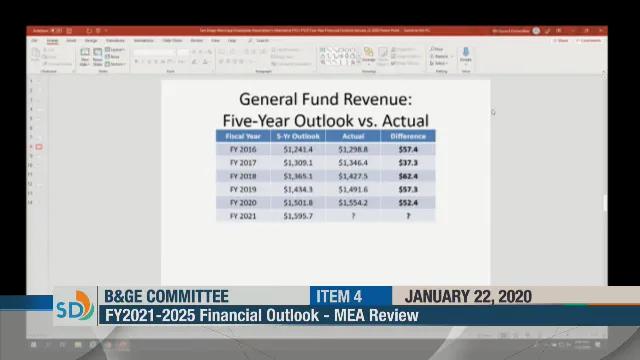
Budget and Government Efficiency Committee Meeting - January 22, 2020

The Budget and Government Efficiency Committee met on January 22, 2020, at 9:00 AM. The committee was chaired by [Chair], with Vice Chair Kate and Councilmembers Campbell and Montgomery present. Also in attendance were Andrea Tevlin (Independent Budget Analyst), Rolanda Charval (CFO), and Brett Bartalotta (Deputy City Attorney). The committee approved the minutes from the November 13, 2019 meeting, heard public comments, discussed the Fiscal Year 2021 budget priorities, and adopted a committee work plan. Consent Calendar - Approval of the committee record of actions from the November 13, 2019 meeting. Motion by Councilmember Montgomery, seconded by Vice Chair Kate, passed unanimously. Public Comments & Testimony - Jeff Olson (renter in North Park, chair of Public Bank SD) expressed support for the municipal banking project, thanking councilmembers for including it in budget priority memos. He highlighted potential revenue streams, relief for taxpayers, and economic justice benefits. - Martha Welsh spoke but her remarks were not clearly captured in the transcript. - A representative from a government labor union (likely Municipal Employees Association) argued against adding nearly 400 new employees over the next five years, noting 1,400 vacant positions already. The speaker also criticized the city's chronic underestimation of general fund revenues, calling it a "broken record" persisting across multiple administrations. They urged aggressive cuts. Discussion Items - Item 1: Fiscal Year 2021 City Council Budget Priorities – Presented by the Office of the Independent Budget Analyst (IBA). Councilmember Campbell voiced strong support for building safe, separated bicycle lanes (cycle tracks) to encourage biking and reduce greenhouse gas emissions, suggesting savings from eliminating painted shared-lane markings. A motion to approve the budget priorities resolution was made, seconded, and passed unanimously. - Committee Work Plan – The committee discussed directing the chair to issue a work plan based on input received, to be posted online by February 1, 2020. A motion by Vice Chair Kate, seconded by Councilmember Montgomery, passed unanimously. Key Outcomes - Approved the consent calendar (previous minutes). - Approved the Fiscal Year 2021 Budget Priorities Resolution. - Adopted a committee work plan to be posted by February 1, 2020. - The meeting adjourned at approximately [time], with the next meeting scheduled for February 5, 2020 at 9:00 AM.

BUDGET 58% · PUBLIC SAFETY 9% · PROCEDURAL 7% · PUBLIC SERVICES 5%
770
JAN 16, 2020 · SAN DIEGO, CALIFORNIA · ENVIRONMENT COMMITTEE
San Diego Environment Committee Meeting - January 16, 2020

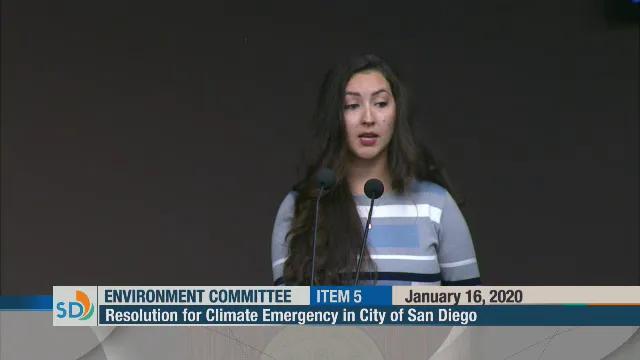
The Environment Committee of the San Diego City Council met on January 16, 2020, at 9:00 AM. Members present: Chair Campbell, Councilmembers Moreno, Bree, and Sherman. The committee addressed routine approvals, a joint use park agreement, and a resolution declaring a climate emergency. Public comment covered sea lion protection, animal rights, and climate action. Consent Calendar - Unanimously approved committee actions from November 7, 2019 (motion by Councilmember Sherman, second by Councilmember Bree). - Items 1-4 (contracts for watershed consulting, caustic soda, cationic polymer, and heavy equipment lease) were approved on consent. Public Comments & Testimony Non-Agenda Public Comment - Martha Welch (District 2) alleged corruption and bribery in city and county government, referencing Bill Horn and the FBI. - Carol Archibald (District 2, Sierra Club Seal Society) described severe harassment of sea lions at La Jolla Point and Boomers Beach, citing 100 visitors per hour, lack of enforcement, and need for signage and rope guidelines. - Robin Davidoff (District 2, SEAL Society) continued the sea lion issue, showing photos and a video of crowds stepping over sea lions, and asked for additional protections. - Lindsay DeMick (resident and business owner) spoke for the Right to Rescue, condemning animal agriculture and factory farming, and called for legal protections for animals. - Alex Moldeman (Right to Rescue) argued that California Penal Code 597e is violated by farms, and activists face felony charges while perpetrators go unpunished. - Daniela Killing (Right to Rescue) linked animal agriculture to climate change, calling for legal protections and criticizing lack of progress in six months. - Cameron Maita (Right to Rescue) noted Berkeley and San Francisco passed similar resolutions, and urged San Diego to support 597e protections. - Shannon Sears (Right to Rescue) called animal agriculture a leading climate contributor and demanded justice for billions of animals. - Rachel Hosler (North Park resident, mother) described visiting a dairy farm and witnessing calf separation, urging support for the Right to Rescue. - Doreen Nasser (35-year resident, vegan) asked why saving livestock from cruelty is illegal while saving dogs from hot cars is legal, and called for an animal bill of rights. - Ashley Asada (Right to Rescue) argued that fighting climate change requires attacking animal agriculture, and saving animals should be legal. Item 5 – Joint Use Agreement Public Comment - Martha Welch (opposition) argued the project is cheap, lacks bathrooms, and questioned the lack of payment to schools. - John Lee Evans (San Diego Unified School Board President, in favor) expressed excitement for the project, noting community work since 2014, and the partnership for 10 pools across the district. Item 6 – Climate Emergency Resolution Public Comment - James Ferguson (Citizens Climate Lobby) highlighted the urgency of climate action and the need for political will. - Peter Thomas (Citizens Climate Lobby, North Park resident) supported the resolution as a necessary alarm. - Larry Peranich (Citizens Climate Lobby, Republican scientist) emphasized the scientific consensus and urgency. - Barbara (activist) asked for an environmental advisory board with climate experts and frontline community representatives. - Nikayla Jefferson (Sunrise Movement) described her personal fear and asked for net-zero by 2030, a climate advisory board, and public education. - Melissa Elder (Sunrise Movement) urged concrete action, not symbolism, and highlighted environmental racism in Barrio Logan. - Pat Murphy (resident) called for an accelerated effort and an advisory committee. - Malika Morrison (Climate Action Campaign) recommended equity language, a zero-carbon goal by 2035, and specific strategies. - Joyce Lane (San Diego 350) supported the declaration but called for concrete policies, zero-carbon by 2030 or 2035, and equity investments. - Michael Brackney (San Diego Climate Mobilization Coalition) urged calling it a "climate emergency declaration" rather than a resolution, and suggested citizen engagement. - Sonia Robinson (NAACP Environmental and Climate Justice Committee) supported the resolution and emphasized including black and brown communities. Discussion Items Update on Electric and Gas Franchise Fee - Lee Friedman (Strategic Energy Initiatives Manager) reported that valuation consultants are near completion of draft studies, and three public outreach workshops will begin the week of February 10, 2020. A request for expressions of interest will be released. The franchise agreement is expected to go through committee and full council by end of summer 2020. Item 5 – Joint Use Agreement for Stanley Middle School and Spreckles Elementary - Andy Field (Parks and Recreation Director) and Shannon Scoggins (park designer) presented the Play All Day Parks program, which expands joint use parks with San Diego Unified School District. The agreements cover a 25-year term for fields and a 10-year term for a pool. The Stanley Aquatic Complex includes a 35m x 25yd pool, concession stand, pavilion, stage, and walking track. The city will reimburse $90,000 for construction costs. The agreements comply with a March 2019 city auditor's performance audit. - Councilmember Moreno expressed concern about geographic inequity: only two joint use sites south of Interstate 8 versus nine north of it, and asked for future equity. Director Field committed to providing a ledger of all agreements. - Councilmember Sherman asked about financial clarity from the audit; staff confirmed a new template will address financial issues. - The motion to approve passed unanimously. Item 6 – Resolution Declaring a Climate Emergency - Jordan Bean (Councilmember Campbell's staff) presented the resolution, which declares a climate emergency and affirms the city's commitment to a rapid transition. It aims to educate the public and stimulate climate conversations. San Diego faces sea level rise (9 inches in 100 years), drought, wildfires, and erosion. Over 1,300 cities globally have made similar declarations. - Councilmember Campbell noted that since 1950, La Jolla has seen 166 days of flood-level tides versus an expected 25 without climate change. She moved to approve. - Councilmember Bree seconded, calling the resolution symbolic but important, and highlighted the city's Climate Action Plan and Community Choice Energy. - Councilmember Sherman opposed, stating he only votes for measures with teeth and will wait for binding actions. - The resolution passed 3-1 (aye: Campbell, Bree, Moreno; nay: Sherman). Key Outcomes - Consent Calendar: Approved unanimously. - Item 5 – Joint Use Agreements: Approved unanimously. The city will enter into agreements for Stanley Middle School and Spreckles Elementary fields and pool, with a $90,000 reimbursement to the school district. - Item 6 – Climate Emergency Resolution: Approved 3-1. The resolution declares a climate emergency and commits to public education and outreach. Subsequent steps will include updating the Climate Action Plan and potentially adding binding measures.

CLIMATE CHANGE 35% · PARKS AND RECREATION 17% · NULL 13% · ANIMAL WELFARE 10%
OPENPUBLICA · PUBLIC MEETING INDEXUPDATED DAILY · openpublica.com