Browse by city
Date range
Search help

Search titles, summaries, topics and stored transcripts together. Keywords may match separately; put the whole query in double quotes for a phrase. Matching follows word analysis, so punctuation is not exact. Both dates are included. Documents are not searched.

SHOWING 751–760 ENTRIES
751
MAY 7, 2020 · SAN DIEGO, CALIFORNIA · BUDGET REVIEW COMMITTEE
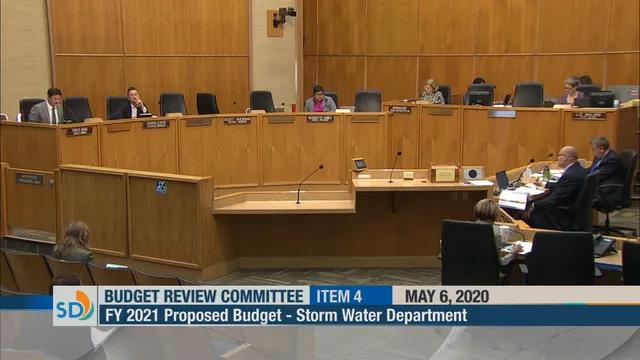
San Diego Budget Review Committee Meeting – May 7, 2020

The San Diego Budget Review Committee met on May 7, 2020 (the Chair referenced May 6) via teleconference under Executive Order 2920 due to the COVID-19 pandemic. The committee reviewed the FY2021 proposed budgets for the Public Utilities, Transportation, Stormwater, and Environmental Services departments. All items were informational; no votes were taken. Public Comments & Testimony Public Utilities Department (Items 1 & 2) – 14 callers testified, virtually all opposing proposed closures and recreation cuts at city reservoirs. - Mark Henley (California Waterfowl Association) urged keeping waterfowl hunting at Barrett Reservoir open, citing economic benefits and hunter support for the local economy; suggested fee increases and an iron ranger check-in. - Gary Brennan (San Diego County Wildlife Federation) opposed closure of hunts at Sutherland and Barrett, noting these are self-sustaining and volunteer-run; questioned motives for cutting the only two hunting programs. - Mark Griffin (National Wild Turkey Federation) opposed closures of Lake Sutherland and Lake Barrett, sharing personal family experiences and arguing cuts won't meaningfully help the budget. - Chip Gilbert (California Bass Federation) urged the city to keep lakes open, suggested transferring lakes to county districts to free city funds, and called the $400,000 cut counterproductive. - Adam Perez, Anthony Santiago, Samuel Marvison, and others echoed support for open lakes, with Marvison noting the closure savings of $108,000 is only 0.2% of the total budget and compared cutting lakes to cutting electricity while losing a big asset. - Several speakers (including Bruce Summers, Wayne Cotto, Salim Sawaya, and others) highlighted the cultural, recreational, and public health value of lake access and offered volunteer support to maintain operations. - One caller (Mark Bowers) spoke about fishing access and being unable to use lakes during the pandemic. Transportation Department (Item 3) – 15 callers testified. - Vanessa Dangerfield, Alicia Arlo, Frank McDermott, Aaron Galvin, Paul Joulson, Margot Curry, Tracy Buchanan, Claire Lamandry, Thomas Curry, and others from El Cerrito strongly urged repaving of Collier Avenue, Redland Drive, and Redland Place, citing decades-old streets, potholes, safety hazards, and lack of local parks. - Joey Lee Dunn, Kelly Earle, Ann Fage (Community Forest Advisory Board), Bruce Rico, Mike Pallett (Tree San Diego/West Coast Arborist), and Calvin Barrios (Laborers Local 89) opposed tree trimming and weed abatement cuts, emphasizing public safety, liability risks, climate action benefits, and maintenance backlogs. - Samantha Jenkins (District 4 homeowner) opposed cuts to weed abatement, traffic installation, graffiti abatement, and right-of-way maintenance, citing safety concerns. Stormwater Department (Item 4) – 2 public speakers. - One speaker (name not stated) supported the creation of a separate stormwater department, acknowledging the long-term funding strategy but expressing disappointment over cuts. - Calvin Barrios (District 9 resident) expressed concern about the $700,000 water quality monitoring reduction and potential non-compliance with TMDL deadlines. Environmental Services Department (Item 5) – No public comments were taken during the meeting; they were deferred to 2 p.m. Discussion Items Public Utilities Department (Items 1 & 2) - Johnny Perkins (Deputy COO) and Shauna Laurence (Public Utilities Director) presented. The FY2021 budget totals $1.2 billion, with $479 million operating, $282 million capital, $205 million debt service, and $269 million for water purchases. No rate increase is proposed for 2021. Recreation program expenditures are cut by 26%, with Barrett and Sutherland reservoirs proposed to shut down all recreation and El Capitan closing water-contact activities. Pure Water Phase 1 is expected to go out to bid in fall 2020 and begin construction spring 2021. - IBA (Angela Colton) noted user fees cover only about half the recreation costs, and the remaining cost is supported by the general fund. No staff reductions are tied to recreation cuts; staff will be reassigned. - Councilmembers asked about CARES Act funding for water bill assistance, the smart meter program (on hold pending union discussions), Pure Water litigation, dam condition assessments, and water sales trends (lower due to rain). Councilmember Sherman suggested exploring volunteer groups to help operate lakes. Transportation Department (Item 3) - Chris McFadden (Director) presented the department's history and $126 million general fund budget with 640 FTEs. Proposed reductions total about $4 million, including $1.2 million (director figure) from tree trimming, $700,000 from weed abatement, $600,000 from palm trimming, five vacant traffic installation positions, two vacant pothole crew positions, two vacant graffiti abatement positions, and other contract cuts. - IBA (Jordan Moore) reported tree trimming reduction as $1.8 million and weed abatement as $750,000, noting discrepancies with the director's figures. The IBA also noted unfunded sidewalk repair requests and 21 FTEs. - Councilmembers expressed strong concerns about service-level impacts, liability from deferred tree maintenance, and the proposed separation into new departments. Councilmember Campbell opposed the reorganization; Councilmembers Montgomery, Kercy, Kate, Sherman, Moreno, Gomez, and Bree indicated they would seek to restore tree trimming, graffiti, pothole, and weed abatement funding. Councilmember Kercy requested more detailed street condition assessments using LIDAR technology. Stormwater Department (Item 4) - Chris McFadden presented the proposed new Stormwater Department. The budget includes $4.9 million in reductions, all from contracts, with no position cuts except one new director position costing $382,000, offset by parking meter revenue. Reductions would impact flood risk management, water quality monitoring, channel maintenance (from 6 to 4 channels per year), and the watershed asset management plan (WOMP) update. - IBA (Jordan Moore) grouped reductions into five categories: drainage/flood risk ($1.9M), watershed planning ($1.4M), habitat mitigation ($750K), water quality monitoring ($700K), and optimization plans ($165K). The WOMP update would be delayed 12-18 months, but the funding strategy remains on track for January 2021. - Councilmembers generally supported the concept of a separate stormwater department but opposed the new director position in the current fiscal climate. They asked about TMDL compliance, Choice Creek, channel maintenance priorities, and vacant positions (17 currently). Environmental Services Department (Item 5) - Gene Matter (Interim Director) presented the department's $120 million budget with 430 FTEs. Proposed cuts include seven vacant sanitation driver positions, one filled hazardous inspector position, and reductions in contracts and supplies. COVID-19 impacts include a 15% increase in curbside tonnage (about 1,000 tons per week), suspension of some services, and increased digital requests. - IBA (Bakou Patel) noted concerns about using one-time funding for ongoing Clean SD programs, and highlighted $4.6 million in new recycling processing costs due to China's National Sword policy. Key Outcomes - All budget review items were informational; no formal votes were taken. - Councilmembers identified priorities for the final budget, including restoring tree trimming, weed abatement, graffiti abatement, pothole repair, and lake recreation funding; opposing new department director positions; and supporting a stormwater funding strategy. - Staff were directed to provide additional information: applicability of CARES Act funds for water bills, detailed lake cost/revenue data, a list of stormwater contracts, department-wide vacancy data, and updates on the smart meter program and Pure Water litigation. - The public comment period for the Environmental Services Department was deferred to 2 p.m. The committee planned a hard stop at 12:15 p.m. to move into closed session. - Discrepancies noted between the director and IBA on reduction figures for tree trimming ($1.2M vs. $1.8M) and weed abatement ($700K vs. $750K).
STORMWATER MANAGEMENT 17% · PUBLIC UTILITIES 16% · TREE TRIMMING 10% · PUBLIC COMMENT 9%
752
MAY 6, 2020 · SAN DIEGO, CALIFORNIA · BUDGET REVIEW COMMITTEE
San Diego City Council Budget Review Committee Meeting – May 6, 2020

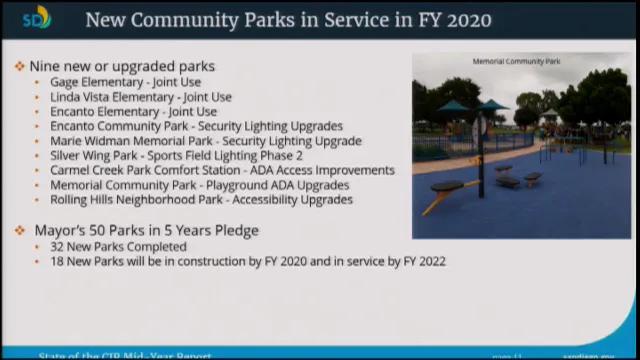
The Budget Review Committee, chaired by Council President Pro Tem Barbara Bry, met virtually on May 6, 2020, to review portions of the Fiscal Year 2021 proposed budget, including Environmental Services, Fleet Operations, Engineering and Capital Projects, and the Capital Improvement Program (CIP). The meeting featured staff presentations, IBA (Independent Budget Analyst) reviews, public phone-in testimony, and council member questions. No formal votes were taken; all items were informational, and the committee adjourned to May 7, 2020, at 9 a.m. Public Comments & Testimony - Bruce Summers (caller) attempted to comment on Redland Drive paving in El Trio, but was informed that item had already been heard; staff suggested emailing comments. - John Stump (taxpayer/resident) urged the council to stop requiring renters to pay for waste management services while homeowners do not, despite both paying property tax. He also cited SUE Global as a contractor on city land among the top five bay polluters and asked Environmental Services to enforce zero waste, stormwater pollution compliance, and Climate Action Plan requirements. - J.D. Stump (during the CIP item) raised concerns about unsafe walking conditions when CIP projects close sidewalks, flooding at Whiteman Park due to undersized undercrossings along Auburn Creek, the proposed Fairmont Avenue fire station adjacent to sensitive receptors (school, senior park, environmentally sensitive MHCP area), and argued that the Pure Water program would triple water and sewer rates and should be halted. Discussion Items Item 5 – Environmental Services Department Budget - Environmental Services reported 66 vacancies, 27 of which are general fund positions. - Clean SD program costs: $2.9 million over the last two years, including 3 FTEs and $2.5 million in contracting capacity; currently at budget. - Residential trash tonnage has increased about 15% (1,000 tons/week) due to stay-at-home orders, with a projected additional $500,000 disposal cost over the next three months. - Councilmember Campbell asked to preserve additional summer trash collection in Mission Beach. - Councilmember Moreno opposed planned Clean SD expansion (7 FTEs/$3.2M one-time plus 4 FTEs/$321K; total FY21 funding $6.8M, up $121K plus $719K in refuse disposal fund), saying he would seek to eliminate the program to protect frontline services. - Council President Gomez also expressed opposition to Clean SD expansion and said he would call for its elimination. - The reductions in general fund positions are mostly vacant: 7 sanitation driver positions vacant, 1 hazardous materials inspector currently filled. Items 6 & 7 – General Services Branch Overview and Fleet Operations Budget - Deputy COO Alia Corey presented the General Services Branch: Fleet Operations maintains over 4,000 vehicles; the department will be renamed Engineering and Capital Projects in FY21. - Fleet Operations has converted over 63% of the refuse fleet to CNG; anticipates first fully electric vehicles and 100 hybrid police pursuit vehicles next fiscal year. - FY21 fleet budget includes a net $6 million decrease in the operating fund and a $5 million increase in the replacement fund. The replacement fund totals about $71 million: $58.2M for vehicle purchases ($32M debt-financed, $23M cash from non-general funds), $11.4M debt payments, and $1.2M interest. - Fuel savings of $2.4M are projected due to lower prices; a $4.8M general fund vehicle replacement fund balance will be transferred back to the general fund. - IBA noted fuel savings assume lower prices through Q1 FY21; adjustments may come later. - Kearny Mesa Repair Facility (formerly the Othello project) still needs $13.8M; IBA said commercial paper for other projects may free cash. Construction would take 12–18 months once funded. - Councilmember Moreno asked for a list of general fund contracts and vacancy details (22 vacancies); he expressed disappointment over the lease cost and said he had voted no. Staff agreed to provide savings/cancellation analysis. - Chair Bry asked for a list of all city leases with termination dates and suggested the city may be able to negotiate better deals due to the commercial real estate downturn. She also asked the IBA to identify available fund balances that could be repurposed. Item 8 – Engineering and Capital Projects Department Budget - The department (renamed Engineering and Capital Projects) is a special revenue fund, not general fund. It has 825.5 FTEs, unchanged from FY20, with a net budget change of only $5,518. - In FY20 to date: 54 construction contracts totaling $253M; expected $350M by year-end; 28 architecture/engineering contracts valued at $7.9M; CIP expenditures expected to reach $575M. - FY21 plans include 135 projects with an estimated $1.3B in construction awards, including 10 Pure Water Phase 1 contracts. - The budget assumes $1.6M in non-personnel reductions (training and contracts); staff said they will shift to more in-house training. - IBA noted 139 vacancies (though the director later said 148) and a hiring freeze; the engineering and capital fund deficit is projected to improve from $11.5M to $8.8M through an increased overhead rate. - Director James Nagelvoort said the department had 148 vacancies, that internal city transfers would be prioritized, and the weak economy may make hiring easier. - Councilmember Moreno asked about the impact of the $1.6M reduction; Council President Gomez asked about consultant spending (40% of design work, $30M/year) and the deficit. Staff agreed to report on whether pay adjustments helped retain employees. Item 9 – State of the CIP, FY21–25 Outlook, and FY21 Proposed CIP Budget - State of CIP (FY20 mid-year): James Nagelvoort reported 950 active projects; FY20 CIP budget $710.8M (adjusted to $719.7M); first-half expenditures $274M. Pure Water Phase 1 design is complete but delayed by litigation. Progress was highlighted on streets (97.4 miles in six months; 1,400 miles since 2015), sewer repair (18.44 miles toward a 215-mile goal), and water main awards (10.38 miles; 13 miles tied to Pure Water). Construction awards improved from 88 to 78 days. SLBE (small, local, and emerging business) contracting reached 25% of dollar amounts. Consultant design spending was 41% ($10M) vs. $14.8M in-house. - FY21–25 CIP Outlook: Myrna Dayton presented the sixth annual report (previously given February 10, 2020). Total five-year needs are $6.03B; anticipated revenue $3.8B. Priority needs gap is $1.2B; discretionary gap is $875M. General fund assets carry the gap. - FY21 Proposed CIP Budget: Karen McGriff presented a proposed FY21 CIP budget of $358.9M as part of a $10.61B multi-year program, down 49.5% from FY20 due to Pure Water carryover. Funding includes $136.6M sewer, $153.4M water, $22M TransNet, $18.9M gas tax, $2M trench cut fees, and $10M utilities undergrounding, among other sources. An additional $281M is anticipated later in the year. - IBA comments: The IBA noted the $56M general fund infrastructure investment (transcribed as “higher” than the FY20 adopted $58M, though the figures suggest lower) falls short of $469M in identified needs, with $297M for priority projects. It also noted $26M for street repaving vs. $68M need, rising overlay costs from $400K to $600K per mile, and that CIP transparency summary sheets were omitted from the proposed budget. - Councilmember priorities and questions: Members raised numerous district-specific projects, including sidewalks (no repair/replacement funding in FY21), fire station 48 in Black Mountain Ranch, parks and libraries, streetlight goals (lowered from 750 to 490 per year), and equity in street resurfacing. Councilmember Ward requested an unfunded needs list; Councilmember Montgomery requested street project lists; Councilmember Kate asked about Mira Mesa Community Park; Councilmember Moreno listed District 8 projects and asked for confirmation that streets would be resurfaced after utility work. Chair Bry asked for funding source details for emergency projects and SLBE consultant data, and requested that Public Utilities bring a five-year financial outlook focused on Pure Water costs to the committee. Key Outcomes - No votes were taken; all budget items were informational. - Staff will provide: a list of general fund contracts for Fleet Operations, analysis of Kearny Mesa Repair Facility cancellation savings, a list of all city leases with termination dates, the unfunded CIP needs list, street project lists, SLBE consultant data, and a report on whether pay adjustments helped staff retention. - Staff will follow up on specific council requests: Tupman Joint Use Project status, Chollas Triangle GDP timeline, City Heights Pool discussion, and further information on emergency project funding. - The IBA was asked to help identify fund balances that could be redirected to services. - No non-agenda public speakers called in; the committee adjourned to Thursday, May 7, 2020, at 9 a.m. for continued budget hearings.

CAPITAL IMPROVEMENT PLANNING 22% · PUBLIC WORKS 18% · BUDGET 15% · PROCEDURAL 14%
753
MAY 5, 2020 · SAN DIEGO, CALIFORNIA · BUDGET REVIEW COMMITTEE
San Diego City Budget Review Committee Meeting - May 5, 2020

The Budget Review Committee convened on May 5, 2020, to review the proposed FY2021 budgets for multiple city departments, including libraries, parks and recreation, homelessness strategies, cultural affairs, information technology, human resources, performance and analytics, sustainability, economic development, and development services. The meeting featured extensive public testimony and councilmember discussion, focusing on the severe impacts of proposed cuts due to the COVID-19 pandemic. The committee voted to continue several items to a later date. Public Comments & Testimony - Libraries: Over 28 speakers urged the council to oppose further cuts, highlighting the library's role as a lifeline for low-income communities, students, and seniors. Speakers emphasized the importance of maintaining hours, preventing branch closures (especially Mountain View Beckworth), and preserving staff. Specific concerns included the digital divide, job-seeking resources, and the need for safe spaces. - Parks and Recreation: 16 speakers expressed concerns about reduced recreation center hours (from 60 to 45 per week) and 14-week pool closures. Speakers included seniors reliant on water aerobics, youth program advocates, and community organizations, stressing the importance of parks for physical and mental health, especially in underserved areas. - Homelessness Strategies: One speaker supported the creation of a new department but urged the city to use low-moderate income housing funds for homeless services rather than general fund money. - Cultural Affairs: 17 speakers, including representatives from the San Diego Rep, La Jolla Playhouse, and the Old Globe, opposed the 50% cut to arts grants, noting the $1.1 billion economic impact and 36,000 jobs supported by the arts. They urged maintaining current funding levels. - Sustainability (Smart Streetlights): 6 speakers opposed funding for the Smart Streetlight program, citing unfulfilled promises, privacy concerns, and the program's failure to deliver energy savings. They advocated redirecting funds to libraries, parks, and other core services. - Economic Development: Two speakers requested more equitable distribution of small business relief funds, particularly for Promise Zone communities and home-based businesses. - Development Services: One speaker raised concerns about the Verizon partnership and its impact on permit review staffing. Discussion Items - Deputy Chief Operating Officer Overview: Robert Vocke presented the Neighborhood Services branch, which includes libraries, parks, homelessness, and cultural affairs. The branch faces significant reductions: 97 positions in libraries, 86 in parks, and 9 positions transferred to the new Homelessness Strategies department. COVID-19 impacts are ongoing, and additional cuts are expected in the May revise. - Library Department: Director Misty Jones presented a $6.8 million reduction, including 96.51 FTE cuts, closure of the Mountain View Beckworth branch, and reduced hours (closed Sundays and Mondays). The IBA noted 72.01 filled positions among the cuts. Councilmembers expressed strong support for libraries, with many vowing to restore funding. Councilmember Campbell called libraries a priority; Councilmember Montgomery highlighted the impact on underserved communities. - Parks and Recreation Department: Director Andy Field presented a $4.9 million reduction (86.05 FTEs), including reduced rec center hours (45/week), 14-week pool closures, and elimination of swim team/water polo in winter. The IBA noted 23 vacant positions among the cuts. Councilmembers voiced concerns about brush management cuts and the impact on youth programs. Councilmember Moreno opposed cuts while funding new departments. - Homelessness Strategies Department: Chief Keely Halsey presented a budget-neutral restructuring to create a new department, consolidating existing positions. The budget includes $5.7 million for the Veterans Village bridge shelter relocation. Councilmembers questioned the timing of creating new departments and the cost of relocation. Councilmember Campbell opposed new departments during a budget crisis. - Cultural Affairs Department: Director Jonathan Gloss presented a budget-neutral merger of arts and culture with special events. The 50% cut to arts grants (from $11.4M to $5.7M) was a major concern. Councilmembers, including Council President Gomez, questioned the merger and cuts, but acknowledged the need to prioritize core services. - Information Technology Department: CIO Jonathan Banke presented a $10.7 million increase in non-general fund costs for IT contract transitions. Reductions include suspending PC replacements and delaying public safety radio upgrades. Councilmembers thanked IT for supporting remote work and asked about CARES Act reimbursement. - Human Resources Department: Director Julie Rasco presented a $113,000 reduction, eliminating three positions, including a child care coordinator. Councilmembers expressed disappointment but understood the need for cuts. - Performance and Analytics Department: Director Kirby Brady presented a $150,000 reduction to Get It Done and $65,000 to open data tools. Councilmembers praised the department's work and sought to restore some funding. - Sustainability Department: Director Cody Hooven presented a $1.3 million increase for the Smart Streetlight program, offset by cuts to climate action plan updates. Councilmembers strongly opposed the Smart Streetlight funding, citing cost overruns and privacy issues. Councilmember Montgomery, Moreno, and Gomez indicated they would not support the program. - Economic Development Department: Director Christina Bibler presented $1.1 million in program reductions, including the Small Business Enhancement Program and Storefront Improvement Program. The $2 million small business relief fund was noted. Councilmembers asked about using CARES Act funds to restore programs. - Development Services Department: Director Elise Lowe presented a reduction of 16 code enforcement positions, but proposed using civil penalties fund to restore them. Councilmembers supported the funding solution and praised the department's digital transformation. Key Outcomes - Continued Items: The committee voted 7-0 to continue items 13, 15, and 12 (Real Estate Assets, Planning, and Mobility) to Thursday, May 7, 2020, due to time constraints. - Recreation Center Hours: The committee discussed the need for equity in service reductions, with Councilmember Ward asking for data on branch-level usage to tailor hours. - Library Branch Closure: Councilmembers Montgomery, Kate, and Gomez explicitly stated they would not support any budget that closes a library branch. - Smart Streetlights: Multiple councilmembers (Montgomery, Moreno, Gomez) indicated they would not support the $1.3 million general fund allocation for Smart Streetlights, calling for reallocation to core services. - Code Enforcement Restoration: Director Lowe announced a plan to use $4 million from the civil penalties fund to restore all 16 code enforcement positions for two years, pending May revise approval. - Business Cooperation Program: The committee noted the elimination of the program would break commitments with three businesses, but some councilmembers expressed hope for future reinstatement. - Arts Funding: The committee acknowledged the severe impact of the 50% cut but did not reach a consensus on restoration. Council President Gomez expressed support for maintaining arts funding. - Homelessness Department: The creation of the new department was debated, but no final decision was made; it will be part of the budget approval process. - May Revise: The committee noted that the Mayor's May revise (due May 19) may include additional adjustments, including potential use of CARES Act funds for eligible programs.

LIBRARIES 11% · PUBLIC COMMENT 11% · BUDGET 10% · HOMELESSNESS 10%
754
MAY 4, 2020 · SAN DIEGO, CALIFORNIA · BUDGET REVIEW COMMITTEE
San Diego Budget Review Committee Meeting on FY2021 Budget - May 4, 2020

The Budget Review Committee of the San Diego City Council met on May 4, 2020, to review the Mayor's proposed FY2021 budget amid the COVID-19 pandemic. The meeting covered the Independent Budget Analyst (IBA) review, departmental budget presentations for police, fire-rescue, homeland security, finance, and other city services, as well as public testimony. No votes were taken as items were informational. Consent Calendar - No consent calendar was presented. Public Comments & Testimony - Orlando Gonzalez (Secretary Treasurer, CWA Local 9509) expressed concern about the proposed elimination of 25 first responder positions and urged evaluation of the city's wireless contract with FirstNet for potential cost savings. - Elvira O'Neal (caller) expressed concern about the elimination of STAR/PAL police officers and the reduction in Clean SD overtime, and requested more patrol in District 4. - Sally Small (caller) voiced support for STAR/PAL and concern about funding for arts and cultural organizations. - Alora Calderon (Director, Employee Rights Center) opposed cuts to the Living Wage and Minimum Wage enforcement office, arguing workers need more protections during the pandemic. - Dr. Derek Robinson (Center for Policy Initiatives) opposed cuts to the Living Wage office, stating it sends a message that businesses can violate labor laws. - Lorena Guzmán (worker, Employee Rights Center) opposed cuts to the Living Wage office, emphasizing the need for worker protections. - Joy Sanyata (public comment) thanked the council and staff for their work. Discussion Items - IBA Review of FY2021 Proposed Budget – Andrea Tevlin (IBA) presented the analysis, highlighting a projected $258 million revenue loss due to COVID-19, a proposed budget of $1.5 billion (down $50 million from FY2020), and 278 position reductions. The budget uses $54 million from the general fund emergency reserve, defers reserve contributions, and reduces funding for parks, libraries, arts, and capital projects. The city received $248 million in CARES Act funding, but eligible uses are still being determined. - Police Department Budget – Chief David Nisleit presented a $566 million budget with a net reduction of 21 FTEs. Proposed cuts include elimination of the STAR/PAL program (1 sergeant, 5 officers, 1 clerk), reduction of helicopter flight hours, and reduction of overtime. The department will seek $4.3 million in May revise for neighborhood policing overtime. Councilmembers expressed concern about overtime levels and the impact of STAR/PAL cuts on at-risk youth. - Fire-Rescue Department Budget – Chief Colin Stoll presented a $286 million budget with a net increase of 37 FTEs for the relief pool and 9 for the new North University City Fire Station. Proposed cuts include elimination of the Fast Response Squad in South University City and reductions in swift water rescue training. The IBA noted the department's overtime budget may be insufficient. - Office of Homeland Security – Chief Nisleit (also presenting for OHS) outlined a $2.6 million budget with 18.98 FTEs. The office coordinates emergency management and disaster cost recovery. No significant cuts were proposed. - Department of Finance – Matt Vespey (Director) presented a $1.1 million reduction and 6.8 FTEs cut, primarily in customer support functions. The department is adapting to remote work. - City Treasurer – Liz Carey presented a budget with reductions of 9 positions (general fund) and 3 parking meter technician positions. The department expects increased cannabis business tax revenue but lower parking revenue. - Debt Management – Lakshmi Kommi presented a reduction of 3.5 FTEs, mostly vacant or retiring positions. The department continues to manage bond issuances and refinancings. - Risk Management – Julio Canizal presented a $12 million budget with a net reduction of 5 vacant positions and $1.1 million. Staff caseloads are already above industry standards, raising concerns about meeting state deadlines. - Purchasing and Contracting – Christina Proulta presented a budget with reductions of 5 positions in procurement and 6 in publishing services. The department will reduce inventory by $2.6 million. - Citywide Program Expenditures – Adam Jones presented a $59 million decrease from FY2020, driven by deferrals of reserves and infrastructure fund contributions, and use of stadium sale proceeds for debt service. - Special Promotional Programs – The TOT-funded budget is reduced by $18.5 million. Arts and culture funding is cut by $5.7 million (50% reduction), and economic development tourism support is eliminated. Parks and recreation reimbursement from TOT is reduced by $8.6 million. Key Outcomes - No votes were taken; all items were informational. - Councilmembers expressed intent to explore alternative funding sources (e.g., CARES Act, municipal liquidity fund) to restore some cuts. - Several councilmembers indicated they would not support creating new departments during the budget crisis. - The IBA noted the budget is structurally unbalanced, using one-time resources for ongoing expenses. - Further budget revisions (May Revise) are expected on May 19, and the final budget will be voted on in June. - Council President Gomez requested that all departments provide data on remote work feasibility and potential savings. - Chair Bree suggested creating a "suspension list" of new programs and exploring voluntary 4-day workweeks for city employees.

BUDGET 30% · PUBLIC SAFETY 13% · POLICE OVERSIGHT 9% · PUBLIC COMMENT 8%
755
APR 30, 2020 · SAN DIEGO, CALIFORNIA · BUDGET REVIEW COMMITTEE
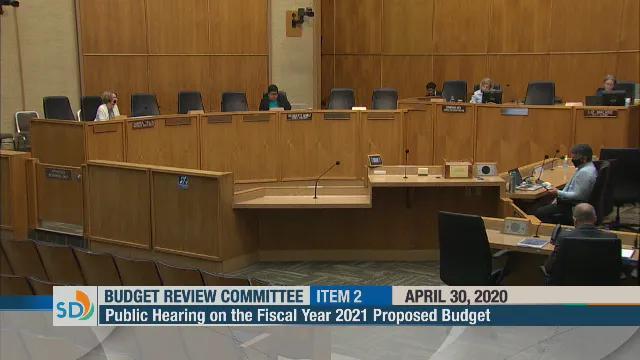
San Diego FY2021 Budget Public Hearing: April 30, 2020

The San Diego Budget Review Committee (BRC) held a public hearing on the proposed Fiscal Year 2021 budget on Thursday, April 30, 2020, via teleconference and live stream due to the COVID-19 pandemic. The meeting's primary purpose was to hear public testimony on Mayor Kevin Faulconer's proposed budget, which faces a $250 million revenue shortfall and proposes significant cuts to city services. Council members also provided updates on their budget priorities in light of the pandemic. No votes were taken. Public Comments & Testimony Over 60 public speakers called in, with one minute each, expressing concerns and priorities. Key themes included: - Road repairs in Mira Mesa: Numerous residents (e.g., Nelani Woods, John Kurt, Robert Kendall, Pam Stevens, Jeff Stevens) urged the council to fund the reconstruction of Gold Coast Drive and Parkdale Avenue, citing severe potholes, safety hazards, and years of neglect. Several noted that the proposed budget includes $11.1 million for these projects. - Smart Streetlight Program: Many speakers (e.g., Dr. Cyrus Barucha, Seth Hall, Layla Azisa, Kate Metcalf, Genevieve Jones-Wright) opposed the proposed $1.3 million increase in funding for smart streetlights, calling it an invasive surveillance system and a wasteful use of funds, especially during a budget crisis. They urged reallocation to core services. - Tenant protections and rental assistance: Numerous speakers (e.g., Noemi, Blake Hosstead, Belene Hernandez, Megan Johnson) urged strengthening the eviction moratorium, canceling rent and mortgage debt, and increasing rental assistance. Estimates indicated that $140 million would be needed to assist all tenants unable to pay rent in May. - Worker protections: Speakers (e.g., Dr. Derek Robinson, Reverend Sherry Mateir) called for at least 15 days of paid sick leave, enforcement of labor laws, and unemployment benefits covering full lost wages with a right to return to work. - Arts and culture funding: Multiple speakers (e.g., Elizabeth Tobias, Steve Schneider, Ileana Ova, Maria Hernandez) urged the council to preserve funding for the Commission for Arts and Culture and organizational support programs, emphasizing the sector's economic impact (a billion-dollar industry, 35,000 jobs) and its importance for recovery. - Libraries and recreation centers: Speakers (e.g., Patrick Stewart, Matthew Goldberg, Lupe Diaz) opposed cuts to library hours, materials, and staff, and cuts to park and recreation services, emphasizing their importance for youth and low-income communities. - Support for STAR/PAL: Several speakers (e.g., Letitia Dupree, Catherine Jones, Tamara Mohammed) advocated for maintaining funding for the STAR/PAL program, which provides youth mentoring and police-community engagement. - Other concerns: Comments addressed the Office of ADA Compliance (opposition to moving it to the Mobility Department), stormwater funding (opposition to cuts), police releasing detained individuals to prevent COVID-19 spread, and the need for multilingual city communications. Discussion Items - Councilmember comments on budget priorities: Council members from Districts 2, 3, 4, 6, 7, 8, and 9 provided opening statements and later updated their priorities under COVID-19. Common themes included preserving core city services (police, fire, libraries, parks), using the $248 million in CARES Act funding effectively, protecting vulnerable communities, and exercising fiscal caution. - Specific positions: - Councilmember Chris Ward (District 3) noted the importance of public input during a pandemic and planned community conversations. - Councilmember Monica Montgomery (District 4) emphasized homelessness outreach, safeguarding neighborhood services, and ensuring equity in capital projects. - Councilmember Chris Cate (District 6) advocated for road reconstruction, particularly Gold Coast Drive, and focused on core services. - Councilmember Vivian Moreno (District 8) urged using all $248 million in CARES Act funding, criticized use of one-time reserves, and opposed new spending like smart streetlights and CleanSD ($7 million), suggesting contract cuts instead (citing potential $71 million savings). - Council President Georgette Gómez (District 9) supported free Wi-Fi for underserved communities, opposed new departments, and opposed smart streetlight funding. Key Outcomes - No votes were taken; the hearing was informational. - The committee adjourned to the next BRC meeting on Monday, May 4, 2020, at 9 a.m. - Upcoming budget dates announced: May 21 (May Revise consideration), May 22 (council budget priority memos due), June 3 (IBA final report), June 8 (final budget public hearing).

PUBLIC COMMENT 45% · BUDGET 17% · ARTS AND CULTURE 6% · PUBLIC HEALTH 5%
756
MAR 11, 2020 · SAN DIEGO, CALIFORNIA · BUDGET & GOVERNMENT EFFICIENCY COMMITTEE
San Diego Budget Committee Meeting on Procurement, Fire Apparatus, and Tire Contracts - March 11, 2020

The Budget and Government Efficiency Committee met on March 11, 2020, with Chair Bree, Councilmember Montgomery, and Councilmember Campbell present. Vice Chair Kate was excused due to the birth of his second child. The committee unanimously approved the record of actions from February 5, 2020. During non-agenda public comment, several speakers addressed concerns about the Verizon San Diego partnership and urged funding for the analysis of the wildest alternative for Mission Bay wetlands restoration (Rewild Coalition). The committee then discussed and voted on three agenda items: proposed municipal code changes for procurement, a contract for fire apparatus, and a tire maintenance contract. Consent Calendar - Approved the committee record of actions from February 5, 2020 unanimously. Public Comments & Testimony - Sal Espinoza (Communications Workers of America) expressed concerns about the Verizon partnership, citing lack of a cost study, lower fees, limited community benefits, and inadequate safety reporting. He argued the partnership negatively impacts the San Diego budget. - Christy Dunning supported funding the wildest option for Mission Bay, emphasizing water quality and wetland restoration. - Chuck Dunning supported the wildest option, representing the ReWild Coalition (40 groups). - Dan McKernan (Environmental Health Coalition) supported the wildest alternative for carbon sequestration and increased access to nature for disadvantaged communities. - Jim Pugh (San Diego Audubon Society) supported the wildest alternative, referencing state and ocean protection goals. - Ryan Carlstadt (Unite Here Local 30) supported the wildest alternative for water quality, climate mitigation, and ecotourism benefits. - Andrew Meyer (San Diego Audubon Society) thanked council members who prioritized funding for the wildest plan, and read a statement from student Anahi Mendez urging action on climate change. - Megan Flaherty (Rewild Coalition) supported a thorough analysis of the wildest alternative, noting the coalition's diversity. - Deborah Knight (Friends of Rose Canyon) urged full evaluation of the wildest alternative. - Isabel Kaye (personal capacity, manager of Candle Frost Marsh Reserve) emphasized the need for maximum wetland restoration and described wetland degradation. - Brandon Linton (Mesa Grande Reservation, Kumeyaay Nation) supported the wildest alternative for cultural and environmental benefits. - Adrian Farrell (Pacific Beach resident) supported the wildest option for Rose Creek. - Alan Bennett (Florida Canyon stakeholders) supported wetlands restoration as part of a larger ecological network. - Tommy Howell (Rewild Mission Bay campaign coordinator) thanked supportive council members, urged equal analysis of the wildest proposal, and noted bird decline. - Zachary Williams spoke about public banking and blockchain projects, unrelated to the agenda items. Discussion Items - Item 1: Proposed Changes to San Diego Municipal Code on Procurement – Christina Pratt (Director of Purchasing and Contracting) presented changes to streamline processes, including repeal of obsolete estimation, consultant definition clarifications, and introduction of reverse auctions. Councilmember Montgomery expressed concern about striking Section 22.32.07 (mayoral authority to award consultant contracts over $250,000 annually without council approval). The committee asked about debarment lists, collaboration with other departments, and reverse auction impacts. A motion was made and seconded to move staff recommendation with deletion of Section 22.32.07. Passed unanimously. - Item 2: Authority to Purchase Pierce Fire Apparatus from South Coast Fire Equipment – Casey Smith (Fleet Operations Director) requested a contract not to exceed $58.5 million over 4 years for 38 fire vehicles. The contract includes a 20% contingency for cost increases (e.g., tariffs) and a 3.5% annual inflation factor. Councilmember Campbell asked about electric fire engines and contingency monitoring. Councilmember Bree requested that significant cost increases be reported back to committee. Motion to approve passed unanimously. - Item 3: Contract with Parkhouse Tire for Tire Maintenance – Casey Smith presented a 5-year contract for tire maintenance for refuse and recycling packers, valued at $4.2 million (including 10% contingency). Parkhouse was the low bidder. Motion to approve passed unanimously. Key Outcomes - Unanimously approved record of actions from February 5, 2020. - Voted unanimously to forward the municipal code changes to full council with the deletion of Section 22.32.07 (mayoral authority for consultant contracts over $250,000 annually). - Unanimously approved a contract with South Coast Fire Equipment for up to $58.5 million for fire apparatus (contingent on budget approvals). - Unanimously approved a five-year contract with Parkhouse Tire for up to $4.2 million. - The committee will reconvene on April 15, 2020 at 9 a.m.

ENVIRONMENTAL PROTECTION 23% · PROCUREMENT 21% · FLEET MANAGEMENT 17% · PUBLIC COMMENT 15%
757
MAR 11, 2020 · SAN DIEGO, CALIFORNIA · RULES COMMITTEE
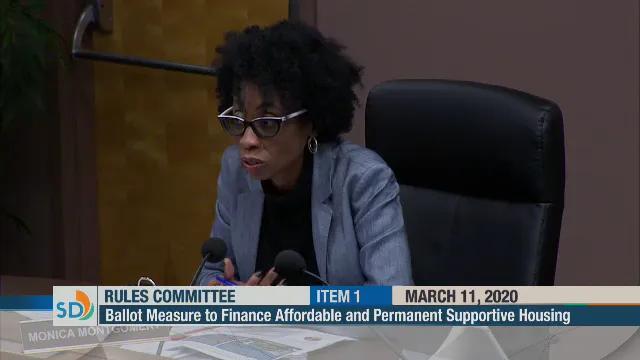
Rules Committee Meeting on Affordable Housing Bond and School Board Charter Amendment - March 11, 2020

The San Diego City Council Rules Committee met on March 11, 2020, at 10:00 AM (though the transcript begins with a "good afternoon" greeting) to consider two ballot measure proposals for the November 3, 2020 municipal special election. The primary item was a proposal to issue up to $900 million in general obligation bonds to finance the construction of affordable and permanent supportive housing for vulnerable populations. The second item proposed amending the city charter to include San Diego Unified School District school board members under Council Policy 000-21. The meeting included extensive public testimony, council member discussion, and votes on both items. Public Comments & Testimony - Supporting the Housing Bond: Numerous speakers expressed strong support for placing the housing bond measure on the ballot. Key supporters included: - Steven Russell (San Diego Housing Federation): Detailed the proposal, highlighting that $900 million would leverage state and federal funds (3-4x leverage) to build up to 7,500 units (2,800 permanent supportive housing for homeless; 4,700 affordable units for low-income households). He noted 71% voter support in a November 2019 poll and called the tax an investment. - Matthew Vasilakis (Climate Action Campaign): Urged advancing the bond, linking affordable housing to climate goals. - Craig Benedetto (NAIOP San Diego/BOMA San Diego): Supported continuing the conversation but requested mitigation for property owners who already pay inclusionary housing fees, suggesting exemptions or sliding scales. - Brian Trotier (Family Health Centers of San Diego): Emphasized cost-effectiveness of housing over repeated emergency services. - Chris Arthur (Eden Housing) and Debbie Fountain (Corporation for Supportive Housing): Highlighted the need for local funding to compete for state/federal funds. - Jeff Williams (Bridge Housing) and Matthew Jumper (Interfaith Housing): Urged the city to move forward to allow voter input. - Zach Schlegel (PATH): Noted the measure would support the city's Community Action Plan on Homelessness and was critical given the COVID-19 pandemic. - Youth speakers from the Cesar Travis Congress (Mia Montero, Angel, Jaden, Martin Dave, Adrian Moran): Spoke passionately about the moral imperative to house the homeless. - Joe Barrett (HEAL Network), Heather Pollock Avrick (Affirmed Housing), Warsom Artana and Joshua Piedra (Youth Will), Brian Woods (San Ysidro Health), Carol Kim (San Diego Building Trades), Tom Lemmon (Building Trades), J. Powell (former City Heights CDC), Sue Reynolds (Community Housing Works), Ricardo Flores (LISC San Diego), JP Thurber (Grow the San Diego Way), and Gary Levine (individual taxpayer) all spoke in favor, often citing leverage, job creation, and moral duty. - Concerns from Industry: - Matt Adams (San Diego Building Industry Association): Had not taken a position but urged serious discussion about affordability for property owners already contributing to affordable housing. - Tom Lemmon: Supported the bond but requested inclusion of prevailing wage and skilled/trained workforce requirements. - No public comment on the school board charter amendment item. Discussion Items Item 1: Housing General Obligation Bond Measure Councilmember Ward introduced the item, and his policy director Kathleen Ferrier presented the proposal. Key details: - Bond amount: Not to exceed $900 million. - Units: Up to 7,500 permanent supportive and affordable housing units for extremely low (0-30% AMI), very low (30-50% AMI), and low-income (50-80% AMI) populations, including veterans, youth, seniors, persons with disabilities, and those experiencing homelessness or at serious risk. - Tax rate: Initial estimated $2.87 per $100,000 assessed value; highest estimated $19 per $100,000 assessed value (approximately $115/year for a median-priced home). - Oversight: Administered by San Diego Housing Commission, annual allocation plan approved by City Council, citizen oversight committee, annual COO report, and independent external audit. - Requested action: Direct the City Attorney to conduct legal analysis and draft ballot language. Councilmember Montgomery seconded the motion and suggested including homebuyer programs (citing Santa Clara's bond). Council President Pro Tempore Gomez raised questions about average unit cost ($325,000 per unit over last five years) and innovation (modular construction). Councilmember Kercy noted the proposal had improved but stated he would not support it today, though he favored continued discussion. Councilmember Ward emphasized the need to leverage local funds and create prevailing wage jobs. Item 2: Charter Amendment for SDUSD School Board Members Alan Young (policy director for Councilmember Kate) introduced the item, recalling prior committee approvals. Deputy City Attorney Sharon Speedback presented draft language, noting that other potential school board reform measures might be considered in April and that careful drafting would be needed to avoid conflicts. The committee discussed whether to send directly to full council or return to Rules Committee. Councilmember Kercy moved to forward to full council pending legal analysis of other potential measures; Councilmember Ward seconded. The motion passed unanimously. Key Outcomes - Item 1 Housing Bond: The committee voted 4-1 to direct the City Attorney's office to conduct all necessary legal analysis and draft general obligation bond measure language, incorporating input from committee members and the public. Councilmember Kercy was the sole dissenter. The measure will return to the Rules Committee or full council for further consideration. - Item 2 School Board Charter Amendment: The committee voted unanimously to forward the proposed ballot measure to the full City Council, with the understanding that legal review of other related proposals could require the item to come back to the Rules Committee. - The next Rules Committee meeting was scheduled for Wednesday, April 15, 2020, at 2:00 PM.

AFFORDABLE HOUSING 60% · HOMELESSNESS 17% · EDUCATIONAL POLICY 8% · PUBLIC COMMENT 4%
758
FEB 27, 2020 · SAN DIEGO, CALIFORNIA · LAND USE & HOUSING COMMITTEE
Land Use and Housing Committee Meeting - February 27, 2020

The Land Use and Housing Committee of the San Diego City Council met on February 27, 2020, at 1:00 PM. The meeting was chaired by Vice Chair Kersey, with Council Members Campbell and Sherman present. Staff attendees included Deputy City Attorney Leslie Fitzgerald, Conrad Weir from the Mayor's Office, Baku Patel from the Office of the Independent Budget Analyst, and committee consultant Kathleen Ferrier. The meeting covered the approval of prior minutes and non-agenda public comment. The transcript becomes garbled and largely unintelligible after the public comment period begins. Consent Calendar - Approval of Minutes (January 23, 2020): Moved by Councilmember Sherman, seconded by Councilmember Campbell. The motion passed unanimously. Public Comments & Testimony - Martha Welch: Spoke about the Housing Commission, making unclear allegations regarding bribes, housing issues, and federal involvement. The transcript deteriorates into repetitive, nonsensical phrases, making the precise content of her testimony impossible to ascertain. - Terry Ann Skelly: Began speaking about the committee's 2020 work plan and revisiting presentations, but the transcript quickly becomes incoherent and repetitive, preventing accurate summarization. - Additional speakers (e.g., Kathleen Lippettes) are mentioned but their comments are not discernible due to transcription errors. Discussion Items No substantive discussion items were identified from the available transcript. The meeting appeared to consist solely of the consent calendar and public comment. Key Outcomes - The minutes of January 23, 2020, were approved unanimously. - The meeting adjourned after public comments, with the next meeting scheduled for March 19, 2020, at 1:00 PM. - Note: The provided transcript is severely corrupted after the initial roll call and first public comment. The reliability of any statements beyond the minutes approval is questionable.

HOUSING 34% · PUBLIC COMMENT 19% · PROCEDURAL 14% · PUBLIC LAND MANAGEMENT 11%
759
FEB 19, 2020 · SAN DIEGO, CALIFORNIA · AUDIT COMMITTEE
San Diego Audit Committee Meeting - February 19, 2020

The San Diego Audit Committee met on February 19, 2020, at 9:00 a.m. (note: given date is 2020-02-19 17:00:00+00:00, but meeting occurred in the morning). Chair Sherman presided, with Vice Chair Councilmember Vivian Moreno and members Spencer, Valdivia, and Halpern present. The committee approved minutes, received informational reports, and discussed several audits and proposals. Consent Calendar - Approval of Minutes (January 15, 2020): Motion by Councilmember Moreno, second by Mr. Halpern; passed unanimously. Public Comments & Testimony - Martha Welch (member of the public): Made disjointed statements accusing the city of hiding money, referencing Bill Horn and the FBI, and demanding financial audits. - Kevin Swanson (public speaker): Expressed concern about the city's projected deficit of over $100 million and urged the committee to ensure integrity and oversight. - Michael McConnell (public speaker, in favor of homelessness audit): Supported the audit, criticized the city's encampment abatement policy as ineffective ("whack-a-mole"), and urged a solutions-focused approach to save money and improve outcomes. - Joyce Yanna (public speaker): Praised the audit team and the Community Action Plan on Homelessness, emphasizing the complexity of the issue and the need for continued effort. - Kevin Swanson (second appearance): Asked for return-on-investment analysis for homelessness spending and suggested comparing funding percentage to homeless population share. - Maria Rivera (public speaker): Called for a full audit of the 101 Ash Street purchase and subsequent spending, citing reports of mismanagement and escalating costs. Discussion Items - City Auditor's Monthly Activity Report (Kyle Elser): Since last meeting, four audit products were issued, including the homelessness audit. Two audits in report-writing stage, two in fieldwork, six in planning, and five not yet started. In FY2020: six audit reports, three hotline investigations, 57 recommendations. - Annual Activities & Accomplishments Report for Calendar Year 2019 (Daniel Knighton): Highlighted 10 performance audits, 3 hotline investigations, 66 recommendations (all agreed to by administration). Since inception in 2008, 239 reports with 1,171 recommendations; 178 open as of December 2019. Staff received 800+ hours of CPE. Committee expressed appreciation. Mr. Halpern asked about carryover audits and open recommendations; staff clarified that disagreed recommendations are tracked and brought to committee. - Performance Audit of City's Efforts to Address Homelessness (Andy Hannau, Danielle Novikolski, Luis Brezeno): - Findings: (1) City lacked strategic plan until October 2019; increased spending ($102M in FY2019) did not reduce homeless count (stayed 5,000). Recommendations include communications plan, long-term funding, governance structure, staffing analysis, public reporting. (2) Outreach was insufficient; SDPD's HOT team filled gap but lacks non-law enforcement workers; recommended comprehensive outreach strategy, staffing analysis, and data collection on refusal reasons. (3) Encampment abatements (Clean SD) lacked comprehensive outreach; recommended protocol with non-law enforcement outreach, adequate time before abatements, and better data collection. - Management Response (Keely Halsey, Chief of Homelessness Strategies): Agreed with most findings; partially agreed on outreach and encampment protocol, stating city is pursuing broader reforms and cannot immediately reduce law enforcement outreach due to resource gaps. Clarified that city intends to lead locally on outreach. - Committee Discussion: Chair Sherman raised concerns about responsibility (city vs. county) and noted that HSD is understaffed (two people). Captain Scott Wall (SDPD) described current outreach efforts, including PER clinicians and a diversionary program (shelter bed for 30 days in lieu of citation). Committee questioned effectiveness and data tracking. Motion to accept report and forward to council after requesting revised management response; passed unanimously. - Performance Audit of Development Services Department Administration of Deposit Accounts (Chris Kine, Megan Garth, Zoya Ahmed): - Findings: (1) DSD did not enforce minimum balances; 61% of accounts had zero minimum balance, leading to $14,000+ deficits and inequity. (2) Invoicing was manual and delayed; as of July 2019, 1,384 accounts had deficit balances totaling $4.6M, of which $1.4M was not yet invoiced. Lack of system controls (PTS) contributed. - Management Response: Agreed to all 11 recommendations; plans to implement by 2020 via new system (Exella). - Committee Discussion: Councilmember Moreno noted that $4.5M remains in deficit/invoiced/collections. Mr. Spencer asked about allowance for doubtful accounts; city controller promised formal response. Mr. Valdivia queried about latency in charges and interim controls. Motion to accept and forward to council; passed unanimously. - Request for Audit of 101 Ash Street Building (Kyle Elser): Proposed adding audit of real estate acquisition process to FY2021 work plan, noting lawsuits preclude auditing construction improvements. Alternative: postpone current climate action plan audit. Committee also considered directing management to answer related questions. - Public Comment (Kevin Swanson): Supported audit, citing additional $30M needed for asbestos abatement and questioning oversight. - Discussion: Councilmember Moreno moved to include in FY2021 work plan (allowing climate audit to proceed). Mr. Spencer questioned whether questions could be answered without audit; management confirmed a forensic review is already underway. Motion passed unanimously. - Request for Independent Legal Counsel for Office of the City Auditor (Kyle Elser): Proposed charter amendment to allow OCA to access independent legal counsel when perceived conflicts arise with City Attorney's dual role. Cited examples of differing legal opinions and mentioned similar models in Portland and CA State Auditor. Estimated costs similar to Ethics Commission. - Public Comment (Kevin Swanson): Supported, noting City Attorney drafted contract that left city liable. - City Attorney Response (Deputy City Attorney Ken So): Objected, stating current model works; only Portland has such a measure; argued audit committee should wait for permanent auditor input. - Committee Discussion: Chair Sherman supported independence; Councilmember Moreno seconded motion to forward to Rules Committee for potential November 2020 ballot. Mr. Spencer questioned process for resolving disagreements; Deputy City Attorney Joan Dawson clarified city cannot sue itself. Motion passed unanimously. Key Outcomes - Homelessness Audit: Accepted and forwarded to City Council with request for revised management response from homelessness strategies division; vote unanimous. - Deposit Accounts Audit: Accepted and forwarded to City Council; vote unanimous. - 101 Ash Street Building Audit: Will be added to FY2021 annual audit work plan; vote unanimous. - Independent Legal Counsel for City Auditor: Request forwarded to Rules Committee for potential ballot measure in November 2020; vote unanimous. - General: Committee thanked outgoing member Alan Spencer for his service.

HOMELESSNESS 30% · AUDIT FOLLOW-UP 23% · DEVELOPMENT SERVICES 12% · CONFLICT OF INTEREST 8%
760
FEB 19, 2020 · SAN DIEGO, CALIFORNIA · ACTIVE TRANSPORTATION & INFRASTRUCTURE COMMITTEE
San Diego Active Transportation Infrastructure Committee Meeting – February 19, 2020

The Active Transportation Infrastructure Committee met on Wednesday, February 19, 2020, at 10:00 AM. The committee unanimously approved the consent agenda and took action on the Fiscal Year 2020 Mission Valley Impact Fee Study. An informational presentation on a sidewalk permit fee holiday for calendar year 2020 was also discussed. Consent Calendar - The committee unanimously approved the meeting minutes from January 29, 2020. - Two consent items were approved without discussion or public comment. Public Comments & Testimony - Martha Welch (non-agenda public comment) expressed allegations regarding misuse of funds and claimed that city officials are not working in the public's interest. She urged a financial audit and stated that the city is unable to build infrastructure. - During the Mission Valley Impact Fee Study discussion, Ms. Welch returned to comment, calling the fees "made up" and alleging that the city works against the people. She criticized the city's fee structure and claimed that a fire station was not built. Discussion Items - Fiscal Year 2020 Mission Valley Impact Fee Study – Staff (Tom Tomlinson, Oscar Galvez, Marco Camacho) presented the study, which replaces the 2013 Public Facilities Financing Plan. The study includes 232 community-serving facilities: 215 mobility improvements (estimated $322 million), 16 park and recreation improvements ($291 million), and one fire rescue facility ($8.5 million). Residential development impact fees will decrease by 19% due to additional dwelling units projected at build-out. Non-residential transportation fees remain unchanged; the fire rescue component decreases from $245 to $132 per 1,000 square feet. The Mission Valley Planning Group recommended approval on November 6, 2019. The committee voted unanimously to recommend approval to the full City Council. - Sidewalk Permit Fee Holiday for Calendar Year 2020 – Staff (Edric Duringo, Chris McFadden, Myrna Dayton) presented a new program to waive permit fees for sidewalk repairs, aiming to increase compliance and reduce liability. The program is budgeted at $300,000 ($100,000 in FY2020, $200,000 in FY2021) and will run through December 31, 2020. Property owners must still pay for engineering and construction. The program will be evaluated for continuation. Committee members discussed equity concerns, noting that the fee waiver reduces costs by about $2,000 but does not address the affordability of repairs for low-income homeowners. Vice Chair Ward requested data on the 50/50 cost-share program's usage by zip code. Councilmember Kate suggested that the fee structure should be reassessed to lower permit costs. The chair noted this is part of a multi-pronged approach alongside the 50/50 program and a potential citywide repair effort. Key Outcomes - Unanimous approval of the Fiscal Year 2020 Mission Valley Impact Fee Study to be forwarded to the full City Council. - The sidewalk permit fee holiday is an informational item; budget authority will be considered by the full City Council in March 2020 as part of the budget review process. - Staff will continue to evaluate streamlining options, including possible self-certification for sidewalk repairs, and will report back on program outcomes after the calendar year.

SIDEWALK REPAIR 52% · DEVELOPMENT IMPACT FEES 15% · PROCEDURAL 12% · BUDGET 10%
OPENPUBLICA · PUBLIC MEETING INDEXUPDATED DAILY · openpublica.com