The Audit Committee of the City of San Diego met on January 15, 2020, at 9:00 AM. Chair Sherman presided, with committee members Mr. Spencer, Mr. Valdivia, and Mr. Halpern present. The meeting covered the City Auditor's monthly activity report, the Fiscal Year 2019 Comprehensive Annual Financial Report (CAFR), the quarterly fraud hotline activity report, and a hotline report on Public Records Act (PRA) responses. All motions passed unanimously. Approval of Minutes - The minutes from the previous meeting were approved unanimously. Discussion Items City Auditor's Monthly Activity Report - Interim City Auditor Kyle Elser reported that since the last meeting, two audit products were issued: a hotline report on Public Records Act responses and a quarterly hotline report. Four audits are in the report-writing stage, including neighborhood services and homelessness, development services charges for deposit accounts, strategic human capital management, and risk management for city attorney liability payouts. Four new staff members were introduced. - The office received a peer review with no recommendations for improvement, and two recommendations from the prior year have been implemented. Fiscal Year 2019 Comprehensive Annual Financial Report (CAFR) - Comptroller Tracy McCraner and Finance staff presented the CAFR, which received an unmodified (clean) audit opinion from MGO (external auditors). The report included a reclassification of $200 million between two equity accounts in the 2018 column, which did not impact total equity. Corrective actions were implemented, including additional controls and reorganization. - MGO partner Peter George confirmed the clean opinion and noted two audit adjustments: a $15.9 million reclassification of commercial paper from short-term to long-term in governmental funds, and adjustments of $3-4 million for water and sewer revenue recognition. No material weaknesses or significant deficiencies were identified. The committee questioned MGO about compliance with government auditing standards, and MGO clarified that a separate report was issued. Quarterly Fraud Hotline Activity Report - Fraud Investigator Gina Ruza reported that during the second quarter of FY2020, 54 fraud hotline reports were received: 40 within purview (4 assigned to City Auditor, 36 to departments) and 14 outside purview. 35 reports were closed, leaving 56 open cases. One City Auditor case was substantiated (related to PRA noncompliance), and eight department investigations were substantiated. Corrective actions were taken for seven cases. - The committee discussed the 1,520 hours spent (out of 2,082 budgeted) and the number of open cases, which remained stable. Hotline Report of Public Records Act Responses - Fraud Investigator Andy Harida presented a 48-page report finding that the city's PRA program did not consistently comply with all aspects of the PRA. Examples included a 111-day delay in responding to a water billing request and inaccurate compliance statistics. The city lacked complete policies and procedures. Six recommendations were made, and management agreed to implement all, including citywide training, revising administrative regulations, and reviewing performance metrics. - The committee discussed the role of the City Attorney's Office in reviewing reports and ensuring legal compliance. The PRA program manager acknowledged that policies and procedures exist but were not fully documented; they aim to complete documentation by June 2020. Key Outcomes - Accepted the City Auditor's Monthly Activity Report unanimously. - Accepted the CAFR and related reports unanimously. - Accepted the Quarterly Fraud Hotline Activity Report unanimously. - Accepted the Hotline Report on Public Records Act Responses and directed it to the City Council unanimously. - The next meeting is scheduled for February 19, 2020.
Public Meetings - San Diego, California
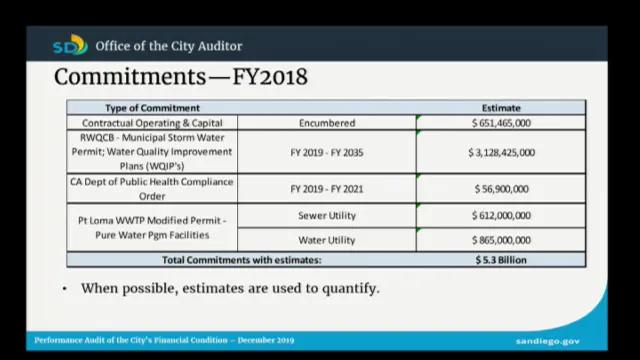
Public Meetings - San Diego, CaliforniaThe Audit Committee of the City of San Diego met on December 11, 2019, at 9:00 AM (rescheduled from 17:00 UTC) with a full quorum present: Chair Sherman, Councilmember Campbell, Mr. Spencer, Mr. Halpern, and Mr. Olivia. Also in attendance were staff from the Independent Budget Analyst (IBA), Finance Department, City Attorney's Office, and Office of the City Auditor. The committee approved the minutes from the October 30, 2019 meeting unanimously. Consent Calendar - Approval of committee actions from October 30, 2019: motion by Councilmember Campbell, second by Mr. Halpern, passed unanimously. Public Comments & Testimony - Non-agenda public comment: One speaker, Ms. Welch, voiced complaints about the city's audit practices, alleging that the city takes money from parks for the general fund, that performance audits are insufficient, and that the city should conduct financial audits. She also made unsubstantiated claims about bribery and mismanagement. No other public comments were made on non-agenda items. - Public comment on stormwater funding strategy: Matt O'Malley (San Diego Coastkeeper) expressed support for the stormwater funding strategy but raised concerns about the timeline, noting that a public vote (possibly in 2022) would require faster groundwork. He commended the stormwater division for engaging consultants who helped pass Measure W in Los Angeles and urged the committee to hold the division accountable. Discussion Items City Auditor's Monthly Activity Report and Scope Limitation Issue - Report: Interim City Auditor Kyle Elser presented the monthly activity report, noting two audit products issued since the last meeting: an IT audit of network perimeter controls (confidential) and the fiscal sustainability and financial condition audit (presented later). Four audits are in the report writing stage, including risk management public liability, development services charges, strategic human capital management, and neighborhood services homelessness. One audit is in fieldwork (police crime data), and one in planning (IT encryption). The office has issued four reports and two hotline investigation reports in FY2020, containing 29 recommendations. A peer review by the Association of Local Government Auditors is scheduled to begin December 16, 2019. - Scope Limitation: Andy Hanell (Interim Assistant City Auditor) reported that the public liability audit encountered a scope limitation due to the City Attorney's Office (CAO) refusing to provide certain documents, citing attorney-client privilege and work product protection. Despite eight months of negotiation, the CAO would not share a tracking spreadsheet of corrective measures compiled by Risk Management. The audit team reviewed 362 closed claims files but could not answer one audit objective: whether Risk Management adequately coordinates with departments to implement corrective actions. The CAO offered alternatives (e.g., hiring a retired employee paid by the auditor, redacting documents), but these were not mutually agreeable. The auditors will issue a recommendation to create a more transparent tracking system. - Discussion: City Attorney Mara Elliott explained that the CAO has an ethical duty to protect privileged information, and that releasing it could waive privilege and harm the city in litigation. She noted that the state bar advised against disclosure. Committee members Mr. Spencer, Councilmember Campbell, and Mr. Halpern questioned the scope of the privilege and suggested seeking independent legal counsel for the auditor. The committee discussed the possibility of separating Risk Management's tracking from privileged legal files. The city attorney noted that the spreadsheet is of limited value since it starts in 2019, while the audit covers 2016-2018. The auditors confirmed they could not resolve the dispute without a second opinion, and the committee agreed that the scope limitation, while justified, should be reported. Stormwater Division Funding Strategy Update - Deputy Director Drew Kleiss and Strategic Program Manager Alejandra Gavaldone presented an update on Audit Recommendation 5 (long-term stormwater funding strategy). The division provides water quality, flood risk management, habitat restoration, and education services, managing over 950 miles of storm drain, 40,000 structures, 62 miles of channels, and 14 pump stations. The city is addressing 72 polluted water bodies. The funding strategy, to be completed by summer 2020, will update the asset management plan, evaluate funding options, and incorporate operational efficiencies. A public survey was completed in fall 2019, and a second survey is planned for winter 2019-2020. The strategy will be presented to City Council in January 2021. - Discussion: Councilmember Campbell noted that San Diego residents pay only $0.95 per month for stormwater, compared to $11.35 in Sacramento, and that the city has a $700 million backlog. She emphasized the need to capture stormwater for reuse. Mr. Halpern asked about litigation risk if remediation is delayed; Kleiss confirmed regulatory compliance risk. The committee acknowledged the challenge of regulatory permits and costs. Performance Audit of City's Financial Condition (FY2017-2018) - Principal Performance Auditor Chris Kime and Performance Auditor Rod Greek presented an audit of the city's financial condition covering 2009-2018, updating previous reports. The audit uses 10 financial ratios compared to six benchmark cities (Los Angeles, Seattle, San Jose, Phoenix, Austin, San Antonio). San Diego has ranked among the best for seven years, with a score of 12 in FY2018 (down from 16 due to one-point drops in four ratios). Key concerns: financial performance ratio (revenues fell short of expenses by $97 million in FY2018, primarily due to OPEB restatement), governmental activities revenues ratio (reliance on tax support increased from 59% in FY2015 to 69% in FY2018), and net change in capital assets (San Diego ranked fourth in FY2018, but historically underperforms). The report also includes pension/OPEB data and contingent liabilities (e.g., Pure Water program, litigation). The committee accepted the report and forwarded it to City Council unanimously. Office of the City Auditor FY2021 Proposed Budget - Deputy City Auditor Daniel Knighton presented the proposed budget, which does not request new positions or increases. The FY2020 adopted budget is $4 million (22 FTEs). Due to a projected $83.7 million general fund shortfall, the administration may request budget reductions. The auditor’s office offered a voluntary reduction of $10,000 from its contracts budget for specialized consultants, but recommends no cuts to the FY2020 approved budget, as further reductions would impact operations (e.g., training, consultant support). The committee unanimously voted to recommend to City Council that the auditor’s budget remain unchanged from FY2020. Key Outcomes - Motion to accept and forward the financial condition audit to City Council: Passed unanimously (motion by Mr. Valdivia, second by Mr. Halpern). - Motion to recommend no change to the FY2021 City Auditor budget: Passed unanimously (motion by Chair Sherman, second by Councilmember Campbell). - Scope limitation noted: The committee acknowledged the dispute between the auditor and city attorney, but no formal resolution was reached. The matter will be addressed in the final audit report. - Next meeting: Scheduled for January 22, 2020, at 9:00 AM.
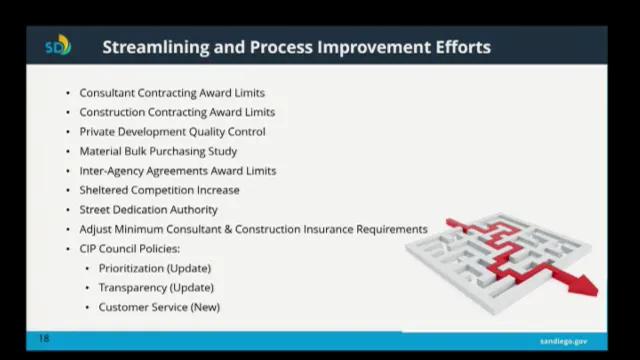
On Wednesday, December 11, 2019, the Active Transportation Infrastructure Committee met to discuss sidewalk repair programs, the Mobility Action Plan, and the fiscal year 2019 Capital Improvement Program status. The meeting was chaired by Councilmember Kersey, with Vice Chair Ward and Councilmember Kate present; Councilmember Moreno was absent. The committee also recognized Lee Friedman's last meeting as mayoral representative. Consent Calendar - The committee adopted the minutes from the November 20, 2019 meeting unanimously. - Two consent items were forwarded to the full City Council. For item 1, the staff noted that only two of three proposed actions required council action; the third (sequel determination) was previously resolved in August and was removed from the staff report. Public Comments & Testimony - Martha Welch spoke against the consent agenda and sidewalk consultant contracts, alleging corruption, lack of city employees, and failure to address potholes and road conditions. She also criticized the Point Loma wastewater treatment plant and claimed the city operates illegally. - Nikayla Jefferson urged the committee to declare a climate emergency, citing the urgency of reducing carbon emissions within eight years and noting that 62 other U.S. local governments have already done so. She emphasized the threat to public health, coastlines, and forests. - Sophie Wolfram and Andy Hanshaw (Mobility Board) presented a joint statement recommending that the Mobility Action Plan (MAP) clarify phase structure, include specific CAP mode share and VMT reduction targets, integrate the Bicycle Master Plan's strategic implementation plan, track mode share, commit to a Vision Zero action plan, define "communities of concern," prevent displacement, fund education programs, and remove "innovation and technology" as a standalone principle to avoid prioritizing innovation over equity and safety. Discussion Items - Sidewalk Program Update (Item 3): Staff presented the status of the citywide sidewalk repair program. Since the 2015 assessment, 27,000 repairs have been completed, with 11,000 more funded. An estimated 81,000 locations remain, with a total repair/replacement cost of $90–$100 million. Options to accelerate work include expanding the slicing contract (currently $625,000/year, covering 8,500 repairs), in-sourcing slicing work (potentially cost-saving but requiring new hires), increasing the 50/50 cost-share program (currently $300,000/year, serving 40–50 homeowners, with 230 on a waiting list), and reducing sidewalk permit fees (currently $2,000, with $800–$850 for inspection). Chair Kersey noted that the issue is primarily budgetary and committed to including sidewalk funding in his budget priority memo. Vice Chair Ward supported exploring property tax assessment options for homeowners and praised the comparison of in-house vs. contract costs. Councilmember Kate asked about the replacement cost breakdown ($95 million of the $100 million for replacement) and the timeline for the 230 waiting list homeowners (estimated 130 per year with a dedicated crew). No action was taken; the item was informational. - Mobility Action Plan (MAP) Status Update (Item 4): Staff presented the MAP, which consolidates transportation policies (General Plan, Climate Action Plan, bicycle/pedestrian master plans, Vision Zero) into a vision document with 24 goals and 31 actions organized around four principles: connected communities, safety, health/climate, and innovation. The next phase (MAP 2.0) will focus on integrating priorities into asset management and CIP project selection. Vice Chair Ward asked about Vision Zero and Phase 2 timelines; staff stated a comprehensive Vision Zero strategic plan is expected in 2020 and Phase 2 will begin in FY21. Councilmember Kate raised concerns about prioritizing communities of concern over other areas with high potential for mode shift (e.g., Mira Mesa, Miramar), noting that such areas are often overlooked. Chair Kersey requested a list of CIP projects supporting the MAP. The item was informational. - FY19 Year-End State of the CIP Report (Item 5): Staff presented the annual CIP report, covering fiscal year 2019 (July 2018–June 2019). The adopted CIP budget was $558 million, later increased to $706 million, with $582 million expended. Key highlights: 959 active projects, completion of the Miramar clear well (first of two) and West Mission Bay Bridge trestle, 31 of 50 parks completed under the mayor's pledge, and 1,300 miles of road repaving (exceeding the 1,000-mile goal). The committee noted a 17–19% vacancy rate, difficulty retaining engineers, and rising construction costs (e.g., building costs rose from $135 to $210 per square foot). Staff discussed regional competition for talent and a planned apprenticeship program. Vice Chair Ward asked about a customer service council policy, which staff said will be presented in January 2020. Councilmember Kate questioned the quality of consultant deliverables and the status of the Gold Coast Drive project (design to be completed by July 2020, with construction funding uncertain). The item was informational. Key Outcomes - The committee unanimously approved the November 20 meeting minutes. - Consent agenda items 1 and 2 were forwarded to the full City Council (with the third action of item 1 removed). - No formal votes were taken on informational items, but the committee provided direction to staff on sidewalk repair priorities, MAP refinements, and CIP staffing challenges. - The committee's next meeting is scheduled for January 29, 2020.
The San Diego City Council Land Use and Housing Committee convened on December 5, 2019, chaired by Councilmember Moreno, with Councilmembers Ward, Campbell, and Sherman present. The meeting approved the previous record of action, passed a consent agenda, and focused on two major agenda items: reforms to Community Planning Group (CPG) policy (Council Policy 600-24) and the Complete Communities Housing Solutions Initiative. Extensive public testimony was heard on both items, and the committee took multiple votes, ultimately approving a package of CPG reforms while continuing discussions on select provisions. Consent Calendar - The consent agenda was approved unanimously, including two items: (1) grant of slope easement to the San Diego County Water Authority in Mission Trails Regional Park, and (2) grant of private driveway access easement to Frank O. Herman Trust across city-owned property at 12144 Proctor Valley Road. Public Comments & Testimony Non-Agenda Public Comment - Ellen Stone, chair of the San Diego chapter of the American Tiny House Association, expressed support for the committee's prior approval of a municipal code amendment permitting movable tiny homes as a naturally occurring affordable housing option. She requested an update on the timeline and offered technical assistance. - Mo Rosenberg, a land use consultant, criticized the lack of timeliness in the community planning process (e.g., Uptown planning took 8 years) and urged a temporary workable solution for applications that meet city and community needs. Item 3: Community Planning Group Reforms Twenty-three public speakers addressed the committee. The majority supported the task force recommendations; key speakers included: - Barbara Torres (Claremont resident, CPG member): Supported reforms, stating her CPG lacked diversity and had a majority of homeowners and retirees, and that the current process maintains the status quo. - Marissa Tucker (North Park Planning Committee, renter): Supported all recommendations, arguing renters are underrepresented despite being 57% of county households and bearing the brunt of the housing crisis. She specifically supported a renter category. - Patrick Santana (Uptown Planners member): Shared the story of Oscar, a Latino renter who was blocked from running because he had only signed in at two prior meetings instead of three, highlighting exclusionary rules. He noted Uptown’s CPG is 100% white while the community is 25% people of color, and only 1 of 17 members is a renter. - Wally Wolfeck (chair of CPC): Asked the committee to consider CPC’s column A recommendations, noting that many reforms are already in process, and warned against a one-size-fits-all approach. - Jim Barrows (Normal Heights CPG): Spoke against several recommendations (5, 9, 20, 21, 24, 25, 27), citing burdens on volunteers and questioning the city’s authority to collect religious demographic data. - Other supporters included representatives from Housing You Matters, California YIMBY, the San Diego Regional Chamber of Commerce, and developers who emphasized the need for transparency and training. Item 4: Complete Communities Housing Solutions Initiative - John Seymour (National Community Renaissance): Opposed the requirement that market rate developers build affordable units on-site rather than paying the in-lieu fee. He argued this would prevent affordable housing developers from leveraging state funds (e.g., IIG, TOD grants) to produce more units through fee use. - Janet Temple registered support in favor without speaking. Discussion Items Item 3: Revision to Council Policy 600-24 – Community Planning Group Reforms Staff and task force members presented a menu of 33 recommendations derived from the City Auditor, Grand Jury, and Democracy and Planning reports. The task force met for two months, and the CPC supported 10 recommendations as is, 18 with modifications, and rejected five. Key discussion points included: - Recommendation 9 (recording meetings): Councilmember Sherman advocated for 9B (mandatory video/audio recording of land use items); Councilmembers Campbell and Ward supported 9A (relying on written minutes). No second was received for 9B, effectively killing it. - Recommendation 10 (EIR comments): Sherman moved 10B, requiring CPGs to submit comments before the public review period closes. - Recommendation 15 (renter seat): Sherman proposed 15C, defining a distinct renter category and setting a minimum of one seat. - Recommendation 19 (disbandment/consolidation): Councilmember Campbell offered a substitute motion to designate failing CPGs as “inactive” rather than disbanding, which passed unanimously. - Recommendation 21 (term limits): Sherman moved 21B, requiring a two-year wait before termed-out members can run again. The motion carried (Sherman and Campbell in favor; Ward opposed). - Recommendation 27 (Form 700 filings): Ward moved to continue the item for city attorney consultation with the FPPC (option 27A), which passed unanimously. - The main motion (excluding 9B, 10B, 15C, 19B, 21B, 27B, 29B) was approved unanimously. Item 4: Complete Communities Housing Solutions Initiative Planning Director Mike Hanson and staff presented the draft program, designed to lift regulatory barriers and incentivize housing near transit. Key elements: - Requirements: Located in transit priority areas (TPAs) with multifamily zoning; affordable housing exceeding inclusionary requirements by 10% for households up to 120% AMI (no in-lieu fee option); replacement of existing affordable units; neighborhood-serving amenities (fee or on-site); and design standards for buildings over 90 feet. - Incentives: Ministerial permit processing, increased floor area ratio (FAR) up to 8.0 in urban areas and no limit downtown, FAR-based height, affordable housing waivers, and reduced development impact fees (based on square footage, not unit count). - Councilmembers Campbell and Sherman expressed support, particularly for fee restructuring and the flexibility to build community amenities like undergrounding utilities and storm channel improvements. The item was informational; no vote was taken. Key Outcomes - CPG Reforms Package: The committee approved a comprehensive motion (by Sherman, seconded by Ward) that adopted most recommendations (1A, 2A, 3A, 4A, 5A, 6A, 7A, 8A, 11B, 12A, 13B, 14A, 16B, 17A, 18A, 22A, 23B, 24A, 25B with added ECAL training, 26A with mandatory training, 27B? Actually 27A was separate, 28A, 30B, 31A, 32A, 33A) and then separately addressed items 9, 10, 15, 19, 21, 27, and 29. (Note: The motion text is complex; see transcript for exact list.) - Item 27 (Form 700): Motion by Ward to have city attorney consult FPPC (27A) passed unanimously. - Item 9 (taping): No motion passed; effectively rejected in favor of written minutes. - Item 19 (failing CPGs): Motion by Campbell to designate inactive status (rather than disbandment) passed unanimously. - Item 21 (term limit waiting period): Motion by Sherman for a two-year cooling-off period passed (2-1, with Ward opposing). - Item 4: No action required; staff will continue development and bring ordinance to future hearings. Overall, the meeting advanced significant policy changes to increase transparency and inclusivity in community planning while setting the stage for a major housing incentive program.
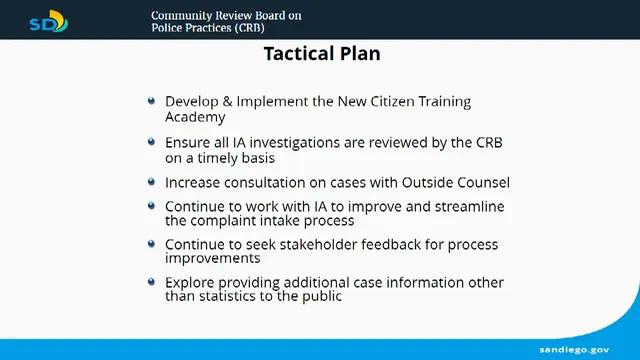
The Public Safety and Livable Neighborhoods Committee held its final meeting of the year on December 3, 2019, at a community location in Southeastern San Diego. The meeting covered multiple agenda items including responses to community recommendations on policing, the annual report of the Community Review Board on police practices, and an update from the Commission on Gang Prevention and Intervention. Significant public testimony focused on banning flavored tobacco products, police accountability, and community safety concerns.
The Active Transportation Infrastructure Committee met on Wednesday, November 20, 2019, with Vice Chair Ward and Councilmembers Kate and Moreno present. The committee addressed non-agenda public comments, consent calendar items, and three discussion items: the East Village Green Phase One project, Children's Park improvements, and enhancements to the shared mobility device (SMD) ordinance. Consent Calendar - Four items were approved unanimously. Item 2 (Maverick Ranch public facilities financing plan update) was highlighted for community support. Item 3 (ratification of twelve storm drain emergency contracts) drew a comment from Councilmember Moreno, who urged identifying new stormwater infrastructure funding and suggested considering an update to the stormwater fee. Public Comments & Testimony - Non-agenda speakers: Andy Hanshaw (San Diego County Bicycle Coalition) reported on the eighth open street event held October 27, 2019, emphasizing community engagement and business benefits. Robert Bleck (retired plumber, Local 230) alleged waste, fraud, and abuse in city sewer relining, claiming perfectly functioning pipes were replaced with inferior products; he called for an independent auditor and dismissal of undergrounding department engineers. Nancy Cole and others submitted written support. - East Village Green: Organized presentation by Marshall Anderson (Downtown San Diego Partnership), Diane Peabody Straw (East Village Association), and Jenner Smith (Carlton Management) expressed strong support and urged timely approval to avoid cost increases. Additional speakers (e.g., Joyce Añata, Sophie Barnhorst) filed written support. - Children's Park: Joy Sunyata spoke in favor, noting her 600+ visits and participation in planning workshops; other residents filed written support. - Shared mobility device regulations: Multiple operators and stakeholders testified: - Alex April (Spin) supported proposed changes, recommended limiting devices per corral to five and establishing more corrals. - Tim Harder (Bird) reported 38% of riders use scooters as a car alternative, but raised concerns about impound costs ($5,000/week), geospeed restrictions, and lack of clear rules; requested removal of speed restrictions on certain roads, expedited corral deployment, and three-hour notice before impound. - Marlo Sandler (Lyft) supported age verification via ID scan, called for a dynamic cap similar to Santa Monica, Denver, and DC, and opposed 3-mph speed zones as unsafe. - Zach Williams (Jump, which ceased city operations) urged a performance-based dynamic cap to incentivize compliance. - Kimia Tolebian and Carla Owane (Lime) asked for clarity on impound definitions, one authorized towing vendor, and a dynamic cap (max 2,000 per operator) with a 90-day review. - Opponents: Jonathan Freeman advocated for a citywide corrals-only policy and a curfew after dark, citing accident data from a public records request (2017-2019). Janet Rogers highlighted state law violations (e.g., riding on illegal roads, unlicensed riders) and urged stronger enforcement. Matthew Gardner (Mission Beach Town Council) requested uniform parking rules, license plates for enforcement, and better speed regulation. - Supporters: Andy Hanshaw (San Diego County Bicycle Coalition) emphasized safety infrastructure; Sophie Barnhorst (San Diego Regional Chamber) recommended additional corrals and sequestering permit fees for safety; Joyce Añata urged collaboration on safety. Discussion Items East Village Green Phase One - Staff (Christina Bibler, Brad Richter) presented the proposed 2-acre park with a central lawn, performance pavilion, community center, children's play area, dog parks, vendor buildings, and 185-space underground parking. Funding sources include downtown development impact fees, redevelopment bonds, parking meter funds, parking garage funds, and a SANDAG grant. Schedule: return to council December 2019, bid in March 2020, construction May-June 2020, opening summer 2022. The city attorney noted insufficient time to review contract authority. Vice Chair Ward moved to return the item to staff for legal corrections and request council docketing for December 17. Motion seconded by Councilmember Moreno and passed unanimously. Children's Park - Staff (Brad Richter) described a $8 million enhancement (hard costs $6.6 million) including a children's play area, dog run, vendor building, picnic area, adult exercise equipment, and pond walkway. Funding from downtown development impact fees and floor area ratio bonus payments. Schedule: council December 2019, construction 2020-2021. Same procedural motion by Vice Chair Ward (seconded by Councilmember Kate) passed unanimously. Shared Mobility Device Regulation Enhancements - Lee Friedman (Mayor's office) proposed: a fine structure ($250-$1,000), rider curfew (12 a.m. – 5 a.m.), ID scanning for age verification, limit of one device per ID, administrative guidance for permits, elimination of temporary fleet increases, authority to reduce fleets for public safety, and requirement for geofencing when technology allows. Equity provisions include reduced fees, cash payment options, and advertising. Committee discussion: - Councilmember Kate moved staff's recommendation with amendments: define public safety concerns in §83.0312, explore a single point of contact for operators, ensure three-hour notice before impound, and provide a geofencing update to council. - Vice Chair Ward seconded and added: allow staff flexibility on curfew hours, analyze accident data before/after slow zones, and refine geofencing (e.g., Balboa Park, J Street bike lane). He also supported exploring a dynamic cap. - Chair Kersey requested: posting signage on scooter rules in high-traffic areas, expanding enforcement to parking enforcement officers and park rangers, and a Get It Done app update (separate scooter reporting option by January/February 2020; full routing to Environmental Services by summer 2020). - The motion carried unanimously. Key Outcomes - East Village Green: Returned to staff for contract corrections; requested council docket for December 17, 2019. - Children's Park: Same procedural outcome. - Shared mobility ordinance: Staff directed to prepare an amended ordinance consistent with committee direction, subject to legal review, for full council consideration. Specific directives include: defining public safety concerns, establishing a single operator point of contact, preserving three-hour impound notice, improving geofencing, and considering dynamic caps. A Get It Done scooter reporting category will be added by early 2020.
The Development and Intergovernmental Relations Committee of the San Diego City Council met on November 14, 2019, to discuss four agenda items including a memorandum of agreement with the county for public health services, updates to the business incentive program, the convention center's annual performance, and a cannabis equity study. The meeting included public testimony and informational presentations, with only the first item requiring a vote. Consent Calendar - Approval of Minutes: The committee unanimously approved the minutes from the previous meeting. Public Comments & Testimony - Non-Agenda Public Comment: Martha Welch spoke for two minutes, alleging that the city takes bribes, lacks financial audits, and misleads the public. She also criticized the county for mismanagement and claimed to have worked with the FBI. - Item 4 (Cannabis Equity Study): - Scott Chipman opposed using tax money for cannabis business development, stating the drug is harmful and citing health risks. - Kathleen Lippitt argued that grants for marijuana businesses would exploit low-income communities and that statistical disparities do not prove discrimination. - Becky Rapp, a parent, urged the committee to focus on youth health services and job training rather than marijuana businesses. - Sapphire Blackwood shared her brother’s story, advocating for social equity and opportunities for those impacted by the war on drugs. - Barry Harris Jr., president of Pavin Gray Futures, supported equity programs and noted that the cannabis industry currently favors wealthy white men. Discussion Items - Item 1: Memorandum of Agreement with County for Public Health and Environmental Services – Robert Vachy, Deputy Chief Operating Officer, presented the agreement. It updates communication protocols and service responsibilities between the city and county, superseding agreements from 1953 and 1977. The county will continue to provide services like disease control, food safety, and vector control. Vice Chair Montgomery raised concerns about a methadone clinic in her district, and the city attorney noted the need to align outdated municipal codes. The item passed unanimously. - Item 2: Business Incentive Program Update – Lydia Moreno and Elizabeth Studebaker provided an informational update on Council Policy 900-12, approved in 2018. The program targets base-sector firms that create or retain middle-income jobs or invest $5 million. Outreach included a website, mailings to 64,000 businesses, and presentations. Of 52 applicants, most did not meet the base-sector definition. No action required. - Item 3: San Diego Convention Center Corporation FY2019 Year-End Sales and Marketing Update – CEO Rip Rippeto, Board Chair Zima Jacobson, and Joe Tursey of the Tourism Authority reported record results: 143 events, $1.3 billion economic impact, $26.2 million in transient occupancy taxes, and 863,000 attendees. Occupancy reached 79.3% (exhibit hall 83.2%), far above the national average. The center generated $45 million in revenue, returning $1.80 for every dollar of city investment. Lost business due to space constraints remained high at 64%. Conventions were booked as far as 2035. The presentation emphasized the need for expansion to retain large events. No action taken. - Item 4: Mid City CAN Cannabis Equity Study – Diana Ross and Imani Marshall presented findings on cannabis-related arrests from 2012–2017. There were 5,097 arrests, with Black residents arrested at six times the rate of whites, Pacific Islanders at four times, and Latinos at double. Youth arrest rates were six times higher than adult rates. The study recommended prioritizing equity in licensing and returning tax revenues to impacted communities via nonprofits. A poll showed 85% of San Diego voters support such reinvestment. Councilmember Kirsey noted that the city is missing state grant funds, and Chair Ward stated that a formal equity program is being developed. Key Outcomes - Item 1 was approved unanimously via motion by Vice Chair Montgomery and seconded by Councilmember Bree. - Items 2, 3, and 4 were informational only and required no action. - Chair Ward confirmed that the committee would continue working on a cannabis equity program for San Diego, with language expected in early 2020.
The Budget and Government Efficiency Committee met on November 13, 2019, to review the FY 2020 first quarter budget monitoring report, the five-year financial outlook, and several contract and policy items. The committee approved all action items unanimously. The meeting was chaired by Councilmember Bree, with Vice Chair Kate, Councilmembers Montgomery and Moreno present. Councilmember Montgomery arrived after the meeting began. The committee approved the October 16, 2019 committee record unanimously. Consent Calendar - No consent calendar items were on the agenda. Public Comments & Testimony - Rich Ryle, a public speaker in opposition to the budget monitoring report, argued that the city must address pension liabilities for employees hired since 2012. He proposed a 10% salary cut for city hall officials, a 100% salary increase for the mayor and city council next year (as a historical reference), and selling city-owned land or negotiating the stadium sale to pay the pension fund. - Beth Cransberger spoke in support of the disparity study, noting the last one was in 1993 and that the study is critical for assessing meaningful access to city contracting for all San Diegans. She thanked staff and the CEOC for their work. - Dr. Whitesman of the San Diego Humane Society spoke in support of the animal services contract amendment, praising the partnership, the reinstitution of the spay/neuter voucher program, and continued options for a South Bay shelter facility. - Durrell Sackett of the Spay Neuter Action Project (SNAP) expressed support for the spay/neuter voucher program, noting its past success and financial importance for low-cost surgeries. - Masada Dizenhouse of San Diego 350 spoke in favor of changing the city's investment policy to divest from fossil fuels, firearms illegal in California, private prisons, and immigration detention centers, citing climate risks and precedent of other cities. - Laura Walsh of the Surfrider Foundation also spoke in favor of divestment, stating that a draft divestment strategy affecting about $30 million in city bonds had been developed with Councilmember Ward's office and that divestment can be financially sound. - Shauna Patton of CGI spoke in support of the CGI contract amendment, highlighting savings of almost $9 million, local employment, volunteer contributions, and small business partnerships. Discussion Items - FY 2020 First Quarter Budget Monitoring Report: Presented by Sarah Mann (Assistant Director, Department of Finance), Adam Jones, and Jose Mendoza. Major general fund revenues are projected to exceed budget by $5 million, driven by property tax and sales tax each coming in $2.8 million over budget. Fire rescue is projected to exceed overtime budget by $4.9 million, and police by $1.5 million. The report included a requested appropriation increase for the seized asset fund for police vehicles. The IBA did not plan a separate report but would incorporate revenue issues into its five-year outlook. Councilmember Montgomery asked about the joint violence reduction plan; Chief Neslite stated it was confidential but could be discussed privately, and noted violent crime increased citywide. Montgomery also asked about the navigation center; Keely Halsey said tenant improvements are scheduled to be done before Thanksgiving, with staff possibly starting the week before Thanksgiving or December 3. Councilmember Moreno noted the fund balance is projected to be $22.1 million in the black and reserves at 16.5%. Vice Chair Kate clarified a change in the access equity piece. The committee passed the recommended action unanimously. - FY 2021-2025 Five-Year Financial Outlook: Presented by Tracy McCraner (Finance Director/Comptroller), Adrian Delreal, and Nicole Chalfont. The outlook projects a $21.15 million shortfall in FY 2021, growing to $84 million after critical strategic expenditures. It includes $62 million and 161 FTEs for critical strategic expenditures, with the largest being $18.8 million for homeless services. Potential mitigation actions include use of homeless housing assistance funds ($20 million), excess equity ($22 million), and departmental budget reductions. The outlook assumes no MOU amendments, no changes to ADC, no sale of stadium site, and no recession. A 1% salary increase equals approximately $6 million. The IBA is reviewing the report and will issue its report the week of December 2. Councilmember Moreno asked the IBA to include a recession analysis. Vice Chair Kate asked about a 1% across-the-board cut ($15 million) and cumulative cuts from prior years ($45 million). Total departmental requests were $105 million, with $62 million included. Kate asked about fire staffing, police overtime for clean SD and neighborhood policing, and parks facility costs. Chair Bree gave a statement criticizing the mayor's fiscal leadership, citing the Ash Street asbestos issue, a no-bid contract, rape kit testing, trash subsidies, and called for transparency and tough decisions. This item was information only; no vote. - Disparity Study Contract with BBC Research and Consulting: Presented by Christina Pratt (Purchasing & Contracting Director) and Christian Silver. BBC scored highest of three proposals; contract amount not to exceed $477,000 for a five-year term. The study will be legally defensible per Prop 209 and includes participation of three MWBE subcontractors. IBA noted ongoing costs if the study leads to program changes. Councilmember Montgomery moved the item, noting historical participation of minority/women-owned firms below 1%. Councilmember Moreno seconded and expressed support. The motion passed unanimously. - Second Amendment to Animal Services Agreement with San Diego Humane Society: Presented by Christiana Gauger with Christina Peralta and Angela Rico. The amendment funds the remaining 3.5 years of the contract, includes a spay/neuter voucher program, and continues review of a South Bay shelter facility. The fee schedule adjustment brings fees in line with other jurisdictions; the Humane Society can waive fees for adoptions. Over 10,000 animals were adopted, 18,447 sheltered, and 14,893 calls for service (with corrections). Live release rate was 91% against an 85% target. Public speakers supported. Councilmember Moreno asked about South Bay shelter review and spay/neuter voucher details. She moved the item, seconded by Vice Chair Kate; passed unanimously. - San Diego Junior Lifeguard Program Fee Increase: Presented by Assistant Chief Chris Weber, Lifeguard Chief James Gartland, and Program Coordinator James Murphy. Proposed tuition increase from $525 to $573 effective July 1, 2019, and revised refund policy to prevent empty seats. The program offers 60 scholarships, and the Bridges to the Beach outreach brings about 1,500 kids to the beach. Councilmember Moreno asked about demographic breakdown; staff said they don't currently track but focus on diversity through scholarships and outreach. Councilmember Montgomery asked about scholarship awarding processes. Vice Chair Kate asked about IT capacity for registration; staff acknowledged past portal crashes and work with Active. The program is projected to become 100% cost recoverable with the increase. Motion by Councilmember Moreno, second by Montgomery; passed unanimously. - City Treasurer's Investment Policy and Delegation of Authority: Presented by Liz Cray (City Treasurer), Manny Labrinos, and Kent Morris. The pool had a market value of $2.15 billion and an annualized yield of 2.43% as of September 30, 2019. Proposed minor policy changes include removing the broker receipt form and the requirement for a single-A credit rating for broker-dealers, while maintaining the $100 million capital requirement. The Investment Advisory Committee unanimously approved the changes. Public speakers requested divestment from fossil fuels and other industries. Councilmember Montgomery asked about the broker-dealer change; staff explained DVP settlement mitigates risk. Motion by Montgomery, second by Moreno; passed unanimously. - Second Amendment to Benefits Consulting Contract with Buck Global LLC: Presented by Julio Canisal (Risk Management Director) and Gwanel Allen. The amendment provides additional funding of $150,000 for actuarial consulting services to evaluate pension impacts during labor negotiations, bringing the total not to exceed to approximately $1.8 million. IBA supported. Motion by Moreno, second by Vice Chair Kate; passed unanimously. - Second Amendment to Master Services Agreement with CGI Technologies: Presented by Jonathan Banke (CIO) and Sean Kilpak. The amendment increases the not-to-exceed by $9.2 million to $153.4 million to cover the 12-month disentanglement period while the city completes an RFP for IT services. CGI employs 54 local staff and provides application development for over 300 applications. IBA noted the hourly rate of $64 is below market but future contracts may cost more. Public speaker Shauna Patton supported. Councilmember Montgomery moved the item after noting underrepresentations in Latino and female categories but that EOC reported improvements. Motion seconded by Vice Chair Kate; passed unanimously. - Third Amendment to NASPO Value Point Agreement with Verizon Wireless: Presented by Jonathan Banke and Denise Meckinally. The extension is needed because Verizon was not operationally ready to migrate to a new NASPO contract; the state of Nevada extended the existing contract. The city requests $11.65 million through December 2020 for cellular services. The city has nearly 6,000 lines with Verizon, which accounts for 72% of all cellular spend. IBA noted the city will reevaluate options next time. No public speakers. Motion by Chair Bree, second by Vice Chair Kate; passed unanimously. Key Outcomes - All action items were approved unanimously by the committee. - The FY 2020 first quarter budget monitoring report was accepted with the recommended action. - The five-year financial outlook was received as information; IBA will issue a detailed report by the week of December 2, 2019. - The committee approved the disparity study contract with BBC for $477,000. - Approved the animal services contract amendment and fee schedule. - Approved the junior lifeguard fee increase and refund policy change. - Approved the investment policy with changes and delegated authority to the City Treasurer for one year. - Approved the Buck Global contract amendment for $150,000. - Approved the CGI contract amendment for $9.2 million. - Approved the Verizon NASPO contract amendment for $11.65 million. - The committee will reconvene for a special meeting on December 12, 2019 at 1 p.m.
The San Diego City Council Rules Committee convened on November 13, 2019, at approximately 10:00 AM, with Council President Pro Tempore Gomez presiding, joined by Councilmembers Ward and Cate, with Councilmember Khriskey joining later. Also present were Sharon Speedback (City Attorney's Office), SIO Crespo (Mayor's Office), Jeff Kawar (Independent Budget Analysts Office), and Haley Lesser (legislative assistant). The committee considered two major items: proposed amendments to governing laws regarding city boards and commissions, and a resolution of necessity for a proposed general obligation bond to finance affordable and permanent supportive housing on the November 3, 2020 municipal special election ballot. The meeting was noted as the last regularly scheduled Rules Committee meeting of 2019. Consent Calendar - The committee unanimously approved the record of action from the September 18, 2019 meeting, on a motion by Councilmember Ward, seconded by Council President Pro Tempore Gomez. No opposition was voiced. Public Comments & Testimony Item 2 — Boards and Commissions Amendments: - Mary Ann Ostman (Leadership Development Specialist, Mid City CAN) expressed support for implementing the auditor's recommendations and urged codifying the removal of background checks and credit checks so the changes become permanent. She also advocated for training in Brown Act and parliamentary procedures, dependent care services including child care, stipends, interpretation and translation services, transportation reimbursement, limiting simultaneous board service to one to two seats, and allowing all residents to serve regardless of citizenship status. - Ana Laura Martinez (Organizer and Leadership Development Coordinator, Center on Policy Initiatives, CPI) read a prepared statement on behalf of CPI, which runs the Boards and Commissions Leadership Institute (BCLI). She expressed concern that the amendments do not address significant barriers to participation. She stated that credit checks perpetuate racial inequality, citing a BCLI participant prevented from serving on a city board due to debt incurred in graduate school. She urged removing credit checks, codifying the removal of background checks, removing questions about citizenship, and creating a system to communicate with applicants about application status. - Maria Elena Morales (BCLI alumni; appointed to the California Advisory Committee of the U.S. Commission on Civil Rights) identified herself as a formerly incarcerated woman of color and stated her lived experiences matter for shaping policy. She urged the committee to codify the no-background-check policy so it does not change "at the whim of the next person in power," emphasizing that boards dealing with police misconduct and gang prevention are particularly important for formerly incarcerated people. - Dr. Yessica Diaz Roman described obstacles encountered over two years applying for a boards and commissions position, including unclear online application processes, lack of confirmation that applications were submitted successfully, and a need for more transparency and follow-up guidance. - Lorenza Rivera (recent graduate of Mid City CAN's Boards and Commissions Leadership Training Program) spoke about the importance of transparent processes to encourage civic engagement, stating she needs to be able to tell community members that their voices matter. - Maggie Ta (resident of Bankers Hill, 12-year San Diego resident) described being appointed to the Parks and Recreation Board in 2016 but failing the background check due to the credit check portion, which was triggered by her student debt. She called the practice "invasive, discriminatory, ageist, and elitist" and stated that it ensures only a particular class can serve on a board. She noted she now serves on a county board, which only required an application, resume, ethics certification, and bio. - Individuals registering support without speaking: John Brady, Anthony Pleva, and Mark Sheets. Item 1 — Housing Bond Resolution of Necessity: - Stephen Russell (Executive Director, San Diego Housing Federation) detailed the proposed $900 million bond, repaid through a property tax, which he described as the most broad-based way of sharing costs. He stated the action plan estimates that 90% of individuals and families identified in the 2019 point-in-time count need access to permanent housing options. He noted that 7 of the top 10 job categories being produced in the region over the next decade do not pay wages sufficient to rent a standard apartment. He explained that the ultimate cost would be $19 per $100,000 of assessed value, with a first-year cost of $2.87 per $100,000 if $150 million were issued initially, equating to approximately $17 per year for the median home valued at $597,000. He emphasized oversight through a citizens oversight committee, annual independent audits, and that each bond issuance would be a separate council decision. - Jim Silverwood (President and CEO, Affirmed Housing; board member of the 501c4 formed for the Affordable Housing Bond) noted that since the dissolution of redevelopment agencies in 2012, San Diego County has lost about $700 million in redevelopment funds, and the $900 million bond is an attempt to "catch up." - Debbie Fountain (Senior Program Manager, Corporation for Supportive Housing) expressed support, stating that solutions to homelessness must include housing with supportive services, and that higher densities and land use policies alone are insufficient without financial resources. - John Brady (Regional Task Force on the Homeless board member; Yigby Task Force) provided historical context, noting the U.S. had an excess of half a million public housing units in the 1970s and now faces a severe shortage. He cited vacation housing taking 10,000 units off the market in San Diego alone. He stated the bond could support approximately 2,500 units of supportive housing, 2,500 units of low-income housing, and 2,500 units of affordable housing. - Joe Barrett (HEAL — Homeless Experience Advocacy and Leadership Network, sponsored by the San Diego Housing Federation) shared his personal experience of homelessness and expressed wholehearted support for the bond measure, stating the only way to effectively address homelessness is to build more affordable housing. - Rebecca Hickeld (San Diego LGBT Community Center) expressed support, noting the center is serving more people experiencing homelessness than ever before and that the city's action plan calls for more than 5,000 new homes for people who are homeless or at risk of being unhoused. - Daniela Ogden (Vice President of Communications, Advocacy, and Fund Development, Eden Housing) stated Eden has almost 600 homes in the San Ysidro area, has over 200,000 people on its waiting list, and is ready to build more, emphasizing that local support is needed to complement state investment. - Matthew Jumper (President of Interfaith Housing and President of the Board of the San Diego Housing Federation) called the bond "probably the best thing I've seen in the 28 years I've been doing this," emphasizing that local money can leverage billions of dollars in outside funding. - Bob Cummings (Chelsea, provider of affordable and permanent supportive housing) urged support, stating the homeless crisis cannot be solved by anything other than providing homes. - John Seymour (National Community Renaissance) stated the Housing Commission's Notice of Funding Availability, closing November 25th, will be "super oversubscribed," and that Northern California is outperforming San Diego in securing SB 1 and SB 2 funding. He noted his Encanto project in District 4 (66 units, approximately 60 units per acre) has 1,500 people on its waiting list and is already leased up. - Roberto Alcantar (Chicano Federation) referenced the organization's 50-year history, noting that historically the community had to build its own housing in Barrio Logan, and urged San Diego to "roll up its sleeves" and approve the resolution. - Ricardo Flores (Executive Director, LISC San Diego) compared the proposal to the convention center bond, stating the convention center proposal would build affordable housing in 20 to 30 years, and asked whether the council wants to solve the problem or allow another generation to solve it, noting that all money would go to affordable housing developers. - Ken Sauter (President and CEO, Wakeland Housing and Development Corporation) thanked Councilmember Ward for attending the grand opening of The Beacon, a 42-unit permanent supportive housing project, and noted a 53-unit permanent supportive housing project for seniors in Councilmember Cate's district that recently received a 9% tax credit allocation. He emphasized that permanent supportive housing requires gap financing and that a local funding source is the key to making projects happen. - Individuals registering support without speaking: Anthony Pleba, Mark Sheets, Sarah Jumper, and Sue Reynolds. Discussion Items Item 2: Potential Amendments to Governing Laws Regarding City Boards and Commissions Corinne Wilson (Communications Manager and Policy Advisor, Council President's Office) presented proposed amendments stemming from the June 2017 Office of the City Auditor performance audit, which made 14 recommendations. Key recommendations and proposed implementations discussed included: - Recommendation 7 (Brown Act training): Ensuring all board members view a training video within their first 30 days of service and again every two years, with an attestation. Draft language also includes training for staff liaisons and board members on records retention laws and the California Public Records Act, as noted by the City Attorney's Office. - Recommendation 12 (Annual reports): Each city board and commission would submit an annual report to the Office of Boards and Commissions in the fourth quarter of each calendar year, including mission and duties, summary of actions, number of meetings held and cancelled, quorum issues, vacancies, expired terms, concerns, and estimates of city staff hours and costs. The proposal also adds voluntary self-reported demographic data collection, and requires posting reports on the city website for public access. - Recommendation 14 (Formal review process): A formal review process for city advisory boards at least once every two years in February, considering reorganization, consolidation, membership requirement changes, sunsetting obsolete or redundant boards, and potential charter amendments for submission to voters. - Recommendation 11 (Reports on new boards): The mayor's office would develop a standard format for reports to the city council regarding new advisory boards prior to their establishment, including analysis of whether functions could be incorporated into existing boards and estimates of staff hours and costs. - Recommendation 5 (Vetting process documentation): Amendments to Council Policy 000-13 to formally document the vetting process for advisory board candidates, including responsibilities and timelines, and to address differences between mayoral and council nominee processes. Proposed additions include developing public documents explaining vetting steps and timelines, providing council offices with monthly nominee status updates, and creating a Brown Act-compliant process for council appointment when the mayor fails to appoint within 45 days following a vacancy (including a 10-day nomination period, IBA transmittal, and council docketing). Additional stakeholder concerns included codifying that resignations are sent to the clerk for processing, ensuring FPPC compliance, removing background checks and credit checks as participation barriers, addressing meeting times and locations as barriers, improving communication of board work to council offices and committees, and increasing diversity given that the same people are often appointed to multiple commissions. Joel Day (Executive Director, Office of Boards and Commissions) reported that many recommendations have already been administratively implemented, including department-wide Brown Act training, a standard annual report template, a new website (boards-commissions.sandiego.gov), and a new fillable online interest application. He noted that since July 2019, every applicant has received a personal email from his office. He stated that of 504 appointed positions, 242 are specific to council seats, and raised a reciprocity concern: if a council office does not provide a nominee within the 45-day window, the motion would remove the mayor's authority to make the appointment. He confirmed that background checks and credit checks have been administratively removed, except for secure facility access (e.g., the CRB). Councilmember Khriskey expressed frustration that there are too many boards and it is unclear what they do, requesting that each board submit an annual one-page summary distributed to committees of jurisdiction so council members can track their activities. He also questioned why nomination memos would go through the IBA rather than the clerk's office; Council President Gomez explained the IBA was chosen to ensure Brown Act compliance, as council members cannot communicate directly with each other on nominees, though the office was open to alternative approaches. Item 1: Resolution of Necessity for Proposed Ballot Measure (November 3, 2020 Election) Molly Chase (Chief of Staff, Councilmember Ward) presented the resolution of necessity, developed with the city attorney's office and the San Diego Housing Federation following the committee's July 31st direction. Key findings presented: - The January 2019 point-in-time count identified 5,082 homeless individuals within the city, including 572 chronically homeless individuals, representing 63% of the county's population experiencing homelessness. - The Community Action Plan on Homelessness calls for creating 5,416 permanent housing opportunities over the next 10 years and 767 diversion resources per year, at an estimated cost of $1.94 billion. - The 2018 housing inventory annual report found San Diego has 0.38 housing units per person, lower than comparable cities such as Denver (0.45) and Seattle (0.48). - San Diego has constructed only 10.2% of the units identified in its housing element for very low-income persons and only 15.7% of the units identified for low-income persons. The resolution of necessity provides the factual and legal justification for incurring bond debt and is the first of several steps. It does not include an ordinance for the ballot measure or commit the council to placing the measure on the ballot. Subsequent steps would include drafting ordinance language (by July 2020), a council vote requiring six votes, and a two-thirds voter approval. Councilmember Ward moved to adopt the resolution of necessity and forward it to the full city council, stating that six other counties in California have successfully passed similar measures with a two-thirds vote in recent election cycles. Councilmember Khriskey expressed concerns about per-unit costs, noting projects routinely come before the council at $400,000 to $500,000 per unit, and stated there is "frankly nothing affordable about that" when funded by taxpayers. He also expressed frustration that redevelopment was eliminated by Sacramento and that the state now asks for local tax matches. He stated he was a "reluctant no" on the item. Council President Gomez seconded the motion, thanked Councilmember Ward and the Housing Federation, and raised a question about whether funds could be used for preventing the loss of existing affordable units (preservation), which was confirmed as possible through acquisition and rehab percentages in the ordinance language. Gomez noted the need to address income inequality and expressed hope for discussing preservation details in future deliberations. Key Outcomes Item 2 — Boards and Commissions Amendments: The committee unanimously approved a motion directing the city attorney to analyze and draft language amending applicable municipal code sections and Council Policy 000-13, including: - Annual reporting to be heard by appropriate committees or the rules committee - Amending municipal code 22.5301C (Office of Boards and Commissions) to include a duty to develop and keep current public documents explaining nominee vetting steps and estimated timelines, distinguishing between council and mayor nominee processes - Duties to provide council offices with monthly updates regarding the status of their nominees - A Brown Act-compliant council appointment process for when the mayor has not appointed after 45 days following a vacancy, potentially including a 10-day nomination period, IBA transmittal, and council docketing - Codifying that resignations are sent to the clerk for processing and updating the register - Ensuring compliance with FPPC requirements for boards filing statements of economic interest - Codifying that background checks will not be required unless expressly required by governing law - Forwarding all amendments to the full city council for consideration Item 1 — Housing Bond Resolution: The committee approved the resolution of necessity and forwarded it to the full city council. Councilmember Khriskey expressed a "reluctant no" position during discussion, though the vote appeared to carry without recorded dissent. The next step is developing ordinance language for the ballot measure for the November 3, 2020 election.
The Environment Committee of the San Diego City Council met on November 7, 2019, at 9:00 AM. Chair Campbell presided, with Councilmembers Bree, Sherman, and Moreno present. The meeting began with adoption of the previous meeting's actions, followed by extensive public testimony on two primary topics: declaring a climate emergency and passing a right to rescue resolution for animals. The committee then approved a consent calendar and three discussion items unanimously, and received an informational update on recycling at city facilities. Public Comments & Testimony - Climate Emergency Declaration: Eight speakers urged the committee to recommend that the City Council declare a climate emergency. Speakers included Michael Brackney (Climate Mobilization / Extinction Rebellion / San Diego 350), Barbara Rose, Dr. Beth McNeil, Bud Titlow (environmental scientist), Carl Alpinger (President, North County Climate Change Alliance / Extinction Rebellion), Nancy Cassidy, Derek Cassidy (La Jolla resident), and Sophie Wolfram (Climate Action Campaign). They cited scientific warnings (over 11,000 scientists declaring a climate emergency), risks to property and insurance, the 1.5°C target, and the need for rapid implementation of the Climate Action Plan (e.g., bus-only lanes, protected bikeways, increased tree canopy, dense infill housing, and curbside composting). Several noted that over 1,000 jurisdictions worldwide and 50 U.S. cities (including Los Angeles, San Francisco, and New York) have already made such declarations. - Right to Rescue Resolution: Nine speakers requested the committee pass a resolution affirming the right to rescue animals from abuse, particularly on factory farms. Speakers included Cam Maita, Melanie (last name unclear), Stacy (spelling uncertain), Frankie Madison, Doreen Nasser, Rachel Hostler (North Park resident), Liz Jacobelli, and Shannon Sears. They argued that California Penal Code 597 already permits rescuing animals denied food, water, or medical attention, but that activists face felony charges for intervening. They called for an animal bill of rights, citing undercover investigations revealing cruelty at slaughterhouses and the discrepancy between protections for pets and livestock. - Other Public Comments: Three speakers addressed additional concerns: Terry Ann Skelly noted the persistent black market for marijuana despite legalization; Ann Fage (Chair, Community Forest Advisory Group) reported illegal tree topping at a parking lot on Montezuma Road and urged code enforcement for urban forestry; Kelly McCormick raised issues with marijuana manufacturing facilities dumping waste and the city's failure to analyze environmental impacts under CEQA. Consent Calendar - Item 1: Second amendment to agreement with Hawthorne Machinery for heavy-duty dozer equipment at Miramar Landfill. Approved unanimously. - Item 2: Resolution to increase expenditure authority for citywide refuse and recyclable services contract with Allied Waste Systems (Republic Services). Approved unanimously. Discussion Items - Item 3: Household Hazardous Waste Contract – Staff from Environmental Services Department (Mario Sierra, Joy Newman) presented a five-year contract with Clean Harbors Environmental Services, not to exceed $6 million, for managing household hazardous waste at Miramar Landfill and eight mobile collection events. In the past fiscal year, 4,590 households participated, diverting 69 tons. Councilmember Sherman inquired about advertising; staff noted postcards sent to 1 million households. The committee approved the contract unanimously. - Item 4: Landfill Gas System Operations – Staff (James Hay) requested a $2.5 million amendment to the contract with SCS Engineers for interim operation and maintenance of the landfill gas system at Miramar Landfill, bringing the total to $4.5 million. The extension is needed while a long-term operator is procured. The committee determined the activity was categorically exempt from CEQA and approved the amendment unanimously. - Item 5: Waste Carts and Recycling Containers – Staff (Michael Goudreau) presented a request to increase expenditure authority by $5.545 million for the cooperative procurement contract with Rarig Pacific for automated trash and recycling carts, extending through September 2021. Currently 690,000 containers are in use; 500,000 are over 10 years old and out of warranty. Councilmember Moreno raised concerns about bin quality (citing a 2017 Grand Jury report) and inequitable green waste pickup in neighborhoods like Logan Heights, Sherman Heights, and others. Staff responded that bin quality meets specifications and that the green waste program is not citywide. The committee approved the expenditure increase unanimously. - Item 6: Recycling at City Facilities Update – Staff (Barbara Lamb, Jennifer Hobbs) reported that city facilities achieved a 72% diversion rate in fiscal year 2019, exceeding the 50% goal. Departments under 50% (e.g., Fire, Parks & Recreation, Police) have made progress. Future plans include streamlining data reporting and continuing quarterly recycling liaison meetings. Sophie Wolfram (Climate Action Campaign) noted that citywide waste diversion remains flat at 64-66%, far short of the 2020 target of 75%. Staff announced that a Zero Waste 2.0 plan addressing these issues would be presented to the committee in January 2020. This item was informational only; no vote was taken. Key Outcomes - All consent and discussion items requiring action were approved unanimously. Specifically: - Consent items 1 and 2 approved. - Contract with Clean Harbors (Item 3) approved. - Amendment with SCS Engineers (Item 4) approved. - Expenditure increase with Rarig Pacific (Item 5) approved. - The committee received the recycling update (Item 6) and noted the upcoming Zero Waste 2.0 plan. - No votes were taken on climate emergency or right to rescue resolutions; the items were not on the agenda. Public testimony was heard but no action was scheduled. - The chair announced that no December 2019 meeting would be held, concluding the committee's meetings for the year. Note: The transcript also contains a brief opening statement by Lee Friedman (Strategic Energy Initiatives Manager, Mayor's Office) about recent initiatives, but the presentation was cut short due to the start of public testimony.