The Rules Committee of the San Diego City Council met on July 11, 2018, to consider a wide range of ballot measure proposals for the November 2018 ballot, as well as to receive updates on neighborhood policing, tobacco enforcement, and the Human Relations Commission. The meeting was chaired by Council President Myrtle Cole, with Vice Chair Mark Kersey, Pro Tem Barbara Bry, Councilmember Chris Ward, and Councilmember (first name not given) Kate present. The committee voted on several items, advancing most to the full City Council. Consent Calendar - The committee record of actions from June 13, 2018, was approved by unanimous consent. Public Comments & Testimony - John Stump spoke about the prior meeting and requested a motion to reconsider regarding equity in education for the 4th and 9th districts. - Martha Welch criticized franchise fees on gas and cable, arguing they are excessive and make bills higher in San Diego. - Francine Maxwell (4th district resident) expressed frustration that boards and commissions, especially the police relations committee, have not taken meaningful action on racial profiling recommendations. - Catherine Rhodes (civil engineer, Point Loma) raised concerns about the failure to confirm active faulting on the Mid Coast Trolley project and the lack of bathrooms at stations, as well as inadequate seismic investigations. Discussion Items Ballot Measure Proposals for November 2018 1. Subitem A – Housing Bond (Housing Federation) - Stephen Russell (SD Housing Federation) proposed a $900 million bond to produce 7,500 units of affordable housing for homeless, seniors, veterans, and low-wage families. He requested more time to work with the city attorney on details. - Public testimony: Overwhelmingly in favor; many speakers highlighted the homelessness crisis. - City attorney noted need for policy direction on use of funds and oversight. - Motion to advance to full council passed 3-2 (Bry, Ward, Cole in favor; Kersey, Kate opposed). 2. Subitem B – TOT Increase for Homelessness (Councilmember Alvarez) - Councilmember David Alvarez proposed a one-cent increase in the Transient Occupancy Tax (TOT) as a general tax, paired with an advisory measure to dedicate funds to homeless services and housing. The IBA estimated $130 million over five years. - Public testimony: Mixed but many supported; some concerns about fund diversion. - Motion to advance to full council passed 3-2 (Ward, Bry, Cole in favor; Kersey, Kate opposed). 3. Subitem C – Independent Commission on Police Practices (Women Occupy San Diego) - Andrea St. Julian (Earl B. Gilliam Bar Association) argued the current CRB lacks independence; the proposed charter amendment would create a commission with independent investigation and subpoena power. - Chief David Nislight and Police Officers Association President Jack Schaefer opposed, citing the existing CRB's effectiveness and cost concerns. - CRB member Torah Gentry spoke against the change, noting successful collaborative reforms. - Public testimony: Many spoke in favor, citing lack of community trust; some CRB members and the POA opposed. - Motion to advance to full council passed 3-2 (Cole, Bry, Ward in favor; Kersey, Kate opposed). 4. Subitem D – Renewable Energy Mandates (CLEAR) - Bill Powers proposed a charter amendment to require 50% local renewable energy by 2030 and limit franchise agreements to 10 years, with municipalization as a fallback. - City attorney outlined legal and financial concerns, including preemption by CPUC and unknown costs. - Public testimony: Supporters said it would give the city leverage in franchise negotiations; SDG&E opposed. - No motion was made; the item did not advance. 5. Subitem F – Mandatory Disclosure of Business Interests (Pro Tem Bry) - Proposal to amend Charter Section 225 to require disclosure of financial interests for city contractors. - Public testimony: One speaker supported transparency. - Motion to advance to full council passed unanimously. 6. Subitem H – School Board Election Process (Dr. Sharon Whitehurst-Payne) - Proposed term limits of three 4-year terms for San Diego Unified School Board members, with a lifetime ban. No change to at-large elections. - Public testimony: Some opposed, arguing for district-only elections and two-term limits as preferred by community surveys. - Motion to advance to full council passed 3-2 (Bry, Cole, Ward in favor; Kersey, Kate opposed). 7. Subitem E – Council Term Limits (Ward and Bry) - Clarified consecutive terms and lifetime ban for council members. - Motion to advance to full council passed unanimously. 8. Subitem I – Ethics Reform (Robert Odley) - Proposed ethics package including ending council voting on own pay, restricting gifts/honoraria, banning outside employment, and limiting lobbying. Vice Chair Kersey offered amendments to adjust salary phase-in and remove certain provisions. - Motion to advance with amendments passed 3-2 (Kersey, Ward, Bry in favor; Cole, Kate opposed). 9. Subitem J – Aquatic Safety Facility (Corey McClellan) - Proposed charter amendment to allow a junior lifeguard facility in Mission Beach Park or West Mission Bay Parkland. - Public testimony: Lifeguards and Mission Beach representative raised concerns about location; supporters urged flexibility. - Motion to advance options 2 and 3 to full council passed unanimously. Item 2 – Ban on Styrofoam and Single-Use Plastics - Councilmember Ward introduced an ordinance to ban polystyrene foam foodware and require straws/utensils only upon request. A 24-month waiver for small businesses was included. - Public testimony: Environmental groups strongly supported; restaurant associations and small business owners opposed, citing cost increases. - Motion to advance to full council passed 3-2 (Bry, Ward, Cole in favor; Kersey, Kate opposed). Key Outcomes - The committee advanced multiple ballot measures to the full City Council for consideration of placement on the November 2018 ballot: housing bond, TOT increase, police practices commission, business disclosure, school board term limits, council term limits, ethics reform, and aquatic safety facility. - The renewable energy mandate proposal was not moved forward. - The styrofoam ban and single-use plastics ordinance was also forwarded to the full council. - The committee also received updates on neighborhood policing, tobacco retailer enforcement, and the Human Relations Commission, taking no formal action on those items. - The next Rules Committee meeting is scheduled for September 12, 2018. Additional Updates (Second Part of Meeting) Neighborhood Policing Division Update - Captain Scott Wall and Lieutenant Dave Bautista presented the new division, established March 10, 2018, consolidating quality-of-life and homeless outreach teams. The division has 72 personnel and uses the Get It Done app (700 complaints since May 4). The homeless outreach team conducts coordinated outreach with service providers. The Serial Inebriate Program (SIP) has saved an estimated $1.4 million in transport costs this year. The Psychiatric Emergency Response Team (PERT) has 24 clinicians; the county plans to add 20 more by January 2019. Tobacco Retailers Ordinance Update - Lieutenant Daniel Meyer reported 982 city tobacco permits in 2017 (93% compliance). 169 covert inspections resulted in 18 citations (10.65% violation rate). Fees collected ($181,298) cover enforcement costs. The number of tobacco businesses declined slightly. Human Relations Commission Annual Report - Dr. Joel Day and Chair Steph Gross highlighted the commission's work on hate crimes, immigrant/welcoming initiatives, mediation of discrimination complaints, and community outreach. Hate crimes are up statewide, but San Diego remains relatively low. The commission has referred one case to the city attorney.

Public Meetings - San Diego, California
Public Meetings - San Diego, CaliforniaThe transcript provided for this meeting does not contain coherent discussion; it consists of repetitive, nonsensical phrases that appear to be garbled audio or unrelated content. Therefore, no substantive meeting proceedings can be summarized. Discussion Items - No meaningful discussion could be extracted from the available transcript. Key Outcomes - No decisions or votes were identifiable due to the lack of intelligible transcript content.
No agenda or minutes were provided for this meeting. The only available raw transcription does not contain any meeting proceedings; instead, it consists of song lyrics or poetic text. Therefore, no meaningful summary of city business can be generated. Source Material Discrepancy - Agenda: Not available. - Minutes: Not available. - Transcript: Contains non-meeting content (lyrics/poetry). No speakers, discussion items, votes, or actions are present.
The Economic Development and Intergovernmental Relations Committee met on June 28, 2018 at 10:15 AM. Councilmembers Alvarez and Bree were present; Vice Chair Kercy arrived later. Staff included Deputy City Attorney Kevin Reich, Adrian Granda, Angela Colton, and Lucas O'Connor. The committee approved minutes, heard public comments on specific items, discussed several agenda items, and voted on two actions. Consent Calendar - The minutes and committee record of actions from April 26, 2018 were approved by unanimous consent. Public Comments & Testimony - Item 1 (PBIDs): A representative from North Park Main Street expressed support, highlighting the success of the first year and leveraging funds for median landscaping. - Item 2 (Business Incentive Program): Multiple speakers expressed support: - Cindy Gompergraves (South County EDC) supported the policy and requested an amendment to encourage reverse commutes. - Mark Cafferty (SD Regional EDC) supported the policy's goals of inclusion and workforce training. - Stephanie Benvenuto (SD Regional Chamber) supported providing tools for retention and noted productive conversations with staff. - Daniel Fitzgerald (San Diego Imperial Small Business Development Center) supported the policy's flexibility and ease of implementation for small businesses. Discussion Items - 1. Fiscal Year 2019 Property and Business Improvement Districts (PBIDs): Staff presented annual reports for downtown San Diego and North Park PBIDs. The downtown PBID covers 275 blocks; North Park covers 522 parcels. Budgets include maintenance, sanitation, landscaping, administration, and commercial enhancement. Councilmember Ward asked about homelessness services (excluded per management district plan) and administrative fees. The item was approved and forwarded to city council. - 2. Council Policy 900-12 Business and Industry Incentive Program Amendment: Staff presented revisions to the policy, reducing qualifying jobs from 25 to 10 and lowering capital investment to $5 million. The policy offers tiered incentives up to $100,000 administratively (above that requires council approval). Nine federal grants and extensive outreach were noted. The city auditor's office provided a memo with minor concerns on definitions and clarity. Committee discussion included: - Councilmember Alvarez asked about alignment with economic development strategy and clarity on community goals. - Vice Chair Kercy proposed amendments: incorporate auditor recommendations, biannual policy review, engage Small Business Advisory Board, and require council approval for modifications to council-approved agreements. - Councilmember Bree supported the motion and suggested an 18-month report. - Chair Ward added amendments: an annual cap of $700,000 on incentives, per-company cap of $100,000, removal of the "new activity" clause, and inclusion of reverse commute incentives in the work plan. - Alvarez requested further discussion on reducing job creation thresholds for low-income areas. - The motion as amended passed unanimously. - 3. Business Cooperation Program: Continued to July at staff's request. - 4. Open Counter and Salesforce Implementation: Information item; staff demonstrated the online business portal and CRM system. Metrics include 12,000 projects started, 1,161 hours of staff time saved. Vice Chair Kercy suggested improving search engine optimization. - 5. 2018 Federal Affairs Update: Information item; presentation covered key federal priorities: $500 million WIFIA loan for Pure Water, UASI funding increase to $16.7M, opportunity zone designations, and efforts on the Point Loma wastewater waiver. Discussion included homelessness formula, border infrastructure, and impacts of federal policies. - 6. San Diego Promise Zone Update: Information item; staff reported two-year progress, including 28 federal grants submitted, nine awarded ($4.8M total), and selection as a HUD Envision Center pilot. Challenges include lack of dedicated funding and uncertainty with federal support. Key Outcomes - Action Item 1 (PBIDs): Approved unanimously and forwarded to city council. - Action Item 2 (Business Incentive Policy): Approved unanimously with amendments (incorporate auditor recommendations, biannual review, council approval for modifications, annual cap $700k, per-company cap $100k, remove new activity clause, add reverse commute incentives, and engage Small Business Advisory Board). - The next meeting is scheduled for July 26, 2018 at 2:00 PM.
The Audit Committee of the City of San Diego met on June 27, 2018, with members Councilmember Scott Sherman, Thomas Hebrink, Ricardo Valdivia, and Alan Spencer present. City Auditor Eduardo Luna, Deputy City Attorney Priscilla Dugard, and other staff were also in attendance. The committee reviewed several audit reports, including a performance audit of the city's financial condition, a development impact fee audit, and a major audit of the Transportation Stormwater Department. The committee also approved a draft request for proposal (RFP) for outside audit services. All actions were unanimous. Monthly Activity Report (Item 5) - City Auditor Eduardo Luna reported that seven audit-related reports were issued in the past month, including investigations into disabled person placard fraud and theft of water and cleaning supplies, as well as performance audits of development impact fees, the stormwater division, and the city's financial condition. A confidential IT audit of the Police Department's network security was also issued. Upcoming audits target human capital, real estate assets, public utilities billing, and IT security. The committee expressed appreciation for the team's productivity. Discussion Items Performance Audit of the City's Financial Condition (Item 1) - Chris Kime (Principal Performance Auditor) presented an update of the 10-point financial condition assessment covering fiscal years 2007–2016. The city's overall score has been consistently positive since 2012, ranking first or second among benchmark cities (Philadelphia, Phoenix, San Antonio, Dallas, San Jose, Austin). Key ratios showed strong revenues and debt coverage, but liquidity ranked fourth and net change in capital assets ranked fifth. The solvency ratio rose due to pension liability inclusion. The report noted a $2.6 billion (corrected from $2.6 million) impact from a 1% decrease in investment return. Councilmember Sherman observed that the city outperforms others and questioned why the city would emulate them. The committee voted unanimously to accept the report and forward it to the full City Council. Draft RFP for Outside Audit Services (Item 2) - Kyle Elster (Assistant City Auditor) presented the draft RFP for a new five-year audit contract, as the current agreement with Moss, Adams, and O'Connell is ending. The evaluation criteria include price (30 points), qualifications, experience, and past performance. Purchasing Deputy Director Matthew Helm confirmed that interviews would be conducted for top bidders. The committee approved the draft RFP unanimously (no council referral needed). Performance Audit of Development Impact Fees (Item 3) - Chris Kime presented the audit, which found that Facilities Financing has effective controls over assessment, collection, and tracking of development impact fees. A random sample of 80 projects (totaling $17 million in assessments and $13 million in payments) revealed only minor errors. The report made no recommendations. A separate confidential report addressed two risk areas. The committee accepted the report unanimously. Performance Audit of the Transportation Stormwater Department (Item 4) - Andy Hanow, Danielle Novikolski, and Megan Garth presented the audit. The stormwater division manages a $4.8 billion infrastructure network with a $563 million deferred capital backlog, the largest of any city asset. The gap between revenues and needed expenses over five years is $459 million ($891 million needed vs. $433 million identified funding). The stormwater fee of $0.95 per month for single-family homes has not been increased since 1996. Key findings: the division's in-house pipe repair crew (6 members, expanding to 15) can complete repairs at 20–35% of the cost of contracting out, but at current pace it would take 95 years to replace failing corrugated metal pipes. The division lacks a strategic communications plan or long-term funding strategy. Recommendations included conducting a crew size analysis, entering a pipelining contract, developing a public education plan, and establishing reinspection fees. The division agreed with the findings and noted ongoing efficiency efforts (e.g., street sweeping improvements, negotiations with the Regional Water Quality Control Board). - Public comment: Matt O'Malley (San Diego Coastkeeper) expressed support for the audit but urged faster action on funding, criticizing the proposed timeline of 2022 for public surveys. He called for a 2020 voter initiative. - Committee discussion: Councilmember Sherman emphasized the challenge of state mandates and the need for funding, but cautioned against debt. Mr. Valdivia and Mr. Hebrink questioned the cost comparison between in-house and contractor work, asking for more rigorous analysis. Mr. Spencer noted the structural deficit and asked about the potential for increased revenue. The committee stressed the importance of public education and a top-down approach. The stormwater division responded that they are working with Caltrans, exploring commercial paper, and seeking state revolving fund loans. The committee voted unanimously to accept the report and forward it to the City Council. Key Outcomes - Financial Condition Audit: Accepted and forwarded to City Council (unanimous). - Draft RFP for Outside Audit Services: Approved (unanimous). - Development Impact Fee Audit: Accepted (unanimous). - Stormwater Division Audit: Accepted and forwarded to City Council (unanimous). - The committee also noted that a confidential recommendation follow-up process will track the stormwater audit's confidential issues. Adjournment The meeting adjourned at approximately 12:00 PM.
The Smart Growth and Land Use Committee of the San Diego City Council met on June 27, 2018, at 10:15 AM. The agenda included public comments on marijuana businesses, a consent calendar, a lease extension for the Mission Bay Hilton Hotel, a proposed ordinance prohibiting housing discrimination based on source of income (Section 8 vouchers), and amendments to live/work quarters regulations. Consent Calendar - Two items were approved unanimously without discussion. Public Comments & Testimony - Non-Agenda Public Comments: - Judy Strong expressed concerns about marijuana production facilities (MPFs) on Argens Street, noting that language in CICRA notices indicates products may be manufactured from cannabis grown outside San Diego and distributed statewide, contradicting the original intent of a local supply chain. She also noted that 40 MPF sites could host multiple businesses (cultivation, manufacturing, distribution), leading to saturation. - Martha R. Welch (speaking unclearly) criticized the lack of affordable housing, blaming county supervisors for not using HUD funds to build housing over 20 years, calling it a fraud. - Barbara Gordon urged rigorous environmental review for marijuana businesses, citing 273 calls for service to legal marijuana businesses in the past year, problems with smell, noise, crime, and potential negative impacts on neighboring businesses. She asked that all CEQA issues be checked off before CUPs are granted. - Kelly McCormick noted that planning groups lack transparency and information on CEQA issues (stormwater, traffic, etc.) when reviewing marijuana business applications. She highlighted that the 10-day appeal window often falls between meetings, and the appeal fee has increased from $200 to $1,000, deterring public participation. - Public Comments on Item 4 (Source of Income Discrimination): - Supporters: Legal Aid Society (Gregory Knoll) cited federal fair housing mandates and the need to protect Section 8 voucher holders, who are 86% people of color. Human Relations Commission (Steph Gross) supported. Community members (Rebecca Miranda, Rawa Walde Silas, others) shared personal stories of discrimination. Center on Policy Initiatives (Dr. Peter Brownell) noted 10-year wait times for vouchers. Alliance San Diego (Christopher Rice Wilson) called it a proxy for racial discrimination. San Diego Organizing Project (Jose Rodriguez) emphasized displacement of seniors from PQ Village. - Opponents: San Diego County Apartment Association (Molly Kirkland) argued participation should be voluntary, citing administrative burdens, delayed payments (up to 4 months), and inspections. Small landlords (Bill Snell, Steve Dorner, Kendra Bork, Lucinda Lilly) expressed concerns about bureaucracy, loss of income during delays, and forced contracting with government. Atlantic and Pacific Management (Kim Arnold) noted that all but 10 voucher holders from Pacific Village have relocated voluntarily. Mark Scott cited a case where the housing commission did not comply with 60-day notice requirements. - Public Comment on Item 5 (Live/Work Amendments): - Matt Adams (only speaker) strongly supported the amendments, calling them part of a needed supply-side solution to the housing crisis, citing Seattle's success in building enough units to stabilize rents. Discussion Items - Item 3: Approval of 50-Year Percentage Lease for Mission Bay Hilton Hotel (Rossi Hotel) - Staff (Sibel Thompson, Director of Real Estate Assets) presented a 50-year lease extension (23 years beyond current term expiring 2045). The lessee (LaSalle Hotels, operator Noble House) will invest $15 million in renovations. Key terms: increased percentage rents (rooms from 7.5% to 7.75%, food & beverage from 6.5% to 7%, new telecom category at 50%, other from 10% to 12%). City receives $500,000 lump sum consideration and increased assignment fee (2% vs 1%). Estimated additional rent: $13.5 million through 2045, $171 million for extended term (2046-2068). The property is in Mission Bay, subject to 50-year lease limit. Al Young (COO, LaSalle Hotels) highlighted the property's economic impact (350 employees, $16 million payroll, $7 million local vendor spending, charitable support). Councilmember Alvarez questioned compliance with Council Policy 710 regarding competitive bidding and market appraisal. Staff confirmed the lease is a renewal under policy, with market appraisal ($60 million range) and minimum rent set at 80% of average prior three years. Alvarez asked about protections for the city at lease end; staff noted maintenance requirements and inspections. Councilmember Sherman supported the deal, noting the need for long-term amortization. The motion to approve staff recommendation passed unanimously. - Item 4: Municipal Code Amendment Prohibiting Housing Discrimination Based on Source of Income - Consultant Karina Johnson presented background: triggered by displacement of Section 8 voucher holders from Pacific Village. Over 15,000 active vouchers (36,000 people), 86% people of color, 1/3 families, over 50% seniors or disabled. HUD maps show geographic concentration of voucher holders in minority areas. The ordinance would prohibit landlords from refusing to rent solely because of a voucher; landlords retain screening criteria. The Housing Commission has streamlined processes (inspection within 1-2 business days, first payment within 7-10 days, inspections every 2 years, self-certification of repairs). Implementation: year one voluntary compliance with education/outreach, year two enforcement with damages equal to three times rent. City Attorney noted preliminary review with potential changes. Housing Commission CEO Rick Gentry supported, noting current 100% voucher utilization but tightening market. He addressed concerns: 5,200 landlords currently participate, 68% with only one voucher. The Commission would fund education and a contingency fund for damages. Councilmember Sherman expressed concerns about legal exposure for landlords and unintended consequences, preferring a year of education first. Councilmember Safé questioned the scope of the problem given 100% utilization and noted many landlords participate voluntarily. She worried about frivolous complaints and litigation. Councilmember Alvarez strongly supported, citing historic segregation and council policy for balanced communities. The motion to forward to full council (by Alvarez, seconded by Sherman? Actually seconded by Gomez? Clarification: Chair Gomez called for a vote; two ayes (Alvarez and Gomez?) and two oppose? The vote was 2-2, but city attorney noted two affirmative votes are sufficient to move forward. The item was moved to full council with no recommendation. - Item 5: Amendments to Land Development Code and Local Coastal Program - Live/Work Quarters - Staff (Edith Gutierrez) presented amendments expanding live/work use to additional zones (CC2, CN1, CR2 from the 11th LDC update, plus CO1 and CV1 per councilmember request). The CV1 zone within coastal overlay is excluded due to Coastal Commission concerns. Key changes: minimum floor area reduced from 750 to 500 sq ft, residential floor area increased from 33% to 49%, use no longer limited to artists/artisans, commercial offices and employees allowed, no additional parking required. The Code Monitoring Team, Technical Advisory Committee, and Community Planners Committee all voted unanimously to approve. Councilmember Sherman moved to approve staff recommendation, seconded by Councilmember Alvarez. The motion passed unanimously. Key Outcomes - Item 3 (Mission Bay Hilton Lease): Approved unanimously. The existing lease will be terminated and a new 50-year percentage lease executed, with the lessee investing $15 million in renovations. - Item 4 (Source of Income Discrimination Ordinance): Moved to full council with no recommendation by a 2-2 vote (Alvarez and Gomez in favor; Sherman and Safé opposed). The ordinance will be considered on Housing Day, July 31, 2018. - Item 5 (Live/Work Amendments): Approved unanimously. The amendments will be forwarded to city council for adoption. - Mayor's Staff Update: The short-term residential occupancy proposal will go to City Council on July 16, 2018; all docket items will be posted online by end of the day.
The San Diego Infrastructure Committee met on June 22, 2018, at 9:15 AM. The committee approved consent items and unanimously recommended approval of an amendment to the Quarry Falls (Civita) reimbursement and park development agreement, despite a cost increase from $36 million to $49.6 million. The meeting also featured public comments on street conditions and a recognition of community contributors. Consent Calendar - The meeting minutes from May 23, 2018, were approved as distributed. - Two consent agenda items were adopted unanimously by a motion from Councilmember Ward, seconded by Vice Chair Alvarez. Public Comments & Testimony - Martha Welch addressed the committee, expressing frustration over unpaved roads and cracked sidewalks in San Diego. She claimed that a lack of city contracts and a controlling figure (referring to the mayor) have prevented repairs for years, and that council members have been lied to about fixes. She urged the city to take action on infrastructure maintenance. Discussion Items - Recognition of Waldo Waterman Park Contributors: Councilmember Ward took a moment to thank the Bankers Hill Community Group and several public works staff members (Kevin Oliver, Scott Turner, Ricardo Sanchez, E. Corlevin) for their role in completing Waldo Waterman Park—the first neighborhood park in Bankers Hill in nearly 90 years. He presented an award and commendations to UF Tahi and Gilea Michael on behalf of the group. - Quarry Falls (Civita) Development Project – Amendment No. 1: - Presented by: Tom Tomlinson, Assistant Director of the Planning Department. - Request: Approval of amendments to the reimbursement agreement and park development agreement for the Civita project in Mission Valley. - Cost Details: The original 2012 agreement estimated park costs at $36 million; the amendment proposes $49.6 million (a $13 million increase, or 36%). The cost increase was attributed to moving from concept to detailed construction drawings, prevailing wage requirements, strong construction demand, and rising material/labor costs. The annualized increase of 6% was noted to be below the city’s average 10% per year for park costs. - Funding: The increased costs will be fully covered by development impact fees from Civita’s residential units (total projected $62 million from fees, exceeding the amendment amount). No other CIP projects are affected. - Park Details: Central Park (14 of 17 acres) is under construction; three other parks (Creekside, Franklin Ridge Pocket, Phyllis Place) are planned. Three parks will be maintained by the master HOA; Phyllis Place will be city-maintained. Public access is guaranteed via recreation easements. Parking for visitors will be available (60+ spaces initially, with additional spaces planned). - Questions: No questions from committee members besides those already addressed. The IBA representative asked about maintenance responsibilities, which were clarified. Key Outcomes - Motion: Councilmember F moved to approve the staff recommendation on the Civita amendment; seconded by Councilmember Ward. The motion passed unanimously (voice vote). - Next Step: The item will be forwarded to the full City Council. - Adjournment: The meeting adjourned. The next meeting is scheduled for July 18, 2018, at 2:00 PM. Note: The meeting date provided in the instruction (June 22, 2018) conflicts with the chair’s verbal statement in the transcript (“Today is Wednesday, June 10th, 2018”). This summary uses the mandated date of June 22, 2018, per the instruction.
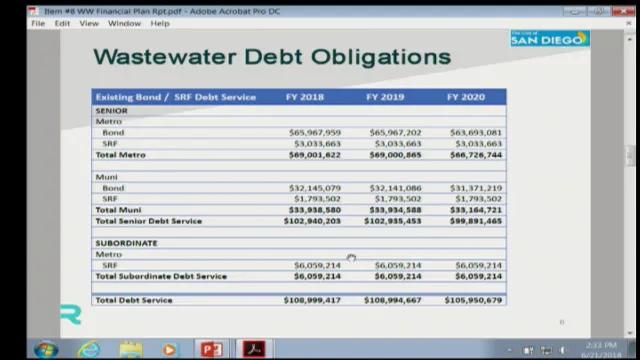
This committee meeting covered a range of environmental and infrastructure topics, including updates on the city's bicycle master plan, utilities undergrounding, water conservation, solid waste collection, and wastewater financial planning. The meeting began with public comment on non-agenda items and the unanimous approval of a consent calendar. Key decisions included approval of the bicycle master plan's strategic implementation plan with a priority amendment, and approval of the utilities undergrounding master plan update and five-year implementation plan. Consent Calendar - The committee approved five items on the consent agenda by unanimous consent. Public Comments & Testimony - Josh Rosa, on behalf of the California Restaurant Association San Diego chapter, spoke during public comment on non-agenda items. He expressed concern that a proposed ban on expanded polystyrene (EPS) could undermine the city's recycling program, which had been unanimously approved in July 2017. He noted that the program is being questioned prematurely and that a ban could jeopardize recycling of other materials. - Jim Madaffer, representing the San Diego County Disposal Association, spoke on the districted collection system study. He highlighted that current recycling markets are in crisis due to China's new contamination standards, making recycling more expensive than trash disposal. He urged the city to consider the impact on diversion rates and mentioned concerns with the People's Ordinance of 1919 regarding free trash pickup. - Philip Ginsberg, a La Jolla resident, spoke on the utilities undergrounding program update. He expressed appreciation for his neighborhood's project being moved up but voiced frustration with the slow pace of implementation, noting that he has been paying surcharges since 1997 with the project still incomplete. Discussion Items - Strategic Implementation Plan for the Bicycle Master Plan: Presenters from the Transportation & Stormwater Department and the Bicycle Advisory Committee outlined the plan's goals to increase bicycle mode share, improve safety, and expand funding. The plan covers the five E's (engineering, education, enforcement, encouragement, evaluation). Councilmember Sherman moved to approve with an amendment to reorder priority language to place Vision Zero (high-fatality corridors) first before historically underserved communities, to clarify that safety is paramount. The amendment was accepted. Councilmembers discussed timelines, funding from SANDAG grants, and the need for continued evaluation. The motion carried unanimously. - Utilities Undergrounding Program: An update on the program's status was provided, along with a proposed updated master plan (replacing the 2009 plan) and a five-year implementation plan. Staff highlighted process improvements, including new FTEs, better coordination with SDGE, and a pilot for in-house design. SDGE representatives noted efforts to expedite projects, including use of P6 scheduling software and contractor outreach. The five-year plan aims to improve financial control and project planning. Councilmember Kate asked about the annual update process. The motion to approve was made by Councilmember Gomez, seconded by Councilmember Kate, and passed unanimously. - Districted Exclusive Collection System Study: The Environmental Services Department presented preliminary findings from a study on transitioning from a non-exclusive to a districted solid waste collection system. The consultant identified potential benefits (reduced greenhouse gas emissions, lower road maintenance costs, increased recycling innovation) but also significant challenges (negative impact on small haulers and customer rates). Staff indicated they are leaning against implementing a districted system and instead are negotiating with current haulers to capture benefits. The final report, including a city attorney analysis on Proposition 218/26, is expected in August. Councilmembers expressed caution based on Los Angeles's experience and concerns about the recycling market. No action was taken. - Water Use Efficiency Report: The Public Utilities Department reported that statewide and local reservoirs are above average but that rainfall in the current water year is half of last year's. Water usage in San Diego shows a 12% reduction compared to 2013, though recent dry weather caused a temporary increase. Rebate programs continue, and enforcement of water waste regulations remains steady. State legislation (SB 606 and AB 1668) sets a 55 gallons per capita per day indoor target as a system-wide goal, not a per-household limit. San Diego's current combined indoor/outdoor usage is 60 gpcd. No action was required; the report was informational. - Public Health Goals Water Report: The city's drinking water meets all state and federal standards. Five constituents (coliform, bromate, chlorite, gross alpha particles, uranium) were detected above non-enforceable public health goals (PHGs) but well below maximum contaminant levels (MCLs). The best available technology (reverse osmosis) is costly and would provide insignificant health benefit at current levels. Staff recommends no further action. The report was informational. - Wastewater Financial Plan Study and Cost of Service Review: An update on the wastewater fund's financial health showed strong reserves and no need for a rate increase in FY19 or FY20. The fund's debt coverage ratios are above targets, and cash reserves are healthy. The study noted that the Pure Water program's capital costs are included in the CIP. No action was required. - Review of Funds for Water Utility Fund (FY16-17): An independent review by MGO found that due to lower water purchases, operational savings, and a litigation settlement, the originally approved 5% rate increase for August 2018 can be reduced to 2.16%. The reduction is driven by a lower pass-through from the San Diego County Water Authority (1.47% vs. 2.5%) and avoidance of a planned draw on the rate stabilization fund. The next rate increase (7% for FY20) will be re-evaluated in the upcoming cost-of-service study. Key Outcomes - Approved unanimously: Consent calendar (5 items); Strategic Implementation Plan for the Bicycle Master Plan (with a priority amendment to place Vision Zero first); Utilities Undergrounding Program updated master plan and five-year implementation plan. - No action taken on: Districted Collection System Study (final report due August); Water Use Efficiency Report; Public Health Goals Water Report; Wastewater Financial Plan Study; Review of Funds for Water Utility Fund. - Next meeting: July 12, 2018, at a time to be determined.
The Smart Growth and Land Use Committee met on June 20, 2018, at 5:00 PM to consider three action items and hold a discussion on dockless vehicle regulation. The meeting was chaired by Councilmember Bree, with Vice Chair Ward and Councilmembers Gomez and Kate present. All action items were approved unanimously. A working group was established to develop a regulatory framework for dockless bikes and scooters. Public Comments & Testimony (on Dockless Vehicles) - Maior Rosus (Circulate): Expressed support for regulations that promote bike/scooter share and oppose caps; emphasized education and encouragement over restriction. - Matthew Vasilakis (Climate Action Campaign): Supported dockless vehicles as key to CAP transportation targets; urged investment in protected bike infrastructure and bike counting. - Mikey Nabb (Business for Good San Diego): Supported dockless vehicles for business benefits (more customers per parking space, tourism); suggested permit fees fund bike lanes. - Sam Mazio (Wilkinson Mazio PC, Business for Good): Supported permitting structure if funds go to education and equitable distribution; praised dockless vehicles for CAP goals. - Matt Gardiner (bike rental business owner): Supported a smart program; noted differences between bikes and scooters; recommended speed limits, helmet distribution, and learning from technology experts. - Kwa Wynn (Lyft representative): Represented Lyft's interest in entering the market; expressed desire to collaborate with the city. - Angie Priesendorfer (President, La Jolla Shores Business Association): Opposed haphazard deployment; cited safety concerns on boardwalks, damaged bikes left for days, and liability issues; urged strict regulation. - Jamie Emerson (La Jolla Shores resident): Opposed lack of regulation; described an accident involving a senior citizen and a dockless bike; demanded strict rules and enforcement. Discussion Items - Item 1: Fiscal Year 2019 Appropriation Ordinance – Matt Vesby (Deputy Director, Financial Management) presented the ordinance as the final budget step. It incorporates new delegated authorities for recreation center funds and grant approvals, plus technical adjustments. The IBA had no comments. No public speakers. The committee forwarded the ordinance to City Council for adoption on June 25, 2018. - Item 2: Authorization to Retain Outside Counsel and Approve Certain As-Needed Contracts – City Attorney Mara Elliott and Deputy City Attorney Ken So requested authority to contract with 17 law firms in seven practice areas (bankruptcy, employment litigation, environmental, police excessive force, insurance coverage, workers' compensation, business/financial). Each contract is for five years, up to $250,000, with rotational use. Approval needed for four firms (Burke Williams & Sorensen, Gordon & Reese, Procopio, Colentuno) because cumulative awards exceed $250,000. Committee members praised the competitive bidding process and diversity focus. Motion passed unanimously. - Item 3: Extension of Banking Services Contract with Bank of America – Kent Morris (Chief Investment Officer) and Trissy Deentz requested a four-month extension (through November 26, 2018) with month-to-month termination, increasing the not-to-exceed amount by $750,000, to ensure continuity while finalizing a new RFP selection. No public speakers. Motion passed unanimously. - Item 4: Dockless Vehicle Permit Program and Fee Structure Discussion – Raymond Kahn (Policy Advisor) presented research on permit programs in Seattle, Dallas, San Francisco, Chicago, and other cities. Key benefits: affordable transit, first/last mile solution, climate action. Issues: parking clutter, company responsiveness, safety. Strategies: time-based removal, user education, gamification, bike corrals, equity requirements, data sharing, and user protection. Seattle reported 70% bikes parked correctly and 75% of riders use them for transit access. Committee members and the public spoke in favor of regulation but cautioned against overly restrictive fees or caps. Councilmembers Ward, Kate, and Gomez emphasized infrastructure, equity, and a collaborative working group. Chair Bree noted the existing contract with Discover Bike (through 2025) and asked for legal clarity on the city's ability to impose fees. The committee agreed to form a working group with stakeholders to develop a draft ordinance by fall 2018. Key Outcomes - Unanimous approval of the corrected records from the April 18 and May 23 hearings. - Forwarded the Fiscal Year 2019 Appropriation Ordinance to City Council for adoption on June 25, 2018. - Approved authority to contract with 17 law firms on an as-needed basis and specifically approved contracts with Burke Williams & Sorensen, Gordon & Reese, Procopio, and Colentuno law firms (cumulative over $250,000). - Approved a four-month extension of the banking services contract with Bank of America, increasing the cap by $750,000. - Established a working group (including council staff, city departments, operators, and stakeholders) to develop a dockless vehicle permit and regulatory framework, with a report back to the committee in the fall.
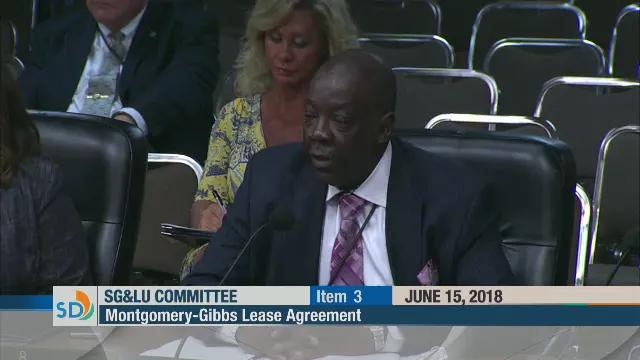
The Smart Growth and Land Use Committee met on June 15, 2018, to consider four agenda items: a consent calendar item, a non-agenda public comment, and three discussion items involving property sales and a lease. The committee approved the consent calendar, heard public testimony on marijuana businesses, and voted on actions related to affordable housing development, an airport lease, and a park-and-ride sale. Consent Calendar - Item 1: Silk Tree Terrace property – The committee approved the sale of the property after a brief discussion about vegetation and fencing. Staff confirmed the property is fenced and brush is trimmed as needed. The motion passed unanimously. Public Comments & Testimony - Scott Chipman, San Diegans for Safe Neighborhoods – Expressed concerns about marijuana businesses, alleging inadequate regulation, illegal advertising, and preferential treatment. He stated that businesses operating with tax certificates are frustrating adjoining businesses, and that proximity distances to child-oriented facilities are being ignored by the Development Services Department. He asked the city attorney to investigate. Discussion Items - Item 2: Sale of city-owned properties in City Heights (Oklahoma Boulevard, Central Avenue, University Avenue, 40th Street, and 41st Street) – Staff presented three parcels acquired from Caltrans. Two affordable housing developers responded: National Community Renaissance (one property) and Wakeland Housing (all three). The city is negotiating with Wakeland, which proposes 100% affordable units at 60% area median income (AMI) or less, with affordability for 55 years. Councilmember Alvarez (chair) moved to forward the sale to the full council with the recommendation that future development require 100% of units be restricted to affordable housing at 60% AMI or less (excluding the manager's unit). The developer confirmed willingness. The motion passed unanimously. - Item 3: 40-year lease with Coast Air Center at Montgomery Gibbs Airport – Staff recommended a lease for redevelopment of a 9.4-acre parcel with a minimum $5.8 million investment. Annual rent is $214,000 in year one. The lease includes CPI adjustments based on the LA-Riverside-Orange County index (not San Diego) and market value adjustments every 10 years. Councilmember Alvarez questioned the CPI index and lack of annual adjustments. The motion to authorize the lease passed unanimously. - Item 4: Sale of former park-and-ride on Rancho Carmel Drive – Staff presented two offers: Buyer 1 at $350,500 with five deed-restricted affordable units (12 total units), and Buyer 2 at $600,000 with two deed-restricted affordable units (10 total units). Discussion centered on whether to accept the lower offer with more units or the higher offer with fewer units, and whether the city could negotiate. Councilmember Alvarez initially proposed moving forward with Buyer 1, but after debate, the committee voted to direct staff to request best and final offers from both buyers and bring the results to the full council. The motion passed unanimously. Key Outcomes - Consent calendar (Item 1) approved unanimously. - Item 2: Approved to forward to city council with recommendation for 100% affordable units at 60% AMI or less. - Item 3: Approved to authorize the lease with Coast Air Center. - Item 4: Directed staff to obtain best and final offers from both buyers and report to council. - The next regular Smart Growth and Land Use Committee meeting is scheduled for June 27, 2018, at 2:00 p.m.