The Budget and Appropriations Committee met on June 9, 2021, to discuss the Mayor's proposed budget for FY2021-2022 and FY2022-2023, the Controller's revenue estimates, proposed street crisis response teams, small business COVID-19 relief, and the Youth Commission's budget priorities. The committee filed or continued all hearings. Public Comments & Testimony - Mayor's Budget: Peter Warfield (Library Users Association) criticized the lack of equal internet access for those without home computers, noting over 100,000 San Franciscans lack internet access. Paul (District 10) requested 24-hour restrooms in parks and later transit service. - Controller's Revenue Estimates: Claire Lau (Chinese Progressive Association) advocated for equitable use of federal stimulus funds, prioritizing low-income workers and people of color. Another caller emphasized the importance of nightlife and park gathering for economic recovery. - Street Crisis Response Teams: Multiple callers supported non-police responses, including CART, and urged better coordination. Alexander Hergey (former youth commissioner) supported youth transit recommendations. - Small Business Relief: Ben Bleiman (Entertainment Commission) warned of predatory online businesses and urged regulatory reform. Laurie Thomas (Golden Gate Restaurant Association) highlighted that 60% of restaurants received some rent relief in 2020 but far fewer in 2021. Another caller stressed the need for regulatory relief. Discussion Items - Mayor's Proposed Budget (Item 210623): Budget Director Ashley Graffenberger presented a $13.1B (FY21-22) and $12.8B (FY22-23) budget, closing a $23M shortfall. Key investments: $477M for COVID-19 response (food security, small business relief, community hubs), public safety (two police academies per year, alternative response teams), homelessness (over $1B for 4,000 new placements, prevention), behavioral health ($300M from Prop C), nonprofit sustainability ($6M cost-of-doing-business increase), capital projects ($200M), affordable housing ($50M new general fund), and children/youth ($35M annually for child care subsidies). The budget reduces the structural deficit by $50M in FY23-24 and creates a $295M fiscal cliff reserve. Questions from supervisors focused on reserves, police overtime, victim services office, and coordination of alternative response teams. The hearing was filed (4-0). - Controller's Comment on Revenue Estimates (Item 210581): Controller Ben Rosenfield and revenue manager Carol Liu reported that revenue estimates are reasonable but face significant risks, including reliance on $430M in FEMA reimbursements (only $36M obligated, $15M paid), slow economic recovery (hospitality and telecommuting uncertainties), and a projected $300M structural deficit in FY23-24. The mayor's budget meets baseline requirements and reserves. Discussion on the $625M in one-time federal stimulus and the need for active monitoring. Hearing filed (4-0). - Street Crisis Response Teams and Mental Health SF (Item 210626): Supervisor Ronan expressed concerns about duplication among nine street response teams (HSOC, HOT, Street Medicine, SFPD CIT, EMS6, SCRT, Street Wellness, Street Overdose, and proposed CART). City departments (DPH, DEM, Fire, HSH) presented the design of the Street Crisis Response Team (SCRT), Street Wellness Response Team, and Street Overdose Response Team, emphasizing coordination under community paramedicine. Dr. Monique LaSalle (Mental Health SF Implementation Working Group) noted the group was not consulted on the new teams and recommended mapping and coordination. Wes Westbrook (United Council for Human Services) advocated for the community-led CART program, which would respond to C-level calls. Supervisor Ronan critiqued the lack of a coordinated care system and absence of the Mental Health SF director. The hearing was continued to the call of the chair (4-0). - Youth Commission Budget Priorities (Item 210624): Chair Nora Hilton and Commissioner Calvin Quick presented recommendations: fund permanent supportive housing rent cap (30% of income) from the general fund rather than Prop C; support non-police response (CART) funded by cuts to SFPD; reduce police/sheriff budgets proportional to reduced duties; add fee waivers and youth organizing grants; support free Muni for youth; close juvenile hall (saving $8.4M in FY21-22 and $18.8M in FY22-23) and not reopen Log Cabin Ranch. They also urged elimination of funding for juvenile hall operations beyond closure. Hearing filed (4-0). - Small Business and Commercial Tenant COVID-19 Relief (Item 210627): BLA analyst Fred Rousseau presented estimates of unpaid commercial rent: $19.1M-$44.9M per month, with 89-98% from retail. OEWD Director Kate Sofis reported $52M in local relief (72% to minority-owned, 52% to women-owned), but noted that most businesses (98% under $15M revenue) are tapped out. Office of Small Business Director Regina Dick-Endrizzi shared survey data: 38% missed lease payments, 77% lease, 24% have leases expiring in 1-3 years. Small Business Commissioner Sharky Laguna emphasized the need for grants over loans and targeted investments. Discussion included legal mediation services and property tax deferral ideas. Hearing filed (4-0). Key Outcomes - Mayor's Proposed Budget and Controller's Revenue Estimates: Both hearings were filed (4-0), with the understanding that detailed department-level hearings would follow. - Street Crisis Response Teams: The hearing was continued to the call of the chair (4-0), with intent to hold a follow-up hearing. - Youth Commission Priorities: The hearing was filed (4-0), and the committee acknowledged the recommendations. - Small Business Relief: The hearing was filed (4-0), with a commitment from Vice Chair Safai and Chair Haney to explore further grant funding and legal mediation support during the budget process. - Votes: All votes were unanimous among present members (Supervisor Safai excused for early items, Supervisor Ronan excused for final vote). Motions included: excusing Vice Chair Safai until item 4; excusing Supervisor Ronan from vote on item 5; filing hearings; continuing item 3.
Public Meetings - San Francisco, California
Public Meetings - San Francisco, CaliforniaThe San Francisco Port Commission met on June 8, 2021, with all five commissioners present. The meeting covered a wide range of topics, including approval of minutes, public comments, executive session, the Executive Director's report, a Mission Rock project update, a proposed 'quick-build' traffic plan for the Central Embarcadero, a proposed mobile vending ordinance, an extension of fee waivers for the Shared Spaces program, and an informational presentation on the port's maritime portfolio. The meeting adjourned at 6:52 p.m. in memory of retired port laborer Lawrence Peoples. Consent Calendar - Minutes Approval: The minutes from the May 25, 2021 meeting were approved unanimously via roll call vote (5-0). - Executive Session: The commission voted unanimously (5-0) to enter closed session; no public comment was received on executive session. Public Comments & Testimony - Item 8 (Non-Agenda Public Comment): - Zairi Bickham, a performer on port property, emphasized the importance of the street performance program to Fisherman's Wharf culture and urged coordination between vendors and performers. - David Burby (Sabino's Restaurant/Bay Company Retail) called for support of mobile vendor regulation, describing "chaos" and unsafe conditions from unlicensed vendors. - Another performer (name not given) requested keeping the performance permit program active alongside any new vending program. - Item 10A (Embarcadero Quick-Build): - Janice Lee (San Francisco Bicycle Coalition) expressed strong support for the project, noting collaboration with CUESA and highlighting a letter from the coalition dated May 21, 2021. - Item 11A (Mobile Vending Ordinance): - Multiple callers including Brian Hayes, Lee Hepner (Supervisor Peskin's office), Taylor Safford (President/CEO, Pier 39), Randall Scott (Fisherman's Wharf CBD), Fred Anderson, Paul Miller (Boudin Bakery), Mark Gleason (representing Teamsters), Trisha, Sue Mezen (Pier 39), Judith Reese, Stan Ross (Stanley Steamer Hot Dogs), David Burby, Paris Lane (street performer), Sunshine (street performer), Fraser Thompson (Pier 39 VP Operations), and Steven Dreyfus (SF Port Performers Program co-creator) spoke in strong support of the ordinance, citing health, safety, and organized crime concerns. Some highlighted threats and unsanitary conditions. - Item 11B (Shared Spaces Fee Waiver): No public comment. - Item 12A (Maritime Portfolio): No public comment. Discussion Items - Executive Director's Report (Item 9A): Elaine Forbes reported on COVID-19 recovery, summer events (July 4th fireworks, Red Bay Coffee opening June 11), Juneteenth and Pride Month celebrations, the port's racial equity progress, and a $250 million state stimulus allocation. She also noted the passing of retired laborer Lawrence Peoples. Commissioners expressed condolences and discussed Mission Rock budget increases. - Mission Rock Phase 1 Update (within Item 9A): Phil Williamson presented progress and a projected $58 million cost increase. Staff are evaluating delaying in-water China Basin Park work by a few months to save $20 million. Commissioner Wuho requested a full comparison of returns under updated costs. - Item 10A: Central Embarcadero Quick-Build (Resolution 2125): Mark Dreger (SFMTA) presented the proposal to repurpose the third travel lane and install a two-way protected bikeway from Mission Street to Broadway, including loading adjustments for the Ferry Building Farmers Market. Discussion focused on signage (encouragement vs. direction for cyclists/pedestrians), traffic signal synchronization, and public outreach. Commissioner Wuho raised concerns about auto traffic flow and future cruise ship impacts. Commissioner Burton criticized the 10% survey response rate. A substitute motion to postpone the item to July 13, 2021 passed (5-0), directing SFMTA to return with a concrete signage plan (prohibiting motorized vehicles on the promenade, encouraging cyclists to use the bikeway), a plan for auto traffic considerations including signal synchronization, and details on outreach. - Item 11A: Proposed Ordinance on Mobile Vending (Informational): Mike Martin and Boris Delapine presented a proposed ordinance (by Supervisor Peskin) creating a pilot vending permit program on port property, pending state SB 946 compliance. A timeline anticipates commission action in July. Commissioners expressed support but requested more details on enforcement, vendor outreach, cleanup, and equitable treatment of existing tenants. Commissioner Gilman asked about interim measures. Commissioner Adams emphasized treating all people with dignity. The item will return for action in July. - Item 11B: Shared Spaces Fee Waiver Extension (Resolution 2126): Chris Atanali reported that six non-port tenants benefit from the program, which has created over 700 outdoor dining seats. Staff requested extension of fee waivers through December 31, 2021, totaling $85,000 (cumulative $240,000). Commissioners supported the extension. Commissioner Wuho asked about unresolved issues (minor sidewalk access adjustments). The resolution passed unanimously (5-0). - Item 12A: Maritime Portfolio (Informational): Andre Coleman presented an overview of cargo (auto exports at Pier 80, dry bulk at Piers 90-94), shipyard interim leasing, Fisherman's Wharf fishing industry, excursion/ferry operations (5 million passengers pre-pandemic), and cruise resumption (118 projected calls in 2022). Commissioners discussed Pasha volumes, retail fish sales expansion, and cruise traffic mitigation. No formal action was taken. Key Outcomes - Item 10A (Resolution 2125): Postponed to July 13, 2021 (5-0 vote) to allow SFMTA to return with a detailed signage plan, traffic signal analysis, and outreach overview. - Item 11B (Resolution 2126): Approved unanimously (5-0) to extend Shared Spaces fee waivers for six non-port tenants through December 31, 2021. - New Business: The commission noted a future policy conversation on multi-purpose use of the Embarcadero promenade, including possible prohibition of bicycles. - Adjournment: The meeting was adjourned in memory of retired port laborer Lawrence Peoples.
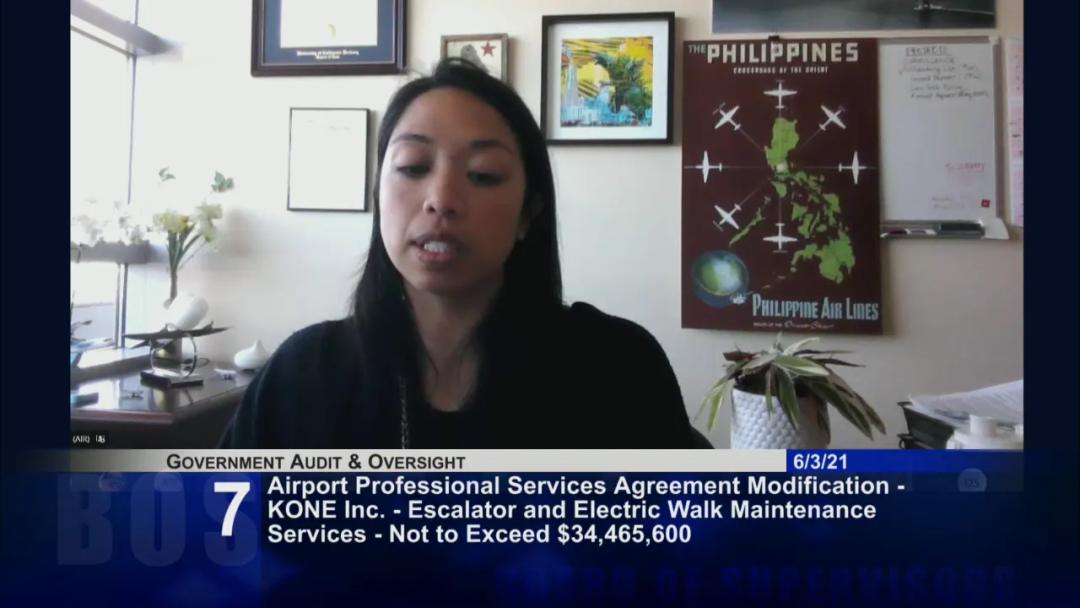
The Government Audit and Oversight Committee of the San Francisco Board of Supervisors met on June 3, 2021, to consider 19 agenda items, including ordinances to establish a public bank working group, leases for a drug sobering center and shelter-in-place hotels, contracts for security, airport maintenance, affordable housing financing, pretrial services, and central subway artwork extensions. The committee voted on all items, forwarding most to the full Board with positive recommendation. Public Comments & Testimony - Item 1 (Public Bank): Multiple callers expressed support, including representatives from community organizations, labor unions, and residents, emphasizing the need for a public bank to finance affordable housing, small businesses, and community needs in the wake of the pandemic. - Items 5-6 (SIP Hotels): No public comments. - Items 9-12 (Balboa Park Housing): Callers included BART (support), a resident (support, urging trust in experts), and a community organizer (criticism of lack of transparency in AMI changes and process). - Item 13 (Pretrial Services): Callers included a labor union opposing the contract (urging to wait for validation study), a member of Taxpayers for Public Safety (supporting continued investment), the Bar Association (supporting renewal), and a provider (highlighting program success). Discussion Items Item 1 – Admin Code: San Francisco Reinvestment Working Group (Ordinance) Chair Preston introduced the ordinance to create a working group to develop business and governance plans for a municipal finance corporation (MFC) and a public bank. BLA analyst Fred Burseau presented models using the city’s investment pool (10% or $1 billion) and general fund appropriations to capitalize an MFC, projecting a $2 billion asset base by year 10. Sushil Jacob (Lawyers Committee for Civil Rights) noted the two-step approach (non-depository MFC then depository bank) and highlighted North Dakota’s public bank success in PPP loan distribution. The Treasurer’s Office representative expressed concerns about the legality of using the investment pool. The committee adopted three amendments (shifting nomination to Board President, moving administrative support from LAFCO to clerk, and shifting consultant retention to clerk). Item 2 – Lease at 1076 Howard Street for Drug Sobering Center DPH and Real Estate presented a lease for the Soma Rise Center, a trauma-informed sobering site for individuals under the influence of drugs. The lease is for 8.5 years with one 5-year option; base rent $854,235/year with 3% annual increases; city contribution of up to $1,888,990 in tenant improvements. The building is completely renovated. The committee approved and referred to full Board as a committee report. Items 3 – MediCal County Inmate Program (Resolution) DPH retroactively authorized two agreements with the state for reimbursement of inmate medical services (participation and administrative services agreements, the latter not to exceed $21,504.33). The program allows billing for eligible services, with annual revenues estimated at $2 million. The committee recommended approval. Item 4 – HSA Security Services Contract Amendment HSA requested a two-year extension of the contract with Allied Universal for unarmed security at 15 HSA sites, increasing the amount to $23,393,091. The BLA recommended reducing the amount to $21,985,735 due to calculation adjustments. Chair Preston noted the training requirements (cultural diversity and unconscious bias). The committee approved the amendment and recommended the resolution. Items 5-6 – Shelter-in-Place Hotel Services and Lease (Two Resolutions) HSH and HSA presented amendments to extend services (Five Keys) and the hotel lease (1231 Market/Hotel Whitcomb) through March 2022, with total amounts of $20,209,909 and $54,800,664 respectively. The program has served over 3,600 guests, with 2,200 currently in 1,973 rooms. Average cost per night is $261, with 94% FEMA reimbursement expected through September. Supervisor Chan asked about staffing and services; HSH noted persistent engagement and coordination with housing placement. The committee approved BLA-recommended amendments and forwarded both items. Items 7-8 – Airport Maintenance Contracts (Two Resolutions) The airport presented modifications for escalator/electric walk maintenance (KONE Inc.) and elevator maintenance (TK Elevator Corporation), extending terms by three years and increasing amounts to $34,465,600 and $22,282,912 respectively. Both contracts showed savings from reduced per-unit maintenance prices ($776,000 and $773,000 annually). The committee recommended approval. Items 9-12 – Balboa Park Upper Yard Affordable Housing Project (Four Resolutions) MOHCD presented financing and land documents for a 131-unit 100% affordable project at 2340 San Jose Avenue. Total development cost $119 million ($911,000/unit). MOHCD gap loan $24.4 million; state grants via IIG ($3.5M) and AHSC ($25.3M). Affordability ranges from 30% to 109% of AMI (income averaging). Supervisor Safai’s office supported the project. Community groups (CCHO, PODER, etc.) expressed concerns about lack of communication and AMI levels not serving the lowest-income households. Supervisor Chan and Chair Preston discussed the need for better community engagement and transparency. MOHCD committed to meeting with community groups before the full Board vote. The committee voted 3-0 to forward the four items without recommendation as committee reports for consideration on June 8. Item 13 – Pretrial Services Contract (Resolution) The Sheriff’s Office requested a new three-year contract (with two one-year options) with SF Pretrial Diversion Project for pretrial services, total not to exceed $18,764,430. The contract uses the PSA (Public Safety Assessment) tool, with a validation study due July 1, 2021. Supervisor Stefani asked about safety metrics (focus on life-of-pretrial vs. quarterly), assertive case management, and tracking court overrides. The committee discussed the importance of data and continuous improvement. Public comment included opposition from the union (citing pending civil service determination and desire to wait for validation study) and support from multiple organizations. The committee recommended approval. Items 14-18 – Central Subway Artwork Contract Extensions (Five Resolutions) The Arts Commission presented retroactive extensions of five artists’ contracts (Catherine Wagner, Paramedia, Tomie Arai, White Light/Werner Klotz, Yumei Hou) to December 31, 2021, with a $15,906 increase for one contract due to refabrication costs. The artwork installations have been delayed due to overall construction delays. The committee recommended approval. Key Outcomes - Item 1: Passed 3-0, amended and recommended. - Item 2: Passed 3-0, recommended as committee report. - Item 3: Passed 3-0, recommended. - Item 4: Passed 3-0, amended and recommended. - Items 5-6: Passed 3-0 each, amended and recommended. - Items 7-8: Passed 3-0 each, recommended. - Items 9-12: Passed 3-0 to forward without recommendation as committee reports. - Item 13: Passed 3-0, recommended. - Items 14-18: Passed 3-0, recommended. - Closed Session (Item 19): Committee voted unanimously to recommend settlement of lawsuit for $60,000.
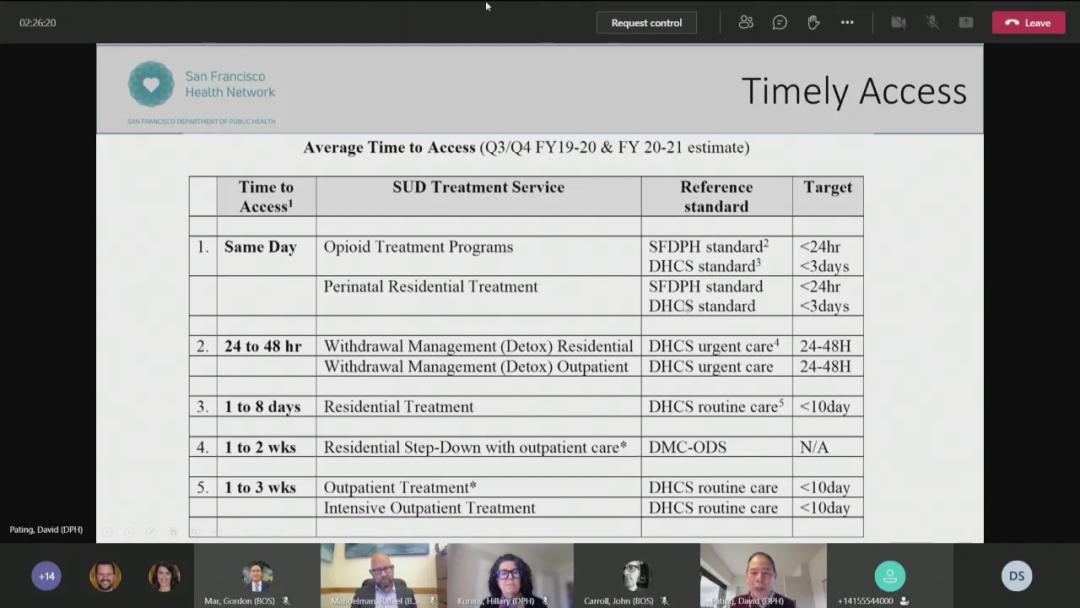
The Public Safety and Neighborhood Services Committee met remotely on Thursday, May 27, 2021, beginning at 18:15 UTC (11:15 a.m. Pacific), for a multi-hour session chaired by Supervisor Gordon Mar, with Vice Chair Catherine Stefani, Members Matt Haney and Rafael Mandelman (joining for item 3; Haney was later excused from the final vote). The committee considered restrictions on police crowd-control weapons, an ordinance requiring city departments to adopt overdose prevention policies, and a hearing on the annual Proposition T treatment-on-demand report. It opened with a moment of silence for the nine victims of the May 26, 2021 mass shooting in San Jose. Public Comments & Testimony - Item 1 (Right to Safely Protest ordinance): Public commenters overwhelmingly supported the measure. Wesley Saber, policy manager for Glide, said such weapons are ubiquitous with police misconduct and asked the board to support the ordinance and reallocate funding to community programs. Nick Robinson, senior legal advisor at the International Center for Not-for-Profit Law, said at least a dozen municipalities and five states have already restricted these weapons. Several resident callers described personal experiences of being injured or fearing police violence at protests, including a 2020 SFPD encounter at United Nations Plaza and injuries from rubber bullets in Oakland. - Item 2 (Departmental Overdose Prevention Policies): Commenters generally supported the ordinance and urged expansion of harm reduction, supervised consumption services, accessible treatment, and housing. Laura Thomas (SF AIDS Foundation), Brian Edwards (Coalition on Homelessness), and a social worker from the Public Defender's Office stressed the need for community-based, non-carceral approaches. Felicia Jones argued that harm reduction has harmed Black communities and that Black-led recovery programs have been underfunded. Another caller urged culturally appropriate services for monolingual Spanish speakers and LGBTQ communities. - Item 3 (Prop T Treatment on Demand hearing): Commenters strongly backed treatment on demand. Jennifer Friedenbach (Coalition on Homelessness) cited a roughly 600-person survey showing about one-third of unhoused respondents identified substance use as a significant challenge, and many were reluctant to enter treatment without a guaranteed housing exit. David Elliott Lewis (Treatment on Demand Coalition) said he is a living example that treatment on demand works, but many clinics are unmarked and hard to find. Seth Cass, a harm reduction worker, said harm reduction and accessible treatment saved his life and that strictly abstinence-only approaches can be deadly. Several callers emphasized the need to reduce stigma, expand peer support, and avoid policing-led responses. Discussion Items Item 1: Restrictions on Police Use of Specific Types of Force (File 200784) Supervisor Matt Haney presented the Right to Safely Protest ordinance, noting it was introduced a year after George Floyd's murder and amended after consultation with SFPD, community groups, advocates, unions, and medical experts. The amended ordinance would prohibit SFPD from using kinetic impact projectiles such as rubber bullets, chemical agents such as tear gas and CS gas, disorientation devices such as flashbangs, and military-grade equipment for crowd control. It would allow very limited use of extended-range impact weapons such as beanbag rounds and chemical agents such as OC spray only when there is an immediate threat of death or serious bodily injury, after de-escalation, with targeting of violent individuals, and with written reporting to the Police Commission within 10 days. Haney cited data that 93% of racial justice protests were peaceful, yet police were five times more likely to respond with force to these protests than to anti-lockdown protests; at least 115 people were shot in the head or neck between May 26 and July 27, 2020; at least 20 suffered severe eye injuries, including seven who lost an eye; and at least 100 law enforcement agencies, including 11 in California, used tear gas against civilians. Supervisor Stefani praised SFPD for being ahead of national trends and said the legislation codifies existing practice. Haney requested that the amendments be adopted and the item be continued to the call of the chair so further meet-and-confer work could continue. Item 2: Departmental Overdose Prevention Policies (File 210304) Supervisor Haney presented the ordinance requiring DPH, the Department of Homelessness and Supportive Housing, the Human Services Agency, and the Department of Emergency Management to submit annual overdose prevention policies covering treatment and harm reduction services, syringe access and naloxone distribution, on-site overdose response, staff training, and grantee compliance. He cited escalating overdose deaths: 146 deaths in January-February 2021, up from 81 in the same period in 2020; 106 additional deaths in March-April 2021; and 712 overdose deaths in 2020, the worst year on record. Eileen Loughran of DPH said DPH has done much of this work and will collaborate with the other departments, with a report back to the board in December 2021. Supervisor Stefani asked for clarity on overdose prevention strategies and urged inclusion of peer specialists and abstinence-based recovery perspectives from the Recovery Summit working group. Supervisor Safai asked DPH for data on how many overdose decedents had recently been in treatment and later joined as a co-sponsor. Item 3: Proposition T Treatment on Demand Report Hearing (File 210270) Supervisor Rafael Mandelman explained that Prop T requires DPH to submit by February 1 each year an assessment of demand for substance-abuse treatment and a plan to meet it; the FY2019-2020 report was delivered the night before this hearing, three months late and too late to inform budget decisions, and was not publicly available. He and Supervisor Stefani sharply criticized the report as inadequate and not matching the scale of the crisis. DPH behavioral health director Dr. Hillary Kunins apologized and promised the report would not be late again. Dr. David Pating said DPH now measures treatment-on-demand through Medi-Cal managed care obligations, reporting that it meets timely access for most services but has gaps in Spanish-language residential services, residential step-down/transitional housing, outpatient services, and a dual-diagnosis complex medical model. Adult Probation Department presenters Steve Adami, Victoria Westbrook, and Cedric Akbar gave data showing justice-involved clients experienced average waits of 41 to 49 days to enter residential treatment, much longer than the 1 to 8 days claimed in the Prop T report. They called for more treatment options, including abstinence-based programs, and said the Department of Public Health is not meeting the needs of Black and other communities of color. Laura Thomas, presenting for the Treatment on Demand Coalition, called for a comprehensive needs assessment, community-centered planning, harm reduction and supervised consumption services, and alternatives to policing. Supervisor Mandelman said he would work offline with co-sponsors, DPH, Adult Probation, and the coalition to develop legislative changes to improve Prop T reporting. Key Outcomes - Item 1: The committee voted 3-0 to adopt the amendments to the police use-of-force ordinance and then voted 3-0 to continue the item to the call of the chair. - Item 2: The committee voted 3-0 to recommend the departmental overdose prevention policies ordinance to the full Board of Supervisors with a positive recommendation. Supervisor Safai was added as a co-sponsor. - Item 3: The committee voted 3-0 to excuse Supervisor Haney from the vote and voted 3-0 to continue the Prop T hearing to the call of the chair. Supervisor Mandelman said he would convene further work on revising the annual report. - The clerk announced that items acted upon would appear on the Board of Supervisors agenda for June 8, 2021, unless otherwise stated.
The San Francisco Port Commission met on May 25, 2021, at 10:30 AM to discuss economic recovery, equity initiatives, waterfront resilience, and several development and transportation projects. The meeting included a consent agenda, executive session, public comments, and informational presentations on the Embarcadero Enhancement Program, a proposed MOU with SFMTA, and the Islais Creek adaptation strategy. The commission also received an update on Local Business Enterprise (LBE) participation and heard tributes to a late colleague. Consent Calendar - Approval of Minutes (April 27, 2021): The minutes were approved unanimously by roll call vote (Commissioners Brandon, Gilman, Wuho; Commissioner Adams absent initially but later present). - Executive Session (Item 4): The commission convened in closed session and later reported a unanimous vote to approve a settlement agreement with the Cold Trust on terms described in the agenda. A motion to not disclose any other executive session discussions passed with Commissioner Wuho not voting due to a technical disconnection. Public Comments & Testimony - Items Not on Agenda (Item 8): Three callers spoke: - Sgt. Keith Matthews (SFPD Marine Unit) paid tribute to Ken Tashin, the Port's Homeland Security Program Manager, who passed away suddenly on May 19, 2021. Matthews highlighted Tashin's role in securing grants and the SFPD Marine Unit dock project. - Jeff Abraham and Dan Kerrigan (Cabrio Taxi/Petticab) requested rent forgiveness for their business, which has operated at the port for nearly a decade. They described operating at a loss for 14 months during COVID-19 and emphasized that hundreds of jobs are at stake. - Deputy Chief David Lazar (SFPD) offered condolences on behalf of the department for Ken Tashin's passing. - Executive Director's Report (Item 9A): One caller, Tom Cotter (retired port employee), spoke in memory of Ken Tashin, noting his mentoring, relationship-building, and work on FEMA grants and homeless outreach. - Item 10A (Media Relations Contracts): Darylyn Davis, CEO of Davis & Associates, thanked the commission for the micro-LBE set-aside opportunity. - Item 11A (Embarcadero Enhancement): Seven callers commented: - Support from Paul Maldonato (bike lane advocate), Janice Lee (SF Bicycle Coalition), Brian Hogsman (Walk SF), Parker Day (District 3 resident), Alice Rogers (South Beach/RNBNA), and Linda Richardson (Bayview resident, on Item 13B). - Concerns from Christine Farron (Ferry Plaza Farmers Market operator) about loading zones and bike lane conflicts, and from Robert Cartwright (downtown business owner) about traffic congestion. - Katie Liddell (resident with disability) supported safety improvements. - Diana Taylor and Alec Bash (Barbary Coast Neighborhood Association/Gateway Tenants Association) supported the project with caveats about traffic lane configuration. - Item 13B (Islais Creek Adaptation): Linda Richardson spoke in support, praising interagency collaboration and the port's leadership. Discussion Items - Executive Director's Report (Item 9A): Director Forbes reported on: - Economic Recovery: 77% of San Franciscans vaccinated; F-line streetcar service resumed May 15; $250 million from American Rescue Plan for California ports, which will backfill losses (port projected $60M loss this year, $100M over five years) and avoid layoffs. - Equity: Launched small business drop-in hours; first Port Chat scheduled for May 27 featuring Cynthia Choi of Stop AAPI Hate. - Pop-Up RFQ: Issued May 7 to activate waterfront parks; proposals due June 17; expects first activities in August. - Tributes: Remembered Al Bacari (fishing industry advocate) and Ken Tashin (Homeland Security Program Manager). Staff shared personal reflections on Tashin. - Item 10A: Media Relations Contracts (Resolution 2124) : Request to award contracts to Bonner Communications and Davis & Associates, each not to exceed $225,000 for three years. Discussion centered on the reduction from previous contracts ($300k each for four firms). President Brandon raised equity concerns, but the motion passed unanimously. - Item 11A: Embarcadero Enhancement Program (Informational) : SFMTA presented plans for a quick-build protected bikeway and pedestrian safety improvements from Mission to Broadway on the Embarcadero. The project aims to reduce collisions (15 injuries per year on this segment) and separate bikes from pedestrians. Public outreach included a survey with 1,400 responses. Commissioners requested more attention to loading for the farmers market, signage to keep motorized vehicles off the promenade, and evaluation of traffic impacts. - Item 12A: MOU with SFMTA for Seawall Lot 354 (Informational) : Proposed 7-year MOU for SFMTA to continue using 3.2 acres at 1399 Marin St for bus storage, maintenance, and electric trolley conversion. Community benefits include interpretive signs and two-hour street parking. Rent increases 3% annually. Staff will present to the Southern Advisory Committee (June 23) before returning for approval. - Item 13A: WRP LBE Subcontracting and Equity Actions (Informational) : Quarterly report on LBE participation in CH2M Hill and Civic Edge contracts. CH2M Hill LBE payments increased from 12.1% to 20.2% of total; in Q1 2021, 39.3% of payments went to LBEs. Civic Edge (LBE self-performed 40.1% of contract) had LBE participation of 87% overall. Commissioners praised progress and urged earlier engagement with MBEs and WBEs. - Item 13B: Islais Creek Southeast Mobility Adaptation Strategy (Informational) : Two-year community-led planning effort to address combined flood risk (stormwater and sea level rise). Key strategies include raising piers, improving bridges, and creating nature-based solutions. Modeling shows 4.5 feet of sea level rise possible by 2080. The study will inform the Army Corps flood study. Commissioners commended the outreach and interagency coordination. Key Outcomes - Votes: - Approved minutes of April 27, 2021 (unanimous). - Approved settlement agreement with Cold Trust in closed session (unanimous). - Adopted Resolution 2124 awarding media relations contracts to Bonner Communications and Davis & Associates (unanimous). - Directives: - Staff to follow up with Petticab tenants on rent forgiveness request. - SFMTA to refine Embarcadero quick-build design, particularly loading for the farmers market and signage for bikeway use, and return for approval in two weeks. - Port staff to bring MOU with SFMTA to a future meeting after community input from Southern Advisory Committee. - WRP quarterly equity reports to continue. - Port staff to provide an informational update on illegal vending along the waterfront (requested by Commissioner Gilman). - Next Steps: - Pop-up RFQ proposals due June 17; staff to report July 13. - Embarcadero Enhancement project to seek SFMTA board approval next week and return to Port Commission for final action. - Islais Creek Adaptation Strategy to be finalized by end of June; presentations to Planning Commission and Southeast Advisory Committee.
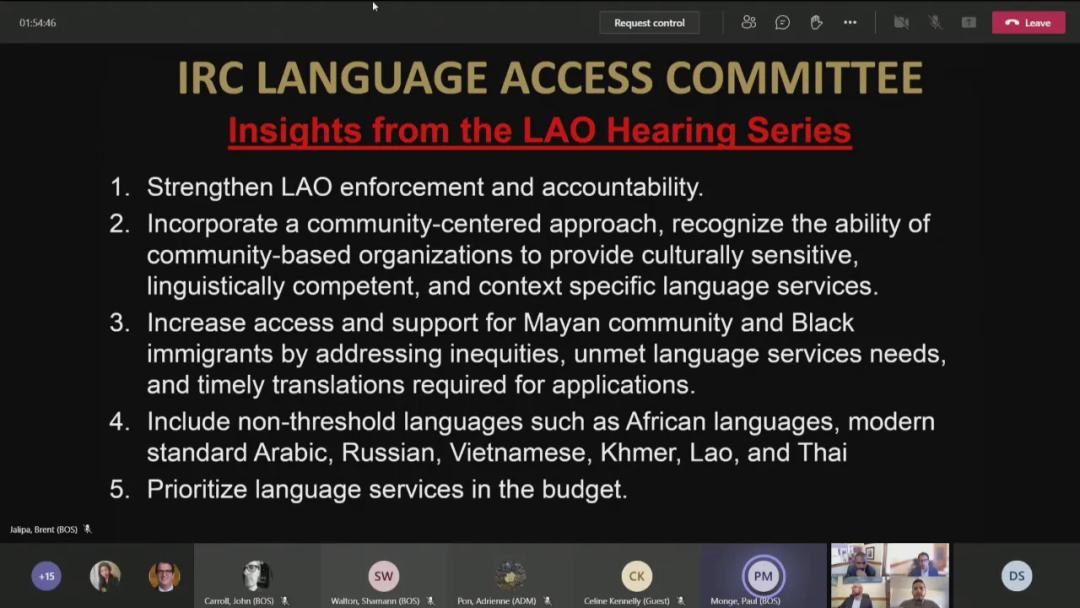
The Government Audit and Oversight Committee of the San Francisco Board of Supervisors held a remote regular meeting on May 20, 2021, chaired by Supervisor Dean Preston and joined by Vice Chair Connie Chan and Supervisor Rafael Mandelman. The committee reviewed four affordable housing grant applications, held hearings on SkyChef's noncompliance with the Healthy Airport Ordinance and the city's 2021 Language Access Report, and then convened in closed session for litigation settlements. Public Comments & Testimony - Items 1–4 (Affordable Housing Grants): No public comment was received. - Item 5 (SkyChef): Anand Singh, president of Unite Here Local 2, called SkyChef's actions egregious and urged the city to hold the company accountable, including terminating or revoking its authorization to operate at SFO. SkyChef workers Lillian Bora and Dul Subtunde described lost wages, commuting burdens, and the need for affordable health insurance. A Unite Here organizing director (Toto) said workers in San Jose were making $17.45/hour while serving SFO flights. - Item 6 (Language Access): A Cantonese-speaking single mother expressed concern about Asian hate and the need for multilingual resources. A Spanish-speaking resident (Danny) testified he was arrested and suffered a fractured back because police and paramedics had no Spanish-speaking responder when he had a seizure; he urged the city to ensure emergency services match residents' languages. - Items 7–10 (Closed Session): No public comment was received. Discussion Items - Affordable Housing Grant Applications (Items 1–4): Sarah Amaral, senior project manager at the Mayor's Office of Housing and Community Development (MOCD), presented resolutions authorizing joint applications with housing developers to the state Affordable Housing and Sustainable Communities (AHSC) Program, which uses cap-and-trade funds to support housing and transit projects that reduce greenhouse gas emissions. The projects were: Balboa Reservoir Building E with BRIDGE Housing (124 units), Sunnydale Block 3A (80 units), Sunnydale Block 3B (90 units), and The Kelsey Civic Center with Mercy Housing California and The Kelsey (112 units, including 28 reserved for people with disabilities). Funding requests ranged from $2.4 million to $20 million for housing, plus additional transportation grant amounts. The resolutions authorize the city to assume joint and several liability for project completion. Supervisor Melgar expressed support for the Balboa Reservoir application, citing its combination of affordable housing and climate action. The committee sent all four items to the full board as a committee report. - SkyChef Healthy Airport Ordinance Hearing (Item 5): Supervisor Mandelman, co-sponsored by President Walton, described SkyChef's alleged "runaway shop" tactic: moving roughly 60% of its SFO workforce to San Jose to avoid the Healthy Airport Ordinance, affecting up to 300 workers with lower pay and no family health care. OLSE Director Pat Mulligan testified that OLSE opened an investigation, sent an investigative notice on April 16, 2021, and issued a notice of violation for failure to cooperate after SkyChef denied access to its San Jose facility and did not produce payroll documents. OLSE's position is that SkyChef is bound by the ordinance at its Burlingame and San Jose facilities while providing services for SFO. Worker Linda Fajardo testified she earns $18.16/hour, pays $250/month for insurance plus $60 copays, and cannot afford physical therapy; she pleaded for help bringing work back to SFO. Supervisors Haney and Walton said companies that flout city laws should not continue contracting with the city. - 2021 Language Access Report Hearing (Item 6): President Walton chaired this hearing. OCEIA Director Adrian Pond presented the 2021 Language Access Report, noting San Francisco has over 870,000 residents, with more than one-third foreign-born and about one-fifth limited English proficient (LEP). Of 56 departments required to report, 53 did, 41 attended OCEIA training, and 46 had written language access policies. Citywide language-access spending was over $22 million, a more than 40% increase from $16.1 million, but the number of bilingual staff and LEP interactions declined, particularly in Cantonese, Mandarin, and Spanish. Pond and Immigrant Rights Commission members Celine Kennelly and Paul Monge recommended stronger emergency planning, a community interpreter bank, expanded bilingual certification, and more enforcement "teeth." Annette Wong, Eva Poon, and Rebecca Dean of the Language Access Network testified about translation quality problems, long waits, over-reliance on telephonic interpretation, gaps for non-threshold languages, and insufficient accountability through department self-reporting. They urged independent audits, publication of violations, and investment in bilingual staffing. - Closed Session Litigation (Items 7–10): The committee convened in closed session to consider settlements: Mohammad Joiyah ($200,000), Daniel Alvarenga ($60,000), Grace International Consortia, Inc. ($316,250), and Bruce Storrs ($55,000). After returning to open session, the clerk reported that the committee unanimously continued the Daniel Alvarenga settlement item to the June 3, 2021 Government Audit and Oversight Committee meeting. Key Outcomes - The committee voted 3-0 to send Items 1–4 to the full Board of Supervisors with positive recommendation as a committee report for the May 25, 2021 meeting. - The committee voted 3-0 to file the SkyChef hearing (Item 5). - The committee voted 3-0 to file the 2021 Language Access Report hearing (Item 6). - The committee unanimously continued the Daniel Alvarenga settlement to June 3, 2021, from closed session.
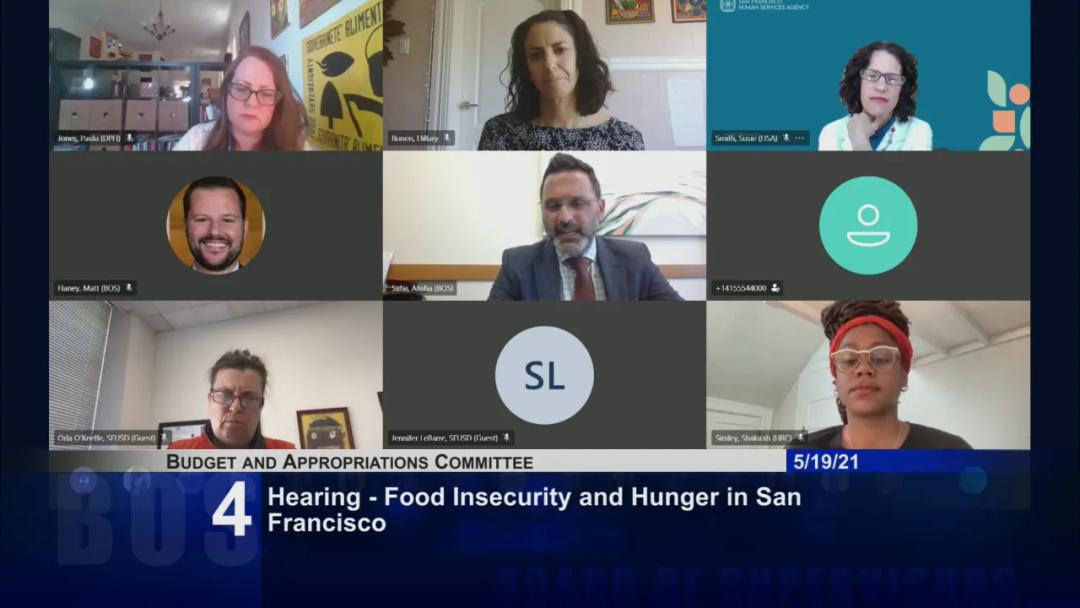
The Budget and Appropriations Committee met remotely on May 19, 2021, chaired by Matt Haney, with President Walton and Supervisors Ronen, Safai, and Marr. The committee considered a free Muni pilot program, the FY2020-2021 nine-month budget status report, and food insecurity in San Francisco. All items received positive recommendations or were filed, with a 4-1 vote on the Muni items and unanimous 5-0 votes on the hearing items. Discussion Items Free Muni Pilot Program (Items 1 & 2) - Ordinance appropriating $12,500,000 from the COVID Contingency Reserve to SFMTA to support a free Muni pilot program in July, August, and September 2021, and a companion ordinance creating a special fund for the program. Supervisor Preston, the lead co-sponsor, urged advancement, citing low ridership, low fare revenues, a need to return to transit, and rising congestion. Supervisor Ronen supported the pilot, noting the success of free Muni for youth. President Walton emphasized fiscal responsibility and the importance of reducing cost barriers to get people back on buses and rail. Chair Haney noted Muni ridership is at 30% of pre-pandemic levels while congestion is already near 100%. Budget Analyst Seven Campbell reported the appropriation was increased to $12.5 million to cover the estimated reduction in fare revenues and provide equity with paratransit riders; if approved, the reserve balance would be $492 million. There were no public commenters on these items. Vote: 4 ayes (Haney, Walton, Ronen, Mar) and 1 no (Safai). The items were moved to the full board with a positive recommendation. FY2020-2021 Nine-Month Budget Status Report (Item 3) - Controller Ben Rosenfield and Michelle Allersmith presented. The report projects a net improvement of $157 million since the six-month report, driven primarily by property transfer taxes, excess ERAF revenue ($83 million change), and $30 million in net improvement in department operations. Continued weakness was noted in sales, business, and hotel taxes. COVID emergency response spending authority remaining is $53 million, down $23 million from the six-month report. Transfer tax remains volatile, with 3% of transactions accounting for 75% of year-to-date revenue. SFO employment is down just under 80% from the prior year. The city expects to incur $462 million in FEMA-eligible expenses, with only $23 million in obligations received to date, creating cash flow challenges. Federal stimulus is now estimated at about $630 million, with the first half expected shortly. The projected two-year budget gap was $26 million before accounting for the current-year surplus. Business tax remains uncertain due to delayed filing deadlines. The hearing was filed on a 5-0 vote. Food Insecurity and Hunger (Item 4) - Supervisors Ronen and Safai called this hearing to discuss food insecurity and hunger, hear about current programs, coordination, gaps, lessons learned from COVID, and opportunities for leveraging resources. Ronen stated that one in four San Franciscans is at risk of hunger. Safai noted that his district contains 17% of HSA public benefits clients, with nearly 11,000 residents on CalFresh. Presentations were made by Paula Jones (Food Security Task Force, DPH), Shakira Simley (Office of Racial Equity, Human Rights Commission), Susie Smith (Human Services Agency), and Jennifer Labar and Orla O'Keefe (SFUSD). Key statistics cited: California food insecurity rose from 10% (2017-19) to 21%; 44% of San Francisco's adult labor force has filed for unemployment; HSA CalFresh caseload doubled from 32,000 to 62,000; monthly CalFresh benefits rose from $165 to $270; HSA projects 947,000 people will receive grocery bags by the end of the fiscal year; Great Plates Delivered provided 2.7 million meals; and SFUSD provided nearly 7 million meals during the pandemic. Presenters emphasized the need to move from food security to food sovereignty, sustain community-led food hubs, reauthorize and resource the Food Security Task Force, and address structural racism in food systems. Public Comments & Testimony Public comment on Item 4 included representatives from the SF-Marin Food Bank, Safe and Sound's Family Resource Center Alliance, Healthy Cornerstore Coalition, Children's Council, SF Market, DISH, La Cocina, Off the Grid, MLVS, Mission Food Hub, Mission Meals Coalition, EatSF, and Bayview residents. Commenters expressed support for continued and expanded food security funding, community-driven and culturally appropriate food distribution models, increased support for urban agriculture, and a shift from emergency food response to long-term food sovereignty. Several commenters requested specific investments, including $350,000 for culturally appropriate food support for the Muslim community, $1 million for Mission Meals Coalition, and sustained funding for programs like EatSF vouchers and community food hubs. No public commenters spoke on Items 1, 2, or 3. Key Outcomes - Items 1 and 2 were passed out of committee by a 4-1 vote (Safai dissenting) and forwarded to the full Board of Supervisors with a positive recommendation. - Item 3 (Nine-Month Budget Status Report) hearing was filed on a 5-0 vote. - Item 4 (Food Insecurity and Hunger) hearing was filed on a 5-0 vote. - The committee will continue, during budget deliberations, to consider how to allocate surplus funds, support food security programs, and reauthorize the Food Security Task Force.
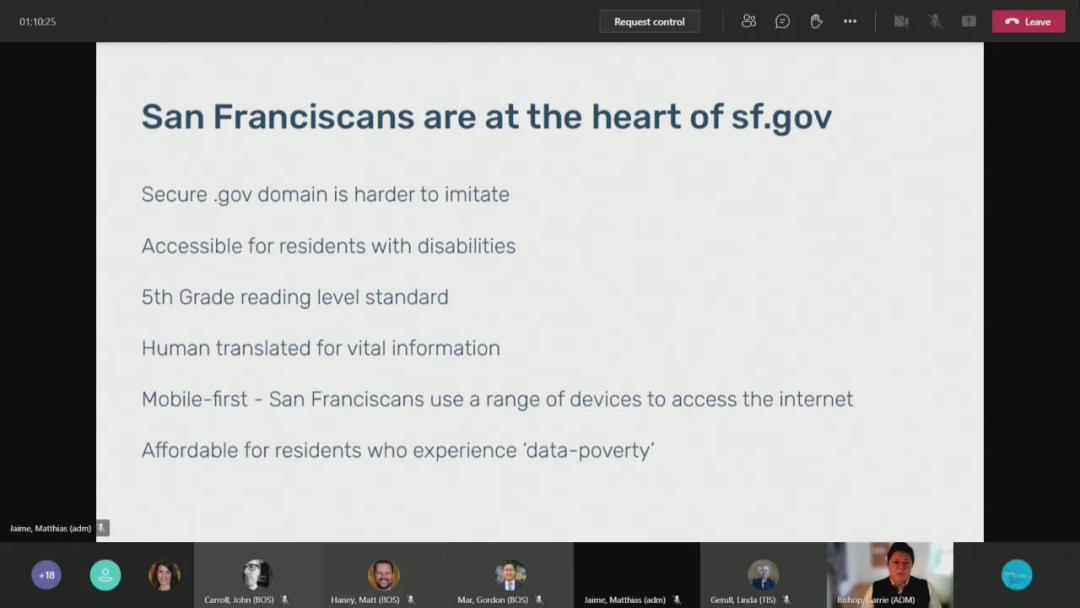
The Public Safety and Neighborhood Services Committee, chaired by Supervisor Gordon Mar and joined by Vice Chair Catherine Stefani and Member Matt Haney, met remotely to consider three agenda items: a liquor license transfer, a hearing on human-centered design and innovation in city services, and a hearing on the rise of commercial shoplifting. The meeting lasted from 11:00 a.m. to approximately 4:30 p.m. Liquor License Transfer – 3347-24th Street (24 Bart Liquor Store) - The committee heard from SFPD ABL Liaison Officer Salmanson, who reported zero letters of protest or support, noted the location is in a high-crime and high-saturation area, and recommended approval with a condition to monitor loitering. The applicant’s representative, David Bielobos, clarified the license is a continuation of a previous license for a specialty grocery store. No public comment was received. The committee voted unanimously to prepare a resolution finding the transfer serves public convenience or necessity and recommend approval to the full Board on May 25, 2021. Public Comments & Testimony – Innovation Hearing - David Pilpell (public comment) criticized the organizational structure of city innovation offices, called sf.gov a downgrade, and suggested consolidating policy and outreach functions under a single agency. Public Comments & Testimony – Shoplifting Hearing - Ken Lomba (DSA president) argued that SFO’s depletion of SF police officers harms public safety and urged using deputy sheriffs at the airport. - Alex Randolph (Gap Inc. policy manager) reported increased theft and safety issues at remaining eight Gap stores, staff turnover, and reliance on off-duty officers. He emphasized retail’s role in job training and called for collaboration. - Doug Welch (Deputy Public Defender) stated that their clients are not organized crime participants but marginalized individuals with mental health, substance abuse, and housing issues; he urged focusing on social services rather than criminalization. - A brief anonymous caller demanded accountability. Discussion Items – Innovation and Human-Centered Design - Supervisor Haney opened, emphasizing human-centered design principles and the need for equitable, user-friendly city services. Presentations were given by: - Matias (COIT): Reviewed the ICT plan, noting 194 out of 967 resident-facing services are mobile-friendly, 55% of users access via mobile, and the city aims for 5th-grade reading level on sf.gov. - Linda Jerule (DT): Described digital infrastructure updates, including next-gen network, cloud adoption, and fiber-to-housing connecting 7,000 units. - Carrie Bishop (Digital Services): Highlighted sf.gov as a single platform, user research (5,200 monthly feedback responses, 80%+ positive), and a service design team redesigning physical permit centers and mental health service centers. - Dee Prasad (Civic Innovation): Described the Civic Bridge program (29 departments, 26 partners, 55+ projects, $5.5M in pro bono work) and training networks. - Discussion included challenges of language access (human translation preferred over Google Translate), the complexity of multiple innovation offices, and the need to embed human-centered design across departments. - Supervisor Mar asked about offline services and multidisciplinary teams. The hearing was filed unanimously. Discussion Items – Commercial Shoplifting in Neighborhood Small Businesses and Anchor Stores - Supervisor Safai opened, linking shoplifting to organized crime, drug addiction, and recidivism. He read a statement from Safeway noting increased losses since Prop 47. - Ben Dugan (CVS Director of Organized Retail Crime): Reported that 85% of losses come from professional organized crime, not opportunistic theft. In San Francisco, 12 downtown CVS stores generate 42% of Bay Area external theft losses and 10% of California losses. He described sophisticated crews stealing $10,000+ per day per store, using boosted bags and selling via online marketplaces. He advocated for aggregating charges across stores and treating professional theft as organized crime. - Jason Cunningham (Walgreens Regional VP): Walgreens closed 17 stores in five years, citing theft costs. San Francisco stores have 4x the chain average shrink; investment in security (10B officers) is 35x chain average. 10 of the top 15 stores nationally for security alerts are in SF. He noted a partnership with ALTO Alliance to aggregate data and pursue cases (90 pending). He supported extending state laws (AB 1065) and federal INFORM Act to curb online resale of stolen goods. - Rachel Michelin (California Retailers Association): Emphasized organized retail crime is a national problem (SF ranked 5th among top 10 cities in California). She advocated for extending funding for the CHP organized retail crime task force and extending AB 1065 and SB 301 (online marketplace regulation). - Commander Peter Walsh and Acting Deputy Chief Raj Vaswani (SFPD): Presented statistics: 2,449 arrests for shoplifting 2018-2020, but only 7% of petty theft incidents result in arrests. They noted a decline in overall shoplifting incidents during the pandemic but an increase in violent “Estes robberies” (shoplifting escalating to force). SFPD has two dedicated organized retail theft investigators working regionally with CHP. They identified 30% of shoplifting as hardcore organized crime. - David Campos (DA Chief of Staff): The DA’s office uses a team-based approach with community liaisons, data mining, and partnerships like ALTO. He highlighted grand jury investigations and aggregation of charges (e.g., scooter theft case). He committed to providing data on charges and dispositions. He noted 95% of cases are deferred due to court closures; approximately 500 cases awaiting trial. - Chief Katie Miller (Juvenile Probation): Showed a decline in juvenile referrals (from 8/month pre-pandemic to 2/month). Of 150 arrests (2019-2021), 15% were for organized retail theft; 9% repeat referrals. Interventions include CARC diversion, restorative justice (Make It Right), and theft awareness classes. She noted that most youth are not repeat offenders. - Chief Fletcher and Tara Ignesi (Adult Probation): Presented data for adult probation clients (6,500 average). Only 1-1.5% of clients had theft-related arrest events; only 5 clients were originally convicted of organized retail theft. They use graduated sanctions (increased reporting, drug testing, home detention, flash incarceration) and focus on substance abuse and mental health treatment. - Supervisor Safai requested follow-up data from SFPD, DA, and Probation on arrests, charges, dispositions, and aggregate charges. He also announced a pending alternative sentencing proposal for drug treatment. The hearing was filed unanimously. Key Outcomes - Item 1 (Liquor License): Unanimous vote to approve resolution recommending the license transfer to the full Board. - Item 2 (Innovation): Hearing filed. Requests for improved coordination among innovation offices and expanded human-centered design training. - Item 3 (Shoplifting): Hearing filed. Requests for detailed data from SFPD, DA, and Probation on arrests, charges, repeat offenders, and outcomes. The committee expressed intent to follow up on organized retail crime, online marketplace regulation, and alternative sentencing proposals.
The San Francisco Board of Supervisors Budget and Appropriations Committee met on May 12, 2021, from approximately 11:45 a.m. to after 7:00 p.m. The committee considered two major items: a proposed three-month free Muni pilot program (ordinances 210453 and 210454) and a hearing on a Budget and Legislative Analyst (BLA) report examining law enforcement functions that could be civilianized (item 210357). The meeting included extensive public testimony and debate on both items. Public Comments & Testimony - Free Muni Pilot: Approximately 25 callers spoke, the vast majority in support. Speakers included community members, representatives from the San Francisco Youth Commission, SOMCAN, Urban Habitat, and the DSA. They argued the pilot would provide financial relief to low-income riders, encourage transit use, reduce congestion, and help meet climate goals. A few callers opposed the pilot, raising concerns about cost and prioritizing service restoration. One caller noted that free muni would save the average rider $81 per month. - Law Enforcement Report: Over 50 callers provided public comment. Many urged defunding the police and reallocating funds to community-based alternatives such as the Compassionate Alternative Response Team (CART), citing racial disparities and ineffective policing. Others, including representatives from the Hotel Council, Chamber of Commerce, and individual residents, called for maintaining or increasing police staffing, foot patrols, and academy classes, citing safety concerns and recent crime increases. Discussion Items Free Muni Pilot Program (Items 210453 and 210454) - Supervisor Dean Preston introduced the proposal to make Muni fare-free for three months (July–September 2021) using $9.3 million from the COVID Contingency Reserve. He later offered amendments to increase the appropriation to $12.5 million to cover free paratransit services (required under the ADA) and updated ridership projections. - Chair Matt Haney and President Shamann Walton expressed strong support, emphasizing the pilot’s potential to boost ridership and put money back in residents’ pockets. Supervisor Gordon Mar also supported. - Supervisor Ahsha Safaí raised concerns about the use of reserves, existing overcrowding on buses, and the need to prioritize service restoration. SFMTA Director Jeffrey Tumlin testified that the agency’s immediate priority is addressing severe crowding (e.g., on the 14 Mission line) and the agency’s structural deficit. He noted that a free-fare pilot would likely increase ridership before service could be expanded, worsening crowding. He also argued that the majority of financial benefit would go to more affluent riders, as lower-income residents already receive discounts. - BLA analyst Dan Goncher reported that the original appropriation did not cover ADA paratransit, estimated at $1.8 million, and that the COVID reserve would still have a balance of $495.8 million after the appropriation. - The committee voted 5-0 to accept the amendments and to continue the items as amended to the next committee meeting. Law Enforcement Alternatives Report (Item 210357) - BLA analyst Nick Minard presented findings on civilianization, traffic enforcement, calls for service, police work orders, and sheriff’s contract with DPH. Key data: In 2019, police responded to 109,000 calls related to mental health, homelessness, wellness checks, and noise complaints (15% of all calls). 18,620 traffic stops were for equipment, registration, or local ordinance violations (29% of all traffic stops). The report estimated that diverting all priority B “mentally disturbed person” calls to the Street Crisis Response Team (SCRT) would free up about 23 FTEs of police time. - Chief Bill Scott confirmed the department’s support for SCRT and the new Street Wellness Response Team for wellness checks, but noted that further planning and infrastructure are needed. He discussed racial disparities in traffic stops (e.g., Black drivers are 34% of equipment violation stops but 14% of driving population) and ongoing reform efforts. - Undersheriff Joe Engler and CFO Crispin Hollings addressed the sheriff’s budget, including the closure of County Jail 4 (CJ4). They reported that CJ4 had approximately 100 FTEs, and that despite closing the facility, the sheriff’s office had retired 30 deputies and still had significant overtime due to staffing shortages and the need to keep CJ4’s kitchen operational until a remodel at CJ2 is complete (estimated within the year). - Department of Public Health and Fire Department representatives also answered questions about the proposed Street Wellness Response Team and coordination with the SCRT. - The committee did not vote on any budgets but filed the hearing. Key Outcomes - Free Muni Pilot (Items 210453 and 210454): The committee approved amendments increasing the appropriation to $12.5 million and including free paratransit. The amended items were continued to the May 19, 2021 committee meeting. - Law Enforcement Hearing (Item 210357): The hearing was filed without a vote. - Procedural Motions: The committee voted to excuse Supervisor Ronan from voting on the Muni items (5-0), and later excused Supervisors Ronan and Mar from the remainder of the meeting (3-0). A recess was taken during the law enforcement hearing.
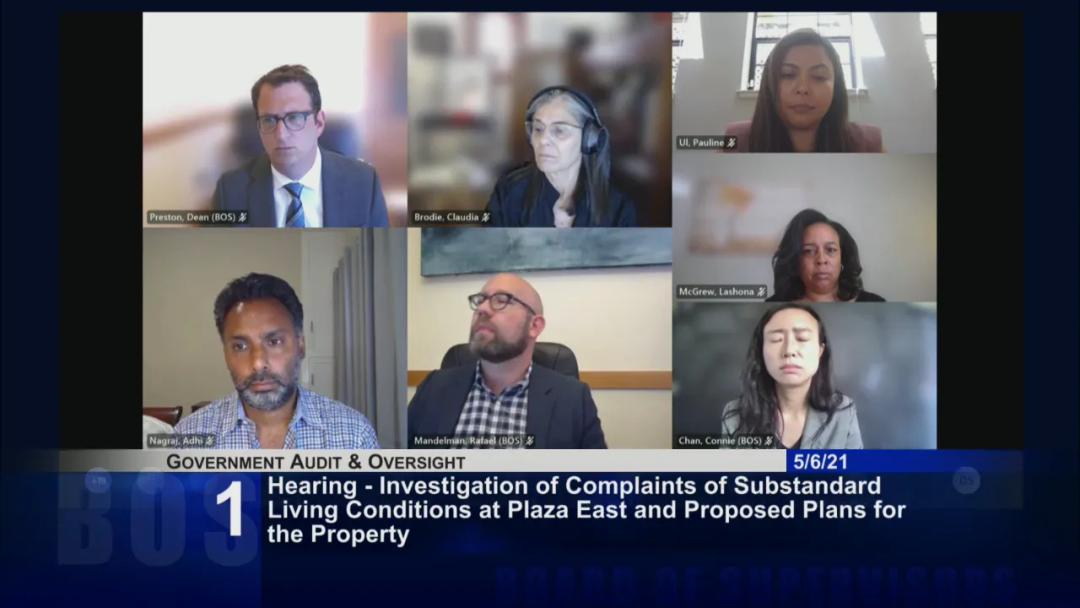
The Government Audit and Oversight Committee of the San Francisco Board of Supervisors met on May 6, 2021, to conduct three agenda items: a hearing on substandard living conditions at Plaza East, a resolution urging utility debt forgiveness and extension of the shut-off moratorium, and a reenactment of emergency hazard pay for grocery and pharmacy workers. The committee heard presentations from city departments, developers, and advocates, and received extensive public testimony. Public Comments & Testimony - Plaza East Hearing (Item 1): Multiple residents and advocates expressed frustration with living conditions, management communication, and past displacement. Some supported the current resident council, while others felt it did not represent them. Several callers urged that future redevelopment be led by residents and include affordable housing, not market-rate units. Others called for independent investigation of construction and maintenance negligence. - Utility Debt Resolution (Item 2): One caller criticized the city's lack of empirical data on environmental and utility issues, alleging corruption at SFPUC. - Hazard Pay Ordinance (Item 3): Supporters (UFCW members and representatives) urged extension, citing ongoing risk and the need to compensate essential workers. Opponents (California Retailers Association, California Grocers Association, and a local grocer) argued the pandemic is abating, the ordinance harms businesses, and it should be allowed to expire. Discussion Items - Item 1: Plaza East Hearing – Chair Preston opened with a history of the property and recent developments: a $2.7 million emergency repair loan, withdrawal of the HUD demolition application, and a planned property management transition to John Stewart Company. Presentations were made by: - San Francisco Housing Authority (Director Tanya Ladiju) and MBS (Adi Nagraj, Tony Salazar): Described the property's chronic underfunding, deferred maintenance, and plans for short-term repairs and long-term reimagining with resident input. They emphasized the application to HUD was a funding mechanism, not a decision to demolish. - Department of Building Inspection (Luis Barahona): Reported 35 housing complaint cases over 15 years, with challenges in tracking violations and communication. - Mayor's Office of Housing and Community Development (Lydia Ely): Detailed the $2.7 million emergency loan conditions, including a scope of work prioritizing life safety, and oversight mechanisms. - Housing Rights Committee (Salimon Hyatt): Criticized the lack of genuine tenant participation, arguing that resident councils and listening sessions do not constitute community-led decision-making. - Item 2: Utility Debt Resolution – Presented by Supervisor Chan, with data from SFPUC (Michael Himes) showing 16,800 residential and 1,700 commercial CleanPowerSF customers 90+ days delinquent (as of March 29, 2021). LAFCO (Brian Goebel) presented research on the inadequacy of state programs and recommended the resolution urging the Governor and CPUC to extend the moratorium and forgive debt. - Item 3: Hazard Pay Reenactment – Presented by Nali G (Chief of Staff for President Walton). The ordinance requires grocery/drug stores with 500+ employees to pay $5/hour extra until June 15, 2021, to align with the state's planned reopening. Supporters argued the pandemic is not over, while opponents cited San Francisco's yellow tier status and economic impacts. Key Outcomes - Item 1: The committee voted unanimously (3-0) to continue the hearing to the regular Government Audit and Oversight Committee meeting on June 17, 2021, for an update on repairs and resident engagement plans. - Item 2: The committee voted unanimously (3-0) to recommend the resolution to the full Board of Supervisors. - Item 3: The committee voted unanimously (3-0) to forward the emergency ordinance reenactment as a committee report to the May 11, 2021 Board of Supervisors meeting.