Browse by city
Date range
Search help

Search titles, summaries, topics and stored transcripts together. Keywords may match separately; put the whole query in double quotes for a phrase. Matching follows word analysis, so punctuation is not exact. Both dates are included. Documents are not searched.

SHOWING 71–80 ENTRIES
71
MAR 10, 2026 · SPOKANE VALLEY, WASHINGTON · CITY COUNCIL & COMMISSIONS
Spokane Valley City Council Special Meeting – Comprehensive Plan & HCDAC Grants – March 10, 2026

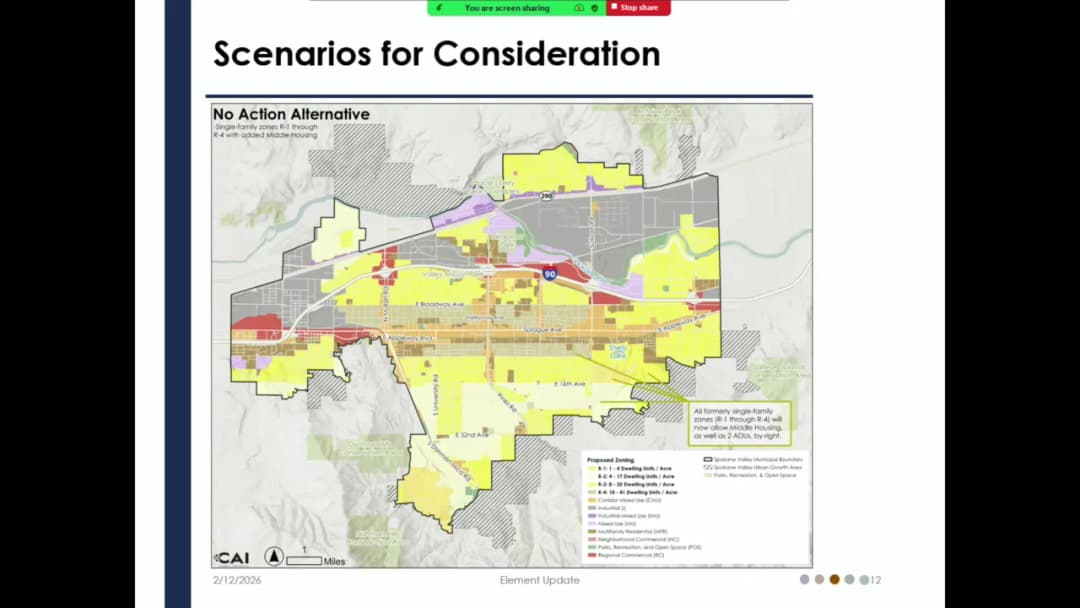
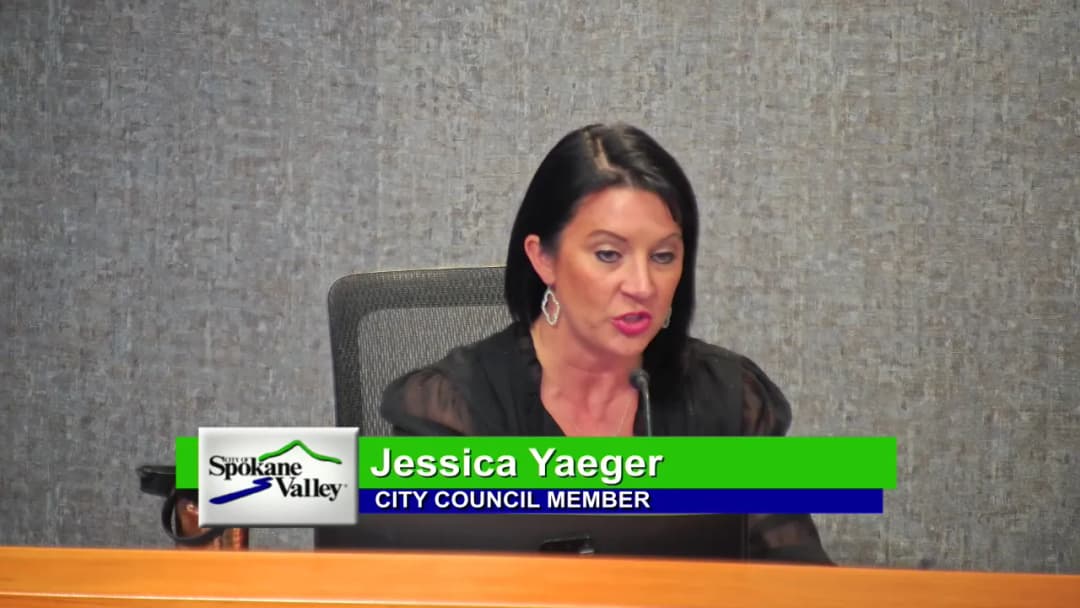
The Spokane Valley City Council held a special meeting on Tuesday, March 10, 2026, at 5:00 p.m. at City Hall to discuss the Comprehensive Plan Update and review HCDAC grant applications. The meeting featured presentations from staff and a consultant, extensive council deliberation on land-use scenarios, and input on proposed allocations for affordable housing and community development grants. Discussion Items Comprehensive Plan Update (Non-Action Item) - Overview: Mike Basinger reviewed the 2016 comprehensive plan history, highlighting the creation of corridor mixed-use zones, elimination of ineffective designations (e.g., garden office), and changes to address state mandates. Steve Roberge noted two deadlines: a draft submission to the Department of Commerce by end of June 2026 and full adoption by end of 2026. - Consultant Presentation: Elliot from Community Attributes presented three land-use scenarios for the update: - No Action: Only state-mandated changes (ADUs, middle housing) take effect; city would likely be non-compliant. - Scenario A: Rezone a strip of R4 land north of Sprague to multifamily (MFR) or corridor mixed use, with density capped at 32 dwelling units per acre (du/ac) in multifamily and mixed-use zones. Includes a UGA expansion for commercial/industrial in the northeast. - Scenario B: Keep R4 as is, but raise density caps to 40 du/ac in mixed-use and regional commercial (RC) zones to meet housing allocation. - Key Council Discussion: - Members debated adding multifamily as a permitted use in RC zones (e.g., mall, auto row). Councilmember Merkel expressed concern about losing sales-tax-generating uses; others suggested requiring ground-floor retail to preserve commercial activity. Councilmember Yeager and Wick favored vertical mixed-use near strategic investments. - Councilmember Merkel criticized state mandates that tie affordability to housing type, arguing single-family homes should not be excluded from lower-income allocations. - A majority of council expressed preference for Scenario A (32 du/ac, rezone north of Sprague). Mayor Patton, Councilmembers Haley, Wick, Kelly, and Deputy Mayor Hattenberg supported A; Councilmember Yeager preferred B; Councilmember Merkel leaned toward A but with caveats. - Council discussed potential expansion of MFR zoning south of Sprague. Mayor Patton and several members opposed; staff will analyze options and report back. - Parking Study: City Manager Holman and Public Works Director Blagan introduced a proposal to spend up to $100,000 on a parking study to seek a state exemption from new parking-requirement preemptions. The study would help mitigate the impact of scattered parking from dense development. Council provided unanimous consensus to proceed, with funding to be included in a future budget amendment. HCDAC Grant Applications (Non-Action Item) - Overview: Eric Robison (Housing & Homeless Coordinator) and Gloria Mantz (via Zoom) presented the Housing Community Development Advisory Council (HCDAC) grant slate. The city has four voting members on the HCDAC board. The council was asked to provide input to the voting members before the March 12 HCDAC meeting. - Affordable Housing (8 applications, $3M available): - Categories: Home (350k), Document Recording Fees (DRF), Sales/Use Tax. - Committee members (Deputy Mayor Hattenberg, Councilmember Wick) shared their recommendations: - Home Fund: Both recommended $350k to Habitat for Humanity for 12 new homeownership units in Spokane Valley and Airway Heights (the only project eligible solely for Home funds). - DRF: Contributions varied. Hattenberg recommended funding projects like Chalice Place ($900k for land acquisition) and others; Wick argued DRF should be reserved for future homeless services (outreach, rapid rehousing) and recommended no allocation to these projects. The county previously indicated a preference for using DRF for these specific applications, but Commissioner Brooks suggested flexibility. - Sales/Use Tax: Both recommended the River Walk Point modernization ($1M) for senior/disabled housing. - Council discussion: Councilmember Kelly questioned Habitat for Humanity's eligibility criteria regarding citizenship; no definitive answer. Councilmember Kelly also questioned the for-profit developer (Cochrane) in the Threshold apartments project, but noted the mixed-income approach. - Community Development (7 applications + disaster recovery): - Capital/Public Works ($1M): - City of Spokane Valley requested $698,000 for sewer connection assistance for up to 25 low-income households in a last unsewered area. Supported by all. - Town of Fairfield requested $253,000 for collapsed sewer line repair. Supported by committee. - Salvation Army Stepping Stones ($100k for rehab of 30 transitional housing units in Spokane) – less priority given the other projects. - Public Services ($50k): Four applications. Committee recommended Lutheran Community Services ($40k) for victim advocacy and SNAP/Meals on Wheels ($10k) for emergency meal kits. Salvation Army's new youth program was not prioritized. - Disaster Recovery ($8.4M): Single applicant, Gray-Orion Recovery Group (new nonprofit), to rebuild 6–12 homes/year in Gray and Oregon road fire areas. Council expressed concern about oversight but acknowledged need; committee will monitor compliance. - Outcome: No formal vote; council input will guide the HCDAC voting members at the March 12 board meeting. Final approval rests with the Board of County Commissioners (May 12). Key Outcomes - Land Use Direction: Staff to focus on Scenario A (32 du/ac cap, rezone north of Sprague) and explore potential expansion of multifamily zoning south of Sprague for further council consideration. - Parking Study: Unanimous consensus to proceed with a $100,000 parking study; budget amendment to be brought forward in April. - HCDAC Input: Council provided guidance to voting members, including support for Habitat for Humanity (Home fund), River Walk Point (Sales/Use Tax), sewer projects (Spokane Valley and Fairfield), Lutheran Community Services (Public Services), and careful oversight of the disaster recovery grant. - Next Steps: Council will receive further updates on the Comprehensive Plan (additional elements in later meetings) and the budget amendment for the parking study.
LAND USE PLANNING 45% · AFFORDABLE HOUSING 26% · ECONOMIC DEVELOPMENT 5% · PUBLIC SAFETY 5%
72
MAR 3, 2026 · SPOKANE VALLEY, WASHINGTON · CITY COUNCIL & COMMISSIONS
Spokane Valley City Council Regular Meeting – March 3, 2026

Meeting Date: Tuesday, March 3, 2026, at 6:00 PM Location: City Hall, Spokane Valley, WA The Spokane Valley City Council convened for a regular meeting on March 3, 2026, at 6:00 p.m. The meeting included an invocation, pledge of allegiance, roll call (all members present), approval of the agenda, a special guest presentation from Spokane City Council President Betsy Wilkerson on regional cooperation regarding a Kratom ban, two general public comment periods, three action items (Kratom ban, a road preservation bid award, and an amended federal legislative agenda), a non-action administrative report on grant opportunities, council comments, and an executive session. Consent Calendar - The agenda was approved unanimously via motion and second. Public Comments & Testimony First General Public Comment Opportunity: - Yvonne Johnson (founder, Spokane Valley Performing Arts Center) and Dr. Andrea Olson (Associate Artistic Director) requested City support for a municipal bond to complete the performing arts center, stating it would not cost taxpayers and would generate tens of millions of dollars. They noted $18.3 million already raised by the community and referenced a feasibility study by Baker Tilly. They asked for a City ownership interest until bonds are repaid. - Ben Lund (Spokane Valley resident) reported that based on community feedback, visible homeless camping has significantly decreased in the area, thanking the City for progress. He countered a councilmember’s earlier statement that no progress had been made. - John Harding spoke against state efforts to reduce law enforcement and firefighter pensions, calling for City action to oppose such measures. He also criticized state Medicaid cuts, expressing personal frustration. - Will Hewlings (downtown Spokane resident) opposed the Kratom ban, arguing that fentanyl causes far more overdoses and that Kratom is not a major problem. He noted 2023-2024 overdose data from Spokane County (2 and 4 overdoses respectively, mostly with other substances). - Justin Haller criticized STA’s bike infrastructure decisions, saying raised bus stops on narrow streets are unsafe for cyclists and that projects lack practical design input from actual cyclists. - Susan DeLucki (Spokane Valley resident) urged early childhood intervention to address root causes of homelessness and addiction, citing programs like Elijah Family Homes and suggesting replicating successful models. Second General Public Comment Opportunity: - No speakers signed up. Action Items 1. Second Reading: Ordinance 26-003 – Banning the Sale of Kratom - Deputy City Attorney Caitlin Prunty and Chief Dave Ellis presented the second reading. The ordinance creates Chapter 755 of the municipal code, prohibiting sale, distribution, and advertisement of Kratom products within Spokane Valley. Violations are class 1 civil infractions ($250 fine) with potential business license revocation. Since the first reading, “billboards” were added to advertisement definitions, and “per violation per day” language was included. - Councilmember Merkel proposed an amendment to delay enforcement until May 5, 2026, to allow businesses to sell existing inventory (citing April 20 as a major sales day). The amendment failed (vote not tallied, but appeared 1-6; Councilmember Kelly voted no, Councilmember Yeager spoke against). - After debate, the original ordinance passed 6-1, with Councilmember Kelly opposed. Councilmember Merkel expressed concerns about lack of regulatory nuance and impact on businesses. Councilmember Yeager preferred a 21+ regulation but acknowledged the City lacks resources for that. 2. Motion: South Sullivan Preservation (8th to 24th) Bid Award - Engineering Manager Erica Amsden presented the award to Ceiling Construction Inc. for $3,937,220. The project will replace asphalt pavement, add sidewalks, ADA ramps, stormwater improvements, and signal revisions. Bids opened February 13, 2026; 12 bidders were all under estimate. WSDOT awarded an additional $1.3 million in NHS funds, reducing the City’s share to approximately $350,000. Construction is planned April to mid-August 2026. Motion passed unanimously. 3. Motion: Amended 2026 Federal Legislative Agenda - City Manager John Holman and lobbyist Virginia Clough presented updates: a $4 million CDS award for the Sullivan-Trent project, $400,000 for Barker I-90 interchange design, and a pending $20.8 million BUILD application for Sullivan-Trent. Councilmember Merkel proposed an amendment to add forest management to the public safety section; it lacked a second and failed. The amended agenda passed unanimously. Non-Action Item Admin Report: Pedestrian/Bicycle Program & Safe Routes to Schools Grant Opportunities - Engineering Manager Adam Jackson presented two WSDOT grant programs (Ped-Bike and Safe Routes to School), combined funding about $107 million (double 2024 levels), applications due mid-April. Proposed applications: (1) Barker-Appleway roundabout, (2) Appleway crossings (pedestrian hybrid beacons/RRFBs), (3) arterial crossings at multiple locations, (4) Planning study for Sprague-Sullivan corridor safety improvements, (5) School zone flashing beacons and RRFBs (adding 18 beacons and doubling RRFBs to 40). City Manager assured council will have intermediate touch points before construction. Council gave consensus to proceed. Key Outcomes - Ordinance 26-003 (Kratom ban) adopted (6-1). Effective 5 days after signature; enforcement delayed 30 days for retailer notification. - South Sullivan Preservation bid awarded to Ceiling Construction Inc. ($3,937,220), unanimous. - 2026 Federal Legislative Agenda amended as presented, unanimous. - Grant applications for Ped-Bike and Safe Routes to School programs authorized by consensus; staff to return for formal motion in late March. - Council comments included updates: Councilmember Wick reported broadband funding awards and his reappointment as chair of AWC Large City Advisory Committee; Councilmember Merkel expressed concern about state funding for the ice rink project (Anovia’s request, not City’s); Councilmember Haley defended the Kratom ban and noted a new behavioral health facility; Deputy Mayor Hattenberg reported SRTC approval of a countywide funding request; Mayor emphasized budget workshop held February 24, 2026. - City Manager updates: 24th & VeraCrest site distance analysis complete, coordinating with fire department; ice rink lease negotiations ongoing; Public Works received National Asphalt Pavement Association quality award for Wellesley Preservation Project. Next meeting (March 10) starts at 5 PM for comprehensive plan workshop and HCDAC discussion. Executive Session - Council moved into executive session for approximately 45 minutes to discuss potential acquisition of real estate and potential litigation (RCW 42.30.110(1)(b) and (i)). No action expected upon return.

PUBLIC SAFETY 20% · CANNABIS REGULATION 15% · PUBLIC ENGAGEMENT 13% · TRANSPORTATION SAFETY 11%
73
FEB 26, 2026 · SPOKANE VALLEY, WASHINGTON · CITY COUNCIL & COMMISSIONS
Spokane Valley Planning Commission Meeting - February 26, 2026: Comprehensive Plan Draft Element Review

A regular meeting of the Spokane Valley Planning Commission was held on Thursday, February 26, 2026, at 6:00 p.m. at City Hall. The commission reviewed proposed changes to three chapters of the Comprehensive Plan (Economic Development, Land Use, and Natural Resources) as part of the state-mandated update, discussed scheduling, and accepted the resignation of Commissioner Meyer. Consent Calendar - Motion to excuse Commissioner Meyer from the meeting (passed unanimously, 6-0), later Commissioner Meyer arrived at 6:02 p.m. and was present. - Approval of the agenda (passed unanimously, 6-0). - Approval of the February 12, 2026, meeting minutes (passed unanimously, 6-0). - Commissioner noted a future request to include vote tallies in minutes. Public Comments & Testimony - No public comments were offered. Discussion Items - Administrative Report: Staff outlined the Comprehensive Plan update schedule. A state grant from the Washington Department of Commerce requires draft documents by the end of June 2026. The process involves two review touches by the Planning Commission per batch of chapters, then one council review, followed by environmental review and final adoption anticipated in late November/December 2026. Three batches of chapters are planned; the first batch (Economic Development, Land Use, Natural Resources) was the subject of the evening's study session. - Economic Development Chapter: Staff presented changes based on prior commission feedback: - Exhibits 6 and 7 will be revised to provide more detail on the "all other" category. - Sections on real estate market considerations and commercial deliveries are being rewritten for clarity (pages 14-15). - Commissioner Weatherman asked about increasing the manufacturing sector (which declined from 2016 to 2025) and whether other geographic areas could host manufacturing to reduce traffic congestion. Staff noted that industrial zoning is concentrated along the I-90 corridor and that locating industrial uses near existing residential areas is difficult. - Commissioner Winkler and others suggested strengthening policy language (e.g., moving from "maintain" to "grow" or "encourage") and adding goals or policies related to AI, technology, and skilled workforce development. Staff acknowledged that strategies will be developed later in the process and that goals and policies may be revisited. - Commissioner McKinley asked about demographic data on retaining young people. Staff indicated such data may be in the upcoming housing element. - Land Use Chapter: Staff revised language characterizing growth, changing descriptors to more factual statements about moderate growth (based on a housing allocation of 16,661 units). Commissioner Weatherman expressed concern that the predicted growth rate may be lower than actual recent trends, but staff noted the plan accommodates moderate growth and includes a 5-year check-in. Changes on pages 2, 6, and 12 were reviewed. One policy (P4 about supporting neighborhood cultivation of produce) was left unchanged. - Natural Resources Chapter: No changes were proposed from the previous meeting. Commissioner Winkler noted limited public input was incorporated; staff confirmed the chapter is largely carried over from the 2016 plan and received few comments. - Process and Scheduling: The next batch of chapters (likely Housing, etc.) will be presented on March 26, 2026, with a follow-up discussion on April 2, 2026. The March 12 and April 9 meetings will be canceled. Staff will strive to provide meeting materials earlier. A running list of cross-chapter issues will be maintained for final review. - Land Use Scenarios: Commissioner Meyer, who had listened to the prior meeting, asked about progress on upzone/rezone decisions. Staff explained that a preferred land use scenario has not yet been selected; it will be discussed further, and public hearings will be held before a recommendation is made. The scenario is not locked in until final adoption. Key Outcomes - The commission endorsed the proposed changes to the Economic Development and Land Use chapters and directed staff to forward them (with ongoing revisions for Economic Development exhibits and section rewrites) to the City Council for their review at the March 10, 2026, meeting. - No changes were recommended for the Natural Resources chapter. - The commission agreed to the revised schedule: cancel March 12 and April 9 meetings; hold a presentation on the next batch of chapters on March 26, with a discussion on April 2. - The commission noted that council will receive final, clean versions of the chapters, and commissioners will receive the same materials electronically. - Commissioner Meyer announced her resignation, effective immediately due to work-related travel conflicts. The commission expressed appreciation for her service, and the chair accepted the resignation. - The meeting was adjourned unanimously at 7:0? (vote 7-0).

LAND USE PLANNING 34% · PROCEDURAL 21% · ECONOMIC DEVELOPMENT 17% · PUBLIC ENGAGEMENT 11%
74
FEB 26, 2026 · SPOKANE VALLEY, WASHINGTON · CITY COUNCIL & COMMISSIONS
Spokane Valley Homeless and Housing Task Force Meeting - February 26, 2026

The Spokane Valley Homeless and Housing Task Force met on February 26, 2026, at 12:30 PM. The meeting began with roll call, public comment, and approval of minutes, followed by a training session on the Open Public Meetings Act (OPMA) and Public Records Act (PRA) conducted by Senior Deputy City Attorney Tony Lee. The remainder of the meeting focused on future meeting scheduling and filling task force vacancies. Consent Calendar - Approval of the January 2026 meeting minutes: Moved and seconded; approved unanimously by voice vote. Public Comments & Testimony - Jennifer Wilcox, a veteran and community advocate, expressed appreciation for the task force's work and for Julie's assistance in providing meeting links and information. She noted the value of the task force in coordinating homelessness and housing efforts and thanked members for their time. Discussion Items - Open Public Meetings Act and Public Records Act Training: Tony Lee, Senior Deputy City Attorney, provided a training on the PRA (RCW 42.56) and OPMA (RCW 42.30). He explained the broad mandate for government transparency, the definition of public records (including emails, texts, social media posts, and video), retention schedules, exemptions (e.g., attorney-client privilege), and penalties for non-compliance. He emphasized best practices for task force members: avoid using personal devices for city business, create a separate email account for task force work, and do not reply-all to informational emails to prevent serial meetings. Members asked about personal devices, record retention, and the impact of AI bots on public records requests. The training was well received. - Future Meeting Schedule and Vacancies: Eric Robison provided updates. Due to anticipated absences, the March 2026 meeting will be canceled. In April, several organizations will be invited to give short presentations on possible uses of 1406 sales and use tax dollars; the RFP process will remain open to all applicants. Robison also discussed filling task force vacancies, particularly for a healthcare provider seat. He suggested the Chaz Street Medicine team, but members requested a broader outreach to include organizations such as Goodwill, veterans centers, the VA clinic, and Branches (focused on adolescent health). Members emphasized the need for youth representation. Robison will follow up with multiple leads. He also noted that Lance Beck may continue serving despite his new role, and that a list of open positions will be emailed to members. Key Outcomes - The January 2026 meeting minutes were approved unanimously. - The March 2026 meeting is canceled; the April 2026 meeting will feature presentations from potential 1406 fund recipients. - The task force will seek to fill vacancies by reaching out to multiple organizations, including Chaz Street Medicine, Goodwill, veterans centers, VA clinics, and Branches, to ensure diverse representation. - Training on OPMA and PRA was completed; members were reminded of best practices for transparency and compliance.

PUBLIC RECORDS 53% · HOMELESSNESS 15% · PUBLIC ENGAGEMENT 9% · PROCEDURAL 9%
75
FEB 24, 2026 · SPOKANE VALLEY, WASHINGTON · CITY COUNCIL & COMMISSIONS
Spokane Valley City Council Winter Workshop - February 24, 2026

The Spokane Valley City Council held a special workshop on Tuesday, February 24, 2026, from 8:30 a.m. to approximately 4:00 p.m. The meeting was a non-action workshop focused on preparing for the 2027 budget, with in-depth discussions on the law enforcement interlocal agreement, other public safety contracts, a proposed public safety coordinator position, business license fees, city events, and the council's vision for future budget goals. No formal votes were taken. Discussion Items City Vision and Budget Priorities - City Manager John Hohman presented the council's existing vision statement: "A city of opportunities where people thrive and businesses prosper." The council expressed general consensus to retain this vision. Councilmembers highlighted the importance of economic development to keep taxes low, manage growth, and preserve community character. Councilmember Wick noted state mandates on residential density may require closer attention to housing development. Law Enforcement Interlocal Agreement – Deep Dive - Deputy City Manager Erik Lamb, along with Chief Dave Ellis and analyst Morgan Koudelka, provided a comprehensive overview of the contract with the Spokane County Sheriff's Office. The contract covers dedicated and shared law enforcement services, costing approximately $38 million in 2026 (56% of the general fund). Key points: - 56% of the general fund is dedicated to law enforcement. - The current agreement runs through December 31, 2027, with a two-year termination notice. - 23 new officers have been added in the last two years, increasing staffing to 111 dedicated officers. - The city purchased 73 vehicles directly since 2022, with a five-year replacement cycle. - Average annual cost growth over 20 years is 4.5%; recent budget jumps are partly due to new officers and conservative estimates. - Indirect costs (countywide and sheriff's office) account for about 12% of total costs but are a concern for cost control. - Councilmembers expressed frustration with the county's delays in providing financial reconciliations and estimates, especially due to the county's new financial software. City staff noted challenges in getting timely, accurate data. - Current issues include: helicopter cost allocation, training center charges, new records management system (RMS) cost of approximately $1.7 million, real-time crime center funding, and insurance costs rising 50% in 2026. - Councilmember Merkel emphasized the need for better cost control and clearer contract terms to reduce administrative burden. Councilmember Yeager noted the importance of timing in contract provisions. Status Update – Other Public Safety Contracts - Deputy Manager Lamb reviewed eight other public safety contracts (detention, district court, public defender, prosecutor, pretrial services, emergency management, SCRAPS, etc.). Most reconciliations are significantly behind (2021-2023). Communication and timely information from the county have been major challenges. Specific issues: - Public defender costs may increase due to new state caseload standards. - Emergency management lost Spokane's contribution ($192,000); county funded the gap for 2026 only. - SCRAPS has a fixed-cost agreement with a 20-year term; a new director is in place. - Council debated the need for more staff to manage these contracts. Public Safety Coordinator Position - City Manager Hohman and Deputy Manager Lamb proposed creating a public safety coordinator (director-level) position to oversee all public safety contracts, improve financial management, and free up staff capacity. Estimated first-year cost: $266,000 (including vehicle). The position was not funded in 2025 or 2026. - Council opinions were split: Councilmember Merkel opposed, preferring to fix contract terms first; Councilmembers Kelly and Wick expressed caution; Councilmembers Yeager, Haley, and Mayor Padden were supportive, citing the growing complexity and the need for dedicated oversight. - No decision was reached; the item will return for further discussion. Business License Fee Increase - City Services Administrator Gloria Mantz presented a proposal to increase the business license fee from $25 to $60 in 2026, $75 in 2027, and $95 in 2028. The fee would remain below $100 and the lowest in the region (Spokane charges up to $1,172). Revenue would be dedicated to public safety, including the coordinator position and consultant costs. - Estimated revenue: $333,000 in year one, rising to $670,000. The Chamber of Commerce was consulted and supported a phased increase under $100. - Councilmember Merkel opposed all tax/fee increases. Councilmembers Kelly and Wick expressed skepticism about using business fees to offset county inefficiencies. Councilmembers Haley and Yeager showed support, citing the low current fee and the need for public safety investment. - No vote taken; staff will continue discussions with the chamber and bring a formal proposal. City Events - Gloria Mantz reviewed three major city-supported events: Celebration of Lights, Cops and Kids Car Show, and the Farmers Market. - Celebration of Lights: 1,100 attendees in 2025; requires 66 hours setup/teardown; no dedicated budget; relies on sponsorships. Proposed recurring cost of $6,500 and one-time equipment purchases. - Cops and Kids Car Show: 1,700 attendees in 2025; estimated cost $20,000 including staff time; ongoing partnership with Spokane Riverside Cruisers. - Farmers Market: Operated by JAKT but unlikely to continue; city lacks capacity to run it without additional staff. Market may be too late to revive for 2026. - Valley Fest: Requested the city take over all aspects (estimated operating budget $225,000). Councilmembers strongly opposed taking on this event; preferred third-party or chamber involvement. - Council supported continuing Celebration of Lights and Cops and Kids, but not Valley Fest. They directed staff to build budgets for the two events and seek partners for the farmers market. Council Vision for 2027-2028 Budget Goals - City Manager Hohman proposed shifting from specific priorities to broader budget themes: Safe and Accountable Community, Connected and Maintained Network, Strong and Diverse Economy, Exceptional Quality of Life, and Strategic and Fiscally Responsible Government. Council will refine wording at a future meeting. Key Outcomes - The vision statement will remain unchanged for now. - Council directed staff to build budgets for Celebration of Lights and Cops and Kids Car Show, but not to take over Valley Fest. - Staff will explore alternatives for the Farmers Market, likely seeking a third-party operator for 2027. - The business license fee proposal and public safety coordinator position will be brought back for formal consideration after further discussion. - Council will continue to work on law enforcement contract renewal issues, with a presentation from the sheriff and county commissioner scheduled for March 17, 2026. - No formal votes were taken, but direction was given on several items.

PUBLIC SAFETY 44% · BUDGET EQUITY ANALYSIS 19% · ECONOMIC DEVELOPMENT 6% · COMMUNITY ENGAGEMENT 5%
76
FEB 19, 2026 · SPOKANE VALLEY, WASHINGTON · CITY COUNCIL & COMMISSIONS
Spokane Valley TPA Commission Regular Meeting - February 19, 2026

The Spokane Valley Tourism Promotion Area (TPA) Commission met on February 19, 2026, at 10:00 AM at City Hall. The meeting covered the final 2025 financial report, administrative updates including data from CoStar and Placer.ai, a proposal to move an Opportunity Fund code text amendment to City Council, and a detailed marketing presentation from 116 & West. The commission reached consensus on the code amendment and agreed to cancel the March meeting. Public Comments & Testimony - No public comments were received; no one signed up to speak. Financial Report - Sarah Farr, Accounting and Finance Program Manager, presented the final year-end report for 2025 TPA fees. Total revenues for 2025 were $1,354,000, slightly above budget. The budget for 2026 remains at $1.3 million. No questions were raised. Administrative Report - Lesli Brassfield presented a comprehensive administrative update: - CoStar Data (December 2025): Spokane Valley hotel occupancy was 46%, down 3% year-over-year. The average daily rate (ADR) was $87. By comparison, the Spokane group of 24 hotels had an occupancy of 42.6% and an ADR of $121. January 2026 data will be available next week. - Q4 Analytics (116 & West): Campaign performance was impacted by holiday advertising competition, increasing cost-per-click. However, digital display and Meta advertising (Facebook/Instagram) using new creative drove higher engagement. The Discover the Valley website saw a 10% increase in active users and a 23% rise in sessions. - Placer.ai Data (December): Out-of-market visitors (non-residents stopping at least 10 minutes) totaled 212,000. Among visitors traveling 150+ miles, there were 42,000 total visitors, 49,000 trips, 97,000 visit nights, and $5.4 million in visitor spend. Top spending categories were hotels, retail, groceries/food stores, restaurants, and automotive. Spokane Valley ranked 9th among Washington cities for visitor spend. - Legislative Update: House Bill 2278, which would make the additional $3 TPA fee permanent, has passed the House Committee on Finance and is awaiting referral to the House Rules Committee. - March Meeting: Brassfield proposed canceling the March meeting due to staff availability and the need to prepare the code amendment for council. Commissioners agreed by consensus. Discussion Items - Opportunity Fund Code Text Amendment (Action Item): Tony Beattie presented the updated language, which clarifies that the City Council's authority to reject the commission's recommendation must be an all-or-nothing vote. The amendment also allows the commission to bring recommendations to council via consent agenda or as a regular action item. Commissioners expressed support and reached consensus to move the amendment forward to City Council. No public comment was received. - Marketing Update (116 & West): Jessica McDonnell and Callie Magenza presented the 2026 strategy: - Strategy Recap: Three focus areas: hotel promotion ($220,000 paid media), course promotion ($50,000), and Discover the Valley tourism brand ($50,000). The shift from 2025 includes dropping C Vent (meeting planner platform) due to low ROI (only 2 of 22 awarded proposals in the Valley) and reallocating those funds to hotel promotion. Ottawa placement (Expedia) will begin March 1 for a three-month trial. - Paid Media Plan: For February–May only, to allow data-driven pivots. Eight ad groups targeting sporting events and regional attractions. - Consumer Journey Discussion: Presenters explained that hotel bookings involve a 71-day journey across 277+ touchpoints, with OTAs dominating. They argued that measuring success solely by direct bookings from the DMO website is unrealistic. Instead, they propose tracking site visits, unique visitors, and promo code usage. Commissioners (notably Grant) pushed for some room-night attribution, noting the need to demonstrate ROI to City Council. Ideas included trackable phone numbers, unique email addresses (for group rates), and promo codes hosted on the places to stay page. - Performance Metrics: Places to stay page users increased 698% year-over-year. Hotel link clickouts and property link clicks saw triple-digit growth. - Canadian Visitors: Based on Washington State Tourism data, the return of Canadian transient visitors is not expected until 2027, but sports groups from Canada continue to travel. Paid media will not currently target Canada. - Creative Direction: Messaging for 2026 will focus on “Family Travel Approved” and “Team Travel Approved” to appeal to group travelers. Key Outcomes - Opportunity Fund Code Text Amendment: The commission reached consensus to direct staff to move the amendment to City Council for introduction. The amendment will go through three readings at council, likely beginning in March or later. - March Meeting Cancellation: The commission agreed to cancel the March 2026 meeting; the next meeting will be in April. - Marketing Direction: The commission acknowledged the updated marketing strategy and the planned OTA trial. No formal vote was taken, but the discussion highlighted the need for measurable attribution. The 116 & West team committed to providing trackable tools (promo codes, custom emails) and ongoing data reviews.

TOURISM DEVELOPMENT 77% · PROCEDURAL 6% · TECHNOLOGY AND INNOVATION 6% · PUBLIC ENGAGEMENT 5%
77
FEB 19, 2026 · SPOKANE VALLEY, WASHINGTON · CITY COUNCIL & COMMISSIONS
Spokane Valley City Council Special Meeting – February 19, 2026: Federal Lobbyist Update and Legislative Agenda Discussion

The Spokane Valley City Council held a special meeting on Thursday, February 19, 2026, at 3:30 PM at City Hall. The meeting focused on an update from the city's federal lobbyists, Cardinal Infrastructure, regarding ongoing infrastructure projects, federal funding, and planning for an upcoming trip to Washington, D.C. Council members also discussed legislative priorities and received an update on federal activities. The meeting concluded with an executive session for potential litigation. Discussion Items - Cardinal Infrastructure Introduction: Sherry Little (Managing Partner) and Mike from Cardinal Infrastructure introduced themselves. Little noted that Cardinal has served the city for eight years, helping secure federal earmarks and discretionary grants for projects like the Pines Grade Separation and Sullivan Trent. City staff praised Cardinal's assistance in navigating federal agencies and congressional delegation. - Update on Federal Government Activity: Little and Mike provided an update on several federal issues: - Pines Grade Separation Project: Construction is underway, but one agreement for $5.6 million with the Federal Railroad Administration (FRA) is not yet finalized. The FRA's lack of experience administering such grants has caused delays. City staff noted that the project broke ground in November 2025. - Sullivan Trent Project: The city submitted a BUILD grant application for the final funding chunk. Already received $14.6 million in federal funds (FY22, FY23, FY25). The project was ranked first among 13 regional projects by the Spokane Regional Transportation Commission, with a $4 million state ask. - HUD Continuum of Care: Proposed changes by the Trump administration were challenged in court, and a judge blocked them. A recent appropriations bill required funds to go to existing grantees, so Spokane County should receive FY26 funding. Future years remain uncertain. - COPS Program: The city received a $1.25 million grant for 10 law enforcement positions (partially funded) and a subsequent smaller grant. A meeting with the Department of Justice is planned for the DC trip. - Sanctuary City Issue: Councilmember noted the city passed a resolution declaring it is not a sanctuary city. Little advised that this stance is meaningful to the White House and congressional Republicans. Councilmember referenced that Spokane is considering policies allowing private property owners to not rent to ICE and restricting ICE access to public parks, which Spokane Valley has not done. - Federal Legislative Agenda Discussion: Council members raised additional priorities: - Hydropower and Snake River Dams: Council members expressed strong support for protecting hydropower and opposed efforts to throttle or remove dams on the Snake River, citing impacts on energy, agriculture, and barge transportation. - Forest Management: Council members emphasized the need for better federal forest management to reduce wildfire risk, especially on BLM land near the city. They noted that the current administration is supportive of this approach. - Small Business Loans: Support for simplifying the federal small business loan process to help the city maintain its reputation as business-friendly. - Fairchild Air Force Base: Councilmember Wick highlighted the importance of protecting the base from encroachment, particularly wind turbines that interfere with flight operations. - Broadband: The city joined a regional broadband authority to help with a BEAD grant proposal. Washington state is one of a few states that have not yet received final approval for its BEAD grant, partly due to shifting from fiber to technology-agnostic prioritization. - State Tax on Precious Metals: Councilmember raised concern about a new Washington state tax on sales of gold and silver bullion, arguing it is unconstitutional and driving business to Idaho. Lobbyists were not familiar with the issue. - Washington DC Trip Discussion: The trip is scheduled for March 24-27, 2026 (fly in on 24th, meetings on 25th and 26th, depart 27th). Planned meetings include: congressional delegation (Senators Cantwell and Murray, Congressman Baumgartner), Department of Transportation (focus on FRA for Pines project), Department of Justice (COPS grants), HUD (Continuum of Care, CDBG), and the White House Office of Intergovernmental Affairs. The lobbyists will prepare talking points. Key Outcomes - No formal votes were taken on the legislative agenda or new priorities. The council reaffirmed its existing legislative agenda as the guide for the DC trip. - Executive Session: The council voted unanimously to adjourn into executive session for approximately one hour to discuss potential litigation (RCW 42.30.110(1)(i)). The session lasted from about 4:30 PM to 5:56 PM, after which the council adjourned the meeting. - Next Steps: The lobbyists will use council feedback to prepare for the March DC trip. Council members were encouraged to provide additional guidance. The city will continue working on finalizing the Pines agreement with FRA and monitor federal funding developments.

PROCEDURAL 25% · INTERGOVERNMENTAL RELATIONS 25% · TRANSPORTATION SAFETY 13% · PUBLIC SAFETY 7%
78
FEB 17, 2026 · SPOKANE VALLEY, WASHINGTON · CITY COUNCIL & COMMISSIONS
Spokane Valley City Council Regular Meeting - February 17, 2026

The Spokane Valley City Council held a regular meeting on Tuesday, February 17, 2026, at 6:00 PM at City Hall (10210 E Sprague Ave). The meeting included a special recognition, a proclamation, public comments, two action items (surplus property declaration and a city safety grant application), and three administrative reports (homeless program update, public art placement, and budget 101 discussion). The meeting adjourned following council, mayor, and city manager comments. Special Guests/Presentations - You Rock Recognition: Lance Beck, President and CEO of the Greater Spokane Valley Chamber of Commerce, was recognized for over seven years of service and advocacy for local businesses. Council members praised his leadership and partnership with the city. Beck noted that membership has grown and the chamber remains in strong hands. Proclamations - National Sportsmanship Day: A proclamation declaring March 3, 2026, as National Sportsmanship Day was presented. A recipient accepted, emphasizing that sportsmanship should be practiced daily. Public Comments & Testimony - First General Public Comment: - Ben Lund (36-year resident, business owner) spoke on housing market context, noting that average days on market for rental units is now 3–4 weeks, indicating softening. He suggested monitoring home ownership rates, rental vacancy, and days on market to avoid oversupply. - An unnamed resident (accompanied by Linda) stated that their issues remain unresolved and urged the council to provide a firm plan. She also noted the dates of Presidents' Day, Ramadan, and Lunar New Year, advocating for inclusive celebrations. - Public Comments on City Safety Program: - Ben Lund thanked staff for safety work and emphasized that Spokane Valley is now one of the largest cities in Washington, requiring a large-city mindset for crosswalks and road safety. - Another resident expressed support for roundabouts but urged better driver education. He also reiterated opposition to a proposed road at VeraCrest and 24th, citing safety concerns for children walking to school buses. Action Items - Resolution 26-002: Surplus Items – Dan Domrese, City Manager (misstated as county manager), presented the resolution to declare IT, parks, and street department items as surplus. Disposal would occur via public auction or bid. Proceeds go to the general fund. Approved unanimously. - Motion Consideration: City Safety Program – Adam Jackson, Engineering Manager, requested authorization to apply for a state safety grant for three projects: the Barker & Appleway roundabout ($4.5M estimated), Appleway pedestrian crossings (three locations), and arterial crossings (five locations). The state program requires roundabout-first design unless proven otherwise. Staff noted that the South Barker corridor has been a high priority. After discussion about state mandates, public input, and safety benefits, the motion passed 5-2 (Councilmembers Merkel and Kelly opposed). Councilmember Merkel expressed concern over state forcing design choices; Councilmember Kelly cited lack of clear public consensus. Non-Action Items - Homeless Program Update – Eric Robison, Housing and Homeless Coordinator, and Officer Spiewak presented data from 2025: an average of 323 unduplicated contacts per quarter; 50 individuals placed into long-term housing, 43 into shelters, and several into transitional housing or respite care. Officers visited 779 camps, issued 58 citations/arrests, and handled 712 radio calls. Challenges include limited shelter beds, no legal place to sleep in vehicles, involuntary treatment limitations, and encampments on private and railroad properties. Councilmember Merkel praised officers but expressed frustration with lack of progress; staff and City Manager Holman countered that quality-of-life improvements are visible and that the city has made progress given the complexity. - Placement of Public Art – Virginia Clough, Legislative Policy Coordinator, presented four unplaced sculptures donated by the Spokane Valley Arts Council: Owl Woman Calls Your Name (in storage), Otter Woman (in storage), Sun Blessing (near completion), and Soulmates (marble, requires indoor location). A fifth piece, Heart of the Valley, is planned for Balfour Park Phase Two. Indomitable Spirit was damaged in a hit-and-run and is being assessed for repair. Council reached consensus to place Owl Woman at Pines Cemetery, Otter Woman at the Doris Morrison Learning Center, Sun Blessing at an STA park-and-ride (in coordination with STA), and to explore a mall location for Soulmates. - Budget 101 Discussion, Part Two – Chelsie Walls, Finance Director, reviewed major revenues: sales tax (49% of general fund recurring revenues), property tax (21%), service charges, fuel taxes (flat/declining), utility tax (6% on telephone), real estate excise taxes (volatile), lodging taxes, and vehicle license fees ($20/year effective July 2024). She explained recurring vs. non-recurring revenue, fund balance, reserve funds ($6.6M in service level stabilization reserve, goal of 14% of general fund), and low debt ($7.8M outstanding, mostly for city hall). The next budget workshop is scheduled for February 24, 2026. Council Comments - Councilmember Merkel: Highlighted Senate Bill 5272 regarding sportsmanship and referee safety, urging support. Mayor’s Comments - Mayor Patton: Criticized state overreach in land use, regulations, and proposed changes to sheriff elections. Quoted Ronald Reagan on government working with, not over, citizens. City Manager Comments - John Holman: Announced a special meeting on Thursday, February 19, 2026, at 3:30 PM with federal lobbyists (Cardinal Infrastructure), followed by executive session. The winter budget workshop will be Tuesday, February 24, 2026, from 8:30 AM to 3:00 PM, with no evening council meeting. He also showed a video of Walker Construction receiving a Build Northwest award for the Cross Course project. Key Outcomes - Resolution 26-002 (surplus items) passed unanimously. - Motion to apply for the City Safety Program grant passed 5-2. - Council gave direction on placement of four public art pieces. - Staff provided updates on homelessness, public art, and budget 101. - Next meetings: Special meeting on February 19, 2026 (3:30 PM); Winter budget workshop on February 24, 2026 (8:30 AM–3:00 PM).

HOMELESSNESS 22% · TRANSPORTATION SAFETY 18% · PUBLIC ENGAGEMENT 12% · ARTS AND CULTURE 9%
79
FEB 12, 2026 · SPOKANE VALLEY, WASHINGTON · CITY COUNCIL & COMMISSIONS
Spokane Valley Planning Commission Meeting - February 12, 2026: Comprehensive Plan Draft Element Review

The Spokane Valley Planning Commission held a regular meeting on February 12, 2026, at 6:00 PM in City Hall. The main item was a study session on the Comprehensive Plan update (Valley 2046), reviewing draft chapters for Economic Development, Land Use, and Natural Resources. Commissioners provided extensive feedback on proposed land use scenarios, density increases, and related policies. No formal votes were taken on the plan; further discussion and a preferred land use scenario decision are expected in March. Commission Reports - Commissioner Winkler reported meeting with city staff about the Trent and Sullivan Transportation Improvement Project, noting a revised design featuring a roundabout on Trent and one roundabout on Sullivan, which he supports. - Other commissioners reported nothing of substance. Administrative Report - Steve Roberge, Planning Manager, informed the commission that the City Council recently passed interim ordinances on battery energy storage facilities and retail marijuana, which will be rolled into the comp plan update. - He also noted that scoping is open for the Environmental Impact Statement (EIS) related to the comp plan, which will help evaluate alternatives and inform final decisions. Public Comment - No members of the public spoke during the public comment period. No one was on Zoom. Discussion Items: Comprehensive Plan Draft Element Review - Elliot Weiss, Senior Planner at Community Attributes Inc., presented an overview of the comp plan update process (Valley 2046), emphasizing compliance with state mandates (e.g., HB 1220, 1110, 1337) regarding housing density, middle housing, and ADUs. - The team presented three land use scenarios: - No Action Alternative: State requirements for ADUs and middle housing would still take effect, but no proactive city changes. - Scenario A (Limited Rezone + Upzone): Increase density in multifamily/mixed-use zones from 22 to 32 dwelling units per acre; rezone a portion of R4 land near Sprague Avenue to multifamily residential; allow multifamily in RC zones. - Scenario B (No Rezone, Stronger Upzone): Keep R4 zoning but increase density to 40 dwelling units per acre in multifamily/mixed-use zones to meet capacity requirements. - Commissioners raised concerns about the impacts of increased density on infrastructure, traffic, schools, parks, the aquifer, and neighborhood character. Specific points: - Commissioner Winkler questioned the accuracy of population growth projections and the term "modest" for a 45% density increase (22 to 32 units/acre). He urged inclusion of annexation opportunities and clearer data on commuting patterns. - Commissioner McKinley asked about the capacity of industrial land and the strain on services. - Commissioner Weatherman noted the existing traffic congestion in areas like Sullivan and Pines, stressing the need for transportation modeling. - Commissioner Pockel expressed concern about stormwater drainage and loss of green space. - Staff clarified that state mandates require these changes; the city is trying to minimize local impacts. Director Mike Basinger explained that land values in Spokane Valley make high-density development unlikely in practice. - Commissioner Winkler criticized the clarity of real estate market language in the economic development element and requested updated commuting data with more location detail. - The Natural Resources element was praised for its minimal changes. Key Outcomes - No formal motions or votes were taken on the comprehensive plan elements. The commission provided substantive feedback to be considered in revisions. - The preferred land use scenario will be deliberated further; city council is expected to provide direction in March. - The planning commission will hold a follow-up roundtable discussion at its next meeting to continue the conversation. - Written feedback from commissioners is welcome before the next meeting. - Commissioner Winkler requested a response to a letter from Bo McCann regarding adding property to the urban growth boundary; staff confirmed follow-up. - A thank-you letter from a resident (Ms. Rogers) was read, expressing gratitude for the commission’s work. - The meeting adjourned at an unspecified time.

LAND USE PLANNING 46% · PROCEDURAL 17% · AFFORDABLE HOUSING 10% · TRANSPORTATION SAFETY 9%
80
FEB 11, 2026 · SPOKANE VALLEY, WASHINGTON · CITY COUNCIL & COMMISSIONS
Spokane Valley City Council Regular Meeting - February 11, 2026

The Spokane Valley City Council held a formal meeting on February 11, 2026, to address a wide-ranging agenda including a proclamation, consent agenda, two action items, a grant application, and several administrative reports. The council approved a telecommunications franchise, advanced a Kratom sales ban ordinance to a second reading, and authorized a grant application for housing and community development programs. Proclamation - Mayor Paddon proclaimed February 16, 2026 as President's Day in Spokane Valley, encouraging reflection on liberty, justice, and democracy. Consent Calendar - The agenda and consent agenda were approved unanimously. Public Comments & Testimony - General comment: A community member spoke about police and vaccines, expressing hope for the police and fire departments in 2026. No other general public comments were made. - Kratom ordinance testimony (during action item): - Ben Lund, a 36-year resident and business owner, supported a total ban, stating the city lacks sufficient data and should choose the most enforceable option. - Spencer Coffin, a Spokane resident, opposed a blanket ban, advocating for a Kratom Consumer Protection Act model with age limits, labeling, testing, and restrictions on high-potency 7OH extracts. - Jennifer Gillis, a chronic pain patient, opposed the ban and supported sensible regulation to preserve access to whole-leaf Kratom while restricting synthetic 7OH. - Misty Brown (Thornton, CO), a former pain-pill user, opposed the ban, crediting Kratom with saving her life and urging regulation instead. - Melody Wolf (Kalamazoo, MI), a 12-year Kratom consumer and chronic pain patient, asked the council to follow FDA/HHS trajectory and distinguish Kratom from 7OH. - Alison Smith (Washington, DC), Director of Government Affairs for the Global Kratom Coalition, opposed the ban, recommending 21+ sales regulations, a 2% limit on 7OH, and labeling/testing requirements. - John Shenholser (Ashland, VA), National Advocacy Director for American Veterans for Kratom, opposed the ban, stating natural Kratom is safe and only synthetics should be banned. - Jordan Richard (California), with family in Spokane Valley, opposed the ban, calling Kratom a "life-saving plant" and urging the council to ban synthetic products only. Action Items - Forge Fiber 37 LLC Franchise (Ordinance 26-001): Approved a 10-year non-exclusive telecommunications franchise. The performance bond was increased to $100,000, and language was added regarding potential future franchise fees. Passed unanimously. - Kratom Sales Ban (Ordinance 26-003, First Reading): Police Chief Dave Ellis and Assistant City Attorney Caitlin Prunty presented the ordinance, which would prohibit the sale and distribution of any Kratom product in Spokane Valley. They noted Kratom's psychoactive effects, lack of regulation, contamination risks, and FDA-reported deaths. Staff highlighted enforcement challenges and sought council guidance on fines and business license revocation. Councilmembers debated a total ban vs. regulations, and Councilmember Yeager moved to table the ordinance for three months for additional research; the motion failed. The council then voted to forward the ordinance to a second reading, with two dissenting votes. - Grant Application (Spokane County Housing and Community Development): Approved submitting applications for 2026 RFP for the homeless outreach program and CDBG capital funds for side sewer installations and utility connection fees for low- to moderate-income households in the Greece Sewer Project area. Passed unanimously. Administrative Reports & Presentations - Surplus Items: City Manager Dan Domeris presented a draft resolution declaring IT, parks, recreation, and street department items surplus. Council gave consensus to bring it forward for final approval on February 17, 2026. - Capital Improvement Projects: CIP Engineering Managers Erica Amston and Rod Lockmiller presented nine 2026 construction projects, including the Pines Road BNSF grade separation, Sprague Avenue Preservation, South Barker Corridor, Sullivan Avenue Preservation, local access preservation, Sullivan Road North, 32nd Avenue Preservation, arterial school crossings, and Belfort Park pickleball/basketball courts. Discussions covered pavement condition indexes, traffic-calming striping, and school coordination. - Clean Air / Department of Ecology Comment Letter: City Manager John Holman and Senior Deputy City Attorney Tony Beattie presented a draft comment letter on Ecology's proposed regulations for criteria pollutants in overburdened communities. The letter argues that wildfires, wood smoke, and agriculture are the major pollutant sources, not businesses, and requests that enforcement require third-party assessments and a state-funded grant program to cover implementation costs. Council gave consensus to send the letter. - Budget 101: Finance Director Chelsea Walls provided an annual overview of governmental accounting and budgeting, covering GAAP, BARS, fund accounting (31 funds), the 2027 budget calendar, the city's 50% fund balance policy (current at 49.04%), and the upcoming budget workshops on February 24 and June 9. Council Reports - Councilmember Kelly reported on the SCRAPS advisory board meeting, noting goals for pet license compliance and agency relationships. - Councilmember Yeager reported on the Valley Chamber health care panel, a Citizens Alliance for Property Rights presentation, police precinct upgrades, and a school visit; she also mentioned upcoming opioid and DSHS meetings. - Councilmember Haley reported on Olympia trip and SRTC funding recommendations. - Deputy Mayor Hattenberg reported on a ribbon cutting, police precinct completion, commute smart awards, and STA updates (including an $82 million federal grant for Division Street BRT, a community van pilot, and ridership survey results showing 67% of riders have no car). - Mayor Paddon reported on similar events and highlighted the commute trip reduction awards. Advanced Agenda / Future Items - Councilmember Yeager requested an administrative report on noise ordinances after complaints about a nightclub (Shogun). - Councilmember Merkel requested further discussion on options for addressing "zombie properties," including potential vacant property registration. - A report was requested on the pavement preservation pilot program near U-High. City Manager Comments - John Holman announced community conversation sessions (next Tuesday with Councilmember Kelly as theme, March on capital improvements), coordination with WSDOT on the North Spokane Corridor, and the February 24 budget workshop. Key Outcomes - Agenda and consent agenda approved unanimously. - Ordinance 26-001 (Forge Fiber franchise) approved unanimously. - Ordinance 26-003 (Kratom ban) forwarded to second reading; motion to table failed. - Grant application approved unanimously. - Consensus to bring surplus declaration forward on Feb 17. - Consensus to send clean air comment letter to Ecology. - Council directed staff to prepare reports on noise ordinances, zombie properties, and pavement preservation pilot.

CANNABIS REGULATION 32% · PUBLIC SAFETY 12% · PROCEDURAL 10% · ENGINEERING AND INFRASTRUCTURE 10%
OPENPUBLICA · PUBLIC MEETING INDEXUPDATED DAILY · openpublica.com