The Housing & Redevelopment Authority (HRA) Board of Commissioners met on February 11, 2026, at 2:00 PM in Council Chambers, City Hall. Vice-Chair Jost called the meeting to order and adjourned at 2:02 PM. Chair Johnson was excused, and Commissioner Kim was absent. The single agenda item was a resolution to extend funding reservations for Saint Paul projects applying for Minnesota Housing Finance Agency (MHFA) grants. Discussion Items - Resolution 26-252: Interim Executive Director Melanie McMahon explained that the HRA had previously authorized funding reservations for projects seeking MHFA's 2025 consolidated RFP in June 2025. These reservations help projects earn commitment points in the RFP process. MHFA is now accepting applications for round two of the same 2025 consolidated RFP, so the resolution confirms that reservations for projects from the first round remain effective for the second round. Key Outcomes - Resolution 26-252 was adopted unanimously (5-0) with Commissioners Noecker, Yang, Bowie, Jost, and Coleman voting in favor. Commissioners Johnson and Kim were absent.
Public Meetings - St Paul, Minnesota
Public Meetings - St Paul, MinnesotaOn February 11, 2026, the St. Paul City Council received a presentation from Bill Dermady of the Department of Planning and Economic Development on the results of the Congregate Living Zoning Study (formerly the Sober Living Study). The study was initiated in August 2024 through a one-year moratorium to examine regulations for sober houses, supportive housing, and other congregate living facilities. The presentation covered definitions, legal context, issues leading to the moratorium, and recommendations from the Planning Commission. No formal votes were taken; the council will hold a first reading on March 4, 2026, and a public hearing on March 11, 2026. Discussion Items - Study Overview: Mr. Dermady reviewed the timeline: the moratorium was instituted in August 2024, a Planning Commission public hearing was held in October 2024, and the Planning Commission made its recommendation on February 4, 2026. The city council will have a first reading on March 4, 2026, and a public hearing on March 11, 2026. - Definitions and Categories: The study covers several categories of congregate living. A sober house is defined as financially self-supporting, with no services, intended to be family-like. A supportive housing facility receives government funding and provides services. Other categories include shelter for battered persons, licensed correctional community residential facility, overnight shelter, emergency housing, and rooming houses. Rooming houses (individually rented bedrooms with community living space) are not allowed in as many districts and usually require a conditional use permit. Sober houses have a minimum separation distance of 330 feet from each other; supportive housing and other facilities must be 1,320 feet apart (600 feet in downtown). Rooming houses have no separation distance requirements. - Issues Leading to the Moratorium: The primary issue was sober houses wanting to convert to supportive housing due to changes in state funding streams. When a sober house begins receiving outside funding, it no longer meets the definition of a sober house and must comply with supportive housing separation requirements (1,320 feet), which many could not meet. In 2025, there were ten variance requests for supportive housing facilities, seven clustered near West 7th or University Avenue. Additionally, a potential operator sought to house 30+ residents in a sober house with no staffing or services, which current zoning language ("shall be granted" for reasonable accommodations) might have allowed. DSI has been approving such requests up to the fire certificate of occupancy limit. - Legal Context: The Americans with Disabilities Act and Fair Housing Amendments Act protect people with disabilities, including those recovering from substance abuse. The 1990 federal appeals case Family Style v. City of St. Paul upheld the city's minimum separation distances as protecting patients from reinstitutionalization. The city's current code requires all sober houses to request reasonable accommodations even if not needed, and includes language that such requests "shall be granted" automatically, which goes beyond federal requirements. State law has changed: in 2023 the state defined sober homes, and in 2024 it created a new definition of "recovery residences" (effective 2027) with two levels of certification. Level 1 aligns with the city's sober house definition; Level 2 would be staff-run and eligible for funding, pushing them into the supportive housing category. Also, the state's freestanding room and board program is being phased out. In April 2025, two major service providers (New Way and Evergreen) stopped redistributing state funds to third parties for sober residences due to legal concerns about kickbacks, leading providers to seek other state funding (e.g., Housing Supports), which placed them definitively in the supportive housing category. - Planning Commission Recommendations: The Planning Commission made the following recommendations that the council will consider: 1. Amend the reasonable accommodations process to align with federal law. 2. Replace the requirement for all sober houses to request reasonable accommodations with a registration system. 3. Cap the number of residents in a sober house at 10 (with possible exceptions via variance or legitimate reasonable accommodation request, evaluated case-by-case). 4. Minor updates: rename "sober house" to "sober house financially self-supporting" to clarify; require a conditional use permit in fewer districts for shelters for battered persons; and other clarifications (e.g., nutritional services definition). 5. No changes to the minimum separation distances: 330 feet for sober houses and 1,320 feet for supportive housing (600 feet in downtown). The Planning Commission debated but decided against reducing these distances, citing the importance of management quality and the risk of overwhelming certain corridors like University Avenue and West 7th. The 1,320-foot distance matches Minneapolis's requirement and is considered necessary to avoid recreating an institutional environment. - Council Discussion: Council President and members asked clarifying questions. Councilmember Yang expressed concern about the reduction in available beds due to funding changes and suggested adding the issue to the city's legislative agenda. Councilmember Coleman asked about the rationale for the 10-resident cap; Mr. Dermady noted it was a historical number and more flexible than the maximum family size of 6. Councilmember Trust (likely Councilmember Just) commented on the need for clarity and appreciated the work. Council President asked about aligning city terms with state terms and about the effect on variance applicants. Mr. Dermady explained that without changing separation distances, facilities that had been seeking variances would still need a variance or limit to 6 (supportive housing as a family) or 10 (sober house). He also noted that the Planning Commission did not recommend regulating supportive housing in other ways (e.g., by size or housing first philosophy). Key Outcomes - No formal votes were taken at this meeting. - The council is scheduled to conduct a first reading of the proposed ordinance changes on March 4, 2026, and a public hearing on March 11, 2026. - Councilmember Yang indicated an intent to connect with community leaders and propose adding the issue of state funding for sober houses to the city's legislative agenda. - The presentation and discussion served to inform council members in advance of the public hearing and legislative action.
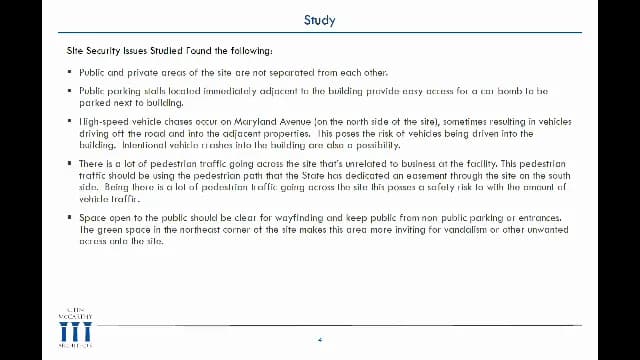
The St. Paul City Council met on February 11, 2026, from 3:30 PM to 6:35 PM, with six members present and Councilmember Johnson excused. The meeting covered a broad range of items including adoption of the 2026 legislative agenda, a resolution denouncing attacks on gender-affirming care, a resolution urging hotels not to house federal immigration agents, final adoption of an ordinance requiring law enforcement to display identification, public hearings on a mask ordinance and a zoning appeal, and a public hearing on grievances about federal immigration operations. Several items were laid over for further discussion. Consent Calendar - Received and filed communications regarding a nuisance property at 299 Sherburne Avenue, acceptance of $35,000,000 in Minnesota Public Finance Authority funding for lead service replacement, and budget amendments for the Planning and Economic Development Department. - Adopted resolutions 4–13 (consent agenda) including approving costs for securing/emergency boarding services (August–December 2025), demolition services, an agreement with MnDOT for the I35E bridge project, revocation of liquor licenses for Born’s Dutch Bar, change of ownership for liquor licenses for Vina Vietnamese Restaurant and La Oficina Bar, and reimbursement for the 2026 Ward 7 Let’s Talk event series. - Adopted the legislative hearing consent agenda (items 29–38) with amendments, including ratifying appealed tax assessments and approving an appeal of a fire inspection report. Public Comments & Testimony - Public Hearing on Grievances about Federal Immigration Operations (Item 28): Multiple speakers expressed urgent concerns about ICE operations, citing a high-speed chase and crash that morning at Selby and Western. Speakers demanded immediate action including safe zones for schools, hospitals, and child care centers; emergency rental assistance (citing Minneapolis as a model); de-escalation training for police; and stronger enforcement of separation ordinances. Many criticized the city’s response as insufficient and urged more tangible relief. Several speakers also condemned the hate speech directed at Councilmember Bowie during the meeting. - Public Hearing on Ordinance 26-7 (Mask Ordinance): Speakers supported the ordinance but urged closing loopholes, particularly the SWAT exemption. One speaker recounted a traumatic SWAT operation in 2025 and called for stronger accountability. Another speaker opposed the ordinance, arguing that law enforcement should wear masks for protection. - Public Hearing on Ordinance 26-8 (Contract Execution): No public testimony. - Public Hearing on Zoning Appeal (ABZA 26-1): The appellant (Minnesota Department of Administration) argued for a 10-foot security fence around the BCA facility, citing security needs. No public testimony in opposition was given at the hearing. - Public Hearing on Festivals and Events Security Credit (Item 17): No live testimony; written comments were submitted (noted in agenda). Discussion Items - RES 25-1914 – 2026 Legislative Agenda: Adopted after a staff presentation. The agenda includes priorities such as funding for the Mississippi River Learning Center ($10M), Como Zoo big cat exhibit renovation ($20M), Randolph Avenue Bridge reconstruction ($3.5M), and Saints Ballpark upgrades ($8M). Additions include support for mitigation funds for businesses impacted by transportation projects and study of land value tax. - RES 26-58 – Amending City Council Committees: Adopted as amended (version two). The changes restructure committees, separating operations from policy, and update language to reflect current practices. - RES PH 26-37 – Festivals and Events Security Credit: Extensively debated. Councilmember Bowie introduced a version three that would place the $155,000 allocation in the Planning and Economic Development (PED) department instead of the police department. Councilmembers expressed concerns about administrative feasibility, staffing, and the need for a clear plan. The item was laid over to February 25, 2026, for further development. - RES 26-267 – Denouncing Attacks on Gender-Affirming Care for Youth: Adopted unanimously. Councilmember Kim read the resolution, citing the Trump administration’s executive order and the impact on Children’s Minnesota. Speakers from OutFront Minnesota and Gender Justice testified in support, emphasizing that gender-affirming care is evidence-based and life-saving. Councilmembers expressed strong support, affirming that trans youth are loved and welcome in St. Paul. - RES 26-296 – Urging Hotels Not to House Federal Immigration Agents (Suspension Item): Adopted unanimously. Councilmembers Yang and Kim introduced the resolution, citing reports of ICE agents staying in hotels and causing safety concerns. Speakers from Sunrise Movement described protests and community fear. Councilmembers emphasized the need to stand with immigrant communities and called on hotels to refuse service to ICE. - Ord 26-6 – Requiring Law Enforcement to Display Identification (Final Adoption): Adopted unanimously. The ordinance requires officers to visibly display agency, badge number, or name on the outermost layer of their uniform. Councilmembers highlighted accountability and transparency, referencing legal precedent from California. - Ord 26-7 – Requiring Law Enforcement to Conduct Operations Without Masks (Public Hearing): The public hearing was held, and a version two amendment was approved. The ordinance was amended and laid over to February 18, 2026, for final adoption. - Ord 26-8 – Authorizing Assistants to the Mayor to Execute Contracts (Public Hearing): Public hearing closed and laid over to February 18, 2026. - ABZA 26-1 – Appeal of BZA Denial of Zoning Variance for Fence (Public Hearing): The public hearing was closed and the item laid over to February 18, 2026, for further discussion. Staff presented the details of the request for a 10-foot security fence around the BCA facility; the appellant presented security needs and renderings. - Public Hearing PH 26-4 – Grievances about Federal Immigration Operations: The public hearing was continued to February 18, 2026, after extensive testimony. Councilmembers acknowledged the urgency and pledged to consider actions such as emergency rental assistance and safe zones. Key Outcomes - Adopted: Consent agenda (items 4–13), RES 25-1914 (legislative agenda), RES 26-58 (committee amendments), RES 26-267 (denouncing attacks on gender-affirming care), RES 26-296 (urging hotels not to house ICE), Ord 26-6 (officer ID requirement), RES PH 26-41 (grant acceptance for forestry), RES PH 26-26, 26-32, 26-36 (sound level variances for St. Patrick’s Day events), and legislative hearing consent agenda (items 29–38) as amended. - Laid Over: RES PH 26-37 (festivals security credit) to February 25, 2026; Ord 26-8 (contract execution) to February 18, 2026; Ord 26-7 (mask ordinance) to February 18, 2026; ABZA 26-1 (zoning fence appeal) to February 18, 2026; PH 26-4 (immigration grievances) to February 18, 2026. - Withdrawn: RES PH 26-47 (duplicate of JR Mac’s sound variance). - Amendments Approved: Version two of RES 26-58; version two of Ord 26-7; amendments to legislative hearing consent items (assessment deletions, reductions, etc.). - Votes: All adopted items passed with 6 yeas, 0 nays, 1 absent (Councilmember Johnson). The mask ordinance amendment vote was 5 yeas, 0 nays, with 2 absent (Kim and Johnson). - Next Steps: The council will continue to work on the festivals security credit, finalize the mask ordinance, and address the zoning appeal and immigration grievances at the February 18, 2026 meeting.
The St. Paul Planning Commission met on the date specified in the agenda as February 6, 2026, though the raw transcript refers to "Friday, February 20th, 2026." The meeting covered approval of minutes, an update to the commission's bylaws, nomination and election of officers, a resolution on the Bronze Line Locally Preferred Alternative (LPA), site plan review announcements, and recognition of outgoing commissioners. Several votes were taken, including approval of the Bronze Line LPA resolution and a conditional approval of revised bylaws. Consent Calendar - Approval of February 6, 2026 Planning Commission Meeting Minutes: Motion by Commissioner Starling, seconded by Commissioner Hackney. Approved unanimously. - Approval of January 29, 2026 Zoning Committee Meeting Minutes: Motion by Commissioner Tagiaff, seconded by Commissioner Starling. Passed by voice vote (only zoning commissioners present voted). - No public hearings or old business were on the agenda. Public Comments & Testimony - No public comments were made during the meeting. Discussion Items - Update of Planning Commission Bylaws (Ordinance 2579): Director Robinson presented a draft updating the bylaws to conform with recent city council changes to commission composition. Key discussion points included: the removal of standing committees (except the Transportation Committee, which is established by city council resolution); the executive committee composition (officers plus immediate past president); quorum requirements; and formatting updates. Commissioner Holtz raised concerns about executive committee size and quorum. Commissioner Starling proposed adding language that the executive committee does not take official actions. After motion and withdrawal, a new motion passed (with one abstention by Commissioner Tagioff, who cited concerns about democratic process and lack of defined public comment procedures) to approve the bylaws subject to staff returning with amendments: striking the immediate past president from the executive committee, updating format, and providing additional information on executive committee membership and function. - Nomination and Election of Planning Commission Officers: Chair Grill was re-elected as chair by voice vote with no opposition. For first vice chair, nominations were made for Commissioner Presley, Commissioner Thomas, Commissioner Starling, and Commissioner Martinson. Many commissioners expressed discomfort with being nominated on the spot and requested more information on term lengths, responsibilities, and workload. Commissioner Riley moved to lay over the remaining elections to the next meeting, with a request for staff to provide term expiration dates, role descriptions, and a timeline for transition to the seven-member commission. The motion was seconded by Commissioner Starling and passed without opposition. - Bronze Line Locally Preferred Alternative (LPA) Resolution: Bill Dermondy presented the project, formerly known as the Rush Line or Purple Line, from Union Depot to Maplewood Mall Transit Center. The LPA includes dedicated lanes, new stations, and off-board fare payment. The Transportation Committee had recommended approval with an added note about future Earl Street station considerations. Discussion centered on whether the planning commission was voting on support for the LPA itself or only on comprehensive plan consistency. Commissioner Riley moved to strike the whereas clause stating consistency with the comprehensive plan, but the motion died without a second. Commissioner Homas then moved to approve the resolution as presented, seconded by Commissioner Martinson. The motion passed with 8 votes in favor, 1 abstention (Commissioner Starling), and none opposed. Chair Grill also voted aye after the roll call. Commissioner Starling explained abstention due to uncertainty about whether the proposed route would be a true improvement relative to other transit investments. Key Outcomes - Bylaws update: Approved conditionally with direction for staff to bring back amendments to the executive committee section, formatting, and additional information. Passed with one abstention. - Officer election: Chair Grill re-elected; remaining officer positions (first vice chair, second vice chair, secretary) laid over to next meeting pending additional information. - Bronze Line LPA resolution: Approved, recommending city council support of the locally preferred alternative. Passed with one abstention. - Recognition resolutions: Two resolutions recognizing the service of Commissioner Homas and Commissioner Ortega (not present) were approved unanimously. - Meeting logistics: The planning director reported results of a poll on meeting day/time; further refinement will be brought back, including potential changes to bylaws to allow flexibility on meeting day.
The Housing & Redevelopment Authority (HRA) Board of Commissioners met on Wednesday, February 4, 2026, at 2:00 PM in the Council Chambers of City Hall. Vice Chair Saura Jost presided. The meeting lasted approximately three minutes and included one consent item and one public hearing. Commissioners Anika Bowie and Chair Cheniqua Johnson were excused and absent. Consent Calendar - Approval of January 2026 Meeting Minutes (MIN 26-7): The minutes from the January 7, 14, 21, and 28, 2026 HRA meetings were approved unanimously (5-0). Public Comments & Testimony - No testimony was offered for the public hearing item. Vice Chair Jost opened the public hearing; no members of the public spoke. Discussion Items - Resolution Authorizing Conduit Health Care Revenue Bonds for Episcopal Homes (RES PH 26-33): Acting Interim Executive Director Nicole Green noted that a staff report had been presented on January 28, 2026. Episcopal Homes Chief Financial Officer Collyn Iblings and Bond Counsel Jenny Boulton were present to answer questions. The resolution authorizes the issuance and sale of conduit health care revenue bonds under Minnesota Statutes Sections 469.152–469.1655 for the Episcopal Homes Obligated Group (The Willows Project) at 80 Mackubin Street, District 8, Ward 1. No questions were asked by commissioners. Key Outcomes - Public hearing closed and resolution adopted – Commissioner Molly Coleman moved to close the public hearing and adopt the resolution; the motion carried unanimously (5-0). - Meeting adjourned at 2:03 PM.
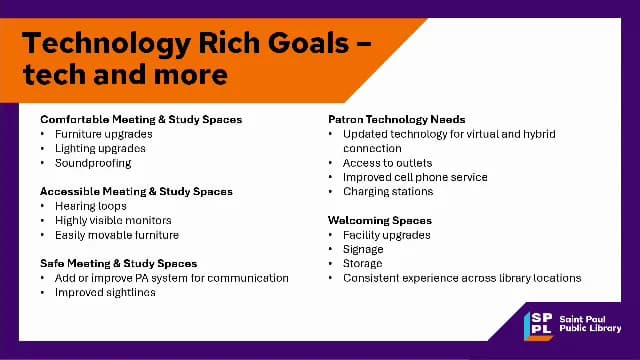
The Saint Paul Library Board met on Wednesday, February 4, 2026, at 1:00 PM in Council Chambers. Five members were present (Rebecca Noecker, Nelsie Yang, Saura Jost, HwaJeong Kim, Molly Coleman); two were absent (Anika Bowie, Cheniqua Johnson). The main focus was a staff report on the Transforming Libraries initiative, covering construction progress at Hamlin Midway and Hayden Heights, technology and play-and-learn upgrades across all branches, and funding challenges for the Riverview project. The meeting also included approval of minutes and a brief presentation on the 2026 Read Brave book. Consent Calendar - Approval of Minutes (Item 26-6): The minutes from the January 14, 2026 Library Board meeting were approved unanimously (5-0). Council President Rebecca Noecker moved approval; there was brief confusion about whether printed agendas were available, but no substantive issues were raised. Staff Report Transforming Libraries Update (SR 26-18) – Presented by Director Hartman, Library Project Manager Marika Stalok, and Deputy Director of Operations Josh Schaefer. Hamlin Midway Library - Construction is well underway: the archway sign is installed, windows are in place, and painting has begun. The library is on track to open to the public in late 2026. The project closed in May 2023, was bid in May 2025, and is expected to be open late 2026. Hayden Heights Library - Design and construction documents were completed in December 2025. Bidding opened in January 2026, and a general contractor is expected to be awarded this week (early February 2026). The library will close to the public this spring, with construction beginning spring 2026. Anticipated reopening is quarter four of 2027 (late 2027). Renderings show improved visual connection from the street, a new play-and-learn space, study rooms, and outdoor green space. Technology-Rich Spaces (All Locations) - Focus is on creating environments where patrons can use both library-provided and personal technology. Upgrades include: improved AV systems, hearing loops, soundproof study rooms, and hybrid-meeting capabilities. Completed in 2025: Merriam Park Library (meeting room expansion with hearing loop), Rice Street Library (soundproofing, AV upgrade), and George Latimer Central Library (GLCL) (two new study rooms). Coming in 2026: Rondo Library (multi-purpose room upgrade, new study spaces, small meeting room), Nicholson Library (new public meeting room), and GLCL (balcony co-working seating space). Play-and-Learn Spaces (All Locations) - A system-wide design guide is being developed to standardize child- and family-friendly spaces that accommodate very young children, tweens, and parents needing to work. Demonstration spaces will open in late 2026 at Sunray, Rondo, and Hamlin Midway Libraries. Challenges - Staff noted several risks: shifting federal funding landscape, tariffs impacting construction material costs, supply chain disruptions, remaining funding gaps (especially for Riverview), limited city capital funds, and staff capacity constraints. Riverview Library - Construction is expected to begin in late 2027 or early 2028, dependent on closing a significant funding gap. The city will apply for additional CIB capital dollars (likely in 2027 for 2028), seek state bonding, and pursue federal earmarks. A separate roof repair and exterior mortar project, funded by a prior federal earmark, may begin in early 2027. Board Discussion - Councilmember Nelsie Yang commended staff, the Friends of the St. Paul Public Library, district councils, and the board for their leadership. She highlighted the impact of the Hayden Heights renovation for East Side residents, noting that many did not realize the building was a library due to its windowless, box-like appearance. She expressed gratitude that the long-awaited renovation is finally happening. - Council President Rebecca Noecker echoed thanks and asked for more detail on Riverview’s timeline and funding. She expressed strong support for filling the funding gap and committed to championing the project, comparing it to the transformative North End Community Center. - Chair Saura Jost celebrated that a new library will open each year: Hamlin Midway in 2026, Hayden Heights in 2027, and hopefully Riverview in 2028. She thanked staff and the Friends for their commitment. Read Brave 2026 - Director Hartman briefly presented this year’s Read Brave book: Lobizona by Romina Garber, a young adult fantasy about an immigrant family and ICE. The program launched the previous week (late January 2026). A public event with the author will be held Thursday, March 5, 2026, from 5:30–8:00 PM at Arlington Hills Library, featuring a community meal, a youth panel, and a live-stream option. The mayor is expected to attend. Key Outcomes - Minutes approved (Item 26-6) – 5-0. - Staff report received and filed (SR 26-18). No formal vote required. - Construction continues on Hamlin Midway (open late 2026) and Hayden Heights (open late 2027). - Staff will continue seeking funding for Riverview, targeting late 2027/early 2028 construction start. - Technology and play-and-learn upgrades will proceed at all locations throughout 2026. - The board expressed unanimous support for the Transforming Libraries initiative. The meeting adjourned following the Read Brave presentation.
The Policy Committee met on Wednesday, February 4, 2026, with four members present and three excused. The meeting covered two major items: a review of the city’s 2026 legislative agenda in advance of the state session starting February 17, and an update on the implementation of administrative citations, a new civil enforcement tool approved by voters in November 2025. Discussion Items Legislative Agenda Review - Director General Rourke (newly appointed, day three in role) and Tim Heinfeld presented a streamlined five-page legislative agenda. They distinguished between top priorities (where the city would introduce bills), additional priorities (bonding requests and policy items where the city would support but not lead), and support items (partner-driven efforts). - Councilmember Yang asked about the proposed state reimbursement program for law enforcement costs during Operation Metro Surge, seeking specifics on scope and likelihood. Director Rourke agreed to provide a memo before next week’s council vote. - Councilmember Coleman requested adding a land value tax pilot for the Midway/University Avenue area, similar to a proposal for Minneapolis’s Lake Street, to incentivize development without direct city spending. She also urged flexibility in STAR dollars to aid small businesses affected by immigration enforcement. The council supported adding the land value tax item. - Councilmember Jost highlighted the importance of the West Seventh Corridor, lead service line replacement funding, and climate action priorities. - Councilmember Yang expressed interest in partnering on specific priorities (e.g., the Duluth and Case Community Rec Center, Heights housing). - The chair noted that amendments to the legislative agenda should be submitted before next week’s full council meeting for adoption. Administrative Citations Update - Director Jay Welms and colleagues (Tim Greenfield, Marshall Moorman, Kamud Verkmah) provided a history and overview of design considerations. Key dates: voters approved administrative citations 68%-32% in November 2025; a legislative advisory committee was delayed until June 30, 2026 due to transition and federal immigration response. - Policy design choices include: types of violations (property, licensing, parking; severity and frequency), fine amounts (balancing deterrence and equity), enforcement and dispute resolution (cure opportunities, quasi-judicial review), and fiscal implementation (cost neutrality, payment options, revenue disposition). - Councilmember Yang urged prioritizing enforcement against large corporate bad actors (e.g., wage theft, vacant storefronts) rather than individual residents. She supported moving quickly and noted the existing legislative hearing system works well for individuals. - Councilmember Jost agreed, emphasizing a clear delineation between the advisory committee’s scope and immediate action on major violations. She suggested creating a working group rather than passing a separate resolution, and recommended looking at models from Minneapolis and other Minnesota cities. - Councilmember Coleman raised concerns about the council’s potential quasi-judicial role, urging study of best practices. - Director Welms proposed forming an internal working group with administration, with a substantive work plan to be presented in one to two months. Key Outcomes - Legislation Agenda: Council members provided feedback and requested additions (land value tax). Amendments are due before next week’s full council meeting, where the agenda is expected to be adopted. - Administrative Citations: The committee agreed to establish an internal working group with city administration to develop a work plan, prioritizing enforcement against large-scale bad actors while respecting the legislative advisory committee’s future role. A follow-up update with a detailed work plan is anticipated in one to two months.
The St. Paul City Council met on February 4, 2026, from 3:30 PM to 7:35 PM, with six members present after two members arrived late. The meeting covered consent agenda items, suspension items, ordinance readings, public hearings on immigration enforcement ordinances, a public hearing on a grant extension for a Lockheed Martin subsidiary, and legislative hearing items. Consent Calendar - RES 26-120: Authorized the Department of Parks and Recreation to apply for up to $800,000 in grant funds from the Minnesota Department of Cannabis Management’s CanRenew Community Restoration grant for Right Track, the City's Youth Employment Program for SFY 2027. Adopted unanimously (5-0, two absent). - RES 26-122: Accepted a gift of travel expenses from the Knight Foundation for Library Director Maureen Hartman to attend the Knight Foundation Library Leaders Convening and Knight Media Forum in Miami, Florida, from February 10-13, 2026. Adopted unanimously. - RES 26-149: Approved the use or non-use of a Project Labor Agreement on Department of Parks and Recreation construction projects for the first half of 2026. Adopted unanimously. - RES 26-168: Supported the study of new passenger rail service between Saint Paul and Fargo/Moorhead and Saint Paul and Kansas City, Missouri. Adopted unanimously. - RES 26-192: Approved the proposed issuance of conduit health care revenue bonds by the Housing and Redevelopment Authority for the Episcopal Homes Obligated Group (The Willows Project), 80 Mackubin Street. Adopted unanimously. Suspension Items (Discussion) - RES 26-231: Approved the appointment of Kamaria Kassim as the Director of Human Resources, effective February 9, 2026. Ms. Kassim was sworn in after the vote. Adopted unanimously (5-0, two absent; later 6-0 with one absent). - RES 26-253: Called on the State of Minnesota and Governor Walz to enact an energy and gas shutoff moratorium to protect families from disconnections during the ICE operation surge. Councilmember Yang sponsored the resolution, noting that the 55106 zip code already has the highest rates of utility shutoffs in Xcel Energy’s territory. Michael Hirabayashi (UNIDOS St. Paul) testified that struggling households owe an average of $464 in utility debt and that Xcel’s voluntary moratorium for Minneapolis and St. Paul is “kept secret from the public” with no timeline. Jean Comstock (Ward 7) supported the resolution. Councilmember Jost noted that Xcel had confirmed a suspension of disconnections in St. Paul as of last week, and that St. Paul Regional Water does not shut off water for nonpayment. Adopted as amended (6-0). Ordinances (Final Adoption, First Reading) - Ord 26-4: Rezoned four I1 light industrial parcels to B5 central business-service at 500 Broadway Street. Adopted unanimously (6-0). - Ord 26-5: Added Chapter 268 to the Legislative Code to prohibit law enforcement staging operations on city-owned properties and limit access to non-public City spaces. Councilmember Yang expressed frustration that new ordinances take 30 days to take effect and called for charter changes. Councilmember Jost noted that existing charter language on emergency ordinances may allow faster action. Adopted unanimously (6-0). - Ord 26-8: Amended Section 86.01(a) of the Administrative Code to authorize up to three assistants to the Mayor to execute certain contracts and increase the dollar value for contracts that may be executed by designees from $50,000 to $175,000. Staff report by Dan Gilchrist stated the change is to remove signature contract bottlenecks. Laid over for second reading on February 11, 2026. - Ord 26-7: Added Chapter 268B to the Legislative Code to require law enforcement officers to conduct law enforcement operations without a mask or facial covering unless certain exceptions apply. Chief Policy Officer Tim Greenfield provided a staff report, explaining that the ordinance is based on historical state law against mask-wearing (originally aimed at the KKK) and that it applies to all law enforcement agencies. Exceptions include active undercover operations, tactical operations, use of eye protection, SWAT assignments, and health/safety use of N95 masks or surgical masks. Councilmember Yang called the ordinance “about transparency and accountability,” describing its intent to address the “authoritarian Trump regime” covering ICE agents’ faces. Councilmember Bowie linked the ordinance to her grandfather’s experience with Klan violence and said, “the biggest risk right now is making sure that our neighbors feel safe and that we aren't tolerating any inch... of legal risk.” Councilmember Coleman argued the ordinance is within the city’s constitutional power as a generally applicable law with only incidental effect on federal officers. Laid over for public hearing on February 11, 2026. Public Hearings - Ord 26-6: Required law enforcement officers to visibly display identification on the outermost layer of their uniform. Public testimony included concerns from Silas (Frogtown) and Sarah Gartner (Ward 7) about loopholes, particularly exempting mobile field force operations. John Benda (ICOM) criticized the council for taking too long and requested a stronger separation ordinance, a public apology from St. Paul Police for their cooperation with ICE on November 4, 2025, and a commitment to arrest ICE agents if they break the law. Heather Liu (Ward 6) urged protection for youth being abducted by ICE. An amendment adding a severability clause was adopted, and the matter was laid over to February 11, 2026, for final adoption. - RES PH 26-28: Accepted a $500,000 state grant for technology-rich space improvements at the Rondo Community Library. Councilmember Jost noted this is part of a citywide library renovation project. Adopted unanimously (6-0). - RES PH 26-13: Ratified the assessment for repair of sanitary sewer line on private properties. Adopted unanimously. - RES PH 26-14: Ratified the assessment for replacement of lead water service line on private properties. Adopted unanimously. - RES PH 26-16: Amended the Parks and Recreation Grant Fund by $35,000 to reflect a grant from the Minnesota State Arts Board for the St. Paul Get Down program. Adopted unanimously. - RES PH 26-18: Approved the 2026-2027 Capital Improvement Budget Committee Capital Maintenance Funding recommendations. Adopted unanimously. - RES PH 26-21: Authorized a one-year extension for ForwardEdge ASIC LLC (a subsidiary of Lockheed Martin) to fulfill its job creation requirement of 113 jobs (currently at 83 jobs) under a $800,000 Minnesota Investment Fund (MIF) forgivable loan. Daniela Lorenz (PED) explained that if the extension is not granted, the award would be reduced pro rata (up to $200,000). Over two dozen members of the public testified in opposition, many arguing that Lockheed Martin produces weapons used in Palestine and other conflicts, and that the company has contracts with ICE. Several speakers noted that ForwardEdge has not met its contractual obligation. A motion by Councilmember Coleman to lay over for a week was withdrawn after Councilmember Yang and others stated they had enough information and would vote no. Councilmember Yang apologized for voting for the original grant in 2023, saying she “would not have voted for it” knowing then what she knows now. Councilmember Bowie gave an emotional statement linking the vote to her personal experience of being “violently awakened by military guns” and the “weaponization of our department of defense” against her husband. Councilmember Kim argued the company failed to meet its contractual obligation. The resolution was denied (6-0). - RES PH 26-22: Authorized the Police Department to amend the 2026 Grant Fund for the sub-grant from Ramsey County for the Violent Crime Enforcement Team (VCET). Adopted unanimously. - RES PH 26-29: Amended Fire Department financing and spending plans by $20,000 for a grant from Ramsey County Public Health to purchase a LUCAS device. Adopted unanimously. - RES PH 26-30: Amended Fire Department financing and spending plans by $115,393 for a contribution from the Minnesota Board of Firefighter Training and Education for firefighter training. Adopted unanimously. - RES PH 26-31: Authorized the Office of Financial Empowerment to apply for and accept a $165,000 grant from the McKnight Foundation for its shared ownership initiative. Adopted unanimously. - RES PH 26-37: Established the Festivals and Events Security Credit. Councilmember Noecker introduced version two, which uses $155,000 in ongoing funding to provide up to $7,000 in credits to festivals meeting six objective criteria (e.g., free, open to the public, located in areas of concentrated poverty). Councilmember Bowie presented a version three that would give the council direct authority to allocate funds to specific listed organizations. Public testimony was divided: Bob Cruz (West Side Boosters) said he was “promised around $20,000” for Cinco de Mayo, which never arrived, and criticized routing funds through police; Kale Vang (United Hmong Family) said security costs for Hmong festivals had increased 40% and urged the council to act. Other speakers, including Celeste Finn and others, argued that communities should not have to pay police for security and that police charging fees is a barrier to community events. Councilmember Noecker defended version two as “ready to go,” while Councilmember Bowie argued the police department has not been trusted by communities and called for a “failed process” to be changed. The public hearing was closed, and the resolution was laid over to February 11, 2026, for a vote. - PH 26-4: Public hearing on grievances about federal immigration operations. Over a dozen speakers expressed anger and urgency regarding ICE operations. Sarah Gartner asked for an ordinance preventing the city from employing individuals who previously worked for ICE. Others demanded a comprehensive separation ordinance, safe zones at schools, daycares, and hospitals, and criticized the council’s pace as too slow. Councilmember Noecker acknowledged the urgency and noted new ideas such as vehicle identification requirements. The hearing was continued to February 11, 2026, with a unanimous vote (6-0). Legislative Hearings - RLH VO 26-7: Appeal of Minister Scarlet Rose to a fire inspection report at 787 Howell Street North. Legislative Hearing Officer Mormont recommended allowing temporary occupancy pending an inspection the next morning, due to extreme hazards including a 500-pound propane tank. Underlying hazardous conditions were cited: a 500-pound propane tank and two generators operating for electricity; Excel gas and electric was re-established yesterday. Unanimously adopted (6-0). - Legislative Hearing Consent Agenda (Items 22-32): Included multiple appealed special tax assessments, property rehabilitation/razing orders, and abatement orders. Item 25 (430 Dale Street North) was separately considered; the owner requested demolition within 15 days, and council member Neely Alexander (Cranford Memorial United Methodist Church) thanked the hearing officer. The consent agenda was adopted as amended (6-0). Key Outcomes - Approved Kamaria Kassim as Director of Human Resources (RES 26-231). - Adopted RES 26-253 calling for a utility shutoff moratorium. - Adopted Ord 26-5 prohibiting law enforcement staging on city property. - Introduced Ord 26-7 requiring unmasking of law enforcement officers. - Denied grant extension for ForwardEdge ASIC LLC (RES PH 26-21) by unanimous vote, effectively requiring the company to repay up to $200,000 of the $800,000 loan. - Laid over several items to February 11, 2026: Ord 26-8 (first reading), Ord 26-7 (first reading), Ord 26-6 (final adoption), RES PH 26-37 (festivals security credit), and PH 26-4 (immigration grievances). - Adopted RLH VO 26-7 allowing temporary occupancy at 787 Howell Street North with next-day inspection.
No agenda, minutes, or transcript were provided for this meeting. Therefore, no summary of discussions, decisions, or public comments can be generated.
No agenda, minutes, or transcript were provided for this meeting. Therefore, no summary of discussion or decisions can be generated.