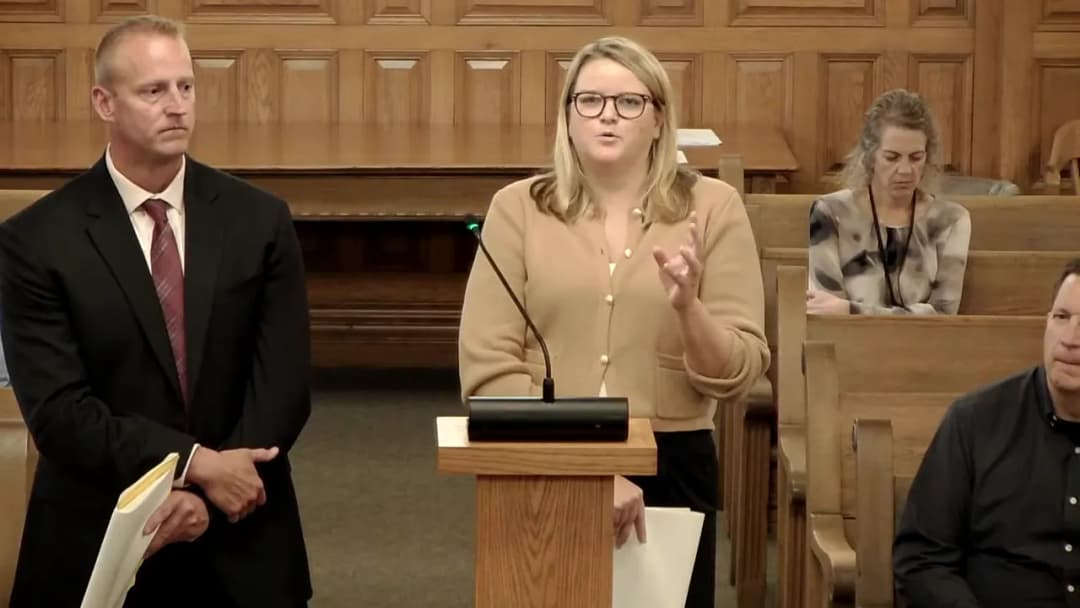
The Joint School Construction Board (JSCB) met on September 25, 2025, to receive a financial update on Phase Three projects, approve the comprehensive plan, and authorize an RFP for architects and engineers. Presenters detailed the relationship between debt service and building aid, the financing timeline, and the projected local share. The board unanimously passed three resolutions. Discussion Items - Building Aid and Debt Service Overview: Presenters Stephanie and Ben explained the mechanics of building aid reimbursement. Building aid is paid over 15 years regardless of how the project is financed, and the goal is to minimize the local share (the portion not covered by the 98% aid ratio). The local share is currently projected lower than initial Phase One estimates due to changing assumptions. - Full vs. Half Aid Year One: A board member asked about the "full" vs. "half" year building aid designation. The presenters clarified that it depends on the timing of state education department (SED) approval. If SED approval occurs in July 2027, the district would be eligible for only half a year of building aid in the following fiscal year. Planning assumes full aid but can pivot if approval dates shift. - Phase Three Financing Timeline: The presentation covered tranches A through D. Tranche A bonds were issued in January 2025 for planning costs and will be rolled or paid down until July 2028, when permanent financing will occur. The bond due dates align with the 15-year building aid reimbursement. The last tranche (D) bond issuance is projected for July 2034. - Local Share Projection: A chart showed the existing local share debt service for the JSCB, including Phase Three additions and projected Phase Four ending in 2042. The local share is minimized to reduce costs to the school district. - Phase Two Bond Refunding: The board discussed that Phase Two bonds (2018 A and B) are about to become callable. Under current market conditions, they can be refinanced for savings, which would further lower the local share. This refinancing could occur as early as late January 2026 and would be issued through SIDA (Syracuse Industrial Development Agency) due to lower costs compared to the New York Municipal Bond Bank Agency. - State Aid Intercept: The state aid intercept mechanism ensures bondholders are paid directly from intercepted state aid, resulting in a bond rating one notch below the state (currently double A2, double AAA). This was clarified as important for the flow of funds. Key Outcomes - Resolution No. 8: Approved monthly payment of $68,345.05 to all JSCB contractors, including the project manager, and additional vendors (Bond Shannick and King, Plan and Print). Passed unanimously. - Resolution No. 9: Approved the comprehensive plan (including the financial component) and authorized its transmittal to New York State for approval. Passed unanimously. - Resolution No. 10: Authorized the issuance of a JSCB request for proposals (RFP) for architects and engineers for Phase Three projects. Passed unanimously. - Next Steps: The comprehensive plan will be submitted to the Office of the State Comptroller (OSC) for approval. The board will prepare for the January 2026 bond issuance (rolling the 2025 bonds and adding new money). The refinancing of Phase Two bonds will be pursued for debt service savings.
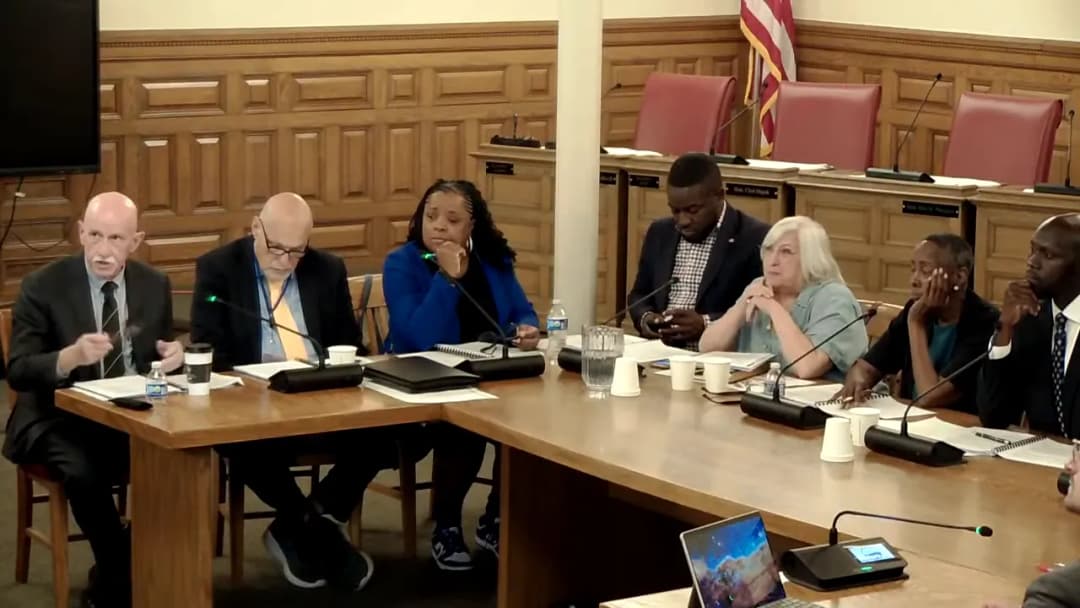
Public Meetings - Syracuse, New York
Public Meetings - Syracuse, New YorkThe Syracuse City Council met on the afternoon of September 24, 2025, to vote on a wide-ranging agenda covering park donations, police department contracts, animal sheltering services, tax write-offs, property transfers, and more. Several items were held for further discussion, while the majority were approved. The meeting concluded with a motion to enter executive session. Public Comments & Testimony - None recorded. Discussion Items - Items 10–12: Councilor Caldwell presented three donations: an in-kind wooden bench valued at $1,885 from the Eastwood Neighborhood Association for Bridgewood Park; a monetary donation of $1,430.40 from Katie Scott to purchase and install a bench and memorial plaque honoring Mr. Jimmy Walker in Schiller Park; and a $200 donation from Westside neighborhood residents to purchase and install two memorial plaques honoring Joe Haw and Emma Iraqi Kelly on existing benches in Leavenworth and Burnett Park. All were accepted. - Item 13: Held to incorporate recommendations from a public hearing and committee meeting regarding police policy. - Item 14: Renewal of a one-year contract extension for Benjamin Tallini to instruct Brazilian Jiu Jitsu in the police academy. A lieutenant explained that the training reduces the likelihood of strikes and uses less injurious techniques. The council approved the renewal, with a future RFP planned. - Items 15–16: Renewals of contracts with Friends Forever Animal Rescue and Humane CNY for sheltering animals in cruelty cases. An officer noted that the city handles over 600 animals per year (300 strays, 300 cruelty cases) and that space is the primary constraint. Approved. - Item 17: Contract with IMA group to provide medical services (e.g., fit-for-duty exams) for police officers outside workers' compensation. The mayor indicated he would review the RFP waiver. Approved. - Item 18: Funding for the police awards banquet. The outstanding balance of $10,292 was presented after a $2,500 union payment. The council agreed to accommodate the full amount. - Item 19: Compensation for national anthem singer Sydney, related to the awards banquet. Approved. - Item 20: Citizen Review Board request for a one-year contract with evidence.com to enable real-time case review. Chairman Johnson stated it would expedite cases and reduce IT costs. Approved. - Item 21: Withdrawn. - Item 22: Office of Human Resources accepted a gift from Wolf Goodrich and Goldman (workers’ comp attorneys) of $800 to send risk and safety manager Lisa Schmidt to a conference. Approved. - Item 23: Contract with LAS (three-year term). A councilor inquired about the term length, and it was noted to be consistent with past contracts. Approved. - Item 24: Youth permit with New York State DOT for the Clinker project at Park Street Bridge. Kevin Booser explained that hanging balls will be installed to prevent vehicles from hitting the bridge, with CHIPS funding covering costs. Discussions with the railroad company are ongoing. Approved. - Item 25: Tax exemption for an affordable housing project (100% exemption; properties pay either 10% of gross rent less utilities or $525 per unit). Approved. - Item 26: Zoning changes – held for further discussion due to outstanding questions from councilors. - Item 27: Held. - Item 28: Fiber installation contract for the police and fire relocation at 1153 West Fayette Street. A question about the monthly charge was noted; the answer would be provided later. Approved. - Item 29: Authorization to hire an appraiser for 1039 East Fayette Street to determine property value as part of a local law process. Approved. - Item 30: Write-off of delinquent city and school taxes totaling $38,000 for four parcels (Taylor and Oneida streets) near the JMA factory to facilitate future development. The county had already compromised its delinquent taxes. Approved. - Item 31: Motion to go into executive session. Approved. - Items 32–35: Approved contracts for the Financial Empowerment Center (United Way), land bank exterior repairs in problem-oriented policing areas (up to $150,000 from DCJS), a blight busting program with nine firms, and an amendment to the resident advisory board ordinance for the Housing Strategies Corporation. - Items 36–49: Transfers of 14 properties (mostly vacant land, plus two structures at 116 Burnett Park Drive and 243 Richmond Ave) to the land bank after foreclosure. Approved. Key Outcomes - All items except those held (13, 26, 27) were approved. - Items held: 13 (police policy recommendations), 26 (zoning changes), 27 (unspecified). - The council moved to executive session after completing the agenda.
The Syracuse City Council committee met on September 23, 2025, to receive an update on the payroll modernization project. Commissioner of Finance Mike Canazero and project manager Josh Larson presented progress on timekeeping rollout (SWC and Telestaff) and proposed a new $900,000 expenditure for implementation services (Mosaic Consulting Group) to adopt UKG Pro as the new Human Capital Management (HCM) system, replacing the legacy AS400 system. Council members expressed skepticism based on past failed attempts and concerns about urgency, cost, and internal capacity. No vote was taken on the request; the committee agreed to continue discussions and consider monthly updates and possible third-party consultation. Discussion Items - Timekeeping Rollout Progress: Since the last committee meeting on April 14, 2025, the city has made significant progress on deploying SWC (Workforce Central) timekeeping software. Water Department has been live for several weeks, and every department has been reached—either trained, in parallel testing, or live. The goal is to complete rollout to all remaining departments (DPW, One Park Place, City Hall) by the end of calendar year 2025. The rollout is being done internally with minimal external contractors, reducing costs. - HCM System Selection: The city previously evaluated Oracle Fusion but decided it was not the best fit due to high ongoing costs and need for internal IT staff. Instead, after a competitive RFP process, the administration selected UKG Pro, which integrates seamlessly with existing UKG timekeeping products (SWC and Telestaff). Implementation services will be provided by Mosaic Consulting Group. The annual license cost for UKG Pro is approximately $745,000 to $750,000, which includes support and maintenance (SaaS model). - Request for $900,000: The new request is for $900,000 to fund implementation services (Mosaic) and initial migration work. This would come from the previously authorized capital project (City Software Systems Project), which still has $2.5 million remaining out of $6.5 million originally authorized. The funds are already bonded, so interest is being paid on the unspent balance. - Urgency and Timeline: A key driver is the end-of-life for the current Workforce Central timekeeping software (on-premise) on March 31, 2027. If not migrated to the new product (Workforce Dimensions) by that date, the city would revert to paper timesheets. The plan is to have UKG Pro operational by Q2 2026 and complete migration of timekeeping to Workforce Dimensions by March 31, 2027. However, council members noted that past Gantt charts have repeatedly slipped and expressed doubt about this timeline. - Internal Capabilities and Aging Workforce: The current payroll/IT team supporting the AS400 is aging: two employees are already retired but working full-time hours, two are near retirement, and three are further away. The city lacks in-house expertise to maintain the AS400 for payroll long-term. The new SaaS model would offload maintenance to UKG, reducing the need for niche programmers. - Council Skepticism and Concerns: Council members (including Councillors Caldwell, Holden, and others) voiced skepticism based on years of failed attempts (PeopleSoft, Oracle). They questioned whether the administration has sufficiently mapped business processes and documented workflows, regardless of software choice. Concerns were raised about the urgency of approving the $900,000 request with only 100 days left in the current administration, and whether a new administration might have different priorities. The annual recurring cost of $745,000+ was also a concern. - Comparison to Other Municipalities: The administration checked references for UKG Pro and Mosaic, including municipalities like Seattle, Detroit, and South Bend, Indiana, which reported positive experiences—especially with Mosaic as an implementation partner. - Training and User Concerns: Some employees are nervous about the transition. The city has offered training sessions and plans additional sessions. The new system will include rounding rules (seven-minute grace) for clock-in times and require supervisor approval for early punches. Key Outcomes - No Decision on $900,000 Request: The committee did not vote on the proposed expenditure. Council members asked for more time to digest the information and suggested monthly or quarterly updates. - Continued SWC Rollout: The administration will proceed with rolling out SWC timekeeping to remaining departments, with a goal of year-end 2025. - Potential Third-Party Consultation: Commissioner Canazero offered to consider a third-party consultant, as recommended by a prior IT audit, to act as a liaison between the council and administration to build trust. - Future Committee Meetings: The committee agreed to continue discussions, possibly with more frequent updates. - Motion to Adjourn: The meeting was adjourned by motion (seconded) after the discussion.
The Syracuse Common Council held a meeting on September 23, 2025, to discuss the critical condition of the Fire Department's maintenance garage at 312 State Fair Boulevard. Chief Mons and his team presented an urgent need for a temporary facility due to an unsafe floor, with the goal of securing a long-term solution. Council members expressed support and committed to expediting necessary legislation. Discussion Items - Presentation by Chief Mons: Chief Mons outlined the history and current state of the maintenance garage, built in 1969. He noted that fire trucks have grown 2-3 times heavier since then, and the floor is now unsafe for vehicles, lifts, and heavy loads. A lift broke through the slab on July 18, 2025, revealing severe structural damage. Underground sanitary sewer and oil-water separator lines are also broken. The site is a DEC superfund location; a spill number was reported. - Operational Impacts: The mechanics are currently working outside, but with winter approaching, this is unsustainable. Syracuse University has provided one garage bay for emergency use, but it cannot fit all apparatus. The department has 113 vehicles, 6 mechanics, and 6 garage bays at the original facility. The chief warned that the department has been down to no spare apparatus multiple times since July, risking frontline truck availability. The spare apparatus is valued at $15-20 million. - RFQ Process: An RFQ was issued on August 21, 2025, to find a temporary facility (lease or purchase) for a 5-year plan. The RFP committee met on September 22 and reviewed responses; a top candidate is expected within a week. The facility must meet specific specs: floor thickness, ceiling height, door size, etc. Deputy Mayor Sharon Owens noted that identifying the right facility may take about a month. - Funding Requests: Chief Mons requested emergency funding for a temporary heated storage space for spare apparatus before freezing weather, and for leasing or purchasing a suitable building. He also asked for support to rebuild 312 State Fair Boulevard into a modern facility (expand from approx. 60x60 ft to 120x60 ft) to serve the fleet for 50-65 years. - Council Questions: Councilor Caldwell asked about the number of sites (half a dozen responses) and the possibility of using a swing space for DPW later. Councilor Majuk asked about accidents (none directly related to the floor). Councilor Juckin asked about the timeline for legislation—Chief Mons said it will be submitted as soon as a building is identified, likely via emergency waiver. Deputy Mayor Owens confirmed a month estimate for due diligence. Key Outcomes - Council members unanimously expressed support for the fire department's needs and pledged to collaborate on emergency legislation. - The administration will provide cost estimates for retrofitting a storage facility, rebuilding the existing garage, and any lease/purchase options. - The next step is evaluation of RFQ responses; if no viable option emerges, the department may seek alternative paths outside the RFQ process. - No formal votes were taken; the meeting concluded with a commitment to keep the council informed.
The board met on September 22, 2025, to approve a resolution for legal services, amend the fiscal year 2025 operating budget, and adopt several amendments to the Block Challenge Program. Staff provided updates on program participation and outlined a timeline for launching larger homeowner renovation programs in early 2026. Consent Calendar - Resolution for Legal Services Funding: Approved a $30,000 allocation for legal services to support upcoming homeowner innovation programs, noting that higher-cost projects require additional compliance work. Motion carried unanimously. Discussion Items - Operating Budget Amendment (FY25): The board approved two adjustments to the FY25 operating budget. First, an increase of $175 for Directors and Officers and liability insurance, offset by a reduction in the licenses and fees line. Second, an increase of $50,000 to the direct services line for the Block Challenge Program (totaling $55,000 with additional admin costs) to accommodate a surge in applications. The board noted that the program had received nine applications involving 42 participants, leaving a cushion of less than $10,000. The amendment also shifted funds from a planned minor exterior program line. Staff reported that every dollar invested leverages approximately $1.40 in anticipated spending. Motion carried unanimously. - Block Challenge Program Amendments: The board considered four amendments to program guidelines: 1. Line-of-Sight Eligibility Waivers: Clarified that administrative waivers for the requirement that team members see each other from their front doors can be granted without board approval. Motion carried unanimously. 2. Property Occupancy and Use Eligibility: Discussed whether commercial properties (e.g., neighborhood bars) and churches could participate. The board agreed to keep the program residential-only, noting that churches are ineligible due to separation of church and state, and that mixed-use properties with a residential component are acceptable. No formal vote was needed as the current terms already reflect this stance. 3. Shared Project Reimbursement Maximums: For projects with a shared component (e.g., a legally shared driveway), the board approved allowing both neighbors to receive reimbursement if they either add an additional participant to their team or each pursue an additional project component. The importance of a recorded shared driveway agreement was emphasized. Motion carried unanimously. 4. Carryover of Excess Match for Future Rounds: Approved allowing homeowners to apply documented project costs exceeding the $5,000 threshold (which triggers the maximum $2,500 reimbursement) toward their match for a subsequent application within the five-year participation period, provided the second project is a demonstrably different component. Motion carried unanimously. - Old Business: Program Updates and Timeline: Staff reported strong interest in the Block Challenge Program, with over 100 inquiries and nine applications received (seven from Tip Hill, one from the far west side, one from Salt Springs). Larger teams in Salt Springs are expected to submit soon. The board discussed a timeline for the larger homeowner renovation programs: develop 80% draft terms within two months, finalize by January 2026, and open applications in February 2026 to take advantage of the full construction season. Staff also noted that several inquiries about substantial rehab projects (over $100,000) have been received, and the board expressed support for incorporating a similar future match principle into those programs, advising interested homeowners to proceed cautiously but not to delay property improvements. Key Outcomes - Resolution for Legal Services: Approved $30,000 (unanimous). - FY25 Operating Budget Amendment: Approved (unanimous). - Block Challenge Amendments: Line-of-sight waiver approved (unanimous); commercial use exclusion clarified (no vote needed); shared project reimbursement rule approved (unanimous); carryover of excess match approved (unanimous). - Next Steps: Staff will continue outreach, finalize larger renovation program terms by January 2026, and aim for a February 2026 launch. The board agreed to consider a future match provision for substantial rehab programs. - Meeting Adjourned: Motion carried unanimously.
On September 22, 2025, the Syracuse Economic Development Committee met to review proposed amendments to the City of Syracuse Zoning Ordinance (formerly ReZone). The meeting was chaired by an unnamed committee chair, with Councilors Nave, Jones Rouser, Hudson, Majuk, Paniagua, Mattel, and Williams in attendance. Deputy Commissioner of Code Enforcement and Zoning Administration Jake Dishaw presented a summary of changes, supported by Commissioner of Neighborhood and Business Development Michael Collins and Corporation Counsel Martha Hertzberg. The discussion covered a wide range of technical clarifications, use definitions, and policy adjustments, but no formal votes were taken; the committee agreed to gather further questions and continue the discussion. Discussion Items - Overall Document Changes: Jake Dishaw outlined corrections to typographical errors, updated references from “zoning district” to “zone district,” removed references to the uncompleted administrative manual, and renamed the document from “ReZone” to the “City of Syracuse Zoning Ordinance.” The changes are based on real use-case scenarios experienced over the past two years. - Dimensional Standards: Amendments include reducing minimum townhouse width from 25 to 20 feet to accommodate flexible housing development (e.g., Lafayette Hills project). Dishaw noted that variances would otherwise be required, and the goal is to avoid unnecessary variance requests. - Planned Institutional Districts (PID): Standards were updated in coordination with large institutions (e.g., Syracuse University, St. Joe's) to clarify which code sections apply within PIDs. - Use Table and Definitions: Revisions include adding new use types (e.g., neighborhood market, event space), clarifying definitions for convenience store, grocery store, and restaurant to prevent corner stores from bypassing special use permit requirements. A smoking establishment (including cannabis) requires a special use permit in MX2, MX3, and MX4 zones, is permitted by right in MX5, commercial, and industrial zones, and is not allowed in residential or MX1 zones. The committee discussed density concerns for corner stores and cannabis retailers, but no immediate regulatory cap was added. - Accessory Dwelling Units (ADUs): Dishaw reported only one ADU has been approved in 27 months. Size maximum is 800 square feet. Councilor Jones Rouser and Councilor Williams expressed concerns that current ADU regulations may hinder housing development; Councilor Williams advocated for upzoning and comprehensive housing strategies. Commissioner Collins noted that the amendments aim to incentivize development and that further discussion on ADU sizes could occur in future iterations. - Parking Regulations: Minimum and maximum off-street parking requirements were added for new use types. Additional parking is triggered when bedrooms are added to non-owner-occupied rental properties (to address density and intensity). Councilor Jones Rouser questioned parking for rooming houses and short-term rentals (Airbnbs). Dishaw clarified that parking requirements for rooming houses have not changed (none required currently). The committee discussed enforcement of odd-even parking rules for Airbnb guests and the need for a registry; the county recently passed a short-term rental registry that the city may adapt. - Special Use Permit Renewals: A proposed change would require special use permits to be reviewed every 30 months instead of running with the land indefinitely. This would trigger automatic renewal unless a problem is found, then the property would come before the planning commission and council. This is intended to address long-standing issues with auto repair shops and junk storage. - Rules of Measurement: Clarifications on how to measure setbacks and building heights (e.g., on slopes) were added; these do not change permissible heights in historic districts. - Event Space: A new use type for event space is proposed to accommodate flexible uses like traveling hookah lounges, which previously did not fit under indoor/outdoor recreation. Key Outcomes - No votes were taken. The committee agreed to compile additional questions from members (especially regarding historic district impacts) and send them to Jake Dishaw for written responses. The chair indicated that the committee would decide whether to proceed with the amendments or hold further meetings after receiving those responses. The meeting adjourned on a motion. Public Comments & Testimony - No public comments were recorded in the transcript.
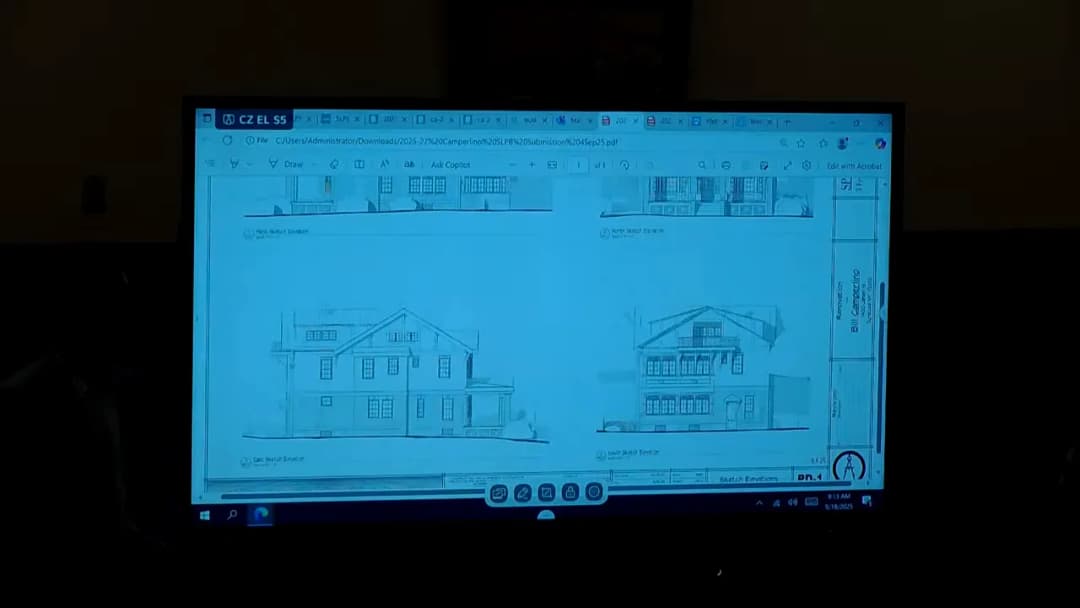
The Landmarks Preservation Board convened on September 18, 2025, to adopt meeting minutes, hold public hearings on two certificate of appropriateness applications, discuss a pre-development proposal for a rear addition, and vote to delegate paint color review to staff. Board members present included Nicole Fregmito, Kyle Gregoring, Julia Marshall, Hilary Donho, Robert Searing, Martha Hartsburg, and staff from the Corporation Counsel's Office and board staff. Consent Calendar - Minutes of August 28, 2025: Approved unanimously without modification. Public Comments & Testimony - 103 Dorset Road (CA-25-28): Applicant Melissa Shapiro Lopo described plans to remove an existing wooden deck and patio and replace them with historically appropriate materials (bluestone and concrete pavers inspired by Bellevue Country Club), as well as add privacy gardens and a copper awning. No speakers for or against from the public. - 305 Sedgwick Drive (CA-25-29): The homeowner (applicant) presented a request to replace the rear roof slope with synthetic slate, noting eventual plans for a full roof replacement and stucco work. No public speakers for or against. - 1400 James Street (Pre-Development Discussion): Don Redke (assisting owner) and architect Bill Murphy presented a proposal to replace an existing flat-roof rear addition with a gabled design incorporating shed dormers, a small balcony, and space for a hot tub. Board provided feedback; no formal vote. Discussion Items - 103 Dorset Road: Board members discussed dimensions of the proposed steps, suggesting a deeper landing and use of bluestone for the top treads. The copper awning design was questioned; board recommended a gable-shaped canopy more appropriate to the house. The application was approved with those suggestions. - 305 Sedgwick Drive: Board members inquired about ridge flashing, materials for flashings (copper), and the compatibility of synthetic slate. Staff noted that Shippo (historic preservation tax credit program) accepts synthetic slate if original slate is beyond repair and the appearance matches. The board approved the roof replacement only; stucco and trim work were deferred pending staff research. - 1400 James Street: Board members praised the improvement over previous iterations (eliminating flat roof) and stressed the importance of bringing material samples, avoiding vinyl windows, and using historically appropriate windows (e.g., aluminum-clad wood). The project was seen as moving in a positive direction. - Expansion of Staff Administrative Approval for Paint Color Changes: The board discussed delegating review of paint color applications to staff, provided the colors are compatible with the district context. A motion passed to allow staff to approve in-context colors and deny out-of-context ones, with the latter requiring board review. Key Outcomes - Minutes of August 28, 2025: Adopted. - 103 Dorset Road: Certificate of appropriateness approved (motion carried, all in favor). - 305 Sedgwick Drive: Certificate of appropriateness approved for the roof only; stucco and trim to be revisited. - 1400 James Street: No decision; pre-development discussion concluded with board feedback. - Paint Color Delegation: Motion passed to add paint color changes to the list of items staff can administratively approve, based on context compatibility.
This meeting of the Syracuse Department of Public Works (DPW) committee focused on a proposal to enter into a new contract with Laz Parking to operate four of the city’s municipal parking garages: Washington Street, Fayette Street, Madison Irving, and Center Armory. The committee discussed contract terms, fleet improvements, EV charging infrastructure, parking rates, and long-term garage strategy. Key city officials and Laz representatives answered questions from council members. Discussion Items - Contract Overview: The proposed contract mirrors the previous one: a three-year base term with two two-year renewal options, each requiring Common Council approval. Laz was the lowest bidder in all cost categories (security, staffing, operating expenses, management fees, equipment). Laz will invest $100,000 of its own funds into entry‑floor beautification and landscaping, and will bear the cost and project management of installing EV chargers at the Fayette, Madison Irving, and Washington Street garages (estimated value $25,000). - EV Charging Stations: Laz plans to install approximately eight stations at Washington Street, four at Fayette, four at Madison Irving, and none at Center Armory due to space constraints and recent capital investments. Council members asked about charging access and integration with on‑street EV options. - Staffing and Local Hiring: Laz area manager Kendi B. reported that 90% of the 20 employees covering the Syracuse portfolio are city residents. The workforce is diverse in ethnicity and background. - Parking Rates: Current monthly rates range from $70 to $125 depending on the garage and have not been adjusted since 2017. Laz proposed a $10–$20 increase to align with comparable municipalities. Chief Operations Officer Connor Modun suggested considering automatic periodic increases (e.g., $5 every two years) to avoid future gaps. - Safety and Security: Laz uses a 24/7 camera monitoring system (except Center Armory, which is fully covered) and a duress (panic) button system in all garages. Security personnel patrol and respond to incidents. Council members inquired about the effectiveness of these systems. - Garage Long‑Term Strategy: Modun described a planned study to evaluate the useful life of the garages (some approaching 50 years), redevelopment potential, and the impact of the I‑81 viaduct removal. The study would take 6–9 months and could be funded through existing partnerships (e.g., Grow America). Councilor Caldwell raised the possibility of creating a parking authority to manage both garages and on‑street parking, noting that surface lots are less productive than structured parking. Several council members supported exploring a parking authority model. - Employee Shuttle: The city‑owned shuttle, which runs between Washington Street Garage and City Hall, averages about 30 users per day, with higher usage in inclement weather. Council members discussed expanding the shuttle for special events or partnering with the county. Key Outcomes - No formal vote was taken; the committee received the proposal and discussed its merits. Approval of the contract will require a future Common Council vote. - The administration will share monthly financial and operational reports with the council, as requested by Councilor Manto. - The administration will continue to explore a parking garage study, possible rate increases, and the feasibility of a parking authority. Council members expressed interest in being included in those discussions. - The city remains open to partnerships for the shuttle and will share Laz’s monthly performance presentation with the council.
On September 17, 2025, the Syracuse City Council committee convened to discuss the implementation and operational details of the city's new automated traffic enforcement program, which includes bus stop arm cameras, red light cameras, and school speed zone cameras. The meeting featured presentations from city officials and representatives from Genoptic, the program's contractor, and covered data security, revenue sharing, violation processing, public concerns, and future enhancements. Discussion Items - Program Overview: Chief Operating Officer Connor and Jeff Nielsen of Genoptic introduced the three components: bus stop arm cameras (launched spring 2025), red light cameras and school speed zone cameras (launched at the start of the school year). All align with the city's Vision Zero goals. - Revenue Sharing: For speed and red light programs, Genoptic receives 35% and the city 65%; for bus stop arm cameras, the split is 45% Genoptic and 55% city. Funds go to the city's general fund, not directly to the school district. - Underground Infrastructure at Adam Street: Council discussed a revocable permission agreement passed on the previous Monday (September 15) allowing Genoptic to install underground conduits at Adam Street. The location required extra caution due to aging conduits. Genoptic is responsible for maintenance and uptime, with a 24-hour response target for issues. - Data Security and Privacy: Jeff Nielsen confirmed that all data generated by the system is owned by the city, stored for up to 12 months for violations (non-violation data expunged immediately), and protected by anti-tamper seals and daily software checks. Radar units are calibrated every 10–12 months by an independent third party. - Violation Processing: Incidents are reviewed twice by Genoptic (with quality checks) then by Syracuse Police Department (SPD). SPD rejection rate is typically 2%–7%. If approved, the violation notice is printed and mailed. All tickets are civil, carry no points on licenses, and do not affect insurance. - Warning Period: A 60-day warning period (double the industry standard) is in effect to allow residents to adjust before fines begin. - Fines and Enforcement Hours: - Speed cameras: $50 fine, active on school days 7 a.m. to 6 p.m. - Red light cameras: $50 fine, active 24/7/365. - Bus stop arm cameras: $250 first violation, $275 second, $300 third (within 18 months). - Signage and Community Concerns: Council members raised issues about signage on side streets, hills (e.g., Calvin Street), and areas where drivers might circumvent main roads. Genoptic and DPW committed to reviewing problem locations after 21–30 days to adjust enforcement zones or add signage. - School Bus Stop Arm Procedures: Dr. DeFlorio (Syracuse City School District) noted that bus driver training had been provided to ensure timely deployment of stop arms. Councilor Navi raised concerns about traffic backups when buses stop for extended periods. - Charter Schools: The city prioritizes SCSD campuses but may include some charter schools within the allowed camera locations (34 red light, 36 speed zones). Additional locations would require legislative approval. - Program Sunset: The enabling legislation is a demonstration program set to sunset in 2029, after which the city can seek renewal. - Weather Days: On snow days, SPD will notify Genoptic to disable speed cameras; business rules are in place to prevent issuance of tickets. - Future Collection Enhancements: Leah Whitmer (Municipal Violations Bureau) indicated a proposal is forthcoming to make automated enforcement fines boot-eligible and stack with parking tickets. Currently, 40 days to pay or contest; about 10% of bus arm tickets are contested. Key Outcomes - The committee received the detailed update with no formal votes taken. - Genoptic will begin underground construction at Adam Street within the next week. - The city and Genoptic will monitor warning period data to identify locations needing improved signage or adjusted enforcement zones. - The council will consider the pending proposal to link automated enforcement fines to vehicle registration holds and boot eligibility.
On September 16, 2025, the Syracuse City Council committee (with Councilmembers Pat Hogan, Rita Penawa, President Helen Hudson, Rashida Codwell, Jimmy Manto, Joe Rouser, and others) held a meeting to discuss the proposed Drone as First Responder (DFR) program. Police Chief Schoff and department officials presented proposed policy amendments based on public feedback from a prior hearing. Council members raised concerns about privacy, accountability, low-level call use, and public trust. The committee agreed to reconsider the program in two weeks after receiving an updated policy. Discussion Items - Chief Schoff’s Presentation on Current Drone Successes: Chief Schoff highlighted recent successes of the existing drone program, including tracking a man with a long gun (later found to be a costume), monitoring a brush fire, and assisting the fire department at the Maria Regina fire. He also noted drone use in ATV enforcement without pursuits. - Proposed Policy Amendments: Chief Schoff outlined amendments to policy sections 606.6 and 606.7: requiring supervisor approval (lieutenant/captain or FAA-certified sergeant) before each drone use; explicitly prohibiting use for random patrols; and prohibiting use for monitoring protests absent an articulable danger to public safety. Councilmember Manto questioned how the protest clause would interact with existing language on special events and enhanced public safety. Chief confirmed the new policy would specifically forbid protest monitoring. - Privacy and Surveillance Concerns: Councilmembers Codwell, Penawa, and Manto expressed concerns about drone cameras inadvertently recording private backyards, hot tubs, or topless sunbathers. Chief responded that cameras are forward-facing during transit and that the department can turn recording on/off. He offered flexibility on deleting in-transit footage to address complaints. Councilmember Penawa asked about focusing the camera only on the incident scene; Chief acknowledged it is difficult but typical practice is to zoom in. - Data Retention and Sharing: Council members questioned how long footage is stored (Sergeant Einbeck said it follows body camera policy – up to 3 years, unless evidence), and who has access. Chief stated data is stored on Axon’s evidence.com, is not shared with outside agencies (except as required by law or FOIL), and Axon cannot use the data for its own purposes. Councilor Codwell raised concerns about hackability; Chief noted the system requires specific permission to access. Councilor Manto asked about sharing with state/federal agencies; Chief said such sharing would require a court order or legal basis. - Accountability and Oversight: Councilor Codwell asked how the department ensures drones are not used for profiling. Chief pointed to policy prohibiting targeting based on race, gender, etc., and noted that discipline includes progressive discipline up to termination. Councilor Codwell pushed for proactive random review of drone footage; Lieutenant Williams agreed to add that to the policy. Councilor Manto asked if the Public Safety Committee could access footage; Chief said it could be reviewed in a closed session. - Use on Low-Level and High-Priority Calls: Councilor Manto questioned the shift in rhetoric from high-level to low-level calls. Chief and Lieutenant Williams clarified that for emergencies (priority one calls), drones and officers are dispatched simultaneously; for low-level calls (e.g., loud noise), the drone can first verify if the issue remains, saving officer time. Councilor Hogan noted the benefit for ATV enforcement. Councilor Codwell asked about protocols if a call escalates; Chief said the drone provides real-time intel. - Public Education and Outreach: Councilors Penawa and Manto stressed the need for community education to calm public nerves. Chief referenced a prior public education event with Tony Burelli of Neighborhood Watch that was recorded and available online. Councilors suggested having police captains (who no longer attend TNT meetings) make special trips to neighborhood groups to explain the program. Chief agreed to consider that. - Technical Details: Lieutenant Williams stated the program will start with one drone, stationed near Woodlawn reservoir, with a long-term goal of five units covering the city. The drone is operated by an FAA Part 107 licensed pilot, allowing beyond line-of-sight operation. Drone flights will be posted on a public dashboard (with flexible timing for posting). Key Outcomes - Chief Schoff agreed to incorporate proposed safeguards into the updated policy: supervisor approval, no random patrols, no protest monitoring, prohibition on targeting based on protected characteristics, and random proactive review of drone footage. - The committee will reconsider the DFR program at its next meeting in two weeks after reviewing the updated written policy and data retention information. - The chief will provide the contract language with Axon regarding data ownership and the data retention policy to the council before the next meeting. - Council members committed to continuing dialogue with constituents and police on the program.