Browse by city
Date range
Search help

Search titles, summaries, topics and stored transcripts together. Keywords may match separately; put the whole query in double quotes for a phrase. Matching follows word analysis, so punctuation is not exact. Both dates are included. Documents are not searched.

SHOWING 1–10 ENTRIES
01
OCT 21, 2026 · TOPEKA, KANSAS · GOVERNING BODY
Topeka Governing Body Meeting – October 21, 2026: Ballot Items, Auditor Amendment, and City Manager Transition

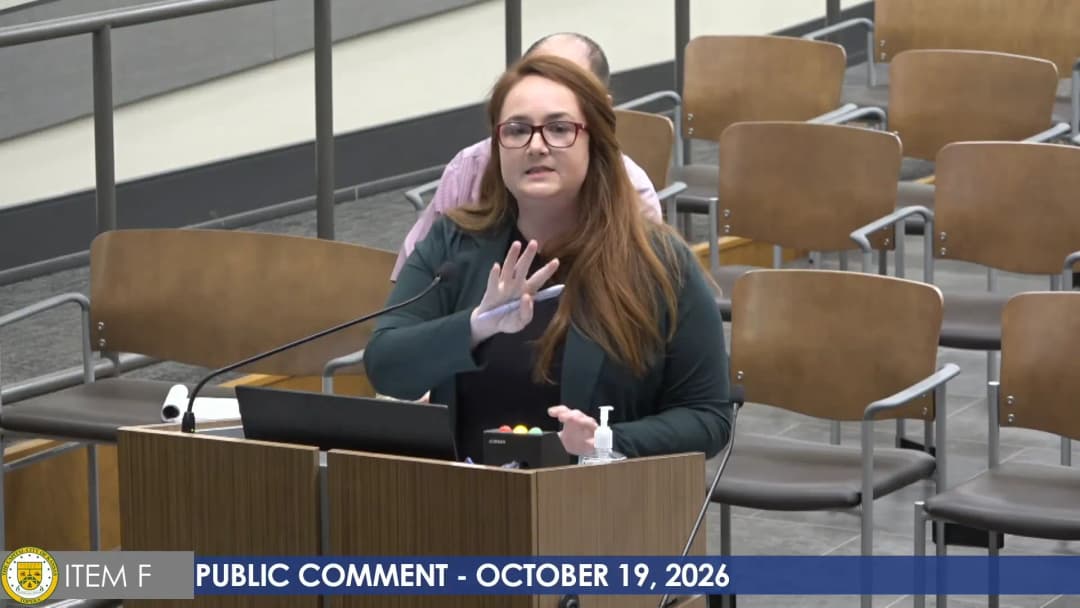
No agenda or minutes were included in the source package; this summary is based on the raw transcript. The supplied meeting timestamp is 2026-10-21 03:32:36 UTC, although the transcript's opening line says October 20, 2026. The meeting included a financial report, approval of ballot items, public comment, and an executive session that led to the city manager's departure. Note: the opening roll call lists Councilmember Valdivia Aquala absent, but later recorded votes include her; the transcript does not explain the change. Proclamation - Mayor Duncan proclaimed October 24, 2026 as World Polio Day. Rotarians accepted the proclamation; Tanya Dorf Brenner of Topeka South Rotary noted her club's board chair and vice chair were on their way to India for polio vaccinations. Consent Calendar - Approved the minutes of the regular meeting of October 13, 2026, on a 9-0 vote. Financial Update – FY2026 Nine-Plus-Three Report - Staff reported the general fund is projected to use about $4 million of reserves instead of the budgeted $7 million to balance FY2026. - Projected revenues are about $126 million; projected expenses are about $130.5 million; projected year-end fund balance is just under $29 million, or about 22.5%. - Sales tax is projected about $700,000 below budget; sales tax is roughly one-third of general fund revenue. Staff cited a 1.25% growth assumption that is not being realized and recommended monitoring, with a flat sales tax projection suggested for FY2028. - Expense savings were cited in utilities, contractual services (about $700,000 below budget), and some police department line items; motor fuel was higher than expected. - Councilmembers questioned the effect of a possible federal fuel-tax suspension, sales-tax category detail, winter commodities, and reserve-fund impacts. Staff said the state provides only an overall sales-tax figure, although Councilmember McGee had obtained some state-level breakdown. Action Item A – March 2027 Ballot Question: 0.1% Sales Tax for Affordable Housing and Homeless Services - The city manager recommended placing on the March 2, 2027 special election ballot a 0.1% special citywide sales tax expected to generate about $4 million annually, with at least 50% for the Affordable Housing Trust Fund and the remainder for evidence-based homeless initiatives, including but not limited to operating and construction costs, outreach support, transportation services, rental assistance, and affordable housing. - Staff said the special election estimate was revised to $155,000, from an earlier $118,000 estimate. The tax would take effect July 1, 2027, producing about $2 million in the first partial year. - Public comment: Joseph Ledbetter opposed the special election because of cost, preferred August, proposed different percentage splits, and raised concerns about outstanding warrants among homeless individuals. Steve Henry, representing Topeka JUMP, urged the council to put the question on the March ballot. Henry McClure opposed, saying the city cannot afford the election and criticizing government involvement in real estate. - Council debate included support from Councilmember Bradbury, who said prevention costs less than crisis response; Councilmember Bakes, who said voters should decide; Councilmember Kell, who changed his position and supported moving sooner; and Councilmembers Hiller and Miller, who made and seconded the motion. Councilmember Ortiz voted no because of the $155,000 cost and concerns about broad language. Deputy Mayor Hofer asked that administrative costs be recoverable from the tax. Councilmember Kell's suggestion to include cleanup was addressed by noting the phrase "including but not limited to" and "operating costs" already covers it. - Vote: motion carried 8 yes, with Councilmember Ortiz voting no. Action Item B – Charter Amendment for City Auditor - The proposed charter amendment would amend Topeka Municipal Code Sections A224 and A225 to allow the city auditor to report directly to the governing body. Staff noted a position description is being drafted; $108,000 had been budgeted for the office, with a likely salary around $165,000. - Public comment: Joseph Ledbetter said he had no position but argued the existing charter already requires financial reporting to the council. Daniel Twemlow supported the position and urged an equity-focused audit rubric. Henry McClure questioned why the auditor would report only to the council instead of to the public. - Councilmembers described the auditor as a performance/internal auditor focused on operations, internal controls, contracts, efficiency, and taxpayer dollars. They discussed annual audit work plans and quarterly public updates. Deputy Mayor Hofer stressed the need for clear qualifications and a direct line of direction. - Vote: the charter language was approved 9-0. This step did not yet place the question on the ballot. Action Item C – Call for March 2, 2027 Election on City Auditor Charter Change - Council voted 9-0 to call the election on the charter ordinance, pairing it with the sales-tax question on the March 2, 2027 ballot. Councilmember Ortiz asked whether it would cost extra; staff said it would be part of the same ballot. General Public Comments & Testimony - Joseph Ledbetter praised the new Poquincy Viaduct as ahead of schedule, called it a $250 million project, and praised Cody Foster's downtown and mall investments, saying the comments were his personal opinions. - Daniel Twemlow urged strategic planning around IT/digital infrastructure, transit, green space, climate resilience, local business support, and participatory governance, and said no to hyperscale data centers. - Sharon Gillette spoke against surveillance and hyperscale data centers, urging Topeka not to provide "another set of eyes." - Amy Gillette raised concerns about the proposed Great Plains Defense Autonomy Hub near Forbes Field, including rare earth processing health risks and property tax/incentive exemptions, and thanked councilmembers for questioning the MTAA data center presentation. - Henry McClure praised Cody Foster personally but criticized the 220 SE 6th Street/ATT building deal, sales-tax exemptions through IRBs, and called for exploring city-county consolidation and new approaches. Announcements - The November 3, 2026 governing body meeting is canceled pursuant to Resolution 9789 because it is general election day. - Fire Prevention Month reminders included free smoke detectors through a Red Cross partnership, juvenile fire-safety education, carbon monoxide detectors, and fire-pit safety. - Halloween safety reminders, Boo at the Zoo on October 24, Zoo Lights beginning November 20, and get-out-the-vote reminders were also announced. Executive Session and City Manager Transition - The council entered executive session for personnel matters involving non-elected personnel under KSA 75-4319(b)(1), extended it by 45 minutes, and then returned. - The governing body voted 9-0 to suspend its rules to permit discussion and action regarding the duties of city manager and related business. - Accepted the resignation of City Manager Dr. Robert M. Perez effective immediately and approved a separation agreement, on a 9-0 vote. - Appointed Deputy City Manager Braxton Copley as acting city manager effective immediately, on a 9-0 vote. - Authorized the city attorney to negotiate and finalize an interim city manager employment agreement with Michael Webb, with service beginning Monday, October 26, 2026, or another mutually agreed date, and appointed Webb interim city manager effective on the agreement's commencement date, on a 9-0 vote. - The transcript indicates the meeting adjourned at 9:31 p.m. Key Outcomes - The March 2, 2027 special election will include the 0.1% affordable housing and homelessness sales tax question, approved 8 yes to 1 no. - The charter amendment language for a governing-body-reporting city auditor was approved 9-0, and the call for election on that charter amendment was approved 9-0. - FY2026 financial projections show roughly a $4 million reserve draw and a year-end fund balance just under $29 million. - City Manager Dr. Robert M. Perez resigned effective immediately; Braxton Copley was named acting city manager; Michael Webb was selected as interim city manager starting October 26, 2026. - The November 3, 2026 governing body meeting is canceled.
PROCEDURAL 14% · PUBLIC ENGAGEMENT 14% · HOMELESSNESS 12% · PUBLIC SAFETY 12%
02
OCT 20, 2026 · TOPEKA, KANSAS · PLANNING COMMISSION
Topeka Planning Commission Meeting Summary - October 20, 2026

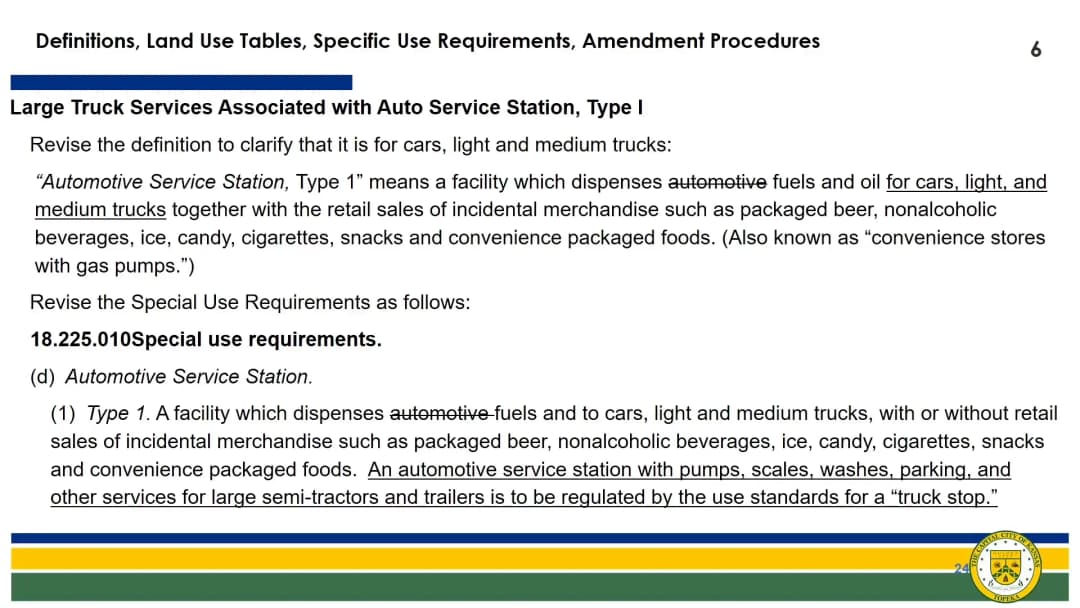
The Topeka Planning Commission met on October 20, 2026, with a recorded start time of 00:33 UTC, and seven members present: Brooks, Bowling, Hannon, Heron, Lawley, Nelson, and Pearson. The commission held public hearings and action items on a PUD rezoning, a zoning code text amendment, and a comprehensive plan amendment. It approved the first two items, continued the third to a later meeting, and received general public comments about data center impacts. No agenda or minutes were included in the source materials. Opening Business - Roll call established a quorum with seven commissioners present. - The commission approved the minutes from the September 21 meeting with 3 votes in favor, 0 opposed, and 4 abstentions. - No conflicts of interest or ex parte communications were declared. Action Item: PUD 2607 - AMICO Station, 5977 SW 29th Street - Staff presented a request to rezone a 0.915-acre property at the southwest corner of Wanamaker and 29th Street from C2 commercial to PUD for C2 commercial uses. The site is a gas station with a 1,000-square-foot convenience store. - The PUD would reduce the required rear yard setback from 25 feet to 10 feet for a proposed new convenience store. Staff noted that PUDs are traditionally at least one acre, but staff allowed this slightly smaller site to proceed. - The applicant, represented by Travis Hazlip of Cook Flat and Struble Engineers, said the project would replace the store with a more modern, larger building and needs the reduced setback to improve site circulation and traffic flow and avoid reconstructing the canopy. - Staff recommended approval subject to 11 conditions, including landscaping or fencing along the rear property line. Staff said the shared private access driveway to the south would not be affected. - A neighborhood meeting on September 30 drew one attendee, legal counsel for neighboring property owners to the south and east, who submitted a letter objecting that the variance was unfair to similarly zoned properties and did not arise from a condition unique to the site. - No public comment was offered during the hearing. - The commission voted 7-0 to approve PUD 2607 with the staff conditions. Action Item: Zoning Text Amendment CZR2604 - Staff said this broad text amendment had been discussed at three prior meetings and does not include data centers or energy storage systems. It changes land use tables, definitions, and special use standards in multiple zoning code chapters. - Drinking establishments: The amendment would allow a drinking establishment in the C2 district without a conditional use permit if it is accessory to a permitted primary use, is a principal use no larger than 2,000 square feet as calculated by the Shawnee County appraiser, or occupies no more than 40 percent of an existing multi-tenant commercial building. Live music or entertainment outside the enclosed building would not be permitted; larger or other establishments could still apply for a conditional use permit. Staff cited the former Dutch Goose at about 1,200 square feet and Abigail's at more than 6,000 square feet as examples of the range of establishments. - Large truck services: A convenience store with fuel pumps that also offers large truck services would be treated like a truck stop and require a conditional use permit, reflecting the larger traffic and street impacts. - Modular homes and multiple units: The amendment would add a definition for modular homes built to the International Residential Code and clarify that multiple single-family detached dwellings may be placed on one lot. New special use standards would require site and landscape plans, minimum building separations of 15 feet, or 8 feet rear-to-rear, and off-street parking based on dwelling size. - Short-term rentals: During discussion, a commissioner asked that the owner-manager requirement clearly allow owners to manage their own rental properties. Staff agreed to add owner to the language. - Secondhand shops and pawn shops: Staff said they had not been able to fully separate pawn shops from secondhand shops. Keeping them together and allowing secondhand shops in X1 districts was important to the NOTO area. The chair said she would prefer more restrictions on pawn shops but was willing to move forward. - No public comment was offered. - The commission voted 7-0 to approve the text amendment. Action Item: CPA 2602 - Land Use and Growth Management Plan 2040 Update - Staff said the plan update had been discussed at prior meetings and is intended to reflect how policies have been interpreted and applied since the plan was adopted in 2015, update density references, encourage adaptive reuse of vacant or underutilized commercial properties for multifamily residential use, and incorporate the downtown master plan. Future land use map examples at 6th and Fairlawn and near Lake Shawnee would change to mixed use. - Commissioner Brooks asked about annexation exceptions for city water and sewer service; staff explained that utility regulations allow specific exemptions, often involving one-lot residential plats. Commissioner Brooks also suggested adding a mechanism to require a future comprehensive review of the plan, and staff said they could consider adding such a review date. - Commissioner Pearson said she was not comfortable voting on the item without more time to review the material and would have abstained if forced to vote. The commission instead moved to continue the item for one month. - The public hearing was opened and closed with no public testimony. - The commission voted 7-0 to delay the vote and continue CPA 2602 to the next meeting. Staff said the continued item would not require a new public hearing advertisement. Public Comments & Testimony - Megan Ryan, with Protect Kansas, spoke against proposed data center siting near residential areas. She cited health concerns from lead exposure at the former firing range near the Compass proposal, potential contamination at MTAA Forbes Field, EPA deregulation, and diesel exhaust from a facility she described as 840 megawatts. She said low-income communities such as Monterra were being treated as sacrifice zones and asked whether an elementary school would be built next to a 600-megawatt facility. - Mike Bradley, a Monterra resident and former private pilot, spoke against locating hyperscale data centers near Topeka Regional Airport. He said thermal plumes from cooling towers, condenser arrays, and exhaust stacks, often 14 to 25 degrees above ambient temperature, could pose hazards to aircraft during takeoff, landing, and traffic patterns. He cited FAA Advisory Circular 150/5190-4B and airport grant assurance requirements and asked the commission to consult the FAA. - Staff responded that the city's three-mile extraterritorial authority applies only to subdivision plating, not zoning, so the data centers discussed outside the city limits would fall under county jurisdiction. Commissioner Brooks said the airport concern made sense, but staff said the county would be the relevant authority. The city's data center text amendments will first be presented to the governing body before returning to the commission. Discussion Items - Special Committee on Housing: A commissioner reported that the committee had not met and was considering whether to move to a quarterly schedule or re-evaluate its planning-related work; an email about the committee's future would be sent. - Communications and next steps: Staff noted the February agenda would include an action item and a parking discussion. A vacant commission seat was being processed for appointment. The duplex text amendment is scheduled for the governing body on November 10. Key Outcomes - PUD 2607 approved 7-0 with conditions. - Zoning text amendment CZR2604 approved 7-0. - CPA 2602 continued to the next meeting by a 7-0 vote. - No formal action was taken on the data center public comments. - The housing committee will communicate its future schedule by email.

ZONING REGULATIONS 31% · PROCEDURAL 18% · LAND USE PLANNING 13% · DATA CENTER REGULATION 13%
03
OCT 14, 2026 · TOPEKA, KANSAS · GOVERNING BODY
Topeka City Council Meeting - October 14, 2026

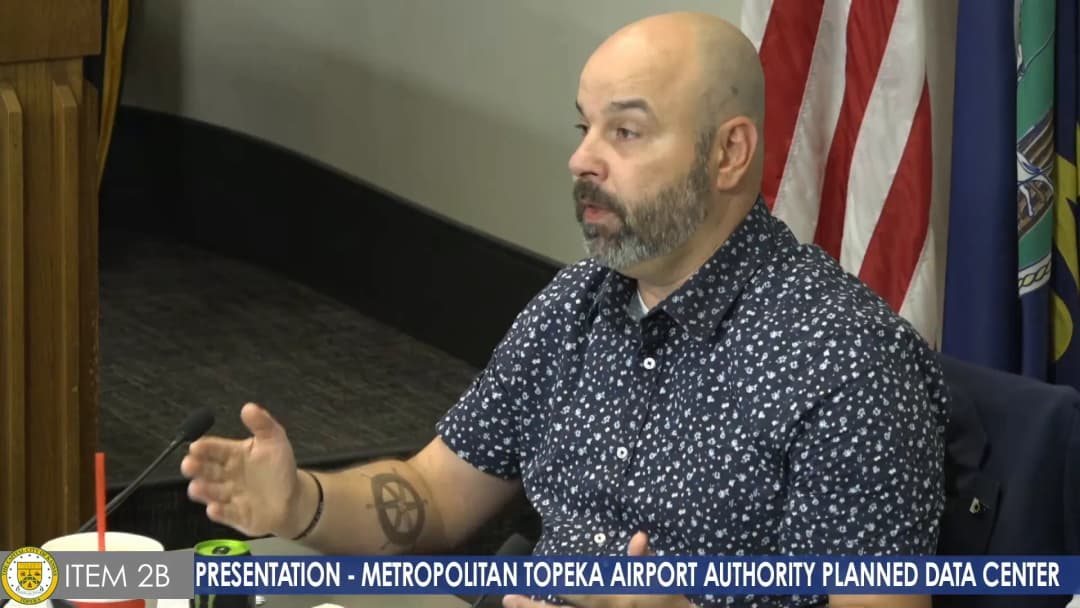
Note: The transcript states this meeting occurred on October 13, 2026, but the provided timestamp indicates October 14, 2026 at 17:23:52 UTC. This summary uses the given date. The governing body convened at approximately 5:23 PM UTC (12:23 PM CDT) for a session lasting until 10:33 PM local time. The agenda included presentations on the FY2027-2030 strategic plan, a proposed data center at Forbes Field, an island annexation overview, and extensive discussion on future sales tax initiatives. Public comment included strong opposition to data centers, concerns about road projects, and support for a rental registry. Presentations - FY2027-2030 Strategic Plan (City Manager & KU Public Management Center): The city manager introduced a contract with the University of Kansas to develop a four-year strategic plan by March 2027. Phase one includes individual interviews with governing body members in November–December 2026, a full-day work session in January 2027, and a half-day discussion in February before adoption in March. Christy Northcutt (KU) presented the team and timeline, emphasizing inclusive, customized, research-backed facilitation. - Data Center at Forbes Field (MTAA President Curtis Sneedon): Mr. Sneedon discussed a potential “tech center” data center on 30-40 acres at the south end of Forbes Field, with an initial 70-80 megawatt load and two buildings (roughly 150,000 sq ft each), with possible future expansion to four buildings. He emphasized the project is in early stages, dependent on Evergy power availability, and that the developer has not applied for permits. He stated the developer will pay for utility extensions, landscaping, and will be required to make a payment in lieu of taxes (PILOT) equivalent to property taxes. No incentives have been requested. Mayor Duncan and multiple council members expressed frustration that the developer remains unnamed and has not engaged directly with the community. Councilmembers raised concerns about noise (50-65 decibels estimated), water consumption (1 million gallons/year closed-loop system), potential interference with airport operations, and the reliability of PILOT agreements. Councilmember Valdivia-Alcala noted the City of Topeka Planning Commission considers anything over 50 megawatts as “hyperscale.” No vote was taken. - Island Annexation Overview (Dan Warner, Planning Director): This presentation explained the difference between standard contiguous annexation and island annexation. Island annexation requires a property owner petition, a resolution from the Governing Body asking the county to determine no inhibition of growth, and a county commission resolution before the city can pass an ordinance. It was noted that no annexation request has been received for the proposed Compass data center site. Consent Calendar - Approved unanimously (10-0): three-year labor contract with Council 61 Local 1294 Water Division; 2027 special alcohol and drug funding recommendations of $865,924; minutes of October 6, 2026. Public Comments - Data Centers (multiple speakers): Residents opposed both the MTAA and Compass data centers, citing health concerns from noise and water pollution, lack of economic benefits, property tax shifts to residents, and flight safety issues. Speakers requested independent acoustical and industrial hygiene studies, a decommissioning escrow, and a ban on hyperscale data centers. One speaker noted AI analysis recommended a five-mile setback. Several speakers criticized the lack of transparency and urged the council to oppose any data center in Shawnee County. - Roads (Joseph Ledbetter, Sandra Lasseter): Ledbetter complained about numerous unfinished road projects (37th, Croix, 29th, 17th, Huntoon, Topeka Blvd) causing bus route disruptions. Lasseter requested a crosswalk with a light at 37th and Gage near Dollar General and urged reopening Topeka Boulevard. - Rental Registry (Danielle Twemlow, Councilmember Valdivia-Alcala in support): Twemlow advocated pairing the rental registry with a licensure program for multi-family units, noting it could improve code enforcement efficiency and safety. Councilmember Valdivia-Alcala urged colleagues to prepare for the upcoming discussion. - City Manager Position (Sandra Lasseter): Suggested freezing the deputy manager position (Braxton) and redistributing responsibilities to save money. - Police Accountability (Davin Banks): Alleged wrongful arrest on August 24, 2026, and called for internal accountability. Discussion Items - FY2026 Strategic Goals & FY2027 Goals (City Manager): The city manager reviewed progress on 14 FY2026 goals (e.g., 311 call center evaluation, affordable housing trust fund activation, digital kiosks, EV pilot, fire station relocation plan). For FY2027, he proposed five initial goals: continue digital ticketing, develop a climate action plan with the sustainability board, complete the fire station relocation plan with funding recommendations, develop a two-year sustainable budget with a five-year infrastructure program, and create a five-year infrastructure management plan. He will send a memorandum by October 27 and finalize goals on November 10. Monthly budget accountability reports will start February 2027. - Future Sales Tax Initiatives & City Auditor (City Manager & Dalton Badel): The city manager presented options to address projected deficits ($13.3M in FY2028, $17.4M in FY2029). Three scenarios were considered: (1) a March 2027 special election with a half-cent general purpose sales tax, one-tenth cent for affordable housing/homeless services, renewal of the existing half-cent infrastructure tax, and a charter amendment for a city auditor reporting to council; (2) an August 2027 primary election with a similar package, allowing a community sales tax committee; (3) splitting housing/homeless and auditor to March and deferring the rest to August. The half-cent would generate $20M/year and could cash-fund three fire stations; the one-tenth cent would generate $4M/year. Tax impact comparisons were provided: at 9.95% combined rate, an average household spending $23k/year would pay an extra $138/year. Councilmembers expressed strong preference for August to allow public input and refine language, especially for the affordable housing/homeless question. Concerns were raised about broad “operating costs” language in the general tax, and the need to specify outcomes and measurement. The city auditor charter amendment (Ballot Question 4) was generally supported. No vote was taken; discussion will continue on October 20. Key Outcomes - Consent agenda approved 10-0. - Sales tax decisions deferred: Discussions will resume October 20, 2026, with potential for a March or August 2027 election. The mayor signaled he will prepare revised language for the affordable housing/homeless question and the auditor amendment for next week’s consideration. - Data center issue remains in early stages: No council action taken; continued community opposition and council skepticism noted. - Executive sessions (2): One 15-minute session on cybersecurity (under KSA 75-4319(b)(12)) and one 15-minute session on potential litigation/attorney-client privilege. No action taken. - Meeting adjourned at 10:33 PM local time.

DATA CENTER REGULATION 26% · BUDGET EQUITY ANALYSIS 12% · PROCEDURAL 10% · PUBLIC ENGAGEMENT 8%
04
SEP 22, 2026 · TOPEKA, KANSAS · PLANNING COMMISSION
Topeka Planning Commission Meeting - September 22, 2026

The City of Topeka Planning Commission met on September 22, 2026, to discuss data center zoning definitions, proposed text amendments to the zoning code, and updates to the land use and growth management plan. All three items were discussion items with no formal votes taken. The commission also recognized Commissioner Nager on his final meeting. Public Comments & Testimony - A public speaker expressed strong concerns about a 600-megawatt data center proposal near the Monterra community, asking whether the commission would build an elementary school less than one mile from such a facility. The speaker cited unresolved water and air permitting issues, including a quote from air permitting staff that 'we cannot locate any application or information about this facility,' and alleged that a lagoon on a revised map did not have rendering or specifications to support the volume represented. - The speaker warned about potential health effects from pulsations and interference with biorhythms, and pointed to a QR-code dashboard mapping community concerns, saying attendees represented many others who could not be present. The speaker also noted that the MTAA item would be discussed at City Council on October 6. - The speaker urged the commission to set standards before applications are submitted, arguing 'now is the time,' and expressed hope the city would take a deliberative approach to avoid conflict and dissension seen in other Kansas communities. - Another speaker stated they were glad to see the city taking a deliberative approach and offered to be helpful. Discussion Items - ACR2605 – Data Center Definitions: Staff presented draft definitions for different data center types and proposed application requirements. Commissioners expressed support for breaking out data center types and adding application requirements, which they said would help evaluate future cases. One commissioner suggested that establishing a maximum water use may be a governing body issue rather than a planning commission matter. Staff responded that the conditional use permit (CUP) process can impose conditions and tie approvals to application information. Public testimony raised concerns about water use, electricity generation, permitting, and potential health effects. - Text Amendments: Staff reviewed proposed revisions to C2 district land use standards, using the Maverick site as an example where truck pumps are substantial but not the majority of the site. Discussion also covered accessor-building standards that restrict detached accessory buildings on a cumulative basis to no more than 90%, with two previously approved Board of Zoning Appeals variances that would no longer require variances under the proposed change. Additional topics included tiny home and RV short-term campgrounds, which are currently allowed by right in C3, C4, and I1 districts and by conditional use permit in RR1; short-term rental regulations, including a proposed owner/manager representative contact standard beginning at 7 a.m., a two-year certificate validity tied to compliance, and renewal considerations if contact information is not available. Commissioners supported the changes, noted that short-term rental complaints are few relative to the number of bookings, and suggested screening on certain street sides. Staff indicated the text amendments would return for a public hearing in October. - Land Use and Growth Management Plan Update: Staff reviewed proposed revisions to the plan, including housing choices, the 80-20 rule, and subdivision regulations. The 80-20 rule addresses situations where the largest two lots are each greater than 20 acres and exceed 80 percent of a tract, indicating rural rather than urban development. Plating exemption rules generally require a minimum of three acres per tract, 300 feet of frontage per tract, and a maximum depth-to-width ratio of two, but these rules do not apply when going through a plat. Commissioners expressed support for separating transportation and housing into two independent categories, noted that items were removed from the plan, and emphasized the importance of retaining context for future planning commissions and staff. Key Outcomes - No votes were taken on the three discussion items; all were informational. - The text amendments and the land use and growth management plan update are scheduled to return next month as public hearings, along with a zoning case requiring action, for a total of three action items. - The data center item is not likely to return next month; if it does, it would again be a discussion item. - The special committee on housing did not meet because there was no quorum, and no general public comments were submitted. - Commissioner Nager was recognized on his last planning commission meeting; commissioners expressed appreciation for his service and contributions.

DATA CENTER REGULATION 35% · ZONING REGULATIONS 31% · WATER AND WASTEWATER MANAGEMENT 5% · PROCEDURAL 4%
05
SEP 16, 2026 · TOPEKA, KANSAS · GOVERNING BODY
Topeka Governing Body Considers Sales Tax Ballot Measure, Housing Trust Fund, and 2027 Budget on September 16, 2026

Note on the date: the transcript opens with “September 15th, 2026,” while the meeting’s recorded timestamp is September 16, 2026 at 06:00:48 UTC. Consistent with the meeting record, this summary uses September 16, 2026. Opening & Invocation - Councilmember Baldimia Alkala was announced as associated with the invocation, and Imam Omar Hazim of the Islamic Center of Topeka delivered the evening’s prayer. (The transcript is garbled and appears to attribute the invocation to both.) - The Mayor introduced Imam Hazim as Islamic Advisor to the Kansas Department of Corrections, a role he has served since 1990, and noted he was the first Muslim to deliver the invocation to the Kansas House of Representatives and Senate on March 9, 1995. - Hazim prayed for the success of the Mayor and the governing body. Consent Calendar - The consent agenda included the minutes of the regular meeting of September 8, 2026; no applications were on the agenda. Public Comments & Testimony - A resident, identified as Ms. Daniel Twimlow, signed up for public comment on the amendment item; the substance of the comment is not captured in the transcript. - Housing affordability: A public commenter said market-rate housing “is not affordable for me and my family,” calling it “unethical to prioritize luxury housing over the homeless human beings on our streets right now.” The commenter objected to a push to direct half of the proposed sales tax to market-rate housing — citing a downtown luxury apartment complex as the example — and asked why residents struggling to afford housing should pay a tax for “luxury” they would never be able to live in or enjoy. The commenter began writing their remarks on Thursday, September 10. - Data center: A community speaker urged the council to consider “the more human side of what a data center can do to a community” and told the governing body, “We must not give in to exhaustion or despair because the decision we make now will shape our communities for generations to come.” The Mayor allowed the speaker to finish even though the budget item was running long. Discussion: Sales Tax and City Order Initiatives (March 2027 Ballot) - Staff presented proposed sales tax and city order initiatives that, if approved by the governing body, would go before voters in March 2027. - Staff noted the city had 1,187 positions in 2024, and that roughly $17.5 million in budget adjustments would be needed over the next couple of years to balance the budget “without any significant changes in our revenues.” If current projections held through 2028, reserves would be 11.82% above the 20% reserve target. - Timeline discussed: the Policy and Finance discussion occurred September 3; council discussion is scheduled for October 6; the governing body was asked to consider and approve ballot language, with samples provided. One councilmember questioned why the deadline is October 20 rather than November 10, noting the election date (March 2) and a December 1 certification date, and requested that deadline information be provided. - A councilmember said they did not want to give any group “an open-ended sales tax that goes on in perpetuity.” Another reported that constituents “don’t want” a sales tax. A third noted the sales tax would allow the city to pay for things with cash. - The city manager pointed to a Friday memorandum addressing performance measures for each department, with monthly reporting to the council. - Technical and legal discussion covered the existing 0.5% special-use sales tax (which currently caps the rate at 0.5%), the distinction between general and specific-use taxes, and the city manager’s statement that the sales tax could not be used for street maintenance. - Councilmembers noted the RHID program “was not created for affordable housing” — with one challenging staff to bring a formal change if the governing body wants one — while the Affordable Housing Trust Fund was described as the intended vehicle for much of the housing discussion. One councilmember explained the market-rate housing rationale: as households move up, more affordable units become available. Discussion: Affordable Housing Trust Fund - Staff provided an update on the activation of the Affordable Housing Trust Fund, an FY2026 strategic goal, and the Trust Fund Committee’s recommended use of remaining funds for smaller projects. - Discussion included small “gut rehab” grants of about $10,000 to bring homes to code and price them as affordable, as well as co-op housing — Topeka has only one or two co-ops. - Councilmember Hiller requested that information be shared with the full governing body. Discussion: 2027 Budget - The city manager reviewed budget line items, noting that a first item would reclassify a current position to create a city auditor role, with no new expense line item because the money is already levied in the budget. - Councilmembers discussed a program transition, with one saying the community “doesn’t think they can do it” and urging that lines of accountability — including to public-health authorities — be clarified before any change. - On School Resource Officers (SROs), a councilmember expressed support while noting officers they have spoken with plan to retire; another noted there is “a little under a year” for related training. - A councilmember expressed concern about deferring a $150,000 item, warning that if the council waits until June, the $150,000 “will not be able to be done.” Another suggested adopting the item and making any changes — whether by proviso or budget request — before the evening is over. - A councilmember observed that personnel and capital project costs are the two major spending areas and that, absent a tax increase, the structural imbalance would make those areas the first affected. - The city manager reiterated the intent to hold a budget discussion each month at council and noted tough decisions will be made about unfilled positions as people leave. - The Mayor asked the city clerk to take a vote on the amendment before the body; the tally and outcome are not captured in the transcript. Recognitions & Announcements - It was announced that this was Nick Jefferson’s final council meeting. - A councilmember praised the Topeka Fire Department’s testimony and the Topeka Police Department for quickly identifying a suspect in the NOTO double homicide. The councilmember called the incident horrific but isolated, and encouraged residents to support NOTO businesses, including at First Friday. - Councilmember Miller recounted explaining to his son that he and Councilman Ortiz had spoken “as adults” after a conversation earlier that evening. - The final fire department open house (held the previous Friday) was praised, and new employees were welcomed. - The Mayor said the meeting would not run past 10:00 p.m. and that the budget discussion — limited to 15 minutes — would begin immediately. Key Outcomes - The sales tax and city order initiative remains under discussion; the next council discussion is set for October 6, with ballot language consideration and approval expected around the October 20 deadline (which one councilmember questioned). - Councilmember Hiller’s request for Affordable Housing Trust Fund information to be shared with the full governing body was agreed to. - The 2027 budget discussion proceeded to a vote on the item before the body; the outcome is not captured in the transcript. The city manager committed to monthly budget discussions at council. - The consent agenda, including the September 8, 2026, minutes, was presented with no applications.

AFFORDABLE HOUSING 21% · PROCEDURAL 19% · PUBLIC SAFETY 14% · BUDGET EQUITY ANALYSIS 13%
06
SEP 9, 2026 · TOPEKA, KANSAS · GOVERNING BODY
Topeka Kansas City Council Meeting – September 9, 2026

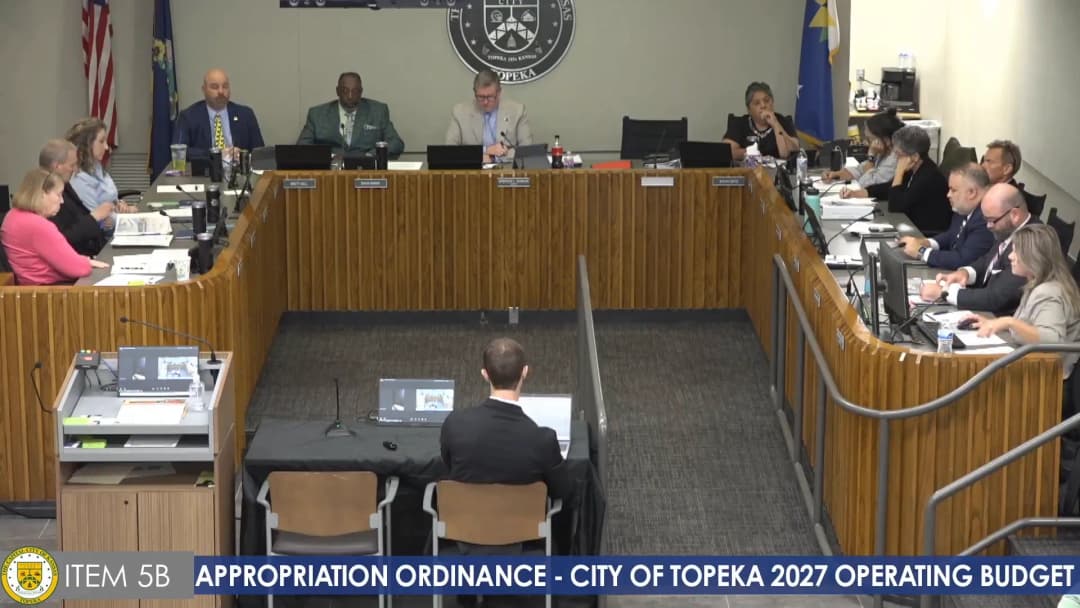
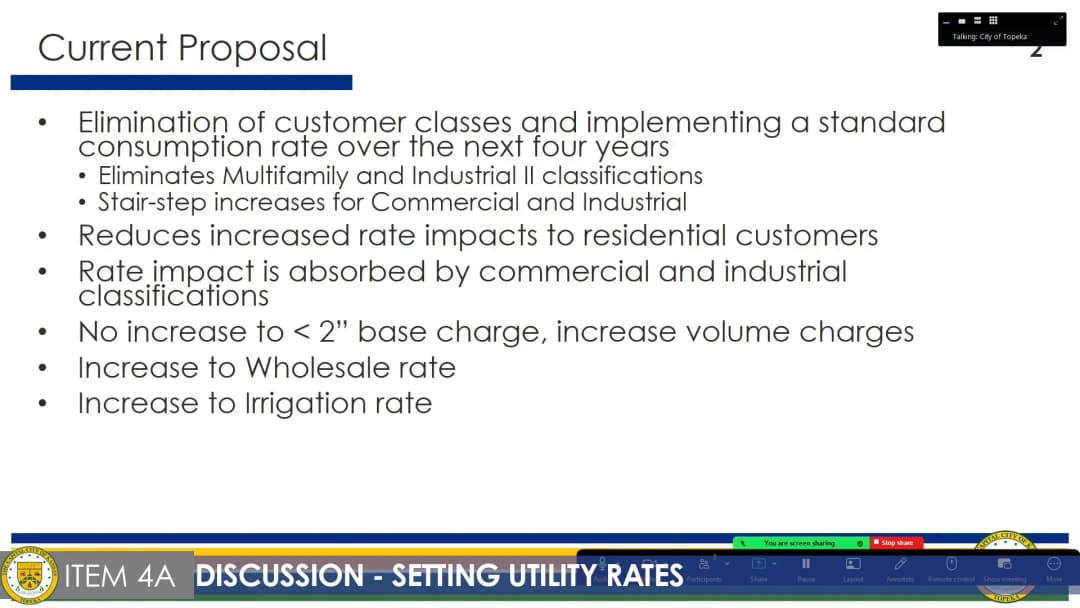
The Topeka Governing Body met on September 9, 2026, to discuss and act on a range of items including utility rate adjustments, the FY2027 budget, a housing study update, fire station relocation plans, and public comments on school resource officers and budget priorities. The meeting included presentations, public hearings, and council deliberations, with several votes taken. Consent Calendar - Reappointment of Candace Styles to the Topeka Metropolitan Transit Board for a term ending September 13, 2023, was approved 8–0 (one absent). - Approval of the September 1, 2026 regular meeting minutes was approved unanimously (10–0). Public Comments & Testimony - Utility Rate Increase (5A): Henry McClure urged the council to end what he called "corporate welfare" by charging large commercial and industrial users higher rates, arguing that residential customers subsidize corporations. Danielle Twemlow called for a forensic audit, citing inconsistent data on water main replacements and questioning the city's ability to account for past spending. - FY2027 Budget Public Hearing (5B): Multiple speakers supported retaining School Resource Officers (SROs) in Topeka Public Schools. Andrea Palmer, Jordan Seckman, Kelly Hoffman, two middle school students, Dr. Tiffany Anderson (Superintendent of TPS), Amy Wagner (principal), and others shared personal stories and data showing SROs prevent crime and build trust. Paul Byrne argued for higher taxes to avoid cuts to police and fire services. Amy Gillette warned against relying on data centers for property tax relief, citing studies showing weak homeowner benefits. Danielle Twemlow again emphasized the need for a forensic audit and questioned the effectiveness of development incentives. - Utility Lien Ordinance (Non-action B): Danielle Twemlow noted that some residents on the lien list had not received notifications and questioned billing efficiency, suggesting better use of smart meter technology. Discussion Items - Communications Overview: Dan Garrett, Director of Communications, presented the department's mission, staffing (5 full-time, 1 part-time), and achievements including a new website, body camera policy, podcast, and video series. The department issued 35 press releases, handled 115+ media inquiries, and produced 30 videos in the past year. Councilmembers praised transparency but Councilmember Valdivia Alcala raised concerns about notification during crises (e.g., the Coach Light fire) and requested follow-up on text alerts. - Housing Study Update: Justin Carney of Development Strategies reported a 20-year demand for 4,220 housing units (210/year) across all affordability levels, down from 10,000 in 2019 due to population decline and multifamily deliveries. He presented a vacant parcel analysis identifying 2,700 suitable parcels for infill. Councilmembers questioned affordability, the role of rental registry/licensure, and the need to address vacant buildings. Councilmember Hiller argued that the 4,220-unit goal should account for rehabilitating existing vacant structures. - FY2027 Budget Discussion (Non-action A): Councilmember Hiller proposed an amendment package cutting $2 million in operating costs and shifting capital projects to cash financing (e.g., sidewalks, fleet replacement, fire stations) to reduce bonding. The plan would fund a cash capital fund and separate a 1/10-cent sales tax for fire stations and affordable housing. City Manager questioned the feasibility, noting the proposed cuts remove $43 million from CIP to generate only $1 million in cash. Councilmembers expressed mixed views; some wanted more detail before voting on September 15. - Utility Lien Ordinance (Non-action B): Nicole Mullat explained the annual process: 169 letters sent, 138 accounts still unpaid ($123,000 owed), with most outside city limits. Councilmember Kell noted the process is effective, and Councilmember Ortiz clarified that payment plans can remove properties from the lien list. Discussion also touched on the AMI smart meter system and its underutilized online portal. - Fire Station Relocation Plan (Non-action C): Fire Chief presented a three-phase plan to build new stations at 6th & Governor's Place (Station 13), Lyman & N. Topeka Blvd (Station 11), and Billard Airport (Station 6), costing $24–36 million. The goal is to increase four-minute response coverage from 75% of households to a higher percentage. Existing stations would be repurposed for police, fire investigation, and storage. Councilmembers debated location choices, population density, and the need for a citizen review committee. Mayor Duncan announced formation of such a committee with appointments from each council district. Key Outcomes - Utility Rate Ordinance (5A): Approved 8–2. Councilmembers Valdivia Alcala and Bradbury voted no. The ordinance removes the readiness-to-serve charge, implements incremental increases for residential and commercial customers, and phases in charges for industrial users over four years. - Budget Public Hearing (5B): Hearing concluded. The council will vote on the FY2027 budget at the September 15 meeting. - Fire Station Plan (Non-action C): No vote taken. Council directed staff to proceed with high-level estimating for Station 13 and to establish a citizen review committee to examine the plan, with appointments to be named by council members. The goal is to have recommendations by early 2027.

PUBLIC SAFETY 23% · HOUSING AND DEVELOPMENT 11% · PUBLIC ENGAGEMENT 9% · UTILITY MANAGEMENT 9%
07
SEP 2, 2026 · TOPEKA, KANSAS · GOVERNING BODY
Topeka Governing Body Meeting – September 2, 2026: Budget, Utilities, and Auditor Discussion

The Topeka City Governing Body met on September 2, 2026 to approve consent items, discuss utility rate restructuring for 2027–2030, consider the creation of a city auditor position, and adopt several public works projects. The meeting featured extensive public comment and council deliberation on operational efficiency and fiscal transparency. Consent Calendar - Items 2A–2F and meeting minutes were approved unanimously after Councilmember Ortiz pulled item 2B for separate discussion. (9–0–1, with Councilmember Bradbury abstaining) Public Comments & Testimony - Richard Carter (resident) expressed opposition to closing Lakeside at Huntoon during Phase 3 of the Huntoon Street project. Staff clarified the intersection will remain open but be redesigned as a T-intersection for safety. - Jeff Adair (Reser’s Fine Foods) thanked staff for their responsiveness and urged a balanced rate plan that supports industrial growth. - Rhein and Friedman (manufacturer representative) emphasized that industral users want to be partners in rate discussions. - Daniel Twemlow (resident) questioned the consistency of water main replacement data and cited a specific project (Home Depot Distribution Center) where funds may not have been properly tracked. - Sandra Lassner (resident) requested an update on the Lexipo program (police–community engagement) and recommended Daniel Twemlow for the proposed city auditor position. - Unnamed speaker urged equal water rates for all customers and decried data center negotiations being handled outside public view. Discussion Items - Utility Rates (2027–2030): Staff presented two options after months of discussion. Option 1 (from prior week) eliminated customer classes and set a single consumption rate by 2030 ($8.20/1,000 gallons). Option 2 (new) kept residential and commercial/industrial rates separate (residential $8.30; C&I $7.26 in 2030) and included a 4.5% annual increase to base rates for small meters. Council members expressed differing views on the inactive-account base charge, with several requesting a straw poll. No final action was taken; staff will prepare a refined proposal. - City Auditor: Council discussed the Citizen Government Review Committee’s recommendation to create an independent auditor position. Councilmember Bradbury highlighted performance audits as a way to improve efficiency and public trust. The mayor suggested starting with a contracted auditor until a charter change could be voter-approved. The city attorney noted that a contract auditor could be hired, but would still report to the city manager under current charter. Council requested (1) a sample ballot question and (2) a legal comparison of hiring vs. contracting for further discussion. - 2027 Legislative Agenda: The draft agenda supports funding for FEMA flood map updates, opposition to shifting telecom relocation costs to municipalities, and continued efforts against human trafficking. Councilmember Hiller proposed amendments on rental housing inspections and vegetation abatement. The agenda will be adopted on October 6, then shared with the Shawnee County delegation. - 2027 Operating Budget: Staff outlined administrative adjustments: establishing a Planning Development Services Fund (moving $1.8M in expenses and revenues out of the general fund) and addressing potential revenue loss from ending the school resource officer contract with USD501. No formal action was taken; the budget hearing is set for September 8, with adoption on September15. Key Outcomes - Approved: Social Service Grants $491,904 (10–0). - Approved: Transient Guest Tax allocation to Sunflower Sports Association for artificial turf and ADA pathway: $913,500 (9–0–1, Miller abstaining). - Approved: Development agreement for the Sunflower Sports project (9–0–1, Miller abstaining). - Approved: Huntoon Street improvements (Gage to Harrison) – $26M (8–2, Mayor Duncan and Councilmember Kell voting no). - Approved: Design-build contract for HVAC improvements at the Law Enforcement Center (10–0). - No Action: Utility rate structure will be revised and brought back for a vote. - Direction Given: Staff to provide ballot language and legal options for a city auditor position. - Executive Sessions: Two closed sessions were held (15 min for confidential financial/trade secret data; 45 min for personnel matters). No action was taken.

PUBLIC ENGAGEMENT 23% · UTILITY MANAGEMENT 14% · LEGAL 12% · ENGINEERING AND INFRASTRUCTURE 11%
08
AUG 26, 2026 · TOPEKA, KANSAS · GOVERNING BODY
Topeka Governing Body Special Budget Meeting and Public Hearings – August 26, 2026

The Topeka governing body held a special budget meeting, initially opened with the date August 25, 2026, in the transcript; the provided meeting timestamp is August 26, 2026, 02:23:06+00:00, so that date is used here. The meeting included two state truth-in-taxation public hearings, votes on resolutions to exceed revenue neutral rates for the Topeka Metropolitan Transit Authority (TMTA) and the City of Topeka, a five-year financial forecast presentation, and a work-session discussion of the FY 2027 operating budget. The clerk initially read the city's revenue neutral rate as 35.850 mills in one announcement, while the city manager and finance staff cited 35.580 mills; the proposed city cap was 37.126 mills. Public Comments & Testimony TMTA mill levy hearing - Jack Calcutta, a Shawnee County resident, Topeka property owner, and candidate for Shawnee County Commission, opposed exceeding the revenue neutral rate, saying taxes should go down, not up. - Daniel Bailey, a Topeka property owner, opposed the increase, stating his effective tax rate was 12% and his property taxes were $8,000. - Claudia Elkins, a Topeka property owner, opposed exceeding the revenue neutral rate for the buses. - A Topeka resident spoke in opposition, saying public transportation is a great resource and asked the governing body not to raise bus prices. - No speaker at the TMTA hearing supported the proposed increase. City of Topeka mill levy hearing - Jack Calcutta, again as a Shawnee County resident, Topeka property owner with almost $1 million in property, and county commission candidate, opposed the city resolution. He said the proposals would raise taxes about 4% for the city portion and about 9% for TMTA for property owners with positive valuation adjustments; noted Topeka's population declined about half a percent and has declined for the past five years; and urged the council to vote no and cut non-essential services. - Claudia Elkins opposed exceeding the revenue neutral rate, urging hard personnel decisions and cuts to middle management without touching public safety, public works, or roads, and asked the city to seek non-tax revenue streams and grants. - Ignatius Brown, a recent homeowner and precinct worker, said he and his wife may have to return to renting because of proposed increases, and that Democratic, Republican, and independent voters are disgusted with rising property taxes. - Deborah Olson, a city resident, said she paid off all of her specials in May in preparation for her husband's retirement and asked the council to consider that when deciding whether to raise taxes. - Lynel Griffith, a Topeka resident, opposed property tax increases, suggested zero-based budgeting and comparing diesel to electric costs, supported state-level guardrails on property taxes, thanked Mayor Duncan for voting not to exceed the revenue neutral rate last year, and said residents need a home more than amenities. - Daniel Bailey said he moved from Nevada three years ago, that Topeka property taxes are 150% higher than where he came from, that his old home values exceeded $1 million with taxes of $3,000, and that he found another proposed increase obscene; he also challenged whether the council listens to public testimony. - Porta Kang, a recent resident, opposed further tax increases, saying his tax bill had already increased. - Joseph Ledbetter, a Topeka attorney, opposed property tax, sales tax, fee, and utility increases; said small businesses pay a 25% assessment while residents pay 11%; claimed the city is overstaffed in middle management; said Topeka's population has shrunk about 3,000 since 2011; and said the city extends sewer service outside the city to about 5,800 units without collecting city property tax, recommending budget and FTE cuts. - Henry McClure, a Topeka resident, suggested focusing on sales tax and business growth instead of only cutting expenses, and questioned the city's handling of the Maverick truck stop deal. - A speaker who moved from California three years ago, with name not captured, urged the council not to raise taxes, saying Topeka should not become another California and should create revenue through businesses and sales tax. - A speaker who ran for city council, with name not fully captured, called for a hard audit of every paid city employee, described middle management as bloated, and argued for lowering property taxes and making the riverfront a sales-tax-producing attraction rather than parks that require maintenance and insurance. - All speakers at the city hearing opposed exceeding the revenue neutral rate; none spoke in favor. Additional public comment on the five-year forecast - Claudia Elkins asked how the proposed half-cent sales tax would relate to the earlier fire-station funding discussions. City Manager Perez recommended a half-cent general government sales tax rather than a public-safety-only tax, with a tenth-cent split between affordable housing and market-rate housing, while still potentially allowing a cash option for fire stations. - Joseph Ledbetter criticized the budget math, said personnel costs are always at least 80% of budgets, argued that road closures have hurt sales tax revenue and local businesses such as Blind Tiger, and urged better prior planning by staff. Discussion Items Five-Year Financial Forecast - City Manager Dr. Robert Perez and Deputy Budget and Finance Director Josh McEnarney presented a five-year forecast showing structurally imbalanced finances. FY 2027 is balanced only with a one-time $4.5 million transfer from two funds. - The general fund is about 70% public safety and about 75% salary; its main revenues are sales tax, property tax, and franchise fees. Sales tax makes up about 33% of general fund revenue and property tax about 35%. - Sales tax collections are about $566,000 below budget for the first five months, assuming 1.25% growth, and the city is projecting flat franchise fees and moderate growth in assessed value of 3%, compared with 4.29% last year. - The forecast projects general fund deficits of about $13.3 million in FY 2028, rising to about $22.9 million by FY 2031, if no revenue or expense changes are made. - The FY 2027 budget already freezes or eliminates 49 positions: 32 vacant general fund positions, including 19 police officers, 10 firefighters, engineering techs, and two assistant chief positions, saving about $3.4 million, plus 17 eliminated positions in other departments. - Retirement reserve, workers' compensation, and the special highway fund will need subsidies starting in FY 2028 and FY 2029; the special highway fund receives only about $5.7 to $5.8 million per year from the state gas tax. - Josh McEnarney said possible structural-balance actions include reductions in grants and social service rebates of $1.1 million, non-required education and travel of $100,000, and personnel reductions, with 29 non-public-safety general government positions equal to about $3.3 million and additional public safety personnel equal to about $6.4 million. He also noted reducing CIP and bonded projects and other options totaling about $7.5 million. - Mayor Duncan proposed a goal of having 100 fewer city employees in five years, achieved through attrition, retirement, and organizational redesign rather than mass layoffs. Councilmember Miller pushed back, warning about burnout and mistakes from thinned-out staff, and Councilmember Kell cautioned that eliminating positions could cost more if work is outsourced. - Mayor Duncan said property tax burdens are real, the city has not raised its mill levy in 15 years and reduced it several times in the past five years, and the city receives about 25 cents of every property tax dollar, with the rest going to schools, the county, the library, Washburn, the transit and airport authorities, and state levies. He said state law and the county appraiser drive valuations, the state collects 20 mills, and the city has already cut more than $12 million from this year's budget; going revenue neutral would require an additional $2.4 million in cuts, largely in public safety. He voted to exceed the revenue neutral rate while pledging not to increase the mill levy and to work with the legislature on property tax relief. - The presentation included a possible sales tax ballot measure: current sales tax is 9.35%; a half-cent increase would take it to 9.85% and generate about $20 million annually for the general fund, while a new tenth-cent increase would generate about $4 million annually, split between an affordable housing trust fund and a market-rate housing fund, bringing the combined rate to 9.95%. The citywide half-cent sales tax expires October 1, 2029, and has a $40 million fund balance for road projects at the end of 2025. - The proposed timeline for a sales tax initiative was: Policy and Finance Committee discussion on September 3, governing body approval of ballot language in October, a special election on March 2, 2027, and first collections on July 1, 2027. - Councilmember Hiller asked for more detailed budget information, including an all-funds budget, itemized personnel by department and subdepartment, and a CIP spreadsheet; staff said the all-funds document was sent July 22 and could be resent, and FTE counts are available. Hiller also said she had reservations about a nearly 10% sales tax. - Councilmember McGee suggested reducing the NRP rebate program from 20 to 10 years, reviewing franchise fees for even application, and pursuing PILOT agreements with large tax-exempt property owners. - Councilmember Banks asked residents to bear with the council and staff as they work through hard budget decisions and advocated relaxing red tape for developers. - Councilmember Hiller cited the Polk Quincy Viaduct as an expensive federal mandate, including $22 million in borrowing and about $2 million per year in debt service, and noted the city was $15 million in the hole. Operating Budget Discussion - The city manager said no set agenda was planned; the next meetings would be work sessions for budget questions and proposed amendments, with final adoption on September 15. - Councilmember Hiller requested the personnel and FTE detail by department and the all-funds budget to evaluate cuts; staff offered to re-send materials and provide more granular FTE data. - The city manager said he would bring proposed amendments next week, including travel reductions and planning and development cost changes related to an enterprise fund. Key Outcomes - Action Item A: The governing body approved the resolution to exceed the TMTA revenue neutral rate, capping it at 4.20 mills. The voice vote carried 6-2-1: Mayor Duncan and Councilmembers Hiller, Ortiz, Kell, McGee, and Hofer voted yes; Councilmembers Miller and Bradbury voted no; Councilmember Banks abstained. The final TMTA mill rate will be considered September 15. - Action Item B: The governing body approved the resolution to exceed the city's revenue neutral rate, capping it at 37.126 mills, on a unanimous 9-0 vote. The final city mill rate and budget adoption are scheduled for September 15, 2026. - No formal vote was taken on the five-year financial forecast; it was a discussion item. Next steps include an executive session on detailed personnel reductions, further budget work sessions over the next two meetings, and possible placement of a sales tax initiative on a March 2, 2027 ballot.

PROPERTY TAXATION 26% · PUBLIC TRANSPORTATION 12% · FISCAL SUSTAINABILITY 12% · PUBLIC ENGAGEMENT 11%
09
AUG 20, 2026 · TOPEKA, KANSAS · GOVERNING BODY
Topeka City Council Special Meeting and Work Session on Data Centers - August 20, 2026

The Topeka City Council held a special meeting and work session on August 20, 2026 (note: the transcript indicates August 19, 2026) to discuss the proposed Compass Data Centers campus and related issues. The meeting featured presentations from Compass Data Centers and Evergy, followed by extensive Q&A with council members. No formal votes were taken; the session served as an informational forum. Discussion Items - Compass Data Centers Presentation: Brett Collard (SVP Land Development), Eric Williams (SVP Solutions Engineering), Cliff Pompey (VP Power and Emissions), and Janice Murphy (Community Communications) presented the company's proposal for a $4.5 billion, 10-building hyperscale data center campus near SW 85th Street and Waukarusa, within the South Topeka Economic Growth Corridor. They emphasized Compass's "Class A community first" approach, including zero municipal water use for cooling, 55 dBA noise boundary, waterless cooling, and $277 million in community investments across other campuses. The project is estimated to generate $55 million in annual property taxes for Shawnee County, $42 million if annexed into Topeka, over 700 permanent jobs (300 on-site), and 1,700 construction jobs per year from 2028-2031. They highlighted commitments to grid improvements paid by Compass, not ratepayers, and a 17-year contract with Evergy under the Large Load Power Service tariff. They also addressed concerns about water, noise, environment, and jobs. - Council Q&A with Compass: Council members raised questions on: - Rainwater collection (Deputy Mayor) - Heat dissipation and cooling technology (Councilmember Hiller) - Local labor hiring specifics and union involvement (Councilmember Baudaviacola) - Franchise fees and grid capacity (Councilmember Ortiz) - Environmental impact studies (Councilmember Banks) - Lack of response to email (Councilmember Kell) - Water chemistry and disposal (Councilmember Kell) - Property tax reduction claims (Councilmember Miller) - Legally enforceable commitments (Councilmember Bradbury) - EPA violations in Virginia (Councilmember Bradbury) - Water trucking and disposal (Councilmember McGee) - Speculative building without client (Councilmember McGee) - Emergency plans (Councilmember Ortiz) - Community assurances (Councilmember Banks) - Non-disclosure agreements (Councilmember Kell) - Property value and wildlife effects (Councilmember Kell) - Surveillance and AI concerns (Councilmember Miller) - Sales tax exemption under Senate Bill 98 (Councilmember Bradbury) - Relationship with Israeli military surveillance (Councilmember Kell) - Lobbying for tax breaks after construction (Councilmember Kell) Compass representatives responded to each, often noting that detailed information is available on their website or that they would follow up. - Evergy Presentation: Chuck Casey, Chief Customer Officer and Head of Utility Operations, presented on grid reliability, affordability, and the Large Load Power Service tariff. He explained that Evergy does not actively recruit data centers but ensures they are a net benefit. The tariff, approved by the Kansas Corporation Commission, requires data centers to pay for infrastructure upgrades, sign 17-year minimum contracts, post collateral (letters of credit or parent company guarantees), and pay a premium rate 15-20% above other industrial customers. The tariff includes an 80% minimum monthly bill to protect existing customers. He stated that Compass is one of the most solid groups they have seen. He also discussed demand response capabilities, grid resilience, and the benefits of data centers in lowering rate increases for residential customers. - Council Q&A with Evergy: Questions included: - Building substations on speculation (Councilmember Kell) - Bankruptcy protections (Councilmember Kell) - Impact of coal plant Iatan (Councilmember Kell) - Public meetings during moratorium (Councilmember Baudaviacola) - Current load capacity and KCC approval for new generation (Councilmember McGee) - Guarantees on power priority during outages (Councilmember McGee) - Voluntary vs. mandatory load curtailment (Councilmember Miller) - Franchise fee details (Councilmember Ortiz) - Grid condition in Oakland/East Topeka (Councilmember Ortiz) - Number of data centers in service area (Councilmember Miller) Evergy responded, noting that the grid is improving and that data centers can help fund upgrades. Key Outcomes - This was an informational work session; no votes were taken. - The council agreed to postpone the discussion on annexation to a regular council meeting. - The Mayor emphasized the need for continued community engagement and trust-building, encouraging Compass to hold more public meetings. - Compass committed to providing additional information, including responses to EPA violation questions and details on local labor. - Evergy offered to make redacted contracts available for public reference. Note: The transcript indicates the meeting was held on August 19, 2026, but the system-provided date is August 20, 2026.

TECHNOLOGY AND INNOVATION 27% · ENERGY MANAGEMENT 21% · ECONOMIC DEVELOPMENT 13% · ENVIRONMENTAL PROTECTION 11%
10
AUG 19, 2026 · TOPEKA, KANSAS · GOVERNING BODY
City of Topeka Governing Body Meeting – August 19, 2026

The City of Topeka Governing Body met on August 19, 2026, to address a 54-item agenda covering bond sales, zoning changes, economic development incentives, the FY2027 budget, and public testimony on public safety and data centers. The meeting included presentations, public comments, and votes on multiple action items. Consent Calendar - Approved minutes from the August 11, 2026 regular meeting. - Approved two serial malt beverage license applications: Casey's 5155 (4020 SW 6th Ave) and Quick Trip 280 (3901 SW Topeka Blvd). Staff recommended approval. Appointments - Toby Taggart reappointed to the Board of Building and Fire Appeals (term ending September 6, 2028). - Shannon Coach appointed to the Topeka Landmark Board of Trustees (term ending December 31, 2027). - Kim Schultz reappointed to the Downtown Business Improvement District Advisory Board (term ending June 18, 2028). Motion carried 9-0-1. Presentations - Community Impact Measures for Economic Development Incentives: Staff proposed voluntary reporting measures for CID, TIF, and RHID applications, including workforce training, job creation details, and broader community benefits. Council discussed legal constraints (dormant commerce clause) and the importance of local hiring. No vote was taken. - 2025 Annual Comprehensive Financial Report: Stacey Hammond of SJHL (formerly Swindle Jensen Hawk & Lloyd) presented the audit results. The city received an unmodified (clean) opinion on financial statements and on federal expenditure compliance (single audit). No material weaknesses or findings were noted. Public Comments & Testimony - Vanessa Munoz: Testified about the murder of her son, Thomas Brown, on May 16, 2026 at Highland Park Apartments. She urged the council to help advance the investigation and find justice, noting that witnesses have been reluctant to come forward. - Amy Gillette: Raised concerns about the proposed Compass Data Center, questioning the $3 billion investment figure and the distinction between total capital investment and taxable assessed value. She urged council to demand clear details on phased build-out and property tax impacts. - Sharon Gillette: Also addressed the data center, requesting that council ask pointed questions about water/energy usage, noise, air quality, and the identity of the ultimate tenant. She cautioned against relying on projections from other locations. Discussion Items - Social Service Grant Recommendations: Brett Martin from United Way reported that the 2027 allocation of $491,904 (from general fund and CDBG) was recommended by the Social Services Grants Committee. Scores were higher than in prior years (cutoff at 88%), resulting in fewer funded organizations. Council members praised the process and noted the need for additional community support for unfunded applicants. - FY2027 Operating Budget Discussion: Staff presented departmental budgets for Municipal Court ($2.1M), Public Works (multiple funds), Office of Inclusive Community ($700K), HR, IT ($6.8M), and Planning & Development. Key points: - Public Works faces a structural deficit in the Special Highway Fund (expenses $7.8M vs. revenues $5.7M); a transfer from the half-cent sales tax is proposed. - Development Services may be moved to an enterprise fund to track cost recovery; 2025 showed $600K expenses over revenue. - IT highlighted $30K/month savings from auditing phone lines and ongoing implementation of e-citation and enterprise resource planning systems. - Misty Harbor RHID Application: Developer Floyd McMillan presented a plan for 23 single-family homes (upscale/luxury) in three phases. Councilmember Valdivia Alcala opposed, citing the need for affordable and workforce housing per the 2026 housing needs analysis. McMillan noted that building lower-priced homes is not financially feasible without city-provided land or infrastructure. The motion passed 9-1. Key Outcomes - Bond Sale (Action Items A, B, C): Approved the sale of $8.185 million in General Obligation Bonds (Series 2026A) with a true interest cost of 3.99%, and $5.26 million in General Obligation Temporary Notes (Series 2026A) at 3.024%. Both sales were approved unanimously (10-0). - 2027 Budget Public Hearing Date (Action Item D): Set a public hearing for September 8, 2026, to allow taxpayer objections to the proposed FY2027 operating budget. Approved 10-0. - Rezoning 1035 NE Monroe (Action Item E): Rezoned from R2 to M1 for duplex conversion. Approved 10-0 after ex parte disclosures. - Rezoning 1135 SW College (Action Item F): Rezoned to PUD (R2 and O&I2 base) to allow a church sanctuary and prenatal/postnatal medical clinic. Approved 10-0 after ex parte disclosures. - Misty Harbor RHID (Action Item G): Resolution to submit the RHID application to the Kansas Secretary of Commerce for review. Approved 9-1 (Councilmember Valdivia Alcala dissenting). - Utility Rates (Action Item H): Deferred to the September 1, 2026 meeting for additional information. - Executive Session: Recessed for up to 20 minutes for legal advice on litigation and attorney-client privilege. No action was taken afterward. Upcoming Meetings - August 19, 2026: Special work session on data centers (Compass Data Centers, Evergy, and city staff presentations and Q&A). - August 25, 2026: Special budget meeting with public hearings on revenue neutral rates for Topeka Metro Transit Authority and the City of Topeka, plus continued budget discussion and five-year financial forecast.

ECONOMIC DEVELOPMENT 15% · AFFORDABLE HOUSING 14% · FISCAL SUSTAINABILITY 12% · ENGINEERING AND INFRASTRUCTURE 12%
0102
NEXT →
OPENPUBLICA · PUBLIC MEETING INDEXUPDATED DAILY · openpublica.com