Browse by city
Date range
Search help

Search titles, summaries, topics and stored transcripts together. Keywords may match separately; put the whole query in double quotes for a phrase. Matching follows word analysis, so punctuation is not exact. Both dates are included. Documents are not searched.

SHOWING 481–490 ENTRIES
481
OCT 28, 2026 · COOK COUNTY, ILLINOIS · BOARD OF COMMISSIONERS
Cook County Finance Committee Holds FY2027 Capital Budget Hearing on October 28, 2026

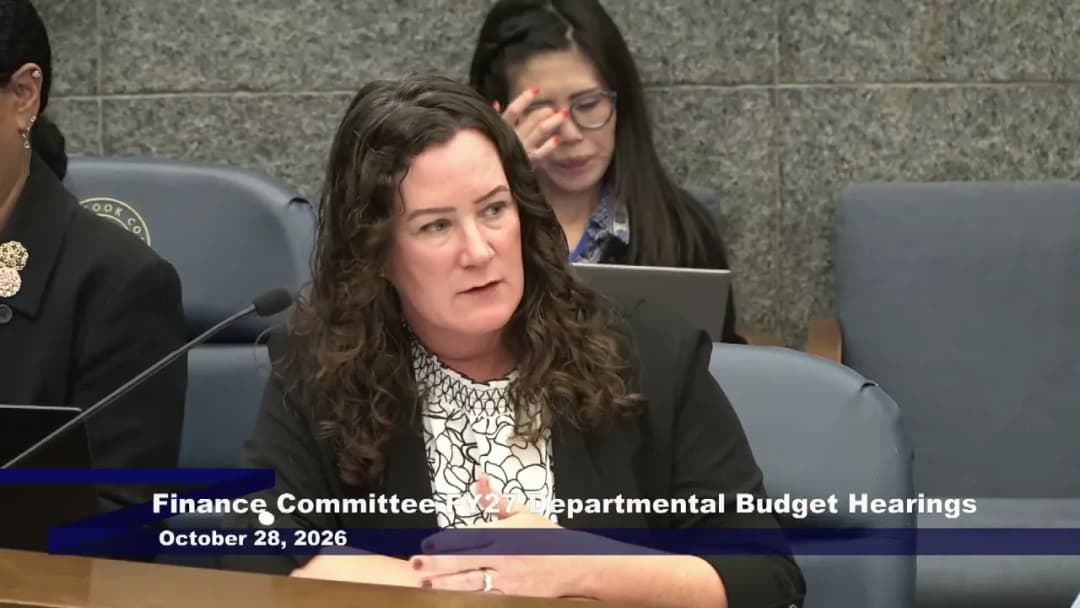
On October 28, 2026, the Cook County Finance Committee, chaired by Chairman Daly, held a hearing to review the proposed FY2027 Capital Budget. Chief Financial Officer Angela Manning Hardeman presented the budget alongside Chief Jamie Myers (Bureau of Asset Management), Acting Superintendent Tara Orban (Department of Transportation and Highways), and Chief Information Officer Tom Lynch (Bureau of Technology). The combined capital plan includes a $240.1 million Capital Improvement Program (CIP), $180 million for transportation and highways, and capital equipment projects funded largely by debt (57.3%). Commissioners explored the budget's alignment with the county's six policy roadmap pillars. Discussion Items - Capital Budget Overview: CFO Hardeman stated the county received Fitch credit upgrades (A to A+ for GO and sales tax bonds). The debt strategy targets 2% annual growth, capped at $400 million. Commissioner Lauber questioned refinancing opportunities; Hardeman confirmed two refinancings in FY26 saved $12 million, recommending an annual review due to market volatility. Hardeman also confirmed escrowed resources from the road builders case are kept segregated. - Capital Improvement Program and Facilities (BAM): Chief Jamie Myers reported the FY27 CIP request is $240.1 million. The county achieved a 57% carbon emissions reduction (end of 2024), exceeding the 45% target, and is adopting a new goal of 50% reduction by 2034. Key projects include the DOC Enhanced Visitation Center (opening end of FY27), the new Medical Examiner's Office design, Boardroom completion (substantial completion expected the following week), and 18 solar installations by end of 2027. Commissioner Nayer questioned the low energy-specific allocation (2.3%) in the corporate portfolio. Myers explained energy projects compete with life safety and accessibility, with progress tracked by an annual benchmark report. Director of Capital Planning Earl Manning stated ADA work is embedded in most projects and agreed to adjust the budget presentation. Commissioner Nayer also flagged spending jumps between FY27 and FY28 (e.g., Public Safety from $81M to $278M). Manning explained this reflects a shift from design to construction phases. Commissioner Degnan inquired about solar deployment, the warehouse study (draft finalizing), and bird-friendly windows (already part of green standards). Commissioner Marita raised concerns about courthouse security camera quality; Myers committed to a follow-up discussion on upgrades. - Transportation and Highways (DOTH): Acting Superintendent Tara Orban presented the $285.5 million program, including 20 miles of road rehab. The Invest in Cook program awarded $8.3M to 36 projects in the previous cycle, leveraging $3 for every $1 county investment. The FY27 budget includes $8.5M for the 11th round. $68.8M in pass-through grants supports the program. Commissioner Lauber requested a breakdown of the 43 high-need communities receiving awards. Commissioner Degnan asked about the impact of the federal administration on funding; Orban stated the landscape remains stable. Commissioner Reid requested a status update on PACE dial-a-ride funding; Orban committed to following up. - Technology and Capital Equipment (BOT): CIO Tom Lynch presented the capital equipment plan. Key projects include an electronic warrant management system, a new Public Defender case management system, a Grants Management System RFP, ADA digital accessibility compliance (April 2027 deadline), and $2.8 million for a Gen AI platform. Lynch reported the retirement of hundreds of legacy mainframes across elected offices, enabling real-time data sharing. The County Clerk's system is expected to go live by end of calendar year 2026. On the Tyler Technologies system, renewal options are being exercised in November 2026 to maintain stability while the county explores alternatives. Lynch stated the Gen AI platform will be a county-controlled AWS platform to protect data. Commissioner Degnan emphasized the importance of carefully evaluating AI vendors' ethics. Commissioner Vasquez stated the county should set aside budget dollars to build an alternative to Tyler. Commissioners discussed implementing domestic violence task force recommendations on courtroom technology; Lynch noted a complex RFP for courtroom tech enhancements is underway. Key Outcomes - The hearing served as a budget review; no formal vote was taken. - BAM will adjust budget documentation to better capture ADA spending. (Commissioner Nayer) - DOTH will provide the list of 43 high-need communities and follow up on PACE funding. (Commissioners Lauber, Reid) - BAM will discuss upgrading courthouse security camera systems and resume ICE/US Marshal presence notices to commissioners. (Commissioner Marita) - The Boardroom renovation is scheduled for substantial completion within days of the hearing. - The county will explore alternatives to the Tyler Technologies system via an RFP while exercising renewal options for continuity.
TECHNOLOGY AND INNOVATION 19% · CAPITAL PLANNING 14% · PUBLIC SAFETY 12% · DATA SHARING 9%
482
OCT 28, 2026 · TULSA, OKLAHOMA · CITY COUNCIL
Tulsa City Council Public Works Committee Meeting - October 28, 2026

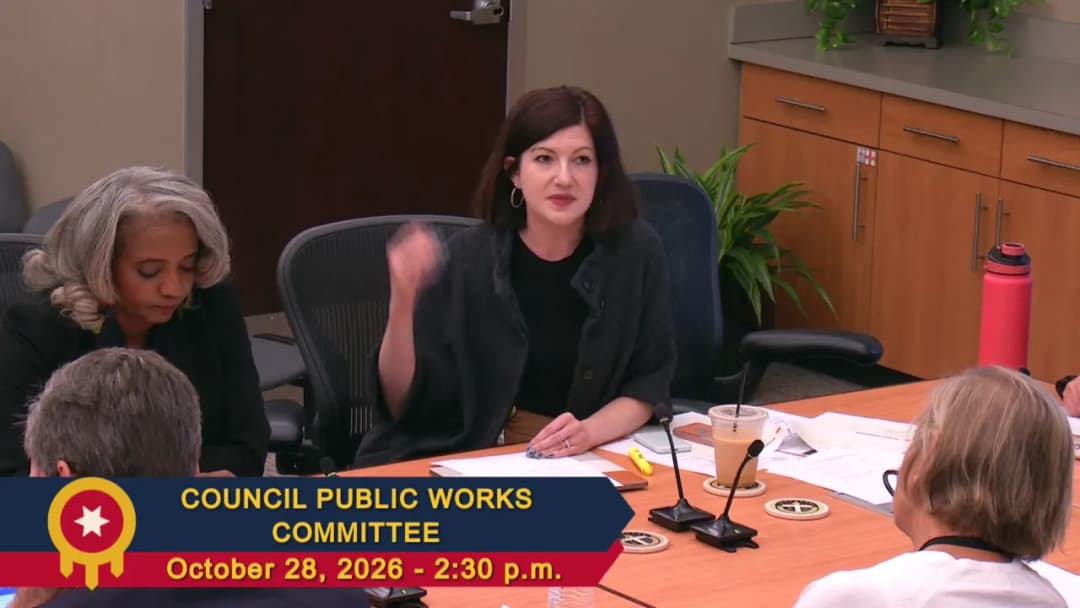
The Public Works Committee met at 2:30 PM on Wednesday, October 28, 2026, in Room 411 of One Technology Center, 175 E. 2nd St., Tulsa, OK. Chair Dutton and Co-Chairs Hall-Harper, Decter Wright, and Bush conducted the meeting. The agenda covered three board reappointments, the Arts Commission FY 2026-2027 Vision for the Arts proposal, selection of two councilors for the Vision Arts 8 independent review panel, and discussion of project proposals for 2017 Vision Tulsa economic development surplus funds. No minutes were available for this meeting, and no formal committee votes were taken. Reappointment Presentations - Ellen Duecker (CD-9) presented for reappointment to the Tulsa City/County Library Commission, with a term expiring July 31, 2029; she had attended 7 of 9 meetings. Duecker described 28 years as a school librarian and 18 years as Tulsa Public Schools library director. She expressed strong support for libraries as vital third spaces and community anchors, praised recent library investments, and discussed the need to expand Maxwell Library. - William 'BJ' Frohnapfel (CD-4) presented for reappointment to the Infrastructure Development Advisory Board, with a term expiring September 30, 2028; he had attended 6 of 11 meetings. He said the board works well with city staff, but identified city engineering-services staffing turnover and continuity as a key challenge. Councilors thanked him for his regional perspective and willingness to serve. - Charles Blue (CD-4) presented for reappointment to the Tulsa Public Facilities Authority, with a term expiring July 31, 2029; he had attended 10 of 12 meetings. Blue recounted the board's evolving responsibilities and expressed personal opposition to selling parkland, citing the loss of REI and associated tax revenue after a parkland sale. He suggested the city consider whether incentives or nearby assets such as the bus station could attract investment. Arts Commission Presentation: FY 2026-2027 Vision for the Arts - Sarah Phoenix, chair of the Arts Commission, presented the proposed Vision for the Arts program. Vision Arts 7, which ended June 30, 2026, awarded a total of $150,000 to 18 Tulsa arts organizations: 7 large and 11 small. A calculation discrepancy required roughly 8.5% across-the-board reductions to the awarded amounts. Phoenix estimated about $800,000 in requests went unfunded, though she first said $650,000. - The proposed Vision Arts 8 timeline includes an application opening on November 1, 2026; an open call for independent review panelists on November 15, 2026; an application deadline of February 1, 2027; and award notifications on April 30, 2027. Orientation dates and optional grant-support sessions were also outlined. - Councilors asked about comparable cities. Phoenix cited Columbus, Ohio's roughly $3-4 million annual arts grants and said the commission is researching other cities. A councilor asked to see that data and suggested comparing Albuquerque and Colorado Springs. Independent Review Panel Selection Discussion - Councilors discussed selecting two City Council members to serve on the Vision Arts 8 independent review panel. A councilor identified in the transcript as Councillor Bellis volunteered and suggested standardizing applicant budget templates for more apples-to-apples comparisons. Other councilors discussed the time commitment and past panel experiences. The transcript does not record a formal selection of the two panelists. Vision Tulsa Economic Development Surplus Funds Discussion - Council Administrator Sarah Davis reviewed the history: voters approved Vision Tulsa in 2016, with the ordinance labeled 2017, covering public safety, streets and public transportation, and economic development. The economic development fund overperformed because the use tax was no longer needed for bond debt, producing a $103 million one-time fund balance and approximately $12 million in annual funds. - In June 2026, the council approved placing the $12 million annual use-tax stream into general use and adopted a FY 2026-2027 budget that appropriated $35.4 million of surplus funds, including homelessness funding and the Public Safety Center. The discussion focused on an approximately $18.5 million council-priority bucket and project proposals aligned with Vision's economic development mission. - Resident-support proposals included continuing the Save Our Homes Initiative, an ARPA-funded program that served over 100 people; a multi-year after-school and out-of-school-time pilot, with a roughly $1 million placeholder and a $343,000 Opportunity Project proposal cited; and utility assistance, with an initial $250,000 placeholder that councilors said would cover only about a month of need. - Facility and economic-generator proposals included airport workforce childcare as a potential match for state partners, an endowment for the river dam and lake structure, the Mohawk golf course floodgate estimated at $700,000-$750,000 with $280,000 in lost revenue in one year from flood closures, and a roughly $14 million golf course master plan. - Corridor and commercial-district proposals included the Eastside Business Center, a Brookside reinvestment project described as a $52 million public-private development needing a $2 million city commitment for its capital stack, lighting and pedestrian improvements in the medical corridor/Riverbend arts district near the low-barrier shelter, and a $5.25 million downtown initiatives placeholder. Plaza St. Cecilia was also cited as a time-sensitive project needing about $1.5 million to complete. - Council discussion reflected several positions. Some councilors questioned round placeholder numbers and district equity; one noted that District 9 does not qualify for TIFs and had no projects in the last Vision package. Another councilor objected to district-by-district framing, saying the funds should be catalytic and citywide rather than an 'Oprah exercise.' Other councilors asked for specific project proposals or a bring-back condition before final appropriation so broad buckets would not be approved without council review. - Time-sensitive items identified included Brookside reinvestment, Plaza St. Cecilia, after-school programming, the Eastside Business Center, airport childcare matching funds, and the Mohawk floodgate. Councilors generally agreed that hard-dollar, time-sensitive projects should be prioritized and that more detailed documentation and deadlines should be provided before appropriations. Key Outcomes - No formal votes were taken by the Public Works Committee. The three reappointments were discussed and referred to the full City Council. The agenda lists full council consideration on 11/4/26, but the transcript repeatedly says voting would occur at the 5 p.m. meeting on 10/28/26; that discrepancy was not resolved in the meeting. - The Arts Commission's proposed Vision Arts 8 timeline was presented but not voted on. The commission is awaiting council approval and the selection of two councilors to the independent review panel. - No formal appointment of the two councilors to the Vision Arts 8 independent review panel was recorded in the transcript. - The committee did not appropriate any Vision Tulsa surplus funds. Councilors agreed to continue the discussion, obtain detailed project proposals and deadlines for time-sensitive projects, and consider whether to move funds as a package or through phased appropriation at a future meeting.

URBAN PLANNING 19% · ECONOMIC DEVELOPMENT 19% · BUDGET EQUITY 15% · ARTS AND CULTURE 8%
483
OCT 28, 2026 · DENVER, COLORADO · COUNCIL COMMITTEES
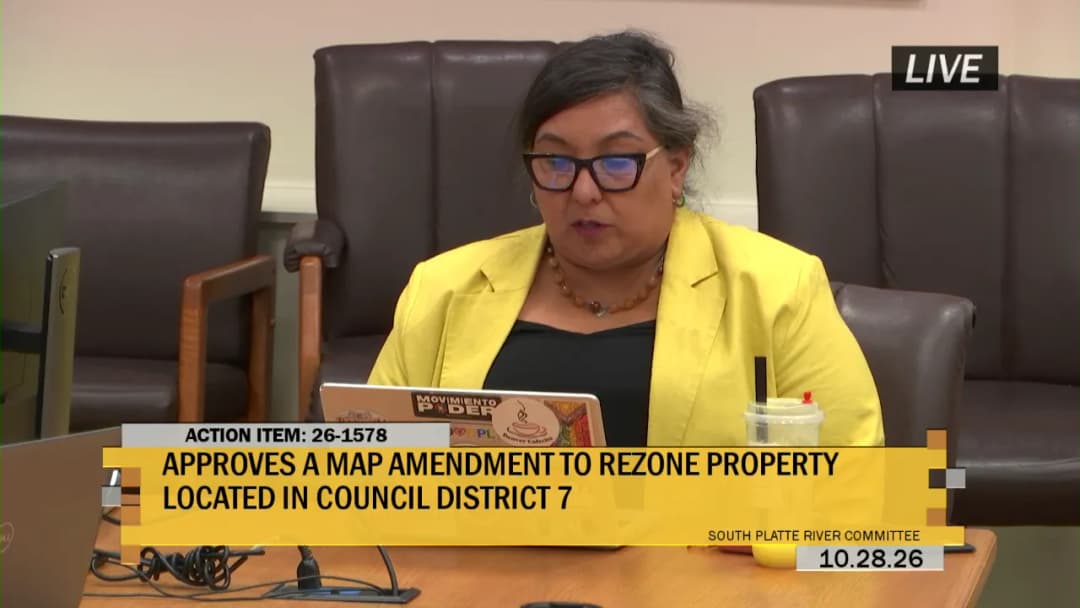
South Platte River Committee Meeting - October 28, 2026

The South Platte River Committee of the Denver City Council convened on Wednesday, October 28, 2026, at 1:30 PM to review and vote on a single agenda item: Council Bill 26-1578, a map amendment to rezone approximately 3.4 acres from I-A, UO-2 to I-MX-5 with waivers. The rezoning aims to preserve industrial manufacturing and wholesale uses at the street level while allowing a mix of uses above. The committee heard a presentation from Fran Peñafiel of Community Planning and Development, received input from the applicant, and debated the implications. Following discussion, the committee voted 5-0 to approve the filing and refer the bill to the full City Council. Public Comments & Testimony - The Atmar Park Neighborhood Association submitted a neutral comment letter, indicating they met with the applicant and took no position due to the absence of specific redevelopment plans. No other public comments were received. - The applicant, Todd Snyder, spoke during discussion to clarify ownership and intentions, noting there are no immediate redevelopment plans and the two property owners are separate. Discussion Items - Fran Peñafiel, principal city planner, presented the rezoning request. The proposed I-MX-5 district allows residential, commercial, and industrial uses up to five stories, with waivers requiring that at least 50% of building frontage along primary streets (South Platte River Drive and West Mississippi Avenue) be used for industrial, manufacturing, or wholesale at the street level. The waivers also limit townhouse form and primary street designation to ensure continued industrial presence consistent with the 2026 Southwest Area Plan and Blueprint Denver. - Council Member Alvidrez expressed concerns about the viability of forcing industrial uses in a changing market, potential equity issues of placing affordable housing near industrial ground floors, and the lack of a concrete development plan. She noted the site is currently occupied by industrial uses but feared future constraints. Despite reservations, she indicated willingness to move the item forward. - Council Member Flynn sought detailed clarification of the waivers and their application across separate ownership parcels, praising the thoroughness of the presentation. - Council Member Hinds voiced skepticism based on past rezoning experiences (e.g., Carvana, Great Divide) where stated intentions later changed, emphasizing that the lack of a plan made him uneasy but acknowledging the legal criteria for approval. - Chair Torres highlighted that preserving industrial uses equates to preserving jobs and listed example uses (e.g., food preparation, telecommunications) that can be compatible with nearby housing. She noted the complexity created by not having a development concept and suggested the applicants may have benefited from a paired concept. - The applicant, Todd Snyder, explained that the owners initially sought a straight I-MX-5 rezoning in 2024 but were directed by staff to align with the then-in-progress Southwest Area Plan, resulting in the waiver framework. He expressed curiosity about how industrial and residential uses will coexist but deferred to the owners' decision. Key Outcomes - The committee voted 5-0 (members Alvidrez, Flynn, Hinds, Watson, and Chair Torres in favor; Sandoval and Romero Campbell absent) to approve Council Bill 26-1578 for filing, sending it to the full City Council for a final vote. - The approval is a recommendation; the rezoning will be considered by the full City Council on December 7, 2026, as tentatively scheduled.

LAND USE ZONING 82% · PROCEDURAL 9% · COMMUNITY PLANNING 7% · AFFORDABLE HOUSING 2%
484
OCT 28, 2026 · CRESTWOOD, MISSOURI · BOARD OF ALDERMEN & BOARDS
Crestwood Board of Aldermen Regular Meeting and Public Hearing – October 28, 2026

The Crestwood Board of Aldermen met at approximately 7:00 p.m. on October 28, 2026, in the Aldermanic Chambers at the Crestwood Government Center, 1 Detjen Drive, Crestwood, Missouri. The regular meeting continued past 9:15 p.m. Seven aldermen were present and formed a quorum; Alderperson Nangle Worum was excused. The agenda included the Q3 financial presentation, the Family Games/Pickleball/Amphitheater concept presentation, a public hearing on the proposed Ridgewood Neighborhood Conservation Overlay District, continued discussion of the sewer lateral fund, and approval of a court-services agreement with Sunset Hills. Consent Calendar - Approved the October 13, 2026 Board of Aldermen regular meeting minutes. - Approved an ordinance authorizing the purchase and installation of furniture for the Cliffs at Whitecliff Park from Circadia and authorizing negotiation and execution of a contract by city officials. - The consent agenda passed by roll-call vote, 7-0; no items were removed. Public Comments & Testimony - During the Ridgewood public hearing, Chaz Weeby (Liggett Drive) opposed the overlay, asking whether other Crestwood neighborhoods face similar limits and calling the proposal a government-appropriated HOA. He said he has long planned a home addition and is concerned about restrictions on property use. - Angela Seven (Yorkshire States Drive), a Planning and Zoning Commission member, expressed concern about insufficient neighborhood buy-in. She cited a first-survey return rate of 34%, a second-survey return rate of 28 responses, about 10%, and said positive support falls to roughly 23–27% when non-responses are included. She recommended that neighborhood property owners organize and demonstrate majority support before the city enact the overlay. - Neil Chase (Liggett Drive), a 19-year Ridgewood homeowner, said his family strongly supports the overlay, citing Ridgewood’s architectural and social character and the need to prevent incompatible redevelopment. - Nancy Woods (Coffee Drive), a 27-year resident, supported the overlay and said she wants to avoid inappropriate large redevelopment in the neighborhood. - Caleb Sexton (Trelaine Avenue) supported preserving Ridgewood’s front-facing mid-century design but cautioned against over-limiting non-street-facing additions. - During general public comment, Ted Yim (Clydesdale) praised the Family Games Center drawings but said he is disappointed that food and beverage service was not included, and he noted the existing amphitheater stage should not simply be removed. Public Hearing – Ridgewood Neighborhood Conservation Overlay District - The city planner presented a proposed text amendment to Chapter 26 establishing a conservation overlay district for Ridgewood. The district would apply design guidelines to new construction and additions above 400 square feet or visible from the street, including low-slope gable roofs, off-center ridge lines, wide roof overhangs, a two-story/25-foot height limit, wall-height limits, finished-floor elevation no more than one foot above grade, restrictions on centering windows and doors under roof ridges, and dimensional requirements for front-projecting chimneys. Existing homes, repairs, and non-conforming features would be grandfathered; staff would administer the rules through regular permitting, with appeals to the Planning and Zoning Commission and review by the Board. - Development included a November 2025 town hall, summer Planning and Zoning public hearings, and a Planning and Zoning recommendation of 6-0-1. The final survey mailed to property owners drew 28 responses, with 85% of respondents in support and two opposed. - Board discussion included support from Alderperson Now, Alderman Zavis, Alderman Seven, Alderman Morrison, and Alderman Hall, who described the guidelines as a relatively light touch and a preservation opportunity. Alderman Maybe opposed the ordinance, calling it a pseudo-HOA, arguing it is a solution in search of a problem, would restrict property rights, may slow property-value growth, and that the neighborhood’s founders did not choose to impose such restrictions. - The Board voted 6-1 to approve the ordinance on first reading, with Alderman Maybe the sole no vote. The second reading was set for the next meeting’s old business. Discussion Items - Q3 Financial Presentation: The city administrator presented the financial report. The 2026 general fund budget projects revenues of $15,145,856, expenditures of $14,955,682, and a positive fund-balance change of $191,174. Q3 revenues were approximately $2.806 million against expenditures of roughly $3.4–$3.5 million, a $673,000 negative variance. Compared with Q3 2025, revenues fell $500,000 and expenditures fell $224,000. September sales tax decreased $206,000 because St. Louis County recalculated distributions; grant income fell $309,000; investment earnings fell $53,000; licensing and permits rose $30,000. The capital improvement fund budget has revenues of $2,382,000, expenditures of $2,799,000, and a budgeted deficit of $416,000. Parks and stormwater funds budgeted revenues of almost $2.6 million against expenditures of $2.7 million, a $151,000 deficit. The sewer lateral fund originally budgeted $148,000 in revenues and $188,000 in expenditures, with $80,000 added later through budget amendments. - Family Games/Pickleball/Amphitheater Presentation: Bond Architects and Navigate Building Solutions presented the refined concept for Whitecliff Park. The design includes a grass-terraced amphitheater for roughly 500–600 people, four pickleball courts with a shade pavilion, a regulation shuffleboard court, bocce/cornhole turf courts, a double-wide bocce court, ADA ramps, an access drive for performers and fire apparatus, restrooms, and a green room. The project evolved after renovating the existing community center would have triggered full code compliance; renovation estimates rose from about $2.6 million to just under $5 million, while the current amphitheater concept was previously estimated at $3.9 million including retaining walls and assumed 10% contingency and 4% escalation. Removing retaining walls is expected to save $200,000–$300,000, and the project team is hopeful of landing near $3.5–$3.7 million. Schematic design is planned to begin November 9, 2026, with a schematic-design estimate before Christmas; construction documents are targeted for May 6, 2027, bidding around June 2027, and construction after the new community center is complete and the old pool and center close. Board members asked about cost reductions, amphitheater accessibility, bench placement, bocce court layout, shade structures, and the proposed storage-room elimination. - Sewer Lateral Fund Discussion: The city administrator distributed a memo continuing prior discussions. The program is funded by a per-property fee on tax bills of about $25–$28 and currently allows city contribution up to $10,000 per repair with a 50% cost-share provision. Staff reviewed cost-containment options, including lower repair thresholds of $2,500, $3,500, $5,000, and $7,500, eliminating the 50% cost share, reimbursing homeowners rather than managing contractor work, and charging administrative fees. Using 2025 data, a $2,500 threshold would have saved about $29,000, roughly 19.5% of annual project costs, and affected 20 projects. Projected FY27 administrative costs are $25,604 if retained. Staff found 17 of 24 local municipalities recover administrative costs and found no regional municipality funding sewer lateral work through a property tax; repair costs did not correlate with home size or value. Board members offered differing views on reimbursement versus city-managed repairs, keeping or lowering the threshold, raising the fee toward the $50 statutory cap, or placing a property tax before voters. No decision was made; the mayor asked staff to bring back a stronger proposal with options and five-year projections for a future meeting. Mayor, Board and City Administrator Reports - Reports highlighted a successful Suncrest Fest, including a well-attended parade, car show, toddler area, and volunteer participation by both Crestwood and Sunset Hills; an upcoming Santa Car Cruise on December 5; ongoing restoration of the Sappington House chimneys; the SR Blue ribbon-cutting; and a Girl Scouts tour of city facilities. - The mayor reported recycling events diverted a combined 60,000 pounds from landfills: 10,000 pounds of paper, 20,000 pounds of paint, and 30,000 pounds of electronics. New Business – Sunset Hills Municipal Division Services Agreement - The Board considered an ordinance approving an agreement with the City of Sunset Hills for the provision of municipal division services, authorizing the mayor and city administrator to execute the agreement. - The ordinance passed unanimously, 7-0, on first reading and again on second reading, giving final approval. Key Outcomes - Approved the consent agenda, including the October 13 minutes and the Circadia furniture contract, 7-0. - Approved the Ridgewood Neighborhood Conservation Overlay District ordinance on first reading, 6-1; the second reading will appear on the next meeting’s old business. - Approved the Sunset Hills municipal division services agreement, 7-0 on final passage. - Continued the sewer lateral fund discussion without action; staff will prepare options and multi-year projections. - Received the Q3 financial report and the Whitecliff Park Family Games/Pickleball/Amphitheater concept; schematic design is scheduled to begin November 9, 2026. - Adjourned to closed session immediately after the regular meeting to discuss legal, real estate, and contract matters under RSMo 610.021(1), (2), and (12).

PARKS AND RECREATION 26% · ZONING REGULATION 16% · FISCAL SUSTAINABILITY 15% · WATER AND WASTEWATER MANAGEMENT 12%
485
OCT 28, 2026 · ST PAUL, MINNESOTA · CITY COUNCIL
Saint Paul HRA Board Meeting – October 28, 2026: Easement Approvals, Model Cities Loan Restructuring, Q3 Budget Update

The Saint Paul Housing & Redevelopment Authority (HRA) Board of Commissioners met on Wednesday, October 28, 2026, at 2:00 p.m. in Council Chambers, City Hall. Vice Chair Saura Jost called the meeting to order at 2:04 p.m.; four commissioners were present and three were absent. Commissioner Yang was excused, and Chair Johnson and Commissioner Kim later joined during the staff report portion. The Board voted 4-0 on two resolutions, received a staff introduction to a proposed Model Cities commercial loan restructuring, and continued the 2026 third-quarter budget report to the next meeting. Roll Call and Opening - Present: Commissioners Noecker, Bowie, Jost, and Coleman. Absent: Commissioners Yang (excused), Johnson, and Kim. - Chair Cheniqua Johnson joined remotely during the meeting; Commissioner HwaJeong Kim arrived during the staff report portion. Discussion Items - RES 26-1793 – Smith Avenue Parking Ramp easements: Sponsored by Chair Johnson. Executive Director Melanie McMahon presented the request to grant the City of Saint Paul a temporary easement via a right-of-entry permit for the Capital City Bikeway project, and to grant District Heat and Energy (or an affiliate/subsidiary) a permanent easement for heating and chilled water piping at the HRA-owned Smith Avenue Parking Ramp and Transit Center, 145 N. Smith Avenue, District 17, Ward 2. McMahon said no interior ramp access was needed, HRA parking operations would not be affected, and the two-part construction was expected to take about two months. - RES 26-1794 – Maryland Park Apartments HOME loan actions: Sponsored by Commissioner Yang. According to the minutes, Commissioner Coleman moved adoption approving the assignment and assumption of an existing HOME loan, extension of its maturity date, subordination to a new first mortgage, and execution of related loan documents for Maryland Park Apartments at 1619 Maryland Avenue East, District 2, Ward 6. Staff Report: Model Cities BROWNstone Commercial Loans (SR 26-236) - Debt Administrator Jenny Wolfe presented proposed amendments to loans related to the Brownstone, a four-story mixed-use building with 35 rental housing units and approximately 20,000 square feet of commercial/retail space on the north side of University Avenue at Victoria Street. - Background: Model Cities began operations in 1967 and has been active in community development in Summit-University and Frogtown since 1987. The commercial project was financed separately; the development cost about $5.5 million, and the HRA and city loans totaled more than $3 million. - The HRA loan originated through a 2003 $2.5 million St. Paul & Minnesota Foundation agreement for the Housing 5000 initiative, was later tied to Green Line transit-oriented development, and $2.3 million was approved for the Brownstone in 2016. The foundation loan matures December 1, 2026, with a current balance of about $1.5 million and a $500,000 recourse obligation for the HRA. Model Cities could not obtain a private loan to repay the maturing balance; staff said the existing HRA loan also had a $1.5 million balloon that came due June 5 and was unpaid. - Proposed restructuring: amend the foundation loan to extend it 10 years, with first payment due February 2027, maturity in December 2036, 240-month amortization, and potential forgiveness of up to $650,000 at three measurement dates if operating metrics are met. The amended HRA loan would mirror those terms, with payments due 15 days before HRA pays the foundation, 2% interest compared to the 1% rate charged to the HRA, and the HRA's first mortgage retained. Staff said the terms are contingent on forgiving two older city loans. - Staff also proposed forgiving a $300,000 STAR loan and a $356,000 CDBG loan, and deferring a $120,000 STAR loan with payments beginning January 2037. The two forgiveness amounts total $656,000. The past-due loans placed Model Cities on the adverse lending list; it could be removed after six consecutive on-time payments. - Staff said the deferral of the $120,000 STAR loan would reduce next year's STAR budget revenue by about $17,000, a roughly 5% variance not considered material. Staff stated that forgiving the CDBG loan would not harm the city's relationship with HUD because it was structured as a cash-flow loan and the HUD national objective had been met. Commissioner and Stakeholder Positions - Commissioner Noecker said she was uncomfortable with the HRA remaining in a middleman position with a large recourse obligation. She noted staff's first request had been for the foundation to deal directly with Model Cities, but the foundation declined. She called the large balloon payment structure unrealistic and, at some point, cruel, and encouraged pushing philanthropic partners to support the community; she also took responsibility for not catching the 2016 terms. - Chair Johnson said she was supportive of Model Cities and had advocated for it behind the scenes, but stressed that any HRA recourse payment would come from public HRA dollars. She asked whether metrics failure would trigger the $500,000 recourse; staff clarified that the HRA's obligation would not be triggered by missed monthly payments, only at loan maturity in 2036. - Commissioner Bowie praised Model Cities' deep community ties, affordable housing leadership, and low-barrier commercial opportunities for entrepreneurs in the Rondo/Frogtown/University corridor. - Commissioner Kim said the balloon payment structure was not something she would counsel clients to take on and called it predatory, while expressing trust in Model Cities' leadership. - Model Cities CEO Kizzy Downie and Community Development Director Dean Carlson thanked the board and described challenges: commercial tenants struggled, especially during the period around Operation Metro Surge; two leases ended and spaces were being refilled; Model Cities also pays rent in the building; and property taxes on the commercial parcel rose from about $45,000 to about $93,000 per year. The transcript at one point says 9300, but later context indicates $93,000. Downie said the organization is making its first-half property tax payment and may structure the second-half payment over five years if needed. Carlson said Ramsey County reduced the property's assessed value for taxes payable in 2027 by roughly 70 percent, which should lower taxes from the 2026 level. Downie asked the board to consider sharing more of the risk that Model Cities carries. Staff Report: 2026 Third Quarter Budget to Actual (SR 26-237) - Deputy Director Green began the budget presentation, noting that the board had asked for all information in one place with graphic visuals and that reporting had been adjusted. Because of time constraints, the board agreed to continue the item rather than rush the presentation. Key Outcomes - RES 26-1793 was adopted 4-0 (Noecker, Bowie, Jost, and Coleman voting yes; Yang, Johnson, and Kim absent). - RES 26-1794 was adopted 4-0 on Commissioner Coleman's motion, with the same vote and absentees. - SR 26-236 was received and filed; formal resolutions authorizing the Model Cities loan amendments and forgiveness are scheduled for November 4, 2026. - SR 26-237 was referred/continued to the HRA meeting due back November 4, 2026. - The next regular meeting is November 4, 2026, at 2:00 p.m. The meeting adjourned at 2:56 p.m.

AFFORDABLE HOUSING 55% · ECONOMIC DEVELOPMENT 21% · PUBLIC ENGAGEMENT 13% · BUDGET 5%
486
OCT 28, 2026 · BOZEMAN, MONTANA · CITY COMMISSION
Gallatin Valley MPO Policy Committee Meeting - October 28, 2026

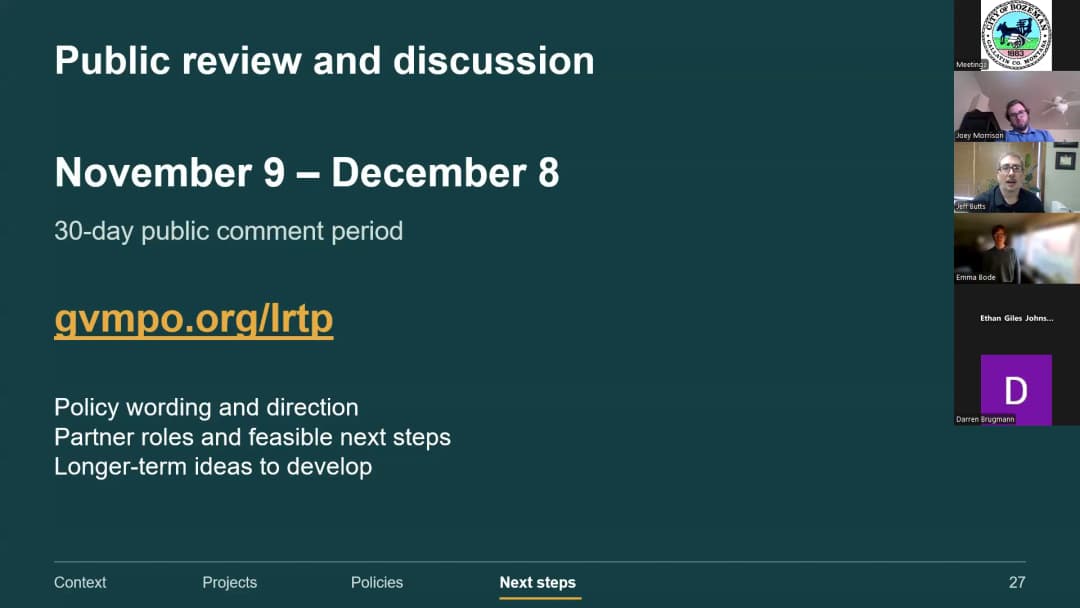
The Gallatin Valley Metropolitan Planning Organization’s Transportation Policy Coordinating Committee met on October 28, 2026, to conduct first reviews of the draft Long Range Transportation Plan (LRTP) and the draft Transportation Improvement Program (TIP) for federal fiscal years 2027–2031. The committee also heard public comments on regional transit and rail feasibility, and received staff updates on ongoing studies. Note: The agenda on file for this date identifies the meeting as the “Transportation Technical Advisory Committee” meeting of October 14, 2026, but the actual proceeding (based on the transcript) was the Policy Coordinating Committee and occurred on October 28, 2026. Consent Calendar - Approval of Minutes: The committee unanimously approved the minutes of the July 22, 2026 meeting (4–0 vote). Public Comments & Testimony - Ethan Johnson (resident): Expressed strong support for adding a light-rail or tram system to connect Belgrade, Bozeman Airport, downtown Bozeman, and 19th Avenue. He requested a feasibility study and offered to share materials via email. - Darren Broken (Executive Director, Big Sky Transportation District): Discussed the importance of regional connections between the two Urban Transportation Districts (UTDs) in Gallatin County. He noted that Big Sky UTD is pursuing an MOU to purchase property in the Four Corners area for a transit center and park-and-ride, and asked how the Big Sky UTD could become a non-voting member of the MPO. Discussion Items First Review of the Draft Long Range Transportation Plan (LRTP) Jeff Butts (MPO staff) presented the LRTP, which carries forward existing local plans and incorporates new opportunities. Key policies presented include Vision Zero (eliminating fatal/serious injury crashes), traffic calming, complete streets, low-stress bikeways, transit priority corridors, and regional transit connections. The plan includes $170.9 million in near-term projects across roadways, bridges, walking/bicycling, transit operations, and safe routes to school. Modeling showed potential capacity issues in Belgrade, Four Corners, and downtown Bozeman by 2050. Public comment on the LRTP: - Darren Broken: Asked for clarification on the definition of “regional” in the plan. - David Kack (Big Sky Transportation District / Western Transportation Institute): Noted that Gallatin County completed a Safe Streets and Roads for All (SS4A) safety action plan, and that Bozeman and Belgrade are beginning theirs. He emphasized mode shift and transit over road expansion, citing the $42.5 million cost of the one-mile Keggy Boulevard project. Board discussion on the LRTP: - Jim Hansen (board member): Commented that the policies are too broad and not actionable; he recommended adding key performance indicators, timelines, and tying screening criteria to policies. He favored fewer but more targeted policies. - Commissioner Bowdy (board member): Praised the plan’s resources but suggested changing the color scheme of a crash map (Figure 6-11) to improve accessibility for colorblind users. She also recommended explicitly naming Livingston, Big Sky, and Three Forks as interregional destinations. - Mayor Morrison (board member): Echoed support and noted the challenge of declining bike/walk/carpool mode share and the need for regional collaboration on transit to Big Sky. First Review of the Draft Transportation Improvement Program (TIP) for FY2027–2031 Jeff Butts presented the TIP, which programs $170.9 million in federal and state funding for 24 road/bridge projects and numerous walking/bicycling projects. Highlights include Keggy Boulevard reconstruction ($42.5M), Main Street Belgrade reconstruction (design and right-of-way only), and transit operations (approximately $1.5M federal per year). No public comments were received. Board discussion on the TIP: - Commissioner Bowdy questioned the transit performance targets, noting that two-year and four-year targets were identical and that emissions targets were set at “greater than zero.” She expressed concern that these did not reflect improvement goals. - Katie Potts (FHWA Montana Division) explained that MDT sets emissions targets at “greater than zero” because only Missoula MPO is in non-attainment; setting higher targets could limit flexibility of CMAQ funds. - Mayor Morrison acknowledged the transparency of the tables and the high cost of infrastructure. Jim Hansen requested that future presentations include information on how projects were prioritized. Key Outcomes - No formal action was taken on either the LRTP or the TIP; both items were first reviews. - The LRTP will be revised based on board feedback, reviewed by the Transportation Technical Advisory Committee, then opened for a 30-day public comment period (November 9 – December 8, 2026) before returning to this committee for adoption on December 16, 2026. - The TIP will follow a similar path: review by TTAC, public comment period, and final adoption on December 16, 2026. - The committee agreed to hold a dedicated discussion on performance targets (including transit and emissions) around August 2027. - Staff will investigate updating the GVMPO website to correctly link to meeting materials.

TRANSPORTATION SAFETY 75% · PROCEDURAL 6% · LAND USE PLANNING 5% · PUBLIC ENGAGEMENT 3%
487
OCT 28, 2026 · PROVIDENCE, RHODE ISLAND · CITY COUNCIL
Providence City Council Meeting Summary: October 28, 2026

The Providence City Council met on Wednesday, October 28, 2026, at 4:47 PM. The meeting included the approval of a consent agenda, a resolution to convert a street from one-way to two-way traffic, and discussions regarding a street abandonment petition. Consent Calendar - Items 1 through 5: Approved unanimously in a single motion with no discussion. Public Comments & Testimony - The City Assessor provided an explanation regarding the valuation and payment process required for street abandonments, detailing that petitioners must pay estimated property values and provide deeds to consolidate the abandoned street land into adjacent lots. - City planning/engineering staff member Eric Bright testified on Item 10 (West Park Street). He stated that the survey plan and the radius plan for the street abandonment show different limits for the area to be abandoned. Staff had estimated the area at 4,180 square feet, but the discrepancy required clarification. He noted that the petitioner's surveyor had not responded to multiple requests for an electronic corrected plan. Discussion Items - Item 6 (Street Conversion Resolution): The council discussed a resolution to convert a roadway from one-way to two-way traffic, a change reportedly requested by area residents. The council agreed on the change without opposition. - Item 10 (West Park Street / Providence College Abandonment): The council discussed a petition for street abandonment, reportedly involving Providence College. The Assessor outlined the valuation process. City staff recommended holding the item due to conflicting map attachments in the petition regarding the area to be abandoned. Key Outcomes - Items 1-5: Approved (Consent Calendar). - Item 6: Approved. Motion by Councilor Spina, seconded by Councilor Aponte. Unanimous vote. - Items 7-11: The reading of items 7 through 11 was waived. - Items 7, 8, 9, and 11: Approved by a single motion. Unanimous vote. - Item 10: Deferred. The item was held to allow the petitioner to provide the necessary electronic plans and clarify the abandonment limits.

PROCEDURAL 70% · PUBLIC PROPERTY MANAGEMENT 30%
488
OCT 28, 2026 · KAUAI COUNTY, HAWAII · COUNTY COUNCIL & COMMITTEES
Kaua‘i County Council Meeting – October 28, 2026

The Kaua‘i County Council convened on October 28, 2026, at 8:30 AM in the Council Chambers, Līhu‘e. The meeting opened with five public hearings on bills concerning liability claims, condominium property regimes, real property tax credits, landfill siting, and the ‘Āina Kupuna tax dedication. Following the public hearings, the Council addressed the regular agenda, including consent calendar items, communications, a claim, a committee report, bills for first reading, and a bill for second reading on wildfire/urban interface regulations. The Council also held three executive sessions. Public Hearings - Bill No. 3003 (General Liability Claims – $1,500,000): No testimony; hearing closed. - Bill No. 3004 (Condominium Property Regimes): One written testimony; no oral testimony; hearing closed. - Bill No. 3006 (Real Property Tax Credit – Application Window Extension): One written testimony; no oral testimony; hearing closed. - Bill No. 3007 (Landfill Prohibited Sites – 6-mile radius, 30-year limit): 18 written testimonies; multiple speakers testified. Positions were split: Support (Harley Broils, Earth Justice; Kawai Warren, Nā Kīka‘i Kai; Calvin Kajiwara; Karen Ono; Kiawni Smith, and others) argued the bill is a necessary step toward environmental justice for Kekaha, which has borne the island’s waste for decades. Opposition (Taryn Tizan) argued the bill was premature before evaluating ongoing procurement efforts and could lead to costly litigation. Several testifiers urged careful site selection and consideration of water quality impacts. - Bill No. 3008 (Āina Kupuna Real Property Tax Dedication): 26 written testimonies; many speakers. Strong support from Christina Ayu, Miley Ayu, Presley Wan, Elena Yokman, Megan Wong, William Wong, Lei Wan, Kaina Costa, and others, who described struggles to keep ancestral lands due to rising property taxes. Concerns about eligibility criteria (e.g., 999-year leases, LLC ownership, proof of descendancy) and the fiscal impact were raised by Karen Ono, Tina Sakamoto, and Sherry Cummings. Several testifiers asked for amendments to cover more families and simplify application processes. Consent Calendar - C 2026-257 (Quarterly Report on Settled Claims): Received. - C 2026-258 (Helicopter Pilot Positions – budget amendment): Received. - C 2026-259 (Aging Office – State funds for Nutrition Services): Approved. - C 2026-260 (Fire Dept. – Donation of 105 IFAKs from Kaua‘i Lifeguard Association): Approved with thank-you letter. - C 2026-261 (Land Exchange – Indemnification, General Provisions): Approved. - C 2026-262 (Land Exchange – Indemnification, Satisfaction/Waiver): Approved. - C 2026-264 (County Seal – new ordinance): Received. - C 2026-266 (Aging Office – Donations for Home-Delivered Meals): Approved with thank-you letters. - C 2026-267 (Insurance Proceeds – Kapule Building fire, up to $25M): Approved. Communications & Briefings - C 2026-258 & Proposed Draft Bill 3013 (Helicopter Pilot Positions): Fire Chief presented. The County will transition from contracted pilots to three county-employed pilots, saving money compared to the previous $854,000 annual contract. The $383,398 in the bill covers the remainder of FY 2027. Approved on first reading, public hearing set for November 25, 2026, and referred to Finance and Economic Development Committee. - C 2026-263 (Smith Garson, D.C. consultants briefing): Brett Garson and Kirsten Stratford Patterson recapped federal advocacy, including $8.54 million secured for four County projects in FY 2026 and pending FY 2027 requests. They discussed Hurricane Lowell recovery (public assistance granted, individual assistance denied, deadline to appeal Nov. 2), surface transportation reauthorization, Water Resources Development Act, and proposed rule changes (2030 census, uniform guidance). Council members asked about FEMA assistance, cesspool conversion funding, solid waste, and managed retreat. - C 2026-265 (Special Counsel funding for condemnation): Deferred to after executive session; later approved. - C 2026-268 (Claim by William H. Gilliam): Referred to County Attorney. Committee Report - CR-PL 2026-03 (Bill No. 2998, Draft 3 – Wildfire and Wildland Urban Interface): Received and approved. Discussion Items - Bill No. 2998, Draft 3 (Wildfire/WUI Code Amendments): Extensive debate. Chair Raposo and Councilmember Kulii opposed, citing increased housing costs, burden on water department (FRC revenue loss), and the County’s failure to manage roadside fuels. Councilmembers Cowden, Kanashiro, Holland, and Cavallio supported, arguing the measures improve fire resilience, help with insurance availability, and include cost offsets (e.g., FRC waiver). Councilmember Holland noted the difficulty of balancing regulation and freedom but emphasized life safety. Councilmember Kanashiro stressed the importance for new construction and the science behind the five-foot non-combustible zone. The bill was approved on second reading with a 5–2 vote (Ayes: Bolusan, Cowden, Holland, Kanashiro, Cavallio; Nays: Kulii, Chair Raposo). Key Outcomes - Approved on second reading: Bill No. 2998 (Wildfire/WUI) – passed 5–2. - Approved on first reading (public hearing Nov. 25): Proposed Draft Bills 3013 (Helicopter Pilots) and 3014 (County Seal). - Received and filed: Consent Calendar items, Communications, Claim referral, Committee Report. - Executive Sessions: Held on pending/denied claims (ES-1172), condemnation proceedings (ES-1173), and employment matters (ES-1174). No public action taken. - Next steps: Public hearings on Bills 3013 and 3014 scheduled for November 25, 2026. Continued work on pending federal appropriations and Hurricane Lowell recovery.

PENDING LITIGATION 20% · PROCEDURAL 13% · FEDERAL FUNDING 11% · FIRE SAFETY 10%
489
OCT 28, 2026 · FORT SMITH, ARKANSAS · MEETING PORTAL
River Valley Communications Center Board Regular Meeting - October 28, 2026

The River Valley Communications Center (RVCC) Governing Board met on October 28, 2026, to review the 2027 budget, consider possible changes to the December 2024 Interlocal Agreement, and conduct routine business. All board members answered roll call. The agenda and transcript are dated October 23, 2026, but the timestamp provided for this summary is October 28, 2026. No public comment period was held. Consent Calendar - The board approved the minutes of the September 16, 2026 regular meeting. - The board approved the RVCC financial report, which included updated 2026 year-end projections. 2027 Budget Review and Approval - The 2027 budget had been tabled since September 16. The director reviewed meetings with the fire association, mayors, city administration, and police and fire chiefs. - Budget changes included removing maintenance and property insurance, reducing the projected ATT agreement by $50,000 and the Motorola agreement by $100,000 because both contracts come up for renewal in 2027, lowering air-travel funding to $1,000, and making personnel adjustments. - The director presented three pages of budget context: pre-RVCC countywide 911 costs, the flow of the 911 budget from 2019 to 2024, and a comparison showing the proposed 2027 budget is almost $70,000 lower than the 2025 total 911 budget. - Quarterly cost-share figures were discussed, with Fort Smith listed at $400,865 and Sebastian County unincorporated at $80,274, as part of an unresolved billing discussion. - The director reported a prepaid wireless 911-fee shortfall: two major companies are collecting far less than required, Sebastian County could lose about $300,000, the statewide shortfall is about $1.8 million, and legislators discussed possible replacement or legislative action. - The board approved the 2027 budget. The motion passed; the transcript records "74 to against," which appears to be a transcription artifact, with no opposition heard. Interlocal Agreement Resolution - The board considered a resolution to suggest amendments to the December 2024 Interlocal Agreement to the Fort Smith Board of Directors and Sebastian County Quorum Court to establish cost-sharing guidelines. - The director recommended not amending the Interlocal Agreement at this time, stating Section 2.6 already allows the county judge to enter separate memorandums of understanding with partner cities. - No motion was made on the resolution, so the item died. The board agreed to make cost-sharing and possible interlocal changes the focus of a January 2027 workshop. Operations Manager Position Discussion - A board member questioned the new operations manager position and whether it could be delayed until the prepaid-wireless revenue issue is resolved. - The director explained the position is a reclassification, not an additional headcount, and would take administrative duties such as quality assurance, FOI requests, and Calia accreditation work off floor supervisors so dispatchers can stay on radios and phones. - The director opposed delaying the position, citing the upcoming Calia accreditation and a net budget impact of about $28,000, while noting the overall 2027 budget remains below the 2025 level. Key Outcomes - Minutes and financial report approved. - 2027 RVCC budget approved. - Interlocal agreement amendment resolution received no motion and was not approved; discussion will resume in January 2027. - The board agreed to hold a January 2027 workshop on cost-sharing and interlocal agreement changes and to elect a chair and vice chair at that meeting. - No public comments were made.

BUDGET EQUITY ANALYSIS 61% · PROCEDURAL 22% · LEGAL REPRESENTATION 6% · PERSONNEL MATTERS 6%
490
OCT 28, 2026 · ARLINGTON, TEXAS · CITY COUNCIL
Arlington City Council Special Meeting Summary – October 28, 2026

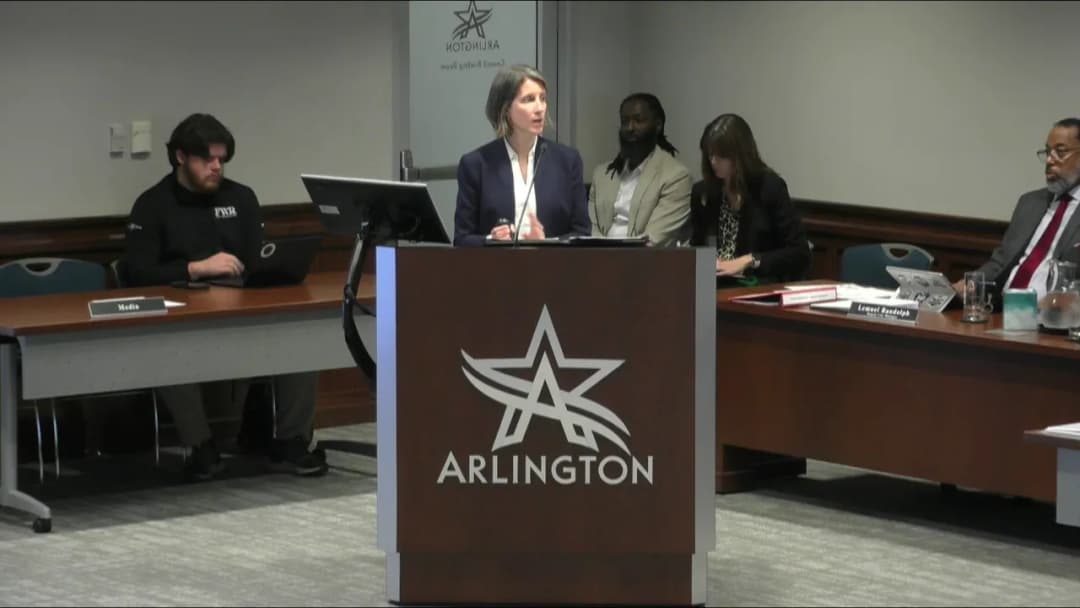
The Arlington City Council met in special session on October 28, 2026, in the Council Briefing Room at Arlington City Hall. The meeting opened with an executive session under Texas Government Code Sections 551.071, 551.072, 551.074, and 551.087, followed by work-session presentations and issue-session reports. No public comment period is reflected in the transcript. The afternoon session adjourned before the separately posted evening agenda, with council members planning to reconvene at 6:30 p.m. Note: the agenda attached to this record is dated October 27, 2026, while the meeting metadata identifies October 28, 2026 as the meeting date. International Property Maintenance Code - Staff presented the International Property Maintenance Code (IPMC), a model code developed by the International Code Council and reviewed on a three-year cycle, setting minimum safety and maintenance standards for existing residential and non-residential structures. - Cities using the IPMC include Austin, Houston, Plano, McKinney, and San Antonio; Plano reported positive experience applying it citywide since 2005, citing a clear framework and flexibility to address local issues. - The IPMC would complement Arlington's existing tools (Uniform Housing Code, nuisance chapter, streets/sidewalks, health/sanitation, dangerous-buildings provisions) and add enforcement authority for items such as peeling paint, accessory-structure maintenance, commercial weather protection, and general exterior disrepair. - Proposed timeline: Building Code Board of Appeals review in November; City Council first reading on December 8 and final reading on December 15, if approved; effective date February 1, 2027. - No formal vote was taken. Council members responded favorably, with one member calling it a structured approach to closing gaps in existing codes. Data Center Ordinance Options - Staff reviewed data center types, including hyperscale, co-located, enterprise, edge, high-performance computing, and cryptocurrency mining, and said the most likely forms in Arlington would be co-located, enterprise, and edge facilities. - Benefits were described as high-value investment with low traffic demand; concerns include noise, obsolescence, water use, and electric transmission infrastructure. - Staff explained noise measurement: dBA measures common environmental noise, while dBC captures low-frequency sound/vibration; the draft ordinance may also regulate “prominent discrete tones.” Cooling methods range from high-water evaporative cooling to closed-loop dry and immersion liquid cooling; dry methods use little/no water but can use up to about one-third more electricity. - Proposed principal-use regulations: specific use permit (SUP) only in LI and IM districts; PDs must explicitly allow data centers; evaporative cooling prohibited; 300-foot property-line-to-property-line setback from residential uses (same standard as gas wells); acoustical screening for ground and rooftop equipment; 75-foot maximum height; limits on generator testing times; pre-construction noise modeling; dBA/dBC limits; post-construction testing and remediation; parking only for office/meeting/security areas; and decommissioning/adaptive reuse plans. - Proposed accessory-use regulations: allowed in any non-residential district when tied to a principal use and under 50% of gross floor area; no outside backup generators; battery energy storage units permitted with limits; standalone accessory buildings capped at 20 feet in height and 1,000 square feet. Edge data center boxes would be allowed by right as accessory uses in any district, must be non-habitable, up to 200 square feet aggregate and 12 feet high, with no utility-scale battery system. - Councilmember Garcia Duma voiced support for keeping data centers as far from residential areas as possible and for noise modeling before SUP approval, so residents are protected before projects advance. Staff stressed the draft is a work in progress and subject to change. Transportation Services Update HandyTran - HandyTran serves riders 65 and older or with a documented disability, covering city limits plus 1.5 miles outside, with trips to/from CentrePort and Hurst/Bell TRE stations. Hours are Monday–Friday 7 a.m.–10 p.m. and Saturday 8 a.m.–9 p.m.; fare is $3 per person per ride; up to 34 vehicles run per day. - Cost-sharing: Fort Worth, Grand Prairie, and Dalworthington Gardens opted out, so their residents will lose HandyTran service on October 1, 2027. Mansfield, Kennedale, Forest Hills, and Euless have not yet decided; service to Penteco will continue under a mutual aid fire-services agreement. - Staff reported 137,513 completed trips in FY27 (a slight decrease), while most other metrics were labeled FY26. On-time performance was 96% in FY26, up 5% from FY25 and above the 90–95% industry standard. Active riders totaled 1,454; new applications totaled 577, the largest in eight years. - Ridership patterns: 32% of riders took 10 or fewer trips; 28% took more than 100 trips. Booking was 4% online and 50% by phone; remaining booking methods were not stated. - Cost and funding: average cost was $31.08 per trip; farebox covered 7% (industry range 4–9%), TxDOT 8%, FTA 59%, and city funds 26%. In dollars, total FY26 operating cost was about $4.3 million: $293,000 farebox, $341,000 TxDOT, $2.6 million FTA, and $1.1 million city general fund. - Council members praised improved service and noted complaint levels had decreased since the service changes. Arlington On-Demand - On-Demand provides citywide public transit for the general public; hours are Monday–Friday 6 a.m.–9 p.m. and Saturday 9 a.m.–9 p.m. Fares range from $3 to $8 depending on distance, with a flat $3 fare to/from CentrePort TRE station. The fleet uses up to 62 six-passenger vans, 12 wheelchair accessible, including hybrid-electric Toyota Sienas. - Free ride programs: TCC offers free rides to Southeast Campus students; AISD is restarting free rides for at-risk students through student outreach; about 17 Arlington nonprofits receive free rides for low-income clients, averaging about 700 rides/month with a farebox value of about $3,200/month. - FY26 completed trips totaled 524,711; over 3.8 million trips have been completed since launch in 2017; weekly average is about 11,000 trips. Rider satisfaction is 4.85/5 stars. ETA averaged 14.6 minutes in the last two years, below Via's 18-minute comparative average. Utilization was 3.1 riders/vehicle/hour in FY26, above Via's average of 3.0; August/September reached 3.4–3.5. Met demand was 96%, with only 4% “seat unavailable” messages; Via's comparative average is 90%. - Average trip distance in FY26 was 7.3 miles; before the March fare change it was 7.5 miles and after it was 7.2 miles. Projected total operating cost for FY26 is about $9.6 million; city share is about 46% in recent years. - Sunday service: Via modeled Sunday demand at roughly 80% of Saturday levels (Saturday averages about 1,000–1,100 trips). Estimated city cost to add Sunday service is about $500,000–$1,000,000 per year, depending on FTA funding. - Councilmember Shelton expressed strong interest in adding Sunday service, calling Arlington too large to lack Sunday transit. Councilmember Garcia Duma asked about riders under 18 and free student ride programs; staff said riders must be 13 to ride alone, 6% of survey respondents are under 18, and 84% of trips are shared to some degree. - On autonomous vehicles, staff noted a prior RAPID pilot with Via provided over 100,000 autonomous rides with no safety incidents; future integration would likely be phased as technology and costs mature. Councilmember Hogg encouraged pursuing autonomous vehicles as a way to reduce driver costs and potentially enable Sunday service. Citywide Art Projects - Councilmember Garcia Duma applauded Gary Packett and the citywide art team for commissioning local DFW artists and creating a sense of place. She cited University of Cincinnati research showing a 30% increase in foot traffic in mural areas and up to five times the city's average pedestrian volume near mural sites with restaurants. Staff noted the art effort spans multiple city departments. Committee Reports Finance and Audit – FY26 Audit Kickoff - The committee received the FY26 audit plan covering the year ending September 30, 2026. Work is scheduled in phases: planning/internal controls/risk assessment from November 2026 to January 2027; single-audit testing January–March 2027; final fieldwork and report issuance in March 2027. - Key audit focus areas: management override of controls, recognition of intergovernmental revenue, and compliance with federal and state grant requirements. The audit will implement GASB 103 and GASB 104. Community and Neighborhood Development - Councilmember Hogg reported that the committee discussed single-family shared rental properties and multifamily recycling. On shared rentals, proposed ordinance changes would be triggered by permits for changes such as converting existing rooms into bedrooms; bedroom size would require at least one side to be 10 feet; existing configurations would be grandfathered unless the owner seeks a new permit. - Councilmember Garcia Duma noted the 10-foot-side rule was intended to preserve room dignity while allowing smaller, affordable homes to have three bedrooms; Councilmember Gonzalez also supported the approach. Staff compared rental registration programs in Carrollton, Garland, and Rowlett; a Board of Realtors meeting and a resident town hall are planned, with phased implementation. - On recycling, the committee endorsed expanding recycling to all multifamily properties through a franchise agreement with one vendor (Republic), transitioning existing contracts within 36 months or upon contract expiration, requiring site visits, calculating capacity in gallons per week, establishing per-unit billing, and reducing contamination. The franchise vendor would provide staffing, avoiding additional city personnel. CVB, NLC, and NCTCOG Reports - CVB (reported by Councilmember Hogg): October 14 board meeting approved the FY27 budget; projected operating reserve balance is $761,000; UFL training camps generated 9,100 hotel room nights with a 10-to-1 ROI; Savannah Bananas had three sold-out nights with 36% of attendees from 50+ miles away and a $200,000 TPID sponsorship; hotel revenue was up 12% year-over-year through August; the Visit Arlington, Texas consumer brand launches in January 2027. Upcoming events include Women's World Boxing, Big 12 soccer and football, and UIL state football championships December 16–19. - NLC (reported by Councilmember Gonzalez): the Finance, Administration, and Intergovernmental Relations Committee met virtually October 15 and discussed intergovernmental relations policy and federal grant principles; NLC resolutions include support for the John Lewis Voting Rights Advancement Act, accurate 2030 census counts, streamlined federal grants, municipal bond tax exemptions, advanced refunding bond restoration, civic discourse, cryptocurrency regulation engagement, resolving state/federal cannabis conflicts, sustainable federal fiscal policy, and EITC/child tax credits. Data cited in the civic discourse resolution: 51% of surveyed local officials reported being insulted, 39% harassment, 17% threats, and 1% physical attacks in Q1 2026. Next meeting is November 18 at the NLC summit in Nashville. - NCTCOG (reported by Mayor): the Executive Board met October 22; released $145,000 for an independent North Texas air quality analysis because TCEQ data shows the region exceeding guidelines; authorized data sharing among NCTCOG, DART, Trinity Metro, and a Denton regional transit facilitator to optimize regional mobility. Other Issues Session Items - Appointments: the City Secretary reported one board/commission appointment will be on the evening agenda. - Evening agenda items: Councilmember Garcia Duma noted that item 16.30 PICON had requested a continuance to November 10. - TML Region 8 Director Election: TML rules now require council action to cast the city's vote. Mayor raised concerns about one candidate based on documents and a recent KERA report and recommended Michael Browning, a council member from Alvarado. Council directed staff to prepare the resolution with Browning's name in the blank. - Resolution of Support for Ya'akub Ira Vijandre: tabled. The Mayor said he had spoken with Councilmember Pham and the city manager was coordinating a meeting to address underlying issues before further City Council action. - TxDOT project issues and future agenda items: no questions or additions were raised. Key Outcomes - IPMC: council direction to proceed with Building Code Board of Appeals review in November, December 8 first reading, December 15 final reading, and February 1, 2027 effective date (pending approval). - Data center ordinance: no vote; staff will continue drafting, with council members emphasizing stronger residential setbacks and pre-SUP noise modeling. - Transportation: no formal decision; Sunday On-Demand service remains an option with a projected city cost of $500,000–$1,000,000 per year. - TML Region 8: council directed staff to name Michael Browning in the city's voting resolution. - CND: committee endorsed the multifamily recycling franchise approach and continued work on shared-rental ordinance changes and possible rental registration. - The resolution of support for Ya'akub Ira Vijandre was tabled indefinitely pending further meetings. - The afternoon/issue session adjourned with the council scheduled to reconvene at 6:30 p.m. for the evening agenda.

PROCEDURAL 56% · PUBLIC TRANSPORTATION 19% · TECHNOLOGY AND INNOVATION 7% · ZONING AND LAND USE 6%
OPENPUBLICA · PUBLIC MEETING INDEXUPDATED DAILY · openpublica.com