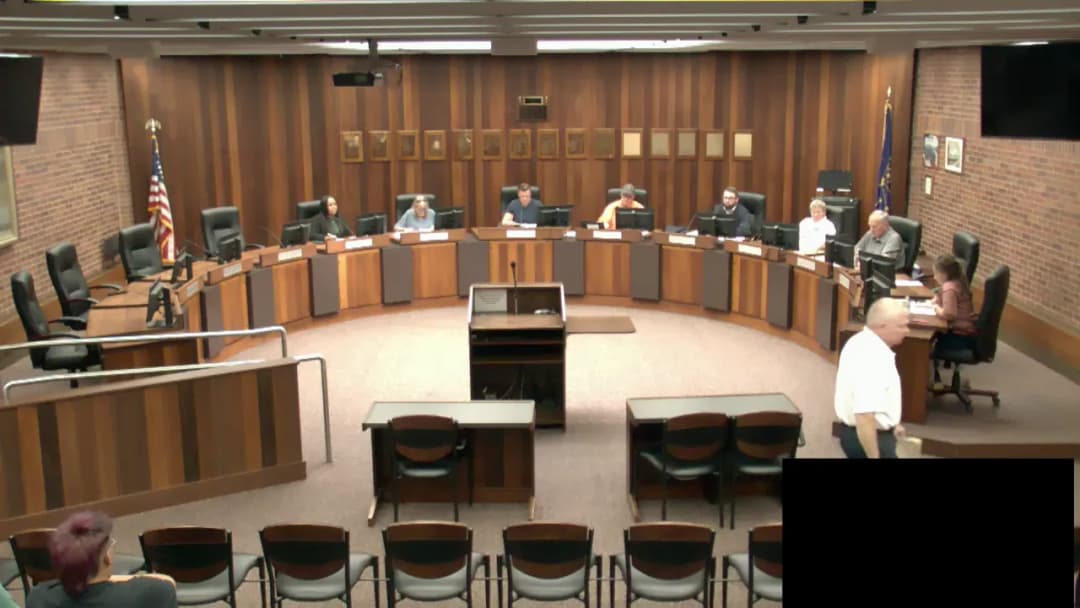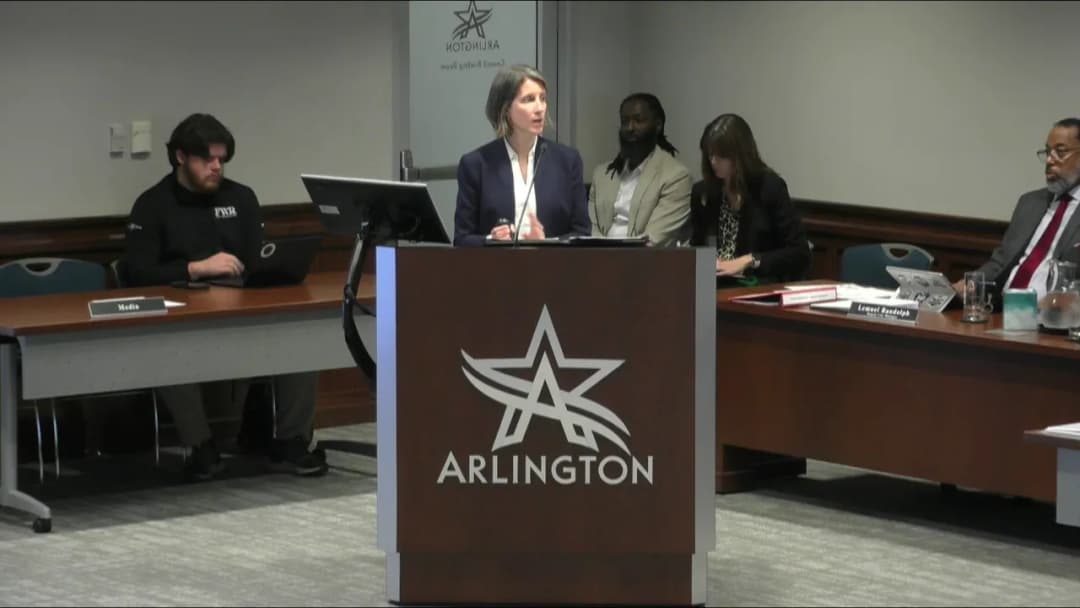
The Arlington City Council met in special session on October 28, 2026, in the Council Briefing Room at Arlington City Hall. The meeting opened with an executive session under Texas Government Code Sections 551.071, 551.072, 551.074, and 551.087, followed by work-session presentations and issue-session reports. No public comment period is reflected in the transcript. The afternoon session adjourned before the separately posted evening agenda, with council members planning to reconvene at 6:30 p.m. Note: the agenda attached to this record is dated October 27, 2026, while the meeting metadata identifies October 28, 2026 as the meeting date. International Property Maintenance Code - Staff presented the International Property Maintenance Code (IPMC), a model code developed by the International Code Council and reviewed on a three-year cycle, setting minimum safety and maintenance standards for existing residential and non-residential structures. - Cities using the IPMC include Austin, Houston, Plano, McKinney, and San Antonio; Plano reported positive experience applying it citywide since 2005, citing a clear framework and flexibility to address local issues. - The IPMC would complement Arlington's existing tools (Uniform Housing Code, nuisance chapter, streets/sidewalks, health/sanitation, dangerous-buildings provisions) and add enforcement authority for items such as peeling paint, accessory-structure maintenance, commercial weather protection, and general exterior disrepair. - Proposed timeline: Building Code Board of Appeals review in November; City Council first reading on December 8 and final reading on December 15, if approved; effective date February 1, 2027. - No formal vote was taken. Council members responded favorably, with one member calling it a structured approach to closing gaps in existing codes. Data Center Ordinance Options - Staff reviewed data center types, including hyperscale, co-located, enterprise, edge, high-performance computing, and cryptocurrency mining, and said the most likely forms in Arlington would be co-located, enterprise, and edge facilities. - Benefits were described as high-value investment with low traffic demand; concerns include noise, obsolescence, water use, and electric transmission infrastructure. - Staff explained noise measurement: dBA measures common environmental noise, while dBC captures low-frequency sound/vibration; the draft ordinance may also regulate “prominent discrete tones.” Cooling methods range from high-water evaporative cooling to closed-loop dry and immersion liquid cooling; dry methods use little/no water but can use up to about one-third more electricity. - Proposed principal-use regulations: specific use permit (SUP) only in LI and IM districts; PDs must explicitly allow data centers; evaporative cooling prohibited; 300-foot property-line-to-property-line setback from residential uses (same standard as gas wells); acoustical screening for ground and rooftop equipment; 75-foot maximum height; limits on generator testing times; pre-construction noise modeling; dBA/dBC limits; post-construction testing and remediation; parking only for office/meeting/security areas; and decommissioning/adaptive reuse plans. - Proposed accessory-use regulations: allowed in any non-residential district when tied to a principal use and under 50% of gross floor area; no outside backup generators; battery energy storage units permitted with limits; standalone accessory buildings capped at 20 feet in height and 1,000 square feet. Edge data center boxes would be allowed by right as accessory uses in any district, must be non-habitable, up to 200 square feet aggregate and 12 feet high, with no utility-scale battery system. - Councilmember Garcia Duma voiced support for keeping data centers as far from residential areas as possible and for noise modeling before SUP approval, so residents are protected before projects advance. Staff stressed the draft is a work in progress and subject to change. Transportation Services Update HandyTran - HandyTran serves riders 65 and older or with a documented disability, covering city limits plus 1.5 miles outside, with trips to/from CentrePort and Hurst/Bell TRE stations. Hours are Monday–Friday 7 a.m.–10 p.m. and Saturday 8 a.m.–9 p.m.; fare is $3 per person per ride; up to 34 vehicles run per day. - Cost-sharing: Fort Worth, Grand Prairie, and Dalworthington Gardens opted out, so their residents will lose HandyTran service on October 1, 2027. Mansfield, Kennedale, Forest Hills, and Euless have not yet decided; service to Penteco will continue under a mutual aid fire-services agreement. - Staff reported 137,513 completed trips in FY27 (a slight decrease), while most other metrics were labeled FY26. On-time performance was 96% in FY26, up 5% from FY25 and above the 90–95% industry standard. Active riders totaled 1,454; new applications totaled 577, the largest in eight years. - Ridership patterns: 32% of riders took 10 or fewer trips; 28% took more than 100 trips. Booking was 4% online and 50% by phone; remaining booking methods were not stated. - Cost and funding: average cost was $31.08 per trip; farebox covered 7% (industry range 4–9%), TxDOT 8%, FTA 59%, and city funds 26%. In dollars, total FY26 operating cost was about $4.3 million: $293,000 farebox, $341,000 TxDOT, $2.6 million FTA, and $1.1 million city general fund. - Council members praised improved service and noted complaint levels had decreased since the service changes. Arlington On-Demand - On-Demand provides citywide public transit for the general public; hours are Monday–Friday 6 a.m.–9 p.m. and Saturday 9 a.m.–9 p.m. Fares range from $3 to $8 depending on distance, with a flat $3 fare to/from CentrePort TRE station. The fleet uses up to 62 six-passenger vans, 12 wheelchair accessible, including hybrid-electric Toyota Sienas. - Free ride programs: TCC offers free rides to Southeast Campus students; AISD is restarting free rides for at-risk students through student outreach; about 17 Arlington nonprofits receive free rides for low-income clients, averaging about 700 rides/month with a farebox value of about $3,200/month. - FY26 completed trips totaled 524,711; over 3.8 million trips have been completed since launch in 2017; weekly average is about 11,000 trips. Rider satisfaction is 4.85/5 stars. ETA averaged 14.6 minutes in the last two years, below Via's 18-minute comparative average. Utilization was 3.1 riders/vehicle/hour in FY26, above Via's average of 3.0; August/September reached 3.4–3.5. Met demand was 96%, with only 4% “seat unavailable” messages; Via's comparative average is 90%. - Average trip distance in FY26 was 7.3 miles; before the March fare change it was 7.5 miles and after it was 7.2 miles. Projected total operating cost for FY26 is about $9.6 million; city share is about 46% in recent years. - Sunday service: Via modeled Sunday demand at roughly 80% of Saturday levels (Saturday averages about 1,000–1,100 trips). Estimated city cost to add Sunday service is about $500,000–$1,000,000 per year, depending on FTA funding. - Councilmember Shelton expressed strong interest in adding Sunday service, calling Arlington too large to lack Sunday transit. Councilmember Garcia Duma asked about riders under 18 and free student ride programs; staff said riders must be 13 to ride alone, 6% of survey respondents are under 18, and 84% of trips are shared to some degree. - On autonomous vehicles, staff noted a prior RAPID pilot with Via provided over 100,000 autonomous rides with no safety incidents; future integration would likely be phased as technology and costs mature. Councilmember Hogg encouraged pursuing autonomous vehicles as a way to reduce driver costs and potentially enable Sunday service. Citywide Art Projects - Councilmember Garcia Duma applauded Gary Packett and the citywide art team for commissioning local DFW artists and creating a sense of place. She cited University of Cincinnati research showing a 30% increase in foot traffic in mural areas and up to five times the city's average pedestrian volume near mural sites with restaurants. Staff noted the art effort spans multiple city departments. Committee Reports Finance and Audit – FY26 Audit Kickoff - The committee received the FY26 audit plan covering the year ending September 30, 2026. Work is scheduled in phases: planning/internal controls/risk assessment from November 2026 to January 2027; single-audit testing January–March 2027; final fieldwork and report issuance in March 2027. - Key audit focus areas: management override of controls, recognition of intergovernmental revenue, and compliance with federal and state grant requirements. The audit will implement GASB 103 and GASB 104. Community and Neighborhood Development - Councilmember Hogg reported that the committee discussed single-family shared rental properties and multifamily recycling. On shared rentals, proposed ordinance changes would be triggered by permits for changes such as converting existing rooms into bedrooms; bedroom size would require at least one side to be 10 feet; existing configurations would be grandfathered unless the owner seeks a new permit. - Councilmember Garcia Duma noted the 10-foot-side rule was intended to preserve room dignity while allowing smaller, affordable homes to have three bedrooms; Councilmember Gonzalez also supported the approach. Staff compared rental registration programs in Carrollton, Garland, and Rowlett; a Board of Realtors meeting and a resident town hall are planned, with phased implementation. - On recycling, the committee endorsed expanding recycling to all multifamily properties through a franchise agreement with one vendor (Republic), transitioning existing contracts within 36 months or upon contract expiration, requiring site visits, calculating capacity in gallons per week, establishing per-unit billing, and reducing contamination. The franchise vendor would provide staffing, avoiding additional city personnel. CVB, NLC, and NCTCOG Reports - CVB (reported by Councilmember Hogg): October 14 board meeting approved the FY27 budget; projected operating reserve balance is $761,000; UFL training camps generated 9,100 hotel room nights with a 10-to-1 ROI; Savannah Bananas had three sold-out nights with 36% of attendees from 50+ miles away and a $200,000 TPID sponsorship; hotel revenue was up 12% year-over-year through August; the Visit Arlington, Texas consumer brand launches in January 2027. Upcoming events include Women's World Boxing, Big 12 soccer and football, and UIL state football championships December 16–19. - NLC (reported by Councilmember Gonzalez): the Finance, Administration, and Intergovernmental Relations Committee met virtually October 15 and discussed intergovernmental relations policy and federal grant principles; NLC resolutions include support for the John Lewis Voting Rights Advancement Act, accurate 2030 census counts, streamlined federal grants, municipal bond tax exemptions, advanced refunding bond restoration, civic discourse, cryptocurrency regulation engagement, resolving state/federal cannabis conflicts, sustainable federal fiscal policy, and EITC/child tax credits. Data cited in the civic discourse resolution: 51% of surveyed local officials reported being insulted, 39% harassment, 17% threats, and 1% physical attacks in Q1 2026. Next meeting is November 18 at the NLC summit in Nashville. - NCTCOG (reported by Mayor): the Executive Board met October 22; released $145,000 for an independent North Texas air quality analysis because TCEQ data shows the region exceeding guidelines; authorized data sharing among NCTCOG, DART, Trinity Metro, and a Denton regional transit facilitator to optimize regional mobility. Other Issues Session Items - Appointments: the City Secretary reported one board/commission appointment will be on the evening agenda. - Evening agenda items: Councilmember Garcia Duma noted that item 16.30 PICON had requested a continuance to November 10. - TML Region 8 Director Election: TML rules now require council action to cast the city's vote. Mayor raised concerns about one candidate based on documents and a recent KERA report and recommended Michael Browning, a council member from Alvarado. Council directed staff to prepare the resolution with Browning's name in the blank. - Resolution of Support for Ya'akub Ira Vijandre: tabled. The Mayor said he had spoken with Councilmember Pham and the city manager was coordinating a meeting to address underlying issues before further City Council action. - TxDOT project issues and future agenda items: no questions or additions were raised. Key Outcomes - IPMC: council direction to proceed with Building Code Board of Appeals review in November, December 8 first reading, December 15 final reading, and February 1, 2027 effective date (pending approval). - Data center ordinance: no vote; staff will continue drafting, with council members emphasizing stronger residential setbacks and pre-SUP noise modeling. - Transportation: no formal decision; Sunday On-Demand service remains an option with a projected city cost of $500,000–$1,000,000 per year. - TML Region 8: council directed staff to name Michael Browning in the city's voting resolution. - CND: committee endorsed the multifamily recycling franchise approach and continued work on shared-rental ordinance changes and possible rental registration. - The resolution of support for Ya'akub Ira Vijandre was tabled indefinitely pending further meetings. - The afternoon/issue session adjourned with the council scheduled to reconvene at 6:30 p.m. for the evening agenda.
The Public Meeting Index
The Public Meeting IndexThe Town of North Hempstead Town Board held a regular meeting on October 28, 2026, at 7:00 PM. The primary focus was two public hearings to adopt the 2027 annual budgets for the General Fund, Town Outside Village Fund, and various special districts. The board also considered a resolution setting a public hearing date for water pollution control district assessment rolls. Amendments to the preliminary budgets were presented and unanimously approved. Public comments were heard from two residents. The board engaged in extensive discussion about fund balance trends, revenue shortfalls, and non-tax revenue strategies. Both public hearings were closed, the special district budget vote was tabled to a future meeting, and the resolution for the assessment rolls hearing was adopted. Public Comments & Testimony - Marietta DiCamillo, a New Hyde Park resident, questioned the 2027 budget for Clinton G. Martin Park, noting a $71,000 increase in salary costs, a rise in seasonal part-time staffing from $180,000 to $504,000, a new $30,000 contingency account, and a 1% increase in the administrative fee. She asked the board to review seasonal staffing levels in light of declining revenue. Mr. Pollock explained that the contingency account is used for transfers, seasonal costs reflect mandated wage increases and lifeguard requirements, and the administrative fee is based on overall budget costs. - Stephen Sombrato, a Port Washington resident, raised concerns about the Port Washington Water Pollution Control District budget, stating that FOIL documents show Sunset Park revenues and expenses are run through the district’s operating account with no separate budget or policies. He questioned the district’s statutory authority to finance a recreational park and requested the town board review the matter before adopting the budget. The town attorney stated that the district owns the property and must maintain the surface over its facilities, and that altering revenue sources could force tax increases. Discussion Items - Budget Amendments Presentation and Vote: Stephen Pollock, Supervisor’s Office, presented two categories of amendments from the preliminary to the final proposed budget. For commissioner-operated special districts, the Great Neck Water Pollution Control District had fiscal agent fee and revenue adjustments, and the Port Washington Water Pollution Control District had taxable valuation changes. For town-operated special districts, the Great Neck Fire Protection District received an updated contract number, and the highway department had an employee transfer between codes. The board voted unanimously (7-0) to approve these amendments. - Fund Balance and Revenue Concerns: Councilwoman Liu noted that the general fund ending balance in 2025 was $35 million, with projected spending of $10 million in 2026 and $16 million in 2027, which would leave an $8.9 million reserve—below the board’s 10% policy. She requested actual spending figures. Mr. Pollock responded that projections are based on prior trends and that the town typically finishes with surpluses, so the balance should stay above 10%. Councilman Troiano added that the town is losing about $4 million in revenue annually since 2024 and questioned non-tax revenue sources such as parking fines and franchise fees. The deputy supervisor argued that non-tax revenues are historically low and that the board frequently waives fees, which undermines revenue. A discussion ensued about a potential town traffic court, but it was noted that state authorization would be required and is unlikely given population thresholds. - Sales Tax Revenue Transfer: Mr. Pollock explained that the New York State Comptroller’s office advised the town to move sales tax revenue from the General Fund to the Town Outside Village (TOV) Fund. The 2027 budget shifts 25% of sales tax to the TOV, with the rest phased in over four years. This change accounts for a $4.1 million line in the TOV fund and a corresponding reduction in the general fund. - Parking Enforcement and Fines: Councilman Troiano questioned a 10% increase in projected parking enforcement fines, expressing concern that aggressive ticketing amounts to a hidden tax. Deputy supervisor stated that enforcement has been expanded town-wide and that tickets are issued for actual infractions, not as a revenue tool. Councilwoman Delamante and others noted that the town has limited ability to collect unpaid tickets, with recourse only through the court system. - Tree and Sidewalk Backlog: Councilman Troiano raised concerns about a reported backlog of 1,400 trees identified as safety risks and asked if current staffing is sufficient. The deputy supervisor responded that the backlog is being reduced, tree removals have increased since the tree policy was revised, and adding a new crew would require ongoing funding. He emphasized that not all 1,400 trees are in immediate danger and that many are stumps or require coordination with utility companies. The board agreed to hold a working meeting to examine the breakdown of tree service requests. Key Outcomes - Approval of Budget Amendments: The board voted unanimously (7-0) to adopt the changes to the preliminary budgets as presented by Mr. Pollock. - Public Hearing for Special Districts (Item 2) Closed: Motion carried unanimously (7-0). - Public Hearing for General Fund and TOV (Item 1) Closed: Motion carried unanimously (7-0). - Motion to Table Resolution for Special District Budgets (Item 2): The motion to table was approved (4-3: Scott, Walsh, Levy, DeSena in favor; Triano, Lou, Delamante against), deferring adoption to the November 10, 2026 meeting. The board noted that the special district commissions would be informed of the postponement. - Resolution for Assessment Rolls Public Hearing (Item 3) Adopted: The board voted unanimously (7-0) to set a public hearing date for the 2027 assessment rolls of the Belgrave, Great Neck, and Port Washington Water Pollution Control Districts.
The Board of Public Safety held its regular meeting on October 28, 2026, at 1:00 PM at the Civic Center Complex. The meeting included departmental reports, routine consent items, and a public comment period focused on the Flock automated license plate reader (ALPR) camera contract. Consent Calendar - Police Department: Approved the surplus of six patrol vehicles (2013 Dodge Chargers and Ford) that have reached end of life, and approved a one-year extension to the service agreement with Muensterman. - Fire Department: - Approved the consumable quote bid RFQ‑011-01‑2026, subject to review by the controller’s office, purchasing, and legal. - Awarded the boat bid (IFB 011‑03‑2026) to Stanley, waiving irregularities, contingent upon purchasing department approval of required forms. - Authorized an open‑market purchase for a tow vehicle after no bids were received (IFB 011‑04‑2026). - Approved a change order for the E1 Heavy Rescue Apparatus with a revised contract price of $1,096,326, subject to submission of a CAF at the next meeting. - City Engineering: - Approved a 15‑minute parking zone on the north side of Walnut Street between Frederick Street and Rotherwood Avenue (requested by the University of Evansville). - Approved a “no on‑street parking” restriction on Michigan Street from First Avenue to the new cul‑de‑sac (requested by Amcor). - Special Event Permits: Approved all five requests: - Junior Achievement JobSpark (Nov 3‑4, 7 AM – 2 PM, street closures on Locust and 9th Streets). - Four Freedom Veterans Parade (Nov 14, noon – 5 PM, route in downtown and west side). - Annunciation Parish Eucharistic Procession (Nov 22, noon – 1 PM, religious procession through Bayard Park area). - Jacobsville Area Community Corporation Christmas on North Main Parade (Nov 22, 2 – 5 PM, Main Street to Garvin Park). - University of Evansville Winter on Walnut 2026 (Dec 4, 5 – 8 PM, Walnut Street between Rotherwood and Weinbach). - Road Closures (Consent): - 3200 N Burkhardt Road – lane restriction for asphalt removal and curb work (private development). - Cherry Street between 2nd and 3rd – tree removal, curb, and sidewalk replacement (city infrastructure project). - 1012 Cherry Street – sewer tap (one‑day project). - 1917 Lodge Avenue – water main tap (one‑day project). - 201 Main Street – temporary sidewalk use for window replacement. - Dumpster in Street: Approved placement at 1101 SE Riverside Drive (on Shawnee Drive) for a house clean‑out, Oct 30 – Nov 20. - Precious Metal Dealer: Licensed Road Show Concepts, LLC to operate at the Hilton Garden Inn, Nov 10‑14. - Other Business: Approved claims and approved the minutes of the October 14, 2026 meeting. Public Comments & Testimony Three members of the public spoke during the public comment period, all opposing the renewal of the Flock ALPR camera contract. - Brendan Dillingham argued that the cameras violate the Fourth Amendment, citing the recent federal ruling in United States v. Kyle and Carpenter v. United States. He demanded the board not renew the contract. - Philip Albers criticized the 30‑day retention period used by the Evansville Police Department (versus Flock’s current 7‑day default) and raised concerns about the nationwide sharing system that allows 7,000 other agencies to access Evansville’s data without notification. He urged the board to reduce retention and opt out of the sharing network. - Bart Heath contended that the surveillance system infringes on constitutional rights and called the gradual private implementation a threat to liberty. The board listened without making any direct response regarding the Flock issue. Key Outcomes - All departmental and consent items were approved unanimously by voice vote. - No action was taken by the board on the Flock contract concerns raised during public comment. - The next regular meeting is scheduled for November 4, 2026, at 1:00 PM in Room 301 of the Civic Center Complex.
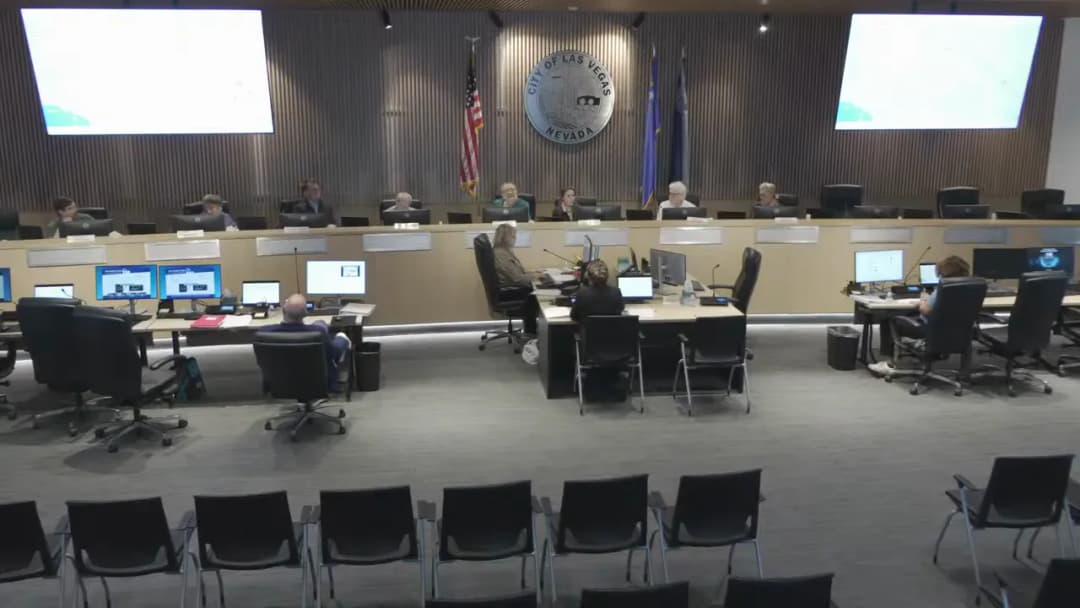
The Las Vegas Historic Preservation Commission (HPC) held its regular meeting on October 28, 2026. The commission received an update on the Huntridge Theater, approved the first draft of a National Register nomination for Johnny Toko's Ringside Gym, approved matching funds for an Arts District historic context study, and discussed recent conferences and proposed federal changes to the National Historic Preservation Act. Consent Calendar - Minutes Approval: The commission unanimously approved the final minutes of the regular meeting of September 23, 2026, by reference. Discussion Items - Huntridge Theater (Item 5): Developer Jay Dapper reported that no renovations have occurred in the last year, stating the city has initiated Phase II of an AMS study. Mr. Dapper stated he will not seek a reduction of liquidated damages this year. Commissioners Stodel and Grimmer expressed significant concern over the lack of financial feasibility data for restoration and operation, stressing the building remains at risk. Staff clarified the city will not make financial decisions until the fiscal year 2028 budget process begins in January 2027. Mr. Dapper stated the goal is to finalize a non-profit ownership structure for the property by 2027. - Johnny Toko's Ringside Gym (Item 6): Consultant Zoanne Camana presented the first draft of a National Register of Historic Places nomination for the gym, located at 9 West Charleston Boulevard. Commissioners Harper, Stodel, and Laramie requested specific clarifications regarding building integrity and historic features. Action: The commission voted to approve the first draft with edits to be submitted to staff by the end of the following day. The nomination will then be reviewed by the Nevada State Historic Preservation Office (SHPO). - Arts District Historic Context Study (Item 7): Action: The commission voted to approve $13,333 in HPC funds to match a $20,000 federal SHPO grant for a total project cost of $33,333 to hire a consultant for a historic context study of the Arts District. An RFP will be issued, and a draft report will return to the HPC for review. - SHPO CAMP Training Report (Item 8): Commissioners who attended the Commission Assistance and Mentoring Program (CAMP) training in Carson City shared key takeaways, including the strong need for a dedicated Las Vegas Preservation Plan, improved community outreach, and building relationships with state partners. Staff will survey the commission to select topics for a future local HPC training session. - Old Spanish Trail Conference (Item 9): Staff reported on the annual conference in Knab, Utah, noting a digital game is in development and the association may hold its next conference in Las Vegas. Commissioners Laramie and Stodel expressed strong interest in collaborating on trail markers and cross-jurisdictional preservation efforts. - Nevada Museums Association Conference (Item 10): Commissioner Nathan Harper reported on the conference in Mesquite, Nevada, where he presented on the collaborative exhibit of the Paiute dictionary at City Hall. He encouraged commissioners to actively share the work of the HPC with the public. - Section 106 Regulations (Item 11): The commission discussed proposed revisions to the regulations for Section 106 of the National Historic Preservation Act. Action: The commission voted to approve a letter to Nevada's congressional delegation opposing the proposed changes. The letter will include the names and titles of the commissioners. - Project Updates & Outreach (Item 13): Staff announced an upcoming outreach opportunity at the Get Outdoors Nevada event on November 7, 2026, at the Civic Plaza. Commissioners were invited to volunteer at the HPC table. Two commission vacancies are currently being filled. Key Outcomes - Approved the final minutes of September 23, 2026. - Approved the first draft of the National Register nomination for Johnny Toko's Ringside Gym with edits. - Approved $13,333 in matching funds for an Arts District Historic Context Study. - Approved sending a letter to the Nevada congressional delegation opposing changes to Section 106 regulations. - The Huntridge Theater will be a standing monthly agenda item for future meetings. - A formal review of the process for the Huntridge Theater's covenant and liquidated damages will be placed on a future agenda. - Staff will issue a survey to commissioners to select four topics for a local HPC training session.
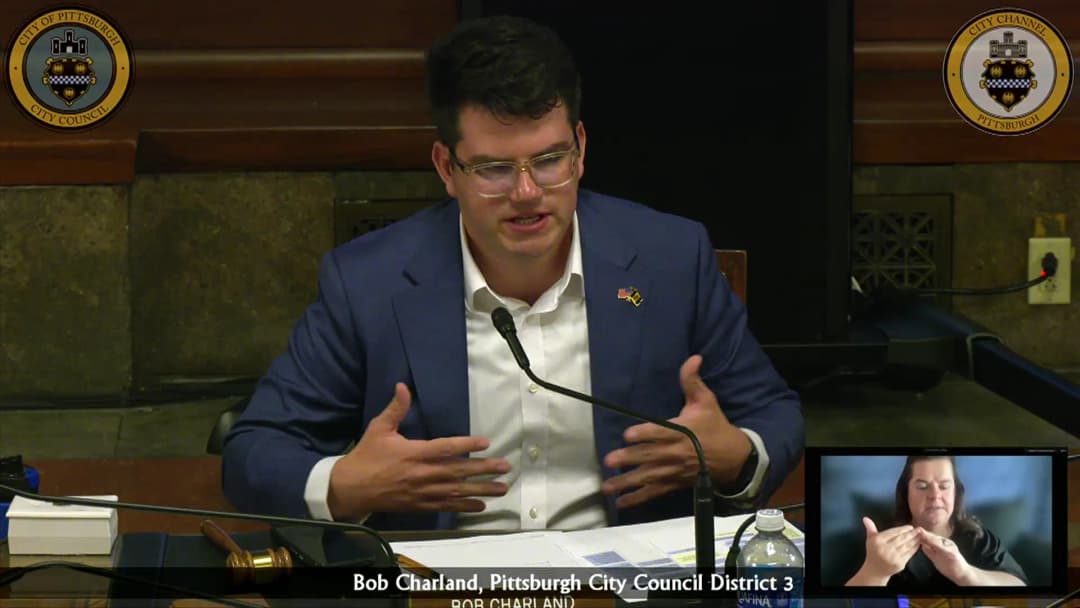
The Pittsburgh City Council, led by Councilperson Robert Charland, convened a post-agenda discussion on the status of the City's permitting reform initiative. The session featured a detailed presentation from the Mayor's Office and department heads detailing the significant progress made over the preceding ten months to streamline the permitting process. Discussion Items - Permit Reform Presentation: The Mayor's Office presented a comprehensive update on the 10-month reform effort. Key statistics included a 67% reduction in city processing time, with the median review time falling from 21 days at the start of the year to 7 days overall (11 to 4 for single-family, 24 to 14 for commercial). The median time to get a permit is now about 3 days, and 59% of the 12,373 applications analyzed were complete at intake. - Phase One Accomplishments: The administration highlighted the successful launch of several initiatives, including the new Permit Tracker, the Easy Permits pilot (issuing permits for minor work like roofing in one business day), a Virtual Inspections pilot, and a revamped Pre-Application Meeting process aimed at providing a clear "project roadmap" upfront. - Zoning Code Reforms: The team celebrated the passage of zoning amendments, including the elimination of redundant regulations and cleaning up obsolete code sections. - Future Phases: Phase two focuses on the review process, while phase three is anticipated in 2027 for inspections and certificates of occupancy. The city joined the Bloomberg Cities Idea Exchange's speedy permitting cohort. - Council Responses and Questions: - Councilwoman Warwick: Expressed strong support for the 67% speed improvement. She highlighted the importance of having all three agencies present at pre-application meetings and praised the Permit Tracker for giving homeowners independent verification of permit status. - Councilwoman Salemetro: Praised the reduced timelines but raised concerns about elderly residents with limited tech literacy, emphasizing the need for accessible phone and in-person support. - Councilperson Strasberger: Inquired about how applicants find the "front door" of the process. He questioned the potential for further zoning burden reductions for small projects and the potential for creating a fast-track for affordable housing through the Bloomberg cohort. - Councilman Coggill: Speaking as a contractor, he strongly praised the Easy Permits system for roofing, stating it makes the city competitive with suburbs. He expressed surprise that the requirement for a separate city license had been removed for state-licensed contractors on most residential work. He questioned the necessity of final inspections on simple jobs and raised an issue with the lead certification requirement, which he feels creates an unnecessary burden for contractors whose work doesn't involve lead. - Councilman Charland: Emphasized the critical importance of marketing these reforms to national developers and small contractors to change the narrative that Pittsburgh is hard to build in. He noted a discrepancy in revenue: while the value of construction submitted is $900 million higher than last year, permits issued are $400 million less, signaling a delay in issuance. He challenged the administration to aggressively tell the story that "Pittsburgh is open for business." Key Outcomes - Overwhelming Support: Council members praised the progress made in reducing permit processing times and improving interdepartmental coordination. - Call for Outreach: Strong encouragement from Council to the administration to improve communication of these reforms to contractors and the development community. - Actionable Concerns: Council highlighted lead certification reform and non-digital access for residents as areas needing attention. - Follow-up: Councilman Charland proposed a follow-up post-agenda in approximately six months to review the progress of phase two and the Bloomberg grant work.
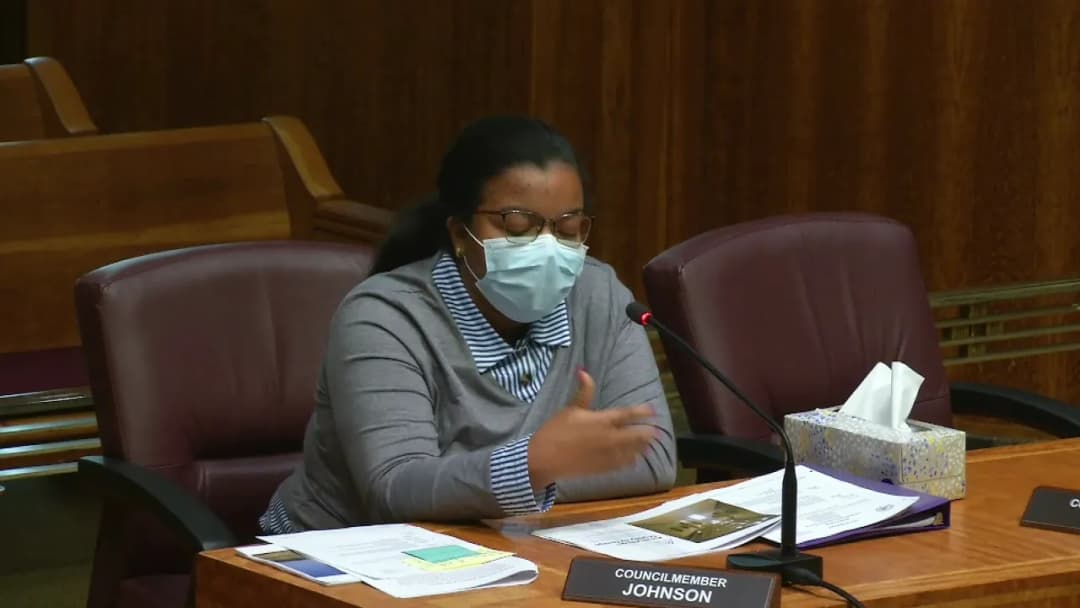
The Saint Paul Public Safety Committee, chaired by Anika Bowie, convened on October 28, 2026, at 12:30 PM in Council Chambers. The meeting focused on exploring innovative housing models to address unsheltered homelessness and expand affordable housing options. Presentations were delivered by the Low Income Housing Institute (LIHI) from Seattle, the City of New Ulm, and Avivo of Minneapolis. Six council members were present (Vice Chair Coleman, Johnson, Jost, Kim, Noecker, Bowie); Councilmember Yang was excused. No public comments were heard, and no formal votes were taken. Agenda Item 1: Tiny-Home Villages – Supportive Services, Housing Pathways, and Collaborative Public Safety Solutions (SR 26-239) - Presenters: Sharon Lee (Executive Director), Donna Anderson (Regional Shelter Operations Manager), and Marta Kidane (Community Engagement Manager) of the Low Income Housing Institute (LIHI), joining virtually from Seattle, Washington. - LIHI operates 19 tiny house villages with 803 tiny houses, in addition to 4,000 units of affordable housing, five hotel conversions, and two urban rest stops providing free showers and laundry. Each tiny house is 8x12 feet, costs about $5,000 in materials, and includes electricity, heating, air conditioning, and insulation. Villages are fenced, staffed 24/7, and have one secured entrance. Residents agree to a code of conduct; case managers and behavioral health specialists are on site. Meals are provided, and bathrooms are individual and handicap accessible. - LIHI partners with 11 faith organizations (churches) that lease land for villages, as well as city, transit, and private property owners. In 2025, they served 1,600 adults and children who were unsheltered. - The City of Seattle has streamlined permitting, declared a civil emergency around homelessness, and passed legislation allowing transitional encampments, increasing village capacity up to 150 people (and up to 250 in one village), and allowing direct negotiation with private landowners. - LIHI also operates RV safe lots to address RV dwelling and redevelops former village sites into permanent affordable housing after 3–5 years. - Councilmember Jost asked about operating costs. Lee responded that costs vary by size and site complexity (water, sewer, electricity) and offered to provide examples. Council President Noecker asked why villages are replaced with affordable housing; Lee explained that sites are often acquired with the intent to build permanent housing, and villages serve as interim use. Councilmember Johnson praised the model and noted that LIHI assembled the presentation in under two weeks. Chair Bowie highlighted the importance of Seattle’s permitting flexibility and the hygiene centers as a potential model for St. Paul. Agenda Item 2: Alternative Housing Development – Zoning, Financial Feasibility, and Scalability of Barndominium Models (SR 26-244) - Presenter: Chris Dalton, City Manager of New Ulm, Minnesota, appearing in person. - New Ulm’s Land Haven Barndominium Project combines residential spaces with large garages/storage/business areas on 2.5 acres of industrial (I-1) zoned land. The project includes 22 joint storage/residential units and 6 storage-only units. It was enabled by a Planned Unit Development (PUD) that allowed reduced setbacks. All internal maintenance is handled by an association; noise complaints are governed by business hours. - Financing is private. Three barndominiums have pulled permits at roughly $410,000 each; four storage units at about $145,000 each (building value only). The city provided public assistance of $217,000, including selling the land for $1 and paying 50% of special assessments ($115,000). Tax abatement and TIF remain available but have not been requested. - The project is not affordable housing per se but targets “snowbirds,” empty nesters, and tradespeople who need combined living and workspace. Dalton noted that freeing up existing lower-priced homes (under $200,000) may benefit first-time homebuyers. - Councilmember Johnson asked about site size (2.5 acres) and zoning discussions. Dalton explained that the PUD allowed residential use in an industrial zone and that staff worked closely with the developer and city attorney. A separate tiny home project in New Ulm used the same PUD mechanism. Council President Noecker characterized the public benefit as removing undesirable industrial uses from residential neighborhoods and expanding housing choices. Johnson added that this model helps address the gap between high mortgages and need for extra space/business operations. Agenda Item 3: Indoor Village Shelter Models – Public Safety, Community Partnerships, and Operational Considerations (SR 26-246) - Presenter: Kelly Matter, President & CEO of Avivo, appearing in person. - Avivo Village in Minneapolis (100 units, opened December 2020) and a newly opened 48-unit village in St. Cloud (opened less than 10 days prior) serve individuals with the highest acuities who are sleeping outside. 92% of those served in Minneapolis were chronically homeless; 99% had a long-duration disability; 40% had a chronic health condition; 90% had a serious mental health diagnosis; 89% had substance use disorder; 29% had a developmental disability. - The model is low-barrier: allows pets (64 dogs, 21 cats last year), partners, privacy (individual lockable 8x8 units), and possessions (with storage). 24/7 staffing includes a third-party security team (Relative Intel) and a minimum of five staff on site (four resident advocates and one leadership staff). The average length of stay is around 100 days; there are no term requirements for residents, though St. Cloud has a 120-day ordinance. - Minneapolis: $4 million rehab of an existing warehouse (COVID dollars); annual operating budget of $5 million (including $36,000/month rent). St. Cloud: $9 million new construction (city contributed $1.1 million; state contributed approximately $8.2 million); annual operating cost of $3.1 million. 40% of residents move to permanent supportive housing; many go to treatment with housing. - Councilmember Johnson asked about term requirements (none) and cost comparisons. Matter provided the figures above. Councilmember Kim (via questions/comments) had requested tour details. Matter emphasized partnerships with all levels of government, neighborhood associations, and a good neighbor agreement. Chair Bowie noted the importance of providing a place to go during Minnesota winters rather than simply closing encampments. Key Outcomes - The committee received information on three alternative housing models. No formal votes or resolutions were adopted. - Chair Bowie indicated an interest in reviewing St. Paul’s permitting system and exploring ordinances to facilitate tiny house villages, as well as following up on Seattle’s hygiene center model. - Councilmember Johnson and Chair Bowie committed to follow-up communications with LIHI, New Ulm, and Avivo to obtain detailed cost data and explore potential partnerships. - Chief Gibbs (Interim Fire Chief) and a deputy chief were present for the barndominium discussion; no comments were recorded from them. - The meeting adjourned without further business.
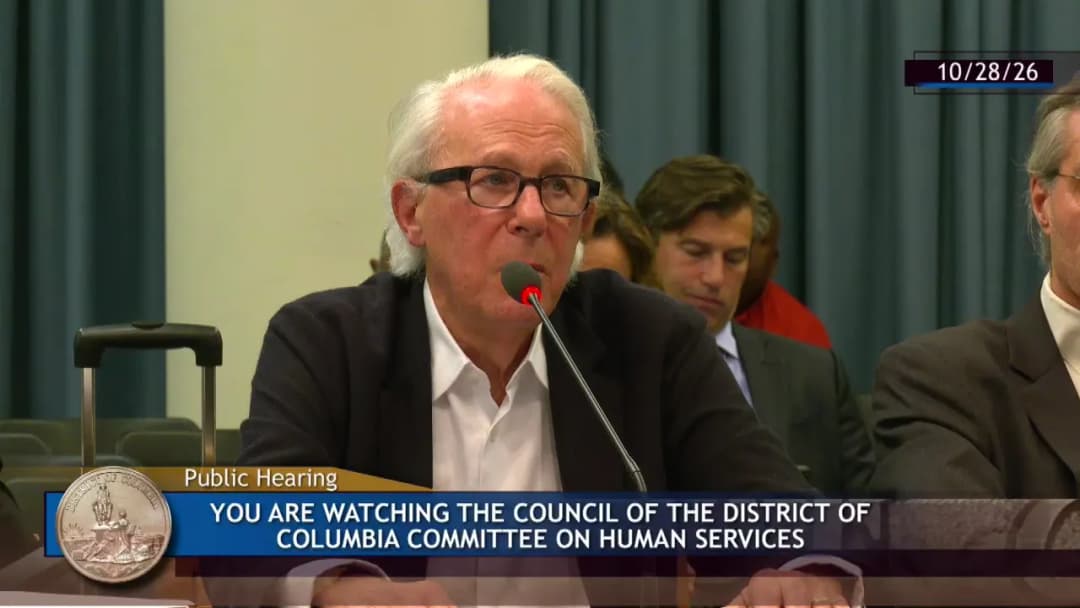
The Committee on Human Services, chaired by Councilmember Matt Frumin (Ward 3), held a public hearing on October 28, 2026, to consider three major pieces of land disposition legislation: B26-0845 (Poplar Point Land Swap), B26-0846 (Poplar Point Therma Disposition), and B26-0834 (Reeve Center Surplus and Disposition). The hearing began at 1:10 PM and adjourned at 7:47 PM after hearing from government officials, development teams, and over 40 public witnesses. Opening Statements - Councilmember Frumin opened the hearing, introducing the three bills. - Councilmember Trayon White (Ward 8) emphasized historic inequity, noting Ward 8's 10.3% unemployment rate (compared to 6.3% citywide) and the critical need for equitable investment, local hiring, and community benefits. - Councilmember Brianne Nadeau (Ward 1) strongly supported the Reeve Center project but raised concerns about splitting housing into a separate, delayed phase and advocated for government-led entitlements to speed up delivery. Poplar Point — Government Testimony (DMPED) Deputy Mayor Nina Alpert and Director Latrina Owens testified in support of B26-0845 and B26-0846. - B26-0845 (Land Swap): A multi-party agreement (District, Navy, NPS, Red Brick) to move NPS facilities to JBAB, satisfying a 2006 federal law. The site covers 164 acres; 110 are developable, with 70 acres required as parkland in perpetuity. Development yields 40 acres (15 Therma, 12 Red Brick, 13 future). - B26-0846 (Therma Disposition): Disposition of 15 acres for a privately funded $800M health resort, generating 5,000 construction and 720 permanent jobs. Tax revenue would provide the revenue stream to fund the estimated $250M+ NPS relocation. Timeline to shovels is 5-7 years. The Anacostia Waterfront Zone mandates 30% affordable housing (at 60% and 30% AMI) on non-federal parcels. Poplar Point — Public Witness Testimony Support (with varying conditions): - John Alshuler (Therma CEO): Promised $1.5B in tax revenue over 25 years, workforce training, a $350M bond issuance, and a commitment of 1,000 free monthly tickets for Ward 8 residents. He expressed support for a project labor agreement. - Wanda Lockridge (Therma DC): Outlined 18 months of Ward 8 community engagement. - Tom Skinner (Red Brick): Urged passage of B26-0845 to secure the land swap, warning that the alignment of parties was fragile. He confirmed the deal was a land-for-land swap. - Rylinda Rhodes (Main Road Soap & Wellness): Supported development but demanded a funded, binding Community Benefits Agreement to protect local businesses from displacement. She stated: "We are not asking for favors... We want to work, we want to earn." - Absalom Jordan (Southern Hills Tenants Assoc.): Representing lower-income residents, he supported the project but insisted on clear, measurable commitments for training and equitable access. - Lafayette Barnes (former UPO Director), Christina Noel (Anacostia BID), and other Ward 8 business/community leaders overwhelmingly supported the project as a historic opportunity for jobs, but stressed accountability for local hiring. Opposition/Concerns: - Mary Alice Levine (Committee of 100): Opposed B26-0846, calling the $1/year ground lease for a private corporation "scandalous" and citing a lack of due diligence. - Ayana Long (Ward 8 Resident): Opposed the bill, calling it "environmentally reckless." She highlighted Therma's controversies (NYT expose, Ontario legal battles) and criticized the process as a rush to give a handout to a foreign corporation without addressing community needs. - Debbie Hanrahan (DC Resident): Quoted the New York Times article alleging Therma misrepresented its finances and experience, urging the committee to table the bill. - ANC 8A Chair Jamila White: Announced ANC 8A's unanimous support for the land swap (B26-0845) and unanimous opposition to the Therma disposition (B26-0846). She decried the lack of a competitive RFP and stated the community is treated as an "afterthought." - Patrick O'Keefe (Historic Anacostia Block Assoc.) and Greta Fuller (Ward 8 Resident) criticized the procurement process (RFEI, not RFP) and the absence of binding legal commitments for local residents in the bill. - Sean Cheney (Bo Yoga Collective): Asked for community ownership models, arguing "Wellness was already here." Reeve Center — Public and Development Team Testimony Support: - The development team (CSG, Capri, NAACP) detailed a redevelopment plan for 14th and U Streets NW. The project includes the NAACP national headquarters, a 150-room hotel, 30,000 sq ft of arts and cultural space, a public plaza (Marion Barry Amphitheater), and up to 322 housing units (97 affordable at 30-50% AMI). The project is now structured in two phases due to market conditions, with housing placed in Phase 2, dependent on a map amendment and possible acquisition of the Gino Baroni property. - Commissioner Matt Faye (ANC 1B): Announced unanimous ANC 1B support, praising the affordable housing and community benefits, but asked the council to ensure the commitments were permanent in the legislation. - David Yarborough (Washington Jazz Arts Inst.) and Pastor Kevin Hart (Love First CDC) testified in support of the arts and childcare components. Concerns: - Chris Otten (DC for Reasonable Development): Criticized the $1 purchase price / $99 ground lease without an appraisal, conflicting TIF estimates ($32M to $63M), and the lack of family-sized affordable apartments (only one affordable 3BR identified), calling it a "fire sale." Key Outcomes and Discussion Points - No votes were taken. Written testimony is due by 5:00 PM, November 4, 2026. - Poplar Point Therma: DMPED agreed to provide a detailed comparative analysis of the tax revenue generation of Therma versus standard mixed-use development. A discrepancy was noted: Therma stated its environmental remediation liability has a cap, while DMPED stated there is no cap in its agreement with Therma. - Reeve Center: Councilmembers expressed unease about placing all housing in Phase 2, which is tied to a new map amendment. DMPED committed to assisting the developer with the entitlement process to minimize delays. - Displacement: A major recurring theme. Witnesses from Ward 8 and ANC 8A repeatedly argued that the Poplar Point Therma deal lacked the binding legal commitments necessary to prevent gentrification, distinguishing promises from tangible, enforceable outcomes.
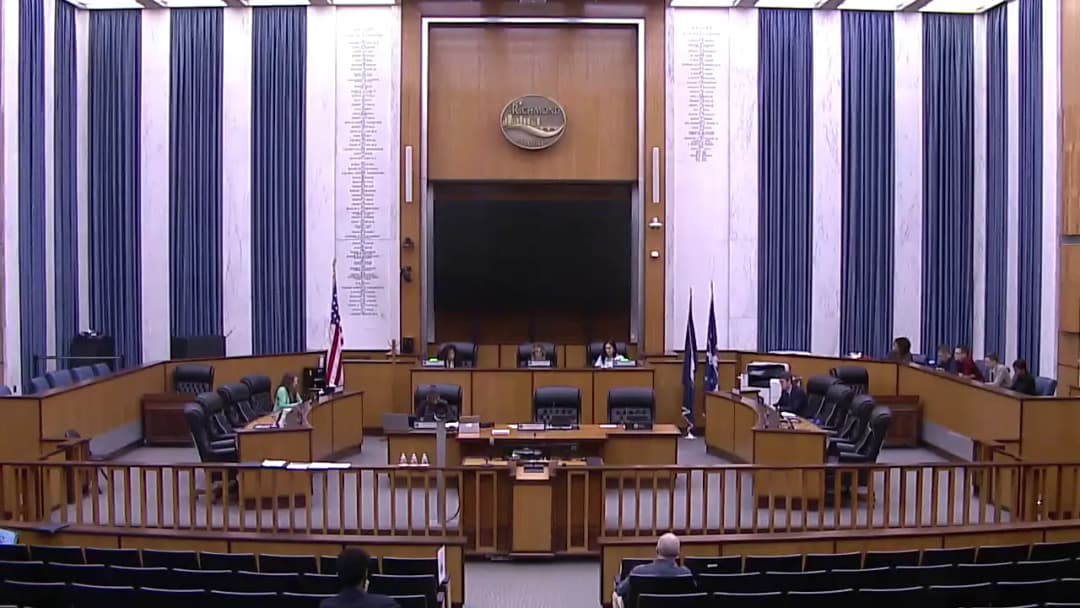
The Government Operations (GovOps) Committee of the Richmond City Council met in the afternoon of October 28, 2026, at 2:15 p.m. Eastern. All committee members were present — Chair Jordan, Vice Chair Abbacher, and Ms. Gibson — constituting a quorum. The meeting opened with standard emergency procedures and public comment rules. The committee heard a presentation on the city's HR performance management redesign, considered ordinance 2026-281 (DPU industrial discharge permits), discussed resolution 2026-R043 on the Dominion Energy/NextEra merger, acted on multiple board vacancies, and set upcoming meeting dates. Public Comments & Testimony - The initial public comment period was opened and closed with no speakers. - No one spoke in support or opposition to ordinance 2026-281. - Andrew Seidel, a District 2 resident and member of the Stop NextEra coalition, opposed resolution 2026-R043 as written, stating it would ultimately allow the Dominion/NextEra merger to proceed. He asked the committee to emphatically oppose the merger under any circumstances, citing NextEra's record in Florida, data center expansion at White Oak Tech Park, and environmental and public health harms. - Lee MCO (District 2 resident, name as transcribed), a renewable energy industry professional who named his company Apex, also opposed the resolution as written. He described NextEra's anti-competitive practices — sabotaging competitors' projects, restricting interconnection access, and driving up land lease prices — and urged the committee to amend the resolution to oppose the merger. Discussion Items: HR Performance Management, Residency, and Audit Recommendations - The Human Resources Director reported that in the prior pilot program, journal entries were so few they did not register a reportable percentage, and only 23% of pilot participants completed ratings. Councilmember Ottawacher noted the preliminary pilot ratings showed over 10 percent of employees rated below expectations and zero exceptional ratings. - Structural gaps identified included: no formal job descriptions (the city operates on broad job classifications rather than position-specific descriptions), unreliable reporting hierarchies, and goals not tied to identifiable objectives. - Councilmember Ottawacher gave the example of management analysts ranging from roughly $60,000 to $180,000, illustrating the breadth of job classes. The Director responded that recruitment criteria accompany each posted position, making salary comparisons valid, but department-specific job descriptions would reduce confusion. - The strategic redesign leverages the existing NeoGov system, adds an org chart workflow tool, supports more frequent check-ins, and includes data cleanup; performance cycles have launched citywide, with the possibility that the first year serves as a full pilot year to establish a baseline. - Mr. Donald (DPU) said user feedback from the auditor's office, police and fire, and DPW identified the journaling function as potentially too subjective, and the city may discontinue it. Evaluation criteria are being reviewed for objectivity, and risk assessment is applied at each deployment stage. The current implementation window is October 20 to November 12, with an internal target of November 10. - The class and compensation study is expected to close job-description gaps and build a competency bank. The RFP draft is with the procurement team; the study typically takes 18–24 months and will be completed after the upcoming budget process. - Councilmembers asked whether the study would benchmark Richmond's job requirements and pay against comparable municipalities (e.g., Henrico, including utility leadership qualifications highlighted during the water crisis) and wider national markets. The Director affirmed that compensation will be positioned on a larger, national scale to attract talent in a tight labor market. - A councilmember asked about monitoring temporary/contract staff versus unfilled full-time positions and whether a position control board exists. The Director said the administration operates a position control board (CAO appointees meeting twice monthly) and agreed to provide fuller written responses. - On goal setting, the Director confirmed that ratings (meets/exceeds expectations) remain in use, and SMART goals make expectations clearer for employees and managers. - Residency requirement: senior executives hired or promoted after September 1, 2025 must reside within city limits. Three waivers have been requested: one granted and two still pending review. - Open audit recommendations: most HR portions are complete; many are pending legal, union, and CAO review, with union review paused during collective bargaining negotiations. Ordinance 2026-281 — DPU Industrial Discharge Permits - Lee Crowell, on behalf of DPU, presented the ordinance, which aligns city code with the department actually responsible for issuing industrial discharge permits. No changes to permittee requirements and no fiscal impact are expected. - As of the meeting, 47 permits are currently issued: about two dozen septage haulers, with the remainder being industrial manufacturers such as large laundries and electroplaters. - The committee voted unanimously to forward the ordinance to the full council with a recommendation for approval. Resolution 2026-R043 — Dominion Energy and NextEra Energy Merger - Councilmember Gibson introduced the resolution, which she modeled on Charlottesville's approach. She stated she strongly opposes the merger and is working with the advocate community and legal counsel to amend the resolution to align with the strong positions taken by the State Corporation Commission, the Attorney General, and the Governor's office, while adding Richmond-specific concerns (rate affordability, RVA Green 2050 sustainability goals, and a potential new tower). She noted Dominion had requested meetings with her and aimed to finalize language by the Thursday before the full council meeting on November 9. - Councilmember Abbacher said a statement might offer more flexibility than a resolution, noted that a closed-session legal overview of the merger was scheduled for the following Monday, and preferred forwarding the paper without a recommendation until amendments are public. Chair Jordan agreed. - The committee voted unanimously to forward resolution 2026-R043 to the full body with no recommendation. Board Vacancy Report and Appointments - Audit Committee vacancies: continued to the November 2026 meeting to allow review of applications. - Clean City Commission: Katara Henry recommended for appointment (a second name in the motion was unintelligible in the transcript). - Sister Cities Commission: reappointments of Stafford Omstead, Linda Freeman, Moussaw Wacabonga, and Roxy Azell (20 applications received). - Central Virginia Waste Management Authority vacancy (application from Rodney Bonner): continued to the January 2027 meeting to allow additional applications. - Sustainability and Resilience Commission: reappointment of Robert Jones (9 applications received). - The appointment motion passed unanimously. Staff Report and Next Meetings - Staff will follow up with the Human Resources Director on the topics discussed and the class and compensation study timeline. - The committee's next meeting is Thursday, November 19, 2026, at 1:30 p.m., with a Department of Public Utilities presentation on the combined sewer overflow system. - The December meeting is rescheduled to Thursday, December 17, 2026, at 1:30 p.m.; both reschedules were intended to give more space around the holidays. Key Outcomes - Ordinance 2026-281 forwarded to the full council with a recommendation for approval (unanimous). - Resolution 2026-R043 forwarded to the full body with no recommendation (unanimous); amendments to strengthen opposition to the merger are in progress. - Appointments approved for the Clean City, Sister Cities, and Sustainability and Resilience Commissions; Audit Committee and CVWMA vacancies continued. - Upcoming meetings confirmed: Thursday, November 19, 2026, and Thursday, December 17, 2026, both at 1:30 p.m.
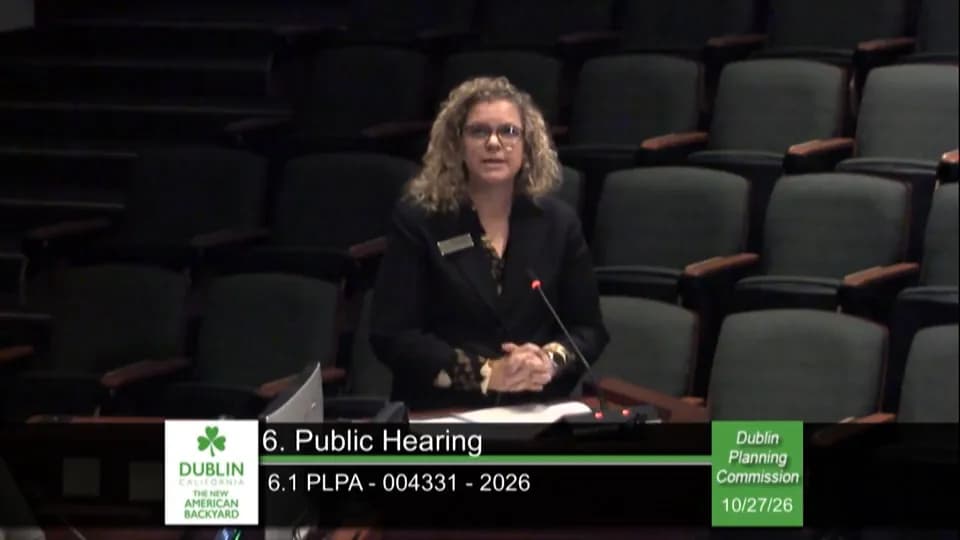
The Dublin Planning Commission met on 2026-10-28 at 7:00 p.m. in the Peter W. Snyder City Council Chamber, 100 Civic Plaza, Dublin, California. Although the agenda and transcript list the meeting date as October 27, 2026, the meeting metadata provided for this summary identifies the date as 2026-10-28. The commission conducted one public hearing and voted to recommend City Council approval of zoning ordinance amendments to regulate firearms retailers and indoor shooting ranges. The agenda included no presentations, unfinished business, or new business; the meeting adjourned at 7:25 p.m. Consent Calendar - Item 5.1: The commission approved the August 25, 2026, Special Planning Commission Meeting Minutes and Regular Planning Commission Meeting Minutes by a unanimous voice vote. No corrections or removals were requested. Public Comments & Testimony - No speaker slips were submitted during the general public comment period for non-agendized items. - No speaker slips were submitted for the firearms zoning public hearing; the hearing was opened and closed without public testimony. Discussion Items - Public Hearing 6.1 – Zoning Ordinance Amendments to Regulate Firearms Retailers and Indoor Shooting Ranges (PLPA-004331-2026): Planning Manager Jennifer Bias presented a City-initiated proposal. Existing zoning already allows firearm retailers as general retail and indoor shooting ranges as recreational uses. Staff noted state and federal rules, including gun-free school zones, are criminal regulations that do not by themselves prevent the city from establishing local land-use restrictions. A recent inquiry to locate a firearm retail business next to a school (Basis School) in downtown raised compatibility concerns, leading the City Council to adopt a moratorium that expires January 21, 2027. A City Council study session on September 1, 2026, directed staff to consider separation standards and safety/environmental requirements. - The proposed amendments would add Chapter 8.39 (Firearms Retailers and Indoor Shooting Ranges) and amend Chapters 8.08 (Definitions), 8.30 (Downtown Dublin Zoning District), 8.76 (Off-Street Parking and Loading Regulations), and 8.116 (Zoning Clearance). Retailers would remain allowed in C1, C2, planned development, and downtown zones. Proposed objective standards include a 1,000-foot separation from schools and a 500-foot separation from parks, playgrounds, libraries, youth centers, and city recreational facilities, measured property line to property line. Staff estimated using GIS that about 67% of appropriately zoned land would remain available after applying the buffers, preserving reasonable opportunity to locate in Dublin. - Indoor shooting ranges would be subject to operating hours of 6 a.m. to 10 p.m., consistent with other indoor recreational uses, and to standards for impenetrable walls/ceilings, ventilation, lighting, and noise attenuation, verified through the building permit and final inspection process. A proposed parking standard would require 1.5 off-street spaces per lane, based on the NRA Range Source Book; firearm retailers would continue to meet the existing retail parking standard, with no retail parking standard applied in downtown. A minor use permit could be available for applicants unable to meet the parking standard. Home occupation firearm sales would remain allowed and exempt. The zoning clearance would require compliance with separation standards, state/federal licenses and permits, operating hours, parking, and CEQA exemption; the clearance would be tied to ongoing operation, with an annual review occurring with business license renewal. Staff also noted accessory retailers that sell firearms as an incidental component, such as Big Five Sporting Goods, would not be subject to the new standards, similar to tobacco retailer regulations. - Staff stated that the amendments are exempt from the California Environmental Quality Act (CEQA) because the land uses are already permitted and the ordinance adds restrictions rather than authorizing new development. Adequate 20-day noticing was completed. - Commissioner questions and staff responses: Staff confirmed the school/park separation distances are new; no such separation requirements exist today. Staff reported no indoor firing ranges currently operate; a prior business, Guns, Fishing and More, operated with an indoor range component without known problems, with a school about 250 feet away. Staff clarified that the 6 a.m.–10 p.m. hour limit follows existing indoor recreation regulations. Parking would be off-street, not curb-side loading. 'Youth center' would be defined through existing supportive services definitions and would not include daycares or after-school programs; a senior center was not identified as a covered facility, though staff said clarification might be needed. Key Outcomes - The commission adopted the resolution recommending City Council approval of the zoning ordinance amendments to Chapters 8.08, 8.30, 8.76, and 8.116, and the addition of Chapter 8.39, under file number PLPA-004331-2026, and recommended a CEQA exemption finding. The motion was seconded and carried unanimously by voice vote. - The matter will be forwarded to the City Council for consideration. The transcript contains the phrase 'This will not be forwarded,' which appears to be a transcription error, because the adopted resolution recommends City Council approval and staff next steps were to forward it. - Staff reported that no meeting is scheduled for November 24, 2026; the next meeting is December 8, 2026, with possible items. Further commissioner training is planned for February or March.
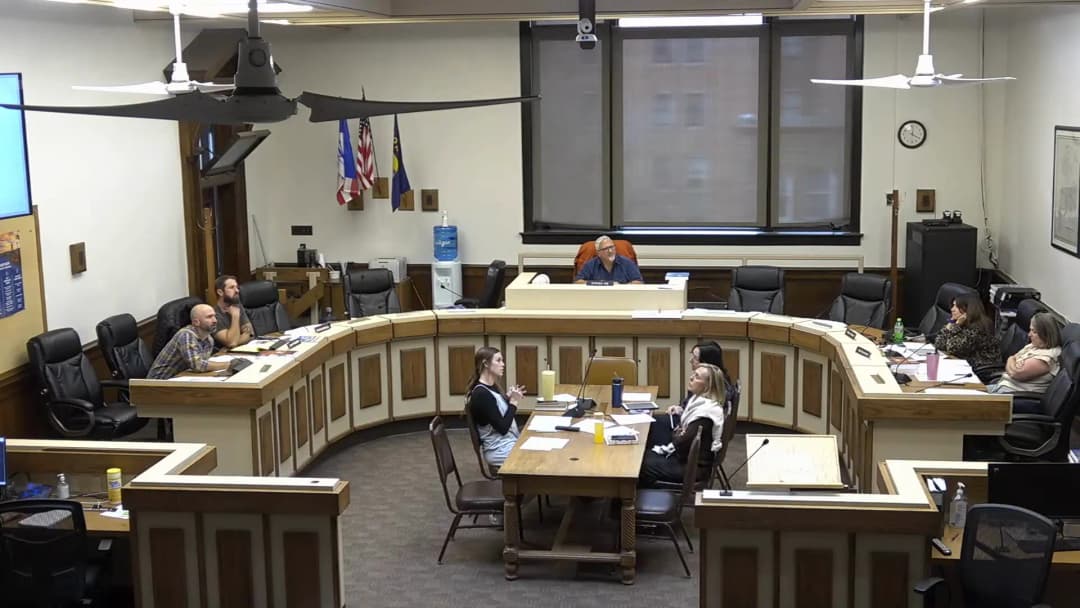
The Zoning Board of Adjustment held a special meeting on October 28, 2026, to consider Variance Application 26-18. The applicant, Justin Schwarzenberger, requested a 30-foot reduction in the 150-foot setback requirement from the ordinary high water mark of the Big Hole River to construct a single-family residence on Pump House Road in Divide. The board heard a staff report, applicant testimony, and public comment before voting 4-1 to approve the variance with specific conditions. Public Comments & Testimony - Public in Favor: Andrew Hansen, a Divide resident and contractor, supported the variance. He argued that building without the variance would cause greater soil disruption on the steep bank and potentially push the septic drain field closer to the river, making the project less protective. Jack McCormick, a Divide resident, presented a letter of support from adjacent neighbor Tom Madrazo, who received a similar variance in 2018. Letters were read into the record from three downstream riverfront property owners (Tom Madrazo, Steven Saluso, and Thomas Caddy). All stated that the proposal was modest, protected the riverbank and riparian vegetation, kept structures outside the floodplain, and placed the septic system over 200 feet from the river. They unanimously urged the board to approve the variance. - Public in Opposition: No members of the public spoke in opposition, and no opposing letters were submitted. Discussion Items - Staff Report: Planning staff presented the property history within the Big Hole River Intergovernmental Agreement (2005). Because the formal Big Hole River Standards Board is inactive (not convened since 2018), staff consulted the non-regulatory Big Hole River Watershed Steering Committee, which could not reach a unanimous consensus. Staff found a hardship exists due to the parcel's unique shape (deeper than wide) and a significant 33-foot geographical slope off Pump House Road. Staff determined the proposal would have minimal adverse impact on water quality or riparian resources. The septic system met all health requirements with a mixing zone located 205 feet from the river to maximize nutrient reduction, and all structures were outside the 100-year floodplain. Staff recommended approval with seven conditions. - Applicant Testimony: Justin Schwarzenberger stated the house structure would sit 133 feet from the high water mark, with only the deck reaching 120 feet. He argued the hardship stems from the steep 33-foot drop in grade from the road, which makes building at the full 150-foot setback infeasible without high retaining walls and a driveway too steep for winter access or emergency vehicles. He emphasized the septic location (205 feet back) was the most protective possible for the river. He accepted all seven of the staff's recommended conditions. - Board Discussion: Board Member Adams expressed concern over the lack of consensus from the Watershed Committee and questioned whether the property shape constituted a true hardship. Member Nichols discussed the septic system's design and the effort made to maximize distance between the drain field and the river. Staff Director Crane detailed the history of the Intergovernmental Agreement, explained the inactive Standards Board, and defended the staff's rationale for balancing private property rights with rigorous environmental protections (floodplain permits, native landscaping conditions). Chairman Cohen stated that the 150-foot setback itself creates a hardship on this uniquely constrained lot and the proposed layout is the most ecologically protective option available. Key Outcomes - Vote: The Zoning Board of Adjustment voted 4 to 1 to approve Variance Application 26-18. - Decision: The variance allows construction of the residence within 120 feet of the Big Hole River's ordinary high water mark, subject to seven conditions proposed by staff and accepted by the applicant. - Conditions: Key conditions include: (1) The variance applies only to the proposed residence; additions require further review. (2) The applicant must secure all necessary permits (building, electrical, plumbing, fire, floodplain). (3) Landscaping must consist of drought-resistant Montana native plantings instead of a manicured lawn to minimize nutrient runoff. (4) No excavated material may be stockpiled in the special flood hazard area. (5) Best management practices for erosion and sediment control must be implemented during construction.