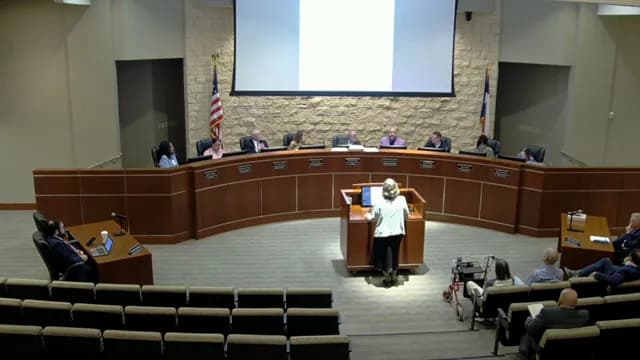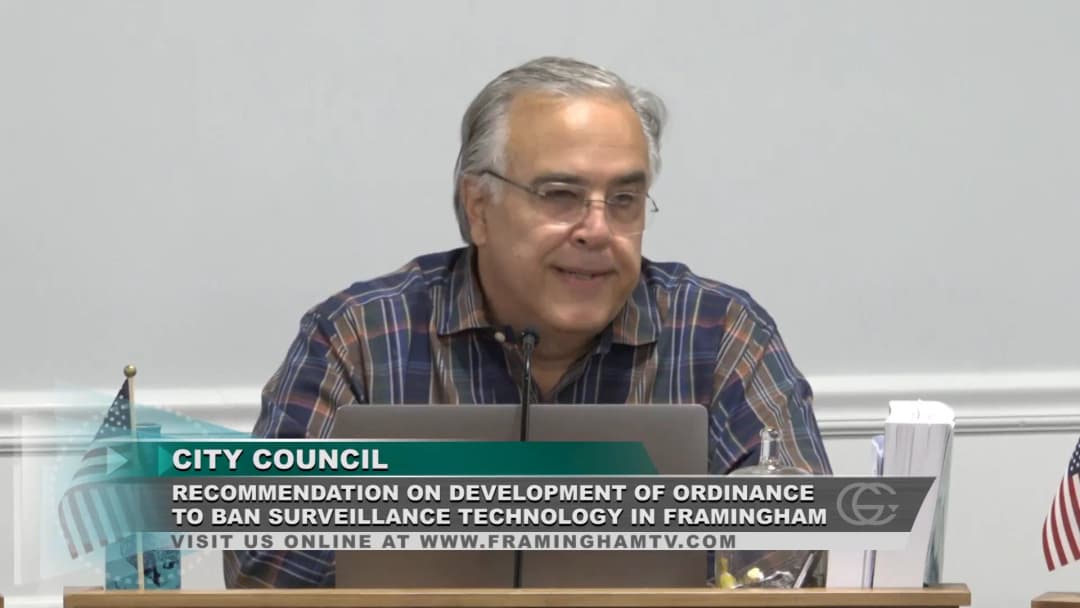
The Framingham City Council held a regular meeting on September 15, 2026, with eight councilors present in the room and three participating remotely. The meeting covered approval of minutes, public comments, a public hearing on park staffing, approval of junk dealer licenses, and lengthy debate on a proposed ordinance banning automated license plate readers (ALPRs) and facial recognition technology, which was ultimately sent back to committee. Several referrals and council reports concluded the session. Consent Calendar - Minutes from August 18, 2026: Approved unanimously with all 11 councilors voting in favor. Public Comments & Testimony - Ron Chick, a resident, expressed gratitude to the mayor's office, CFO, planning director, conservation department, and Trustees of Reservations for acquiring and securing 103 Guild Street, describing it as an amazing property with trails connecting to hundreds of acres of conservation land. - Mr. Bloomfield addressed multiple topics, including school enrollment numbers for FY28, city-wide FY28 expenses vs. revenue, projected state/federal grants, EDC success guidance, cross-training school and city employees to lower costs, lack of lifeguards at city beaches, rezoning threats on Edmonds Road (citing historical Nipmuc land), and the bankruptcy department expansion. He called for an independent oversight review of the expansion. Discussion Items Public Hearing: Supplemental Budget for Mary Denison Park - The council held a public hearing (continued from September 3) on a Finance Subcommittee recommendation to transfer $183,000 from local revenue receipts for four additional workers at Mary Denison Park. - Councillor Bryant expressed concern that four positions might be insufficient, citing a BIPOX/REC analysis recommending ten staff. She asked about a monitoring timeline. Councillor Viani noted the subcommittee agreed to four as a starting point, with the possibility to request more later. - The council voted unanimously (11-0) to approve the transfer. Item 4 & 5: Junk Dealer & Antique Secondhand Goods Licenses - National Rarities LLC for a three-day event (October 20-22): Approved unanimously. - Roadshow Concepts for two annual licenses (September 21-25, 2026, and December 14-18, 2025): Approved unanimously. Councillor Viani noted the location was formerly Sheraton Tara (now Renaissance) on Worcester Road. Surveillance Technology Ordinance (Ban on ALPRs & Facial Recognition) - Councillor Stefanini (Chair of Rules Subcommittee) presented the ordinance, which bans ALPRs, facial recognition, and prohibits use of city resources by ICE. He stated the subcommittee spent six months working on the issue, splitting it into two parts: this immediate ban and a future broader review. He emphasized the need to maintain trust in local law enforcement and protect the immigrant community. - Councillor Bryant moved to send the ordinance back to the subcommittee for further editing, arguing it was not ready and that input from community experts was needed. - Debate focused on the preamble's political language referencing the Trump administration. Councilors Long, Cannon, Ward, Viani, and Malik criticized the language as inflammatory, unnecessary, and politically charged. Councilors Stefanini, Alexander, and Ms. Feeney defended the language as a necessary statement to support the immigrant community given real local impacts. - Public comments (six speakers): Speakers generally supported the ban but requested stronger, more specific language on data sharing, reporting, and ICE cooperation. One speaker (Kate) asked not to be quoted on behalf of the coalition, and noted lack of translation services. Another (Andrew) questioned the subcommittee report and cited EFF reporting on abuse of ALPR data. Bobby Isley argued surveillance violates rights regardless of administration. Ladybug proposed detailed prohibitions and data deletion timelines. Leela reported three recent ICE detentions in Framingham and asked for stronger protections. - Motion to refer back to the subcommittee was carried by a vote of 8-3 (Councillors Malik, Bryant, Chair, Lane Bruno, Long, Cannon, Alexander, Aviani in favor; Stefanini, Ward, Feeney opposed). Key Outcomes - Approved: Supplemental budget of $183,000 for four park workers at Mary Denison Park (unanimous). - Approved: Junk dealer licenses for National Rarities LLC and Roadshow Concepts (unanimous). - Referred back to subcommittee: Proposed ordinance banning ALPRs and facial recognition technology (8-3 vote). It will be reconsidered by the Rules Subcommittee for further refinement. - Referred to Finance Subcommittee: Request from CFO for reauthorization of the opioid stabilization fund, with a requirement to present past and planned spending. - Referred to Rules Subcommittee: Request from Councillor Malik regarding establishment of council liaison positions. Other Business & Reports - Council chair report: Noted an NSTAR application from the DEP Waterways Regulation Program in District 9; public comment deadline September 28. - Councillor reports: Upcoming events (farmers market, flower show, business expo, neighborhood meeting) and a moment of silence for Brianna Connolly. Next Steps - The surveillance technology ordinance will be revised in the Rules Subcommittee and brought back for future consideration. - Finance Subcommittee to review opioid stabilization fund authorization. - City solicitor to finalize ordinance for revolving fund spending limits. - Public comment on NSTAR application remains open until September 28.
The Public Meeting Index
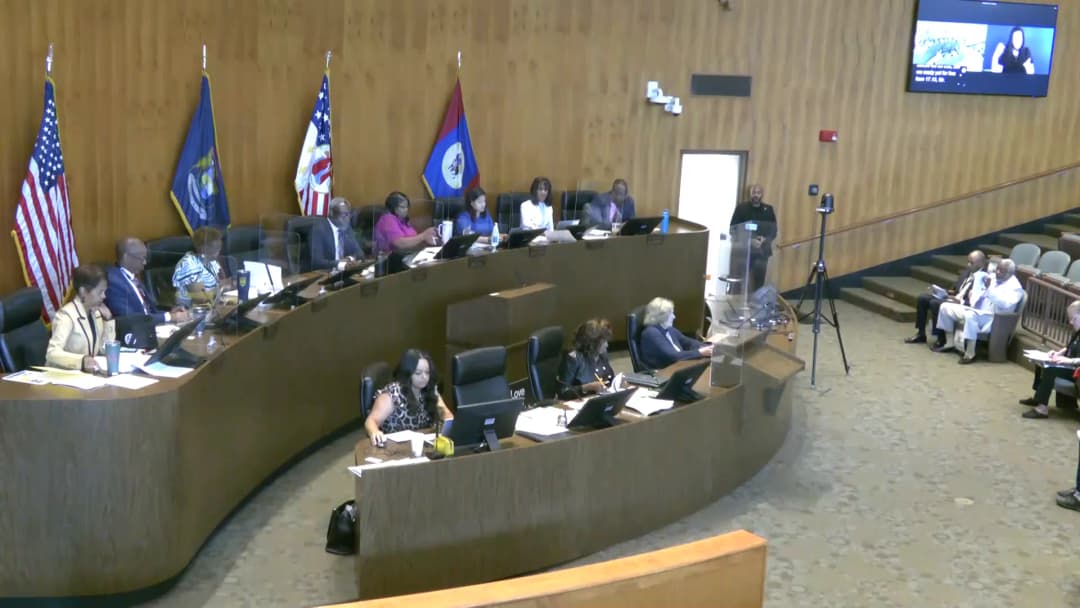
The Public Meeting IndexThe Detroit City Council held its regular formal session on September 15, 2026. The meeting opened with an invocation by Pastor Keenan R. Knox, followed by a special presentation of the Spirit of Detroit Award to Avalon Healing Center for 20 years of service to sexual assault survivors. The council then heard extensive public comments from 14 in-person speakers and 18 online callers on topics including property tax foreclosures, alley maintenance, police misconduct, city services, and economic development. The council voted on numerous resolutions, ordinances, and appointments, including a failed commercial facilities exemption certificate for the DoubleTree hotel, approval of a rezoning on Mack Avenue, and emergency contracts for freeway litter cleanup. Public Comments & Testimony - Coach Dwayne Daniels (Detroit City Football Club) expressed strong interest in adding soccer to the city's goal line after-school initiative, emphasizing the sport's inclusivity and diversity. - Michael Evans urged the council to allow residents to pay overdue property taxes in full to prevent foreclosures, stating that taking homes creates criminals. - Charles Miles alleged the city misapplied his property tax payment and claimed thousands of residents face similar issues, calling for correction. - Gloria Cunningham reported that a city contractor destroyed her backyard during tree work and requested repairs. - Jonathan Taylor (DPD Property Maintenance) described developing an AI-assisted script desk to improve customer service for residents, seeking council support. - Tanya Wells cited a city ordinance requiring certificates of compliance for rental properties and questioned water bill payments to the water commissioners. - Josh Man urged the council to support Detroit Farm & Cider for more land and criticized the use of ALPRs and AI technology, calling for their removal. - Brother Cunningham thanked Councilmember Johnson and provided bus passes to a police officer, advocating for homeless support. - Betty Lyons criticized the council for supporting slumlords and illegal immigrants, and demanded action on tenant issues. - Zoni Global (Navajo Nation Corporation) reported ongoing difficulties with property tax exemptions and refunds, alleging unlawful charges on zero-taxable-value property. - Kevin Key highlighted alley blight and obstruction by city-owned land bank homes, and questioned the moratorium on liquor stores without a remedy for over-concentration. - Dana Lunn alleged police brutality during an epileptic seizure and stated civil rights violations, demanding accountability. - Online caller Vanetta Mayberry asked about the reparations committee and sought reimbursement for overpaid property taxes. - Betty A. Varner praised Councilmember Callaway’s community engagement and supported a formerly incarcerated entrepreneur. - Darren McCluskey accused the city of stealing equity from homeowners through right-of-first-refusal and blight bundles, and criticized solar farm leases with DTE. - Tara Brown raised conflict-of-interest concerns about the appointment of Jermaine Dickens (Compass Strategies) to the Riverfront Neighborhood Advisory Council, citing his firm’s work with Bedrock. - Frank Hammer urged council members to endorse candidates for governor and U.S. Senate, criticizing silence as leadership failure. - Jadante Smith criticized Councilmember Miller for a personal attack and called for transparency in development decisions, supporting downzoning of Kronos Conqueror. - Tahira Ahmad (Coalition for Property Tax Justice) reported 2025 wins including 252 property tax appeals and a unanimous council resolution for a foreclosure moratorium, demanding implementation of reform and removal of Assessor Alvin Horn. - Kyle Kindle opposed the city’s cooperation with DTE on solar fields and supported Detroit Farm & Cider, alleging city harassment. - Bobby Johnson rejected demands for political obedience, insisting that candidates bring a concrete black agenda for wealth, jobs, and education. Discussion Items - Spirit of Detroit Award Presentation: Councilmember Whitfield Callaway presented the award to Avalon Healing Center, which has served over 30,000 survivors since 2006 with 7 clinic locations and 43 full-time staff. Speakers included Executive Director Kimberly Hurst, Director of Healing Services Amy Smith, and others. The award recognized their role in inspiring a city ordinance requiring human trafficking placards in hotels. - Appointments: Council approved appointments to the Detroit Land Bank (Donna Givens Davison) over Councilmember Benson’s objection, and to the Detroit Brownfield Redevelopment Authority (Brandon Lockhart, Jason Friedman). Appointments to the City Planning Commission (Stephanie Miller) and Property Assessment Board (Danielle January) also passed. - Rezoning 14632 Mack Avenue (18.1): After postponement, the council approved a rezoning from PD to B4 General Business District, allowing a daycare use. Director Todd explained the change aligns with modern auto-use regulations. - Commercial Facilities Exemption Certificate (18.2): A motion to approve for the DoubleTree hotel failed with 5 no votes (Johnson, Walters, Santiago Romero, McCampbell, Miller) and 3 yes votes. - Sixth General Text Amendment (18.3): Postponed for one week after Councilmember Waters requested additional time, with no time sensitivity from the planning commission. - Freeway Litter Cleanup Contracts: Two emergency contracts (Motor City Preservation and Payne Landscaping) were approved to continue freeway litter cleanup after September 30. Deputy Director Gerrell Harris explained the state reimbursement process. Councilmembers noted the contracts support minority-owned businesses and employ youth. - Chief Assessor Pay Grade (17.13): After explanation that the change realigns the associate director title without a salary increase for the chief assessor, the item passed with one objection (McCampbell). Councilmember Santiago Romero initially questioned but confirmed no raise. Key Outcomes - Approved: Spirit of Detroit Award to Avalon Healing Center. - Approved (with objection): Appointment of Donna Givens Davison to Detroit Land Bank (17.1); waiver denied on her appointment. - Approved: Appointments to Brownfield Redevelopment Authority (17.2, 17.3); waivers attached. - Approved: Multiple law department resolutions (17.4–17.12) and pay grade amendment (17.13) – the latter with one objection. - Approved: City Planning Commission and Property Assessment Board appointments (17.14, 17.15); waivers attached. - Approved (roll call): Rezoning of 14632 Mack Avenue from PD to B4 (18.1). - Failed (5-3): Commercial facilities exemption certificate for DoubleTree hotel (18.2). - Postponed: Sixth General Text Amendment (18.3) for one week; associated public hearing date (18.4) also postponed. - Approved: Public hearing date for 2026 secondary street signs ordinance (18.5) on October 23. - Approved: Emergency contracts for freeway litter cleanup (6008012, 6008013) with waivers. - Referred to LPD: Requests to speak on energy alternatives (20.1) and anti-union practices (20.2) for analysis. - Noted: Councilmember Tate warned that threats involving family members would be reported to authorities, citing safety concerns for elected officials. - Member Reports: Various events announced including District 4 budget meeting, District 6 property tax relief session, District 2 Renaissance Center conversation, and skilled trades task force meeting.
The Mesa City Council met on 2026-09-15 (recorded timestamp 2026-09-15 02:38:33 UTC; the transcript's spoken opening states "September 14th, 2026" — a discrepancy noted below). No agenda or minutes were available for this summary, so it relies solely on the raw transcript. All council members were present. The meeting opened with an invocation by Rev. Albert Bolden of Fisher Chapel AME Zion Church and the Pledge of Allegiance led by Scout Sam Romeris of Troop 54. The main business was the consent calendar and consideration of a major mixed-use development referenced as the Legacy Project (agenda item 7). Consent Calendar - A motion was entertained to approve the consent agenda as a group, with no separate discussion of individual items. The agenda as read included item 2 (approval of minutes of previous meetings) and item 3B (approval of a five-year cooperative term contract for information technology, temporary, and professional services for the Mesa Police Department). The transcript does not record an explicit vote tally. - During discussion, council members called the upcoming Legacy Project "a generational opportunity" and the largest mixed-use hospitality, retail, and housing project in the city's history. They noted letters of support from the United Mesa Firefighters and the Mesa Police Association, and that the project was presented to the Economic Development Advisory Board in December, at public meetings for Gateway Crossing and the Legacy Project in June and August, and to council in August and September. Public Comments & Testimony - A Cadence resident and neighbor to Eastmark spoke in support of the Legacy Project, asking the council to vote yes for the long-term benefit of family and neighbors in District 6 and for Mesa and the Southeast Valley as a whole. They noted they moved from North Scottsdale about 20 years ago. - A speaker said Mesa attracts residents, businesses, and visitors, but too much spending leaves the city for restaurants, hotels, and retail in neighboring communities; they supported the project's amenities, including for winter visitors. - A younger speaker echoed that sentiment, saying people their age are not rich and currently drive to Scottsdale and Tempe; they called the project a "community building block" and said they strongly supported it. - A speaker with an economic background said the project would be a place they would spend time and would save them from driving to North Scottsdale and Scottsdale Fashion Square. - A speaker said they fully supported the project, wanted Mesa to become a destination of its own, and described it as part of "the next chapter of Mesa." - Miss Ryan spoke in opposition, saying she did not want any of the city's water resources used for the project even if she never went there, and argued most retail, dining, and hospitality positions do not pay livable wages or often offer benefits. - A speaker opposed the tax incentive package, asking what would happen if actual costs exceeded the estimated $76 million, how that would affect the economic analysis, how stacked incentives are considered as a full package, and stating there was not enough clearly presented information to approve the project that day. - A speaker said they were not in favor of incentivizing luxury commercial development when Mesa "desperately needs" affordable housing and support for small businesses, and preferred incentives for projects benefiting working-class families. - A speaker said "deals made without substantial public input are not acceptable," and that public input means more than releasing details a few days before a final vote by the mayor and council. - Under items from citizens present, one speaker addressed the Vice Mayor and council, complained that a young woman in a red shirt had "rudely interrupted" the speakers, and asked the council to read through a memorandum at their leisure. Discussion Items - Legacy Project (item 7): The developer, identified as VESTAR, presented alongside its long-term affiliate, the Athens Group, which would deliver the luxury hospitality resort component. The developer emphasized quality, said they were willing to wait for the "right time, right place, right vision, right people," and stated the project is not just for the 200 acres but for "the greater good" of the property. The property owner was credited with being a good steward for decades and waiting until the market was right rather than selling or using the land differently. - Staff and council discussion clarified that public infrastructure (roadway and utility work) is included in phase one; cost estimates were prepared by the developer's engineers and reviewed by city engineers to verify accuracy; the developer fronts all money for the park, lake, and other public infrastructure and becomes eligible for reimbursement only through detailed conditions and requirements; the developer will hold Type 2 water rights and provide all water for the lake from its own well; and the city is not paying for the water, which does not affect the city's supply. - Council discussion noted the city has no primary property tax and no tax on food; one council member summarized the incentive structure as "if you don't shop there, you're not paying for it." - District One's council member, citing their time on the Visit Mesa board, recalled that visitors often came to Mesa for business but stayed in Scottsdale, Tempe, or Phoenix, and saw no reason not to support the project. Another council member cited COVID-era revenue losses and a campaign promise to give Mesa "a place to go" that substitutes the drive to other cities. - One council member predicted traffic would be the main problem while praising the project's placemaking. Another said staff works hard to ensure incentives create more revenue than they cost, and that the city is looking at additional ways to create housing options. - The Mayor thanked the public for making their voices heard, recalled that a similar opportunity was lost years ago because of "economic headwinds and an impatient developer," cited wage data (the transcript's sentence is incomplete) mentioning servers or bartenders working about 35 hours a week and sources including Glassdoor and ZipRecruiter, said "things change," and thanked VESTAR's Larcher and team, adding "this will be a legacy project." Key Outcomes - The council entertained a motion to approve the consent calendar, including prior meeting minutes and the five-year cooperative term contract for information technology, temporary, and professional services for the Mesa Police Department. No explicit roll-call tally is recorded in the transcript. - The Mayor stated that with no objection, he would take one motion to approve item 7 (the Legacy Project). No explicit roll-call tally is recorded in the transcript. - One citizen-present speaker was heard following the vote; no action on their memorandum is recorded, and the meeting was then adjourned. Note on Discrepancies - The transcript's spoken opening dates the meeting September 14, 2026, while the meeting metadata used for this summary records the meeting as taking place on 2026-09-15 02:38:33 UTC. No agenda or minutes were available, so consent item descriptions rely on the agenda as read aloud in the transcript.
On September 14, 2026, the Mesa City Council held a study session to review the 2027 employee benefits and wellness programs. The council also unanimously approved routine items and shared updates on community events attended over the prior week. Consent Calendar - The council unanimously approved a motion to acknowledge the receipt of subordinates. (Vote: all ayes) Discussion Items - 2027 Employee Benefits and Wellness Programs – Jan Ashley and Terry Overby from Human Resources presented the city’s planned benefit changes for 2027. Key points included: - No changes to in-network medical deductibles, coinsurance, copays, or coverage for preventive care, behavioral health, and virtual urgent care. - Enhancements: New voluntary case-management programs for musculoskeletal (MSK) surgeries (Pathwell Bone & Joint) and virtual exercise therapy (Cigna Hinge Health) with zero cost to members if used in-network. - Cost containment: Elimination of out-of-network coverage for inpatient hospital services (except emergencies) and for outpatient lab/radiology services in the Basic and Choice plans. - Prescription drug changes: Higher maximum copays for non-specialty and specialty brand drugs; members may access manufacturer copay assistance through MedImpact and Paid Health to reduce out-of-pocket costs. - Rate increase: Approximately 10% increase for active employees – single coverage rising $12–$27 per month and family coverage $34–$81 per month, depending on plan. No rate changes for dental or vision. - Wellness program: Up to $1,000 per household in incentives; the Health & Wellness Center offers free services to over 16,000 eligible members. - Open enrollment: October 7–21, 2026 (passive for medical, active for FSA). The wellness fair “Peace, Love & Wellness” will be October 13 at the Mesa Convention Center. - Flexible Spending Account (FSA): Health care election maximum increased to $3,400 with a $680 rollover to 2028. Councilmember Taylor asked about handling surprise out-of-network anesthesiology (plan adjudicates at in-network level) and about family tier rating (current two‑tier structure considered simplest; four‑tier explored but deemed administratively burdensome with minimal rate impact). The mayor praised the city’s benefits and the wellness center. Current Events & Conferences Attended - Councilmembers reported attending the 100 Club 9/11 stair climb, Arizona Baseball Museum fundraiser, Sunset Market hometown heroes event, Mesa Contemporary Arts opening, Day of Service events (book packing, Interfaith service, El Grito festival, Opinion Tour for youth civic engagement), 9/11 commemorative breakfast honoring post-9/11 soldiers, Mendoza Elementary mural painting, New Frontiers for Lifelong Learning open house, welcome of Cyclic Materials (rare earth recycling), fire station memorial, and the Chinese Mid-Autumn Festival. Key Outcomes - The council received the 2027 benefits and wellness presentation; no action was taken. - The receipt of subordinates was approved unanimously. - The next council meeting will be a strategic planning session on Thursday, September 17, 2026, at 7:30 a.m. at the Mesa Arts Center. - The study session adjourned at 2:34 p.m. (time from transcript timing).
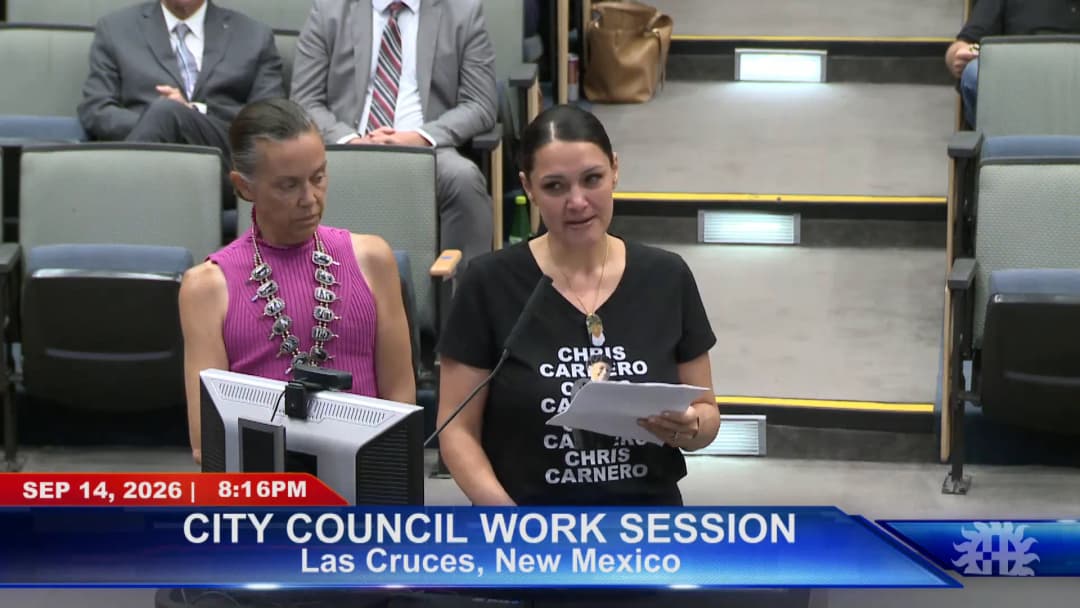
The Las Cruces City Council held a work session on September 15, 2026, to discuss two major initiatives: the creation of a Youth Council and a proposed gun violence reduction and crisis intervention program. The meeting also included a proclamation declaring September as Hunger Action Month. Council heard extensive public testimony from community members, youth advocates, and officials, and provided direction to staff on next steps. Proclamation: Hunger Action Month - Councilor Karen delivered a proclamation declaring September 2026 as Hunger Action Month in Las Cruces. The proclamation noted that 22% of Las Cruces residents experience food insecurity, significantly higher than the state average of 16.4% and more than double the national rate of 10.6%. Over one-third of those affected are children. - Lorenzo from Casa de Peregrinos (CDP) accepted the proclamation, highlighting that CDP serves nearly one in five residents of Doña Ana County, providing over 125 pounds of food per month per family, and that every dollar invested returns $17 worth of food. He noted that 38% of CDP clients are children. Youth Council Presentation - Mandy Leatherwood, Communications Director, presented a proposal to establish a Youth Council to amplify student voices, develop future civic leaders, and create a pipeline for community engagement. - The proposed council would have 14 members (two per district or two at-large), meet monthly, and include leadership training, city department presentations, and community service projects. A pilot program from January to June 2027 was suggested before a full launch in the 2027-2028 school year. - Council discussion raised several points: - Councilor Harris supported a pilot, two per district, and emphasized the need for transportation support and parent approval flexibility. - Councilor McClure expressed concern that the model might replicate existing programs serving already-engaged students, rather than reaching youth on the margins. She opposed requiring an essay, suggesting alternative applications like art projects, and stressed the need to avoid adding workload without discontinuing other programs. - Councilor Matisse preferred at-large appointments and supported a pilot, emphasizing punctuality and completion. - Councilor Bencomo stressed the importance of engaging historically marginalized youth, providing transportation, and equipping staff with youth engagement training. She noted problematic language used about young people and urged a shift in how youth are discussed. - Mayor Pro Tem Munoz advocated for open recruitment and expanding the council size if many students are interested. - Superintendent Ignacio Reese from LCPS offered partnership, highlighting existing student advisory councils and urging intentional inclusion of diverse voices, including emergent bilingual, economically disadvantaged, special education, and Native American students. - Public comment: - Marissa DeWolf (Kinder to Career Coalition) urged power-sharing with youth closest to the issues and partnership with community organizations. - Jose Calderon (Somos or Normos) stressed that youth councils must not be tokenistic but give real power to those with lived experience. - Another youth speaker recommended clear pathways to power sharing and community collaboration. Gun Violence Reduction and Crisis Intervention - Robert Nunes, Deputy Director of Parks and Recreation, presented a framework for using $100,000 allocated in the budget to address youth gun violence. He outlined components: prevention (mentorship, near-peer programs, leadership, workforce opportunities, safe spaces), crisis intervention (immediate response, conflict mediation, mental health referral), and strategic partnerships (LCPS, behavioral health providers, nonprofits, faith-based, businesses, universities). - Council discussed the urgency and need for a program design that diverts youth from violence. - Councilor Bencomo provided context: the funding originated from a request by advocates (including Donali Wilson from Deserving Life) and she emphasized that the $100,000 should be used to create a Request for Proposals (RFP) for a community-designed diversion program, with organizations like Somos or Normos leading the design. She noted that the juvenile drug court is ending December 31, 2026, due to federal grant restrictions. - Councilor McClure concurred, emphasizing peer support and trusted community partners over government-led efforts. She stressed the need for data on the specific problem and youth voices. - Councilor Harris supported using funds to improve accessibility to existing programs and to reach at-risk youth. - Councilor Matisse echoed support for an RFP and long-term investment. - Councilor Koran supported a design-first approach. - Mayor Pro Tem Munoz called for listening to youth and families, and also raised the issue of youth breaking into locked fields, suggesting increased field access through MOUs with schools. - Extensive public testimony: - Superintendent Reese emphasized prevention, mentorship, and the need for wraparound support. - Liz Bennett (NMSU Social Work) cited evidence that punitive programs increase recidivism, and urged investment in evidence-based therapeutic interventions. She highlighted that three children from Las Cruces are currently in federal contract prisons nationwide (out of less than 20 total), a concerning trend. - Donali Wilson (Deserving Life/All Safe New Mexico) recommended using the $100,000 for a community design process for a youth gun diversion program. She cited successful programs in Boston (63% reduction in youth homicide), New Orleans (32%), Cincinnati (41%), and others. She noted that Doña Ana County is underrepresented in state delinquency prevention grants. - Mary Ulrich (DACC) encouraged focusing on disconnected youth (ages 16-24) and the need for a community asset map. - Ashley Shawaria (Boys and Girls Club) and Ruben Garcia (POW Boxing) spoke to the importance of connection and mentorship. - Former District Court Judge (unidentified) urged a comprehensive, well-funded approach, noting that $100,000 is insufficient for systemic change; he suggested bringing all child-serving entities together. - Janelle Carneto and Marcy Dickerson gave emotional testimony about the murder of Janelle's son, Chris Carneto, by a 13-year-old. They criticized the juvenile justice system for lack of accountability, short sentences, and the inability to mention prior bad acts. They called for longer terms, parental accountability, and a focus on protecting victims and law-abiding citizens. They urged council to remember Chris. - Eric (re-entry provider) shared lived experience and supported diversion programs. - Police Chief Jeremy Starr provided statistics: from 2014-2019, zero juveniles charged with homicide/manslaughter in Las Cruces; from 2020-2026, 18. Juvenile weapon violations doubled from 29 in 2019 to 50 in 2022. Drive-by shootings (structures/vehicles) increased from 13 in 2017 to 95 in 2024. He emphasized the need to address family situations (41.6% single-parent households) and noted that some high-risk youth may require custody with high-support programming. He stated his support for prevention but insisted on an answer for those who continue violent behavior. Key Outcomes - Council unanimously directed staff to proceed with developing a program design/strategic plan for the $100,000 gun violence reduction initiative, with the intent to implement activities and not just shelve the plan. Staff will work with community partners and the police department's new prevention coordinator. - Mayor Pro Tem Munoz requested that the city manager explore additional funding (another $50,000 or $100,000) for the initiative, subject to budget constraints. Council appeared supportive. - For the Youth Council, council provided feedback on application process (no essay, recommendation from trusted adults, transportation support, diverse recruitment), and expressed interest in a pilot program starting January 2027. Staff will formalize the application process with the city clerk and return with a proposal. - The meeting adjourned with a unanimous vote. Note: The meeting was a work session; no formal votes were taken on the substantive items, but consensus was reached on next steps.
The Belgrade City Council met on September 15, 2026, in regular session. The meeting included public comments on water/sewer rates, a presentation of an EMS service award, adoption of a state-mandated parking ordinance, appointments to the Impact Fee Board, updates to council rules of procedure, and authorization to purchase property for a future intersection improvement. All votes were unanimous (5-0) with Councilmember Matthew McGee absent and excused. Consent Calendar - Approved the consent agenda, including minutes from previous workshop and council meetings, by a vote of 5-0. Public Comments & Testimony - Lois Christensen (310 13th Street) expressed concern that her flat $45 monthly sewer bill is unfair compared to her $26 water bill, given her low fixed income and small lot size. She argued the flat fee does not account for usage and is especially burdensome for low-income residents. - Bill Beckman (910 Montana Street) also complained about high water and wastewater bills, stating that even with no water usage, his bill would be $79.89. He noted his wastewater portion is nearly double the water portion and that his water bill exceeds his gas and electric bill. He pointed out a possible billing error: a $2 state fee appears monthly but should be annual (approximately $0.17 per month). He requested a reduction in charges for low-volume users. - Raimi Malding (714 Owl Drive) presented a replica of the EMS Service of the Year Award from Central Valley Fire District (CVFD) to the city, recognizing the trust citizens placed in CVFD in 2020 and the district's elite service. Fire Chief Jay Whitwer echoed the thanks and appreciation for city and county support. Public Hearings - Ordinance 2026-7 (Second Reading): A zoning text amendment to reduce parking requirements for residential dwelling units to comply with state mandate (HB 492, 2025 Legislative Session). The ordinance requires 0.5 parking spaces per unit under 1,200 square feet and 1 space per unit over 1,200 square feet. The Planning Commission recommended approval on August 31, and the Council approved first reading on September 1. After no public comment, the Council voted 5-0 to approve on final reading. Discussion Items - Mayor's Recommendation to the Impact Fee Board: Mayor recommended Councilmembers Christine Minacucci and Aaron Bell to serve on the Impact Fee Board. After no public comment, the Council voted 5-0 to adopt the recommendation. - Adoption of Rules of Procedure (Rev C): City Manager Neil Cardwell presented updated rules of procedure for the City Council and all city boards/commissions, incorporating changes from state law (MALOPA) and minor language updates, including meeting times and locations. Changes were outlined in the packet. After no public comment, the Council voted 5-0 to adopt the updated rules. - Authorizing Purchase of 314 South Broadway: City Manager Cardwell requested authorization to negotiate and purchase the property at 314 South Broadway for $675,000 (asking price) and to establish a project budget of $775,000 (including $100,000 to raze the house and prepare the site). The property is needed to realign the intersection of Broadway, Madison, and Colorado (known as "malfunction junction") for a future roundabout or signal. The city previously owned the property but sold it in 2020; the right-of-way carved out then was insufficient. Funding will come from the Urban Renewal District (URD) fund balance (over $2 million). Councilmember Jason Guffey expressed concern about the cost and using URD funds for land acquisition rather than street improvements, but acknowledged the necessity. Cardwell noted that acquiring the property now avoids a more expensive eminent domain process. The Council voted 5-0 to authorize the purchase and project budget. Reports - Mayor's Report: Announced the upcoming Fall Festival (parade at 10 AM on Saturday), seeking volunteers. The mayor will attend the Montana Association of Counties (MACO) conference and the Montana League of Cities conference. - City Manager's Report: - Mayfair Meadows Bike Park: Construction is ahead of schedule; pump tracks may be complete within two weeks. Staff is considering winter closure due to incomplete improvements. - Well 1 Failure: The 1948 well collapsed after 70+ years of service. The pump and well house will be replaced within the existing water project budget; the well is expected back online by May 1, 2027, with capacity around 750 gallons per minute. - Public Works/Fleet Maintenance Shop: An RFPQ for design-build services was released on September 13; responses due in 30+ days. - Library Staff Changes: Library Director Alina is leaving; Jordan Green will serve as interim Community Services Director, overseeing the library. An interim library manager will be appointed internally. - Response to Public Comments on Rates: Cardwell explained that water rates are below the national average and that wastewater rates are higher because the system is a mechanical treatment plant which is costlier to operate. He noted the $2 state fee should appear only annually and urged the resident to contact staff if it appears again. - Councilmember Reports: - Councilmember Simon inquired about the location of the joint meeting with Bozeman on September 22; City Manager confirmed it will be at Bozeman City Hall (off Rouse and Lammy) and the agenda will be posted soon. - Councilmembers Menicucci and Bell accepted appointments to the Impact Fee Board. - Deputy Mayor Mademo encouraged attendance at the Fall Festival parade. Key Outcomes - Unanimously approved consent agenda (5-0). - Approved Ordinance 2026-7 on final reading (5-0). - Adopted mayor's appointments to Impact Fee Board (5-0). - Adopted updated Rules of Procedure Rev C (5-0). - Authorized city manager to negotiate and purchase 314 South Broadway and established a $775,000 project budget (5-0). - Councilmember McGee was excused from the meeting (5-0).
The City of Murphy City Council met on Tuesday, September 15, 2026, at 6:00 PM in the Council Chambers. The meeting included public hearings on the proposed FY2027 budget and tax rate, consideration of a budget amendment for railroad quiet zone repairs, and other routine items. Extensive public comment was heard regarding spending, tax rates, city manager residency, infrastructure concerns, and council accountability. The council voted 5-2 to adopt the FY2027 budget, approved a proposed tax rate increase over a no-new-revenue alternative (5-2), and ratified the property tax revenue increase unanimously. Consent Calendar - Items 7A and 7C were approved unanimously: routine approvals and actions. (No specific details provided.) - Item 7B (budget amendment for railroad quiet zone repair) was pulled from the consent agenda and considered separately. Public Comments & Testimony - Non-agenda public comments: - Mike Badia (323 Apache Trail) read a passage from the city charter (Chapter 4, Section 1) requiring the city manager to reside in the city within a reasonable time after appointment. - Megan Vecchio (Willow Point and Rolling Ridge) expressed disappointment with development impacts on traffic; criticized city spending on Teslas, $60,000 for retreats, and $250,000 on litigation over a development outside city boundaries; noted that two current council members were not involved in those decisions (Debbie Ison and Kevin Kelly). She also raised concerns about unfixed sidewalks in Rolling Ridge due to erosion, which children use to get to school, and said she had not seen progress after walking with a city employee over a year ago. - Public hearing on FY2027 budget (8A): - Mary White (121 Ridge View Drive, 29-year resident) questioned the $67 million budget for a city of 22,000 people and asked for justification of new staffing and programs before raising taxes. - Michael Pavia (323 Apache Trail) asked council to vote no on the budget, citing potential cost savings by reducing overtime ($414,000 in fire/police), noting administrative department increase of 36%, IT up 18%, police up 9%, fire up 11%, and suggested comparison with cities of similar size (20-30k population). - Murray Saunders (415 Rocky Glenn Circle) emphasized the need for more infrastructure spending on sidewalks and roads, noting that $300,000 annually is insufficient given weather damage and aging developments. - Megan Vecchio (again) clarified her earlier sidewalk comments referred to muddy, unusable sidewalks near an elementary school, not cracked sidewalks; noted the area was designated as a hike/bike trail under parks and rec. She also reiterated the city charter requirement for the city manager to live in the city. - Darger Tye (Lindridge Estates) urged council to consider residents who can't afford taxes or medication, noting fixed-income seniors and health insurance costs, and asked for proof of homes selling at $500K. - Public hearing on tax rate (8B): - Maynard Little (1004 St. Mark Drive) criticized the budget increase from $33 million (2017) to $67.4 million (proposed FY27), a 106% increase versus 34% CPI, while population grew less than 2%. He called the mayor's refusal to support a senior/disabled tax freeze or exemption increase a shift of tax burden to seniors. He urged adoption of the no-new-revenue tax rate. - Abby Little (705 Pink Creek Road) called for accountability: questioned why the city manager does not reside in Murphy despite the charter requirement (appointed February 2024, still not living in city as of September 2026). She criticized the mayor’s recent behavior on social media as unprofessional and damaging trust. She asked for a public explanation of charter non-enforcement and for the city to demonstrate spending efficiency before raising taxes. - Michael Pavia (again) asked council to vote no on the proposed tax rate and move to adopt the no-new-revenue rate of 0.343487 per $100 valuation. - Scott Gregg, Collin County Tax Assessor-Collector, clarified that his office does not set property values (the appraisal district does) and he only collects taxes as set by entities. Discussion Items - MS4 Stormwater Management Program Presentation (Item 6A): Staff presented the required stormwater management program under the Texas Pollutant Discharge Elimination System. The city is in its third year of a five-year permit. Four dedicated staff work on the program. Annual reports are submitted. The state conducted an inspection the past year, which was successful. Brief public comment was opened and closed with no speakers. - Budget Amendment for Railroad Quiet Zone (Item 7B): Staff explained a $25,000–$30,000 budget amendment to repair a broken underground cable for a signal 150 yards west of the Murphy Road crossing. The train has been sounding its horn because the signal (an LED X) is not functioning, preventing engineers from verifying the crossing status around a blind curve. Previous repairs to the crossing itself had been done, but this is a separate cable. Council approved the amendment (unanimous). - FY2027 Budget Adoption (Item 8C): Finance Director Berna presented the revised budget following council work sessions (the last on September 9). The revised general fund budget had reductions of $176,960 in recurring costs and $25,000 in non-recurring costs, reflecting council decisions. The overall citywide budget decreased by $201,961 from the proposed version. Public safety makes up 53% of the general fund. The approved budget includes a 5% increase over FY26 adopted. Council voted 5-2 to adopt the budget (Mayor Bradley, Mayor Pro Tem Altman, Councilmembers Abraham, Ison, Butler in favor; Councilmembers Smith and Kelly opposed). - Tax Rate Adoption (Item 8D): The proposed tax rate was 0.361832 per $100 of assessed value (combined M&O and debt service). A motion to adopt the no-new-revenue rate (0.343487) failed 1-6 (only Kelly in favor). A motion to adopt the proposed rate of 0.361832 passed 5-2 (Bradley, Altman, Abraham, Ison, Butler in favor; Smith and Kelly opposed). The mayor noted the rate represents a 3.9% increase. - Ratification of Property Tax Revenue Increase (Item 8E): Council voted unanimously to ratify the revenue increase reflected in the FY27 budget. - Appointment of Boards and Commissions Interview Committee (Item 8F): Council appointed Kevin Kelly, Janae Butler, and Elizabeth Abraham to conduct interviews with applicants. Approved unanimously. - Executive Session: Council recessed at 7:30 PM for executive session under Texas Government Code Chapter 551 to discuss litigation, personnel matters (city secretary and other employees), and a potential work session for a public-private partnership between the chamber and the city. Adjourned at 10:36 PM. Key Outcomes - Approved consent agenda items 7A and 7C unanimously. - Approved budget amendment for railroad quiet zone repair (Item 7B) unanimously. - Adopted the FY2027 general fund budget (Item 8C) by a record vote of 5-2. - Rejected a motion for the no-new-revenue tax rate (Item 8D, first motion) 1-6; adopted the proposed tax rate of 0.361832 per $100 valuation (Item 8D, second motion) 5-2. - Ratified the property tax revenue increase (Item 8E) unanimously. - Appointed boards and commissions interview committee (Item 8F) unanimously.
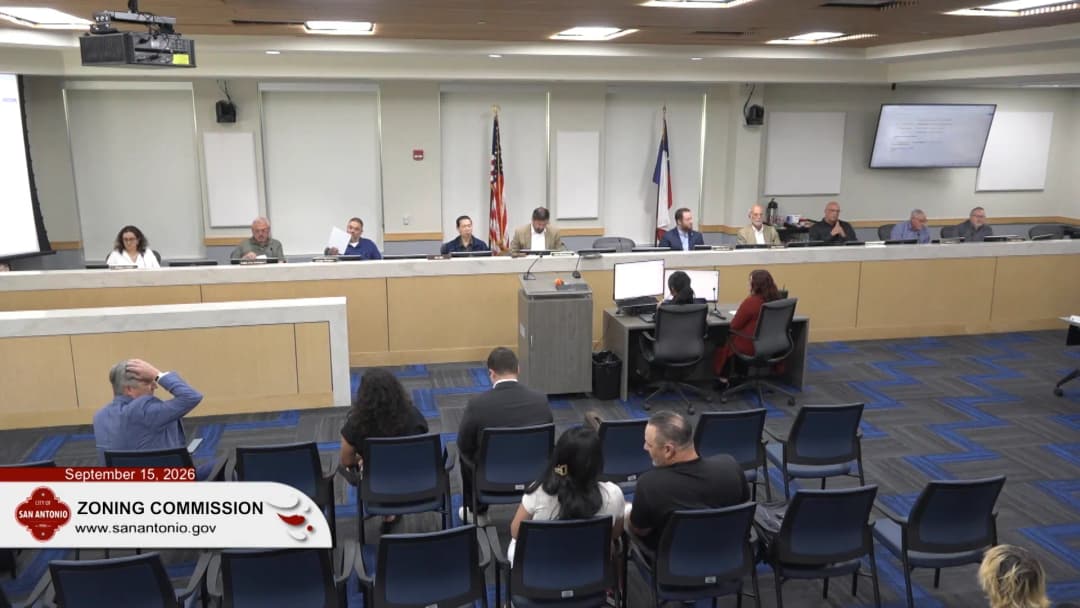
The San Antonio Zoning Commission met on September 15, 2026, at 1:00 PM, chaired by Commissioner John Bustamante. The meeting included a consent agenda of ten zoning items, two continuance hearings, public testimony on a contested rezoning, and approval of prior meeting minutes. The meeting adjourned at 1:22 PM. Consent Calendar - Items 5–14 were approved unanimously by roll call vote (11–0). These included: - Item 5: Rezone 2903 Commercial Ave from C3NA to C2. - Item 6: Rezone 311 Castillo Ave from R4CD to RM5. - Item 7: Rezone 11 Ogden St from O2 to TODMX6. - Item 8: Rezone 14989 Judson Rd from C3/C3NA to C2NACD with conditional use for parking/storage. - Item 9: Rezone 8677 IH 10 East from C3R/I1 to C3CD with conditional use for metal fabrication. - Item 10: Rezone 406 Blue Bonnet St from R3 to R3CD with conditional use for two dwelling units. - Item 11: Rezone 4022 Blanco Rd from C2 to C2CD with conditional use for motor vehicle sales. - Item 12: Amendment to MXD zoning at an unspecified location (density of 50 du/ac) and major site plan amendment. - Item 13: Rezone 800 S Alamo St from C3 to TOD MX6. - Item 14: Rezone 11902 Warfield St from I1 to L. Public Comments & Testimony - Item 2 (4400 block of Nieto Drive – proposed C2 zoning): - Joe Most (10762 Giaconi Dr) spoke in opposition, citing safety concerns for nearby homes and a future charter school. He argued that C2 uses (e.g., oil change stations) would endanger children walking to school and that commercial uses adjacent to residential create conflicts. - Amelia Peacock (2807 Millican Dr, president of Paloma community) opposed the request, emphasizing the cumulative impact of incremental commercial development near established homes and a future school. She questioned why unrestricted C2 zoning was requested instead of a more tailored, buffered approach, and noted infrastructure strains (narrow roads, drainage, traffic). She respectfully asked for denial or a more limited zoning. Discussion Items - Continuance to October 6, 2026 – Item 4 (5612 Monterey St): The commission voted unanimously (11–0) to grant a three‑week continuance as requested by the applicant. No public comment. - Continuance to October 20, 2026 – Items 2 and 3: Commissioner Pana moved, seconded by Commissioner Huey, to continue both items. Public testimony was heard (see above). Commissioner Sipes encouraged residents to contact staff and the applicant to work toward a resolution before the new date. The motion passed unanimously (11–0). Key Outcomes - The consent agenda (Items 5–14) was approved by a vote of 11–0, sending those cases to City Council with a recommendation of approval. - Item 4 was continued to October 6, 2026, by a vote of 11–0. - Items 2 and 3 were continued to October 20, 2026, by a vote of 11–0. - The minutes of the September 1, 2026, Zoning Commission meeting were approved by acclamation. No director’s report was given. The meeting adjourned at 1:22 PM.
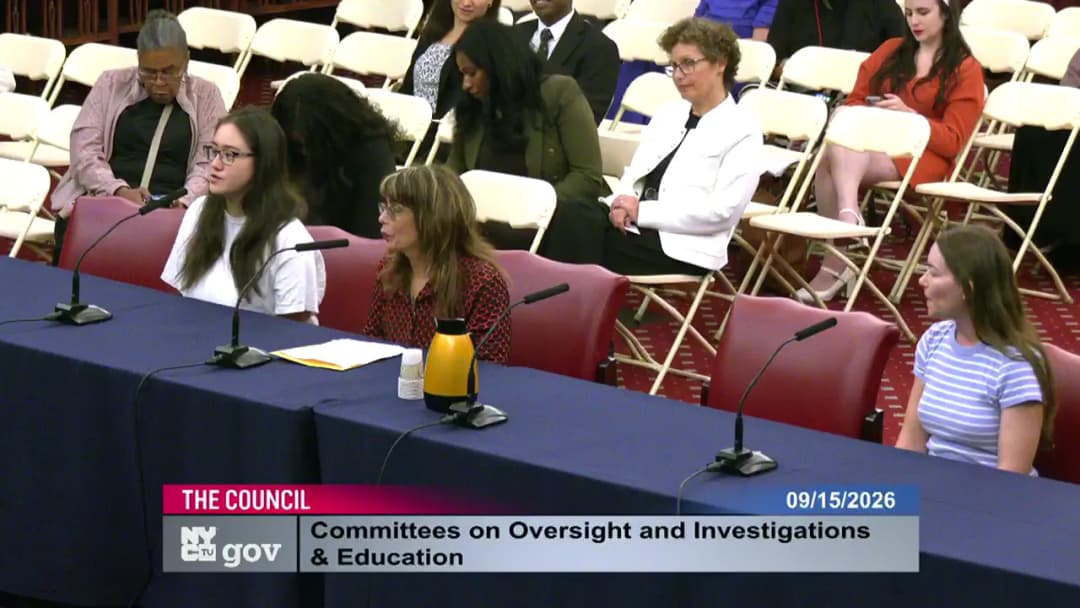
The Committees on Education and Oversight and Investigations held a joint oversight hearing on September 15, 2026, to examine screen time and the use of digital devices in New York City public schools. The hearing featured opening statements from chairs and members, testimony from the Department of Education (DOE), and public testimony from educators, parents, advocates, students, and unions. Key topics included the DOE's newly announced AI and screen time policy, concerns about excessive screen exposure, data privacy, vendor accountability, and the need for stronger mandates and parental consent. Public Comments & Testimony - Educators and parent advocates (including Dr. Khaledi Salas, Araceli Luceto, David Monahan, and Navid Hassan) expressed alarm at the negative impacts of ed tech on learning, mental health, and equity. They called for a full audit of ed tech platforms, a moratorium on AI and gamified apps, and greater transparency and parental involvement. - Parents (such as Celeste Elias, Kate Mulvaney, and Crystal Cleveland) shared firsthand accounts of young children accessing inappropriate content on school devices (e.g., YouTube, violent games, weapons-making instructions) and the difficulty of opting out of screen-based assessments and homework. Multiple parents reported that school administrators ignored requests for paper alternatives. - Students (Alma Addi, Sika Agbokov, and Ariana Ahmed Misha) testified that AI tools like Gemini remain accessible on school devices despite the moratorium, and that students lack consent or awareness when their schools sign up for AI pilot programs. They urged the council to prioritize data privacy, transparency, and student input. - State Senator Andrew Gernardis introduced the "Fostering Optimal Classroom Use of Screens (FOCUS) Act," which would set statutory age-appropriate screen limits, create a right to analog learning, and require vendors to register and prove efficacy. He called on the city to codify its policy in local law. - Assemblymember Joanne Simon emphasized the importance of assistive technology (AT) for students with disabilities and cautioned against lumping AT with general ed tech. She noted that many students who need AT are not evaluated, and that teacher training on AT is insufficient. - Union representatives (Mary Vicaro, UFT) supported the policy but called for stronger vendor safeguards, including adopting the AFT's AI guardrails and the Microsoft agreement. - Advocacy groups (Fair Play, NYCLU, Center for Independence of the Disabled, etc.) raised concerns about data mining, the lack of independent research on ed tech, and the exclusion of vulnerable populations from protections. Discussion Items - DOE's new policy: First Deputy Chancellor Danielle Junta and other officials presented the September 2, 2026 policy, which bans individual device use for grades 2K–2, recommends 30 minutes/day for grades 3–5, and 45 minutes/day for grades 6–8. High school use is course-dependent. The policy also imposes a one-year moratorium on student-facing generative AI for K–8, with limited pilots for high school (five pilots, three tool types). Exceptions include assistive technology, assessments, diagnostics, and approved instructional programs. - Recommendations vs. mandates: Councilmembers pressed the DOE on why screen time limits are “recommended” rather than mandated. Deputy Chancellor Junta stated the limits are “non-negotiable” but schools need flexibility in implementation; the DOE will use feedback loops and school visits to enforce compliance. - YouTube and content filtering: The DOE announced that as of Wednesday, September 16 (the day after the hearing), YouTube had been blocked on all student devices at the network and device level. Councilmembers noted that students still have access to other gamified apps and AI tools like Gemini, and urged the DOE to block those as well. - Data privacy and vendor accountability: Councilmembers questioned the DOE’s vendor vetting process (IRMA), noting it does not include algorithmic bias checks, does not require parental consent, and that no audits of vendor data practices had been conducted in the 2025-26 school year. The DOE’s Chief Privacy Officer acknowledged the gap and promised to provide audit data. - Assessments and homework: Digital assessments (screeners, state tests) are exempt from screen time limits. Councilmembers argued this creates a loophole and asked for paper alternatives. The DOE said it is asking schools to transition to paper versions where possible, but no opt-out policy exists. - Pilot programs and evidence: The DOE outlined its high school AI pilots, which will begin in November 2026. Councilmembers and advocates criticized the lack of independent research on the selected tools, the absence of a public rubric, and the inability of students to consent to participation. The DOE committed to sharing the pilot framework and metrics within a month. - Technology and Schools Coalition: The DOE will form a coalition to evaluate the policy over the coming year, but members questioned who would be included and whether parents and teachers would have meaningful representation. Key Outcomes - The oversight hearing concluded with the committee filing the oversight report (as noted in the minutes). No formal votes were taken. - DOE commitments: By the end of the hearing, the DOE stated it would: - Provide the council with a list of 38 previously allowed programs whose AI components are being disabled. - Share all research citations used to justify the screen time limits. - Release the framework, rubric, and metrics for the high school AI pilots before their launch. - Continue engagement with the Technology and Schools Coalition and report findings. - Consider stronger language (mandates) for screen time limits and explore paper alternatives for assessments. - Legislative calls: Councilmembers and Senator Gernardis urged the city to codify the screen time and AI policy in local law, require independent vendor evaluations, and guarantee parental notification and opt-out rights for digital assignments and assessments. - Next steps: The committees will follow up on open items, including audits of vendor data practices, the status of AI blocking on student devices, and the composition of the Technology and Schools Coalition. Continued oversight hearings are expected.
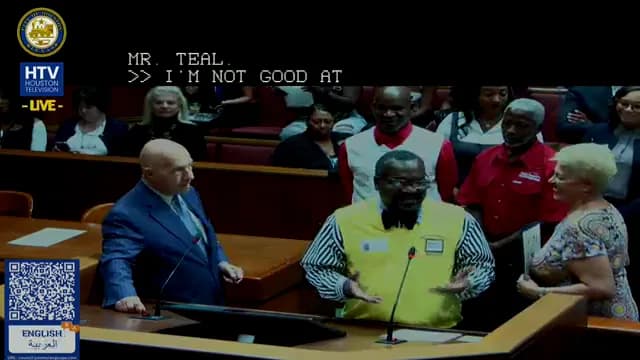
[The council meeting on September 15, 2026, began with four proclamations honoring volunteers, corporate donors, veterans, and community heroes. Public comment covered a wide range of issues including immigration enforcement, road conditions, youth mental health, construction disputes, senior housing, and surveillance concerns. The mayor's report featured an extensive timeline from Parks Director Kenneth Allen on the forced termination of the Grimes Park agreement with HISD and the relocation of a youth football league. Consent calendar items were approved, including additional funding for senior meals and a contract for building inspections. Councilmembers also provided updates on district events and initiatives.] Proclamations and Recognitions - Paulina Davila Day: Councilmember Martinez presented a proclamation honoring Paulina Davila for her volunteer leadership in the Houston-Guayaquil (Ecuador) Sister City Association, highlighting firefighting equipment donations and training exchanges. Mayor Whitmire declared September 15, 2026 as Paulina Davila Day. - Dyken Comfort Technologies & Astros Foundation Day: Councilmember Castillo recognized a $100,000 donation of advanced HVAC equipment to Moody Park Community Center (District H) through the Cooling Communities Initiative. The mayor proclaimed September 15, 2026 as Dyken and the Astros Foundation Day. - American Legion Day: Councilmember Davis presented a proclamation to American Legion Post 560, noting the organization’s 2.5 million members and 14,000 posts worldwide. The mayor declared September 15, 2026 as American Legion Day in Houston. - Manuel T. L. Day: Councilmember Evans-Shabazz honored Manuel Teal, Marvin Teal (Teal Glass Repair Services) and David Brooks (Mayberry Homes) for donating their time and materials to replace broken windows for a senior citizen in Third Ward at no cost. The mayor proclaimed September 15, 2026 as Manuel T. L. Day. Public Comments & Testimony - Ruth Nadal: Expressed concern over an October 2025 incident involving Arnaldo Bazan and his father, chased by unmarked individuals and the father deported. She drew parallels to the Lorenzo Salgado murder case and urged council to address public safety and accountability for HPD. - Sergio Lira (Dr. Lira): Requested moving the Miguel Hidalgo statue from the back to the front of Hidalgo Park for greater visibility, especially during Hispanic Heritage Month. He noted the statue is currently obscured by trees. Councilmembers Davis, Ramirez, and Martinez expressed support for discussing the idea. - Tin Hong (District K resident): Criticized poor road conditions across Houston, saying the city’s infrastructure lags behind Dallas and Austin. He urged more investment and coordination with Harris County and TxDOT. Councilmember Alcorn responded that the city is currently spending approximately $500 million annually on street and drainage infrastructure, an increase from previous years. - Margot Jordan (CEO of Enrichly): Cited national statistics: 40% of high school students report persistent sadness or hopelessness; youth mental health hospitalizations rose 124% between 2016 and 2022; in HISD, 42% of students reported feeling sad/hopeless and 14% attempted suicide. She requested council place youth mental health on a future agenda and consider partnerships with platforms like Enrichly. - Daniel Arguijo (Adams Court resident, Midtown): Opposed a remodel project at 3315 Mylam Street that expanded to four times the original size, located 75 feet from his home. He raised concerns about traffic, noise, emergency access, and safety for children. He asked how such a large project was classified as a remodel and requested city intervention. - Nereida Garcia: Speaking in English and Spanish, she reported mistreatment at Pepper Tree Apartments (senior housing), including unannounced entry, lack of refrigerator, rats, and ignored repair requests. She pays $48/month; housing pays $948. Councilmember Evans-Shabazz and the mayor promised to contact Rebecca Williams and conduct an inspection. - Moaz Khan: Expressed grave concern about Flock camera systems and ALPRs, arguing they enable mass surveillance and could lead to authoritarian misuse. He cited examples from China and Palestine and asked council to reconsider their deployment. - Tamika Donovan: Alleged abuse by government officials, including ADA discrimination, fraud, and identity theft, and said she has been blocked from filing a lawsuit. She requested appointment of counsel. Councilmember Pollard suggested contacting the Earl Carl Institute. - Anastasia Malavanos (property owner at 1800/1806 Westheimer): Described eight calls to HPD over two years due to repeated trespassing, vandalism, and theft on her property across from Lanier Middle School. On August 12, she brought a firearm in fear and was handcuffed by police while trespassers were released. She asked for meaningful enforcement and patrols. The mayor said HPD would be contacted. - Arko Barman: Claimed Flock Safety employees livestream cameras from gyms and pools, enabling pedophiles to watch children. He accused council of being complicit in signing contracts. - Steve Showdry: Mentioned the mayor’s retirement and urged council members to support an unspecified issue, referencing previous votes and Jasmine Crockett. - Brian Chewitt (Business Manager, IUEC Local 31): Thanked council for supporting organized labor and apprenticeship programs. - Anthony Hubbard: Expressed fear that HPD reports victims to ICE, citing a report of 14 times HPD called ICE. He asked for policy change and answers from the police chief. - Jacob Klimitchek: Briefly spoke about Austin Chronicles and a Harris County Judge candidates forum on September 29, and told an Aggie joke. Discussion Items - Mayor’s Report – Grimes Park Termination and Update: Mayor Whitmire introduced Parks Director Kenneth Allen to provide a timeline on the termination of the 30-year agreement with HISD for Grimes Park. Allen detailed: - The agreement was renewed every five years, last renewed in 2023. - In January 2026, HISD sent a termination notice to a city PO box, not received until March 2026. - HISD accelerated the timeline from January 2027 to October 2026, then to September 2026, citing a $100 million project. - The city invested $1.5 million in park improvements in 2022-2023. - After notice, the city salvaged amenities (lighting, playground, benches) and relocated them to Scott Crest Park and other parks. - A youth football league (Lions) was moved to Garden Villas Park, which has lights. - Councilmembers expressed support for Allen’s work, but noted communication delays and questioned why eminent domain was not pursued (deemed not feasible). Councilmember Alcorn noted a $781 million parks needs assessment. - Let’s Play Houston Initiative: Allen reported a $60 million investment (public and private) to renovate 25 neighborhood parks (one per council district). The first 11 parks will be completed by end of 2027, remaining 14 by end of 2028. A groundbreaking at Lawrence Park is next. Key Outcomes - All proclamations were adopted by voice vote. - Motions to suspend rules to add speakers to the non-agenda list passed. - Consent Calendar Actions: - Items 2-8, 10, and balance of ordinances: Approved en bloc. - Item 9 (Building inspection contract, $20 million, five years): Approved after separate vote. Councilmembers Alcorn and Castillo supported, noting it will help permitting backlogs and code enforcement. - Item 13 ($6.7 million for senior nutrition and transportation): Approved. Councilmember Panzarella noted it serves over 10,000 meals/day, 7,200 homebound seniors, and 450 individuals for transport. - Item 18 (Ordinance): Approved without discussion. - Item 25 (Bridge Investment Program grant acceptance): Approved. Councilmembers Huffman and Castillo supported for bridge safety. - Item 29 (Bikeways ordinance): Referred back to administration on a motion by the Vice Mayor Pro Tem, which passed. - Public hearings for Spring Creek Utility District SPA and other items were held; no speakers; hearings closed. - Councilmember Evans-Shabazz announced Choice Neighborhood open houses for Cuney Homes (Sept 15 evening) and Third Ward Super Neighborhood (Sept 16 evening). - Councilmember Castillo announced Energy & Climate Week events, historic designation meeting, and Technology & Innovation Committee meeting on digital accessibility (Sept 16, 2 p.m.). - Councilmember Flickinger reported Venus Aerospace test pad ribbon cutting at Spaceport and thanked five HPD officers for averting a suicide on the 1960 bridge. - Councilmember Panzarella announced the Combined Municipal Campaign (CMC) fundraiser for Grace Place (serving unhoused youth) during October. - Councilmember Mayes attended 9/11 Day of Service, Los Tejanos documentary screening, and church anniversary. - Vice Mayor Pro Tem Peck reminded of Westbury drainage project start Sept 28 and Economic Development Committee meeting at 2 p.m. - Councilmember Huffman announced Spring Branch Trail East open house (Sept 22) and FEMA map meeting (Sept 23). - Councilmember Davis reported HGAC legislative committee priorities: water resources, local control, disaster recovery, and wished Happy Hispanic Heritage Month. - Councilmember Alcorn announced Falls Prevention Awareness Day (Sept 22) and reported 120 families received AC units from a giveaway, with over 650 applications highlighting the importance of the AC ordinance. Meeting recessed to 9 a.m. the next day.