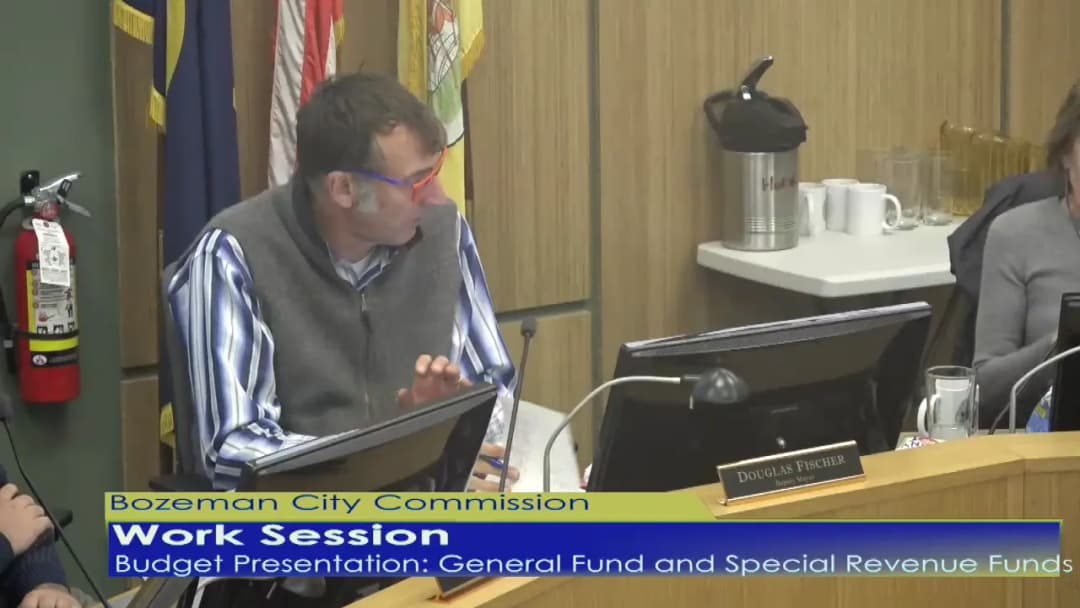
The Bozeman City Commission held a work session and regular meeting on June 9, 2026, starting at 4:00 PM. The primary focus was the second budget presentation for the General Fund and Special Revenue Funds, along with a special presentation on parks and recreation, public comment on non-agenda items and the budget, and approval of an updated EMS transport fee schedule. The meeting concluded at approximately 7:00 PM after a break. Consent Calendar - Items G1-G3: Approved unanimously (5-0). These routine consent items included approvals of prior minutes, contracts, and other routine matters. Public Comments & Testimony - Courtney Johnson (Johnson Metal Works): Highlighted a successful community partnership with local schools and the Parks Department to fabricate four park benches. Expressed hope for future collaboration and requested the benches be displayed at City Hall. - Mark Campanelli (Bogar Park neighbor): Opposed fluoridation of city water, citing it as an unnecessary treatment without consent. Also questioned the city’s budget assumptions, noting that underspending on growth-related projects should not be called “savings,” and urged the commission to lead Tax Increment Financing (TIFF) decisions rather than developers. - Bob Muldowney (Bozeman resident): Argued that the downtown Urban Renewal District (URD) has fulfilled its purpose and that its $9.7 million fund balance should be released to support the general fund, particularly for police and fire services. Noted that downtown property taxes have been diverted to TIFF for 30 years, contributing to a public safety deficit. - Cindy Smith (online): Called for transparency regarding city funds provided to HRDC, stating that taxpayer dollars require public oversight and that silence from officials is concerning. - Katie Madison (Haven Executive Director): Thanked the commission for continued investment in emergency shelter operations, noting that 80% of women with children experiencing homelessness have experienced domestic violence. - Alison Braddock (Family Promise Executive Director): Expressed gratitude for support and shared a success story of a family moved from homelessness to stable housing with the help of bridging home funds. - Anthony Smith (resident): Criticized police use of less-lethal force and called for policy changes, including a ban on such tactics and shifting mental health crisis response to unarmed professionals. Urged the city not to settle the Rogel case out of court. - Unnamed speaker: Questioned the downtown URD work plan, suggesting it funds “nice-to-haves” rather than blight reduction, and argued that TIFF money should be returned to the general fund. Special Presentation: The Power of Parks and Recreation - Mitch Overton, Director of Parks and Recreation, presented an overview of the department’s impact. Highlights included 135 team members managing 942 acres of parkland, 79 miles of trails, 54 playgrounds, and 28,500 public trees. The presentation emphasized six pillars: connection, play, community, nature, belonging, and well-being. He noted that in 2025, over 4,500 youth participated in athletic programs. Discussion Items - Budget Work Session (General Fund and Special Revenue Funds): Melissa Hodnet, Finance Director, presented the recommended budget for FY27-28. Key topics: - General Fund resources total $137.8 million, with property taxes making up nearly 70% of revenue. - The city estimates a 1.3% decrease in certified taxable value from FY26 to FY27, but a 1% increase in total property tax revenue due to new taxable value (estimated $7.2 million over the biennium). - Special revenue funds for building inspection, planning, development engineering, and community housing were reviewed. The planning fund has a $2 million annual general fund subsidy; a fee study is underway. - Community housing funds include $1.5 million for the Fowler Housing Project and a $900,000 increase in general fund subsidy in FY28. - New positions: 9.5 FTEs in the police department (4 officers and 1 sergeant per year, plus 1 intel analyst), half a special services officer for the library, and half a position for municipal court. Total new FTEs across the city: 18. - Police staffing: Currently authorized 76 sworn officers, with 70-71 filled. The goal is 89 by 2028 to meet the 2021 staffing plan recommendation of 79. - Fire department: $70,000 per year for ballot education on Fire Station 4; no new positions. - Community programs: $345,700 per year for the HRDC warming center (decreased from $500,000 as other jurisdictions increase contributions); $250,000 per year for tenants’ right to counsel. - Discussion on balancing police funding with upstream mental health and housing investments. City manager noted that police are difficult to staff and that traffic safety is a priority. Mayor Morrison raised the need for a plan to invest in alternatives to policing. - Commissioner Magic suggested keeping fee rates current and exploring TIFF fund transfers. Commissioner Bowdy proposed an inflationary increase for Streamline and additional upstream housing funding. Commissioner Sweeney advocated for a public budget engagement event and pre-approved ADU plans. - Deputy Mayor Fisher praised the budget’s prudence and noted the importance of affordable public facilities. - EMS Transport Fee Schedule Update: Fire Chief Josh Waldo presented a resolution to increase rates for emergency medical services transport. The department has been providing backup transport since 2007, averaging 177 transports per year. Current rates from 2022 are outdated; proposed rates are based on local comparators and costs. The city collects only 42% of billed amounts; 58% is write-off. Financial hardship waivers and payment plans are available. The rate schedule will be adjusted annually by CPI starting July 1, 2027. Key Outcomes - Minutes Approval: Item F1 approved 4-1 (Commissioner Sweeney dissenting, citing need for better written minutes). - Consent Calendar: Approved 5-0. - EMS Transport Fee Resolution: Approved 5-0. Rates will take effect July 1, 2026, with annual CPI adjustments. - Budget Discussion: No formal vote; the preliminary budget adoption is scheduled for June 23, 2026. Commissioners signaled potential amendments (Streamline increase, additional housing funding, pre-approved plans, public engagement event). Staff will return with answers to questions. - Next Steps: The final budget adoption and mill levy setting will occur on August 18, 2026, after receipt of certified taxable values from the Department of Revenue.
Public Meetings - Bozeman, Montana
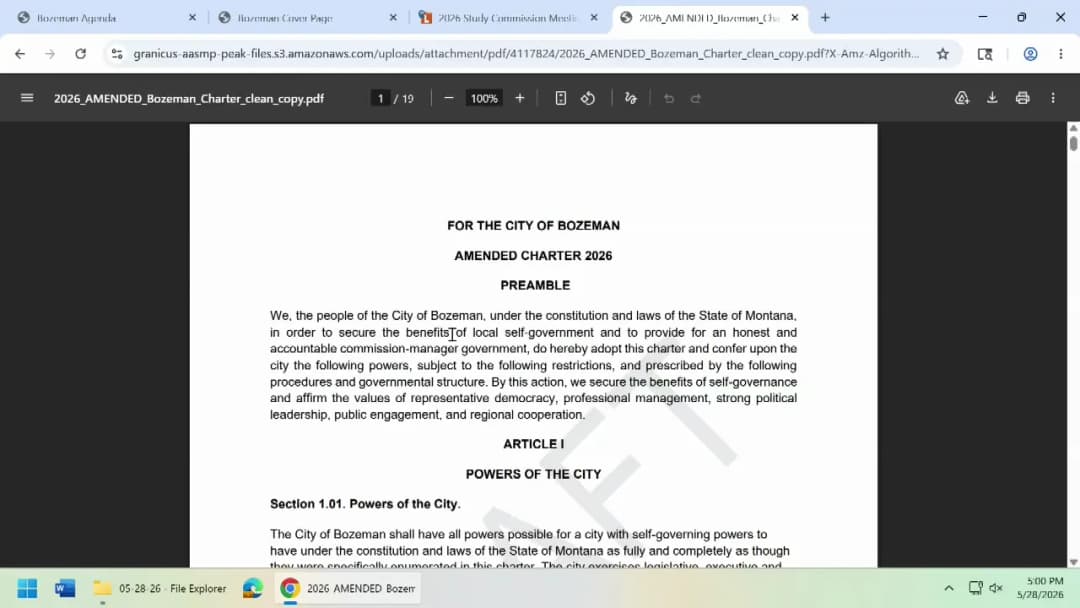
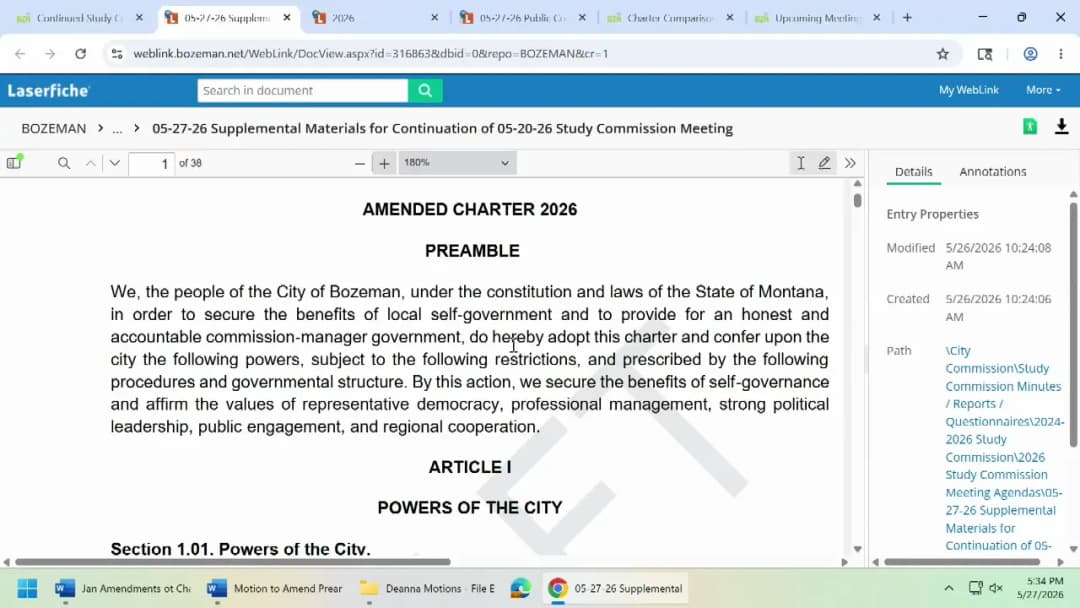
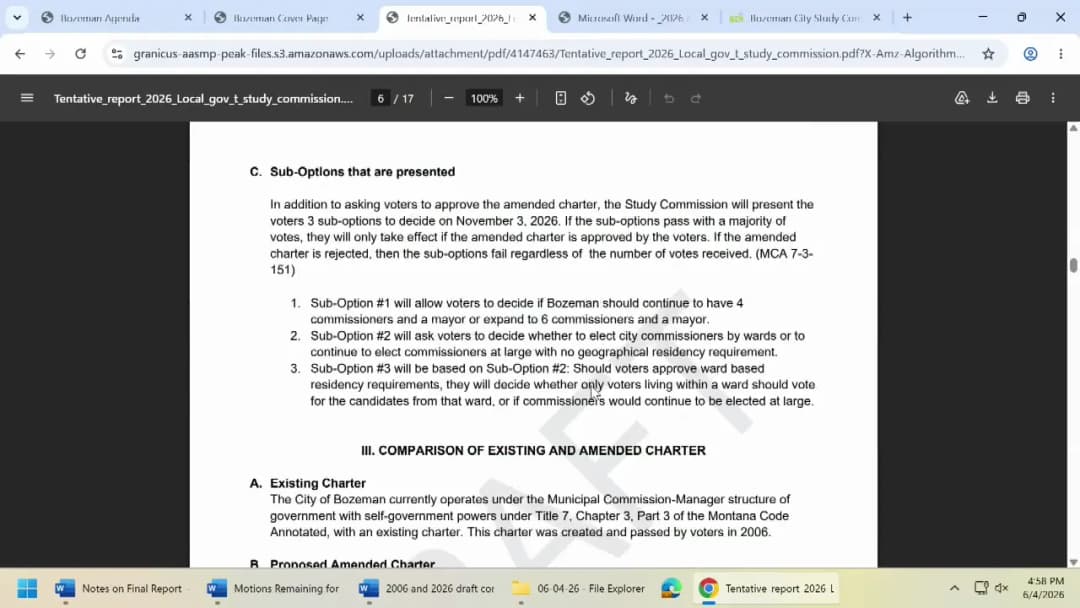
Public Meetings - Bozeman, MontanaThe Bozeman Study Commission met on June 4, 2026, to review the draft report and proposed amendments to the city charter, hear from the public, and plan the upcoming public hearing. The meeting began with the Pledge of Allegiance and a moment of silence, followed by approval of the consent agenda and public comments. Consent Calendar - The commission approved the meeting minutes from May 13 and May 20, 2026, by a 4–0 vote. Commissioner Barb Cetraro was excused by a separate 4–0 vote. Public Comments & Testimony - Joey Morrison (Mayor of Bozeman, speaking in his personal capacity) commented on the process of the study commission, particularly regarding the Inner Neighborhood Council (INC) and neighborhood associations. He expressed that the INC should not be given more compulsory authority over the city commission's agenda, but instead should focus on increasing representation and participation. He cited an example from an October INC meeting where the highest neighborhood response was 53 out of approximately 3,600 residents (less than 0.5%). He emphasized that he has never been polled or canvassed by any neighborhood association despite living in three different neighborhoods. - No other public comments were made in the room or online. Discussion Items - Introduction of Dungeld Consultants: Nevin Graves, a partner at Dungeld, introduced his team (Aaron Corsey, Audrey Dozier, and Tor Goodmanson) as the consultants for the ballot education campaign on the amended city charter. Commissioner Deanna asked about best practices, metrics for reaching underserved voters, and how the firm would ensure equal education across all demographic groups. Graves cited reaching 18–24-year-olds and older voters through different channels, and committed to providing comprehensive reporting. There was discussion about the timeline and budget for the engagement level, which will be decided at a later meeting. - Correspondence and Study Commission Update: Commission members discussed a door hanger distributed by the Gallatin Valley Sentinel titled "Save the Gallatin Not," which some residents mistakenly thought was from the study commission. Chair Becky clarified that only information from BozemanStudy.com is official. Commissioner Jan requested that the Gallatin Valley Sentinel share the results of their survey, which has not been provided despite multiple requests. - Draft Report Edits: The commission reviewed the draft report page by page. Key changes included: - Adding language that if the amended charter is rejected, the current charter remains (from Carson). - Changing "the public is not feeling heard" to "some members of the public are not feeling heard." - Clarifying that compensation applies to commissioners and the mayor, and using "compensation board" instead of "committee." - Removing the sentence "We invite public engagement as we prepare for its adoption" and replacing "adoption" with education-related language (motion passed). - Adjusting sub-option language in Exhibit D for clarity, including using "qualified voters" and reorganizing the order of options. - Editing the compensation board section to reference Article 1, Section 1.01 (powers of the city) instead of the preamble. - Changing the order of the sub-options to start with at-large voting before ward-based voting. - Renaming "citizen participation" to "public participation" in the characteristics table, with a discussion about whether to use "citizen" or "public." - Adding language to ensure candidates, commissioners, and residents understand the duties of elected office. - Charter Amendments: The commission debated several substantive amendments to the charter: - Compensation (Section 2.04): Carson moved to restore language based on Gallatin County area median income for a household of four, using full-time equivalent (FTE) percentage. This was accepted as a revision of previously approved language. - INC Consultation (Section 8.04 D, 5): Deanna moved to strike "when practicable" from the requirement that the INC be consulted during formative stages. The motion passed 3–1 (Carson opposed). - City Manager/Commission Responses (Section 8.04 D, 7): Deanna moved to strike "as applicable" from the requirement for timely responses. The motion passed 4–0. A subsequent motion to add detailed explanation requirements failed due to lack of a second. - Neighborhood Program Expansion (Section 8.04 D, 8): Deanna moved to strike the entire subsection. The motion failed for lack of a second. - Board Vacancy Advertising (Section 8.05 C, 1): Deanna moved to require individual posting of each vacancy on digital and social media for a minimum of 30 days prior to filling, in addition to the existing twice-annual advertisement. After discussion, the amended motion passed 3–1, requiring advertising at least twice annually and with a minimum of 30 days' notice. - Striking Section 8.05 C, 3: Deanna moved to strike a section on filling unexpected vacancies from existing applications, as it was deemed duplicative. The motion passed 4–0. - Ad Hoc Committees (Section 8.05 C, 5): Deanna moved to require public notification and an open application process for ad hoc committees. The motion failed for lack of a second. - Term Limits for Board Members: Deanna moved to add a limit of two consecutive four-year terms for advisory board members. The motion failed for lack of a second. - Conflict of Interest Standards: Deanna moved to add a new subsection establishing eligibility and conflict of interest standards based on public comments. The motion failed for lack of a second. - Preamble: Chair Becky proposed minor wording changes to remove duplicate phrases and add "elected" before "leadership." After discussion, the word "elected" was not added; it was agreed that "representative democracy" implies elected leadership. - Independent Audit (Section 6.09): Deanna moved to strike the final sentence allowing the city commission to waive the prohibition on auditors performing non-audit services. The motion passed 4–0, and Carson agreed to inform the finance department of the change. Key Outcomes - Approved consent agenda (4–0). - Approved numerous editorial changes to the draft report and the charter language, as detailed above. - Set the public hearing date for June 18, 2026, starting at 5:30 p.m. with food and informal discussion at 5:00 p.m. The commission will decide the level of ballot education engagement with Dungeld after public comment. - Directed the chair to order name tags for commissioners for outreach events (e.g., Sweet Pea Festival). - The final draft of the charter will be provided by Saturday, June 6, 2026, at noon, and the report will be released after the meeting. - Next meeting: July 15, 2026, to discuss input from the public hearing and further refine the charter language.
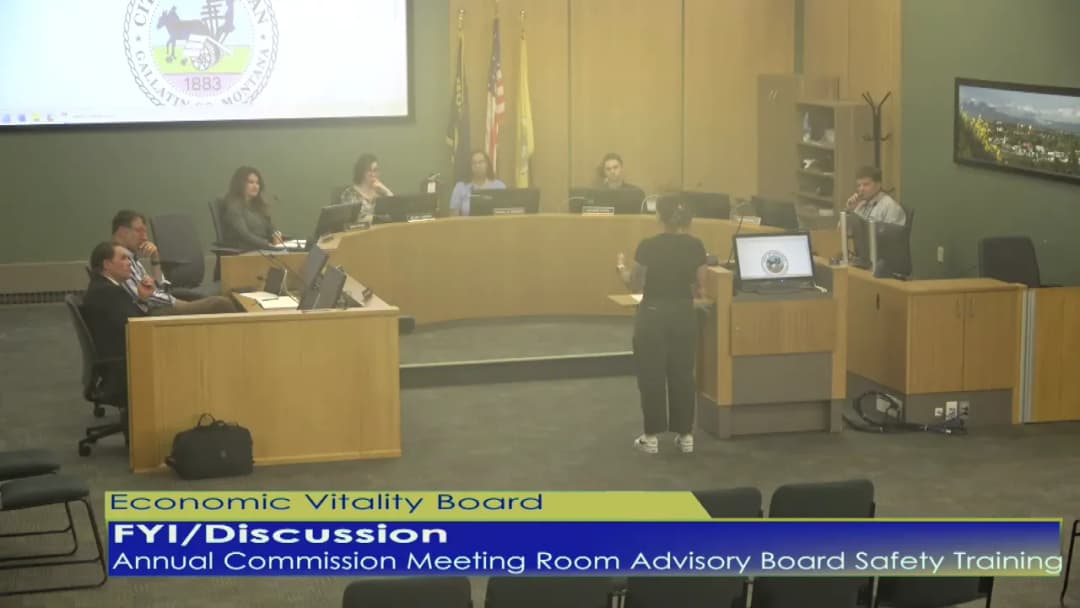
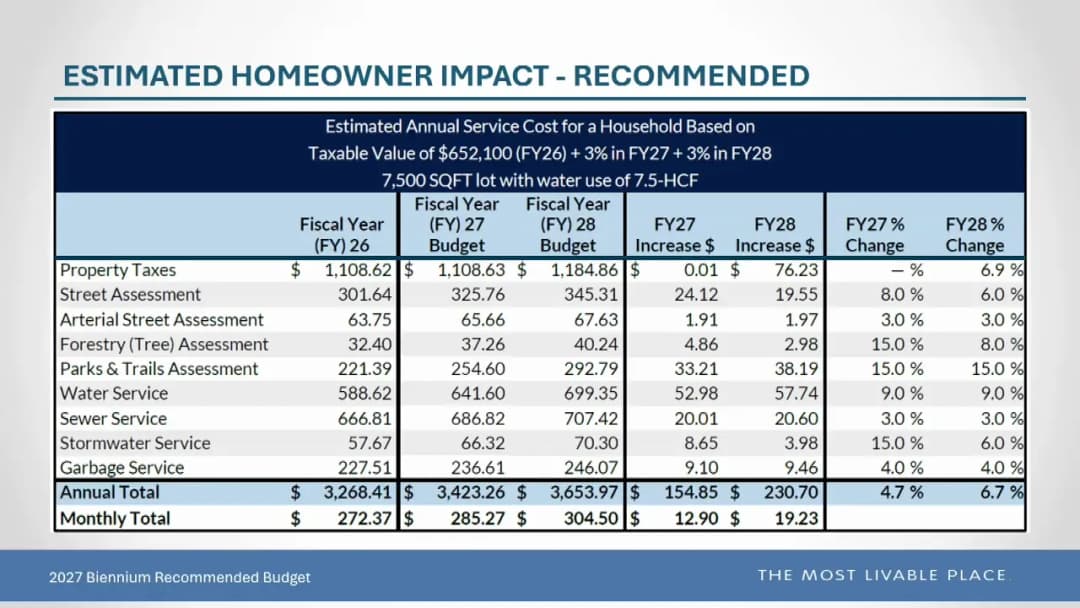
The Economic Vitality Board held its regular meeting on June 3, 2026, at City Hall. The primary agenda item was a safety training presentation by Officer Brie Sanders of the Bozeman Police Department, covering the "Avoid, Deny, Defend" (run, hide, fight) protocol. The board also discussed meeting security protocols, online harassment of board members, and received updates on upcoming meetings and the city budget. Consent Calendar - The board unanimously approved the minutes from the January 7, 2026, February 4, 2026, March 4, 2026, and April 1, 2026 meetings. The vote was 5-0 (Daisy, Kelsey, Danielle, Andrew, and the chair). Public Comments & Testimony - No public comments were offered either in person or online. Discussion Items - Safety Training (Avoid, Deny, Defend): Officer Brie Sanders from the Bozeman Police Department presented a safety training adapted for city board meetings. She explained the three phases: - Avoid (Run): Remove yourself from the threat as quickly as possible, abandoning belongings. Identify multiple exits, including windows. Once outside, move far away and call 911 only after reaching safety. - Deny (Hide): If escape is not possible, hide in a secure location, silence phones, and remain calm. Officer Sanders noted that the meeting room has ballistic panels installed behind the dais. She encouraged using furniture or flags to create barriers. - Defend (Fight): As a last resort, use any object as an improvised weapon (e.g., fire extinguishers, gavels, chairs, coat racks). Officer Sanders stressed that the first sign of resistance often stops an attacker, and that group action is more effective. She also discussed the OODA loop (Observe, Orient, Decide, Act) and the importance of disrupting an attacker's decision cycle. - Discussion of Real-World Scenarios: Board members asked questions about when to call 911, use panic buttons, and how to handle escalating public commenters. Deputy Mayor Fisher noted that the chair can call recess or adjourn the meeting, and that staff liaisons are trained to call 911 if they sense a threat. He also confirmed that City Hall has a no-weapons policy. The board discussed the importance of communication and documentation of threats or online bullying. - Online Harassment and Bullying: A board member raised concerns about online bullying and threats directed at volunteers. Deputy Mayor Fisher agreed to discuss with the mayor and city manager about stronger protocols, including potential use of a safety officer for contentious meetings. Officer Sanders recommended documenting screenshots and reporting to Brett (staff liaison) and filing a police report if necessary. - Upcoming Meetings and Budget Update: - The board will not meet in July 2026. The next meeting is scheduled for August 2026. - In August, Courtney Smith will present on "Belonging in Bozeman" work. - A Housing Program Work Session is scheduled for August 4, 2026, at 6 p.m. in the same room, to discuss city housing programs and partner organizations (HRDC, Family Promise, Haven). - Deputy Mayor Fisher provided an update on the city’s biennium budget for fiscal years 2027 and 2028. Key points: property taxes will be held flat for FY2027, but other assessments and fees will increase; the average taxpayer will see a 4.7% increase in city services costs in FY2027 and 6.7% in FY2028. City operational costs are growing at 7% per year due to growth. The general fund presentation will occur on the following Tuesday (June 9?) at 6 p.m. in the same room. Key Outcomes - Minutes Approved: January 7, February 4, March 4, and April 1, 2026 minutes were approved unanimously. - Safety Protocols: Staff will explore additional de-escalation training and a safety officer presence for contentious meetings. Board members were encouraged to communicate any safety concerns or threats to staff immediately and to document online harassment. - Next Meeting: No meeting in July; next meeting in August 2026 (date to be confirmed). The Housing Program Work Session is set for August 4, 2026. - Budget Information: The board was informed of upcoming tax and fee increases; the general fund budget discussion is scheduled for the next commission meeting.
The Bozeman City Commission met on June 2, 2026, for a work session focused on the city manager's recommended budget for enterprise funds and special assessment districts for the 2027 biennium. The meeting also included a consent agenda, public comment on non-agenda items, a mayoral proclamation, and special presentations on the School Resource Officer (SRO) program and the Bozeman Public Library Summer Learning Program. Consent Calendar - Consent 1 (Items 1–22): Approved unanimously (5–0). No public comment. - Consent 2 (Item 2): Approved 4–1 (Commissioner Sweeney dissenting). No public comment. Public Comments & Testimony - Roger Blank (Bozeman resident): Criticized the commission for rejecting an interim preservation code, stating that over 70 demolition permits for historic structures are pending. He urged the commission to prioritize historic preservation and take leadership from Commissioner Sweeney. - Jason Beatty (Queer Bozeman & Bozeman Pride Planning Committee): Thanked the commission for support and invited participation in Bozeman Pride, noting 33 events over two weeks, Pride in the Park on June 6 with over 70 businesses and 32 sponsors. - Cindy Smith (Bozeman resident): Raised concerns about HRDC's use of public funds, alleging retaliation against a whistleblower, mishandling of disability accommodations, and legal tactics to avoid accountability. She requested the commission formally acknowledge her complaints, identify city responsibility, and provide a written response. - Bob Muldowney (Bozeman resident): Argued for terminating the downtown Tax Increment Finance (TIF) district, stating it diverted $2.97 million in property taxes in FY2025. He claimed developers no longer need incentives (e.g., $372,000 hotel incentive) and that funds could boost police staffing (currently 76 officers vs. FBI average of 1.65 per thousand). He proposed satisfying the 2020 downtown URD bond with $2.1 million from existing fund balance, which would free up $2.4–4.9 million for public safety. Proclamation - Pride Month Proclamation: Mayor Joey Morrison proclaimed June as Pride Month in Bozeman, recognizing the Stonewall Uprising and commitment to dignity and non-discrimination. The proclamation was presented to Queer Bozeman representatives. Special Presentations - School Resource Officer (SRO) Program: Sergeant Scott McCormick presented an overview of the program, which includes four SROs and one sergeant covering eight schools. The program follows the NASRO triad model (educator, counselor, law enforcement). Highlights: K9 Copper helped clear a bomb threat at Bozeman High and located a firearm used in a homicide; a diversion program handles 100–150 juveniles per year, keeping them out of formal probation; SROs generate over 2,000 calls and 500 cases per school year. The school district funds half of the SRO salaries. Commissioner Bodie praised the program. - Bozeman Public Library Summer Learning Program: Director Susan Gregory presented a new intergenerational “Library Scout” badge program. Noted that 33% of incoming kindergarteners did not meet early literacy goals in 2025, with 49% of those being multilingual learners or from low-income households. The library offers free summer lunch daily (funded by the Library Friends & Foundation), Symphony Storytime (often 150 attendees), and other literacy activities. Mascot “Big Scout” was introduced. Discussion Items - Budget Work Session – Enterprise Funds & Special Assessments: Finance Director Melissa Hodnet and City Manager Chuck Winn presented the recommended budget for the 2027 biennium. Total appropriations are $609.2 million ($80.1 million in reserves). Enterprise funds include water, wastewater, stormwater, solid waste, and parking. Special assessment districts cover street maintenance, arterial/collector streets, forestry tree maintenance, and parks/trails. Proposed rate/assessment increases: - Water: 9% per year (approx. $4.80/month typical homeowner) - Wastewater: 3% per year (approx. $1.60–1.75/month) - Stormwater: 15% first year, 6% second ($0.75–$0.33/month) - Solid waste: 4% per year (less than $0.83/month) - Street maintenance: 8% first year, 6% second ($2.00–$1.67/month) - Forestry tree maintenance: 15% first year, 8% second ($0.42–$0.25/month) - Parks & trails: 15% per year (exact dollar not stated for typical homeowner) - Arterial/collector: 3% per year - Parking fund: healthy, no rate increases proposed - Key drivers: large capital projects (Lyman tank $17M, municipal groundwater project $10M), deferred maintenance catch-up, new shops complex design ($8M), inflationary pressures, and additional staff positions (communication specialist, facilities worker, utility billing specialist, two street operators in FY28). - Discussion points: Commissioner Magic asked about shifting more burden to higher water use tiers; staff noted a cost-of-service study is underway. Commissioner Sweeney inquired about fluoride in drinking water; staff confirmed Bozeman is the only Montana city adding fluoride, costing $20,000–30,000 per biennium and requiring capital for tank rehab. City Manager Winn committed to a community conversation on fluoride. Commissioner Bodie asked about ADA accessibility funding; staff said opportunities exist across multiple funds and will explore during transportation discussions. Deputy Mayor Fisher expressed support for stewardship and transparency, noting the city’s 41-year financial reporting award. Commissioner Magic noted the catch-up was anticipated after pandemic-era freezes. Key Outcomes - No formal votes were taken on budget items. - The commission directed staff to: - Explore the feasibility of tiered water rates to potentially reduce burden on low-use customers. - Initiate a community conversation about discontinuing fluoride addition to water supply. - Identify and present opportunities for ADA accessibility improvements across funds. - The next budget work session is scheduled for June 23, 2026, covering the general fund and other special revenue funds. Final adoption is targeted for July 9, 2026. - The commission acknowledged the staff’s work and the importance of maintaining service levels and infrastructure investment despite growth pressures.
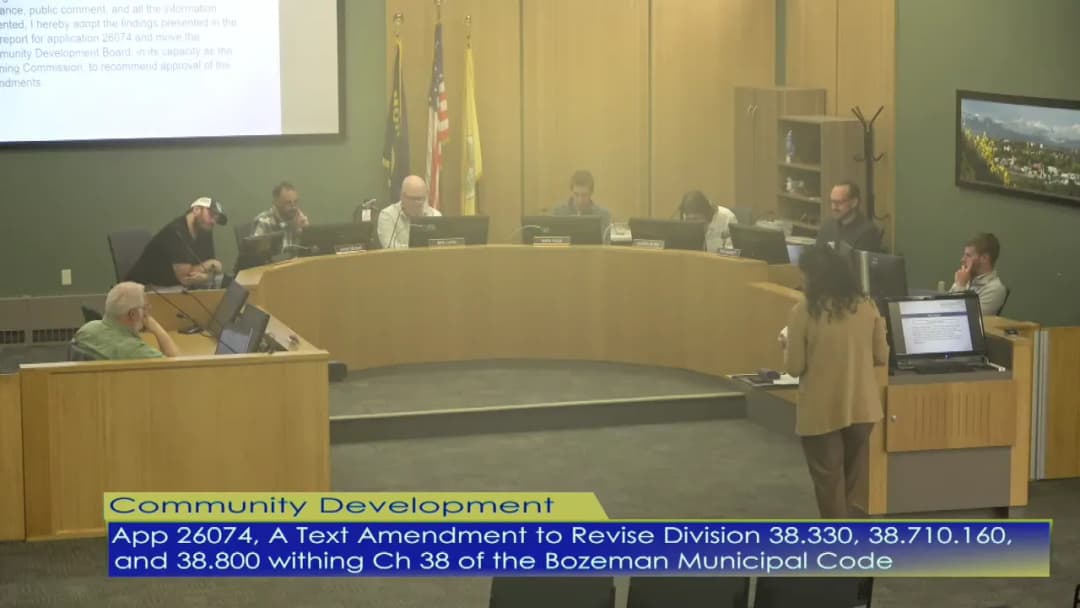
The Community Development Board met on Monday, June 1, 2026, at 6:00 pm to consider a legislative text amendment (Application 26074) revising Division 38.330 (Wireless Facilities), Section 38.710.160 (Submittal Materials for Telecommunications), and Division 38.800 (Definitions) within Chapter 38 of the Bozeman Municipal Code. The board unanimously approved the amendment with a clarifying change to materials standards. No public comments were received. Consent Calendar - No consent items were on the agenda. Public Comments & Testimony - No members of the public provided comment on the agenda item or on non-agenda items. No written comments were received by the deadline. Discussion Items - Assistant City Attorney Jennifer Giuttari presented the legal overview, noting that the wireless code had not been comprehensively updated since 1998 and that federal law heavily constrains local regulation. Key changes included new “shot clock” timelines for application review (Section 38.330.050), a list of federally exempt facilities (Section 38.330.060), and revised submittal materials (Section 38.710.160). - Board members discussed aesthetic standards, specifically the removal of subjective language like “compatible with surrounding structures” in favor of more objective criteria. Concerns were raised about potential for unattractive, opaque enclosures in residential areas. Staff explained that landscaping requirements were removed due to water conservation and enforcement challenges, and that the code incentivizes concealment through faster review. - A motion was made to amend Section 38.330.040 B1f to require “architectural materials of similar appearance as those commonly used in the immediate area” rather than simply “materials.” The amendment aimed to prevent generic industrial materials while allowing flexibility. Key Outcomes - Amendment Motion (Section 38.330.040 B1f): The board voted 6-0 to change the text to: “Exterior façade materials and the character of equipment shelters used in residential areas must be architectural materials of similar appearance as those commonly used in the immediate area.” - Main Motion (Recommend Approval): The board voted 6-0 to recommend approval of the text amendment as amended, adopting the findings in the staff report. - Next Meeting: The board’s next meeting is scheduled for June 15, 2026, and will include a text amendment on short-term rentals and B3 parking, as well as an update to the Engage Bozeman framework. Staff also announced a webinar on effective public comments on June 4, 2026.
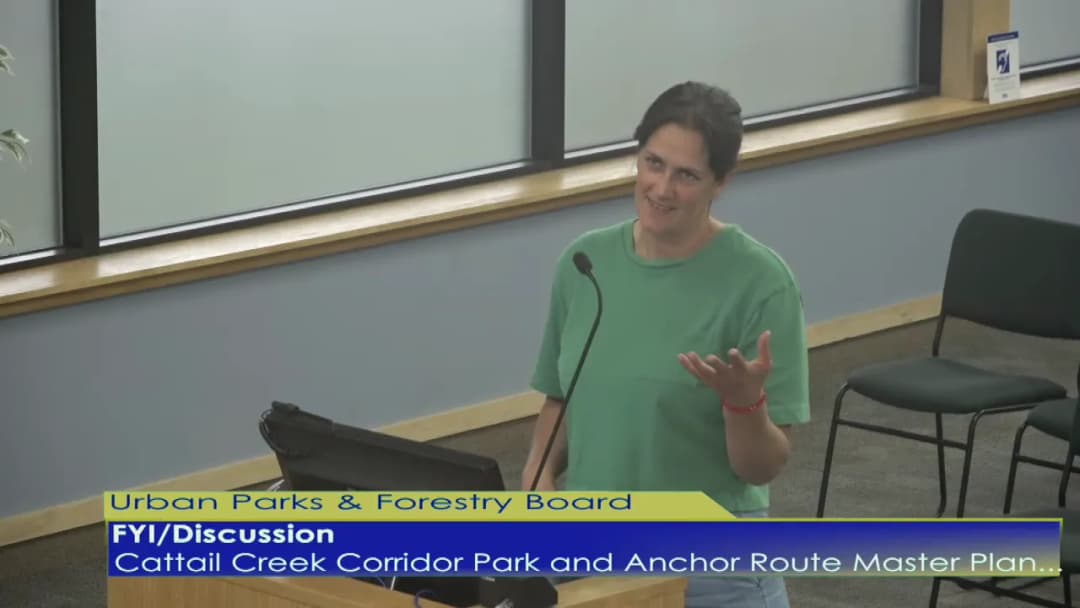
The Bozeman Parks and Recreation Advisory Board met on May 28, 2026, to discuss an engagement framework update, receive a detailed presentation on the Cattail Creek Corridor Park and Anchor Route Master Plan, and hear a director’s report. The board approved the previous meeting’s minutes and received written public comments. No formal action was taken on the master plan, which will return for final adoption. Consent Calendar - The board unanimously approved the minutes from the April 23, 2026 meeting (7-0). - The board approved a modification to the agenda, switching items F2 (Cattail Creek Master Plan) and F3 (Director Update) under FYI discussion. Public Comments & Testimony - No oral public comments were offered, either in person or via video conference, on non‑agenda items at the start of the meeting. - One written general public comment was received about the Cattail Creek Master Plan; the writer expressed support and drew comparisons to the existing Galligator anchor route. - Two additional written public comments were submitted just prior to the meeting and were distributed to the board afterward; these will be included in the official minutes. Discussion Items - Engagement Framework Update (F1): Staff read a memo stating that the City of Bozeman is updating its Engage Bozeman public engagement framework to comply with the Montana Land Use Planning Act (SB 382). A survey is open at engage.bozeman.net/framework until June 15, 2026, to gather input on past engagement experiences. - Cattail Creek Corridor Park and Anchor Route Master Plan (F2): Addie Jaden, Park Planning and Development Manager, presented a draft master plan for a 3.5‑mile shared‑use trail corridor connecting Union Valley Center Drive to Bozeman Pond Park. The plan emphasizes a paved anchor route, improved street crossings, native revegetation (reducing irrigated turf), and clustered active recreation nodes. Key discussion points included: - Existing trail segments will be incorporated; the primary route will be paved (8–10 ft wide), while secondary gravel paths may remain. - Bridges will be 8‑ft wide to minimize stream disturbance. - Implementation will be phased, starting with Westwinds and Greenway Park, funded by cash‑in‑lieu, grants (e.g., Transportation Alternatives via the MPO), and partnerships (Gallatin Watershed Council, HOAs). - Safety treatments (bulb‑outs, median crossings, wayfinding) will be coordinated with the transportation department. - A “girls’ park node” concept, developed with teenage girls, will inform seating and social features in Westwinds. - The draft narrative and drawings will be refined and brought back to the board for final adoption before going to the City Commission. - Director Update (F3): Mitch provided updates: - The June meeting will include the first biannual cemetery update. - The splash pad at an unspecified park is expected to open next week (soft opening), with a ribbon‑cutting tentatively set for June 17, 2026. - Summer hiring and training are underway. - The assistant director attended Parks and Recreation Hill Day in Washington, D.C., advocating for federal funds (LWCF). - July is Parks and Recreation Month; outreach is being planned. - The first of two bird surveys at Bikeville is scheduled for the upcoming Sunday (weather permitting). Key Outcomes - Board approved the April 23, 2026 meeting minutes (7-0). - Board approved the agenda change to swap items F2 and F3. - The Cattail Creek Master Plan is still in draft form; staff will incorporate board feedback and bring a revised version for final recommendation to the City Commission at a future meeting. - The board received written public comments but took no action on them. - No other votes were taken.
The Bozeman Local Government Study Commission met on May 28, 2026, to discuss the tentative draft of the local government study report, consider charter amendments, and receive updates on ballot education and community outreach. The meeting included review of the first draft of the tentative report, discussion of numerous amendment proposals, and a recommendation on neighborhood impact statements. Commissioner Franks was excused from the meeting. Consent Calendar - The consent agenda was approved unanimously (4-0) with no items pulled for discussion. Correspondence & Study Commission Update - Commissioner reported continuing correspondence with the neighborhood association for a presentation in late July. Another commissioner offered to present to the Sunset Rotary Club in September. - A request for a forum by the League of Women Voters and Business and Professional Women is pending. - In a call with Nevin from Dane Geld (consultant for ballot education), Nevin expressed excitement to start and can attend the June 4 meeting; he indicated that messaging and education related to the three sub-options would not be difficult. Engagement levels will be discussed later with the group. Discussion Items Tentative Report – Draft One Input - Barb, a staff member, presented the first draft of the tentative report, emphasizing that feedback should be high-level (what is correct, missing, or wrong) rather than wordsmithing. The table of contents follows statutory requirements, and the amended charter will be inserted later. - Commissioners praised the tone and organization. Feedback included: clarify that the report is the first study commission report in 20 years; fix references to five vs. seven commissioners; adjust language about the mayor representing Bozeman across Montana and the United States (some felt that oversimplified); and add mention of public perception that commissioners come with minds made up. - Version control issues arose because a later iteration was emailed after the agenda was published. It was decided that written comments should be based on the version posted for the June 4 agenda. - Barb requested that the group stop amending worksheets and instead work only in the amended charter with track changes; this was agreed to. A decision was made to remove the worksheets from the report and keep a comparison document between the current and amended charter. - A motion to put a direct link on the website to rejected amendments failed for lack of a second. Discussion ensued about transparency vs. confusion. Amendments and Recommendation (Items Not Reached on May 27) - Deanna's amendments: Many were introduced but failed to get a second or failed on vote. - Passed: Amendment to Section 8.03C – replacing "provide opportunities for residents to influence decisions" with "provide opportunities for public input regarding decisions" (motion carried 4-0). - Failed: Amendments regarding preamble wording, contract participation (Section 1.03), expense reporting (Section 2.04), attendance rules (2.06), city manager role (3.04), fiscal management (Article 6), personnel and budget sections, and public engagement language (8.03A, 8.03C – flexibility language retained). - Jan's recommendation: To have the City of Bozeman Interneighborhood Council and neighborhood associations work with the city's Department of Community Engagement to co-create a neighborhood impact statement process. Passed unanimously (4-0). - The meeting ran out of time; remaining amendments (estimated 11) will be addressed at the June 4 meeting. Key Outcomes - Consent agenda approved (4-0). - Amendment to Section 8.03C passed (4-0): replaces "influence decisions" with "input regarding decisions." - Recommendation on neighborhood impact statements passed (4-0). - All other amendment motions failed (no second or majority). - The meeting will continue on June 4, 2026 to handle the remaining agenda items and amendments. Two commissioners will attend virtually; Deanna and Jan will be in the room. - The tentative report will be updated for the June 4 meeting, incorporating feedback and using a single comparison document between the current and amended charter.
This was a continuation of the May 20, 2026, meeting. The commission debated and voted on a series of amendments to the draft city charter, covering the preamble, eligibility, neighborhood associations, city boards, the municipal court, and other articles. Several motions were approved, some were withdrawn or failed, and a number of items were deferred to the next meeting. Public comment was heard on three occasions. Public Comments & Testimony - Dan Cardi (Bozeman resident) supported the amendment requiring that only residents of a neighborhood may serve on its leadership board and the Interneighborhood Council, and suggested clarifying the language to say “residents of the neighborhood” rather than “residents of the neighborhood association.” - Natsuki Nakamura (Bozeman resident, also on the Economic Vitality Board but not speaking on its behalf) opposed disqualifying business owners from serving on a neighborhood association’s steering committee, arguing that each association should set its own rules. She supported limiting the restriction to the Interneighborhood Council. - Emily Twego (Bozeman resident, speaking as a private citizen) echoed Natsuki Nakamura’s comments, noting that Midtown is a mixed-use neighborhood and that the proposed restriction would be too granular and would require restructuring their bylaws. Discussion Items - Preamble – Addition of Human Rights (Jan) – Motion to add “human rights” between “representative democracy” and “professional management” in the last sentence of the preamble. Passed 4–1. - Preamble – Addition of Citizen Participation (Deanna) – Motion to add “citizen participation” to the list of values. Failed for lack of a second. - Section 2.02 – Eligibility (Carson) – Motion to change eligibility language to “only registered voters whose principal residence is in the city of Bozeman” and to have the city attorney determine whether “principal residence” or “domiciled” is legally clearer. Passed 5–0. - Section 8.04B – Neighborhood Associations (Jan) – Motion to add “nonpartisan” before “organizations” in the membership description. Passed 4–1. - Section 8.04B – Leadership Board and Interneighborhood Council (Deanna) – Original motion to restrict leadership to residents only. After public comment and discussion, amended to require that “a majority of leadership as defined by the bylaws must be residents of the neighborhood.” Passed 5–0. - Section 2.05C – Interference with Administration (Carson) – Motion to delete the word “solely” from the sentence dealing with the city manager. Passed 5–0. - Section 8.05C2 – City Boards (Jan) – Motion to add “perspectives” (plural) to the list of desired attributes and to require a review every three to five years. The review requirement was changed to a recommendation to the city commission. Passed 5–0. - Preamble – Multiple Edits (Deanna) – Original motion to replace the preamble; after discussion, narrowed to: add “responsive” after “accountable,” and strike “strong political” before “leadership.” The human rights addition from the earlier amendment was retained. Passed 5–0. - Preamble – Addition of Active Citizen Participation (Deanna) – Motion to add “active citizen participation” after “public engagement.” Failed for lack of a second. - Section 4.01 – Municipal Court (Barb) – Motion to add language clarifying that the court “exercises judicial authority on behalf of the city” and “shall operate independently and separately from the legislative and executive branches of city government in exercising its judicial authority.” Passed 5–0. - Section 1.03 – Intergovernmental Relations (Deanna) – Motion to change “shall” to “may” to preserve local discretion. Passed 5–0. - Section 8.01 – Public Engagement (Carson) – Motion to delete “the city shall ensure” and start the second paragraph with “Public engagement is an integral part of effective and trusted government.” Passed 4–0. - Section 8.01 – Striking Community-Based Organizations (Deanna) – Motion to replace “community-based organizations, civic and civic groups” with “residents, neighborhood associations, city boards, and local government.” Failed for lack of a second. - Section 8.02 – Participatory Budgeting (Deanna) – Motion to strike “participatory budgeting” and add “the city may establish public engagement processes related to budgeting and capital planning” to the first paragraph. Passed 3–1. - Section 8.02 – Adding “May Include but Are Not Limited To” (Carson) – Motion to add this phrase to the list of governmental structures. Passed 3–1. - Section 3.04.5 – Budget Approval (Deanna) – Motion to reinsert “for its approval” in the city manager’s duties. Failed for lack of a second. - Section 3.04.9 – Policy Development (Deanna) – Motion to change the language to “provide administrative opinions or options, analysis and information necessary to inform the policies established by the city commission.” Failed for lack of a second. - Section 3.04.10 – Administrative Support (Deanna) – Motion to clarify that staff support must be funneled through the city manager. Failed for lack of a second. Key Outcomes - Approved amendments (with votes): - Preamble: added “human rights” (4–1). - Section 2.02: revised eligibility language (5–0). - Section 8.04B: added “nonpartisan” (4–1). - Section 8.04B: majority of leadership must be residents of the neighborhood (5–0). - Section 2.05C: deleted “solely” (5–0). - Section 8.05C2: added “perspectives” and made board review a recommendation (5–0). - Preamble: added “responsive,” deleted “strong political” (5–0). - Section 4.01: added judicial independence language (5–0). - Section 1.03: changed “shall” to “may” (5–0). - Section 8.01: removed “the city shall ensure” (4–0). - Section 8.02: replaced participatory budgeting with permissive language (3–1). - Section 8.02: added “may include but are not limited to” (3–1). - Failed motions: - Preamble: addition of “citizen participation” (no second). - Section 8.01: replacement of community-based organizations (no second). - Section 3.04.5: reinsert “for its approval” (no second). - Section 3.04.9: policy development language (no second). - Section 3.04.10: administrative support language (no second). - Preamble: addition of “active citizen participation” (no second). - Deferred items: The commission did not finish all proposed amendments; remaining items on Deanna’s list (covering Articles 6, 9, 10, and others) were postponed to the next meeting scheduled for May 28, 2026, at 4:00 PM. The meeting was adjourned at approximately 6:59 PM.
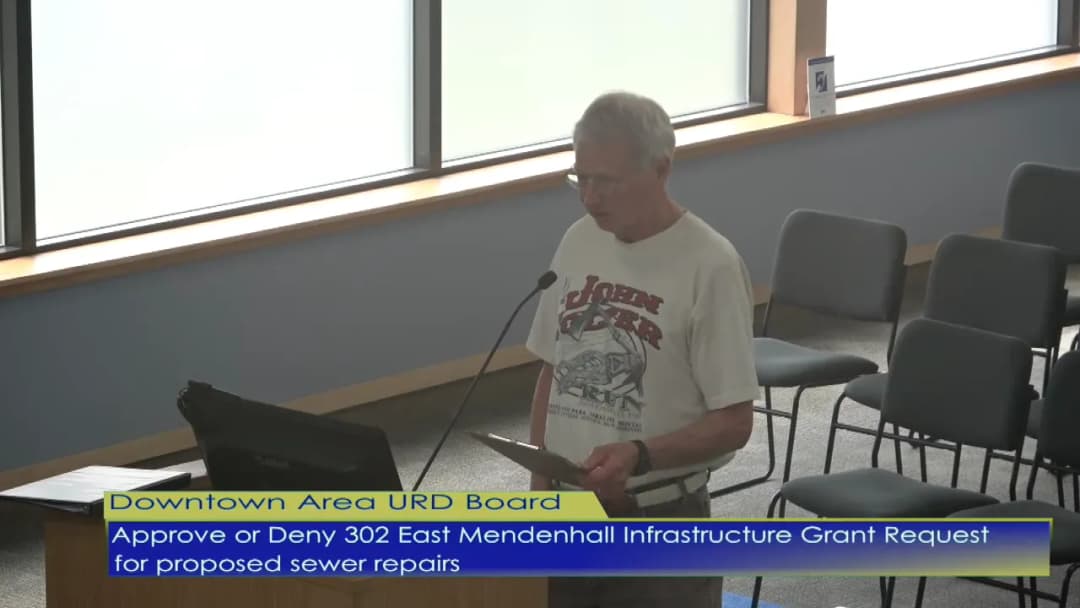
The Bozeman Urban Renewal District (URD) Board met on May 26, 2026, to hear presentations on Montana State University's strategic planning process and the Bozeman Creek Vision Plan, and to vote on a $372,000 infrastructure grant for the Boutique Hotel at 302 East Mendenhall. The meeting also included public comment, a discussion on the downtown post office relocation, and the cancellation of the June 16 meeting. Consent Calendar - The April 2026 board minutes were approved unanimously. Public Comments & Testimony - Mark Campanelli, Bozeman resident (Bogart Park), expressed skepticism about the public benefit of adding another luxury hotel downtown, noting the tax increment from the Spotique Hotel is expected to repay within less than one year ($464,000/year). He questioned whether the TIF funds would be used for a downtown parking garage and raised concerns about gentrification, price inflation, and displacement of venues like Cactus Records. He argued that the blight along Bozeman Creek might not be remedied by the hotel and urged investing TIF funds in the Bozeman Creek Vision Plan flood reduction infrastructure instead. - Daniel Cardi, Bozeman resident (200 block of North Third), asked the board to deny the $372,000 TIF request, stating the hotel is not in a blighted area, that development would occur without the TIF, and that the request does not meet the "but for" rule. He also referenced developer Matt Payne's previous comments insulting the community for opposing the hotel and argued that development must pay its own way. - Matt Payne (Payne Group, 515 South Black) responded that the sewer line upgrade was requested by the city for future-proofing, not for the hotel’s immediate capacity needs, and that the existing line had enough capacity. He said city public works determined the alternative route under Bozeman Creek was not budget-feasible, and the chosen route is more cost-effective and benefits nine adjacent properties. He stated, "I'm not taking any of that money home." Discussion Items MSU Strategic Plan – Kate (Consultant, President's Office) - Kate, a consultant hired by MSU President Tessman, presented the strategic plan process, which will be released in November and serve as an active, ongoing document. Over 1,500 campus stakeholders (staff, faculty, students) have been engaged, and broader community listening sessions will continue through the summer. - Housing: Board members raised the impact of MSU’s growth on Bozeman’s housing market. Ellie noted that MSU students off campus make up 20% of Bozeman's population, and student housing demand is often debt-financed, which has inflationary effects on rents. Kate confirmed that housing is a recurring theme, especially for grad students and faculty, and mentioned plans to build a new dorm where the grad houses are. A board member suggested university land could subsidize faculty housing to aid recruitment. - Internships and Integration: Board members emphasized the importance of connecting MSU students to downtown businesses through internships and career pipelines. Tony shared that his business benefits from Jake Jabs College of Business interns. Students expressed desire for better integration with the community, with parking as their top concern. - Downtown Presence: A board member noted that a downtown MSU store or more events (like CatWalk) could strengthen the university-town connection, drawing on experiences in other college towns. Bozeman Creek Vision Plan – John Henderson (Asst. City Manager) & Nick Chad (Port, Consultant) - John Henderson introduced the Bozeman Creek Vision Plan, a commission priority adopted in late 2024. The city is co-leading the effort with the C. Bozeman Creek group, which includes watershed experts, biologists, engineers, and architects. - Scope: The study area runs from Ice Pond Road (near the Galligator) through downtown to the Northeast neighborhood, roughly to I-90. The plan aims to mitigate flood hazards, improve water quality and ecological health, increase trail and park connectivity, support economic vitality, and strengthen community connection to the creek. - Progress: The first phase (stakeholder meetings, literature review, code analysis) is complete. A public open house is scheduled for June 2, 2026 (4-7 p.m. at Soroptimist Park) to present 12 “big ideas” for Bozeman Creek. A draft vision plan is expected in late August/early September, with city commission adoption targeted for December. - Funding: John noted that the board may be asked for significant financial investments from the URD for future projects, aligned with FEMA grants, philanthropy, and other opportunities. Infrastructure Grant for 302 East Mendenhall (Boutique Hotel) - Ellie presented the first infrastructure grant request under the URD’s new program, established in late 2025. The $372,000 grant is for sewer infrastructure improvements tied to the Boutique Hotel on Mendenhall. - Background: The existing sewer line is over 100 years old. The city requested an upsizing for future-proofing, and the chosen route (up Mendenhall, not under the creek) is more cost-effective and will benefit nine other properties. The grant is a reimbursement grant, released upon certificate of occupancy, and the developer will pay for all costs above the grant amount. - Developer Details: Duncan Fraser (Payne Group) confirmed the line is gravity-fed (no lift station) and sized for all properties on the block. The hotel’s site plan is approved; building permit is imminent. - Blight Remediation: Ellie stated that the grant addresses deferred sewer lines, but a district-wide blight assessment is a goal over the next 1–2 years. Key Outcomes - MSU Strategic Plan: The board will submit additional feedback via Ellie; the president’s office is collecting recommendations through a survey. - Bozeman Creek Vision Plan: The board was invited to participate in the June 2 open house and to have two members serve on the summer advisory committee. Jake expressed interest. - Infrastructure Grant Approved: The board voted to approve the $372,000 infrastructure grant for 302 East Mendenhall. Roll call vote: Nicholas – aye, Jake – aye, Sky – aye, Tony – aye (all in favor). - June 16 Meeting Canceled: The board agreed to cancel the June 16, 2026 meeting due to Ellie’s absence; the parking vision plan presentation will move to July. - Post Office Relocation: Ellie will draft a separate public comment on behalf of the URD board regarding the proposed relocation of the downtown post office, which has been walkable for over a century. Comments are due June 7 via mail to USPS/GSA.
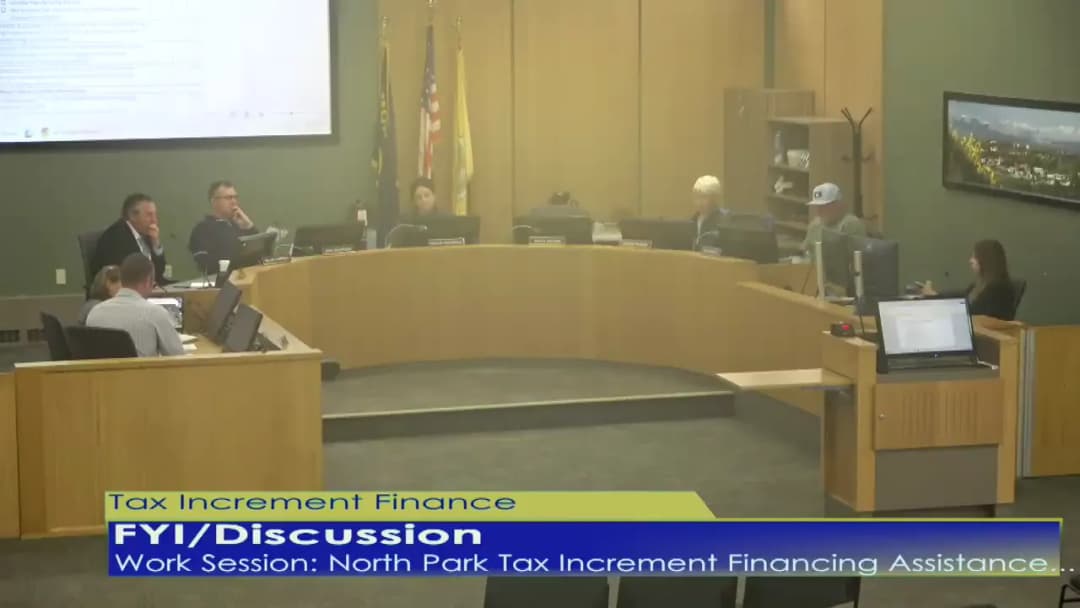
The Bozeman Tax Increment Finance (TIF) Advisory Board met on May 21, 2026, for a work session led by Economic Development Manager David Fine. The primary agenda item was a discussion of the draft North Park Tax Increment Financing (TIFF) Assistance Program Application criteria. No votes or formal actions were taken; the board will consider adopting the criteria at a future meeting. Public Comments & Testimony - Mark Campanelli, identified as a Bogert Park resident, spoke during public comment on the North Park district. He proposed formation of the East Gelaton Watershed Trust, a nonprofit focused on mitigating conflicts between neighborhoods and water courses. He highlighted the presence of Mandeville Creek through the district, noted recent tree planting by the Gallatin Watershed Council and Trout Unlimited, and urged the board to leverage the creek and natural environment as an amenity for economic development and worker attraction. He emphasized that placemaking, connectivity, and environmental health should be central to development decisions, given the use of tax increment financing. Discussion Items - Work Session: North Park Tax Increment Financing Assistance Program Application – David Fine presented draft criteria for evaluating TIFF assistance requests in the North Park Urban Renewal District. The district, primarily industrial with significant infrastructure deficiencies (lack of access, long utility runs), has seen limited development. The draft criteria are organized under five goals from the Urban Renewal Plan, each with point weights: promote economic development with a focus on value-adding commerce (10 points); invest in efficient delivery of public infrastructure (20 points); encourage public-private partnerships (5 points); support planned urban density and design (10 points); and project relationship to the plan and investment ratio (10 points). The weighting reflects the priority on infrastructure investment, given the district’s history of stagnation. Board members discussed: - The relative weighting of goals, particularly whether value-adding industries (e.g., manufacturing vs. service trades like auto repair) should be scored higher to capture local economic activity and prevent loss of such businesses to lower-cost areas like Belgrade. - The investment ratio (8:1 for commercial, 5:1 for other) as a guideline for comparing public subsidy to private investment, measured via developer pro formas. - The role of public-private partnerships, with a board member suggesting an indoor sports facility as an example of community benefit. - The difference between this district’s criteria and those of other TIF districts (e.g., Midtown and Northeast are more human-scale and placemaking-focused). - Logistics: Infrastructure developer likely to be the applicant, with horizontal infrastructure (e.g., roads, utilities) as the primary TIFF-eligible expense. - Commission Update – David Fine reported that the City Commission adopted the work plans and budgets recommended by the TIF Board, including reallocating $100,000 from the parking garage design fund to a Midtown action plan update. This update will focus on public realm planning, trails, and parkland, with board engagement anticipated. Key Outcomes - No votes, approvals, or formal decisions were made during this work session. The board directed staff to refine the North Park TIFF assistance criteria and return with an action item for adoption at a future meeting. Staff also indicated they would bring forward additional district criteria in subsequent meetings.