11
SEP 3, 2026 · CARMEL, INDIANA · CITY COUNCIL
Carmel City Council Claims Meeting - September 3, 2026
PROCEDURAL 100%
A brief meeting to approve routine financial claims and transfers. The council voted to approve multiple categories of payments totaling over $14 million. Consent Calendar - Payroll: $4,408,520.28 - General claims: $5,336,503.03 - Purchase card: $26,021.99 - Retirement: $137,832.06 - Wire transfers: $4,389,751.08 - Total claims approved unanimously with a 6-1 vote (one opposed).
The Mayor's Advisory Commission on Arts met on August 27, 2026, in an informational session due to the lack of a quorum. The primary focus was the review and explanation of the 2027 Arts Grant application timeline and process, presented by the Mayor. No votes were taken. Public Comments & Testimony - Elaine Mancini (Actors Theater of Indiana) expressed appreciation for the financial boot camp hosted by the Hamilton County Community Foundation, noting it covered multiple segments and was valuable. - Don Tabler (Discovering Broadway) asked whether the financial boot camp would be offered again, echoing support for its continuation. Discussion Items - 2027 Arts Grant Timeline and Process: The Mayor presented the grant schedule: - Grant application window: September 1 to September 30, 2026 (opened earlier than previous years). - Online application process similar to last year with one fewer question. - Staff will review applications on a rolling basis through October 7. - Hamilton County Community Foundation will provide an elevated financial review on a rolling basis through October 30. - The Arts Commission will review applications from rolling receipt (or in batch) through November 13. - Mayor's review and recommendations due by November 24. - Notification letters, document collection, and grant agreements finalized by December 8. - Grants exceeding $50,000 will require approval by the Board of Public Works at its December 9 meeting. - Internal city claims for payment must be submitted by January 7, 2027, for council approval at the January 21, 2027 claims meeting. - Financial Boot Camp: The Mayor noted the boot camp, led by the Hamilton County Community Foundation, was required for existing grantees to improve financial sustainability. Positive feedback was received, and the program will be offered annually to accommodate new board members and staff. - End of Year Report Template: The item was on the agenda but the Mayor did not have the template ready; it was postponed. Key Outcomes - No formal decisions or votes were taken as the meeting was informational. - The grant timeline and process were communicated; arts organizations were encouraged to direct questions to the commission or city. - The financial boot camp will be repeated annually.
The Carmel City Council met on August 17, 2026, at 6 p.m. The meeting included an invocation, recognition of city employees and a robotics team, public comments, and extensive discussion on a catastrophic flooding event. The council also addressed consent agenda items, committee reports, and new business. Consent Calendar - Approved minutes from the August 3, 2026 regular meeting. - Approved claims and payroll: $4,552,131.37 (payroll), $3,358,709.85 (general claims), $137,832.06 (retirement). Public Comments & Testimony - Anya Borse (HSS volunteer) presented the Hindu tradition of Raksha Bandan, tying sacred threads to council members as a symbol of mutual respect and community protection. - Mr. Swanson (Carmel resident) opposed the proliferation of Flock security cameras, arguing they violate Fourth Amendment rights and were installed without public consent. He called for a referendum on the cameras. - Charles Demler (Carmel resident since 1980) criticized the city council's approval of a six-story Buckingham building behind his home, stating it destroyed his privacy. He acknowledged Flock cameras helped in a past threat but expressed concerns about data retention and misuse. - Dakota Crawford (Carmel resident, Cranmercy West) opposed a proposed mandatory dismount zone for cyclists on the Monon Trail between West Main Street and City Center Drive. He urged alternative solutions such as signage, education, and requiring driver's licenses for e-bikes. - Ryan Hellyer (Arcadia resident, works in Carmel) opposed Flock cameras, citing a Supreme Court ruling (Chatterjee v. United States) and demanding their removal. He called for a public referendum. - Adam Muller (Carmel resident, family of five) opposed the mandatory dismount zone, stating it would penalize everyday commuters and families using the Monon for transportation. He urged targeted enforcement instead. - Kelly Negie (Carmel resident) opposed the dismount zone, arguing it would not stop reckless riders and would punish those who rely on the trail for commuting. She suggested closing Monon Boulevard to vehicle traffic as an alternative. Discussion Items - Flooding Emergency Update: Mayor and officials reported that as of August 17, 2026, 215 homes were affected, 41 residents evacuated, and the Bickford senior living community residents (44) returned. The bridge over Blue Woods Creek on Hazeldell Parkway collapsed into the Martin Marietta quarry, which has filled with approximately 7 billion gallons of water. City Engineer Brad Pease and Utilities Director Lane Young detailed ongoing erosion threatening a 30-inch and 24-inch force main. County Commissioner Christine Altman stated the bridge replacement will take at least two years (estimated $7–10 million). The council discussed potential contamination, debris removal, and public safety. Council members emphasized the need for infrastructure resilience and expressed gratitude to city staff. - Monon Trail Safety (Land Use Committee): Councilman Taylor reported that the committee is still discussing a proposed mandatory dismount zone at Main Street, based on police recommendations. Public comments were received, and further discussion is scheduled for Thursday, August 20, 2026, at 6:30 p.m. at the Carmel Library. - Economic Development Commission: Councilman Jeff Moore reported that the commission approved $11 million in bonds for Rebar's Signature 55 project on Old Meridian (mixed-use, age-restricted multifamily) on August 25, 2025. Key Outcomes - Approved additional appropriation of $389,000 from the Motor Vehicle Highway Fund for Street Department equipment (loader, street sweeper, trucks). - Approved Ordinance D 2845-26 establishing a municipal tourism capital fund, expected to receive approximately $1.36 million annually from innkeeper's taxes (per House Enrolled Act 1210). Funds can only be used for tourism-related capital projects. - Appointed Ryan Caldwell to the Board of Zoning Appeals for a term ending December 31, 2027. - Directed residents affected by flooding to contact the Hamilton County Emergency Operations Center at 317-645-3261 for assistance and volunteer opportunities. - Noted that Hazeldell Landing Park, River Heritage Park, and the White River Greenway trails remain closed indefinitely; trespassing will be enforced.
The committee reviewed two bond ordinances for water and sewer utility improvements and discussed a proposed budget timeline for the 2027 city budget. Both bond ordinances were recommended positively to the full council. Discussion Items Ordinance D-2834-26: Water Utility Revenue Bonds ($9.5 million) - Director Young (Lane) presented water system improvements including water main replacements in Merchants Square, along Carmel Drive, a roundabout at 146th and Hazel Dell, a Michigan Road loop for redundancy, and replacements in Concord Village. The original ask of $8 million was amended to $9.5 million to include replacing 1969 water mains during sewer work. The bonds are secured by water utility net revenues and require no rate increase. - Scott Miller (Baker Tilly) described the financing structure: $9.6M in project costs plus financing costs, with premium from bond issuance. Current water bond rating is BBB+; goal is to reach A rating. Debt service coverage remains strong even with new debt. - Landon Bane (Baird) discussed market conditions: recent peak in interest rates due to Fed uncertainty and geopolitical stress. Proposed negotiated underwriting with fixed fee of 0.425%. Will explore both rated issuance and private placement. Rating agencies will be engaged; process expected to close in October. - Councilors expressed support for the plan, noting utility's improved financial health and importance of maintaining strong bond ratings. Ordinance D-2835-26: Sewer Utility Revenue Bonds ($25 million) - Director Young presented wastewater projects: replacement of a 12-inch clay sewer along Range Line with 18-inch PVC (due to capacity issues), and new sewer lines along Carmel Drive and into the Gramercy development. $15M estimated for projects plus $10M to repay a 2023 bond anticipation note. Also no rate increase needed. - Scott Miller noted wastewater has no rated debt currently; expected rating similar to water (BBB+/A). Debt service coverage ratio projected around 150% after issuance, with room to smooth payments. - Landon Bane added that the 2023 bond anticipation note matures in 2027 and will be paid from proceeds. - Councilor Minor asked about lining projects as a priority; Director Young clarified lining has 50-year life and would be funded if projects come in under budget. - Councilor Green raised questions about BOT (build-operate-transfer) transparency, including requiring line-item bidding, contingency outside GMP, and independent validation. Director Young confirmed these measures. Budget Timeline Proposal - City Controller Zach Jackson proposed a new budget process: draft budget and prerecorded department presentations sent to council and public on September 8, 2026. A budget QA meeting with the mayor on September 28 (2-4 p.m.), then public hearing on October 5, adoption on October 19. Special email for questions from council and public. - Councilors discussed transparency: all Q&A should be posted publicly. Councilor Green suggested trying the new process this year due to minor changes. Councilor Minar and Green thought the 2-hour QA window might be too short. Zach noted the certified net assessed value (CNAV) is $12.2 billion, down 2% from prior year due to deductions, with gross growth around 8%. Revenue projections expected in two weeks. Key Outcomes - Motion to send Ordinance D-2834-26 (water bonds) to full council with positive recommendation: passed unanimously. - Motion to send Ordinance D-2835-26 (sewer bonds) to full council with positive recommendation: passed unanimously. - Budget timeline proposal was discussed; no formal vote taken. Councilors expressed general support for trying the new process with adjustments (possibly extending QA session). Further details to be finalized. Note: No consent calendar or public comments were present in the transcript.
The Carmel City Council met on Monday, July 20, 2026, at 6:00 PM at City Hall for its regular meeting. The session included a deputy mayor's report, financial updates, multiple committee reports, a discussion on the Chris Kindle Market investigation, a proposed stormwater fee ordinance, and the introduction and passage of several ordinances. A major announcement was made regarding the funding and path forward for a new seventh fire station on the city's west side. Public Comments & Testimony - No public members spoke during the public hearing for ordinance D-2837-26 (MVH appropriation). Deputy Mayor Report (Annabelle Ventries) - Reported a successful Carmel Fest 2026 despite heat and a storm, with a fireworks show sponsored by the Carmel Rotary. - The third phase of the Monon Trail was completed and celebrated with a ribbon cutting. - The 2026 Carmel Neighborhood Association Network Meeting was held, helping HOA leaders learn about updated laws. - The "Ideas of Change" initiative and resident survey completed its first phase with 1,462 participants. The next phase will begin soon. - Next neighborhood pop-up event: Wednesday, July 22, 6-7 PM in the Ashbrook neighborhood. Key Announcements from the Mayor - Seventh Fire Station: The Mayor announced a plan to dedicate $5 million in LIT funds as seed funding for a new fire station on the west side. The station would be built by repurposing a portion of the water distribution building at Main and Shelbourne. This approach leverages an existing city asset, reduces costs, and accelerates the timeline. The need is supported by data: in 2025, firefighters executed over 10,000 runs (up from 7,000 in 2020). The goal is to have the station open by July 1, 2028, with 14 firefighters hired and trained. The project also allows for relocation of fire maintenance to the police/streets campus, freeing space for expanded training at 106th and Gray. Committee Reports - Housing (Councilor Minar): The Mayor's Advisory Commission on Housing met to discuss information from Opticos on missing middle housing and the UDO. Discussions are ongoing; no next meeting date set yet. - Finance (Councilor Taylor): The committee discussed two items: (1) a request from Engineering and Parks Director Michael Klitzing to amend the 2024 infrastructure bond MOU to acquire 26 acres contiguous to Meadow Lark Park for green space (an amendment will be prepared for next meeting); (2) ordinance 36-26 on stormwater fees returned with a negative recommendation due to procedural issues. - Land Use (Councilor Joshi): Discussed ordinance D 2795-25 on use of public areas of City Hall. Ongoing discussions with input from the public and City Legal. Next meeting: Thursday, July 23, 5:30 PM at Carmel Public Library. - Carmel Historic Preservation Commission: Approved $30,000 in facade grants (matching $145,000 in private funds). Reviewed a certificate of appropriateness for the Wilkinson Hull property. Continued dialogue on the Blue School building. Working on the North Rangeline Road conservation district plan (expected to be ready in August). Completed annual CLG reporting. Finance Report (CFO Zach Jackson) - Revenue: After two quarters, revenues are $8 million (10.2%) over forecast. Key drivers: $1.1M insurance reimbursement for Keystone overpass repairs (offset by transfer to insurance recovery fund), $5.2M supplemental LIT higher than expected, and $900K property tax timing difference. - Expenses: General fund spending is 1.2% ($900K) under forecast; MVH spending is 5.8% ($700K) under. Fire department overtime is projected to require an additional appropriation before year-end. - Bond Refunding: Achieved $12.4 million in net present value savings (7.89%, well above the typical 3% target) from a $141M refunding. Strong demand (186 orders totaling $581M). The refunding will lower operating costs by $4-5M in 2027 and 2028 without extending maturities. Discussion: Chris Kindle Market Investigation (Old Business A) - Councilor Taylor made a motion to require Dentons (the law firm conducting the investigation) to produce the final report by August 20, 2026, or turn over all materials to the council's legal counsel. - Councilor Locke, who has been shepherding the investigation, noted that the city provided a large document production, and the firm is still working through it. He cautioned against an arbitrary deadline that could compromise thoroughness. - Multiple councilors expressed frustration with the duration (over a year) and cost ($125,000, fully expended). Councilor Green stated the investigation has taken too long and may now be a distraction. Councilor Austin noted his original concerns have been resolved. Councilor Rowe emphasized the importance of completing the process with integrity. - Vote: The motion passed (majority in favor, with Councilor Locke voting against or abstaining? The transcript shows Councilor Locke said "I will abstain" later on another topic, but for this vote it says "That carries. So we've made this public." No explicit roll call, but it passed. Councilor Locke expressed intent to abide and send the email. - Outcome: The deadline of August 20, 2026, was set for the report or turnover. Stormwater Fee Ordinance (Old Business E) - Ordinance D-2836-26, which proposed changes to stormwater fees, was returned from the Finance Committee with a negative recommendation due to procedural concerns. - Corporation Counsel Sergey Gurchuk explained that state law (IC 8-1.5-5-7B) and city code require fee changes to originate from the Board of Public Works (the Stormwater Board), not the Council. The ordinance was premature. - Councilor Taylor moved to pull the ordinance from the Land Use Committee and proceed to a vote on approval. The motion to pull and approve was seconded. - After debate, the ordinance was voted down (not explicitly stated, but it failed; the context suggests it was not approved). The administration will draft a new ordinance following the correct process, including a public hearing at BPW, eliminating the COLA, and establishing fees during the budget process. - Councilor Locke urged continued community input on stormwater projects, noting that a plan for the Concord Village neighborhood was presented and will move forward regardless. MVH Additional Appropriation (Ordinance D-2837-26) - First reading, public hearing (no comments), and immediate action (suspend rules, approve). - Appropriates $651,000 from the Motor Vehicle Highway Fund: $50,000 for speed humps on West Road (previously approved) and $601,000 to cover a shortfall in wheel tax revenue estimates. - Motion to approve passed. Micromobility and E-Moto Devices (Ordinance D-2839-26) - First reading. This ordinance addresses use of e-bikes, scooters, and e-motorcycles on trails and roads. - Councilor Austin proposed an amendment to carve out two provisions: (1) ability to impound devices in certain circumstances, and (2) forfeiture if used in criminal activity. The amendment was approved. - The amended ordinance (with only those two provisions) was then approved immediately (suspend rules, approve). - The remaining content will be discussed in committee, including additional police requests: clearer identification of e-moto devices, prohibitions on wheelies and speeding, enhanced fines, mandatory court appearance for third offense, and impoundment. A working group will continue to develop ideas. - Motion to adopt amended ordinance passed. Non-Reverting Funds for DOCS and Engineering Fees (Ordinances D-2840-26 and D-2841-26) - Two ordinances to create special non-reverting funds as required by state law for development fees collected by DOCS (building permits) and Engineering. - Each ordinance was introduced, rules suspended, and approved unanimously. - Funds will start being deposited into the new accounts; CFO noted that seed money carried over from the current year can help smooth FY 2028 budgeting. Key Outcomes - Chris Kindle Market: Investigation report due August 20, 2026; if not received, materials must be turned over to council's legal counsel. - Stormwater Fee Ordinance: Withdrawn (not passed); administration to re-initiate through BPW with proper process. - MVH Appropriation: Approved $651,000. - Micromobility Ordinance: Amended to include impoundment and forfeiture provisions; approved. Further committee work on broader regulations. - Non-Reverting Funds: Both ordinances approved (D-2840 and D-2841). - Fire Station: Mayor committed to $5M LIT funding and a 2028 completion target; detailed plan to be brought forward. - Meadow Lark Park: Finance committee to prepare MOU amendment for 26-acre acquisition.
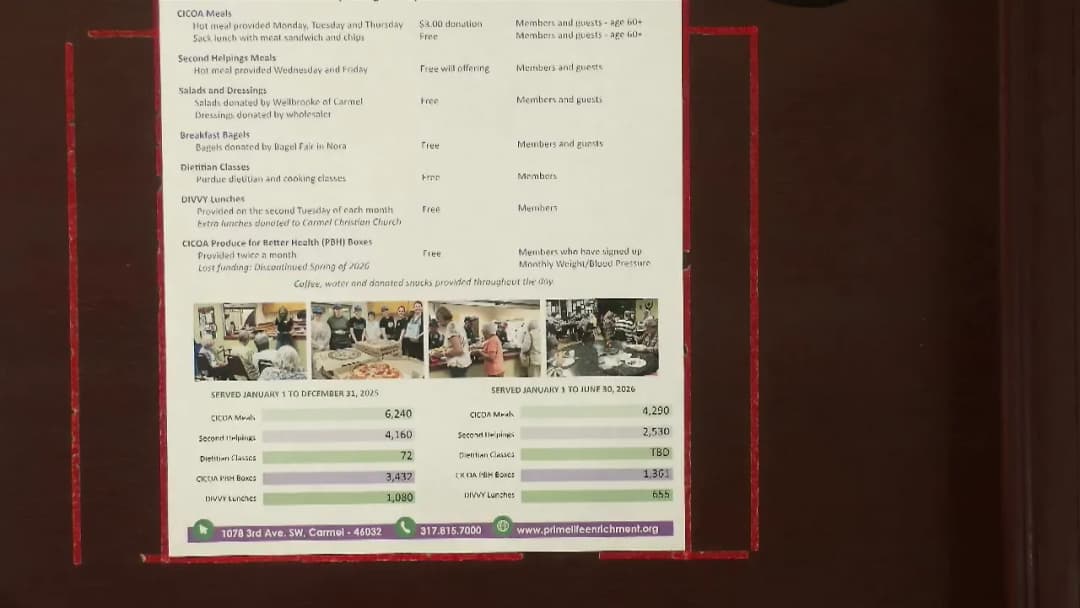
The Mayor's Advisory Commission on Food Access met on July 16, 2026, at 7:30 AM. The meeting featured three presentations from food access organizations, an update on a grant application, and a vote on a resolution for electronic participation. Key statistics on food insecurity, SNAP enrollment, and local meal programs were discussed. Grant Update and Application - Amanda reported on the grant application to the U.S. Conference of Mayors for $25,000 to address childhood hunger. The hybrid model includes a benefits navigator across Carmel's food pantries and a public awareness campaign, coordinated with Merciful Help, Carmel UMC, and Grace Care Center. - A grant inquiry was submitted on July 7, 2026, with assistance from Bradford Consulting Group. The commission is seeking matching funds (cash or in-kind) to expand the grant's impact to $50,000. - The application opens July 22 and closes August 21, 2026. The commission will learn if they advance to the next round early next week. Presentation: Feeding Indiana's Hungry (Emily Wikert Bryant) - Emily provided an overview of food insecurity in Hamilton County. The food insecurity rate is 10.1% (36,000 individuals), with 79% of those above SNAP eligibility. Child food insecurity is 8.6% (under 8,000 children). - SNAP data for March 2026: 3,149 households (6,571 individuals) in Hamilton County, with monthly issuance of $1.3 million. Carmel zip codes represent about 12% of these individuals. - SNAP enrollment dropped 13% year-over-year from March 2025 to March 2026, attributed to policy changes (e.g., asset limits, work requirements, immigration restrictions). - The state's asset test for SNAP is reverting to the federal minimum of $3,000 ($4,500 for seniors/disabled) as of July 1, 2026. - New state law (Senate Enrolled Act 1) requires all household members to disclose immigration status, even if not applying, which may deter eligible families. - The "One Big Beautiful Bill" changed work requirements (ages 18-64) and introduced a state cost share for SNAP benefits, starting at an estimated $139 million annually for Indiana. Presentation: Meals on Wheels of Hamilton County (Tricia Hudson) - Meals on Wheels serves 6,050 meals monthly to 150 clients, with 20 routes and 340 volunteers. Carmel has 20 clients. - Meals cost $6.50 each (client pays donation); Riverview Hospital will increase the provider cost by $2 per meal in 2027. - Demand is growing; 23 new clients were added in June 2026. The program has not yet denied clients but may face capacity limits from meal providers. - Volunteers are needed; drivers pick up meals from Riverview Hospital and deliver between 11 AM and 1 PM, with 8–11 stops per route. Presentation: Prime Life Enrichment (Sloane Thompson) - Prime Life is a wellness center for adults 50+, offering 50+ clubs/activities and 45 fitness classes weekly. Membership is $20.40/month (increasing to $25 on August 1, 2026). - Food access programs include daily hot lunches (Sokoa three days a week, Second Helpings two days a week), produce boxes, and Divi meals. In 2025, they served 6,240 Sokoa meals, 4,160 Second Helpings meals, 3,432 produce boxes, and 1,080 Divi meals. - In the first six months of 2026, meal counts are ahead of 2025. Transportation is free and on-demand for Hamilton County residents, with no waiting list. - Prime Life served 3,147 unique individuals in 2025, mostly from Carmel. The organization is understaffed (five open positions) and salaries are below market. Key Outcomes - Resolution 2026-01: The commission unanimously approved (via roll call) a policy for electronic participation in meetings, ensuring compliance with open door laws. - The commission will continue to gather data on SNAP enrollment in Carmel and explore matching funds for the grant. - Action items: Follow up with Emily on updated food insecurity data (expected July 28, 2026) and connect with Meals on Wheels and Prime Life to promote their services and volunteer needs.
The Carmel Finance Utilities and Rules Committee met on Monday, July 6, 2026, at 4:32 p.m. to consider three items related to the implementation of Workday, a cloud-based ERP system. The committee heard a presentation from City CFO Zach Jackson and Tom Helt, Vice President for Government at Workday. All three items were approved and sent to the full Common Council with a positive recommendation. Discussion Items - Ordinance D-28-29-26: Establishes a non-reverting ERP implementation fund (Fund 928) per Article 4, Section 2-131 of the Carmel City Code. - Resolution CC-061526-03: Transfers $2 million from the General Fund (101) into the ERP implementation fund (929). - First Reading Ordinance D-2831-26: Appropriates $2 million to support ERP implementation costs. City CFO Zach Jackson explained that the existing accounting system (Central Square) was installed in 1994 and is outdated. The annual licensing cost for Workday will be approximately $30,000 more than current licenses for Central Square, ADP, and other small systems used by various departments. The transition will replace manual, paper-based processes with automated workflows and unify finance, HR, and planning data. Tom Helt, a Carmel resident, presented slides highlighting Workday’s capabilities, including automation, transparency, and risk reduction. He noted that Workday is a cloud-based solution used by many public sector organizations, including Hamilton County and Depauw University. A pre-implementation survey showed a significant gap between the city’s current operations and the advanced level achieved by Workday’s average customer. The committee discussed: - Efficiency Tracking: How efficiencies can be measured before and after implementation. Councilor Ar asked about modules that track efficiency gains. Helt stated that some AI tools within Workday can identify process inefficiencies, but a before-and-after comparison must be measured by the city. - Return on Investment: Jackson noted that the $2 million implementation cost is projected to be recovered within three to four years through operational efficiencies. - Additional Modules and Fees: Councilor Minor asked about future modules and potential extra costs. Helt confirmed additional modules would incur fees, but Workday works with customers to make transitions net neutral. - Implementation Support: Councilor Worrell asked about on‑site personnel. Helt said a team will be present at key milestones (planning, design, testing, deployment) to work in person, balancing remote and on‑site presence to control travel costs. - Self-Service Capabilities: Councilor Worrell inquired about self-service in finance (reporting) and HR (benefits, pay stubs). Helt explained that self-service in finance allows departments to generate reports without IT assistance; HR self-service enables employees to access information independently. - Consolidation and Implementation Timeline: Councilor Green asked about migrating from multiple solutions (ADP, Central Square) to Workday. Jackson stated the goal is to go live with all modules by end of spring/early summer 2027 (April–May). They have built in cushion to ensure readiness by January 1, 2028 if needed. The team is coordinating with ADP to avoid an unnecessary interim migration. - Procurement Module: Councilor Green asked about procurement and contract management. Helt explained that Workday’s procurement module handles requisitions and purchases, but contract lifecycle management is a future possibility once the corporation council is ready. Current procurement is decentralized; the new system will eliminate duplicate data entry. - Training for Council: Councilor Minor requested training for council members on using the new tools. Jackson confirmed that training is included in the project scope. Key Outcomes The committee voted on all three items, each approved and sent to the full Common Council with a positive recommendation: - Ordinance D-28-29-26: Motion by Councilor Green, second by Councilor Minor. Motion carried. - Resolution CC-061526-03: Motion by Councilor Minor, second by Councilor Worrell. Motion carried. - First Reading Ordinance D-2831-26: Motion by Councilor Worrell, second by Councilor Green. Motion carried.
Consent Calendar - Minutes from June 15, 2026, approved. - Claims, payroll, and financial items approved: payroll ($4,725,826.20 for June 12; $4,490,203.58 for June 26), HSA payout ($296,800), general claims ($6,356,851.71), purchase card ($35,895.31), and retirement ($136,972.44). Public Comments & Testimony - Jack Feldman: Requested immediate marking of a crosswalk at Flowingwell Park on Grey Road (site of a past child-vehicle collision). Emphasized safety concerns due to high speeds and poor visibility. - Kelly Nagy (Carmel resident, mother of three): Expressed strong support for raised crosswalks and pedestrian safety improvements. Shared a story of her 14-year-old babysitter who gained independence when 116th Street was closed to through traffic. Advocated for walkable, bikeable infrastructure to reduce car trips and improve quality of life. - Chris Cadden: Described stormwater drainage issues from adjacent Carmel Elementary construction that caused water retention in his yard; a beehive installation intended to mitigate has been ineffective. - Denny Breedlove (Shelbourne Road resident): Reported that his neighborhood has no storm sewers despite paying utility fees. Flooding has damaged trees and septic systems, forcing some homeowners to repeatedly pump septic tanks. Asked the city to provide the same stormwater services as other neighborhoods. - Allie Mistler (Lexington neighborhood resident): Thanked city crews for assessing stormwater issues. Stated that flooding problems have been documented for decades with photos and invoices. Strongly supported the proposed $3.15/month stormwater fee increase, calling it a small investment for community-wide benefit. Urged the city to prioritize essential infrastructure over aesthetic projects. - Angelo Wheeler (resident of five years): Requested a safe crosswalk at 106th and McPherson Street to connect her neighborhood to the Monon Trail, as crossing 106th is currently dangerous. Discussion Items - ERP Implementation Fund (Ordinance D‑2829‑26 and related items): Councilor Austin presented three items to create a non‑reverting ERP implementation fund (Workday cloud‑based system), transfer $2 million from the general fund, and appropriate $2 million. The new system will replace accounting software from 1994, unite finance, HR, and planning modules, and is estimated to cost about $30,000 more annually than current licenses. Public safety payroll will remain on separate timekeeping systems but feed into Workday. Projected return on investment in 3‑4 years. All three items were approved unanimously. - Waterworks Revenue Bond Ordinance (D‑2834‑26): Introduced to authorize up to $8 million in bonds for water system improvements, including replacing aging 10‑inch cast‑iron mains with 12‑inch ductile iron on Carmel Drive (installed 1972), a new 16‑inch main on the west side to serve the Michigan Road corridor, work on Westfield Boulevard to convert remaining Indianapolis water customers, and relocation of infrastructure for a roundabout at 146th & Hazeldell. Also includes flexibility for physical security and cybersecurity upgrades. The administration stated the debt service will be covered by existing rates with no increase needed. Referred to the Finance Committee. - Sanitary Sewer Revenue Bond Ordinance (D‑2835‑26): Introduced to authorize up to $25 million in bonds. $10 million will pay off an existing Bond Anticipation Note (BAN) for the 106th Street lift station and digester repairs. The remaining $15 million will upsize a 12‑inch gravity sewer main to 18‑inch in the Merchant Square area, addressing surcharging caused by development in Midtown and the Gramercy project. The project also includes upsizing mains along Kinzer Drive. No rate increase is anticipated. Referred to the Finance Committee. - Stormwater User Fee Ordinance (D‑2836‑26): Councilor Snyder introduced an ordinance to increase the monthly stormwater fee from $6.85 to $10.00 per residential ERU and remove the automatic 3% cost‑of‑living adjustment. In a lengthy statement, Snyder argued the increase (about 10¢/day) is necessary to address aging infrastructure citywide, including flooding in Lexington, Home Place, Shelburne, and other neighborhoods. He criticized a recent newsletter by Councilor Warell for suggesting the fee is a localized solution without data. Councilor Warell responded that he stands by his newsletter and wants a data‑driven, cautious approach, including a presentation from the city engineer on July 14. He stated he is not opposed to a fee but needs to understand the full scope of problems and costs. Council agreed to refer the ordinance to both the Land Use and Finance Committees for joint study, focusing first on identifying projects and costs before setting a rate. Public town halls are scheduled for July 7 and July 14. Key Outcomes - Approved (unanimous): Consent calendar, ERP implementation fund, fund transfer, and appropriation (3 items). - Introduced and referred to Finance Committee: Waterworks and sanitary sewer bond ordinances (D‑2834‑26 and D‑2835‑26). - Introduced and referred to Land Use and Finance Committees: Stormwater user fee ordinance (D‑2836‑26) for further study and public input. - Approved: Petitions to vacate portions of public ways at 942 and 1006 West Almond Drive after public hearings.
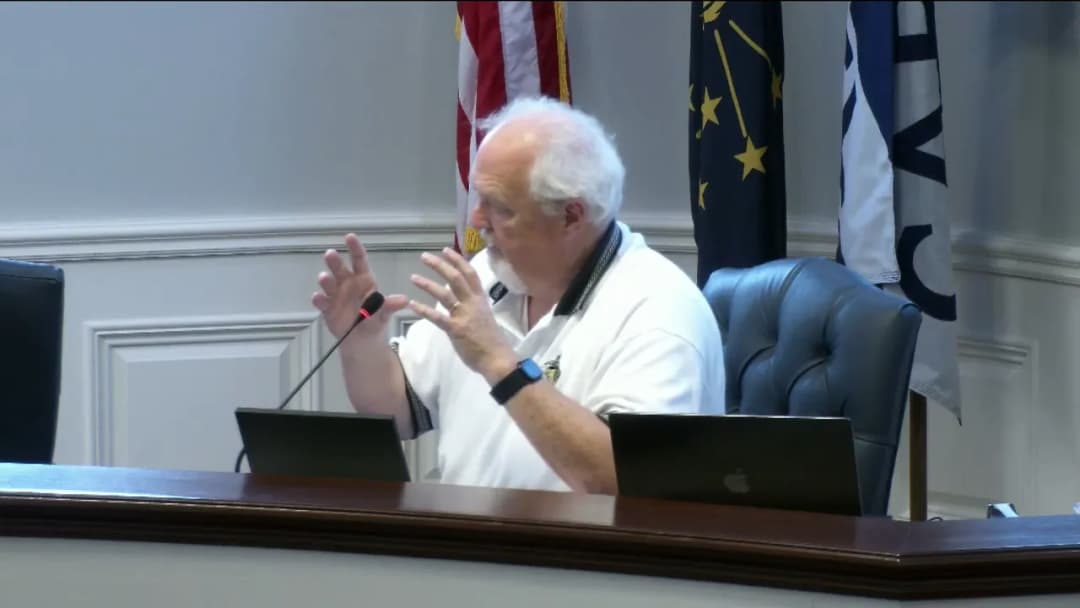
The meeting focused on finalizing the AARP Age-Friendly Community Action Plan and planning the fall intergenerational conference. The Commission reviewed progress, discussed modifications to the AARP framework, and assigned roles for the upcoming conference and parade. Discussion Items - AARP Action Plan Update: Chair Carol reported that the action plan, based on a recent retreat facilitated by Phil Anderson, is being prepared as a booklet with survey results, application, and action items. The plan covers housing, health services, education, transportation, communication, outdoor spaces, and added sustainability/emergency preparedness. The Commission modified several AARP domains: "transportation" became "transportation and mobility"; "civic engagement" was reworked into "work and entrepreneurship" and "community engagement". Communication is treated as a central hub connecting all sectors. The booklet will be submitted to the mayor within two weeks for approval, then back to the Commission for final sign-off. Originally targeted for July 4, 2026, submission to AARP is now expected early fall due to delays. - Fall Conference Planning: A proposed "Intergenerational Connection Conference" is planned for October 16 or 23, 2026, pending approval from an undisclosed partner. Keynote speaker Steve Leader (rabbi and author of "For You When I Am Gone") has been invited. The conference aims to mix generations through breakout sessions, demonstrations, and a free lunch. Last year's conference had 175 attendees. Registration and marketing will be led by Dave Sanders. Volunteers are needed for purpose/format, marketing, registration, volunteer coordination, contracts, and evaluation. The conference will be free to attendees, funded by sponsorships and carryover funds from last year. - Parade Float: The Commission will participate in a local parade (likely Carmel's) with a float promoting seniors, using balloons reading "We love our seniors." Members are invited to ride. - Communications Platform: Chair and Phil Anderson met with a vendor about a web-based platform for organizations to share announcements directly (e.g., class cancellations, weather alerts), not housed solely on the city website. Further discussion is planned. Key Outcomes - The AARP action plan will be reviewed by the mayor within two weeks, then brought back to the Commission for final approval before submission to AARP. - A conference planning committee was formed: Carol (purpose, format), Dave Sanders (marketing, registration, day-of planning), Neoma (marketing support), and roles for volunteers, contracts, and evaluation were assigned. - No formal votes were taken; decisions were reached by consensus. - The Commission will continue to meet monthly; the next meeting date was not specified.
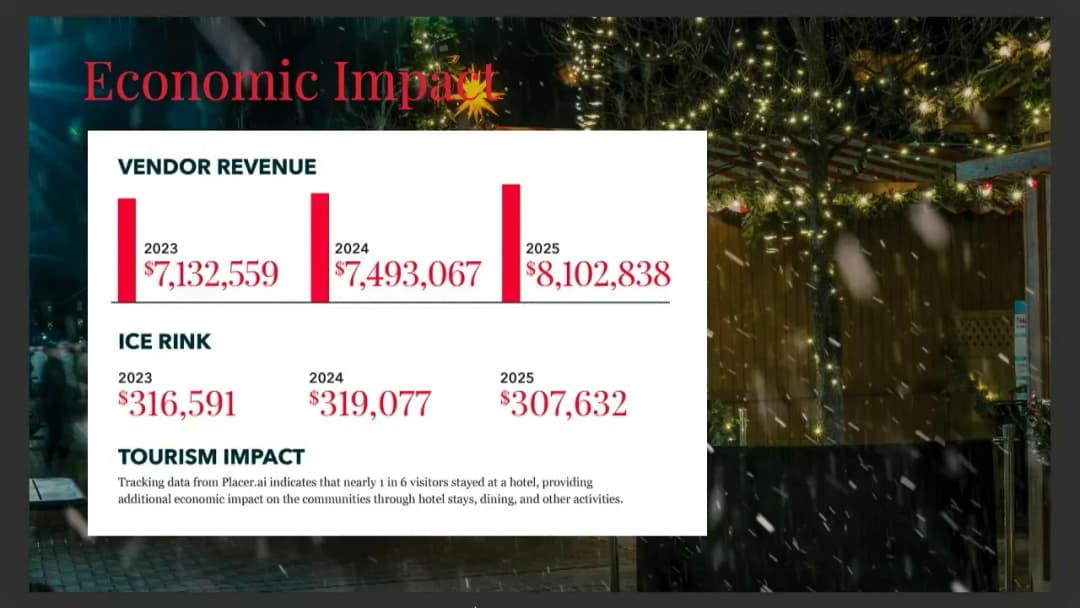
The Carmel City Council met on June 15, 2026, at 6:03 PM at City Hall. The meeting included recognition of the Collegewood Math Pentathlon team as national champions, public comments on stormwater and infrastructure issues, a financial report from the Chris Kringle Market, and action on several ordinances and resolutions. Key discussions centered on flooding, the Richland Avenue extension, and the adoption of a new ERP system. Consent Calendar - Approval of minutes from the June 1, 2026, regular meeting. - Claims: payroll $4,499,303.60, general claims $2,211,903.20, purchase card $39,222.35, wire transfers $2,062,219. - Committee reports: Finance committee reviewed ordinances and abatements; Land use committee reviewed right-of-way permit and zoning fee ordinances. Public Comments & Testimony - Chris Caden: Questioned why 35-gallon trash containers are not allowed under Carmel's contract with Republic, arguing it reduces recycling incentive. Also suggested moving the crosswalk at the Rangeline Road roundabout farther from the intersection to improve pedestrian safety. - Chris Catton: Reported stormwater pooling in his backyard since the construction of Carmel Elementary School, leading to flooded basements among neighbors. Requested installation of French drains. - Allie Mistler: Raised ongoing flooding issues and lack of a promised secondary access road for Carmel Elementary. Criticized a lack of coordination and accountability, and expressed concern that a proposed $1.2 million fix for Lexington Boulevard would not address stormwater from higher ground. - Carrie Gonzalez: Opposed the Richmond Avenue extension through Concord Village, citing drainage problems and loss of green space. Described the neighborhood as family-friendly and quiet. - John Shapiro: Urged the council to find a solution for the Richland Avenue extension and related flooding, citing safety risks for Carmel Elementary due to a single point of access. Stated that infrastructure has not kept pace with growth. Discussion Items - Recognition of Math Pentathlon Team: The Collegewood Elementary Math Pentathlon team was recognized as 2026 national champions. The program involves 73 students and emphasizes critical thinking and teamwork. - Deputy Mayor Report: Upcoming events include the Civic Dialogues program (through July 6), Americana on Maine celebrations (Thursdays through July 2), a new city project viewer online, and FIFA World Cup matches on the midtown screen. - Council Comments on Stormwater: Councilors discussed scheduling public meetings on July 7 and July 14 to address flooding and the Richland Avenue extension. Councilor Worrell clarified that the July 14 meeting will be publicly noticed and include a presentation from the city engineer. Councilor Snyder emphasized gathering data before acting. - Chris Kringle Market Financial Report: CEO presented the annual report. Revenue was $3.1 million, expenses $2.5 million, net operating revenue $620,000. Market attendance stabilized at 300,000. A free shuttle service had 11,000 riders. Plans include expanding the shuttle, conducting a community assessment, and establishing a contingency fund. - Ordinance D-2826-26 (Right-of-Way Permit): Amended to reduce the application fee to $50 and add street cut ($500) and path cut ($200) fees. Approved unanimously. - Ordinance D-2A27-26 (Excessive Vehicle Noise): Amended to remove the definition of modified exhaust system due to state preemption concerns. Approved unanimously. - Ordinance D-28-23-26 (Appropriation for Public Infrastructure Insurance Recovery Fund): Amended to rename the fund, then approved after a public hearing. - Ordinance Z-707 (Zoning Fees): Amended to exempt single-family residential lots under one acre from engineering inspection fees. Approved 8-1 (Councilor Locke voting nay). - First Readings and Suspension of Rules: Ordinances D-2825-26 (ambulance capital fund), D-2828-26 (motor vehicle highway fund), and D-2831-26 (ERP implementation fund) were introduced and passed on first reading with suspension of rules. - Resolution CC-06-15-26-04 (US 31 Sub-Area Plan): After debate, an amendment was added to include the phrase "or strengthen" regarding existing PUDs adjacent to residential areas. The resolution was then approved. Key Outcomes - All consent items and committee reports approved. - Four property tax abatements (ACES, MISO, Schlage Lock, ZP Investments/Zotech Partners) found compliant and continued. - Resolution for fund transfer (public infrastructure insurance recovery fund) approved unanimously. - Ordinance D-2826-26 approved unanimously. - Ordinance D-2A27-26 approved unanimously. - Ordinance D-28-23-26 approved unanimously. - Ordinance Z-707 approved (8-1). - First readings of ordinances D-2825-26, D-2828-26, and D-2831-26 passed with suspension of rules. - Resolution CC-06-15-26-04 approved after amendment. - Non-emergency number for Carmel Police Department provided: 317-571-2580. - Housing Commission meeting announced for July 9, 2026, at 9:00 AM in City Council Chambers.