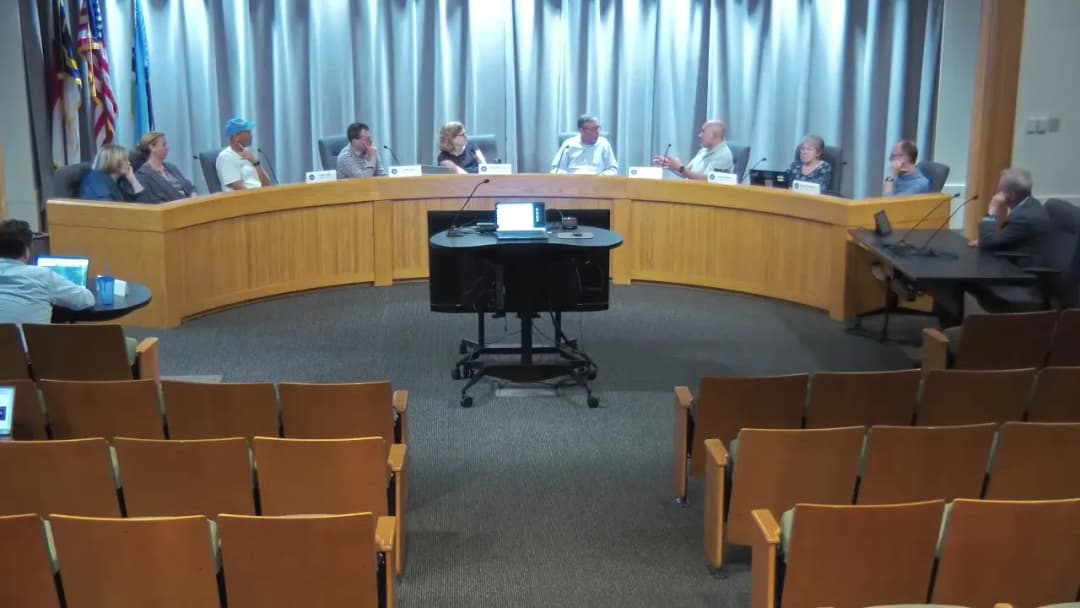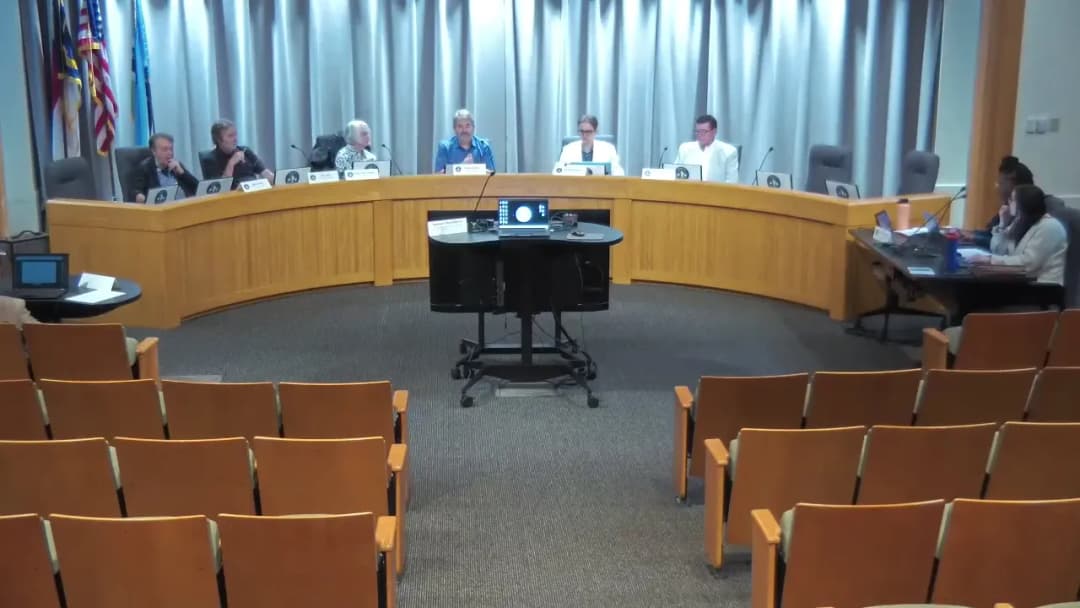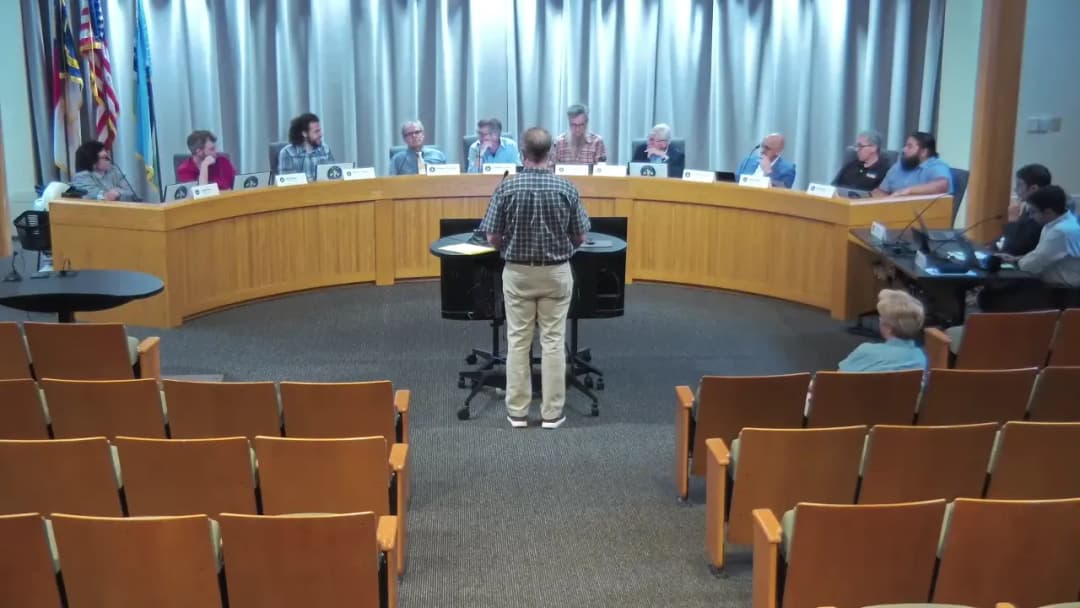
The Chapel Hill Board of Adjustment met on June 5, 2025, at 6:30 PM in Council Chamber RM 110. Chaired by Thomas Grasty, the board addressed a dimensional variance request and made recommendations for board appointments. All 10 members were present, including outgoing members Benjamin McAvoy-Bickford (served one year) and Andrew Strada (served six years), who were thanked for their service. Consent Calendar - The agenda was approved unanimously. - The minutes from the May 1, 2025 meeting were approved unanimously. The town clerk’s office requested that members not abstain on such motions, even if absent at the prior meeting; all present voted in favor. New Business Dimensional Variance – 7608 Justin Place - Summary: Michael and Barbara McNulty requested a dimensional variance to construct an 8-foot-tall fence along their northern property line, replacing an existing 8-foot fence built in 1989. The current LUMO limits fences within setbacks to 6 feet in height. The property is adjacent to the Weavers Grove development, which is under construction (235 units expected; project timeline approximately eight years, with three to four years remaining). The applicants argued that they have been disproportionately affected by the development, including loss of tree buffer, construction noise, traffic, dust, and vibration, which have diminished their quality of life. They noted that the town had allowed their neighbor, the Benjamin family, to install an 8-foot fence. The developer (Habitat) expressed support via email, but this was not entered as sworn testimony. - Board Discussion: Board members highlighted the unique hardship of the property’s location—adjacent to the main construction entrance, I-40, and lacking noise barriers. Several members noted that the existing fence was a non-conforming structure that could be repaired but not relocated without a variance. Concerns about moving the fence down a 1–2 foot slope were raised, but the applicants explained they wanted to maximize the use of their newly acquired property (from the demised road) and protect new plantings. The board found that the variance met all criteria: unnecessary hardship (unique location, noise, construction impacts), oddity of the property (pie-shaped lot, proximity to development), hardship not self-created (applicants purchased home in 1989, fence built after), and consistency with the spirit of LUMO (preserving existing buffer). - Vote: Resolution A (approving the variance) passed unanimously (10-0). Recommendations for Board of Adjustment Appointments - Summary: The board considered reappointments and new appointments in light of a pending town council proposal to reduce the board from 10 to 7 members. Three members (James Faron, Judith Miller, Thomas Grasty) were eligible for reappointment; two new applicants (David Nahm and Joseph Weiner) sought alternate seats. Outgoing members McAvoy-Bickford and Strada would not be replaced under the proposed reduction. The board debated the impact of a smaller board on the four-fifths majority requirement for variance approvals (e.g., with 10 members, 8 votes are needed; with 7, 6 votes are needed; with 5, 4 votes). Some members argued the reduction would create logistical challenges and reduce community representation, especially for the ETJ. - Motion: Dr. Wortman moved to recommend that the town council reappoint Faron, Grasty, and Miller to regular terms; appoint David Nahm and Joseph Weiner as alternates; and allow the board to operate with 8 members until it naturally reduces to 7. The motion passed 9-1, with BJ Warshaw voting no due to disagreement with the premise of reducing seats. - Next Steps: The board agreed that Chair Thomas Grasty would present the recommendation to the town council at its next meeting (if the item appears on the agenda). Individual board members, including BJ Warshaw, may speak on their own behalf regarding the board size. Key Outcomes - Dimensional variance approved (unanimous) for an 8-foot fence at 7608 Justin Place. - Recommendation to town council: Reappoint Faron, Grasty, and Miller; appoint Nahm and Weiner as alternates; allow an 8-member board until attrition reduces it to 7. Vote: 9-1. - Representative selected: Chair Thomas Grasty will speak to council on behalf of the board; individual members may speak personally. - Next meeting: To be determined.
Public Meetings - Chapel Hill, North Carolina
Public Meetings - Chapel Hill, North CarolinaThe Chapel Hill Town Council held a work session on June 4, 2025, to discuss the Manager's Recommended Budget for FY 2025-2026. The meeting focused on the proposed property tax rate, employee compensation, transit funding, and various cost-cutting options. Council members expressed a range of positions on the tax rate and budget priorities, with no formal vote taken; staff was directed to prepare a budget ordinance for a future vote. Discussion Items - Manager's Recommended Budget Overview: Interim Town Manager Mary Jane Nirdlinger presented a proposed budget of $163,672,372, with a recommended property tax rate of 5.0 cents above the revenue-neutral rate (totaling 5.8 cents over revenue neutral). The budget includes a 5% cost-of-living adjustment (COLA) for employees, $1,517,000 for key operating priorities, and a five-year forecast for capital and operating needs. She outlined options to reduce expenses, including adjustments to transit funding, Parking Lot 2 improvements, the Throne Bathrooms initiative, the General Fund Balance, and the COLA. - Transit Funding: Council discussed the Transit Fund, which has approximately $35.8 million in available fund balance but also aging infrastructure and capital needs. Some council members questioned the high fund balance and suggested using it for one-time capital purchases to lower the tax rate, while staff cautioned that much of the fund balance is already obligated or needed for a six-month reserve. Council member Camille Berry noted that transit partners had expected a higher allocation from the town. The council did not reach consensus on reducing the transit allocation. - Parking Lot 2 and Throne Bathrooms: Council agreed that the $100,000 allocation for Parking Lot 2 improvements was not a priority this year and could be repurposed. There was strong support for maintaining the $60,000 allocation for the Throne Bathrooms (public restrooms downtown), with several members emphasizing the need for basic sanitation. Staff noted the Throne project depends on regional participation through Central Pines, and if it falls through, the funds could be redirected to other priorities. - Employee COLA and Compensation: Several council members expressed support for the 5% COLA, arguing it is necessary to retain staff and address market rates, while others preferred a lower increase (2-3%) to keep the tax rate down. Staff explained that reducing the across-the-board raise would require a larger implementation fund to bring employees to market, resulting in only marginal savings. - Fund Balance and Tax Rate: Council debated the appropriate level of the General Fund Balance (currently 22% of expenditures, about $20.7 million unassigned). Staff advised against depleting fund balance, warning of potential impacts on the town's AAA credit rating. Some members advocated for using a portion of fund balance for one-time capital needs to lower the tax rate, while others stressed maintaining the policy. - Council Member Positions on Tax Rate: Council members expressed a range of positions on the recommended tax rate (5.8 cents over revenue neutral). Support for the full manager's recommendation came from Council Members Berry, Sharp, and Miller-Foushee, as well as Mayor Anderson (via vote) and Council Member Stegman (expressed support for a rate close to 5.8, possibly 5.0). Others, including Council Members Searing, Ryan, and McCullough, favored lower rates (3.5 to 4.5 cents over revenue neutral), citing affordability concerns and the need to avoid burdening lower-income residents. Key Outcomes - No Formal Vote: The council did not take a formal vote on the budget; instead, members provided guidance to staff. The matter was received and filed. - Direction to Staff: Staff was directed to prepare a budget ordinance for council consideration at a future meeting (likely June 18 or 25, 2025). The council requested that staff develop options for a tax rate between approximately 4.5 and 5.8 cents over revenue neutral, incorporating the following adjustments: keeping $60,000 for the Throne Bathrooms; cancelling the $100,000 for Parking Lot 2 (with funds to be held for potential redirection to unhoused community needs, subject to further discussion); assuming 2% sales tax growth (0.2 cents); funding the Rogers Road obligation from the debt fund (0.2 cents); and reducing the five-year capital allocations by $800,000 (0.2 cents) with a commitment to revisit fund balance use at year-end. The council did not reach consensus on employee COLA or transit allocation. - Closed Session: The council unanimously voted to enter closed session to discuss economic development, property acquisition, personnel, and/or litigation matters, as authorized by G.S. 143-318.11(a)(5). The meeting adjourned at 9:03 p.m.
This virtual meeting of the Chapel Hill Planning Commission convened at 7:00 PM on June 3, 2025. The agenda included approval of previous minutes, a site plan review, a concept plan discussion, an update on the LUMO rewrite, a presentation on the Natural Features Model, and a discussion on Planning Commission appointments for 2025. Consent Calendar - Approval of Minutes: The minutes from the May 20, 2025 meeting were approved unanimously (motion by Green, second by Valera). Public Comments & Testimony - No members of the public offered comments on any of the agenda items. Discussion Items 1. 225 Pine Knolls Site Plan ([25-0273]) - Staff presented a site plan application for an addition to an existing single-family home at 225 Knolls Street within the Pine Knolls Neighborhood Conservation District. The project, proposed by Habitat for Humanity on behalf of the Jackson Center, aims to add an ADA-accessible bedroom, bathroom, and laundry room for a resident with severe disabilities. The addition will increase floor area but reduce impervious surface. Staff found no LUMO deficiencies and recommended approval. - The applicant, Richard Turlington, explained the need for zero-step entry and a roll-in shower. - After no public comment, the Commission voted unanimously to approve Resolution A (approving the application). Motion by Green, second by Murray-Ndinga. 2. 130 Old Durham Road Concept Plan ([25-0276]) - Staff presented a concept plan to remove a 0.9-acre parcel from the Wegmans Special Use Permit (SUP) boundary. The parcel is currently used as overflow parking. Removing it would allow future by-right development under the Neighborhood Commercial zoning. The applicant, Chris Rakowski, stated that the modification would reduce parking by 84 spaces (from 745 built) and allow redevelopment of the parcel. - The Commission discussed the history of the SUP and the parking situation. Commissioners expressed support for the concept, noting that the parking was excessive and that the opportunity for higher use was welcome. - No formal vote was taken; the Commission provided comments to the applicant. The next step is a formal SUP modification application, which will be quasi-judicial. 3. LUMO Rewrite Update (informal) - Taz provided an update on the LUMO rewrite. The project is behind schedule due to quality concerns with the consultant's work. A new consultant team has been brought in, and the revised timeline expects a draft for the Planning Commission and Council in late winter/early spring 2026. However, staff plans to bring a package of LUMO text amendments to the Commission and Council in fall 2025, based on previous discussions. The elimination of parking minimums was mentioned as a potential amendment. - Commissioner Mitchell urged that the Planning Commission's petition regarding parking minimums be considered. Chair Losos suggested that the Commission could assist in expediting the process. 4. Update on the Natural Features Model ([25-0274]) - Taz presented a detailed overview of the Natural Features Model, a non-regulatory tool that consolidates data on habitat, hydrology, and land use to inform planning decisions. He emphasized that the model is a starting point for discussion, not a regulatory determinant. It is composed of three sub-models (habitat 50%, hydrology 30%, land use 20%) and multiple underlying data layers. The model is limited to Chapel Hill's jurisdiction and ETJ. - Commissioners discussed the need for regular updates to the model, the importance of ground truthing, and potential uses such as informing conditional zonings, conservation overlays, and town-led acquisitions. They also noted that the model could help contextualize development proposals and identify areas where the Resource Conservation District (RCD) may be insufficient. Staff indicated that they are exploring how to integrate the model into staff reports and developer processes, but cautioned against over-regulatory use. 5. Planning Commission Applications 2025 ([25-0275]) - The Commission reviewed applications for reappointment of current members (Strother Murray-Ndinga and Erik Valera) and six new applicants: Haley Cowing, Corlin Barthozik, Judith Miller, Meredith Rodemeyer, Xilong Zhao, and Will Ferris. - The Commission unanimously recommended that the Town Council reappoint Murray-Ndinga and Valera (motion by McMahon, second by Green). - A second motion (by Mitchell, second by McMahon) recommended that all applicants would be welcome for any openings, but noted that the Commission has a special interest in including members with experience as a current undergraduate student, advocacy in the Asian American community, or knowledge in stormwater mitigation. The motion carried unanimously, with Valera and Murray-Ndinga abstaining. Key Outcomes - Approved: 225 Pine Knolls Site Plan (Resolution A) – unanimous. - Provided Comments: 130 Old Durham Road Concept Plan – no formal vote. - Recommended Reappointment: Strother Murray-Ndinga and Erik Valera – unanimous. - Recommended General Applicant Pool: All six new applicants, with special interest in three specific backgrounds – unanimous (with two abstentions). - Next Steps: The Commission will meet on June 17, 2025, in person, to review additional site plans.
The Town Council held a work session on Wednesday, May 28, 2025, from 6:00 p.m. to 9:06 p.m. in Library Meeting Room A. The meeting covered three agenda items: an update on the Land Use Management Ordinance (LUMO) rewrite, a presentation on the new Natural Features Model (NFM), and a discussion to identify topics for the June 4 budget work session. As a work session, no votes were taken and there was no public comment period. All nine council members were present (Council Member Berry arrived at 6:05 p.m.). Discussion Items - Rewriting Our Rules – LUMO Update (Item 25-0263): Principal Planner Tas Lagoo reported that the LUMO rewrite had fallen behind schedule because the original consultant’s draft did not meet Town standards. A new consultant has been hired. Planning Director Britany Waddell proposed a shift to a systematic “continuous improvement” approach using omnibus text amendments, which would allow batch reviews of high-priority changes. Potential topics for fall amendments included: reducing minimum lot sizes, streamlining conditional zoning, delegating administrative decisions to staff, and eliminating parking minimums. Council members expressed support for fall amendments and raised additional interests: streamlining the permitting/approval process, enabling innovative housing types (e.g., 3D-printed, container, tiny homes), preserving natural areas and strengthening the tree canopy ordinance, piloting triplexes and quadplexes, and removing barriers to non-traditional housing. Staff also presented design standards tools (build-to-zones, step-backs, street trees, block length limits) and answered questions about public engagement, noting that current engagement has been largely educational rather than soliciting policy input. Council members discussed the balance between density and design, the importance of functional standards, and the need to manage public expectations. - Update on the Natural Features Model (NFM) (Item 25-0264): Principal Planner Lagoo introduced the NFM, a compilation of data on habitat, hydrology, and land use, designed to inform long-range planning, zoning trade-offs, and land acquisition. The NFM is not a regulatory tool, nor a determination of where development should occur; it is a starting point for discussion. Staff emphasized that the model is dynamic and subject to refinement. Council members discussed the NFM’s role in supporting smart growth, protecting wildlife and streams, and aligning with the Town’s Complete Community vision. Key themes included: the need for an equity lens (avoiding past inequities in land conservation), the importance of reducing car dependency, the potential to strengthen the Rural Buffer agreement with Orange County, and the need to protect headwaters and stream corridors. Council Member Miller-Foushee cautioned against using the model to restrict development in ways that harm marginalized communities, while others stressed that density in Chapel Hill must be balanced with preserving natural features. Staff noted that the NFM will be explored in more depth at the June 3 Planning Commission meeting. - Discussion: Topics for June 4 Work Session (Item 25-0265): Interim Town Manager Mary Jane Nirdlinger asked council members to specify the information they wanted for the June 4 budget work session. Mayor Anderson requested options to reduce the proposed 5.8-cent tax increase to 3.5–4 cents, plus 0.2 cents for Transit. She also asked for a five-year Capital Improvement Plan linked to Fund Balance projections, options for staff pay raises, clearer understanding of the Town’s Downtown investment, and more funding for the InterFaith Council. Council members agreed to discuss whether they should take pay raises and will send additional questions to staff via email. Key Outcomes - No votes were taken; the meeting was a work session for discussion only. - Staff will consider council feedback on LUMO text amendments and may bring a batch of amendments as early as fall 2025. - The Natural Features Model presentation was received and filed; further discussion will occur at the June 3 Planning Commission meeting. - Council members will send their budget questions and comments to the Interim Town Manager; staff will provide answers by Friday, May 30, where possible. - The meeting adjourned at 9:06 p.m.
The Community Design Commission (CDC) met virtually on Tuesday, May 27, 2025, at 6:30 PM. All four members were present: Chair John Weis, Vice-Chair Susan Lyons, Patrick Brennan, and Heather Washburn. The meeting lasted approximately 46 minutes, adjourning at 6:16 PM. Key actions included approval of the agenda, minutes, consent agenda, and a unanimous recommendation to forward three applicants to the Town Council for vacant seats. Consent Calendar - 600 Market Street Sign Plan [25-0254]: The Commission approved the submitted sign plan without discussion, as part of the consent agenda. The motion to approve the consent agenda was made by Heather Washburn, seconded by Vice-Chair Susan Lyons, and passed unanimously. Approval of Minutes - April Minutes [25-0253]: The Commission approved the April minutes as amended. The amendment directed staff to move the Millennium Atlas item from the consent agenda to new business in the minutes. The motion was made by Patrick Brennan, seconded by Heather Washburn, and carried unanimously. New Business - Vacant Seat Discussion [25-0255]: The Commission reviewed applications to fill three current vacant seats (with two additional seats to become vacant after the June meeting). Three applicants were discussed: - Cortland Bar Tosic: Expressed a priority for the Housing Commission but also applied for the CDC. Commissioner Heather Washburn noted their strong focus on affordable housing and inquired whether the applicant understood the CDC's scope. - James Farrell: Currently serving on the Board of Adjustment, Mr. Farrell joined the meeting via Zoom and confirmed his understanding of the CDC's mission (aesthetics, character, community growth). Vice-Chair Susan Lyons expressed support. - Kelsey Brinkley: Chair John Weis noted that her application indicated an MBA but did not specify the institution or confirm graduation from UNC. Staff had no additional information. Despite this, all commissioners supported forwarding her application. - Chair Weis also noted that a fourth potential applicant had expressed interest; staff clarified that the current recruitment cycle would close after this meeting, with rolling applications accepted for remaining vacancies. - Commission Size Discussion: Council member Camille (attending as a guest) clarified that the CDC's maximum size is seven members. With four current members and three members (including John Weis and Susan Lyons) departing after June, five seats would be open. If the three applicants are appointed by Council, two seats would remain unfilled. Key Outcomes - Agenda approved unanimously. - April minutes approved as amended. - Consent agenda approved unanimously. - Applicant recommendations: A motion by Vice-Chair Lyons, seconded by Washburn, to forward all three applicants (Cortland Bar Tosic, James Farrell, Kelsey Brinkley) to the Town Council for appointment was approved unanimously. - Adjournment: The meeting adjourned at 6:16 PM on a motion by Washburn, seconded by Brennan.
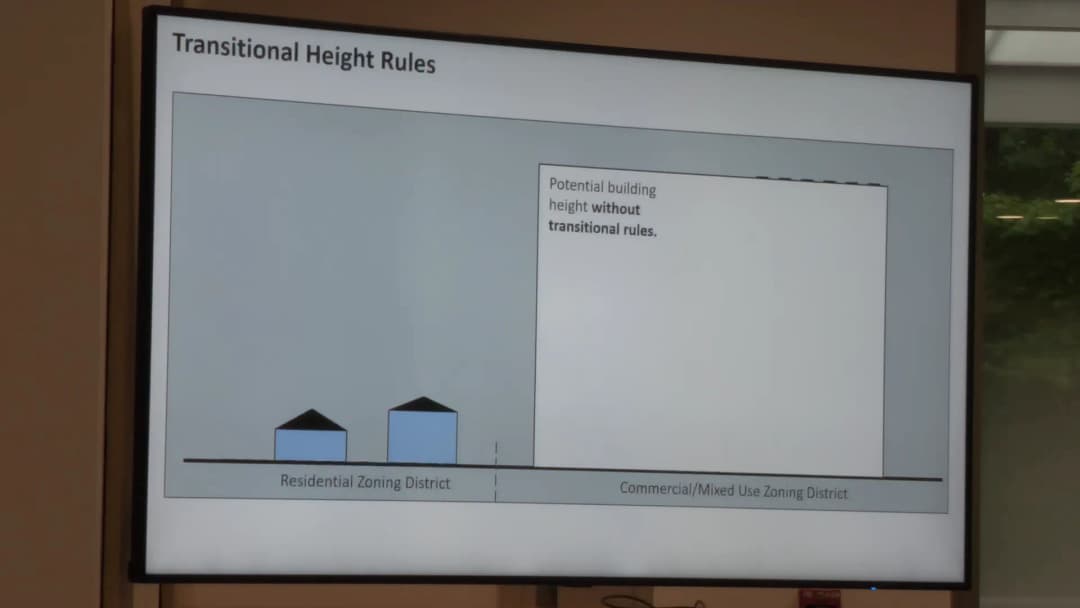
The Chapel Hill Town Council convened on May 21, 2025, for a regular meeting. The meeting featured a public hearing on the FY 2025-2026 recommended budget, a posthumous honor for William Massengale, proclamations for Public Works Week and Heat Awareness Week, and legislative hearings on several land use amendments and a major conditional zoning application at 11 White Oak Drive. All discussion items were continued to future meetings in June. Proclamations & Recognitions - Honoring William Massengale: The Council honored the late civil rights attorney William Massengale for his peace and justice work, approving his addition to Peace and Justice Plaza. Retired District Court Judge Jay Bryan spoke about his legacy. - National Public Works Week: Councilmember Searing proclaimed the week of May 18–24, 2025, as National Public Works Week, recognizing the town’s 112 public works professionals. - Heat Awareness Week: Councilmember McCullough proclaimed May 25–31, 2025, as Heat Awareness Week, noting that heat is the number one weather-related killer. Consent Calendar The Council unanimously approved the consent agenda (9-0), which included: - Authorizing the sale of surplus vehicles via public online auction. - Approving the Council Naming Committee’s recommendation to honor William Massengale. - Adopting the minutes from the April 16, 2025, meeting. Announcements Mayor Anderson announced Memorial Day events, a public input meeting on the Morgan Creek Trail West expansion (May 29), the Pride Promenade (June 7), and a council work session (May 28). Public Comments & Testimony General Comments (Not on Printed Agenda): - Salima Smith raised concerns about unresolved maintenance issues and lack of transparency from her landlord regarding a potential property sale. - Abel Hastings warned that UNC’s Carolina North Forest (947 acres, 51% of Chapel Hill’s park area) is under a conservation agreement that UNC can alter, and its development would drop Chapel Hill’s parkland to 4%. He urged the council to prioritize town-owned parks and trails. - Kaydin Brown (Miss Chapel Hill Teen 2025) advocated for her “STEM Style” initiative to bridge the gender gap in STEM and for expanding the Science Olympiad program. FY 2025-2026 Budget Hearing: - Multiple residents, including Amy Lana DeMagistris and Scott Morrison, expressed shock at the proposed tax burden resulting from a 45% property revaluation and the recommended rate increase. Morrison argued that the large non-resident population (UNC students and staff) uses services without paying property taxes. - Cathy Carr (Orange Chatham County Association of Realtors) formally submitted a letter opposing the tax increase on homeowners. - Mary Tiger (OWASA) requested $86,000 to initiate a water bill assistance program for low-income SNAP recipients, noting the request did not make the proposed budget. - Rachel Valentine (Orange County Rape Crisis Center) and Jackie Jenks (IFC) strongly encouraged the council to increase human services funding, citing severe cuts to federal victim services and housing programs. - George Barrett (Marion Cheek Jackson Center) stated housing is a core service and requested the council maintain affordable housing funding, increase allocation, and fund down payment assistance. - Jennifer Morales, Elizabeth Godown, and Basilia Mori passionately advocated for maintaining the Community Connections Coordinator position (Caitlin Robalino), emphasizing its critical role in language access and building trust with Spanish-speaking and immigrant communities. - Town employees Emily Powell (Employee Forum Chair) and Taylor Bugge (Librarian) spoke in strong support of the 5% employee pay increase to prevent burnout and retain talent. 11 White Oak Drive Hearing: - Six residents (Chuck Berlin, Ann Hartley, Adam Vane, Dottie Fiddleman, Kathleen Smith, Jessyka Glatz) opposed the massing of a proposed 250-foot-long, four- to five-story building along Old Chapel Hill Road, calling it a “monstrosity” that violates the town’s urban designer’s recommendations and LUMO transitional guidelines. Smith also raised traffic and emergency access safety concerns. Discussion Items Open the Public Hearing: FY 2025-2026 Recommended Budget Interim Town Manager Mary Jane Nirdlinger presented the $163.9 million total budget, recommending a $0.50 property tax rate (5.8 cents over revenue neutral). The $94.9 million general fund is a 4% increase. Key components include a 5% employee pay increase, reduced reliance on fund balance, and accounting for lower sales tax revenue. The five-year outlook projects needing 1.5 cents annually to reach sustainable funding levels. The public hearing was closed. A work session is set for June 4, with a vote on June 11. Historic Rogers Road Neighborhood District (HRX) Text Amendment Assistant Planning Director Judy Johnson presented amendments to Articles 3, 4, and 5 of the LUMO to expand permitted uses, create a 100-foot transition zone, and require a Type D buffer. Council questioned the 90-foot maximum building height for larger sites and requested alignment with LUMO rewrite design standards. The hearing was continued to June 18. Conventional Rezoning at 1900 Purefoy Drive (Green Tract) Senior Planner Jacob Hunt presented the town-initiated conventional rezoning of 107 acres from Rural Transition to HRX, the first application of the updated district. The hearing was continued to June 18. LUMO Text Amendment: Rules of Boards and Commissions Zoning Administrator Corey Liles proposed standardizing the Planning Commission, Board of Adjustment, Historic District Commission, and Community Design Commission (CDC) to 7 members with a quorum of 4. The Planning Commission recommended denial, citing representation concerns. Council discussion favored varying board sizes and considering consolidation of the CDC into the Planning Commission. Council requested a review of board recruitment processes. The hearing was continued to June 11. Conditional Zoning Application at 11 White Oak Drive The applicant (Jesse Hardesty, Nate Bouquin) proposed rezoning 12.62 acres for 380–400 units (10% affordable at 80% AMI) in 4–5 story buildings. A central debate involved a staff-requested 30-foot right-of-way dedication for the future Danziger Drive connection across I-40. The applicant stated this would reduce units to 350–370 and affordability to 7%. A majority of Council opposed requiring the right-of-way, citing prohibitive costs and low likelihood of state funding. Council was nearly unanimous in directing the applicant to follow urban designer Brian Peterson’s recommendations to significantly reduce the massing of the 250-foot building along Old Chapel Hill Road. Several council members requested a higher affordable housing percentage. The hearing was continued to June 18. Key Outcomes - Consent Agenda: Approved unanimously (9-0). - FY 2025-2026 Budget: Public hearing opened and closed. Continued to work session (June 4) and vote (June 11). - HRX Text Amendment: Hearing continued to June 18, 2025. - 1900 Purefoy Drive Rezoning: Hearing continued to June 18, 2025. - Boards and Commissions Amendment: Hearing continued to June 11, 2025. - 11 White Oak Drive: Hearing continued to June 18, 2025. Council directed the applicant to prioritize massing revisions based on the urban designer’s recommendations and signaled a majority preference against requiring the Danziger Drive right-of-way dedication.
The Planning Commission met on Tuesday, May 20, 2025, at 7:00 PM in the Council Chamber (RM 110) at Town Hall. The primary agenda item was a special discussion on mixed-use development planning, featuring D.R. Bryan, developer of Southern Village, and a summary of a conversation with Roger Perry of East West Partners. The Commission also approved minutes from prior meetings and discussed future meeting schedules and appointment processes. Consent Calendar - Approval of Minutes: The minutes from the April 15, 2025 meeting were adopted unanimously after a motion (seconded) with no corrections. The minutes from the May 6, 2025 meeting were approved as amended, correcting a technical error in the "Approval of Agenda" item (a line stating "the council approved to bracket due date" was removed). The motion carried unanimously. Discussion Items - Mixed-Use Development Planning: Lessons from Southern Village and Beyond - Introduction: Chair Elizabeth Losos framed the discussion as part of a series on special topics, building on a previous session with Blue Hill and the Community Design Commission (CDC). She invited CDC members Susan Lyons, Heather Washburn, and John Wise to join the discussion. - Presentation by D.R. Bryan: Bryan, developer of Southern Village (approximately 1,165 units built on 136 approved acres over roughly 8-11 years), shared four slides focused on street trees. He contrasted Southern Village's design (narrower streets, alleys, street trees between curb and sidewalk) with a neighboring development using town standards. Key points: - Oaks are preferable to maples for long-term canopy; maples planted 25 years ago are underperforming compared to oaks planted at the same time. - A 7-foot planting strip (with 5-foot sidewalks) is the minimum for street trees; 6 feet is too tight. - Southern Village used a 27-foot street width with staggered parking on both sides. - He advocated for a 7-foot minimum planting strip and noted that the current ordinance restricts trees within 8 feet of the curb, which limits street tree placement. - Summary of Roger Perry Conversation (presented by Vice Chair Jonathan Mitchell): Perry (East West Partners) provided reflections on Meadowmont, East 54, and downtown Chapel Hill. Key observations: - Meadowmont's retail is "buried" in the interior, turning its back on the community, which caused struggles. This layout was mandated by the Town Council due to public fear of commercial development. - Meadowmont could have been denser with taller buildings to preserve open space, but that was politically off the table. - Connectivity on sloped land should follow topography with curved streets, not a rigid grid (as imposed on Southern Village). - East 54 succeeded due to a willing council and a mix of uses (offices, retail, restaurants, affordable and market-rate housing). - Downtown Chapel Hill lacks a holistic master plan; overly long block lengths on Franklin and Rosemary Streets hinder pedestrian connectivity. He suggested pocket parks or new sidewalks to connect corridors. - The primary barrier to mixed-use development in Chapel Hill is not the Land Use Management Ordinance (LUMO) but a long-standing lack of political will. The Gateway area could benefit from a pedestrian overpass over Fordham Boulevard and a shuttle loop linking Gateway, Blue Hill, and East Town. - Bryan's Responses and Additional Discussion: - He largely agreed with Perry but disagreed on the street grid: Southern Village intentionally cut hillsides to create conversational distances (porches near sidewalks) and reverse-engineered early 20th-century neighborhoods (e.g., West End in Winston-Salem). - On density: Southern Village was as dense as the market would bear at the time; he would have preferred more density in hindsight. - On retail anchors: Anchors (e.g., Weaver Street Market, a 110-room hotel, movie theater) are crucial for supporting smaller retail. The village center is now performing better over time, currently 100% leased while Chapel Hill office vacancy is 20% (excluding sublease). - On placemaking: Successful themes must be authentic (e.g., Seaside's informal beach town). He emphasized long-term ownership (kept ownership of village center, apartments, hotel) to realize value over 25 years. - On infill development: He suggested a form-based code for the Gateway area (from Wegmans to I-40), leveraging lessons from Blue Hill, and recommended direct town engagement with large property owners (e.g., State Employees' Credit Union) to catalyze redevelopment. - On trees: He reiterated the need for a 7-foot planting strip and acknowledged sidewalk buckling as a maintenance cost. Key Outcomes - Future Meetings: The Commission scheduled regular meetings for June 3 and June 17, 2025. June 3 will likely be virtual; June 17 will be in person (last meeting of the term). A retreat is planned for August 2025. - Appointments Process: The Commission agreed to review applications for three open seats (including reapplications from current members Eric and Strather) without formal interviews. They will submit a recommendation to the Council based on application review, highlighting attributes. The Council's action on a membership policy (possibly reducing board size) is pending. - LUMO Update: No specific timetable was provided; the chair suggested requesting an update from staff (Taz) at a June meeting. - No Formal Votes on Mixed-Use Policy: The discussion was informational; no motions were made regarding mixed-use policy or code changes. The chair indicated the Commission may write up findings and recommendations for the Council.
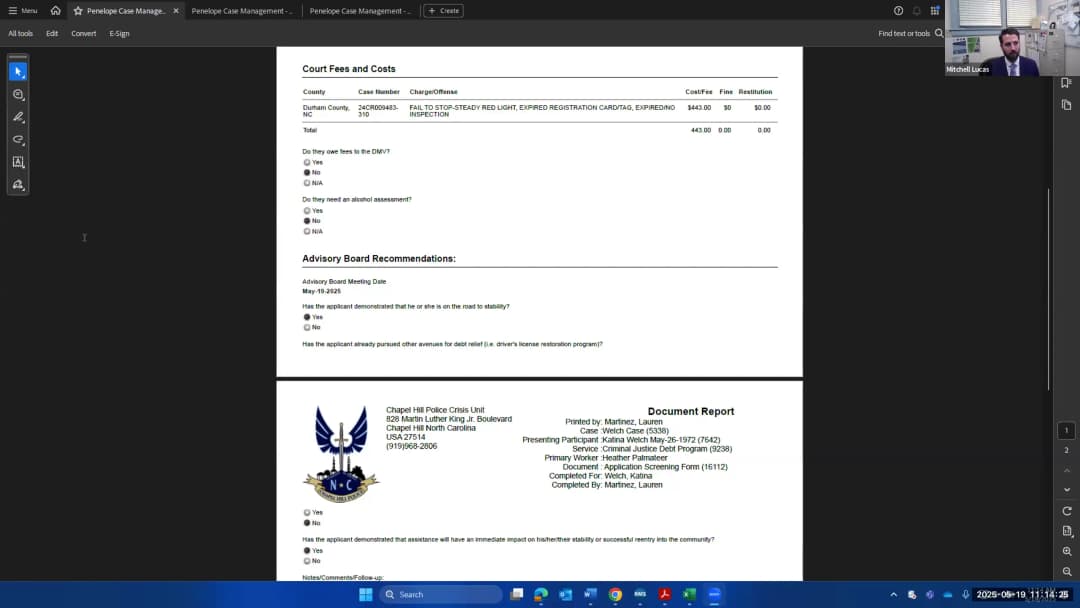
On May 19, 2025, at 11:00 AM, the Community Funding Board met virtually to review funding applications and discuss administrative matters. A quorum of seven members was present (Donna, Crystal absent, Mark, Tiffany, Danielle joined later, Ty, Olivia, April absent, Amber via chat). The meeting began with roll call, approval of the agenda, and approval of previous meeting minutes, all passed unanimously. The board reviewed funding balances: Chapel Hill under $10,000, Carborough $6,686, Orange County bail bond $726 (with an additional $1,500 pending and a full $6,000 annual allocation anticipated from Orange County). The board then considered three applicants. Consent Calendar - Approval of the agenda (motion by Donna, second by Tiffany, unanimous vote: Mark, Tiffany, Olivia, Amber via chat, others present all yes). - Approval of April meeting minutes (motion by Donna, second by Donna, unanimous vote: Mark, Tiffany, Ty, Olivia, Amber via chat). Discussion Items - Katina Welsh (Carborough pod, $443 requested for Durham County court fee): Welsh is a 52-year-old Black female, part-time resident support specialist, seeking full-time employment, with medical debt and transportation barriers. She has an outstanding FTA and potential license suspension by May 30. The board discussed the risk of paying the full fee (including a $50 fine) versus resolving the FTA in court to avoid points and insurance increases. Ty offered to speak with her to discuss consequences. A motion was made to conditionally approve $393 (the court fee minus the $50 fine) upon payment of the $50 fine by Welsh, with the condition that she contact Ty to discuss the case. Motion passed unanimously (Mark, Tiffany, Danielle, Ty, Olivia, Amber via chat). - Jessica Scott (Chapel Hill pod, requested $5,622.50 plus assessments): Scott is a 44-year-old female in a six-month recovery program at Freedom House, sober for over 100 days, part-time employed, with $5,000 medical debt and $3,000 consumer debt. She has two pending cases in Wake County; the majority of the fees (over $4,000) are in question due to potential inaccuracies. The board agreed to hold off on the disputed amount until a fee breakdown is obtained. A motion was made to approve $1,603.50, comprised of $416 for alcohol assessments and three other fees: $879.50 DWI level one (Mecklenburg), $208 second-degree trespass, and $100 silver vacation fee (Wake County 2014). Motion passed unanimously (Mark, Tiffany, Danielle, Donna, Olivia, Amber via chat). - Anthony Saunders (carryover from prior meeting): Saunders had not responded to outreach attempts since April 22 (email from Lauren). The board moved to extend the file for one more month, with a motion to deny if no contact is made by the next meeting. Motion passed unanimously (Donna, Mark, Tiffany, Danielle, Olivia, Amber via chat). Key Outcomes - Katina Welsh: Conditional approval of $393, with requirement to pay $50 fine and contact Ty to discuss potential court resolution. - Jessica Scott: Approved $1,603.50 for assessments and specified fees; disputed amount on hold pending clarification from Wake County. - Anthony Saunders: File extended for one more month; if no contact by next meeting, the application will be denied. - Next Meeting: Scheduled for Monday, June 16, 2025.
The Chapel Hill Town Council held a work session on Wednesday, May 14, 2025, at 6:00 PM in Library Meeting Room B. The meeting included opening business, an update on the Pay and Classification Study, and an update on the Parks and Recreation Comprehensive Master Plan. Council Member Karen Stegman was excused; Council Members Nollert and McCullough arrived at 6:01 PM and 6:07 PM respectively. The meeting was adjourned at 9:25 PM. Opening Business - Special Meetings for Town Manager Search: The Council unanimously (7-0) approved calling two special meetings: May 22, 2025, and June 5, 2025, at 5:00 PM in Town Hall Room 102 to discuss the Town Manager search. - Proclamation for Endangered Species Day: Council Member Nollert read a proclamation declaring May 16, 2025, as Endangered Species Day in Chapel Hill, encouraging conservation efforts. Pay and Class Consultant Update - Presenters: Human Resources Director Anita Badrock, Evergreen Solutions consultants Rob Williamson and Karl Fuchs. - Key Findings: The study found Chapel Hill's salaries are 7.6% below the market rate midpoint and ranked 14th out of 18 peer communities. The last study was conducted six years ago, despite best practice being every three years. - Recommendations: Adopt a new pay plan structure, reassign classification paygrades, and align employee salaries with market-competitive pay ranges. The recommended 5% pay raise (effective January 2026) would require approximately $210,000 from the General Fund and $40,000 from Enterprise Funds. A hybrid implementation methodology would address compression issues. - Employee Engagement: 83% of employees completed the job assessment survey (high for the industry). Employee focus groups highlighted concerns about base pay, cost of living, staffing levels, and benefits. - Council Discussion: Council members inquired about professional development, compression, staffing levels, turnover benchmarks, and the impact of not implementing the plan. They discussed budget constraints, trade-offs, and the need for data on the adequacy of current staffing. Some members expressed support for the 5% increase as an investment in staff, while others noted the challenge of raising taxes amid community economic uncertainty. - Next Steps: Public hearing on May 21, work session on May 28, and budget work session on June 4, 2025. Parks and Recreation Comprehensive Master Plan Update - Presenters: Parks and Recreation Director Atuya Cornwell, consultant James Mickle from BerryDunn. - Overview: The plan will include a facility assessment, equitable community engagement, and a funding strategy. Chapel Hill has been selected to apply for CAPRA accreditation, a rigorous process that less than 3% of agencies achieve. - Council Feedback: Council members provided input on three questions: 1. What three things would you like to see in the final master plan? Responses included: priority projects for upgrade/maintenance of existing facilities and new facilities to address gaps; synergy with the Greenways planning process; a clear, funded, and actionable plan aligned with budget realities; recommendations and cost estimates for all repair issues; and goals derived from peer community accomplishments. 2. What should the Parks and Recreation Department's priorities be over the next five years? Responses included: places for nature and structured play; completing the Everywhere-to-Everywhere Greenway system; maintenance and upgrade of existing facilities; maximizing user numbers; prioritizing partnerships; and equitable land distribution. 3. What top three community challenges or values should be considered? Responses included: budget constraints; university land vulnerability; leveraging assets and partnerships; ensuring equitable access; and the value of community cohesion. - Next Steps: Continued engagement with the community (pop-ups, surveys, listening sessions), analysis of operations and facilities, and drafting of the final plan by summer 2026. Key Outcomes - Special meetings approved (7-0) for Town Manager search. - Pay study recommendations were received and filed; no formal vote was taken. The Council will continue budget discussions at upcoming meetings. - Parks Master Plan update was received and filed; the consultant will incorporate council feedback into the process.
The Chapel Hill Historic District Commission met on Tuesday, May 13, 2025, at 6:30 PM in Room 110 of the Council Chamber. The commission reviewed two Certificate of Appropriateness applications, made a candidate recommendation, discussed officer elections and a retreat debrief, and deferred a decision on the summer meeting break. All votes were unanimous unless noted. Consent Calendar - 742 Gimghoul Road (Written Decision): Approved unanimously. Commissioner Hawisher moved, Tise seconded. - 208 Spring Lane (Written Decision): Continued to a future meeting due to lack of quorum after Commissioner Gurlitz recused himself. Public Comments & Testimony - Phil Lyons (Preservation Chapel Hill) informed the commission that the application to nominate Coker Hills to the National Register of Historic Places was submitted on Thursday, May 9, 2025, to the state office in Raleigh. The commission congratulated him. Discussion Items - Candidate Recommendation: The commission reviewed the application of Laura Moore, a candidate who had interviewed in September 2024. Commissioner Tise stated he knew her and thought she would be a good fit. The commission voted unanimously to forward a recommendation to the Town Council for her appointment. - Vice Chair Election: Chair Brian Daniels explained that due to proposed Land Use Management Ordinance (LUMO) text amendments that may reduce the board size from nine to seven, the commission decided not to fill the vice chair position at this time. Deputy Vice Chair Nancy McCormick will continue to serve effectively as vice chair until officer elections in the fall. Daniels noted his term as chair will end this cycle. - Debrief on Commission Retreat: Commissioners discussed using regular meeting time to tackle special topics related to updating the Design Standards. Town Attorney Kevin Hornik noted that because these standards are land use and development regulations, they may need review and approval by the Town Council; he suggested asking the Town Council and Town Attorney’s office to weigh in. - Summer Break Poll: The commission agreed to conduct a poll among members to decide whether to take July or August off, and also to find a time for a special meeting to approve the written decision for 208 Spring Lane. Staff reminded that at least 48 hours’ notice is required for a special meeting. Key Outcomes - 118 Mallette Street – Rear addition, garage repair, fence, and brick driveway replacement: Motion by Commissioner Hawisher, seconded by Booth, that the application was not incongruous with the special character of the district. Passed unanimously. Commissioners Tise and Gurlitz commented that the addition was architecturally sympathetic, the fence location met standards, and the addition was set back and distinguished from the original structure. - 707 Gimghoul Road – New exterior entrance and stairway to an existing garage attic: Motion by Commissioner Gurlitz, seconded by Hawisher, that the application was not incongruous. Passed unanimously. Commissioner Gurlitz noted the stairs are located where the guidelines indicate they should be. - Laura Moore’s application will be forwarded to the Town Council for appointment. - The commission will hold a poll to schedule a special meeting for the 208 Spring Lane written decision and to decide on July vs. August break. - Commissioner Duncan Lascelles and Commissioner Michael Booth both announced they will not reapply for the commission; their terms end in June 2025. - The next regular meeting is scheduled for June 10, 2025.