Browse by city
Date range
Search help

Search titles, summaries, topics and stored transcripts together. Keywords may match separately; put the whole query in double quotes for a phrase. Matching follows word analysis, so punctuation is not exact. Both dates are included. Documents are not searched.

SHOWING 21–30 ENTRIES
21
JUN 9, 2026 · GREELEY, COLORADO · CITY COUNCIL
Greeley City Council Work Session – June 9, 2026

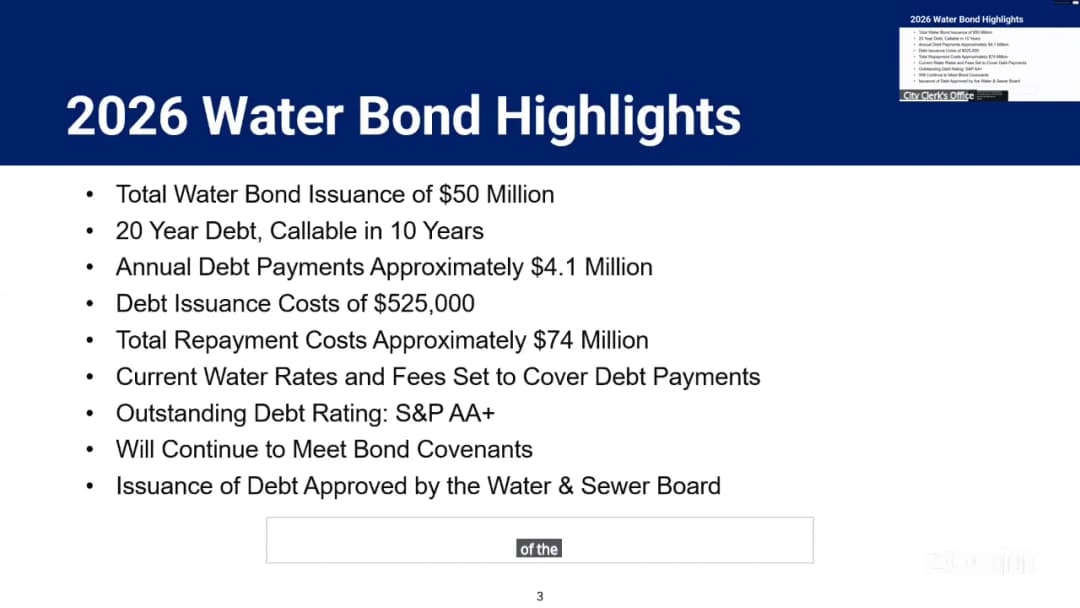
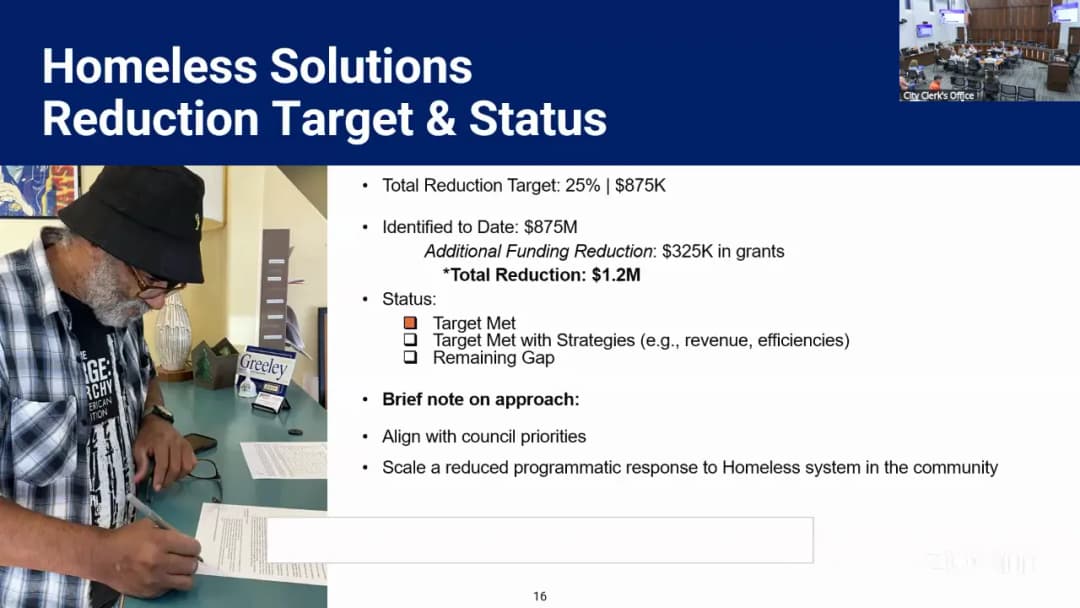
The Greeley City Council held a hybrid work session on Tuesday, June 9, 2026, beginning at 6:00 p.m. in City Council Chambers at 1001 11th Avenue, Greeley, Colorado. Mayor Dale Hall presided; six of seven councilmembers were present, with Councilmember Ryan Roth excused. The agenda included reports from councilmembers, findings and recommendations from the West Greeley Project Citizen Oversight Committee, a Water and Sewer Board interview, a Greeley 311 update, a 2027 budget development update, and a motion to enter executive session. No formal action was taken except the 6–0 executive session motion. Reports from Mayor and Councilmembers - Councilmember DeBoutez reported attending the North Front Range (US 34 Corridor) TMO meeting; the organization has new Executive Director Nathan Vanderbrook, formerly of CSU and CDOT. She announced Bike-to-Work Day on June 24. - Councilmember Huddleston reported attending Friday Fest, which will continue each Friday through the summer, and the Blues Jam. - Mayor Pro Tem McDonald also attended the Blues Jam, noting that Robert Randolph headlined. - Councilmember Olson thanked the West Greeley Project Citizen Oversight Committee for its dedication and teamwork and thanked Tyler from the Greeley Tribune for attending and reporting on the meetings. West Greeley Project Citizen Oversight Committee Findings and Recommendations - Committee Chair Bob Locke, with Committee Members Jeffrey Kennedy and Tom Pfankuch, presented at 6:01 p.m. Locke praised city staff and reported that at the committee's most recent meeting staff shared that the city was not bondable for this project. The committee therefore recommended a pause in its work. - Locke explained that staff are seeking a financial partner that could bring the city back to a bondable position; if and when a partner is secured, a new set of financial figures would be required and the committee would reconvene to scrutinize them before making recommendations to council. - Kennedy read statements from absent committee members Nick Kenny and Scott McPherson. Kenny said the committee could not recommend moving forward without a meaningful financing partner and a different risk profile, and would re-evaluate the full financial picture if conditions change. McPherson said the recommendation is a placeholder position—neither support for nor opposition to the project—until a partner is secured and business plans, consultant analysis, and pro forma are re-evaluated. - Pfankuch said the committee came very close to moving the project forward and that Greeley is financially capable of making the project work under the right conditions, emphasizing its importance to Greeley's housing profile. He also said communication around the project had been poor, and a subcommittee is compiling a readable five-to-seven-page summary to better inform the public. - Councilmember DeBoutez thanked the committee and said pausing and gathering more information was the right course for the community. Mayor Hall also thanked the committee. Water and Sewer Board Interviews - Interviews began at 6:18 p.m. Mayor Hall said two applicants had been scheduled: incumbent Cheri Witt-Brown and Antonio Molina-Haro. Molina-Haro was not in attendance, which disqualified him from further consideration. - The council interviewed Witt-Brown, a current Water and Sewer Board member. She described about 25 years as a private-sector developer and builder, more than 10 years with Habitat for Humanity, and work on Hope Springs, described as the largest Habitat community in the Western region. - She said she is interested in continuing because of the board's long-range water planning, including Terry Ranch, and because she wants to represent underserved residents and help keep municipal utilities affordable. - On attendance, she estimated missing about one board meeting per year on average. She evaluated Greeley's water system as well managed, with more than seven reservoirs and extensive infrastructure, and noted the city did not have to impose water restrictions this year. - Mayor Hall stated that the formal appointment vote will occur at the next City Council meeting. Greeley 311 Update: Improving Access to City Services - Assistant City Manager Kimberly Southern introduced the item at 6:28 p.m.; Director of High-Performance Government and Innovation Kylie Jackson and IT Special Projects Manager Sara Martinez presented. - Greeley 311 is a centralized non-emergency city service request platform available through a mobile app, a phone number, and an online portal. It internally routes requests so residents do not have to identify the correct department. - The system soft-launched alongside the new city website in August 2025 and has entered a full public awareness campaign, including stickers on city vehicles, bus shelter and bus-back advertising, and yard signs at parks and city facilities. - Presented data showed more than 1,200 requests received, an average resolution time of about nine days, a customer satisfaction score of 3.6 out of 5, and roughly 3.5–4 requests per day. The most common request type was streetlight concerns. - Next steps include ongoing workflow refinements, implementation of call center technology, and future development of an AI-enabled chatbot for ticket creation on the city website. - Mayor Hall asked about response timelines. Jackson said service level agreements are being tailored to each request type, with a goal of acknowledging all requests within two business days. - Mayor Pro Tem McDonald asked about an emergency escalation path. Martinez said that for emergency-type issues, the platform immediately displays an emergency phone number rather than accepting a ticket. Registered users can track their own requests, and anonymous submissions are also allowed. - Councilmember DeBoutez asked whether animal-related calls such as stray dog reports should go through 311. Martinez said residents should still call the non-emergency police line for animal matters because 311 is monitored only during regular business hours. She also said the app is available in English and Spanish, with other language options by phone. - Councilmember Huddleston asked whether staff had measured administrative time savings from 311. Jackson said this is an important metric and meaningful data would be more achievable once the call center component is fully operational. 2027 Budget Development Update - Deputy Director of Budget and Policy Kalen Myers presented the recap at 6:46 p.m. Council has reviewed seven departments to date: Municipal Court, Fire, Police, Emergency Management, the City Manager's Office, Budget, and Finance. - Of the identified $18.1 million general fund budget gap, $17.2 million, or 95%, has been addressed through department proposals, leaving $893,000 still to resolve. - Councilmember Huddleston asked how department revenue-generation efforts are tracked relative to the gap. Myers confirmed revenue improvements are reflected in departmental reduction totals, and additional global savings options, such as fund balance and carryover, will come forward from the budget team. - Councilmember Olson noted the city collected approximately $5.2 million more revenue than anticipated in the current year. Myers confirmed the gap is based on revenue projections, so higher revenues could make the gap smaller; she added that council could reconsider how reductions are applied, distinguishing one-time versus continuous revenue streams. Community Development - Kelli Johnson noted Code Compliance is proposed to move back into Community Development in 2027, but each area was evaluated against its own reduction target. - Community Development was assigned a 17% reduction target of approximately $1.14 million. The department met the target primarily through revenue and cost recovery strategies rather than direct service cuts, generating about $1.1 million through fee adjustments, new cost-recovery measures, and recaptured revenue. - This approach accelerates the 2023 fee study roadmap from about 45% toward 85% cost recovery. Service impacts include elimination of the Neighborhood Improvement Grant Program and city-sponsored HOA training, elimination of seasonal intern support, and potential pressure on the 90-by-90 development review initiative (90% of development review decisions within 90 days). - Interim Director Don Threewitt said paid interns had provided productive value, especially in GIS-related work, but cutting the program would slow non-critical work rather than core services. He also said third-party mediation services were cut, while the neighbor-to-neighbor program continues with existing staff. Code Compliance - Code Compliance was assigned a 17% reduction of approximately $162,000. The department identified about $177,000 in savings by eliminating a vacant inspector position, aligning revenue projections with actual collections, and updating fee structures. It will move from six to five inspectors. - Core neighborhood response services remain in place, but reduced flexibility and backup coverage may result in slower resolution of larger or more complex cases. - Councilmember DeBoutez asked about the hearing officer's ability to reduce fines to zero. Staff said minimum fines are set by code and cannot be reduced to zero, though rulings can be appealed. Buxton Demers said enforcing minimum fines consistently would yield approximately $18,000–$28,000 in additional revenue based on 2025 data, and proposed moving from a flat $25 stipulation to $50 per violation for pre-hearing settlements. - Councilmember Olson said he has been frustrated for years with code-compliance pace and fines, and asked staff to continue evaluating ways to make the program more effective. Economic Development and Urban Revitalization - Economic Development and Urban Revitalization was assigned a 25% reduction target of approximately $659,000. The department met the target through about $469,000 in expense reductions and $190,000 in new revenue. - Key reductions include cuts to external partner funding, elimination of the workforce development function, and a shift to a shared business analyst model. Partner agency funding reductions account for approximately $86,000 in savings and would require council direction before implementation. New revenue includes small administrative support fees for overhead associated with Greeley Urban Renewal Authority activities. - Councilmember Huddleston asked about workforce development partnerships and the track record of partner agencies such as Upstate Colorado. Threewitt acknowledged the significant value of regional lead generation and said the department is building direct relationships with industry-specific national site selectors. - On post-mortems of near-miss site selections, Threewitt said the most common deficiencies identified are lack of power, water infrastructure, and shovel-ready inventory; key local deficits include vacant flex space and timely power delivery, while the Water and Sewer Department's industrial water bank is expected to be a significant asset. Councilmember Olson clarified that the issue is not a lack of water but lack of infrastructure to deliver water to specific sites; Threewitt confirmed. - Councilmember Olson said economic development is among his top priorities alongside safety, security, and infrastructure. City Manager Brian McBroom said the Cascadia and Catalyst projects are designed to open West Greeley broadly for development, with infrastructure benefiting about 20 square miles. - Councilmember DeBoutez asked about real estate revenue opportunities. Threewitt described reframing the real estate management office as a land office model, including commission-based purchases, lease revenue optimization, energy and mineral rights leasing improvements, and application fees for external leasing activities. Homeless Solutions - Homeless Solutions was assigned a 25% reduction target of approximately $875,000 and met the target. An additional $325,000 in grant reductions brings the total identified funding reduction to about $1.2 million; when expiring grants and one-time funding are included, the overall resource reduction is approximately 48% compared to 2026. - Kelli Johnson emphasized an important distinction: the department's 2026 shelter funding included a $1 million one-time allocation that has not been re-allocated for 2027, while the ongoing base shelter commitment is $200,000. - The most significant service changes are in outreach and rapid rehousing. The outreach team is reduced from four positions to two case managers focused on problem-solving and resource coordination, with direct encampment response and non-emergency homeless-related calls shifting back to police and other departments. Rapid rehousing shifts from a traditional long-term assistance model to a rapid-exit model focused on helping the greatest number of households quickly. - Director Mandy Shreve said United Way has committed to stretching available dollars to maintain shelter operations through the end of the cold weather season and is working to identify a partner to take over shelter services. Johnson noted that a possible partnership with the Denver Rescue Mission is no longer an option. City Manager McBroom said the shelter's annual budget is approximately $2.5–$3 million, of which the city's $1.2 million was not enough. - Councilmember DeBoutez said this department reflects the most difficult aspect of the city's budget situation; the cuts are necessary, but the community will now be managing homelessness primarily through EMS and police, addressing symptoms rather than root causes. - Councilmember Olson said mental health underlies much of homelessness and that organizations such as North Range Behavioral Health and Frontier House are better positioned than government to provide services; he noted the city took over direct service delivery around 2021–2022 and said partnering would be more sustainable. Johnson said this perspective aligns with the direction she and Shreve are pursuing. - Mayor Pro Tem McDonald called the shelter critical infrastructure for keeping vulnerable individuals out of downtown businesses and parks, noted that Greeley as the county seat effectively serves the entire county's homeless population, and said county and municipal partners should contribute financially. - Mayor Hall said the Mayor's Homelessness Task Force remains active and he has been exploring conversations with other communities to broaden participation and share responsibility. Housing Solutions - Housing Solutions was assigned a 17% reduction target of approximately $168,000. The department met the target by eliminating one position, recalibrating the G-HOPE down payment assistance program budget by 37% to align with actual spending, and making revenue adjustments. - Director Deb Callies said the best G-HOPE year was 2025, with 11 closings and a highest annual expenditure described in the transcript as just under $75,000; the meeting minutes state just under $750,000, an apparent typographical discrepancy. - On Proposition 123 down payment assistance, Callies said the city applied for a two-year, $1 million grant but did not receive the award; a community partner, Impact Development Fund, received it instead, and the city will partner with that organization to extend the benefit of those funds to Greeley residents. - Callies confirmed that private activity bond housing developments approved the prior week use traditional affordable housing financing tools outside the general fund. The expectation is approximately 500 housing units in Greeley over the next three years, including new construction and preserved units. - Staff said the department's ability to accelerate the Housing for All strategy will remain constrained, and the focus will be on maintaining current programs. - Mayor Hall acknowledged the difficulty of the budget process and thanked staff for the thoroughness of their work. Executive Session and Adjournment - Councilmember Olson moved, and Mayor Pro Tem McDonald seconded, a motion to enter executive session to discuss the purchase and transfer of real estate, receive negotiation instructions, and if necessary receive legal advice related to the Civic Campus project and associated intergovernmental and development negotiations. The motion cited C.R.S. §24-6-402(4)(a), §24-6-402(4)(e)(I), and §24-6-402(4)(b), and Greeley Municipal Code §2-151(a)(1), (a)(5), and (a)(2). It passed 6–0 at 7:58 p.m., with Councilmember Roth absent. - No scheduling items were reported. - Council entered executive session in the Colorado Room at 8:08 p.m. and concluded at 9:12 p.m. The executive session was electronically recorded as required by Colorado Open Meetings Law, and the recording will be retained for 90 days. The meeting was adjourned after the session. Key Outcomes - The West Greeley Project Citizen Oversight Committee recommended pausing its work until a financing partner restores a bondable position; no formal council action was taken. - Antonio Molina-Haro was disqualified from Water and Sewer Board consideration due to non-attendance; the formal appointment vote for Cheri Witt-Brown will occur at the next City Council meeting. - Council received the Greeley 311 update; staff will continue work on service level agreements, call center technology, and public awareness. - Council reviewed 2027 budget reduction proposals for Community Development, Code Compliance, Economic Development and Urban Revitalization, Homeless Solutions, and Housing Solutions. The remaining $893,000 budget gap is still unresolved, with more work sessions planned through June and July. - Council approved, by a 6–0 vote, entering executive session for the Civic Campus real estate and negotiation discussion; the session and meeting concluded at 9:12 p.m.
ECONOMIC DEVELOPMENT 15% · TECHNOLOGY AND INNOVATION 13% · AFFORDABLE HOUSING 10% · HOMELESSNESS 10%
22
JUN 2, 2026 · GREELEY, COLORADO · CITY COUNCIL
Greeley City Council Regular Meeting – June 2, 2026

The Greeley City Council met on June 2, 2026, at 6:00 PM in City Council Chambers and via Zoom. The meeting included recognitions, citizen comments, consent agenda approvals, and decisions on stormwater contracts, park naming, affordable housing bonds, and executive sessions. Items 17 and 18 (Great Western Industrial Park annexations and zoning) were removed from the agenda. All votes were unanimous 7-0. Recognitions and Proclamations - Pride Month Proclamation (6:02 PM): Mayor Hall proclaimed June 2026 as Pride Month. Representatives from Northern Colorado Equality, PFLAG Greeley, the Transharmonic Choir, and the JEDI Advocacy Council received the proclamation. - UNC Women's Volleyball International Goodwill Tour (6:06 PM): Proclamation declaring June 2, 2026, as University of Northern Colorado Women's Volleyball International Goodwill Tour Day. Head Coach Lyndsey Oates and team members accepted. The team will tour Japan (June 14–24), visiting sister city Mariah, Osaka, Kyoto, and Tokyo. - "What's Great About Greeley" Report (6:10 PM): Mayor Pro Tem McDonald recognized Greeley West teacher Manuel Robles (Tri-State Golden Gloves Hall of Fame), University High School baseball team (3A state finals), and UNC graduate Cameron Lucas (Fulbright Scholar to Germany). Consent Calendar - Approved minutes of May 5, 2026, and May 12, 2026, work session. - Canceled June 23, 2026, work session. - Approved intergovernmental agreement with CDOT for state highway maintenance. - Approved IGA with Greeley Urban Renewal Authority for 10th Street TIF District Tenant Relocation Project. - Officially named the new dog park "The Barkyard." - Officially named Triple Creek Natural Area. - Items 9–10 and 12–15 approved 7-0 at 6:56 PM. Items 11 and 16 were pulled for separate discussion. Public Comments & Testimony Twelve residents spoke during Citizen Input (6:10–6:45 PM): 1. Scott Royer – Requested flashing red lights (not yellow) at crosswalk on 16th Street near Greeley Central High School for pedestrian safety. 2. Steve Teets – Complained about squeaking bus brakes and unsafe e-bikes/e-scooters on sidewalks; urged ordinances to keep them off sidewalks. 3. Mary Metzger – Supported incorporating a Community Benefit Agreement (CBA) into the Catalyst project to ensure public input if the project proceeds. 4. Tiffany Simmons – Criticized former city manager Raymond Lee’s spending (luxury taxis, expensive meals, excessive travel) and urged better oversight; noted budget crisis partly due to lack of accountability. 5. Rachel Burdan – Opposed Catalyst project; claimed feasibility studies (CBRE, HLA, Newmark) show it is not profitable; suggested putting the project to a public vote in November. 6. Bill Gillard – Stressed that the moral obligation on Catalyst debt must be honored to protect city credit rating; warned that reneging would harm future borrowing and reputation. 7. Shawna Bell – Alleged police misconduct, human trafficking, and false reporting; called for investigations and oversight. 8. Peggy Sue Squires – Questioned why the June 10 downtown Civic Center meeting was held at Funplex (no bus service); also asked for a public vote on Catalyst. 9. Jeremy Anderson – Raised concerns about Parks and Recreation youth sports funding cuts, session reductions from two weeks to one week, and lack of answers from staff. 10. Tanya Garcia – Raised e-bike safety concerns on sidewalks and advocated for regulation. 11. Evan Peterson – Suggested community-focused initiatives (city-run grocery, farm-to-table, streetcars) instead of developer-led projects like Catalyst; criticized potential gentrification. 12. Jeffrey Kennedy – Defended the West Greeley Oversight Committee process, thanked staff for transparency, and said the committee is doing thorough work; countered misinformation about the project. Discussion Items - Item 11 – Downtown Stormwater Capital Improvement Projects Contract (7:00 PM): Councilmember Huddleston pulled the item for clarification. Sean Chambers (Water and Sewer Director) explained this is Phase 0, Task Order 2 with Ralph L. Wadsworth Construction for program management, model validation, public outreach, and design services (not construction). Priorities: Segments 1 and 2 of the 12th Street outfall (critical for downtown civic investments and Weld County IGA). Total 12th Street outfall estimated $125 million; citywide stormwater needs $300 million. Councilmember Huddleston requested clearer cost bookends in future phases. Resolution passed 7-0 at 7:04 PM. - Item 16 – Naming Ferguson Park (7:10 PM): Pulled by Mayor Hall. Susan Murray (Parks) and Wendy Adams (Ferguson family) spoke. The 27-acre property was donated by the late Jim Ferguson, who planted all trees by hand. His son Mark ensured the legacy. The park will preserve natural features. Resolution passed 7-0. - Item 20 – Private Activity Bond Allocations (7:10 PM): Housing Investment Manager Cece Cervantes and Rosine Bouobda presented. The city has accumulated $24,635,537 in PABs available (three-year retained balance). Three projects applied: Lincoln Avenue Communities (108 units, Island Grove renovation), Brickwell Development (120 new units, Hope Springs), High Plains Development (64 preserved units). Combined requests slightly exceeded available PABs; Housing for All Advisory Board adjusted allocations to meet 25% threshold for 4% tax credits. Total: 292 new/rehab units. Average PAB per unit $85,000; average total development cost $294,000 per unit. Another 90–100 additional units from separate 9% tax credit project expected soon. Motion approved 7-0 at 7:22 PM. Key Outcomes - Consent Agenda (Items 9–10, 12–15) approved 7-0. - Item 11 (Stormwater Contract) passed 7-0. - Item 16 (Ferguson Park naming) passed 7-0. - Item 20 (PAB allocations) passed 7-0. - Executive Sessions (Items 21 and 22) authorized 7-0 for legal advice and strategy regarding West Greeley Project and disputes with Windsor (including wastewater lawsuit and annexation objections). Sessions began at 7:25 PM; first session ended at 8:50 PM; second session ended at 9:45 PM. - Motion to authorize City Attorney to prepare documents (Item 23) approved 7-0. - Meeting adjourned after final executive session.

AFFORDABLE HOUSING 16% · PROCEDURAL 15% · PUBLIC ENGAGEMENT 13% · STORMWATER MANAGEMENT 9%
23
MAY 26, 2026 · GREELEY, COLORADO · CITY COUNCIL
Greeley City Council Work Session - May 26, 2026

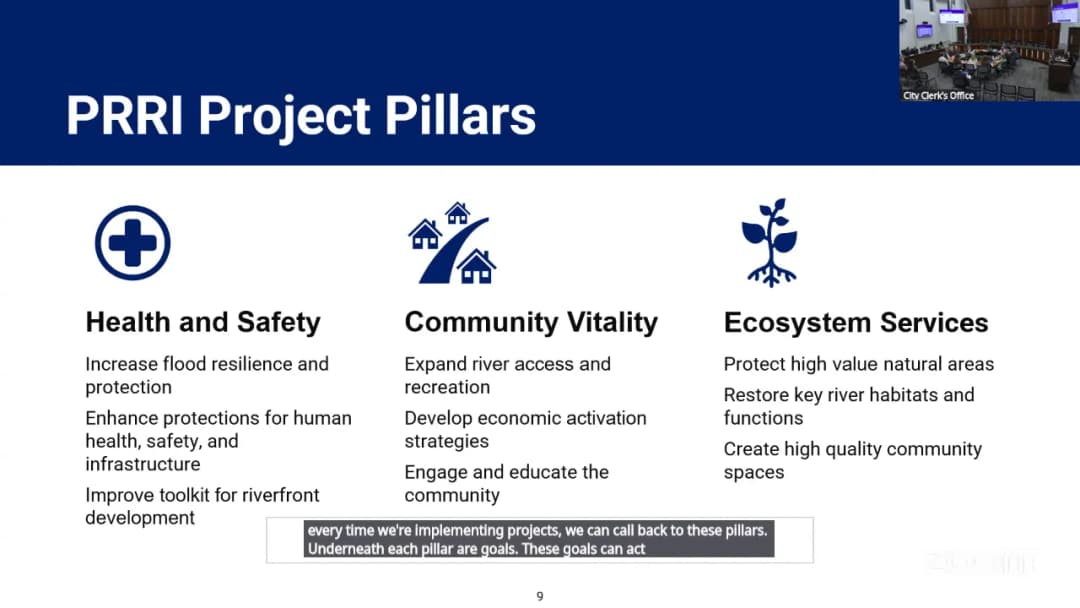
This was a work session of the Greeley City Council, focused on preliminary 2027 budget reductions, an update on the MERGE highway interchange project, and a proposal to restart the Poudre River Restoration Initiative (PRRI) master planning process. No formal votes were taken, but council reached consensus on the PRRI restart and received detailed presentations on budget cuts across multiple departments. Reports from Mayor and Councilmembers - Councilmember Olson provided an update on the West Greeley connectivity committee, noting engaged members and substantive questions. - Councilmember Huddleston attended the Memorial Day ceremony and thanked those who served. - Councilmember Roth attended "Meet the Fleet," Leadership Weld County graduation, and the Downtown Development Authority (DDA) board meeting. He thanked the Linn Grove Cemetery team and police honor guard. - Mayor Hall announced that a collective bargaining agreement with Greeley Fire Fighters Local 888 had been reached, negating the need for the scheduled executive session. Discussion Items 2027 Budget Development Update City Manager Brian McBroom introduced the budget process at 6:07 p.m., noting that these are preliminary staff recommendations to inform council and gather early feedback. He emphasized that final reductions are subject to council approval in the fall. Fire Department (Chief Brian Kuznik): Assigned a 4% reduction target ($1 million), met the target. Reductions focused on support functions and training, not firefighting personnel. Training funding cut by $323K, limiting new hire training to 1–2 FTEs in 2027 despite annual attrition. Chief Kuznik noted that increased call volume or response times would signal a need for immediate action. Police Department (Chief Adam Turk): Assigned 4% reduction ($1.57 million), exceeded target by $15,000. No sworn personnel cuts, but reductions in non-sworn support: records processing, evidence technicians, administrative support, analytical/investigative support, and community outreach. Example: evidence release now by appointment only. Chief Turk noted 73% of the budget is salary/benefits and 12% contractual obligations, leaving limited flexibility. Councilmember DeBoutez raised concerns about costly responses to EMS calls (80% of fire calls) and homeless encounters (30–40 per week for police). Chief Turk acknowledged co-responder programs but noted scene safety uncertainties. Office of Emergency Management (OEM): Assigned 25% reduction, unable to meet target. Both full-time positions retained; non-personnel expenses reduced, leaving an $83,000 gap still needing funding. Councilmember Olson requested monthly reporting on call volumes and response times from both departments to track operational readiness. Councilmember Huddleston questioned sustainability of support function cuts. Councilmember DeBoutez asked about equipment replacement schedules (e.g., ladder trucks every 6 vs. 8 years) and suggested re-examining less costly response models. City Manager's Office, Budget and Policy (CFO Allena Portis): City Manager's Office met 25% reduction by eliminating assistant city manager and chief public safety officer positions, reducing leadership capacity. Finance department exceeded 17% reduction by $20,811, achieved through elimination of an accounting manager role and increased cost recovery (e.g., sales tax audits, grant administration fees, P-card rebates). Budget department met 17% reduction by cutting two FTE positions, reducing internal support. Councilmember Olson emphasized the need for project managers to own their own budgets rather than relying on budget analysts. Councilmember DeBoutez questioned if current staffing levels were manageable compared to three years ago; Portis noted increases since 2023 but said workload redistribution was intended. MERGE Program Update Presented at 7:05 p.m. by Civil Engineer Roch Labossiere, Public Works Director Seth Sorensen, and CDOT consultant Benjamin Rowles. The project is moving forward with federal grant agreement nearing signature. Design and environmental assessment are ongoing: preliminary interchange evaluations, noise walls, access concepts for local businesses. RFQ for Construction Manager/General Contractor (CMGC) is being finalized with CDOT and expected release in Q2 2026. Construction is anticipated to begin in Q2 or Q3 2028. Funding combines state/federal grants, local funds, and a TIFIA loan, expected to cover full cost. Councilmember Olson noted the project scope has already been reduced from earlier presentations to define a clear area of disturbance for NEPA. Sorensen confirmed cost estimates are comparative to date; a more solid figure will emerge at 30% design (targeted Oct–Nov 2026). If costs exceed funding, value engineering will adjust scope within grant requirements. Re-Prioritizing the Poudre River Restoration Initiative (PRRI) Master Plan Presented at 7:25 p.m. by Deputy Director Leah Hubbard and Senior Project Manager Kelen Dowdy. Phases 1 and 2 (2024–2025) suffered from insufficient interdepartmental coordination and stakeholder exclusion. Staff proposed a new structure with an interdepartmental steering committee (ISC), a three-horizon planning approach: long-term visionary (100-year), short-term CIP (1–10 year), and adaptive planning framework with annual council updates. Staff recommended reappropriating the $500,000 budgeted for PRRI into 2027 to fund the master plan (estimated $300K) and initial CIP projects ($200K). Councilmember Olson expressed reservations about spending $500K during budget constraints, but Portis clarified it is funded from the Quality-of-Life Fund, not the General Fund. Councilmember Huddleston asked for breakdown of flood-focused vs. amenity-based spending and milestones. Councilmember DeBoutez noted community surveys consistently prioritize river access and recreation. Mayor Hall supported expanding partnerships. Council reached consensus to support restarting the PRRI master planning process under the presented model. Key Outcomes - Council reached consensus to support restarting the PRRI master planning process with the proposed organizational structure and funding plan. - Executive session (Item 8) was canceled due to the tentative collective bargaining agreement with Local 888. - Council requested monthly reporting from police and fire departments on call volumes and response times to monitor operational impacts of budget cuts. - Staff directed to further define PRRI expenditure breakdown between flood protection and other amenities, and to provide more granular milestones. - MERGE project continues to advance; design contract with RSH will be brought to council for approval soon.

FISCAL SUSTAINABILITY 27% · ENGINEERING AND INFRASTRUCTURE 15% · WATER AND WASTEWATER MANAGEMENT 12% · PERSONNEL MATTERS 11%
24
MAY 19, 2026 · GREELEY, COLORADO · CITY COUNCIL
Greeley City Council Regular Meeting – May 19, 2026

The Greeley City Council met in regular hybrid session on Tuesday, May 19, 2026, at 6:00 p.m. in Council Chambers at 1001 11th Avenue, Greeley, Colorado, and via Zoom. Council appointed David 'Craig' Huddleston to the vacant Ward I seat, administered his oath of office, approved consent items, conducted four public hearings, made board appointments, and authorized an executive session related to the Civic Campus project. No changes were made to the posted agenda. The executive session began at 8:43 p.m., concluded at 10:06 p.m., and the meeting then adjourned. Consent Calendar - Item 12: Motion to approve proceedings of the April 16 special meeting, April 21 City Council meeting, and April 28 work session. - Item 13: Resolution adopting an intergovernmental agreement with Weld County for a new 24-hour ballot drop-off location. - Item 15: Resolution establishing the Mayor's Economic Development Task Force. - Item 14 (DOLA Homelessness Resolution Program Grant) was pulled by Mayor Pro Tem McDonald for separate consideration. Items 12, 13, and 15 were approved 7–0. Recognitions and Proclamations - Historic Preservation Month Proclamation for May 2026, accepted by Greeley Historic Preservation Commission members; events include a May 21 celebration at the Greeley Creative Arts Center and a May 28 history hour. - National Public Works Week Proclamation for May 17–23, 2026, marking the 66th annual observance; accepted by Public Works Director Seth Sorensen and Infrastructure Superintendent Jerry Pickett. - National Travel and Tourism Week Proclamation (May 3–9, 2026); speakers cited $28.5 billion in Colorado travel economic output and 457,000 jobs in 2024, plus about $447 million in direct travel spending in Greeley/Weld County in 2024. - Early Risers Toastmasters Club 784 Day Proclamation, recognizing the club's 75 years since chartering on May 8, 1951; accepted by club officers and members. - Councilmember DeBoutez presented the What's Great About Greeley report highlighting community awards and partnerships. Mayor Hall welcomed Seth Sorensen as Public Works Director. Public Comments & Testimony - Geoffrey Havens, a Greeley resident and former Historic Site Supervisor, asked Council to remove the 501(c)(3) museum-operations recommendation from the CPRD Cost Recovery Management Plan and return the plan for revision. He cited proposed fourth-grade field trip costs of about $29 per child, up to $40 for nonresidents, versus $5 per student at History Colorado. - Tannis Bator urged prioritizing Greeley's museums and cultural assets in budget decisions, citing History Fest and other unique community attractions. - Gary Alexander supported increased museum investment as a quality-of-life amenity and unique experiential education opportunity, saying he would support tax increases or reallocation of capital funds. - Karen Zach announced an America 250/Colorado 150 celebration at Bittersweet Park with a flag field July 31–August 2 and a ceremony August 1 at 10:00 a.m. - Tiffany McCall, accompanied by Fred Charter School of Innovation students, presented a petition with more than 50 signatures asking the city to extend park restroom hours beyond the current May 1–September 30 window. - Jeremy Peterson, a Windsor resident and founder of Identity Pet Nutrition, opposed large-scale data center projects, saying they place extraordinary demands on electricity, water, and infrastructure and generate noise; he advocated balanced industrial growth for small and mid-sized businesses. - Steve Teets raised safety concerns about new paratransit vans with rear exits and opposed e-bikes and e-scooters as unsafe for pedestrians, asking for ordinances and enforcement. - Jude Nordstrom complained about the room's audio system, asked that the Cascadia issue be placed on the ballot, and urged action on train horn noise at railroad crossings. - Tiffany Simmons criticized the CPRD cost recovery framework's benchmark communities, citing Greeley's 15% poverty rate and $70,000 median income versus higher-income benchmark communities; she cited phase-three average increases of 32%, Special Olympics basketball from $30 to $127, adult activity center lunches from $5 to over $30, special events from $10 to $63, and a 3,606% increase for Hands on History. - Bill Gillard blamed part of the city's budget crisis on prior council and management decisions and requested a longer period between first and second reading of ordinances. - Peggy Sue Squires urged transparency and fiscal responsibility, cited police staffing shortages, homelessness, and fentanyl overdoses, and said there is community talk of a recall. - Stephanie Ludvigsen, speaking personally as a West Greeley Project Oversight Committee member, said the committee process was not structured to produce meaningful analysis within the remaining six weeks. - Mary Metzger expressed concerns about the oversight committee facilitator's alleged bias toward the Cascadia/Catalyst project, the city manager's salary, a data center partnership with county commissioners, and affordability; she asked for a November ballot question. - Evan Peterson, speaking virtually, supported placing Cascadia/Catalyst on the ballot and criticized the city manager's $300,000 salary relative to low council and mayoral compensation. - Alexandra Lavelle, speaking virtually, opposed the Cascadia project, asked for a public vote, and alleged Council disregards community input and homeless residents. Reports and Initiatives - Mayor Pro Tem McDonald reported on Weld Project Connect, noting the next event is October 15, and on a Monday meeting with Weld County, the airport authority, and city staff about east sub-area planning. - Councilmember Roth reported on a water resources tour with Councilmember DeBoutez, thanked water and inspection staff, encouraged attendance at the Memorial Day ceremony Monday at 9 a.m., and announced the first USL League 2 home game for Atletico Union on Saturday at 6 p.m. at Jackson Field. - Councilmember DeBoutez reported riding Greeley-Evans Transit routes 1 and 5, noting a squeaky brake issue on Route 1, and announced office hours the next evening at 5 p.m. at Atlas Coffee House. - Mayor Hall reported that a Mongolian delegation visited Greeley and expressed interest in a possible sister city arrangement. - Councilmember Rudy's initiative to have Parks and Recreation study extending park restroom hours was supported by consensus; City Manager McBroom was directed to follow up. Discussion Items - Council assignment updates: Following Huddleston's appointment, Huddleston was assigned to the Human Relations Commission; Roth was assigned to the Downtown Development Authority and the Island Grove Advisory Board; and McDonald was assigned to the Police Pension Board. - Item 14 – DOLA Homelessness Resolution Program Grant: Homelessness Solutions Director Mandy Shreve said this is the third year of the grant and the structure changes annually. The 2026–27 award is $115,000: $75,000 for eviction prevention assistance and $40,000 for street outreach, expected to be spent within the grant year. McDonald voiced concern about relying on nonrenewable grants, citing $6 million in federal funding absorbed into the general budget. Deputy City Manager Kelli Johnson said these grant dollars fund direct program services, are not tied to FTE positions, and do not require a city match. Shreve said a centralized eviction-prevention coordination system had begun informally but had not been formalized. Huddleston asked for a list of all grant terms, conditions, and riders before execution; the City Attorney agreed to provide it. The motion passed 7–0. - Item 17 – City Manager salary and benefits: HR Director Martha Lanaghen presented the compensation ordinance: $300,000 base salary, standard city health benefits, a 12% retirement contribution to a 401(k), and PTO accrual at the executive rate for 21 or more years of tenure, capped at 500 hours. McBroom said the charter requires city manager residency and that he has a home under contract in Greeley with a tentative closing of June 8 and a move by end of June. Public hearing testimony included Bill Gillard on ordinance timing, Steve Teets questioning salary proportionality to taxpayers, Tiffany Simmons requesting oversight of past expenses, and Mary Metzger on council oversight; Mayor Hall reminded speakers to keep testimony on the item. DeBoutez noted the job oversees 1,800 employees and a $540 million budget, making $300,000 roughly $33 per hour. McDonald, Rudy, and Hall thanked McBroom; Hall said the salary was below the former city manager's and below general market rates. Huddleston abstained, citing a spoken potential conflict of interest. The motion passed 6–0 with Huddleston abstaining. - Item 18 – 12th Street Outfall and potable water infrastructure: Chief Engineer Adam Prior said Phase 1 was completed in 2025 for a 10-year storm event and is being upgraded to a 100-year flood event. The existing 6-acre-foot pond would be expanded to about 15 acre-feet. Acquisitions include fee-simple purchases of the Nadir and Allen properties, easements across CDOT Highway 34 right-of-way, and temporary and permanent easements through Leprino Foods. Prior said the city has undertaken 13 eminent domain authorizations over six years involving 148 property owners and 199 parcels, with only four condemnation proceedings and none going to court. Mayor Hall asked about the consequences of not proceeding; Prior cited noncompliance with state water quality requirements and greater downtown flood risk. The Stormwater Advisory Board recommended approval on April 1, 2025. No public speakers testified. The motion passed 7–0. - Item 19 – Uptown Rezone (ZON2024-0002): Interim Planning Manager Caleb Jackson presented the rezone of 290.56 acres from Holding Agriculture to approximately 235 acres of Commercial High Intensity and 55 acres of Industrial Medium Intensity. The site was annexed in 2000 and had remained H-A; Planning Commission recommended approval 7–0. Applicant representatives Don Ryan (LAI Design Group) and Matt Notter (Roche Constructors) described a 15–20 year conceptual mixed-use vision including retail, residential, open space/conservation easement, and industrial uses. DeBoutez questioned gateway character, community separator consistency, and form-based zoning; staff said commercial uses may fit the community separator near a future interchange and that the application uses traditional zoning. Huddleston asked that industrial traffic be directed to County Road 17 and industrial uses be placed toward the rear; Notter said heavy-traffic users would be directed to County Road 17. Public testimony: Bill Gillard supported the project for economic development and tax base diversification; Steve Teets opposed it, citing loss of agricultural land, transit and traffic concerns, and suggested keeping H-A until issues are resolved. The motion passed 6–1, with DeBoutez voting no. - Item 20 – Schmerge Annexation H-A zoning: The city initiated holding agriculture zoning on the 219.221-acre former Cascadia PUD property, required within 90 days after the February 24 voter repeal was certified May 5. H-A is a placeholder consistent with the Imagine Greeley Bluffs designation. City Attorney Stacey Aurzada said a pending state Supreme Court case could, if decided for the landowner and followed by district court relief, reinstate the original PUD zoning and supersede H-A; state law nonetheless requires zoning within the 90-day window. Public testimony: Bill Gillard predicted the PUD may be restored and called the process costly; Steve Teets asked to delay until the court case resolves; Mayor Hall said state law does not allow the city to wait. The motion passed 7–0. - Item 21 – Kinnison Annexation H-A zoning: The companion city-initiated H-A zoning for the 73.319-acre Kinnison property, also formerly in the repealed Cascadia PUD, passed with the same rationale. Planning Commission recommended approval; there were no council questions and no public speakers. The motion passed 7–0. - Item 22 – Board and Commission appointments: Kent Henson was appointed to the Downtown Development Authority for a 4-year term; Jordan Miller to the Human Relations Commission for a 3-year term; and Ashlyn Craig, Alexandra Reyes, and Lillian Russell to the Youth Commission for 2-year terms. Executive Session and Final Motions - Council approved a motion to enter executive session under CRS 24-6-402(4)(a), (4)(e)(I) and Greeley Municipal Code 2-151(a)(1), (a)(5), and if necessary for legal advice under CRS 24-6-402(4)(b) and 2-151(a)(2), to discuss real estate purchase and transfer, negotiate instructions, and legal advice related to the Civic Campus project. The motion passed 7–0 at 8:30 p.m. - Council authorized the City Attorney to prepare, and the Mayor and City Clerk to sign, any required resolutions, agreements, and ordinances reflecting action taken at this and previous meetings. The motion passed 7–0 by voice vote. - The executive session was held from 8:43 p.m. to 10:06 p.m.; Mayor Hall reminded participants that no formal action could occur. The meeting then adjourned. Key Outcomes - David 'Craig' Huddleston was appointed to the vacant Ward I Council seat by a 6–0 vote, sworn in by Municipal Judge Mark Gonzales, and assigned to the Human Relations Commission; other council assignments were adjusted. - Consent Agenda Items 12, 13, and 15 were approved 7–0; Item 14 was approved separately 7–0. - The city manager compensation ordinance was adopted 6–0 with one abstention. - The 12th Street Outfall and potable water infrastructure ordinance authorizing property purchase and eminent domain was approved 7–0. - The Uptown Rezone was approved 6–1, with Councilmember DeBoutez dissenting. - The Schmerge and Kinnison H-A zoning ordinances were each approved 7–0. - Appointments to the Downtown Development Authority, Human Relations Commission, and Youth Commission were made. - Parks and Recreation was directed to study extending park restroom hours. - Council authorized and then held an executive session on the Civic Campus project; no formal action was taken in executive session.

PROCEDURAL 17% · PUBLIC ENGAGEMENT 11% · ECONOMIC DEVELOPMENT 10% · COMMUNITY ENGAGEMENT 10%
25
MAY 12, 2026 · GREELEY, COLORADO · CITY COUNCIL
Greeley City Council Work Session: Budget Deficit, Ballot Planning, and Economic Development Task Force – May 12, 2026

The Greeley City Council held a work session on Tuesday, May 12, 2026, at 6:00 PM in the City Council Chambers at City Center South, with hybrid participation via Zoom. All six council members were present. The meeting covered six major items: the Culture, Parks and Recreation Department’s cost recovery framework, the 2027 budget development update, the quarterly Capital Improvement Program update, the Greeley Municipal Court budget proposal, planning for a potential 2026 ballot measure, and an update on the Mayor’s Task Force for Economic Development. No formal votes were taken, but council provided direction and consensus on several items. Culture, Parks and Recreation Department Cost Recovery Framework and Implementation Deputy Director Jill Krantz introduced the item, noting it stemmed from the 2025 Master Plan. Consultant Chris Nunes presented the framework, which categorizes programs into three tiers: community benefit, shared benefit, and individual benefit. The analysis included pro forma reviews of over 100 programs and a stakeholder survey of advisory board members (38% response rate). The market was benchmarked against about 10 peer communities in Northern Colorado. Key findings revealed wide and inconsistent pricing, lack of rational criteria linking program type to pricing, and opportunities for efficiency in program design, staffing, and facility use. The framework emphasizes expense management rather than simply raising fees. A phased implementation was presented, starting with park and pavilion fees for the 2027 budget. Councilmember DeBoutez asked how parks and museums (with less measurable economic return) were weighted. Nunes said the stakeholder survey informed categorization and cultural programs had broad support for subsidies under the community benefit tier. Councilmember Rudy asked why general citizens were not surveyed; Nunes explained that vested stakeholders with operational understanding are better suited. Councilmember Roth urged early and transparent public communication. Councilmember Olson echoed the need for early communication, noted Greeley’s park acreage (23.28 acres per 10,000 residents vs. national average of 15.23), and expressed concern about deferred maintenance and pricing out low-income families and youth. Deputy Director Krantz noted an existing scholarship program of up to $150 per qualifying participant. Council consensus was to support the framework and phased implementation. 2027 Budget Development Update Nathan Mosley, Director of Budget and Policy, presented an update on the 2027 budget, characterizing a structural general fund deficit requiring significant course correction. The projected deficit is approximately 12% of general fund expenditures, resulting from a reversal in revenue and expenditure trends: from 2017 to 2021 revenues grew 41% while expenditures grew 18%; from 2021 revenues grew 18% while expenditures grew 56%. The fund balance is projected to reach 16.7% of general fund expenditures by end of 2026, equal to the required two-month reserve. The city adopted target-based budgeting with a cohort model: Tier C (police, fire, OEM) at 4% reduction; Tier B at 17%; and Tier A at 25%. The total projected deficit to be solved is over $18.1 million. A voluntary separation process was opened and final selections are due May 15. Councilmember DeBoutez asked about water and sewer enterprise funds; Mosley confirmed they are not part of the general fund gap but their teams are voluntarily reviewing budgets. She also asked about the budget stabilization fund, estimated at $4.6–$4.9 million. Councilmember Olson noted that grant-funded programs created structural spending and suggested examining the CIP for unspent or long-encumbered funds. Mayor Hall explained that council would be more directly involved in the 2027 budget process. Quarterly Capital Improvement Program Update Katelyn Myers, Deputy Director of Budget and Policy, introduced this new quarterly update to provide regular transparency on capital projects. She proposed organizing capital projects into six outcome-oriented categories: Safe and Accessible Public Buildings; Reliable Transportation and Mobility; Clean and Reliable Water, Sewer and Storm Systems; Parks, Recreation and Cultural Spaces; Community Growth and Place-Based Development; and Technology Systems and City Operations. This structure aims to connect investment to community outcomes. Debt financing and utility rates together represent nearly 60% of capital funding, with development fees at 14%. A year-to-date spending chart was presented, showing spending, obligated, and unspent portions. A new practice of reallocation accounts for paused or cancelled projects was highlighted, with three examples: Lincoln Park Master Plan on hold, River Restoration Phase 3 paused, and the Railroad Quiet Zone shifted to 2028. Four projects were featured: Wastewater Treatment and Reclamation Facility upgrades (25% complete), Poudre River Trail narrow section repair ($1.5M, under construction), O Street/59th Avenue intersection (completion expected June), and Union Colony Civic Center orchestra pit lift ($1.2M). Councilmember Olson requested visibility on unspent obligated dollars to assess idle funds and deferred maintenance progress. Mayor Hall asked about deferred maintenance (addressed in both operating budgets and CIP). Mayor Pro Tem McDonald requested consistent start and completion dates in future reports. Councilmember DeBoutez noted public impatience with the quiet zone delay. Greeley Municipal Court Budget Proposal Municipal Court Judge Mark Gonzales and Court Administrator Krista Bagnall presented the court’s budget overview and its response to the reduction targets. The court processed over 17,000 cases in 2025 and projects nearly 18,000 in 2026. The target reduction was 17% of operational expenditure. Judge Gonzales presented scenarios showing that a 17% or 25% cut would require eliminating probation services, reducing court marshals, or cutting clerical staff—each leading to increased recidivism, reduced security, longer wait times, and greater police burden. The court proposed an alternative reduction of approximately $52,000, representing roughly 3% of the total budget or 17% of the general fund support allocation. Eliminating 2.75 of 6.75 clerical positions would likely double check-in wait times and degrade phone response from same-day to 48–72 hours. Judge Gonzales also highlighted unfunded mandates, including a livestreaming requirement for bond hearings and mandated rate increases for court-appointed attorneys (from $100 to $105 per hour, rising to $110 July 1, eventually reaching 75% of the federal rate at $177/hour). Councilmember Rudy stated he views the court as a public safety entity and believes it should be tiered with police and fire at 4%. Mayor Pro Tem McDonald thanked the judge and supported the alternative general fund reduction. Councilmember Olson noted that the court’s revenue collection nearly covers its general fund support, making the net request small. Councilmember DeBoutez asked about technology for probation; Judge Gonzales explained that physical observation and legal documentation cannot be automated. 2026 Ballot Measure Planning Deputy Director of Budget and Policy Kalen Myers led the discussion on a potential 2026 ballot measure. She recapped guidance from the February retreat: interest in a combined public safety and homeless solutions measure, a total increase of up to 0.5% (yielding $12–14 million annually), a sunset of 5–10 years for the homeless component, and strong transparency requirements. Council discussion revealed differing views: Councilmember Olson questioned whether the ballot should also address financing for the West Greeley project and downtown civic campus, noting that many residents associate the city’s financial situation with those projects and that combining public safety and homelessness could cause both to fail. Mayor Pro Tem McDonald preferred separate measures but would support a combined if polling indicated favorability. Councilmember DeBoutez suggested that the city’s most pressing obligation may be resolving the West Greeley project and that asking for a public safety or homeless tax before settling that could undermine credibility. Budget Director Nathan Mosley noted that the homeless component is one area where a dedicated revenue source could supplant general fund expenses, freeing up existing dollars. Staff outlined the timeline and costs: polling in May–June ($38,000–$43,000), program development, and public engagement including a citizen committee (additional $115,000–$135,000). Staff cautioned that polling on too many topics reduces reliability. Council reached consensus to proceed with polling on public safety and homeless solutions. Council directed staff not to initiate polling on the larger capital projects (West Greeley, downtown civic campus) at this time, given the unresolved status of those matters. Staff will develop draft polling questions, conduct the poll in June, and return with results, while beginning preparatory work on the public engagement track. Mayor's Task Force on Economic Development Update Interim Director of Community Development Don Threewitt and Interim Deputy Director of Economic Development Derek Jerred presented the proposed structure for the Mayor’s Task Force on Economic Development, requested by Mayor Hall in January. The task force aims to reverse the trend where 68% of Greeley’s workforce leaves the city for jobs elsewhere. The task force will comprise 20–30 members appointed by the mayor, including business leaders, educators, developers, small business owners, and diverse community members. Members will be assigned to one of six Strategic Action Teams: Business and Industry; Small Business and Entrepreneurship; Workforce and Education; Development and Real Estate; Public and Regional Partners; and Community and Equity Voices. Action teams will meet monthly or bimonthly, reporting to a Committee of the Whole that meets quarterly. Deliverables over 9–12 months include short-term quick wins, long-term policy and investment strategies, a performance metrics and accountability framework, and a final Mayor’s Economic Development Playbook to be presented to council for adoption. Councilmember Olson asked where the full council fits in the process, noting that prior task forces (e.g., the mayor’s homeless task force) did not provide regular updates to non-participating councilmembers. Threewitt confirmed that council will receive regular updates and that the draft playbook will come to council in a work session for feedback before finalization. Councilmember Rudy referenced a data tool from the MPO showing workforce commuting patterns and suggested sharing it with the full council and incorporating it into the task force’s research. Mayor Pro Tem McDonald asked whether Greeley appears on site selector lists. Jerred explained that staff are taking a proactive approach, visiting existing Greeley businesses to identify growth opportunities, and that Upstate Colorado plays a role as an anonymous intermediary in major employer attraction. Mayor Hall stated his expectation that the task force produce tangible results. Key Outcomes - Cost Recovery Framework: Council endorsed the framework and phased implementation approach. Staff will proceed with implementing changes to park and pavilion fees and continue developing pricing changes for programs. - 2027 Budget: Council received the update. The budget process continues with department work sessions scheduled through July. Council will be more directly involved in making trade-off decisions. - CIP Reporting: Council provided feedback requesting more detail on unspent but obligated funds and consistent inclusion of project start and completion dates. Staff will refine reporting accordingly. - Municipal Court Budget: Council broadly supported the court’s alternative reduction proposal (approximately $52,000 reduction). The court will continue to refine its proposal ahead of final budget decisions. - Ballot Measure: Council directed staff to proceed with polling on a potential combined public safety and homeless solutions tax increase measure. Staff will not include West Greeley or downtown capital projects in the polling at this time. Polling will occur in June, and staff will return with results and a recommended path forward. - Economic Development Task Force: Council provided feedback on the proposed structure. The task force will be formed in June under the mayor’s appointment, with regular updates to council. A draft Economic Development Playbook will be brought to council for review. Note: No formal votes were taken; all outcomes represent council consensus or direction to staff.

PUBLIC SAFETY 17% · PARKS AND RECREATION 14% · FISCAL SUSTAINABILITY 13% · CAPITAL IMPROVEMENT PLANNING 13%
26
MAY 5, 2026 · GREELEY, COLORADO · CITY COUNCIL
Greeley City Council Regular Meeting - May 5, 2026

The Greeley City Council convened a regular meeting on Tuesday, May 5, 2026, at 5:00 PM in Council Chambers. The meeting featured proclamations for Small Business Week, Economic Development Week, Mental Health Month, and National Police Week. All six council members, led by Mayor Dale Hall, were present. Key actions included the selection of Craig Huddleston to fill the Ward I council vacancy, approval of an intergovernmental land exchange with Weld County for the downtown campus, and unanimous votes on fifteen annexation eligibility findings for the Great Western Industrial Park (GWIP). The council also addressed the Uptown Rezone and Delantero Metropolitan District amendments before entering executive session for collective bargaining negotiations with the Greeley Fire Fighters IAFF Local 888. Proclamations and Recognitions - Small Business Week: Mayor Hall read the proclamation for May 4-7. Kimberly Ponce (Kimberly's Events Center) and Jamie Henning (Greeley Chamber) accepted. Ponce noted there are over 3,700 small businesses in Greeley. - Economic Development Week: Derrek Jerred (Interim Deputy Director, EDUR) accepted and introduced the department team and partners for the May 4-8 proclamation. - Mental Health Month: Micaela Sanchez (North Range Behavioral Health) accepted, emphasizing the importance of reducing stigma and providing access to care regardless of ability to pay. - National Police Week: Deputy Police Chief Mike Zeller accepted the May 11-16 proclamation and invited the community to the Weld County Law Enforcement Memorial ceremony on May 14. - What's Great About Greeley: Councilmember Roth presented the report, highlighting staff emergency management credentials, student scholarships (Sofia Vasquez, Daniels Fund Scholars), Aims Community College workplace health designation, and a national Fields of Excellence Award. Ward I Councilmember Appointment - Mayor Hall and City Clerk Heidi Leatherwood conducted a panel interview with six finalists: Robert Casey, Craig Huddleston, Gabriel Llanas, Kyle Rush, Kimberly Soper, and Gregory Yielding. Candidates answered questions on critical city issues, Ward I successes, and ward priorities. - On the first ballot, Council selected Craig Huddleston to fill the vacancy. His oath of office and formal ratification resolution are scheduled for the May 19 council meeting. Public Comments & Testimony - Connie Garcia discussed right-of-way restrictions preventing fence installation on her property and criticized the abandoned Marriott Hotel on Highway 34. Mayor Hall directed staff to follow up. - Bill Gillard expressed strong support for the Catalyst project, estimating it could generate $13.5 million in annual net revenue for the city, and called the oversight process a sign of transparency. - Steve Teets voiced opposition to expanding the Delantero service plan and the GWIP annexation, citing budget constraints and Highway 34 congestion. He also raised safety concerns regarding VIA transit wheelchair access and bus brake noise. - Rachel Burdan urged the West Greeley Oversight Committee to thoroughly read feasibility studies, claiming multiple studies indicated the water park and hotel components would not be financially viable. - Mary Metzger (virtual) argued the West Greeley Oversight Committee lacked diversity and did not include long-time project opponents. - Evan Peterson (virtual) criticized the Ward I appointment process and spending priorities, arguing the city focuses too much on corporate interests rather than core public services. Discussion Items - Downtown Campus Land Exchange (Item 13): Council considered the IGA with Weld County for property exchange. Deputy City Manager Kelli Johnson confirmed the agreement only facilitates the land swap for the Judicial Center, City Hall, and School Administration Building and does not commit the city to any specific development path. Johnson clarified the $10.7 million predevelopment budget funded land acquisition, demolition, and soft costs, not payments to private developers. Councilmember Olson stressed ongoing budget concerns and received confirmation that the land trade was independent of any development decision. - Uptown Rezone ZON2024-0002 (Item 17): Councilmember DeBoutez questioned the rezoning of approximately 290.56 acres from Holding Agriculture to Commercial High Intensity and Industrial Medium Intensity. She expressed concern about the lack of a Planned Unit Development (PUD) for design control over this key gateway corridor and whether the zoning was consistent with the Comprehensive Plan. Interim Director Don Threewitt responded that the applicant's proposed base zoning met their needs for highway-level commercial, the community separator would be maintained, and the zoning was consistent with the Comprehensive Plan and adjacent land uses. DeBoutez urged the applicant to prioritize creative and distinctive design. - Delantero Metro District Amendment (Item 21): Don Threewitt presented an amendment to expand the Delantero Metropolitan District service plan by roughly 300 acres (Delantero South). Councilmember Olson highlighted the need for right-of-way dedication to support planned transportation improvements. Threewitt confirmed the developer was supportive of these improvements. Public comment included opposition from Steve Teets and Bill Gillard regarding traffic and budget. - Great Western Industrial Park (GWIP) Annexation Eligibility (Item 22): Don Threewitt presented the eligibility hearing for the 15-part serial annexation (325.85 acres). He clarified the hearing was to establish eligibility under state statute, with official annexation scheduled for June 16. Applicant representative Mark Savala (Burrow Real Estate Group) stated the project is viewed as a major economic development opportunity leveraging the city's water bank. In response to Councilmember Olson, Savala stated the applicant chose Greeley over Windsor due to Greeley's water resources and an intentionally designed corridor to allow choice of municipal provider. Scott Ballstadt (Town of Windsor) formally requested the council pause the application and meet with the Windsor Town Board to explore partnership opportunities. Key Outcomes - Ward I Vacancy Filled: Craig Huddleston appointed by Council ballot. Formal resolution and oath scheduled for May 19, 2026. - Consent Agenda (Items 10-12, 14-16, 18-19): Approved 6-0 at 6:50 p.m., including the appointment of Brian McBroom as City Manager. - Downtown Land Exchange (Item 13): Resolution adopted authorizing the IGA with Weld County. (Motion passed 6-0 at 6:55 p.m.) - Uptown Rezone (Item 17): Ordinance introduced for first reading. Public hearing and second reading scheduled for May 19, 2026. (Motion passed 6-0 at 7:07 p.m.) - Delantero Service Plan (Item 21): Resolution approving amendment adopted. (Motion passed 6-0 at 7:11 p.m.) - GWIP Annexation Eligibility (Item 22): All 15 individual resolutions making findings of fact and conclusions regarding eligibility adopted. (All motions passed 6-0 between 7:22 and 7:30 p.m.) - Executive Session: Council voted 6-0 at 7:33 p.m. to enter executive session to receive legal advice and determine strategy regarding the 2026 collective bargaining agreement with the IAFF Local 888. - Clerk Authorization: Motion passed authorizing the City Attorney to prepare documents reflecting council action.

PROCEDURAL 24% · COMMUNITY ENGAGEMENT 21% · ECONOMIC DEVELOPMENT 14% · PUBLIC ENGAGEMENT 8%
27
APR 28, 2026 · GREELEY, COLORADO · CITY COUNCIL
Greeley City Council Work Session: Subarea Plans, Finances, & Ward I Vacancy - April 28, 2026

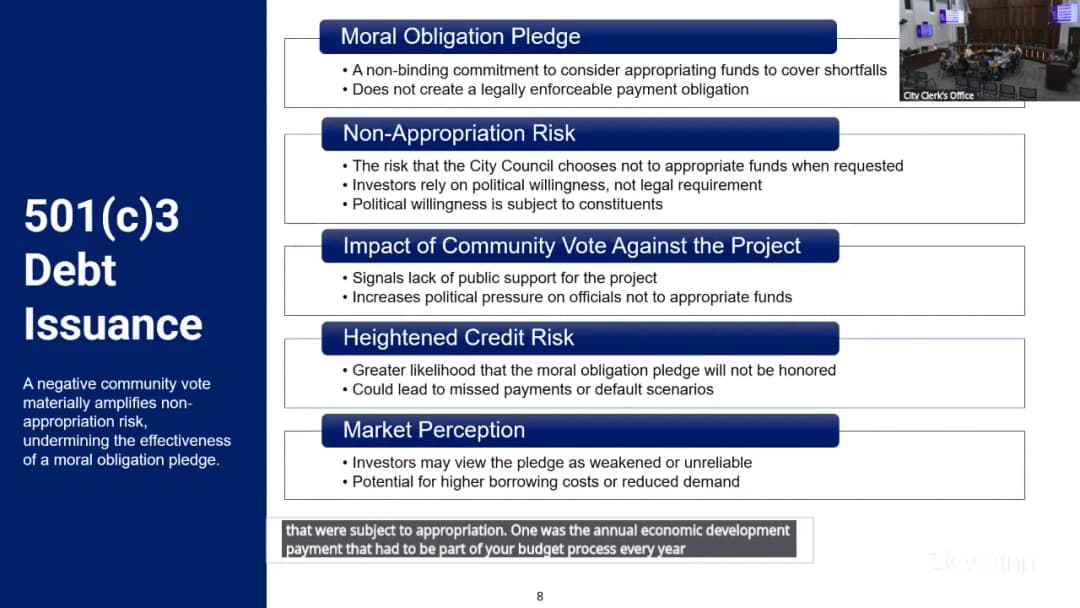
The Greeley City Council held a work session on Tuesday, April 28, 2026, at 6:00 PM in the City Council Chambers. The meeting was conducted in a hybrid format. Key topics included the Eastern Greeley Subarea Plan, the 2026 First Quarter Financial Update, the West Greeley Financial Update, and the process for filling the Ward I Council vacancy. Reports from Mayor and Councilmembers - Councilmember Olson reported meeting with the city's transit group and stated that the city has been using local funds to support the Poudre Express and US 34 bus routes. He expressed an intention to work with the North Front Range transportation coordination group to develop a more balanced regional funding model and reorient the routes as commuter service. - Mayor Pro Tem McDonald attended the MCR ribbon cutting and a Regional Leaders presentation regarding the Forge Campus business incubator in Fort Collins. She recognized the Forestry Department for planting 170 trees in advance of Arbor Day. - Councilmember DeBoutez highlighted upcoming events including the UNC Jazz Festival, the Cinco de Mayo celebration (Sunday, May 3), and the Farmers Market season-opener at Lincoln Park. - Councilmember Roth attended the SAVA ribbon cutting, the Boys and Girls Club Elegant Night, and promoted the upcoming Bear Fest in downtown Greeley. - Mayor Hall attended the opening of the new Brentwood Park playground, partially funded by a $100,000 grant from Gametime's 2025 grant program. Eastern Greeley Subarea Plan - Don Threewitt (Interim Director of Community Development), Doug May (Principal Planner), and Britt Palmer (Director of Planning, Rick Engineering) presented the plan at 6:09 PM. - Britt Palmer reported that the first round of community engagement occurred from August to December 2025, including an open house, stakeholder meetings with owners of 40+ acres, and a community survey receiving 620 responses. Top community issues identified were streets/roads, job opportunities and economic development, and housing affordability/availability. - Planning concepts presented included: Campus Town (converting the 85 Business route to a greenway), Neighborhood Infill/Hub (mixed-use development), Dumbbell Connectivity (east-west multimodal connection), and the North Poudre Area (transition from industrial to agricultural preservation). Target adoption is the second quarter of 2027. - Councilmember DeBoutez asked about the Western Sugar TIF district. Don Threewitt and Deputy City Manager Kelli Johnson reported the current balance is approximately $25 million, with a projected $83 million available over the life of the TIF. - Mayor Pro Tem McDonald asked about a pedestrian overpass over Highway 85. Threewitt responded that overhead options are being evaluated, with costs estimated at $10-$20 million, and cautioned against building costly infrastructure before behavioral patterns support its use. - Councilmember Olson questioned what the plan's primary economic "draw" would be, expressing concern that rigid agricultural preservation designations could conflict with landowner development aspirations and discourage annexation. He suggested the airport and County Road 66 corridor should be positioned more prominently as a gateway and economic driver. - Councilmember Roth asked about discussions with Sunrise Health Clinic regarding a potential location in East Greeley. Palmer indicated no discussions had occurred but that staff would reach out. Roth also advocated strongly for expanded open space and parks. 2026 First Quarter Financial Update - Division Treasurer Robert Miller and Director of Finance Kirk Jones presented the update at 6:57 PM. - Robert Miller reported that retail spending is increasing locally and statewide, Colorado inflation is approximately 4.2%, Weld County unemployment remains low (0.3%-0.4%), and short-term interest rates are volatile. The city's total investments and cash stand at $355 million as of March 31. The overall projected increase from the 2026 budget is $8.2 million. - Kirk Jones reported the city has 70 open federal grants with $2.6 million expended in Q1 2026. The FY25 annual audit is well underway (83% of tasks submitted), with completion of the city's work targeted for June. - Councilmember McDonald thanked staff for prioritizing the audit timeline and getting ahead of the process. - Councilmember Olson noted the financial picture suggests meaningful progress toward reducing the city's long-term budget gap, and that Weld County remains among the fastest-growing areas in Colorado economically. - Mayor Hall asked about the lag time between oil price changes and city revenue receipt. Miller confirmed the lag is typically 6 to 18 months. West Greeley Financial Update - CFO Allena Portis, joined by Deputy City Manager Brett Naber and financial adviser Jason Simmons (Hilltop Securities), presented the update at 7:13 PM. - Portis reported that as of February 2026, the estimated total project cost is approximately $959.4 million, up from $910 million in March 2025. An additional $211 million in capitalized interest, cost of issuance, and reserves is not included in that total. - Regarding the fiscal implications of the recent community vote, Ms. Portis explained that it increased "non-appropriation risk." Jason Simmons elaborated that prior to the vote, the model assumed a low investment-grade rating (Triple-B) and a 5.25% interest rate. Post-vote, the effective rate could rise to 6-6.5%, significantly reducing 501(c)(3) bonding capacity. - Pre-development financing: The COP amount under consideration has been reduced to $90 million. Under the current structure, no 501(c)(3) reimbursement is assumed. If the project does not proceed, the city would need to refinance approximately $72 million in COPs using buildings valued at $72 million as collateral, with potential average annual payments of $6.5 million over 20 years and a notable spike from $4.7 million to $8.9 million between years 5 and 6. - Councilmember Olson expressed that the GID's role as a repayment source for COPs was not something he had previously understood. He argued that conflating GID, 501(c)(3), and COP funding streams has contributed to public confusion and distrust. He suggested adding a voter-approved dedicated tax revenue option to the list of financing alternatives. - Councilmember DeBoutez asked if the oversight committee would have access to the foundational CBRE and RBC financial models. Simmons clarified RBC's model was the primary base model, with CBRE used to analyze it. - Mayor Pro Tem McDonald suggested the city develop an animated video to explain the financial waterfall structure to the public. Acting City Manager McBroom endorsed this as a core goal of the oversight committee. - Mayor Hall emphasized that the oversight committee's work must proceed with urgency given that developer interest is time-sensitive. Ward I Vacancy Process and Council Direction - City Clerk Heidi Leatherwood introduced the item at 8:07 PM. She reported 15 applications received and 13 determined to be qualified (one disqualified for missing the deadline, one for non-residency). - Council agreed each member would individually score and rank all 13 applications using a rubric, with scores submitted to the Clerk by Thursday, April 30. (The specific deadline was finalized as 10:00 AM in the transcript of the meeting, while the meeting minutes record the deadline as noon.) - This ranking will create a shortlist of five candidates. - Interviews will take place at the May 5 regular council meeting beginning at 5:00 PM. The format will include a panel interview with two standardized questions asked of all candidates, followed by council follow-up questions, and an immediate ballot vote conducted publicly after interviews conclude. - Formal appointment, line of succession, and committee assignments are scheduled for the May 19 meeting. Key Outcomes - Eastern Greeley Subarea Plan: Plan advances to a second round of community engagement in Summer 2026. Draft plan adoption targeted for Q2 2027. Staff encouraged to seek early "deliverables" or quick wins. - West Greeley Financials: The West Greeley Oversight Committee will serve as the primary vehicle for reviewing financing options, refining costs, and developing public communications. Financing alternatives include private investors, P3s, public-public partnerships, the 501(c)(3) model (potentially with an additional moral obligation partner), revenue bonds, and a voter-approved tax option. - Ward I Vacancy: Formal appointment process set. Candidates scored by April 30. Interviews May 5 at 5:00 PM. Appointment set for May 19. - Executive Session: Council voted unanimously (6-0) at 8:27 PM to enter executive session to discuss employment matters related to the appointment of a City Manager.

FISCAL SUSTAINABILITY 29% · COMMUNITY ENGAGEMENT 12% · ECONOMIC DEVELOPMENT 10% · PUBLIC ENGAGEMENT 8%
28
APR 21, 2026 · GREELEY, COLORADO · CITY COUNCIL
Greeley City Council Regular Meeting - April 21, 2026

The Greeley City Council held its regular meeting on Tuesday, April 21, 2026, at 6:00 PM in the City Council Chambers and via Zoom. Mayor Dale Hall presided. All six council members were present. The meeting included several proclamations, public comments, and unanimous approval of consent agenda items, resolutions, and ordinances. Key actions included naming Brian McBroom as the sole finalist for City Manager, approving annexation and zoning for the West Lowell area (56.66 acres), reappointing Municipal Judge Mark Gonzales, authorizing $100 million in water and sewer bond issuances, adopting a $59 million supplemental appropriation, and clarifying election definitions in the municipal code. Recognitions and Proclamations - Ed Clark National Youth Service Day Proclamation (April 21, 2026): Awarded to Moises Guzman Gamino, including a $1,000 scholarship. Youth Commission Chair Damian Sanchez presented. - Sexual Assault Awareness Month Proclamation (April 2026): Accepted by Allison Jones-Lockwood from SAVA Center, who noted the center has educated over 1,000 middle and high school youths in Greeley. - Arbor Day Proclamation (April 25, 2026): Accepted by Forestry Manager Shiloh Hatcher. Celebration at Centennial Park at 9 a.m. - Records and Information Management Proclamation (April 2026): Accepted by Mandy Brigham and Pax Faulconer, highlighting the three-person records team managing records for 20 departments and over 1,400 employees. - "What's Great About Greeley" Report: Presented by Councilmember Olson celebrating Aims Community College's military-friendly designation, Greeley West High School's avid national demonstration school recognition, UNC graduate program rankings, and downtown Greeley rebranding as a finalist for the 2026 Downtown Excellence Award. Consent Calendar - Approved City Council Work Session Proceedings of March 24, 2026 - Resolution authorizing competitive bids for Water Revenue Bonds, Series 2026 - Resolution authorizing competitive bids for First-Lien Sewer Improvement Revenue Bonds, Series 2026 - Resolution accepting right-of-way dedication for 83rd Avenue at US Highway 34 - Resolution adopting the 2025-2030 Weld County Multi-Jurisdictional Hazard Mitigation Plan - Resolution appointing citizens to the West Greeley Project Citizen Oversight Committee All consent items (9-14) were approved 6-0 at 7:02 PM. Public Comments & Testimony - Tiffany Simmons thanked Councilmembers DeBoutez and Rudy for responsiveness and willingness to engage in difficult conversations. - Kathy Hasch spoke about financial hardships many residents face and urged council to consider the burden of large projects. - Bill Gillard criticized the oversight committee formation, noting it took a petition, referendum, and a $350,000 special election for the council to listen. He expressed concern about the committee's composition and lack of transparency. - Steve Teets presented documentation on squeaky bus brakes as a health hazard, urging the city to fix existing infrastructure before expanding. - David Heald used the Titanic analogy to discuss economic concerns, arguing the West Greeley project is a "big porthole" that could harm the community. - Peggy Sue Squires praised Greeley (UNC football players in NFL draft, Andrew Alirez) and supported Brian McBroom as city manager. - Mary Metzger raised diversity concerns about the oversight committee, noting the majority are white men and criticizing the application process for rejecting a candidate due to an unspecified deadline. - Jennifer Andrews echoed diversity concerns, noted only one of the community's recommended candidates was selected, and called for a community benefit agreement. - Robert Lewis (representing Girl Scout Troop 18) explained the scouts attended to complete a communications merit badge, and promoted scouting. - Evan Peterson spoke about labor movement history, questioned council's representation, and expressed concerns about the oversight committee providing cover for the West Greeley project. - Alexandra Lavelle criticized the council's choices for the oversight committee, referenced the JBS strike, and demanded statements on ICE abolition. Discussion Items - City Manager Finalist (Item 16): Human Resources Director Martha Lanaghen presented Brian McBroom's background. Mayor Hall explained that over 60 applications were received, but no suitable external candidate was found. Councilmembers praised McBroom's steady leadership. The resolution passed 6-0. - West Greeley GID Inclusion Area Amendment (Item 17): Interim Planning Manager Caleb Jackson presented revisions excluding Poudre Heights and adding Great Western Industrial Park and Hankins property. Councilmember DeBoutez questioned the process of including unannexed properties. The ordinance passed 6-0. - West Lowell Annexation and Zoning (Items 18 & 19): Interim Director Don Threewitt presented annexation of 56.66 acres east of North 59th Avenue, with proposed zoning of holding agriculture and conservation districts. No council questions. Public comment: Steve Teets urged fixing existing infrastructure before annexing. Both ordinances passed 6-0. - Reappointment of Municipal Judge Mark Gonzales (Item 20): Presenter highlighted achievement of 101% case resolution efficiency, reduction of disposition time from 83 to 67 days, and collection of over $5 million in revenue. Councilmembers Olson and Rudy praised his professionalism. Passed 6-0. - Supplemental Appropriation (Item 21): Deputy Director Kalen Myers presented $59 million in expenditures, including $34 million carryover and $22 million in new requests ($521,000 from general fund offset by grants). Key items: Cameron Peak fire mitigation ($4.2 million), victim services, school resource officers, Keep Greeley Moving ($5.9 million), 83rd Avenue improvements, Red Tail Park, and 16th Street enhancements. Public comment: Peggy Sue Squires asked about homeless shelter funding; staff confirmed it was in the 2026 budget. Passed 6-0. - Water Revenue Bonds (Item 22): Division Treasurer Robert Miller presented $50 million bond issuance (20-year maturity, average annual payment $4.1 million, total cost $74 million) for water rights, system improvements, and Terry Ranch Aquifer access. Interest rate estimated just over 4% (max 5.25%). Public comment: Steve Teets urged saving money instead of issuing bonds. Passed 6-0. - Sewer Revenue Bonds (Item 23): $50 million issuance for wastewater treatment rehab, generator replacement, trunk sewer expansion, and regional capacity. Councilmember Olson noted the rehabilitation completes phase 2 of regulation compliance, earning star credits that pushed $100 million in future costs from early 2030s to late 2030s. Director Sean Chambers noted annual O&M of $16.5 million and replacement cost of $250-300 million. Public comment: Kathy Hasch questioned why the $100 million combined bond issuance wasn't put to public vote; City Attorney explained enterprise funds don't require voter approval under state law. Passed 6-0. - Election Definitions Amendment (Item 24): City Clerk Heidi Leatherwood proposed defining "general municipal election" as elections for council members or mayors (odd-year elections), with all others as "special elections." Councilmember DeBoutez questioned effect on citizen initiative signature thresholds. Public comment: Bill Gillard criticized the rushed process; City Attorney clarified. Tiffany Simmons suggested more specific language to prevent ambiguity regarding recall elections. Passed 6-0. Key Outcomes - Unanimous approval (6-0) of all consent agenda items (9-14) at 7:02 PM. - Resolution naming Brian McBroom as finalist for City Manager and authorizing conditional offer of employment passed 6-0 at 7:09 PM. - Ordinance amending West Greeley GID inclusion area passed 6-0 at 7:15 PM. - Ordinance annexing West Lowell (56.66 acres) passed 6-0 at 7:23 PM. - Ordinance establishing zoning for West Lowell passed 6-0 at 7:25 PM. - Ordinance reappointing Municipal Judge Mark Gonzales for a four-year term passed 6-0 at 7:31 PM. - Ordinance for supplemental appropriation of $59 million passed 6-0 at 7:40 PM. - Ordinance for Water Revenue Bonds (up to $50 million) passed 6-0 at 7:48 PM. - Ordinance for Sewer Revenue Bonds (up to $50 million) passed 6-0 at 7:58 PM. - Ordinance amending election definitions passed 6-0 at 8:11 PM. - Motion authorizing City Attorney to prepare required documents passed 6-0 at 8:12 PM. - Meeting adjourned at 8:12 PM.

PROCEDURAL 14% · PUBLIC ENGAGEMENT 11% · WATER AND WASTEWATER MANAGEMENT 10% · ZONING REGULATION 10%
29
APR 16, 2026 · GREELEY, COLORADO · CITY COUNCIL
Special Greeley City Council Meeting, April 16, 2026: West Greeley Oversight Committee Interviews

The Greeley City Council held a special meeting on April 16, 2026, to conduct panel interviews for 22 applicants vying for nine seats on the newly formed West Greeley Citizen Oversight Committee. The meeting, attended by all six council members, was called to order at 6:00 PM and adjourned at 7:46 PM. The committee is tasked with providing oversight on a contentious and complex development project, requiring a significant time commitment of approximately two to three hours per week for at least six weeks. Mayor Hall emphasized the need for fact-based deliberation and transparency. West Greeley Citizen Oversight Committee Applicant Interviews The council interviewed applicants in three groups, with Acting City Manager (named Brian McBroom in the official minutes, but referred to as Ryan McRoom in the raw transcript) reading prepared questions. Each applicant had 90 seconds to respond to three questions regarding their motivation, approach to disagreement, and basis for recommendations. Representative applicant positions during the interview process included: - Group One (Interviews began at 6:01 PM): - Jeffrey Kennedy: Expressed support for the project as a "yes vote" but acknowledged significant risks, citing the need to avoid repeating the "Future Legends" development failure in the area. Highlighted his project management background in the oil and gas industry. - Louisa Andersen: Voiced intentions to represent citizens who felt "overlooked" in the process, drawing on her experience on the Planning Commission and her financial literacy background. - Bob Locke: Pledged to apply a process-oriented approach given his concerns about the integrity and transparency of the process so far, drawing on his nuclear power and capital budget management background. - Stephanie Ludwigsen: Emphasized the importance of translating complex data into common language for residents. - Dennis Hall, William George, William Schneider: Focused on protecting community investment, civil engineering expertise, and real estate development experience. - Group Two (Interviews began at 6:46 PM): - Scott Ehrlich: Expressed cautious support, wanting to thoroughly study the project to ensure the city does not miss an opportunity or set itself up for failure. - Michael Trotter: Stated his decision was driven by a desire to "not cripple the city of Greeley with debt" and criticized both the yes and no sides for failing to effectively communicate the facts. - Paul Paxson, Barry Bode, Nick Kenny: Highlighted extensive experience in financial due diligence, large-scale project analysis, and community board representation. - Scott McPherson and Robert Slovick: Emphasized strategic planning, data analysis, and conflict resolution skills. - Group Three (Interviews began at 7:15 PM): - Tom Pfankuch: Declared the project an "opportunity of a lifetime for Greeley" and expressed strong support based on his long-term investment in the city. - Thomas Donkle: Focused on the need for community healing and consensus-building, citing his involvement from the beginning. - Jesse Allen: Advocated for systematic financial analysis to ensure good conscience decisions for all stakeholders. - Matthew Canterbury (via Zoom): Offered expertise from his role as the Town Manager of Keenesburg. - Beau Doran and Michael Trotter: Stressed separating "noise from the signal" and establishing clear rules of engagement. Key Outcomes - Appointments Announced: City Clerk Heidi Leatherwood announced the following nine appointees to the West Greeley Citizen Oversight Committee: Bob Locke, Stephanie Ludwigsen, Jeffrey Kennedy, Scott Ehrlich, Nick Kenny, Scott McPherson, Tom Pfankuch, Jesse Allen, and Michael Trotter. - Voting Process: Council voted by secret ballot after each interview group to select three appointees per group, holding multiple rounds of voting when necessary. - Committee Mandate: The committee is tasked with a substantial time commitment (2-3 hours per week for at least 6 weeks) to navigate the complex considerations of the West Greeley project and provide recommendations to the council. Note on Discrepancy: The official minutes identify the Acting City Manager as Brian McBroom, while the raw transcript repeatedly refers to the same individual as Ryan McRoom. This discrepancy could not be resolved from the provided source materials.

WEST GREELEY PROJECT 43% · COMMUNITY ENGAGEMENT 37% · PROCEDURAL 18% · ECONOMIC DEVELOPMENT 2%
30
APR 14, 2026 · GREELEY, COLORADO · CITY COUNCIL
Greeley City Council Work Session - April 14, 2026

The Greeley City Council held a work session on April 14, 2026, at 6:00 PM, adjourning at 7:35 PM. Mayor Hall presided. Councilmembers McDonald, DeBoutez, Olson, and Roth were present. Councilmember Rudy was excused and Ward I remains vacant. As a work session, no formal votes were taken; the meeting focused on discussion and providing staff direction. Code Compliance Process Improvement Update - Presenters Kelly Johnson and Buxton Demers reviewed the current enforcement process, noting that administrative hearings consume approximately 3,000 staff hours annually (based on 578 hearings in 2025) and can take 4 to 7 weeks to resolve common violations. Staff recommended exploring new tools, including citations and faster abatement, used by peer cities like Aurora and Longmont. - Council discussed four options. Councilmembers Olson and Roth expressed support for a hybrid approach. Councilmember DeBoutez supported expedited ticketing authority for lower-level issues and faster abatement. - Key Outcome: Council reached consensus to pursue the hybrid approach (Option 4), which would deploy citations for lower-level issues (e.g., expired tags), faster abatement for nuisances (e.g., weeds, trash), and reserve hearings for complex cases. Staff was directed to evaluate and develop this model. 2025-2030 Hazard Mitigation Plan - Peter Perez and Dom Taddei (Office of Emergency Management) presented the Weld County Hazard Mitigation Plan update. A key statistic highlighted that every $1 invested in federal mitigation saves $6 in future disaster recovery costs. The plan is required for eligibility for FEMA grants like the BRIC program. - Key Outcome: Purely informational. A resolution to adopt the FEMA-approved plan will be presented to the council for approval at its next regular meeting (likely April 21 or 28). 2025 Visit Greeley End of Year Tourism Annual Report - Jacqueline presented the tourism report, detailing the successful 2025 rebuild year. Key data from the new Zartico platform (funded by a $15,000 state grant) showed visitors represented 10–17% of the city's population per quarter, with 52–61% coming from out of state. Hotel occupancy hit 83–85% during peak quarters, and 25% of visitor spending supports local businesses. - Councilmember Olson inquired about the return on investment for the $850,000 annual lodging tax expenditure and questioned the impact of oil and gas workers on hotel occupancy data. He requested a clearer ROI formula. - Key Outcome: Informational report. Staff will develop ROI metrics and further analyze visitor origin data. West Greeley Project Update - Deputy City Manager Brett Naber and Project Manager John Herkey provided an update. Following the repeal of the Catalyst PUD, site grading has been paused and stabilized. The Boyd water line installation will proceed to completion ($16 million total, $12.5 million spent). The interchange design (CR 17 / Hwy 34) is at roughly 25–30% with an estimated cost of $70 million. Private development designs (hotel, water park, arena) are paused at 80–89% completion. - Councilmember Roth suggested potential savings of $5–15 million on the interchange design. Councilmember Olson advocated for immediately starting the rezoning process for the city's 110 acres to avoid future delays, a move supported by Mayor Hall. - Key Outcome: Council directed staff to begin the rezoning process for the city-owned 110 acres alongside the work of the newly forming oversight committee. A financial update will be provided at the April 28 meeting.

CODE COMPLIANCE 25% · TOURISM PROMOTION 22% · WEST GREELEY PROJECT 16% · EMERGENCY MANAGEMENT 12%
OPENPUBLICA · PUBLIC MEETING INDEXUPDATED DAILY · openpublica.com