Browse by city
Date range
Search help

Search titles, summaries, topics and stored transcripts together. Keywords may match separately; put the whole query in double quotes for a phrase. Matching follows word analysis, so punctuation is not exact. Both dates are included. Documents are not searched.

SHOWING 11–20 ENTRIES
11
AUG 4, 2026 · MILWAUKIE, OREGON · CITY COUNCIL
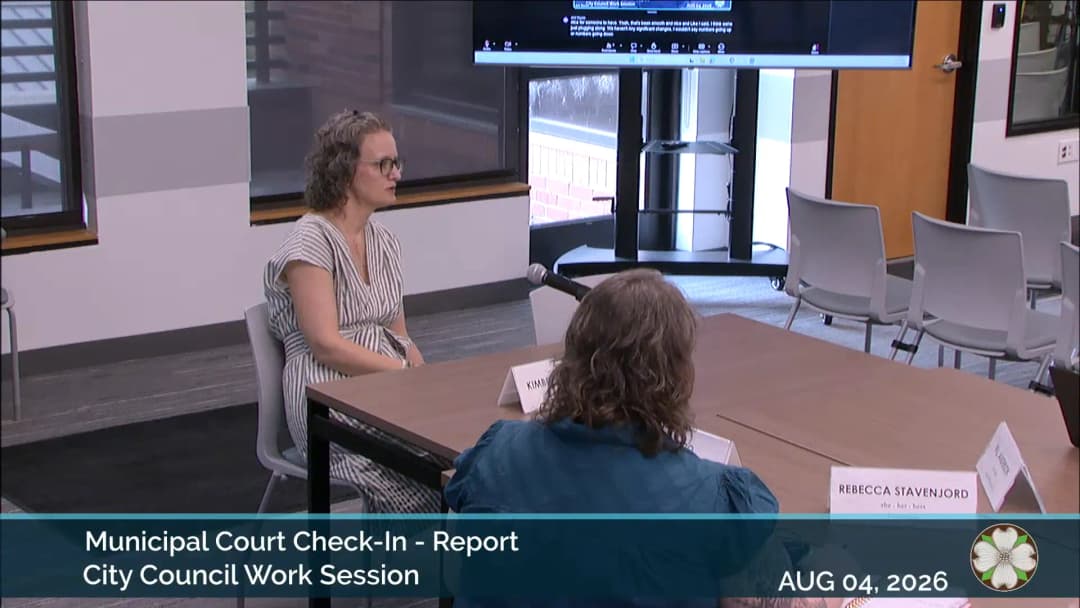
Milwaukee City Council Work Session: Staff Introductions and Court/Code Enforcement Discussion – August 4, 2026

The work session began with introductions of two new city staff members: Javier, a court specialist formerly with Hillsboro Police Department, and Kaylee, a new receptionist who previously worked for the City of Portland. Council members welcomed them and briefly discussed their backgrounds. Following introductions, Judge Graves provided an update on municipal court operations. The judge noted that caseloads remain consistent with a roughly 9:1 ratio of traffic to code enforcement cases. The discussion focused on challenges with tree code violations, including lack of supporting information provided to the court at arraignment, which hampers equitable sentencing. Judge Graves reported that about 60% of tree code cases involve residents and 40% developers, raising equity concerns about fines, especially for non-English speaking residents and elderly homeowners. Two positive case examples were shared: a developer case where a trial provided complete information leading to an appropriate fine, and a long-standing code enforcement case of a squatter property that was fully resolved after a year of judicial and code enforcement collaboration. Council members discussed inconsistencies in code enforcement priorities, citing an example of a bike rack sign on city property that remained unaddressed. They expressed interest in a data-driven review of code enforcement and urban forestry activities to better understand resource allocation and equity in enforcement. Key Outcomes - Council directed staff to coordinate a comprehensive data deep dive involving the court, code enforcement, and urban forestry to examine citations, removal permits, and where code enforcement time is spent. - The work session concluded and the council moved into executive session under ORS 192.660 to review the performance of the chief executive officer and to conduct labor negotiation deliberations.

TREE PRESERVATION 49% · PERSONNEL MATTERS 21% · PROCEDURAL 14% · COMMUNITY ENGAGEMENT 12%
12
JUL 22, 2026 · MILWAUKIE, OREGON · CITY COUNCIL
Milwaukee City Council Meeting - July 22, 2026: Metro Vision, Community Survey, Climate Action, Budget Freeze

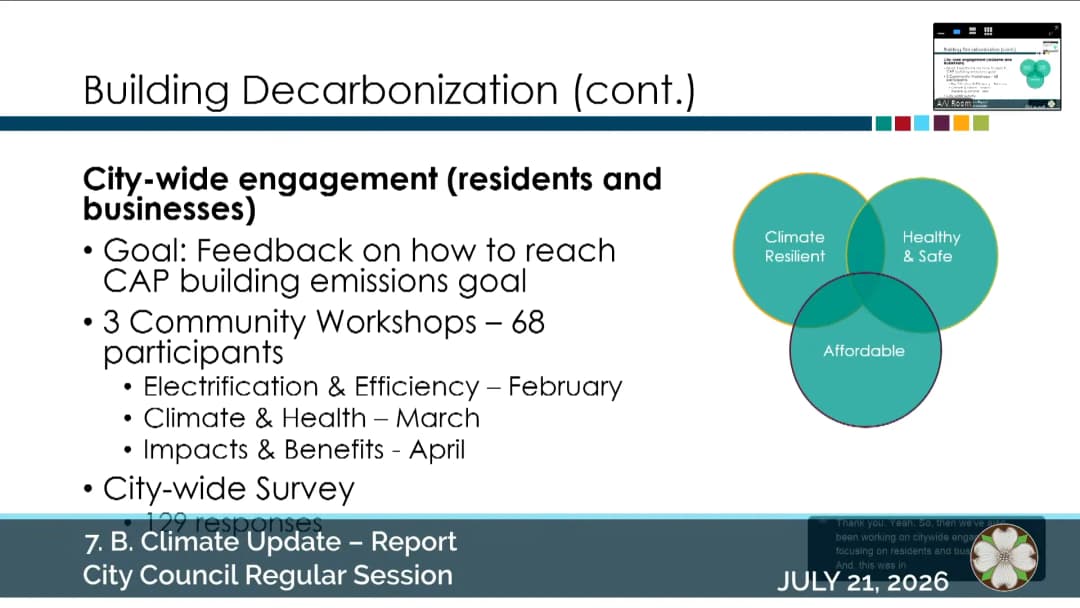
The Milwaukee City Council held its 2,453rd meeting on July 22, 2026, covering a broad range of topics including a presentation on Metro's Future 50 Vision, results from the 2026 community survey, a climate action update, formation of the Climate Action Committee, a budget check-in with a spending freeze announcement, and a decision on funding for Willamette Falls Locks. Announcements & Reports - Council announced the unveiling of a new Pride flag on Saturday, July 24 at 10 a.m. near the library. - The Little Float event organized by the Downtown Alliance will take place on August 1; tickets required for the floating portion. - Elections officer Scott Stoffer reported that 2026 is an election year with three council positions on the November ballot. Filing opens July 27 with new deadlines: incumbents must file by August 18, new candidates by August 25. SEL 101 forms are now required to be posted online. - A haiku was read to accompany the Pride celebration. Special Reports – Metro Future 50 Vision Committee - Metro Councilor Christine Lewis, Vision Committee member Gabby Blog, and principal regional planner Jessica Zadeb presented on the Future 50 Vision, a 50-year regional plan required by Metro's charter (goal year 2077). The process includes a 23-member Future Vision Commission and a Youth Committee (ages 15–24). - Spring engagement reached about 2,200 residents via survey; key themes: residents value natural beauty, community identity, and want a safe, affordable, welcoming region. Resolving homelessness and housing instability is seen as essential. - Upcoming events: Future Fest youth summit (free, in-person), Vision Summit in October, and workshops with elected officials. - Council members asked about the 1995 vision, youth engagement methods, and how the vision will be kept alive. Staff noted the 1995 growth concept map has guided investments. Consent Calendar - The consent agenda was approved unanimously without any items removed. It included minutes from June 9, 16, and 16 (work session and regular session) and a resolution authorizing an increase in the contract for King Road improvement project design and project management services with Kittelson & Associates Inc. Community Comments - No members of the public signed up to speak; no online participants raised hands. There was follow-up from the July 7 meeting regarding a resident's comments, and the city manager provided a written response to council. Discussion Items Community Survey Results - Assistant City Manager Joseph Relio and Dr. Tanisha Tate Woodson presented results from the 2026 statistically valid survey (500 respondents; 16% aged 18–29, 58% male, 9% answered in Spanish). - Overall, 85% of residents approved of city services, but significant equity gaps exist: Black residents, those aged 18–29, households earning less than $60,000, and those living in the city less than 4 years reported lower satisfaction and lower confidence in city core values. - Infrastructure (roads, pedestrian/bike safety) and public safety (crime, emergency response) were top concerns for 17% of respondents; housing and affordability were top for 13%, but for Black respondents it was 27%. - Communication preferences: local TV news and city website were top sources; the Milwaukee Pilot newsletter dropped sharply as a source while digital channels grew. A multi-channel approach is needed. - 77% were aware of utility billing assistance, mostly among those who need it. 59% said they would be willing to pay more property taxes for parks; 41% would not (lowest willingness among financially strained and dissatisfied groups). - Library services are highly valued; 3 in 4 residents want weekend daytime hours. Black and younger residents reported dissatisfaction with parks 2–3 times higher than white residents. - Five recommendations: close the feedback loop, simplify communications, meet residents where they are, make housing an equity priority, invest in safety. - Council discussed the lack of input from youth under 18. Councilor Stavan Jordan proposed developing a near-term youth engagement addendum to the survey. Council expressed support and directed staff to bring back a proposal for a youth engagement supplement, potentially using qualitative methods. Staff will also plan to include youth in the next biannual survey. Climate Update and Climate Action Committee - Climate and Natural Resources Manager Katie Guevara reported on transportation electrification: eight new Level 2 EV charging ports are being installed at Milwaukee Marketplace (opening in September), and the city will receive a bronze designation from the Charging Smart program. - Building decarbonization: the city is supporting outreach for Oregon’s Building Performance Standards (65 tier-one buildings in Milwaukee). The first compliance deadlines are 2028 (200,000 sq ft) through 2030 (35,000 sq ft). Staff noted low engagement from businesses. - The Community Energy Project’s free in-home energy efficiency program has 20 slots for Milwaukee but no takers yet (two projects completed in unincorporated Clackamas County). Staff are working to build trust. - Climate resilience: the city activated cooling centers with wildfire smoke protocols; CERT team has 60+ members. A “Mapping Resilience” project will survey trusted places and people for emergency preparedness. - Urban forestry: updating the urban forest management plan, tree canopy map, and working toward 40% tree canopy goal. A new urban forester starts August 4. - Council directed staff to prioritize supporting the Climate Action Committee (CAC) and building decarbonization policy. Councilor Massey emphasized emergency preparedness (wildfire). Councilor Koshrabadi urged following the timeline in the climate action plan. Councilor Savanjour highlighted the need for resilient hubs for vulnerable residents. - The Climate Action Committee (CAC) chair Greer Ryan and vice chair Brad presented their first six months of work: developing building decarbonization policy options (task force formed), community resilience learning, liaison to tree board, exploring additional funding streams, and conducting community outreach (Earth Day, listening sessions). They plan to bring policy recommendations in fall 2026. Budget Check-in and Willamette Falls Locks Funding - City Manager Emma Sager provided the semi-annual budget check-in. She announced she had emailed all city management asking for a freeze on non-essential spending due to a challenging financial forecast. Council members were advised to be strategic with their personal budget lines. - Council revisited the request for $10,000 annually to support the Willamette Falls Locks project. Council President Anderson initially suggested holding off as a sign of austerity. Councilor Coastrabadi and others noted economic development benefits. A motion was made to allocate $5,000 from the lobbying fund now and revisit the remainder in four months. - Vote: 3-2 in favor (Counselors Savanjour, Koshrabadi, and Mayor Bailey voting aye; Counselors Anderson and Massey voting no). The motion passed, and staff will adjust the budget accordingly. Council Reports and Adjournment - Councilor Stavan Jordan reported on upcoming events: MilRocky music festival (August 7-8), a de-stash sale for women-owned businesses (August 15), Y2K car show (September 5), and Milwaukee Pride celebration with drag karaoke (July 24). - Council President Anderson noted a PARB meeting where the city’s relationship with NCPRD regarding Milwaukee Bay Park was discussed; members expressed frustration. Also, a reporter from the Oregonian attended the Metro meeting and may cover the stalemate. - Council agreed to sign a letter from a coalition against bigger trucks, urging outreach to Oregon’s senators and representative. - The meeting was adjourned after a motion. Key Outcomes - Consent agenda approved unanimously. - Staff directed to develop a proposal for engaging youth under 18 in community input, to be presented at a future meeting. - Climate Action Committee to continue its work and bring building decarbonization policy recommendations to council in fall 2026. - Non-essential spending freeze implemented for city departments. - $5,000 from lobbying fund allocated to Willamette Falls Locks authority, with a commitment to revisit additional funding in four months. - Council signed on to a letter opposing bigger trucks.

COMMUNITY ENGAGEMENT 18% · PUBLIC ENGAGEMENT 14% · ENERGY MANAGEMENT 13% · EMERGENCY MANAGEMENT 8%
13
JUL 21, 2026 · MILWAUKIE, OREGON · CITY COUNCIL
Milwaukie City Council Work Session on Business Registration and Kronberg Park Enhancements - July 21, 2026

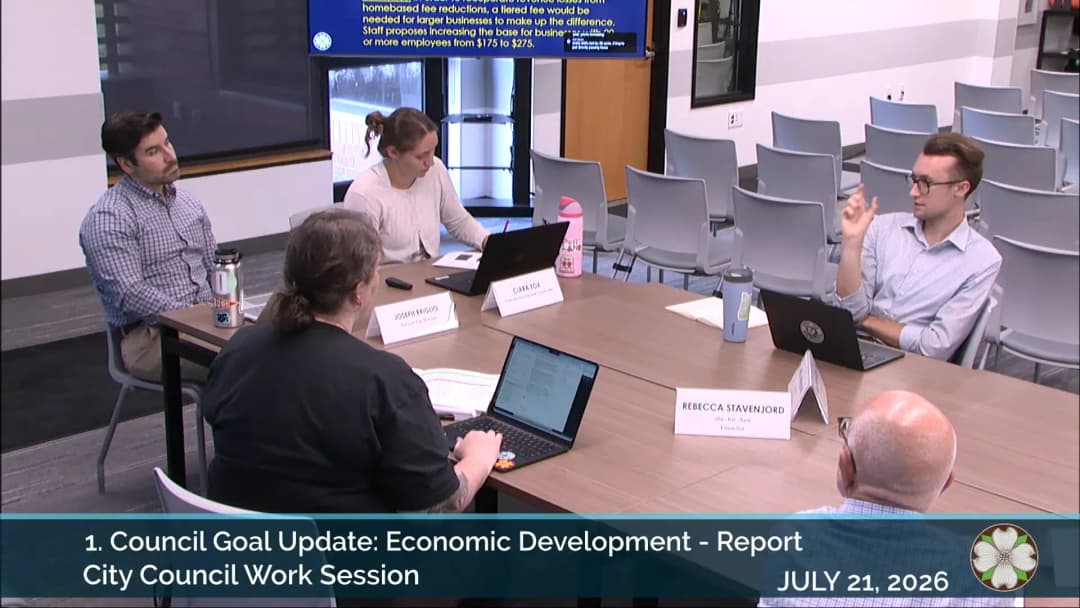
This work session of the Milwaukie City Council focused on two main agenda items: a deep dive into proposed changes to the city's business registration code, including fee structures and exemptions, and a discussion on community enhancements at Kronberg Park related to the Kellogg Creek restoration project. The council reviewed staff recommendations, discussed trade-offs, and reached consensus on several policy directions. Discussion Items - Quarterly Goal Update & Business Registration Code Changes: Staff presented a midpoint check-in on the council's three-year goals, noting a shift to deep dives on specific topics. The primary discussion centered on six proposed changes to the business license program, based on prior council input, peer city research, and a business survey. 1. Allow Business License Revenue for Economic Development: Staff proposed a code amendment to change the revenue purpose from "for revenue purposes only" to "for revenue and economic development purposes" to fund business assistance. Council members supported the flexibility but emphasized the need for clear accounting to track how dollars are used. Consensus was reached to move forward. 2. Lower or Exempt Fees for Home-Based, COVID-Certified, and Small Rental Businesses: Staff recommended lowering the home-based business fee from $175 to $75, exempting COVID-certified businesses, and exempting long-term rentals with two or fewer units from the base fee. After discussion, council agreed on an opt-in approach for these exemptions, with applicants providing proof. A fourth element—incentivizing affordable rents for larger rentals—was parked for the affordability goal conversation. 3. Switch Rental Fee to Per-Unit Basis: Staff proposed changing the rental fee from per-employee to $4 per unit to better align with footprint. Council asked for revenue neutral analysis and examples. The change will be included in the fee schedule, not code. 4. Tiered Fee Increase for Larger Businesses: To offset revenue losses from exemptions, staff proposed increasing the base fee for businesses with 20 or more employees from $175 to $275. Council supported this, with some interest in exploring higher tiers. The goal is to be revenue not-negative overall. 5. Do Not Compare to Gresham's Rental Model: Staff recommended not using Gresham's rental license fee structure as a comparator because it funds rental inspections, which is a separate policy issue. Council agreed but requested more information about Gresham's program for future consideration. 6. Do Not Pursue Business Income Tax Model: Staff reported that Multnomah County is the only jurisdiction in Oregon with a business income tax, and adopting such a model would add administrative burden. Council accepted this conclusion, with some desire to learn more about pass-through revenues to other cities. - Kronberg Park Community Enhancements (Kellogg Creek Restoration): Public Works Director Peter Casarelli and Parks Manager Adam Moore presented draft community enhancements for Kronberg Park as part of the Kellogg Creek restoration project. The park will be used for staging and will be restored to at least existing conditions. Staff recommended supporting enhancement features consistent with the 2015 Kronberg Nature Park Master Plan but opposed a concentrated nature play area (Feature A) due to the park's remote location, visibility issues, and existing challenges with vandalism and illegal camping. Council debated the merits, with some members favoring the play area to increase park usage and visibility. Ultimately, a majority of council supported staff's recommendation to omit a consolidated play area and instead spread nature play features along the trail. The council directed staff to work with NCPRD to secure a long-term maintenance commitment and to return on August 18 with more details on costs and NCPRD's response. - Other Business: Councilor Sandjordan announced a proposed emergency fund for businesses vandalized or broken into, pledging $1,000 from her personal council budget to start. She will bring further updates. Key Outcomes - Consensus on Business Registration Changes: Council agreed to move forward with the six proposed policy directions outlined above, with specific direction to: - Bring code amendments for consideration (including the revenue use change and exemption listing). - Provide detailed revenue impact analysis (revenue losses from exemptions, gains from per-unit and tiered fees) before the item returns to council. - Ensure exemptions are opt-in with verification requirements but at an appropriate level of rigor. - Avoid placing dollar amounts in code; use the fee schedule instead. - Kronberg Park Direction: Council approved staff's recommendation to support community enhancements consistent with the 2015 plan, with the modification that no consolidated nature play area be installed. Staff will ask the Kellogg project team and NCPRD for a written commitment to maintain new amenities and will report back to council on August 18. - Next Steps: Business registration code changes will be brought forward for a hearing in the coming weeks. The Kronberg Park design decisions must be communicated to the design team by August 31 to meet the 90% design deadline.

PARKS AND RECREATION 31% · AFFORDABLE HOUSING 18% · ECONOMIC DEVELOPMENT 14% · FISCAL SUSTAINABILITY 12%
14
JUL 17, 2026 · MILWAUKIE, OREGON · CITY COUNCIL
Milwaukie City Council Study Session on Downtown Capital Improvement Priorities - July 17, 2026

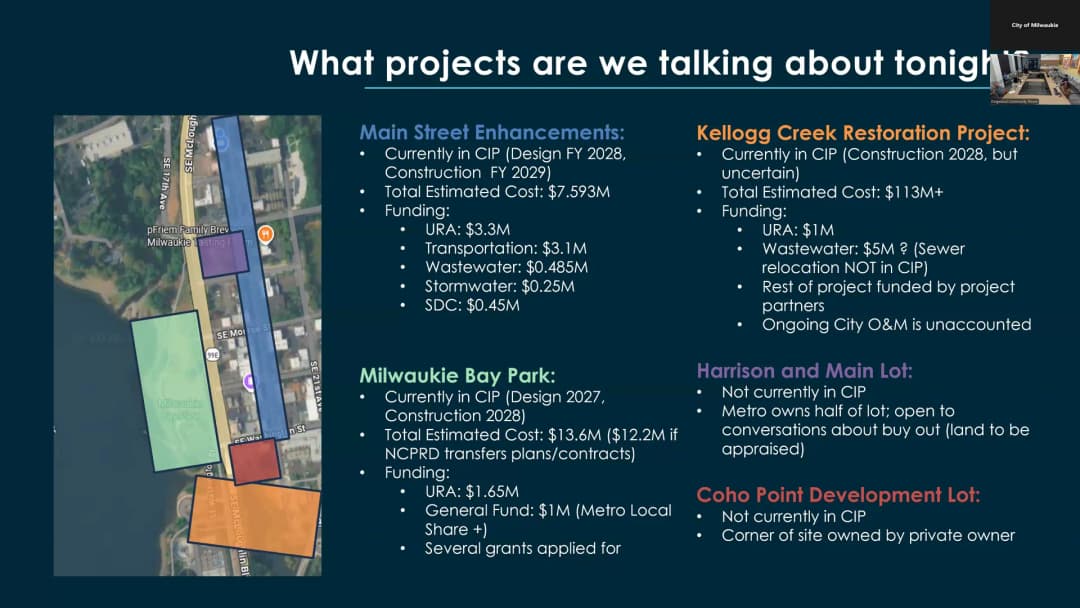
The July 17, 2026 study session focused on prioritizing five major downtown capital projects given limited urban renewal area (URA) funds, staff capacity, and construction impacts. Council discussed trade-offs between the Main Street Enhancements project and Milwaukee Bay Park, with significant consideration of ongoing operations and maintenance costs, general fund sustainability, and community expectations. After extensive debate, council reached consensus to prioritize Milwaukee Bay Park (Option B), deferring Main Street enhancements and reallocating URA dollars. Discussion Items - Overview of Five Projects: Staff presented five downtown projects: (1) Main Street Enhancements ($7.6M total, design FY28, construction FY29), (2) Milwaukee Bay Park ($13.6M worst-case, $12.2M if existing designs and trolley trail grant secured), (3) Kellogg ($113M, with only $1M URA in CIP and no sewer relocation funding), (4) Harrison & Main Lot (Metro owns half, potential buyout $500k–$700k, no visioning done), (5) Coho (not in CIP, envisioned as public-private partnership). - Funding and Constraints: Staff noted all projects compete for URA dollars and require significant staff resources. Main Street Enhancements already has $1.65M URA and other utility funds, while Milwaukee Bay Park has $1.65M URA and $1M general fund (metro local share and climate funds) with several grants pending. Kellogg’s sewer relocation is not city-funded; staff reaffirmed council’s prior direction not to fund it. - Prioritization Scenarios: Three scenarios were presented: - Option A: Prioritize Main Street Enhancements, begin Coho and Harrison & Main planning alongside, but delay Milwaukee Bay Park. - Option B: Prioritize Milwaukee Bay Park, reallocate URA dollars from Main Street and Kellogg to close funding gap, delay Main Street, and defer Harrison & Main visioning. This option requires grants and debt financing. - Option C: Advance both Main Street and Milwaukee Bay Park simultaneously, requiring significant debt financing and likely postponing Coho and Harrison & Main for 30 years. - Council Debate: Council members expressed support for Milwaukee Bay Park but raised concerns about: - Operations and maintenance costs: estimated $50k–$60k/year for Milwaukee Bay Park and $100k/year for Kellogg, with no budgeted funds. - General fund sustainability: adding O&M costs to an already projected $6.7M deficit in the first year. - Impact on Main Street businesses: delaying Main Street enhancements risks continued ADA non-compliance and aging infrastructure (water mains nearly 100 years old, failing sidewalks). - Affordability: Councilor Masse emphasized that prioritizing Milwaukee Bay Park must not come at the expense of affordable housing and that the city must push harder on affordability. - Parks Governance: Mayor noted that NCPRD’s June 24 board meeting and recent DAC meeting suggested some desire for the city to leave the parks district. Council scheduled an August 18 discussion on parks operations and maintenance. - Other Topics: Council received an update on the city’s energy efficiency awards (silver and bronze from Energy Trust), regional transportation plan updates, and a brief report on Milwaukee Day event logistics. Key Outcomes - Consensus for Option B: Council gave clear direction to prioritize Milwaukee Bay Park. Key decisions include: - Reallocating URA dollars originally assigned to Main Street Enhancements and Kellogg to Milwaukee Bay Park. - Continuing full steam ahead on grant applications (Metro capital grant of $1.75M already awarded; state and federal grants pending). - Staff will push NCPRD for contract transfer and trolley trail grant transfer. - Main Street Enhancements will be delayed; staff will work on budget adjustments to reallocate funds. - Harrison & Main Lot and Coho: Council agreed not to actively work on visioning or planning for Harrison & Main Lot for now, and not to proceed with purchase of Metro’s half. For Coho, council will have a separate conversation about affordable housing goals and potentially revise the RFP based on lessons from the previous proposal (e.g., reducing unit count to avoid needing deep subsidies). - General Fund Modeling: Staff committed to continued financial modeling on general fund sustainability, with a presentation scheduled for August 18 on parks O&M costs. - No Formal Vote: Decisions were made by verbal consensus, not by roll call vote. Staff Reports & Acknowledgments - Energy efficiency awards: City received silver (electric) and bronze (natural gas) from Energy Trust, ranking in top 5 out of 95 organizations for savings. - Mayor shared that NCPRD is asking for government utility rates; survey of Oregon mayors showed no cities offer such rates except a few for school fields open to public. - Regional Transportation Plan update: 2027 is the window to add projects; projects must be on city’s financially constrained list, which may affect Harmony Road intersection. - Council acknowledged staff efforts on Milwaukee Day, including creative porta-potty placement to avoid disrupting businesses.

PARKS AND RECREATION 28% · ENGINEERING AND INFRASTRUCTURE 18% · ECONOMIC DEVELOPMENT 13% · BUDGET EQUITY ANALYSIS 13%
15
JUL 8, 2026 · MILWAUKIE, OREGON · CITY COUNCIL
Milwaukee City Council Regular Session - July 8, 2026

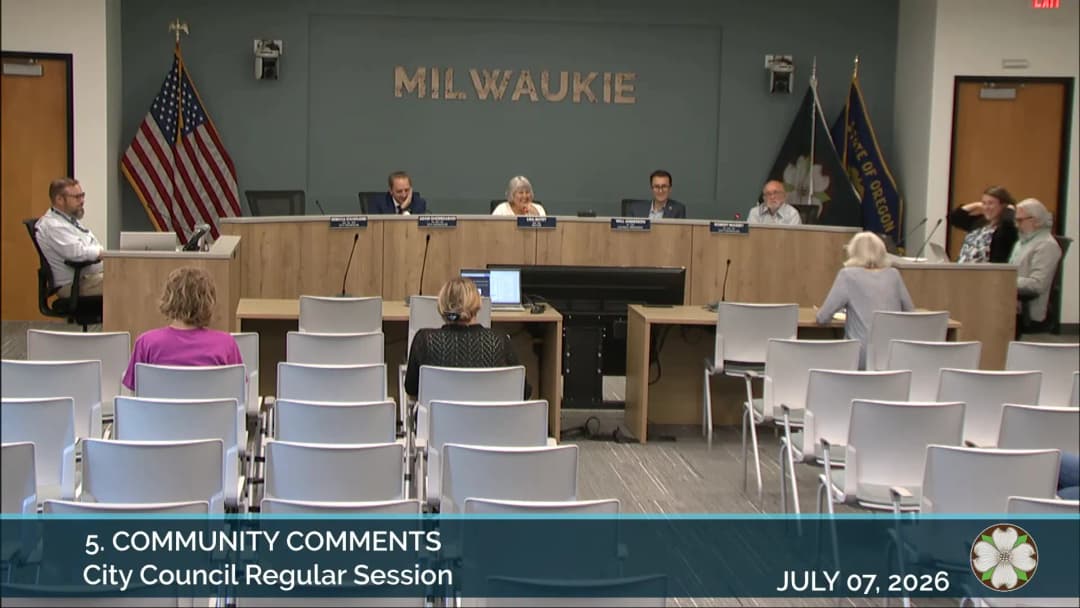
This meeting included consent agenda approval, public comments, and discussion on the North Clackamas Parks and Recreation District intergovernmental agreement, seven Metro-funded park projects, the residential high-density redevelopment strategy, and adoption of tree code amendments. Council also reviewed letters of support and heard council reports on community needs. Consent Calendar - Approved minutes from June 2 work session and regular session, and a liquor license application for Oak Union Brewing. Passed unanimously. Public Comments & Testimony - Teresa Breesaw (Lake Road neighborhood) opposed a proposed triplex on a narrow lot (37 feet wide, 6 bedrooms), citing concerns about a paved backyard for vehicles, loss of privacy, tree removal, and density. She urged code changes. City Manager clarified that the variance application was withdrawn and no active development proposal exists. - Stefan Lashbrook (Llewellyn neighborhood) criticized NCPRD for delaying Milwaukee Bay Park, suggesting the city escrow SDC funds from the district until the park is resolved. He described the relationship as abusive and urged the city to play hardball. Discussion Items 1. North Clackamas Parks and Recreation District (NCPRD) Intergovernmental Agreement Update City Manager presented a detailed response to questions from the June 24 NCPRD board meeting. Key points: - Gives and gains: City would assume $1.6 million in capital costs (community center roof), $10 million for Bay Park phase 3, and $60,000/year maintenance. Gains include $3.3 million in SDCs, $900,000 Metro local share, and $658,000 Trolley Trail grant, plus control of Bay Park design. - Utility billing: City discovered NCPRD had not paid utility bills at two properties for 30+ years; city rates are triple the previous WES rates. NCPRD has not paid since January 2026. City offered to revert to June 2025 rates temporarily to facilitate the IGA. - The NCPRD board voted to delay consideration for three months for District Advisory Committee review. - Council members expressed strong frustration. Council President Anderson said negotiations were not in good faith. Councilor Massey accused county commissioners of blaming Milwaukee for lack of parks in unincorporated areas and noted city subsidizes regional assets. Councilor Stephen Jordan criticized board immaturity and suggested considering withdrawal from the district. 2. Community Choice Grants (Nature in Neighborhoods) - Metro bond program: 3,100 people participated, 22 projects funded regionally, 7 in Milwaukee out of 8 submitted. Projects (with rankings): River access at Milwaukee Bay Park (1), Swift Roost neighborhood (3), Spring Park habitat (6), Kellogg Creek stormwater at Rowe Middle School (7), Nature Skate at Watertower Park (8), Minthorn Springs access (10), Fernburg Wetlands (15). Fernburg Nature Play is first alternate. - Staff and Parks Board recommended accepting all 7, but noted risk on Rowe Middle School (landowner not yet confirmed). - Council voted to accept all 7 projects and to also accept Fernburg Nature Play if it moves up as an alternate. 3. Residential High Density (RHD) Redevelopment Strategy - Phase 1 (DLCD grant): code audit, market analysis, developer interviews underway. Preliminary report due late 2026; Phase 2 includes community engagement. - Councilor Massey gave extensive critique: argued market-rate development has not produced affordable units (cited rents: $1,772 for 1-bedroom at Axle Tree, $5,450 for 2-bedroom at Waverly). He favored targeted approach, more affordable housing, land banking, and avoiding blanket RHD rezoning. He expressed concern about enriching developers without addressing affordability. - Council agreed to continue RHD study but directed staff to schedule a separate work session on additional affordable housing strategies (e.g., homes on wheels, density bonuses, inclusionary zoning). 4. Tree Code Amendments (HB4037) - Second reading and final roll call vote. Ordinance 2264 passed 3-1-1: Council President Anderson, Councilor Stephen Jordan, and Mayor Beatty in favor; Councilor Costerbody opposed; Councilor Massey abstained (citing concerns about state overreach but not wanting to risk legal exposure). Key Outcomes - Consent agenda approved unanimously. - City will accept all 7 Metro grant projects and pursue Fernburg Nature Play if it becomes an alternate. - Tree code ordinance adopted (3-1-1). - Council expressed continued commitment to NCPRD negotiations but with no formal action; frustration noted. - Staff directed to compile affordable housing strategies for future work session. - Council approved letters of support for Kellogg Dam grant and for Eagle Scout Jackson’s award. - Regular session adjourned followed by executive session.

PARKS AND RECREATION 30% · AFFORDABLE HOUSING 23% · PUBLIC ENGAGEMENT 13% · PROCEDURAL 8%
16
JUL 7, 2026 · MILWAUKIE, OREGON · CITY COUNCIL
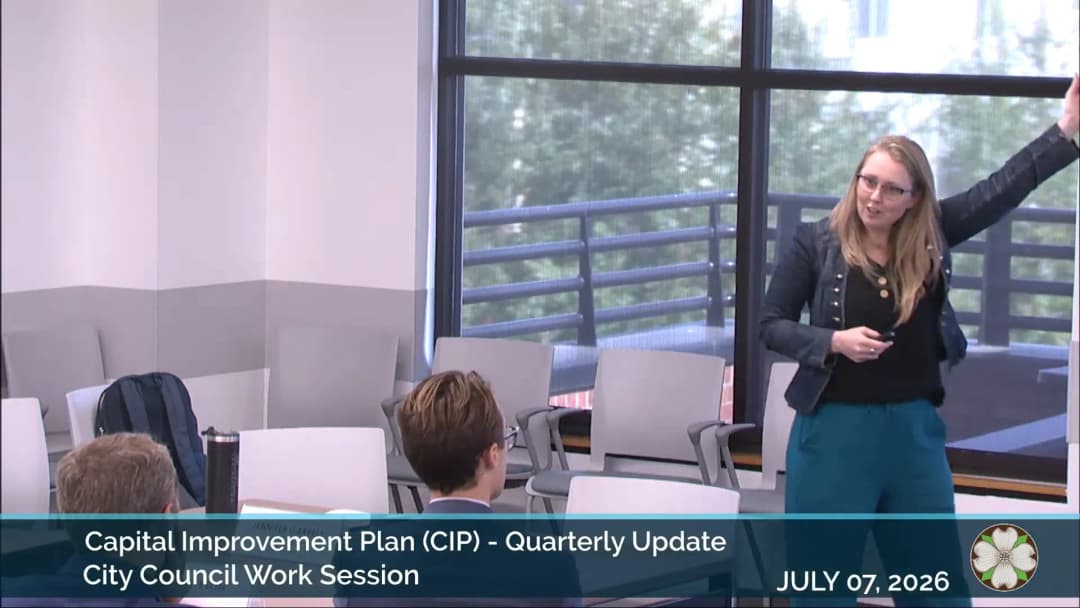
City Council Work Session: Capital Improvement Plan Quarterly Update - July 7, 2026

The Milwaukee City Council held a work session on July 7, 2026, to receive a quarterly update on the Capital Improvement Plan (CIP) from City Engineer Jennifer Garbly. The session covered progress and upcoming milestones for numerous transportation, sewer, water, and paving projects, along with discussions on funding, coordination, and community impact. No formal votes were taken; the session served as a briefing and discussion ahead of future council actions. King Road Improvements - Utility work (water, stormwater) is complete; side path paving is underway, with the first segment from Lenwood to about 52nd paved and the remainder to 243rd planned for July 9–10, 2026. - Roadway paving (3-inch overlay) is scheduled for September–October 2026, likely requiring lane closures. The project is expected to finish by October 2026. - A council member inquired about a potential bike box connection from the Linwood multi-use path to King Road, noting difficulty making left turns. The engineer agreed to ask Clackamas County if a bike box or mid-block crosswalk crossing could be added. Harvey Street - Sewer and stormwater work is complete; water work is ongoing (approximately $1.6 million for a major water line). The project is nearly done with water main installation. - Sidewalk and roadway improvements have begun. The project is expected to be complete by September 2026. - Council discussion focused on a future 16-inch water transmission main needed for PFAS treatment, likely in about five years. The current project is a grind-and-inlay rather than a full rebuild because the road will be disturbed again by the future water line and heavy equipment for the treatment plant. The city will communicate to neighbors that a grind-and-inlay will be applied at the end of the project. Waverly South & 26th Avenue - The project is nearly ready for bid but is held up by one missing easement on Lava Drive. The city discovered it does not own the roadway section past Waverly Court; it is privately owned by a nearby property owner. - The engineer gave the property owner until end of September 2026 to provide the easement, or the city will abandon open-cut sewer replacement in that section and line it instead, allowing the project to proceed. - A council member expressed frustration that messaging to neighbors about the delay had not been managed earlier; the city will now contact the property owner and develop a communication plan. Street Greenway Central (Central Monroe/Washington Greenway) - Design documents are being prepared for bid on July 16, 2026. The project is funded with $1.5 million from ODOT that must be under contract by September 2026. Award is expected at the August 18 council meeting. - The project runs from 21st Avenue to Oak Street; the section across the railroad to the north is a separate project in early discussion with the railroad. The railroad crossing improvements may cost over $1 million. - Council members raised safety concerns: the current treatments (medians, bump-outs, crosswalks, speed bumps, trees) may not be sufficient to make the street feel safe for all ages (8 to 80) to use as a greenway. The engineer argued the changes will significantly narrow the road and change driver behavior, and preferred to install the current plan first, then evaluate whether additional treatments (e.g., delineators) are needed. Parking will be maintained on one side. - The connection to Clackamas County's shared-road section will be coordinated. Traffic counts on 224 have dropped since the diverter at Run Row was installed; the city will re-count to gauge impact. Washington Monroe Street Greenway - Design plans are in final review; will not go to bid until spring 2027. The central section (above) will likely be nearly complete before this project starts. Waverly Sewer (Waverly-Lava area) - Full bid documents are ready; one easement is needed. The city has given the landowner until end of September 2026. If not obtained, city will line the sewer section instead of open-cut replacement. West will pay 33% of construction. Project will go to bid this fall. - After this project and the subsequent lining project, the city will conduct a monitoring program to evaluate inflow and infiltration (I&I) to prioritize future sewer work. Sound Improvements (at the Sound Wall adjacent to I-205) - Design is underway with geotechnical work; the project includes a new pedestrian/bicycle bridge. Design is contracted to OTAC. First open house anticipated in late fall 2026. The project is 12–18 months from bid. - The bridge design includes a multi-use path on one side and an 8-foot sidewalk on the other; parking will likely be maintained on one side. - Council noted that Safe Routes to School funding for some related elements has been canceled, but the city has funds to build Stanley section without it. Other Safe Routes elements (raised crosswalks at Llewellyn) are progressing through the SPOT program. Sewer Lift Stations - An on-call contract for condition assessment of five lift stations has been kickstarted. Brookside lift station (failing, can't get parts) will be the first to be upgraded; Island Station will follow (water intrusion in the well). Other three will be assessed afterwards. Water Pipeline / PFAS Treatment - The raw water pipeline route (from wells 7 and 4, up 37th and Monroe to 40th, then to treatment plant) is at 30% design. Due to rising PFAS levels at Stanley well (well 6) – from 1-2 PPT to 3.86 PPT near the 4 PPT limit – the city is adding a spur to bring Stanley well water to the treatment plant. (The federal requirement is to have treatment in place by April 10, 2029, with one year of operation before that date.) - A PFAS study memo will be presented to council on August 18, 2026, outlining findings and next steps. The treatment plant is being sized for all city water rights (including wells 8 and 6). A site layout is expected in fall 2026. - The city is seeking funding for PFAS treatment; rates set so far do not cover these costs, but the city plans to apply for state and federal grants. - Council noted the need to coordinate paving of roads that will be disrupted by pipeline work. The city will use grind-and-inlay after pipeline installation. The lower treatment plant near the library will be demolished only after the upper plant is operational; that site may eventually be repurposed for a street connection or other use. - Council requested that any cost adjustments to CIP projects due to the railroad crossing or sewer extensions be brought to council when cost estimates are available. SPOT (Safety and Operations for Pedestrians and Traffic) Program - The city has received positive feedback on the 29th Avenue delineators. SPOT-funded projects include all-way stops, a mid-block crosswalk at 37th and Minthorne, RRFBs at Ardenwald School and El Puente, and 10 speed radar signs. - The SPOT program is undergoing process review: PSAC (Public Safety Advisory Committee) may change how proposals are accepted and reviewed (e.g., set periods for submissions). Staff will create a flyer about the program for community outreach (e.g., farmers market). - Council emphasized that the review process should not overburden staff capacity. - A decision on crosswalk flags at Harrison and Main was deferred pending language from PSAC. Streetscape Enhancements / 40th Avenue - The city will first tackle 40th Avenue from Olson to Railroad as part of the streetscape enhancement program, coordinating with the raw water pipeline project. This could go to bid concurrently or be done in-house. Other roads will be addressed after King Road and Harvey are complete. Six-Year Paving Plan (2027-2032) - The plan, prepared using StreetSaver data, prioritizes grind-and-inlay and slurry seal city-wide, alternating years (one year grind-and-inlay, next year slurry seal). The plan will be updated every two years. - 2027 grind-and-inlay areas are shown in blue, 2029 in yellow, 2031 in red. Clustering is for efficiency and better pricing. Some road segments (e.g., Stanley) may be split due to CIP projects; the pipeline addition will adjust the plan. - The plan is data-driven and incorporates public comments from a 2025 survey. - Council noted that some streets (e.g., Island Station) received slurry seal instead of grind-and-inlay due to access needs; that is acceptable. Upcoming Projects and Future Council Dates - Sewer lining project will go to bid soon (33% funded by West). - The

ENGINEERING AND INFRASTRUCTURE 43% · TRANSPORTATION SAFETY 22% · WATER AND WASTEWATER MANAGEMENT 21% · PUBLIC ENGAGEMENT 5%
17
MAY 13, 2026 · MILWAUKIE, OREGON · CITY COUNCIL
Milwaukie City Council Study Session on MURAL Program – May 13, 2026

The council held a study session on May 13, 2026, to discuss the Oregon Moderate Income Rental (MURAL) loan program. Staff presented findings from extensive research, including conversations with other jurisdictions and state agencies. After detailed deliberation on risks, administrative capacity, and feasibility, the council decided not to move forward with implementing the MURAL program at this time. Instead, they directed staff to send a letter to Clackamas County requesting the county administer MURAL on behalf of cities and to compile a list of legislative fixes for the 2027 session. Discussion Items - MURAL Program Overview and Staff Research: Assistant City Manager Josie Daniel and Development Project Manager Nanny Bird reviewed their work since the March 17 session. They reported being among the most knowledgeable on MURAL in the state, having spoken with numerous jurisdictions. Key findings from other cities included: - Tillamook County: The only jurisdiction initially cited as a leader, but has paused its program. They passed a resolution first, then realized they needed an originating ordinance to define project criteria. They also face unresolved questions from the county assessor about liability for delinquencies. Tillamook staff provided a memo detailing reasons for the pause. - Coos Bay: Adopted an originating ordinance but is still figuring out program criteria and implementation. They are working with a consortium of experts (including an SBDC and a finance professional) to contract out administrative tasks due to limited capacity and risk concerns. - Hood River Model: Hood River limited MURAL to nonprofit developers only, who self-comply with affordability covenants, and they release funds in tranches (e.g., 85% after final inspection) rather than a lump sum. Staff noted this reduces risk but still leaves cities with some administrative burden. - Risk of Default and Credit Impact: A major concern was the city's liability if a homeowner defaults on the loan. The MURAL program requires the sponsoring jurisdiction to repay the state if the loan goes into default, and the state's annual payment is based on the property tax increment. Council pressed staff on whether default would affect the city's credit rating; staff reported that OHCS gave vague, non-committal answers (e.g., “we’ll work with you”) but never stated the city would not owe the money. Council President Anderson noted that any default, regardless of amount, could harm the city’s credit rating. - Financial Exposure Quantified: One council member estimated that for a 44-unit project, at a 5% historical default rate (based on Federal Reserve data since 1979), about two units per year could go into default. Each unit’s annual property tax increment is roughly $950, so the city’s liability would be about $3,000 per year. However, the larger risk is during construction, where the city could be on the hook for the full loan amount (85% of the total) if the project fails before completion. - Administrative Capacity: Staff emphasized that the city lacks the expertise and staffing to administer MURAL. Setup alone would take at least six months, requiring IGAs with the county, originating ordinances, marketing, application review, financial auditing, and long-term compliance monitoring. The 5% administrative fee per project is insufficient to cover these costs, and outsourcing compliance to a nonprofit or the county would still leave significant internal work. - Prevailing Wage Requirements: Staff noted that most MURAL projects likely require prevailing wage (a concern for many cities). The developer associated with the local church project had obtained a “determination letter” stating the project would not be subject to prevailing wage, but several council members questioned the validity of that letter and noted that nonprofit developers typically already work with prevailing wage. - Preference for Nonprofit-Only Model: Some council members expressed interest in the Hood River model of limiting MURAL to nonprofit developers, as nonprofits already have compliance systems. Others argued that even with nonprofits, the risk and administrative load remain significant, and the city would lose control over the affordability covenants. - County Role and Consortium Idea: The council discussed the possibility of Clackamas County serving as the sponsoring jurisdiction for the whole county, but staff confirmed that state rules allow county MURAL funds only in unincorporated areas. However, if the county adopts its own MURAL, it could contract with cities for administration. The council decided to pursue this avenue via a letter. - Legislative Fixes: Council members brainstormed changes to the MURAL program that would make it more viable, including: having the state administer the program directly (rather than through cities), resolving compliance and default liability issues, allowing counties as default SJs for entire counties, establishing a state contingency fund, and providing legal consultation for cities. - Other Business – Solid Waste Letter: Council reviewed a letter from the Regional Waste Advisory Committee (RWAC) supporting certain waste policies. The council agreed to send a similar letter, with technical edits to align with metro’s upcoming fee increase and compost program. Mayor noted the letter should be sent before the June 2nd RWAC meeting. - Council Reports: - Community Advisory Board (CAB): Reported new members, including a 16-year-old youth from Rex Putnam High School. CAB plans to restructure meetings to be more inclusive, moving away from executive committee-driven agendas. They will host listening sessions for the strategic plan. - NCPRD Levy Update: The Clackamas County Parks and Recreation District is polling on an 18-cent levy (per $1,000 assessed value) to fund operations; if polled well, it could go to voters in November. Discussions at the chamber suggested that Meals on Wheels may be moved from NCPRD to a nonprofit, as it was seen as outside parks’ core mission. - LOC Meeting Highlights: Mayor reported that LOC discussed the statewide shelter program; the governor’s funding request faces legislative headwinds, and there is talk of shifting shelter responsibility to cities. LOC also continued discussion on MURAL; a city manager emphasized that infrastructure funding is critical for housing production. - Downtown Update: Council member shared positive news: two new shops (vintage-themed) are opening in the Rexall building, farmers market Sundays are thriving, and a wine walk drew crowds. First Friday events are being reorganized with “hubs” including a night market at Main and Jackson. ADX Portland is exploring a Milwaukee itinerary for their regional creativity festival in October. Passports for local businesses were very popular at the City Information Booth. - Upcoming Events: Hillside opening ceremony on May 14 at 10:45 am; council members were reminded of the next council meeting (May 20) with a metro 2050 vision presentation and proclamations; a quorum is needed. Key Outcomes - Directed staff to NOT place MURAL on the June 2nd agenda for action. The council concluded the program is not feasible for Milwaukee given current staff capacity, unclear financial risks, and unresolved liability issues. - Approved sending a letter to Clackamas County (with edits) asking the county to establish a system to administer MURAL for cities, potentially through a contract with H3S (the county’s housing authority). The letter will be circulated to other cities for co-signature before the June 2nd county commission discussion. - Directed staff to compile a list of five to ten legislative fixes for the MURAL program to share with Representative Gamba ahead of the 2027 session. Fixes include state administration, default liability resolution, and compliance support. - Approved drafting a supportive letter to Metro (based on the RWAC letter) regarding solid waste policies, with a focus on future fee increases and food scrap technical assistance. - Council reports noted progress on CAB restructuring, NCPRD levy exploration, and downtown revitalization events.

AFFORDABLE HOUSING 49% · ECONOMIC DEVELOPMENT 9% · PUBLIC ENGAGEMENT 8% · PUBLIC SAFETY 6%
18
MAY 6, 2026 · MILWAUKIE, OREGON · CITY COUNCIL
Milwaukee City Council Meeting (May 6, 2026): Proclamations, Volunteer Recognition, and Consent Agenda

The 2,448th meeting of the Milwaukee City Council was called to order in person and via Zoom. The meeting featured the announcement of the 2025 Volunteer of the Year (Colleen Rockwell), four proclamations (Asian American Pacific Islander Heritage Month, National Law Enforcement Week, Public Service Recognition Week, and Mental Health Awareness Month), a remembrance of former Mayor Jeremy Ferguson and Mandy Zalinka, community comments focused on suicide prevention, approval of the consent agenda, and a brief executive session on litigation. Consent Calendar - Approved the minutes of the March 10, 2026 study session, March 17, 2026 work session, and March 17, 2026 regular session (with revisions). - Adopted a resolution authorizing a loan from the Safe Drinking Water Revolving Loan Fund via a financial contract with the Oregon Infrastructure Finance Authority. - Adopted a resolution affirming the appointment of a library board member to represent the city on the Clackamas County Library District Advisory Board. Public Comments & Testimony - Bruce Bruns (Pastor, Milwaukee Covenant Church) expressed strong support for suicide prevention education. He shared that he has conducted five memorial services for people under 25 who died by suicide, including two brothers from his youth group. He urged council and the public to ask blunt questions about self-harm and to remove stigma, noting that churches often hide mental health issues due to shame. He thanked the presenters and noted his own agenda item for the next meeting. Discussion Items - Councilor Koshrabati shared personal struggles with mental health and suicide ideation, emphasizing that fine does not mean okay. He called on everyone not to take mental health messages lightly, to ask directly about suicide, and to use resources like 988. He credited 988 with helping him reach out to the VA. - Mayor Beatty acknowledged the emotional weight of the mental health discussion and reminded the public that the 988 hotline is available 24/7. - Council members also expressed gratitude to presenters and to Colleen Rockwell for her volunteer work. Key Outcomes - The consent agenda was passed unanimously (all ayes, no nays). - Four proclamations were read and adopted by the council, declaring May 2026 as Asian American Pacific Islander Heritage Month, May 11–15, 2025 as National Law Enforcement Week (note: the proclamation text listed 2025, but the meeting occurred in 2026 – a discrepancy in the record), May 3–9, 2026 as Public Service Recognition Week, and May 2026 as Mental Health Awareness Month. - The council adjourned to an executive session under ORS 192.660 to consult with counsel regarding current or likely litigation. Additional Notable Content - Volunteer of the Year 2025: Colleen Rockwell was honored for her work on pollinator pathways, Bee City USA designation, and numerous community volunteer roles. She was selected on the first round of council voting. - Behavioral Health Unit (BHU) Statistics: Police Captain Tony Cheragino reported that in April 2026, the BHU made 8 referrals to the stabilization unit, had 123 total contacts, 12 on-scene encounters with law enforcement, and 28 follow-ups after law enforcement involvement. - Suicide Prevention Statistics (presented by Gally Murray, Clackamas County Public Health): Oregon has the 9th highest suicide rate in the nation. Suicide is the 2nd leading cause of death for ages 10–34, 3rd for ages 35–44, and 5th for ages 45–54. Rates are highest among older adults (85+). Veterans in Oregon have a rate of 51 per 100,000. 70% of first attempt survivors do not have a second attempt; 90% do not die by suicide. The average delay between symptom onset and seeking help is 11 years, largely due to stigma. - NAMI Clackamas: Gary from NAMI outlined free peer support and education programs, including classes, support groups (including LGBTQIA2S+, Latinx, and family groups), a jail program, and peer support specialists. All services are free and no referral is needed. Information: namicc.org. - Upcoming Trainings: Free naloxone training combined with suicide prevention training at the Ledding Library (dates not specified in transcript). - Remembrance: Mayor Beatty and former Mayor Mark Gamba remembered former Mayor Jeremy Ferguson and his wife Mandy Zalinka, who died in an apparent murder-suicide in California. They highlighted Mandy’s volunteer efforts promoting Milwaukee and Jeremy’s role in Milwaukee Bay Park and light rail support. Mark Gamba reminded the community that suicide is a permanent solution to a temporary problem and encouraged people to seek help.

MENTAL HEALTH AWARENESS 36% · COMMUNITY ENGAGEMENT 25% · PROCEDURAL 13% · PUBLIC SAFETY 12%
19
MAY 5, 2026 · MILWAUKIE, OREGON · CITY COUNCIL
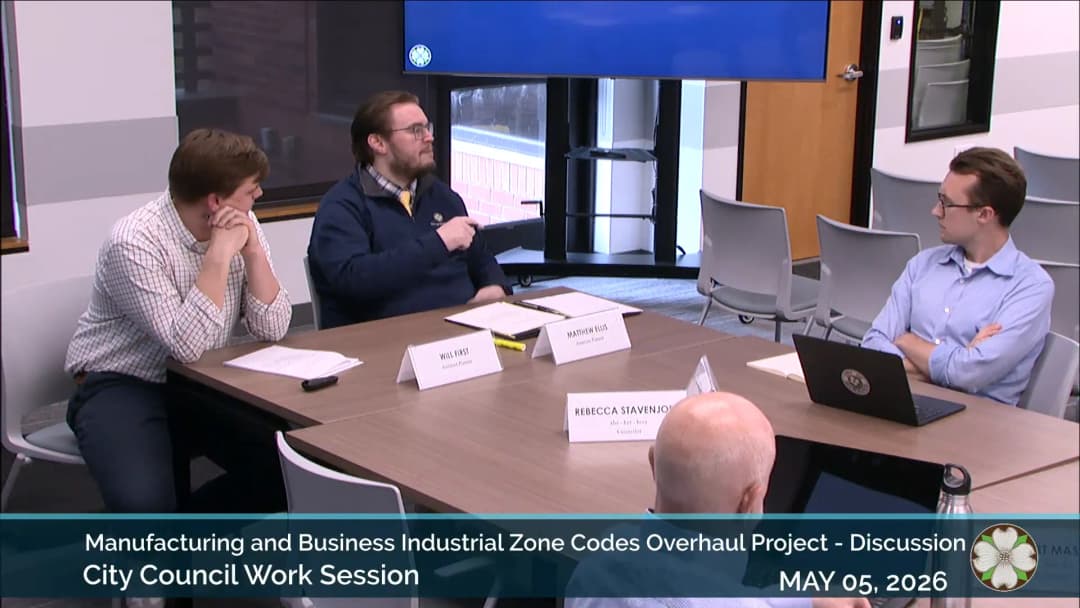
Milwaukie City Council Work Session on Garbage Rates and Industrial Zone Updates - May 5, 2026

This work session addressed two main topics: the annual garbage collection rate review and proposed updates to the manufacturing and business industrial (M and BI) zoning codes. The council heard presentations from consultant Chris (garbage rates) and planning staff Matthew Ellis and Will (zoning updates), discussed rate increases, Metro tipping fees, customer service issues, and code modernization, and set several next steps. Discussion Items - Garbage Rate Review (Chris): Chris presented the annual financial report from haulers Waste Management and Waste Connections (operating as KHOOT). Key cost drivers for 2026 include a 9% increase in disposal fees at Metro, a 3.86% increase in union driver wages (affecting both union and non-union haulers), and a 10% increase in organic waste disposal fees. The proposed residential rate increase for the most common 35-gallon cart is $1.67/month (4%). For drop boxes, the proposed changes include increasing the delivery fee from $48 to $95 (to reflect 40-minute average turnaround) and reducing the mileage fee trigger from 18 miles to 12 miles (with a $5.25/mile charge beyond 12 miles). Council members questioned the rationale for the mileage change and discussed the impact on hauls to Metro South. - Metro Rate Concerns: Several council members expressed frustration with Metro's rate increases, noting that after a 5.8% increase in 2025, 2026 brought a 9% increase—reversing the expected downward trend. Councilor Massy observed that Metro rates averaged 13% annually from 2020-2024 (65% total). Chris noted lack of transparency in Metro's rate-setting process and suggested the city seek representation on Metro's Solid Waste Advisory Committee. - Customer Service: The mayor and councilors shared personal experiences with poor customer service from Waste Management's national call center. Councilors noted that issues are resolved quickly when brought to local management, but the process for residents is unclear. The council discussed requiring better customer service metrics in future franchise agreements. - Manufacturing/Business Industrial Zone Updates (Matthew Ellis and Will): Staff presented proposed code modernization for the M (manufacturing) zone along Johnson Creek and the BI (business industrial) zone along International Way. Key changes include: adding "creative space" as a permitted use in M zone; adding "wholesale trade" in M zone; allowing eating establishments as a limited use (max 4,000 sq ft) in M zone (currently not allowed); removing the requirement that limited uses in BI zone "serve primarily employees of the district"; removing recycling centers as an accessory use in BI zone (sparking debate); adding objective building design standards as an alternative to existing discretionary standards. Council discussed the tension between preserving industrial land for high-wage jobs and allowing amenities, the potential for uses like indoor recreation or reuse centers, and the need to protect existing businesses. - Franchise Agreement Follow-Up: The council briefly discussed the timeline for bringing back the franchise agreement for further discussion. Haulers offered a tour of KHOOT's recycling facility. Council indicated interest in a tour in June/July and a franchise discussion in August/September. Key Outcomes - The council directed staff to move forward with the proposed garbage rate increases (4% residential, delivery and mileage fee changes for drop boxes) for adoption on the June 2, 2026 fee schedule. - The council confirmed support for maintaining the bulky waste program and the food waste recycling program based on resident survey results. - Councilors Stavanger and Massy will reach out to Clackamas County Metro representatives regarding rate concerns, and the council will explore seeking a seat on Metro's advisory committee. - Staff will coordinate a tour of KHOOT's recycling facility and Pioneer Recycling for council members in June/July. - For the industrial zone code updates, staff received direction to: refine recycling center definitions to accommodate modern recycling models (e.g., reuse malls) using performance standards rather than outright prohibition; consider holding a business roundtable before finalizing the code; and bring a revised draft code to council for a public hearing in late summer (July/August 2026). - The council expressed overall support for the proposed changes to M and BI zones, with additional input on recycling uses and the need for economic development strategy alignment.

ECONOMIC DEVELOPMENT 32% · WASTE MANAGEMENT 15% · PUBLIC ENGAGEMENT 12% · ENGINEERING AND INFRASTRUCTURE 12%
20
MAR 17, 2026 · MILWAUKIE, OREGON · CITY COUNCIL
Milwaukee City Council Meeting on Affordability, Utility Rates, and Placemaking - March 17, 2026

The meeting began with a presentation on the affordability goal action plan, covering metrics for housing, utilities, and community awareness. Council members discussed utility rate design, eviction trends, and the regressive nature of flat fees. The second half focused on placemaking strategies, including a presentation by staff on existing programs and recommendations for a two-pronged approach: promoting community-led initiatives and later exploring city-led uniform placemaking. Discussion Items - Affordability Goal Metrics Update: Staff presented data on market rate units (downward trend), utility fee increases (average 1.07% annually over five years), and awareness of utility assistance (77% of residents aware). Councilor Crossbody raised concerns about regressive fees and suggested shifting some programmatic expenses to property taxes to reduce burden on low-income households. Mayor noted that a property tax increase was avoided due to economic pressure on residents. - Utility Rate Discussion: Peter (staff) explained that utility fees have remained stable but future increases are needed for PFAS treatment and water infrastructure (8% revenue increase recommended). Council discussed multi-family subsidies, stormwater fees, and the need for a third water tier to encourage conservation. Councilor Crossbody emphasized the importance of making rate relief tangible for residents. - Eviction and Housing Data: Eviction cases filed increased to 600 (data from Evicted in Oregon). Council requested breakdown of completed evictions vs. filings. Council President Peterson noted the need to connect rental assistance earlier in the process. CAB is conducting a county needs assessment and planning a listening tour. - Housing Actions: Staff reported on land banking strategy, revolving loan fund feasibility (with potential study session with Bill Van Bleek), and continued work on the Sparrow site DDA. Council also discussed rental registration and business registration code updates. - Placemaking and Neighborhood Hubs: Sierra (staff) presented six types of placemaking (naturally occurring, identity branding, events, amenities, tactical/temporary, permanent). Existing programs include intersection painting, bike rack program, mural protocol, community events fund, and placemaking grant. Recommendation: (1) Promote existing community-led programs through a brochure and webpage, then reflect on uptake; (2) Explore city-led uniform placemaking (e.g., banners, utility box art, street painting) via a community design contest, possibly in Q4. Councilor Stephen George and Councilor Crossbody supported the approach, emphasizing tie-ins to neighborhood hubs and business development grants. Council also discussed using CET funds for placemaking and the need to encourage property owners to redevelop underutilized sites. Key Outcomes - Staff will develop a promotional campaign for existing placemaking programs and present a reflection on uptake in Q4. - Council will explore a city-led placemaking initiative (e.g., banners, art) with a community design contest, contingent on budget discussions. - Utility rate study (water and wastewater) will be presented to council on April 14, 2026. - Staff will continue work on land banking strategy, revolving loan fund, and rental registration code. - Council will request more detailed eviction data (completed vs. filed) and consider advocacy with county commissioners for rental assistance coordination. - CAB will meet with county commissioners and complete the needs assessment for Clackamas County.

AFFORDABLE HOUSING 17% · COMMUNITY ENGAGEMENT 16% · ECONOMIC DEVELOPMENT 14% · WATER AND WASTEWATER MANAGEMENT 12%
OPENPUBLICA · PUBLIC MEETING INDEXUPDATED DAILY · openpublica.com