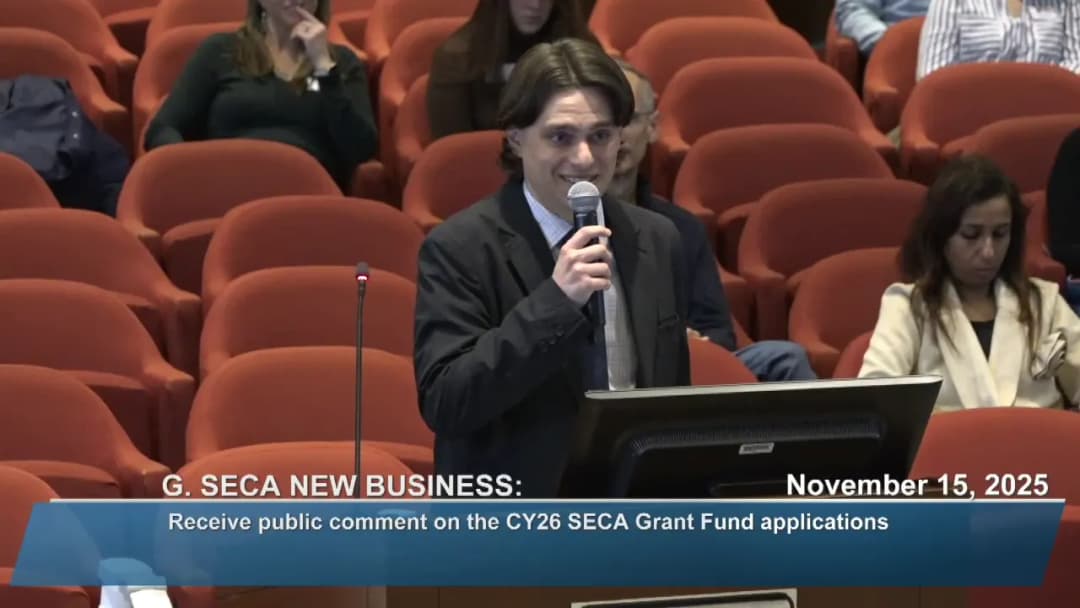
The SECA Commission convened on Saturday, November 15, 2025, at 9:00 a.m. to receive public comments regarding grant eligibility criteria and to hear presentations from 86 applicants seeking SECA funding for calendar year 2026. The commission welcomed new member Linda Kuhn, approved the October 15 minutes, and noted that funding allocation decisions will be made at the subsequent meeting on December 11. No funding recommendations or allocations were determined during this session. Public Comments & Testimony - Sharon Gurell expressed concern regarding transparency and eligibility criteria, specifically questioning how religious connotations in events and tax-paying public entities (like the Naperville Police Department) qualify for SECA funding. - Staff Response (Miranda Barfus): Stated that city entities are eligible for funding. Regarding religious content, staff clarified that cultural expression containing religious themes is not disqualifying provided it is not religious worship or proselytizing; however, a formal legal opinion was deemed necessary to fully address the specific criteria. Discussion Items - Welcome & Introductions: The commission formally welcomed new commissioner Linda Kuhn. - Application Review Process: Staff explained that 86 applications were received. Applicants were given three minutes to present. The commission noted they would not allocate funds at this meeting but would review individually before making recommendations. - Public Art Proposals: - Art Forum presented three proposals: a rotating mural, the "Light Animis" kinetic sculpture, and "Installation Alley." Commissioners Mr. Gannon and Mr. Myers expressed concern regarding the dependency of the alley project on city alleyway approval and the potential for funds to be returned if projects fail. Mr. Zards pressed for an estimated timeline from the city. Mr. Myers questioned the high shipping costs ($18,000). Art Forum clarified the alley project is not strictly dependent on becoming a pedestrian way, can be scaled back if funding is reduced, and is actively seeking sponsorship. - Event & Service Requests: - Lizzie's Fund requested funds for a new spay/neuter clinic serving underserved populations (veterans, seniors, low-income families). Commissioner Prasad questioned if this fit the SECA mission; the applicants clarified it is a community service event rather than a cultural celebration. - Naper Settlement (Addison Glick) requested funding specifically for rising police and paramedic costs, arguing the per-attendee cost for safety (<$4) is a worthwhile investment compared to the value of world-class entertainment provided. - Naperville JCs (Last Fling) presented a request for $225,000+ for city services due to skyrocketing security costs associated with alcohol and age restrictions. Commissioner Myers noted the regrettable shift from an open event to one requiring strict controls. - D Tribals Foundation requested $144,000 for the "Sodesi Mela" trade fair. Commissioner Prasad questioned the necessity of the grant given the scale of the event and potential for sponsorship. Commissioner Sayed expressed concern about crowd management for 30,000 attendees. Commissioner Gannon noted that while a large event, it is a new foundation without an established corporate sponsorship base. - Indian Nurses Association of Illinois proposed a mental health awareness event including a marathon. Commissioner Gannon and Staff (Jake Fiedler/Miranda Barfus) expressed that the application lacked necessary city service details (route, date, special event application) required for a marathon, noting the separate city special event calendar deadlines. - Accessibility Concerns: Commissioner Prasad raised concerns about the accessibility of the American Multi-ethnic Commission Gala venue (Yellow Box), noting it is not walking/bike-friendly, though the applicant stated shuttles were used previously. - DuPage Children's Museum: Commissioners Mr. Myers and Ms. Prasad questioned the request for utilities costs, noting the city no longer holds the building obligation. Staff confirmed that operating costs were not typically reimbursable in the past and may be deducted from the award; the museum agreed to seek other funding if necessary. Key Outcomes - Minutes Approved: The SECA Commission minutes from October 15, 2025, were unanimously approved. - Commissioner Addition: Linda Kuhn was formally welcomed as the new commissioner. - Process Determination: The commission confirmed that funding allocation decisions and recommendations to the City Council will occur at the next meeting on Thursday, December 11, 2025, at 6:00 p.m. - Discrepancy/Clarification Needed: The commission requested further clarification or legal review regarding the specific definition of "religious content" vs. "religious worship" in grant qualifications and the process for city entities receiving funding. - Application Deficiency Note: The Indian Nurses Association of Illinois application was flagged for lacking a completed special event application and city services plan for the proposed marathon component.
Public Meetings - Naperville, Illinois
Public Meetings - Naperville, IllinoisThe City Council held the third and final workshop for the 2026 budget, reviewing a $685 million proposed budget that remains balanced despite challenges such as rising healthcare costs, declining state revenues, and unexpected electricity cost increases. Staff presented high-level overviews of operating and capital funds, followed by council deliberation on specific allocations including public safety, utility projects, and programmatic changes. While a unanimous show of hands supported the overall budget proposal with the exception of unresolved items, the council deferred final decisions on the Mobile Crisis Intervention Team (MCIT) to a staff report and a vote on the elimination of the electric lawn equipment rebate. Public Comments & Testimony - Marilyn Schweitzer: - Expressed full support for funding only Tier 1 of the undergrounding of overhead lines. - Expressed strong concern and requested that any consideration for Tier 2 involve first surveying affected property owners regarding their preferences. - Expressed full support for the elimination of the sidewalk replacement cost share. - Expressed strong opposition to the current funding allocations for the food and beverage tax, specifically criticizing the CICA grant program, CECA city obligations, and Neighbor Settlement for lacking adequate oversight and public input. - Requested that the CAP per cap calculation per municipal code be maintained as indicated in the alternative. - Expressed criticism regarding NCTV's fundraising capabilities, noting it cannot raise $4 per household and requesting proportional adjustments to other CECA grants and obligations if NCTV is funded. - Expressed concern regarding the use of a data center project in an area designated as medium-density residential in the 2022 comprehensive plan, arguing it creates community and business mistrust and uncertainty. - Advocated for comparing Fifth Avenue to the I-88 corridor, stating Fifth Avenue has better identity and public input, while expressing doubt regarding the city's capability to transform the I-88 corridor if Fifth Avenue fails. - Requested the use of the 2022 land use plan for I-88 planning and the creation of an I-88 project area on the website for public review. - Expressed deep concern regarding the doubling of costs on Riverwalk 2031 projects since initial estimates and directed staff to re-estimate future projects using current construction costs. - Expressed extreme disappointment regarding the city website revision plan, arguing it fails to address help center deficiencies and serves development rather than the entire community. Discussion Items - Capital and Utility Budgets: - Staff presented the 2026 Capital Improvement Program (CIP) totaling $190 million, a 6% increase driven by utility improvements (63% of total). - Clarified that the Tollway Substation upgrades are for reliability of existing infrastructure, not specifically for future data center development. - Reported that the Electric Utility Fund budget assumes no changes to the IMEA contract and accounts for a recent cancellation of a $715,000 federal DOE grant pending appeal. - Discussed the Water and Wastewater Fund, noting a 22.7% revenue increase driven by rate studies and a $45 million bond issuance for Springbrook. - Property Tax and Revenue: - The estimated 2025 property tax rate is projected at 0.5506, the lowest since the late 1960s, due to significant growth in Equalized Assessed Value (EAV) of over 10.8 billion dollars. - Noted that while the tax rate declines, the total levy increases by 1.5% to $59.7 million, with the majority of funds directed toward city services and away from debt obligations. - Acknowledged the impact of declining motor fuel tax revenue due to reduced gas consumption and increased EV adoption, confirming the city is lobbying the state for a 'fair share' fix. - CECA and NCTV Funding: - Staff presented two options for the CECA (Cultural, Intellectual, and Community Arts) cap calculation: the current proposed revision (catching up to inflation) and an alternative option maintaining the code calculation (2% or inflation, whichever is less) plus an additional $200,000 for NCTV 17. - Mobile Crisis Intervention Team (MCIT): - Police Chief Aris presented the case for a full-time MCIT unit consisting of officers, a sergeant, and a crisis intervention canine, estimated to cost $900,000 for the first year. - Councilman McGroom argued that the program is an "essential" service and a "wait and see" approach is inappropriate for mental health and child abuse response. - Councilman Holzhauer expressed concern that adding the program would be fiscally unsound given the tight budget and potential for future deficits, characterizing it as a "bells and whistles" item in the context of current constraints. - Councilman Kelly expressed support for the program but requested more financial detail, specifically the exact impact on the property tax levy and rate before a final vote. - Director Munch confirmed the program was deferred previously due to contract negotiations and a $4 million deficit, noting that a $900,000 addition would increase the deficit significantly. - Special Fund Allocations: - Electric Lawn Equipment Rebate: Councilman Wilson moved to eliminate the $10,000/year program from the general fund, arguing it acts as an unwanted subsidy where one household funds another and that it should move to the Renewable Energy Program if allowed by parameters. - Tree Trimming: Councilman Wilson raised the issue of the general fund balance ($70 million) to potentially fund accelerated tree trimming; Deputy Director Schwarzkopf noted the city is already behind schedule and utilizing $500,000 in contracts, but a discussion on using the general balance for operating expenses was deemed possible but需谨慎. Key Outcomes - Straw Poll on CECA/Alternative Option: Three council members supported the alternative option (keeping current code + $200k for NCTV); six council members supported the proposed revision (catching up to inflation). - Straw Poll on Electric Lawn Equipment Rebate: Three council members voted in favor of Councilman Wilson's motion to eliminate the $10,000 general fund allocation for the electric lawn equipment program. - MCIT Motion: The council voted to request a staff report to be presented at the November 18, 2025 council meeting detailing the MCIT proposal, its specific costs (for 4, 6, or a ramped-up model), and its projected impact on the tax levy and rate, to inform a potential future vote. - Final Budget Proposal: A unanimous show of hands was recorded supporting the proposed 2026 budget of $685 million, subject to the upcoming decisions on the MCIT program and the formal adoptions scheduled for December. - Next Steps: - Staff will prepare the MCIT report for the November 18th meeting. - The Council will receive the estimated property tax levy and schedule the public budget hearing for December. - Formal adoption of the budget and approval of the property tax levy will occur at two separate meetings in December. - The electric lawn equipment program status may be revisited during the December sustainability discussion regarding the Renewable Energy Program parameters.
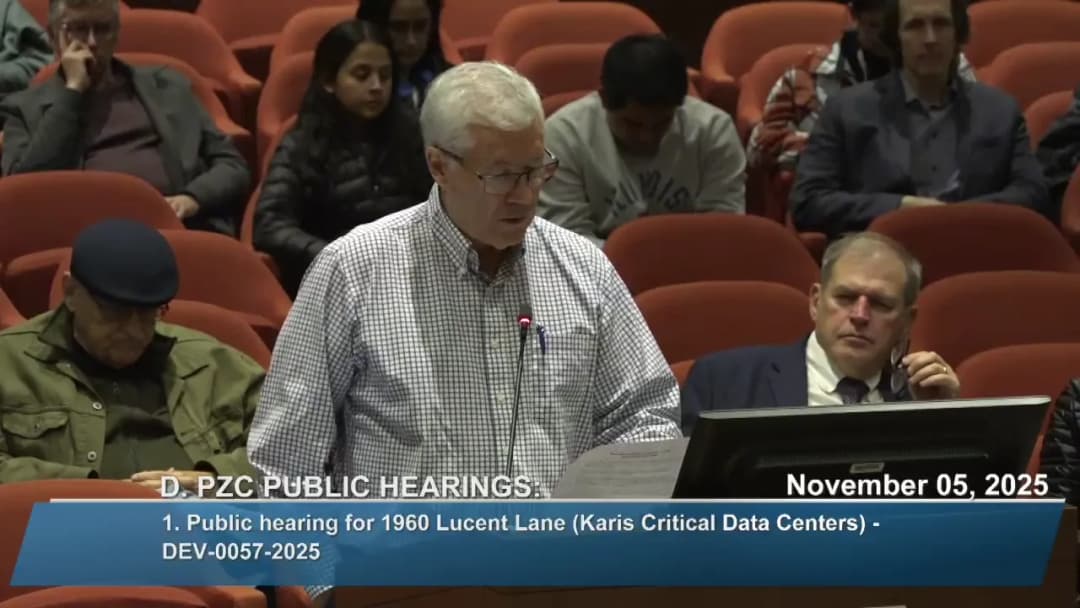
The Naperville Planning and Zoning Commission convened on November 5, 2025, to reconvene the public hearing for DEB-0057-2025, a proposal by Harris Critical Data Centers to build a 200,000-square-foot data center with 24 diesel generators at 1960 Lucent Lane, adjacent to the Naper Commons residential neighborhood. The meeting featured extensive public testimony from residents and experts overwhelmingly expressing strong opposition to the project due to health, safety, noise, and environmental concerns, while counsel for the petitioner defended the project's compliance and location. Consent Calendar - No items were presented; the meeting proceeded directly to the public forum and public hearing. Public Comments & Testimony - General Opposition: Over 40 speakers, including residents of Naper Commons, Donata Woods, and Fair Meadow, expressed strong opposition to the data center's location. Position: Residents stated they do not want an industrial facility in a residential area, they do not want to breathe diesel exhaust, and they oppose the project causing stress, health risks, and noise pollution. - Health Concerns: Multiple medical professionals (Dr. Sujay Shaw, Dr. Austin Baber, Dr. Neil M. Mehta, Dr. Sarah Centani, and others) expressed full support for denying the proposal to protect public health. Position: Speakers argued the project endangers public health by exposing families to diesel exhaust (a Group 1 carcinogen), ultrafine particles, and noise-induced cardiac and respiratory issues. They stated the health risks outweigh any economic benefits. - Noise and Vibrations: Residents and acoustic experts expressed significant concern that the project will cause intolerable noise and vibration levels. Position: Speakers argued the sound tests conducted by the petitioner are flawed, the noise will be disruptive (measured up to 70 dB at 400 feet), and the low-frequency noise will prevent sleep and enjoyment of property. - Property Values and Integrity: Speakers expressed opposition to the project diminishing property values and violating the community's character. Position: Residents stated they were misled into purchasing homes in an area designated for residential harmony, and the project will significantly impair the use and enjoyment of their properties. - Water and Energy Usage: Experts and residents expressed opposition to the data center's resource consumption. Position: Speakers argued the facility will strain the local electrical grid (consuming equivalent to thousands of homes), increase utility costs for residents, and deplete groundwater resources. - Accountability and Transparency: Speakers expressed skepticism regarding the developer's commitments. Position: Residents argued the petitioner has failed to be transparent, the corporate structure obscures liability, and voluntary pledges are insufficient compared to enforceable regulations. - Petitioner's Defense (Russ Whitaker): Counsel for Harris Critical Data Centers expressed support for the project's approval. Position: The counsel argued the site is historically an industrial business corridor, risk does not equal hazard due to mitigation, and the project is essential infrastructure that will benefit the community. Discussion Items - Project Location and Zoning: The petitioner's counsel argued the project fits the I-88 business district corridor designation. Position: Counsel stated the location is consistent with long-term master plans, despite the recent residential development of Naper Commons. - Mitigation and Health Standards: The petitioner presented data to support their claim that health risks are mitigated. Position: Counsel argued the design includes controls (Tier 4 emission systems, sound walls) that ensure safety and compliance with ordinances, countering expert testimony that the mitigation is inadequate or unproven in real-world scenarios. - Financial and Economic Impact: The petitioner argued the project provides new tax revenue. Position: Counsel stated the fiscal impact is positive, though residents countered that the economic benefits are overstated and the costs to residents (utilities, health) are underappreciated. - Regulatory Framework: NEST (Naperville Environmental and Sustainability Task Force) spokesperson argued the city lacks updated ordinances for data centers. Position: NEST expressed support for a temporary moratorium to allow for the development of robust regulatory frameworks before approving any new data center. Key Outcomes - Motion to Continue: The Commission voted to continue the public hearing for petitioner closing remarks and Commission deliberation only to the next meeting on November 19, 2025. (Motion carried: Ayes: 10, Nays: 0 - Implied by "All in favor, say aye") - Meeting Adjournment: The meeting was adjourned at 11:00 PM following the motion to continue the hearing. - No Vote on Merits: No final decision was made regarding the approval or denial of the conditional use permit for the data center.
The November 4, 2025, Naperville City Council meeting addressed a range of community concerns, including immigration enforcement fears, utility contract renewals, and public safety regulations. The meeting opened with a proclamation honoring the 2025 Seva Diwali Food Drive. A significant portion of the public forum was dedicated to calls for a "Welcoming City Ordinance" due to rising ICE activities, while other residents raised concerns regarding a sharp increase in retiree life insurance premiums and the use of CERT volunteers for SECA events. The council also conducted the first reading of an e-bike and e-scooter safety ordinance and unanimously voted to indefinitely table a Dutch Bros development request following a change of venue by the petitioner. Consent Calendar - Approved Unanimously (9-0): The meeting approved the omnibus consent agenda, excluding Item I-11. - Specific Approvals Included: - Minutes from October 21, 2025. - Award of cooperative procurement for police uniforms (Calls LLC, up to $198,000). - Oracle Database Support contract (Mythics LLC, up to $152,599). - Liquid cationic emulsion polymer bids for wastewater treatment (Polydyne). - Tree planting services agreement (Field on Caton Farm, up to $500,000). - Virtual reality officer training systems (VARMED, up to $373,375). - Various change orders for infrastructure and facility repairs. - Site development agreement amendments and zoning variances for 555-557 South Washington Street. - Intergovernmental agreements for the Northern Regional Major Crimes Task Force, Ogden Avenue improvements, and the Washington Street Bridge rehabilitation. - Workers' compensation settlement and collective bargaining agreement for Naperville Police Sergeants. Public Comments & Testimony - Seva Diwali Food Drive Representation: - Advait Ganesh (HSS/Seva International Volunteer): Described the drive as a platform addressing food insecurity through the spirit of "Seva" (selfless service). He noted that 50 Naperville area Indian American organizations participated, contributing to a nationwide collection of over 717,000 pounds of food last year, with over 15,000 pounds donated locally. He extended an invitation to the Council to join the food drop-off. - Climate & Sustainability: - Joseph Huss (NEST Task Force): Expressed support for the newly launched free "Climate Coach" program. He cited federal data showing renewables provided 26% of U.S. electricity and battery storage capacity grew 64%, emphasizing that progress is made only when fossil fuel use is reduced. - Welcoming City Ordinance (ICE Concerns): - Emily Cummings (Parent/Small Business Owner): Expressed full support for adopting the ordinance. She described the fear among residents following ICE detentions, stating, "We are making people scared to bring their children to school," and noted that children are now worried about ICE just as they are about mass shootings. - Lauren Reyes (Parent/Educator): Expressed strong support for the ordinance, stating, "Naperville prioritizes safety. ICE does not." She shared personal fears regarding her family and children attending daycare and being detained, requesting the ordinance to ban ICE from schools and hospitals without judicial warrants. - Diana Torres Hawken (Almas Alliance): Expressed full support for the ordinance on behalf of the Latino community, arguing that unmasked ICE activities erode trust in the Naperville Police Department and create economic harm to immigrant-owned businesses. - Signy Gleason (Resident): Expressed support, stating the ordinance is consistent with Naperville's values of trust, respect, and pride. - Kyle Sim Rashid (Human Rights Lawyer): Expressed full support, calling the current federal enforcement a denial of "due process of law." He asserted that "fascism" takes hold when due process is denied and argued that the welcoming city ordinance is necessary to uphold constitutional rights. - Elizabeth Pine Himmelman (Pastor/Parent): Expressed support, stating the ordinance would "increase trust as well as decrease fear" and is essential for protecting the constitutional rights of all residents. - Councilman White: Expressed empathy for the community, acknowledging the fear within the African American community regarding traffic stops and stating he does not know what advice to give families regarding interactions with unidentified federal agents, calling it a time to "stand up." - Retiree Life Insurance: - Vince Clark (Retired Police Officer): Expressed strong opposition and concern regarding a 2,387% premium increase for a $20,000 policy ($1.60 to $39.80/month). He stated, "Sending a letter with a 2,387% increase and no explanation... is not good business," and noted this has created "hostility amongst the retirees" and feelings of being cast aside. - Response by HR Director Ollis: Stated the increase was due to claim losses exceeding premiums, the vendor was the cheapest on the street, and a detailed explanatory letter would be sent within 48 hours. - Councilman Holzar: Expressed support for the retirees' concerns, emphasizing the "respect issue" and confirming that a retiree portal is being considered in the upcoming website update. - SECA & CERT: - Philip Buchanan: Expressed support for exploring expanded use of CERT volunteers to reduce city service costs for SECA events, citing a model in Wheaton that saved up to $250,000 annually. - Councilwoman Gibson: Expressed support for the proposal, having volunteered during the pandemic and noting the availability of eager CERT volunteers. - E-Bikes & E-Scooters: - Justin White (NEST): Expressed support for the proposed ordinance as a necessary step to integrate micromobility safely. He emphasized the ordinance aligns with state regulations but clarifies age restrictions (16 for e-bikes, 18 for e-scooters) and the requirement to ride on streets, not sidewalks. - Randall Case: Expressed strong support for the ordinance, citing a near-miss incident where a child on an e-bike almost hit a woman with a stroller. He urged the Council to vote yes to address parental responsibility and safety. - Councilman Kelly: Expressed that the draft ordinance "looks good," but emphasized the need for a robust education plan targeting parents and schools, noting that school district emails implying safety tips gave a "appearance that it's permissible" when e-bikes are not allowed on sidewalks. Discussion Items - Food and Beverage Tax (Item I-11): - Councilman McRum (Wilson) and Councilman Wilson expressed opposition to the proposed tax amendment, citing concerns about the opaque allocation of funds to the Naperville Community Tourism Bureau (NCTB) and the redundancy of funding a printed restaurant guide in the digital age. - Councilman Sayed expressed support for the cleanup language to ensure "fairness across all of our restaurants" and proposed a future review to potentially reduce the tax rate once the new revenue sources stabilize. The motion to amend the tax section passed 7-2. - E-Bike and E-Scooter Ordinance (Item L1 - First Reading): - A discussion ensued regarding enforcement challenges. Chief Aries clarified that the department cannot assist with civil immigration enforcement and relies on criminal behavior assistance. Regarding e-bikes, staff noted that enforcement would likely be complaint-based or opportunistic, as resources are constrained. The Council emphasized that education of parents and communities is a primary responsibility alongside enforcement. - Dutch Bros Development (Item L2): - The Council agreed to an indefinite table request from the petitioner. Residents Jamila Hussein and others had strongly opposed the project, citing specific design flaws: a removal of the bypass lane causing parking bottlenecks and insufficient stacking capacity leading to traffic overflow onto public streets. Councilman Holzar noted the unprecedented public attention the issue had received. Key Outcomes - Unanimous Adoption of Consent Agenda: All items approved except I-11, which was moved to a separate vote. - Tax Amendment Passed (7-2): The ordinance amending the Food and Beverage Tax (Section 3-1-9) was passed to close loopholes and expand the tax base, pending future review of revenue stability. - E-Bike Ordinance Scheduled: Item L1 was read for the first time; a second reading for final action is scheduled for a future meeting. The Council committed to a community education campaign. - Dutch Bros Request Deferred: Item L2 was tabled indefinitely by a 9-0 vote, halting the entitlement process pending further work by the petitioner. - Retiree Communication Improved: The City confirmed that a detailed explanatory letter regarding the life insurance premium increase would be mailed and emailed to all affected retirees within 48 hours. - Upstream Vehicle Regulation Requested: In New Business, the Council agreed to request staff to propose an ordinance addressing illegal vehicle modifications at the source (businesses/entities) rather than solely through individual enforcement. - Nightly Parking: No permanent solution for overnight parking is expected before the holidays; standard non-enforcement for major holidays was noted.
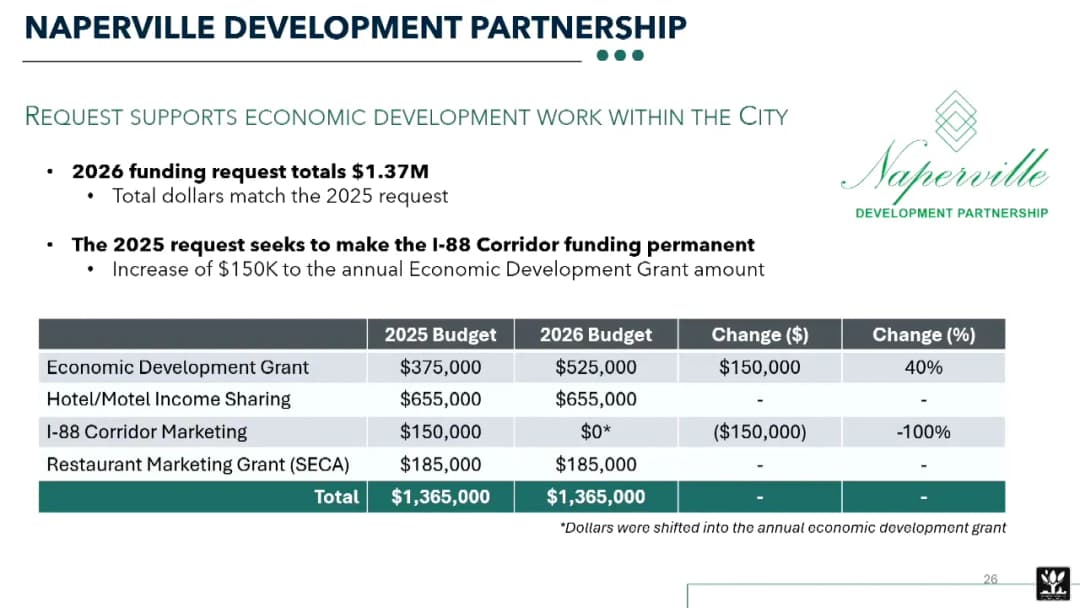
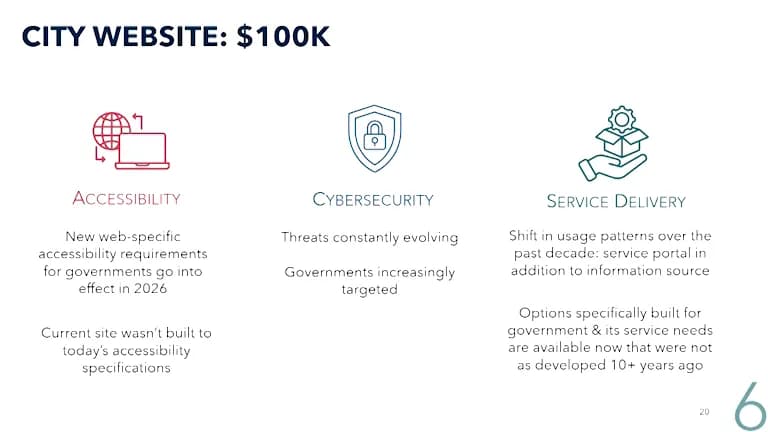
The City of Naperville convened its second workshop on October 30, 2025, to discuss the preliminary operating budget for 2026. Mayor Krieger chaired the session, emphasizing that no final actions were taken as this was a workshop. The meeting focused on balancing a projected $4 million deficit against a 6.8% total budget increase to $685 million, driven primarily by rising personnel and health care costs. The session featured public testimony on staff capacity, planning strategies for Fifth Avenue versus I-88, and funding caps, followed by detailed presentations from Finance, Police, and community partners regarding specific budget items. Consent Calendar - No consent calendar items were processed during this workshop, as the session was strictly designated for discussion and review of the proposed operating budget. Public Comments & Testimony - Mary Lynch White expressed strong support for maintaining the "money with a mission" theme but raised concerns regarding three specific areas: - Staff Capacity: Expressed concern that staff is "stretched thin" and that the Council scrutinizes spending on staff too heavily compared to other services, warning against being "penny wise and pound foolish." - City Website: Urged the Council to ensure the website strategy includes the open data portal and the "rather deficient help center." - Special Area Planning: Expressed full support for prioritizing the Fifth Avenue initiative over the I-88 corridor, stating it would be difficult for the city to transform I-88 if it cannot successfully complete Fifth Avenue. She argued that planning strategies for I-88 should follow the 2022 land use plan and that data centers should not be approved in residential areas. - Funding Cap: Expressed opposition to raising the SECA spending cap until a thorough public analysis of the food and beverage tax is available. Discussion Items - General Fund Overview & Deficit Resolution: Director Ray Munch and Deputy City Manager Doug Munch presented the financial landscape, noting a projected $4 million deficit. Staff highlighted a correction to a utility billing error in the electric use tax calculation for commercial customers, which is estimated to net an additional $1.8 million in revenue for 2026. Councilman Kelly questioned the decision not to backbill commercial customers for the estimated lost revenue from 2025; staff explained the decision was made to avoid equity issues for businesses that had already budgeted. - Revenue Trends & Diversification: Presentations detailed a shift in revenue diversification, with state sales and income taxes now accounting for over 70% of the general fund (up 6% from 2019). Staff warned that this reliance on economically sensitive sources poses a risk during economic contraction. - Personnel & Health Insurance: The budget reflects an 18.5% increase in health insurance premiums. Director Munch attributed this to pharmaceutical costs and serious health conditions, noting the city is fully self-insured. Councilman McRum asked if the city should consider joining risk pools; staff advised against a knee-jerk reaction based on one year of data. - Drone Pilot Program: The Police Department requested $150,000 to expand its drone program into a "Drones as a First Responder" (DFR) pilot. Chief Harris explained the drone would autonomously fly to 911 calls, arriving in under two minutes, with strict privacy protocols (30-day retention unless evidence of a crime). The pilot will be implemented on the north side of the city. Councilman Kelly requested further data on projected mission counts. - City Website Rebuild: Council approved a allocation of $100,000 to procure a new content management system and hosting solution to ensure compliance with new Department of Justice accessibility rules and improved cybersecurity. - Special Area Planning Study: TED requested $150,000 to initiate a study for either the I-88 Corridor or Fifth Avenue. Director Munch noted that while NDP is conducting marketing for I-88 independently, the city must choose one study to fund in 2026 due to resource constraints. Councilman White asked if the I-88 marketing would conflict with a zoning study; Director Munch stated they are distinct activities. - Commuter Parking Fund: The fund is projected to deplete its cash balance by 2027. Director Munch explained expenses have outpaced revenues due to deferred capital maintenance and rising operating costs. Councilman White questioned a potential conflict between parking fund needs and future special area planning; staff confirmed they are separate issues. - Community Partners (NCTV 17 & SECA): A significant discussion occurred regarding raising the SECA cap to $2.51 million to fully fund NCTV 17. - Speaker positions varied: Councilwoman Gibson and Councilman Wilson expressed full support for NCTV 17 as a vital news amenity. Councilman McRum expressed strong opposition, citing concerns about the city moving toward 100% funding (slippery slope) and a lack of broad public value perception. Councilwoman Jane was "partially supportive" but suggested trimming other categories. Councilman Kelly expressed support, noting a positive path forward has been developed. - Staff clarified that the funding would technically come from the food and beverage tax via the SECA obligation process, though Councilman White suggested creating a separate category under the food and beverage tax distinct from SECA. - Naperville Development Partnership (NDP): NDP requested a flat budget of $1.37 million, including a permanent $150,000 allocation for I-88 corridor marketing. Monica Connors clarified this marketing targets six specific industries and operates independently of any zoning study. - Naperville Public Library: Executive Director Dave Delatorza requested an operating budget increase of 3.7% ($18.48 million) to cover rising health insurance costs and maintain facilities. He noted a shift toward electronic circulation (25% total) and outlined capital requests for boiler and storm drainage repairs. - Naper Settlement (Naperville Heritage Society): The organization requested a 2.5% property tax levy increase to cover personnel and benefit costs. They detailed progress on the Mary and Richard Bank Agricultural capital campaign and the 250th-anniversary planning. Key Outcomes - Budget Status: The 2026 budget remains balanced at $685 million, with a 6.8% total increase. The General Fund shows a 4.4% revenue increase and 4.5% expense increase. - NCTV 17 Funding Decision: The Council reached a consensus to include NCTV 17 in the City Obligation within the SECA framework at the requested level (approx. $180,000-200,000 depending on final categorization), despite some members expressing reservations about the cap increase. Staff confirmed they will not lower the allocation based on the dissent. - Drone & Website Approval: The Council moved forward with the concepts for the $150,000 DFR pilot and the $100,000 website rebuild, directing staff to proceed with planning. - Parking Fund Review: No immediate rate increase was authorized; staff will return in 2026 with a detailed plan to address the projected 2027 depletion of the commuter parking fund. - Next Steps: The third workshop is scheduled for November 10, 2025, to focus on the property tax levy. A public hearing and final vote on the 2026 budget are scheduled for December 2, 2025, with final levy approval following in a December meeting.
The Naperville City Council convened for the second of three workshops to discuss the proposed 2026 operating budget, focusing on balancing revenues and expenses amid moderating tax revenues and rising personnel costs. The meeting featured presentations from city finance staff, department heads, and community partners, followed by public testimony and extensive council deliberation. No final budget actions were taken during this workshop; however, significant discussions were held regarding the SECA funding cap, community broadcasting support, and strategic planning for special areas. Public Comments & Testimony - Marilyn Schweitzer (Citizen): - Expressed support for the theme "money with a mission" and acknowledged staff efforts in publicizing the budget. - Expressed concern regarding insufficient staff capacity, noting that current resource levels risk "penny wise and pound foolish" long-term outcomes. - Stated support for a comprehensive city website strategy that must include an open data portal and a improved help center. - Expressed opposition to "waffling" on planning strategies for the I-88 corridor and argued for prioritizing the Fifth Avenue area first, citing fewer complications and better public input. - Stated that data centers should not be approved in areas currently slated for residential development. - Expressed support for raising the SECA funding cap only after a thorough public analysis of the food and beverage tax and SQL obligations is completed. Consent Calendar - No items listed in the transcript for the Consent Calendar; the meeting proceeded directly to public comments and the budget presentation. Discussion Items - 2026 General Fund Overview & Revenue Forecast: - Deputy City Manager Ray Munch presented a balanced budget of $685 million, noting a $4 million deficit that was addressed by correcting a utility billing error. - Speaker Position Summary: Staff clarified that the corrected electric use tax error will generate $1.8 million in 2026. Councilman Kelly expressed concern regarding equity by not backbilling the $1.8 million to 2025, but staff maintained support for a forward-looking correction to avoid upsetting business budgets. - Health Insurance Costs: Councilman McGroom expressed shock at the 18.5% projected increase in health premiums. Director Munch confirmed the increase is driven by pharmaceutical costs and claims experience, stating it is premature to conclude the trend is unsustainable or to immediately seek risk pools based on a single year's data. - Parking Fund: Deputy City Manager Munch noted the commuter parking fund is projected to deplete in 2027. Councilman McGroom requested clarification on the fund's relationship with special area studies, and Director Krieger confirmed the parking fund issues are distinct from the I-88 or Fifth Avenue planning. - Special Initiatives & Capital Requests: - Drone as First Responder (DFR) Program: Chief Harry presented a $150,000 request to launch a pilot program for autonomous drone deployment, distinct from the current manual piloting model. Chief Harry and Councilman Kelly expressed strong support for the program's safety benefits. - City Website Overhaul: Staff requested $100,000 to modernize the city website to meet DOJ accessibility standards by mid-2026. - Special Area Studies: Staff requested $150,000 to initiate a planning study for either the I-88 Corridor or Fifth Avenue. Director Louden noted that internal staff time and consultant costs for both projects are estimated similarly at $150,000, but only one can be pursued in 2026 due to resource constraints. - Special Services Area (SECA) & Community Partners: - NCTV 17 Funding: Staff proposed a $200,000 permanent increase to NCTV 17 operating support, requiring a revision to the SECA cap from a 2% limit to an inflation-based limit (approx. $2.51 million total). The proposal aims to move NCTV 17 funding from the General Fund to the Food and Beverage fund obligation. - Council Positions on SECA Cap: - Councilman Holzer, White, Sayed, Wilson, Gibson, and Kelly expressed unqualified or strong support for increasing the SECA cap and funding NCTV 17, citing its value as a trusted local news source and community amenity.Councilman McRuham expressed opposition to raising the cap, citing concerns about the sustainability of the business model, the risk of 100% public funding dependence, and the potential loss of journalistic independence.Councilwoman Gibson expressed partial support, suggesting the cap be increased but recommending trimming grant awards to offset the cost before NCTV receives the full amount. - Mayor clarified that the final decision reflects a "yes" on the request to raise the cap and fund NCTV, noting that while a minority had reservations, the intent is not to reduce the funding below the proposed level. - Naperville Development Partnership (NDP): NDP Board President Monica Connors requested $150,000 to make I-88 corridor marketing permanent and $185,000 for restaurant marketing. Councilman Kelly inquired about the distinction between marketing and zoning plans, and Ms. Connors clarified that marketing strategies are independent of the zoning study timelines. - Library & Settlement Budgets: - Naperville Public Library: Executive Director Dave Della Terza requested a 3.7% property tax levy increase. Councilman White asked for clarification on the relationship between declining tax rates and increasing actual revenue, and Staff Director confirmed that rising property value assessments allow for increased revenue despite lower rates. - Naper Settlement: Staff requested a 2.5% property tax levy increase and a 2% increase in the food and beverage contribution to cover rising salaries and benefits. Key Outcomes - No Final Vote: No final budget actions were taken as this was a workshop; the budget will return for a public hearing on December 2nd and final approval on the last December meeting. - SECA Cap Revision Approved in Principle: The council indicated support for revising the SECA cap to accommodate the NCTV 17 funding increase and other obligations, with the understanding that the budget will proceed with the proposed numbers despite some individual council members' reservations. - Pilot Program Authorization Pending: The $150,000 allocation for the "Drone as First Responder" pilot program was discussed and broadly supported, but requires final council approval in the subsequent budget adoption phase. - Special Area Study Direction Not Finalized: While staff requested $150,000 to begin studying either Fifth Avenue or I-88, the council did not designate a priority for 2026 during this workshop, leaving the decision for future deliberation. - Property Tax Levy Strategy Confirmed: Staff confirmed the strategy of lowering tax rates while capturing growth through rising property valuations to maintain revenue stability for the library and general services.
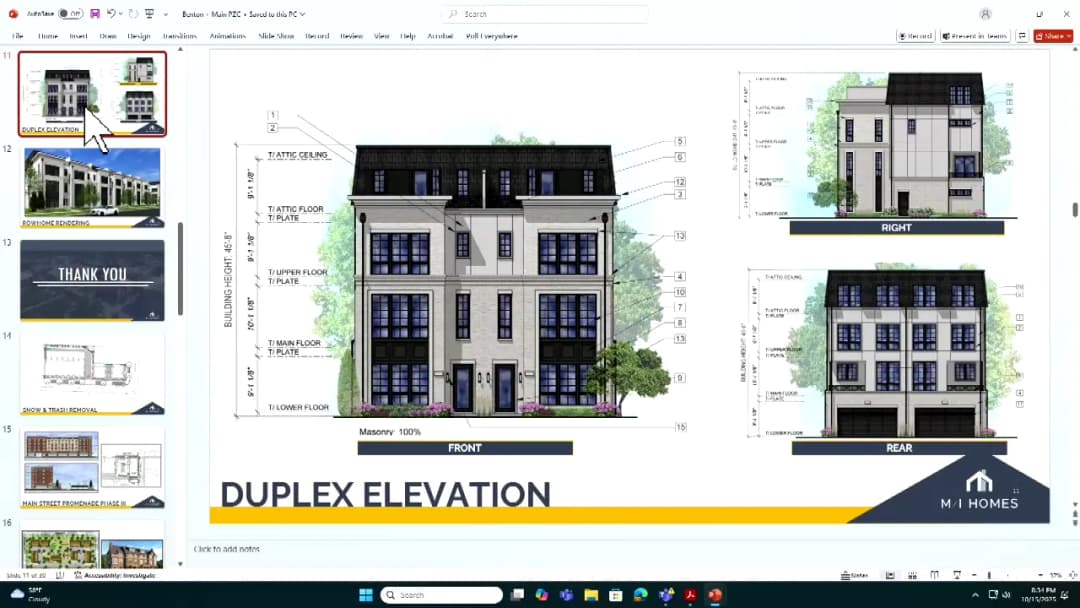
The Planning and Zoning Commission convened on October 15, 2025, to address three primary items: a variance request for a design studio at 557 South Washington Street, a conditional use permit for a mixed-use residential development at Benton and Maine, and the reconvened public hearing for a major data center proposal at 1960 Lucid Lane. While the first two items proceeded with limited opposition and were largely approved, the data center hearing became the focal point of the evening, featuring intense public testimony regarding noise pollution, environmental impact, property values, and the integrity of the city's land use plans, resulting in a motion to extend the meeting to accommodate further discussion. Consent Calendar - No specific consent calendar items were recorded in the transcript; all agenda items were debated individually. Public Comments & Testimony - Case DEV-0094-2025 (557 South Washington Street): No members of the public signed up or offered testimony during the public hearing. - Case DEV-0109-2025 (Benton and Maine): - Chris Carlson: Expressed strong opposition on behalf of nine neighbors directly behind the site, characterizing the project as "very high density" and "very tall." Position: The 46-foot wall will negatively impact property values and marketability; urged the commission to adhere to the 35-foot height limit in the TU district. - Richard Lowry (Corner Property Owner): Expressed mixed feelings, favoring townhomes but opposing the specific variances. Position: Opposed the 10-foot front setback and 60-foot building depth, citing shading impacts and inconsistency with the 50-foot depth of other nearby developments; advocated for six units rather than seven. - Alice Goodman: Expressed opposition to the project's parking provisions. Position: Argued the plan provides inadequate parking for residents and guests, risking traffic congestion on Benton Avenue. - Case DEV-0057-2025 (Karis Critical Data Center): - Trey McAllister: Expressed strong opposition regarding public health. Position: Demanded 100% renewable energy (not just offsets) and cited risks of diesel emissions; supported a six-month moratorium on data centers. - Max Watkins: Expressed strong opposition to local electricity price impacts and network strain. Position: Argued that while global price impacts are minimal, local impacts can be severe (citing Northern Virginia cases); rejected the "water infrastructure" analogy as disingenuous. - Aaron Gallagher: Expressed strong opposition to the economic and operational claims. Position: Stated the data center would not improve internet for residents; expressed concern over potential AI/crypto usage despite pledges. - Guillermo Rodriguez: Expressed strong opposition to the land use and economic model. Position: Argued the project yields few local jobs and high municipal burdens; supported a six-month moratorium. - Gary Peck: Expressed strong opposition by highlighting the petitioner's prior contradictory arguments favoring residential over industrial uses at nearby sites. - Robin Schmidt: Expressed strong opposition based on financial concerns for residents. Position: Argued the data center will decrease property values and that the long-term health impacts on children and families are unknown and unacceptable. - Julian Succo: Expressed strong opposition. Position: Called the proposal a "bait and switch" against residents who bought homes believing the area would be residential. - Hamilton Shah: Expressed strong opposition, citing the moratorium in Aurora. Position: Opposed the high density and potential noise/water/emissions impacts. - Dan Johnson: Expressed strong opposition. Position: Argued the project conflicts with the city's land use master plan for the lot; noted that adjacent residents would bear the burden while District 203 schools would benefit. - Marilyn Schweitzer: Expressed strong opposition. Position: Cited the risk and unknowns of the development; urged the commission to say no. - Barbara Benton: Expressed strong opposition. Position: Urged a six-month moratorium to allow time for comprehensive fiscal and environmental study before approval. - Tim Ferrito: Expressed qualified support for the economic argument. Position: Argued that IMEA's capacity structure mitigates local price hikes and that Tier 4 generators have low emissions. - Patrick Farrella: Expressed concern regarding future accountability. Position: Questioned who will monitor the stewardship pledge after five years and why elected officials lack an obligation to enforce conditions. - James Butt: Expressed strong opposition. Position: Dismissed the crypto ban as unenforceable; argued the community shoulders costs while profits leave; highlighted the "hum" of low-frequency noise. - Jacob Van Bau: Expressed strong opposition based on engineering flaws in the noise study. Position: Argued the noise study used artificially quiet background data (spring break); predicted noise levels would increase significantly once the adjacent Nokia building is demolished; urged rejection until Illinois Pollution Control Board standards are met. Discussion Items - Case DEV-0094-2025 (557 South Washington Street): - Staff & Petitioner: Presented a request for two variances (side yard setback and rear yard encroachment) to convert a single-family home to a design studio. Staff supported the request for safety and efficiency; the petitioner argued the changes are necessary for ADA access and site functionality. - Commissioners: All commissioners expressed full support for the proposal, citing the need for smart updates and the compatibility of the use with the transitional district. - Case DEV-0109-2025 (Benton and Maine): - Staff: Found the proposal consistent with the Downtown 2030 plan, noting the density is lower than recommended and the height is consistent with code allowances for the area. Staff supported all requested deviations. - Petitioner: Presented a revised site plan (shifting Building 2 to front Main Street) and addressed concerns regarding density, height (46 feet), and parking. Staff confirmed the City owns and maintains new streetscape elements installed in the right-of-way. - Commissioners: Commissioner McDaniel expressed concerns about density but acknowledged the need for downtown growth. Commissioner Hansel requested alternative layouts but accepted the petitioner's willingness to shift Building 3. Commissioner Wright supported the project as a transition. Commissioner Namas expressed conditional support, noting the need for consistency. Commissioner Castagnoli expressed support. Commissioner Robbins expressed support. - Case DEV-0057-2025 (Karis Critical Data Center): - Staff: Presented a report on plan modifications (elimination of Phase 2, reduction to 36 MW load) and the third-party noise review. Staff found the project compliant with current code and supportive of the petition subject to conditions. - Petitioner: Delivered a comprehensive presentation on the "Stewardship Pledge," detailing commitments to Tier 4 generators, air-cooled chillers, purchasing renewable energy certificates (RECs) for 100% of IT load, and a five-year reporting requirement. The petitioner likened data centers to water infrastructure. - Commissioners: Commissioner McDaniel questioned the setbacks and stormwater implications. Commissioner Castagnoli clarified HOA responsibilities for landscaping. Commissioner Wright asked about setbacks regarding building depth. Commissioner McDaniel questioned the height driver. Commissioner Hansel questioned alternative layouts. The commission engaged in a prolonged discussion regarding noise studies, the removal of the adjacent Nokia building, and the potential for future expansion. Key Outcomes - DEV-0094-2025 (557 South Washington Street): - Decision: Motion adopted to recommend approval of the variance to reduce the required side yard setback and the variance to allow more than 25% of the required rear yard to be occupied. - Vote Tally: Unanimous approval (9-0). Roll call confirmed all 9 members (Wright, Ricellia, Namas, McDaniel, Longenball, Castignoli, Bonzo, Abu Baker, Robbins) agreed. - DEV-0109-2025 (Benton and Maine): - Decision: Motion adopted to recommend approval of the Conditional Use for the PUD and approval of the preliminary/final PUD plat with deviations regarding lot size, rear yard, front yard, building height, and rear yard occupancy. - Vote Tally: Approval with 7 votes in favor; 2 votes against (Commissioners Bonzel and Castagnoli voted "I do not"? Correction: Transcript indicates "Bonzo? I do not. Cast Ignoli. I do not." However, the final tally stated "Seven two" and the Chair confirmed "Seven two". Upon re-reading the roll call: Wright (Agree), Bonzel (I do not), Castagnoli (I do not), Longenball (Agree), McDaniel (Agree), Namas (Agree), Ricellia (Agree), Right (Agree), Robins (Agree). This equals 7 "Aye" and 2 "No". Note: The transcript later says "I agree with the motion" for Castagnoli in an earlier section, but the final roll call for DEV-0109 explicitly records Castagnoli saying "I do not". The summary reflects the final roll call result of 7-2). - DEV-0057-2025 (Karis Critical Data Center): - Action: The meeting was extended by majority vote from 11:00 PM to 11:15 PM to allow Jacob Van Bau to conclude his testimony regarding noise engineering. - Status: Public hearing reconvened and ongoing; no final vote recorded in the provided transcript. The commission acknowledged the need to address sound issues before approval. Note on Discrepancies: In the section for DEV-0109-2025, Commissioner Castignoli initially stated "I'm in favor" during the discussion but explicitly voted "I do not" during the final roll call. The summary prioritizes the final recorded vote tally of 7-2.
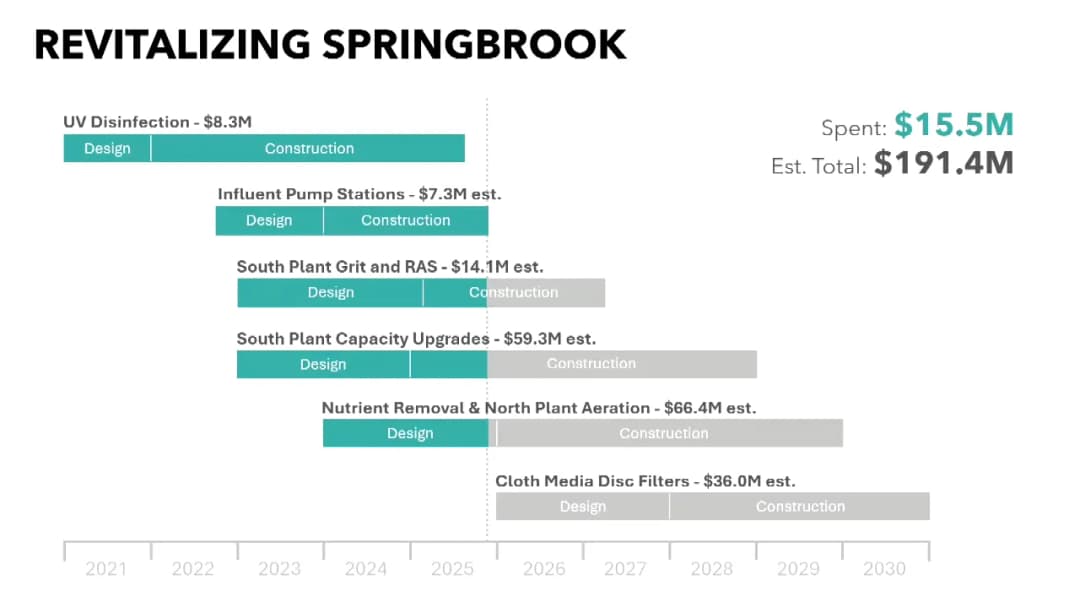
The Naperville City Council convened on October 21, 2025, for a public meeting featuring public forum testimony, discussion on food and beverage tax ordinances, and major updates on the city's infrastructure, utility, and public safety priorities. The meeting concluded with a new business item to initiate a comprehensive review of the Special Event Community Amenities (SECA) grant program. Public Comments & Testimony - David Halleck (Naperville Senior Task Force): Expressed gratitude for council support and detailed the task force's volunteer-driven initiatives, including silver CPR training (hosting 200 seniors last year), dementia-friendly support groups, diabetic screenings, and the upcoming Golden Age Summit. Halleck acknowledged continued support from Mayor Worley and Councilman Holzauer. - Sam Entel: Expressed the position that restricting SECA funds to specific events is untenable due to the fungible nature of funds and the inherent marketing benefit to organizations receiving the grants. Entel stated that the council has an obligation to consider an organization's general activities before awarding funds. - Ted Burlard (NEST): Stated opposition to the immediate approval of Keras's revised data center proposal (36 megawatts) until answers are provided regarding impacts on greenhouse gas emissions and electricity rates. NEST recommended a six-month pause on the project pending the resolution of the city's electric contract status. - Councilman Holzauer: Shared that Naperville Township Board is actively soliciting applications from mental health charitable organizations for grants and referenced a regional data center task force being developed by the Metropolitan Mayors Caucus. - Councilman McBroom: Expressed disappointment regarding perceived passive-aggressive responses to his recent criticisms of NEST and the SECA program. McBroom clarified his intent to foster open, honest dialogue regarding SECA improvements and noted a pending new business item regarding the program. - Councilman White: Requested an assessment of parking accommodations for seniors in downtown Naperville. Halleck provided a personal opinion that there is not enough parking for seniors and those with disabilities, though noted this is not the Senior Task Force's official jurisdiction. Discussion Items - Food and Beverage Ordinance Update: - Mayor Worley: Proposed including drive-through-only establishments and food trucks in the food and beverage tax to ensure equity with brick-and-mortar restaurants. Councilman Wilson expressed concern about adding new revenue without a defined plan to reduce existing taxes. Councilman Kelly supported equity but raised logistical concerns regarding food trucks that operate in Naperville only 10-12 times a year. - Councilman McBroom: Stated opposition to the ordinance item as currently written due to existing concerns about how food and beverage tax revenue is being spent. - Councilwoman Gibson: Suggested that if food trucks are taxed, tax exemptions for food trucks at festivals should also be removed to prevent inconsistencies. - Outcome of Discussion: The council agreed to bring back the option to include food trucks to the next meeting for further consideration. Several council members requested staff research on how other municipalities handle food truck taxation and potential double-taxation issues. - Priority Plan Update (Investing in Our Community): - Chief Puginus (Public Safety): Reported on the hiring shortage mitigation strategy, highlighting recruitment of RNs in the fire department and lateral transfers in police. Stated that 10-20 retirements are expected per department. Discussed the hiring of a new emergency manager, Natalie Weiza, and the reorganization of emergency management into the "Naperville Office of Emergency Management" with a new central facility and unified command vehicle. - Darrell Blennis (Water Utilities): Provided updates on the Springbrook Water Reclamation Center upgrades ($190 million investment) and the removal of lead service lines (99% of 42,000 parcels completed; 203 remaining). Detailed efforts to reduce non-revenue water by 2.5% through meter replacements and main repairs. - Andy Hines (Community Design): Reported on the Riverwalk 2031 Master Plan, highlighting the completion of the Eagle Street Gateway Project ($3.5 million) and the upcoming construction of a park on North Central College property (late 2026). - Christine Schwarzkopf & Ben Mulesmith (Public Works & Sustainability): Discussed the native vegetation management program converting stormwater basins to native plantings and the success of new incentive programs, including electric lawn equipment rebates (all 200 awarded), free food scrap composting (extended), and clothing recycling (17,340 pounds collected). - Council Questions: Councilman Holzauer sought clarification on the cancellation of mental health response hiring (CIT team) for the police department. Councilman White questioned the impact of water loss between Lake Michigan and Naperville, clarified by staff that the city pays only for water measured at delivery points.
The Naperville City Council convened on October 21, 2025, to address a range of municipal matters including the consent agenda, public safety updates, infrastructure progress, and new business regarding the SECA grant program. The meeting featured public testimony from community groups concerning senior services, SECA fund eligibility criteria, and data center planning. Council members engaged in detailed discussions regarding the fairness of food and beverage tax expansions and the historical evolution of SECA allocations, ultimately directing staff to prepare a report for future deliberation. Consent Calendar - Approved the omnibus payment of September cash disbursements totaling $45,995,871.27. - Approved the minutes of the October 7, 2025, regular council meeting and the schedule for October, November, and December 2025. - Received the year-to-date budget report through September 30, 2025. - Awarded bids for job order contracting services (McDonough Demolition, Anchor Mechanical, Pacific Construction Services, SMB Contracting) for a two-year term. - Awarded a bid for medium/heavy-duty truck repairs to DNA Powertrain Corporation (up to $230,000, two-year term). - Approved sidewalk improvements with Triggy Construction (up to $309,343 plus 5% contingency). - Awarded cooperative procurements for roadway salt (Morton Salt/Compass Materials/Minerals America) and electric utility meters (Wesco). - Exercised option year one for building maintenance services with JP Superior Cleaning (up to $307,505). - Exercised option year two for electric utility transformer reconditioning with Emerald Transformer (up to $90,000). - Approved change order number two for security camera maintenance with Pay Systems (up to $200,000 plus 12 months). - Passed ordinances establishing Special Service Area Number 36, approving variances for a fitness studio and ground sign, and amending the owner's acknowledgment for the Heinz Deal Road resubdivision. - Actioned separately: Received staff report for the Residences at Naper and Plank (8-1). Passed ordinances approving the final plat and planned unit development plat for the same project (8-1). Public Comments & Testimony - David Halleck (Naperville Senior Task Force): Presented an overview of the Task Force's activities, including Silver CPR training for seniors (200 participants last year), dementia care support groups, diabetic screenings, and the upcoming Golden Age Summit. Councilman White expressed personal support for parking accommodations for seniors and disabled residents but noted this is outside the Task Force's official sphere; the Mayor requested the police department explore cybercrime awareness training for seniors, which Mr. Halleck confirmed is not currently part of the police partnership. - Sam Entel: Expressed strong support for the city's right to evaluate an organization's general activities before awarding SECA funds, arguing that funds are fungible and inherently support the organization's broader mission and branding. Mr. Entel stated it is an "untenable position" to claim an event is isolated from the group it markets. - Ted Burlard (NEST): Expressed concern regarding Keras's revised 36-megawatt data center proposal, noting it exceeds 10% of Naperville's peak demand. Mr. Burlard highlighted unanswered questions regarding greenhouse gas emissions and electricity rates, recommending a six-month pause on data center consideration until the city's electricity contract (IMA) is settled. - Councilman Holzhauser: Provided information that Naperville Township is accepting applications for grants for mental health services, including Dementia Friendly Naperville. Also noted that the Metropolitan Mayors Caucus is forming a task force on data centers, but no guidelines have been published yet. - Councilman McBroom: Expressed disappointment regarding "passive aggressive" criticisms of his scrutiny on SECA and NEST, urging for open, honest dialogue without personal attacks. - Councilman White: Expressed concern about politicized speech at SECA events, agreeing that politics should be kept off the stage while cautioning against conflating individual opinions of attendees with official organizational stances. Discussion Items - Food and Beverage Tax (Item I-13): - Mayor Worley proposed amending the ordinance to include drive-through concepts and food trucks that operate like permanent restaurants, arguing it is unfair for mobile vendors to compete with brick-and-mortar establishments that already pay real estate taxes and food taxes. - Councilman Wilson expressed discomfort with adding new revenue streams without a clear plan to reduce the existing tax or knowing the revenue potential. - Councilman Kelly supported equity for drive-throughs but raised concerns about the logistics of taxing transient food trucks; suggested a review of thresholds for trucks based in Naperville versus those attending festivals. - Councilman McBroom stated he could not support the item because he has "issues with how the food and beverage tax is being spent right now" and does not want to add more money to that pot. - Councilman Gibson supported including food trucks but noted the inconsistency of excluding them at festivals while including them as permanent locations; she recommended applying the tax to both. - Finance Director Munch indicated that different communities have varying approaches to food trucks and that research is ongoing. - Outcome: The item was not voted on for final adoption; the Council agreed to bring back options to include food trucks for future consideration. - New Business: SECA Program Review (M1): - Councilman McBroom requested a public workshop and staff report to review the SECA program's history, intent, and allocation practices, citing concerns over conflicts of interest, political activities of grantees, and the program's growth beyond its original scope since its 2004 inception. - Councilman White acknowledged concerns about politicization but defended the program's essential role in funding community art (e.g., Max's Mission) and mental health services, noting that nonprofits often fill gaps government cannot. - Councilwoman Jane expressed support for efficiency but requested specific guidance on which aspects of the program to review, noting the difficulty of the current application process has historically helped organizations refine their proposals. - Councilman Sayed (representing SECA Commissioners) highlighted that applicants feel the process is too strict but also that commissioners are frustrated when organizations inflate budgets for negotiation. - Councilman Gibson clarified that the discussion is focused on SECA allocations, not the food and beverage tax generally. - City Manager Krieger and Councilman Holzhauser (listing permanent recipients: Naperville Band, Riverwalk maintenance, NDP Food Guide) contributed to the discussion. The City Manager suggested a staff report as a first step to seed feedback before a workshop. - Consensus: The Council supported directing staff to produce a report on the history of the SECA program, including permanent recipients and timeline events, to inform a future workshop. The timeline for the workshop was estimated for Q1 2026, after budget season. Key Outcomes - Consent Agenda: Approved 9-0 with items I-13, 14, 15, and 16 removed. - Item I-14, I-15, I-16 (Naper & Plank): Received staff report and approved final plats for Residences at Naper and Plank (8-1, Councilman Wilson opposed). - Item I-13 (Food Tax): Item pulled to consider including food trucks; staff instructed to research thresholds and bring back options for a future meeting. - New Business (SECA): Council directed staff to prepare a report on the history, permanent allocations, and evolution of the SECA program to support a future workshop (8 hands in support for the report); workshop expected in Q1 2026. - Adjournment: Meeting adjourned.
The Building Review Board convened on October 15, 2025, to consider the adoption of several 2024 International Building, Energy, and Fire Codes with proposed amendments. The meeting also featured a detailed presentation on the Illinois Stretch Energy Code followed by extensive public testimony regarding the economic and regulatory impacts of the proposed code adoption. The Board unanimously approved the standard building code amendments while no action was taken on the proposed Fire Code and Existing Building Code amendments, which were reviewed for feedback only. Consent Calendar - The Board unanimously approved the minutes from the August 20, 2025, meeting. - The Board unanimously adopted the 2023 National Electrical Code without new amendments, retaining existing amendments one through six. - The Board unanimously adopted the 2024 International Fuel Gas Code without new amendments, retaining existing amendments two through six. - The Board unanimously adopted the 2024 International Mechanical Code without new amendments, retaining existing amendments. - The Board unanimously adopted the 2024 International Swimming Pool and Spa Code without new amendments, retaining existing amendments. - The Board unanimously adopted the 2024 International Property Maintenance Code with a proposed amendment to section 303.2, exception two, regarding safety for in-ground pools, and retaining existing amendments. - The Board unanimously adopted the 2024 International Plumbing Code with proposed amendments to sections 403, 717.3, 717.3.1, 717.4, and 717.8 to clarify requirements for sanitary sewers and eliminate confusion with the Illinois plumbing code regarding piping lining. Public Comments & Testimony - John Gossman (Midwest Energy Efficiency Alliance): Presented on behalf of a regional efficiency organization, expressed support for the Illinois Stretch Energy Code. The speaker stated that the code provides predictable energy efficiency targets, improves indoor air quality, increases building resilience, and has no long-term negative correlation with building permit volume. The speaker noted that while upfront costs exist, life-cycle savings over 30 years (approximately $8,900) offset initial investments. - Adam Van Summeren (Charleston Building and Development): Opposed the adoption of the stretch codes. The speaker stated that the codes offer little return on investment and that achieving compliance on a local custom home would increase construction costs by roughly $42,800, citing a law of diminishing returns. - Dan Georgev (Lake West Custom Homes): Opposed the adoption of the stretch codes. The speaker argued that the cost-benefit analysis is flawed, citing a projected cost increase of nearly $20,000 for a 4,200-square-foot fire-loss replacement home with negligible annual energy savings, exacerbating housing affordability issues. - Christine (Autumn Homes): Opposed the adoption of the stretch codes. The speaker stated that the cost for a typical 3,800-square-foot home would increase by approximately $24,800, taking away customer choice. The speaker concerned that the regulation could deter buyers from Naperville to other municipalities with fewer regulations. - Jeff (Monument Homes): Opposed the revised stretch energy code package for single-family homes. The speaker stated that while supporting energy efficiency, the code's financial impact would exclude middle-income and first-time buyers. The speaker cited a direct cost increase of over $30,000 on a 4,000-square-foot home versus an estimated annual savings of only $200, deeming the ROI unacceptable. - Court Earhart (Airhart Construction / Northern Illinois Home Builders Association): Opposed the implementation of the stretch energy code as a mandatory requirement. The speaker stated that the current code is already stringent (using 50% less energy than a 1975 home) and that the stretch code would increase a 1,900-square-foot home's cost by $21,600 for only a 5% price increase and less than 5% energy savings. - Greg Overstreet (Overstreet Builders): Opposed adopting the stretch codes. The speaker argued that the project results in diminishing returns, with an estimated $38,700 in increased costs (including electrification) for a new home, leading to a monthly mortgage increase of $235 versus annual savings of only $38. - Cheryl Denton (NICOR Gas): Opposed specific provisions in the Illinois Stretch Energy Code. The speaker stated that provisions regarding the commercial heat pump multiplier and electric-ready requirements threaten affordability by penalizing natural gas users. The speaker argued these mandates increase construction costs without efficiency benefits and could drive economic development away from Naperville. - Barbara Benson (Naperville Environment & Sustainability Group): Supported the adoption of the Illinois Stretch Energy Code. The speaker stated that adoption is necessary to fulfill the city's goal of reducing greenhouse gas emissions by 60% by 2035. The speaker noted that the code helps meet sustainability objectives regarding net-zero goals and third-party verified rating systems. - Bruce Jones (NES Transportation Chairman): Supported the adoption of stretch codes containing commercial EV charging station requirements. The speaker stated that requiring infrastructure during construction prevents expensive future retrofits and advocated for integrating these measures to meet environmental goals and aid employees. Discussion Items - Proposed Amendment to 2024 International Fire Code: Staff presented a proposal requiring fire sprinklers in all new commercial parking garages. The Board requested feedback but took no action, noting it was a significant change for public digestion. It was clarified that the requirement applies to commercial parking structures regardless of being open or closed. - Proposed Amendment to 2024 International Existing Building Code: Staff noted that language previously in IBC amendments was moved to the Existing Building Code for clarification. Staff proposed no new amendments and requested feedback. No discussion or action was required. - Illinois Stretch Energy Code Presentation and Testimony: The Board received a presentation on the code's structure, including site energy index targets rising from 50% more efficient than 2006 IECC to 75% by 2032, and mandatory provisions like EV readiness. This was followed by a robust debate on the economic viability, insulation costs, and electrification mandates presented by industry stakeholders and sustainability advocates. Key Outcomes - Approved: The 2024 International Plumbing Code with specific amendments to sections 403, 717.3, 717.3.1, 717.4, and 717.8 (Vote: Unanimous). All other standard 2024 codes (FE, FG, MC, Pool, Property Maintenance) were adopted with specified exceptions or amendments. - Feedback Requested (No Vote): The Board requested general feedback on the proposed 2024 International Fire Code amendment regarding parking garage sprinkler requirements and the reorganization of the Existing Building Code. - No Action Taken: No formal vote was taken regarding the adoption of the Illinois Stretch Energy Code due to the conflicting positions presented and the need for further consideration by City Council or a future vote. - Clarification: The Board confirmed that the Plumbing Code amendments apply only to sanitary sewers and do not supersede previous decisions regarding water distribution piping. -