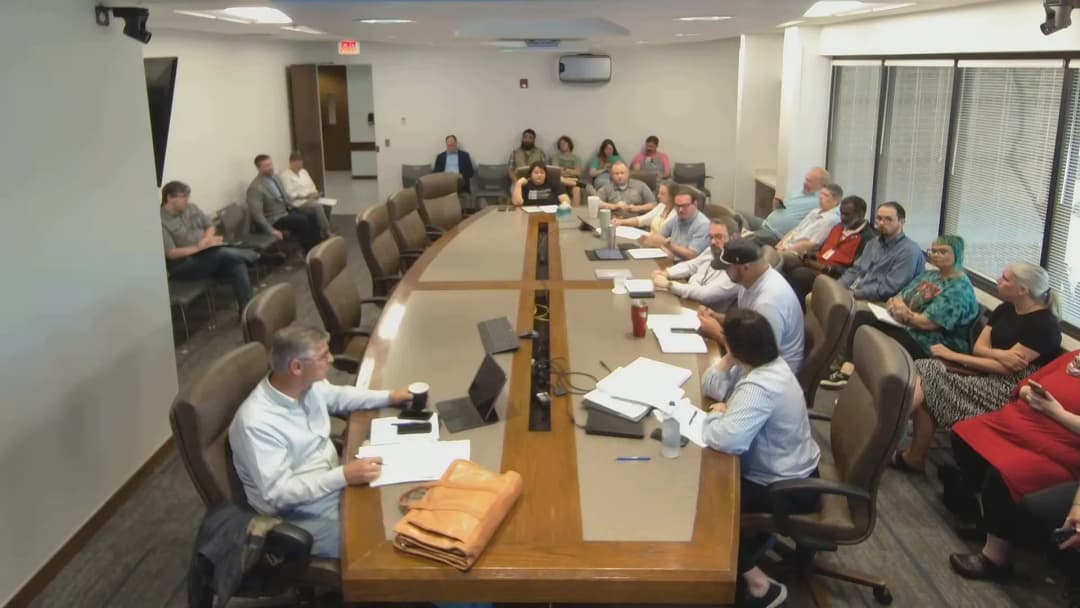
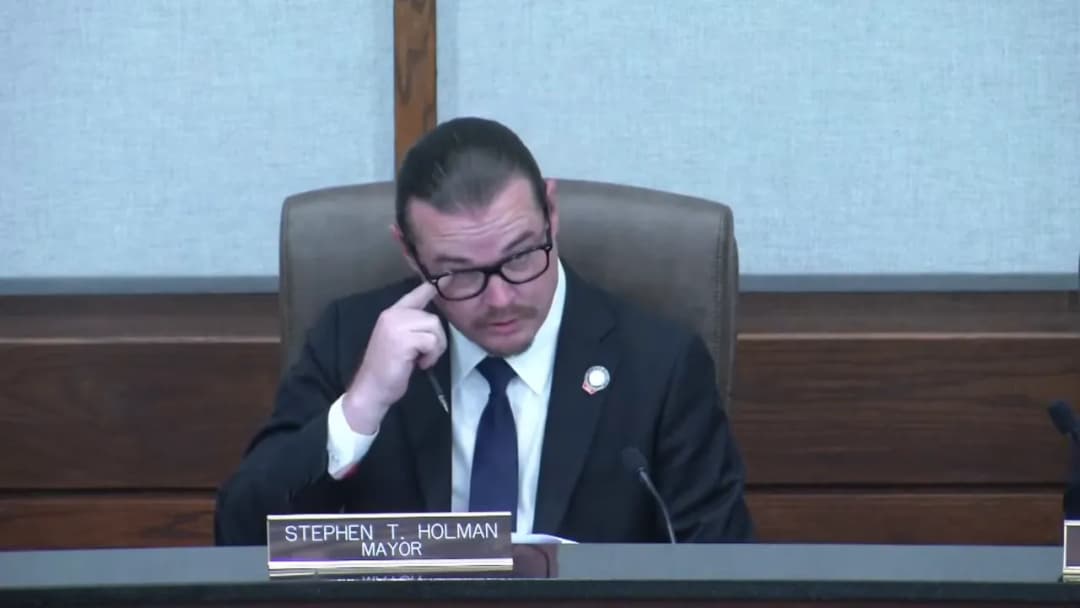
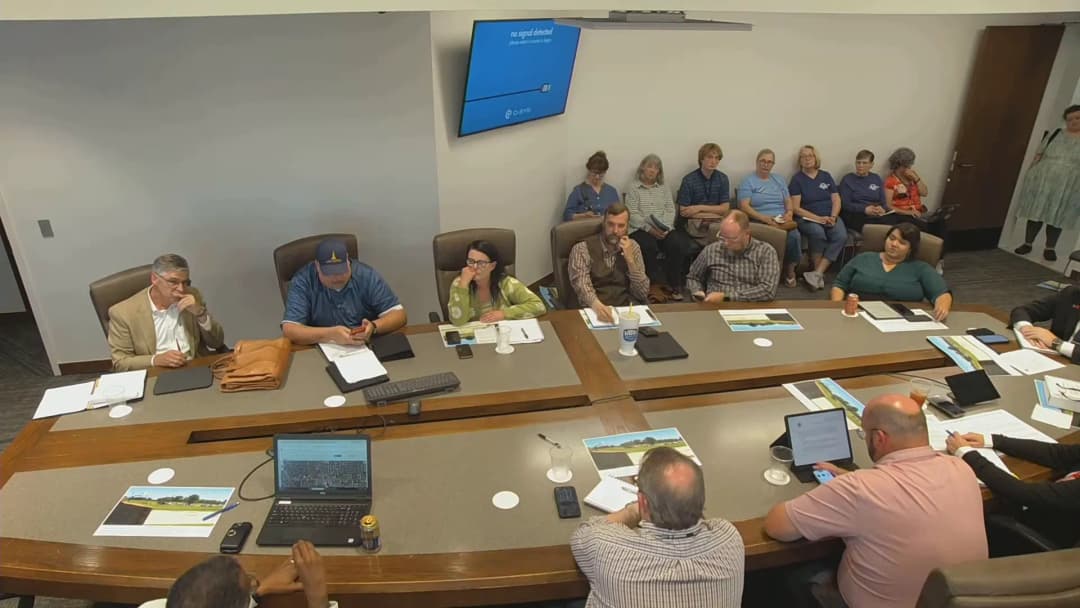
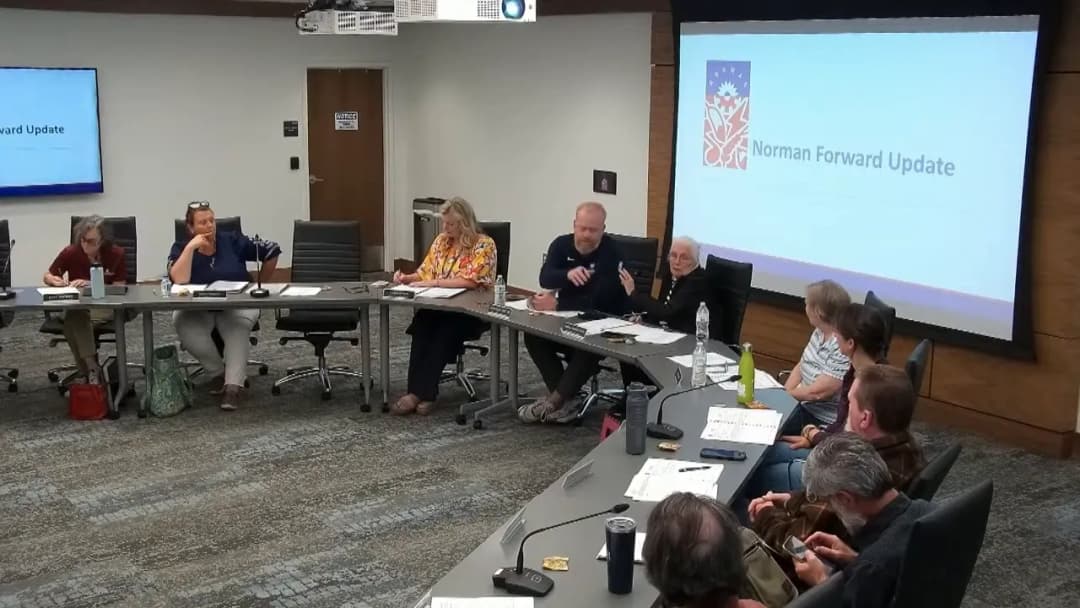
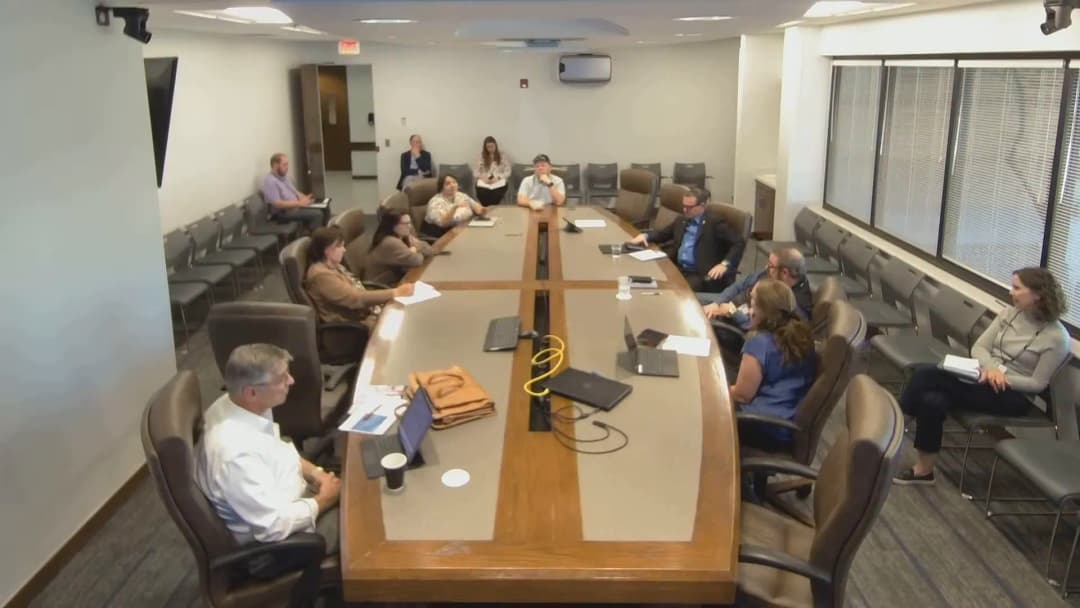
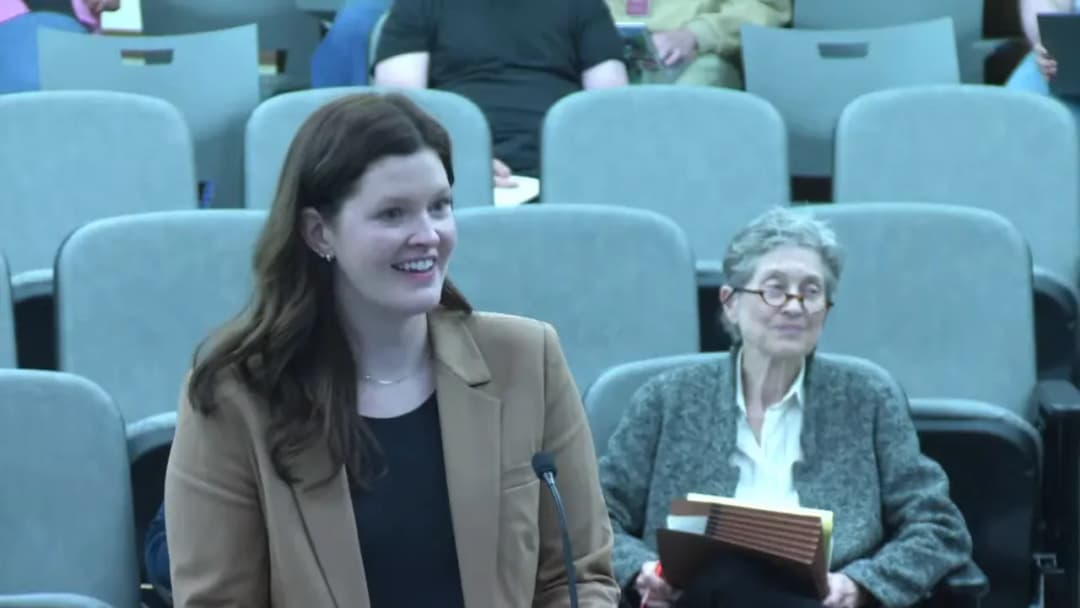
This meeting on May 14, 2026, covered two major topics: a discussion of potential charter amendments to require a supermajority vote for tax increment financing (TIF) districts, and a discussion of interim solutions for homelessness, particularly addressing the growing encampment at Francis Kate Park and the potential expansion of the Gray Street shelter. Discussion Items Tax Increment Financing (TIF) Charter Amendment City Attorney Catherine Purdon presented a draft charter amendment that would require a supermajority (six out of eight council members) to adopt any ordinance creating a TIF district that apportions more than a certain percentage of city sales tax as increment. She noted that the Local Development Act (LDA) already sets voting thresholds (majority if in accord with the review committee, two-thirds if not) and that a charter amendment would have legal risks but stronger arguments than an ordinance. Council members discussed the history of TIF votes (e.g., University North Park TIF passed 5-4 with controversy, Center City TIF 9-0) and the need to protect the general fund. They debated whether to use a percentage of sales tax, a dollar amount, or a percentage of the general fund as the threshold. Council member Hinkle suggested considering both a percentage and a dollar amount. Staff will analyze based on the proposed FY 26-27 budget and bring back a proposal. Homelessness Interim Solutions Staff presented three options: (1) status quo (enforcement without a place to go), (2) indoor expansion of the Gray Street shelter with City Care willing to contribute funds for a sprinkler system and additional beds, and (3) an outdoor sanctioned encampment on state property (with the State Department of Mental Health willing to discuss a short-term lease, possibly for 90 days). Staff emphasized the risks of any outdoor option, including liability, management, and lack of dignified services. Council members expressed varied views: - Council member Dixon opposed expanding the downtown shelter, citing business owner concerns and the temporary nature of the current shelter. - Council member Hinkle supported an emergency ordinance allowing private residential camping with permits, shifting liability to property owners. - Mayor Holman favored expanding the shelter and pursuing state property options. - Council member Bruce suggested an RFI for nonprofits to increase capacity. - The encampment at Francis Kate Park has grown to 50 tents (approximately 100 people) and is in a floodplain, with safety and health risks. Staff reported that self-enforcement has led to felonies and that the city is not managing the site. Key Outcomes - No formal votes were taken on either agenda item. - For TIF: Staff will analyze appropriate percentage thresholds based on the FY 26-27 budget and bring back a proposal for council consideration. - For homelessness: No consensus was reached on enforcement timing. Council members were split on whether to provide a 72-hour notice to vacate the park or to continue allowing the encampment while pursuing other solutions. Staff will continue working on multiple fronts: expanding the Gray Street shelter (contingent on council direction), drafting an emergency ordinance for private residential camping, issuing an RFI for nonprofit capacity, and negotiating with the State Department of Mental Health for potential use of state property. The council will revisit the issue at a future meeting.
Public Meetings - Norman, Oklahoma
Public Meetings - Norman, OklahomaThe Norman City Council convened in a joint meeting of multiple authorities on May 12, 2026. The meeting included proclamations recognizing various community observances, approval of a consent docket, a public hearing on the second year action plan for CDBG and HOME programs, and the issuance of three series of general obligation bonds totaling $35 million. Public comments focused on homelessness and encampments, particularly the Francis Kate Park camp, as well as concerns about the city's bond practices and proposed Tax Increment Finance (TIF) policies. Consent Calendar - Items 2 through 7 were acknowledged by a single vote: proclamations for Kids to Parks Day (May 16), Public Works Week (May 17–23), Norman Arts Festival weekend (May 16–17), Bike Month and Bike to Work Day (May 15), Asian American, Native Hawaiian, and Pacific Islander Heritage Month, and Mental Health Awareness Month. All passed unanimously. - Items 8 through 23 were placed on the consent docket and approved unanimously in one motion. Public Comments & Testimony - CDBG/HOME Action Plan Support (from the public hearing): Heidi Smith (Ward 5, CDBG committee chair) urged approval, praising the citizen-driven process and noting that CDBG and HOME funds are critical for affordable “hero housing” for nurses, plumbers, and service workers. Mary Catherine Long (Ward 2) highlighted the emergency repair program that keeps seniors and disabled residents in their homes, citing personal acquaintances who benefited. Caleb McGee (Ward 4) stated that affordable housing is the answer to homelessness and described the difficulty of using housing vouchers due to low Social Security income. No opposition was expressed. - Bond Issuance Comments (items 25–30): Mayumi Windler (Ward 2) asked for a progress update on bridge bond projects and questioned the interest rate compared to 2024 bonds. Cindy Rogers (Ward 4) and Steve Ellis (Ward 4) raised concerns about the use of emergency clauses; Ellis argued that while he understood the market timing, he generally opposed such clauses but accepted it for these sales. Bruce voted against the emergency clauses of items 26, 28, and 30, stating the process “puts you in a box.” - Homeless Encampment (Francis Kate Park) Comments (during miscellaneous public comment): Multiple speakers urged the council not to disperse the encampment. - Steve Ellis (Ward 4) argued for enforcement discretion, citing Aquinas on law and the common good. He said dispersing the camp would be worse for both campers and the city. - Megan Strawn (Ward 2), a clinical social worker, asked the council to use creative problem-solving similar to during COVID. - Ella Crenshaw (Ward 6) noted that groups can live in tents safely with proper sanitation. - Marguerite Larson (Ward 6) emphasized that disrupting the camp disrupts community and life skills. - Derek Howell, Brooklyn Bills, Carrie Tity Council, and Nancy McCormick, all residents of the Francis Kate Park encampment, described their self-governance rules, efforts to keep the park clean, and pleaded for stability until the new shelter opens. Some mentioned mental health treatment, recent release from prison, and the difficulty of moving. - TIF Ordinance Suggestions: Cindy Rogers (Ward 4) commented on the proposed TIF ordinance, expressing concerns about vague terms (e.g., “general preference”), potential harm to school districts from ad valorem TIFs, staff capacity, and the need for more public deliberation time. Discussion Items - Second Year Action Plan for CDBG and HOME Programs (Item 24): Lisa Craig, CDBG Grants Manager, and Tara Reynolds presented the plan. The city receives $969,000 in CDBG (down $15,000 from prior year) and $425,000 in HOME funds (also down $15,000). The plan allocates $182,000 for administration, $65,000 for a housing navigator (which has added 50 landlords and 750 voucher-accepting units over three years), $60,000 for neighborhood improvements, and $460,000 for housing rehabilitation (expected to complete 45 projects). HOME funds ($319,000) are targeted for developing two affordable housing units, possibly as part of the Triad Village permanent supportive housing project (16 units). Councilmember Bruce questioned the low unit estimate for the cost and the decision to not include acquisition for affordable housing this year. Staff explained that prior-year funds remained unused and that the housing rehabilitation demand had increased. The council voted unanimously to submit the plan to HUD. - General Obligation Bonds – Three Series (Items 25–30): Finance Director Clint Mercer presented bids. - Series 2026A ($10 million, bridge bonds): Awarded to TD Financial Products LLC at 3.807451% interest. Motion carried unanimously; the companion ordinance (Item 26) passed 8–1 on final reading (Bruce opposed emergency clause). - Series 2026B ($17 million, street maintenance bonds, 5-year maturity): Awarded to TD Financial Products LLC at 2.903297%. Motion carried unanimously; companion ordinance (Item 28) passed 8–1 (Bruce opposed emergency clause). - Series 2026C ($8 million, homeless shelter bonds, 20-year maturity): Awarded to Robert W. Baird & Company at 3.80114% (only one bidder). Motion carried unanimously; companion ordinance (Item 30) passed 8–1 (Bruce opposed emergency clause). Mercer noted that the rates were considered favorable given market conditions. Councilmember Gansberry highlighted that total interest on the shelter bonds will be $3,416,312. - Emergency Clauses: For each bond ordinance, the emergency clause (needed for immediate effectiveness) passed by a vote of 8–1, with Councilmember Bruce voting against in each case, arguing the process forces council into a “box.” Key Outcomes - Proclamations acknowledged: All 6 proclamations (Items 2–7) approved unanimously. - CDBG/HOME Second Year Action Plan: Approved unanimously; will be submitted to HUD for 45-day review, with program start July 1, 2026. - Bond Issuances: - Series 2026A ($10M bridge bonds) awarded to TD Financial Products at 3.8075%. - Series 2026B ($17M street maintenance bonds) awarded to TD Financial Products at 2.9033%. - Series 2026C ($8M homeless shelter bonds) awarded to Robert W. Baird & Company at 3.8011%. - General obligation bond ordinances: All three bond ordinances (Items 26, 28, 30) were adopted on final reading. Each included an emergency clause, approved 8–1 (Bruce dissenting). - Continued Discussions: The council noted ongoing discussions on homelessness (encampment policy, temporary shelter expansion, emergency ordinances) scheduled for the Thursday oversight meeting (May 14) and the next council meeting (May 26). A future update on bridge bond project progress was requested for the May 26 agenda.
The Norman City Council met on May 12, 2026, to discuss three main agenda items: amendments to the Tax Increment Financing (TIF) ordinance, a cleanup of the transient guest room tax ordinance, and a response to homeless encampments in public parks, particularly Kate Park. The meeting involved extensive deliberation on legal, financial, and humanitarian aspects. Discussion Items 1. TIF Policy Ordinance (First Reading) - City staff presented an ordinance amending the TIF process. Key changes include: - But-for test: Even for properties in enterprise zones, historic preservation areas, or reinvestment areas (which currently per se qualify under state law), the ordinance would require a but-for analysis to determine if development would be difficult but possible with TIF assistance, in line with city goals. - Sales tax protection: New TIF districts would only capture ad valorem (property) tax unless the proposal is limited to non-dedicated sales tax revenue, preserving dedicated funds like PSST and Norman Forward. - Economic and risk analysis: Mandated a detailed analysis of proposals, including fiscal impact on the city. - Ad hoc stakeholder committee: A seven-member committee representing businesses, residents, and nonprofits within the project area to provide early input. - EDAB review: The Economic Development Advisory Board would review economic aspects. - Councilmember questioned the ability to require a supermajority vote for TIFs; city attorney noted a charter amendment would be needed. - Staff confirmed that all current TIFs are in enterprise zones, so the but-for test does not apply to them under state law, but the new ordinance would impose additional requirements. - Councilmember expressed concern about preserving dedicated sales tax funds and ensuring adequate public input. - The ordinance was on first reading; second reading is scheduled for May 26, 2026. 2. Transient Guest Room Tax Ordinance (First Reading) - Staff proposed amendments to clarify definitions and exemption processes: - Definition of hotel: Updated to remove outdated references and accommodate new lodging types. - Exemptions: Clarified that permanent residents of Norman are exempt, and provided practical methods to prove residency (e.g., showing ID or utility bill at check-in). - Removed the 1980 requirement for exemptions to go through the finance director; hotels will document exemptions on a remittance form. - Councilmember asked about impact on bed and breakfasts; staff did not anticipate any change. - The ordinance was on first reading. 3. Homeless Encampments in Public Parks (Kate Park and City-Owned Property) - City manager reported that Kate Park has become a large encampment (from 11 to 60 people in two weeks), which violates the municipal park code and may trigger a lease reversion clause with the state (land leased from the state must be used as a municipal park). - The state lease could be nullified, returning the land to the Oklahoma Department of Mental Health. - Options discussed: - Expand existing shelter capacity: City staff can invest in the current shelter (owned by the state) to add about 60 beds within 60 days; capital is available. - Allow temporary camping on city-owned property: The city owns land near the current shelter, but it is the future site of the permanent shelter (voter-approved bond). There are active sewer line replacement and upcoming survey work that could be delayed by an encampment. - Emergency ordinance: Councilmember suggested a temporary ordinance allowing camping on private property (e.g., front yards) with homeowner insurance and registration, to relieve pressure on parks. - Outreach team: Councilmember advocated for a dedicated outreach team (as in other cities) to serve as a buffer between police and the unhoused; the city recently hired a community resource manager. - Statistics: 641 people on the Norman Housing Authority waiting list for Section 8 vouchers; no new vouchers are being issued due to federal funding cuts. - Councilmember raised concerns about safety for children as schools let out soon; referenced a past violent crime in a park 33 years ago. - Councilmember argued against using parks as encampments, citing lease risk and public safety. - Councilmember proposed a seven-day reprieve for the Kate Park encampment to move to the city-owned property, but concerns about raw sewage from a broken sewer line and upcoming construction were raised. - Councilmember requested an end to the 10 p.m. park curfew citywide, but city attorney advised that designated camping policies with specific rules would be more enforceable. Key Outcomes - TIF Ordinance: First reading approved; second reading scheduled for May 26, 2026, with possible postponement if further discussion needed. - Transient Guest Room Tax Ordinance: First reading approved; second reading to follow. - Homeless Encampments: - Council provided consensus to invest in expanding the existing shelter capacity (additional beds) as soon as possible, with staff to commence work immediately. - Council directed staff to explore an emergency ordinance to allow temporary camping on city-owned property (the permanent shelter site) for a limited time (e.g., seven days), despite risks of sewage and construction delays, to provide an immediate alternative to Kate Park. - The city manager will return with a plan for the emergency ordinance and further discussion at the next council meeting (May 14, 2026, oversight meeting) and the regular meeting on May 26, 2026. - No immediate enforcement action was ordered at Kate Park; council acknowledged the need for a structured approach rather than displacement.
The Norman Board of Park Commissioners held a regular meeting on May 7, 2026. The meeting covered updates to the department's policy manual, approval of the Norman Optimus Club annual report, progress on Norman Forward projects, and departmental updates including the demolition of the Andrews Pavilion and upcoming recreational events. All votes were unanimous. Consent Calendar - Minutes Approval: The board unanimously approved the minutes from the March 5, 2026 regular meeting. - Acceptance of City Council Items: The board accepted a list of previously approved city council items, including a contract with Norman Regional Hospital Authority for the turf field at the Young Family Athletic Center (YFAC), donations from Cavens Group and How Smith Restaurants for employee recognition, a transfer of $130,000 from YFAC balance to concession stand expenses, and an appropriation of $3,600 from Norman Forward funds for a land appraisal for the Canadian River Park and Trails project. Discussion Items - Park Policy and Rules Manual Update: Staff presented proposed updates to the Parks and Recreation Department's Policy and Rule Manual, which has not been updated since 2021. The new manual includes modernized rules, definitions, and clarifications for special use parks. The board was asked to review the manual and return with comments at the next meeting. A special meeting was suggested for June 16, 2026, to adopt the rules; however, Commissioner Alan Usry indicated he would be unavailable, so staff offered to adjust the date. Final adoption is targeted before July 1, 2026. - Norman Optimus Club Annual Report: Stephen Massey (Executive Director) and Manny Young (Co-Executive Director) presented the club's 2025 annual report. The club operates youth baseball and softball leagues year-round (spring, summer, fall). They reported spring 2026 registration declined compared to spring 2025 due to staffing changes. Registration fees range from $80 to $115 per player, with scholarships available. Tournament fees vary by age and duration. The board unanimously voted to accept the report and forward it to the City Council. - Norman Forward Update: James Briggs reported that playground replacements at Northeast Lions, Sutton Place, and Eagle Cliff are over halfway complete, with dedication ceremonies expected in 4-6 weeks. Blue Sem Park is projected for fall 2026 completion. Saxon Park: bid documents are being prepared; public works is completing road infrastructure, saving costs. The Canadian River Trail project received a land appraisal. Regarding the five-year neighborhood park replacement plan, Brookhaven Park is scheduled within 2-3 years. - Division Update (Parks Maintenance): Jason (Department Director) reported on the demolition of the Andrews Pavilion at City Park, which required about 35 truckloads of debris. The building was confirmed not historically contributing and was located in the floodway. Stone saved for future use. Other projects: Royal Oaks pavilion remodel, Northeast Lions sidewalk repairs, Eastwood Park bridge repair, and purchase of three new robot mowers for Westwood Golf Course. James Briggs added: Bishop Creek Eco Park near completion (fence installation), Westwood Park tennis courts resurfaced, and an RFQ issued for a Sooner Theater Master Plan (responses due May 29, 2026). Reeves Park pond work completed; controlled burn conducted at Saxon Park. Commissioner Christy Wright recognized Jason and Megan for receiving the Helping Hands Award and Rising Star Award, respectively, at the city's first employee awards ceremony. - Recreation Update: Mitchell Richardson announced numerous upcoming events: Dunder Run 5K (May 10), Outdoor Movie (Shrek, May 15), Bike to Work Day (May 15), Kids to Parks Day (May 16), Summer Camp starting May 26, and Westwood Family Aquatic Center opening May 23 (season pass holder preview May 22). The Fourth of July will feature Norman FourFest with America's 250th celebration. Commissioner Christy Wright suggested selling commemorative t-shirts; staff indicated they would explore the idea. - CAPRA Update: Mitchell Richardson reported that staff have made progress on Chapter 4 of the CAPRA accreditation process, including developing an online onboarding procedure for new employees. Key Outcomes - Approved: Minutes of March 5, 2026 (unanimous). - Approved: Previously approved city council items (unanimous). - Approved: Norman Optimus Club annual report, to be forwarded to City Council (unanimous). - Deferred: Policy and Rules Manual update; board members to review and provide feedback at the next regular meeting. A special meeting will be scheduled in June or at another date to adopt the manual. - Directives: Staff to distribute the five-year neighborhood park replacement timeline to board members. Staff to consider designing and selling a Norman 250 t-shirt. - Noted: Upcoming recreational events and Norman Forward progress.
The City Council Business and Community Affairs meeting on May 7, 2026, focused on updating the scope and timeline of projects funded by the Pro Housing Grant Award, including a discussion on pre-approved plans, parking regulations, and minimum lot size requirements. The conversation highlighted the status of four grant-funded projects: zoning and subdivision regulation code update, parking study, pre-approved plans, and an affordable housing action plan. Key points included data collection for the parking study, the potential elimination of minimum lot sizes, and a soft cap on parking with fees directed to stormwater management. Discussion Items - Minimum Lot Size: Councilmember Grant expressed strong support for eliminating minimum lot size entirely, arguing that other controls like lot frontage and width can adequately guide development. Councilmember Marinka agreed, noting that many of Norman's best neighborhoods were built before minimum lot sizes existed. Others suggested at minimum cutting the current 6,000 square foot requirement in half. The consensus leaned toward a zero minimum for new development, with a possible minimum lot width as a compromise. - Parking Regulations: Since parking minimums were abolished, the current recommended numbers remain inflated from the 1954 code. Councilmember Grant proposed a "soft cap" system where developers could exceed a maximum by paying a fee or providing additional stormwater management. The fee could be directed to a stormwater trust or dedicated fund. Councilmember Marinka supported expanding on-street parking on arterial streets to reduce reliance on off-street lots. A parking study by Nelson Nygard and Parcolytics began data collection the prior week, with additional rounds planned. - Pre-Approved Plans (Pattern Book): Staff outlined a plan to develop a pattern book of pre-approved architectural designs, starting small with a few typologies (e.g., ADUs, duplexes, triplexes). The RFP will likely target local architecture firms to ensure designs are suitable for Norman's climate and codes. The first part of the pattern book is scheduled for release in early 2028. - Grant Timeline and Performance: The four-year grant requires all funds to be used by September 2030, with project timelines pushed back roughly a year due to federal shutdowns. Staff noted that successful performance on this grant could impact future HUD grant eligibility. Key Outcomes - The council agreed to pursue the elimination of minimum lot sizes for new developments, with further study on implementation via the parking and zoning consultants. - The parking study will continue with additional fall data collection; the city will explore a soft cap on parking, potentially linked to stormwater fees. - The pattern book RFP will be developed in 2028, focusing on local architects and small-scale typologies. - Staff will provide quarterly reports to HUD and keep council updated on the code assessment due by end of summer.
The Norman City Council held a special meeting on Tuesday, May 5, 2026, at 5:00 PM to discuss four agenda items. The meeting focused on the Fiscal Year Ending (FYE) 2026 capital improvements budget and FYE 2028-2031 capital improvements plan, a proposed ordinance to establish a process for evaluating Tax Increment Financing (TIF) districts, and the status of the Rock Creek Entertainment District TIF project. The council also voted to enter executive session to discuss a pending tort claim. Discussion Items FYE 2026 Capital Improvements Program Budget and FYE 2028-2031 Capital Improvements Plan - Budget Analyst Jacob Huckabee and Finance Director Clint Mercer presented the proposed capital budget. The Capital Sales Tax Fund projected revenues of $17,633,956 and expenditures of $17,524,617, leaving a surplus of approximately $109,000. Key allocations included $2.5 million for fleet and vehicles, $3.45 million for street maintenance, $500,000 for sidewalk projects, and $1 million for pay-as-you-go age maintenance. The budget also included appropriations from bond programs: $4.78 million for the 2026 Street Maintenance Bond, $2.73 million for the 2012 Transportation Bond, $1.5 million for the 2023 Bridge Maintenance Bond, and $8 million for the permanent shelter bond approved by voters. Staff noted that the projected available fund balance for new projects was negative $8.5 million, but this figure assumed all previously appropriated projects would be spent down to zero, not an actual deficit. Councilmember Dixon requested a clearer graphic to explain this number to the public. No vote was taken. Proposed Ordinance for TIF District Application and Evaluation - City Attorney Catherine Walker presented a proposed ordinance creating a uniform process for TIF applications. The six-month process includes an application (with a fee of 1% of project cost up to $10,000), staff economic and risk analysis, an ad hoc stakeholder committee, review by the Economic Development Advisory Board (EDAB), a statutory review committee, planning commission, and two public hearings before city council. The ordinance expresses a preference for ad valorem-only TIFs but allows sales tax increments. It requires a "but for" test to determine if development would occur without TIF assistance. Councilmembers debated the definition of "but for," concerns about property hoarding, impact on schools and city services (fire, police), and the level of risk for council members acting as trustees. Councilmember Kirby expressed concern that taxpayers are stressed and that TIFs could be abused. Councilmember Grant suggested the ad hoc committee should receive education on TIF structure. Councilmember Dixon noted that previous TIFs had splits benefiting schools. The council agreed to schedule a study session for further discussion before a first reading. No vote was taken. Rock Creek Entertainment District and Associated TIF District - Council discussed the legal status and possible paths forward for the Rock Creek Entertainment District TIF after a citizen petition seeking a vote was invalidated by the Oklahoma Supreme Court. City Attorney Rick Knight explained the risks of repeal, including potential breach of contract lawsuits against both the city and the public trust, and possible personal liability for council members as trustees. A proposed declaratory judgment action to ask a court whether the council can independently send the matter to a vote of the people was debated. Knight stated he could not ethically argue for a position he believes lacks legal merit, as he has publicly stated that the council does not have such authority. Councilmember Gansbury favored seeking a judicial answer. Councilmember Hinkle cautioned about negative impacts on the city's bond ratings if precedent is set for undoing previous council actions. Councilmember Grant expressed reluctance to sue a citizens' group. No action was taken, but staff were asked to provide written responses to outstanding legal questions. Key Outcomes - The council will continue discussing the TIF application ordinance at a study session before a first reading. - Staff will provide written responses to legal questions raised about the Rock Creek TIF. - The council voted unanimously to adjourn into executive session under Title 25, Section 307(D)(4) to discuss settlement of a pending tort claim filed by Stephanie Pizzerat.
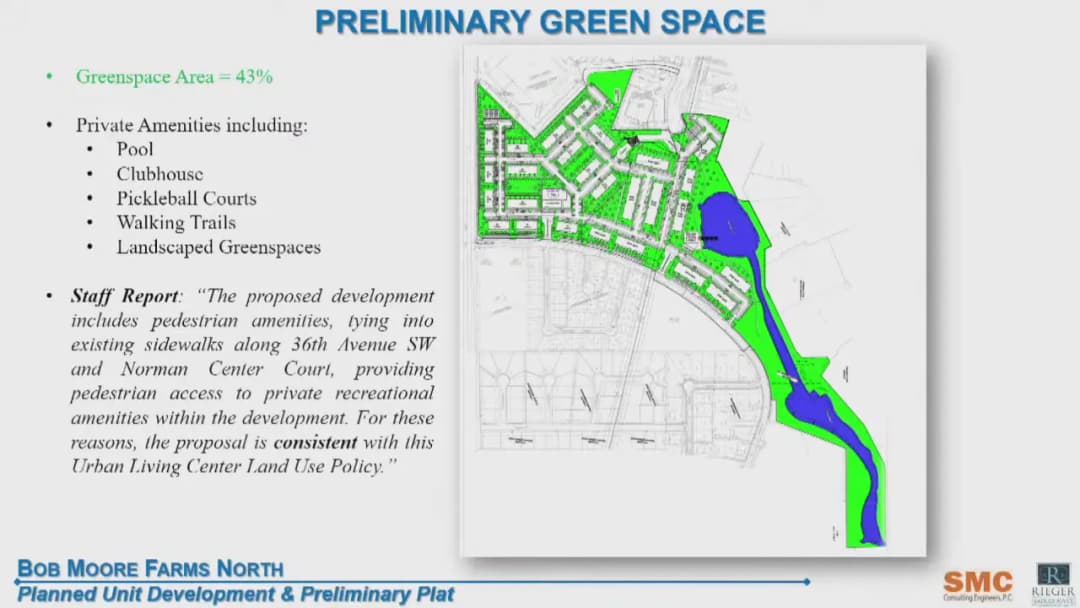
This joint meeting covered a wide range of topics including proclamations, a consent docket, the first public hearing on the FYE 2027 budget, zoning changes for a tattoo studio and a large multifamily development, a water purchase agreement, updates to the city’s comprehensive plan maps to reflect the Oklahoma Turnpike Authority’s proposed alignment, and an ordinance regarding police record towing services. The meeting included significant public testimony on homelessness, development impacts, and transparency. Proclamations and Announcements - Peace Officers Memorial Day and National Police Week: The council acknowledged a proclamation declaring May 15, 2026 as Peace Officers Memorial Day and the week of May 10–16, 2026 as National Police Week in Norman. The vote to acknowledge was unanimous. - Poppy Day: A proclamation declaring May 22, 2026 as Poppy Day in Norman was similarly acknowledged unanimously. - Council Announcements: Councilmembers praised the Norman Music Festival, Earth Day celebration, neighborhood cleanups, and highlighted all-state basketball players. Mayor Holman reported on a recent trip to Washington, D.C., meeting with federal representatives to discuss infrastructure, housing, and health care costs affecting municipal budgets. Consent Calendar - Approved Items (Items 3–21): The council voted unanimously to approve the consent docket, which included routine approvals such as minutes, contracts, and reports. - Item 18 (Water Purchase Discussion): Utilities Director Chris Mattingley explained a proposed one-time purchase of 300 million gallons of water from Midwest City for $204,000 to shore up Norman’s water supply due to well issues and drought conditions. The purchase is intended to avoid water restrictions and allow the city to rest wells. The item remained on the consent docket and was approved. Public Comments & Testimony - Budget Hearing (Item 22): - Mayumi Windler (Ward 2) questioned the methodology for revenue estimates, suggesting a flat assumption rather than projected increases. - Russell Rice (Ward 2) asked about the breakdown of public safety spending and where police department revenues (e.g., from teaching fees) go. - Antonio Geringer (Ward 6) expressed concern that police is the city’s largest expense and asked how Norman compares to similar cities. - SPUD for Tattoo Studio (Item 23): - Carlinda Gravel (Ward 4) expressed support for the project but raised concerns about favoritism, noting the neighborhood has historically been protected from business encroachment under federal CDBG guidelines. She asked that all residents receive equal treatment in rezoning. - PUD for Bob Moore Farms (Item 24): - Rebecca Patton (Pioneer Library System) requested the PUD ordinance explicitly state that the development shall not use the library’s driveway as a shared access, and that the right-of-way closure be revised to exclude a sliver of Norman Center Court at the library entrance. She argued the planning commission’s caveat should be in the ordinance. - Caroline Dunworth (library advocate) emphasized that the library’s access needs are critical for deliveries and programming, and that nearby gate access could cause congestion. - Carlinda Gravel urged the council to resolve the issue now rather than deferring to court. - Turnpike Alignment Maps (Item 27): - Stephen Ellis (Ward 4) opposed updating the maps, arguing it implies city cooperation with OTA and creates uncertainty for residents. - Russell Rice and Carlinda Gravel expressed similar concerns, with some urging the council not to capitulate to OTA. - Cindy Rogers (Ward 4) noted the map influenced the AIM process and suggested a separate informational map rather than embedding in planning documents. - Record Towing Ordinance (Item 30): - Stephen Ellis questioned why the ordinance gives police discretion rather than directly requiring tow lots to be within city limits. - Miscellaneous Comments: - Multiple speakers addressed the homeless encampment at the Food & Shelter site, praising law enforcement for a humane approach but calling for long-term solutions. - Carlinda Gravel announced findings of historical discrepancies in her neighborhood’s records and promised further action. - Cheryl (last name not given) called for a moratorium on new building until infrastructure issues (e.g., substandard concrete) are resolved. Discussion Items - Item 22: First Public Hearing on FYE 2027 Budget - Finance Director Clint Mercer presented the proposed operating and capital budgets totaling $302 million in revenues and expenses. The general fund is $113 million. Key revenues: sales/use tax (64% of general fund), internal service charges (8%), franchise taxes (7%). Key expenses: police (27% of general fund), public works (20%), fire (19%). The largest cost driver is health care. The revenue projection is conservative (1% sales tax growth). The next public hearing is May 26, 2026. - Item 23: Ordinance Amending Zoning for Tattoo Studio at 521 East Frank - Applicant Sean Rieger (representing Ken and Sarah Hall) requested change from R-1 to SPUD to allow low-intensity commercial (tattoo studio) on ground floor, with residential above. The property is in an area designated mixed-use under AIM Norman. Planning commission recommended unanimously. Council discussed home occupation rules, parking, and wastewater disposal (ink separators). The ordinance passed unanimously on second and final reading. - Item 24: PUD Amendment for Bob Moore Farms (Multifamily Development) - Applicant Libby Smith requested removal of previously approved commercial uses in favor of 804 multifamily units (max 4 stories) with 43% green space, pickleball courts, pools, and trails. The site is south of Main Street, east of 36th Ave SW. The library’s driveway access was redesigned after initial conflict. Extensive debate occurred over: - Library access: Library requested a written prohibition in the PUD against shared access. The developer argued it is unnecessary because trespass is illegal; the city attorney noted a written notice from the library would suffice. The council did not add the library’s proposed language. - Walkability: Councilmember Dixon proposed an amendment requiring pedestrian access to the eastern edge of the property for future connection to Ed Noble Parkway. The amendment passed 7-1 (Councilmember Kirby opposed). - Right-of-way closure (Item 25): The closure of a portion of Norman Center Court was originally tied to the PUD. The legal description contained a small error (18-inch sliver). After a 10-minute recess, the parties agreed to an amended legal description. The ordinance was amended and then passed unanimously on second and final reading. - The PUD ordinance (Item 24) as amended passed on second reading 6-2 (Kirby and Gandisbury opposed) and on final reading 6-2. The preliminary plat (Item 26) was approved unanimously. - Item 27: Resolution to Update AIM Comprehensive Plan Maps with OTA Alignment - Staff presented updated maps reflecting the most recent Oklahoma Turnpike Authority alignment. The resolution also includes a disclaimer that maps will be updated if alignment changes. Council debated the psychological impact on residents and potential liability. The resolution passed 6-2 (Kirby and Gandisbury opposed). - Item 30: Ordinance for Record Towing Services - Police Department staff explained the need to require record tow services to maintain an impound lot within city limits to avoid towing vehicles outside the county. The ordinance allows the police chief to set additional equipment requirements. The title was clarified to include geographical restrictions. Ordinance passed unanimously on second and final reading. Key Outcomes - Proclamations acknowledged unanimously. - Consent docket (Items 3–21) approved unanimously. - First public hearing for FYE 2027 budget held; next hearing May 26, 2026. - Ordinance for tattoo studio (Item 23) approved unanimously on second and final reading. - PUD amendment for Bob Moore Farms (Item 24) approved with amendment for pedestrian connectivity: second reading passed 6-2, final reading 6-2 (Councilmembers Kirby and Gandisbury voting against). - Ordinance for right-of-way closure (Item 25) amended and passed unanimously on second and final reading. - Preliminary plat (Item 26) approved unanimously. - Resolution to update AIM maps with OTA alignment (Item 27) passed 6-2. - Ordinance for record towing services (Item 30) passed unanimously on second and final reading. - No action taken on Items 28 and 29 (withdrawn by staff). - Miscellaneous comments received; council adjourned.
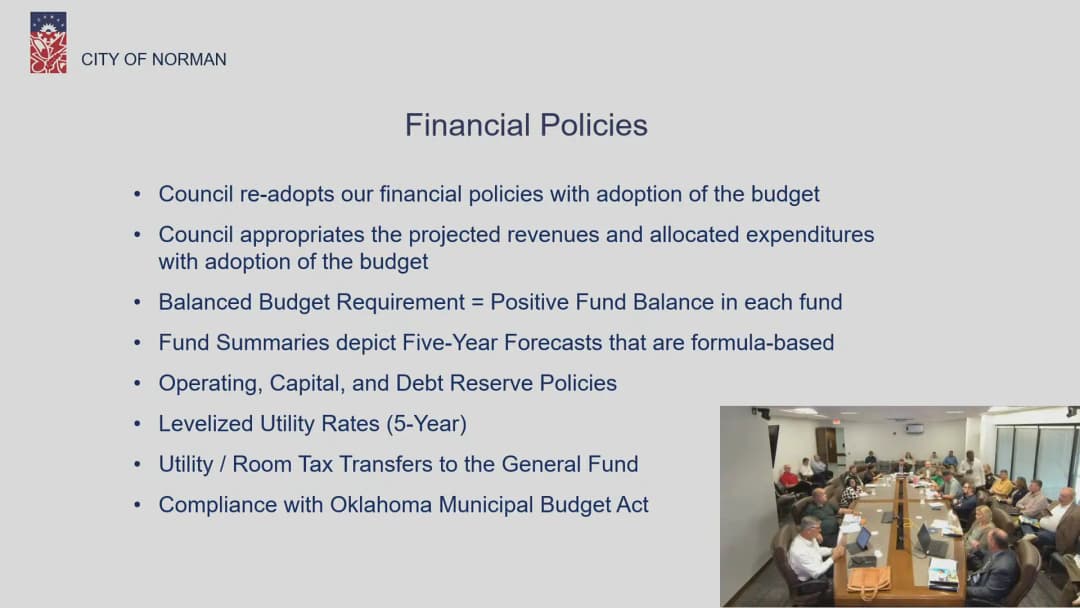
The Norman City Council held a study session on Tuesday, April 28, 2026, at 5:00 PM to discuss the proposed Fiscal Year 2027 budget for the General Fund and Special Revenue Funds. Finance Director Clint Mercer, along with Assistant Finance Director Kim Kaufman, presented the city manager's proposed budget, totaling approximately $302 million across all funds. The session focused on revenue projections, expenditure priorities, financial policies, and the challenges of funding public safety and capital needs amid flat sales tax growth. Discussion Items - Budget Overview and Financial Policies: Mercer outlined the budget as a comprehensive policy document and financial plan, noting the legal requirement for a balanced budget (positive ending fund balance). He reviewed reserve policies, including a 3% operational reserve plus a 1% emergency reserve (totaling 4%) and a separate Rainy Day Fund (minimum 4%, target 5%, maximum 7% of General Fund expenditures). For FY 2027, the Rainy Day Fund is projected to meet the minimum level by $226,000 but remains below the target. - Revenue Projections: Sales tax, the largest General Fund revenue source (33% of all funds), is projected to grow by 1% in FY 2027, consistent with metro area estimates (0–2%). Use tax is projected to grow 4%. Actual sales tax receipts are currently 1.77% ahead of the prior year, partly due to a December 2025 spike from a home playoff football game, which is not expected to recur. General Fund revenue is budgeted at $112 million, a 6% increase from the prior year, mainly from cost allocation charges and sales/use taxes. - Expenditure Priorities: Public safety accounts for 23% of all fund expenditures (police 27%, fire 19% of General Fund). Personnel costs consume about 70% of the General Fund. The proposed FY 2027 General Fund expenditure budget is $112 million, a 1% increase over the prior year. A $2 million subsidy to the risk management fund (insurance) is included, with $1.5 million from the General Fund. - Personnel and Staffing: The city has held General Fund positions flat, adding only utility-related and opioid settlement-funded positions. A 2019 public safety study recommended 40 additional firefighters and 15 police officers, but the flat revenue has prevented hiring. Council members expressed concern about fire station staffing in Ward 5, noting that two trucks are not fully operational due to driver shortages and that response times risk increasing. It was estimated that $7–8 million in capital and $1.5 million annually for 15 bodies is needed for one new station. - Insurance and Healthcare: The city is self-insured; healthcare costs total about $13 million annually, with prescription drug costs rising while medical procedure costs decline. A health insurance committee is working with bargaining units to manage plan changes. The city saves approximately $3 million annually by remaining self-insured compared to a fully-insured plan. - Special Revenue Funds: - Public Safety Sales Tax Fund: The half-cent tax (enacted 2008, extended 2014) has met most obligations except Fire Station No. 5 relocation. Debt issued for radio system and Emergency Communications Operations Center will be paid off in FY 2027, freeing about $1.5 million in future capacity. - Room Tax Fund: Voters approved an increase from 8% to 10% (effective July 1, 2026), with allocations of 50% to Norman Convention and Visitor Bureau, 25% to Norman Arts Council, and 25% to Parks Department. - Young Family Athletic Center: Opened 2024, employs 5 full-time and 25 part-time staff; expects a 25% revenue increase from taking over concession operations. - Seizures and Restitution Fund: Spending $831,000 in FY 2027 on police vehicles, records management software, and Pivot community intervention services for juveniles. - Public Transportation Fund: Revenues exceed expenditures by about $600,000; 52% from a dedicated sales tax, 45% from federal grants. The fund helps keep the fleet current without competing for capital resources. - Westwood Park Fund: Expects revenues to exceed expenditures by $263,000; includes golf course, tennis center, and aquatic center. - Capital and Equipment: A ranked capital request process is used, prioritizing public safety equipment (body armor, fire hoses, self-contained breathing apparatus, turnouts) and computer replacements on a six-year cycle. Key Outcomes - No votes were taken; the session was for discussion and to receive staff presentations. - The first public budget hearing was held as part of the meeting; a second public hearing is scheduled for May 26, 2026. - Upcoming study sessions: capital funds on May 5, enterprise funds on May 19, with possible additional session June 2, and final adoption on June 9, 2026. - Council members expressed concerns about flat revenue limiting public safety staffing and the need for future funding mechanisms for fire stations and personnel.
The City Council, Norman Utilities Authority, Norman Municipal Authority, and Norman Tax Increment Finance Authority held a reconvened meeting on March 17, 2026. The meeting primarily addressed two contracts with the Oklahoma Turnpike Authority related to the East-West Connector project, both of which were postponed to a later date. Public comments and miscellaneous remarks were also heard. Public Comments & Testimony - Amy Windler (Ward 2) supported postponing item 21 (water well relocation contract) because the reconvened meeting had fewer attendees, allowing more public input later. - Carlinda Gravel (Ward 4, First Courthouse) spoke about the historical significance of the First Courthouse neighborhood, its status as a Community Development Block Grant (CDBG) area, and the importance of maintaining distinct boundaries between residential and business districts. She urged council to carefully consider upcoming agenda items affecting the neighborhood. - Unnamed speaker expressed concern about council members' behavior on social media, particularly referencing a podcast and the use of the term "the hoard" for Ward 4, which they found offensive. - Unnamed speaker questioned the validity of the Tax Increment Finance (TIF) economic development agreement, suggesting amending the sales tax diversion from 100% to 50% over 25 years, and expressed concern about property tax increases due to the 100% ad valorem tax diversion. Discussion Items - Item 21: Contract K-2526-139 with the Oklahoma Turnpike Authority for relocation of water wells and water lines for the East-West Connector (between 48th Avenue NW and 24th Avenue NW). A motion to postpone was made and seconded. No council questions or public comments other than Amy Windler's support. The motion passed unanimously. - Item 22: Contract K-2526-156 with the Oklahoma Turnpike Authority for construction of 36th Avenue NW Phase 2 (from 700 feet north of Franklin Road to Indian Hills Road) for $2,200,000, along with maintenance and access agreements. A motion to postpone to the next regular council meeting on March 24, 2026, was made and seconded. Councilmember noted that multiple council members and public members were absent due to spring break and wanted to speak, justifying the postponement. The motion passed unanimously. Key Outcomes - Item 21 postponed unanimously to a future date (not specified). - Item 22 postponed unanimously to the next regular council meeting on March 24, 2026, where it will be heard in regular order. - No other votes or decisions were taken.
The Norman Planning Commission met on March 12, 2026, at 5:30 PM, with Commissioner Byrd presiding. All members were present except Commissioner McCowan, Commissioner Griffith, and Commissioner McClure. A quorum was established. The commission voted on several zoning and land use items, including a rezoning to allow a tattoo studio, a large multifamily development, updates to the AIM Norman plan, and three postponement requests. Consent Calendar - Item 1: Minutes of the February 12, 2026, Planning Commission meeting were approved unanimously by voice vote. Rezoning to SPUD at 521 East Frank Street (Item 2) - Proposal: Rezone from R1 (single-family) to SPUD (simple planned unit development) for a tattoo studio. No building expansion; all activity within existing footprint. Future land use is mixed use; character area is core neighborhood. - Applicant: Ben LaCourse on behalf of Ken and Sarah Hall. A late protest was filed, but staff noted no formal protest initially. - Outcome: Approved 7-0. Bob Moore Farms North PUD - Rezoning, Preliminary Plat, and Right-of-Way Vacation (Items 3, 4, 5) - Proposal: Three related items for a 55.7-acre site south of West Main Street and east of 36th Avenue SW, Ward 3. The applicant (Libby Smith for Bob Moore Farms North LLC) sought to rezone from PUD to PUD with changes: remove commercial uses, add 804 multifamily units (444 in phase 1, 360 in phase 2), maximum height 4 stories, gated entrances, 43% green space, and closure of a portion of Norman Center Court. - Staff Presentation: Logan Gray explained the site, previously approved in 2024 with commercial. Proposed changes increase density from 642 to 804 units. Future land use: Urban Living Center, Urban High, Mixed Use. A protest from the library (3.9% of notification area) was addressed by revising the site plan to eliminate a shared driveway with the library parcel. - Public Comments: - Rebecca Patton (Pioneer Library System) requested the revised site plan (dated March 6, 2026) be officially referenced. She expressed relief that the shared driveway was removed but noted proximity (30 feet) may still cause traffic issues. - Sean Holtman (Pioneer Library System Safety Coordinator) detailed increased traffic from library operations (26 daily book return users, 70 staff, 9 delivery vehicles, fleet vehicles). Expressed concern about safety with new residential traffic near the library's primary exit. - Brett Bradley (neighboring property owner) opposed the right-of-way closure and rezoning. - Cheryl Tatum (3217 Riverwalk) opposed the closure of Willow Bend Road (clarified by commission not being closed), expressed concerns about building height (4 stories) and potential future increases, and wanted no further encroachment. - Commission Discussion: Commissioner Byrd clarified that the legal description includes Willow Bend but the street is not being closed; only the cul-de-sac near the library is part of the vacation. Commissioners supported the density increase (804 units) as addressing housing needs, noted the benefits of gated access to reduce cut-through traffic, and highlighted the library as an off-site amenity. A motion was made to approve with the caveat that the driveway shall not be a shared drive with the Pioneer Library System property. - Outcome: Approved 7-0. AIM Norman Map Updates (Item 6) - Proposal: Resolution R-2526-113 to update 14 maps in the AIM Norman comprehensive plan to reflect the Oklahoma Turnpike Authority's proposed alignment (East-West and North-South turnpikes) as announced on September 23, 2025, and updated in December 2025. - Staff: Laura Hoggett presented. The updates include character area, future land use, transportation, and priority maps with a disclaimer that they are proposed, not final. - Commission Discussion: Concerns about OTA alignment still changing (30% design not final). Commissioner Parker opposed, preferring to wait for final alignment. A caveat date on maps was suggested. Director noted the cost is limited to staff time. - Outcome: Approved 6-1 (Commissioner Parker voting against). Motion: Move to approve. Urban Reserve Lot Size Change and Subdivision Regulations (Items 7 & 8) - Item 7: Resolution R-2526-112 to amend the AIM Norman plan to reduce the minimum lot size in the Urban Reserve land use from 30 acres to 10 acres, and add cluster development language allowing lots down to 2 acres with 65% open space preservation. - Item 8: Ordinance 0-2526-47 to amend Chapter 30 (subdivisions) to change the minimum lot size for rural certificates of survey from 30 acres to 10 acres, aligning with Item 7. - Staff: Laura Hoggett explained the 30-acre requirement was adopted in June 2025 after extensive community input to curb sprawl and encourage infill. Council requested a return to 10 acres due to constituent concerns (e.g., families wanting to split land). Language also adds cluster development (PUD option) for flexibility. - Commission Discussion: Commissioner Jablonski opposed, arguing reducing the minimum would double density, encourage sprawl, and undercut infill goals. Commissioner Kindle supported 10 acres as more common in state land division and affordable for residents seeking rural living. Commissioner Parker noted the 30-acre requirement affected few parcels; cluster development has been used only thrice since 1999. The 10-acre change adds at most a few more dwellings per 30 acres (e.g., 4 primary + 4 ADUs). - Outcome: Item 7 passed 5-2 (Commissioners Jablonski and Kindle voting against). Item 8 passed 6-1 (Commissioner Jablonski voting against). Motions: Move to approve. Postponement Requests (Items 9, 10, 11) - Item 9: Rezoning at 420 East Lindsay Street (Ward 7) - postponed to April 9, 2026. Approved 7-0. - Item 10: Rezoning at 1130 Rambling Oaks Drive (Ward 3) - postponed to April 9, 2026. Approved 7-0. - Item 11: Rezoning at 36th Avenue NE and East Alameda Street (Ward 6) - postponed to April 9, 2026. Approved 7-0. Miscellaneous Discussion - Staff announced receipt of a Pro Housing Grant (action plan approved by HUD in December 2025); contract nearly finalized; expected on City Council agenda March 24, 2026. The commission will be more involved in zoning and subregs update and parking study. - Commissioner Parker raised concerns about the proposed Franklin Road bridge across Lake Thunderbird on the AIM transportation map (not part of the current OTA item). Discussion about safety (wildfires, floods) versus environmental impact. No action taken. Key Outcomes - Consent minutes approved. - Rezoning to SPUD for tattoo studio approved (7-0). - Bob Moore Farms North PUD with 804 units, gated access, no shared driveway with library, and right-of-way vacation approved (7-0). - AIM Norman map updates showing OTA turnpike alignment approved (6-1). - Urban Reserve minimum lot size reduced from 30 to 10 acres (5-2), and subdivision regulations updated accordingly (6-1). - Three postponement requests approved to April 9, 2026 (all 7-0).