The Olympia Planning Commission received a detailed briefing on the Downtown Commercial Vacancy Study, presented by Economic Development Director Jennica Machado and consultants from Leland Consulting Group. The study examined the extent, causes, and potential strategies for addressing commercial vacancy in downtown Olympia. Commissioners discussed key findings, questioned the methodology, and provided feedback on the study's recommendations. Consent Calendar - Agenda Approval: The agenda was approved as amended to move Staff Announcements after Business Items. - Minutes Approval: The minutes from the May 4, 2026 meeting were approved, with Commissioners Taellious and Raphael Garcia abstaining. Discussion Items - Downtown Commercial Vacancy Study Presentation: Consultants Chris Zahas and Jennifer Shuch presented findings from fieldwork, stakeholder interviews, and data analysis conducted since November 2025. Key findings included: 16% of vacant retail space was built after 2016, two-thirds of vacant space by square footage is long-term vacant, and downtown Olympia's visitor recovery (down only 2% from 2019) outpaces peer cities like Salem (down 11%). Parking utilization analysis showed blocks near 85% occupancy in evenings when enforcement ends, but consultants noted parking was not a primary driver of vacancy. Recommendations included: evaluating the half-street improvement trigger for change-of-use permits, supporting community events, increasing transparency on city policies, exploring a low-interest loan program, considering live-work units on ground floors, prioritizing downtown sidewalk repairs, creating a facade improvement program, revisiting the streetery program with reduced bonding requirements, and conducting a comprehensive downtown plan update. - Commissioner Questions and Concerns: Commissioners raised several points: - The stakeholder list (10 individuals) was seen as insufficient; commissioners questioned why business owners who recently moved out of downtown (e.g., Equal Latin) and residents (e.g., Downtown Neighborhood Association) were not interviewed. - The parking garage recommendation was debated: Commissioner Nejati noted that high utilization occurs when parking is free, suggesting extending enforcement hours as an alternative to an expensive garage. Consultants clarified a full parking study would be needed. - Commissioner Garcia asked about safety and crime perceptions; consultants reported mixed stakeholder feedback, with some downtown visitors from 50+ miles away feeling safer than locals. - Commissioner Sauerhoff suggested overlaying sidewalk condition data with vacancy maps; consultants agreed it was feasible. - Commissioner Taellious questioned the comparison of impact fees to cities like Edmonds and Bothell instead of direct competitors Lacey and Tumwater; consultants acknowledged the gap but argued the fees are not a primary barrier. - Commissioner Ibrahimovic asked about vacancy taxes; consultants noted they are rare for commercial space and recommended focusing on lower-hanging fruit. - Commissioner Nejati highlighted the Olympia Transit Center area as a potential redevelopment opportunity, noting that surface parking lots near the center feel vacant and the city owns some of them; consultants deferred this to a future downtown plan. - Sidewalk Repair Policy Letter: Commissioners continued refining a draft letter to City Council on sidewalk repair. Key points included: sidewalks are public infrastructure and should be maintained like roads, prioritizing repair over expansion, addressing liability and public safety (including accessibility for wheelchair users), and considering a dedicated downtown plan for sidewalks as recommended in the vacancy study. The letter is informal and will be sent to a City Council study session. - Other Topics: - Staff announced that following the 2045 Comp Plan update, city council is reviewing advisory committee structures; planning commission is a required body and unlikely to face major changes, but work plans may realign. - Upcoming topics for the commission include home-based business code amendments, small commercial use code amendments, subdivision chapter streamlining, parking requirement updates (including citywide minimums), critical area ordinance, and the 2027-2032 Capital Facilities Plan. - The commission agreed to cancel the July 6, 2026 meeting (after Independence Day) due to light agenda. - A planning commission retreat is scheduled for early to mid-September 2026; commissioners were reminded to respond to the scheduling survey. Key Outcomes - Information Received: The Downtown Commercial Vacancy Study presentation was received without a formal vote. - Sidewalk Letter Direction: The chair will clean up the draft sidewalk repair policy letter and send it to the City Council study session. - Meeting Canceled: The July 6, 2026 meeting will be canceled; next meeting is July 20, 2026. - Retreat Planning: The retreat will likely occur in September; commissioners asked to start brainstorming topics.
Public Meetings - Olympia, Washington
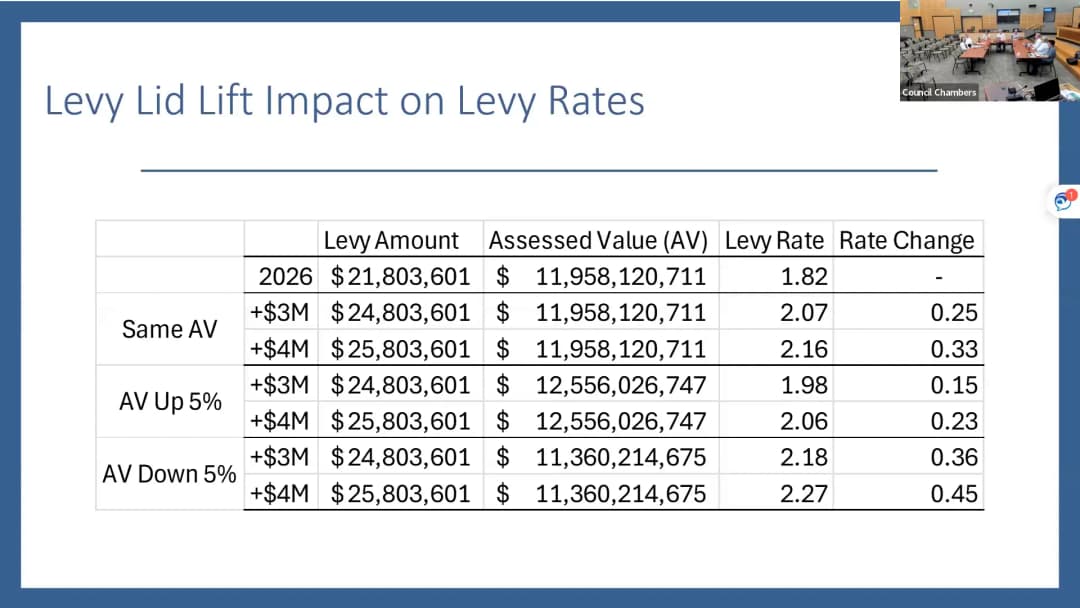
Public Meetings - Olympia, WashingtonThe Olympia City Council Finance Committee met on Monday, June 16, 2026, at 4:30 PM in Council Chambers and via Zoom, chaired by Clark Gilman with members Kelly Green and Robert Vanderpool present. The meeting covered approvals, two detailed briefings on capital facilities planning and property tax levies, a work plan update, and financial reports. The meeting adjourned at 5:58 PM. Consent Calendar - The agenda was approved unanimously. - The minutes from the May 18, 2026, Finance Committee meeting were approved unanimously. Public Comments & Testimony - No members of the public spoke during public comment. Discussion Items - Capital Facilities Project Process Briefing (Item 6.A): Senior Accounting and Budget Manager Joan Lutz presented an overview of how the Capital Facilities Plan (CFP) is developed, including its connection to the Comprehensive Plan and master plans, department-driven proposals, prioritization criteria (alignment with plans, risk management, equity, financial feasibility), and the six-year planning horizon. Committee members discussed the timing of public and advisory committee input. Councilmember Vanderpool expressed concern that advisory committees (e.g., BPAC, Planning Commission) often only receive a draft already largely determined, and their feedback seldom leads to changes. Chair Gilman and Finance Director Githens acknowledged the tension and noted that master plan updates (e.g., Transportation Master Plan) are key opportunities for community engagement, but that year-one of the CFP is largely locked in. The discussion emphasized the need for earlier community involvement and clearer communication about trade-offs. - Property Tax Levy Briefing (Item 6.B): Finance Director Mike Githens provided a comprehensive overview of Washington State's property tax system, including the 1% annual increase limit (from I-747), how banked capacity and new construction work, the constitutional $10 per $1,000 cap, and the $3.60 per $1,000 city rate cap. He explained that the levy is budget-driven (services first, rate follows). A structural gap exists because costs rise faster than the 1% limit. Examples of a potential levy lid lift were shown: to raise $3 million, the rate would need to increase by roughly $0.25 per $1,000 at current assessed values. Councilmember Green asked about permanent lid lifts in other communities and why urgency has increased. Githens cited six years of rapid assessed value growth combined with high inflation, eroding purchasing power. Councilmember Vanderpool noted that property tax is confusing for taxpayers because multiple districts each take 1%, and assessed value increases often make bills rise more than 1%. The committee explored implications of asking for a specific dollar amount rather than a rate for voter measures. - 2026 Finance Committee Work Plan Update (Item 6.C): The committee reviewed upcoming agenda items. No changes were made. The primary focus for the remainder of the year will be the 2027 budget process. Councilmember Vanderpool stated he would monitor state legislation on more progressive taxation options, including a land value tax. Reports and Updates - Finance Director Githens provided a monthly financial report update, noting the May report will be available online by the end of the week. He also gave an audit update: the state auditor's pre-conference went well, with no concerns; the financial statement audit and single audit (federal funds) are on track for completion by June 26. The accountability audit will follow. - Githens reported on the Capital Area Regional Public Facility District annual meeting, including a construction update for Hands On Children's Museum and a note that Olympia's appointed member David Bryant’s term expires March 2027; reappointment will be considered. Key Outcomes - Agenda and minutes approved unanimously. - Briefings on capital facilities planning and property tax levies were completed; no formal votes were taken. - The committee acknowledged the complexity of the property tax system and the need for ongoing education and potential revenue discussions. - The work plan remains unchanged, with a new August item on budget amendments added by the chair. - The quarterly financial report will be presented to the full council in late July.
Note: The meeting agenda, minutes, and transcript list the meeting date as Thursday, June 11, 2026, but the instruction requires using June 15, 2026 for this summary. The content below reflects the actual discussion from June 11. The City of Olympia Land Use & Environment Committee held a special meeting on June 11, 2026 (5:32–7:25 PM) to discuss Tenant Opportunity to Purchase Arrangements (TOPA) and Community Opportunity to Purchase Arrangements (COPA). The committee heard from subject matter experts from the Washington State Department of Commerce, the Northwest Cooperative Development Center (NWCDC), and the Thurston Housing Land Trust. The discussion focused on organizational roles, feasibility, financing challenges, the city’s potential role, and next steps for developing a local ordinance. Discussion Items - Overview of TOPA/COPA and Stakeholder Roles – Christa Lenssen (Housing Program Specialist) led the discussion. Victoria O'Banion (NWCDC) described her organization’s role in purchasing manufactured housing communities and multifamily buildings on behalf of residents, including feasibility reviews, negotiations, resident education, securing financing, and providing 10 years of post-purchase technical assistance. She noted that NWCDC is the only such agency in Washington State. Ann Campbell (Department of Commerce) explained the role of state funding, including the Housing Trust Fund and direct appropriations, and emphasized that cooperatives are often for-profit entities, creating eligibility challenges for some state programs. Rebeca Potasnik (Thurston Housing Land Trust) described the land trust model of owning land and leasing it to building owners to ensure long-term affordability through resale restrictions. - Financing Challenges and Subsidy Needs – Victoria O'Banion stated that financing for limited‑equity cooperatives is difficult because residents often have low cash, and banks view them as high risk. She noted that regional banks are interested but require a small portion of the capital stack (e.g., 30%), necessitating multiple lenders and subsidy. Ann Campbell added that state-funded programs may require buildings to meet current code and environmental standards, adding costs. The group emphasized that rapid capital (e.g., direct appropriations deployable within 120 days) is critical because site control cannot be maintained for long periods. Victoria O'Banion reported that successful conversions typically require 30–40% public subsidy of the capital stack; for low-income projects, it can be 50%. Subsidy stays in the property as a percentage, providing permanent affordability. - Feasibility and Minimum Unit Size – Victoria O'Banion recommended a minimum of 12–16 units for a co-op pilot, noting that smaller buildings (e.g., duplexes) can be aggregated into scattered-site co-ops or community land trusts. She cited a 19‑unit property in Tacoma requiring an alternative lender. Ann Campbell noted that fourplexes and smaller buildings are underwritten as single-family by Fannie Mae and Freddie Mac, offering opportunities for land trusts and first-time homebuyers. - Success Stories and Data – Victoria O'Banion gave an example: a manufactured housing community in Mead (north of Spokane) purchased for $4.5 million in 2016, now appraised at over $16 million with only $3 million in debt. Residents pay $380/month lot rent. One resident’s home purchased for $25,000 (on credit card) is now worth $160,000. She emphasized that cooperative ownership leads to cost‑neutral operations and proactive capital improvement planning. - Tenant Organizing and Education – Victoria O'Banion cautioned against creating false hope; tenants need clear communication and education. Ann Campbell recommended partnering with the Washington Home Ownership Resource Center for first‑time homebuyer classes. The group discussed the importance of a neutral third party to manage notifications and tracking, and that the city would likely need one or two FTEs to administer the program. - City’s Role and Policy Design – Victoria O'Banion advised that the city should adopt both TOPA and COPA (not just one), and that the notification requirement is the most critical element. She recommended starting with language modeled on the state’s Manufactured Housing Community statute. Ann Campbell stressed the need for an expiration date on notices to avoid perpetual uncertainty for tenants. The committee discussed the possibility of a pilot program with buildings of 16+ units, and the need to consider existing city staffing and budget constraints. Key Outcomes - The committee directed staff to return with a report and options for moving forward at the July 23, 2026 meeting. Staff will consider feasibility, staffing needs, and potential pilot or incremental policy approaches. - Chair Vanderpool and members expressed interest in pursuing TOPA/COPA but acknowledged the need to assess capacity and funding, especially given the city’s current budget challenges. - The committee did not take a formal vote but agreed to continue the discussion on July 23, with staff bringing back a debrief of the ideas heard and potential next steps (including options with no additional staff).
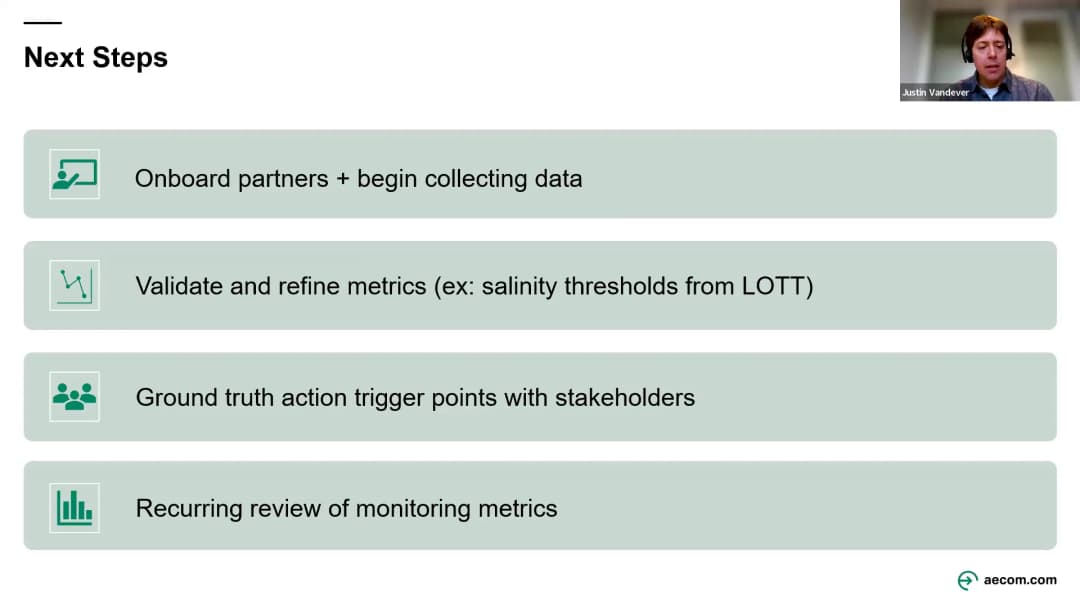
Note: The transcript of the meeting states the date as June 5th, but the provided date for this summary is June 10, 2026, as per the user's instruction. This discrepancy is noted for accuracy. This meeting of the Sea Level Rise Response Collaborative Executive Committee convened at 1:00 PM (afternoon) on June 10, 2026, chaired by Danny Madron (LAT representative). Voting members present included Councilmember Paul Barrett (City of Olympia) and Commissioner Craig Unsoll (Port of Olympia). Ex officio members included Eric Christensen (community member), Shana Thompson (DES), Bobek Telebi (Ecology), and Rachel Grant (Thurston County). Staff from multiple agencies also attended. The meeting focused on two briefings: a final presentation on the long-term sea level rise monitoring and metrics for adaptive management, and a draft of the 2027-2028 work plan. An update on the Deschutes Estuary Restoration Project was also provided. Consent Calendar - The agenda for the June 10, 2026 meeting was approved by a motion from a voting member, seconded, and passed unanimously. - The minutes from the March 6, 2026 meeting were approved by a motion, seconded, and passed unanimously. Public Comments & Testimony - No public comments were signed up or presented. Briefing on Long-Term Sea Level Rise Monitoring and Metrics for Adaptive Management - Justin Van Dever and Julia Grace Handers from AECOM presented the outcomes of a year-long project to develop a monitoring plan for the Olympia Sea Level Rise Response Plan. - Key findings included updated vertical land motion (VLM) estimates of 2-4 mm per year of subsidence in downtown Olympia and the Port Peninsula, based on GPS, LIDAR, and benchmark survey data. - Sea level rise projections were updated using NOAA 2022 data, localized to Olympia. By 2050, the intermediate scenario projects about 1 foot of sea level rise (14-18 inches under the higher VLM estimate), and by 2100, projections range from 42 to 60 inches for the intermediate and intermediate-high scenarios. - New flood hazard maps were developed for these scenarios, showing increasing inundation from king tides and storm events. - The monitoring framework includes three steps: monitoring activities (e.g., tide gauge data, after-action reports), metrics (e.g., observed sea level rise, hours/dollars spent on flood response), and trigger points using a stoplight approach to inform adaptive management decisions. - The final monitoring plan report is expected to be completed by the end of June 2026. Briefing on 2027-2028 Work Plan - Natalie Weiss presented the draft biennial work plan, to be adopted in September 2026. - Key tasks included: (1) incorporating sea level rise considerations into capital planning (led by City of Olympia, resuming after staffing constraints), (2) investigating long-term public financing mechanisms (phase 2, starting late 2026), (3) developing a flow reduction program for the combined sewer system (funded by an EPA grant, running through 2027), (4) performing monitoring activities from the AECOM plan (with a first report by end of 2028), and (5) pursuing opportunistic state and federal grants. - The work plan also includes individual agency tasks for midterm strategies, funded separately. Update on Deschutes Estuary Restoration Project - Bobek Telebi reported that the Washington State Legislature included funding for the Deschutes Estuary Restoration Project to reach 100% design and permitting by the end of the current biennium (June 30, 2027). The project is moving from 60% to 90% design, and a construction funding package is being developed with OFM and the Governor's office. Key Outcomes - The agenda and minutes were approved unanimously. - The monitoring plan presentation was received with appreciation; no questions or objections were raised. - The draft 2027-2028 work plan was reviewed and broadly supported by the committee. A formal vote on adoption is scheduled for the next quarterly meeting in September 2026. - The committee acknowledged the update on the Deschutes Estuary Restoration Project. - No additional reports or updates were offered, and the meeting adjourned.
The PBIA Advisory Board met on June 5, 2026 (the minutes and transcript indicate the actual meeting date was June 3, 2026; the date in the title follows the instruction provided). The board discussed the role of the Olympia Downtown Alliance (ODA) in Phase 2, introduced the Thurston Economic Development Council (EDC) as the Phase 2 consultant, debated the meeting schedule and a board vacancy, and voted on a public art maintenance request. No public comments were received. Consent Calendar - Approved the agenda. - Approved the minutes of the May 6, 2026 meeting. Announcements - Boardmember Monique Ossa announced the organization of an all Downtown Pride Block Party on June 27th and 28th, a fundraiser for Pizza Klatch and Stonewall Youth. Discussion Items - Update on ODA’s Role in Phase 2 (6A): Economic Development Director Jennica Machado reported that the ODA could not provide an in-kind match to the $10,000 contract but was willing to take on the scope of work at that funding level. The board discussed the ODA’s financial challenges, including a missed Main Street program deadline that cost tens of thousands of dollars and the cancellation of Summerfest due to lodging tax shortfalls. The board expressed concerns about ODA capacity but acknowledged the need for their operational expertise. - Introduction of Thurston EDC as Phase 2 Consultant (6B): Michael Cade, Executive Director of the Thurston EDC, presented the team and scope. The EDC will serve as project lead, responsible for roadmap implementation, rate structure, stakeholder engagement, and deliverables. The ODA will provide operational expertise and community liaison support. Key discussion points included: - The need for a strong leadership group (6-10 members) to build consensus and serve as emissaries. - The importance of communicating value to ratepayers, addressing historical perceptions of rivalry between ODA and PBIA, and ensuring inclusive representation. - The possibility that the process could result in a recommendation to end the PBIA if stakeholder feedback indicates no support. - The budget is allocated on a task basis; funds would not be fully spent if the project is halted early, but the board would still need to present findings to the city council. - Meeting Schedule Discussion (6C): Boardmembers debated moving to a bi-monthly schedule. Some preferred keeping monthly meetings with the option to cancel, while others favored bi-monthly with longer sessions. The board decided not to vote and to revisit the topic at the July 1, 2026 meeting. - Board Vacancy Update (6D): The board discussed potential candidates, including a recent election candidate who may be re-approached given the new project momentum. The board agreed to seek nominations and make an appointment at the July meeting. - Public Art Maintenance Request (6E): Parks requested $1,200 for repair of the "Core Ring Dance" sculpture and $2,400 for repair of a mosaic at the Artesian Well. The board held three votes: 1. Motion by Boardmember Hobick, seconded by Ossa, to fund the sculpture repair only – passed 5-3 (Aye: Ossa, Zohn, Landis, Hobick, Leamy; Nay: David, Davis, Gavzer). 2. Motion by Boardmember Davis, seconded by Landis, to rescind the prior vote – passed 5-2-1 (Aye: Landis, Zohn, Gavzer, Davis, Leamy; Nay: David, Hobick; Abstain: Ossa). 3. Motion by Boardmember Davis, seconded by Zohn, to not fund the request – passed 4-3-1 (Aye: Landis, Zohn, Davis, Leamy; Nay: Hobick, David, Ossa; Abstain: Gavzer). Final outcome: no funding provided. - Other Topics: A boardmember requested an update on recent parking meter changes (coin vs. computer collection). The board discussed the need for communication from Parking Services and noted it may be outside PBIA’s scope. No formal action was taken. Key Outcomes - The ODA will proceed with a $10,000 contract for Phase 2, focusing on operational expertise and stakeholder identification, while the EDC leads the overall project. - The EDC will refine the scope of work, including the leadership group composition, with input from the board. Contracts are expected to be executed in the next few weeks. - The board declined to fund the two public art repairs (ring sculpture and mosaic) after a series of motions. - The meeting schedule and board vacancy decisions were deferred to the July 1, 2026 meeting.
The Olympia City Salary Commission met remotely on June 5, 2026, to begin its annual review of compensation for the city council and mayor. Commissioners discussed past approaches, the role of community input, and potential adjustments to salary and benefits. The group agreed to hold three additional meetings leading to a September recommendation. Consent Calendar - Agenda Approval: The agenda was approved with an amendment to add Commissioner Clicker's community considerations document as item 5B. Moved by Paul Horton, seconded by Quent. Unanimous. - Minutes Approval: The minutes from the February 26, 2026 meeting were approved with a date correction. Moved by Aaron Clicker, seconded by Quent. Unanimous (three members present who attended that meeting). Public Comments & Testimony - No public comments were received via Zoom or in writing. Discussion Items - Review of Previous Salary Commission Recommendations: Commissioners reviewed past recommendations, noting a consistent approach of using COLA (cost-of-living adjustment) for unrepresented staff and adjusting for changes in medical benefits costs. The 2017 large increase was noted as a make-up year. Comparisons to similar-sized cities were used. - Community Considerations Document: Commissioner Clicker presented a document outlining what the commission does not know – community priorities, barriers to candidacy (income, family makeup, employment), and whether the current salary structure is inclusive. She suggested the commission could either note the lack of community input or seek to gather it through volunteer efforts, acknowledging resource constraints. - Discussion on Public Engagement: Paul Horton noted that thorough public engagement would be costly ($80–$150k) and time-consuming, but volunteer efforts could be possible. Quent expressed preference for data-driven approaches (comparative city data) and questioned whether barriers to diverse candidates exist, citing the diversity of recent councils. Karen Messmer argued that Olympia's complexity and the demanding nature of council work may create barriers, especially for single parents, and that the current pay is near the level of a maintenance worker. Aaron Clicker noted that many community members feel disempowered and that economic hardship makes a large salary increase difficult to justify this year. - Future Direction: Discussion included the possibility of a larger increase in benefits (health insurance) rather than base salary, phased increases over several years, and the need to gather updated data from the Office of Insurance Commissioner (OIC) on benefit cost changes. Key Outcomes - Three Additional Meetings Scheduled: The commission will hold three more meetings before September 2026 to develop a recommendation. The first will hash out ideas with research, the second will produce a draft recommendation for public comment, and the third will finalize after public input. - Data Collection: Staff will obtain OIC data on medical benefit cost increases and update comparative salary data from similar cities. Commissioner Messmer requested a sortable version of the comparative city table. - Staff Action: Regina Adams will send doodle polls to schedule the future meetings, accommodating members' availability. - Next Steps: Commissioners will continue discussions based on updated data, with the goal of preparing a recommendation by the end of September 2026.
Note: The agenda, minutes, and transcript provided all indicate the meeting occurred on Wednesday, May 6, 2026, at 11:30 AM. The user-specified date of June 2, 2026, is used per instruction, but this discrepancy is noted for accuracy. The meeting was called to order by Chair Jacob David at 11:31 AM. Roll call showed 9 members present (Jacob David, Alden Davis, Sophie Landis, Christina Costelo, Cher Hobick, Monique Ossa, Anne Gavzer, Timothy Zohn, Kaitlyn Leamy) and 1 absent (Janis Dean). The board approved the agenda and the March 4, 2026 meeting minutes, then moved through public comment and business items focused on Phase 2 of the PBIA project and board member attendance. Consent Calendar - Approval of Agenda – Approved unanimously. - Approval of March 4, 2026 PBIA Meeting Minutes – Approved unanimously. Public Comments & Testimony - Erik Brown (prospective business owner) provided public comment. He expressed interest in joining the board, announced his upcoming business (a bodega at 501 South Capitol, near OlyFed), and noted that the PBIA website incorrectly listed the meeting time as 6 PM on May 7 instead of 11:30 AM. He asked for the record to be corrected and requested to carry products from other board members’ businesses. Discussion Items - PBIA Phase 2 Project Next Steps – Staff liaison Jennica Machado reported that the City Council approved moving to Phase 2 and matched the board’s $25,000. She recommended contracting with the Thurston Economic Development Council (EDC) rather than Uncommon Bridges for Phase 2, citing the need for local stakeholder engagement. The EDC would lead consensus‑building, revenue/service budgeting, operations planning with the Olympia Downtown Association (ODA), and community outreach. A $40,000 contract for the EDC was proposed, with $10,000 reserved for ODA. Board members expressed support for the EDC’s local reputation and expertise, though some raised concerns about the EDC’s historical focus on corporate development versus small‑business needs. The board discussed including a sunset clause or reauthorization provision in the PBIA structure. Staff was directed to negotiate with the ODA about a possible financial match or contribution. - Removal of Board Member Janis Dean – The board reviewed attendance records: Janis Dean had been absent for three consecutive meetings and over a year in total. Multiple attempts to contact her were unsuccessful. After discussion, a motion was made to remove her per PBIA bylaws. - Downtown Vacancy Study – Machado summarized a recently completed study presented to City Council. Key findings: 66% of downtown vacancies are in historic buildings; the city’s threshold for requiring street improvements (20 new vehicle trips) is unusually low compared to other jurisdictions (e.g., Lacey’s threshold is 1,000 trips). Recommendations included evaluating that threshold, creating low‑interest loans for new businesses in historic spaces, allowing live‑work flexibility on secondary streets, and easing parklet/outdoor dining regulations. A vacancy tax was not recommended. - Parking Ticketing System Change – Boardmember Alden Davis reported that the city transferred parking ticket administration to Thurston District Court. Tickets can no longer be paid online or at City Hall; payments must be made by mail, phone (with long hold times), or in person at the courthouse during business hours. The board expressed frustration about the lack of communication and the negative impact on downtown businesses and visitors. They requested that Parking Services attend a future meeting to explain the change. - Bus Route Changes – Davis also noted that the 41 bus route (Evergreen to downtown) was cut, forcing students to transfer at the mall, increasing travel time and reducing direct access. Board members raised concerns about the impact on student engagement with downtown businesses and the prioritization of corporate hubs over small‑business districts. - Arts Walk Feedback – Several board members commented on the 2026 Arts Walk event. The outdoor craft market on Percival Landing drew large crowds but reduced foot traffic to businesses hosting artists. Some felt the event should be spread across multiple smaller locations rather than blocking main streets. Board members also noted a lack of public restrooms during the event. Key Outcomes - Motion to allocate $25,000 from PBIA holdover funds for Phase 2 – Moved by Boardmember Zohn, seconded by Leamy. Passed unanimously. - Motion to remove Boardmember Janis Dean for non‑attendance – Moved by Boardmember Hobick, seconded by Ossa, citing three consecutive absences per bylaws. Passed unanimously. - Direction to staff: - Execute a contract with the Thurston Economic Development Council (EDC) for Phase 2 at approximately $40,000. - Discuss with the Olympia Downtown Association (ODA) about a possible $10,000 contribution or match for their role in the project. - Present a full scope of work for ODA at the June meeting. - Next steps: A call for nominations to fill the vacant board seat will be issued before the June meeting, with elections planned for June.
Note: The minutes provided are dated May 27, 2026, but the required meeting date per instructions is June 2, 2026. This summary follows the instruction and uses June 2, 2026, for the title and context. The content below is derived from the transcript and minutes of the May 27 meeting, as no other source was provided. The Olympia Heritage Commission met on Wednesday, May 27, 2026, at 5:31 PM in Room 207 of City Hall. Chair William Cotter presided. Six commissioners were present (Bowman, Cotter, Foster, Kimball, Patrick, Stedman), two were excused (Becker, Shepard), and one was absent (Nace). The meeting adjourned at 7:28 PM. Consent Calendar - Approval of Agenda: The agenda was approved with an amendment to reduce the number of student presentations (one student presenter was absent). The motion was made and seconded, passed unanimously. - Approval of Minutes: The minutes from the April 22, 2026, Heritage Commission meeting were approved unanimously. Public Comments & Testimony - Greg Griffith, representing the Olympia Historical Society of the Walls Museum, announced two upcoming events: a celebration of the transfer of Roosevelt Elementary School records to the society (with a PowerPoint presentation and open house) and a History Career Exploration Day on June 25, 2026, for high school students to learn about careers in history. He expressed support for preserving school records and for engaging youth in historic preservation. Discussion Items - Certified Local Government (CLG) Training: Michelle Thompson, CLG Coordinator from the Department of Archaeology and Historic Preservation (DAHP), provided a training on the CLG program. She explained the difference between the National Register (honorary, no protection) and the local Olympia Heritage Register (provides design review authority). Key points included: the Secretary of the Interior Standards for Rehabilitation are used for design review; historic integrity is defined as retaining character-defining features; financial incentives (federal tax credits for National Register, special tax valuation for local register) are available; CLG grants are open until June 30, 2026, for surveys, conferences, and other projects. The commission received the information. - University of Washington Student Presentation: Erica, a Master of Architecture student, presented her research on adaptive reuse of former automotive buildings along historic transportation corridors in Olympia. She documented six surviving examples (e.g., Filling Station Espresso, RL Ray Violin Shop, Bernie's Garage, former Chevrolet dealership, Schaefer Building, Fun Junk and Licorice Boutique) and evaluated their historic significance. She concluded that these structures retain cultural value and can be preserved through adaptive reuse. The commission received the information and discussed potential walking tours or further public engagement. - Sandman Tugboat Briefing: Aaron LePoint, Executive Director of the Historic Maritime Foundation, briefed the commission on the fate of the Sandman tugboat. The vessel is beyond repair (estimated cost of $500,000+), has accrued $40,000 in unpaid yard fees, and will be demolished. The Port of Olympia contracted with Historic Maritime to preserve the vessel's history. Completed work includes digital 3D renderings and archaeological documentation. Planned actions: removal of artifacts (cataloged and distributed to public entities via application process), creation of an interactive mobile wheelhouse exhibit, placement of winches on public display, and collection of oral histories. A public hearing will be held at a future commission meeting to recommend removal of the Sandman from the local heritage register. The commission expressed support for the preservation efforts and discussed potential storage and display locations. Key Outcomes - Agenda approved with amendment (motion carried unanimously). - Minutes approved (motion carried unanimously). - CLG training information received; no vote required. - Student presentation received; no vote required. - Sandman briefing received; no vote taken. A public hearing to consider removal from the register is scheduled for the next commission meeting (June 24, 2026). - Reports: The Heritage Month Committee reported on proclamation activities and social media posts. The College Committee reported on outreach to the South Capitol Neighborhood Association regarding a potential local historic district and a CLG grant application for an updated survey (last surveyed in 1991). A timeline for drafting the grant application was proposed: draft by June 13, share with the neighborhood by June 14-15, and finalize by June 22-26 to meet the June 30 deadline. - Adjournment: Motion made and seconded, meeting adjourned at 7:28 PM.
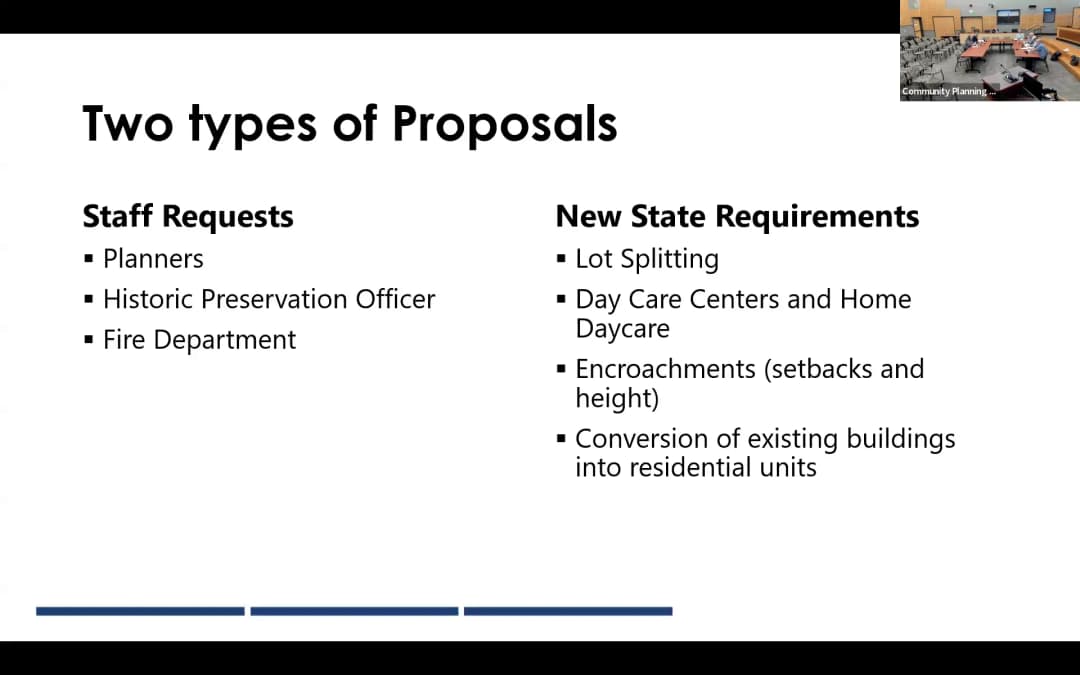
Note: According to the provided agenda and transcript, the meeting actually took place on Thursday, May 28, 2026, at 2:00 PM. However, the user instruction specified using the date June 2, 2026. This summary uses the instructed date but notes the discrepancy. The Land Use & Environment Committee (LUEC) held a special meeting to discuss sidewalk repair policy, receive a legislative update on affordable housing, and approve code amendments. Chair Vanderpool called the meeting to order at 2:00 PM. All three committee members were present: Chair Robert Vanderpool, Clark Gilman, and Paul Berendt. The agenda and minutes from April 23, 2026, were approved unanimously. Public Comments - Heather Moline (resident, not representing BPAC) shared a personal story about her father with a traumatic brain injury struggling with a six-inch sidewalk uplift. She urged the committee to treat sidewalks as public goods funded publicly, emphasizing that sidewalk repair can be life-or-death for vulnerable residents. - Jim Lazar (former BPAC chair, involved in the 2004 Parks and Sidewalks measure) endorsed the Planning Commission recommendation for a second repair crew focused on pavement grinding of small (0.5–2 inch) lifts. He argued the city's proposed TBD sales tax spending on three large capital projects violates the city's long-term financial strategy, which requires maintaining existing infrastructure before new programs. He urged adopting the Planning Commission's recommendation that the city, not property owners, assume sidewalk maintenance responsibility, except for damage caused by property owner actions. - Larry Dzieza agreed with Lazar, emphasizing the need to spread fixes citywide, not just downtown, to show public benefit for the tax increase. He noted that businesses have historically received free city repairs while homeowners paid out-of-pocket or went without. Discussion Items Briefing on Sidewalk Repair Policy Approach Michelle Swanson (Public Works Principal Planner) presented the draft policy. Key points: - Inventory found 28,000 repair locations across 226 linear miles; 83% of uplifts are tree-related. - Current code holds adjacent property owners responsible, but enforcement is ineffective (only 3% of surveyed cities find it effective). - The city now funds sidewalk repair at nearly $1.2 million/year via TBD sales tax, but at current rates it would take 250 years to fix all locations. - Staff recommended a shared responsibility approach: city crew focuses on common pedestrian destinations (schools, transit stops), large property owners fix their sidewalks, and a point-of-sale repair program. - Committee members discussed equity, prioritization, and funding. Councilor Berendt supported shared responsibility and emphasized schools, a grinding crew, and “skin in the game” for property owners. Councilor Gilman raised concerns about downtown fairness and the need for a spread of small projects rather than large capital ones. Councilor Vanderpool questioned the definition of “large property owners” and suggested city take full responsibility with a “worst first” approach. - The committee directed staff to further explore the shared responsibility model, including analysis of large property owner frontage and potential grant programs, for presentation at the full council study session on July 21. 2026 Legislative Updates Related to Affordable Housing Christa Lenssen (Senior Program Specialist) provided updates: - Federal: 21st Century Road to Housing Act (Senate version passed March 2026; House amended). Key provisions include HUD prioritization near opportunity zones, pilot programs for home repairs and housing conversion, and prohibiting large institutional investors from buying single-family homes (if owning 350+ homes). - State: SB 6027 allows local HOME funds for operations/maintenance and rehabilitation of existing affordable housing. HB 2442 allows REET 2 revenues for abating nuisance properties and new local sales tax for child/family services (effective Jan 2027). Other bills address land banking, condominium liability reform, and mixed-income faith community density bonuses. - The committee recommended updating city code language to match state law (especially on cooling devices/rental units). Approval of Code Amendments (Title 10, 16, 17, 18) Joyce Phillips (CP&ED Planning Manager) presented 47 proposed amendments, mostly staff-initiated cleanups and state-required updates. Notable: lot splitting, daycare centers, parking standards updates, tree-root-siding clarifications, and removal of ground-floor commercial requirements in some downtown areas (per Planning Commission recommendation). The Planning Commission recommended approval and suggested revisiting ground-floor housing restrictions later in 2026. Committee member Gilman supported allowing residential on ground floors to increase housing. Key Outcomes - Sidewalk Repair Policy: The committee expressed general support for a shared responsibility approach but requested additional analysis on large property owner definitions and costs. Staff will return with refined options for the July 21 council study session. - Affordable Housing Legislative Update: No formal vote; the committee accepted the report and directed staff to align city code with state changes. - Code Amendments: Motion by Councilor Berendt, seconded by Councilor Gilman, to adopt the Planning Commission’s recommendations and forward the package to the full City Council for approval. Passed 3-0 (Vanderpool, Gilman, Berendt). - Farewell: Joyce Phillips was recognized for her 11 years of service and numerous code improvements; she will be leaving the city soon. - Next Meeting: The next regular LUEC meeting is scheduled for June 25, 2026, starting at 4:30 PM (delayed 30 minutes due to an all‑department retreat).
The Community Livability and Public Safety Committee of the Olympia City Council met on May 28, 2026, from 5:30 PM to 8:52 PM. The committee discussed recommendations for council-appointed advisory bodies, approved Inspire Olympia funding recommendations (with a split vote), and approved CDBG allocations. Public comment was received on the Inspire Fund and arts organizations. Note: The meeting minutes and transcript indicate the meeting occurred on May 27, 2026; this summary uses the date provided in the instructions. Consent Calendar - Approved the agenda unanimously. - Approved the minutes from the May 6, 2026 special meeting. Public Comments & Testimony - Anna Schlecht (Olympia resident for nearly 50 years) expressed strong support for the Inspire Fund, describing it as a voter-approved initiative that supports arts alongside housing and homelessness services. She emphasized the importance of public investment in both "bread and roses." - Schyler Raad (Dr. Schyler Raad, involved in the Olympia arts community) spoke about two items: first, the need to improve the qualitative assessment of arts grants, advocating for integrating quantitative and qualitative measures; second, urged protection of the Decay organization (Diverse Events and Creative Arts Yard), describing it as a vital space for trans people and vulnerable to gentrification. Discussion Items - Council Appointed Advisory Bodies (Item 6.A): Assistant City Manager Stacey Ray, Community Engagement Program Specialist Margo Morales, and independent consultant Genevieve Canceko Chan presented recommendations. Two options were discussed: (1) improvements to the current system (including recruitment process changes, standardized onboarding, and restructuring four advisory bodies) and (2) a transition to a multifaceted engagement approach with multidisciplinary advisory bodies aligned to comprehensive plan focus areas. The committee expressed support for Option 1. A motion to direct staff to further develop Option 1 and bring it to a full Council study session passed 3-0 (Madrone, Green, Huỳnh). - Inspire Olympia 2026-2027 Funding (Item 6.B): Inspire Olympia Program Manager Marygrace Goddu and Cultural Access Advisory Board Co-Chair Anne Larsen presented. They reported 94 applicants, a record number, with 85 organizations recommended for funding totaling $3,303,288. The committee discussed the need for more detailed information about funded organizations, including mission, requested amounts, and deliverables. A motion to recommend approval of the Cultural Access Advisory Board (CAAB) funding recommendations and advance them to City Council passed 2-1 (Madrone and Green in favor; Huỳnh opposed). Huỳnh expressed concerns about insufficient information to make an informed decision and frustration with the expectation to approve without deeper knowledge. The committee agreed to provide additional information to Council for the June 16 meeting. - CDBG Program Year 2026 Allocations (Item 6.C): Senior Housing Program Specialist Anastasia Everett presented staff recommendations for a direct award to existing subrecipients due to federal uncertainty, totaling $411,000 (including reallocation of $35,000 from revolving loan funds). Staff also proposed dissolving the rental rehabilitation program and amending the consolidated plan. The committee discussed the rationale. A motion to approve the recommended CDBG allocations and forward to full City Council passed 3-0. Key Outcomes - Advisory Bodies: Motion passed 3-0 to further develop Option 1 and present at a Council study session. - Inspire Olympia Funding: Motion passed 2-1 to recommend approval and advance to Council. Huỳnh voted nay, citing need for more information. - CDBG Allocations: Motion passed 3-0 to approve and forward to Council. - The committee decided to add a summary of funded organizations (mission, deliverables, requested vs. awarded amounts) to the Council packet for the Inspire Olympia item.