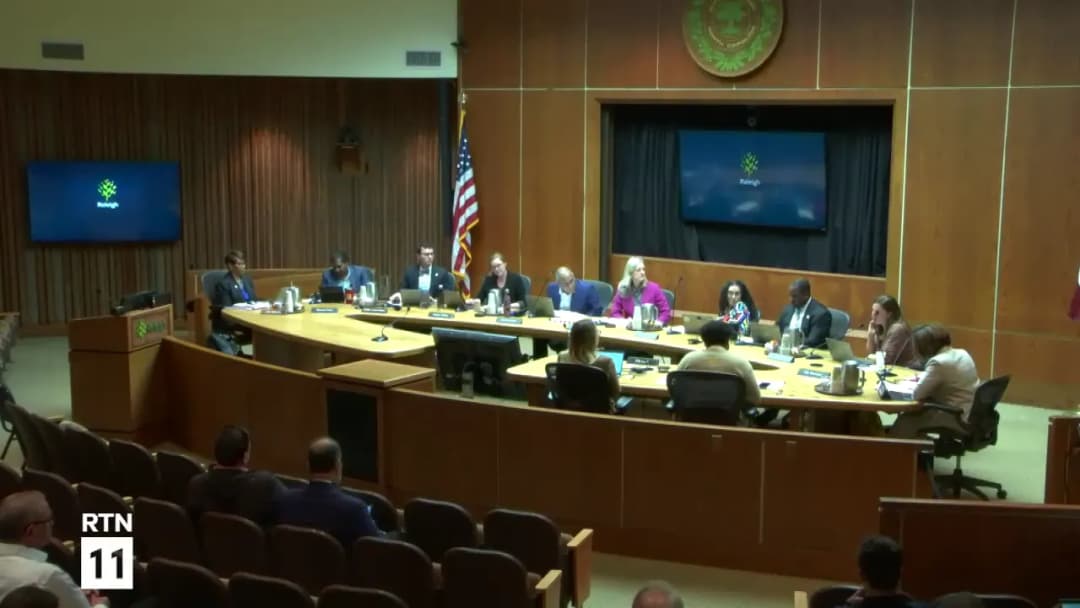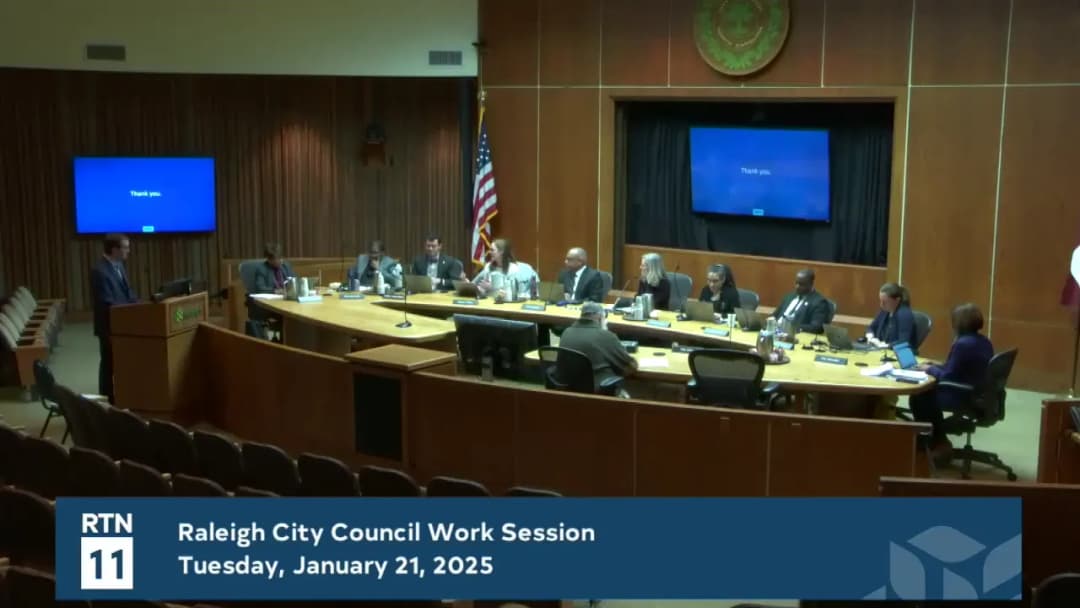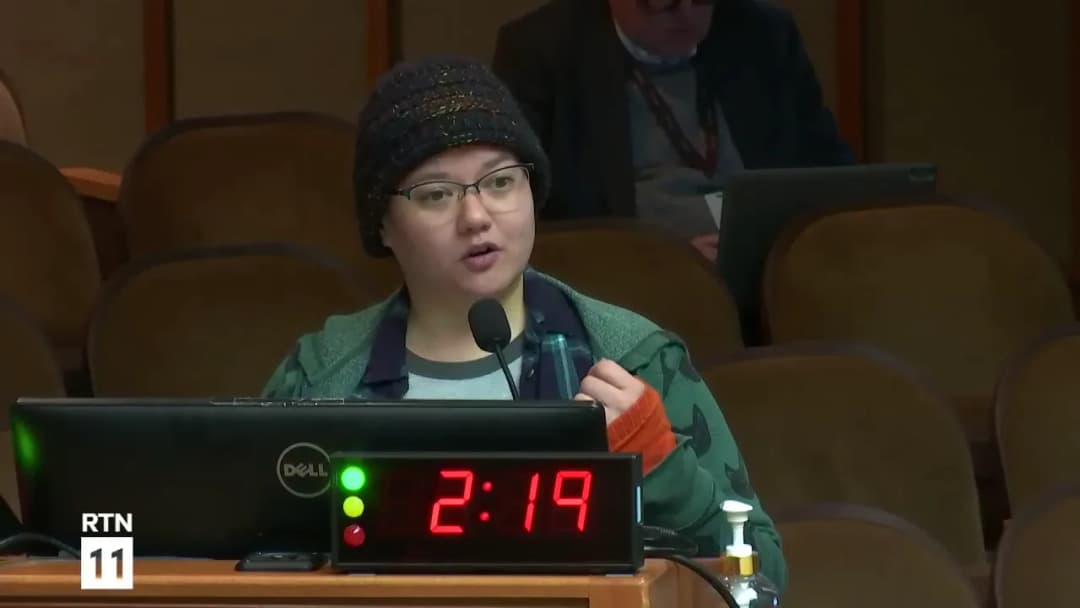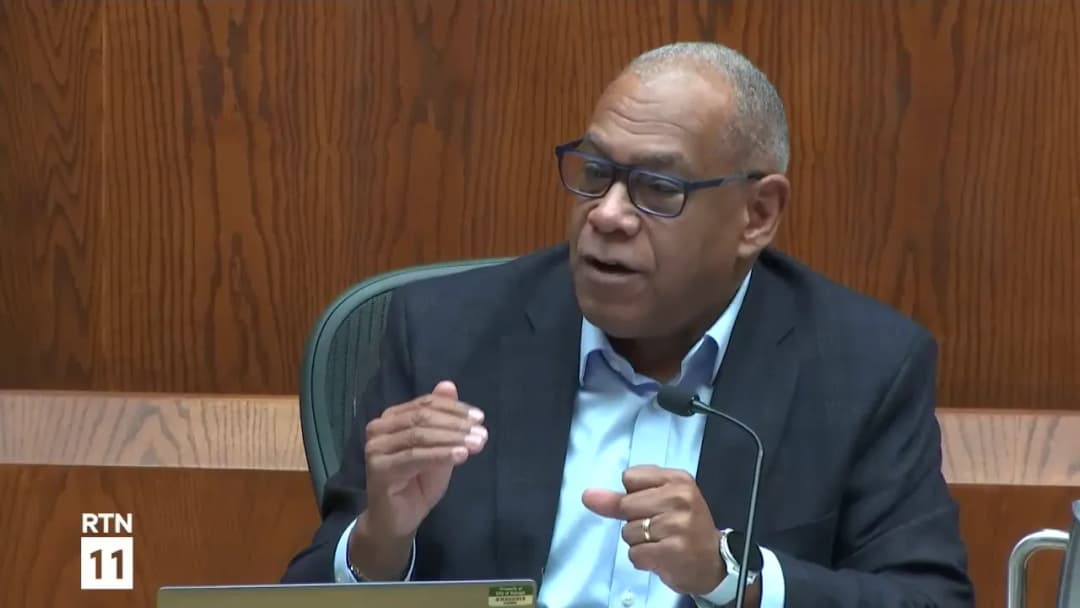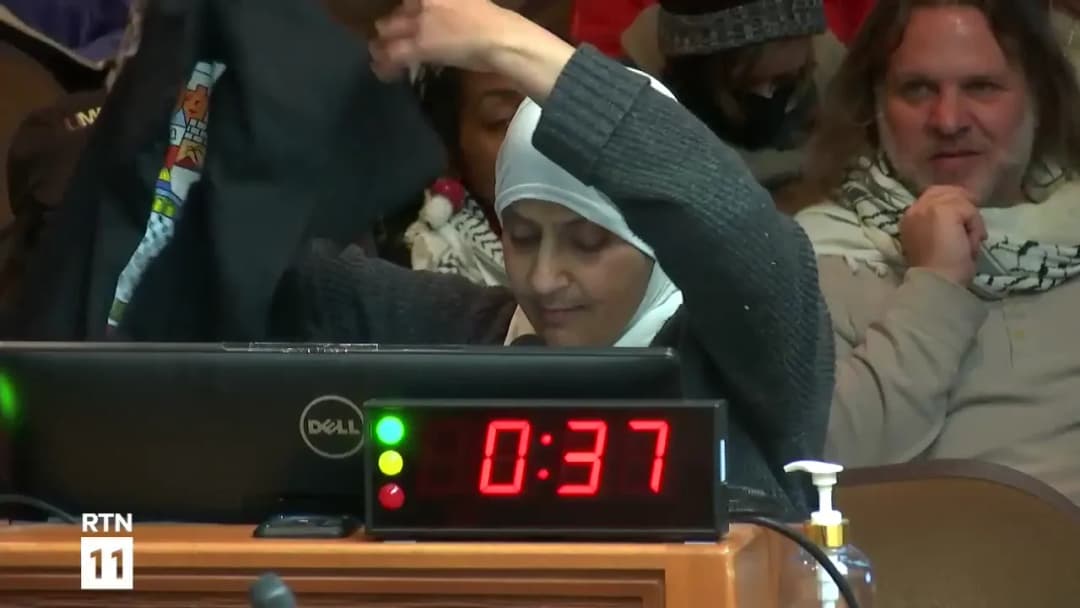
The Raleigh City Council held its regular evening public comment session on February 11, 2025, at 7:00 PM in City Council Chamber. Mayor Janet Cowell presided; Councilmember Jonathan Lambert-Melton had an excused absence. The mayor stated the session was solely for receiving public input, and council would not respond to questions or engage in discussion. Public Comments & Testimony - Octavia Rainey urged Mayor Cowell to improve constituent services with additional staff and reinstate the Office of Public Affairs. She also called for addressing gun violence by focusing on "guns in the wrong hands" and suggested a strategy for compromise at the General Assembly. - Nikki Fontana, councilwoman from North Myrtle Beach, SC, spoke at the request of Raleigh constituents. She presented her city's pet ordinance prohibiting puppy mill sales and urged Raleigh to adopt similar proactive regulations. - Robert Quartz opposed any reduction in public comment time, stating it would undermine democracy and representation. He quoted Justice Louis Brandeis and argued that limiting comment sends a message that residents' voices are an inconvenience. - Mindy Taylor, East Martin Street resident and parent, described the dangerous intersection at Tarborough and East Martin Streets. She reported that her five-year-old son Charlie was struck by a vehicle on January 29, 2025, while walking home from kindergarten. She demanded immediate safety improvements: repainted crosswalks, signal timing corrections, signage, speed enforcement, and long-term traffic calming. She requested a timeline for a safety study, enforcement plan, and capital project inclusion. - Mesa Saltari (also listed as Mesa Sodery) condemned President Trump's proposal to relocate Palestinians from Gaza, calling it ethnic cleansing and a violation of international law. She opposed reducing public comment time and argued that listening to residents is fundamental to serving the city. - Shane Collins urged the council not to cut public comment, calling it a direct bridge between community and government. He advocated for increasing affordable public housing, raising pay and benefits for city workers, and protecting against puppy mills. He noted that Patopia, a downtown puppy store, recently closed but may reappear. - Mamakai Sanders criticized the council's recent decision to ban presentations during public comment, calling it a punitive move disguised as predictability. She argued it was a nervous system reaction to speakers addressing international issues (e.g., Gaza). She proposed a G-rated review process and advised the council to issue a statement of neutrality or refer issues to the Human Relations Commission. She warned that silencing one group affects all. - Sandy Alford spoke about PCB contamination from NC State's Poe Hall, alleging that sealant on the building contains carcinogenic PCBs that could become airborne during remediation. She criticized Councilmember Jane Harrison (also an NCSU faculty member) for taking no action on behalf of constituents. She noted that NCSU entered the closed building in April 2024 and activated the HVAC system without notice, potentially destroying evidence. She warned that toxic materials would be transported through districts of Councilmembers Silver, Branch, and Jones when remediated. - Nikki W. (first speaker on shelters) addressed inadequate overnight shelter conditions. She argued that the white flag temperature threshold (34°F) should be raised to 45°F, citing hypothermia risks. She described reduced bed counts at the Bryan Center (200 to 98) and Healing Transitions (100 to 30 men/night). She criticized women's shelter policies requiring essays for re-entry and confiscation of purses. She called for church-based hosting, a mobile shower program, and a hunger eradication program. - Cole McMullen opposed limiting public comment, arguing it would weaken local democracy. He stated that nuanced policy discussion requires adequate time. He separately expressed strong support for firefighter separation allowance funding. - Alex Lafont thanked the council for not moving public comment to 6:00 PM, as his work ends at 6:30. He supported keeping the current start time and endorsed firefighter separation allowance. - Hugo Utenhoe (Flemish speaker) requested handicapped parking spaces near the museum on Fayetteville Street for First Friday events, noting existing restaurant seating has taken over spaces. - Michael Richardson (from Rocky Mount) claimed to be the heir to 605 Bragg Street and asked for four to five months to renovate the property to prevent its demolition. He stated he is currently homeless. - Donna Bailey (former Community Engagement Board member) urged the council to keep the three-hour public comment period starting at 7:00 PM, noting that 95% of sessions finish within two hours. She raised a conflict of interest concern regarding Councilmember Silver's ties to McAdams and a rezoning case (Z-5422) and asked him to recuse. - Tim Niles criticized the city's speed in banning presentations (within three days) compared to inaction on missing middle reforms (two years). He said the website and email confirmation were not updated to inform speakers of the ban. He opposed the council's action and urged reform of missing middle zoning. - Angaza Laughing House (Raleigh People's Budget Assembly) demanded a meet-and-confer policy for city workers, affordable housing, a crisis response team separate from police, and participatory budgeting. He noted that since 2021 the police budget grew by $30 million while housing and neighborhoods grew by only $4 million. He said the city was not on track to build 5,700 affordable units by 2026. - Sarah Quadry (Girl Scout troop leader) criticized the council for not implementing community ideas, citing difficulty establishing a community fridge. She called for improved communication and support. Mentioned three Muslim college students murdered in their home and an interfaith food drive. - Zara Quadri (Girl Scout) thanked everyone for listening. - Laura Harris (Raleigh People's Budget Assembly) opposed reducing public comment, demanded a community response team, meet-and-confer policy, and participatory budgeting. She called for white flag shelters to be open at 45°F or every night in winter. She invited council to Meals for the Masses Sunday food distribution. - Natalie Liu detailed a history of RDU Airport acquiring land planned for Lake Crabtree Park and Umstead State Park. She alleged RDU collaborated with developers to take control of parkland for non-aviation use, contrary to FAA-approved boundaries. She urged council members on the airport authority to end the exploitation and develop a complementary land-use plan. - Hua Wong urged action on PCBs at NC State and Lake Crabtree. He opposed reducing public comment, stating the council gives unlimited time to big-money interests. He demanded a meet-and-confer policy for city workers, noting that some council members have refused to meet. - Franklin Robinson alleged a Raleigh police officer falsified a drug test during a traffic stop and that internal affairs sustained his complaint but did not address the integrity issue. He asked for help because the officer remains on duty and he says he has been harassed. - Joshua Bradley opposed cutting public comment, saying if listening is a hardship, council members should resign. He criticized developer influence, noted Trump supporter donations, and lamented the Democratic Party's loss due to inaction on Gaza. He demanded council visit encampments monthly, prioritize public housing, and study refurbishment vs. demolition costs at Dix Park. - Alex Brissett (Brookside Drive resident) demanded installation of two-way protected bike lanes on Brookside Drive between Glasscock and Frank Street, which he said was voted on unanimously months ago. He also urged preservation of Lake Crabtree Park from RDU development. - Athena Wallen (Brookside Drive resident) requested cohesive infrastructure improvements for the creek and street system, noting flooding and erosion from upstream neglect. She argued that patchwork responses based on resident feedback create inequities. - Ryan Reed (property owner at 701 Edmond Street) asked the council to direct transportation staff to review his street-closing petition for the dead-end right-of-way at Willow Street, despite one of three abutting landowners not signing. He noted that the city attorney confirmed the council could order a review without all signatures. - Farah Kahn contrasted her job interview (33 minutes of speaking) with council's limited public comment time. She warned against a fascist trend and demanded preservation of democracy and public comment time. She also called for a resolution on Palestine, noting Elbit Systems in Raleigh provides military equipment to Israel. - Erica Wright supported previous speakers' demands and argued that other countries profit from selling technology to Israel. She supported raising the white flag temperature to 50°F and cautioned against police exchanges with Israel. - Nicole Williams (Refund Raleigh/Raleigh People's Budget Assembly) reiterated demands: participatory budgeting, protect public comment, fund a community response team, and implement meet-and-confer policy. She warned "we are not asking, we are holding you accountable." - Hala Asfari (Bradley City resident) asked the council not to cut public comment, noting it is an opportunity for community members to learn from each other. She referenced the incident with Charlie and expressed concern about federal executive orders. - Eric Martineau (NC State senior) spoke about PCB contamination in Poe Hall and Gold Hall, where he lived as a freshman. He criticized Councilmember Harrison (also a faculty member) for not using her political power to advocate for students. He warned of long-term health effects and said students are just beginning to organize. - Denise Fitzpatrick (former task force member) described dangerous conditions at a shelter on 2nd Street: long lines, arguments, lack of security or trained mental health staff. She said mentally ill individuals are put out of the shelter and called for preventive measures and ADA compliance. - Kelly Hall Stopper (not Hall Stopper; listed as Kelly) spoke against the war in Gaza, demanding an arms embargo and criticizing U.S. funding of Israel. She claimed the ceasefire is not being honored and that Palestinians are still being killed. She said silence is complicity. - Kat (unlisted speaker) backed the People's Budget Assembly demands and criticized the council for being out of touch. She alleged gentrification and displacement. She revealed she is an NC State alum who spent two years in Poe Hall and has since had her reproductive organs removed, attributing it to PCB exposure. She demanded the council leave public comment as is or face the masses in the streets. Key Outcomes - No votes or decisions were taken. The council listened to all speakers and adjourned without discussion.
Public Meetings - Raleigh, North Carolina
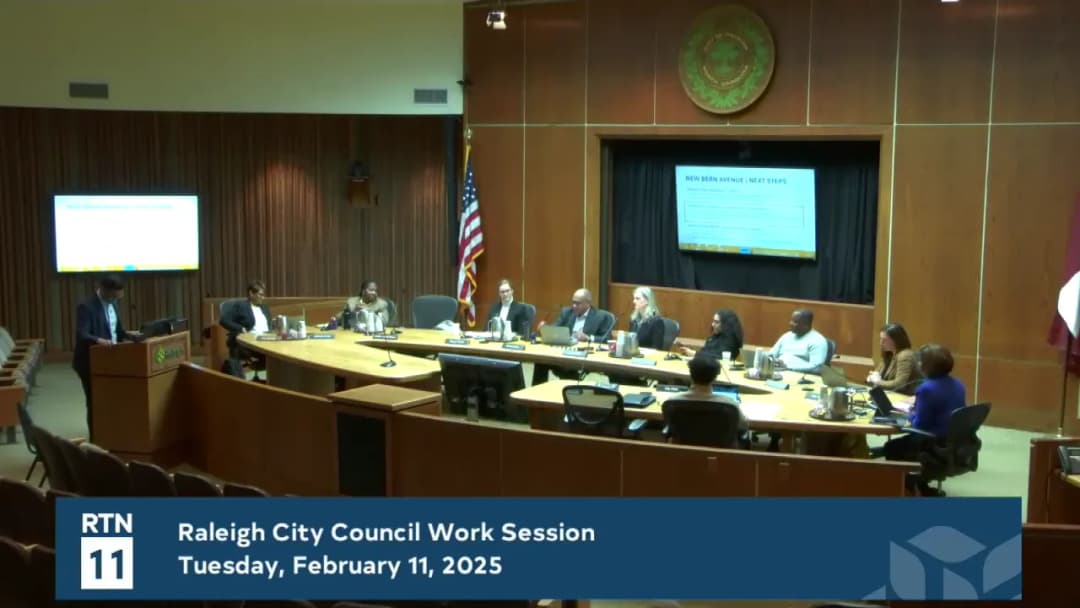
Public Meetings - Raleigh, North CarolinaOn Tuesday, February 11, 2025, at 4:00 PM, the Raleigh City Council held a work session to receive an update on the Wake Bus Rapid Transit (BRT) program. Staff from the Transportation Department presented the status of four BRT corridors—New Bern Avenue, Southern, Western, and Northern—covering design progress, construction bidding challenges, federal funding, and next steps. Councilmembers asked detailed questions about project viability, contractor interest, utility relocations, land use integration, and regional connectivity. The session concluded with an adjournment to the regular meeting at 7:00 PM. Discussion Items - Program Overview: Staff (Hepatel) reviewed the 2016 Wake Transit Plan funded by a half-cent dedicated sales tax. BRT features include at least 50% dedicated bus lanes, enhanced stations with level boarding, 60-foot articulated buses, longer service hours (4 a.m.–midnight weekdays, 5:30 a.m.–midnight weekends), and 10-minute peak frequency. Dedicated lane types include curbside business-access/transit lanes, median-running transitways, and mixed traffic. Stations will incorporate solar panels to offset electric costs. - New Bern Avenue Corridor: This 5.4-mile corridor (3.8 miles of dedicated lanes, 10 stations, 7 CNG buses) has a full funding grant agreement with the FTA. After receiving no bids in March 2024 and one unacceptably high bid in October 2024 (rejected by Council in January 2025), staff are re-advertising the project in geographic packages: Area 1 & 3 (downtown and east of I-440) in late March/early April 2025, and Area 2 (median-running segment from Poole Road to Sunnybrook/WakeMed) in late June/early July 2025. Station construction will be bid separately after horizontal work is scheduled. Staff noted that private utility relocations are progressing and that market conditions, including construction demands from Hurricane Helene recovery, have affected contractor interest. Councilmember Silver urged careful street tree selection for shade. - Southern Corridor: A 5-mile corridor (3.8 miles of dedicated lanes, 9 stations, 7 CNG buses) including a new South Wilmington Street extension. At 30% design, with significant commercial property impacts. An $85.9 million federal allocation was made in May 2024. The project is expected to reach 60% design in early 2026, followed by condemnation authorization and right-of-way acquisition. Councilmember Forte asked about expediting the federal process; staff noted that reaching 60% design sooner would allow a risk review for a full funding grant agreement. Councilmember Silver questioned the choice of Wilmington Street over South Saunders Street; staff explained that South Saunders has heavy traffic and poor pedestrian crossings, while city-owned parcels along the Wilmington flyover offer redevelopment opportunities. The preferred alternative was adopted by the Town of Garner, CAMPO, and the City of Raleigh. - Western Corridor: A 12-mile corridor (7.5 miles of dedicated lanes, 18 stations, 10 buses) connecting downtown Raleigh to Cary via Western Boulevard and a new extension to Maynard/Chatham. It recently entered final design (contract authorized December 2024). A federal ratings application was submitted in August 2024; results expected in spring 2025 (the President's budget timeline). Buses may be electric or alternative fuel. Councilmember Branch noted the Buck Jones Road extension (new roadway) is part of the project. - Northern Corridor: Still in the major investment study phase (not yet in federal process). The study is examining two connections: downtown to Midtown (via Atlantic/Six Forks alternatives) and downtown to Triangle Town Center (via Capitol Boulevard/Atlantic alternatives). Two alternatives for each connection will advance to detailed screening. Staff clarified that these are separate projects, not an “either/or.” Public engagement on the detailed screening is planned for summer 2025, with a local preferred alternative selection to be brought back to Council. Councilmember Patton noted the existing high ridership on Route 1. Councilmember Silver emphasized that land use and transportation planning must proceed in tandem, given the enormous development potential north of I-440. Councilmember Jones raised concerns that District E (Glenwood Avenue area) is excluded; staff noted Glenwood is being considered in the broader Wake Transit Plan update. Councilmember Branch discussed coordination with NCDOT’s US 1 modifications and the S-line commuter rail project. Assistant City Manager Michael Moram confirmed that BRT and the S-line are complementary services. Councilmember Harrison and staff also discussed the need to connect BRT stations with first/last-mile pedestrian and bicycle infrastructure. - Federal Funding & Risk: For the New Bern corridor, the FTA grant is already being drawn down for design work, so there is no “money back” deadline. For Southern and Western, allocated funds may be at risk if not obligated under an executed contract. Staff acknowledged the uncertain federal environment. Councilmember Silver expressed confidence that the project is worthwhile but needs the right contracting approach; he noted that the unpredictability of underground utilities and subcontractor availability are key risks. - Other Topics: Councilmember Jones asked about the cost-effectiveness of solar panels on stations. Council suggested that if the articulated buses cannot be used on BRT service soon, the city should explore creative ways to deploy them in revenue service (though a federal waiver would be required). Councilmember Patton offered comfort to the public that BRT is still viable, citing similar projects in other states and the fact that dedicated bus lanes are essentially road-building work. Key Outcomes - Staff provided a status update on all four BRT corridors. No formal votes were taken, as this was a work session. - The Northern Corridor study will proceed with two alternatives per connection proceeding to detailed screening. Council will receive a future report with locally preferred alternatives. - The New Bern Avenue corridor will be re-advertised in two geographic packages in early and mid-2025, with a separate station construction package to follow. - Staff will follow up on Council questions about solar panel cost analysis and federal funding ratings for the Western Corridor. - Councilmembers reiterated the need for integrated land-use planning, pedestrian connectivity, and regional coordination with NCDOT and neighboring municipalities.
The Raleigh City Council met on Tuesday, February 4, 2025, in two sessions (1:00 PM afternoon and 7:00 PM evening). The meeting covered consent agenda approvals, rezoning public hearing dates, an update on the e-bike rebate program, annual work plans from the Raleigh Arts Commission, board appointments, and a major discussion on reforming public comment procedures. The council voted on several items, and a motion to change the time and length of public comment failed on a 4-4 tie. Consent Calendar - Sale of Surplus Property: Authorized public sale by electronic auction. - City Code Revision: Updated utility extension rules and repealed a fee-in-lieu of construction. - Grant Awards: Accepted a Duke Energy Foundation grant for 300 weather radios. - Contracts and Services: Approved multiple contracts, including a regional call center agreement (GoTriangle, City of Durham, Town of Cary, Town of Chapel Hill), professional services for Lake Wheeler Road improvements (STV Inc.), final design for Smoky Hollow Park (Hazen and Sawyer), on-call engineering services (HDR Inc.), digester gas system maintenance (DMT Environmental Technology), and annual biometric screenings (WakeMed Hospital). - Street Closing: Approved STC-05-2024 for East Whitaker Mill Road right-of-way. - Budget Amendments: Approved FY25 midyear budget ordinance amendments. - Right-of-Way Items: Authorized GoRaleigh Bus Stop Improvement Program change order and set 9. - Bid Award: Awarded contract for Spottswood Street stormwater retrofit and Durant Nature Preserve stream restoration to Fluvial Solutions, Inc. - Traffic Items: Reduced speed limits on Laurel Shire Drive, expanded controlled residential parking, and established no-parking zones on Morgause Drive. The consent agenda was approved unanimously after Councillor Jones withdrew a previously pulled item (F1) due to receiving answers. Discussion Items Planning Commission Report - Z-12-24 (Old Crews Road & Old Milburnie Road): Large assemblage with concurrent annexation; planning commission recommended approval by split vote. Council set a public hearing for March 4, 2025, with staff planning to provide context on annexation and peripheral development discussed at the retreat. - Z-32-24 (4020 Sumner Boulevard): Request to change conditions; applicant deferred setting a public hearing to a later date. - Z-36-24 (Litchford Road): Rezoning from R-1 to R-10 with conditions; planning commission recommended approval. Public hearing set for March 4. - Z-37-24 (326 Chapanoke Road): Rezoning from industrial mixed-use to commercial mixed-use with TOD; inconsistent with future land use map but consistent with overall plan and urban form; planning commission recommended approval. Public hearing set for March 4. - Planning Commission Vacancies: Councillor Jones requested input on desired expertise for new commissioners. Chair Blaine Miller highlighted need for time availability, experience in housing/development (including affordable housing and various housing types), architects, real estate professionals, and legal expertise (her own term ending). Raleigh E-Bike Rebate Program (City Manager Report) - Staff presented history: initial $150,000 (federal grant) funded 150 vouchers (75 income-qualified at $1,500, 75 standard at $500). As of February 3, 2025, 65 vouchers redeemed (52 income-qualified, 13 standard). Uptake was slower than anticipated; voucher redemption period extended to 90 days. - New Funding: Bloomberg American Sustainable Cities Grant awarded $80,000 (non-federal) for an estimated 60-80 additional vouchers, drawn from the existing pool of 1,300 qualified applicants. - The council authorized the city manager to execute grant documentation and accept a budget amendment of $80,000. Motion passed unanimously. Raleigh Arts Commission Annual Work Plans - Mary Silver (Arts Commission Chair) reported: 16 artworks added to municipal collection (total 703), 29 calls for artists, 49 exhibitions, 163 events, professional opportunities for 797 artists, 104,400 ceramic objects produced. The commission oversaw $2.94 million in grants, including $2.4 million to 39 nonprofits. The arts industry generates $516 million in annual economic activity. - Angela Lombardi (Public Art and Design Board Chair) highlighted: 24 active percent-for-art projects, six artist-in-residence programs (including BRT corridors, nature preserves, Dix Park collaboration), a new artist residency with the City Sign Shop for wayfinding, and ongoing mural projects. - The council approved the work plans unanimously. Public Comment Reform (City Attorney Report) Discussion followed the January 24, 2025 retreat. Three areas addressed: 1. Clarifying Purpose of Public Comment: Approved adding website language and a mayoral statement at the start of public comment that it is a time for listening, not debate. Passed unanimously. 2. Revising Digital Media Process: Approved a new process allowing speakers to submit PDFs/JPEGs (size limits to be set by staff) via city departments, which will be attached to the agenda as backup material (not broadcast). Staff will vet only for malware, not content. Motion passed 7-1. 3. Revising Time and Start of Second Tuesday Public Comment: After debate, a motion to start at 6:00 PM and limit to two hours failed 4-4. A subsequent motion to change only the start time to 6:00 PM was withdrawn after staff presented survey data (73% of respondents preferred 7:00 PM from a 2023 survey). No changes were made; the current 7:00 PM start and three-hour maximum remain. Key Outcomes - Consent Agenda: Approved unanimously. - Rezoning Public Hearing Dates: Set for March 4, 2025, for Z-12-24, Z-36-24, Z-37-24; Z-32-24 deferred. - E-Bike Voucher Additional Funding: Authorized acceptance of $80,000 Bloomberg grant; approved budget amendment. - Arts Commission Work Plans: Approved. - Appointments: - Human Relations Commission: Dr. Mary Ellen Kelly appointed (regular vacancy), Helen Sporkin appointed (alternate vacancy, one remaining alternate to be filled). - Raleigh Transit Authority: Colin Beamer appointed (alternate vacancy). - Bicycle and Pedestrian Advisory Commission: Joe Caruso and Brian Thomas reappointed (two regular vacancies remain). - Design Review Commission: Saravia Suria Devara elevated from alternate to regular member (alternate vacancy to be filled). - Environmental Advisory Board: Lanya King reappointed. - Closed Session: Council entered closed session to discuss specific litigation (Clark Brothers LLC, Mary J. Rogers, Carolina Realty) and gave direction to staff. The meeting recessed to reconvene at 7:00 PM for the evening session (not covered in this summary).
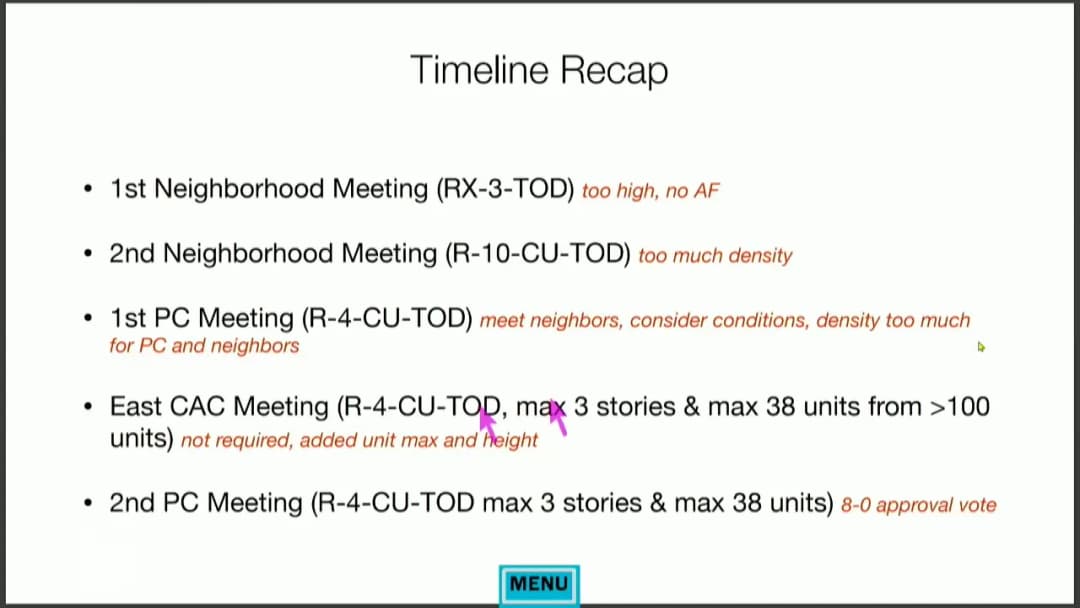
The Raleigh City Council met on February 4, 2025, for the evening public hearing session beginning at 7:00 PM. Mayor Janet Cowell presided. The council heard public testimony and voted on several street closings, rezonings, and a text change to a planned development. Key topics included a proposal to reduce public comment time limits, multiple rezoning cases with affordable housing conditions, and a development agreement for a greenway trail. Public Comments & Testimony - Public Comment Policy Change: Mayor Cowell announced that the council had voted earlier in the day to reduce the second-Tuesday public comment session from three hours to two hours. The council will revisit the issue in two weeks, and the public is invited to comment at that time. - Street Closing STC-06-2024 (Rocky Branch Creek Drive): Amanda Jones of the Transportation Department presented the closure of approximately 7,000 square feet of right-of-way between Saunders and Dawson Streets, part of the Park City South development. Worth Mills (representing the applicant) spoke in support. No opposition. Approved unanimously. - Street Closing STC-07-2024 (Common Oaks Drive): Amanda Jones presented the closure of about 1,545 square feet of excess right-of-way for a 61-unit senior living facility. Pam Porter (TMTLA Associates) and three others spoke in support. No opposition. Approved unanimously. - Rezoning Z-04-24 (5009 Louisburg Road): Hannah Reckau (Planning & Development) presented the request to rezone 20+ acres from R-10 to RX-7 Conditional Use, with conditions limiting height to 6 stories and 700 units, and requiring 3.5% of units affordable at 80% AMI for 30 years. A concurrent development agreement (DA-1-25) would fund a greenway trail. Matthew Carpenter (Parker Poe) spoke in support, requesting deferral to February 18 to modify the affordability term from 10 to 30 years. No opposition. Council discussion raised concerns about long-term maintenance costs and solid waste services. The public hearing was continued to February 18 for both the rezoning and the development agreement. - Rezoning Z-20-24 (721 Chappell Drive): Hannah Reckau presented the request to rezone 0.86 acres from R-10 to RX-3 Conditional Use, allowing up to 60 units with an affordable housing condition of 1% of units (rounded up to one unit). Isabel Maddox (Nicholson Crampton) spoke in support, noting the change would round up the affordable contribution. No opposition. Council discussed the Frequent Transit Development Option (FTDO) and the loss of naturally occurring affordable housing. The public hearing was continued to February 18. - Rezoning Z-27-24 (Town Drive & Triangle Town Boulevard): Hannah Reckau presented the request to rezone 6.5 acres from split commercial mixed-use to CX-4 Conditional Use, removing special highway overlay districts and requiring 13% tree conservation. Molly Stewart (Morning Star Law) spoke in support. No opposition. Councilor Patton expressed comfort with the case. Approved unanimously. - Text Change TCZ-30-24 (Crabtree Village PD): Hannah Reckau presented amendments to the Crabtree Village Planned Development to reduce the remaining entitlement from 162 units to 65 townhouses, remove an age restriction, and allow more flexible parking and retaining wall standards. Isabel Maddox (representing the owner) spoke in support. Councilor Jones confirmed stormwater compliance. Approved unanimously. - Rezoning Z-34-24 (118, 122, 126 Clarendon Crescent): Hannah Reckau presented the request to rezone three lots (1.7 acres) from R-4 with Neighborhood Conservation Overlay District (NCOD) to R-4 with Transit Overlay District (TOD), limiting height to 3 stories and 38 units. Matt Tomasulo (property owner) spoke in support, noting the lots are non-conforming and near a planned BRT station. Opposition speakers Christian Anastasiades, Charles Potterman, and Cathy Hedgepath argued the NCOD protects neighborhood character and that infrastructure is inadequate. Council discussion highlighted the lots’ non-conformity and proximity to transit. Approved unanimously. Key Outcomes - Street Closings (STC-06-2024, STC-07-2024): Both approved by unanimous vote. - Rezoning Z-04-24 and Development Agreement DA-1-25: Public hearings continued to February 18, 2025, to allow the applicant to amend affordable housing conditions. - Rezoning Z-20-24: Public hearing continued to February 18, 2025, for the applicant to finalize the affordable housing condition language. - Rezoning Z-27-24: Approved unanimously. - Text Change TCZ-30-24 (Crabtree Village PD): Approved unanimously. - Rezoning Z-34-24 (Clarendon Crescent): Approved unanimously.
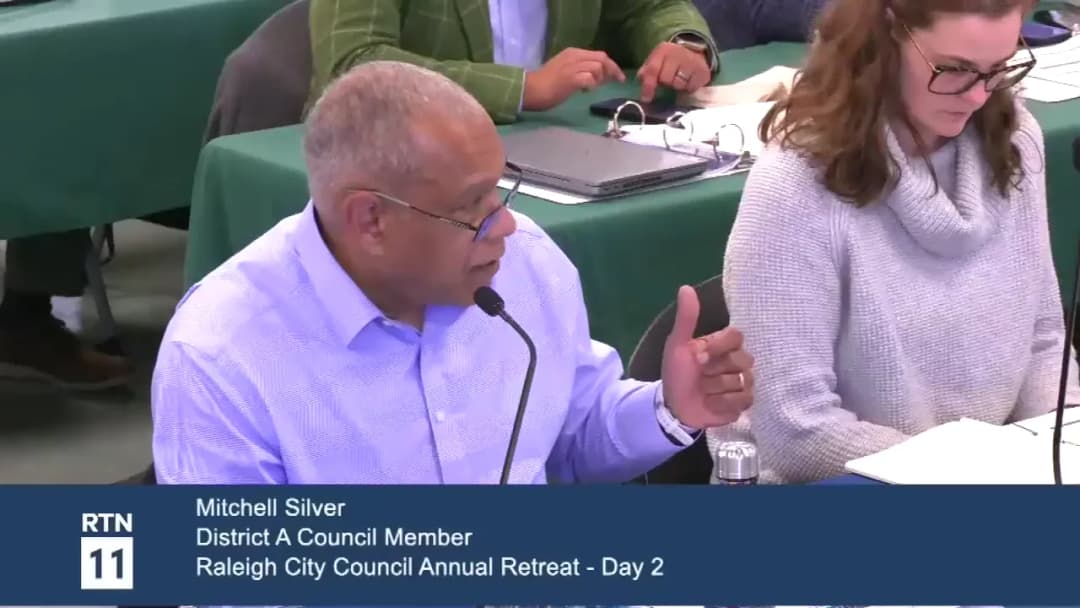
The second day of the two-day retreat focused on housing affordability, smart growth, annexation impacts, and the structure of advisory boards and commissions. Council members engaged in a facilitated discussion on big ideas for the city, received detailed presentations from staff, and gave direction for future work. The day concluded with a team-building activity and closing reflections. Discussion Items Opening Reflections & Council Priorities - The facilitator reviewed themes from Day 1: coordinating as a council, using data, leveraging individual strengths, staying close to the community, and navigating disagreement. Council members added a desire to discuss "big ideas" that drive the region. - Councilmember Silver highlighted past big ideas (e.g., Raleigh Union Station, downtown South, bus rapid transit) and urged a forum for new visions. Councilmember Forte emphasized balancing attention to areas outside downtown, such as Briar Creek and connections to Durham. Councilmember Jones mentioned streams, tree preservation, and activation of Triangle Town Center. Councilmember Patton advocated for greenways inspired by the Atlanta BeltLine. Councilmember Harrison noted the need to catalog past big ideas and track progress. Councilmember Silver clarified that big ideas are not always expensive; they set a focus and priority. Housing Affordability Presentation - Pat Young, Planning Director, presented on the housing affordability crisis. Key factors: high demand, land values, supply constraints, rising construction costs, and income inequality. He noted that 90% of housing is market-rate, and the city's missing middle reforms (2021–2022) have allowed over 3,600 units that would not have been permitted before, with about 30% of all new units being missing middle. Since 2022, rents and prices have stabilized. - A video from Justine Underhill (Falls Church, VA councilmember) explained how new market-rate housing, even luxury, frees up lower-cost units through filtering chains, citing research that 100 new units free up 39 units in low-income neighborhoods. She addressed four common objections: supply skepticism, trickle-down economics, investor buying, and vacancies. - Councilmember Forte questioned the filtering effect in a high-growth region with many new residents from outside; Young replied that 65% of movers are from the region. Councilmember Forte also noted the challenge for the lowest incomes, and the need for targeted affordable housing programs. - Emily Sutton, Housing and Neighborhoods Director, presented on the city's affordable housing efforts. The city's 2016 goal of 5,700 units by 2026: 3,848 units built, 3,300 in pipeline, totaling 7,149 units. The 2020 affordable housing bond ($80M) is 75% allocated, supporting 1,100 units. She discussed the Bringing Neighbors Home pilot, which has enrolled 40 people, almost all housed, with a two-year support period. She highlighted the cost of homelessness vs. housing: sheltering costs $35,000–$96,000 per person per year, while housing with case management averages $8,000–$31,000. Peer cities (Houston, Dallas, Oklahoma City) have reduced unsheltered homelessness by 64% or more with similar programs. - Councilmember Jones asked about the housing deficit; Young estimated about 35,000 units needed in Raleigh (based on 65,000 countywide). Councilmember Patton asked for a breakdown of units built vs. approved and data on income stratification. Councilmember Harrison requested a clearer dashboard of affordable housing projects. Smart Growth and Annexations - Pat Young, joined by Fire Chief Herbert Griffin, Interim Solid Waste Director Gregory Jenkins, Transportation Director Paul Callum, RPD Deputy Chief Rico Boyce, and Water Resources representative, discussed the impacts of growth on service delivery. - Young presented three growth areas: city limits, ETJ, and potential future jurisdiction (urban services area). Since 2011, involuntary annexations are banned; the city only annexes by voluntary petition. Growth in the Northeast and Southeast (NESA/SESA) areas will accelerate with completion of I-540 in 2028. - Low-density sprawl is more expensive to serve per acre. The city's current policies require annexation for utility connections, but state law (SB 382) limits the ability to require higher densities. The city is working on a fiscal analysis of these areas. - Fire Chief Griffin: national standards call for 7-minute response time; lightweight construction can flash over in 7 minutes. Longer response times (15 minutes) increase firefighter and resident risk. He noted that new fire stations are needed and suggested dual police-fire stations. - Deputy Chief Boyce: RPD will add a squad to the Southeast District (now three squads) and eventually a seventh district. A dual police-fire building was proposed to save costs. - Transportation Director Callum: many annexation areas touch NCDOT roads; off-site improvements are limited. Challenges include funding for sidewalks, bike lanes, and congestion. - Solid Waste Director Jenkins: adding routes strains thin staff and vehicle resources; maintaining weekly service is difficult. - Water Resources representative: water supply planning is for 2070; climate models may extend the need for a new source to 2060. The Little River reservoir and Neuse River pipe alternatives are being evaluated. - Councilmember Harrison expressed concern about continued sprawl and the disconnect between growth and service improvements. Councilmember Silver called for a policy decision to limit annexation and focus on infill development. Councilmember Branch noted the desire for homeownership requires land, which may be outside the city. Staff committed to providing a fiscally constrained plan for committed growth areas and options for uncommitted areas. Advisory Boards and Commissions - Evan (Assistant City Manager) presented on the structure of 29 boards/commissions, 26 on Granicus, 20 supported by Community Engagement. Demographic data shows members closely mirror the city's population. An exit survey revealed some dissatisfaction with board impact and support. Annual work plans are approved by council but often receive little scrutiny. - Council discussed the need to evaluate the purpose and effectiveness of boards. Councilmember Jones noted that since 2020, five new boards were added without review. Councilmember Harrison suggested merger of boards with overlapping missions (e.g., historical resources and cemeteries). Councilmember Silver emphasized that boards are created by council and should be evaluated by council. Councilmember Patton proposed reorienting boards to provide advice on council priorities rather than planning events. - Council gave direction to staff to provide the charter, purpose, and recent work plans for all 20 council-appointed boards, along with an assessment of whether each board is reactive or proactive. Staff will also benchmark against peer cities. Key Outcomes - Housing: Staff will provide a more detailed housing needs analysis, including income stratification, and a dashboard for affordable housing projects. The Bringing Neighbors Home pilot will be reported on in March with a budget request for continuation. - Growth and Annexation: Staff will develop a fiscally constrained plan for committed growth areas (NESA/SESA) and explore options for uncommitted areas, including potential partnerships with neighboring towns. A fire master plan will be delivered in April. A consultant will estimate cost of services for these areas. - Boards and Commissions: Staff will compile charters, work plans, and purpose statements for all 20 council-appointed boards, along with a categorization of each board as reactive or proactive. This information will be used for a future council discussion on potential mergers or restructuring. - No formal votes were taken; all outcomes are directions to staff.
2025年1月24日,罗利市议会在Method社区公园Pioneers Building举行为期两天的务虚会的第一天会议。会议由市长Janet Cowell主持,由Central Pines Regional Council的Elena Keegan担任引导员。务虚会旨在建立共识、确定优先事项并为工作人员提供指导。会议涵盖了战略规划更新、公众评论政策讨论、立法议程制定以及2026财年预算展望等议题。 Welcome and Ground Rules - Elena Keegan介绍了五项基本规则:尊重时间、保持专注、寻求共识、解释意图和理由、关注成果。 - 议员们进行了个人和小组活动,围绕“未来六个月如何分配时间以及希望完成什么”进行了反思。共识包括:更好地利用彼此的优势、加强与社区的联系、关注新兴趋势(如土地和水资源短缺)、确保工作与生活平衡(包括睡眠)。 Strategic Plan Update - 工作人员回顾了社区参与结果,并展示了居民优先事项与议会优先事项的一致性。 - 议员们从17个社区优先事项中每人选出7个作为战略计划重点,然后进行了配对讨论以达成共识。 - 跨四对组合的共同优先事项包括:加强住房保障、加强社区安全措施(广义安全)、改善城市间出行体验、现代化和简化企业支持流程以消除增长障碍。 - 其他获得两对支持的优先事项包括:支持高密度混合用途开发、建立清晰的服务标准、提供无缝隙的客户服务体验、培养包容性和创新性的工作场所。 - 议员们讨论了成功指标,例如住房成本负担减少5-10%、暴力犯罪减少10%、消除行人死亡、提高居民对交通选择满意度的正面评价等。 - 工作人员将基于讨论制定更具体的目标和措施,并在后续会议中提交。 Discussion - Public Comment Periods - 副市长Fortie和议员Branch等人表达了限制公众评论中使用数字媒体的支持,认为图形内容可能引发不适,且技术问题和法律风险(如YouTube社区标准)较大。 - 议员Lambert-Melton提出折衷方案:禁止播放数字媒体,但允许提交打印图像或提前发送电子邮件。多数议员(7人)表示支持。 - 市长Cowell提出考虑缩短第二次公众评论会议的时间(目前为3小时)并调整开始时间(从晚上7点提前),以匹配其他城市(如夏洛特只提供每月30分钟)的做法。部分议员支持探索这一变化,但议员Patton和Jones表示反对,认为当前时间充足且缺乏数据支持。 - 最终决定:工作人员将提出关于限制数字媒体以及可能调整第二次公众评论会议时间和时长的提案,供未来会议审议。 Legislative Agenda Panel - 嘉宾Ben Canada(Wake County)、Philip Osley(罗利游说者)和Erin(北卡罗来纳州市政联盟)讨论了州立法环境。 - 要点:罗利在州议会中政治资本有限;新众议院议长Destin Hall(最年轻议长)可能带来更专业的日程;飓风海伦后州财政压力可能影响资金分配;立法议程90%是防御性的,10%是进攻性的。 - Wake County的三大优先事项:住房可负担性、寄养服务、税收留置标志(已废除此要求)。 - 议员们提出了罗利的潜在优先事项:交通资金、住房资金(包括州有土地用于住房、税收抵免调整)、行人自行车基础设施限制、零售用途灵活性、公共安全、公私合作伙伴关系、财产税减免选项等。 - 决定:工作人员将基于讨论制定一份“机会清单”和正式立法议程,并在未来工作会议中提交。 Budget and Financial Outlook - 预算主任Sadia Sitar和财务主管Allison Bradshaw介绍了当前预算状况和2026财年展望。 - 当前财年(FY25)一般基金收入约7.32亿美元,截至目前已征收57%;销售税增长放缓(仅1%,低于预算的2.7%),需警惕;财产税在重估年份后仍有不确定性(超过700件上诉还在处理中)。 - FY26初步预测:预计收入7.451亿美元,支出缺口约260万美元,主要来自于分类与薪酬研究预留1140万美元、员工绩效工资、以及运营成本上升(如保险、车辆更换)。 - 工作人员正在要求各部门削减开支以帮助资助薪酬研究。 - 长期计划:建议改变资金分配方式,将部分财产税和销售税直接拨付给债务服务和现收现付基金,以提高透明度和预算可预测性。 - 提出“稳态”债务管理方法:每两年发行一次较小规模的债券(而非当前的不定时大规模发行),以加快项目交付并降低通胀风险。下一次债券投票机会在2026年。 - 议员们询问了销售税预测方法、费用基准、企业基金亏损(停车、交通、固体废物)以及提前资本规划的具体细节。 - 预算工作计划:2月17日资本预算预览,3月薪酬研究结果,4月拨款和业务部门预算,5月20日提出平衡预算,6月3日公开听证,6月9日可最早通过。 Key Outcomes - 战略计划:议会就住房保障、公共安全、交通体验和商业支持流程等优先事项达成广泛共识;工作人员将制定具体目标和指标。 - 公众评论:多数议员支持限制数字媒体使用时使用打印或邮件提交图像;工作人员将提出具体提案。关于缩短第二次公众评论时间(当前3小时)并调整开始时间(从晚7点提前)的提议将在未来会议中审议。 - 立法议程:议会确定了住房、交通、州有土地、销售税等主题作为潜在优先领域;工作人员将编制“机会清单”并提交正式议程。 - 预算:工作人员将继续进行内部削减审查,以资助薪酬研究;议会要求就基金企业亏损和收费基准进行更深入讨论;预算流程按计划推进。 Closing Reflections - 每位议员分享了当日所学和对次日议程的期待。共同主题包括:议会成员间的高度共识、与社区优先事项的一致性、以及对明日住房与增长、附属委员会讨论的期待。
The Raleigh City Council held its regular meeting on Tuesday, January 21, 2025, at 1:00 PM in the City Council Chamber. The meeting included a consent agenda, public comments, special items, a major update on the Raleigh CARES program, public hearings on nuisance abatements, and various appointments. The council approved a resolution to name an interstate interchange after Conan Morgan, authorized a contract for a crisis call diversion line, and addressed multiple community concerns. Consent Calendar - Approved the consent agenda (less one item polled) by unanimous voice vote. The polled item was G2 – an encroachment request for sidewalk pavers at 326 Hillsborough Street (Taverna Agora). Councilmember Silver asked about permeable pavers and tree protection; staff confirmed permeable pavers will be used and a five-foot clear area around trees will be maintained. The item was then approved by voice vote. - Other consent items included petition annexations, contract amendments, budget amendments, bid awards, and traffic changes (speed limit reductions, parking time limits, tow-away zones). Public Comments & Testimony - Octavia Rainey: Expressed concern about gun violence, urging the council to focus on the issue regardless of neighborhood. She noted the recent incident in North Hills and called for equal attention to violence in all areas. Also asked about mental health services and the hospitality industry's role. - Maida Lashawney: Addressed the deteriorating condition of fencing at the downtown dog parks (Nash Square and Moore Square). She requested permanent, safe fencing to prevent dogs from escaping into traffic. Council President Pro Tem Forte said a follow-up would be provided in the Friday manager's memo. - Mamakai Sanders: Reported attending all five district budget listening sessions (total participants less than 100, with 25-35% staff). Proposed three ideas: a welcome card with council and department contacts for new residents; a study on alternatives to the New Bern BRT (citing floodplain and heat island concerns); and moving the Raleigh Convention Center/Red Hat Amphitheater expansion to Triangle Town Center to create an entertainment hub. - Athena Wallum: Advocated for equitable use of public roadways, challenge of car-centric metrics for traffic calming, and integration of stormwater creek rehabilitation with urban development. Also noted the value of urban wildlife habitats. - Laura Harris: Urged the city to open more white flag shelters and drop-in warming centers during cold weather, especially when temperatures are above the current cutoff. Suggested using city-owned spaces like the convention center and gymnasiums. Called for the city to budget for staffed drop-in centers. - No voicemail public comments were received. Discussion Items - Special Item: Resolution of Support for Naming I-440/US-1/US-401 Interchange – Staff presented a resolution to name the interchange after Conan Morgan, a late community leader and political trailblazer. The council approved the resolution unanimously, with further steps needed through NCDOT. - City Manager Report: Raleigh CARES Update – Michelle Millet provided an extensive update on the Raleigh CARES (Crisis Alternative Response for Empathy and Support) program, including the Acorns unit (co-response), crisis call diversion line, and care navigation. A video highlighted the successful housing of a disabled veteran through Acorns. The council authorized a contract with Alliance Health (not to exceed $546,114) for a 24/7 crisis call diversion line and approved a budget transfer for program enhancements (training, an encrossed trailer for Acorns, and a program evaluation partner). The crisis call diversion line is expected to launch July 1, 2025, and care navigation in May 2025. The mobile crisis pilot is still in design with Wake County. - Council Retreat Preview – Michelle Millet outlined the agenda for the two-day council retreat (Friday and Saturday, January 24-25 at Method Road Community Center), covering strategic planning, legislative priorities, budget, community engagement, boards and commissions, annexations, affordable housing, and operational updates. - Introduction of New Assistant City Manager – City Manager introduced Nikki Jones, who previously served in Raleigh and most recently as interim city manager of Athens, Georgia. He will oversee a portfolio including housing and neighborhoods. - Milken Institute Announcement – The city manager announced that Raleigh was named the best performing city in the nation by the Milken Institute for 2025. - Public Hearings on Nuisance Abatements – Three properties were considered: 605 Bragg Street (total lien over $11,000), 1338 Crosslink Road (junk/trash), and 619 Cumberland Street (total lien over $40,000 since 2011). Council approved all three abatements after no public speakers. Councilmember Patton asked about mutual aid and tool-sharing programs; staff mentioned a new free tool rental program for property owners. Councilmember Harrison requested a memo on handling properties with high liens. Key Outcomes - Consent Agenda: Approved (less G2) by voice vote; G2 approved separately. - Resolution for Conan Morgan Interchange: Approved unanimously. - Raleigh CARES Contract and Budget Transfer: Motion to authorize the city manager to execute the contract with Alliance Health and approve the budget transfer passed by voice vote. - Nuisance Abatements: All three properties (605 Bragg St, 1338 Crosslink Rd, 619 Cumberland St) approved for liens. - Appointments: - Bicycle and Pedestrian Advisory Commission: Michael Dunn appointed. - Environmental Advisory Board: Robert Bennett appointed. - Fair Housing Hearing Board: Daniel Lamar Grant King appointed. - Hispanic and Immigrant Affairs Board: Anna Rios appointed. - Human Relations Commission: Alternate vacancy carried over to next ballot. - Arts Commission: Tony Gadsden reappointed. - Human Relations Commission: Alicia Taylor elevated to regular member. - Parks, Recreation and Greenway Advisory Board: Hugh Fuller and Chang Wen Lu reappointed. - Raleigh Transit Authority: Byron Leake elevated to regular member; Colin Beamer nominated for alternate vacancy. - External Agency Appointments: Approved list of delegates; alternate for CAMPO and Central Pines Regional Council deferred to next meeting. - Minutes: Approved with one amendment (changed “Capital Area Greenway” to “Community Advisory Group”). - Closed Session: Motion to enter closed session for attorney-client privilege regarding potential claims (Warts and Construction and Home Quest Builders vs. City of Raleigh). No actions taken, and the meeting adjourned.
The Raleigh City Council held a work session on January 21, 2025, at 11:30 a.m. to receive an update on the city's emergency public information and crisis communication capabilities. The presentation was led by Communications Director Robin Deacle and Assistant Director Rand Northam, with contributions from the consulting firm Julie Parker Communications. The session focused on training, messaging tools, interagency coordination, and future preparedness. Discussion Items - Presentation Overview: Rand Northam explained that the city follows the National Incident Management System (NIMS) for crisis response. Since February 2024, the communications department has conducted three communication-specific trainings and developed message templates for anticipated emergencies. A contract with Julie Parker Communications (JPC) provides additional tabletop exercises; JPC has visited Raleigh twice with two more trainings planned in 2025. JPC representatives emphasized creating a safe space for mistakes during drills to build muscle memory and public trust. - ReadyWake & Wireless Emergency Alerts (WEA): The city uses ReadyWake (Everbridge), hosted by Wake County, for subscription-based alerts and WEA for location-based, life-threatening alerts. Wake County Emergency Management is the sole authority to send WEA. The city has pre-drafted messages to expedite alerts. A recent incident on January 17, 2025 – an all-clear WEA sent countywide after an armed suspect was arrested – caused confusion because many residents did not receive the initial geofenced alert. Wake County is investigating the issue. - Examples of Recent Activations: The Emergency Operations Center and Joint Information Center activated for election night (November 2024) and New Year's Eve. During Tropical Storm Debbie, the communications team worked with stormwater and Wake County to issue a flood warning that met national best-practice standards. A June 2024 drill involved nearly 30 city staff simulating a large tropical storm. - Council Questions & Responses: - Councilor Jones asked about the types of incidents that trigger WEA and clarified that Raleigh Police Department has used geolocated WEA for active searches. She noted confusion from the recent all-clear message without initial warning. - Councilor Silver inquired about preparing for climate-change-related disasters (e.g., wildfires) not historically associated with North Carolina. Northam confirmed the city’s emergency operations plan includes all vulnerabilities, and templates are built accordingly. He also asked about communication during extreme heat/cold for vulnerable populations; Deacle cited partnerships with Wake County for white flag shelters and coordination with housing and police departments. - Councilor Patton affirmed the value of learning from incidents in other cities (e.g., Los Angeles wildfires) and asked about setting regular update timelines. Northam agreed that establishing a cadence for updates – even with no new information – is a best practice. - Councilor Harrison asked about social media strategy amid platform changes. Deacle reported the city maintains a presence on Facebook, X (Twitter), Instagram, YouTube, Nextdoor, Threads, and Bluesky. They avoid TikTok due to state security restrictions. The city has about 400,000 total followers, with roughly 1,000 engagements per post. Regarding misinformation, the city corrects factual errors but avoids prolonged back-and-forth. Key Outcomes - The communications department will continue training with Julie Parker Communications (two sessions in 2025) and work closely with the Office of Special Events for large permitted events like Dreamville. - Rand Northam committed to providing Council with specific data on the average annual frequency of wireless emergency alerts issued in Wake County and how often the city activates an incident call center. - The city will maintain its multi-platform social media presence and consider in-person outreach for community engagement. - No votes or formal decisions were taken; the session was informational only.
The Raleigh City Council held a public comment session on Tuesday, January 14, 2025, at 7:00 PM in the City Council Chamber. Mayor Janet Cowell presided. Twenty-four speakers addressed the council on a wide range of topics, including the city budget, public safety, affordable housing, transportation, homelessness, and the Israeli-Palestinian conflict. No council discussion or votes occurred beyond the public comment period. Public Comments & Testimony - Alex Lafonde (District D resident) commended the budget listening sessions and urged the council to: (1) invest more in downtown through grants for small businesses and zoning for residential development to reduce suburban sprawl; (2) fund separation allowance for firefighters; (3) increase pay for all city workers, noting that Raleigh is unaffordable for them. - Robert Quartz praised the budget department's engagement and urged the council to prioritize firefighter separation allowance, describing it as critical for recruitment, retention, and parity with police. He highlighted the ongoing Los Angeles fires to underscore the need for a well-prepared fire department. - Misa Satory (spelling uncertain) and Hanadi Ali spoke about the humanitarian crisis in Gaza, calling for a ceasefire resolution. Hanadi Ali criticized U.S. weapons funding and urged the council to pass a symbolic ceasefire resolution. Both speakers expressed strong opposition to Israeli policies and Zionism. - Osma Abu Dahab (therapist/social worker) argued that Raleigh is complicit in genocide through tax money and silence, and reiterated the call for a ceasefire resolution. - Chris Crewe advocated for historic preservation, noting that recent council actions weakened protections for historic districts and resources. - Octavia Rainey (civil rights activist) expressed disappointment that the council asked no questions about fair housing during the CDBG budget discussion. She accused the city of failing to enforce the Fair Housing Act for 50 years and called for hiring a fair housing director. She criticized council members for attending Martin Luther King Jr. events without substantive action on housing equity. - Shane Collins (using song lyrics) urged the council to pay, retain, and promote public safety workers (police, fire) and city workers, warning that the city is losing personnel to other jurisdictions. - Nikki W. spoke about homelessness and alleged misuse of funds by agencies serving the unhoused, including theft of personal information. She called for accountability, direct donations, and focus on root causes rather than symptoms. - Mike Vosnik (Oaks and Spokes board member) highlighted obstacles for cyclists, including parked cars, debris, and leaves in bike lanes. He suggested reallocating funds from seasonal leaf pickup to maintenance staff and urged enforcement of bike lane parking violations. - Franklin Robinson proposed creating a Raleigh-Wake police department, similar to Charlotte-Mecklenburg, to unify law enforcement across the county. - Josh Bradley called for a ceasefire resolution, prioritized housing-first policies, and criticized police funding and spending on military equipment. He urged the council to focus on workers and the poor rather than developers. - Sandy Alford (NCSU alumna and breast cancer patient) discussed PCB contamination in NCSU's Poe Hall. She asked the council to ensure proper remediation, inquire about environmental impacts, and hold a public information session on the health crisis. - Alex Brissett (Brookside Drive resident) expressed frustration that a two-way protected bike lane project on Brookside, approved by the council, has stalled due to parking concerns. He urged fast implementation. - Athena Wallen (Brookside Drive resident) supported the bike lane project for traffic calming and safety, and also called for stormwater creek rehabilitation and consideration of development moratoriums on creek-lined properties. - Mamakai Sanders (Citizens Leadership Academy graduate) offered ideas for improving council meetings: host a candidate summit to share ideas, and incorporate breaks, yoga, mindfulness, and healthy snacks to support council members' focus and health. - Anson (Woodcrest resident, District C) described a lawsuit by a developer to extinguish single-family home covenants. She invited the mayor and new council member to visit her street and urged adoption of infill compatibility standards and revisions to the UDO to prevent extreme development contrasts. - Angela Scarborough (late speaker) alleged harassment and corruption involving Raleigh police, Parks and Rec, and Governor Josh Stein. She claimed she was being surveilled and that the city underreports crime. She called for an end to what she described as insidious behavior. Key Outcomes - In response to Anson's question about infill compatibility standards, Mayor Cowell stated that the council has authorized a text change, a public engagement portal will be available soon, and a public hearing will be scheduled. Note: No council votes or formal decisions were taken during this public comment session. The meeting was adjourned after all speakers were heard.
At a 4:00 PM work session on January 14, 2025, the Raleigh City Council received an update on the city's strategic planning process from the Office of Strategy and Innovation (OSI). Staff presented results of a six-month evaluation of the current strategic plan, a resident engagement effort involving over 350 residents and 45 staff, and a timeline for developing the next three-to-four-year strategic plan, which is due to launch in July 2025. No formal votes were taken, but council members provided direction on priorities, terminology, and alignment with other city plans. Presentation and Discussion Items - Strategic Plan Overview: Heather McDougall (OSI director) and Christina Layos (Strategy and Impact Manager) explained that the strategic plan translates council’s vision into actionable, cross-departmental initiatives. The plan is updated every three to four years and guides resource allocation. The current plan evaluation (involving over 250 staff and external experts) found strengths in cross-departmental teams but identified needs for better prioritization of actionable initiatives, improved data use, and tighter budget alignment. - Resident Engagement Themes: Staff shared high-level challenges identified from surveys and focus groups (drawing on 2022 community survey data and new engagement): - Arts & Cultural Resources: Barriers for residents outside downtown, limited awareness of programs, and limited affordable spaces for artists. - Economic Development & Innovation: Lack of workforce opportunities for vulnerable populations, fragmented support for entrepreneurs, and complex business/contracting processes. - Growth & Natural Resources: Desire for more curbside services, confusion about recycling, limited access to climate resilience programs, and limited affordable housing options. - Organizational Excellence: Inconsistent service standards, fragmented customer service systems, outdated policies, and limited staff training. - Safe, Vibrant, Healthy Community: Over-reliance on traditional policing, gaps in police-community trust, and limited community-building efforts. - Transportation & Transit: Unreliable transit, gaps in pedestrian/cyclist infrastructure, and limited investments in clean energy transportation. - Timeline: Staff outlined key milestones: - January 2025: Council retreat to finalize priorities and align objectives. - February 2025: Results from the 2024 community survey (conducted by consultant ETC) expected. - March–April 2025: Staff develop specific initiatives. - May–June 2025: Council reviews and adopts the strategic plan. - July 2025: Plan launch; a public launch event planned for fall 2025. Council Discussion and Feedback - Councilor Harrison requested data on Go Raleigh transit performance for the retreat and asked about performance measurement data. Staff noted that a consultant will help create a dashboard for the next plan. Harrison also asked about vacancy rates and competitive compensation—staff said those could be included under organizational excellence. - Councilor Branch asked how the strategic plan aligns with department and long-range plans (e.g., comprehensive plan, business plans). Heather McDougall explained the strategic plan is a shorter-term (3-year) focus and does not replace ongoing operational work. Cross-departmental initiatives are those needing extra attention; routine operations remain outside the plan. - Councilor Patton supported the idea of a dashboard in plain English (e.g., “percent of buses running on time”). She also requested a checklist of accomplishments from the current plan to aid storytelling with residents. Staff said a cumulative report is being compiled for release in spring 2025. - Councilor Melton asked how the timeline allows incorporation of community survey results (due February) since priorities are finalized in January. Christina Layos noted consistency across recent surveys and said adjustments can be iterative. - Mayor Cowell and Councilors Silver and Jones advocated for renaming key focus areas (KFAs) to be more understandable to the public. Mayor Cowell suggested replacing “Growth and Natural Resources” with a housing-focused label, and “Safe, Vibrant, Healthy Community” with clearer public safety terminology. Councilor Silver emphasized focusing on urgent and important issues (e.g., affordable housing, public safety, transit). Several council members agreed on simplifying language. - Councilor Forte supported renaming KFAs to align with council committees (e.g., moving back to “Law and Public Safety”) and noted overlap between “Growth and Natural Resources” and “Safe, Vibrant, Healthy Community.” - Councilor Branch highlighted the word “partnership” appearing frequently in the document and asked how partnerships are managed. Staff acknowledged the city’s reliance on partners and that the strategic plan reflects collaborative work. - Councilor Silver raised concerns about survey fatigue and whether outreach is strategic. Staff explained they triangulated from multiple data sources and targeted engagement to those most impacted by specific services. - Councilor Melton asked about using AI to gather resident feedback. Chief Information Officer Mark Wittenberg noted the city is developing an AI governance policy; initial deployment will focus on the customer relationship module and using Microsoft CoPilot to analyze survey results. He emphasized providing references alongside AI-generated answers. Key Outcomes - No formal decisions or votes were taken. Council directed staff to: - Provide a summary of current strategic plan accomplishments for the retreat. - Bring Go Raleigh performance data to the retreat for discussion on transit reliability. - Prepare an agenda item for the January retreat to discuss potential renaming and restructuring of key focus areas. - Continue development of a performance dashboard with clear, accessible metrics. - The next step is a more interactive retreat session on January 21, 2025, where council will finalize priorities and discuss resident stories.