Browse by city
Date range
Search help

Search titles, summaries, topics and stored transcripts together. Keywords may match separately; put the whole query in double quotes for a phrase. Matching follows word analysis, so punctuation is not exact. Both dates are included. Documents are not searched.

SHOWING 91–100 ENTRIES
91
JUN 11, 2026 · RICHMOND, VIRGINIA · CITY COUNCIL
Education and Human Services Committee Meeting - June 11, 2026

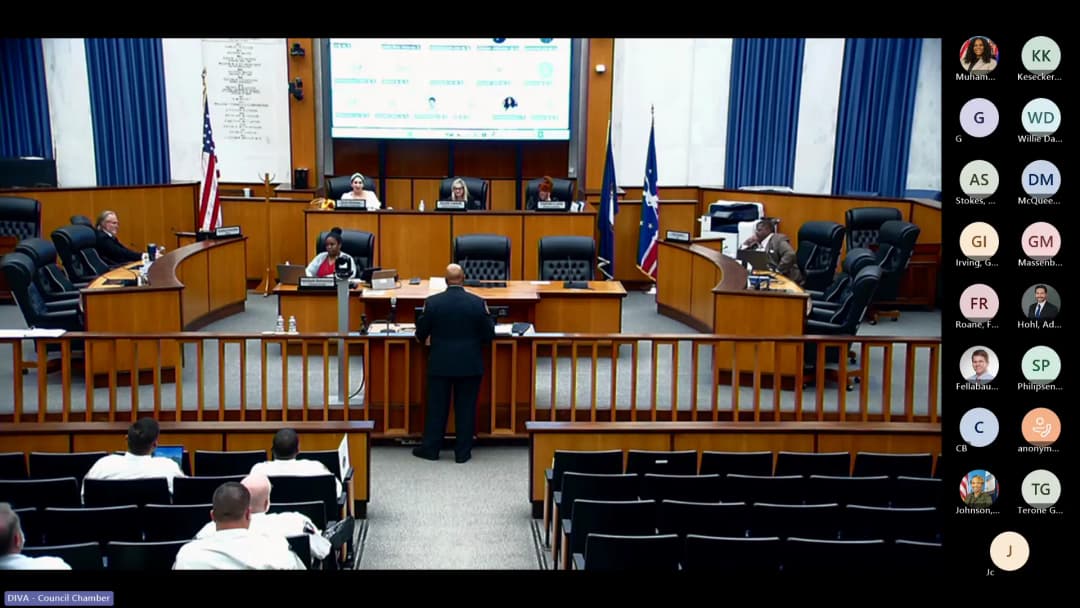
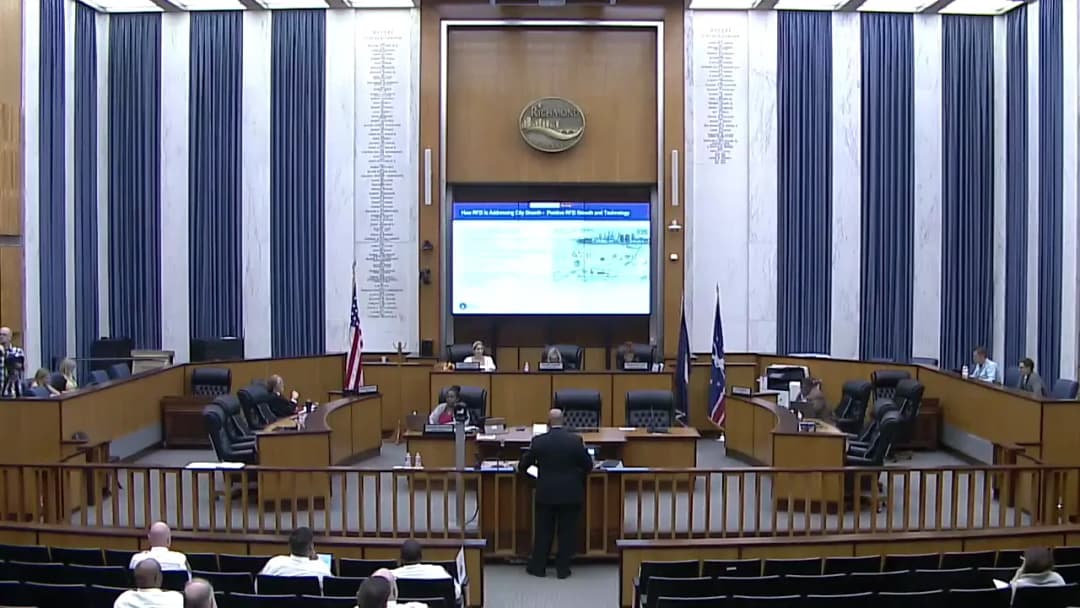
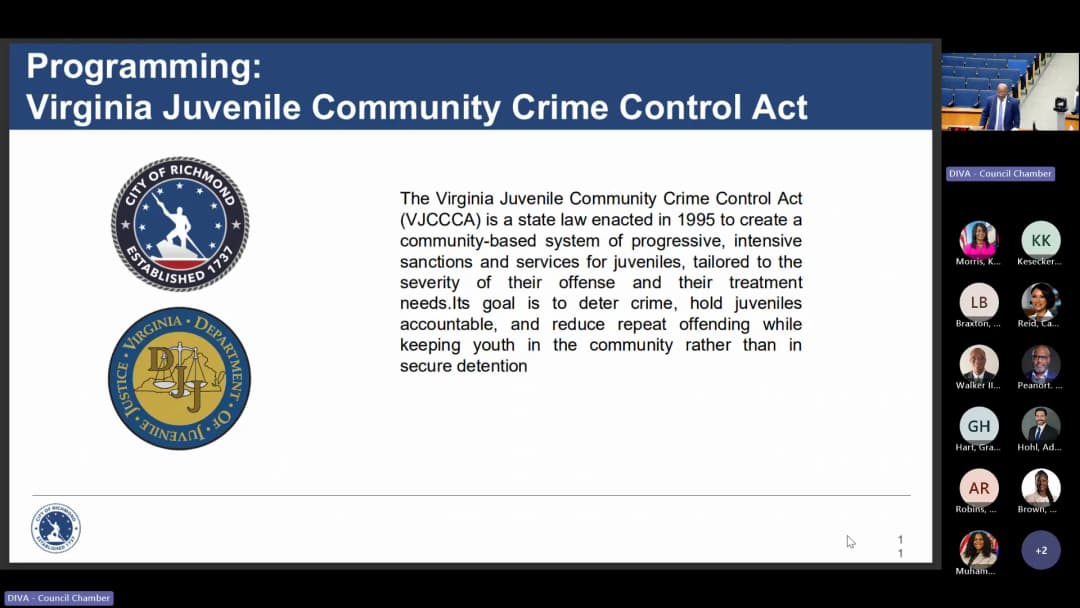
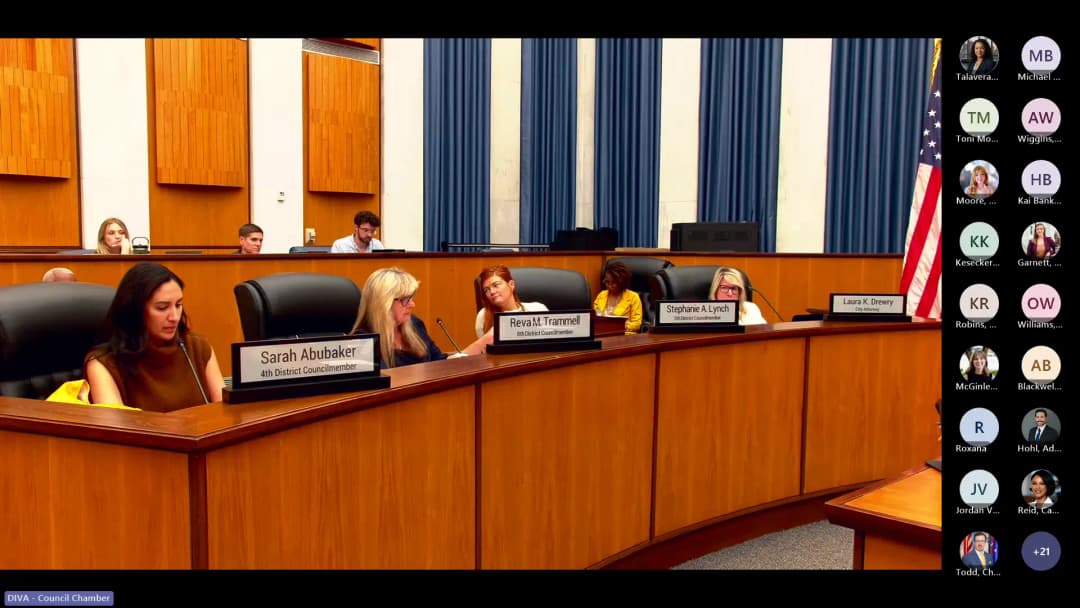
The Education and Human Services Committee of the Richmond City Council met on June 11, 2026, at approximately 9:45 AM. The committee heard an extensive update on gun violence prevention efforts and the alignment of the Department of Justice Services, received a human services update from the Deputy Chief Administrative Officer, and considered several ordinances related to opioid settlement funds, shelter operations, and after-school programming. All items were approved unanimously. Discussion Items - Gun Violence Prevention and Justice Services Update: Greg Hopkins, Director of the Department of Justice Services, presented a detailed overview of gun violence prevention efforts. He highlighted the alignment of the Office of Gun Violence Prevention with Justice Services, focusing on primary, secondary, and tertiary prevention. Key data: Black residents accounted for the majority of shooting victims; males and young adults remain highest risk; highest concentrations of shootings in East End and North Side. Safer Communities grant (funded by Virginia Department of Criminal Justice Services) has impacted over 16,000 residents through 395 program activities, representing $3.2 million in violence prevention investments. The Trauma Healing Response Network logged 70 violence-related alerts, conducted 900+ wellness checks, coordinated 120 emergency relief requests, and allocated $35,000 in emergency assistance. The Office of Gun Violence Prevention is partnering with the National Institute for Criminal Justice Reform to develop a five-year strategy plan. Committee members praised the work and asked about metrics, VAWA transfers, and victim fund access. - Human Services Update: Amy Popovich, DCAO for Human Services, provided updates on upcoming Juneteenth events, the RVA.gov/summer website for parks and rec opportunities, Parks and Recreation now fully on 311 (about 200 requests in the last month), and the Richmond Free Press gifting its materials to Richmond Public Libraries. She also noted that Director Greg Hopkins testified in Washington D.C. on gun violence prevention. - Ordinances 2026-140 and 2026-141 (Opioid Settlement Funds): Anna Jones, Opioid Response Strategist, presented these ordinances. The first authorizes acceptance of $1,164,547.84 from the National Opioid Settlement Fund. The second transfers $300,000 to the Medication Assisted Treatment (MAT) pilot program for the Sheriff's Office, which has served 178 unique individuals since January 2025. Individuals released from incarceration are 40 times more likely to experience a fatal overdose. Both ordinances were approved. - Ordinances 2026-143 and 2026-144 (Salvation Army Shelter): Steve Harms, Policy Advisor, presented extensions for the Salvation Army contract to operate a 50-bed men's year-round shelter and inclement weather shelter at 1900 Chamberlain Avenue, along with a lease for a resource and training center. The committee reflected on the successful expansion of homeless shelter services. Approved. - Ordinance 2026-139 (CARITAS Surge Shelter): Dominic Barrett, Senior Policy Advisor, presented this ordinance to transfer $80,000 from Venture Richmond line item to cover additional nights for the CARITAS Surge Shelter due to extreme weather and Winter Storm Fern. Approved. - Ordinance 2026-142 (YMCA After-School Program): Eva Collin, Senior Policy Advisor, presented a grant contract with the YMCA of Greater Richmond to operate low-cost after-school programming at six elementary schools: Francis, Redd, Cardinal, Munford, Holton, and Fox. The contract covers the school year just concluded. Discussion included capacity constraints, licensing requirements, and the broader child care crisis. The committee asked about penetration rates for DSS child care subsidies; staff committed to follow up on that data. Key Outcomes - Approvals: All six ordinances (2026-139 through 2026-144) were moved to the full City Council with unanimous recommendations for approval (Councilman Brexton, Vice Chair Jones, Chair Lynch voting aye). - Follow-up: Staff (Jackie Hale) will follow up on DSS subsidy penetration rate data and removal of barriers to access. - Next Meeting: The committee will meet next on Thursday, July 9, 2026, at 2:00 PM. No presentations are currently scheduled; plans for fall and early 2027 presentations will be discussed.
PUBLIC SAFETY 51% · HOMELESSNESS 14% · YOUTH PROGRAMS 14% · COMMUNITY ENGAGEMENT 7%
92
JUN 9, 2026 · RICHMOND, VIRGINIA · CITY COUNCIL
Richmond City Council Formal Meeting - June 9, 2026

The Richmond City Council held its formal meeting on June 9, 2026, at approximately 6:00 PM. The meeting included appointments, public comments, approval of a consent agenda, and several regular agenda items. Key actions included adopting a street renaming, a sidewalk snow and ice removal ordinance amendment, a Mosby Court South redevelopment preliminary plan, property sales for a major south side development, a real estate tax deferral program, and a change to emergency medical call routing. Consent Calendar - Appointments: Council approved a slate of board and committee appointments as recommended by the standing committees (unanimous vote). - Consent Agenda Items (adopted unanimously): - Ordinance 2026-087: Renaming the 2300 block of Rosewood Avenue as "James Jimmy Lee Bracey Way" to honor the late coach and mentor. - Ordinance 2026-089: Updating the city's sidewalk snow and ice removal ordinance, changing penalties from a criminal fine of up to $250 to a civil penalty of $100, with carveouts for seniors and persons with disabilities, and exemption during declared states of emergency. - Ordinance 2026-106: Approving the Mosby Court South Redevelopment Preliminary Community Unit Plan (CUP) for approximately 478 units on a 12.7-acre site. The plan includes a tenant bill of rights and a commitment to ongoing community engagement every 90 days. Planning Director Kim Vonk confirmed the plan aligns with the Richmond 300 Master Plan and is a framework for future phased final plans. - Other consent items (ordinances 2026-076, 2026-091, 2026-013, 2026-116 through 2026-119, 2026-121, and resolution 2026-R023) were approved without discussion. Public Comments & Testimony - Martin Gary (Shaco Arts and Culture Corporation) spoke in support of designating the Shaco district as an official arts and culture district, emphasizing economic growth and community connection. - Mark Ollinger (resident, Oakwood Avenue) spoke in opposition to the Mosby South redevelopment plan (Item 8), citing insufficient community outreach, lack of green space and tree preservation, and lack of clarity on affordable housing for households at 40-80% of area median income. He noted the illustrative plan showed up to 500 units but lacked promised amenities. - Roderick Nesmith (RRHA CEO) and Cheryl Hampton (RRHA Senior VP) spoke in favor of the Mosby South plan, highlighting tenant support, a tenant bill of rights, and that the plan is preliminary with future design refinements. - Thomas Courtney (resident and landlord) spoke in favor of the sidewalk snow/ice ordinance (Item 3), citing non-compliance by institutional landowners like VMFA Foundation during January storms. - Al Hutchinson, Charlene Hinton, Warren Goldsboro, Diane Cottman, and Mary Richardson spoke in favor of the street renaming for James Bracey, sharing personal stories of his mentorship and impact on youth athletics and life skills. Discussion Items - Mosby Court South Preliminary CUP: Councilmembers discussed the plan's parking, green space, and tree canopy concerns. Councilmember Gibson questioned alignment with the Master Plan and requested conditions; Director Vonk noted parking was overestimated due to financing requirements and that future final plans could improve green space. Councilmember Robertson emphasized the long community process and income mixing for residents. - Sidewalk Snow/Ice Ordinance: Councilmember Trammell expressed concern about burdening seniors and disabled residents; Vice President Jordan clarified the ordinance is complaint-driven, shifts to civil penalty, and includes emergency exemptions. The council accepted explanations. - Commerce Road Property Sale (Items 15-17): Director Andrew Rogers presented three ordinances to accept a quitclaim deed from the school board and declare surplus and sell two parcels at 1461 and 1451 Commerce Road to City Central LLC for $4.7 million and $2.6 million, respectively, for a mixed-use development with over 3,000 multifamily units, nearly 1,000 for-sale units, and grocery/community amenities. Councilmember Gibson opposed, citing city code requiring competitive bidding (Section 8-60) and past undervaluation of school property. The motion passed 8-1, with Gibson voting no. - Real Estate Tax Deferral Program (Item 20): Ordinance 2025-282, patroned by Councilmember Abubaker, created a deferral program for certain real estate taxes per state code, intended as an anti-displacement tool ahead of a property tax assessment unfreeze in two years. Adopted unanimously. - E911 Call Routing to RAA (Item 21): Ordinance 2026-059, patroned by Councilmember Trammell, requires the Department of Emergency Communications (DEC) to route emergency medical service calls to the Richmond Ambulance Authority (RAA). Discussion highlighted data showing DEC's non-compliance rate of 29% vs RAA's 6% (based on International Academies of Emergency Dispatch standards) for the period October 1, 2024 – March 31, 2025. CAO Donald supported the change but emphasized co-location for long-term efficiency and cost savings ($2-3 million). Councilmembers Lynch and Gibson noted the data was alarming and that implementation should be thoughtful. The ordinance includes a 30-day implementation period with flexibility. Adopted unanimously. - Amendments and Continuations: Several items were continued to later meeting dates, including ordinance 2026-093 to July 27, ordinances 2026-102 and 2026-120 to June 22, and ordinances 2025-231 and 2026-090 (collective bargaining) amended and continued to June 22. Key Outcomes - Consent Agenda: Approved unanimously (9-0) including the street renaming, sidewalk ordinance amendment, Mosby South preliminary CUP, and other items. - Commerce Road Property Sale (Items 15-17): Adopted 8-1 (Councilmember Gibson voted no). - Real Estate Tax Deferral Program (Item 20): Adopted unanimously. - E911 Call Routing to RAA (Item 21): Adopted unanimously. Implementation to be coordinated with administration; public safety committee to return with a co-location implementation plan. - Appointments: Approved. - Minutes: Minutes from May 26, 2026, meetings approved as presented. - New Legislation: Items 3-27 introduced and will be available online June 10, 2026. - Next Steps: The public safety committee will work with the administration on a detailed implementation timeline for the E911 change and co-location. Community meetings for Mosby South will continue every 90 days. The sidewalk ordinance becomes effective after publication.

PUBLIC SAFETY 26% · LAND USE AND ZONING 17% · PROCEDURAL 10% · COMMUNITY ENGAGEMENT 9%
93
JUN 8, 2026 · RICHMOND, VIRGINIA · CITY COUNCIL
Richmond City Council Formal Meeting - June 8, 2026

The Richmond City Council held a formal meeting on June 8, 2026, at 6:00 PM (presumed). The meeting covered public comments, consent agenda items, and several regular agenda items including real estate sales, a tax deferral program, and a change to E911 call routing. Key outcomes included the adoption of a consent agenda with amendments, approval of property sales for a major south side development, a new real estate tax deferral program, and a mandate to reroute emergency medical calls to the Richmond Ambulance Authority. Consent Calendar - Appointments: Approved by unanimous vote (9-0) as recommended by standing committees. - Amendments to Agenda: Several items were continued or moved from consent to regular agenda (e.g., Items 5, 6, 13, 14, 19, 22, 23, 24). The amended agenda was adopted 9-0. - Consent Agenda Adoption: The consent agenda (Items 1–4, 7–12, 14, 18) was adopted by a vote of 9-0 after public hearing and council discussion. Public Comments & Testimony - Martin Gary (Shaco Arts and Culture Corporation) spoke in support of establishing the Shaco District as an official arts and culture district, asking for council support. President Newbill noted the task force was already considering the matter. - Mark Ohlinger (resident of Oakwood Avenue) spoke in opposition to consent agenda Item 8 (Mosby South redevelopment preliminary plan), arguing the plan has too many units, too little green space, inadequate community outreach, and vague affordable housing commitments. - Thomas Courtney (First District resident and landlord) spoke in favor of Item 3 (sidewalk snow/ice removal ordinance update), supporting it as a reasonable clarification that holds large institutional landowners accountable. - Al Hutchinson, Charlene Hinton, Warren Goldsboro, Diane Cottman, and Mary Richardson spoke in favor of Item 2 (street renaming for James “Jimmy” Lee Bracey), sharing personal stories of Coach Bracey’s mentorship and positive impact. Council members also expressed support. Discussion Items - Mosby Court South Redevelopment (Consent Agenda Item 8): Councilwoman Gibson questioned whether the preliminary plan aligns with the city’s master plan and raised concerns about green space and tree canopy. Planning Director Kevin Vonk explained the plan sets a framework for future detailed plans, and the city does not have minimum parking requirements but financing agencies do. He noted the plan is likely over-parked but designed to allow future conversion of parking to green space. Councilwoman Robertson emphasized that the plan provides mixed-income opportunities and received community support from public housing residents. The consent agenda was adopted 9-0. - Sidewalk Snow/Ice Removal Ordinance (Consent Agenda Item 3): Councilwoman Trammell initially expressed strong opposition, citing burdens on seniors and disabled residents. Vice President Jordan clarified the ordinance changes it from a criminal to a civil penalty (max $100), includes flexibility during emergencies, and has carve-outs for seniors and disabled. Trammell withdrew her opposition and voted aye. - Commerce Road Property Sale (Items 15–17): Angie Rogers (Economic Development) presented the plan to accept a quitclaim deed from the school board, declare surplus, and sell two parcels to City Central LLC for a total of $7.3 million to facilitate a large mixed-use development with over 3,000 rental units and nearly 1,000 for-sale units, including affordable units. Councilwoman Gibson opposed, arguing the city is bypassing its own surplus law (Section 8-60) and that similar past deals shortchanged schools. The three ordinances were adopted 8-1 (Gibson voting no). - Real Estate Tax Deferral Program (Item 20): Councilwoman Abu Baker presented this as an anti-displacement tool ahead of a tax assessment unfreeze. The ordinance adds a deferral program for certain real estate taxes under state code. Passed unanimously (9-0). - E911 Call Routing to Richmond Ambulance Authority (Item 21): Councilwoman Trammell introduced the ordinance requiring the Department of Emergency Communications to route E911 medical calls to RAA. She cited data showing 29% non-compliance with call answering standards under DEC vs. 6% when RAA handled calls. Chip Decker (RAA CEO) supported, stating the change would improve response times. Councilwoman Gibson noted the data was alarming and that the city is currently out of compliance. Councilwoman Jones asked about critical events and outage handling. Vice President Jordan questioned why the earlier change to in-house dispatch failed and called for understanding root causes. Administration (Mr. Donald) supported the change but stressed the need for a thoughtful implementation plan and co-location to save costs. The ordinance passed 9-0, with a provision for phased implementation and a subsequent paper to address co-location. - Amendments to Continued Items (Items 19 and 22): Item 19 (special use permit at 3219 Tuxedo Boulevard) was amended to modify number of dwellings and continued to June 22. Item 22 (collective bargaining procedures) was amended to further modify procedures and continued to June 22. Both motions passed unanimously. Key Outcomes - Consent Agenda Adopted (9-0) including the Mosby South redevelopment preliminary plan, sidewalk snow/ice ordinance update, and street renaming for James Bracey. - Commerce Road Real Estate Transactions Approved (8-1): City will accept school board quitclaim deed, surplus, and sell to City Central LLC for $7.3 million for mixed-use development. - Real Estate Tax Deferral Program Approved (9-0): New city code section enabling deferrals for eligible taxpayers. - E911 Medical Call Routing Changed (9-0): DEC must route emergency medical calls to RAA; implementation to be phased with a follow-up paper on co-location. - Two Items Amended and Continued: Item 19 (special use) and Item 22 (collective bargaining) continued to June 22, 2026 meeting. - Meeting Adjourned after reports and announcements.

PUBLIC SAFETY 28% · LAND USE AND ZONING 24% · COMMUNITY ENGAGEMENT 12% · PROCEDURAL 8%
94
JUN 8, 2026 · RICHMOND, VIRGINIA · CITY COUNCIL
Richmond City Council Informal Meeting - June 8, 2026

The Richmond City Council held an informal meeting on the evening of June 8, 2026, with all members present except Councillors Robertson and Lynch as initially stated in the roll call, though Councillor Robertson later participated in the discussion (a discrepancy noted in the transcript). The meeting covered the consent agenda, movement of several items to the regular agenda, a detailed discussion on emergency medical dispatch protocols, and an extensive update on the 2026 General Assembly session and its impacts on the city. Consent Calendar - Items 1–4 (Ordinances 2026-076, 2026-087, 2026-089, 2026-091): Approved as recommended by the Governmental Operations Standing Committee. - Item 5 (Ordinance not numbered): Continued to the July 27 council meeting. - Item 6 (Ordinance 2026-102): Continued to the June 22 council meeting per patron request. - Item 8 (Ordinance 2026-106.121): Committee referral waived. - Items 15–17 (Ordinances 2026-122, 2026-123, 2026-124): Moved from consent to the regular agenda after a request by Councilwoman Gibson and consensus of the council. These items involve the sale and transfer of property from Richmond Public Schools. - Item 18 (Resolution 2026-R023): Retained on the consent agenda with committee referral waived. Discussion Items - Movement of Items 15–17 to Regular Agenda: Councilwoman Gibson requested the move, citing concerns over proper compensation for schools and compliance with surplusing code. Councilwoman Robertson opposed the move, arguing the land transfer had been extensively discussed and was important for development. Councilman Breton supported moving to regular agenda for thorough public review. The council reached consensus to move the items. - Item 21 (Ordinance 2026-059) – Emergency Medical Dispatch: This ordinance, which would revert 911 medical call-taking from the Department of Emergency Communications (DEC) back to the Richmond Ambulance Authority (RAA), was discussed at length. Chip Decker (CEO of RAA) stated his organization is ready to resume the role. Multiple councilmembers (Jones, Robertson, Trammel, Alba-Backer, Jordan) expressed the need for a clear implementation plan, including timelines, staff training, and backup procedures, before final approval. Councilwoman Alba-Backer emphasized that the decision to revert calls is separate from future co-location discussions. A motion to continue the item pending an implementation plan was made but lacked a second; the item remained on the regular agenda for the formal meeting. - 2026 General Assembly Session Update: Devin Cabot of Two Capitals Consulting presented a comprehensive overview of legislation passed and vetoed during the 2026 session. Key topics included: - Paid Family Medical Leave: New statewide program effective 2028, with payroll contributions starting April 2028. - Cannabis, Skill Games, Collective Bargaining: All three major bills were vetoed by Governor Spanberger after the legislature rejected her amendments. - Affordable Housing: Richmond's top priorities—anti-rent gouging, inclusionary zoning, and the longtime owner occupancy program (LOOP)—saw mixed results. Inclusionary zoning was signed into law (effective July 2027). LOOP remains in budget negotiations. Other housing bills passed include codification of the eviction reduction program, vacant building registration, faith-in-housing (by-right construction on nonprofit land, effective Jan 2027), and landlord accountability measures. - Speed Cameras: Multiple bills address fine usage, signage, warning periods, and uniform summons. - Other Legislation: Vape shop licensing transferred to ABC, PFAS testing requirements for industrial users, and gun violence prevention bills (safe storage, unattended firearms). - State Budget: Ongoing negotiations to close a $1 billion gap. Richmond's asks: $50 million/year for combined sewer outflow (aligned in both chambers) and $40 million/year for water treatment plant (Senate only proposed $20 million with a regional work group). Councilwoman Robertson requested a deeper dive on housing bills and their local implementation. Key Outcomes - Items 15–17 were moved to the regular agenda for formal consideration. - Item 21 received no final action; it remains on the regular agenda for the formal meeting, with council expectation for an implementation plan. - No other votes or decisions were taken during the informal session. - Councillor Robertson was added as a co-patron to items 20 and 22. - Council agreed to hold a July retreat to discuss the 2027 legislative package and local implementation of newly enacted laws.

MISCELLANEOUS 45% · PUBLIC SAFETY 26% · PROCEDURAL 9% · ECONOMIC DEVELOPMENT 6%
95
JUN 3, 2026 · RICHMOND, VIRGINIA · CITY COUNCIL
Richmond Planning Commission Meeting – June 3, 2026

Note on date: The meeting minutes list the date as Tuesday, June 2, 2026, but the user-provided directive states the meeting took place on June 3, 2026. The summary below reflects the user’s specified date while noting the discrepancy. The City of Richmond Planning Commission held a regular meeting on June 3, 2026, at 6:00 p.m. in the 5th Floor Conference Room of City Hall. Chair Rodney Poole presided. Commissioners addressed three continuances, approved a consent agenda, and debated a controversial special use permit for 31 single-family attached dwellings (later amended to 21 units, per minutes) on the 900 block of South Meadow Street. The meeting adjourned at 8:09 p.m. Continuances and Agenda Adjustments - Item 4 – Painted Planters (2nd Street Bus Platform): Continued to the July 7, 2026 meeting. Unanimous. - Item 5 – 2026 Public Art Commission Work Plan: Continued to the June 16, 2026 meeting. Unanimous. - Item 13 – 3317 Rear Monument Avenue Special Use Permit: Continued to the July 7, 2026 meeting at the request of the district council member. Unanimous. Consent Calendar - Items 6–11 (Ordinances 2026-117, 118, 119, 122, 123, 124): Unanimously recommended for approval to City Council. These included: - Special use permits for detached dwellings at 607 Arnold Avenue (up to 2 units) and 2720 Clearfield Street (1 unit). - Special use permit for a motor vehicle sales, rental, and service facility at 1710 Mactavish Avenue. - Acceptance of a quitclaim deed for 8.234± acres at 1461 Commerce Road from the School Board. - Declaring surplus and authorizing the sale of 8.234± acres at 1461 Commerce Road to City Central, LLC for $4,705,500. - Declaring surplus and authorizing the sale of 4.715± acres at 1451 Commerce Road to City Central, LLC for $2,694,500. No public comments were received on consent items. Public Comments & Testimony (Item 12 – 901–923 South Meadow Street) Supporters: - Doug Vaughan (President, The Virginia Home): Spoke as the property owner. Explained that proceeds from the sale will fund a new facility in Hanover County expanding services by 30 residents, creating a day program for 60 people, and honoring the founder with the name "Tens Lake." Supported the project. - Will Wilson (Chapter Lead, RVA YIMBY): Argued that increasing housing supply is essential to preserve the neighborhood’s character and affordability. Cited polling showing 69% of Richmonders support denser housing in areas currently zoned for detached homes. - Charlie Trochili (Randolph homeowner): Supported the 31 market-rate townhomes, stating they would be more accessible than eight single-family homes. Asserted that filtering would improve affordability and that parking concerns were overstated given garages and proximity to transit. Opponents: - Toni Mounce (1909 Blair Street): Opposed the density (31 units on 0.75 acres). Noted narrow one-way streets, existing fire truck access problems, loss of trees, stormwater runoff, and insufficient notice (7 days). Said she canvassed 250 homes and found no support. - Virginia Campbell (1800 block Claiborne, via online): Said she never received notice from the developer despite living within 150 feet. Raised concerns about trash/recycling storage, HVAC placement, construction disruption, and stormwater. Suggested 12–15 units would be more appropriate. - John Smith (1916 Blair Street, resident 70 years): Emphasized already congested streets and lack of parking; fire trucks have difficulty navigating. Opposed 31 units. - Tiffany Brown (1807 Blair Street): Supported increased density in principle but questioned fire and safety reports. Noted that three-story townhomes would be out of scale with existing two-story attached homes on Meadow. Cited her own accident on narrow streets. - Chris Rogers (811 South Meadow Street): Received no notice until a handwritten flyer. Described Winder Street as too narrow for his Prius. Argued 31 units would not be affordable for first-time buyers and proposed 15–18 units instead. - Chris Walsh (821 South Meadow Street): Agreed with neighbors about congestion. Asked for density reduction as a compromise. - Boz Boschen (online, 1st District resident): Pointed to the master plan’s prescribed density for the block (not specified) and noted the proposal is six times that (later corrected to 5x). Requested a memorandum of understanding for construction impacts and suggested waiting for the city’s code refresh. Discussion Items - Item 12 – Special Use Permit, 901–923 South Meadow Street: - Staff Presentation (Madison Wilson): The vacant block in the Randolph neighborhood is zoned R5. The applicant requested up to 31 single-family attached dwellings (57 units per acre, later corrected to 41). Staff recommended approval, finding consistency with the Richmond 300 Master Plan (Objective 14.5) and no detrimental congestion or welfare impacts. Twelve city agencies reviewed and approved the plan. - Applicant Presentation (Lory Markham, Aldo Partners): Defended the density as “missing middle” housing (sale prices targeted at high $400s to low $600s). Highlighted off-street parking (each unit has a garage), repaving of the alley, ADA ramp improvements, new fire hydrant, on-site stormwater management, pollinator gardens, and alignment with neighborhood design. Reported extensive outreach including multiple neighborhood association meetings, an on-site open house, and a happy hour. The Randolph and Bird Park associations did not take positions. - Commissioner Questions and Deliberation: - Commissioner White asked about assurance of applicant commitments (e.g., landscaping, paving). Markham noted ordinance conditions require Director of Public Works approval before certificates of occupancy. - Commissioners White and Knight acknowledged community parking concerns but noted the provision of garages and the need for increased density citywide. - Commissioner Rowe stated she would vote no, calling the density “too much… more than five times the existing density” and out of scale with single-story homes across the street. - Chair Poole expressed satisfaction that fire and utility questions were answered and supported the proposal. - Amendments: During the meeting, staff corrected the density figure from 57 to 41 units per acre. The motion was made and seconded (Commissioner White and Knight) to recommend approval. The minutes indicate the approved ordinance was amended to limit the number of dwellings to 21 units (the transcript contains no discussion of this change, creating a discrepancy). - Item 14 – Richmond INSPIRE Plan: A presentation on the citywide parks, recreation, and community facilities vision was received without action. Key Outcomes - Item 12 Vote: Motion to recommend approval to City Council carried 7–1 (Commissioner Rowe dissenting). The approval as recorded in the minutes limits the development to 21 single-family attached dwellings, not the 31 discussed in testimony. The discrepancy is noted. - Consent Agenda: All items (6–11) unanimously recommended to City Council. - Continuances: Items 4, 5, and 13 continued to future dates as listed. - Next Steps: The Planning Commission may hold a work session on June 16, 2026, to discuss draft master plan items.

LAND USE AND ZONING 79% · PROCEDURAL 9% · ECONOMIC DEVELOPMENT 5% · COMMUNITY ENGAGEMENT 2%
96
JUN 2, 2026 · RICHMOND, VIRGINIA · CITY COUNCIL
Richmond City Council OD Committee Meeting - June 2, 2026

The Organizational Development Standing Committee of the Richmond City Council met on June 2, 2026, at 5:15 PM. The committee addressed two ordinances proposing new citizen commissions related to the city's zoning code refresh and master plan implementation, heard public testimony, and received reports from Reynolds Community College and the National Community Survey. A motion to forward both ordinances to full council without recommendation was approved. Consent Calendar - Electronic Participation Approval: A motion to allow Councilmember Andrew Breton to participate via Microsoft Teams due to caring for a sick child was approved unanimously (7-0). - Minutes Approval: The minutes from the March 2, 2026 meeting were approved as presented. Public Comments & Testimony Public hearing was held on both ordinances (2026-092 and 2026-096) together. Speakers expressed the following positions: - Annika Shun (Housing Opportunities Made Equal) spoke in opposition, arguing the commissions would duplicate existing bodies (planning commission, zoning advisory council) and would not effectively reach renters, low-income homeowners, and minority communities. She noted the zoning advisory council has questioned its own influence. - Woody Rogers (Partnership for Housing Affordability, 5th District resident) spoke against the ordinances, stating they would delay urgently needed housing action. He cited a regional housing gap of 39,000 units and rising home prices. - Ted Leffler (2nd District resident) opposed the ordinances, calling them duplicative of existing public input processes and elections. - Patty Merrill (West Hampton Citizens Association, 1st District) supported the citizen advisory committee, citing a need for reliable data, feasibility studies, and transparency. She questioned the city's assumptions and plans to prevent displacement. - Susan Rabelo (3rd District resident) supported the commissions, citing evidence from other cities and national organizations that citizen advisory commissions reduce polarization and improve outcomes. - Robin Levy (5th District, Bird Park) supported the commissions, arguing independent review builds public trust for major policy changes. - Erin Trimmer (Richmond for All) supported Councilmember Gibson's ordinance, emphasizing accountability for Richmond 300 master plan goals and the need for resident input separate from developer influence on the zoning advisory council. Discussion Items - Ordinances 2026-092 and 2026-096: Councilmember Gibson (patron of 2026-096) explained her commission would ensure compliance with the master plan, include one homeowner and one renter per council district, and operate over 180 days. Councilmember Trammel (patron of 2026-092) shared that residents often misunderstand "code refresh" and that her commission would exclude developers. Councilwoman Jones questioned how the commissions would reach broader communities. Councilwoman Robertson urged obtaining data from staff on existing engagement efforts before deciding. Director of Planning and Development Review, Kevin Vonk, reported that the code refresh process has been ongoing for over two years, with a $1.2 million budget, $100,000 spent on engagement, over 100 community meetings attended, and at least 5,000 individuals directly engaged. He noted every household received a postcard. Councilwoman Trammel raised concerns about misinformation and lack of administration presence at some meetings. Councilmember Breton emphasized the need for data on utilities, schools, traffic, and other analyses. A motion to forward both ordinances to full council without recommendation was made by Councilwoman Abubacher, seconded, and approved (7-0). The committee requested a comprehensive report from staff for the Monday, June 8 informal meeting. - Reynolds Community College Annual Report: Dr. Paula Pando reported record investments, including a $5 million gift (largest in college history), $11 million in public grants (232% increase), and designation as a Leader College by the Aspen Institute. Highlights: 8% enrollment increase (9,376 students fall 2024), fall-to-spring persistence up to 81.7% (from 69% in 2021), nearly 1,200 Richmond residents enrolled, 242 early college graduates, and 100% job placement for first surgical technology cohort. She noted the college's role in the Eli Lilly $5 billion investment. Councilmembers praised the leadership and impact. - National Community Survey (Polco): Riyad Ali (City Auditor) introduced the survey, conducted with 4,000 randomly selected households (268 responses, ±6% margin of error). Results were weighted to reflect adult population. Highest-rated facets: education/arts/culture, parks/recreation, natural environment. Lowest-rated: safety, economy, utilities. Top priorities for residents: utilities, economy, mobility. Compared to 2021, most ratings similar; 6 improved, 33 declined. Councilwoman Gibson asked about response rate (7%, down from 9% in 2021) and how to use data to improve services and perceptions. Key Outcomes - Motion approved (7-0) to forward Ordinance 2026-092 and 2026-096 to full council without recommendation, with a request for staff to provide a comprehensive engagement report at the June 8 informal meeting. - Consent items approved (7-0): electronic participation for Councilmember Breton and minutes from March 2, 2026. - Presentation accepted: Reynolds Community College and Polco survey reports noted; administration to use data for future planning.

COMMUNITY ENGAGEMENT 32% · LAND USE AND ZONING 29% · WORKFORCE DEVELOPMENT 21% · PROCEDURAL 16%
97
JUN 1, 2026 · RICHMOND, VIRGINIA · CITY COUNCIL
Richmond City Council Organizational Development Standing Committee Meeting - June 1, 2026

The Organizational Development Standing Committee of the Richmond City Council met on June 1, 2026, to consider two ordinances establishing citizen commissions for the code refresh and master plan implementation, hear public testimony, receive reports from Reynolds Community College and the Polco community survey, and forward the ordinances to the full council. Consent Calendar - Approval of minutes from the Monday, March 2, 2026 Organizational Development Standing Committee meeting. The minutes were approved as presented. - Approval of Councilmember Breton's participation in the meeting by electronic communication. Motion carried unanimously. Public Comments & Testimony - Annika Shun (Housing Opportunities Made Equal, Homes for All Our Neighbors coalition) spoke in opposition to both ordinances, arguing the proposed commissions would not reach renters, low-income homeowners, minority communities, or Spanish speakers, and would duplicate existing bodies like the Planning Commission and Zoning Advisory Council. - Woody Rogers (Partnership for Housing Affordability, Fifth District resident) opposed the ordinances, stating they would delay urgently needed zoning changes and duplicate existing community engagement. He cited a housing gap of nearly 18,000 units in Richmond and 39,000 regionally, and noted that the income needed to buy a median-priced home rose from $65,000 to over $120,000 in five years. - A Second District resident (name not given) opposed both ordinances, citing existing public input processes and the need to avoid delays in addressing housing costs and homelessness. - Patty Merrill (West Hampton Citizens Association, First District resident) supported creating a citizen advisory committee, calling for a collaborative process with reliable data and information on displacement, affordability, and lessons from other cities. - Susan Rebelow (Third District resident) supported the proposed commissions, citing evidence from national organizations that citizen advisory commissions can reduce polarization and improve understanding of zoning reforms. - Robin Levy (Fifth District, Bird Park) supported an independent advisory body for thorough due diligence and public trust. - Erin Trimmer (Richmond for All) supported Councilmember Gibson's ordinance for a resident planning review commission, emphasizing accountability for Richmond 300 goals and the need for transparency. Discussion Items - Ordinance 2026-092 (patroned by Councilmember Gibson) would establish the Code Refresh Review Commission to develop recommendations for a rewrite of the zoning ordinance. The commission would include two members per council district (one homeowner, one renter), operate over 180 days, and focus on compliance with the master plan, displacement, environmental impacts, historic resources, and pedestrian safety. - Ordinance 2026-096 (patroned by Councilmember Trammell) would establish the Resident Planning Review Commission to advise on master plan implementation. Councilmember Trammell expressed concerns about the mayor's planned meeting on June 15, 2026, and about misinformation in her district. - Councilmember Jones questioned how the commissions would engage the broader community, given that many residents are unaware of code refresh. Councilmember Gibson responded that public meetings (four required, two south of the James and two north) would increase visibility. - Councilmember Robertson requested information from staff on existing engagement efforts before deciding. Director Kevin Javon (Planning & Development Review) reported that the code refresh process began in February 2024, with a $1.2 million budget (including $100,000 on engagement), a Zoning Advisory Committee starting June 2024, over 5,000 individuals directly engaged, and a postcard sent to every household in December 2025. He committed to providing a comprehensive engagement report by the next informal meeting. - Councilmember Abubacher moved to forward both ordinances without recommendation to the full council on June 22, 2026, to allow time for additional information. The motion was seconded and passed unanimously. - Presentation by Dr. Paula Pando, President of Reynolds Community College: Reported record enrollment (9,376 students fall 2025, up 8%), fall-to-spring persistence rising from 69% (spring 2021) to 81.7%, nearly 1,200 Richmond City students enrolled, $2.6 million in scholarships awarded to city residents, and a $5 million gift—the largest in college history. She highlighted partnerships with VCU, Bon Secours, and Eli Lilly (which will create 600 jobs paying over six figures). The college was designated a Leader College by the Aspen Institute. - Presentation by Riyadh Ali (City Auditor) and a Polco representative on the 2026 National Community Survey: 268 completed surveys (margin of error ±6%). Highest-rated facets: education/arts/culture, parks/recreation, natural environment. Lowest-rated: safety, economy, utilities. Utilities and economy had the largest quality-importance gaps. Most ratings were similar to the 2021 survey; six were higher, 33 lower. Residents view Richmond positively overall and intend to stay. Key Outcomes - Minutes approved. - Councilmember Breton's electronic participation approved. - Ordinances 2026-092 and 2026-096 forwarded to full council without recommendation, with a request for additional information from the administration by the June 8 informal meeting. - Reports from Reynolds Community College and the Polco community survey were received and noted.

LAND USE AND ZONING 34% · COMMUNITY ENGAGEMENT 28% · WORKFORCE DEVELOPMENT 20% · PROCEDURAL 17%
98
MAY 28, 2026 · RICHMOND, VIRGINIA · CITY COUNCIL
Public Safety Standing Committee Meeting - May 28, 2026

The Richmond Public Safety Standing Committee met on May 28, 2026, to receive public testimony on conditions at the Richmond City Justice Center, consider an ordinance to reroute 911 EMS calls to the Richmond Ambulance Authority, and hear presentations from the Fire and Police Chiefs on response times, traffic enforcement, and inter-agency collaboration. Consent Calendar - Approved the minutes from the March 24, 2026 meeting as presented. Public Comments & Testimony - Moni Guiatt testified on behalf of inmates at the Richmond City Justice Center, describing systemic failures in providing medically compliant meals, retaliation against inmates who advocate for medical needs, and a specific case where a cardiac inmate was denied water for seven hours while in solitary confinement, leading to hospitalization for dehydration and risk of kidney failure. She requested policy reforms including weekly dietary verification, a ban on retaliation, mandatory hydration and medication monitoring, and monthly oversight reporting to the council. - Sheriff Antoinette Urban responded that the jail recently passed its Board of Local and Regional Jails audit, medical care is provided by a contracted company (Medical) with 45 staff, and that she has a risk manager overseeing compliance. She noted HIPAA restrictions on discussing individual cases but offered to speak privately with the speaker. - Council members expressed serious concern and requested that the sheriff provide a follow-up presentation at a future committee meeting. Discussion Items - Board Vacancy: Deputy City Clerk Kylie Kessaker presented a reappointment for Aben Thomas (8th district) to the Advisory Board for Assessment of Towing Fees and Storage of Vehicles for a three-year term. The committee voted to forward the recommendation to the full council. - Ordinance 2026-059 (911 EMS Call Routing): Stephen Willoughby, Director of Emergency Communications Preparedness and Response, opposed the ordinance, arguing the current single call center model improves clarity, reduces costs, and aligns with best practices. He cited a 34% drop in average time to determine the initial determinant and stated that moving to a dual center would double costs and increase response times. Chip Decker, CEO of Richmond Ambulance Authority (RAA), supported the ordinance, stating RAA maintains capacity and accuracy, and that the state is agnostic on operational responsibility. Council members questioned accuracy rates and cost data, noting a lack of clear comparison metrics. The committee voted 3-0 to forward the ordinance to full council with a recommendation to approve. - Fire Department Presentation: Chief Jeffrey Siegel presented on planning for city growth, including new stations, renovation of the burn building for live training, community risk reduction (visiting over 14,500 homes, installing 450 smoke alarms), overtime reduction (54% reduction since March through proactive hiring and improved morale), and active shooter training in coordination with police. He noted that negative morale in climate surveys dropped from 27% to 8%. Council praised the department's efforts, discussed challenges with high-rise building access and key holder response, and asked about recruiting Hispanic firefighters. Chief Siegel committed to follow up on key holder data. - Police Department Presentation: Chief Rick Edwards presented crime statistics for 2026: homicides down 57%, non-fatal shootings down 33%, commercial robberies down 65% (largely due to vape shop closures), and overall violent crime down 4% despite increased domestic violence reports. He provided updates on speed and red-light camera programs (10,543 total citations), monthly traffic enforcement blitzes, digital ticketing implementation, and active shooter training with the fire department (Alert training). He discussed the need for a family justice center and second responders program to address domestic violence. Council members expressed appreciation and discussed domestic violence coordination with child protective services. Key Outcomes - Committee approved minutes and forwarded the board vacancy appointment to full council. - Ordinance 2026-059 was forwarded to full council with a recommendation to approve (vote 3-0). - Sheriff Urban agreed to provide a follow-up presentation at a future meeting regarding conditions at the jail. - Committee will follow up on illegal dumping, Commonwealth attorney concerns on justice services, and the second responders program. - Meeting adjourned with no further business.

PUBLIC SAFETY 75% · EMERGENCY COMMUNICATIONS 8% · COMMUNITY ENGAGEMENT 7% · PERSONNEL MATTERS 3%
99
MAY 28, 2026 · RICHMOND, VIRGINIA · CITY COUNCIL
Richmond Public Safety Standing Committee Meeting - May 28, 2026

The Richmond Public Safety Standing Committee met on May 28, 2026, to address a range of public safety issues including conditions at the Richmond City Justice Center, a proposed ordinance regarding 911 emergency medical dispatch, and presentations from the Fire and Police Chiefs on response times, traffic enforcement, and violent crime reductions. Consent Calendar - The minutes from the March 24, 2026 Public Safety Standing Committee meeting were approved as presented without amendments. Public Comments & Testimony - Monique (speaking on behalf of inmates at the Richmond City Justice Center) described systemic failures in providing medically compliant meals, documenting that between March and May 2026 a cardiac-diagnosed inmate received non-compliant meals for months, medical staff refused weight checks, required security checks were missed for over two hours, and the inmate was denied water for seven hours in solitary confinement, leading to hospitalization at VCU Medical Center for dehydration and risk of kidney failure. She called for an independent audit, strict adherence to documented diets, a ban on retaliation, mandatory hydration and medication monitoring, and monthly oversight reporting to council. - Sheriff Dr. Antoinette Urban responded that she cannot discuss individual cases due to HIPAA, noted the jail recently passed its Board of Local and Regional Jails audit, and explained that medical care is provided by contracted vendor Mediko (45 staff) with oversight from her risk manager and accreditation team. She offered to speak privately with Monique. Committee members expressed serious concern and requested a follow-up presentation from the Sheriff at a future meeting. Discussion Items - Board Vacancy Packet: Deputy City Clerk Kylie Kessaker presented a reappointment application for Aben Thomas to serve a three-year term on the Advisory Board for the Assessment of Towing Fees and Storage of Vehicles. The committee voted unanimously to forward the recommendation to the full council. - Ordinance 2026‑059 – 911 Emergency Medical Dispatch: This ordinance would require the Department of Emergency Communications Preparedness and Response (DECPR) to route emergency medical 911 calls to the Richmond Ambulance Authority (RAA). - Stephen Willoughby, Director of DECPR, opposed the change, arguing it would double costs, create inefficiency, and that the current single‑call‑center model is data‑driven and consistent with best practices. He stated that DECPR is nationally accredited and that average time to determine the initial response has dropped 34% since the switch in July 2024. - Chip Decker, CEO of RAA, supported the ordinance, stating that RAA is accredited in medical call‑taking by the International Academy of Emergency Dispatch (IAED) and that the state statute on emergency medical dispatch is silent on operational responsibility. He argued moving back to RAA would add capacity and expertise without additional taxpayer costs, and that RAA’s accuracy rates are higher. - Committee members expressed frustration with incomplete data, particularly regarding comparative accuracy rates. Chair Trammel noted the state’s correspondence clarified that the state is agnostic on how localities choose to operate, contradicting the earlier administration argument that the switch was mandated. The committee voted unanimously to forward the ordinance to the full council with a recommendation to approve. - Presentation – Richmond Fire Department Response Times and Updates: Chief Jeffrey Siegel reported on strategies for a growing city, including adding four new units and two new fire stations, restoring the burn building at the training academy, and implementing dynamic staffing and community risk reduction. Key statistics: firefighters had visited approximately 17,000 homes (up from 14,500 in the presentation), installed over 450 smoke alarms, and achieved a 54% overtime reduction since March 2026 through proactive hiring and improved morale. A climate survey showed negative morale dropped from 27% to 8%. Chief Siegel also highlighted the rescue task force partnership with police for active shooter response. - Presentation – Traffic Enforcement and Safety: Chief of Police Rick Edwards provided crime updates: homicides down 57% year‑to‑date, non‑fatal shootings down 33%, robberies down 65% (largely from vape shop closures), and overall violent crime down 4%. For traffic enforcement, red light cameras had issued 10,543 citations and 6,535 warnings; speed cameras are active at multiple locations. The department is fully transitioning to digital ticketing. Chief Edwards also discussed the active shooter rescue task force training with the fire department, and noted a concerning rise in domestic violence incidents, which are now the second leading motive in homicides and non‑fatal shootings. He advocated for a family justice center and the return of a second‑responders program to better support domestic violence victims. Key Outcomes - The committee approved the minutes from the March 24, 2026 meeting. - The committee voted to forward the appointment of Aben Thomas to the full council. - The committee voted unanimously (3‑0) to forward Ordinance 2026‑059 to the full council with a recommendation to approve. - The committee received presentations from the Fire Chief and Police Chief and directed staff to follow up on a presentation from the Sheriff regarding jail conditions, a presentation on illegal dumping for next month, and a briefing from the Commonwealth’s Attorney on justice services and family justice center.

PUBLIC SAFETY 58% · EMERGENCY COMMUNICATIONS 25% · PROCEDURAL 10% · TRANSPORTATION SAFETY 4%
100
MAY 27, 2026 · RICHMOND, VIRGINIA · CITY COUNCIL
Richmond Planning Commission Meeting - May 27, 2026

The City of Richmond Planning Commission held a regular meeting on May 27, 2026, at 6:00 PM in the fifth-floor conference room of City Hall. Commissioners attended in person with one member participating virtually. The meeting covered adoption of the 2026 meeting schedule, continuances, a consent agenda, and three regular agenda items. Several public comments were heard. Note: The transcript references dates in 2025 (e.g., December 2, 2025), which are inconsistent with the stated meeting date of May 27, 2026. This summary reports the transcript content as presented, with the discrepancy noted. Consent Calendar - Ordinance 2025-227: Special use for an electric vehicle charging station at 3100 North Arthur Ashton Bar. - Ordinance 2025-229: Special use for up to one single-family detached and one two-family dwelling at 2111 Fairfax Avenue. - Ordinance 2025-230: Special use for up to four two-family dwellings at 2106 Red Street. - Ordinance 2025-235: Special use for up to two multifamily dwellings at 3609/3616 Contral Road and 4611/4705 Walmsley Boulevard. - Ordinance 2025-241: Special use for up to two single-family attached and one multifamily dwelling at 3021-3025 East Franklin Street. - UDC 2025-32: Final location, character, and extent review of reconciliation plaza renovation at 1400 Main Street. - UDC 2025-33: Concept location, character, and extent review of SHACO Project North Memorial at 1554 East Broad Street. All consent items were approved unanimously with conditions from the Urban Design Committee. Public Comments & Testimony - Linda Woods (Fulton resident) initially spoke during the consent agenda but corrected to address item 12. She opposed the Carlisle Avenue project, arguing it was inconsistent with neighborhood character, would increase parking congestion, and exacerbate affordability issues. - Holly Setzer (Fulton resident) echoed Woods’ concerns, noting the street is already congested and that the proposed lot sizes deviate from zoning standards. - Michael (online, representing neighbors) addressed item 13 (Tuxedo Boulevard), expressing concerns about density and supporting a continuance for community outreach. Discussion Items - Adoption of 2026 Meeting Schedule: Commission approved the schedule of Tuesday meetings at 6:00 PM, with one exception: November 2, 2026 (Monday) instead of November 3 (Election Day). - Continuances: - Ordinance 2025-014 and Subdivision 2025-03 (3618 Hawthorne Avenue): Continued to December 2, 2025, due to ongoing negotiations between the developer and neighborhood. - Ordinance 2025-215 (1705 Commonwealth Avenue): Continued to December 2, 2025, indefinitely; applicant had not responded. The commission warned against further continuances. - Item 12 – 1103 and 1105 Carlisle Avenue: Special use permit for up to four single-family detached dwellings on a 0.32-acre lot in the R5 district (Fulton neighborhood). Applicant amended to provide six off-street parking spaces (up from four). Staff recommended approval. Public opposition cited parking and character concerns. Approved 8-1 (Commissioner McKenzie voted no). The ordinance will be forwarded to City Council on November 10, 2025 (transcript date). - Item 13 – 3219 Tuxedo Boulevard: Special use permit for five single-family dwellings on a 12,500 sq ft lot (Creighton neighborhood). Applicant Mike Boone acknowledged no community engagement. Commissioner Donald requested a continuance for outreach. Continued to December 16, 2025, with public support. - Item 14 – UDC 2025-17: Final review of bridge replacement over Manchester Canal on Hull Street. The 104-year-old bridge will be replaced with a 63-foot-wide span, reducing travel lanes from 50 to 44 feet and widening sidewalks. Project cost $10.8 million (fully funded). Future lane configuration can match Mayo Bridge striping. Approved with conditions including Manchester-style lighting and coordination with Hull Street streetscape. Key Outcomes - Consent agenda: Approved unanimously. - 2026 meeting schedule: Approved unanimously. - Continuances: Granted for three items (Hawthorne Ave, Commonwealth Ave, Tuxedo Blvd). - Carlisle Avenue (Item 12): Approved by 8-1 vote; forwarded to City Council. - Tuxedo Boulevard (Item 13): Continued to December 16, 2025, for community outreach. - Bridge replacement (Item 14): Approved with UDC conditions.

LAND USE AND ZONING 42% · PROCEDURAL 24% · ENGINEERING AND INFRASTRUCTURE 21% · COMMUNITY ENGAGEMENT 7%
OPENPUBLICA · PUBLIC MEETING INDEXUPDATED DAILY · openpublica.com