Browse by city
Date range
Search help

Search titles, summaries, topics and stored transcripts together. Keywords may match separately; put the whole query in double quotes for a phrase. Matching follows word analysis, so punctuation is not exact. Both dates are included. Documents are not searched.

SHOWING 1071–1080 ENTRIES
1071
NOV 17, 2021 · SACRAMENTO, CALIFORNIA · UTILITIES RATE ADVISORY COMMISSION
Utilities Rate Advisory Commission Meeting - November 17, 2021

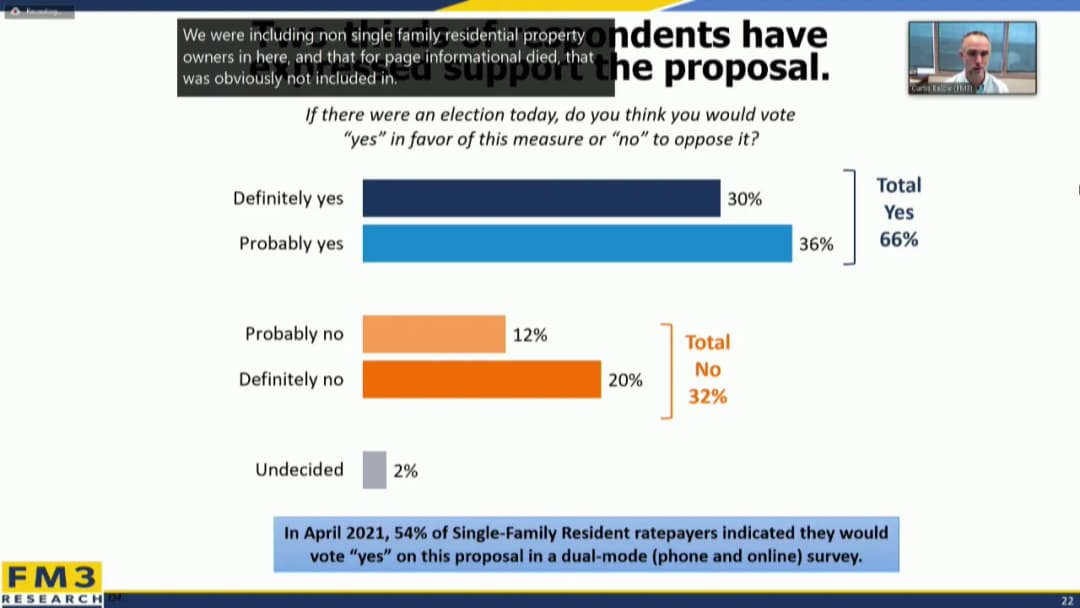
The Utilities Rate Advisory Commission (URAC) held a regular meeting on November 17, 2021, via Zoom, starting at 5:30 p.m. The meeting included a consent calendar, a public hearing on proposed rate adjustments for Recycling and Solid Waste (RSW) services, and a workshop on storm drainage rates. Commissioners present: Vice Chair Vander Werf, Commissioners Baring, Gutowski, and Lee. Chair Thomas and Commissioner Fidel were absent. The meeting adjourned after approximately 2 hours. Consent Calendar - Approval of October 27, 2021 Minutes: Approved unanimously (4-0). - Teleconferencing Meetings During COVID-19 State of Emergency: Received and filed. Public Comments & Testimony On Recycling and Solid Waste Rate Adjustment (Item 3): - Roz Farus: Questioned whether the city would apply for state SB 1383 funding; staff confirmed they are exploring grant opportunities. - Oscar C: Asked about future reporting to ensure program goals are met; staff described annual state reports and an April 2022 compliance deadline. - Alma Watson (phone caller, District 2): Opposed the rate increase, stating she is on a fixed income, has experienced rate increases without improved services, and uses only a small garbage can. She suggested the city use plan B funding if the majority protest. - Dana (phone caller, Riviera Town Homes): Opposed the increase, citing fixed income, vegetarian diet (no food waste), a private road (no need for street sweeping), and infrequent garbage/recycling use. She questioned fees for yard waste collection in winter. - Oscar C (Zoom caller): Opposed the rate increase, arguing it is unfair to add food waste to green waste while raising rates, and that it will burden the middle class and poor. - Additional callers experienced technical difficulties and did not complete testimony. On Storm Drainage Workshop (Item 4): No public comments were received. Discussion Items Item 3 – Public Hearing on Proposed Rate Adjustment for Recycling and Solid Waste Services - Staff (John Febbo, General Manager) presented a three-year rate adjustment to address: SB 1383 organics mandate (unfunded state requirement), COVID-19 impacts, reserve restoration, and fleet/equipment needs. The proposal would increase single-family residential rates (64-gallon container) by $3.83 per month on April 1, 2022, Jan. 1, 2023, and Jan. 1, 2024 (total $11.49, 26.98% increase). The rate includes street sweeping and supports a new food waste recycling program starting July 2022. Key statistics: 139,523 Prop 218 notices mailed, 195 written protests (16 invalidated). The fund would fall below its 90-day reserve without approval and become insolvent by FY 2025-26. - Commissioners discussed: outreach to low-income and mobility-limited residents for free kitchen countertop containers, protest categories (illegal dumping, service decrease, COVID-19), and inclusion of SURA rate assistance program. Staff confirmed a plan to deliver containers upon request. - Motion to recommend the rate adjustment to the Mayor and City Council; passed 4-0. Item 4 – Storm Drainage Rate Workshop 4 - Staff (Bill Busath, Director of Utilities) and consultant (FM3 Research) presented results of a second survey of property owners on a proposed storm drainage fee increase (first since 1996). Survey mailed to 8,000 property owners; 1,104 responses received (margin of error ±3%). Overall, 66% of returned ballots indicated support for the increase-only option. Support was strongest among single-family residential and industrial properties; retail/commercial was split. No material impact from the concurrent solid waste rate notice. The survey included information on how funds would be used (e.g., water source protection, sewage overflow prevention). - Next steps: Prop 218 protest mailer begins Nov. 29, 2021; a rate hearing at URAC in January 2022; city council authorization in February 2022; mail ballot election March 2022; adoption if successful by April 2022, with implementation July 1, 2022. - Commissioners requested bolder messaging on the 25-year span since the last increase and noted the importance of public outreach. The item was received and filed (no vote required). Key Outcomes - RSW Rate Adjustment: URAC voted 4-0 to recommend the proposed three-step rate increase to the City Council. The recommendation includes the new food waste recycling program and associated outreach. - Storm Drainage Fee: URAC received and filed the workshop information; the next step is a Prop 218 protest mailer followed by a formal rate hearing in January 2022.

PUBLIC ENGAGEMENT 22% · RECYCLING SOLID WASTE 19% · PUBLIC COMMENTS 13% · WASTE MANAGEMENT 12%
1072
NOV 16, 2021 · SACRAMENTO, CALIFORNIA · LAW AND LEGISLATION COMMITTEE
Law and Legislation Committee Meeting Summary - November 16, 2021

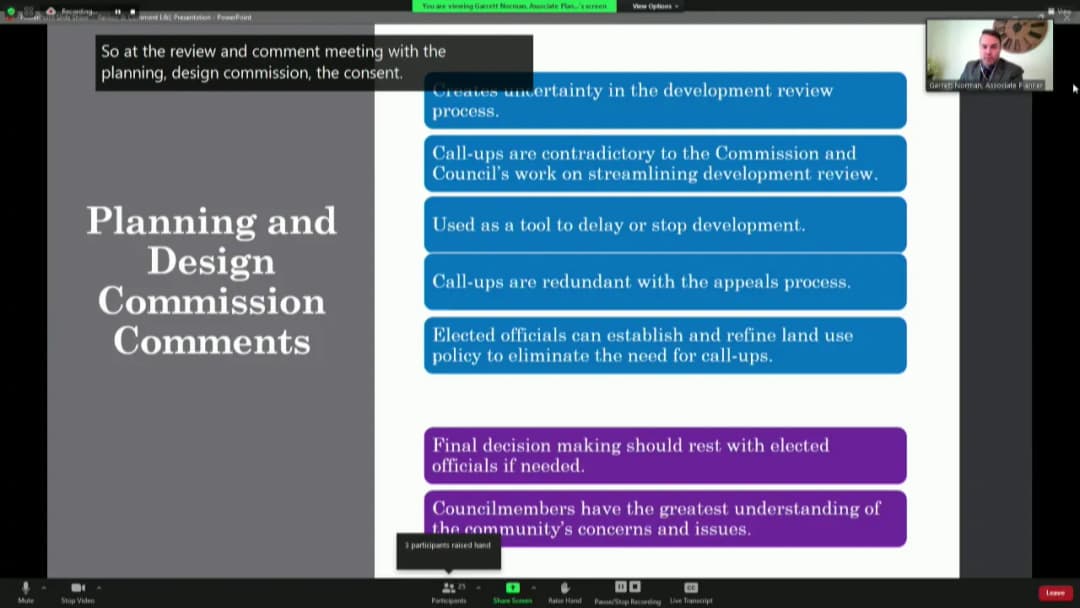
The Law and Legislation Committee of the Sacramento City Council met on November 16, 2021, via teleconference. The meeting included approval of the consent calendar, which featured a resolution supporting state and federal single-payer healthcare legislation, and discussion items on tenant protection programs and land use entitlement call-up provisions. Public comments were received. Consent Calendar - Approved the Law and Legislation Log (File ID: 2021-00270) by motion. - Reviewed and forwarded a Resolution in Support of CalCare (AB 1400) and Medicare for All (H.R. 1976) (File ID: 2021-01284) to the City Council for approval. Public Comments & Testimony - Members of the public provided comments during the discussion of the Tenant Protection Program Update. One speaker, Mr. Garrett, addressed the committee regarding the need to relay the conversation on the call-up provision to the full council, noting that the item would go to PFP (Planning and Finance Committee) that evening and to council on the 30th. Discussion Items - Tenant Protection Program Update (File ID: 2021-01227): The committee received and filed an update on tenant protection programs. Public comments were heard. - Update on Planning and Design Commission Discussion on Adding a Council Call-Up Provision in Title 17 for Land Use Entitlements (File ID: 2021-01223): The committee reviewed and commented on the Planning and Design Commission's input regarding a council call-up provision for land use entitlements. Key Outcomes - Consent Calendar adopted in one motion, including approval of the Law and Legislation Log and forwarding the single-payer healthcare resolution to the City Council. - Tenant Protection Program Update was received and filed. - The committee reviewed the Council Call-Up Provision discussion and provided comments for further consideration.

RENTAL HOUSING INSPECTION 28% · TENANT HARASSMENT 26% · LAND USE PLANNING 26% · HOUSING 12%
1073
NOV 15, 2021 · SACRAMENTO, CALIFORNIA · MEASURE U COMMUNITY ADVISORY COMMISSION
Measure U Community Advisory Committee Meeting - November 15, 2021

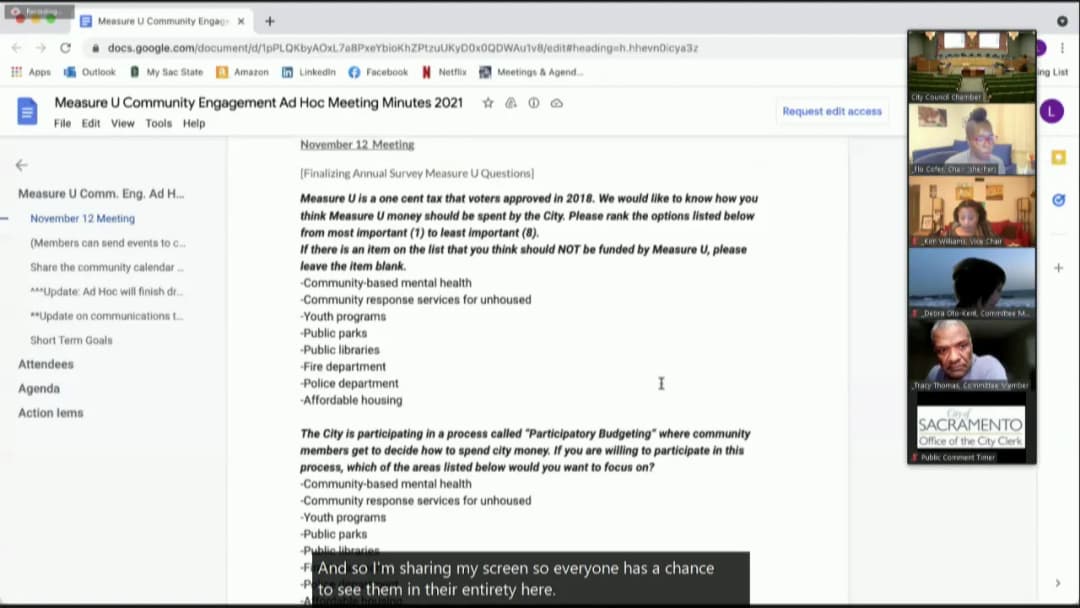
The Measure U Community Advisory Committee met on November 15, 2021, via teleconference to discuss participatory budgeting playbook development, midyear budget priorities, and a data request, among other items. Key debates centered on geographic targeting vs. citywide participation for the participatory budgeting pilot, and the committee approved several motions forwarding recommendations to the City Council. Consent Calendar - Items 4-8 (Teleconferencing During COVID-19, Final FY 2019/20 Annual Report, Approval of Meeting Minutes for Sept 20 & Oct 18, 2021, Agenda Log, Ad Hoc Committees Membership Roster) were approved in a single motion. Chair Cofer noted that the membership roster could be updated at her discretion, and a new short-term ad hoc was created for survey question finalization. Public Comments & Testimony - No public comments were made for matters not on the agenda. Discussion Items - Item 1: Participatory Budgeting Playbook Development: Key Elements – Members of the Participatory Budgeting Ad Hoc Committee (Members Oto-Kent, Kivel) presented proposed scope criteria using the Community Vulnerability Index, Healthy Places Index, and race/ethnicity data to prioritize neighborhoods for the $1 million pilot. Several committee members (Thomas, Perez, Sala, Mora) expressed concerns that this approach seemed like targeting, not broad participation, and urged broader community input. Others (Pray, Dickinson, Williams) argued that limiting scope is necessary for meaningful impact given limited funds. A motion to defer to the January meeting with clear agenda items (values, goals, FAQ, data questions) passed unanimously. - Item 2: Approval of Recommendations to City Council Regarding FY 2021/22 Midyear Budget Priorities – The committee discussed potential midyear budget adjustments, focusing on housing/homelessness (permanent shelter, supplementing not supplanting ARPA funds), youth program disaggregation (including Native American and Hmong youth), branding/logos for Measure U, and a centralized database of place-based investments. After discussion, a motion to deputize a small group to finalize recommendations to the Budget and Audit Committee passed unanimously. - Item 3: Approval of Letter to Council Requesting 9-1-1 Call for Service Data – The committee approved a letter to the City Council requesting 9-1-1 call data to inform future budgeting for the Department of Community Response. The motion passed unanimously. - Ad Hoc Committee Updates – The Community Communications Ad Hoc presented draft survey questions for the annual city survey, including a ranking of Measure U priorities and a participatory budgeting interest question. Due to the level of deliberation, Chair Cofer suggested forming a short-term ad hoc to finalize wording via email, which was later created. The Research on Universal Basic Income Ad Hoc reported a presentation is planned for January. The Measure U Community Advisory Committee Members Report on the Investment Committee noted updates from the Neighborhood Development Action Team and revised Inclusive Economic Development Investment Guidelines. - City Manager’s Office Report – Deputy City Manager Mike Jasso announced the retirement of Finance Director Dawn Holmes, thanking her for her service. Key Outcomes - Item 1 was deferred to the January 2022 meeting; the ad hoc was directed to incorporate feedback (clear agenda, FAQ, data questions, values/goals). - Item 2 passed unanimously with a framework for midyear recommendations (housing, youth, branding, data tool); a small group was deputized to finalize and submit. - Item 3 (9-1-1 data request) approved unanimously. - Consent Calendar (Items 4-8) approved unanimously. - A new short-term ad hoc committee (Members Mora, Sala, Oto-Kent, Kivel) was created to finalize the city survey questions within 48 hours. - Dawn Holmes' retirement was acknowledged with appreciation.

PARTICIPATORY BUDGETING 27% · COMMUNITY ENGAGEMENT 17% · PROCEDURAL 11% · BUDGET AND FINANCE 10%
1074
NOV 15, 2021 · SACRAMENTO, CALIFORNIA · CIVIL SERVICE BOARD
Civil Service Board Meeting - November 15, 2021

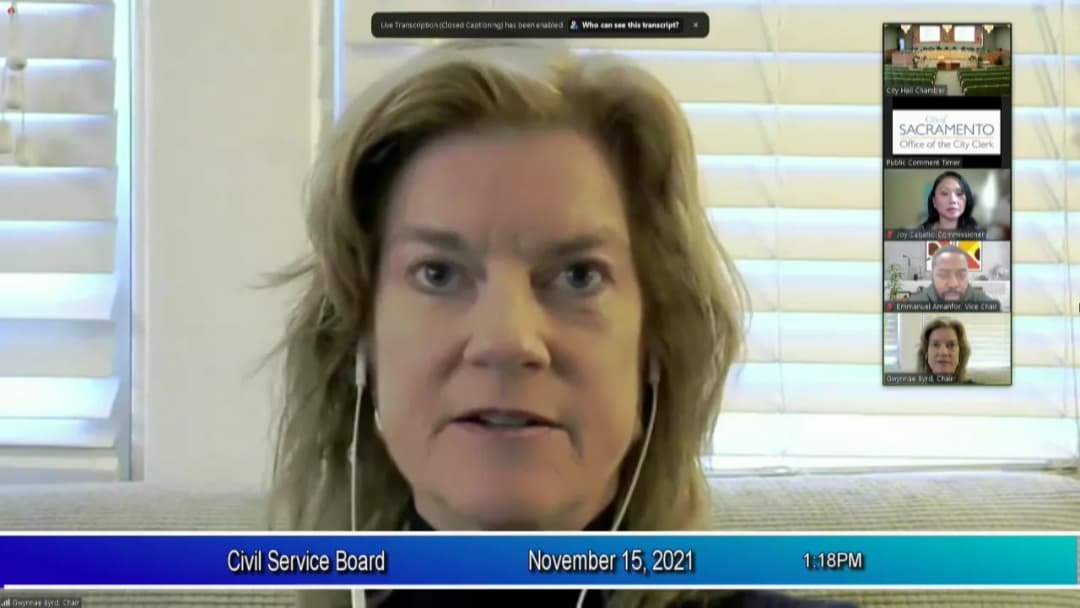
The Civil Service Board met on November 15, 2021, via teleconference. The meeting included a consent calendar, closed session, and announcement of a decision regarding an employee disciplinary matter. Consent Calendar - The board approved the consent calendar, which included receiving and filing a report on teleconferencing during the COVID-19 state of emergency. The approval of meeting minutes was not included due to a technical difficulty. The motion passed unanimously (Vice Chair Amafor and Board Member Kabadic voting aye; Chair Byrd aye; two members absent). Public Comments & Testimony - No members of the public provided comment during the open session. Discussion Items - The board adjourned to closed session pursuant to Government Code Section 54957 to discuss public employee discipline, dismissal, or release. No details of the closed session discussion were disclosed. Key Outcomes - The board voted to overturn the decision of the arbitrator and reinstate Mr. Neil, with no suspension or other side effects resulting from the incident. - The board concluded open session and adjourned.

PROCEDURAL 80% · PERSONNEL MATTERS 20%
1075
NOV 9, 2021 · SACRAMENTO, CALIFORNIA · PERSONNEL AND PUBLIC EMPLOYEES COMMITTEE
Personnel and Public Employees Committee Special Meeting – November 9, 2021

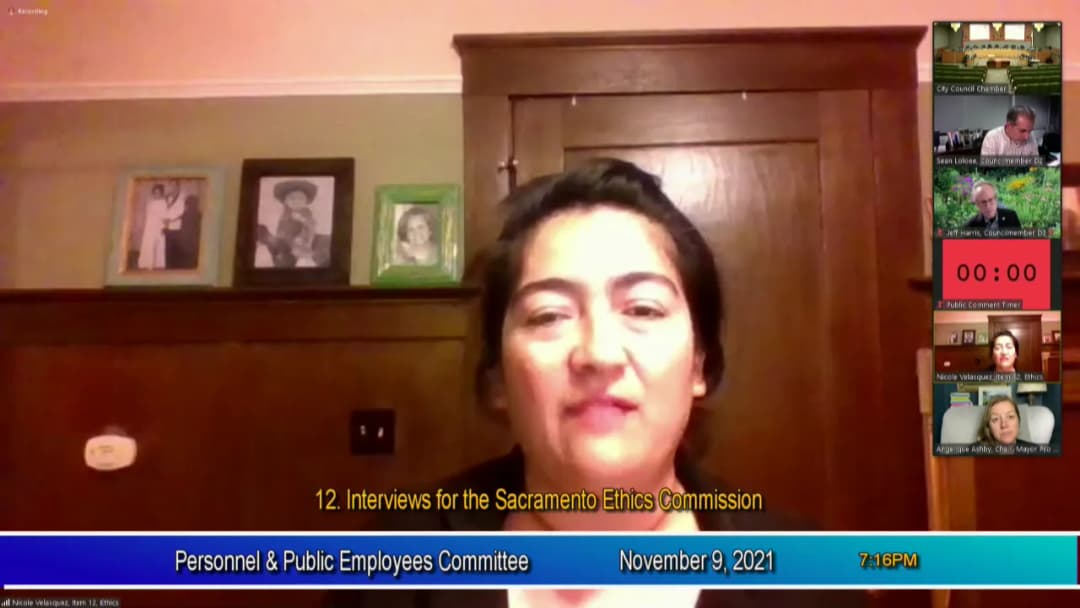
The Personnel and Public Employees Committee (PMPE) held a special teleconference meeting on Tuesday, November 9, 2021, beginning at 5:06 p.m. and adjourning at 7:53 p.m. The committee, chaired by Councilmember Angelique Ashby with members Jeff Harris and Sean Loloee (Councilmember Katie Valenzuela absent), conducted a lengthy agenda focused on interviews and appointments to eight city commissions and boards, as well as approving several consent calendar items. The meeting was held virtually due to the COVID-19 state of emergency. Consent Calendar The committee unanimously approved the consent calendar in one motion (3-0), which included: - Approval of meeting minutes from six prior meetings dating from October 27, 2020, through August 31, 2021. - Receive and file a report on teleconferencing meetings during the COVID-19 state of emergency. - Review and forward to the City Council a proposed process for developing and leading annual performance metrics and evaluations for City Council appointive officers. - Receive and file a proposed model for city commission oversight, facilitation, and staffing responsibilities, along with policy updates to Sacramento City Code Chapter 2.40 (Boards and Commissions). Discussion Items Interviews for the Sacramento Environmental Commission – The committee interviewed seven applicants for three open seats (A, B, C). Candidates included Benjamin Davis, Anthony DeRiggi (retired pediatrician, former commission member), Alan Gordon (former state environmental attorney and deputy treasurer), Stephanie Holstege (environmental scientist), Neil Matouka (Air Resources Board liaison), Kayla Rabey (high school student with environmental leadership), and Jacqueline Todak (environmental planner). After deliberation, the committee nominated Stephanie Holstege for Seat A, Anthony DeRiggi for Seat B, and Kayla Rabey for Seat C, forwarding them to the Mayor for appointment. Interviews for the Administration, Investment, and Fiscal Management Board – Only one candidate, David Bach (former CalPERS investment officer), was available after another withdrew. Initially absent from the call, Mr. Bach joined later after staff contact. The committee interviewed him and voted to appoint him to Seat D. Interviews for the Compensation Commission – The committee interviewed three candidates for three seats: Seat A (retired judicial officer) – incumbent Judge Arthur Scotland was reappointed unanimously; Seats C and D (public at large) – incumbent David Kawada and new applicant Marlon Lara (former city employee, current state analyst) were both appointed. Interviews for the Housing Code Advisory and Appeals Board – Three candidates: incumbents Barry Boyd and Barry Chamberlain (both reappointed to Seats D and E), and new applicant Keith Ellis (Los Rios employee). Staff recommended reappointment of both incumbents, which the committee approved, while encouraging Mr. Ellis to apply again. Interviews for the Parks and Community Enrichment Commission – Two candidates interviewed: Niki Kangas (communications specialist, parent involved in city programs) and Max Slavkin (artist collective director, parks advocate). Committee appointed Niki Kangas to Seat J, citing her connection to Sac City Unified and community engagement. Interviews for the Preservation Commission – Four candidates applied for Seats D (licensed contractor) and E (landscape architect/historian). Daniel Herrick (historic preservation planner) clearly qualified for Seat E; Max Slavkin and Justin Wisely (archaeologist) were considered for either seat but qualifications were unclear. Eugene Willis (attorney, real estate licensee) was deemed ineligible. The committee continued this item to the next meeting to allow staff to clarify qualifications. Interviews for the Sacramento Disabilities Advisory Commission – Four candidates interviewed for Seats E and H: Zachary Bonney (law student with cerebral palsy), Tiffany Fink (CEO of Paratransit Inc.), incumbent Alan McMillan (Pride Industries executive), and Safiya Neal (parent advocate). The committee continued this item to the next meeting for selection. Interviews for the Sacramento Ethics Commission – Five candidates for Seat C: Eugene Willis (attorney – interviewed earlier), Nicole Velasquez (HR/internal affairs investigator), Albert Balingit (former ethics officer for Department of Consumer Affairs), Ilyas Hussein (state admin chief), and Steven Taxman (attorney). After discussion, the committee nominated Albert Balingit, citing his experience in ethics training and education. Nominations for Youth Appointments to City Boards and Commissions – The committee selected three young appointees for Seat L (ages 14-22): Samuel Makarczyk to the Parks and Community Enrichment Commission, Akshai Mehta to the Sacramento Arts, Culture, and Creative Economy Commission, and Xochimilco Salazar to the Sacramento Community Police Review Commission. Key Outcomes - Consent Calendar: All four items approved unanimously (3-0). - Environmental Commission: Appointed Stephanie Holstege (Seat A), Anthony DeRiggi (Seat B), Kayla Rabey (Seat C) – motion passed 3-0. - Administration, Investment, and Fiscal Management Board: Appointed David Bach (Seat D) – motion passed 3-0. - Compensation Commission: Reappointed Arthur Scotland (Seat A) and David Kawada (Seat C), appointed Marlon Lara (Seat D) – all motions passed 3-0. - Housing Code Advisory and Appeals Board: Reappointed Barry Boyd (Seat D) and Barry Chamberlain (Seat E) – motion passed 3-0. - Parks and Community Enrichment Commission: Appointed Niki Kangas (Seat J) – motion passed 3-0. - Preservation Commission: Continued to next meeting for staff clarification. - Disabilities Advisory Commission: Continued to next meeting. - Ethics Commission: Appointed Albert Balingit (Seat C) – motion passed 3-0. - Youth Appointments: Appointed Samuel Makarczyk (Parks), Akshai Mehta (Arts), Xochimilco Salazar (Police Review) – all motions passed 3-0. - Next Steps: Remaining appointments (Preservation, Disabilities) will be addressed at the next PMPE meeting in January 2022. Successful applicants will be forwarded to the Mayor for final appointment.

BOARDS AND COMMISSIONS 24% · COMMUNITY ENGAGEMENT 14% · ETHICS COMMISSION 13% · ENVIRONMENTAL HEALTH 12%
1076
NOV 9, 2021 · SACRAMENTO, CALIFORNIA · WATER COMMITTEE
Sacramento Water Committee Meeting - November 9, 2021

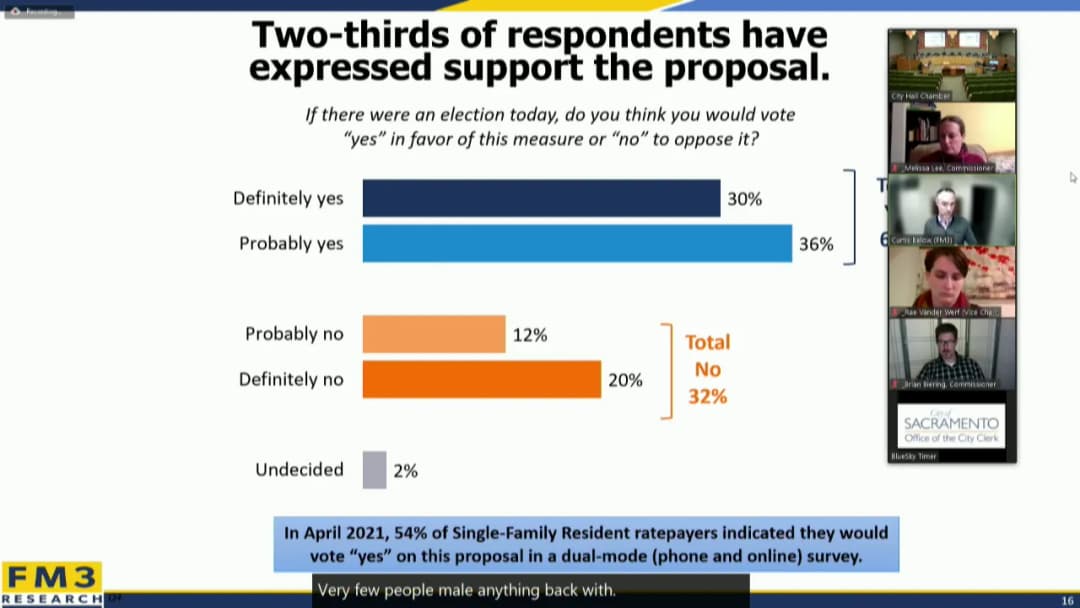
The Water Committee of the City of Sacramento met on Tuesday, November 9, 2021, at 1:01 p.m. for a regular meeting. The committee reviewed four items: an update on the Sacramento Utility Rate Assistance (SURA) program, the storm drainage system update, drought response, and the California Water and Wastewater Arrearage Payment Program (CWWAPP). A key action was a motion to forward the SURA program recommendation to City Council for discussion, which passed unanimously. The meeting adjourned at 1:53 p.m. Discussion Items 1. Sacramento Utility Rate Assistance (SURA) Program Update Staff presented a recommendation to restructure the SURA program by reducing the average discount from approximately 36% to a flat 25% benefit, citing sustainability and the ability to serve more customers. They also recommended not implementing renter assistance due to high administrative costs (estimated at $2 million citywide for water and wastewater only) and the transient nature of renters. Director Bill Busath noted that the current budget would allow management of up to 9,500 customers at the 25% level without an increase. The recommendation was informed by research showing no other utility in the state offering more than a 25% benefit. Councilmember Harris expressed support for the sustainability aspect and suggested forwarding the recommendation to council for broader discussion, including consideration of funding for apartment dwellers and mid-year budget options. Councilmember Valenzuela voiced concern about reducing benefits while rate increases were pending, preferring to delay a decision until mid-year budget discussions. Councilmember Vang agreed that a full council conversation was needed before action. Finance Director Dawn Holm clarified that the program has historically been funded by Utility User Tax (UUT) from rate increases, not from enterprise funds. She noted that handling renter assistance would require significant additional staff and funds due to the complexity of tracking transient occupants. Motion: Councilmember Harris moved, seconded by Councilmember Valenzuela, to forward the staff recommendation to City Council for discussion, with all options (25% reduction, renter assistance, mid-year funding) on the table. The motion passed unanimously (3-0). 2. City of Sacramento Storm Drainage System Update Staff presented the results of a mail survey (Phase 2) on the proposed storm drainage rate adjustment. The survey achieved 1,100 responses (margin of error ±3%) and found 66% of respondents would vote yes (30% definitely, 36% probably) versus 32% no. Support was strongest among owner-occupied single-family homes (72% yes) and weakest among retail/commercial (evenly divided). The proposed rate structure uses impervious surface coefficients and charges about $0.02 per square foot per year. The city manager's office has approved moving forward based on these positive results. A schedule was outlined: informational item at City Council on November 17, URAC meetings, six webinars in December/January, Prop 218 protest mailer, ballot mailing in February with results expected by July 1, 2022. Committee members thanked staff and FM3 Research for thorough polling. Councilmember Valenzuela noted the McKinley vault project, funded almost entirely without drainage fees due to lack of funds, saved the city from major flooding. Councilmember Vang emphasized the need to invest in infrastructure to avoid higher future costs. The item was received and filed. 3. Drought Response: Continuing Water Alert Staff reported that the recent atmospheric river added approximately 108,000 acre-feet to Folsom Reservoir, providing significant breathing room and avoiding a dead pool situation. However, this has not ended the drought; conservation remains critical. The committee echoed the need for continued water-saving messaging. The item was received and filed. 4. California Water and Wastewater Arrearage Payment Program (CWWAPP) Update Brian Sanders presented an update on the CWWAPP, created by AB 148. The program provides one-time bill credits for eligible arrearages incurred between March 4, 2020, and June 15, 2021, funded by the federal American Rescue Plan Act. The city will receive 3% administrative fees without reducing customer assistance. Wastewater arrearage applications are anticipated to begin in February 2022. Councilmember Valenzuela highlighted community advocacy for the program and urged continued lobbying for additional state funding if needs exceed available funds. The item was received and filed. Key Outcomes - Item 1 (SURA): Unanimous motion (3-0) to forward the staff recommendation to City Council for discussion, with all options open. - Items 2, 3, 4: Received and filed without objection. - A schedule for the storm drainage rate adjustment was outlined, culminating in a potential ballot election in early 2022.

UTILITIES 36% · STORMWATER MANAGEMENT 26% · PUBLIC ENGAGEMENT 16% · BUDGET AND FINANCE 7%
1077
NOV 8, 2021 · SACRAMENTO, CALIFORNIA · COMMUNITY POLICE REVIEW COMMISSION
Sacramento Community Police Review Commission Meeting - November 8, 2021

The Sacramento Community Police Review Commission met via teleconference on November 8, 2021, at 6:00 p.m. (14:00 UTC) due to the COVID-19 state of emergency. A quorum was established with Chair Guerrero, Vice Chair Carter, and Commissioners Bliss, Elkarra, Zamora, and Falcon present. The meeting featured a detailed presentation from the Center for Policing Equity (CPE) on racial disparities in Sacramento Police Department (SPD) stops and use of force, updates from SPD, and discussions on ad hoc committee recommendations. Consent Calendar - Item 1: Approved the Sacramento Community Police Review Commission Meeting Minutes dated October 11, 2021. - Item 2: Received and filed the update on Teleconferencing Meetings During the COVID-19 State of Emergency, confirming continued remote meetings per city council resolution. Public Comments & Testimony - No public comments were made on any agenda item. Discussion Items - Item 3: Center for Policing Equity (CPE) Presentation – Justice Navigator Assessment - CPE presenters (Janie Schutz, Dr. Lucy Odigie Turley, and Shadell Wiggins) presented findings from an analysis of SPD data (2014–2019 for use of force; 2019 for traffic and non-traffic stops). Key findings: - Use of force: Black people were subjected to force 4.4 times as often as white people, controlling for crime and poverty. Latinx people were subjected to force 0.7 times as often as white people. 43% of use of force incidents involved Black individuals (14% of population). - Traffic stops: 38% of people stopped were Black. Black people were searched 2.7 times as often as white people but were less likely to be found with contraband (24% vs. 28%). - Non-traffic stops (pedestrian): Black pedestrians were stopped 6.2 times as often as white pedestrians, controlling for external factors. 47% of non-traffic stops involved Black individuals. - CPE noted that 50% of the use-of-force disparity and 54% of the pedestrian stop disparity were not explained by neighborhood crime or poverty rates, indicating need for further investigation. - CPE recommended that SPD continue data collection, partner for deeper analysis, and engage the community in developing solutions. - Commissioners (Vice Chair Carter, Commissioner Bliss, Chair Guerrero) expressed concern that similar findings have been repeated over multiple reports (2005, DOJ, and now CPE) and questioned whether reforms are producing measurable outcomes. Commissioner Carter specifically asked why officer race data was not included, as it is a common community question. CPE responded that the Justice Navigator is a standardized baseline analysis and that officer demographic analysis is available through their deeper-dive programs. - SPD Deputy Chief Lester and Captain Chan outlined numerous reforms since 2016, including expanded training, policy updates, a transparency website, and a professional standards unit grown from 3 to 15 staff. They acknowledged the challenge of measuring outcomes and expressed openness to more data-driven approaches. - Item 4: Commission Follow-Up Log - The follow-up log was received and filed. Commissioner Bliss noted a pending joint letter with the Measure U advisory committee requesting raw CAD data, which will be agendized for the next meeting. Key Outcomes - Consent Calendar Approved (unanimous vote). - Ad Hoc Committee Recommendations Deadline: November 18, 2021, by 5:00 p.m. for inclusion on the December agenda. Chairs were reminded to use the standardized format. - SPD Communication: SPD will provide written summaries of their updates to OPSA for the record, per Vice Chair Carter’s request. - Data Request: Commissioner Bliss’s request for CAD data will be addressed in a joint letter at the next meeting. - Future Analysis: Several commissioners (Chair Guerrero, Vice Chair Carter, Commissioner Bliss) urged that ad hoc committees consider recommending continued partnership with CPE to include officer demographics and other deeper data to better understand and address persistent disparities. - Ad Hoc Updates: All five ad hoc committees are working toward final recommendations. The LGBTQ+ ad hoc will hold another community input session. The mental health alternative response ad hoc is focusing on SPD policies rather than community-based organization recommendations. - No public comments received on any item. Adjournment The meeting adjourned at approximately 8:25 p.m.

POLICE POLICY REVIEW 27% · PUBLIC SAFETY 23% · PROCEDURAL 19% · COMMUNITY POLICING 16%
1078
NOV 8, 2021 · SACRAMENTO, CALIFORNIA · ARTS, CULTURE, AND CREATIVE ECONOMY COMMISSION
Sacramento Arts, Culture & Creative Economy Commission Meeting - November 8, 2021

The Sacramento Arts, Culture, and Creative Economy Commission met virtually on Monday, November 8, 2021, beginning at 2:00 p.m. Pacific Time via Zoom, under AB361 teleconference rules due to the COVID-19 state of emergency. The commission approved its consent calendar, discussed commissioners' advocacy work, reviewed the proposed ARPA creative economy programmatic approach, and provided feedback on the Cultural Arts Award grant rubric. No members of the public submitted comments. Consent Calendar - Minutes approval: Motion by Commissioner Gott, second by Commissioner Wilson Ramey, to approve the commission meeting minutes. The agenda identified the minutes as dated September 13, 2021, but the linked attachment was labeled Minutes 10.11.2021; this discrepancy was not noted during the meeting. The motion passed unanimously by roll call vote with all present commissioners voting yes. - Teleconferencing under AB361: Received and filed the report on teleconferencing meetings during the COVID-19 state of emergency. Discussion Items Discussion of the Work of the Commission - Chair Dr. Steven Winlock outlined the commission's three main functions: advocacy, providing advice to the cultural arts department, and networking/community representation. - Commissioners described their advocacy activities: - Commissioner Gott promoted the new $5,000 film grants to friends and contacts in the film community. - Vice Chair Blumenstock met with Councilmember Jennings, spread word to arts organizations, and helped secure rapid-testing supplies for arts groups through a meeting with Dr. Kassiri. - Commissioner Wilson Ramey shared grant opportunities and attended reopening events, praising theaters' new safety protocols. - Commissioner Enriquez worked to learn about economic development and permitting, and noted the county receives roughly three times as much ARPA funding as the city, urging advocacy to the Board of Supervisors. - Commissioner Hastings revived the arts section 'To Do' in her publications and personally attended events to support the arts. - Commissioner Naranjo promoted opportunities via the artist roundtable and spotlighted underrepresented artists, such as photographer Roberta Alvarado. - Chair Winlock worked with the education consortium to advance the Creative Edge goal of arts education for every child. - Support needs identified by commissioners included: more detailed information on film grants, a directory of past grantees, a heat map of public art, stronger city communications support, district-based creative economy town halls, and more opportunities for commissioners to network with each other. - The chair proposed making 'providing advice' the topic of the next meeting's discussion. The item was received and filed without a vote. Proposed ARPA Programmatic Approach Regarding Creative Economy - Cultural and Creative Economy Manager Megan Van Voorhis presented staff's proposed programmatic approach for distributing American Rescue Plan Act (ARPA) funds to the creative economy, using both a community investment approach and an infrastructure approach. - Four target constituencies and proposed funding allocations: - Individual artists: $2.75 million, possibly funding 125 artists at $500 per month for three years as a guaranteed basic income pilot, plus professional development cohorts (e.g., public art, social/civic practice, entrepreneurial, teaching artist). - Arts and cultural nonprofits: General operating support through the Cultural Arts Awards (CAA) program, currently with $925,000 confirmed (nearly double the previous round's $450,000), and potentially augmented with ARPA dollars. - Creative businesses: Deeper support packages through Community Development Financial Institutions (CDFIs), combining grants, loans, rent subsidies, and accelerator/startup support. - Youth workforce development: Digital arts/new media career technical education, in partnership with the city's workforce development office and the Sacramento County Office of Education. - Infrastructure proposals included updating marketing infrastructure (e.g., SAC 365, arts and cultural tourism task force) and investing in a city-owned former Office of Emergency Services building on Meadowview Road (2,000 square feet, near light rail) as a potential community arts space in District 8, which received only seven CARES grants previously. - Commissioner feedback was generally supportive. Commissioner Naranjo praised the plan for following the 'solidarity not charity' framework and incorporating artist input. Commissioner Enriquez called the guaranteed basic income groundbreaking and suggested advocating for county matching funds. Commissioner Gott expressed concern that working actors (e.g., at B Street Theatre) should not be excluded from basic income support. Questions were raised about eligibility criteria for guaranteed income, youth age range, and the need for a more substantial marketing component. - The item was received and filed without a vote. Cultural Arts Award (CAA) Grant Program Rubric for Funding - Megan Van Voorhis and staff member Melissa presented the CAA program overview and a proposed scoring rubric. CAA is a long-running, city-county general operating support grant for nonprofit arts organizations; the last round was awarded in 2017 for 2018-2020. The current confirmed funding is $925,000, almost double the previous $450,000. - The rubric contains four main criteria: Diversity, Equity, Inclusion, and Access; Artistic Impact; Community Impact; and Organizational Accountability. Each criterion includes two sub-criteria with specific indicators, and panelists would rate applicants as 'does not meet,' 'satisfactorily meets,' 'meets,' or 'exceeds expectations.' Staff consulted 10-12 organizations during development. - The criteria have not yet been weighted; staff asked commissioners to provide feedback on how to allocate 100 points across the four criteria. - Commissioner feedback included: ensuring the application uses plain language and is not overly onerous for smaller organizations (Commissioner Naranjo); providing definitions (Commissioner Wilson Ramey); incorporating DEI-related questions throughout all categories (Commissioner Blumenstock); considering organization size in accountability indicators (Commissioner Blumenstock); addressing COVID-related disruptions in the application context (Commissioner Wilson Ramey); offering informational webinars (Commissioner Blumenstock); and simplifying the rubric so that application questions align with the indicators (Commissioner Gott). - Staff noted that the rubric is only the evaluation framework; the application itself will be concise, and the rubric will be included in the guidelines. They aim to open the application in December. - Megan requested that commissioners email their weighting suggestions and simplification feedback by the end of the week. The item was received and filed without a vote. Director's Report - Megan Van Voorhis reported on: - A partnership with the Center for Sacramento History on a series of short documentaries about the history of racism in Sacramento (one has been completed; three or four more are planned). - Upcoming work on a monument policy and audit. - The Sacramento Film and Media Incentive program is live, offering $5,000 grants (guidelines to be redistributed). - Engagement with Caltrans' Clean California program for potential mural projects at the Second Avenue and 21st Avenue underpasses along Highway 99, in coordination with the Oak Park Neighborhood Association, Franklin Boulevard Partnership, and the WX Mural Museum; internal policy work on maintenance is ongoing. - The report was received and filed without a vote. Chairperson's Report - Chair Winlock shared that he attended a performance at the new community theater and would like to organize an open house to showcase the facility's public art, with commissioner involvement. - Commissioner Naranjo raised concerns about the permit process for music venues, describing a potential investor in a Broadway venue who faced barriers; he hoped for improvements to remove 'artificial barriers.' - Commissioner Gott asked about returning to in-person meetings; Megan Van Voorhis confirmed the December meeting will still be held via teleconference. - The report was received and filed without a vote. Key Outcomes - The consent calendar was approved unanimously. - All discussion items (Items 3-7) were received and filed; no formal votes were taken on them. - Commissioners were asked to submit feedback on CAA rubric weighting (100 points across four criteria) and simplification suggestions to Megan Van Voorhis by the end of the week. - Staff will follow up on distributing film grant guidelines, exploring a directory of past grantees, sharing public art maps, and considering enhanced communications support. - The next meeting is scheduled for December and will continue the discussion of the commission's work, focusing on the 'providing advice' function; it will be conducted via teleconference.

ARTS AND CULTURE 64% · ECONOMIC DEVELOPMENT 7% · PUBLIC ENGAGEMENT 7% · DIVERSITY RECRUITMENT 7%
1079
NOV 2, 2021 · SACRAMENTO, CALIFORNIA · BUDGET AND AUDIT COMMITTEE
Budget and Audit Committee Meeting – November 2, 2021

The Budget and Audit Committee of the Sacramento City Council met on Tuesday, November 2, 2021, from 3:01 p.m. to 3:14 p.m. via teleconference. Vice Chair Eric Guerra presided, with members Rick Jennings and Mai Vang present; Mayor Darrell Steinberg was absent. The committee unanimously approved two items: the City Auditor’s Whistleblower Hotline Activity Report (consent calendar) and the City Auditor’s FY 2021-22 Department of Utilities Audit Plan (discussion calendar). No public comments were received. Consent Calendar - Item 1 – City Auditor’s Whistleblower Hotline Activity Report for April through September 2021 Period: The committee voted unanimously (3-0, with Mayor Steinberg absent) to accept the report and forward it to the City Council for approval. No public speakers or discussion. Discussion Items - Item 2 – City Auditor’s FY 2021-22 Department of Utilities Audit Plan: City Auditor Jorge Oseguera presented the plan, which includes performance audits of the supervisory control and data acquisition (SCADA) system, security and emergency preparedness, asset management and preventative maintenance, and special projects on succession planning/turnover, hiring/recruitment practices, and review of the water and wastewater funds. The plan was developed collaboratively with the Department of Utilities (DOU). Oseguera introduced new team member Sarah Balcha, who will lead the DOU work. Councilmember Vang asked about the timeline; Oseguera noted the SCADA audit will begin first, lasting into summer 2022, followed by succession planning, with the plan spanning several years and updates provided via quarterly reports. DOU Director Bill Buse expressed support, stating the SCADA audit addresses the department’s greatest risk. Councilmember Jennings moved to forward the plan to the City Council; Councilmember Vang seconded. Vice Chair Guerra requested that the succession planning component include outreach to engineering programs and organizations to recruit a diverse workforce. The motion passed unanimously (3-0). Key Outcomes - Whistleblower Hotline Activity Report: Accepted and forwarded to City Council (unanimous). - FY 2021-22 Department of Utilities Audit Plan: Accepted and forwarded to City Council (unanimous). The audit plan will be executed over multiple years, with quarterly progress updates to the committee. - No committee comments or public comments on matters not on the agenda.

PROCEDURAL 40% · PERSONNEL MATTERS 25% · BUDGET AND FINANCE 19% · UTILITIES 16%
1080
NOV 2, 2021 · SACRAMENTO, CALIFORNIA · LAW AND LEGISLATION COMMITTEE
Sacramento Law and Legislation Committee Meeting Summary: November 2, 2021

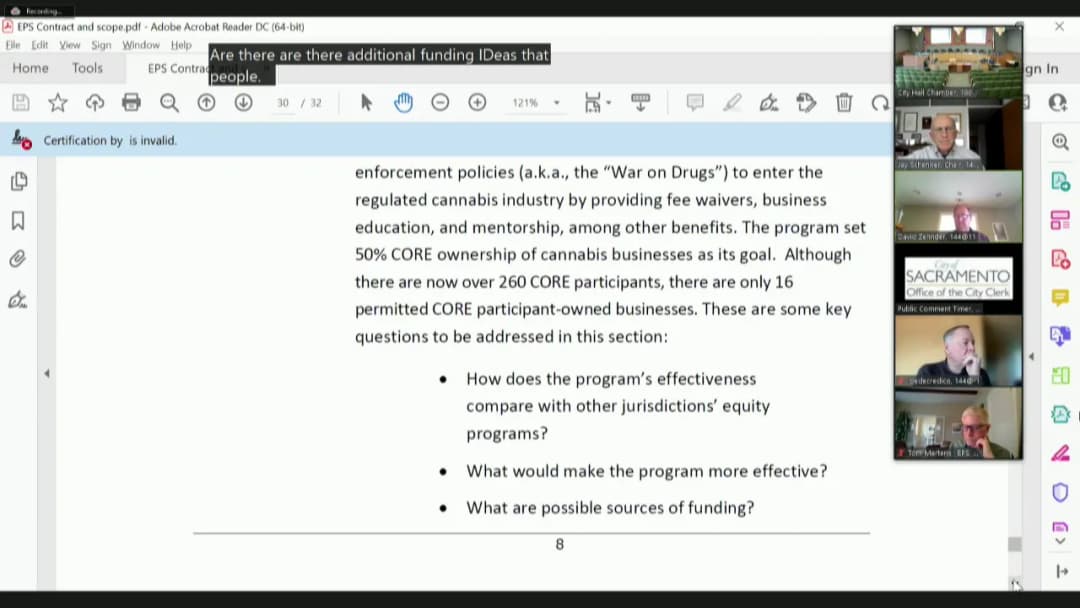
The Law and Legislation Committee met by teleconference on Tuesday, November 2, 2021, from 1:00 p.m. to 1:54 p.m. Members present: Jay Schenirer (Chair), Jeff Harris (Vice Chair), Katie Valenzuela, and Eric Guerra. The committee unanimously approved the consent calendar and received a presentation on the scope and timeline of the city’s cannabis industry study. Consent Calendar - Law and Legislation Log (File ID: 2021-00269) – Approved by a 4-0 vote. Councilmember Valenzuela requested that a future item be scheduled to discuss the city’s receivership policies, and staff was asked to add it to the log. Public Comments & Testimony - Joseph Devlin, representing the Northern California Cannabis Alliance, expressed support for the study process but urged the committee to adhere to the announced timelines, noting the industry faces a dynamic business climate and needs certainty to make business decisions. He also encouraged putting taxation discussions in context and mentioned that the industry was completing its own economic impact study, saying he expected a concluded report by the end of the day. Discussion Items - Presentation on the Scope and Timeline of the Study of the Cannabis Industry and the City’s Cannabis Business Regulations – Davina Smith, Cannabis Manager, introduced the presentation and staff from Economic Planning Systems (EPS): David Zender, Tom Martins, and Tom DeCredico. EPS outlined the study’s four major components: (1) the scale of the industry and its elements; (2) effects on the economy, real estate, and neighborhoods; (3) whether city taxes cover service costs and generate revenue; and (4) alternative municipal oversight approaches based on case studies. The consultants described ongoing work including industry outreach, operator interviews, a comprehensive industry questionnaire, mapping of cannabis businesses by council district, case studies of cities such as Long Beach, Oakland, Seattle, and Denver, fiscal/economic impact analysis, and review of equity programs. - Staff presented tentative dates for presenting findings to the committee: January 25, February 1, and February 8, 2022. Staff also noted that time-sensitive items, including two sunsetting ordinances and ownership-related changes, would be brought forward as quickly as possible. Committee members discussed the need for outreach to business improvement districts (BIDs) and other stakeholders and for balancing urgency with thoroughness. Chair Schenirer said the goal is to produce recommendations to council around late February or early March 2022 and emphasized wanting to avoid piecemeal decisions. - Councilmember Guerra asked that EPS and staff meet with BIDs to explain the study scope, and requested that urgent items move to the Law and Legislation calendar and then to council for action when possible. Councilmember Harris said the scope captures the important questions that have come before the committee and council over the last three years. Key Outcomes - The committee voted unanimously (4-0) to approve the Consent Calendar, including the Law and Legislation Log. - The committee received and filed the cannabis study scope and timeline presentation. - Staff will incorporate BID outreach suggestions and is expected to return with recommendations for council consideration after the study findings are presented in early 2022.

CANNABIS REGULATION 79% · PROCEDURAL 6% · COMMUNITY ENGAGEMENT 5% · ECONOMIC DEVELOPMENT 3%
OPENPUBLICA · PUBLIC MEETING INDEXUPDATED DAILY · openpublica.com