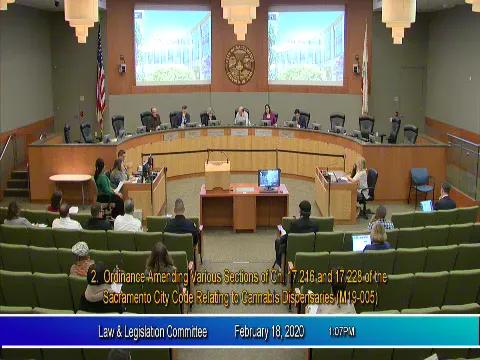
The Sacramento Law and Legislation Committee met on Tuesday, February 18, 2020, from 1:00 p.m. to 2:12 p.m. in the City Hall Council Chamber. Chaired by Jay Schenirer, the committee addressed five agenda items including ordinances on cannabis dispensaries, planning entitlement streamlining, leaf blower restrictions, and protection of critical infrastructure. The meeting experienced a brief power outage but continued without recording, with decisions documented by staff. Consent Calendar - Law and Legislation Log (File ID: 2019-00798): Approved unanimously. This routine item logs governmental affairs activities. Public Comments & Testimony - Item 2 (Cannabis Dispensaries): - Brandon Bolton (President, United Core Alliance) expressed support for the ordinance, thanking the committee for working toward an equitable cannabis market. - Mac Worthy criticized the city’s cannabis equity program, questioning the use of a $1 million fund and demanding transparency. - Deanna Garcia thanked the committee for considering retail cannabis in commercial zones and for supporting the cannabis community. - Item 4 (Leaf Blowers): - Kim Alexander (Land Park resident, co-convener of Mo’ Better Coalition) strongly supported the ordinance, citing health risks from gas-powered leaf blowers and noting Sacramento’s fifth-worst air quality in the nation. - Elizabeth Butler (Midtown resident) supported the ban, describing personal experiences with dust and debris from leaf blowers. - Julia Randolph (Coalition for Clean Air) supported the amendment, referencing a California Air Resources Board study that one hour of gas leaf blower use equals driving 1,100 miles in a 2017 Toyota Camry. - Item 5 (Critical Infrastructure & Wildfire Risk Areas): - Mac Worthy questioned where wildfires could start in Sacramento and argued the city should focus on housing the homeless instead. - Kevin King (General Manager, Reclamation District 1000) strongly supported the ordinance, noting that 81 encampments along a six-mile levee stretch hindered inspections. He also advocated for state bill AB 1958. - Public Comments – Matters Not on the Agenda: - Mac Worthy called for a resolution requiring all nonprofits to have a current statement on file with the city, alleging misuse of funds. Discussion Items - Item 2: Ordinance Amending Cannabis Dispensaries (M19-005) Joy Patterson (Principal Planner) presented a proposal to allow storefront dispensaries in the Shopping Center (SC) zone, requiring Planned Unit Development (PUD) amendments for those in PUDs. The Planning Commission had forwarded the ordinance on September 26, 2019 (7-0 vote). Councilmember Harris explained that the ordinance originated from a dispensary owner seeking to relocate to a shopping center, noting a zoning inconsistency. Committee members supported the measure, citing benefits for retail and reduced concentration in industrial areas. A motion to forward to City Council passed unanimously. - Item 3: Ad Hoc Ordinance Streamlining Planning Entitlement Process (M19-004) Staff presented an ordinance to streamline planning approvals for compliant projects. Without detailed discussion (due to a power outage and limited time), Chair Schenirer noted the item was sent back to the Planning Commission for additional work. No vote was taken. - Item 4: Ordinance Amendment Relating to Leaf Blowers Peter Lemos (Code and Housing Enforcement Chief) requested committee direction. Councilmember Harris proposed prohibiting all leaf blowers (gas and electric) when the Air Quality Index (AQI) exceeds 100, based on an average of 30–34 high-AQI days per year. The goal is to reduce particulate matter and improve health, with enforcement through education rather than fines. Councilmember Hansen and Guerra emphasized the need for a comprehensive approach including an education campaign, worker safety, equipment transition incentives (from SMUD and air district), and multilingual outreach. The committee directed staff to develop a full package (including enforcement, incentives, and education) and return to the committee before going to City Council. - Item 5: Ordinance Protecting Critical Infrastructure and Wildfire Risk Areas The City Attorney and Fire Marshal Jason Lee presented the ordinance to prohibit camping within 25 feet of critical infrastructure (levees, bridges, utilities, fire stations, etc.) and in wildfire risk areas. Examples included a 2019 substation fire caused by camping and levee damage from unauthorized digging. The ordinance includes abatement provisions (no criminal enforcement) and aims to reduce fire and flood risks. Councilmember Hansen highlighted the threat to levees, and Councilmember Guerra noted difficulties accessing remote encampment areas. The committee unanimously voted to forward the ordinance to City Council. Key Outcomes - Item 2 (Cannabis Dispensaries): Motion passed unanimously to forward the ordinance to City Council for adoption. - Item 3 (Planning Entitlement Streamlining): Sent back to the Planning Commission for further review; no vote. - Item 4 (Leaf Blowers): Committee provided direction to the City Manager’s office to draft a comprehensive ordinance addressing education, enforcement, incentives, and worker protections. Staff will return to the committee before council consideration. - Item 5 (Critical Infrastructure): Motion passed unanimously to forward the ordinance to City Council for consideration. - Consent Calendar (Item 1): Approved unanimously.
Public Meetings - Sacramento, California
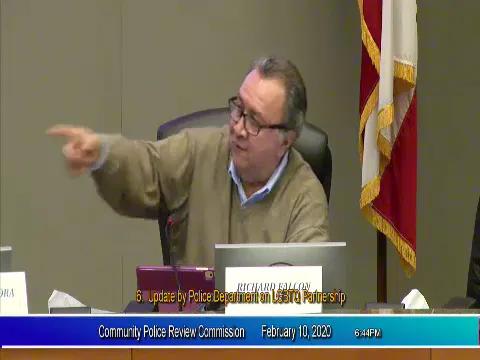
Public Meetings - Sacramento, CaliforniaThe Sacramento Community Police Review Commission held a special meeting on Monday, February 10, 2020, at City Hall Council Chamber (915 I Street, 1st Floor). The meeting was called to order at approximately 6:10 p.m. after a 10-minute delay to achieve a quorum. Commissioners voted on officer positions for 2020, received reports on LGBTQ partnership, media relations policy, and community relations programs, and heard public comment on racial profiling. Consent Calendar - Item 1 – 2020 Meeting Schedule: Approved by motion (File ID 2020-00188). - Item 2 – October–December 2019 Police Complaint Activity Report: Received and filed (File ID 2020-00185). Public Comments & Testimony - Jonathan Taylor (legislative analyst) urged the commission and Sacramento Police Department to consider the effects of racial profiling on community engagement, particularly in totality-of-circumstances decision-making. He called for greater transparency on how statistical information and profiling factor into policing. Discussion Items - Item 3 – Selection of Chair and Vice Chair for 2020: Commissioner Renee Carter nominated Mario Guerrero for Chair; seconded and approved unanimously. Commissioner Guerrero nominated Renee Carter for Vice Chair; seconded and approved unanimously. Guerrero assumed the Chair and Carter the Vice Chair for calendar year 2020. - Item 6 – Update on LGBTQ Partnership (moved up from later in agenda): Sergeant Michelle Gigante, LGBT liaison for Sacramento Police Department, presented a comprehensive overview of past and current efforts to rebuild trust with the LGBTQ community. Highlights included: three formal liaisons, a gender awareness class (trained over 700 officers before state mandate), partnership with the LGBT Center, community healing circles (already one held, five more planned), formation of a community advisory committee, and work on a community guide and transgender employee guide. Commissioner Falcon and others praised the work and encouraged expansion of similar healing circles to other marginalized communities. - Item 4 – Presentation on Police Department’s Media Relations Policy: Watch Commander Vance Chandler reported on the ongoing update to the five-page policy, now a nine-page draft in consultation with the Northern California Society of Professional Journalists and the National Press Photographers Association. The policy revision aims to improve journalist access and clarity during major events. Commissioner Carter asked about protest policies; Chandler noted the March 2019 protest incident is under litigation and could not be discussed. No timeline was set for finalization. - Item 5 – Presentation on Police Department Community Relations: Lieutenant Stephen Moore from the Outreach and Engagement Division detailed numerous programs: Cops and Clergy, Community Engagement Academy, Transformational Policing Model training, Walking While Black screenings, Oak Park Peace Walk, Adopt-a-Class, VIP Academy, youth town halls, PAL programs (fishing, rugby, boxing, snowboarding), school magnet programs, youth diversion at Folsom State Prison, and seasonal events. Commissioners requested a summary report with participation data and opportunities to observe programs. Key Outcomes - Election of Chair and Vice Chair: Mario Guerrero was elected Chair, Renee Carter Vice Chair, both by unanimous votes. - Presentations Received and Filed: All three presentations (Items 4, 5, 6) were received and filed as recommended. - Commission Requests: - Commissioner Elkarra requested that the LGBTQ partnership presentation be shared proactively and that a future report be provided on implementation of past recruitment recommendations. - Commissioner Falcon urged improved attendance and community outreach to fill vacant seats. - Chair Guerrero announced plans to place work group discussions (including an accountability work group) on the next meeting’s agenda. - Vice Chair Carter requested a training on the proper procedure to force a City Council vote on commission recommendations (clarifying that “file and review” does not require a vote). - Commissioner Sabeniano asked that presentation handouts be emailed to commissioners before meetings when possible. - Adjournment: The meeting adjourned without further votes.
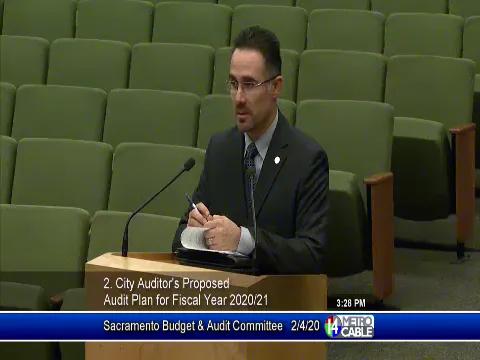
The Budget and Audit Committee of the Sacramento City Council met on Tuesday, February 4, 2020, at 3:00 p.m. in the City Hall Council Chamber. Vice Chair Eric Guerra presided, joined by Councilmembers Rick Jennings and Jay Schenirer; Mayor Darrell Steinberg was absent. The meeting lasted approximately 30 minutes, concluding at 3:30 p.m. The committee considered two items: the City Auditor’s Activity Report for the second quarter of Fiscal Year 2019/20 on the consent calendar, and the City Auditor’s Proposed Audit Plan for Fiscal Year 2020/21 on the discussion calendar. Consent Calendar - Item 1 – City Auditor’s Activity Report for the 2nd Quarter of Fiscal Year 2019/20: Adopted unanimously (3–0). The motion accepted the report and forwarded it to the City Council for final approval. Public Comments & Testimony - No members of the public spoke on either agenda item or on matters not on the agenda. Discussion Items - Item 2 – City Auditor’s Proposed Audit Plan for Fiscal Year 2020/21: City Auditor Jorge Oseguera presented the proposed work plan, which included audits in progress (e.g., green efforts, cannabis business permitting, code enforcement, Roberts Family Development Center, downtown streets team, emergency medical services) and audits carried over from the prior year (e.g., parks operations, maintenance services, police investigations, IT, recycling/solid waste). He also noted a postponed audit of animal care services due to staff departure. - Councilmember Schenirer asked for specificity in audit scopes, focusing on whether the city asks the right questions in RFPs and monitors spending effectively. He expressed concern about the office’s capacity given the large workload and suggested putting the financial conditions review on hold until after a March 10 presentation by management partners on a financial model, to avoid duplication. He also recommended that the auditor’s office leave 5–10% capacity for unanticipated projects. - Councilmember Jennings inquired about proactive vendor audits. He noted that current contracts do not require vendors to submit periodic audits and suggested exploring a policy to include audit requirements in contracts. He also asked about how postponed audits are prioritized (they move to priority one the following year). - Vice Chair Guerra summarized the committee’s sense: (1) the financial conditions review should be delayed until after the management partners presentation; (2) the city should explore a clear policy on audit requirements in contracts and possibly require vendors to submit past audits; (3) the committee might consider adding a new FTE to increase audit capacity when FY2020/21 budget discussions begin; (4) the auditor should include a feedback loop in contract audits; (5) the committee would like a dedicated meeting to review cannabis audit efforts; and (6) the auditor should coordinate the timing of the audit plan’s council submission after the management partners meeting. Key Outcomes - Motion on Item 2: Moved by Councilmember Schenirer, seconded by Councilmember Jennings, to accept the City Auditor’s Proposed Audit Plan for FY 2020/21 and forward it to the City Council with the following amendments discussed: (a) defer the financial conditions review until after the management partners presentation (anticipated in March); (b) continue discussion on vendor audit policies and possible FTE addition during budget talks; and (c) schedule a future Budget and Audit Committee meeting focusing on cannabis audit efforts. The motion passed unanimously (3–0). - Next Steps: The amended audit plan will be forwarded to the full City Council for final approval. The committee will also follow up on the vendor audit policy and capacity issues in upcoming meetings.
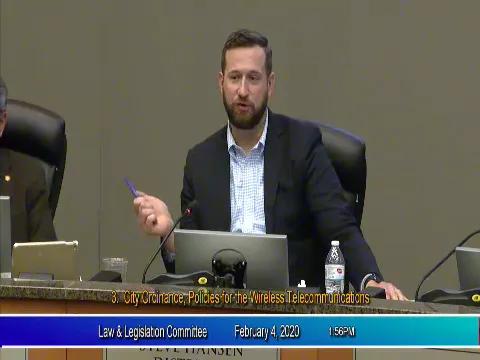
The Law and Legislation Committee of the Sacramento City Council met on February 4, 2020, at 1:00 PM in the City Hall Council Chamber. The meeting focused on the consent calendar and a major discussion on wireless telecommunications ordinances, policies, and practices. The committee unanimously approved consent items and forwarded the wireless telecommunications ordinance, design guidelines, and master license agreement to the full City Council. Consent Calendar - Motion carried unanimously to approve the Law and Legislation Log (File ID: 2019-00473) and forward the ordinance amending City Code relating to the City Manager’s Contracting and Purchasing Authority (File ID: 2019-01749). Committee Member Guerra added a request to include youth commission recommendations on the log, and Member Hansen requested staff follow-up on the governor’s proposal for funding for the Front Street Shelter. Public Comments & Testimony - Noah Davidson (resident) expressed concern about a 4G antenna near his home, stating that FCC limits are exceeded in a small area of his property, and requested a section prohibiting exceeding FCC limits on residential property. He cited a 2019 California Supreme Court decision and submitted engineering reports. - Lynette Scalera Palacios (resident) supported Davidson and criticized removal of protective language, urging the city to stand up to telecom companies. - Patty Krieg (Pocket resident) opposed 5G in her neighborhood and proposed a 500-foot residential setback, increased notification radius from 300 to 1,000 feet, and a removal process for problematic antennas. - Roark Vane (resident) echoed health concerns, emphasizing the antenna’s placement near a second-story window and potential under-measurement of emissions. - Radha Sharma (Verizon senior real estate manager) thanked staff and expressed support for the ordinance once a final technical amendment is resolved. - Rudy Reyes (Verizon public policy lead) praised Sacramento as first to launch 5G and supported the ordinance as a workable pathway. - Nels Olson (AT&T) thanked the city and noted AT&T’s letter outlining issues with the ordinance. - Ben Gumpert (Sacramento Republic FC president) expressed full support for the initiative, emphasizing investment and connectivity for city growth. - David Nelson (Sacramento Asian Pacific Islander Chamber of Commerce) spoke in support, stressing the importance of technological advancement for small businesses and the region. - Joe Bebbs (representing Senator Richard Pan) relayed Senator Pan’s support for 5G, citing a joint letter with the Asian Chamber CEO. - Julian Canete (California Hispanic Chambers of Commerce) expressed support on behalf of 815,000 enterprises, emphasizing competitiveness and safety. - Eric Windheim (building biologist and RF safety specialist) argued the meeting was too late, claiming high radiation levels in bedrooms (13–460 times over extreme concern range for sleeping areas) and criticizing FCC limits based on only 30 minutes of thermal testing. Discussion Items - Wireless Telecommunications Ordinance and Design Guidelines (File ID: 2019-01793) – Maria MacGunigal (Chief Information Officer) and Ryan Moore (Public Works Director) presented a proposed ordinance, design guidelines, and master license agreement. Key points included: limited local authority due to federal preemption, application and reservation processes, FCC shot-clock compliance, design standards for aesthetics, priority locations, notification processes, FCC compliance demonstrations, contractor qualifications, and maintenance obligations. - Committee Questions and Concerns – Members discussed siting on type 15 poles (30 feet high), separation distances (500 feet between same-carrier equipment but not different carriers), and the potential for new poles in older neighborhoods with ornamental lights. Concerns were raised about the Davidsson installation, with Member Guerra suggesting Verizon consider moving the antenna as a good-faith gesture. City attorney Jennifer Gore clarified that a recent court decision (referenced by Davidson) does not require NEPA/CEQA review for small cell installations. Staff compared RF emissions of 5G/4G antennas to other devices (smart meters, smartphones, police radios), showing lower levels. Member Hansen raised trench cut and construction disruption concerns, requesting an update on the trench cut fee program. Staff noted a process to update the circa-1997 fee. Member Guerra questioned how 5G expansion would affect public safety communications; staff acknowledged the potential but said it was early to determine specifics. - Motions – A motion to forward the ordinance, design guidelines, and master license agreement to City Council was made by Member Harris and seconded by Member Guerra. It passed unanimously. Key Outcomes - Consent Calendar approved unanimously. - Wireless Telecommunications Item forwarded to City Council unanimously for consideration. - Directives: Staff to follow up on the Front Street shelter funding proposal; staff to bring back an updated trench cut fee program before the end of the calendar year; staff to provide a policy on city engagement with TV crews accompanying fire department, as requested by Member Hansen. - Committe Comments: Member Hansen requested a policy discussion on TV crews filming with the fire department, citing exploitation of trauma and lack of council awareness.
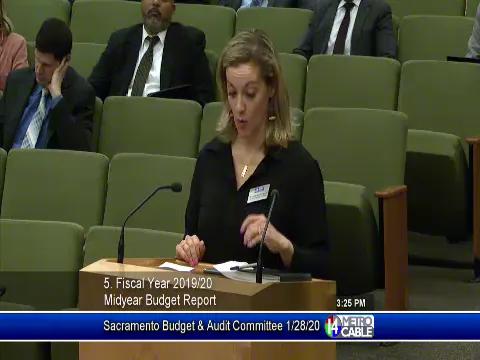
The Sacramento City Council's Budget and Audit Committee held a special meeting on Tuesday, January 28, 2020, at City Hall Council Chamber in Sacramento. The committee reviewed the FY2018/19 Comprehensive Annual Financial Report (CAFR) and the FY2019/20 Midyear Budget Report, heard public testimony, and forwarded both items to the full City Council for approval. Consent Calendar - 2020 Regular Meeting Schedule: Approved unanimously, setting the committee's meeting dates for 2020. Public Comments & Testimony - Timothy Davis (community member): Expressed support for the midyear budget's addition of 20 Community Service Officers (CSOs), citing benefits for traffic control, reducing officer workload, and creating a pipeline to police officer positions. - Katie Fleming (FUEL Network attorney): Thanked the city for continued funding; reported 207 legal consultations, over 4,000 'know your rights' sessions, and representation for 30 Sacramento residents in removal proceedings in 2019. Noted a new rapid response attorney and the Attorney of the Day program. - Christina Niazeva (FUEL Network client): Shared a personal testimony on how the program helped her family seek asylum, emphasizing the importance of continued funding. - Genevieve Levy (Sacramento Food Bank & Family Services): Highlighted successful cases leveraging FUEL funding for DACA and Special Immigrant Juvenile Status, and a case of a 14-year-old juvenile; urged continued support. - Mao Vang (La Familia Health and Youth Program Manager): Shared a story of a young man who obtained residency through FUEL assistance, noting the network's impact on the immigrant community. - Diana Campos (Sacramento Act, Rapid Response Hotline): Reported over 1,000 hotline calls in the past year, highlighted cases preventing family separation, and asked for increased funding. Discussion Items - Selection of 2020 Vice Chair: Councilmember Guerra was nominated and unanimously selected as Vice Chair, effective next regular meeting. - FY2018/19 Comprehensive Annual Financial Report (CAFR): Osvaldo Lopez reported a clean audit with an unmodified opinion. General fund tax revenues exceeded budget by $11.2 million, and department operations saved $8 million, resulting in $19.5 million in one-time general fund resources and $6.5 million for Measure U, totaling $27 million. General fund economic uncertainty reserve stood at $55.2 million (11.2% of budget), and OPEB trust at $49.9 million (12.5% of liability). - FY2019/20 Midyear Budget Report: Tara Filipich recommended a $12.9 million increase in general fund and Measure U revenues, a $2 million gas tax audit release (not in resolution but to be included next week), and net available resources of $81 million. Recommendations included $2.3 million in general fund changes (including illegal dumping program) and $6.7 million in augmentations (mostly police) for 20 limited-term CSOs, 20 new vehicles, a rescue vehicle, and overtime. After midyear actions, available fund balance is $33 million. Projections show expenditures exceed revenues starting FY2021/22. - Budget Oversight and Police Overtime: Councilmember Schenirer raised concerns about police vacancies (617 officer positions, 560 filled as of July 5, 2019), budget methods, and overtime costs (last year $12.8 million vs. $3.3 million base). He requested real-time tracking and periodic updates; the city manager suggested quarterly updates to the committee. - CSO Positions and Recruitment: Councilmembers discussed the benefits of CSOs as a pipeline; Mayor Steinberg supported them but noted future funding sustainability; Councilmember Guerra emphasized linking community academies and workforce training. - Measure U and Future Budget: Mayor Steinberg proposed carrying over $36 million (later clarified as $33.4 million plus $2.76 million expected end-year balance) to fund Measure U projects and reserve; he supported investments in youth and infrastructure. A request was made for a schedule of Measure U committee items. Key Outcomes - Consent Calendar: Approved the 2020 meeting schedule unanimously. - Vice Chair: Councilmember Guerra selected unanimously. - CAFR: Approve and forward to City Council (motion passed). - Midyear Budget Report: Approve and forward to City Council (passed unanimously). - Next Steps: Budget items will be reviewed by the full City Council; the meeting adjourned to closed session with the full council resuming at 5:00 p.m.
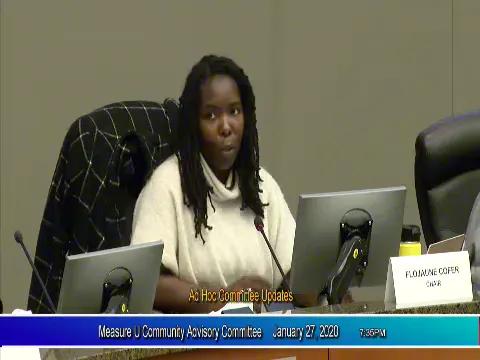
The Measure U Community Advisory Committee held a special meeting on Monday, January 27, 2020, at 6:00 p.m. in the City Hall Council Chamber. The committee elected its 2020 leadership, approved a meeting schedule, and discussed a draft letter of recommendations to the City Council. The meeting was streamed and recorded, and all actions were taken with a quorum present. Discussion Items 1. Selection of Chair and Vice Chair for 2020 The committee unanimously re-elected Flojean Cofer as Chair and Kimberly Williams as Vice Chair for calendar year 2020. The motion passed without opposition. 2. 2020 Meeting Schedule The committee discussed three scheduling options (second Wednesday, third Monday, fourth Monday). Several members noted conflicts: Member Cresswell (absent) has a standing conflict every fourth Monday; Member Pray has a conflict every second Wednesday; Vice Chair Williams and Member Murakami also have Wednesday conflicts. The committee adopted a motion to keep the third Monday schedule (Option B), add a meeting on February 24, 2020 (a Monday) and December 9, 2020 (a Wednesday), and set the first 2021 meeting for the fourth Monday, January 25, 2021. The motion passed unanimously. 3. Recommendations to City Council (Oral Report) The committee reviewed a draft letter that would be sent to the Mayor and City Council. The letter, drafted by an ad hoc committee, outlined recommendations and areas needing improvement. Key points included: - Ensuring that council agenda items identify the source of funds (Measure U vs. other) and specify amounts. - Clarifying revenue projections and improving financial reporting (with some members requesting monthly or quarterly reports). - Establishing a feedback loop for substantive review of proposed Measure U expenditures before council action. - Setting aside a minimum of $5 million for participatory budgeting (a recommendation already in the draft). - The committee debated various edits, including moving items from a “still needing improvement” list to a “recommendations” list, and adding a new item on analyzing outcomes of Measure U investments. Members expressed concerns about not being informed of Measure U fund usage by the council and the need for timely input. The committee voted to approve the letter in concept and deputize the ad hoc committee to finalize the draft by February 3, 2020, for submission to the council (with a target council date of February 25, 2020). The motion passed unanimously. 4. Follow-Up Log The committee received the follow-up log and added several items for future agendas: - A finance/budget report on the feasibility of monthly reports on Measure U allocations. - A request for the police department to report on Measure U funding and community-oriented policing, to be scheduled no later than March. - A report from YIPEE (Youth in Pursuit of Excellence and Empowerment) similarly. - A report on city-owned vacant properties (including SHRA properties), with a tentative timeline of May 2020. - An update on participatory budgeting technical assistance. - An opportunity for members to join or switch ad hoc committees at the next meeting. Ad Hoc Committee Updates - Establishing Priorities and Criteria for Reviewing Projects – These committees reported no new updates. - Outreach and External Communications – Member Pray reported that the committee has received two technical support options for participatory budgeting from a consultant. A workshop with the consultant is tentatively planned for late February or early April. The committee discussed potential Brown Act limitations on inviting additional committee members to the workshop and considered including specific recommendations in a follow-up letter to the council. - Finance – No report given. Investment Committee Report Members Perez and Blackwood reported no update from the investment committee, as they could not attend the last meeting. City Manager’s Office Report Assistant City Manager Michael Jasso reported on the Measure U funding application portal: - As of January 23, 2020, there were 45 complete applications (21 full proposals and 24 pre-proposals) and 83 drafts in progress. - Full proposals requested almost $30 million in Measure U funds, with total project costs of about $335 million. The median funding request was $307,000, and the median project cost was $550,000. - Proposals came from across the city, mainly from Districts 2 and 5, with some citywide. - The portal closes on January 31, 2020, but may reopen later. - Additionally, flyers about the portal were included in city utility bills in early January, a direct result of the committee’s request. Committee Comments and Public Comments No public comments were submitted for items not on the agenda. Key Outcomes - Unanimous vote to re-elect Chair Cofer and Vice Chair Williams for 2020. - Unanimous vote to adopt the 2020 meeting schedule (third Monday, with added February 24 and December 9 meetings; January 25, 2021 as the first 2021 meeting). - Unanimous vote to approve the draft recommendations letter in concept and authorize the ad hoc committee to finalize it by February 3, 2020, for submission to the City Council. - Items added to follow-up log: monthly allocation reports discussion, police and YIPEE reports, council agenda fund source identification, and the vacant properties report. - Next steps: Ad hoc committee to finalize the letter; staff to explore feasibility of monthly allocation reports; staff to schedule a police department report for March; and staff to provide an update on city-owned properties by May.
The Personnel and Public Employees Committee held a special meeting on January 21, 2020, from 3:03 p.m. to 3:39 p.m. in the City Hall Council Chamber. The committee approved consent calendar items, selected a new vice chair, and conducted interviews for several city boards and commissions, making appointments for the Civil Service Board and Utilities Rate Advisory Commission while continuing deliberations for the Ethics Commission. Consent Calendar - Approval of November 19, 2019 Meeting Minutes (File ID: 2020-00052): Passed unanimously. - Approval of 2020 Regular Meeting Schedule (File ID: 2019-01874): Passed unanimously. Discussion Items - Nomination and Selection of Vice Chair (Item 3): Councilmember Rick Jennings was nominated by Councilmember Ashby and seconded by Councilmember Hansen. The committee voted unanimously to select Jennings as Vice Chair for 2020, effective at the next regular meeting. - Interviews for the Civil Service Board (Item 4): The committee interviewed one candidate (Emmanuel Amanfor) in person; a second candidate (Robin Moore) was not present but had a strong application; a third candidate (Heather Zook) submitted a letter but was not present. Staff recommended Amanfor. The committee voted unanimously (motion by Ashby, second by Jennings) to nominate Emmanuel Amanfor for Seat B (partial term ending 2021) and Robin Moore for Seat C (full term ending 2024), forwarding both to the City Council for appointment. The committee encouraged Zook to apply for future openings. - Interviews for the Sacramento Ethics Commission (Item 5): The committee interviewed four applicants: Derek Cressman, Liz Gomez, incumbent Emelyn Rodriguez, and incumbent Susan Underwood. Seats A (legal/ethics background), C (public member – background not specified in agenda), and E (general public) were open; the agenda listed seats A, C, and E, while the minutes later referenced seats A, B, and C – a discrepancy noted. Staff confirmed no quorum issue if appointments were delayed. The committee decided to hold over the item to the next meeting without taking action, allowing incumbents to continue serving. - Interviews for the Utilities Rate Advisory Commission (Item 6): The committee interviewed three applicants for Seat F: Emmanuel Amanfor (who also applied for Civil Service Board), Spencer Eberly, and incumbent Rachelanne Vander Werf. Staff endorsed Vander Werf. The committee voted unanimously (motion by Ashby, second by Jennings) to reappoint Rachelanne Vander Werf to Seat F. The applications of Amanfor and Eberly were held for two additional openings expected later in 2020. Key Outcomes - Vice Chair Selected: Rick Jennings chosen as Vice Chair for 2020 (unanimous). - Civil Service Board Appointments: Emmanuel Amanfor (Seat B) and Robin Moore (Seat C) nominated to City Council (unanimous). - Ethics Commission: Interviews conducted; decision continued to next meeting. - Utilities Rate Advisory Commission: Rachelanne Vander Werf reappointed to Seat F (unanimous); other applicants held for future openings. - The meeting adjourned at 3:39 p.m.
The Law and Legislation Committee met on Tuesday, January 21, 2020, at 1:00 p.m. in the City Hall Council Chamber. Chair Jay Schenirer presided, with members Steve Hansen, Jeff Harris, and Eric Guerra (arrived at 1:04 p.m.) present. The meeting adjourned at 1:31 p.m. The committee approved a consent calendar, elected a vice chair, provided direction on two policy items, and heard public comments on matters not on the agenda. Consent Calendar - Law and Legislation Log (File ID 2019-01567): Approved unanimously (3-0, with Member Guerra absent). The log includes a clarifying note related to grocery issues. Selection of 2020 Vice Chair - Item 2: Member Hansen was nominated and elected as Vice Chair for 2020 by a unanimous 3-0 vote (Guerra absent). His duties begin at the next regular meeting. Discussion Items - Folsom Boulevard East Special Planning District (Item 3): Staff presented a proposal to create a new Special Planning District (SPD) along Folsom Boulevard between Howe Avenue and Watt Avenue to prohibit check-cashing facilities, standalone smoke shops, massage parlors, and, per recent discussion, cannabis dispensaries. The SPD would require outreach to property owners, public hearings, and final council approval. Public comment: Annette Deglove of the College Glen Neighborhood Association expressed support, noting the item follows their request. Councilmember Guerra highlighted statistics: in 2018, 29 massage parlor locations opened in the corridor, leading to 23 arrests, 3 administrative penalties, 3 evictions for illicit use, and 3 FBI operations. He thanked staff and emphasized the SPD addresses a specific problem area. Councilmember Harris asked about extending the SPD westward to 64th Street; staff agreed to explore options. The committee directed staff to bring back a final ordinance. - Conversion of Multi-Unit Dwellings into Bed and Breakfast Inns (Item 4): Staff proposed code amendments requiring a conditional use permit (CUP) for converting multi-unit apartments into bed-and-breakfast inns or hotels, and cleaning up the definition to apply only to single/duplex units in low-density zones. Councilmember Hansen, who requested the item, described recent attempts by developers to convert existing or under-construction apartments into short-term rentals, calling it a "bait and switch" during a housing shortage. Councilmember Harris noted agreements and asked about the CUP cost (approximately $9,000–$10,000). Councilmember Guerra supported the move, citing concerns in Elmhurst. The committee voted unanimously (4-0) to direct staff to bring a final ordinance to the City Council as quickly as possible, possibly as an emergency ordinance, and to include an annual report back on its impact. Public Comments – Matters Not on the Agenda - Several speakers addressed the committee regarding 5G/small cell deployment. Rourke Vane reported 24 new small-cell permits issued after January 1 and requested a moratorium on permits and macro tower upgrades, citing health concerns. Steve Venegas echoed opposition to 5G in neighborhoods, calling it a military technology dangerous to biology. Patty Lewkowitz criticized the city’s process for canceling meetings and lacking feedback. Lynette Scalora-Palacios supported earlier speakers and asked for collaboration. Noah Davidson proposed specific ordinance language changes to close loopholes, mentioned an August 19, 2019 D.C. Circuit Court ruling (case 18-119) vacating FCC exemption of small cells from NEPA review, and announced he would report non-compliant installations. He requested a moratorium until NEPA reviews are completed. Chair Schenirer noted the 5G ordinance would return at the next Law and Legislation meeting (scheduled for February 4). Councilmember Harris requested a briefing from the city attorney’s office on the federal court decision and its implications for Sacramento. Key Outcomes - Consent Calendar: Approved unanimously (3-0). - Vice Chair: Steve Hansen elected for 2020 (3-0). - Folsom Boulevard East SPD: Direction given to staff to prepare a final ordinance, with exploration of extending boundaries westward to 64th Street. - Bed-and-Breakfast Conversion Ordinance: Unanimous direction to expedite a final ordinance to the City Council (including possible emergency action) and include an annual report. - 5G/Small Cells: Committee acknowledged public concerns; item scheduled for next meeting; city attorney’s office to brief on the NEPA court ruling.
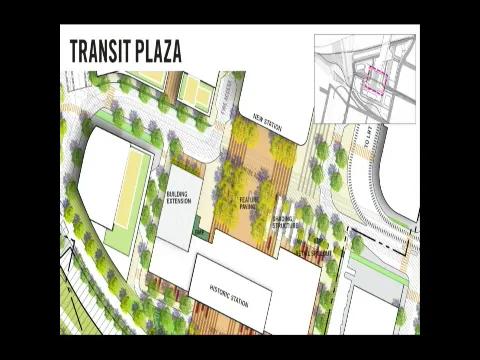
On January 15, 2020, the Sacramento Preservation Commission held a regular meeting at City Hall, 915 I Street, 1st Floor, starting at 5:40 p.m. (agenda called for 5:30 p.m.) and adjourning at 7:23 p.m. All commissioners were present; Commissioner Carter arrived at 5:44 p.m. The commission approved previous meeting minutes, elected officers for the coming year, reviewed the Certified Local Government Annual Report, and received a detailed progress update on the Sacramento Valley Station Master Plan. Consent Calendar - Approval of December 18, 2019 Meeting Minutes – Approved by a vote of 5:0:2 (Commissioner Carter absent; Commissioner Miller-Cruiess abstained). Discussion Items - Nominations and Elections for Chair and Vice‑Chair – Commissioner Valania nominated Chair Jacqueline Whitelam to continue as Chair; Commissioner Miller seconded. Commissioner Miller later nominated Alice Valania for Vice‑Chair, seconded by Commissioner Miller-Cruiess. The commission voted unanimously (7:0) to re‑elect Whitelam as Chair and Valania as Vice‑Chair for the upcoming term. - Draft Certified Local Government (CLG) 2018‑2019 Annual Report (Review and Comment) – Preservation Director Carson Anderson presented the draft report, which covers activities from October 1, 2018 through September 30, 2019. The report will be finalized and submitted to the Office of Historic Preservation by April 2020. Commissioners discussed the need to include in the “goals for next year” section: (1) developing a checklist for SB 35 compliance in historic districts, (2) creating reporting forms for staff‑delegated actions, (3) planning staff training on historic district procedures, and (4) monitoring potential impacts of proposed SB 50 on transit‑oriented development near historic resources. The draft report was reviewed and commented on; no formal vote was required. - Sacramento Valley Station Master Plan Progress Update (Review and Comment) – Project Manager Gregory Taylor (Public Works) and Gidi Sewall (Perkins & Will, lead designer) presented a 30% schematic design update. Key elements included: a new multimodal transit plaza with a bus mobility center (18 bays), a new station concourse aligned with the historic station, a proposed 24‑7 open footbridge connecting to the rail yards, sustainability goals (Living Community Challenge – net positive water and energy, biophilic design), and two tower configuration options for private development. The project seeks to reduce surface parking, improve pedestrian and bike connectivity, and potentially relocate the I‑5 northbound ramp to restore I‑Street frontage. Commissioners asked about: the relationship of the historic station to new development (ensuring it remains a public destination), bike parking capacity (approx. 2,500 sq. ft. of bike parking area planned), pedestrian wayfinding, and the importance of extending 4th Street and removing the current on‑ramp to improve pedestrian access. The presentation was received for review and comment; no action was taken. Key Outcomes - Election of Officers – Chair Jacqueline Whitelam and Vice‑Chair Alice Valania were re‑elected unanimously (7‑0). - CLG Annual Report – Reviewed and commented; staff will incorporate suggestions before the April deadline. - Sacramento Valley Station Master Plan – Comments received; the project team will continue design development and will seek public input via the project website (www.sacramentovalleystation.org) through January 29, 2020. - Director’s Report – Noted that Commissioner Caru Bounds has termed out and will continue serving until a replacement with landscape/planning background is found; Commissioners Valania and Miller terms expire but they may reapply. Staff reported progress on the General Plan update, historic district plan training, and ongoing discussions with the school district regarding deferred maintenance at a historic property. No public comments were made on matters not on the agenda.
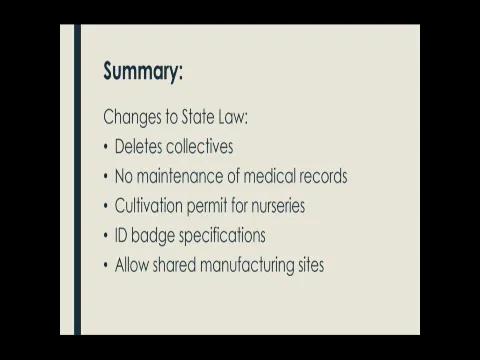
The Law and Legislation Committee held a special meeting on January 7, 2020, at 1:00 p.m. in City Hall Council Chamber. The committee approved a consent calendar item, pulled one item for later consideration, and forwarded two ordinances to the City Council after discussion and public testimony. The meeting lasted approximately 30 minutes. Consent Calendar - Item 1 – 2020 Regular Meeting Schedule: Approved unanimously. The committee passed a motion adopting the 2020 regular meeting schedule for the Law and Legislation Committee. Public Comments & Testimony - Item 4 – Transit-Oriented Development Ordinance Amendments: Two speakers, Ricky Hecht and Todd San Filippo, expressed support for the proposed amendments. Hecht, a commercial real estate consultant, said the changes are vital to allow property owners to maximize leasing of buildings occupied by small entrepreneurs. San Filippo, representing owners of 1601–1607 Julius Avenue, stated the changes would protect their ability to collect rent and maintain existing tenants. Discussion Items - Item 2 – Proposed Ordinance Regarding Ballot Argument Authors: The committee pulled this item from the agenda, deferring consideration until after the March 2020 election to avoid confusion. - Item 3 – Cannabis Businesses Ordinance (Cleanup): Leyne Milstein, Assistant City Manager, presented a proposed ordinance to amend Chapter 5.150 of the City Code to align with state law, remove outdated requirements (e.g., collectives, medical records), add nursery cultivation permits, standardize ID badge specifications, allow shared manufacturing sites, require permit holders to report state license revocations, create uniform video security retention, expand grounds for denial, and codify 180-day inactivity denial. No public comments were received. The committee moved and seconded the motion to forward the ordinance to the City Council. - Item 4 – Transit-Oriented Development Ordinance Amendments: Staff presented changes to the TOD ordinance, primarily altering how distance between light rail stations and projects is measured (from straight-line “as the crow flies” to using existing streets and pathways). The ordinance also deletes the transit overlay zone, removes auto-oriented restrictions, removes the “significant barrier” requirement, and applies special use regulations only to new buildings. A rezone of 61 parcels (MT zone) would allow housing and commercial by right. Councilmember Harris praised the flexible distance measurement and said it solves issues for enclaves like Railroad Drive. Councilmember Hansen expressed concern about undermining the original TOD ordinance and asked about incentives for housing near transit; staff noted concurrent efforts on ministerial housing approvals. The committee voted 3–0–1 (with one abstention) to forward the ordinance to the City Council. Key Outcomes - Consent item approved: 2020 meeting schedule adopted. - Item 2 deferred: Ballot argument authors ordinance pulled to return after March 2020 election. - Item 3 forwarded to City Council: Cannabis ordinance cleanup approved by a unanimous vote (no opposition noted). - Item 4 forwarded to City Council: TOD ordinance amendments approved by a vote of 3–0–1, with one committee member abstaining. - Committee comments: Chair Schenirer noted a pending resolution from the youth commission on public safety definitions. Councilmember Hansen requested that the discussion on charter amendment placement for November ballots be brought back to a future committee meeting.