Browse by city
Date range
Search help

Search titles, summaries, topics and stored transcripts together. Keywords may match separately; put the whole query in double quotes for a phrase. Matching follows word analysis, so punctuation is not exact. Both dates are included. Documents are not searched.

SHOWING 1471–1480 ENTRIES
1471
OCT 18, 2017 · SACRAMENTO, CALIFORNIA · PRESERVATION COMMISSION
Sacramento Preservation Commission Meeting – October 18, 2017

The Sacramento Preservation Commission met at 5:30 PM in the City Hall Council Chambers on October 18, 2017. The meeting covered a consent calendar, updates on preservation work plans, review of proposed code amendments affecting historic districts, and a detailed presentation on the Draft Downtown Specific Plan. Commissioners grappled with concerns over staff-level delegation, the adequacy of historic resource surveys, and the need for clear design guidelines before procedural changes. Public testimony highlighted transparency issues and flaws in historic district evaluations. Consent Calendar - Approval of Minutes (September 20, 2017): Moved (Abrahams/Moffett), passed 7-0 with Commissioner Fuller abstaining. Public Comments & Testimony - William Burg (Central City resident): Opposed the proposed removal of director-level review for new construction in historic districts, arguing it would reduce public notification and transparency. He questioned why the Preservation Commission is not making final decisions on preservation policy. - Vivian Gerlach (Midtown resident): Echoed concerns about removing director-level review, citing lack of codified infill standards. She noted that without guidelines, staff-level review reduces public input and appeal opportunities. - Thomas Plumb (Midtown resident): Supported previous public comments, emphasizing the difficulty for citizens to monitor projects under a seven-day reconsideration period. He requested access to infill development principles. - Margaret Buss (Boulevard Park resident): Praised staff for their work on the Downtown Specific Plan but objected to the name "Downtown Specific Plan," suggesting it be called "Downtown/Central City Specific Plan." She also urged linking alley activation guidelines to the plan. Discussion Items - Item 2: Mid-Century Modern Historic Resources Survey Report / Historic Context Statement – Continued to a future meeting at the request of SAC Mod and the consultant. - Item 3: Draft Workplan - Certified Local Government FY 2016-2017 Annual Report – Commissioners reviewed and commented, with suggestions to reorder priorities. Commissioner Whitelam proposed a reorganization of goals; Commissioner Moffett recommended broadening language around preservation standards. Commissioner Bowns suggested organizing mid-century modern data by neighborhood or council district for public access. Staff accepted the comments. - Item 4: Monthly Update - Ad Hoc Committee on Infill Development Within Historic Districts – Received and filed. Staff reported that legal review is underway to advance the approved infill development principles. The ad hoc committee also provided written comments on agenda items 5 and 6. - Item 5: Ordinance M17-016 – Amendments to Title 17 (Planning and Development Code) – No action required; commission review and comment. The proposal would remove automatic director-level site plan and design review for new construction in historic districts and allow the design director to approve deviations for one- and two-unit projects. Commissioners and public speakers opposed these changes as premature without finalized infill guidelines. The ad hoc committee recommended against delegation to staff due to lack of preservation development standards and limited preservation staff expertise. Commissioners urged staff to remove the two provisions relating to director-level review from the ordinance. - Item 6: Presentation on Draft Downtown Specific Plan (LR16-006) – Greg Sandlund presented the plan, which includes increased heights in certain zones, private open space requirements, parking maximums, and an R Street Corridor Historic District Survey. Public comments criticized the historic survey for using overly strict interpretations and failing to evaluate key properties. Commissioner Whitelam raised concerns about the plan's title, lack of a dedicated affordable housing fund, and the need for clearer references to interim infill design principles. The ad hoc committee provided extensive written recommendations, including retaining detailed guidelines in the Central City Neighborhood Design Guidelines and ensuring historic district protections are explicit. Commissioner Fuller noted the removal of specific design language and suggested wording improvements. Commissioner Bowns requested time to submit additional written comments. A subcommittee meeting was suggested to resolve guideline conflicts. - Director’s Report: Announced the first meeting of the Historic City Cemetery Technical Advisory Committee on October 25, 2017, with a transparent and open process. - Member Comments: Commissioner Bowns appointed to the Cemetery Technical Advisory Committee; Commissioner Whitelam appointed to the Sacramento Heritage Board. Key Outcomes - Approval of Minutes: Consent calendar item passed 7-0 with one abstention. - Workplan and Annual Report: Reviewed and commented; staff will incorporate suggestions. - Infill Development Committee Update: Staff will continue advancing infill guidelines; committee comments transmitted for items 5 and 6. - Code Amendments (Item 5): Commissioners expressed opposition to removing director-level review for historic districts and recommended removing those provisions. Staff will take comments to the Planning and Design Commission. - Downtown Specific Plan (Item 6): Commissioners provided extensive comments on design guidelines, historic resource surveys, and the need for interim protections. Staff will consider revisions before Law and Legislation Committee (November 14) and public hearings in January 2018. Some commissioners plan to submit additional written feedback by early November. - Ad Hoc Committee Recommendations: The committee's three-page document will be incorporated into the record for both items 5 and 6. Adjournment The meeting adjourned at 8:40 PM.
HISTORIC PRESERVATION 41% · LAND USE PLANNING 20% · PROCEDURAL 10% · PUBLIC COMMENTS 10%
1472
OCT 9, 2017 · SACRAMENTO, CALIFORNIA · COMMUNITY POLICE REVIEW COMMISSION
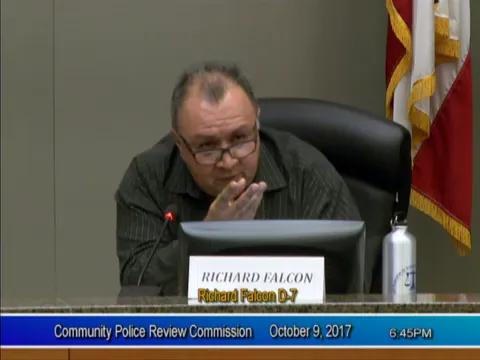
Sacramento Community Police Review Commission Meeting - October 9, 2017

The Sacramento Community Police Review Commission met on Monday, October 9, 2017 at 6:00 p.m. in the City Hall Council Chamber. The meeting was called to order with a quorum present. The consent calendar was approved, and the commission received presentations on the Officer Next Door program, the Sacramento Police Department complaint process, and the police department's policy process. Consent Calendar - Approval of Commission Meeting Minutes: A motion was made by Member Guerrero, seconded by Member Zamora, to approve the special meeting minutes from August 14, 2017. The motion passed unanimously. Discussion Items - Discussion of Officer Next Door (OND) Program: Francine Tournour, Director of the Office of Public Safety Accountability, presented background on the OND program, established around 2005 by the previous mayor. The program is based on four pillars: training, diversity, engagement, and accountability. She outlined current police department initiatives under each pillar, including fair and impartial policing training, cultural sensitivity training, implicit bias training, de-escalation techniques, crisis intervention training, and less lethal options. Under diversity, the department focuses on hiring that reflects the community, including a mentorship program, home purchase incentives, and a proposed magnet academy. Under engagement, a new Outreach and Engagement Unit was created, along with a Ministers Academy open to non-faith community leaders, cops and clergy programs, and community peacewalks. Under accountability, a transparency section on the police website provides general orders, policies, body-worn camera information, and vehicle stop data. Commissioners asked questions about the educational process, community engagement, and the role of commissioners in outreach. Chair noted that ride-alongs should be completed by the end of the year. - Discussion of Sacramento Police Department Complaint Process: Lt. Steve Oliveira, head of the Internal Affairs Division and Professional Standards Unit, presented the complaint process. He explained who can initiate complaints (public, third parties, anonymous, department employees), how they are received (walk-ins, phone, mail, email, via supervisors, OPSA, internal), and the process after receipt. Complaints are categorized as inquiries or formal investigations. Formal investigations involve complainant statements, evidence review, witness interviews, and officer interviews (last). The review process includes the lieutenant, the employee's captain, and the chiefs, with final authority by the chief. Dispositions include unfounded, exonerated, not sustained, and sustained. Formal discipline ranges from reprimand to termination; informal discipline includes documented counseling. Appeal rights include Skelly meetings and arbitration. Notification to citizens is limited to the disposition, not discipline. Commissioners asked about the availability of complaint data (quarterly/annual reports from OPSA), the ability to track repeat offenders without identifying information, the distinction between internal complaints about public interactions vs. officer-to-officer, the logging of supervisor-handled complaints, and the role of video evidence. Lt. Oliveira noted that video has reduced not-sustained findings. The union's role in representation and arbitration was discussed. Questions about the retention of disciplinary records (18 months for reprimand, 5 years for formal) and the involvement of OPSA in the decision process were also addressed. - Discussion of Sacramento Police Department Policy Process: Lt. Oliveira continued with the policy process, describing the Professional Standards Unit's responsibilities for creating, revising, and reviewing department policies. The process includes identifying needs from field personnel, legal updates, or subject matter experts; drafting and editing; review by subject matter experts, managers, city attorney, labor relations, and unions; final approval by the chief. Policies are distributed via a training management system (Target Solutions) where officers must acknowledge reading and understanding. Policies are posted on the transparency section of the police website with possible redactions for officer safety tactics. Commissioners asked about proactive communication of policy changes beyond website posting; Lt. Oliveira noted that the department's media unit issues press releases for significant changes. Commission Comments - Chair informed commissioners about the Sacramento State convocation on October 10, 2017, from 12-3 p.m., open to the public, with a theme on gun violence. - Lt. Oliveira offered to meet individually with commissioners for further questions. - Commissioner Guerrero noted that several commissioners attended the National Association for Civilian Oversight of Law Enforcement (NACOLE) conference in Spokane and will share information with the commission. - No public comments were made. Key Outcomes - The consent calendar (approval of August 14, 2017, minutes) was approved unanimously. - The discussion items on the OND program, complaint process, and policy process were received and filed as recommended. - Commissioners were encouraged to complete ride-alongs by the end of the year. - Future meetings will include further education on critical incidents and policy review, with data on complaints to be presented quarterly or monthly. - The commission will continue to shape its role in policy recommendations and community engagement.

POLICE POLICY REVIEW 50% · COMMUNITY POLICING 25% · PUBLIC SAFETY 17% · PROCEDURAL 8%
1473
OCT 9, 2017 · SACRAMENTO, CALIFORNIA · ARTS, CULTURE, AND CREATIVE ECONOMY COMMISSION
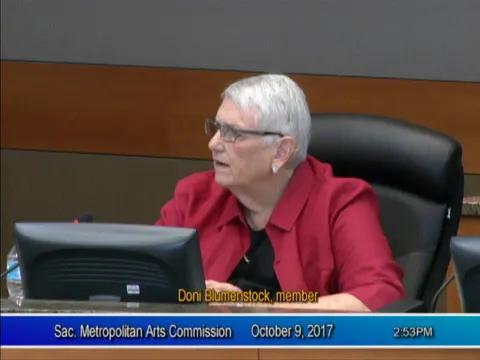
Sacramento Arts Commission Meeting: October 9, 2017 with B Street Theatre Presentation

The meeting was called to order at approximately 2:00 p.m. with a quorum present. A special presentation by Buck Busfield, Producing Artistic Director & CEO of B Street Theatre, kicked off the meeting, followed by approvals, discussion items, committee reports, and commissioner comments. The meeting adjourned in memory of artist Lawrence Argent. Consent Calendar - Approved the Sacramento Metropolitan Arts Commission Special Meeting Minutes of September 11, 2017 and September 18, 2017 by a unanimous voice vote (motion by Commissioner Marion, second by Commissioner Blumenstock). Discussion Items - Art Concepts for Alkali Flats Utility Box Wrap Art Project: Dianne Cripe, APP Administrator, presented artwork concepts for 20 utility boxes in the Alkali Flats and Mansion Flats neighborhoods. The artworks were created by approved artists from the registry and were reviewed by a selection panel representing the neighborhood association. The commission unanimously approved the art concepts (motion by Commissioner Mertz, second by Commissioner Blumenstock). - Artwork in Community Center Theater and Convention Center: Staff provided an update on the impending renovation/expansion of the convention center and community center theater. Some artworks on the plaza and inside the buildings will be relocated or stored during construction; a request for proposals for art movers is underway. A separate $2.6 million budget for new art in the renovated spaces is being developed. Commissioners noted the importance of coordination with the design team. - Update on Cultural Plan: Jonathon Glus reported that a communications plan will be ready in a few weeks, a Facebook page launched, and a microsite by next Monday. The next cultural planning group meetings are November 6–9, with neighborhood-based meetings scheduled for the week of December 4–9. Commissioner Winlock urged that the cultural diversity and equity statement be reflected in outreach efforts. - Update on Strategic Division/SMAC Assessment: Glus stated that a date with Third Plateau is being arranged via doodle poll for a retreat in late October or mid-November. - Committee Reports: - Outreach and Advocacy Committee: No new report (Blumenstock deferred to organizational assessment given earlier). - Grants and Education Committee: No report (Marion will have something after next meeting). - Art in Public Places Committee: No meeting held due to lack of quorum; items shifted to full commission. - Friends of the Arts Commission: Winlock noted Friends is supporting the 40th anniversary and should be involved in the strategic retreat. Blumenstock suggested following up with former SMAC applicants who were not selected to join Friends. - 40th Year Anniversary Ad Hoc Committee: The celebration will be held on October 23 at sculptor Gerald Wahlberg’s studio, honoring “legends of the arts.” The event is funded by Friends of the Arts Commission; donations are encouraged. A larger public celebration is planned for the coming year. Commissioners urged promotion to elected officials. - Director’s Report: Glus noted conclusion of the panel for the creative economy grant program (recommendations to city manager in a few weeks); the Royal Chicano Air Force artwork at Golden 1 Center set for installation and celebration on March 1; and staff updates (Margaret Buckner back, Alan Tejada out for health reasons). Key Outcomes - Unanimous approval of consent calendar (two sets of minutes). - Unanimous approval of art concepts for Alkali Flats Utility Box Wrap Art. - Received and filed updates on artwork relocation, cultural plan, strategic assessment, and committee reports. - Commissioner comments included: adjournment in memory of artist Lawrence Argent (creator of the Red Rabbit at the airport), suggestions to include grantee impact in future presentations, and reports of meetings with council members and arts organizations. - The 40th anniversary event is confirmed for October 23; commissioners are tasked with promoting it. - Next steps: Cultural plan neighborhood meetings in December; strategic retreat scheduling; follow-up with potential Friends of the Arts board members.

ARTS AND CULTURE 37% · PUBLIC ART 23% · PROCEDURAL 10% · CULTURAL PLANNING 7%
1474
OCT 3, 2017 · SACRAMENTO, CALIFORNIA · BUDGET AND AUDIT COMMITTEE
Budget and Audit Committee Special Meeting: Medical Marijuana Dispensaries Audit - October 3, 2017

The Budget and Audit Committee met in a special session on Tuesday, October 3, 2017, at 1:00 p.m. in the City Hall Council Chamber to review and discuss the City Auditor's audit of medical marijuana dispensaries. The meeting included public testimony, extensive committee deliberation, and a unanimous vote to accept the audit and forward it to the full City Council as a discussion item. Public Comments & Testimony - Michael Hawkins (registered lobbyist for All About Wellness): Expressed the client's unhappiness with the audit and the auditor's conduct. He argued that the auditor arrived unannounced with an armed police officer, which intimidated patients, and claimed the auditor refused a reasonable offer for inspection. Hawkins stated that All About Wellness has paid $1.3 million in fees and taxes over seven years and operates as an honest business. He also defended the revenue department, calling the report harsh on staff. - Lanette Davies: Welcomed the audit as overdue but criticized the city for failing to use the $12,600 per month per dispensary (totaling $378,000 annually) for enforcement. She suggested the city should examine its own departments' roles in enforcement failures, citing a code enforcement officer who told her the revenue department had authorized certain non-compliant activities. Discussion Items 1. City Auditor's Presentation: Auditor Jorge Oseguera presented findings from the audit of 30 dispensaries. Key points: - Many dispensaries did not provide requested financial records within 24 hours as required, hindering analysis. - Using observational techniques, the auditor estimated that one dispensary (Dispensary A) may have underreported gross receipts by approximately $643,000 vs. $273,000 reported, equating to a potential underpayment of $176,000 per year in taxes. - Missing data in the city's BOT tracking system (Bislink) obscured revenue issues; after adjustments, an apparent overpayment was corrected to show a $7,000 underpayment. - Site inspections found that none of the six sampled dispensaries were in full compliance. Observed violations included sales to a patient with an expired recommendation, employee consumption on site, and selling over 50 marijuana plants to a single patient (exceeding state guidelines of 12 immature plants). - One dispensary (All About Wellness) refused access to auditors on three occasions, though it had allowed other city staff access. 2. Staff Response: Joe Devlin, Office of Cannabis Policy and Enforcement, thanked the auditor and noted that the city is a leader in cannabis regulation. He stated that the audit comes at a good time as the office builds enforcement capabilities, and that many recommendations are already being implemented, including enforcement checklists, improved record-keeping, and permitting standards. 3. Committee Deliberation: - Councilmember Schenirer: Commended the audit, emphasized the need for accountability, and motioned to accept the report and forward it to council. - Councilmember Ashby: Expressed deep concern about insufficient regulation, cited the auditor's independence, questioned potential interference by city staff, and asked the city manager to clarify staff interactions with the auditor. She also proposed a ballot measure to make the auditor a charter officer and fold in the Independent Budget Analyst's office. She requested the item go to council as a discussion, not consent. - Mayor Steinberg: Praised the auditor's independence but agreed broader strategic planning is needed. He advocated for regular audits (every three years) and a strategic plan to address enforcement, revenue tracking, and community impacts. He supported using outside resources for cannabis enforcement planning. - City Manager Howard Chan: Clarified that staff interactions with the auditor are normal coordination and not interference. He committed to bringing an enforcement plan to council on October 31 and discussed the challenge of finding specialized auditing firms. Key Outcomes - Motion: Councilmember Schenirer moved to accept the City Auditor's Audit of the Medical Marijuana Dispensaries and forward it to the City Council. Councilmember Ashby seconded, with the amendment that it go to council as a discussion item (not consent). The motion passed unanimously (4-0), with members Ashby, Jennings, Schenirer, and Steinberg voting yes. Mayor Steinberg arrived at 1:16 p.m., after the meeting began. - Committee Comments: Councilmember Ashby suggested exploring a ballot measure to enhance auditor independence and resources. Mayor Steinberg called for a strategic plan covering cannabis enforcement resources, staffing, and community outreach. - Next Steps: The City Manager will present an enforcement plan for illegal cannabis and legal dispensaries at the October 31 council meeting. The audit will be considered by the full City Council as a discussion item at a future date.

CANNABIS REGULATION 76% · PUBLIC SAFETY 7% · AUDIT MANAGEMENT 5% · PUBLIC COMMENTS 4%
1475
SEP 27, 2017 · SACRAMENTO, CALIFORNIA · BUDGET AND AUDIT COMMITTEE
Budget and Audit Committee Special Meeting – September 27, 2017

Note: The agenda and minutes list the meeting date as Tuesday, September 19, 2017, but the instruction states to use September 27, 2017. This summary retains the given date while acknowledging the discrepancy. The Budget and Audit Committee of the Sacramento City Council met in a special session to review four items: an audit of procurement for services under $25,000, a follow-up report on audit recommendations, the Sacramento Housing and Redevelopment Agency (SHRA) 2017 midyear budget report, and the SHRA Comprehensive Annual Financial Report (CAFR) for 2016. The meeting was called to order at 2:08 p.m. and adjourned at 2:50 p.m. All members were present: Mayor Darrell Steinberg (Chair), Councilmembers Angelique Ashby, Rick Jennings, and Jay Schenirer. Discussion Items 1. City Auditor’s Audit of Procurement for Services of $25,000 or Less (File ID: 2017-00902) - City Auditor Jorge Oseguera presented the audit, which examined 180 contracts from July to September 2015. The audit found four main issues: (1) inadequate procurement policies and training, (2) contracts not awarded/executed in compliance with city code, including sole-source contracting without proper approval, (3) poor contract management, including improper extensions and amendments that bypassed competitive bidding, and (4) insufficient internal controls allowing payments without contracts or beyond contract limits. One example cited: a contractor received nearly $270,000 over nine years, but contracts covered only about half that period, resulting in over $132,000 in payments without a contract. The audit made 32 recommendations. - Procurement Manager Robert Adams responded, stating the department agreed with all recommendations and was implementing the “ABCDs” (Automated Bids, Contract Signatures) project, expected to go live November 1, 2017, which would address 22 of the 32 findings. The remaining findings would be addressed through enhanced training by April 30, 2018. - Vice Mayor Jennings expressed concern about the lack of oversight and suggested monthly written status reports until all recommendations are implemented. Mayor Steinberg noted the risks of decentralized procurement. The item was moved by Vice Mayor Jennings and seconded by Councilmember Schenirer. 2. City Auditor’s Recommendation Follow-Up Report for the Six-Month Period Ending June 30, 2017 (File ID: 2017-01201) - City Auditor Oseguera presented the report, which detailed the status of outstanding audit recommendations and estimated that audits had identified over $50 million in potential benefit, with $16 million realized. Some audits showed limited progress; the Auditor noted that the fire department had recently indicated progress on two audits (narcotics inventory and overtime use), not yet reflected in the report. The City Manager stated that a new performance manager would focus on driving implementation of recommendations. The item was moved by Vice Mayor Jennings and seconded by Councilmember Schenirer. 3. 2017 Sacramento Housing and Redevelopment Agency Midyear Budget Report (File ID: 2017-00940) - SHRA Finance Director Tina McKenney presented the midyear budget update. The original 2017 budget anticipated approximately $159 million (84%) from federal grants, with the remainder from state and local sources. The budget is independent of the city/county general fund. Midyear revenues were trending 12% above projections, and expenses were 11% under budget. Major funding sources and uses were reviewed. The presentation was cut short at slide 6 of 12 due to time constraints; Councilmember Schenirer requested a written copy. The item was received and filed. 4. Review of SHRA Comprehensive Annual Financial Report for the Year Ended 2016 (File ID: 2016-00941) - Tina McKenney presented the CAFR, noting that SHRA received an unmodified (clean) audit opinion from the external auditor, the highest level. The agency’s net position as of December 31, 2016, was $570.35 million, with restricted net position increasing 4.6% and unrestricted net position increasing 11%. The agency also received the Certificate of Achievement for Excellence in Financial Reporting from GFOA for the 25th consecutive year. Vice Mayor Jennings commended the agency for this achievement. The item was received and filed. Key Outcomes - Item 1 (Procurement Audit): Motion passed unanimously (4-0) to accept the audit and forward to City Council for approval. Vice Mayor Jennings requested a monthly written status report on implementation of the 32 recommendations until fully completed. - Item 2 (Follow-Up Report): Motion passed unanimously (4-0) to accept the report and forward to City Council for final approval. - Item 3 (SHRA Midyear Budget): Received and filed without vote. - Item 4 (SHRA CAFR): Received and filed without vote. - No public testimony was offered on any item.

BUDGET AND FINANCE 49% · PROCUREMENT CODE UPDATE 42% · AFFORDABLE HOUSING 4% · PROCEDURAL 3%
1476
SEP 27, 2017 · SACRAMENTO, CALIFORNIA · UTILITIES RATE ADVISORY COMMISSION
Utilities Rate Advisory Commission Meeting – September 27, 2017

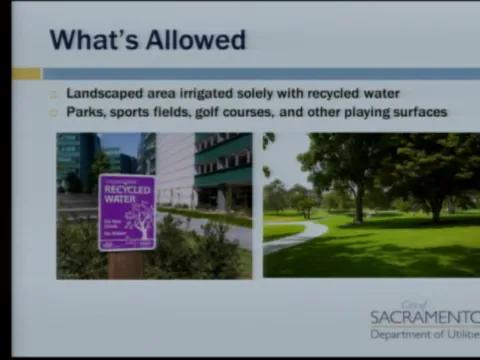
The Sacramento Utilities Rate Advisory Commission (URAC) met on September 27, 2017, at 5:30 p.m. in the City Hall Council Chamber. Commissioners present: Keith Ellis, Brian Biering (arrived late), April Javist, Andrew Day, P. Anthony Thomas, and Timothy Horner (Chair). Commissioner Biering abstained from the consent calendar because he was not present at the June meeting. Commissioner Javist also abstained due to absence at the prior meeting. The meeting adjourned at 6:26 p.m. Consent Calendar - Approval of Minutes for June 28, 2017 – Motion passed with 4 ayes (Ellis, Day, Thomas, Horner), 0 noes, 2 abstentions (Javist, Biering). Discussion Items - Department of Utilities Accountability Plan Update – Staff presented the FY2017-2020 Capital Improvement Program (CIP) financing update, FY2018-2022 five-year fund forecasts, the Sacramento Utility Rate Assistance (SURA) program, and drought/water conservation updates. - Five-Year Forecasts: Staff noted that the forecasts in the city’s budget book do not include debt service for unissued bonds. For water, including the 2017 water revenue bonds and a state revolving fund loan would bring the projected FY22 ending fund balance to approximately $134 million. For wastewater, including future bond debt service would result in an FY22 balance of about $16 million. The drainage fund forecast assumes no rate adjustments and no capital program after FY18; the FY22 120-day working capital is projected at $11.6 million, leaving a $348,000 gap below the guiding principle. - SURA Program: Grew from approximately 1,800 participants to nearly 9,150; currently 8,850 participants due to attrition. As of August 1, 2017, $4.3 million was available, with $1.9 million expended and about $1.7 million provided as discounts. The program continues outreach partnerships. - Water Conservation Ordinance Changes: Director Bill Busath reviewed changes approved by City Council on August 15, 2017. Key changes: permanent two-day-a-week watering from March 1 to September 30 (reduced from three days); exclusions for hand watering, heat waves (two consecutive days over 100°F), smart controllers, drip irrigation, new landscapes (21-day establishment period), and non-potable/recycled water. Fines remain at drought levels for first year but will revert to pre-drought levels ($25 first paid violation) on November 1, 2017; a proposed increase to $50 was not adopted. Waivers are available through classes, water-wise house calls, or rebate programs. A $316,000 outreach contract was approved for education. Historic water use dropped from over 300 gallons per capita per day (GPCD) in the 1970s–80s to about 160 GPCD in the prior year; the goal is to keep long-term GPCD under 190. - Commissioner Questions: Commissioner Biering asked about rebates for switchgear upgrades (none with SMUD for that), cap-and-trade impacts on natural gas use (not yet studied), and whether the city could become a covered entity. Commissioner Javist requested better comparative data for rate impacts and asked about the storm drainage ballot measure (still several years out). Commissioner Day asked for a comparison of Sacramento’s per capita water use to other municipalities; staff will provide that later. Key Outcomes - The commission received and filed the Department of Utilities Accountability Plan Update (no vote required). - Announcements: Commissioners Horner and Day were reappointed for two more years; the seat formerly held by Ryan Biering (who moved out of city) is vacant, with council interviews expected in November. - The meeting adjourned at 6:26 p.m.

WATER MANAGEMENT 43% · UTILITIES 30% · PROCEDURAL 10% · INFRASTRUCTURE 4%
1477
SEP 20, 2017 · SACRAMENTO, CALIFORNIA · PRESERVATION COMMISSION
Sacramento Preservation Commission Special Meeting Summary - September 20, 2017

The Sacramento Preservation Commission held a special meeting on September 20, 2017, at 5:30 p.m. at the New City Hall, 915 I Street Council Chambers. The meeting, which adjourned at 8:18 p.m., focused on updates regarding the City Cemetery preservation efforts, the adoption of infill development principles for historic districts, reviews of strategic plans, and various committee reports. All commission members were present except Commissioner Fuller.

HISTORIC PRESERVATION 53% · PLANNING AND ZONING 11% · PUBLIC COMMENTS 9% · COMMUNITY ENGAGEMENT 4%
1478
SEP 14, 2017 · SACRAMENTO, CALIFORNIA · ACTIVE TRANSPORTATION COMMISSION
Sac City County Bicycle Advisory Committee Meeting – September 14, 2017

The Sacramento City County Bicycle Advisory Committee (SacBAC) met on Thursday, September 14, 2017, at 6:00 p.m. in the City Hall Council Chamber. The meeting initially lacked a quorum, delaying action items, but later achieved a quorum after additional members arrived. The committee approved prior meeting minutes, received updates on bike share and infrastructure projects, and voted to send letters of support for two state bills. Consent Calendar - Approval of Minutes (August 17, 2017) and Committee Log: Approved by voice vote after quorum was established. Member Flo John seconded the motion; all members voted aye except one opposed. Public Comments & Testimony - No public comments were made on matters not on the agenda. Discussion Items - Automated Speed Enforcement (AB 342): Acting Chair Walt Seifert presented a pre-drafted letter to the Sacramento County Board of Supervisors, County Public Health Officer, and City Council supporting AB 342, which would authorize an automated speed enforcement pilot program in San Francisco and San Jose. The letter cited proven safety benefits from global use. After discussion, the committee voted to send the letter with an amendment to include the County Public Health Officer. - Stop as Yield (AB 1103): Seifert also presented a letter supporting AB 1103, which would allow bicyclists to treat stop signs as yield signs. The letter referenced Idaho’s 14.5% reduction in bicycle collisions since adopting similar legislation in 1982 and noted Boise’s lower crash rate compared to Sacramento. The committee voted to send the letter to the Board of Supervisors, City Council, and—after an amendment—the County Public Health Officer. - Bike Share Preview Report (Information Item): Jennifer Donlon Wyant, Active Transportation Program Specialist, reported that the bike share system currently has six hubs and 50 bikes in Sacramento, with 40 more bikes expected in October. Additional hubs are planned near CalPERS, Sacramento Valley Station, K Street, and Capitol Park. The system is a preview and not yet a full transportation network; a full rollout planning process will begin in early spring 2018. Employer subsidization and hub location requests are being accepted. - Carlson Drive Improvement Project (Information Item): Wyant highlighted the recently completed project, which includes three firsts for Sacramento: a bike signal, a bike box, and a two‑stage turn box. The project aims to improve safety near Sacramento State and the American River Parkway. - Class IV Bikeways and Intersections (Information Item): Wyant presented design considerations for separated bikeways, including parking setbacks, bike boxes, and turning conflict treatments. Low‑end costs were estimated at $300,000–$500,000 per half‑mile for striping and delineators; high‑end projects with concrete and signal modifications can cost millions. The 2016 Bicycle Master Plan relies on vehicle volume and speed to determine facility type, and an implementation plan is expected to yield priority projects for spring 2018 grants. Key Outcomes - Consent Calendar approved (minutes and log). - Letter of support for AB 342 approved with an amendment to include the County Public Health Officer as a recipient. - Letter of support for AB 1103 approved with an amendment to include the County Public Health Officer; the committee also recommended seeking support from the California State Association of Counties and the Air Quality District. - Next regular meeting: October 19, 2017, at 6:00 p.m. in the same location. - Special meeting: Scheduled for September 28, 2017 (placeholder) to review draft recommendations from the Bike Plan Implementation Plan consultants.

PROCEDURAL 25% · BICYCLE MASTER PLAN 25% · BICYCLE SAFETY 24% · BICYCLE FUNDING 101 21%
1479
SEP 12, 2017 · SACRAMENTO, CALIFORNIA · PERSONNEL AND PUBLIC EMPLOYEES COMMITTEE
Personnel and Public Employees Committee Meeting - September 12, 2017

The Personnel and Public Employees Committee met on Tuesday, September 12, 2017, at 1:30 p.m. in City Hall Council Chamber. The meeting was called to order at 1:34 p.m. and adjourned at 1:57 p.m. Chair Larry Carr was absent; Vice-Chair Steve Hansen presided, joined by Councilmembers Angelique Ashby and Allen Warren. The committee conducted interviews, discussed nominations, and made appointments to several city commissions. Consent Calendar - Item 01: The committee approved the meeting minutes from August 8, 2017. Motion by Councilmember Warren, second by Councilmember Ashby. Passed unanimously (3-0, with Carr absent). Public Comments & Testimony - On items not on the agenda: None. - On Item 03 (Parks and Recreation Commission): Mr. Gonzalez, a candidate for the seat, addressed the committee. He thanked staff for the thorough staff report, acknowledged the strong pool of candidates, and expressed confidence in the committee's decision. Discussion Items - Item 02: Interviews for the Ann Land and Bertha Henschel Memorial Funds Commission – The committee interviewed seven of nine candidates for Seat B (a member representing the general public); two candidates (Mr. Bradford and Ms. Rosange) were absent due to illness but remained interested. Candidates who appeared: Barbara Steinberg, Caitlin Maple (did not appear), Lori MacIntosh, Ronna Kahn, Roxen Feidler, Reuben Mejia, and Sarah Crasen. Each delivered a two-minute statement regarding their qualifications and interest. The committee did not pose questions. Staff confirmed no immediate need to fill the seat for quorum. The item was continued to the next meeting for deliberation and nomination. - Item 03: Nominations to the Parks and Recreation Commission – The committee discussed filling Seat J (public at large). Seventeen candidates had applied, with interviews conducted in August. Councilmember Ashby highlighted two standouts: Anna Cortez (local trails/open space experience, District 1 resident) and Jason Law (international perspective, strong city commitment). Councilmember Warren seconded the nomination of Jason Law. Vice-Chair Hansen supported the selection and requested that the outgoing commissioner, Mr. O'Toole, receive formal recognition at the end of his term. Motion passed unanimously to nominate Jason Law to Seat J. - Item 04: Nominations to the Utilities Rate Advisory Commission – The committee considered three vacant seats (B, D, F) with six applicants. Staff recommended reappointing incumbents Timothy Horner (Seat B) and Andrew Day (Seat D), citing their valuable service. For Seat F, candidates included Mr. Orta, Mr. Garcia, and two applicants (Rachel and Vanderwerf) who did not attend the interview. After discussion, the committee voted to reappoint Horner to Seat B and Day to Seat D, and to continue the selection for Seat F to the next meeting to allow further interviews with the remaining candidates. Motion passed unanimously. Key Outcomes - Approved August 8, 2017 meeting minutes (Consent Calendar). - Conducted interviews for Ann Land and Bertha Henschel Memorial Funds Commission Seat B; nomination deferred to next meeting. - Nominated Jason Law to Parks and Recreation Commission Seat J, forwarded to the Mayor for appointment (unanimous vote). - Nominated Timothy Horner to Utilities Rate Advisory Commission Seat B and Andrew Day to Seat D, forwarded to the Mayor (unanimous vote). - Continued the selection for Utilities Rate Advisory Commission Seat F to the next meeting to interview additional candidates. - The committee directed the City Clerk to notify the council about the end of Commissioner O'Toole's term on the Parks and Recreation Commission to arrange recognition.

PROCEDURAL 24% · HOMELESSNESS 20% · COMMUNITY ENGAGEMENT 20% · PARKS AND RECREATION 14%
1480
AUG 17, 2017 · SACRAMENTO, CALIFORNIA · ACTIVE TRANSPORTATION COMMISSION
City County Bicycle Advisory Committee Meeting - August 17, 2017

The City County Bicycle Advisory Committee (SacBAC) met on Thursday, August 17, 2017, at 6:31 p.m. in the City Hall Council Chamber. The meeting covered several major projects, updates on bicycle infrastructure, and a proposal to restructure the committee into separate city and county advisory bodies. The committee approved the consent calendar, discussed the N 12th Street Complete Street Project, the Sacramento-West Sacramento Streetcar, temporary bicycle access to Sacramento Valley Station, and the formation of a new City Bicycle Advisory Commission. Consent Calendar - The committee unanimously approved the minutes from the July 13, 2017 meeting and the committee log, with abstentions from members Lang, Kofer, Nardis, and Lewis. A member requested adding an item on American River Parkway flooding locations to the log but withdrew the request. Public Comments & Testimony - Dan Allison, a Sacramento resident, spoke during public comments and requested that the committee ask the city for a report on the bike share program, including membership numbers, usage statistics, trip patterns, hub selection, expansion plans, and marketing. He noted difficulty obtaining information from SACOG. Discussion Items N 12th Street Project Update - Associate Civil Engineer Megan Johnson presented the North 12th Street Complete Street Project, which will install a two-way Class IV bikeway from C Street to Richards Boulevard. The project includes a buffer with flexible vertical posts, sidewalk and lighting improvements, and a transition from four to three vehicle lanes. Key design elements include a signalized intersection at Sunbeam and Richards Boulevard, a relocated bus stop on Sunbeam Avenue with a protected area for cyclists, and a complicated five-legged intersection at North B Street with a bike signal for left-turning cyclists. The project is in the preliminary engineering/environmental phase, expected to finish in February 2018, followed by final design (12 months) and construction. Funding is secured. - Committee members asked about the environmental process (CEQA/NEPA), durability of flexible posts, the possibility of extending the bikeway to I Street, and why Caltrans declined to allow a lane reduction on its facility. Members emphasized the need for education on new bike signals. One member noted that flexible posts at another intersection regularly get demolished. Another asked about the project budget and was directed to the city's Capital Improvement Program. Streetcar Project Update - Senior Engineer Adam Randolph updated the committee on the $200 million Sacramento-West Sacramento streetcar project, funded by the Federal Transit Administration ($100 million), state cap-and-trade ($30 million), state funds ($25 million), and local contributions ($45 million). The route crosses Tower Bridge, goes down Capitol Mall, up H Street, and loops via 12th, J, 19th, and L streets. Bicycle improvements include Class II bike lanes on Tower Bridge and Capitol Mall (filling a gap), Class II bike lanes on H Street after a two-way conversion from 8th to 12th, and consolidated buffered bike lanes on 19th Street (from H to L) and L Street (from 15th to 19th), placed on the side opposite the streetcar tracks. The system is expected to be operational by end of 2021. - Committee members expressed strong concern about safety hazards from streetcar tracks, particularly the flangeway groove, which can cause crashes for cyclists. Members noted that at least 20 bicycle routes will cross the tracks. Staff responded that they are squaring crossing angles and using markings and signage, and have consulted with Portland on mitigations. One member argued that $200 million spent on bike facilities would be more cost-effective. A public commenter, Jeannie Wardwaller, a midtown resident, said moving bike lanes to one side on one-way streets would create conflicts and that tracks are a barrier for new cyclists. Staff noted that bike boxes and two-stage turn boxes may help. A member asked about bicycle accommodations on the streetcar; staff will check with the procurement team. Another asked about bicycle rental options at stops. Sacramento Valley Station Access - Active Transportation Program Specialist Jennifer Donlon Wyant presented a temporary project to extend the existing Class IV cycle track from under the Fifth Street overpass to the Sacramento Valley Station walkway. The project is funded at $200,000–$300,000, with design expected this winter and implementation next year. The temporary connection will last until the station area is developed through the master planning process. - Committee members supported the interim connection. Dan Allison, during public comments, expressed concern about multiple transportation modes (light rail, buses, cyclists, pedestrians) being squeezed into the station area and urged careful planning. The committee voted to invite the Sacramento Valley Station Master Plan project manager to a future meeting. Development of New City Bicycle Advisory Committee - Jennifer Donlon Wyant presented a proposal to dissolve the current joint city-county committee and form separate city and county advisory bodies. The city’s new Bicycle Advisory Commission would have 11 seats: one appointed by each council member, one by the mayor, and two at-large appointed by the Personnel and Public Employee Committee. Members must live in the city of Sacramento and have a demonstrated history of professional/community involvement in bicycling issues (or an interest, after committee feedback). Terms are four years, staggered initially, with a two-term limit. The current committee’s last meeting is planned for November 2017, with a possible gap of December and January before the new commission begins in February 2018. - Committee members expressed excitement about restructuring and the potential for greater geographic diversity. However, several members raised concerns that the qualification requirement (“demonstrated history of professional/community involvement”) might exclude interested novices. Members suggested changing the language to “interest or involvement” and dropping “professional.” Members also discussed the need for economic, demographic, and gender diversity; staff agreed to look into codifying diversity requirements. The committee emphasized the importance of continuity and encouraged current members to contact their councilmembers to reapply. Key Outcomes - The committee approved the consent calendar with abstentions. - The committee directed staff to invite the Sacramento Valley Station Master Plan project manager to a future meeting. - The committee agreed to place a discussion on the September 14, 2017 agenda regarding how to communicate recommendations to the city council on stop-as-yield and automated speed enforcement (via letter, resolution, or oral presentation). - The committee requested a presentation from SACOG on the bike share program, including membership, usage, hub selection, and expansion plans, for a future meeting. - The meeting adjourned at approximately 7:30 p.m.

TRANSPORTATION PLANNING 22% · BICYCLE SAFETY 20% · BICYCLE MASTER PLAN 19% · PROCEDURAL 13%
OPENPUBLICA · PUBLIC MEETING INDEXUPDATED DAILY · openpublica.com