Browse by city
Date range
Search help

Search titles, summaries, topics and stored transcripts together. Keywords may match separately; put the whole query in double quotes for a phrase. Matching follows word analysis, so punctuation is not exact. Both dates are included. Documents are not searched.

SHOWING 91–100 ENTRIES
91
NOV 18, 2025 · SACRAMENTO COUNTY, CALIFORNIA · BOARDS AND COMMISSIONS
Sacramento Transportation Authority Board Meeting — November 13, 2025

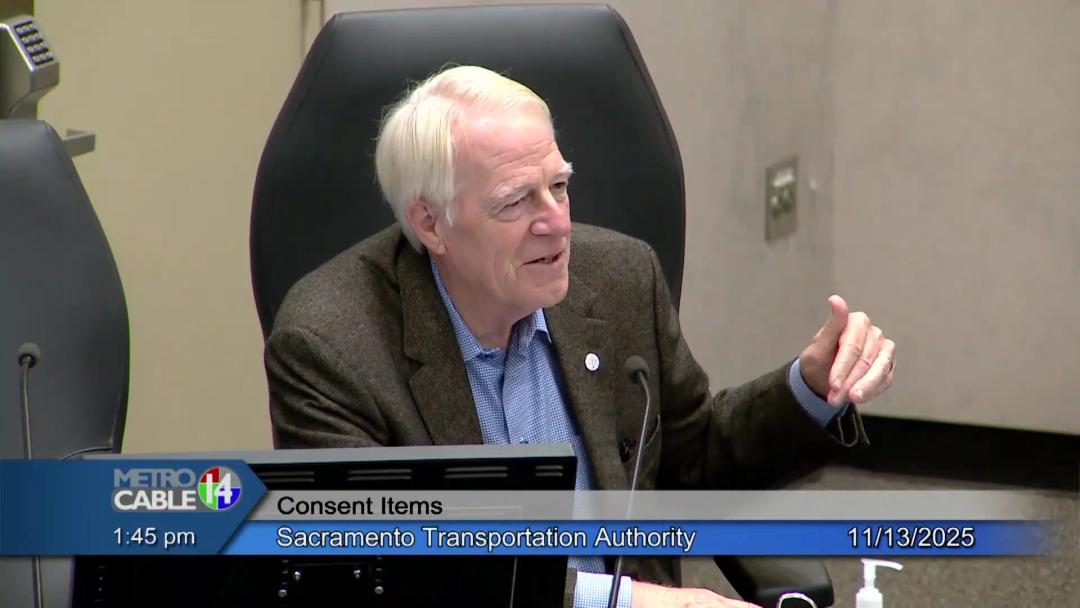
The Sacramento Transportation Authority Board met on November 13, 2025 (adjourned at 2:44 p.m.). The meeting was broadcast on Metro Cable 14 and streamed online. The board initially lacked a quorum, then achieved a quorum when Director Guerra arrived. Key actions included approval of multiple consent items (with Items 5, 6, and 9 pulled), approval of an ERP software agreement, acceptance of the FY2025 audit reports with an unmodified opinion, and receipt of polling results showing a mid-to-high 50s level of support for a potential half-cent transportation sales tax measure (short of the two-thirds threshold). Consent Calendar - Approved all consent items except Items 5, 6, and 9, which were pulled for separate discussion. - Item 5 (New Transportation Funding Subcommittee update; shift from 2026 to 2028 ballot measure focus): Received information (no action). - Item 6 (Partner with SacRT on Caltrans planning grant for Greenline BRT feasibility study): Approved (vote tally not stated; motion passed). - Item 9 (ERP software subscription and implementation with Clarion LLC): Approved (motion passed). Public Comments & Testimony - Dan Allison (speaking as an individual, not as SAC Moves or STAR) on Item 5: Expressed concern that a transportation sales tax measure may never pass in Sacramento County and urged STA to consider alternative transportation funding sources beyond sales taxes. - Dan Allison (speaking for Sacramento Transit Advocates and Riders—STAR) on Item 6: Expressed the position that any airport-route study should include enhancement of existing bus routes (SacRT and Yolobus) and should not focus only on BRT to the airport; emphasized support for near-term improvements. Discussion Items - Item 6 — Greenline BRT feasibility study (Caltrans planning grant partnership with SacRT) - Vice Chair Rathel questioned the value of studying BRT to the airport (from a Folsom perspective) and expressed a preference for light rail to the airport. - Anthony Adams (Director of Planning, Sacramento Regional Transit) provided project constraints and rationale for interim BRT: - Light rail to airport planned since early 2000s; Locally Preferred Alternative approved in 2002 and an environmental document exists. - Three key barriers to advancing light rail: 1) Truxel Bridge required first; estimated $250 million, lacks environmental clearance; not scheduled until the late 2030s. 2) Light rail to airport estimated over $2 billion; no local funding currently committed. 3) Right-of-way expiration risk in 2029: about one-third of the right-of-way would expire by 2029 unless used; SacRT believes interim BRT could preserve it. - Comparative statements: BRT would cost about one-quarter of light rail and provide about half of the ridership. - Director Talamantes emphasized the importance of Truxel Bridge and stated light rail to the airport is needed; noted the north-of-the-river area includes over 100,000 residents. - Director Dickinson expressed long-standing frustration about delay on airport rail (noting studies dating to 1990) but supported interim improvements and voted to support the staff recommendation. - Item 9 — ERP (Enterprise Resource Planning) software (Clarion LLC) - Director Dickinson questioned the cost escalation relative to QuickBooks (approximately $2,000/year) versus proposed ERP costs (discussion referenced $218,000 for implementation and $40,000+ per year ongoing). - STA staff (CFO Dustin Purenton) explained QuickBooks cannot hold all needed project/program data; current reliance on disaggregated spreadsheets slows reporting (staff indicated it could take up to a week to answer some questions). ERP is intended to provide real-time project and budgeting information and also offset some consultant costs (e.g., budget and financial statement preparation). Staff stated Clarion was the lowest bid among five RFP responses and that the amount is a maximum. - Item 12 — Independent Taxpayer Oversight Committee (ITOC) presentation and FY2025 audit approvals - Dustin Purenton (STA CFO) presented the FY2025 financial statement audit. - Robert G. Holderness (Chair, ITOC) described ITOC membership and role (oversight of audit process and later performance audit work). He identified ITOC voting members including Geraldine Kraszewski (former SACOG employee; budget/financial analyst) and Jose Luis Caceres (Stanislaus Council of Governments; transportation planner). - Audit outcome: Unmodified opinion with no material weaknesses and no significant deficiencies. - A separate performance audit is planned for winter–spring 2025/26, covering two years, to be performed by Brown Armstrong Accountancy Corporation. - Item 13 — Voter survey on transportation priorities and potential ballot measure - Curtis Bailow (Partner, FM3 Research) presented results of a countywide survey conducted late August–early September (mixed phone/online; offered in English and Spanish; included oversamples in certain cities to reduce margins of error for those jurisdictions). STA conducted the survey in partnership with SacRT (funding about half). - County mood: - 47% said Sacramento County is on the wrong track (plurality). - Top serious problems cited were inflation/cost of living, cost of housing, and homelessness (high intensity responses in the 50%–60% “extremely serious” range per presenter). - Local-government waste/mismanagement was highlighted as a notable concern (presenter cited 44% calling it an “extremely serious problem”). - Transportation funding need: - About two-thirds said there is a great or some need for additional transportation funds. - About one in five respondents said they take public transit at least occasionally. - Measure test (hypothetical half-cent sales tax, two-thirds threshold measure): - Initial vote: 50% yes / 37% no / 14% undecided. - After “push” (definitely/probably/leaning): 56% yes / 39% no / 5% undecided. - Comparison to prior testing showed similar support (mid-50s). - Sensitivity testing: - Positive statements raised support to 58%. - Critical statements reduced support to 49%. - Reasons (open-ended) among supporters: road safety/repair themes ranked highest; public transportation was the second most common category. - Reasons (open-ended) among opponents: opposition to raising taxes; concerns about government waste/mismanagement; belief that existing funding should be sufficient. - Geographic variation: - By supervisorial district: roughly 60% support in Districts 1–3 and 50% in Districts 4–5 (as presented). - By city (where sample sizes allowed): around 60% support in Sacramento and Rancho Cordova; around 50% in Folsom, Elk Grove, Citrus Heights, and unincorporated areas (margins of error cited roughly 7–8% for city breakouts). - Board discussion emphasized: - Director Rodriguez argued countywide measures may struggle because cities have different needs and some already have local transportation taxes (referenced Elk Grove and Rancho Cordova having a one-cent local tax) and noted constituent questions about Measure A/gas tax spending and the issue of electric vehicle drivers not paying gas tax. - Director Hume asked whether “wrong track” reflects broad malaise versus local dissatisfaction; FM3 said the question is broad and not designed to isolate those causes. - Director Talamantes emphasized partnering with community transportation advocates (including SAC Moves and other coalitions mentioned) to build trust, transparency, and accountability toward 2028. - Director Guerra highlighted the challenge that voters perceive existing transportation taxes but don’t see results “on the roadway in front of their home,” and stressed interagency coordination and public education. - Director Dickinson cited the 2018 SB1 repeal fight, stating public safety messaging was effective; emphasized education on why there is a shortfall (including EV and declining gas tax revenue) and said education would be foundational to upcoming recommendations. - No action was taken on Item 13. Executive Director’s Report / Staff Updates - Countywide VMT (Vehicle Miles Traveled) Mitigation Strategy Update - STA staff described a working group (including Measure A recipient agencies, SACOG, and transportation demand management agencies). - At an October 16 meeting, the working group reached general consensus on establishing a countywide VMT mitigation bank to mitigate VMT from transportation and land use projects. - Potential eligible mitigations mentioned: active transportation, transit, rail, infill housing, and TDM programs. - Staff reported nearly all agencies expressed support for STA to lead and administer the program, with caveats including methodology, cost-effectiveness, “return to source,” and CEQA consistency. - SACOG is exploring a regional VMT mitigation strategy tied to Green Means Go; staff said coordination is underway. - Timing: staff indicated recommendations may come back in spring 2026. - Director Dickinson cautioned against an overly rigid “return to source” requirement that could prevent effective mitigation outside the originating jurisdiction. - Regional project prioritization / SACOG coordination - Staff reported meetings with the Professional Advisory Group on October 6 and November 7; countywide priorities were agreed for some programs but not all. - STA submitted a letter to SACOG reflecting agreed county priorities (attached to the Executive Director’s report). - I Street Bridge Replacement Project – interim financing update - Staff reported ongoing work since August with the City of Sacramento, financial advisor, legal counsel, and bond counsel. - Staff stated Measure A maintenance funds are not appropriate to secure a line of credit for the bridge portion; other Measure A capital and ongoing funds may support financing but likely not the full amount needed. - Director Talamantes asked whether delays jeopardize Caltrans funds; staff responded not to their knowledge and stated the City is still seeking authority to expend those funds. Key Outcomes - Consent calendar approved excluding Items 5, 6, 9 (pulled for separate handling). - Item 6 approved: STA to partner with SacRT for a Caltrans transportation planning grant for the Greenline BRT feasibility study (motion passed; tally not stated). - Item 9 approved: Executive Director and legal counsel authorized to negotiate/execute ERP agreement with Clarion LLC (motion passed; tally not stated). - Item 12 approved unanimously: Accepted FY2025 audit-related documents (annual comprehensive financial report, agreed-upon procedures report, governance letter); audit was unmodified with no material weaknesses or significant deficiencies. - Item 13 received (no action): Polling showed a hypothetical half-cent transportation sales tax measure at 56% yes / 39% no after push—below a two-thirds threshold; positive messaging increased support to 58%, while critical messaging reduced it to 49%. - Meeting adjourned at 2:44 p.m.
FUNDING STRATEGIES 32% · TRANSPORTATION PLANNING 28% · COMMUNITY ENGAGEMENT 12% · CLIMATE CHANGE RESPONSE 8%
92
NOV 11, 2025 · SACRAMENTO COUNTY, CALIFORNIA · SACRAMENTO REGIONAL TRANSIT BOARD MEETINGS
Sacramento Regional Transit Board of Directors Meeting - November 10, 2025

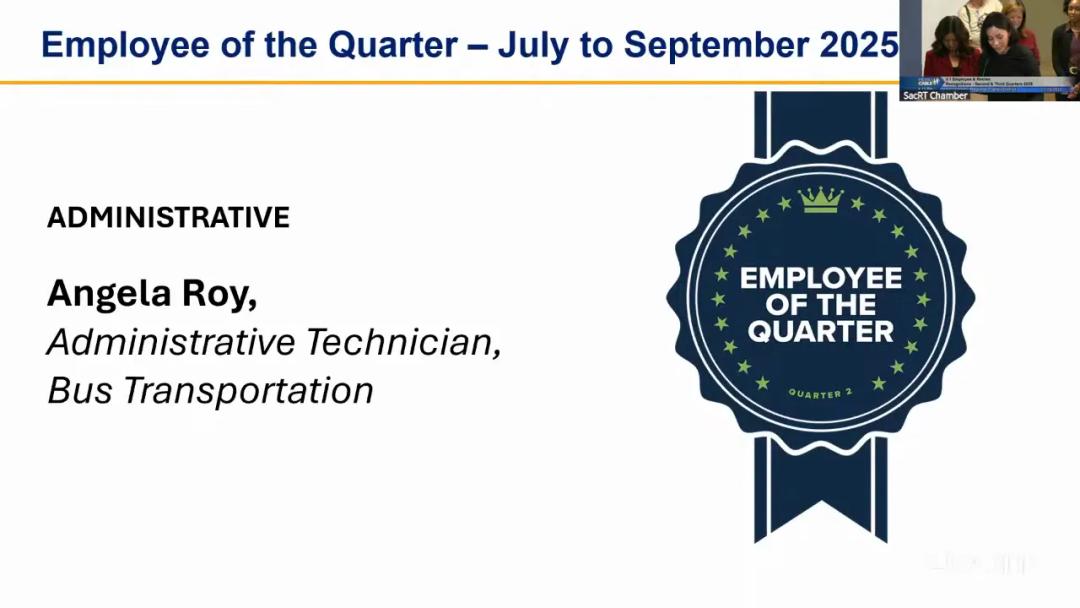
The Sacramento Regional Transit (SacRT) Board of Directors met on November 10, 2025, at 4:00 PM. The meeting included employee and retiree recognitions, approval of the consent calendar, a detailed customer service presentation addressing public comments, public testimony, and reports from the General Manager and other committees. Key themes included safety and security improvements, fiscal responsibility, and community outreach. Employee and Retiree Recognitions (Item 3.1) - Recognized employees with 20, 25, and 35 years of service, including Ariel Tabutabo (20 years), Steven McGregor (25 years), Aswa Hanson (25 years), Melissa Noble (20 years), and Jesus Ledesma (31 years as a retiree). - Retirees recognized: Fernando Zamudio (21 years), Christopher Espera (22 years), Neil Kell (22 years), Ami Chand (27 years), and Jesus Ledesma (31 years). - Employees of the Quarter: Esteban (Administration), Quintez Dobson (Customer Service), Aaron Uribe (Facilities and Maintenance, not present), Angela Roy (Administration), Pamela Robertson (Facilities), and Philip James Mendoza (Bus Operator, not present). Consent Calendar (Items 2.1–2.5) - The board approved the consent calendar unanimously (voice vote), with no public comments or discussion. Public Comments & Testimony - Robert Copeland: Expressed concern about passenger safety, stating that if passengers don't feel safe they won't ride. Criticized prioritizing a sleeping person over a person with a hammer. Also questioned language support for non-English/Spanish speakers and urged more low-income housing to support transit. - Crystal McGeely: Represented transit ambassadors; noted that a transit ambassador found out the District Attorney wouldn't file charges against them that day. Criticized the "modest" MOU increase that doesn't start until next year while abuse continues today. Urged better treatment of transit ambassadors. - Troy Wilkinson (Strong Sack Town): Praised the board's quick follow-up on public comments. Shared anecdotal experiences of verbal altercations with transit ambassadors. Reported a recent transit excursion with some hiccups (doors closing prematurely). Asked for better alignment of statistics with rider experiences. - LR Roberts (Dog Fight): Reported that fellow advocate Jeff was hit by a car while crossing a crosswalk and the driver fled. Criticized SacRT staff for not responding to knocking on doors about a fire at the engineering office. Urged SacRT to consult with disability advocates before purchasing equipment (e.g., wheelchair width, button placement). - Michael Bebbins: Suggested combining a potential RT tax with county road funding and creating bus routes from Elk Grove to Folsom. Also proposed a tourist loop route and better connections between suburbs. - Written comments: Rick Hodgkins commented on light rail safety and a sales tax measure (item 5 and 7.1). Helen O'Connell commented on item 4.1 (action summary). These were provided to the board. Discussion Items - Customer Service Strategies & Responses (Item 4.1): VP Lisa Heinz and others presented responses to public concerns: - Safety & Security: The $1 million increase will fund adding one security resource per train, hiring 10 transit ambassadors (raising from 40 to 50), and adding 2 staff to the Security Operations Center. Transition from Sacramento PD to Sacramento Sheriff's Department for police services on January 11, 2026. Crime rate dropped from 7.5 to 3.7 crimes per million boardings. Fare evasion under 1%. - AI Programs: AI-enabled bus stop enforcement reduced parking violations by 89% at five busiest stops. AI drone program launched for critical infrastructure monitoring. AI camera pilot on buses for real-time asset monitoring. - Banning Program: In development; will be presented at December board meeting. Utilizes state law (Public Utility Code sections 99170-99171) for prohibition orders requiring three citations within 90 days. General counsel noted the process is cumbersome but committed to implementation. - Connect Card (Tap-to-Pay): Will be presented to the MAC (Metropolitan Advisory Committee) on November 20, 2025. Clarified that MAC cannot be consulted during procurement due to legal restrictions. - Bus Service & Cancellations: Route 81 cancellation rate was 3% in September, but overall cancellation rate improved from 1.24% in 2024 to 0.66% in 2025, below industry average of 1-3%. Causes include operator absences and SB 616 sick leave limits. - Homelessness: Social services practitioner manages 100 clients. Free ride passes now only provided to clients with established relationships. Safe parking program at Franklin Light Rail Station lease sent to city in September; awaiting response. - English Proficiency for Rideshare Drivers: User (rideshare contractor) implementing nationwide English screening starting October 2025, fully effective December 2, 2025. - General Manager’s Report (Item 7.1): Henry Li reported on: - Attended CTA annual conference with directors; met with FTA regional administrator and Congresswoman regarding streetcar project. - AI enforcement program success (89% reduction in incidents at top five bus stops). - Podcast "Next Stop, SacRT" launched. - Aftershock music festival generated 12,000 rides and $35 million economic impact. - Dos Rios Light Rail station construction on time and on budget; temporary bus bridge ends November 16, 2025. - Customer appreciation month events. - Director Hume: Noted a large vacant parcel owned by SacRT near Power Inn station; requested update on transit-oriented development plans. Henry Li responded that the property was surplused two years ago but faced disputes; TOD team will re-evaluate. Key Outcomes - Consent Calendar approved (voice vote, unanimous). - No board action taken on informational items (customer service presentation, reports). - Directive: Staff directed to develop a banning/prohibition order program and present to the board in December 2025. - Upcoming: MAC meeting on November 20, 2025, for Connect Card presentation. December board meeting for banning program and other updates. - Reminder: Free rides for active duty and veterans on November 11, 2025.

TRANSPORTATION SAFETY 38% · PERSONNEL MATTERS 15% · TECHNOLOGY AND INNOVATION 14% · BUDGET AND FINANCE 10%
93
NOV 6, 2025 · SACRAMENTO COUNTY, CALIFORNIA · BOARDS AND COMMISSIONS
Sacramento County Planning Commission Meeting - November 6, 2025

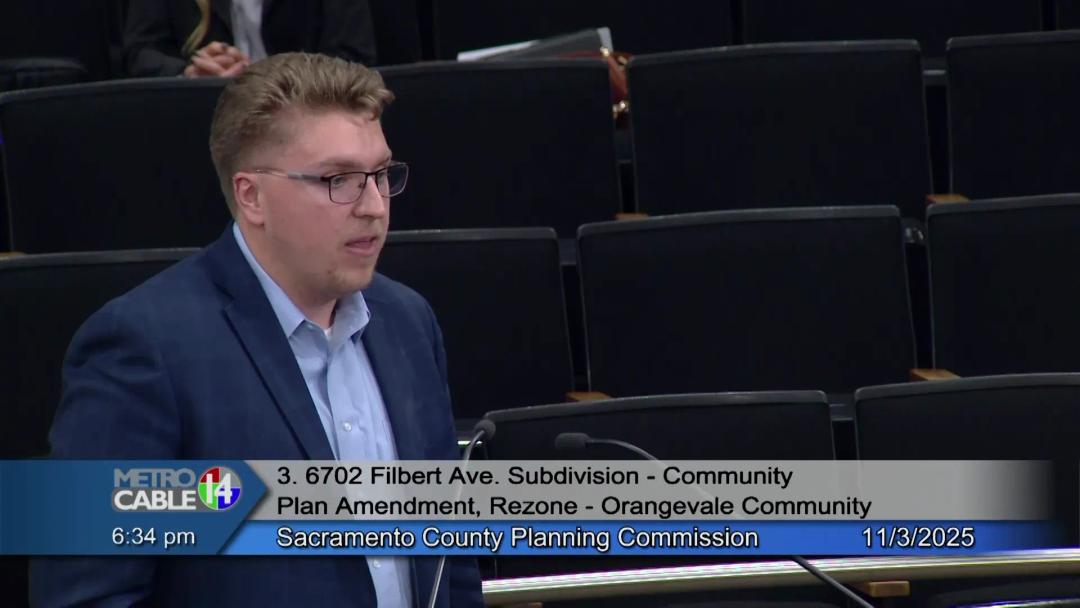
The Sacramento County Planning Commission convened on November 6, 2025, at approximately 1:21 PM (start of transcript indicates evening, but given date is 2025-11-06). All commissioners were present after roll call, with Commissioners Borja and Corona-Sabignano initially absent but later arriving. The commission considered three agenda items: a nonconforming use certificate, a major subdivision project, and a rezoning subdivision. The meeting adjourned at 6:50 PM. Consent Calendar - Item 1 (PLMP 2025-00095): Certificate of nonconforming use for Public Storage at Antelope Road and Roseville Road in Foothill Farms Community. Applicant Chris Powell explained that a failure to pay a business license fee triggered the need for the certificate. No public testimony. Motion and second; approved unanimously with all members present voting yes. Public Comments & Testimony - Item 2 (Gerber South Subdivision): - Cyril Marshall, a property owner on Leland Avenue, expressed concern about large eucalyptus trees on his property potentially falling onto new houses. He asked for mitigation (e.g., a concrete wall to break a fall) and inquired about connecting to the subdivision's sewer without a $20,000 fee. He expressed general support for housing but wished for starter homes. - Timothy Salada, a resident on Florentha Lane, raised flooding issues (he pumps water annually), called for widening Gerber Road before development due to dangerous traffic, and worried about children near a retention pond. - Item 3 (Filbert Avenue Subdivision): - Tracy Stork, representing the adjacent property at 6721 Filbert Avenue, read a letter opposing rezoning from AR-2 (two-acre minimum) to AR-1 (one-acre minimum). She argued that added density (potentially tripled with ADUs) would strain sheriff, fire, schools, and increase stormwater runoff. She supported building the 5 homes allowed under current zoning. - Carol Schumacher, a 51-year resident of 6711 Filbert Avenue, opposed the project, detailing drainage issues from dumped dirt and tree waste, illegal burning of orchard trees (applicant later disputed, citing permits), and lack of trust in the developer. She noted that the October 2024 CPAC meeting was the only one and did not address all concerns. Discussion Items - Item 2 (PLMP 2023-00251 – Gerber South Subdivision): Staff planner Emma Carico presented a proposal to develop five parcels totaling 77.6 acres south of Gerber Road, including a community plan amendment, rezone, tentative subdivision maps, special development permit, and design review. The project would create 370 single-family lots (161 RD-10 alley-loaded, 209 standard RD-7), a 10.2-acre elementary school site, a 5.4-acre park, drainage lots, and greenways. An addendum to a 2010 EIR was prepared. The Vineyard CPAC lacked a quorum but members generally supported; DRAC found substantial compliance with design guidelines. - Commissioner Questions: Vice Chair Borjas asked about safe pedestrian crossing of Gerber Road. Staff confirmed a signalized intersection at A Drive/Pisalis Lane (planned early 2027) would serve students walking to school. Commissioner Borjas also inquired about transportation impact fees – the project pays into a pooled fund, and DOT will assess improvements at time of construction. Commissioner Virga asked about the park: a 5.4-acre active recreation site dedicated to Southgate Recreation and Park District, with maintenance funded via annexation to an assessment district. - Applicant Remarks: Bruce Walters (Walters Land Planning) summarized a two-year review process, 164 conditions of approval, and noted that traffic impact fees ($20k/lot) go into a pool. He added that park development fees ($8-10k/lot) fund construction, and the park would include a neighborhood-style sports field, hardcourts, and a tot lot. - Commissioner Follow-up: Commissioner Borjas asked about construction timing and staging on Gerber Road, given nearby construction. Applicant expected site grading in spring/summer 2026, first homes in 2027. Commissioner Chair Conklin asked about the rationale for reduced setbacks; applicant explained it accommodates modern housing trends (porch-forward, rear alley access) not covered by standard county zoning. The North Vineyard Station area has similar standards. - Item 3 (PLMP 2024-0081 – Filbert Avenue Subdivision): Staff planner Christian Balthazar presented a proposal to rezone a 10-acre former orchard from AR-2 to AR-1, divide into 10 one-acre lots, with a private road and extension of Crown Street. Entitlements include a community plan amendment, rezone, tentative map, special development permit (for private road serving 9 lots), an exemption from code requiring public water (served by mutual water company Orangeville Water Company), and design review. The Orangevale CPAC unanimously recommended denial after 17 public comments (14 opposed, 3 in support). DRAC found substantial compliance. - Commissioner Questions: Commissioner Devlin asked why CPAC recommended denial – staff said the main concern was the change from AR-2 to AR-1 zoning. Commissioner Virga asked about traffic generation; staff confirmed 121 daily trips, well below the 1,000 threshold requiring a study. ADUs are by right and not part of the project request. - Applicant Remarks: Michael Brower (representing owner Mikhail Kolidich) explained the orchard closed in 2017 after a century, and the community group that bought it in 2018 could not sustain operations. The project maintains rural character with one-acre lots, consistent with surrounding parcels. Javes Hidiki (engineer) stated a drainage study was done to mitigate existing drainage problems. - Commissioner Discussion: Commissioner Devlin noted the project provides mild density and contributes to housing needs. Commissioner Borjas acknowledged the 27-signature petition of support but encouraged continued community outreach. Both supported the motion. Key Outcomes - Item 1 (Nonconforming Use Certificate): Approved unanimously by voice vote. - Item 2 (Gerber South Subdivision): Motion by Commissioner Borjas to recommend approval to the Board of Supervisors (including all requested entitlements and CEQA addendum). Second by Commissioner Virga. Passed unanimously (all members present voted yes). Conditions include a signalized intersection at Gerber/A Drive, payment of traffic and park fees, and annexation to an assessment district for park maintenance. - Item 3 (Filbert Avenue Subdivision): Motion by Commissioner Devlin to recommend approval to the Board of Supervisors (including community plan amendment, rezone, tentative map, special development permit, exemption, and design review). Second by Commissioner Borjas. Passed unanimously (all members present voted yes). Conditions include drainage improvements, public water and sewer connections, and compliance with design guidelines. - The next meeting is scheduled for December 8, 2025 (the last of the year). No planning director's report was given.

ENGINEERING AND INFRASTRUCTURE 42% · COMMUNITY ENGAGEMENT 23% · TRANSPORTATION SAFETY 14% · PROCEDURAL 6%
94
NOV 6, 2025 · SACRAMENTO COUNTY, CALIFORNIA · BOARD OF SUPERVISORS
Sacramento County Board of Supervisors Meeting - November 6, 2025

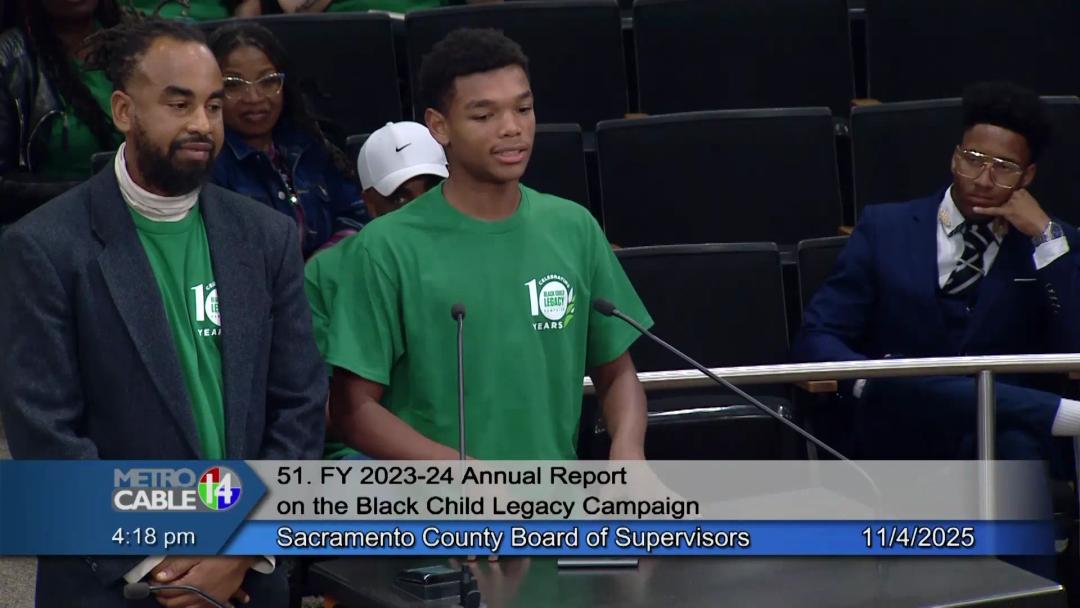
Note: The transcript repeatedly states the meeting date as Tuesday, November 4, 2025, but the provided metadata indicates the meeting took place on 2025-11-06T13:20:26+00:00. This summary uses the metadata date but notes the discrepancy. The Sacramento County Board of Supervisors convened on November 6, 2025, to address a broad agenda including consent calendar items, public hearings, budget approvals, land use projects, and a major annual report on the Black Child Legacy Campaign. The meeting featured extensive community testimony, unanimous votes on most items, and forward-looking discussions on economic development, housing, and public safety. Consent Calendar - Approved items 3 through 44 with a unanimous vote, after pulling several items for separate discussion: items 7 (Watt Avenue Safe Stay contract amendment), 13 (Oxford Property final map), and 32 (MOU with City of Sacramento for community prosecution). Item 32 was separately voted, with Supervisor Rodriguez voting no for consistency with a prior budget position. - Appointments were confirmed: Brian Gluley as County Surveyor (item 14) and Todd Sturmer as Clerk of the Board (item 4). Both introduced themselves to the board. - Public comments were received on item 17 (Oveha Branch Solar Board Review). Speakers opposed the project, citing environmental impacts and disruption of natural habitat, though staff noted the speaker might have been referring to a different project (Coyote Creek). Public Comments & Testimony - On consent item 17: Rodrigo Arbancipia expressed conditional support for clean energy but opposed the location due to environmental destruction. Darcella Rittwright opposed the solar project on Coyote Creek (possibly confused item) and advocated for solar carports instead of disrupting oak trees. - On item 48 (4748 Ingles Road multifamily conversion): Two residents spoke in opposition. Amber Viegas, representing MONA and a neighbor, argued that the project fails to meet fire code requirements based on engineering reviews, and noted the adjacent convalescent home would be affected. Catherine Cook, President of Mission Oaks North Neighborhood Association, said the project is identical to a previous rejected proposal, lacks adequate parking, and would harm neighborhood character. - Extensive public testimony on item 51 (Black Child Legacy Campaign annual report) featured over 20 speakers, including community leaders, program participants, and youth. Speakers universally praised the campaign, sharing personal stories of lives saved, families supported, and the transformative impact of community-driven prevention. Key themes included the need for sustained funding, the success of the Cultural Broker model, the importance of safe sleep education, maternal health support (Black Mothers United), and youth programs like Kings & Queens Rise and Ball Out Academy. Several speakers urged the board to continue unapologetic investment, noting that progress is threatened by potential funding cuts. Discussion Items - Item 45 – County Service Area No. 1 Benefit Category Change: Staff presented a proposal for the New Green Apartments project to change benefit category from safety/light only to enhanced street and safety light non-residential, increasing annual charge from $2.56 to $470.98. The public hearing was held, one ballot received (100% in favor), and the board adopted the resolution unanimously. - Item 46 – SHRA 2026 Proposed Budget: The Sacramento Housing and Redevelopment Agency (SHRA) presented a $341 million budget. Key points: 70% of funding from federal HUD, 30% from state/local sources. Housing assistance payments are rising due to inflation; capital projects declining. Executive Director James Shields discussed federal shutdown risks (day 35), but December funding expected. SHRA is converting public housing units via RAD and P3 partnerships. Supervisor Kennedy raised concerns about high police call volume at St. Clair at Capitol Park (over 700 calls), and the need for a good neighbor policy. Item passed unanimously. - Item 2 – Service Award for Gary Hughes: Gary Hughes was recognized for 25 years of county service, starting in Child Support and now in DPS. The board expressed gratitude for his dedication. - Item 47 – Economic Development Strategic Plan: Director Crystal Bethke presented a five-year plan updated after a year of data analysis and community engagement. The plan focuses on three pillars: resources, communication, partnerships. Supervisor Hume criticized the plan for underemphasizing agriculture in District 5. Supervisor Kennedy suggested a lean methodology for process improvement. Supervisor Rodriguez highlighted the need to generate revenue to address structural deficits. The board approved the plan unanimously, with a request to bring forward an arts in public places ordinance in 2026. - Item 48 – 4748 Ingles Road Multifamily Conversion: Proposal to convert an office building into 16 market-rate one-bedroom apartments. Staff recommended approval subject to conditions. Supervisor Desmond moved approval, noting it improves a vacant blighted property and provides needed housing. Supervisor Hume supported, noting the state's erosion of local control on development. Despite opposition from neighbors, the board voted unanimously to approve. - Item 49 – North Watt Avenue Specific Plan Initiation: Staff proposed initiating a specific plan for a 4-mile corridor to address development barriers. The plan will include an EIR and aim for adoption by November 2026. Unanimously approved. - Item 50 – Sacramento Welcome Homes Quarter 1 Report: Director Shelby Boston presented data on the county-run shelters for youth. 107 unduplicated youth served, average length of stay 5 days. Incidents decreased slightly. A policy on incentivizing positive behaviors was approved. Future goal to end county operation of welcome homes by end of fiscal year. Item passed unanimously. - Item 51 – Black Child Legacy Campaign Annual Report (FY 23-24): The multi-departmental presentation highlighted the collective impact model. Data showed mixed progress: 61% reduction in child abuse/neglect homicides, 30% reduction in infant sleep-related deaths, but increases in perinatal condition deaths and third-party homicides. The campaign has invested over $95 million since 2013-14. New 10-year strategic plan aims to eliminate disparities. The board received the report and praised the work, committing to continued investment. - Item 53 – County Executive Comments: Annouced that Election Day polls close at 8 PM; 915,000 ballots mailed; 700 temporary workers deployed. - Reports and Announcements: Supervisor Rodriguez requested an amendment to the noise ordinance regarding plainly audible standards for amplified sound from 10 PM to 7 AM, and a quarterly attendance report for commissions. Supervisor Hume recounted a serendipitous meeting with descendants of a former 5th District supervisor. Supervisor Desmond thanked staff for representing the county on unfunded mandates. Chair Cerna thanked colleagues for a productive joint meeting with city mayors and proposed a new tradition of recognizing community members at the end of the chair's term. Key Outcomes - Consent Calendar: Adopted unanimously, with separate votes on items 7, 13, and 32. Supervisor Rodriguez dissented on item 32. - Item 45: Resolution adopted to levy increased service charges for New Green Apartments (unanimous). - Item 46: SHRA 2026 budget approved unanimously. Directives to separate city/county funding breakdown and to improve good neighbor policies for housing projects. - Item 47: Economic Development Strategic Plan approved unanimously. Board requested a 2026 framework for arts in public places and better integration of agriculture. - Item 48: Use permit and related entitlements for Ingles Road conversion approved (unanimous). - Item 49: Initiation of North Watt Avenue Specific Plan approved (unanimous). - Item 50: Welcome Homes report received and policy approved (unanimous). - Item 51: Annual report on Black Child Legacy Campaign received and filed. Board expressed strong continued support. - Adjournment: Meeting adjourned in memory of Amy Finley, a community advocate from Foothill Farms.

COMMUNITY ENGAGEMENT 47% · AFFORDABLE HOUSING 12% · ECONOMIC DEVELOPMENT 10% · ENGINEERING AND INFRASTRUCTURE 8%
95
OCT 30, 2025 · SACRAMENTO COUNTY, CALIFORNIA · BOARDS AND COMMISSIONS
Sacramento Area Sewer District Board Meeting - October 30, 2025

The Sacramento Area Sewer District (Saxua) board held a brief meeting on October 30, 2025. The board unanimously approved the consent calendar and received an update from the District Engineer on cost-saving measures related to solids handling. Consent Calendar - Items 1 through 7 were approved unanimously via a motion by Director Rathel, seconded by Director Soon, with no items pulled for separate discussion. Public Comments & Testimony - No public comments were made on non-agenda items. Discussion Items - District Engineer Christoph Dobson reported on the solids issue, specifically the supplemental harvest process. He noted that discontinuing the supplemental harvest would save approximately $750,000 per month. The district is expediting the dedicated land disposal unit project to realize these savings. Dobson also informed the board that only one meeting is scheduled in November (November 12) and one in December (first meeting). Key Outcomes - Consent calendar approved unanimously. - No other votes or formal actions taken.

PROCEDURAL 59% · ENGINEERING AND INFRASTRUCTURE 29% · BUDGET AND FINANCE 12%
96
OCT 30, 2025 · SACRAMENTO COUNTY, CALIFORNIA · BOARD OF SUPERVISORS
Sacramento County Board of Supervisors Meeting – October 30, 2025

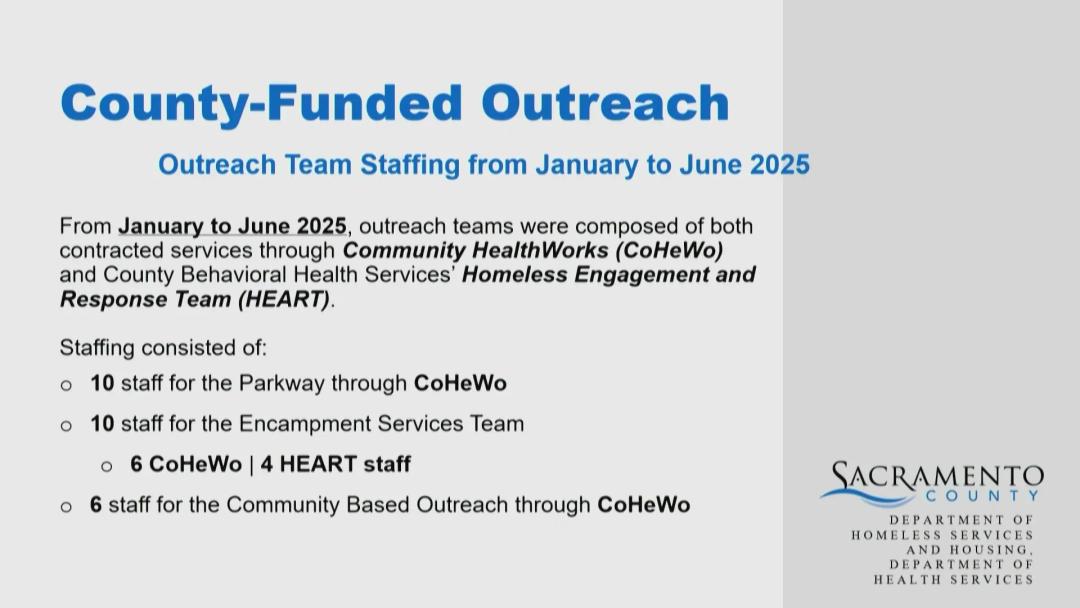
Note: The raw transcript of the meeting indicates the date as Tuesday, October 21, 2025. The meeting summary below follows the provided instruction to use the date October 30, 2025. This discrepancy is noted per the accuracy rules. The Sacramento County Board of Supervisors met to consider consent calendar items, public hearings, a water meter relocation appeal, updates on homelessness programs, and other business. Supervisor Desmond was absent. The meeting was live-streamed and recorded. Consent Calendar - Items 3-55 approved unanimously with Supervisor Cerna abstaining on item 19 (not specified). The consent calendar included numerous routine approvals, ordinance amendments, and personnel actions. - Item 9 – Approved agreements with 13 firms for outside investigative services (November 1, 2025, to October 31, 2028; not to exceed $300,000 per agreement). Public comment raised concerns about transparency and timeliness of investigations. - Item 11 – Approved an appropriation adjustment of $10,843,148 for the November 4, 2025 statewide special election. Public comment criticized ballot envelope holes that could reveal votes and urged a no vote. Public Comments & Testimony - Off-agenda comment: Nathaniel Damien, a county employee, criticized the controlled leave policy as overly punitive and stated he handles 40–90 calls per day (2–3 times his co‑workers’ volume). He asked for more flexibility in using vacation time. - Item 9: Deanna Rakowski questioned the county’s procedures for handling citizen complaints against employees, including lack of transparency, lengthy timelines (four months without contacting the employee), and funding for outside investigations. She urged policy reviews. - Item 11: Mike Morando expressed concern about ballot envelope hole placement, stating votes can be seen through the holes. David Brady also noted his “no” vote was visible and asked for an investigation into how the issue occurred. Supervisor Cerna acknowledged the problem and committed to preventing recurrence. Discussion Items - Item 56 – Excelsior Oaks Benefit Category Change: A public hearing on increasing annual service charges from $2.56 to $787.44 for a 12‑lot subdivision. One protest ballot was received (100% in favor of the change). The board adopted the resolution confirming the levy (unanimous). - Item 57 – Johnson Cosumnes Williamson Act Amendment: Staff presented a proposal to partially rescind a Williamson Act contract (73-8P-030) and enter an open space easement agreement for a 214‑acre floodplain riparian mitigation bank. The Agricultural Advisory Committee recommended approval with agricultural mitigation. After discussion on contract terms and perpetual easements, the board approved unanimously. - Item 2 – Retirement Resolution for Barry Chamberlain: Presentation and remarks honoring Chief of Code Enforcement Barry Chamberlain for his 20 years of service. Supervisors praised his leadership, community engagement, and dedication. Chamberlain thanked the board and his team. - Item 58 – TOT Grant Program Policy Revisions: Chief Fiscal Officer Amanda Thomas recommended three changes: (1) reduce maximum funding per application from $50,000 to $35,000, (2) allow advances up to $10,000 with justification, and (3) allocate all $1 million based on district direction (eliminating expert panel review). The board approved unanimously. - Item 59 – Water Franchise Ordinances (California American Water and Golden State Water): Public hearing to introduce ordinances granting 50‑year franchises for water facilities in unincorporated areas. The ordinances were continued to November 4, 2025 for adoption (unanimous). - Item 60 – Water Meter Installation Appeal (3713 Laguna Way): Appellant Jennifer Hagman appealed the water agency’s relocation of the water main, arguing it would require costly construction across her property (estimated $37,000–$94,000) and damage trees, structures, and a family burial site. County counsel stated the agency had offered to install the service line at no cost, as done for 2,500+ other customers, and that the appellant had revoked permission. Staff presented alternative routes, but Hagman cited missing features on maps (e.g., a mini barn, trees). The board denied the appeal (unanimous) and urged Hagman to accept the county’s offer before the November 3 deadline, or face paying for a private connection. - Item 61 – 2026 One-Year Action Plan (CDBG, HOME, ESG): Stephanie Green (SHRA) presented the plan, including $12.3 million in HUD formula grants. The board also approved amendments to the SHRA home repair program guidelines (increasing max grant to $10,000, expanding accessibility improvements, year‑round applications). Unanimous approval. - Item 62 – Homeless Outcomes Workshop: Emily Halkin (Director, Homeless Services) and Tim Lutz (Behavioral Health) reported on outreach: 771 unique individuals enrolled in the first six months of 2025, with 31,000+ services provided and 203 people moved out of unsheltered homelessness. Behavioral Health reported 2,913 Full Service Partnership spots (95% capacity) and 172 clients served in bridge housing (22% discharged to housing). The county budgeted $277.5 million for homeless programs in FY 2024-25, with $39 million in one-time capital. Discussion covered cost per person, point‑in‑count limitations, and the upcoming joint city-county meeting on October 28. No action taken. - Item 64 – County Executive Comments: David Villanueva recognized the Public Information Office (under Kim Nava) for winning five PRSA Influence Awards for annual report, “5 Over 50” video, life jacket campaign, SB 802 campaign, and mental health videos. Key Outcomes - Consent Calendar – Approved unanimously (Supervisor Cerna abstained on item 19). - Item 56 – Resolution adopted to levy increased service charges for Excelsior Oaks (unanimous). - Item 57 – Williamson Act amendment approved (unanimous). - Item 58 – TOT grant policy revisions approved (unanimous). - Item 59 – Ordinance introduction continued to November 4, 2025 (unanimous). - Item 60 – Appeal denied (unanimous). Board directed staff to work with appellant to complete connection before November 3, 2025. - Item 61 – 2026 action plan and home repair guidelines approved (unanimous). - Item 63 – Multiple board/commission appointments continued to future meetings. - Next steps: Joint meeting with city and suburban mayors on homelessness set for October 28, 2025. Special election (Prop 50) on November 4, 2025. The meeting adjourned into closed session.

HOMELESSNESS 20% · ENGINEERING AND INFRASTRUCTURE 18% · BUDGET AND FINANCE 17% · PERSONNEL MATTERS 12%
97
OCT 30, 2025 · SACRAMENTO COUNTY, CALIFORNIA · BOARDS AND COMMISSIONS
Sacramento Metropolitan Air Quality Management District Board Meeting - October 30, 2025

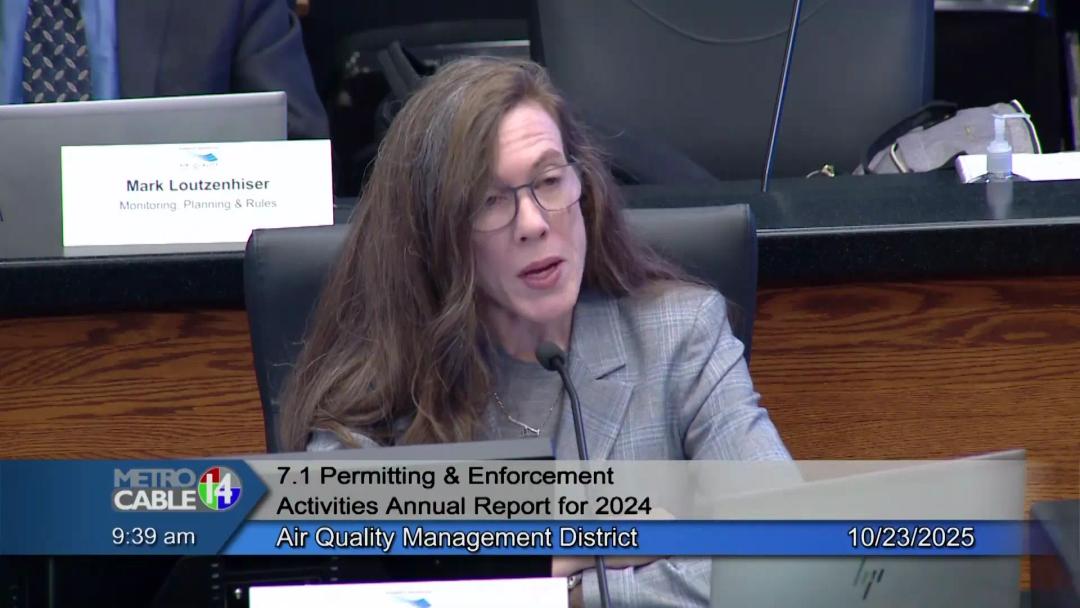
The Sacramento Metropolitan Air Quality Management District Board convened on October 30, 2025, at 9:00 a.m. with a quorum present. The meeting covered several key agenda items, including the Air Toxics Hot Spots Program Annual Report, the Permitting and Enforcement Activities Annual Report for 2024, and updates on the Community Air Protection CERT Plan and AB 617 legislative changes. The Board also received an APCO report and discussed future priorities. Consent Calendar - The consent calendar was moved and seconded, then approved by a roll call vote with all directors present voting aye. Public Comments & Testimony - No public comments were requested or received during the meeting. Discussion Items - Item 6.1: Air Toxics Hot Spots Program Annual Report – Matt Baldwin presented the 2025 report, outlining the state-mandated local program. He explained that the estimated total cancer risk for Sacramento County is 395 per million, down from 706 per million in 2012. The statewide average is 598 per million. The report categorized facilities: 3 high priority, 11 intermediate, 3 low priority, and 7 pending prioritization. Among diesel engine-only facilities (810 assessed), 57% had intermediate risk, 43% low risk, and 0.2% (2 facilities) high risk. No gas stations were identified as high risk. The report was received and filed. - Item 7.1: Permitting and Enforcement Activities Annual Report for 2024 – Amy, Director of Engineering and Compliance, presented the report. Key statistics: nearly 2,400 businesses permitted, about 4,400 active permits, 267 permits issued in 2024, and over 2,400 inspections performed. The enforcement team settled 144 violations through the mutual settlement program. The report highlighted asbestos regulation, burn programs, and public complaint responses. Directors Dickinson and Lopez Taft raised questions about coordination with other agencies and use of emerging technologies (drones, AI) to reduce costs. Staff acknowledged the ideas and will return with more comprehensive responses. The report was received and filed. - Item 7.2: Community Air Protection CERT Plan Progress and AB 617 Legislative Updates – Janice Slam Snyder presented progress on the Community Emission Reduction Plan (SERP) for South Sacramento, which must be submitted to the state by July 2026. Outreach includes community events (e.g., 85+ residents attended a recent event at La Familia Maple Center) and coordination with local jurisdictions. Draft plan expected in January 2026, with board adoption in May 2026. Legislative updates: SB 105 provides continuous funding (80% for incentives, 20% reduction from historical), and SB 352 adds new reporting and monitoring requirements. Directors Vang and Maple commended staff and community engagement. - Item 8.1: APCO Report – The APCO (Dr. Allah) reported on the year's work, noting that the co-sponsored biomass bill (B 88) was vetoed by the governor. He highlighted upcoming challenges (budget at federal/state levels) and priorities, including the SERP implementation and continued investment in clean projects (over $12 million approved in consent). He thanked the board and alternates for their support. Key Outcomes - The consent calendar was approved unanimously. - The Air Toxics Hot Spots Program Annual Report (2025) was received and filed. - The Permitting and Enforcement Activities Annual Report for 2024 was received and filed. - The board acknowledged the Community Air Protection CERT Plan progress and legislative updates; no formal vote was required. - The board received the APCO report. - The board will recess into closed session for an action item (not specified). - No further business was discussed; the meeting will adjourn to closed session.

MISCELLANEOUS 37% · COMMUNITY ENGAGEMENT 17% · ENGINEERING AND INFRASTRUCTURE 15% · TECHNOLOGY AND INNOVATION 13%
98
OCT 30, 2025 · SACRAMENTO COUNTY, CALIFORNIA · BOARDS AND COMMISSIONS
Sacramento Public Library Authority Board Meeting – October 30, 2025

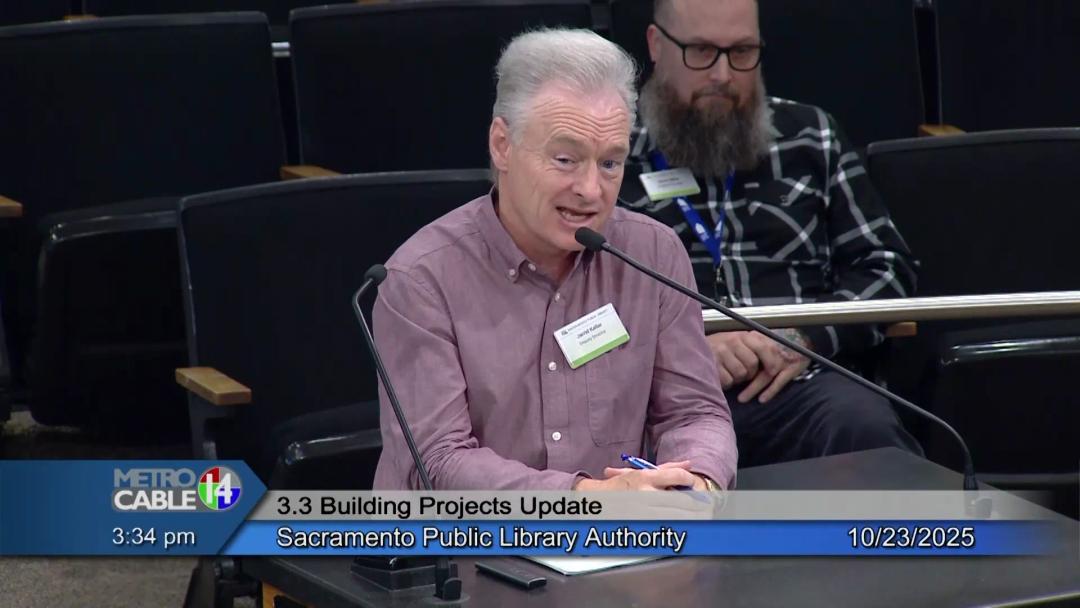
Note: The transcript of the meeting opens with the chair stating the date as Thursday, October 23, 2025, but the provided metadata records the meeting on October 30, 2025. This summary uses the date from the metadata as instructed. All other content is drawn from the transcript. The Sacramento Public Library Authority Board convened to receive presentations on Library Friends appreciation, building project updates, and a new brand and website. The board approved the consent calendar unanimously and heard reports from the Executive Team. No public comments were made on non-agenda items. Consent Calendar - The board approved four consent items by a roll‑call vote of 10–0 (all members present voting aye). Public Comments & Testimony - No members of the public addressed the board on matters not on the agenda. Discussion Items - National Friends of the Library Week Proclamation (Item 3.1): Director Coyle read a proclamation recognizing Friends groups for their contributions, noting the Friends of the Sacramento Public Library have donated over $1 million (later corrected by Friends past president Anita Scurry to over $5 million in the past ten years) and provided over 169,946 books to first graders through the Book First program. The board unanimously adopted the proclamation. - Friends of the Sacramento Public Library Report (Item 3.2): Anita Scurry, substituting for Devon Graves, reported the Friends’ recent antiquarian sale raised $10,000 in six hours. She expressed solidarity with the Colonial Heights Friends and urged a timely reopening of that branch. The Friends are developing a communications plan based on a branch survey and announced upcoming events (paper shredding and tea ceremony). - Building Projects Update (Item 3.3): Deputy Director Keller presented the Colonial Heights Library restoration timeline after the July 2024 fire. The branch will require a new collection of approximately 22,798 items (2,637 linear feet, 217 bays, half a mile of books). Furniture and book deliveries are scheduled for late October; a soft opening is targeted for December 2025, with a firm opening by January 6, 2026. Keller also updated on the Martin Luther King Jr. Library, Elk Grove Library, North Sacramento‑Hagginwood Library, and Isleton renovations, noting that the usual three‑to‑six‑month outfitting period after construction is due to custom furniture, collection processing, and vendor delays. Director Dickinson questioned whether steps could be taken to shorten that period; Keller responded that process improvements are underway but some delays (shipping, telecommunications) are outside library control. Vice Chair Maple requested proactive community communication, noting resident frustration. The board acknowledged the challenges and applauded progress. - Brand and Website Presentation (Item 3.4): Lisa Martinez introduced the library’s new brand identity and website, launching November 5, 2025. The new logo, tagline (“Where Curiosity Meets Community”), and color palette were developed from community research showing residents value discovery, staff, and diverse services. The redesigned website will be more accessible, with plain language and translation tools. Director Talamantes asked about the logo’s meaning (evoking books, pages, and 28 branches). Director Budge appreciated the branding but suggested boosting color intensity. Chair Brewer suggested adding a preamble video with music to the website. Martinez noted the extended color palette and that the tagline reflects the library’s role as a convener. - Executive Team Report (Item 4.1): Director Coyle highlighted the Rancho Cordova Library’s 50th anniversary celebration, a talk by Pulitzer‑winning reporter Jodi Kantor, the graduation of 71 Career Online High School students (365 total over 11 years), and the all‑staff day with workshops and therapy llamas. Key Outcomes - Consent Calendar: Approved unanimously (10–0). - Colonial Heights Library: Confirmed timeline: soft opening December 2025, full opening by January 6, 2026. The board directed staff to improve community communication. - Brand Launch: The new brand and website will debut November 5, 2025; exterior signage rollout will follow. - Other Building Projects: Isleton Library expected to reopen late November/early December 2025. Multiple ADA and HVAC projects scheduled through 2027. The meeting then recessed into closed session.

COMMUNITY ENGAGEMENT 47% · ENGINEERING AND INFRASTRUCTURE 30% · TECHNOLOGY AND INNOVATION 14% · PROCEDURAL 9%
99
OCT 29, 2025 · SACRAMENTO COUNTY, CALIFORNIA · BOARDS AND COMMISSIONS
Historic Joint Meeting of Sacramento County, City Council, and Suburban Cities on Homelessness – October 29, 2025

On October 29, 2025, the Sacramento County Board of Supervisors, the Sacramento City Council, and mayors or representatives from Elk Grove, Folsom, Rancho Cordova, Citrus Heights, and Galt convened for a historic joint meeting focused entirely on addressing homelessness. The meeting, facilitated by Mosaic Strategies, aimed to foster collaboration, share progress, and discuss a path toward a more coordinated countywide response. Consent Calendar - No consent calendar items were presented; the meeting was a single-agenda working session. Public Comments & Testimony - Lorena Moya (Office of Assemblymember Maggie Correll) expressed support for local collaboration and noted the passage of AB 348, which provides full-service partnerships to those at risk of homelessness. - Jesse Bermudez (Office of Assemblymember Stephanie Wynn) thanked the group for the invitation and emphasized that homelessness is both a local and state issue. - Mike Jasky (SAC Act) warned of looming federal funding cuts, including threats to permanent supportive housing subsidies and public housing vouchers, and urged the group to advocate for a two-year extension of the Continuum of Care program. - Linda Wheaton (SAC Act) stressed the importance of maintaining existing funding and protecting permanent supportive housing from caps. - Meg Gunderson (SAC Act/Unitarian Universalist Society) proposed prioritizing prevention of displacement, noting that keeping people housed is more efficient and humane than rescue. - Andy Kramer (SAC Act) called on the city and county to educate the public on the root causes of homelessness (lack of affordable housing, economic instability) to counter false narratives and NIMBYism. - Gillian Marks (Community HealthWorks) described the role of community health workers in outreach and housing navigation, supporting greater alignment between government, health systems, and CBOs. - Michael Milton (self-identified formerly homeless) accused SHRA of mismanaging funds and denied services, citing a personal experience of being denied Section 8 after a missed deadline despite later policy changes. - Shannon Shaw (One Community Health) pushed back on the generalization that unhoused individuals refuse services, reporting that their street medicine team is on track to exceed 2,300 medical and behavioral health visits this year. She urged intentional long-term funding for CBOs and suggested adapting the Black Child Legacy Campaign model to homelessness. - Herman Barahona (Sacramento Environmental Justice Coalition/Sacramento Homeless Union) cited six deaths at Camp Resolution after eviction and argued that the city knows how to reach the unhoused (37,000 people enrolled in Medi-Cal) and should use that data for prevention. - Marjorie Bezer (community member) emphasized the need for a human-centered approach, quoting “nothing about me without me,” and shared her own journey from homelessness to housed. - Nora Casara (EAH Housing/Sacramento Housing Alliance) advocated for building more permanent affordable housing with wraparound services, citing RAND studies showing a $1.20 return for every dollar invested. She requested that the city and county study cost savings and include people with lived experience in decision-making. - Leslie Brizuela (Office of Senator Ashby) thanked the group and noted that discussions would inform SB 802, which envisions a regional approach with accountability, resources, and administration by the housing authority. - Jennifer Swarren (business owner) shared that in her personal conversations, unhoused individuals said services are too rigid and dehumanizing; she suggested offering choice (e.g., a menu of services) and easing rules to build trust. - Jim Randlett (resident) predicted that without immediate action on the scale of need, current efforts would be judged a failure, and urged piloting small programs quickly. - Shauna Stone (Encouraged Freedom LLC/formerly homeless) proposed a six-criteria accountability plan leading to a “second chance citizen status” by July 4, 2027, and requested investment for a for-profit model. - Erin Johansson (Sacramento Steps Forward board member/former COC chair) supported a regular meeting of elected officials and suggested adding elected members to the existing Continuum of Care to address the upcoming loss of resources. - Tammy Kent (Folsom resident) responded to a comment by Folsom Mayor Aquino, stating that Folsom residents are deeply concerned about homelessness and that a seat at the table should be more than an offer to help; she urged compassionate, proactive participation. - Sonia Carabelle (UNITE HERE Local 49) highlighted the need for affordable housing in the rail yards development, where only 6% of units are planned as affordable, and called for developer accountability. - Pam Freeman (formerly homeless, now housed at Wong Center) described her vision of clean streets and no one sleeping on sidewalks, inspired by a trip to Glendale. - Randy Smith (resident) noted that some individuals refuse services and suggested the city and county provide safe, designated areas for those who do not want a roof. Discussion Items - Opening Remarks: Chair Patrick Cerna and Mayor Kevin McCarty emphasized the historic nature of the meeting and the need for a structured partnership, not just a one-time gathering. - County Executive David Villanueva thanked staff and introduced city managers and agency representatives. - Presentations on Progress and Possibilities: - Emily Halcon (County Homeless Services) reported that the 2024 point-in-time count showed 6,600 unsheltered individuals, but the annual number is 2-3 times higher. 33% are Black (vs. 9% of county population), 45% chronically homeless, 62% identify as Sacramentans. Over $418 million was invested last fiscal year, 66% through the county. Achievements include 10,000 shelter/housing options, 10,000 people moved off streets, and the largest homeless decrease among large California cities. - City representatives highlighted local successes: Citrus Heights (Sunrise Point Apartments, 46 units of PSH), Elk Grove (year-round shelter, 70% shelter acceptance rate via navigators), Folsom (Hot team, Bidwell Street Studios – 20 PSH units), Galt (limited resources, rely on partnerships), Rancho Cordova (Veterans Village phases, 100 PSH units, 46 transitional beds), Sacramento (incident management team, microcommunities, rapid rehousing – 2,427 placed into shelters). - Sacramento Steps Forward (Lisa Bates) reported bringing over $90 million in state and federal funding, including $40 million annual COC funding (up $7 million). They support 120 organizations and propose a regional task force of elected officials, staff, practitioners, and people with lived expertise. - Metro Fire (Kyle McDonald) noted 8,400 calls/year related to homelessness since 2022, straining emergency response. - Sheriff Jim Cooper reported 30 dedicated officers, 20,000 citizen complaints, 4 million pounds of trash removed, 2,200 citations, 2,500 arrests (1,100 with violent histories), and data collection revealing 52 sexual predators, 7,000 domestic violence incidents, 2,000 sexual assaults, and 998 individuals flagged for mental health issues. He emphasized law enforcement’s role and the need for better data sharing. - District Attorney (DA) called for community prosecution expansion, data sharing from the COC, and increased efficiency in programs like the St. Clair Hotel. - Behavioral Health (Dr. Ryan Quist) outlined voluntary and involuntary treatment pathways (AOT, CARE Court, mental health diversion, conservatorship). Noted that 587 assessments for mental health diversion have been done this year, and 261 LPS conservatorships exist. Key challenge: lack of housing after treatment. - Federal/State Impacts (Alex Vysotsky, NAEH) warned of 44% proposed federal cuts to rental assistance, pending loss of emergency housing vouchers (15,000 California households at risk), potential caps on COC permanent housing funding (25 million drop for Sacramento), and state HAP funding cut from $1 billion to $500 million. He noted California has performed better than other states but faces a structural deficit. - Visioning Session (Mosaic Strategies): Facilitators reported survey results showing elected officials want more direct involvement, data-driven decisions, and a structure that is efficient and effective. Discussions centered on shared governance, staff roles, stakeholder inclusion, and the need for a formal forum (JPA, MOU, or coalition). Consensus emerged to continue the process and form a multi-jurisdictional body. Key Outcomes - Commitment to Continue Collaboration: All participating jurisdictions expressed willingness to continue meeting and explore a formal multi-jurisdictional structure (whether JPA, MOU, or coalition) to address homelessness. - Data Sharing: Staff committed to providing links to dashboards with real-time data on CARE Court, mental health diversion, and other metrics to all elected officials. - Report from Mosaic Strategies: Facilitators will produce a report summarizing the interviews, surveys, and visioning session, with recommendations for next steps. - Revisit Partnership Agreement: Several speakers (including Chair Cerna and Councilmember Guerra) suggested updating the existing city-county partnership agreement to include suburban cities and reflect new policies (Prop 1, CARE Court, SB 43). - Legislative Advocacy: The group acknowledged the need for a unified voice to advocate at state and federal levels for stable funding, mental health treatment resources, and affordable housing. - Public Comment Acknowledged: The board/council heard 23 speakers and noted concerns about funding cuts, trust, human dignity, and the need for prevention and affordable housing.

HOMELESSNESS 85% · AFFORDABLE HOUSING 7% · BUDGET AND FINANCE 3% · COMMUNITY ENGAGEMENT 3%
100
OCT 29, 2025 · SACRAMENTO COUNTY, CALIFORNIA · BOARDS AND COMMISSIONS
Historic Joint Meeting of Sacramento County and Cities on Homelessness - October 29, 2025

The meeting convened the Sacramento County Board of Supervisors, the Sacramento City Council, and mayors from Elk Grove, Folsom, Rancho Cordova, Citrus Heights, and Galt for the first time in history to collaboratively address homelessness. The agenda featured presentations on current progress, behavioral health strategies, funding challenges, and a facilitated visioning session. Key themes included improving coordination, data sharing, prevention, and the need for a more formal governance structure. Public Comments & Testimony - Members of the public, including advocates from SAC Act, Community HealthWorks, homeless individuals, and local business owners, expressed mixed views. Some praised the collaborative effort, while others criticized the lack of progress and data transparency. Several speakers urged prioritizing prevention and permanent housing, and warned of looming federal and state funding cuts. A few speakers emphasized the need to involve people with lived experience and to address the root causes of homelessness, such as lack of affordable housing and economic instability. Discussion Items - Opening remarks by Supervisor Cerna and Mayor McCarty emphasized the historic nature of the meeting and the need for continued collaboration. - Presentations from county and city staff highlighted progress: over 10,000 shelter/housing options created, 200+ people moved out of unsheltered homelessness via outreach, and $418 million invested regionally in the last fiscal year. - Sheriff Cooper reported 20,000 citizen complaints over three years, 4 million pounds of trash removed, and 2,500 arrests, stressing the need for data sharing and public safety. - Behavioral Health Director Dr. Quist outlined voluntary and involuntary treatment pathways (AOT, CARE Court, conservatorship), noting that housing is the primary barrier to success. - Alex Vysotsky from the National Alliance to End Homelessness presented on federal and state funding threats, including potential cuts to 40% of permanent housing subsidies from the Continuum of Care program. - The afternoon visioning session, facilitated by Mosaic Strategies, used surveys and group discussion to gauge elected officials' priorities. Results showed strong desire for more direct elected involvement, better data, and a formal multi-jurisdictional structure. Some suburban mayors expressed willingness to collaborate but noted their smaller homeless populations. - County Executive David Villanueva and Deputy County Executive Siobhan Katari committed to providing a report with next steps and data dashboards. Key Outcomes - Elected officials unanimously agreed to continue the collaborative process and committed to exploring a more formal governance structure (e.g., JPA, MOU, or regular coalition meetings). - The group directed staff to prepare a report with recommendations based on the day's discussions, surveys, and interviews. - No formal votes were taken, but a straw poll using Mentimeter showed overwhelming (approximately 95%) support for continuing the process. - Next steps include follow-up emails with data links, continued staff-level coordination, and a potential next meeting to consider specific structural options.

HOMELESSNESS 86% · AFFORDABLE HOUSING 8% · PROCEDURAL 2% · BUDGET AND FINANCE 2%
OPENPUBLICA · PUBLIC MEETING INDEXUPDATED DAILY · openpublica.com