Browse by city
Date range
Search help

Search titles, summaries, topics and stored transcripts together. Keywords may match separately; put the whole query in double quotes for a phrase. Matching follows word analysis, so punctuation is not exact. Both dates are included. Documents are not searched.

SHOWING 251–260 ENTRIES
251
MAY 28, 2026 · SAN ANTONIO, TEXAS · BOARDS & COMMISSIONS
City Meeting of San Antonio Building Standards Board - May 28, 2026

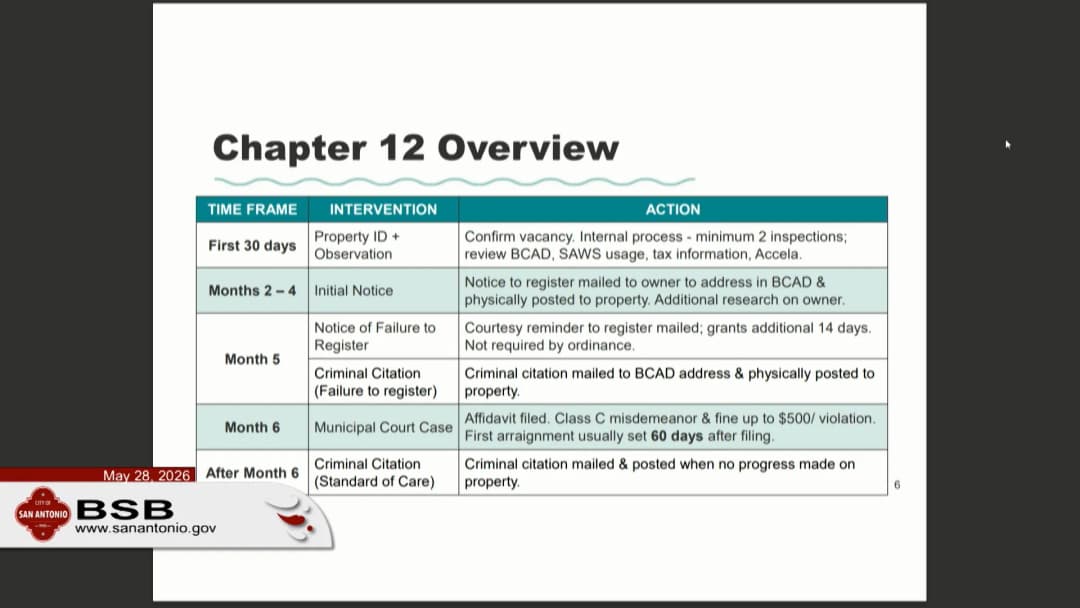
The San Antonio Building Standards Board met on May 28, 2026, to approve minutes, receive staff reports on emergency demolitions and code compliance, hear presentations on housing assistance, deconstruction, and vacant property programs, review board processes and statistics, and conduct administrative business. The board acted on a policy amendment and deferred cases to individual panels. Consent Calendar - Approval of Minutes: The minutes from the October 16, 2025 meeting were approved unanimously with no corrections or amendments. The motion passed by voice vote. Discussion Items - Staff Report – Emergency Demolitions (Jenny Ramírez): Five emergency demolitions were reported, all due to fires between April 30 and May 12, 2026. Properties at 3506 Woodland Avenue (District 7), 1608 Menchaca Street (District 1), 325 East Courtland Plaza (District not specified, accessory structure), 3926 West Martin Street (District 5, main structure), and 9248 Toronto Drive (District 2, mobile home) were demolished on May 12–26, 2026. No further board action required. Board members had no questions. - Director’s Report – Code Compliance (Assistant Director Dani Lígues): The director reported on performance metrics for fiscal year 2025-2026. The department is meeting its goal of responding to violations within one to two days. The overall compliance rate is 89%, with 90% of pending investigations current. The department aims to inspect 60,000 properties annually. A reduction in reactive calls (3% drop) was noted, attributed to fewer vacancies, staff turnover, and increased community education. Legal advisor Sarita Wright added that code officers are being pulled to assist with new programs, which may also reduce call volume. - Housing Assistance Programs (Housing Department Manager and Emma Rodríguez): Two programs were presented: Rental Assistance (temporary aid for rent and utilities, up to three months, with a maximum of $3,000, open for applications the second Wednesday of each month from 1–2 PM) and Relocation Assistance (help with security deposits, utility connections, application fees, and moving expenses for households facing eviction or displacement). Eligibility requires income at or below 80% of Area Median Income (AMI) and documented housing instability (e.g., eviction notice). Applications are accepted via an online portal. Board members asked about the short application window (1 hour per month), explained due to capacity, and questioned outreach effectiveness. Staff noted partnerships with schools, libraries, property managers, and community organizations. Code compliance officers provide information on these programs early in the enforcement process. Board members expressed appreciation but concerns about limited awareness. - Deconstruction Program (Stephanie Phillips and Leticia Sánchez): The program, adopted by city council in September 2022, applies to residential structures ordered for demolition built in 1945 or earlier (or 1960 in conservation districts). It requires deconstruction by approved contractors, with materials reused for affordable housing projects or donated to a Materials Innovation Center (still in pilot). Leticia Sánchez, representing Esperanza Community Land Trust, emphasized the program’s success in recovering 70% of original materials and saving 30% in costs compared to new construction. She invited board members to visit the reuse center at 816 South Colorado. Board members noted the cost is higher than demolition but offset by material reuse and environmental benefits. - Vacant Properties Program (Brittany Williams): The program started as a pilot in 2014 and became permanent, now covering half of the city’s square miles (including historic districts, conservation districts, military bases, and school zones). It requires registration of vacant properties, including owner contact, a six-month action plan, and a transfer form for police access. 60% of owners are individuals, not businesses. Since inception, 1,100 properties have been reoccupied. Staff assists with connecting owners to resources, including help with legal title issues. Board members asked about success rates in complex cases (e.g., multi-generational properties) and property types (mostly single-family homes). - Code Compliance Assistance Fund (Rusty): The fund has collected $1,147,641.50 in fines and owes $1,574,047. A balance of $977,365 was available for grants to property owners for tree removal, vegetation, and debris cleanup. 53 applications were received; 77,995 was spent. Board members questioned why unspent funds do not carry over (funds revert to general fund) and noted difficulties in collecting fines. Staff are working on making the application process easier. - Board Process Overview: Staff presented the detailed timeline from initial inspection, notice, judicial orders, evidence collection, internal reviews, and finally hearings. The board learned that all records must be kept for 10 years due to potential claims. The process includes multiple layers of review and contact with owners. - Organizational Chart Update: A new organizational structure was presented, aligning code compliance, vacant property program, and building standards under Kathy Rodríguez. The board noted growth in staff. - Kathy Rodríguez Report: The board calendar for the rest of 2026 was shared. All nine board seats are filled; five members are newly appointed. Attendance for Panel A was 100%, Panel B 87%. No hearings were rescheduled due to lack of quorum. Rodríguez thanked members for their voluntary service. - Case Statistics (Alice Guajardo): From October 2025 to April 2026, Panel A and Panel B heard a total of 91 cases: 51 dangerous structures, 40 demolitions (30 with penalties, 10 without), and 0 maintenance cases. No emergency demolition hearings were needed (34 emergency demolitions occurred without board action). No appeals were filed. Cases by district: District 1 (17), District 2 (1), District 3 (10), District 4 (5), District 5 (21), District 6 (6), District 7 (6), District 8/9 (0), District 10 (1). Total 91. - Executive Session: The board entered executive session at 11:33 AM and returned at 12:26 PM. No official actions were taken during executive session. Key Outcomes - Deferrals and Ethics Presentation: The board agreed to defer items on the agenda to individual panels. The ethics code presentation will be conducted in individual panels. - Policy Amendment: Board member George Crimes Jr. moved to remove Section M from the board’s Policies and Procedures (specifically Section 8, subsection M). The motion was seconded and passed with a vote of 10–0. The removed item had pertained to property owners’ right to examine materials presented to the board. - Adjournment: The meeting was adjourned by unanimous consent at approximately 12:30 PM.
ZONING AND LAND USE 30% · HOUSING 28% · PROCEDURAL 10% · ENGINEERING AND INFRASTRUCTURE 10%
252
MAY 28, 2026 · SAN ANTONIO, TEXAS · BOARDS & COMMISSIONS
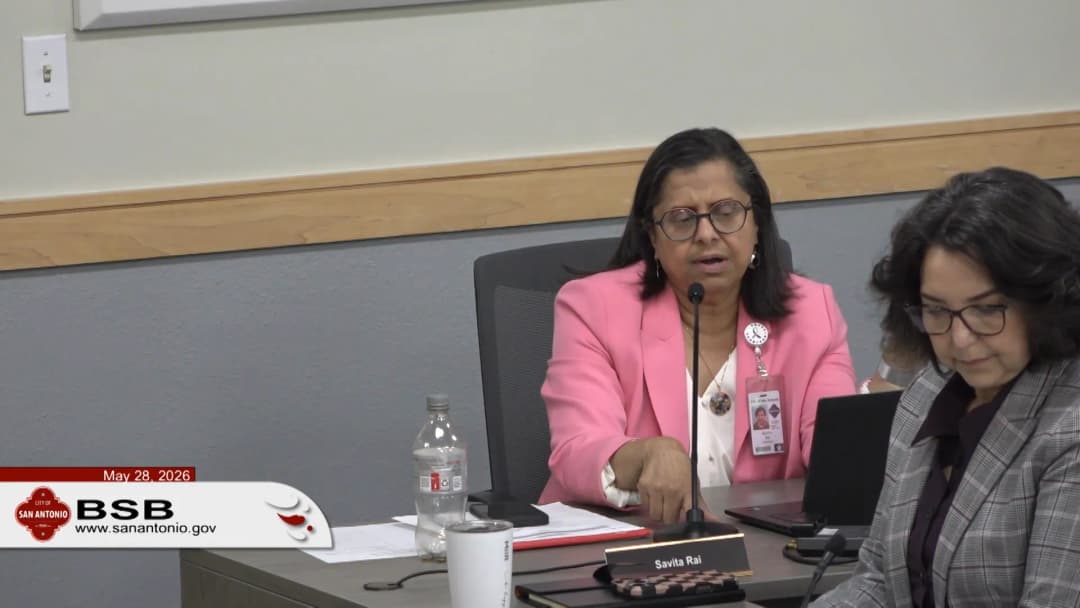
San Antonio Building Standards Board Meeting – 28 May 2026

The Building Standards Board (BSB) met on 28 May 2026 to receive reports on emergency demolitions, performance metrics, housing assistance programs, deconstruction and vacant building initiatives, and to conduct a vote on policy procedures. The meeting included roll call, approval of minutes, staff reports, and multiple presentations from city departments. Consent Calendar - Approval of minutes from previous meeting: Approved unanimously. Staff Report: Emergency Demolitions - Five emergency demolitions were reported, all due to extensive fires between April 30 and May 12, 2026. Demolitions occurred between May 7 and May 16, 2026. No board action required per City Code 6-175. - 3506 West Woodlawn (accessory structure, District 7) – fire Apr 30, demolished May 7. - 1608 Minchaka Street (main structure, District 1) – fire May 6, demolished May 12. - 325 East Cortland Place (accessory structure, District 1) – fire May 5, demolished May 13. - 3926 West Martin Street (main structure, District 5) – fire May 12, demolished May 16. - 9248 Toronto Drive (mobile home, District 2) – fire May 11, demolished May 15. Public Comments & Testimony - No public comments were made. The meeting focused on staff presentations and board discussion. Director's Report: Code Enforcement Performance Measures - Interim Assistant Director Danny Liguez reported year-to-date statistics through April 2026: - Approximately 70,000 property maintenance inspections conducted. - Response time for Tier 1 and Tier 2 violations: within 1-2 days (performance goal met). - Proactive inspection rate: 81% (target 65%). - Compliance rate: 90% overall (struggled earlier in fiscal year but improved since February). - Graffiti abatement: 32,000 sites year-to-date; turnaround time 1 day (target 3 days, goal 2 days). - Vacancies: average 8-11 vacancies citywide, contributing to a slight dip in proactive cases year-over-year. - Legal counsel Sabita Rye noted that code enforcement is being pulled in multiple directions due to new ordinances, which may also affect performance. Presentations Housing Assistance Programs (Neighborhood & Housing Services Department) - Rental Assistance: Applications accepted monthly on second Wednesday from 1-2 p.m. Covers up to 3 months rent or $3,000 (whichever comes first), plus $500 for disabled households. Applicants must be at or below 80% Area Median Income (AMI), show financial hardship and housing instability, and the housing provider must agree to participate. - Relocation Assistance: Available 24/7; covers security deposits, application fees, utility connections, pet deposits, temporary lodging (with pre-approval), mover costs, and storage. Same income and residency requirements. Maximum assistance $3,000 ($3,500 for disabled). Funds paid directly to housing provider after signed lease. - Eviction Court Presence: Senior family support workers at Justice of the Peace courts Monday-Friday, 8-5 p.m., connecting tenants to resources. - Fair Housing Program: HUD-approved agency offering mediation, mortgage counseling, and housing discrimination complaint review. - Board members questioned the short application window (1 hour/month) and outreach; staff acknowledged capacity constraints but noted partnerships with schools, workforce centers, and community organizations. Deconstruction Program (Office of Historic Preservation) - Ordinance adopted September 2022; applies to residential structures built pre-1945 citywide or pre-1960 in historic/neighborhood conservation districts. - Program includes annual contractor training (next cohort Jan/Feb 2027) and a Material Innovation Center at Port San Antonio where recovered materials are stored and redistributed for affordable housing, trades education, and community impact projects. - Example: Esperanza Peace and Justice Center’s Rinconcito de Esperanza – 70% of materials reused from original structure, 30% from the center. - Board discussed cost: deconstruction is generally more expensive than demolition, but materials have reuse value and environmental benefits. Vacant Building Program (Development Services) - Started as pilot in 2014, made permanent 2015; expanded in 2017 and 2023 (1000-foot buffer around schools). Currently covers about 186 sq miles, less than half of San Antonio, concentrated inside Loop 410. - Program moved from Office of Historic Preservation to Development Services in March 2026. - Approximately 1,000 properties in inventory; 60% owned by individuals (not LLCs), mostly single-family residences. - Registration required with plan of action within 90 days; failure results in citations (Class C, up to $500 per violation, up to 13 violations). - Since inception, over 1,100 successful cases (renovated, occupied, or sold to new owner). - Staff connect owners with wills clinics to address probate issues. Compliance Assistance Fund - As of April 25, 2026: total fines due $977,365; costs due $170,269.50; grand total $1,147,634.50. - Current fund balance: $15,390. City working to make the fund easier to use; may seek ordinance modifications. - Board noted that unspent funds may be lost in budgeting; legal clarified that the fund should carry over but current interpretation treats it as budgeted item. Senior Assistance Fund - $100,000 budgeted for FY26. Received 53 applications; 38 abated, 6 canceled, 3 unfunded (referred to other programs). - Total approved cost: $77,995. Remaining balance: $15,375. - Work types: hazardous vegetation (19), outside placement (8), overgrown weeds (3), trash/debris (8). - Median costs varied by district, with higher costs in District 4 ($2,732) and District 7 ($3,038) likely due to tree removal. - Unfunded cases often involve large, expensive tree removals; one estimate was $30,000. Discussion Items BSB Process Overview - Jenny Ramirez presented a high-level timeline of how cases progress from initial inspection to board hearing, including internal and executive reviews, notice requirements, and post-order monitoring. - Cases typically take 9-18 months before reaching the board due to extensive documentation, owner outreach, and referrals to assistance programs. - Emergency demolitions follow a separate 96-hour process with building official affidavit and coordination with utilities and police. Organizational Chart Update - Code Enforcement Division realigned to include Vacant Building Program. Kathy Rodriguez assumed oversight of BSB staffing. - Vacancy rate has decreased; training programs revamped to retain staff. BSB Orders and Actions (Oct 2025 – Apr 2026) - Total cases presented: 91 (51 dangerous structures, 34 emergency demolitions, 6 reset orders). - Panel A: 4 meetings, 38 items. Panel B: 7 meetings, 51 items. One full board meeting. - Breakdown of dangerous structure orders: 4 repair orders without penalty, 1 remedy without penalty, 1 30-day demo with penalty, 42 30-day demo without penalty, 3 pulled from agenda. - Most cases in Council District 5 (29 total) and District 2 (17 total); none in Districts 8 and 9. Board Attendance and Calendar - Panel A: 100% attendance; Panel B: 87% attendance. No hearings rescheduled due to lack of quorum. - Calendar for rest of 2026 already established; changes notified in advance. - No board vacancies; 9 members reappointed, 5 new appointments (3 in April 2026). Key Outcomes - Vote on Policies and Procedures: Motion to delete item M (right to cross-examine staff) from Section 8 passed 10-0. Item M had allowed persons with legal property interest to cross-examine staff presenters. The board concluded it was not appropriate given panel composition. - No actions taken in executive session; board reconvened at 12:27 p.m. - Two agenda items (ethics code and Robert’s Rules presentation) deferred to individual panel meetings. - Meeting adjourned at approximately 12:30 p.m.

ENGINEERING AND INFRASTRUCTURE 35% · AFFORDABLE HOUSING 25% · PROCEDURAL 9% · ZONING AND LAND USE 9%
253
MAY 28, 2026 · SAN ANTONIO, TEXAS · COUNCIL COMMITTEES
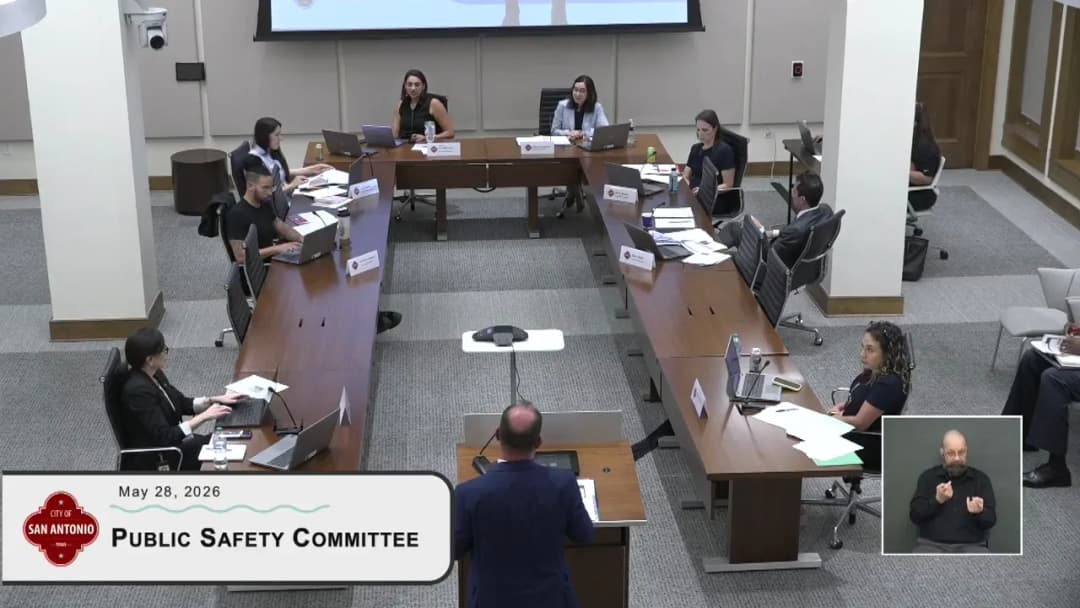
San Antonio Public Safety Committee Meeting – May 28, 2026

The Public Safety Committee (Comité de Seguridad) met on May 28, 2026, to discuss animal care services (ACS) metrics, dangerous dog enforcement, and a police staffing plan. The meeting included public testimony from a dog attack victim, a presentation from ACS Director John Gary, a presentation from SAPD Chief Raymond Platinum, and extensive council discussion. No formal votes were taken on the main agenda items; the committee agreed to postpone item five to the next meeting. Consent Calendar - Approval of minutes: The committee approved the minutes of the previous Safety Committee meeting by unanimous voice vote (motion and second received, no objections). Public Comments & Testimony - Katy (resident, District 1): Testified about being attacked by a large Great Dane on Good Friday, resulting in severe injuries to her arm and the death of her 9-pound dog. She described the traumatic aftermath, noting that ACS responded well but that the owner never claimed the dog and it was euthanized after a 10-day quarantine. Her specific recommendations included: (1) providing victims with a written explanation of the process and available resources; (2) adding a public safety dashboard on the ACS website by district; (3) requiring city manager reports to council on district-level ACS status at least quarterly; and (4) reinstating a citizen position on the Safety Committee, for which she expressed interest. - Kelly Waltz (former ACS volunteer/advocate): Criticized ACS for failing to hold dangerous dog owners accountable, claiming that fatalities are linked to dogs already known to ACS. He alleged that ACS manipulates response rate statistics, that many dangerous dog cases are dismissed or low-priority, and that the 93% response rate cited is misleading because calls are often closed automatically. He pointed to specific cases where owners repeatedly ignored court orders without consequence. Discussion Items 1. Animal Care Services (ACS) – 2026 Metrics and Dangerous Dog Enforcement - Presentation by John Gary (Director of Animal Care Services): Provided an overview of cruelty investigations, dangerous dog classifications, and citation processes. Key points: - The cruelty team has 5 investigators; they issue violation notices for minor infractions and seek warrants for severe cases. In 2026, 800–900 violation notices were issued. - The dangerous dog investigation team has 4 investigators + 2 supervisors. Currently 348 active dangerous dog cases (93 dogs in 52 homes). 82% of dangerous dog classifications meet the target (goal 80%). - Dangerous = attacks a person; aggressive = attacks an animal. There are 88 dangerous and 68 aggressive cases; 22 SBI (serious bite incidents) go directly to court. - The process: after an incident, the dog is quarantined (10 days), evidence collected, owner has 15 days to appeal a dangerous dog declaration. Non-compliance leads to potential euthanasia after an 11-day grace period. - Citations: In 2024, most citations were criminal rather than civil. A single incident can generate 4–5 citations. The director noted that 2024–2025 data shows some cases were dropped or administratively closed. - City Manager David Rodriguez (Assistant City Manager): Added that ACS is working on a public dashboard (expected in 90 days) to allow tracking of calls by district, priority, and outcome. He acknowledged the need for better communication with the community and for modernizing the citation process, which remains largely manual. - Councilmember Maki Rodríguez: Expressed concern that despite two new spay/neuter and vaccination points, ACS is not removing dangerous animals proactively. She noted that ACS’s budget dropped from $5 million to $3 million and that response rates for critical calls are still only 92%. She called for more officers, an east-side facility, and better coordination with the municipal court and city attorney’s office. She disputed the claim that ACS does not need more money. - Councilmember White: Noted that criminal citations doubled from 2024 to 2025 and asked why. He wanted data on average time from incident to prosecutor decision, and recommended a satellite facility on the east side. He also supported better victim resources (notaries, help with sworn affidavits). - Councilmember Spears: Expressed frustration with lack of progress despite significant funding. She suggested a public registry of dangerous dogs (similar to sex offender registry), mandatory liability insurance for owners of dangerous dogs, and stronger enforcement. She stressed the need for collaboration with the county and suburban cities. - Councilmember Castillo: Emphasized making the online dangerous dog map more user-friendly and adding filters for multiple attacks. She requested a clear timeline of what a victim can expect after a bite (reporting, court process, outcomes). - Municipal Court representative: Explained that citations are hand-written, delivered to prosecutor’s office, then to court; the process takes about a week. Defendants get 30 days to appear; if they fail, an arrest warrant is issued. The court is working with ACS on electronic citation submission. 2. Police Staffing Plan – Presentation by SAPD Chief Raymond Platinum - Background: On March 11, 2026, Councilmembers Alderete, Gabito, and Spears submitted a resolution supporting a 2023 staffing study; on March 12, another memo from Councilmembers Maki Rodríguez, Villa Gran, Munguía, Castillo, and Galván recommended prioritizing staffing within the FY2026 budget process. - Methodology: The 2023 study used workload-based analysis (calls for service, response time, shift patterns, proactive time) and recommended adding 360 officers to achieve a 60/40 split between call response and proactive time. The department later moved to a 50/50 split and added 200 officers, resulting in a 13% reduction in homicides and 43% reduction in auto thefts from July 2023 to July 2024. - Current request: Chief Platinum presented updated data showing that San Antonio is the fastest-growing US city (added 24,000 residents in 2023-24, 14,000 in 2024-25). To maintain current service levels and improve proactive policing, additional officers are needed. The chief noted that the department now offers 8- and 10-hour shifts for flexibility and is exploring online reporting for non-emergency calls (minor accidents, lost property, noise complaints) to free up officer time. - Councilmember White: Strongly supported adding officers, stating that the city must follow through on the 2023 study. He noted that the 50/50 split has reduced crime and that more officers would further improve safety and officer mental health. He called for funding additional officers in the next 3–4 months. - Councilmember Spears: Echoed White’s sentiments, emphasizing that public safety is the city’s core function. She asked for data showing how increased staffing at substations has improved response times. She also stressed the importance of officer well-being and community perception of safety. - Councilmember Maki Rodríguez: Cautioned against assuming causation from correlation. She noted that other cities like Houston and Nashville have more officers per capita but still higher crime rates, and that social media trends (e.g., TikTok challenges) can artificially inflate certain crimes. She urged careful analysis of demographic and economic factors that affect crime. - Councilmember Castillo: Requested that future discussions include trade-offs (tax increases vs. cuts to other programs) to justify budget increases. Key Outcomes - Minutes approved unanimously. - Item 5 (unclear) postponed to the next meeting (scheduled for June at a domestic violence shelter). - No formal votes were taken on the ACS metrics or police staffing plan; these were discussion-only items. The committee directed staff to: - Develop a user-friendly online dashboard for dangerous dog tracking and public education (within 90 days). - Explore electronic citation submission from ACS to municipal court. - Provide councilmembers with a clear timeline and outcome tracking for dangerous dog cases. - Continue analyzing police staffing needs with cross-city comparisons and budget implications for the next fiscal year.

ANIMAL WELFARE 70% · PUBLIC SAFETY 22% · PERSONNEL MATTERS 5% · MUNICIPAL COURT 3%
254
MAY 28, 2026 · SAN ANTONIO, TEXAS · COUNCIL COMMITTEES
Public Safety Committee Meeting Summary - May 28, 2026

The Public Safety Committee convened on May 28, 2026, at 2:08 PM, with Chair Corps presiding and a quorum present. The agenda included approval of prior minutes, a briefing on Animal Care Services (ACS) performance metrics and dangerous dog/cruelty case processes, and a briefing on the San Antonio Police Department (SAPD) patrol staffing plan. Public comments highlighted gaps in victim support and enforcement. The meeting adjourned at 3:55 PM. Consent Calendar - Approval of Minutes: The minutes from the April 21, 2026 Public Safety Committee meeting were approved unanimously. Public Comments & Testimony - Kathy Vale (District 1 resident): Described a traumatic dog attack on Good Friday 2026 that resulted in her dog's death and her injuries. She praised initial emergency response but criticized the lack of a victim information sheet, insufficient public safety focus on the ACS website, and the absence of a monthly/quarterly district-level report for council members. She requested reinstatement of a public citizen position on the committee. - Kelly Laporte: Asserted that ACS misrepresents data (e.g., 93% critical call response rate is manipulated) and fails to enforce dangerous dog laws, citing repeated court failures and a recent increase in serious bite injuries (over 50%). She called for better accountability and warned of continued fatalities. Discussion Items Animal Care Services (ACS) Performance & Dangerous Dog Process - Presentation by John Gary (ACS Director) and Municipal Court Representative: Covered cruelty investigations (5 investigators), dangerous dog investigations (4 investigators), and the citation/court process. Year-to-date statistics (FY26, 7 months) included 898 notice of violations, 336 civil citations, 401 criminal citations, and 36 cruelty cases filed with the DA's office (surpassing prior year totals). Dangerous dog compliance rate was 82% (goal 80%), with 348 cases handled, 88 deemed dangerous, 68 aggressive, and 22 serious bodily injury (SBI) cases. The registry is available online by district. - Councilmember McKee-Rodriguez pressed for resources: asked if ACS needs more officers, higher pay, or a second campus to address stray dog calls and kennel capacity. Director Gary acknowledged additional officers and adoption/medical staff would help. - Councilmember Spears suggested a more prominent registry, higher mandatory insurance (e.g., $100,000) for dangerous dog owners, and collaboration with county and suburban cities. Gary noted $100,000 insurance is already required. - Councilmember Castillo called for digitizing ACS citations (currently manual) and a strategic framework refresh for animal care services. Assistant City Manager David McCarey committed to developing a dashboard within 90 days and improving outcome alignment between ACS and municipal court. - Councilmember Casillo asked for a flow chart tracking case lifecycle to better communicate with residents, and requested data on appeal rates and DA acceptance. Judge confirmed manual process and 30-day appearance timeline. SAPD Patrol Staffing Plan - Presentation by Assistant Chief Robert Blanton: Reviewed the 2023 workload study recommending 360 new patrol officers to achieve a 40% reactive / 60% proactive time split. Since then, 205 officers added, achieving a 50/50 split. Data shows a 13% drop in total crime, 37% drop in homicides, and 43% drop in car thefts. Benefits include enhanced crime prevention, targeted enforcement, and officer well-being. Staffing plan is data-driven using workload model; Houston and Albuquerque use similar models. - Councilmember White: Expressed support for fully funding the remaining 155 officers, arguing that increased presence causes crime reduction and citing officer mental health benefits. - Councilmember Spears: Supported the plan and requested substation-level response time data. - Councilmember McKee-Rodriguez: Cautioned against assuming causation from correlation, noting other cities with more officers per capita have higher crime. She advocated for holistic crime prevention (e.g., environmental design, social services) and alternative response solutions to reduce officer workload. - Councilmember Castillo: Asked for clarity on budget trade-offs (e.g., property tax increases or cuts to other departments) to fund additional officers. Key Outcomes - Consent Calendar: Minutes approved. - ACS Briefing: No action taken. Council directed ACS and municipal court to improve data tracking, develop a dashboard (within 90 days), digitize citations, and provide a case flow analysis for residents. A strategic framework refresh will be explored. - SAPD Staffing Briefing: No action taken. Discussion will inform FY27 budget decisions. A follow-up on substation response times and peer city comparisons was requested. - Next Meeting: Scheduled for June 2026 at the Family Violence Prevention Center shelter, with a shortened agenda including deferred item 5 and subcommittee reports.

ANIMAL WELFARE 67% · PUBLIC SAFETY 31% · MUNICIPAL COURT 1% · PROCUREMENT AND CONTRACTING 1%
255
MAY 28, 2026 · SAN ANTONIO, TEXAS · COUNCIL COMMITTEES
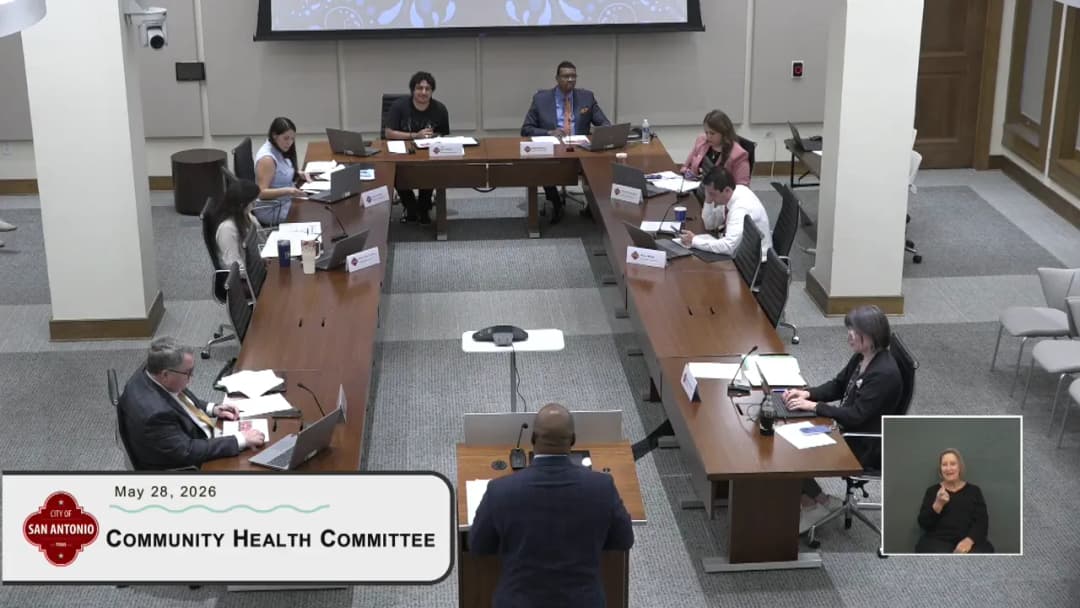
Community Health Committee Meeting - May 28, 2026

The Community Health Committee met on May 28, 2026, at 10:01 a.m. to discuss maternal health programs, reproductive justice funding, and the Medicaid 1115 waiver update. Public comment was heard and the minutes were approved. Consent Calendar - The committee approved the meeting minutes with no changes or adjustments. Motion carried unanimously. Public Comments & Testimony - Jamie Gonzalez (Food Policy Council, River City Produce, Chicho Boys) spoke in support of the Healthy Neighborhoods program and other Metro Health programs facing budget cuts. She highlighted the essential role of community health workers, the success of programs like Healthy Corner Store and Double Up Food Bucks, and urged the city to look at inefficiencies in the RFP process and marketing department rather than cutting direct services. Written comments from Nadia, Emma, and Gracie were entered into the record. Discussion Items Maternal Health Programs (Item 2) - Marjorie White (Assistant Director, Community Health and Safety Division) presented on the Women, Infant and Child (WIC) program, the San Antonio Lactation Support Center, and the Healthy Start program. WIC serves over 17,000 clients, with 10 clinics in San Antonio. In fiscal year 2025, WIC provided $7 million in food benefits, with an increase in per-client cost due to rising food costs. Healthy Start serves 11 high-risk zip codes and is federally funded, currently vulnerable to cuts. Councilmembers asked about income guidelines, food types (eggs, milk, formula, produce, etc.), funding sources, and best practices. Councilmember Alderete-Gavito requested a demographic breakdown. Councilmember Mesa Gonzalez inquired about advocacy efforts for federal funding. Chair Govan emphasized the holistic impact of maternal health programs. Reproductive Justice (Item 3) - Dr. Wu reported on the $500,000 in one-time funding from CPS off-system sales (approved September 2023). The funds were awarded to four vendors through an RFP, covering upstream (sex education for 5,000+ youths in SAISD and Northside ISD), midstream (30 trained doulas, 189 navigations to STI care, 25 to benefits, 50 IUDs at no charge), and downstream (240 receiving direct maternity support, 800 STI tests, 113 infections treated). Total 12,509 people served at approximately $40 per person. Councilmember White asked about legal risk if reinstated; city attorney said initial analysis shows no problem but would need further review. Councilmember Aldrete-Gavito noted the funding was always intended as one-time and cautioned against using general fund due to potential state penalties. Councilmember Ruger-Stell expressed support for reinstating funding. Chair Govan requested zip code data of those served. Medicaid 1115 Waiver Update (Item 4) - Dr. Jacob (Assistant City Manager) presented an update on the $20 million in reserves identified from the Medicaid 1115 waiver, which will allow a glide path for certain programs. The presentation focused on four most-impacted programs: Oral Health (serves 17,000 children annually, $2.5 million budget, 40 staff), Stand Up SA (violence prevention, 1.5 million budget, 24 staff, 500 altercations interrupted), STI Control and Prevention (9.5 million budget, 58 staff, includes mobile outreach and congenital syphilis investigations), and Diabetes Prevention (12 staff, 62% risk reduction for participants). Recommendations include fully funding Oral Health and Stand Up SA from reserves, and funding mandated components of STI control and diabetes education. Non-mandated components (e.g., mobile STI outreach, some diabetes programming) would be sunset. Councilmembers asked about potential service absorption by other entities (Bear County, nonprofits) and requested a crosswalk of delegate agency funding. Several councilmembers expressed strong support for preserving these programs and staff (80+ positions). Key Outcomes - The committee approved the minutes unanimously. - Staff were directed to provide: demographic breakdown for maternal health programs, zip code data for reproductive justice services, and a crosswalk of delegate agency funding related to the 1115 waiver programs. - The committee generally supported continuing funding for oral health, Stand Up SA, STI clinical services, and diabetes education through the 1115 reserves. - Committee members noted that reproductive justice funding was a one-time allocation and should not be reinstated from the general fund, but encouraged private support and continued advocacy for federal funding. - The FY27 budget proposal, incorporating feedback from this meeting, will be presented to full council later in summer 2026.

REPRODUCTIVE JUSTICE 28% · PUBLIC HEALTH 27% · MENTAL HEALTH AWARENESS 17% · PROCEDURAL 7%
256
MAY 27, 2026 · SAN ANTONIO, TEXAS · BOARDS & COMMISSIONS
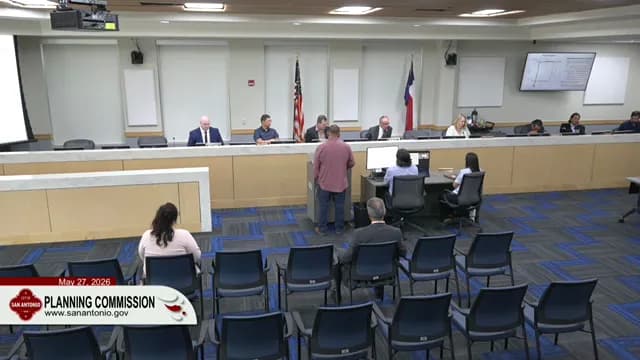
San Antonio Planning Commission Meeting - May 27, 2026

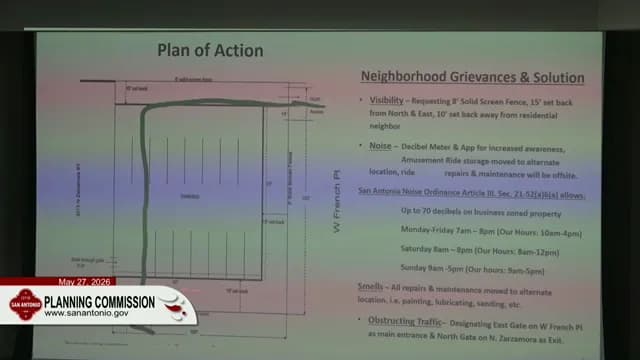
The San Antonio Planning Commission met on Wednesday, May 27, 2026, at 2:03 PM. The meeting included a combined consent agenda for routine plats and an individual hearing agenda for four items (12, 13, 14, 16). The commission voted on plan amendments, zoning requests, and continuances. Consent Calendar - Items 1-7 (Plats): The commission approved the consent agenda (moved by Commissioner Profit, seconded by Commissioner Sanchez) with a unanimous roll call vote (all present voting yes). Prior to the vote, public speakers expressed opposition to replats in rural areas (Trumbull Trail and Huntress Lane), citing concerns about septic system adequacy, loss of trees, wildlife habitat, gas pipeline safety, and increased density. Public Comments & Testimony - Eugene Vega (1161 Trumbull Trail): Opposed to replat of a 5-acre lot into 8 parcels, citing insufficient septic drain fields, loss of trees, and incompatibility with the retirement community's rural character. He noted deed restrictions and a previous 100-foot setback requirement. - Mary Lou Vega (161 Trumbull Trail): Opposed, emphasizing septic pollution risks, gas pipeline dangers in an all-electric area, and negative impact on wildlife. Requested at least 1-acre lots. - Renee Foley (7717 Triple Acres): Representing parents' acreage across from the replat; concerned about future construction density, drainage, septic issues, and loss of rural character. Asked about deed restrictions. - Richard Castillo (9660 Huntress Lane): Opposed to subdivision of neighbor's 6-acre lot into a 2-acre parcel, concerned about the trend of increasing density in the area and lack of limits on number of homes. He stated he liked the neighboring family but opposed the subdivision. Discussion Items Item 13 - 2814 Vera Cruz Street (Plan Amendment Request) - Request: Dwight Howard sought to amend the Guadalupe West Side Community Plan from low-density residential to high-density mixed use to allow an IDZ-3 infill development zone for three dwelling units (down from four) using metal shipping containers (640 sq ft total). - Staff Report (Kelly Sanders): Staff recommended denial, noting the 1,875 sq ft lot is too small for high-density mixed use, inconsistent with surrounding single-family homes, and not aligned with stable neighborhood growth. The Brady Gardens neighborhood association opposed; no response from El Charro Neighborhood Association. 50 notices mailed, zero in favor. - Applicant (Mark Guerra): Argued that the units are small (160–320 sq ft), will only house up to three people, and will be designed with green space and patios. The applicant stated that neighboring property owners (except one) supported the project. He noted they are already constructing similar units at another location. - Commissioner Questions: Commissioner Wallerstein asked about exterior treatment; applicant said they may use paint, patios, or siding. Commissioner Sanchez confirmed single-story. Commissioner Bustamante (Chair) asked staff about minimum dwelling size – none exists. Commissioner Profit asked if a lower density land use classification (e.g., low-density mixed use) could allow the project without a plan amendment; staff confirmed that R-1 zoning would not require the amendment. - Votes: Motion to approve (Bustamante/DeSucci) failed 3-4 (Ayes: Bustamante, DeSucci, Sanchez; Nays: Cooper, Wallerstein, Profit, Chair Peck). Motion to deny (Wallerstein/Profit) failed 4-4 (Ayes: Wallerstein, Profit, Cooper, Chair Peck; Nays: Sanchez, DeSucci, Lopez, Bustamante). Motion for a two-week continuance to June 10 (Bustamante/Sanchez) passed 6-1 (Ayes: Bustamante, Sanchez, DeSucci, Lopez, Cooper, Wallerstein; Nay: Profit; Chair Peck abstaining? Actually vote recorded as Bustamante? Wait - roll call: Bustamante (noted as Chair? Actually Chair Peck voted yes) - final: 6-1? Let's recount: Bustamante yes, Sanchez yes, DeSucci yes, Lopez yes, Cooper yes, Wallerstein yes, Profit no, Chair Peck yes. That's 7 yes? Actually there are 7 commissioners including Chair? Let's check transcript: "Commissioner Bustamante? Commissioner Sanchez? Yes. Commissioner DeSucci? Yes. Commissioner Lopez? Yes. Commissioner Cooper? Yes. Commissioner Wallerstead? Yes. Commissioner Prophet? No. Chair Peck. Yes." That's 6 yes, 1 no (Profit). So passes. (Note: Commissioner Bustamante re-entered after consent agenda.) Item 14 - Continuance Request - Request: Applicant requested a four-week continuance to the June 24, 2026 meeting. One speaker (Ruby Ramos) was present but chose not to speak. - Motion: Approval (Profit/DeSucci) passed unanimously on roll call. Item 16 - 1802 West Front Place (Plan Amendment Request) - Request: Amendment from neighborhood commercial to community commercial to rezone to C-2 NAC (non-alcoholic sales) with conditional use for rental tool equipment and event specialties (fenced outdoor storage). - Staff Report (Samantha Benavides): Staff recommended denial, citing scale of outdoor storage and proximity to single-family residences. 30 notices mailed: 8 in favor, 1 opposed within 200 feet; outside 200 feet: 16 in favor, 0 opposed. Woodlawn Lake, West End Hope in Action, Martinez Creek, and District 1 associations gave no response. - Applicant (business owner): The business has operated for 25 years in the neighborhood. The lot was purchased 7 years ago, fenced, and used for parking. The applicant argued they are a community pillar, donating to local schools and churches. They moved large carnival rides to a second location outside 1604 to address a neighbor's concerns. Only one neighbor (behind, moved in a year ago) opposed. The applicant offered to install an 8-foot fence and use a different driveway to minimize traffic impact. The business already holds a certificate of occupancy for the front building. - Commissioner Questions: Commissioner Bustamante asked about the neighbor's zoning (C-2). Commissioner Cooper asked about current storage – applicant confirmed large rides removed, now storing trucks/trailers and small rides under 6 feet. Applicant explained code compliance violations were minor and corrected. - Votes: Motion to approve (Profit/Cooper) passed 6-1 (Ayes: Profit, Cooper, Sanchez, DeSucci, Lopez, Wallerstein; Nay: Bustamante; Chair Peck yes). (Note: Chair Peck voted yes, so 7 yes? Actually roll call: Profit yes, Cooper yes, Sanchez yes, DeSucci yes, Lopez yes, Wallerstein yes, Bustamante no, Chair Peck yes. That's 7 yes and 1 no? But there are 8 voting? Actually including Chair Peck there are 8 commissioners present? Let's check initial roll: Commissioner Sanchez, De Succi, Lopez, Cooper, Wallerstein, Vistamonte (Bustamante later?), Profit, Chair Peck. At start 8 members? Then Bustamante recused and re-entered. So 8 voters. Final vote: 7 yes, 1 no (Bustamante). So motion passes.) Item 12 - 1139 New Laredo Highway (Plan Amendment Request) - Request: Amendment from neighborhood commercial to regional commercial to allow C-3 zoning for the entire property. Applicant later amended request to community commercial with C-2 CD (conditional use) for the back portion (L-shaped lot). - Staff Report (Kelly Sanders): Staff recommended denial of original request (regional commercial). 24 notices mailed: 4 in favor, 0 opposed within 200 feet; outside: 24 in favor. Quintana Neighborhood Association no response. - Applicant (Carlos Aldava for Carlos Jimenez): Property has front portion already C-3 with vehicle sales and repair use (valid CO for front). Request to extend use to back portion through C-2 CD. Applicant counted 11 similar uses along corridor. - Commissioner Questions: Commissioner Cooper asked if amended request applies to entire lot – applicant clarified it would be for the entire property but with C-2 CD zone. Commissioner Wallerstein asked about existing CO – staff clarified CO is only for the C-3 portion, not the entire property. Commissioner Peck confirmed no change of use. - Vote: Motion to accept the amended request to community commercial (Sanchez/Lopez) passed 7-1 (Ayes: Sanchez, Lopez, DeSucci, Cooper, Profit, Chair Peck; Nay: Wallerstein; Bustamante not recorded? Roll call: Sanchez yes, Lopez yes, DeSucci yes, Cooper yes, Wallerstein no, Bustamante? (not called), Profit yes, Chair Peck yes. That's 6 yes? Wait: transcript says "Commissioner Sanchez? Yes. Commissioner Lopez? Yes. Commissioner De Succi? Yes. Commissioner Cooper? Yes. Commissioner Wallerstead? No. Commissioner Bustamante? Commissioner Profit? Yes. Chair Peck? Yes." So 6 yes, 1 no (Wallerstein). Bustamante apparently did not vote? Possibly recused? The transcript does not show his vote. So passes. Key Outcomes - Consent Agenda (Plats 1-7): Approved unanimously. - Item 13 (Vera Cruz): Continued to June 10, 2026 (motion passed 6-1). Planning commission to revisit after two weeks. - Item 14: Continued to June 24, 2026 (unanimous). - Item 16 (West Front Place): Approved (plan amendment to community commercial, associated zoning) on a 7-1 vote. - Item 12 (New Laredo Highway): Approved as amended to community commercial and C-2 CD on a 6-1 vote. - Next Meeting: June 10, 2026 (for Item 13) and June 24, 2026 (for Item 14 and other pending items).

ZONING AND LAND USE 76% · PROCEDURAL 15% · COMMUNITY ENGAGEMENT 5% · ENVIRONMENTAL PROTECTION 2%
257
MAY 27, 2026 · SAN ANTONIO, TEXAS · COUNCIL COMMITTEES
San Antonio Municipal Judge Interviews and Recommendations – May 27, 2026

On May 27, 2026, the San Antonio Municipal Committee met to interview applicants for full-time and part-time municipal judge positions. The committee interviewed a series of candidates, each giving a two-minute opening statement and answering a question about balancing efficiency with high case volume. At the conclusion, the committee voted to recommend a slate of judges for appointment by the city council. Discussion Items - The committee interviewed candidates including incumbents and new applicants, many with extensive experience in municipal court, criminal law, and community service. Candidates emphasized treating people with dignity, using technology, and maintaining efficient processes. - Each candidate responded to a question from Councilmember Munguía on how they balance judicial efficiency with detailed case review when managing large caseloads. Typical answers included preparation, teamwork, clear procedures, and allowing defendants to be heard. Key Outcomes - The committee made a motion to recommend the following judges: - Full-time (until April 2028): Melanie Castillo, Clarisa Chabriera, Iván Gómez, Daniel Guerrero, Lisa González, James Gastan, Margarita Paul, Michael Ramos, Peter Zamora, and Anthony Ariaga. - Part-time: Sharon Mendoza, Alana Pierce O'Perez, Frank Sandoval, James Avianca, Rolana Rolando a Regas (spoken as one name), Lori Crockett, Lauren Lefton, Verónica Alfredo Tavera, and Daniel Garcia. - The motion was seconded and passed unanimously. The meeting adjourned at 4:02 PM. (Note: The exact number of candidates per category is ambiguous; the list reflects the names as stated in the transcript.)

MUNICIPAL COURT 98% · PROCEDURAL 2%
258
MAY 27, 2026 · SAN ANTONIO, TEXAS · BOARDS & COMMISSIONS
San Antonio Planning Commission Meeting Summary: May 27, 2026

The meeting began at 2:03 PM on Wednesday, May 27, 2026, with a quorum present. The agenda included a consent calendar and individual items (cases 12, 13, 14, and 16). The commission addressed zoning and land use changes, heard public testimony on a proposed subdivision change, and voted on several rezoning requests. Consent Calendar - The consent calendar, consisting of routine approvals with no registered speakers, was approved unanimously. Public Comments & Testimony - Regime Vega (1161 Trumbull Trail) and Marilyn Vega (61 Trumbull Trail) spoke against a proposed lot change on Trumbull Trail, citing concerns about drainage, gas pipeline leaks, tree removal, and density. They requested that lot sizes be kept at a minimum of one acre to preserve the rural character and wildlife. - René Foley (7717 Triple Acres, China Grove) expressed concerns about future construction density and septic system capacity in Southeast Bexar County, asking for restrictions on commercial and residential building in the area. - Richard Castillo (9700 Anders Lane) opposed the subdivision of a neighboring property, noting that the area originally required minimum 5-acre lots and that further subdivision would change the character of the community. He stated that he and his neighbors were opposed to the change. Discussion Items - Case 13 (2814 Veracruz Street): The applicant, Mark Guerra, petitioned to rezone from R4 to high density to allow three tiny homes built from two shipping containers (640 sq. ft. and 320 sq. ft. units). Staff recommended denial because the proposed high-density use was inconsistent with surrounding single-family homes. The applicant noted he had changed from four to three units per staff recommendation. After debate, a motion to approve failed (3–4), and a subsequent motion to deny also failed. The case was postponed to June 10, 2026 by a vote (8–1). - Case 14: A request by the applicant for a four-week postponement to June 24, 2026 was approved. - Case 16 (property on West French/San Mamora): Applicant Adam Narváez, owner of an inflatable rental business that has operated for 25 years, sought a zoning change to C2 to legalize his storage and parking use. Staff recommended denial, citing incompatibility with the Northwest Community Plan. The applicant argued that the business supported local schools and nonprofits, and that neighboring residents supported him. The commission voted 7–1 to approve the zoning change, with Commissioner Bustamante dissenting. - Case 12 (1139 New Laredo Highway): Applicant Carlos Jiménez originally petitioned to change the land use classification from neighborhood commercial to regional commercial, but amended his request to community commercial (allowing C2–C3) for the rear portion of the property. Staff had recommended denial of the original request but did not oppose the amended one. The commission voted 7–1 to accept the amended petition, with Commissioner Wallerston dissenting. Key Outcomes - Consent calendar approved. - Case 13: Postponed to June 10, 2026. - Case 14: Postponed to June 24, 2026. - Case 16: Approved (7–1). - Case 12 (amended): Approved (7–1).

ZONING AND LAND USE 94% · PROCEDURAL 6%
259
MAY 27, 2026 · SAN ANTONIO, TEXAS · COUNCIL COMMITTEES
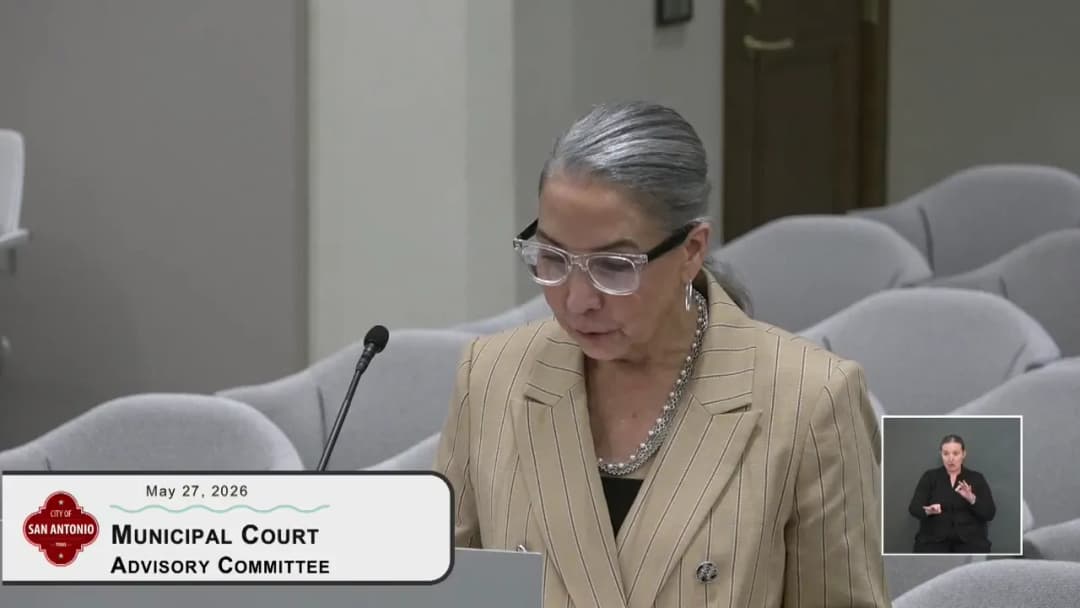
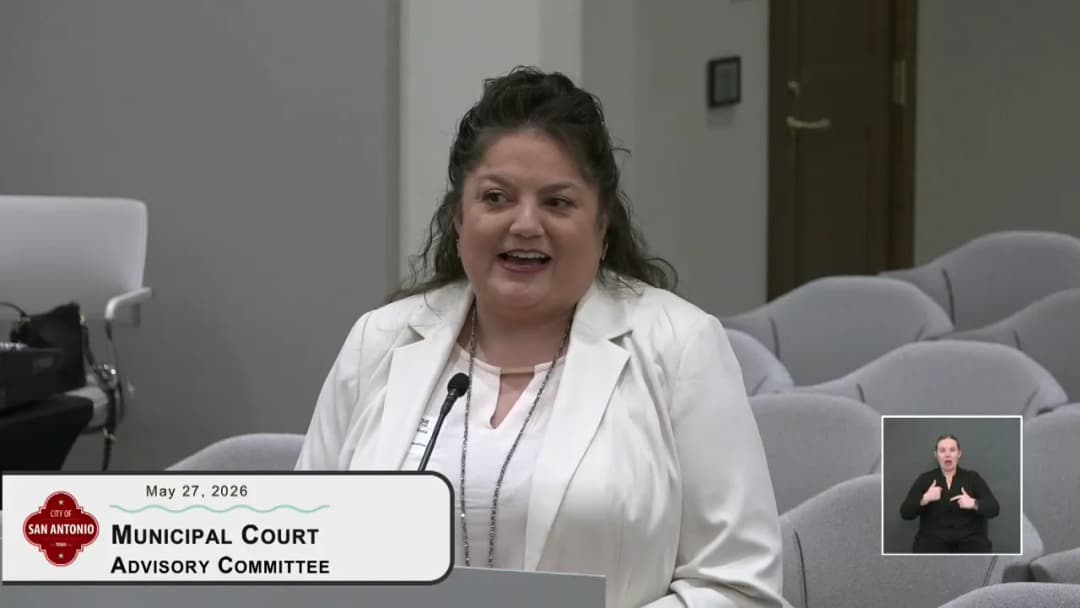
San Antonio Municipal Court Advisory Committee Meeting - May 27, 2026: Interview of Judge Candidates and Recommendation of Slate

The Municipal Court Advisory Committee met on May 27, 2026, at 2:02 PM to interview candidates for full-time and part-time municipal court judge positions. The committee evaluated 14 full-time and 12 part-time applicants (though the chair noted 23 interviews in total) to fill 10 full-time and 12 part-time vacancies. All current judges had applied for reappointment; their terms expired April 30, 2026, and they served in holdover capacity. After open-session interviews and an executive session, the committee reconvened at 3:59 PM and voted to recommend a slate of 11 full-time and 10 part-time judges for appointment by the full City Council for terms ending April 30, 2028. The meeting adjourned at 4:02 PM. Consent Calendar - The committee unanimously approved the minutes from the February 25, 2026 meeting. Discussion Items - Interview Process: The committee conducted interviews in open session. Each candidate was given a two-minute opening statement and then two minutes to answer one question from Councilmember Mungia: "How do you balance judicial efficiency with the need for thoroughness when managing a high volume docket in a municipal court?" All candidates answered this question. - Candidates Interviewed: The committee interviewed 14 full-time and 12 part-time candidates, including current judges and new applicants. The chair mentioned 23 interviews, though the total listed was 26. (Transcript inconsistency noted.) Key Outcomes - Motion and Approval: Chair McKee Rodriguez moved to recommend the following slate for appointment by the full City Council at the next A session: - Full-time (11 judges): Kenneth Bell, Melanie Castillo, Carisa Chaviera, Yvonne Gomez, Daniel Guerrero, Lisa Gonzalez, James Gonzane, Margarita Paul, Michael Ramos, Peter Zamora, and Anthony Ariaga. - Part-time (10 judges): Cheryl Mendoza, Alana Pierce Alperez, Frank Sandoval, James Abianca, Rolanda Rolando Arduegas, Lori Crockett, Lauren Lefton, Veronica Legareta, Alfredo Tavera, and Daniel Garcia. (Note: The original vacancy count was 10 full-time and 12 part-time, but the recommended slate includes 11 full-time and 10 part-time judges.) - The motion was seconded and passed unanimously. The appointments will be considered by the full City Council at an upcoming A session, with terms through April 30, 2028.

MUNICIPAL COURT 100%
260
MAY 26, 2026 · SAN ANTONIO, TEXAS · COUNCIL COMMITTEES
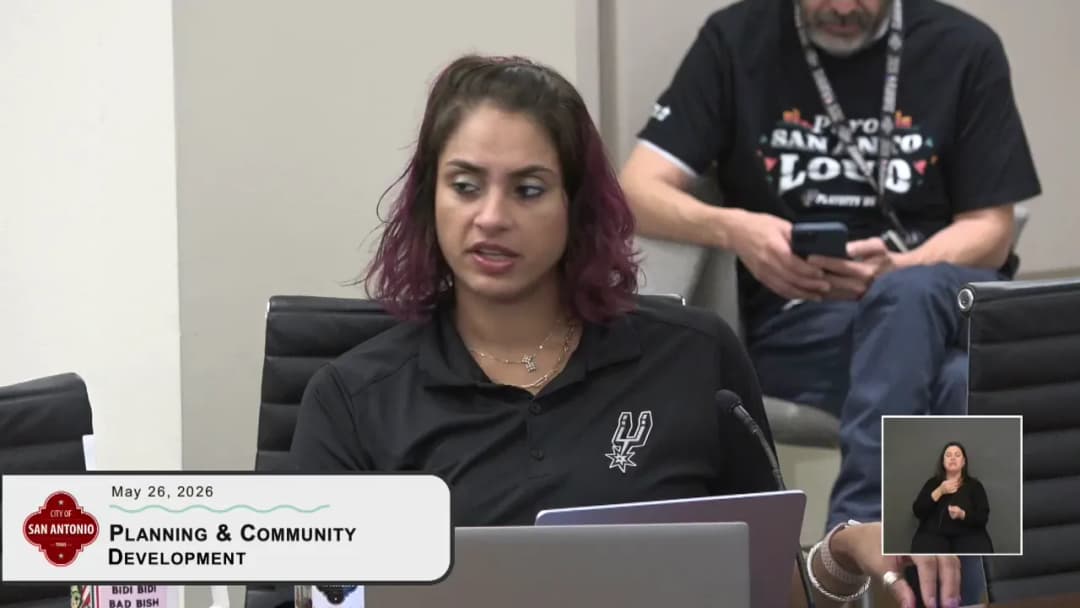
Planning & Community Development Committee Meeting – May 26, 2026

The Planning and Community Development Committee (PCDC) met on May 26, 2026, from 10:01 a.m. to 11:34 a.m. to discuss three major items: enhancements to the vacant and nuisance property program, updates to the process for naming city facilities, and an overview of the community’s homeless response system. The committee received staff presentations, heard council member input, and provided direction for future action. Consent Calendar - Minutes Approval: The minutes from the previous meeting were approved unanimously by voice vote (motion and second received, all in favor, none opposed). Public Comments & Testimony - No public testimony was delivered. One individual (Cynthia Cavasus) was signed up but not present. Discussion Items 1. Vacant & Nuisance Property Program and Policy Enhancements (Council Consideration Request from Councilmember Terry Castillo) - Presentation: Amin Tomas, Development Services Director, explained the current program covers about 30–35% of the city (specific areas only) and only vacant structures (not lots). The program has four employees managing over 1,000 active cases. The CCR sought changes in three areas: property registration and inspections, fines/penalties/enforcement, and acquisition/receivership. - Council Discussion: Councilmember Castillo expressed support for expanding the program citywide, pursuing an Interlocal Agreement (ILA) with the county for foreclosure of tax-delinquent properties, and implementing a sliding-scale registration fee that distinguishes between owners of multiple vacant properties and those who inherited a single property. Councilmember McCord advocated for expanding the program citywide and improving public data transparency (e.g., a dashboard or using the Telemi tool at an estimated $200,000/year). She favored an escalating fine structure that starts at zero for voluntary registration and increases with repeat citations, but with flexibility for new owners. Councilmember Mesa Gonzalez asked for a breakdown of the 1,000 active cases by council district and noted the need for a strategy differentiating residential and commercial vacant properties. Councilmember Mungia supported prioritizing the ILA with the county and requested a cost‑benefit analysis of addressing vacant buildings. Councilmember Gavin echoed support for the ILA and asked about progress; staff reported initial conversations with the county (which is now more open than 4–5 years ago). Councilmember Castillo also suggested using housing bond dollars to acquire properties and partnering with community land trusts like Esperanza or Merced for rehabilitation. - Receivership Details: City Attorney Savita and Deputy City Manager John provided additional explanation. Receivership requires an identified third party willing to front costs; the city cannot be a receiver. Dallas has the tool but struggles to find receivers. 2. Updating Procedures for Naming City Facilities (CCR from former Councilmember Adriana Rocha Garcia) - Presentation: Jamie Nieto, Assistant City Clerk, presented proposed changes: expand notification from a 200‑foot radius to 500 feet, require two public hearings (instead of one) if mail‑in responses show 50% or more opposition, require hearings be held near the facility, form an odd‑numbered committee that includes a relevant city board (rather than always the Parks Foundation), and prohibit committee members from being related to the requesting council member. Staff did not recommend allowing the committee to suggest alternate names without a new process. - Council Discussion: Councilmember McCord supported the proposals as “non‑controversial” and noted that the CCR aimed to increase community participation and prevent self‑dealing. Councilmember Castillo expressed concern that allowing other names during the same process could create competing coalitions; she suggested that if 50% of returned feedback opposed the proposed name, the process should stop, and the sponsoring council member could then decide whether to restart with a new name. Councilmember Mungia agreed with that approach. Councilmember Gavin supported the idea of the committee voting down a name if significant feedback opposes it, then restarting the process for a new name. Councilmember Mesa Gonzalez noted the usefulness of greater notification. The committee generally agreed that alternative names should require a new process, not be substituted in the same hearing. 3. Overview of the Homeless Response System - Presentation: Mark Armun, Chief Housing Officer and Director of Homeless Services & Strategy, provided a system overview. Key statistics from FY25: prevention helped over 5,000 households; 85% of short‑term rental assistance applicants did not enter homelessness; 2,805 unsheltered individuals were sheltered or housed; 1,440 site abatements conducted; 54,000 hot meals served at Corazon Day Center; 2,312 of 5,200+ emergency shelter residents (44%) exited to a higher level of housing; 71% of interim housing residents exited to positive destinations; 94% of housing voucher recipients stayed housed; 96% of permanent supportive housing clients stayed housed. The system includes 13 agencies for prevention, 8 for street outreach, 13 for emergency shelter, and 12 for housing retention. Coordination occurs through biweekly “homeless huddles” with city‑funded CEOs, funder meetings, and the Close to Home governance system. - Council Discussion: Councilmember Mesa Gonzalez requested including medical center partners (e.g., UT Health, Methodist) in the homeless huddle. Councilmember Mungia suggested monthly briefings for council staff. Councilmember McCord asked for a detailed breakdown of outcomes by agency and by council district, including dollar amounts invested. Councilmember Castillo asked for data on caseloads per COSA outreach worker (minimum 15, normal 30) and requested staff to assess whether more outreach workers are needed. Councilmember Gavin inquired about coordination with the jail system and re‑entry; staff noted existing jail diversion programs (e.g., Haven for Hope) and ongoing work with the Integrated Community Safety Office and re‑entry office to better connect data. Councilmember Castillo also advocated for expediting zoning/UDC changes to support shelter providers and for council member field trips to showcase successful housing models. Key Outcomes - Vacant & Nuisance Property Program: Staff will refine recommendations based on committee feedback—specifically expanding the program citywide, exploring an escalating fine structure, continuing the ILA with the county, and providing a district‑level map of active cases. Staff will return to PCDC with proposed program adjustments and a capacity assessment. - Naming of City Facilities: Staff will incorporate the committees direction: expand notification to 500 feet, require two hearings if 50% opposition, form an odd‑numbered committee with a relevant city board, and prohibit naming after a council member’s relative. Alternative names will require a new process. Staff will bring a revised proposal to a future PCDC meeting. - Homeless Response System: Staff will provide a more detailed breakdown of outcomes by agency (including dollar amounts), by council district (in a confidential memo for safety), and by intervention type. Staff will also explore monthly briefings for council staff and coordinate with medical providers and the re‑entry system. No formal vote was taken; the presentation was for informational purposes and to guide future planning.

ENGINEERING AND INFRASTRUCTURE 31% · HOMELESSNESS 31% · PROCEDURAL 17% · HOUSING 11%
OPENPUBLICA · PUBLIC MEETING INDEXUPDATED DAILY · openpublica.com