Browse by city
Date range
Search help

Search titles, summaries, topics and stored transcripts together. Keywords may match separately; put the whole query in double quotes for a phrase. Matching follows word analysis, so punctuation is not exact. Both dates are included. Documents are not searched.

SHOWING 481–490 ENTRIES
481
FEB 3, 2026 · SAN ANTONIO, TEXAS · BOARDS & COMMISSIONS
San Antonio Zoning Commission Meeting – February 3, 2026

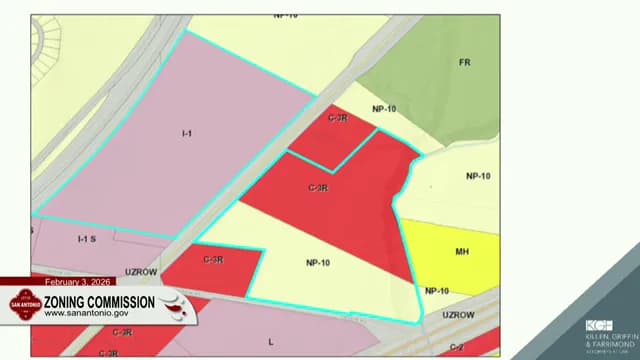
The San Antonio Zoning Commission convened on February 3, 2026, at 10:02 AM and adjourned at 2:39 PM. Chair John Bustamante presided. The meeting addressed zoning requests, continuances, and commission officer elections. Notable items included a controversial residential rezoning near industrial uses, a continued auto‑sales request, and unanimous approval of a long‑standing business owner’s rezoning. Consent Calendar - Items 7 and 10 were approved as part of the combined hearing. Item 7 (322 Tarasco Drive) – request for change of zoning to allow unspecified use, staff recommended approval with conditions (15‑foot Type B buffer, no vehicular access on Tarasco Drive). 24 notices mailed, 2 in favor, 0 opposed; Rainbow Hills Area NA in favor. Item 10 (1041 West Agarita Avenue) – change from R6 to R6HL (historic landmark). 29 notices, 1 in favor, 0 opposed; Beacon Hill Area NA in favor. Both were approved by unanimous voice vote. Item 14 (4621 Cassen Road/9233 New Laredo Highway) was pulled from the consent calendar for further discussion. Public Comments & Testimony - Item 14 (Cassen Road/New Laredo Highway) – Two industrial business owners spoke in opposition. Marvin Hassani (owner of recycling/salvage facility at 9194 New Laredo Highway) argued that new homes would be incompatible with heavy industrial noise, dust, and equipment, and that the 75‑acre parcel had flooding and pipeline hazards. Julie Mata (9603 New Laredo Highway) echoed concerns about traffic, construction disruption, and future complaints from residents against existing businesses, citing the Monterey Metal conflict as a precedent. Both urged denial or at least a substantial buffer. - Item 11 (8504 Old Tesle Road, on continuance docket) – Multiple voicemails and in‑person speakers opposed a proposed car‑sales/auto‑service rezoning. Janet McCart (representing a 1,153‑home community) presented a petition of over 100 signatures, citing existing traffic congestion on Gilbo Road and within a mile of four other full‑service car lots. James Stopper (8500 Pendragon, within 200 feet) opposed due to noise, debris, water drainage concerns, and fear of street parking. Several voicemails detailed objections: traffic danger near a school, existing hazardous intersection, and the property’s small size and prior abandonment. One voicemail from a church supported the item. The commission continued this item to February 17. - Item 5 (on continuance to March 3) – A voicemail from Ronnie Hernandez of Mighty Fortress Church expressed support for a neighbor’s zoning change. Discussion Items - Item 1 (5251 Old Pierceau Road) – Applicant Ryan Plaggins (Bowman Consulting) and owner Nicanoro Trevenino requested rezoning from RM4 to C2‑CD for an existing manufactured‑home/oversized‑vehicle sales and storage business operated for over 30 years. Staff recommended denial, citing a “residential island” and land‑use conflict, but noted the C2 district aligns with the urban‑mixed‑use comprehensive plan. The owner stated he was unaware of the zoning issue and faced code compliance pressure. Commissioner Pete Rodriguez moved approval, arguing the long‑standing use without complaints and the owner’s health/stress. Commissioner Moses Duvel supported the broader compatibility but acknowledged the applicant’s legitimate reliance. Approved unanimously (11‑0). - Item 2 (4131 Kalebra Road) – Applicant Andrew Hajali initially sought C3 for a car dealership, but amended his request to C2‑NA‑CD with a conditional use for full‑service motor vehicle sales, retaining the existing residential portion. Staff remained neutral on the amended C2 request. The Kleber Park NA opposed via no response; the commissioner noted neighborhood fatigue with auto‑related uses. Commissioner Rob Sipes made a motion to deny, seconded by Mia Losef. After debate on whether a continuance was appropriate, the denial motion failed (3 yes, 7 no). A motion to reconsider (by Danny Kellum, second by Duvel) passed, followed by a motion to continue to February 17 (by Duvel, second by Janelle Chase). Continued. - Item 14 (Cassen Road/New Laredo Highway) – After public testimony, the applicant (Logan Wassler of Bowman) presented a plan by D.R. Horton for 350 single‑family homes on 75 acres. Staff supported the R4 rezoning, noting the property’s vacancy, its alignment with the Strategic Housing Implementation Plan, and the fact that surrounding businesses operate as non‑conforming uses. Commissioners debated the risk of future complaints from new residents against industrial neighbors. Commissioner Pete Rodriguez moved approval, seconded by Georgie Nohosa. Commissioners Duvel and Sipes supported, citing the comprehensive plan’s (2011 agribusiness) non‑conforming status of industrial uses and the visibility of existing businesses to potential homebuyers. Commissioner John Witsett opposed, fearing insufficient protection for existing businesses. The motion passed 10‑1. Key Outcomes - Approved (unanimous): Items 1, 7, and 10; minutes of January 20, 2026. - Continued: Items 2 (to February 17), 3, 4, 11, 12 (to February 17), and 5, 6 (to March 3). - Item 14 approved (10‑1) and will move to City Council with a favorable recommendation. - Officer elections: Chair John Bustamante re‑elected (acclamation); Vice Chair Commissioner Huey (identified as Mia Losef? – the transcript says “Commissioner Huey”); Pro Tem Danny Kellum (all by voice vote). - Director’s Report: Voicemail submissions for public meetings will be discontinued after April 1, 2026. Voicemails will still be accepted for February and March meetings. - Withdrawn items: 8, 9, 13 were withdrawn and will require new applications. - Property at 542 Southeast Loop 410 was announced as not on the agenda and will not come before the Zoning Commission for constitutional/statutory reasons.
ZONING AND LAND USE 72% · PROCEDURAL 13% · ENGINEERING AND INFRASTRUCTURE 4% · PUBLIC SAFETY 2%
482
FEB 3, 2026 · SAN ANTONIO, TEXAS · COUNCIL COMMITTEES
Transportation Committee Meeting on Right-of-Way Communication and Bond Updates – Feb 3, 2026

The Transportation and Infrastructure Committee met on February 3, 2026, at 2:06 p.m. to receive presentations on two major items: a Council Consideration Request (CCR) to improve proactive communication and accountability for right-of-way construction, and an update from the newly formed Capital Delivery Department on project delivery, bond status, and coordination with utility partners. The meeting included one public speaker and extensive discussion by councilmembers on signage, communication to residents, and project timelines. Consent Calendar - The meeting minutes from the previous session were approved by unanimous voice vote. Public Comments & Testimony - Herschel Boyd, III was signed up to speak but was not present when called, so no public testimony was heard. Discussion Items Item 2 – CCR on Right-of-Way Communication (Councilwoman Menina Aldere Govito) - Art Reinhardt (Public Works) presented background on the CCR, submitted in May 2025, which aims to create a streamlined process for proactive communication between the city, agencies, and telecoms, and to hold all parties accountable for communication gaps. - The city permits about 18,000 right-of-way permits per year (roughly 70 per workday), mostly for utilities (e.g., CPS, SAWS) and telecoms. Current regulations date to 2001, with the most substantive revision in 2016. - Current requirements: 30 days ahead of construction – submit a project information form; 7 days prior – digital message signage for major roadways; door hangers just before construction; and on-site signage with contractor and project info. Violations are up to $600 per day per violation type; the city has issued nearly $1.5 million in fines over the past two years. - An online "infill map" shows all issued permits but is buried on the city website and not updated in real time. - Coordination meetings occur at various frequencies (e.g., weekly downtown closures, bi-monthly executive meetings). Emergency work (e.g., water main breaks) is a key gap: residents may not learn about the work unless they are customers of the affected utility. - A survey was sent to utility partners in late 2025 to understand their internal structures, communication practices, and accountability mechanisms. Findings will be reported back in spring 2026. - Councilmember Aldere Govito (sponsor) emphasized the need for simple, clear signage (project description, start/end dates, a contact), consistent across all agencies. She recommended a resident-experience focus rather than engineering jargon. Councilmember McKee Rodriguez supported a color-coding system by utility type (e.g., blue for SAWS, orange for CPS). Councilmember Corr added that the infill map should show active construction in real time, not just permits issued; also, multiple streets in one permit make it hard to know which street is being worked on when. Councilmember Mungia noted that staff emails about right-of-way permits are helpful but that damaged utility boxes (e.g., AT&T, Paragon) often remain unrepaired; there is no active permit to require fixing. Councilmember Spears asked about fines for inaccurate line locating by entities like USIC, noting that hitting a line even three feet off can disrupt projects. Chair McKee Rodriguez requested that future reports include meeting notes and that the timeline for Phase 2 (winter 2026) be expedited, noting that "winter 2026" is current (as of February 3, 2026). Staff agreed to return with an update before the summer solstice (by June 21, 2026). Item 3 – Capital Delivery Department Update and Bond Project Status (Mike Shannon, Director of Capital Delivery) - The new department, formed October 1, 2025, has 188 positions (taken from Public Works) and manages a $250 million annual capital portfolio ($221 million in project funds, $29 million for staffing). - There are 208 active capital projects: 9 from the 2017 bond (still in construction or design), 151 from the 2022 bond, and 45 non-bond projects (e.g., funded by fiscal year capital budgets). - Key focus areas: delivering projects on time and within budget, and adopting "overcommunication" as the standard. Strategies include: - Incentives and accountability: Using liquidated damages (LDs) for late projects, and new incentives for early completion (e.g., a three-year project finished a month early would receive additional payment). Staff will monitor for schedule padding. - Partnership MOU with SAWS: The first major project under the MOU, the Marbach Street and drainage project in District 4, was approved under a CMAR contract. - MOU with CPS: Discussions underway, expected to be finalized in coming months. - Project delivery methods: Using various procurement types (CMAR, design-build, job order contracts) as appropriate. A cradle-to-grave project management model (one team from design through construction) is being implemented in Q3 2026, based on a Robert Kishner study recommendation. - Business-focused strategies: For disruptive projects, staff are conducting monthly meetings with business leaders, using business-centered scrims, wayfinding sidewalk stamps, and a pilot shuttle service (e.g., the "Old Town Trolley") to help visitors reach local businesses during construction. Six weekends of shuttle service have been provided, timed with conventions. - Bond status: - 2017 bond: 93% complete, 5% under construction, 2% in design (some delays due to litigation at Brackenridge Park and design changes on Roosevelt and ProBand due to TxDOT decisions). - 2022 bond: 59% under construction, 19% complete; 82% of projects are on schedule (153 of 187 tracked). Goal: 91% of bond projects under construction or complete by the end of 2026; overall 90% on-time delivery target. - Pedestrian mobility: 25 of 58 projects complete (43%); staff terminated one task order contractor for performance issues but awarded two new task orders in Q1 to catch up. - F Street reconstruction: 125 of 147 projects complete (85%). - Councilmember Mungia asked about ensuring business-assistance funds are budgeted up front rather than provided after disruption. Shannon noted that the strategies used downtown (shuttles, scrims) should be applied to large business-corridor projects citywide, not just downtown. Councilmember Corr praised Shannon's responsiveness on the South Alamo and Zona projects, citing a stakeholder comment that Shannon is "the best thing we've ever seen come out of City Hall." Councilmember Spears requested that staff develop a consistent metric for project response times (e.g., to change orders) and a public "bad actor" dashboard for contractors. Shannon agreed to explore the feasibility. Councilmember Mungia asked about the expected lifecycle of F-street projects versus IMP projects; Shannon said the department will track and report on performance. Chair McKee Rodriguez noted that the 2017 bond infill map has functionality issues; staff will check. Councilmember Mungia also inquired about the cost of downtown-specific strategies, suggesting that staff should account for higher costs in downtown project budgets. Item 4 – Bond Program Update (Mike Shannon continued) - The department is already preparing for the 2027 bond: project identification, scoping, and cost estimating are underway, regardless of whether the election is May or November 2027. - Councilmember Corr asked about lessons learned from facility projects in District 2 that ran over budget; Shannon cited the need for better cost estimating and early scope-setting. Councilmember McKee Rodriguez added that when budgets are reduced during the public committee process, staff should be explicit about the resulting scope changes. - Goal: return for regular bond updates (quarterly or semi-annually) to the committee. Key Outcomes - The committee directed staff to return with an implementation plan for the CCR on right-of-way communication before June 21, 2026, including recommendations on signage standards, real-time project tracking on the infill map, and accountability measures for utility coordination. - The Capital Delivery Department will develop key performance metrics for project delivery (design, procurement, construction phases) and report quarterly to the committee. A 90% on-time delivery target for bond projects was set, with 91% of 2022 bond projects to be under construction or complete by the end of 2026. - Staff will explore creating a public contractor accountability dashboard, similar to the city's apartment inspection program, and will provide data on liquidated damages and contractor performance. - The committee requested that business-assistance funds for construction disruption be budgeted upfront in future large corridor projects, rather than allocated after complaints. - Staff will review and fix the 2017 bond project map for functionality. - The meeting adjourned at 3:52 p.m.

ENGINEERING AND INFRASTRUCTURE 55% · INFRASTRUCTURE 21% · COMMUNITY ENGAGEMENT 8% · PUBLIC ENGAGEMENT 4%
483
FEB 3, 2026 · SAN ANTONIO, TEXAS · COUNCIL COMMITTEES
San Antonio City Council Meeting - February 3, 2026

The San Antonio City Council met on February 3, 2026, at 2:06 PM. The meeting included two major discussion items: an update on the Communication Coordination Report (CCR) for right-of-way (ROW) projects and the introduction of the new Capital Delivery Department. The council approved previous meeting minutes and heard presentations from city staff. No public comments were delivered. Consent Calendar - The council unanimously approved the minutes from the previous meeting. Discussion Items - Right-of-Way Communication Coordination Report (CCR) Councilmember Alderete Gabito presented an update on the CCR, which focuses on proactive communication, real-time information, and accountability for ROW projects. Public Works staff noted that in the past year, 1,018 ROW permits were issued, mostly for utility companies. Key issues include inconsistent signage, lack of real-time project status, and delays in emergency communications. Fines for violations are up to $600 per day. Councilmembers discussed improving signage (including color-coded systems and digital signs), increasing coordination meetings, and enforcing contractor accountability. Councilmember Munguía praised the Public Works email notifications for project lists. Councilmember Spears suggested color-coded utility boxes and better public education. The council requested a follow-up report before July 2026. - New Capital Delivery Department Mike Shannon, Director of the Capital Delivery Department, presented the new department formed on October 1, 2025. The department has 88 staff and oversees $250 million in capital projects plus $30 million for personnel. It splits into vertical (e.g., police/fire stations, senior centers) and horizontal (e.g., streets, drainage) teams. The team aims for on-time, on-budget delivery with a focus on "overcommunication." The council reviewed the status of bond projects: 2017 bond (93% complete, some delays due to legal/political issues) and 2022 bond (59% in construction, 19% complete). The department is implementing contractor incentives (bonuses for early completion) and penalties (liquidated damages). Eight contractors have been banned from bidding for three years. Councilmembers discussed improving cost estimation, infrastructure dashboards, and community outreach. Councilmember Spears emphasized the need for consistent metrics and earlier community engagement. Councilmember Munguía raised concerns about project scope creep and the need for transparency about budget changes. The meeting ended at 3:52 PM. Key Outcomes - Approved previous meeting minutes. - Requested a follow-up report on the CCR before July 2026. - Will continue to refine strategies for contractor accountability, cost estimation, and public communication. - The Capital Delivery Department will provide quarterly bond updates and improve the infrastructure dashboard.

ENGINEERING AND INFRASTRUCTURE 61% · PROCUREMENT AND CONTRACTING 10% · COMMUNITY ENGAGEMENT 9% · BUDGET 6%
484
FEB 3, 2026 · SAN ANTONIO, TEXAS · BOARDS & COMMISSIONS
San Antonio Zoning Commission Meeting Summary – February 3, 2026

The San Antonio Zoning Commission met on February 3, 2026, at 1:02 PM, chaired by President John Bustamante. The commission considered multiple rezoning requests, including consent agenda items and individual hearings. Key actions included approval of non-controversial items, deferrals for further community input, and a recommendation for a large residential subdivision. Several agenda items were withdrawn or postponed due to procedural requirements. Consent Calendar - Agenda item 7 (Z-2025-107-00332C): Rezoning at 322 Tarrasco Street from C-3 to C-2 for neighborhood services. No public comments; staff recommended approval. Approved unanimously. - Agenda item 10 (Z-2025-107-00333A): Rezoning at 1041 West 45th Street from R-6 to C-2. One voicemail in favor, none opposed. Approved unanimously. - Agenda item 14 (Z-2025-107-00333B): Initially on consent but pulled for discussion. Rezoning at 4621 and 9293 New Laredo Highway from C-3 and I-1 to residential (R-4) for a subdivision. Approved 10–1. Public Comments & Testimony - Item 3, 4, 11, 12 (deferred): Several voicemails and in-person comments opposed a proposed car lot at 8504 Old Tesla Road. Residents cited traffic congestion, proximity to three schools, and a planned 56-unit apartment complex. Johnny McCart (president-elect of the neighborhood association) presented a petition with over 100 signatures opposing the rezoning. James Stopper, a neighbor within 200 feet, cited excessive noise, trash, and environmental concerns. The commission deferred these items to February 17, 2026. - Item 14 (4621/9293 New Laredo Highway): Marvin Hassani and Julie Mata, owners of nearby heavy industrial businesses (metal recycling, heavy equipment), opposed the residential subdivision due to noise, dust, flooding risks, and incompatibility with existing industrial uses. Hassani described a 100-pound excavator operating 40 feet from the property line and noted that a nearby bridge floods with 30 feet of water after rain. The applicant, Kelling Griffith, committed to continued community engagement and mitigation measures. Discussion Items - Item 1 (5251 Old Pearson Road): Ryan Pregues (consultant) and owner Nicanor Treviño requested rezoning from R-4 to C-2CD for continued operation of a heavy equipment sales and storage business that has operated for 31 years. Treviño stated he was unaware of zoning requirements until a code enforcement action. Staff noted the area is designated mixed-use in the comprehensive plan, and C-2 is consistent. No public comments. Approved 11–0. - Item 2 (4131 Culebra Road): Andrew Hashalib sought an amendment from the originally requested C-3 to a C-2CD for used car sales and full-service repair, limiting commercial use to the front lot. Staff supported the C-2 reduction. Commissioner Saibs initially moved to deny, citing neighborhood opposition to auto uses, but after a failed denial vote (3–8), the commission reconsidered and voted 11–0 to defer to February 17, 2026, for further community outreach. - Item 14 (4621/9293 New Laredo Highway): Kelling Griffith presented plans for a 350-unit single-family subdivision on 75 acres, with mixed lot sizes (4,000 sq. ft. minimum). The property is at the intersection of I-410 and I-35, adjacent to heavy industrial uses. Griffith emphasized compatibility measures such as buffering and screening. Commissioners discussed the area’s “agribusiness” designation from 2011, noting that existing industrial operations are non-conforming and cannot expand. The motion to approve passed 10–1, with Commissioner Witset voting no, citing insufficient protection for existing businesses. Key Outcomes - Approved unanimously (consent): Items 7 and 10. - Approved 11–0: Item 1 (5251 Old Pearson Road). - Deferred to February 17, 2026: Items 3, 4, 11, 12 (8504 Old Tesla Road) and Item 2 (4131 Culebra Road). - Approved 10–1: Item 14 (4621/9293 New Laredo Highway) for a residential subdivision. - Deferred to March 3, 2026: Items 5 and 6. - Officer elections: John Bustamante re-elected President; Commissioner Juy elected Vice President; Commissioner Kellum elected Interim President. - Minutes approved: Minutes of the January 20, 2026, meeting. - Administrative note: Effective April 1, 2026, voicemail comments for zoning cases will no longer be accepted.

ZONING AND LAND USE 67% · PROCEDURAL 12% · COMMUNITY ENGAGEMENT 6% · CODE ENFORCEMENT 5%
485
FEB 2, 2026 · SAN ANTONIO, TEXAS · COUNCIL COMMITTEES
San Antonio City Council Meeting – February 2, 2026

The San Antonio City Council met on February 2, 2026, at 10:02 a.m., with Councilmembers Castillo, González, White, and Gavito present. The meeting began with approval of the minutes and then heard public comments and presentations on two major agenda items: the Metro Health Oral Health Program and the Howard Peak Greenway Trails System. No formal votes were taken on the substantive items, but councilmembers expressed strong support and discussed future funding considerations. Consent Calendar - Minutes Approval: A motion was made and passed to approve the meeting minutes from the previous session. All councilmembers voted in favor. Public Comments & Testimony - Beatriz Six (retired teacher, 34 years in education): Expressed full support for the Oral Health Program, describing a $300,000 community grant from 2006 that funded case management and oral health services for children. She emphasized that oral health is essential to children's holistic well-being and urged continued funding. - Lidia Almares (community specialist, 51 years of service): Shared decades of experience working with Metro Health to provide dental services for low-income children. She described children suffering in pain from untreated cavities and called on the council to continue the contract with Metro Health, stating the program is a preventive measure that makes the difference between a child suffering in silence and a child smiling without fear. - David Singleton (retired dentist, 24 years of practice): Described his work with the program in schools, noting that many children experience chronic pain from cavities and that the program is the only available service for these children in San Antonio. He stressed the program is essential and that untreated baby teeth affect permanent teeth. Discussion Items - Oral Health Program Update (Agenda Item 2) - Presenter: Jacob from Metro Health, along with Rebecca Daventer (director), Meredith (program administrator), and Margin White (vision program). - Presentation Highlights: - The program has been serving San Antonio for over 50 years, adapting from transporting clients in vans to mobile clinics. - Data from Healthy People 2030 shows increasing need: for children ages 6–9 in San Antonio, 1 in 6 have untreated cavities; for third graders in Texas, 24.2% have untreated cavities; in San Antonio, approximately one-third of third graders have not received needed dental care. - National barriers include lack of insurance, high costs, language barriers, transportation, lack of dental education, and dental trauma fear. - The program provides services through Head Start, Early Head Start, and Miles of Smiles (school-based clinics across eight school districts). - In the past year, the program served thousands of children; one-third of children had decay, one-third had untreated conditions, and 4.5% needed urgent treatment. The pandemic led to an increase in severe decay. - Current funding includes a Medicaid waiver ($1.4 million) that expires in 2026, and other grants are being phased out. The program faces a gap of about $4.4 million from the general fund. - Councilmember White: Expressed strong support, noting hundreds of children in District 10 benefit. Asked about replacement funds. Jacob responded that they are exploring all options but no replacement is identified yet. - Councilmember González: Asked about potential partnerships with Pre-K 4 SA and suggested outreach to immigrant communities and mosques in District 8. Jacob agreed to follow up. - Councilmember Gavito: Thanked public speakers and asked about changes in treated teeth numbers pre- and post-pandemic. Staff noted that while urgent cases did not increase dramatically, each case became more urgent. Also asked about marketing and prevention efforts. - Councilmember Castillo: Thanked presenters and stressed that oral health is the foundation of overall health. Hoped that during budget discussions the program becomes a priority to avoid cuts and potentially expand to Pre-K 4 SA. Mentioned upcoming changes to food purchases (e.g., removing sugary items) that may help reduce decay. - Howard Peak Greenway Trails System Update (Agenda Item 3) - Presenter: Homa Gorcía (director) and Brandon Rump. - Presentation Highlights: - The program began in 1998 and was supported by sales tax initiatives: $20 million (2000), $35 million (2005), $80 million (2018), $83.4 million from Bexar County (2021), and $103.5 million (2022). The program aims to improve quality of life, preserve open space, connect habitats, and provide pedestrian/bicycle infrastructure. - Completed 103 miles of trails, with 12.3 miles under construction, 30 miles in design, and 7 miles planned. The system includes Leon Creek (26.5 miles), Westside Creek (12 miles), Medina River (17.6 miles), and others. - Amenities include water stations, shade, public art, and mile markers. Maintenance is funded through the general fund. - Councilmember White: Highlighted the popularity of trails in District 10 and asked about long-term maintenance plans given the tight budget. Staff replied that they report each budget cycle and rely on general fund dollars. - Councilmember Gavito: Noted that trails are important for physical and mental health. Suggested using bond funds for expansion and asked about safety concerns (lighting, emergency boxes, ranger presence). Also raised the need for better coordination with police on trail markers for emergencies. Requested a community meeting on lighting. - Councilmember González: Supported the use of CIP dollars for restrooms and recommended colleagues do the same. - Councilmember Castillo: Pleased to hear about expansion to Martínez Street and noted that District 5 residents need better access. Expressed support for future expansions. - Councilmember (additional): Asked about long-term vision and cost to complete the entire system. Staff estimated at least $40–50 million for essential expansions, plus $30 million for San Antonio projects and continuation of ready-to-build projects. Mentioned potential bond funding for 2027. - Councilmember: Also asked about volunteer maintenance programs and whether a fee could be charged for non-residents using the trails. Staff stated it hasn't been considered but parking access could be controlled. Key Outcomes - No formal votes were taken on the oral health program or the trails program. - Councilmembers expressed strong support for both programs and directed staff to explore funding solutions, including bond measures and partnerships. - Staff from Metro Health will provide an updated list of schools served and data on family impact in February. - The city will continue discussions on the 2027 bond process, with staff noting that the Greenway Trails system could be a candidate for bond funding. - Councilmember Gavito requested a community meeting about trail lighting and safety components. - The meeting adjourned at 11:15 a.m.

PUBLIC HEALTH 41% · PARKS AND RECREATION 25% · BUDGET 10% · PUBLIC ENGAGEMENT 9%
486
FEB 2, 2026 · SAN ANTONIO, TEXAS · COUNCIL COMMITTEES
Community Health Committee Meeting: Oral Health Program & Greenway Trail System (Feb. 2, 2026)

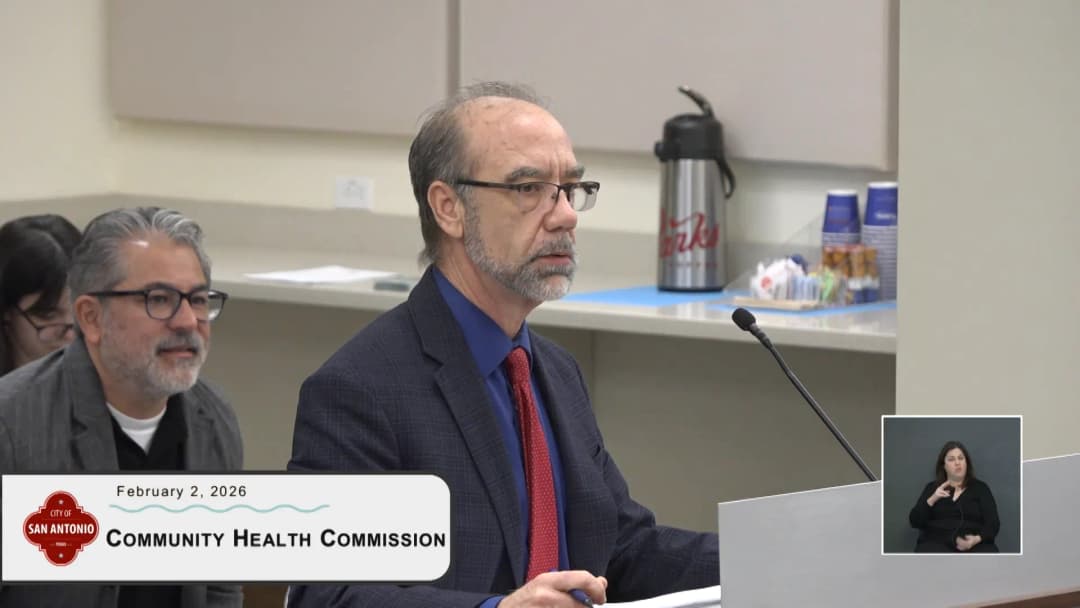
This meeting of the Community Health Committee was called to order at 10:02 AM on February 2, 2026, with a quorum present (Councilmembers Castillo, Alarete Cabito, Mesa Gonzalez, White, and Chair Gavon). The committee focused on two major items: a critical update on the Metro Health Oral Health Program facing a funding cliff, and an overview of the completed and planned sections of the Howard P. Peak Greenway Trail System. Consent Calendar - The meeting minutes from the previous session were approved unanimously by voice vote. Public Comments & Testimony Three speakers advocated for the continuation of the Metro Health Oral Health Program. - Beatrice Hicks, a retired UT Health San Antonio associate professor, detailed the history and success of a collaborative grant that created a culturally sensitive pediatric dental model for Head Start, emphasizing the program's role in breaking down barriers for low-income families. - Lydia Almare, a retired Head Start specialist with 51 years of service, described the partnership as the heartbeat of the Head Start mission. She pleaded with the committee to continue the contract, stating the children of Head Start are counting on them. - David Singleton, a retired dentist who worked for the city on these programs, stated the program is the only entity available for these children in the city of San Antonio. He described the severe pain, infections, and systemic health impacts he witnessed, particularly noting the devastating increase in decay after the COVID-19 pandemic. Discussion Items Oral Health Program Overview and Update Dr. Jacob from Metro Health presented this item as part of a series on programs impacted by the impending September 2026 expiration of the Medicaid 1115 Waiver reserve funding. - Funding Breakdown: The oral health program has a total budget of $2.5 million, with $1.4 million coming from the expiring waiver, approximately $625,000 from external grants, and $400,000 (16%) from the General Fund. A total of 35 out of 39 staff positions are supported by the waiver. - Scale of Need: Tooth decay is the most common chronic infectious disease in children. Data presented showed untreated tooth decay prevalence: 1 in 6 children nationally, 1 in 4 in Texas, and 1 in 3 of the children screened in the city program. Post-COVID, urgent dental needs spiked from 2.7% to 4.6%. - Program Components: - Head Start/Early Head Start (24% of budget): Provides biannual exams and fluoride varnish to children 6 weeks to 5 years old. - Miles of Smiles (39% of budget): Mobile school-based clinics serving Pre-K to 3rd grade across 200+ sites and 8 school districts. Over 17,000 children were served last year. - Title V MCH Block Grant: A partnership with UT Health School of Dentistry providing dental care to over 800 uninsured children annually, with demand far outpacing capacity. - Councilmember Positions and Questions: - Councilmember White expressed strong support for the program, stating it meets kids where they are. He asked if replacement funding had been identified; Dr. Jacob confirmed it had not, and the program's fate is part of the FY27 budget planning process. - Councilmember Mesa Gonzalez noted the program serves her district (8) the least but found the highest percentage of urgent need there. She suggested expanding partnerships to Pre-K 4 SA and local immigrant/refugee nonprofits. - Councilmember Alarete Cabito thanked the speakers and asked for trend data (which showed worsening conditions post-COVID). She offered council offices as distribution points for educational materials. - Councilmember Castillo voiced hope that the program would be prioritized in the upcoming budget to avoid reductions and allow potential expansion. - Chair Gavon requested specific data on the number of schools served (200+), the frequency of Miles of Smiles visits (currently once yearly, goal is biannual), and follow-up data on long-term care and links to chronic diseases. She also suggested a memo on the program's impact on student achievement. Howard P. Peak Greenway Trail System Update Homer Garcia (Parks Director) and Brandon Ross (Capital Programs Manager) provided the update. - System Overview: The trail system is over a quarter-century old, with over 100 miles of trails completed, connecting all council districts. It is a massive public investment funded by $190 million in sales tax, $83.4 million from Bexar County, and $103.5 million from the 2022 Bond. - Current Status: 103 miles are complete, with 12.3 miles in construction, 30 miles in design, and 7 miles planned. Over 1,700 acres of creekway land have been preserved. - Future Funding: An estimated $40-50 million is needed to complete essential projects, with the Port San Antonio connector ($30M) identified as a top priority for the next bond. - Maintenance and Safety: Operations and maintenance are funded entirely by the General Fund, a growing challenge. Safety features include Park Police, Trail Stewards, lighting at trailheads, and a mile marker system integrated with 911 dispatch. - Councilmember Positions and Questions: - Councilmember White praised the trails and raised concerns about long-term maintenance funding given budget constraints. He asked about safety measures. - Councilmember Alarete Cabito stressed the trails' importance for physical and mental health. She raised significant concerns about trail safety (violence) and the functionality of the 911 mile marker system, requesting better patrolling and public awareness. - Councilmember Mesa Gonzalez supported the expansion and used her CIP funds for restroom improvements. She proposed implementing trailhead parking passes for non-residents as a potential new revenue stream. - Councilmember Castillo highlighted the importance of the Port San Antonio connector for District 5, calling it a critical link for employment and amenities. - Chair Gavon requested a dedicated committee discussion on long-term safety strategies (lighting, police presence) and maintenance funding models. She also inquired about volunteer programs (Trail Watch Stewards, Basura Bash) and future expansions like the Great Springs Project. No consensus was reached on parking passes, as one member explicitly opposed the idea. Key Outcomes - Oral Health Program: The committee did not take a formal vote on funding but expressed unanimous, strong support. The impending gap from the Medicaid 1115 Waiver was clearly established. The program will be a key consideration in the FY27 budget process. Multiple data requests were made to strengthen the case for continued investment. - Greenway Trail System: The update was accepted. The committee agreed to hold a future discussion on comprehensive trail safety and sustainable maintenance funding. The Port San Antonio connector was confirmed as a top priority for the 2027 bond program. - Meeting Adjourned: The meeting was adjourned at 11:15 AM.

PUBLIC HEALTH 46% · PARKS AND RECREATION 25% · BUDGET 7% · PUBLIC EDUCATION 7%
487
JAN 29, 2026 · SAN ANTONIO, TEXAS · CITY COUNCIL
San Antonio City Council Session A - January 29, 2026

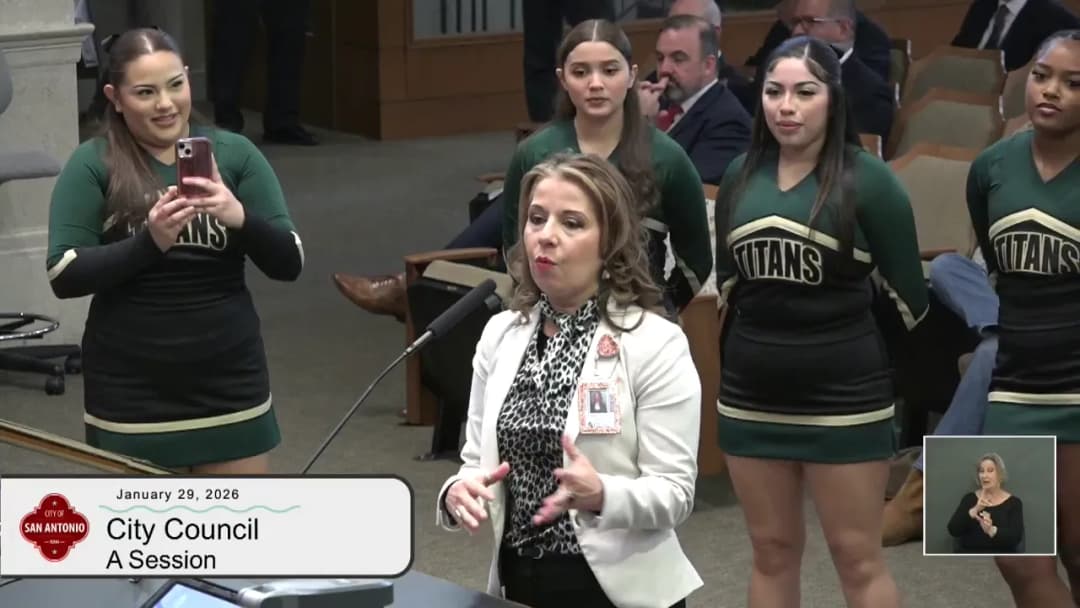
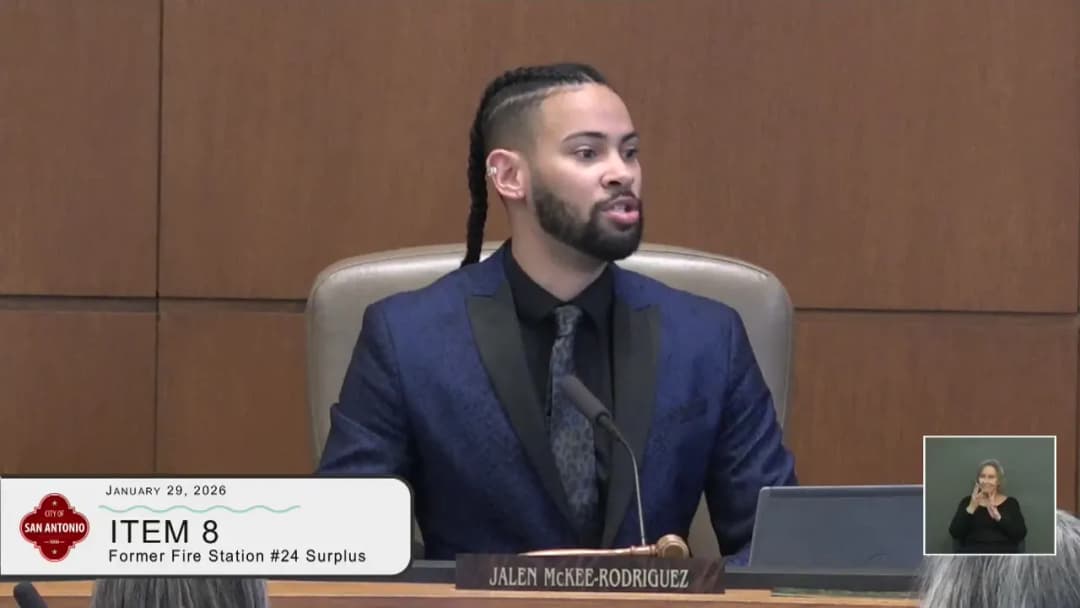
The San Antonio City Council met in Session A on January 29, 2026, at 9:17 AM. The meeting included proclamations, community recognitions, approval of the consent agenda, and a debate on the sale of a former fire station property. No public comments were made. The meeting adjourned at 10:00 AM. Proclamations & Recognitions - Wear Red Day Proclamation: February 4, 2026, was proclaimed as National Wear Red Day in San Antonio to raise awareness about cardiovascular disease, especially among women. Representatives from the American Heart Association accepted the proclamation and promoted the Go Red for Women initiative and a February 11 convention at the InterContinental Hotel. - Coach Popovich Day Proclamation: January 28, 2026, was proclaimed as Coach Popovich Day in honor of Gregg Popovich, longtime Spurs coach, for his contributions to the city and community service. - Honoring Coach Tony Manuel Rodriguez: Councilwoman Castillo recognized the late coach Tony Manuel Rodriguez, who passed on January 14, 2026, for his 37 years of teaching, coaching, and volunteering in the district, especially with Special Olympics. Condolences were extended to his wife Gloria. - Legacy High School Cheerleaders: Councilman Munguía recognized the Legacy High School cheerleading team for their historic achievement of qualifying for a national competition at Walt Disney World in Orlando. The team is raising $15,000 for travel expenses. Principal Roxy Freeman and team captains spoke, emphasizing public education and breaking barriers. - Appointments to Boards and Commissions: Councilman Munguía introduced Rosary Gómez to the Aging Commission and Joseph Nogon to the Small Business Advisory Committee. Consent Calendar The consent agenda (items 4-24) was approved unanimously without separate discussion, except for item 8 which was pulled for individual consideration. The consent agenda included appointments and acceptance of grant funds for Haven (acute integrated care services and mobile unit). Discussion Items - Sale of Former Fire Station 24 (Item 8): Councilman Micky Rodriguez moved to approve the sale of the property at 1940 Highway 90 to Truax Family Investments LLC for $152,000, with an amendment to direct all proceeds to an undetermined parks project in District 2. The motion was seconded. - Legal and Precedent Concerns: Several council members (Cor, Castillo, Galván, Aldrete, White) raised concerns about setting a precedent where proceeds from property sales remain in the district of origin rather than going to the general fund. They argued this could undermine equitable budgeting across districts and that a broader policy discussion is needed. - Support for Exception: Council members Micky Rodriguez, Munguía, and others supported the exception, noting the district's need for green space and that this property is small and commercially zoned. They emphasized that the conversation about a formal policy should continue. - City Manager Erik Walsh suggested that a council-wide discussion on property sale proceeds policy could be scheduled for a Session B in February 2026. He noted that $65,000 was already spent on demolition of the fire station. - Vote: The amendment passed. The main motion as amended also passed. - City Manager's Report: A video was shown highlighting the South Education Center, a public-private early childhood center serving 630 students, designed with cultural elements and safety features. Enrollment for the next school year begins April 1, 2026. Key Outcomes - Approved Proclamations: Wear Red Day (Feb 4) and Coach Popovich Day (Jan 28) recognized by the city. - Approved Consent Agenda: Items 4-24 approved unanimously. - Approved Sale of Fire Station 24: The sale for $152,000 was approved with an amendment directing proceeds to parks in District 2. - Future Discussion: Council agreed to hold a broader policy discussion on property sale proceeds allocation, likely in a Session B meeting in February 2026. - No Public Comments: No members of the public registered to speak.

PROCEDURAL 38% · BUDGET EQUITY ANALYSIS 15% · PUBLIC HEALTH 14% · PUBLIC ENGAGEMENT 11%
488
JAN 29, 2026 · SAN ANTONIO, TEXAS · CITY COUNCIL
San Antonio City Council Meeting - January 29, 2026

The San Antonio City Council convened on January 29, 2026, at 9:17 AM. The meeting included proclamations, public recognitions, consent agenda approvals, and discussion on the sale of surplus property. The council approved the sale of former Fire Station 24 with an amendment to allocate proceeds to a District 2 parks project, amid concerns about precedent. Consent Calendar - Approved minutes from January 14-15, 2026 meetings. - Approved consent agenda items 4-24, including appointments and funding allocations. - Councilmember Galvan highlighted appointments of Rosemary Gomez to the City County Joint Commission on Elderly Affairs and Joseph Nogle to the Small Business Economic Development Advocacy Committee. - Councilmember Castillo highlighted the reappointment of Maria Cruz to the Zoning Board of Adjustments and acceptance of funding for an MIU care station at Haven. - Item 8 was pulled for individual consideration. Public Comments & Testimony - No public speakers signed up to speak on the consent agenda. Discussion Items - Sale of Former Fire Station 24 (Item 8): Councilmember McKee Rodriguez moved to amend the item to allocate all funds ($152,000) from the sale of the property at 1940 Austin Highway to a to-be-determined District 2 parks project. City Manager expressed concern that earmarking proceeds sets a bad precedent for the general fund. Multiple councilmembers (Castillo, Villagran, Gonzales, Alderete Gavito, White) supported the amendment but called for a broader council policy discussion on equitable resource distribution. The city manager suggested covering demolition costs ($65,000) at a minimum. The amendment passed, and the main motion as amended was approved. Key Outcomes - Decision: Item 8 approved as amended, directing all sale proceeds to a District 2 parks project. - Directive: Full council to discuss a policy on surplus property sale proceeds in a February B session. - Proclamations: February 6, 2026 designated as National Wear Red Day; January 28 designated as Coach Popovich Day. - Points of Personal Privilege: Recognitions for Coach Johnny Manuel Rodriguez (passed January 14) and the Southwest Legacy High School Titan Cheer team (national qualifiers). - City Manager's Report: Spotlight video on the new Pre-K for SA South Education Center, serving 360 children, with applications opening February 1.

COMMUNITY ENGAGEMENT 24% · BUDGET 18% · PROCEDURAL 14% · PUBLIC EDUCATION 14%
489
JAN 28, 2026 · SAN ANTONIO, TEXAS · CITY COUNCIL
San Antonio City Council B Session: Airport Briefings and New Flights (January 28, 2026)

The City of San Antonio Council B session convened on Wednesday, January 28, 2026, at 2:08 PM. The meeting focused on three major airport solicitations: airfield design services, architectural design for Terminal A and B renovations, and a pre-solicitation for a Centralized Receiving and Distribution Center (CRDC). Airport Director Jesus Sciences also announced three new nonstop flights via Breeze Airways: to Raleigh-Durham, Memphis, and Pensacola. Council members expressed strong support for the airport's growth and the presented recommendations. Consent Calendar - No consent calendar items were explicitly discussed. Public Comments & Testimony - No public comments were heard during the B session, though the meeting adjourned with a note that a 5:00 PM public comment session with several speakers would follow. Discussion Items - New Nonstop Flight Announcements: Jesus Sciences, Director of Airports, announced three new nonstop flights through Breeze Airways: Raleigh-Durham ($79 one-way), Memphis ($49 one-way), and Pensacola ($49 one-way, with a connecting flight to Tampa). Sciences noted that Raleigh-Durham is a top-three targeted market, with approximately 100 daily travelers between the cities. The airport now serves 50 destinations, up from 33 post-COVID. - Post-Solicitation: Airfield Design Services (ASIP): The recommended contract ($40 million, funded by FAA grants and aviation capital funds) was awarded to Kimley Horn after an evaluation that included interviews. The project involves preliminary design for two parallel runways (13R and 13L) to increase capacity, decommissioning Runway 422 into a taxiway, and reducing conflicts with Randolph Air Force Base. Councilmember Spears emphasized this as a federal priority. - Post-Solicitation: Architectural Design Services for Terminal A & B Renovations: The $35 million contract (funded by aviation capital funds) was awarded to HOK (Hellmuth, Obata, and Kassabaum). HOK's team includes local firms West East Design Group and CNG Engineering. The goal is to align Terminals A and B with the new design standards of Terminal C, modernizing security checkpoints, ticketing, concessions, and gate hold rooms (expanding from 1,900 sq ft to 3,000 sq ft at each gate). Eric, a staff member, noted a pre-approved budget of $200 million for A and $100 million for B from carriers. - Pre-Solicitation Briefing: Centralized Receiving and Distribution Center (CRDC): An RFP for an off-site facility for sterilized, secure receiving of food, beverages, and other goods. Estimated contract value is $11.25 million over 10 years with a 5-year renewal option, funded from O&M funds. The evaluation committee includes Assistant City Manager Jeff Coyle, Assistant Director of Aviation Michael Garnier, and TSA Deputy Assistant Federal Security Director Ernesto Ortiz. Scoring includes 30 points each for experience/qualifications and project understanding, 20 points for pricing, 10 points for local preference, 5 points for veteran-owned small business, and 5 points for small business prime. - Council Inquiries on Scoring: Councilmembers asked about scoring changes between initial and final evaluations (e.g., PGA moving from first to last on the TABRR evaluation). Jesus Sciences explained that interviews allow the committee to ask hard questions about commitment to San Antonio, team presence, and project approach. Councilmember Via Gran requested details on who served on the scoring team and the reasons for point shifts. Staff agreed to provide follow-up information. - Future B Session Briefings (April): Jesus Sciences outlined upcoming presentations: construction manager at risk for Terminal A/B renovations, maintenance repair and overhaul (MRO) post-solicitation, Terminal C concessions pre-solicitation (41,000 sq ft of concession space, opening in 28 months), and the TDP Airport Access Roadways program to reduce congestion. Key Outcomes - Council Support: Council members (Spears, White, Alderete Gavito, Coors, Mesa Gonzalez, Via Gran) expressed unanimous support for moving forward with the three solicitations. - Next Steps: The contracts for airfield design and Terminal A/B architectural design will proceed to an A session for final council approval. The CRDC solicitation will be released. Staff will provide a Gantt chart of project milestones, as requested by Councilmember Alderete Gavito. - No Votes Taken: The B session was a briefing; no formal votes were recorded. The meeting adjourned at 2:49 PM.

AIRPORT INFRASTRUCTURE 57% · PROCUREMENT AND CONTRACTING 14% · PROCEDURAL 10% · WORKFORCE DEVELOPMENT 5%
490
JAN 28, 2026 · SAN ANTONIO, TEXAS · CITY COUNCIL
San Antonio City Council Session B – Airport Updates and Bids – January 28, 2026

The San Antonio City Council convened on January 28, 2026, at 2:08 PM for Session B to discuss several airport-related agenda items, including new nonstop flights, design and reconfiguration contracts for Terminals A and B, a centralized receiving and distribution center, and runway improvements. Council members expressed strong support for the proposed initiatives, which aim to enhance passenger experience, increase capacity, and stimulate economic growth. Discussion Items - New Nonstop Flights: Jesús, Director of San Antonio Airports, announced three new nonstop flights by Breeze Airways: Raleigh-Durham, North Carolina (one-way fares from $79); Memphis, Tennessee; and Pensacola, Florida (one-way fares from $49). The Pensacola flight will operate twice weekly and also connect to Tampa. San Antonio now serves 50 destinations, up from 33 pre-COVID. - Design and Reconfiguration of Terminals A and B: A solicitation (RFQ) for architectural design services to reconfigure and rehabilitate Terminals A and B was presented. The contract is valued at $35 million, funded by Aviation Capital Funds. The goal is to align Terminals A and B with the design standards of the new Terminal C, including improved gate areas (3,000 square feet per gate), restrooms, waiting areas, and concessions. HOK was selected as the preferred design firm after interviews with 8 finalists (from 13 initial respondents). Council members praised the selection and emphasized the need for local firm participation and mentoring programs. - Centralized Receiving and Distribution Center (CRDC): A pre-solicitation for a centralized receiving and distribution center was introduced. This facility will centralize all goods entering and leaving the airport, allowing for sterilized deliveries, efficient storage for concessionaires, and improved operations. The evaluation committee includes Jeff Cole, Michael Garnier, Rick Neo, Virginia Covarrubias, and Ernesto Ortiz. Scoring criteria: Experience (30), Project (30), Price (20), Local Preference (10), Veterans (5), Prime (5). Council members inquired about efficiencies and local business participation. - Runway Improvements (ACIP): Preliminary work for future parallel runway configuration (Runways 13R and 13L) was discussed. The Airport Capital Improvement Plan (ACIP) includes an initial evaluation to increase operational capacity and reduce conflict with Randolph Air Force Base. Council member Spears stressed this as a federal priority to avoid congestion. Key Outcomes - Council members unanimously expressed support for the presented items, including the new flights and design contracts. No formal vote was recorded during the session, but members indicated readiness to approve in subsequent Session A. - Council member Villagrán requested that future presentations include the composition of evaluation committees and explanations for score differences between initial and final evaluations (e.g., Kimley Horn gaining points, RSNH losing points). Staff agreed to add this information. - Council member Mesa González asked about mentoring programs for local small firms; Jesús noted existing efforts with UTC, Trinity University, and local engineering firms, and committed to considering formal mentor-protégé programs in future solicitations. - The next Session B presentation is scheduled to include a pre-solicitation report on the CRDC and updates on the Terminal C design (now 90% complete). Public comments were scheduled for 5:00 PM after this session. Public Comments & Testimony No public comments were made during Session B; the meeting was adjourned at 2:49 PM with a note that public comments would be heard at 5:00 PM.

TRANSPORTATION INFRASTRUCTURE 47% · PROCUREMENT AND CONTRACTING 26% · PUBLIC TRANSPORTATION 12% · ENGINEERING AND INFRASTRUCTURE 12%
OPENPUBLICA · PUBLIC MEETING INDEXUPDATED DAILY · openpublica.com