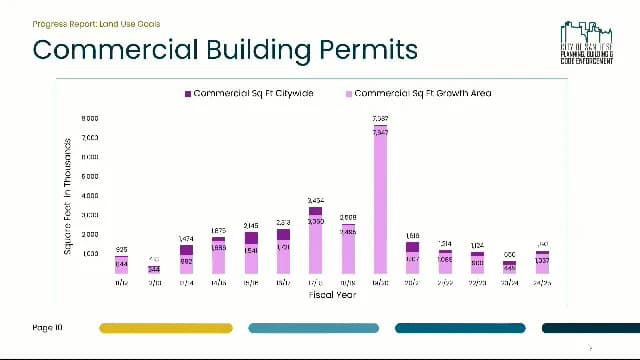
The Planning Commission, serving as the task force for the 2025-2026 General Plan Four-Year Review, held its inaugural meeting. Staff from the Planning Division and the City Attorney's Office presented on the task force's role, the review's scope and timeline, and a detailed progress report on housing, land use, and economic development since the plan's adoption. Commissioners engaged in extensive discussion on key topics, followed by public comment on housing policy, local control, and climate goals. Public Comments & Testimony - Mike Sodergren requested the use of technology for real-time public questions and expressed concern over state mandates like SB 79 eroding local land use control. He asked the task force to explore policy options to challenge or mitigate state directives. - Larry Ames questioned the viability of the urban village concept and the impact of increased housing on the city's jobs-to-employed-resident ratio and structural budget deficits. He opposed waiving park requirements to incentivize development. - Robert Wood (Professor, San Jose State) argued the General Plan has failed to produce sufficient housing, citing a comparison to Seattle. He expressed the position that prescribed high densities (e.g., 50 units/acre) in growth areas are infeasible and that more land, including underutilized commercial/industrial parcels, must be opened for housing. - Hari Neal (transit advocate) advocated for lowering barriers to high-density development, especially near light rail stations. He supported reducing the affordability requirement to pre-approve projects in unplanned urban villages from 100% to 50% and called for an end to blanket protections for single-family zoning. - Elizabeth Agriam expressed strong support for increasing Extremely Low-Income housing (under 30% AMI), creating mixed-income communities in high-resource areas, implementing permanent deed restrictions, and focusing on eviction prevention. - Mani Vacoa (youth climate advocate) urged the commission to prioritize climate action and affordable housing together, supporting dense, transit-oriented development and opposing expansion into open spaces like Coyote Valley. Discussion Items - Task Force Roles & Process: Principal Planner Ruth Cueto outlined the 8-month review process, with the Planning Commission serving as the task force. The scope includes increasing residential capacity, creating a "missing middle" housing framework, modifying jobs-to-housing ratios, evaluating urban village strategies, and conducting environmental review. Final recommendations are scheduled for June 2026, with council adoption in late 2027. - Brown Act & Ethics Refresher: City Attorney Daniel Sasueta reviewed rules prohibiting serial meetings and emphasized commissioners must clarify they are speaking in a personal capacity, not as advocates, when discussing city business outside formal meetings. - General Plan Progress Report: Staff presented data showing nearly 80% of new housing since 2011 was built in designated growth areas, but recent multifamily production has dropped. The city is falling short of its sixth-cycle housing targets, particularly for affordable units. The report also covered economic trends, transportation improvements, and progress toward carbon neutrality goals. - Commissioner Questions & Deliberation: - Commissioners inquired about incorporating new state law SB 79 (transit-oriented development) into the capacity analysis. - Staff clarified the city's discretion in setting CEQA thresholds of significance. - Commissioner Cantrell advocated for explicitly defining and centering equity—particularly for communities historically harmed by redlining—in all analysis, especially for residential capacity and missing middle housing. - Questions were raised about the rationale for potentially eliminating some urban village areas and the process for the task force's final vote. - Discussion acknowledged the need to look beyond the current "growth areas" to meet housing goals, with Commissioner Cantrell characterizing the existing strategy as "putting all our eggs in one basket." Key Outcomes - Staff Directives: Planning staff agreed to report back on: 1) The feasibility of using technology for real-time public questioning. 2) Policy options available to the city regarding state mandates that limit local control (e.g., SB 79). - Scope Clarification: Staff noted that certain public suggestions (e.g., modifying building design guidelines, speeding up permit processes) are outside the scope of the General Plan amendment review but may be forwarded to other departments. - Next Steps: The next task force meeting in November 2025 will focus on Urban Village Implementation Strategies. A separate study session on a forthcoming cost of development study was proposed for early 2026. - Public Engagement: Staff highlighted ongoing and future outreach efforts, including open houses and an online engagement tool, to gather community feedback on the proposed amendments.
Public Meetings - San Jose, California
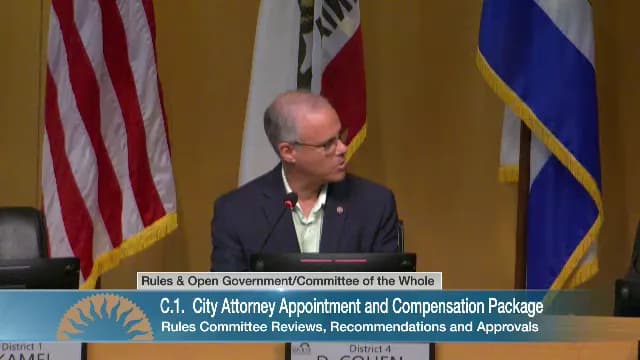
Public Meetings - San Jose, CaliforniaThe Rules and Open Government Committee met to review upcoming council meeting agendas, approve consent calendar items, and discuss action items including attorney appointment, Proposition 50, and Measure A. All motions passed unanimously. Agenda Review - Reviewed the agenda for the October 21st council meeting, which includes a closed session, regular session, and items such as the city manager's annual report and land use permits. Item 2.4 was dropped due to cancellation of an NSC meeting. - Reviewed the agenda for October 28th, featuring a special closed session time and items like a homelessness audit report and ordinance updates. Consent Calendar - Three items on the rules consent calendar were approved without discussion. Discussion Items - Attorney Appointment and Compensation Package: No discussion; moved forward to council agenda. - Proposition 50: Councilmember DeWan expressed strong support for bringing Proposition 50 to the full city council for formal discussion, emphasizing the need to protect democracy in California. - Measure A: Councilmember Mercandells highlighted the importance of Measure A in mitigating negative federal actions and protecting the health and hospital system for vulnerable communities. Councilmember Duane shared personal experiences supporting the measure to prevent loss of life. Key Outcomes - Approved the October 21st agenda with the dropping of item 2.4 (4-0 vote). - Approved the October 28th agenda (4-0 vote). - Approved the consent calendar items (4-0 vote). - Approved the attorney appointment and compensation package, forwarding it to the council agenda (4-0 vote). - Approved moving Proposition 50 to the council agenda for discussion (4-0 vote). - Approved the resolution in support of Measure A (4-0 vote). The meeting adjourned at 2:08 p.m.
This Zoom-based hearing was conducted by Hearing Officer Ruth Gueto on behalf of Planning Director Christopher Burton. The meeting focused solely on a consent calendar item for a proposed Chick-fil-A development, which was approved without discussion or public testimony. Consent Calendar - Item 3a (PD 24-022 and ER 24-306): Staff recommended approval of a plan development permit to construct a Chick-fil-A restaurant at 4400 Stevens Creek Boulevard. The item was approved unanimously as part of the consent calendar, with no requests to speak from staff or the public. Key Outcomes - The plan development permit for the Chick-fil-A project was approved, including the environmental addendum and permit issuance.
The joint meeting of the Rules and Open Government Committee and the Committee of the Whole convened on October 8, 2025, primarily to review the draft agenda for the October 21st session and handle consent calendar items. Public comments addressed procedural concerns and accessibility issues. Consent Calendar - The consent calendar included the public record and an update to the neighborhood services and education work plan. A public commenter expressed concern about the public record being part of the consent calendar rather than a separate agenda item. Public Comments & Testimony - Brian, a member of the public, requested that the public record be moved out of the consent calendar to allow for more discussion and a sense of being heard. He advocated for reinstating call-in options for public participation, citing barriers for elderly, disabled, or those with chronic issues, and argued that removal due to bad actors should not prevent legitimate participation. He also suggested that appeals and public records requests should be accessible online. Key Outcomes - The committee approved the draft agenda for October 21st with the cancellation of the evening session. The consent calendar was approved with a vote of 4-0. The meeting was adjourned.
The meeting opened with ceremonial proclamations celebrating arts, Indigenous heritage, and Filipino American history. The council then approved a significant philanthropic donation for a public peace monument and engaged in a detailed debate over the standards for a new list of pre-qualified city planning consultants. The session concluded with extensive public comment on issues including safe parking for the RV community and allegations of disrespectful conduct by a council staff member. Consent Calendar - Item 2.8 - Peace Monument Donation: The council unanimously approved a donation agreement with Diane Brandenburg for a peace monument and artwork by Mario Chiodo at Arena Green West. Councilmember Dev Davis recused himself due to a personal relationship with the donor. Public Comments & Testimony - On the Peace Monument: Donor Diane Brandenburg expressed her vision for the monument as an inspiration for peace. Project lead Kimberly Mulcahy and Arts Commissioner Janet Peace voiced strong support for the project. A representative for the artist read a statement about the monument's purpose. A speaker from Shark Sports and Entertainment supported the monument as a key part of downtown placemaking. Another speaker, while supportive of the gift, criticized city fees on privately-funded public park improvements. - During Open Forum: Multiple RV residents and advocates called for expanded safe parking capacity, sanitation services, and a pause on enforcement sweeps until alternatives exist. They argued that current policies destroy stability and dignity. - Allegations of Staff Misconduct: Multiple speakers, including Mr. Truong Hai, alleged that a District 7 council staff member mocked and belittled him on social media after he spoke at a previous council meeting. They called for the council to review this behavior and protect residents' rights to free speech and respect, especially for elders. - Other Comments: A representative from JobTrain invited council members for a site visit. A speaker made allegations regarding a past criminal case and interactions with the mayor. Discussion Items - Item 3.4 - Master Service Agreements for Consulting Services: Staff requested approval for new master service agreements to expedite contracting for technical planning work in six areas (e.g., land use, environmental review). - Councilmember Kamei sought clarification that consultants are for specialized or peak-load needs and suggested evaluating if recurring needs warrant hiring full-time staff. - Councilmember Mulcahy raised significant concerns about potential conflicts of interest, the low qualifying score (60/100) for inclusion on the list, and the inclusion of a firm that scored a 43 in one category. She argued the low bar could lead to inferior work and voted against the item. - Mayor Mahan questioned how the city ensures these consultants adapt to streamlined processes (like CEQA reform) and do not perpetuate delays. Staff affirmed they hold consultants accountable and are focused on efficiency. - Councilmember Torcillas inquired about mechanisms to remove underperforming firms from the list. Key Outcomes - Peace Monument Donation: Motion to approve item 2.8 passed unanimously. - Master Service Agreements: Motion to approve item 3.4 passed with a vote of 8-3. Councilmembers Dev Davis, Sergio Jimenez (Mulcahy), and Bien Doan voted no. - Directives/Referrals: Staff committed to providing more detailed data on project timelines and to monitoring consultant performance with the ability to remove firms from the master list if necessary.
The Transportation and Environment Committee meeting covered semi-annual status reports on city infrastructure, climate smart initiatives, zero waste elements, and vision zero traffic safety. Discussions focused on progress, challenges, and public feedback, with several motions passed unanimously. Public Comments & Testimony - Lillian Koenig (District Three): Expressed concern about the city's tree removal practices conflicting with urban canopy and greenhouse gas reduction goals under the natural environment restoration plan. - Ian Ferris (on behalf of the Bicycle and Pedestrian Advisory Committee): Spoke during the climate smart item, advocating for council to prioritize and fund programs that reduce vehicle miles traveled, decrease car dependency, and ensure equitable access to clean transportation options. - ACOS: Commented on vision zero, suggesting that safety improvements for expressways and bike lanes could be made by updating signage to clarify pedestrian and bicycle access, reducing driver confusion and harassment. Discussion Items - City Infrastructure Status Report: Staff presented updates on key projects including partnership with PGE, Diridon Station modernization, and public EV charging infrastructure. Councilmembers discussed fleet electrification priorities and a specific affordable housing project delay due to PGE permit issues. - Zero Waste Element Report: Staff outlined strategies to achieve zero waste goals, focusing on waste prevention, recycling, and composting. Councilmembers emphasized the need for community engagement, school partnerships, and education to reduce contamination and increase diversion rates. - Climate Smart Semi-Annual Status Report: Staff reported on greenhouse gas emissions, noting that transportation remains the largest source and that San Jose is not on track to meet its 2030 carbon neutrality goal. Discussions included equity in outreach, the impact of data centers on emissions, and concerns about reducing the frequency of updates to the committee. - Vision Zero Program Status Report: Staff presented data on traffic fatalities and severe injuries, highlighting a recent decrease but ongoing concerns. Initiatives like red light cameras, speed safety cameras, and speed limit reductions were discussed. Councilmembers raised issues about bike lane obstructions, daylighting at intersections, and funding for active transportation projects. Key Outcomes - City Infrastructure Report: Motion to accept the report passed unanimously (5-0). - Zero Waste Element Report: Motion to accept the report and recommend it for full city council consideration passed unanimously (5-0). - Climate Smart Report: Motion to accept the semi-annual update, approve the plan update, and transition to annual updates passed unanimously (5-0), with an amendment to report to council on December 2, 2025. - Vision Zero Report: Motion to accept the program status report passed unanimously (5-0).
The Historic Landmarks Commission met to review two significant public hearing items: proposed text amendments to the city's historic preservation ordinance (Chapter 13.48) and the adoption of objective design standards for Eichler neighborhoods. The session was dominated by public opposition to the ordinance amendments, with speakers arguing they would weaken historic protections. Commissioners engaged in detailed discussion, leading to a deferral of the amendments for further revision. Public Comments & Testimony - Sean Atkinson, representing the St. Clair Historic Preservation Foundation, expressed strong opposition to the ordinance amendments, stating they undermine the commission's role and criticized the city's phased approach to the St. James Park project. - Susan Brantalley, attorney for the St. Clair Historic Preservation Foundation, requested a deferral due to perceived inadequate public notice. She argued the amendments reduce protections for historic resources and require full CEQA environmental review. - Ben Leech of the Preservation Action Council voiced concerns that the proposed override provision allows vague public benefits to outweigh detrimental impacts, effectively gutting the historic preservation ordinance. - Mike Sodogren from the Preservation Action Council highlighted that the amendments shift review authority to the Planning Commission, which lacks historic expertise, and questioned the use of an addendum for CEQA compliance. - Jeffrey, president of the St. Clair Club, opposed the amendments, asserting they give the city council carte blanche to destroy historic resources like St. James Park. - Karen Lubin, a resident near St. James Park, opposed both the construction of a commercial amphitheater (Levitt Pavilion) and the ordinance changes that might facilitate it, citing noise disturbances. - Other residents echoed opposition to the pavilion and the ordinance amendments. Discussion Items - Staff, led by Dana and Manira Sandh, presented the ordinance amendments, explaining they aim to clarify definitions such as "detrimental" and align with CEQA processes. Staff maintained that the amendments do not trigger new environmental review and preserve public notice and hearing requirements. - Commissioners, including Cohen and Bainwall, raised issues with the broad language of the override provision, lack of definitions for terms like "impair," and the need for segmented standards for different impact types (e.g., demolition of landmarks vs. alterations in districts). - The discussion covered the schedule for the amendments, with staff noting upcoming hearings at the Planning Commission (November 5) and City Council (December 2). - For the Eichler neighborhood objective design standards, staff presented the standards developed to streamline reviews for mid-century modern homes, which received positive feedback from the commission and public. Key Outcomes - The commission voted to defer the ordinance amendments (PP 2505) to the November 5, 2025, Historic Landmarks Commission meeting for revisions based on commissioner feedback, including clarifying definitions and refining the override provision. Vote: All commissioners present voted in favor. - The commission approved the Eichler neighborhood objective design standards (PP 24012), recommending adoption by the City Council. Vote: Unanimous approval. - Commissioner Cohen was appointed to the Design Review Subcommittee. - Minutes from the September 3, 2025, meeting were approved.
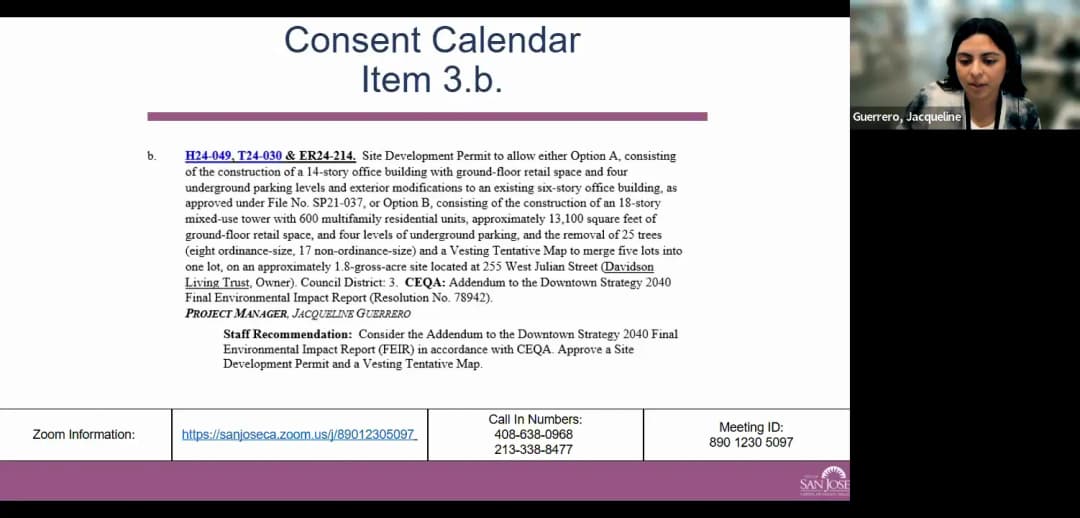
The Planning Director Hearing on October 1, 2025, was conducted via Zoom and presided over by Hearing Officer Martina Davis. The meeting reviewed several development permits, with most items approved on the consent calendar and one item moved to a public hearing for discussion. Consent Calendar - Item 3A (H24033/ER24164): Site development permit for a two-story medical office building at 2326 McKee Road. The applicant, Chris Barlow from WRD Architects, explained that the primary entrance is from the parking area for accessibility and safety reasons, justifying an exception to design standards. The hearing officer approved the permit. - Item 3C (SP24043/ER24294): Special use permit for converting a commercial building into a child day care center at 554 Blossom Hill Road. Approved without discussion. Public Comments & Testimony - Dominic Toriano, representing Sheet Metal Workers LOC 104 and the Silicon Valley MEPS coalition, expressed strong support for Item 3B, the project at 255 West Julian Street. He highlighted the partnership with West Bank and the benefits of union jobs for local communities. Discussion Items - Item 3B (H24049/T24030/ER24214): Site development permit for a project at 255 West Julian Street, with options for a 14-story office building or an 18-story mixed-use residential tower. Staff presented a report and requested a condition change, which was agreed upon by the applicant. No further discussion from the applicant occurred during the hearing. Key Outcomes - Consent calendar items 3A and 3C were approved. - Item 3B was approved after public hearing, with the hearing officer considering an addendum to the Downtown Strategy 2040 EIR and approving the site development permit and vesting tentative map.
The Rules and Open Government Committee convened to review the agenda for the upcoming City Council meeting and take action on two major proposals concerning the city's investment policy and a coordinated plan to support the immigrant community in response to increased federal enforcement activity. Consent Calendar - Approved the consent calendar for the October 7th City Council meeting, which included a master service agreement for citywide planning consulting services. Public Comments & Testimony On Investment Policy Item: - Jeremy Bruce (Amigos de Guadalupe), Shannon Zang (Silicon Valley Council of Nonprofits), Lucilla (Working Partnerships USA), Anzi Schaefer (San Jose Against War), Lawrence, Akemi Flynn (IPEN), Mr. Mendoza Guadalupe, and Kimberly Wu (SIREN) all urged the committee to direct staff to analyze divesting from corporations that contract with or profit from ICE (Immigration and Customs Enforcement). - Speakers expressed that divestment aligns with the city's values, protects immigrant families, and that reinvested funds should support community programs for education, housing, and healthcare. On Immigrant Support Plan Item: - The same group of speakers, plus Ms. Rain (Amigos de Guadalupe), strongly supported the memo directing the city to create a comprehensive action plan with Santa Clara County. - Positions included calls for protecting data privacy (specifically regarding automatic license plate readers), ensuring safety at large public events like the Super Bowl, and expanding employer education to prevent workplace immigration arrests. Discussion Items - Councilmember Duane questioned if there was a regular process to evaluate the city's investment strategy against social responsibility policies. Finance Director Maria Obert explained the existing social responsibility clause in the investment policy. - Councilmember Candelas thanked Councilmember Ortiz and the public for their advocacy on the investment item. - Councilmember Ortiz and Candelas introduced the memo on the immigrant support plan, explaining it aimed to fill gaps in community preparedness, coordinate with the county, address data privacy concerns, and ensure safety at major public gatherings. - Vice Mayor Foley and others acknowledged the existing work by city staff and the need for better public communication and coordination. Key Outcomes - Investment Policy Analysis: The committee voted 4-0 to direct city staff to report on the trade-offs of divesting from corporations that contract with ICE and reinvesting in community programs. - Immigrant Support Plan: The committee voted 4-0 to direct the City Manager's office to partner with Santa Clara County to prepare a comprehensive plan of action to support the immigrant community.
The San Jose City Council meeting on September 30, 2025, included ceremonial recognitions, approval of a police union agreement, a semi-annual update on city focus areas, and decisions on several housing-related acquisitions and general plan amendments. Key themes were public safety, homelessness reduction, economic development, and transparency in law enforcement. Consent Calendar - Item 2.5 was pulled for a travel report on the Atlanta study mission, where council members shared insights on mixed-use developments around sports anchors. The consent calendar passed unanimously after public comment. Public Comments & Testimony - On item 3.5 (ordinance prohibiting law enforcement from concealing identities), multiple speakers expressed support for the measure. Speakers argued that it would enhance accountability, protect immigrant communities from impersonation and intimidation, and uphold constitutional rights. Concerns were raised about ICE operations and instances of masked agents causing fear. Discussion Items - Item 3.3: Council discussed and approved the terms of an agreement with the San Jose Police Officers Association for 2025-2028. Members emphasized the need for fair pay, recruitment, and retention to support public safety, particularly in underserved districts. - Item 3.4: Staff presented the Focus Area 2.0 semi-annual status report, introducing logic models for five priorities: increasing community safety, reducing unsheltered homelessness, cleaning up neighborhoods, growing the economy, and building more housing. Council members asked questions about metrics, funding, and implementation. - Item 8.1: Council considered the acquisition of 447 South Almaden Boulevard, linking city holdings for future development flexibility. Staff highlighted the strategic location and favorable price. - Item 8.2: Discussion on the Gateway Tower project for affordable workforce housing in downtown, with a memo proposing a tenant preference for local artists. The applicant expressed commitment to community engagement and architectural compatibility. - Items 10.2 and 10.3: Early consideration of general plan amendments for residential developments at Emory Street/Alameda and McKendry Street. Applicants and neighborhood representatives voiced support for townhome projects to address housing needs and revitalize vacant lots. Key Outcomes - Unanimous approval of the SJPOA agreement (Item 3.3). - Adoption of the Focus Area 2.0 framework and dashboards (Item 3.4). - Approval of the acquisition and financing for 447 South Almaden Boulevard (Item 8.1). - Approval of the Gateway Tower loan and land purchase, with artist preference (Item 8.2). - Approval to continue processing general plan amendments for both properties (Items 10.2 and 10.3), moving them forward for further review.