Browse by city
Date range
Search help

Search titles, summaries, topics and stored transcripts together. Keywords may match separately; put the whole query in double quotes for a phrase. Matching follows word analysis, so punctuation is not exact. Both dates are included. Documents are not searched.

SHOWING 121–130 ENTRIES
121
OCT 19, 2023 · SHORELINE, WASHINGTON · PLANNING COMMISSION
Shoreline Planning Commission Public Hearing – October 19, 2023

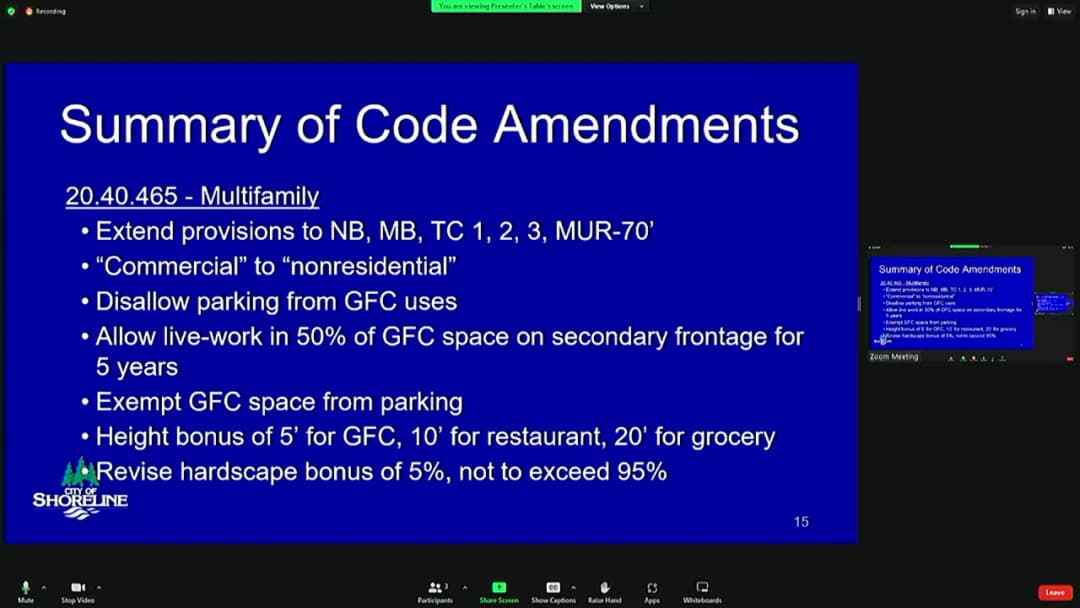
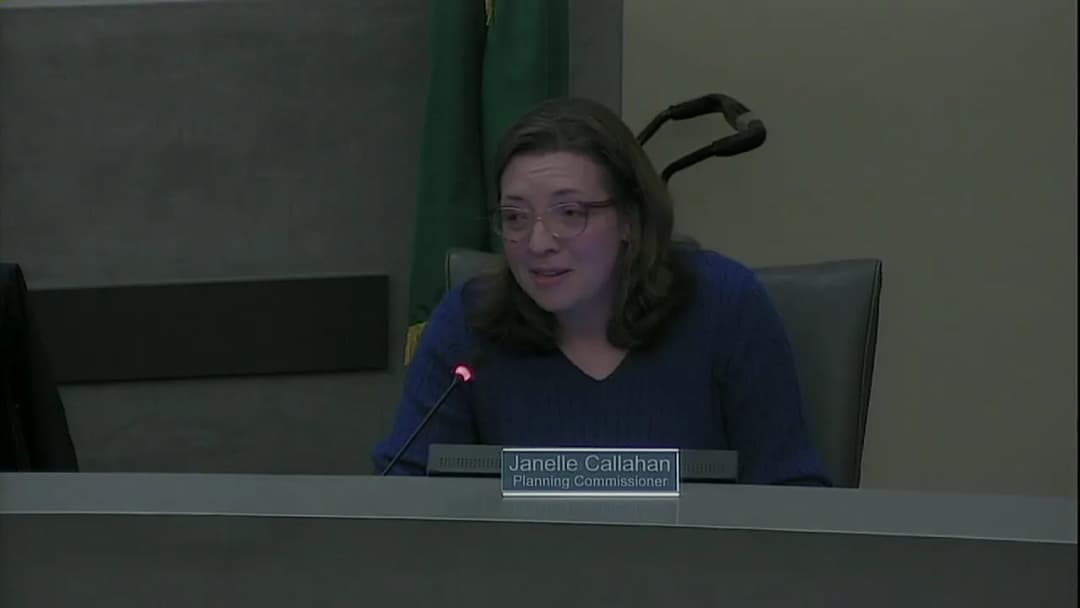
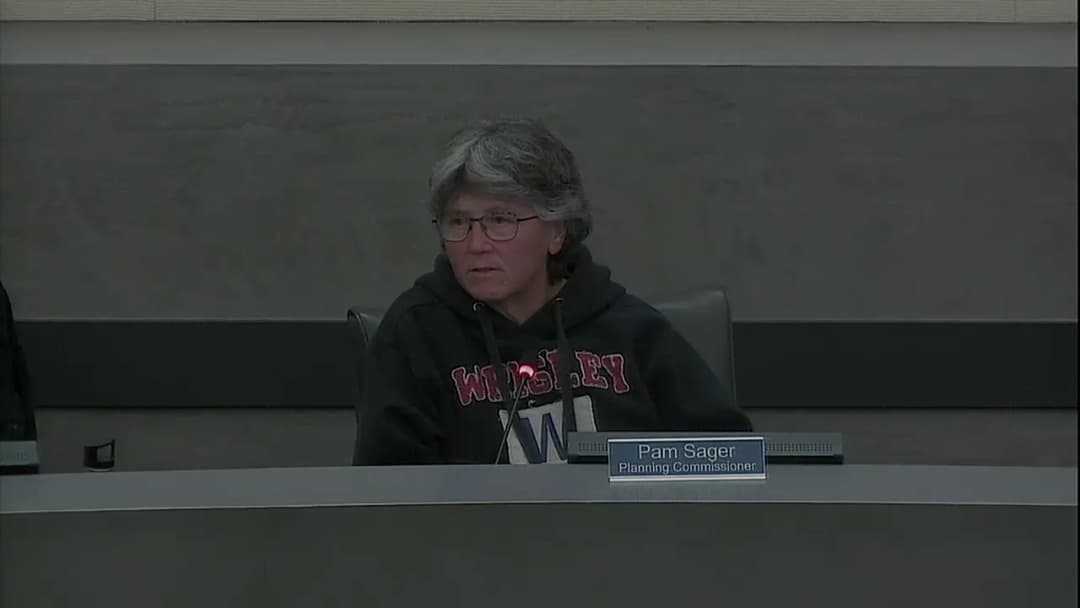
The Shoreline Planning Commission held a public hearing on October 19, 2023, to consider transportation concurrency development code amendments, discuss ground floor commercial development code amendments, and review transit bus base and individual transportation/taxi facility code amendments. The commission voted unanimously to recommend adoption of the multimodal concurrency program changes and provided direction to staff on the other two items. Consent Calendar - Approved the agenda as presented. - Approved the minutes from the October 5, 2023, meeting. Public Comments & Testimony - No members of the public signed up for general public comment. - During the public hearing on concurrency, no public testimony was offered. Discussion Items Transportation Concurrency Development Code Amendments - Staff presented a proposal to shift from a vehicle-based level of service to a multimodal concurrency system, aligning with the state's House Bill 1181 and the city's updated transportation element. - The new system would track person-trip capacity from funded projects (supply) against person-trip demand from new development (demand) on a pass-fail basis. - Commissioners asked clarifying questions about prioritization of modes, the use of ITE trip generation data, the relationship between concurrency and impact fees, and what happens if the city falls out of concurrency (a moratorium on permitting). - A motion was made and seconded to recommend city council approve the concurrency program changes in Ordinance 997 as written in the staff report. The commission voted unanimously in favor. Ground Floor Commercial Development Code Amendments - Staff and consultant Patrick Doherty reviewed feedback from the September 21, 2024, study session, survey results (655 respondents), and stakeholder meetings. - Key proposals: create primary and secondary commercial corridors based on arterial classification, require 75% ground-floor non-residential on primary corridors and 60% on secondary corridors, allow up to 50% of the required space on secondary corridors to be live-work for five years, reduce minimum floor-to-floor height from 18 to 15 feet, exempt ground-floor commercial from parking requirements, and provide a 5-foot height bonus for compliance. - Commissioners discussed whether collector arterials should be included in the primary corridor designation. There was confusion about the maps; staff clarified that the maps inadvertently included collector arterials as primary. The commission indicated they would like collector arterials to be considered primary corridors. - Other topics: requiring restaurant-ready provisions, allowing through-block connections to reduce frontage requirements on high-traffic streets, and clarifying that the five-year live-work allowance applies to building permits issued within five years, not occupancy. - Staff was directed to refine the code amendments, including the collector arterial issue, and bring them back for a public hearing on November 2, 2023. Transit Bus Bases and Individual Transportation & Taxi Facilities Development Code Amendments - Planner Kate Lee presented recommendations from a moratorium adopted July 17, 2023, to address incompatibility of these uses with the city's vision. - Staff proposed replacing the old definitions with “fleet base major” (vehicles ≥30 feet) and “fleet base minor” (vehicles <30 feet), allowing them only in specific zones: Mixed Business (M B), Community Business (C B) with frontage on a state highway, and R4–R48 zones with minimum acreage and access to a limited-access highway. - Approval processes: fleet base major as a special use, fleet base minor as a conditional use. Additional decision criteria would address odor, noise, and other impacts. - Commissioners expressed concerns about the impact on Aurora Avenue revitalization, the need for odor mitigation, and the potential loss of the Access Van service if the current site cannot be replaced. Staff noted ongoing coordination with King County Metro. - The commission agreed to bring the item back for a public hearing on November 16, 2023, with draft code amendments. Key Outcomes - Vote on Concurrency (Ordinance 997): The commission voted 7-0 to recommend city council approval. (Commissioners Brinson, Callahan, Galuska, Lin, Mosier, Vice Chair Ramashanji, and Chair Sagar all voted yes.) - Ground Floor Commercial Amendments: Staff to revise the code to include collector arterials as primary corridors and present final draft for public hearing on November 2, 2023. The commission expects to forward a recommendation to council. - Transit Bus Base and Taxi Facility Amendments: Staff to prepare draft code amendments based on commission feedback and return for a public hearing on November 16, 2023.
LAND USE PLANNING 51% · TRANSPORTATION SAFETY 18% · PUBLIC ENGAGEMENT 11% · PUBLIC TRANSPORTATION 9%
122
OCT 5, 2023 · SHORELINE, WASHINGTON · PLANNING COMMISSION
Shoreline Planning Commission Meeting - October 5, 2023

The Shoreline Planning Commission met on Thursday, October 5, 2023, to discuss the 2024 Comprehensive Plan update, including the vision statement, racial equity analysis, and phase two public engagement. Commissioners provided feedback on proposed vision alternatives, reviewed findings of the draft racial equity analysis, and discussed outreach strategies for underrepresented communities. No formal votes were taken; staff received direction to refine the vision statement and continue engagement efforts. Consent Calendar - Approval of the minutes from the September 24, 2023 draft meeting was assumed; no public comment was registered. Public Comments & Testimony - No public comments were made. One individual had signed up but was not in attendance; the chair noted they could be added later if they arrived. Discussion Items - Vision Statement Update: Staff presented three alternatives for the comprehensive plan vision statement, based on public feedback from an online open house. 85% of online open house participants agreed or somewhat agreed that the 2012 vision is still relevant, though many felt additions were needed. Recurring themes included housing affordability, safety, nature/environment, and community feel. Commissioners expressed strong support for a more concise, memorable vision statement, preferring a shorter format with bullet points and key themes. Some suggested combining elements of alternatives two and three, and noted the importance of highlighting what differentiates Shoreline. No formal direction was given, but staff indicated they would refine the vision based on feedback. - Racial Equity Analysis: Staff presented a draft analysis of racially disparate impacts in housing, required by recent Growth Management Act changes. Key findings: Shoreline is 42.6% white (median age 42), with 29% of the population having limited English proficiency. 57% of housing stock was built between 1950 and 1980, and 80% of zoned land is for detached residential. Historical racial covenants were found in 26 plats, affecting 2,376 properties. Current disparities show lower homeownership and higher housing cost burden for BIPOC households, with white households generally experiencing less cost burden. Property values and zoning are the main drivers of racial segregation, with western areas being whiter and wealthier. Displacement risk is highest in the Echo Lake, Hillwood, and Meridian Park neighborhoods, concentrated along Aurora Avenue. Policy approaches discussed include increasing affordable housing production, preserving existing affordable housing, stabilizing at-risk homes, and ensuring equitable distribution of development benefits. Commissioners raised concerns about balancing development with displacement, the need for capital spending equity analysis, and the importance of tracking short-term rentals. Staff noted coordination with human services and future housing policy discussions. - Phase Two Engagement and Next Steps: Staff outlined the second phase of public engagement, targeting underrepresented groups: youth, BIPOC communities, and renters. Activities include an online open house (launch early November), an in-person open house on November 15, a Chamber of Commerce workshop on November 16, interviews with community-based organizations, and partnerships with Shoreline School District and Shoreline Community College. Commissioners praised the effort but suggested further outreach through schools and offering incentives for participation. Staff confirmed that compensation for time was used for a recent community consultant workshop and was effective in securing quality participation. Next steps include a city council update on October 23, issuance of a determination of significance under SEPA for environmental impact statement scoping, and policy development in early 2024. Key Outcomes - No formal votes or binding decisions were made. The commission provided staff with clear direction to: - Develop a shorter, more concise vision statement (potentially a combination of alternatives two and three) with bullet points and key themes. - Continue refining the racial equity analysis and integrate findings into future housing policy discussions. - Proceed with phase two engagement as outlined, with emphasis on reaching youth, BIPOC communities, and renters, and consider using schools and incentives to boost participation. - Staff will present the vision statement alternatives and equity analysis to the city council on October 23, 2023. - The next commission meeting will include a public hearing on concurrency updates and study items on transit base development code amendments and non-residential ground floor uses.

RACIAL EQUITY 23% · HOUSING AFFORDABILITY 23% · LAND USE PLANNING 19% · COMMUNITY ENGAGEMENT 16%
123
SEP 22, 2023 · SHORELINE, WASHINGTON · PLANNING COMMISSION
Shoreline Planning Commission Ground Floor Commercial Code Amendments Study Session - September 22, 2023

The Shoreline Planning Commission held a study session on September 22, 2023, to discuss and provide direction on permanent ground floor commercial development code amendments. The amendments aim to replace interim regulations that expire in December 2023 and apply citywide. Staff presented recommendations on key topics including use definitions, corridor distinctions, design standards, parking, and incentives. The Commission provided clear guidance on most items, directing staff to draft code language for further review. Consent Calendar - Approved the agenda. - Approved the minutes from August 3, 2023, and September 7, 2023. Public Comments & Testimony - Natalie Chu, a Shoreline resident from the Echo Lake neighborhood, urged the Commission to consider electric vehicle (EV) charging infrastructure in new multifamily buildings and retrofits, noting the approaching 2030 and 2035 deadlines. She also suggested applying for federal grants to fund battery backup systems for resilience. Discussion Items - Terminology Change: Staff proposed changing “commercial” to “non-residential” to allow a broader range of uses (e.g., offices, civic, nonprofit). Commissioners supported the change but cautioned against uses that do not activate the street, such as storage or certain offices. - Primary and Secondary Commercial Corridors: The current requirement of 75% ground floor non-residential would remain on primary corridors (principal and minor arterials). On secondary streets, a lower requirement of 60% was proposed. Commissioners preferred a distance-based approach from key commercial nodes rather than street classification, and requested maps to visualize the boundaries. They generally supported the 60% figure for secondary corridors. - Depth of Space: The Commission agreed to reduce the absolute minimum depth from 20 feet to 15 feet, while keeping the average minimum at 30 feet, to provide design flexibility. - Height: Support for a 15-foot floor-to-floor height (instead of the current 18 feet in the pilot area and 12 feet in the interim ordinance). The height bonus would be reduced from 8 feet to 5 feet. For grocery store-ready spaces, the Commission favored a case-by-case height bonus through administrative design review. - Transparency: The Commission supported increasing the minimum transparency from 50% to 60% on primary corridors, with the requirement that transparency be located between 30 inches and 8 feet from the sidewalk. On secondary corridors, transparency would be 45% (proportional to the lower non-residential requirement). - Live Work Residential: Staff proposed allowing live-work units on secondary corridors as an interim measure (e.g., five years) to help lease space in less commercial areas. Commissioners expressed interest but raised concerns about enforceability and long-term conversion. Staff will return with options (e.g., allowing half of the required space as live-work). - Parking Requirements: A strong consensus emerged to eliminate parking minimums for ground floor commercial spaces. Commissioners noted that developers will still provide parking where needed, and that on-street parking can be managed. However, they emphasized the need for accessible parking spaces and drop-off/loading zones, and requested coordination with public works on these provisions. - Fitness Center Allowance: The Commission unanimously agreed to remove the allowance for multifamily fitness centers to count toward the ground floor commercial requirement, as such spaces rarely function as public commercial amenities. - Future Phase Topics: Staff outlined additional issues to be addressed in a second phase, including preserving land for commercial uses, design standards, a vacancy ordinance, and converting existing residential spaces to commercial in commercial zones. Key Outcomes - Directed staff to draft code amendments reflecting the above guidance, with the goal of presenting a first draft on October 5 or October 19, 2023. - Eliminate the fitness center allowance. - Remove parking minimums for ground floor commercial, with attention to ADA and loading needs. - Change terminology to “non-residential.” - Adopt a 15-foot floor-to-floor height requirement and reduce the height bonus to 5 feet. - Increase transparency to 60% on primary corridors, with lower on secondary. - Allow a minimum depth of 15 feet (with 30-foot average). - Further refine primary/secondary corridor definitions using a distance-based approach, and develop live-work options for secondary corridors. - Staff will incorporate results from an ongoing public survey (closing October 5) and a developer stakeholder meeting.

LAND USE PLANNING 43% · ECONOMIC DEVELOPMENT 17% · PARKING MINIMUMS ELIMINATION 12% · PROCEDURAL 5%
124
AUG 3, 2023 · SHORELINE, WASHINGTON · PLANNING COMMISSION
Shoreline Planning Commission Regular Meeting - August 3, 2023

The Shoreline Planning Commission held a regular meeting on August 3, 2023, to discuss middle housing policy amendments, receive public comments, and provide staff direction on comprehensive plan updates. The meeting was called to order at 3:00 PM with Commissioners Brunson, Callahan, Galuska, Mosier, and Vice Chair Wamashon Jay present; Commissioners Lena and Chair Sager were absent with notice. Consent Calendar - Approved the agenda as presented. - Approved the minutes from the July 20, 2023 meeting without changes. Public Comments & Testimony - Jim Cole (Realtor, Seattle) expressed full support for middle housing, including ADUs and daddies, stating he sees a "dirge of non-available properties" in the market and that Shoreline has a geographical advantage for smart planning. He emphasized the need for a "middle way" for housing to allow families, individuals, and seniors to live in the community. - Catherine Weinbridge (Shoreline resident, Hamlin Park area) said her lot is just under size for subdividing, preventing her from building a three-bedroom home on the other half. She noted that many existing ranch-style homes would require demolition to add units and asked about making it easier to remove deed and plat restrictions that enforce single-family-only housing. - Kathleen Russell (Resident, Safe Shoreline Trees) asked that the environment, tree canopy, and tree code be included as a primary theme in middle housing discussions. She cited the city's announced 2025 tree code review and requested that the discussion not preclude environmental considerations now, noting that citizens expressed concerns for trees and open spaces during public engagement. Discussion Items - Middle Housing Policy Presentation & Commission Guidance — Senior Planner Elise Keim presented an update on middle housing policy amendments, funded by a Department of Commerce grant. The presentation covered an existing conditions report (which found Shoreline lacks middle housing options, with most homes occupied by 1–2 people and 45% of single-person households age 65+), a regulatory analysis, and public engagement themes. Staff proposed four themes: increasing variety, focusing on affordability, regulating building form over use, and ensuring community involvement. Staff sought commission feedback on the overall goal for middle housing and whether any themes were missing. - Commission Discussion — Commissioners offered the following input: - Commissioner Mosier emphasized creating vibrant, self-supporting communities beyond just housing. - Commissioner Brunson cautioned against regulations at cross-purposes (e.g., Seattle’s ADU rules creating condominium arrangements due to lot size restrictions) and advocated for facilitating new community visions. - Commissioner Galuska urged not merely changing use in low-density zones but proactively adjusting zoning maps to allow higher densities near transit and corridors, scaling down outward. - Commissioner Callahan supported the theme of regulating form over use and agreed with Galuska’s idea of different intensities in different areas. - Commissioner Mosier noted commenter Paul Malmsten’s suggestion for low-impact commercial uses in residential zones, tying to work-life housing. - Commissioner Wamashon Jay raised concern about displacement, asking how to avoid unintended consequences through anti-displacement tools and public investment in affordability. - Commissioner Brunson stressed that true affordability requires additional public subsidy, and that anti-displacement measures often need financial tools not zoning. - Commissioner Callahan highlighted impact fees (per-unit based) as a disincentive for middle housing and urged quick changes. - Multiple commissioners discussed defining “neighborhood character” more precisely, with Galuska favoring unique neighborhood identities and Wamashon Jay suggesting trees and open space as consistent character elements. - Staff noted the racial equity analysis will be presented later (targeting end of September) and acknowledged challenges in reaching young adults and renters during public engagement. Key Outcomes - Commission provided broad guidance: support a wide variety of housing choices, emphasize affordability, consider form-based regulations, and incorporate environmental themes (tree canopy, open space) into middle housing discussions. - Staff will refine goals and policies based on commission feedback, ensuring alignment with equity, social justice, and climate lenses, as well as county, regional, and state requirements. - The next regular meeting on August 17, 2023, was cancelled; the next meeting is the annual planning commission retreat on September 7, 2023, at 5:30 PM. - Staff will present the racial equity analysis in late September. Commission also discussed possible topics for the retreat, including sub-area planning, youth planning commissioners, and a general check-in. - Commissioners were reminded of the Celebrate Shoreline festival on August 19, where staff will have a booth; commissioners were invited to volunteer.

HOUSING AFFORDABILITY 40% · LAND USE PLANNING 28% · PROCEDURAL 10% · PUBLIC ENGAGEMENT 10%
125
JUL 20, 2023 · SHORELINE, WASHINGTON · PLANNING COMMISSION
Shoreline Planning Commission Public Hearing on Transfer of Development Rights Program - July 20, 2023

The Shoreline Planning Commission held a public hearing on July 20, 2023, to consider a proposed Transfer of Development Rights (TDR) program development code amendment. The commission heard public testimony, deliberated, and voted 4-0 to recommend approval of the program as presented in the staff report, with a request for further clarification on combining incentives. Public Comments & Testimony - Michael Murphy (King County, Department of Natural Resources): Expressed strong support for the TDR program, emphasizing its role in regional conservation and infrastructure funding. He highlighted King County's partnership with Shoreline and the mutual benefits for developers, the city, and the county. - Christy England (Forterra, Chief Governance and Policy Innovations Officer): Expressed support for the proposed amendments, noting Forterra's involvement from the beginning. She encouraged the commission to endorse the amendments in their current form or with revisions consistent with the city's feasibility study. - Tom McCormick (Shoreline resident): Opposed the adoption of the TDR program at this time. He argued that the city is already on pace to easily meet its 2044 housing targets, making additional incentives unnecessary. He stated the projected property tax revenue ($200,000–$500,000 per year) is insignificant compared to the city's $160 million budget, and that existing incentives (five pages listed) are already working too well. He urged the commission to vote against the program. Discussion Items - Staff Presentation: Senior Planner Steve Zaffron presented the TDR program overview, including height and parking incentives, the recommended implementation area (light rail station sub-areas and other key zones), and three options for the commission: adopt as written (attachment A), not adopt, or revise and recommend. Staff recommended adoption as written and asked the commission for direction on whether TDR incentives could be combined with existing development code incentives. - Commissioner Deliberation: Commissioners expressed mixed feelings but ultimately supported the motion. Key points included: - Support for regional conservation (lack of other mechanisms to preserve farm/forest land). - Belief that faster housing development would help achieve economic development and other city goals. - The capital improvement funding opportunity, though small, could be matched with other grants. - Agreement that the program adds complexity but provides a mechanism for developers to use if it makes sense for them. - The commission did not provide explicit direction on combining incentives, leaving that for council discussion. Key Outcomes - Motion and Vote: Commissioner Brinson moved to recommend approval of the TDR program as shown in attachment A, seconded by Commissioner Mosier. The motion passed 4-0 (Commissioners Lynn, Mosier, Brinson, and Pro Tem Chair Callahan voting aye). - Other Announcements: - The city council adopted a six-month moratorium on transit bus bases and individual taxi services, with a study session planned for October 2023. - The Washington State Supreme Court denied the Point Wells development application, effectively ending the urban center proposal. The area remains subject to current zoning, with Woodway likely to annex first. - The annual planning commission retreat is scheduled for September 7, 2023, with an early start time of 5:30 PM. - The next regular meeting will discuss middle housing.

LAND USE PLANNING 66% · PROCEDURAL 18% · PUBLIC ENGAGEMENT 10% · AFFORDABLE HOUSING 4%
126
JUL 6, 2023 · SHORELINE, WASHINGTON · PLANNING COMMISSION
Shoreline Planning Commission Regular Meeting - July 6, 2023

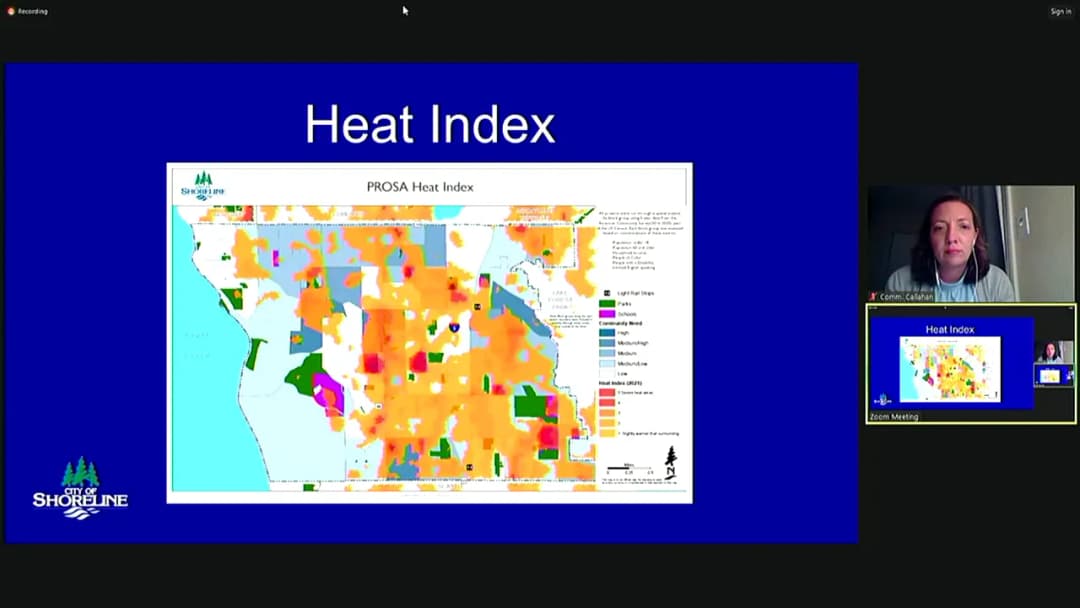
The Shoreline Planning Commission held its regular meeting on July 6, 2023, at 3:00 PM. Commissioners reviewed the 2024-2029 PROSA Plan (Parks, Recreation, Open Space, and Arts) comprehensive plan element, including population projections, equity mapping, and updated goals and policies. No public comments were received. The commission approved the agenda and minutes from June 15, 2023. Consent Calendar - Approval of the agenda: Approved unanimously. - Approval of the minutes from June 15, 2023: Approved unanimously. Public Comments & Testimony - No members of the public signed up for general comment. Discussion Items - 2024-2029 PROSA Plan Comprehensive Plan Element: Jacob Bilbao, PROSA Plan Project Manager, and Nick Bohr, Park Fleet and Facilities Manager, presented updates. Key points included: - Population projections show steady growth to 2050, with an aging population (more residents over 55-60) and fewer children. - Demographic comparison: Shoreline has a median age of 41.7, 19% aged 65+, 66% household families, lower median income than King County, and 48% of renters housing stressed. - Equity mapping composite identifies four high-need areas based on disability, income, limited English, age, and people of color. - Heat island mapping shows hot areas near pavement and buildings; tree canopy mitigation needed. - Walkability analysis shows gaps in playground access, sports courts, and other amenities. - Updated goals and policies for parks and recreation, including new goals for equity-based framework (Goal 4) and public art (Goal 5). Specific policy changes were reviewed. - Commissioners discussed: need to consider regional park resources, proactive planning for aging demographics, definition of picnic areas, interactivity of public art, accessibility and public health coordination, equitable allocation of field space, partnership with schools, and importance of restrooms, shade, and maintenance. - Vice Chair Rama Shandy thanked staff for their work. - Next Steps: Staff will return to the Planning Commission in October for a second draft review, then to City Council for adoption in November, and submission to the state in December. Commissioner Reports and Announcements - Commissioner Callahan reported attending the Undoing Racism Workshop by the People's Institute on June 16-17, and congratulated staff on receiving a $20 million federal RAISE grant for the I-5 bicycle/pedestrian bridge and other transportation projects. Key Outcomes - The meeting was informational; no formal votes were taken on the PROSA Plan. - The next Planning Commission meeting is scheduled for July 20, 2023, with a public hearing on transfer of development rights code amendments.

PARKS AND RECREATION 59% · PUBLIC ENGAGEMENT 21% · PUBLIC WORKS 8% · PROCEDURAL 5%
127
JUN 15, 2023 · SHORELINE, WASHINGTON · PLANNING COMMISSION
Shoreline Planning Commission Meeting: 2024 Comprehensive Plan Update Discussion – June 15, 2023

Commissioners reviewed the results of the online open house and survey for the 2024 Comprehensive Plan Update, identifying key themes and gaps in community engagement. The discussion focused on the survey's demographic limitations, public feedback on housing, safety, and the vision for Shoreline, and strategies to reach underrepresented groups in future outreach. Discussion Items - Presentation of Engagement Results: Mr. Bauer presented a summary of the online open house and survey, which ran for five weeks and received 286 responses. The survey included 20 questions on the comprehensive plan’s vision, housing challenges, and future priorities. Key findings: 85% of respondents agreed or somewhat agreed that the current vision statement still applies; the top housing challenge identified was cost of housing; the top characteristics for future housing were affordability, sustainability, and aging in place. Safety concerns appeared across multiple questions, both personal safety and community safety related to mobility. - Demographic Disparity: Commissioners noted that survey respondents were disproportionately white (around 80%) and homeowners (around 60% lived in Shoreline 10+ years). The results did not reflect the city’s demographic diversity, and staff acknowledged that this was one tool among many, with plans to reach historically marginalized groups. - Outreach Strategies: Commissioners suggested various tactics to broaden participation, including partnering with schools (e.g., integrating surveys into homework), attending neighborhood events, setting up tables at high-traffic retail locations like Costco and Fred Meyer, using QR codes at summer music events, and engaging faith-based organizations. Several commissioners offered to volunteer at upcoming events. - Light Rail and Neighborhood Centers: Commissioners discussed the upcoming light rail stations and the need to integrate them into the comprehensive plan, emphasizing that the stations will reshape the city and create new neighborhood centers. The importance of preserving the “city of neighborhoods” identity while developing corridors like Aurora was also highlighted. - Immediate vs. Long-Term Concerns: Commissioner Vice Chair Wamishonje raised the issue of safety and crime, noting that some survey responses reflected real current problems (e.g., theft at Fred Meyer) that need immediate action, not just 20-year planning. Staff confirmed that results would be shared with the interdepartmental team and city council. Key Outcomes - No formal votes or decisions were taken. The discussion was a study item to gather commission input on engagement results and next steps. - Next Phase of Engagement: Staff will focus on reaching the Shoreline School District, Shoreline Community College, Chamber of Commerce, faith-based and community organizations, and continue attending events (e.g., Juneteenth event on June 19, Celebrate Shoreline in August). - Upcoming Meeting: The next Planning Commission meeting on July 6, 2023, will include an update on the PROSA (Parks, Recreation, Open Space, and Arts) plan. - Other Updates: The cottage housing ordinance and ground floor commercial interim regulations were adopted by the City Council; permanent regulations for the latter will come to the commission for review.

PUBLIC ENGAGEMENT 35% · COMMUNITY ENGAGEMENT 22% · HOUSING AFFORDABILITY 11% · PROCEDURAL 9%
128
JUN 1, 2023 · SHORELINE, WASHINGTON · PLANNING COMMISSION
Planning Commission Regular Meeting – June 1, 2023: TDR Program Discussion

The Shoreline Planning Commission held its regular meeting on June 1, 2023, to study a proposed Transfer of Development Rights (TDR) program. The meeting included approval of routine items and a detailed discussion on the TDR code amendment, which is intended to generate revenue for public amenities and support regional climate goals. No public comments were received. The commission debated potential impacts, incentives, and options for recommending the program to the City Council. Consent Calendar - Approval of Agenda: The agenda was approved without changes. - Approval of Minutes: The minutes from the May 18, 2023, meeting were approved without amendments. Public Comments & Testimony - No members of the public signed up for comment. Discussion Items - Transfer of Development Rights (TDR) Program Study Item: Senior Planner Steve Saffran presented the proposed TDR code amendment. The program would allow developers to purchase TDR credits (from King County) to gain additional building height and parking reductions in certain zones (R48, Neighborhood Business, Community Business, MUR45, MUR70). The city would retain a portion of King County taxes, estimated at $400,000–$700,000 per year, to fund street and sidewalk improvements and potentially affordable housing. - Commissioner Comments and Concerns: - Commissioner Lynn expressed concern about the R48 zone (transitional to single-family) allowing a jump from 35–40 feet to 70 feet and asked whether the city could limit height increases. Staff noted 70 feet would be the maximum but developers could buy fewer TDRs. - Vice Chair Ramashanja supported the program based on his maintenance operations background, noting the value of additional revenue for asset upkeep. - Commissioner Mosier questioned the large height increase in R48 and suggested a more modest step (e.g., 35 to 50 feet) would be more palatable. - Commissioner Callahan worried about competing incentives (e.g., affordable housing, green building) and suggested a point system or holistic portfolio approach. Staff acknowledged that developers would likely choose the cheapest option. - Commissioner Brinson asked about stacking incentives (using TDR on top of other incentives) and noted the limited number of TDR credits (231 allocated to Shoreline) would constrain the number of projects. - Commissioner Galusca inquired about King County’s TDR program goals and success rate. Staff promised to provide information on how many credits have been sold and whether goals are met. - Commissioner Mosier expressed skepticism, calling TDR a “cop-out” by the county and suggested that incentivizing deeper affordability would better combat sprawl. Key Outcomes - Next Steps: The commission will receive additional information on King County’s TDR program (credits sold, goals met) at a future meeting. - Public Hearing Scheduled: A public hearing on the TDR amendment is tentatively set for July 20, 2023. - Options for Commission Recommendation: - Option 1: Recommend the proposed amendments as drafted. - Option 2: Recommend that the City Council not adopt the amendments. - Option 3: Revise the incentives (e.g., adjust height limits in R48) and forward a modified proposal to the Council. - Next Regular Meeting: The commission will meet on June 15, 2023, for a comprehensive plan update, including results from community engagement (online “hope and house” outreach).

LAND USE PLANNING 72% · PROCEDURAL 11% · AFFORDABLE HOUSING 9% · ENVIRONMENTAL PROTECTION 8%
129
MAY 18, 2023 · SHORELINE, WASHINGTON · PLANNING COMMISSION
Shoreline Planning Commission Discusses Middle Housing on May 18, 2023

The Planning Commission held a regular meeting on May 18, 2023, to study middle housing as part of the 2024 Comprehensive Plan update. Senior Planner Elise Keim presented an overview of recent state legislation (House Bill 1110), the city's grant‑funded middle housing work, and potential shifts toward form‑based residential zoning. Commissioners discussed infrastructure, design standards, and neighborhood context. No public testimony was received, and no votes were taken. Consent Calendar - Approval of the agenda and the minutes from April 20, 2023, were moved and passed without comment. Public Comments & Testimony - No members of the public signed up for general comment. Discussion Items - Middle Housing Overview: Keim explained that middle housing includes duplexes, triplexes, fourplexes, multiplexes (5‑12 units), townhomes, courtyard apartments, and cottages. The city is studying existing conditions, racial equity, and displacement factors. - State Law Impact: HB 1110 requires Shoreline to allow at least two dwelling units per residential lot, and at least four units per lot if within a quarter‑mile of a major transit stop or if one unit is affordable. Compliance is due by mid‑2025. - Transit Buffers: A map showed quarter‑mile and half‑mile buffers around light rail and future bus rapid transit stops. Parking requirements would be waived within a half‑mile of major transit stops. - Form‑Based Code: Commissioners expressed strong interest in exploring a form‑based residential zoning code that focuses on building placement, massing, and design rather than density. Commissioner Callahan noted opportunities for neighborhood‑specific standards. Commissioner Mosier asked whether the state’s materials address infill vs. greenfield contexts. Staff will coordinate with public works on infrastructure implications. - Affordability and Fees: Keim noted the city must decide whether to allow fees‑in‑lieu for affordable middle housing units, as the bill leaves that option open. - Cottage Housing Update: The draft cottage ordinance is before the City Council. Staff anticipate changes to density and parking requirements to align with HB 1110; these will likely be rolled into broader middle housing regulations. Key Outcomes - Commission Direction: Commissioners unanimously supported staff exploring a form‑based residential zoning code and requested that staff bring public works and engineering colleagues to a future meeting to discuss infrastructure standards. - Next Steps: Staff will continue engaging with the community and coordinate with the Washington State Department of Commerce for guidance. A more detailed report on the comprehensive plan online open house will be presented at the June 15, 2023 meeting. - Upcoming Agenda: On June 1, 2023, the commission will discuss TDR program development code amendments. The City Council will soon consider interim regulations for ground‑floor commercial requirements; the commission will later develop permanent regulations. Reports & Announcements - Comprehensive Plan Online Open House: From April 1 to mid‑May, the open house received nearly 4,000 visitors, 1,300 unique visits, approximately 300 survey responses, and 154 comments on the idea wall.

LAND USE PLANNING 60% · HOUSING AFFORDABILITY 11% · PROCEDURAL 10% · ENGINEERING AND INFRASTRUCTURE 7%
130
APR 20, 2023 · SHORELINE, WASHINGTON · PLANNING COMMISSION
Shoreline Planning Commission Regular Meeting – April 20, 2023: PROSA Plan Update

The meeting was called to order at 7:00 PM by Chair Sager with all commissioners present except Commissioner Galliska (absent with notice). The primary agenda item was a study session on the Parks, Recreation, Open Space, and Arts (PROSA) Plan update, presented by interim director Mary Reedy, consultant Tom Beckwith, and project manager Jacob Bilbo. Commissioners expressed gratitude for staff and community engagement efforts and discussed inclusivity, restroom design, and survey demographics. Consent Calendar - The agenda was approved without changes. - The minutes from March 16 and April 6, 2023, were approved without modification. Public Comments & Testimony - No members of the public signed up for general public comment. Discussion Items - PROSA Plan Update (Study Item): - Mary Reedy outlined the project history, noting the previous 2017–2023 PROS Plan and the decision to separate public engagement (led by Stepherson & Associates) from technical work (led by Beckwith Consulting Group) to meet a condensed timeline and improve equity-based outreach. - Key engagement statistics: 20 interviews with community leaders, 5 focus groups (54 total attendees), 5 tabling events (370 contacts), 795 surveys (680 online, 115 hard copy; offered in 5 languages including Amharic and Tigrinya), and an interactive map with 258 pins and 1,771 upvotes. - The plan will integrate equity mapping, coordinate with the Comprehensive Plan, and include the North King County Aquatics Feasibility Study as an appendix. - Commissioner Lynn asked about youth and young adult representation; presenters confirmed targeted outreach at the Shoreline Teen Center and Ballinger Homes, with feedback from children and teens. - Commissioner Callahan raised restroom inclusivity and noted the Portland Loo pilot at Echo Lake Park; presenters said restroom assessments would be part of the facility analysis. - Commissioner Mojer queried representation of apartment dwellers; presenters acknowledged limitations and plan to supplement with regional trends. - Vice Chair Wama Shonjay and Commissioner Brinson praised maintenance crews and the expanded engagement effort. - Commissioner Sager emphasized inclusion for people with disabilities; presenters noted a focus group with adults with disabilities and that 8% of survey respondents reported a physical disability. New Business & Reports - Comprehensive Plan Online Open House: Jacob Bilbo reminded commissioners that an online open house is active until the end of April 2023, with options for comments, upvotes, and flyers to distribute. Key Outcomes - The planning commission will receive further PROSA Plan updates in June (strategic action initiatives) and October (final draft). - The May 4, 2023, regular meeting was canceled; instead, a joint dinner meeting with City Council is scheduled for Monday, May 8, 2023 (5:45 PM start) upstairs in the conference room. - The next regular meeting on May 18, 2023, will focus on middle housing. - No formal votes or decisions were taken during this study item.

PARKS AND RECREATION 43% · PUBLIC ENGAGEMENT 18% · PROCEDURAL 17% · COMMUNITY ENGAGEMENT 15%
OPENPUBLICA · PUBLIC MEETING INDEXUPDATED DAILY · openpublica.com