Note: The meeting date is given as October 15, 2026, by the source, but the agenda shows October 23, 2026. No transcript or minutes were provided; this summary is based solely on the agenda. Call to Order and Roll Call - The meeting was called to order with roll call. Approval of Minutes - Approval of the October 9, 2026, Planning Commission meeting minutes was on the agenda. Public Hearings - None. Old Business Introduction & Discussion: Proposed Zoning Text Amendments to Chapter 64 – Signs - Staff member Tony Johnson was listed to introduce draft zoning amendments for discussion. No details of the discussion are available. New Business - None. Site Plan Review - A list of current applications was to be presented by David Eide. No specifics provided. Announcements - Planned announcements by the Planning Commission Chair and Planning Director. Key Outcomes - No decisions, votes, or actions are recorded due to the absence of a transcript or minutes.
Public Meetings - St Paul, Minnesota
Public Meetings - St Paul, MinnesotaThe Saint Paul Housing and Redevelopment Authority (HRA) Board met on Wednesday, October 14, 2026, at 2:00 p.m. in Council Chambers, City Hall. Chair Cheniqua Johnson called the meeting to order at 2:04 p.m. and adjourned at 2:37 p.m. Commissioner Nelsie Yang was excused; Commissioner HwaJeong Kim arrived at 2:05 p.m. and voted on all items. The Board adopted three resolutions and received and filed two staff reports. Public Comments & Testimony - No public testimony was offered during the public hearing on RES PH 26-290. Chair Johnson closed the public hearing after no one approached the microphone. Discussion Items - RES 26-1708 — Reservation of 2027 Low Income Housing Tax Credits for The Aragon Development, 470 White Bear Avenue, District 1, Ward 7. Following a staff report from the previous week, the Board approved the reservation of Year 2027 Low Income Housing Tax Credits. Vote: 6 yeas, 0 nays (Commissioner Yang absent). - RES 26-1709 — Partial Waiver of the Sustainable Building Ordinance for Afton View Apartments (371 and 373 Winthrop Street South, 2180 and 2178 Londin Lane, and 365 Winthrop Street South, District 1, Ward 7). The Board approved the partial waiver. Vote: 6 yeas, 0 nays (Commissioner Yang absent). - RES PH 26-290 — Conduit Multifamily Housing Revenue Bonds for Afton View Apartments; Developer's Fee Waiver; Housing Program Adoption. After opening and closing the public hearing with no testimony, the Board authorized the issuance and sale of conduit multifamily housing revenue bonds, approved related documents, waived the policy on developer's fees, and adopted a housing program. Vote: 6 yeas, 0 nays (Commissioner Yang absent). During discussion, a commissioner requested that future staff materials include a chart showing how different developer fee levels affect total project financing, and asked the Board to consider updating the developer fee policy to reflect rising construction costs while continuing to prevent project sponsors from being unduly enriched. Staff's prior clarification was acknowledged as helpful. - SR 26-214 — Parks and Recreation Fund Transfer Presentation (Right Track). Carlo Franco, Parks and Recreation Youth Services Manager, presented on the approximately $191,437 HRA transfer that supports Right Track youth workforce staffing. This item had been laid over from the October 7 HRA meeting. Franco reported that more than 3,000 young people applied for 760 internship experiences this year, about $2 million in wages was paid to young people, and over 80 percent of participant families use the income for bills and groceries. The HRA funds have supported the program for over 10 years and cover about two-thirds of the program's general fund staffing, including a program supervisor. He warned that discontinuing the HRA investment would require replacement funding or reduced programming. Parks Director Andy Rodriguez answered questions about the program's origin in the HRA and the lack of a recent effort to move the position to the general fund. Several commissioners expressed concern about relying on depleting HRA special funds for an ongoing staffing position and discussed seeking more private-sector support. Commissioner Noecker, identified in the raw transcript as Niker, noted that Boston raises about $11 million annually in private funding for its equivalent program and offered to help build a fundraising strategy. The report was received and filed. - SR 26-215 — Introduction to the Maryland Park Property Sale and Loan Assumption. Principal Project Manager Hannah Chong presented on the proposed sale of Maryland Park Apartments, 1619 Maryland Avenue East, District 2, Ward 6, by current owner St. Paul Police Housing Associates/Dominium to LEDG Capital (LIH Maryland Park Associates). The 1969 property has 172 units, 143 of them Section 8, with 100 percent of units affordable at 60 percent of AMI. The buyer requested assumption of the 2014 HRA HOME loan ($600,000 at 1 percent, deferred to 2046), extension to 2056, and subordination to the new first mortgage. The proposed structure includes a $17.5 million new first mortgage, $1.3 million buyer equity, a $19.3 million acquisition price, and a $200,000 capital reserve; the MHFA loan assumption is still being processed. LEDG consultant Brian Call said LEDG is excited to work in St. Paul on its first Minnesota project. The Board received and filed the report; action is scheduled for October 28, 2026, with a closing on or before November 30, 2026. Key Outcomes - RES 26-1708 adopted (6-0). - RES 26-1709 adopted (6-0). - RES PH 26-290 adopted (6-0); public hearing closed with no testimony. - SR 26-214 received and filed. - SR 26-215 received and filed; Board action scheduled for October 28, 2026. - No HRA meeting is scheduled for October 21, 2026; the next regular meeting is October 28, 2026 at 2:00 p.m.
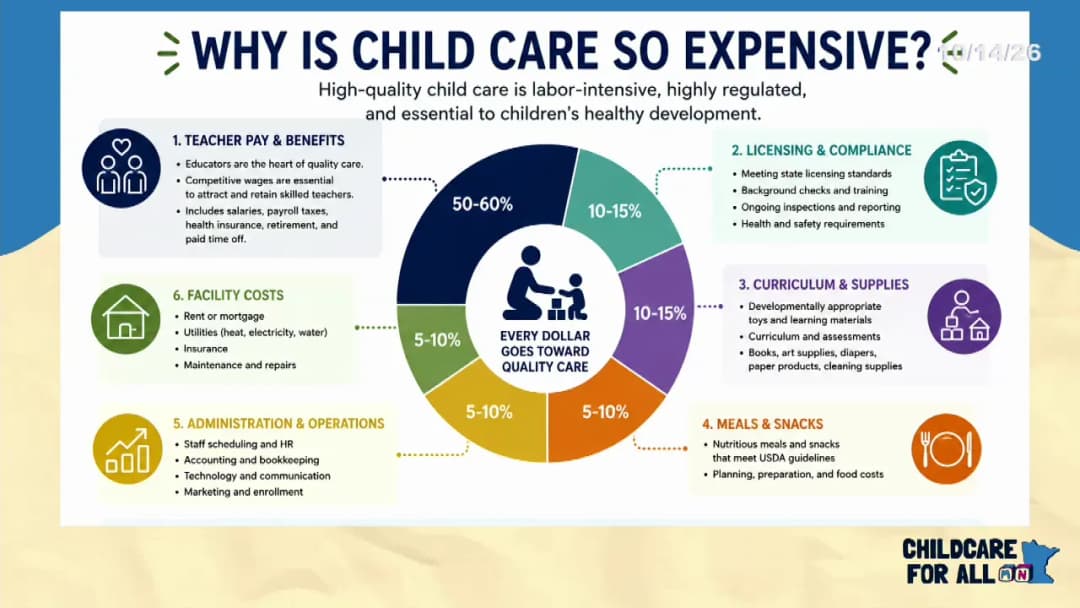
The Saint Paul City Council's Policy Committee met on Wednesday, October 14, 2026, at 1:00 PM in Council Chambers at Saint Paul City Hall for an informational briefing on SR 26-219, 'Overview on Affordability in St. Paul.' Six members were present and one was excused. Invited speakers from North Star Policy Action, the Alliance for Metropolitan Stability, and Child Care for All presented data and personal testimony on wages, housing costs, and child care costs. The committee received and filed the item without taking a formal vote. Presentations and Discussion Wages and Cost of Living - Aaron Rosenthal, North Star Policy Action - Rosenthal described affordability as a race between prices and wages, reporting that inflation peaked around 8% in 2022 and that the Consumer Price Index rose again to 3.6% in September 2026. - He said the basic cost of living in Ramsey County for a 'typical family' defined as one full-time worker, one part-time worker, and one child is just over $80,000, making Ramsey County the seventh most expensive county in Minnesota. - He cited fuel prices up about 57% since the start of the Iran War; a Minnesota family of four with two drivers has spent about $1,000 more year to date, projected to reach almost $1,800 more by the end of 2026. - Health insurance premiums were up 75% over 12 years and deductibles up 84%. He said 116,000 Minnesotans lost health insurance in 2025, another 140,000 to 180,000 are projected to lose coverage by 2034 because of Medicaid cuts, and hospitals could face $1 billion in uncompensated care. - He said tariffs cost the average Minnesota family about $1,300 in 2025 and are expected to worsen in 2026 with new tariffs on Canada. - On the job market, he said Minnesota added about 4,000 jobs in 2025, the lowest non-pandemic year since the Great Recession. Unemployment crossed the national rate for the first time since 2007, with black Minnesotans' unemployment rising from 4.8% to 7.6%. The labor force participation rate saw its largest six-month drop since at least 2000 from January to July 2026. - Median inflation-adjusted wages rose about 50 cents from 2024 to 2025, then fell during the first seven months of 2026, leaving essentially no median wage growth from early 2024 to mid-2026. Wages for the 90th percentile rose 4% over that period, widening inequality after roughly a decade of narrowing. - Since 1979, Minnesota worker productivity rose 86% while pay rose 36%. The statewide CEO-to-worker pay ratio rose to about 325 in 2025, and was between roughly 550 and 800 at selected companies such as Target, UnitedHealth, and Best Buy. The labor share of business income fell to an all-time low of 53%, down from 62-63% in 2000. - Union coverage in Minnesota rose to 15.8% in 2025 from 14.7%, and union members' wages rose while non-union wages fell. - Rosenthal said Ramsey County's affordability gap currently leaves a median working family about $5,500 short of basic costs; it is the third largest gap among Minnesota counties, behind Winona and Rice. With two full-time minimum-wage workers and one child, the shortfall is about $25,000; with two children, it exceeds $50,000. - Rosenthal argued that government can address wages more effectively than prices. He expressed support for boosting worker power, unions, sectoral bargaining, protecting immigrant workers, and raising St. Paul's minimum wage. He cited California's $20 fast-food minimum wage as producing a 12% wage increase with only a 2% price increase, and said raising the minimum wage does not reduce employment or meaningfully raise prices. Housing Affordability - Juan Luis River Reyes, Alliance for Metropolitan Stability - River Reyes, a St. Paul native and housing coalition organizer, presented Housing Link data showing median rents in St. Paul of $1,247 overall, $1,095 for one-bedroom units, $1,382 for two-bedrooms, and $1,918 for three-bedrooms. - He said 23% of St. Paul homeowners and 49% of renter households are cost burdened, meaning they spend more than 30% of income on housing. - Using assumptions of 40 hours per week and 52 weeks per year, he said a renter would need about $14,924 per year just to pay the median rent and would need to earn about $23.98 per hour to avoid cost burden at the 30% threshold; at a 33% threshold, the figure would be about $21.58 per hour. He clarified these figures are gross income and exclude utilities and renters insurance. - He said units described as affordable at 50% Area Median Income would require rent of about $1,233 per month, or an annual income of $49,320 and an hourly wage of $23.74; at 60% AMI, the rent would be about $1,479 per month, requiring $59,160 per year, or $28.44 per hour. - River Reyes argued that the current St. Paul minimum wage leaves tenants cost burdened and that the definition of affordable housing must go further. He noted that 33% of St. Paul households earn $50,000 or less, so a large share of residents cannot afford the median rent. Child Care Affordability - Maria, Albert Everline, and Martha Iguetta, Child Care for All - Maria, director of Rainbow Child Development Center, said 90% of brain development occurs before age five and 80% before age three, and that high-quality birth-to-five programs can deliver a 13% annual return on investment compared with 7-10% for preschool programs for three- and four-year-olds. - The speakers said the average cost of a child care center is $23,452 per year, compared with University of Minnesota tuition of $19,312. The federal affordability standard of 7% of income would require a one-child St. Paul family to earn $335,000 per year; Albert Everline said his family earns $120,000. - Albert's family's care costs rose from about $550 to $778 every two weeks. He described his son's teachers quitting abruptly in 2025 because of low wages and lack of immigration protections, which disrupted his son's trust and led to about five months of difficulty. - Martha Iguetta, a District 1 resident and early intervention teacher speaking personally, said early childhood educators are disproportionately women of color, earn $18-20 per hour in St. Paul, often lack benefits, and up to 90% report one or more adverse childhood experiences compared with about 55% of Minnesota residents. - The speakers said seven long-standing child care centers closed in St. Paul last year, that Minnesota lost $2.1 billion in economic activity last year because of the infant and toddler child care crisis, and that 6,700 children are enrolled in 87 licensed facilities, supporting an estimated 676 center jobs alone. - The group called child care a systemic problem requiring massive public investment, increased minimum wage, revenue from large businesses, and a universal child care system. They asked the Council to testify at the state capitol and to support policies that raise teacher wages without raising family costs, with particular attention to educators of color and immigrants. Council Discussion - Councilmember Jost asked whether the one-full-time/one-part-time/one-child family assumption is representative and noted the affordability gap would likely be larger for families with more children; Rosenthal agreed children raise the basic cost of living substantially. - Councilmember Johnson, speaking as a new mom, said her family pays $500 per week for child care, which can be double a mortgage, and argued that rent control alone does not address the core costs of housing, child care, and evictions. - Councilmember Kim said women and women of color are particularly affected by child care costs and workforce participation. She announced that her office will hold stakeholder engagement sessions on affordability, modeled on the Citizen's League process but without a paid consultant, similar to the tree ordinance process, and invited interested groups to contact her office. - Chair Noecker thanked the speakers, said she was eager to explore redistributing wealth from higher earners, and expressed continued commitment to working with child care advocates on state and local solutions. Key Outcomes - The committee received and filed SR 26-219, 'Overview on Affordability in St. Paul.' - No formal vote was taken. - Councilmember Kim stated next steps for additional community engagement sessions on affordability and minimum wage, with no date specified.
The Budget Committee convened at 10:00 AM on October 14, 2026, to review the 2027 budget proposals for the Office of Financial Services (OFS), including the debt proposal and Capital Improvement Budget (CIB). Presentations were led by Director Joe Harney, Climate Action Coordinator Liz Boyer, City Treasurer Neil Younghands, and Budget Analyst Michelle Blackcoe Woods, with additional input from Assistant Mayor Baker. Discussions covered climate investments, the sunset of the electric car share program, debt service fund increases, sales tax allocation for the arena complex, and CIB community proposals. Discussion Items - OFS Operating Budget (2027): Director Harney presented the OFS mission and goals, including investing in payroll/benefits administration and addressing deferred maintenance. The proposed budget adds one accountant position (funded from sunsetting ARPA funds) and transfers $155,000 in events/festivals funding to the Saint Paul Police Department (net zero). OFS proposed $1.1 million in general fund reductions aligned with historical spending and $864,000 in increases (including the accountant and current service level adjustments). Special fund changes include two treasury FTEs for accounts receivable/assessment, funded by pooled interest charges, and $500,000 from the proposed 0.5% levy for deferred maintenance. - Climate Action Plan (CAP) Investments: Liz Boyer outlined a $500,000 climate commitment for 2027, funded by the new Xcel Energy franchise agreement (projected $29 million in 2027 revenue). The proposal includes a climate director position (to replace a former mayoral appointee), support for the electric vehicle (EV) car share program, and a climate response fund for grant matches and decarbonization projects. The EV car share program (operated by HOURCAR) is sunsetting on October 15, 2026, due to a budget gap largely driven by doubled insurance costs and shifting federal funding. The city owns the vehicles and charging stations and is securing them while exploring alternative operating models. Councilmembers emphasized the need for a detailed financial plan for the program's future, including cross-departmental allocations (e.g., Public Works, PED). - Debt Proposal: Treasurer Younghands reported total city debt outstanding of $686.84 million ($258.7 million general obligation, $428.1 million revenue-backed). The city maintains a AAA GO credit rating, though sewer revenue bonds were downgraded to AA+ due to revenue changes. The debt service fund faces a structural imbalance requiring a $3.7 million property tax levy increase in 2027, composed of a planned $1.5 million annual increase plus $2.2 million for a new judgment bond (issued to spread out a $9.5 million settlement over six years). Future projections show modest decreases. The Capital Improvement Bond (CIB) program is supported by $11 million in annual GO bonds; a $1 million one-time CIB increase would cost $130,000 per year for 10 years. - Sales Tax (STAR) Budget: The half-cent sales tax budget is proposed at $24.25 million (up from $24 million). Key changes include: $3.75 million in neighborhood STAR funds for the arena complex (Roy Wilkins), a $40 million revenue bond issuance for the arena (pending legislative extension of the sales tax beyond 2042), and increases to the cultural STAR program ($194,000) and economic development capital projects ($100,000). Councilmembers questioned the use of neighborhood STAR funds for an arena project, but administration affirmed it fits statutory allowed uses. - Capital Improvement Budget (CIB): Michelle Blackcoe Woods presented the two-year CIB process. The 2027 proposed budget includes $6.3 million available annually for department projects and $500,000 for community proposals (funded by CIB bonds). A change approved by the CIB committee moves $2.5 million from the Hayden Heights library project to the Riverview library project. Community proposal process improvements (simplified applications, optional presentations) were noted, but eligibility constraints (only eligible for city roads, etc.) remain a challenge. Council President Noecker requested a status update on all annual programs to assess spending and consider consolidating allotments. - General Government Accounts: Director Harney reviewed changes in general government accounts, which centrally budget citywide activities. Notable items: franchise fee revenue of $2.7 million (plus $3 million supplemental); a proposed property tax increase; $1 million opioid settlement allocation (unchanged from 2026, with focus on familiar faces work and potential Ramsey County collaboration); removal of one-time funding for the WorkNow program; and an increase for public safety vehicle fleet support ($100,000). The transition of district council funding from general government to the PED budget was noted. Key Outcomes - No formal votes were taken; the committee will consider the proposals as part of the overall 2027 budget adoption process. - Follow-ups requested: - OFS and relevant departments to provide a detailed breakdown of financial obligations and proposed allocations for the EV car share program, including unused funds from 2026 and cross-departmental impacts. - A status report on CIB project spending for all annual programs. - An itemized proposal for the $1 million opioid settlement, including coordination with Ramsey County's opioid spending. - The committee acknowledged the need for continued improvement in the CIB community proposal process and for more integrated planning around the EV car share and opioid response.
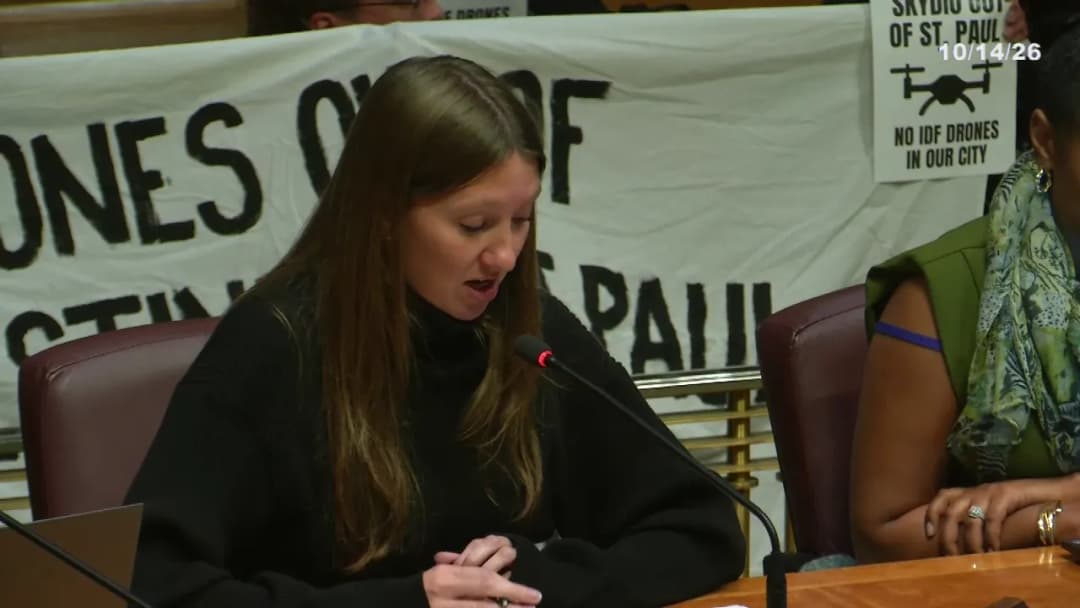
The Saint Paul City Council met on Wednesday, October 14, 2026, beginning with a 9:00 AM public hearing at the Merriam Park Rec Center on Ord 26-49, a proposal to create the Snelling & University Commercial Development District around the University and Snelling intersection. The regular council meeting convened in Council Chambers at 3:31 PM. Five members were present at the morning session; seven were present at the start of the afternoon session. After a 4:58 PM recess, the meeting resumed at 5:09 PM with six members, Councilmember Yang absent, and adjourned at 5:18 PM. The council used roll-call votes while seven members were present because one member participated remotely; after the recess, remaining votes were taken by voice vote with six members present. Public Hearing: Snelling & University Commercial Development District - Ord 26-49 would amend Chapter 409 of the Legislative Code to create a Commercial Development District divided into four quadrants and allow seven On-Sale Liquor Licenses distributed among the quadrants at and around the University and Snelling intersection. - The ordinance was laid over to October 21, 2026 for final adoption on a 5-0 vote with Councilmembers Yang and Johnson absent. Written comments from John Purdy, Mike Hahm, Alan Hupp, and the Union Park District Council were included in the record. Consent Calendar and Receive/File - AO 26-47 establishing a new Neighborhood STAR Year-Round Program project was received and filed. - The consent agenda was adopted as amended by a 7-0 vote. It included routine special assessments for tree removal, delinquent garbage and yard waste bills, demolition of a vacant/nuisance structure at 610 Charles Ave, and associated legislative/public hearing dates. - Licenses approved included an approximately 1,000-square-foot liquor service area expansion for Zamboni's on 7th at 174 7th St W and a new Health/Sport Club license for Element Boxing and Fitness at 928 7th St W. - The council authorized the fire station license agreement with the Minnesota Bureau of Criminal Apprehension, a $5,000 donated firefighter lunch from Operation BBQ Relief and NPGA, the Ramsey County Critical Corridors application for 5th Street, a pond maintenance agreement with the Ramsey-Washington Metro Watershed District, Afton View Apartments conduit housing revenue obligations, non-use of a Project Labor Agreement on the SKD Auto Tek Neighborhood STAR project, the 2027 council meeting schedule, HR Manager II pay, stipends for the Public Administrative Citations Implementation Working Group, and a correction to the honorary Mahmoud El-Kati Avenue co-naming boundaries. - Four pay/union items were laid over one week to October 21, 2026: RES 26-1678, RES 26-1688, RES 26-1689, and RES 26-1690. Discussion Items - Sewer Revenue Bonds (RES 26-1705). Staff reported a competitive sale earlier in the day of $6.8 million in Series 2026D Sewer Revenue Green Bonds. The city received eight bids and awarded the bonds to Huntington Securities at a true interest cost of 4.57%. Councilmembers credited the city's AAA credit rating—and AA+ for sewer bonds—with saving millions in interest. The resolution was adopted as amended, 7-0. - Data Practices Process Report (RES 26-1704). Dr. Heather Britt of Wilder Research presented an audit of the city's data practices request process. Findings included rising request volume, average closure time of about 13.5 days (down from just over 20 days in 2022), a median closure time of 4 days, and heavy concentration of requests in the Police Department. Recommendations included better use of GovQA tools, structured intake, standardized procedures, refresher training, publishing frequently requested records, and periodically assessing whether to transition to another system such as FOIA. Councilmembers Yang and Johnson spoke favorably about the findings, and the report was accepted 7-0. - Autonomous Vehicle Labor and Community Protections (RES 26-1733). The council adopted version two of the resolution, 7-0, directing the Planning Commission's Transportation Committee to study autonomous vehicles and their effects on labor and the community, engage stakeholders such as transportation workers, disability advocates, and planners, and recommend guardrails before the technology arrives in Saint Paul. Written public comment from Birch Hansen was attached to the record. - Ord 26-46 (Final Adoption). The council adopted 7-0 an ordinance amending Chapter 51.01 of the Administrative Code to allow conveyance of real property used by Saint Paul Regional Water Services to the Board of Water Commissioners. Public Comments & Testimony on Assessments, Plats, and Grants - Lynn Rolfe from the Office of Financial Services explained the assessment process: for street and alley projects the city generally pays 75% and assessable costs start at 25%, then are capped at the lesser of cost or the special-benefit appraisal. Examples included Pleasant Avenue collecting 5.4% and University Avenue 10.2% through assessments. - For the alley bounded by Seventh, Woodward, Railroad, and Payne (RES PH 26-235), Gina Rosenberger of 581 7th St E asked why only some properties were assessed and sought consideration of costs dating back 20 years. Staff said every specially benefited property was assessed; one triangular vacant lot was found to have inconclusive benefit, and pre-2024 alley policy assessed 100% of costs rather than 25%. The assessment was ratified 7-0. - For the Pelham Boulevard reconstruction (RES PH 26-240), staff gave a detailed report: the road was narrowed from 32 feet to 24 feet, an off-street trail was added, the road was shifted 14 feet to save large canopy trees, 22 of 202 boulevard trees were moved, 61 were removed, and the project cost fell from an estimated $18.45 million to about $11.75 million, with the final assessment below 12% rather than 25%. Multiple property owners testified in opposition: Andrea Kish (554 Pelham) called the assessments excessive and said residents lost parking and trees; Zafar Khan (383 Pelham) objected to a $14,109.50 assessment and questioned the special-benefit analysis; Jisan Yu (375 Pelham) said mature trees and landscaping were removed; Amy Sperling (501 Pelham), a 35-year real estate agent, said property values were likely hurt; and attorney Craig Hardie, for 2446 University Avenue LLC and Pelham Parking LLC, asked that assessments of $84,610 and $31,375 be removed or equitably reduced, arguing the HOSH analysis was generalized rather than property-specific. Councilmember Coleman moved approval, stating she saw no significant extenuating circumstances; Council President Noecker acknowledged the episodic burden of the assessment policy. The assessment was ratified 7-0. - For the Carondelet Fields preliminary plat (RES PH 26-242), staff planner Katie Dables said the Sisters of St. Joseph of Carondelet and Saint Paul Public Schools requested the plat to clean up long-standing meets-and-bounds legal descriptions; there are no development or use changes. Karen Sarrow of 540 Warwick St asked that future changes pause for neighborhood input; John Victor Kroelk, representing the Sisters, said no development is planned and the plat is an administrative cleanup. The plat was approved 7-0. - During the grant hearing for Torre de San Miguel (RES PH 26-262), several speakers, including Wyatt Miller, Cedar Larson of Women Against Military Madness, and Barry Reish, testified about the Saint Paul Police Department's Axon/SkyDio drone contract and demanded transparency and an end to contracts they said are complicit in Israel's actions in Gaza. Council President Noecker directed them to keep testimony germane to the agenda item. The grant agreement was adopted 6-0 with Councilmember Yang absent. Other Public Hearings Adopted Without Testimony - Public hearing assessment ratifications for University Avenue, Pleasant Avenue, Fourth/Howard mill and overlay, three alley projects, and Wheelock/Grotto Phase II were adopted 7-0. The Highland Bridge Rowhomes Ninth Addition Final Plat was approved 7-0 without testimony. - The remaining grant and budget resolutions—The Heights Parcel E1, the Fire Department's $25,140.87 Regions EMS whole-blood reimbursement, SKD Auto Tek STAR funds, and the HOME 2026 budget amendment—were adopted by 6-0 votes. Legislative Hearing Consent Agenda - Items 49-61 were heard together with no public testimony and adopted as amended 6-0. Most ratified appealed special assessments and abatement findings for properties including 1431 Arundel St, 555 Ashland Ave, 1166 Colette Pl, 1101 Hoyt Ave W, 925 Magnolia Ave E, 777 Ohio St, 1702 Orange Ave E, 752/760 Payne Ave, 1083 Sherburne Ave, and 1046 Western Ave N. - The 1046 Western Ave N items were referred to the November 3, 2026 Legislative Hearing, with the related tree-removal assessment amended and also set for the January 6, 2027 council public hearing. The 1702 Orange Ave E vehicle-abatement appeal was denied as the nuisance was abated and matter resolved. Ward Announcements - Councilmember Kim announced a panel called Technofascism: The Rise of AI and Mass Surveillance in the Twin Cities on Monday, October 19, 6:00-7:30 PM at North End Community Center. - Councilmember Bowie announced a Ward 1 community budget meeting on Tuesday, October 20, 5:30-7:00 PM at Frogtown Community Center, co-facilitated by district councils and including state, county, and school board representatives. - Other announcements included the District 6 annual meeting and community dinner on October 19 at Dayton's Bluff Rec Center and a Growing Green tree-planting event at Camford Church. Key Outcomes - Ord 26-49 was laid over to October 21, 2026 for final adoption (5-0). - The consent agenda was adopted 7-0; four pay/union items were laid over to October 21. - RES 26-1705, RES 26-1704, RES 26-1733, and Ord 26-46 were each adopted by a 7-0 vote. - All street, alley, and plat assessment ratifications were adopted, with the Pelham Boulevard hearing drawing the most opposition. - Grant and budget resolutions and the Legislative Hearing Consent Agenda were adopted 6-0 after Councilmember Yang left. - The 1046 Western Ave N assessment was referred to the November 3, 2026 Legislative Hearing and related public hearing dates.
No agenda, minutes, or transcript were provided for this meeting. Therefore, no discussion, public testimony, or decisions can be summarized at this time.
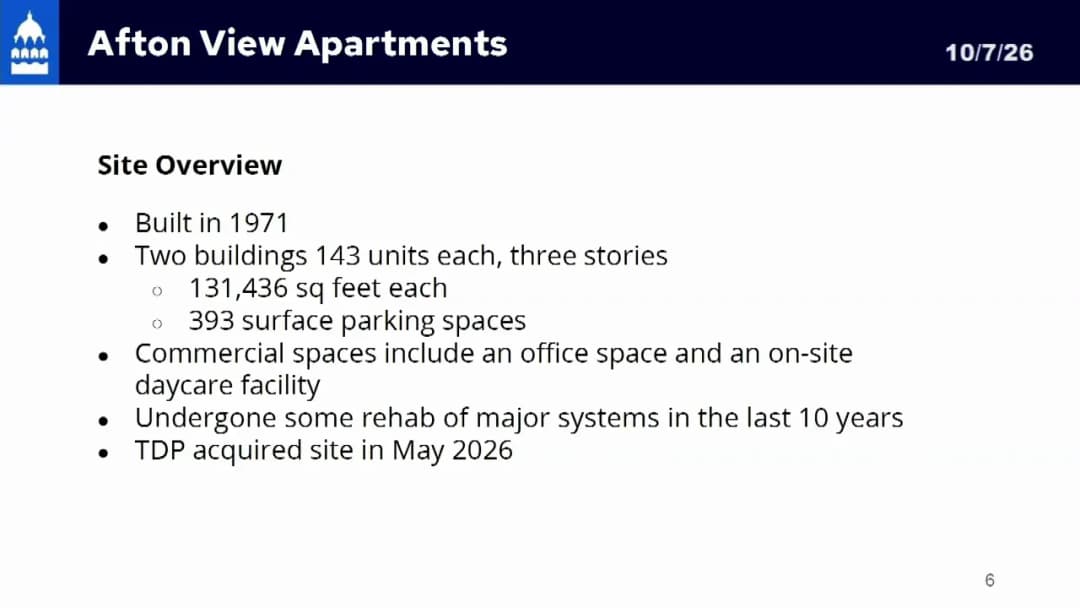
The Saint Paul Housing and Redevelopment Authority (HRA) Board of Commissioners met on Wednesday, October 7, 2026, at 2:00 PM in the Council Chambers. Chair Cheniqua Johnson called the meeting to order at 2:03 PM. Commissioners Yang and Kim were excused, leaving five members present. The meeting covered presentations on the 2027 Low Income Housing Tax Credit program, the Afton View Apartments proposal, early TIF district decertifications, and a fund transfer item that was postponed. Consent Calendar - Approval of September 2026 HRA Meeting Minutes (Min 26-31): Moved by Commissioner Bowie, the minutes were approved by a vote of 5-0. Discussion Items - 2027 Low Income Housing Tax Credit Reservation (SR 26-211): Housing Director Jules Atangana presented the 9% tax credit program. Two projects were considered: the Aragon project (470 White Bay Avenue, 53 new construction units, total development cost $28,392,475, requesting $1,350,000 city gap financing) and Highland Bridge Phase 3 (59 new construction units). Staff recommended approval of the Aragon project, which scored 93 points after deductions (claiming 99 but unable to justify 6 points, including a point for HRA debt obligation). The Highland Bridge project scored 80 points after a 5-point deduction for claiming HRA-owned land without support. Commissioner Bowie inquired about the equity and cultural integration scoring criteria (D4), noting Aragon received 10 points while Highland Bridge received 0 due to lack of self-scoring. The item is scheduled for board action on October 14. - Introduction to Afton View Apartments (SR 26-212): Principal Project Manager Hannah Chong presented a request for multifamily conduit revenue bonds of up to $20.5 million for the acquisition and rehabilitation of Afton View (286 units at 60% AMI, with 268 units having project-based vouchers at 30-50% AMI). The developer, TDP (Tareen Development Partners), is also requesting a waiver of the HRA's maximum fee guidelines (from $2.4M allowed to $3.6M, with 68% deferred) and a partial waiver of the city's sustainable building ordinance (using an alternative compliance path focused on high-efficiency equipment rather than renewable energy credits). Commissioners discussed the rationale for the higher developer fee—maximizing eligible basis for tax credits—and whether funds could instead be used for rehabilitation. Pete Nelson (TDP) addressed questions about community engagement, noting a communication plan with translation services and translated notices for the predominantly Somali East African resident population. Construction is expected to start in December 2026 if bonds close. A public hearing is set for October 14. - Introduction to HRA Board Actions Required for Early TIF District Decertification (SR 26-213): Debt Administrator Jenny Wolfe presented on four TIF districts: Emerald Gardens (to decertify 14 years early, releasing $2.43M in tax capacity), Pioneer Endicott (to decertify 28 years early), and amendments for Phelan Village and Riverfront Renaissance to remove parcels from active districts. The decertifications would reduce the city's captured tax capacity percentage from an estimated 5.7% to 5.13%, resulting in an estimated $10 decrease in taxes for a median-valued home. Commissioner Noecker noted the significance of the reduction for affordability. Chair Johnson highlighted the trade-off between affordable housing resources and tax base expansion, noting that these four districts, combined with three others already decertifying, represent a substantial reduction in future affordable housing funding. Board action is deferred to November 18. - Parks and Recreation Fund Transfer (SR 26-214): Chair Johnson moved this item to the October 14, 2026 HRA meeting. Key Outcomes - Approved September 2026 HRA meeting minutes (5-0). - Received and filed Staff Reports SR 26-211, SR 26-212, and SR 26-213. - Referred the Parks and Recreation Fund Transfer (SR 26-214) to the October 14, 2026 meeting. - Deferred board action on early TIF district decertifications to November 18, 2026. - Set a public hearing for Afton View Apartments for October 14, 2026. - Meeting adjourned at 3:04 PM.
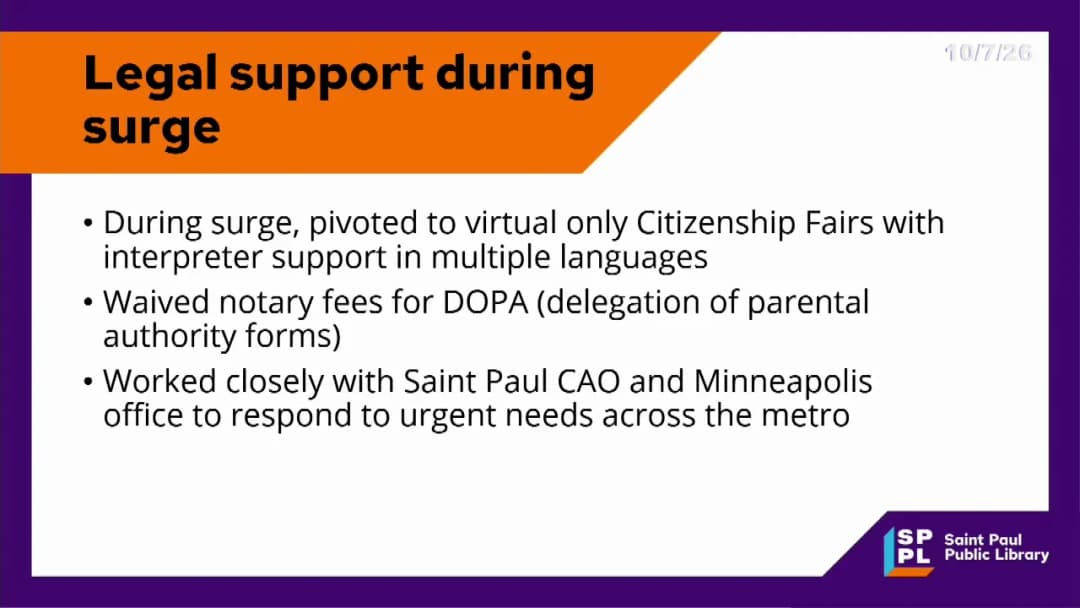
The St. Paul Library Board met on October 7, 2026, to approve the previous month's meeting minutes and receive a detailed presentation on newcomer services, including digital access, education, and support provided during Operation Metro Surge. Three members were present and two were excused. Consent Calendar - Minutes Approval: The board approved the September 2, 2026 library board minutes by a vote of 5 in favor, 0 opposed. Motion by Councilmember Coleman. Discussion Items - Newcomer Services Presentation: Director Hartman introduced Rebecca Ryan, who then introduced Adriana Galvan, the library's newcomers services coordinator. Ms. Galvan described the library's role in providing digital access (devices, internet, tech support), trusted referrals to social and health services, education programs (digital literacy classes in Korean, Spanish, and for the African American community), and the Cell Ed app (a live-tutor platform for English, citizenship, parenting, and GED/Adult Diploma preparation, free to users thanks to a grant). She highlighted the library's pivot during Operation Metro Surge, including home visits, volunteer coordination, delivery of basic needs (formula, medicine), notarization fee waivers, citizenship fairs, and mental health support for families and school staff. Partnerships include Literacy Minnesota, International Institute, CLUES, and the city attorney's office. Plans include expanding Cell Ed licenses and updating provider websites. - Councilmember Questions: Councilmember Johnson asked about budget and service locations. Ms. Galvan explained staff are mobile, working at all branches, community sites, and remotely. Chair Jose clarified that the community services team (including Ms. Galvan's FTE) is in the general fund, with temporary grant support from the Marburg Fund and a three-year Mellon Foundation grant funding additional community specialists. Councilmember Jones asked about Cell Ed licenses; Ms. Galvan noted the library currently holds licenses returned by other systems and that demand is high. Rebecca Ryan confirmed the Cell Ed budget is supported through the Mellon grant. - Board Comments: Councilmember Coleman praised the presentation, noting the team's rapid pivot during Operation Metro Surge and the trust established with the community. Councilmember Jones remarked on the inspiring stories shared, including home births supported by library volunteers, and called the work a reflection of city values. Key Outcomes - The minutes from the September 2, 2026 meeting were approved unanimously. - The board received the newcomer services staff report with no formal action taken. The presentation highlighted ongoing and grant-funded services, and the board expressed strong support for the work. - The meeting was adjourned after the presentation and discussion.
The Budget Committee of the Saint Paul City Council met on October 7, 2026 at 10:00 AM in Council Chambers. Chair Cheniqua Johnson presided with five members present (Vice Chair Nelsie Yang and Councilmember Rebecca Noecker were excused). The committee reviewed the Mayor's 2027 Supplemental Budget Proposal and the proposed 2027 budgets for the Department of Human Resources and the Department of Emergency Management. Mayor's Supplemental Budget Proposal (SR 26-210) - Budget Manager Madeline Mitchell presented the supplemental proposal, which recognizes additional revenue and cost savings not known at the time of the August proposed budget. Sources include $300,000 in additional franchise fee revenue due to a new agreement with Excel (effective January 1, 2027) and approximately $500,000 in savings from switching to even-year elections (of which $275,000 is used in the proposal). Uses include restoring cuts to parks and library department hours and adding funding for separation ordinance enforcement in the City Attorney's Office. - Councilmember Saura Jost asked whether the franchise fee revenue and election savings are ongoing. Treasurer Neil Younghands confirmed the franchise fee revenue is ongoing but noted the city is being conservative given the new fee structure. Councilmember Anika Bowie raised concerns about the $148,000 lease for Dayton's Bluff Library (part of the library restoration), asking for future council involvement in lease negotiations. Director Mitchell noted the lease amount is set for 2027 and that the library director and mayor's office remain committed to communicating with council about the library's future. - Chair Johnson asked what would happen if an unexpected special election occurred; Mitchell responded that because only $275,000 of the $500,000 savings is used, buffer remains. Department of Human Resources 2027 Budget (SR 26-207) - HR Director Camera Kasim presented the proposed budget, emphasizing the need to strengthen responsiveness, enhance leadership development, advance equity, and modernize systems. The department supports over 4,000 employees across the city. To meet the 4% reduction target ($273,000), the department eliminated an HR Manager 1 (occupied), a Management Assistant 3 (vacated), reduced non-personnel spending by $15,000, repurposed an HR Consultant 4 to a 3, and made a vacant adjustment. New positions proposed: an HR liaison coordinator and a workers' compensation analyst. The total FTE count would go from 47 to 48. A one-time expense of $547,000 is requested for implementing a benefits module system. - Councilmember Jost asked about the $81,000 for external investigations, learning it covers outsourced investigations beyond the capacity of the single investigator FTE. Councilmember Bowie asked whether eliminated positions were vacant or occupied; Kasim confirmed the HR Manager 1 and Management Assistant 3 positions had people in them, and those roles were laid off as part of restructuring. Bowie also asked about workers' compensation costs and transparency; Kasim described monthly roundtable meetings with fire department and plans to expand, and expressed support for data sharing. - Kasim noted that St. Paul's HR staffing (47 FTEs) compares to Minneapolis (62 FTEs for similar employee count) and Ramsey County (80 FTEs). The department's budget-to-actuals have been close year-over-year. Department of Emergency Management 2027 Budget (SR 26-208) - Director Rick Schut presented the proposed general fund budget of $7,075,007, an increase of $289,890 (4.3%) from 2026. Eighty-two percent of the budget is a pass-through for Ramsey County 911 dispatch services. The dispatch increase of $246,280 (4.4%) is driven by county costs, not by increased call volume. The department achieved a $40,000 reduction by moving from full-service siren maintenance to repair-as-needed, retaining $9,432 for repairs; all 36 sirens were serviced in 2025. No changes in staffing (8 FTEs, all now on general fund). - Councilmember HwaJeong Kim asked about the history of the Urban Area Security Initiative (UASI) grant that previously funded positions; Schut explained the grant has been in place since after 9/11 but funding has declined and become uncertain, prompting the council's move to general fund. Kim requested a follow-up on how returned UASI funds from 2025 and 2026 will be invested. Key Outcomes - The committee received all three presentations and held discussions. No votes were taken; the supplemental budget proposal will be considered for inclusion in the council-adopted budget. Follow-up items include: updates on franchise fee revenue budget-to-actuals, more details from the City Attorney's Office on separation ordinance enforcement staffing, and a memo on the use of returned UASI grant funds. The next Budget Committee meeting will cover the Office of Financial Services and other departments.
...