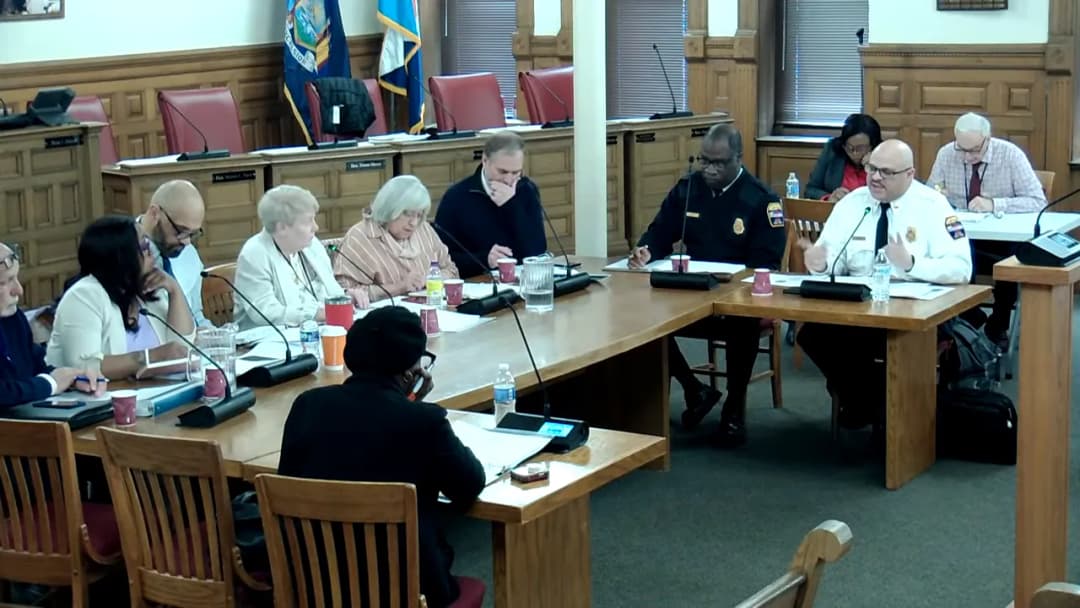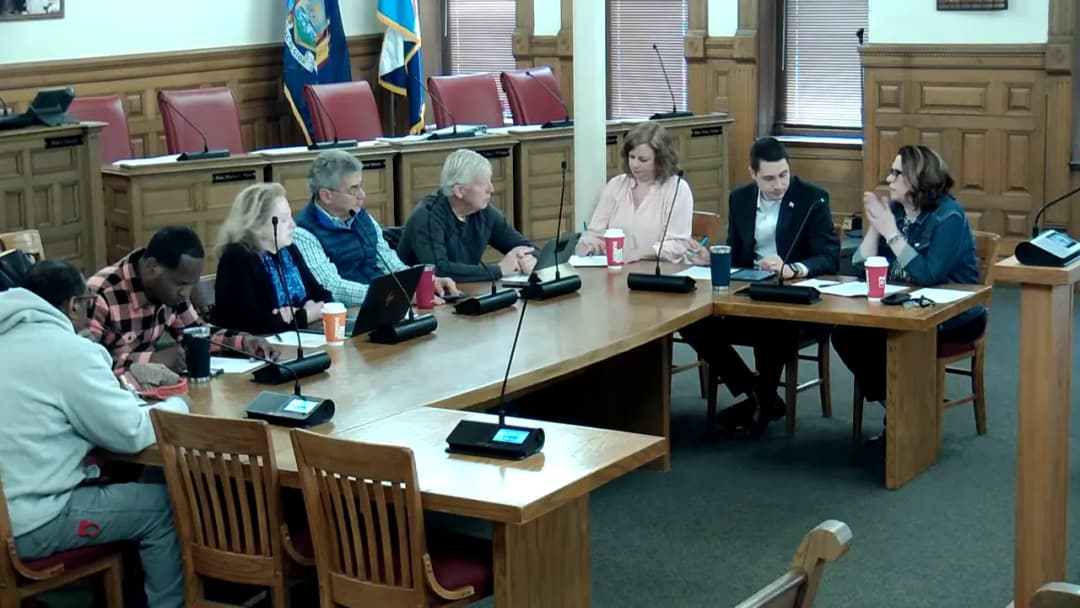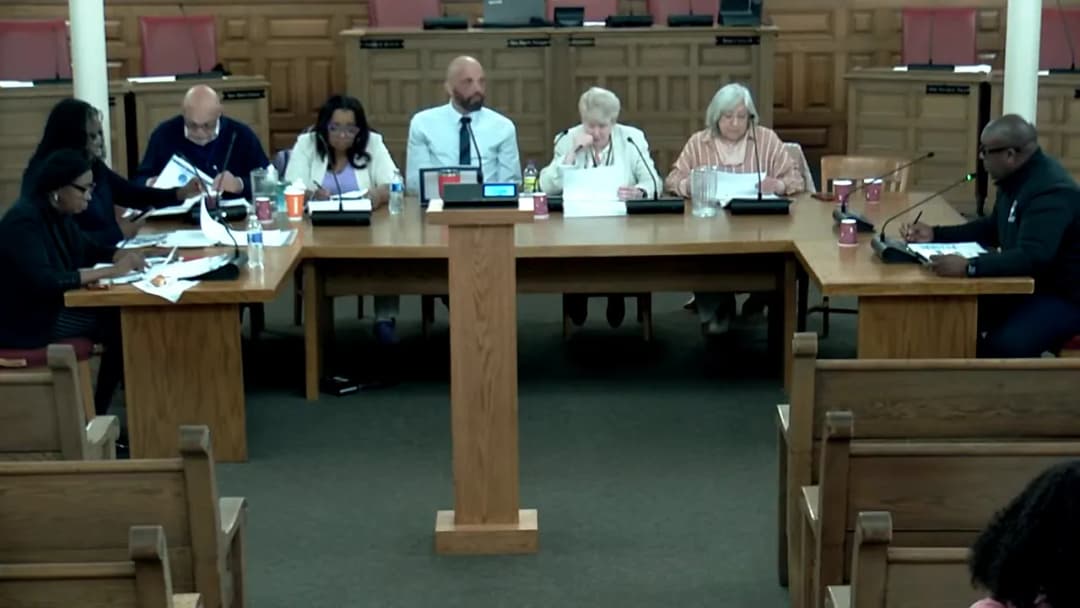
The Syracuse City Council held a budget hearing on April 21, 2026, for the Mayor's Office to Reduce Gun Violence (MORGV). Councilors Helen Hudson, Joan Rousser Jones, Nave, Caldwell, Monto, and President Pontiagua attended. Latif Johnson, director of MORGV, presented the budget, and Deputy Chief Dave Metz of the Syracuse Police Department provided testimony on interagency collaboration. Discussion Items - Budget Overview and Justifications: Latif Johnson reviewed the budget, noting that the three part-time credible messenger positions were previously funded by DCJS and that MORGV now seeks city funding to continue them. He explained that office supplies ($2,500, corrected from a clerical error showing $25,000) cover supplies for community outreach and programming. Professional services ($50,000, down from $250,000) support the trauma response team and therapists on a mobile unit. Travel expenses ($6,050, up from $991) fund training and conferences to stay current with community violence intervention (CVI) best practices. Johnson stated that the entire budget is now city-funded, with zero grant support, though he continues to pursue federal (DOJ) grants. - Data Tracking and Accountability: Johnson emphasized that MORGV tracks all activities, using a data analyst to record youth interactions, meetings, and contract deliverables. He described the office as coordinating an "ecosystem" of partner organizations, ensuring accountability to reduce violence. Deputy Chief Metz confirmed that the collaboration between MORGV and SPD has been integral to enforcement strategies and contributed to a drop in violent crime. - Neighborhood Ambassador Program: Councilors inquired about the new Neighborhood Ambassador program, funded by state dollars through 2027. Johnson clarified that ambassadors are not yet appointed; they will be part-time seasonal workers (May to November) embedded in neighborhoods to organize community meetings, connect residents with services, and empower neighbors. Councilor Caldwell suggested ambassadors meet with district councilors to identify specific problem areas. Johnson stressed ambassadors are coordinators, not therapists, and rely on professional services for clinical support. - Response to Youth Affected by Gun Violence: Councilor Caldwell raised concerns about children who are not directly involved in violence but are impacted as victims' family members or witnesses. She argued that these "good kids" are often forgotten and called for dedicated support. Johnson responded that MORGV now proactively sits in affected neighborhoods (e.g., after the Palmer Ave shooting) at 7:30 a.m. to identify and serve these children. He announced a new program, "Mothers Against Gun Violence," starting in May 2025 (likely a slip, should be 2026 per meeting date) in partnership with the Salvation Army, providing family functional therapy for mothers and eventually children. Johnson noted that additional funding would be needed to scale support for the approximately 20 children impacted per incident. - Prevention vs. Intervention: Councilor Monto asked whether MORGV could shift focus more toward prevention and exposure to positive activities, not just crisis response. Johnson described the office's role in coordinating prevention, including college tours and YMCA memberships, and holding organizations accountable for follow-through. Deputy Chief Metz added that SPD's targeted enforcement on high-risk individuals allows other programs (parks, recreation) to flourish. Key Outcomes - No formal vote was taken; the hearing was for informational budget review. - Latif Johnson confirmed the launch of the Mothers Against Gun Violence program in May 2026, with the goal of expanding to children in subsequent months. - The Neighborhood Ambassador program will begin in May 2026, funded through 2027, with recruitment and training ongoing. - Councilors expressed general support for MORGV's work but highlighted the need for better public messaging about successes and for expanded services to victims' families. The meeting adjourned by motion.
Public Meetings - Syracuse, New York
Public Meetings - Syracuse, New YorkThe Syracuse Common Council held a budget review session with the Citizen Review Board (CRB) on April 21, 2026. The CRB chairman presented the budget, which was generally supported by the council. Discussion focused on increases in temporary services and professional services, training expenditures, board attendance, and the status of investigations. Discussion Items - Budget Overview: CRB Chairman stated that the budget looks very good and he had no suggestions, agreeing with the council's approach. - Temporary Services: A council member noted an increase from 10 to 31 units. The chairman explained that some of these funds are allocated to the free land investigation portion, as temporary employees (including himself) conduct investigations. Another council member clarified that free land investigation is an outside security company. - Professional Services: A significant increase was noted. The chairman stated this is also part of the free land investigation, covering prior cases that need payment under the current session. - Training: The chairman noted that the board is very new (since January), and they have not used much training money while determining the best training for board members. The data analyst has attended NACO trainings, and paid staff attended a CCRB conference in Brooklyn. - Board Attendance and Seats: All 11 board seats are filled pending council validation of the last appointment. One board member has missed many meetings, and the council will discuss that member's status soon. Quorum is regularly achieved. - Investigation Pause: The chairman confirmed investigations are currently paused, but the budget keeps funding allocated just in case. A council member cautioned about loosely using the term "investigation" in public discussion. Key Outcomes - No formal votes or motions were taken during the budget review. The meeting concluded with a motion to adjourn, which was approved. - CRB Chairman publicly thanked the council for their support over the past year.
The Syracuse Common Council's Public Safety Committee, chaired by Councilor Donamore, held a budget hearing on April 21, 2026, to review the Fire Department's operations and fiscal year 2027 budget request. Fire Chief and First Deputy Chief Elton Davis presented an overview of departmental operations, staffing, call volumes, and budget needs. The department is requesting a 2.9% increase over its combined civilian and sworn budget, citing contractual obligations, rising costs, and the need to maintain safety amid growing call volumes and economic development. Discussion Items - Operations Overview: Chief Davis described the department's 11 strategically located fire stations housing 10 engine companies, 6 ladder companies, a rescue company (7 members), and an 8-person hazardous materials team. There are 75 firefighters on duty 24/7. 92% of staffing is on front-line apparatus; 8% are support staff across eight divisions (training, maintenance, communications, EMS, special operations, emergency management, health and safety, fire investigation, administration). - Call Volume and Trends: In 2025, the department responded to 25,863 alarms. So far in 2026, they have responded to 7,786 calls, on pace for 26,800 calls – a 23% increase from 2021. Major structure fires are occurring every 3-4 days; 80 major fires in 2025, on pace for 96 in 2026. The department rescued 11 civilians from fires so far in 2026 (8 in all of 2025). Response times improved by 9% (16-second reduction) last year. 391 structure fires were contained to one room in 2025. - Fire Prevention and Inspections: Last year, fire marshals conducted over 1,100 fire inspections and had over 1,500 educational interactions. The department reviewed 612 plan reviews for construction permits. Civilian fire fatalities dropped 85.7% from 2024 to 2025, with a 14-month span without a civilian fire fatality. - Budget Request and Financial Stewardship: The department has underspent its budget by 1.34% over the past eight years. The FY27 request is a 2.9% increase. 90.3% of the budget ($41.97 million) is personnel, including collective bargaining obligations; 9.7% ($4.53 million) covers operations (equipment, supplies, maintenance, PPE, etc.). $34 million is for salaries, with $5 million in overtime. Councilor Nave complimented the chief on keeping expenditures in check, noting only a 2.25% increase for sworn personnel year-over-year. - Additional Station (Station 7) and Costs: Councilor Caldwell advocated for reopening additional fire stations as the city grows, specifically mentioning Station 7 on Fayette Street. Chief Davis estimated costs: staffing at approximately $1.8 million (recurring), a new station building at $12-15 million, a fire apparatus at $1.2-1.8 million, with tools and equipment absorbable in operations. - Overtime and Injuries: The chief provided three years of overtime data. Firefighter injuries were reduced by 32% from 2024 to 2025, but 45 firefighters were injured in the line of duty last year. Currently 6-10 firefighters are out on line-of-duty injuries, creating overtime for backfilling. - Fleet and Apparatus Replacement: The department went 14 years without purchasing large apparatus until 2018. Now they have a replacement schedule: buying two engines every other year and a ladder truck in alternate years. They seek to lock in pricing contracts. The budget shows wide salary ranges for fire captain/assistant equipment (10k-106k); the chief explained that the maintenance crew does work of five people. - Administrative Service Manager Position: The department requested a new civilian HR position (estimated $80,000-$85,000) to handle FMLA, ADA, discipline, and legal issues, freeing executive staff to focus on fire suppression and operations. The position currently shows "to be determined" in the budget. - Vault Pay: Chief Davis explained vault pay – comp time accrued under the old "wheel" schedule. Only 15-20 firefighters have remaining vault pay, and the chief suggested paying it out to eliminate the cost. - Collaboration with Police and County: Chief Davis reported ongoing conversations with Police Chief Russ about sharing IT, fleet maintenance, and parts purchasing to achieve efficiencies. They are also coordinating with the county on purchasing contracts and hazmat response. The Syracuse Fire Department is the closest hazmat team to the Micron site, and they have been in discussions with Micron about standby teams. The department is seeking funding from the county for regional hazmat/technical rescue services, which they provide as an "insurance policy" for the community. - Retirement Eligibility: There are currently about 6 vacancies. Two retirement cohorts are eligible in July and November 2027, totaling 68 firefighters eligible to retire by end of calendar year 2027. The department may need to run two hiring classes closer together. - ISO Rating: The department holds an ISO Class 1 rating – the highest possible – achieved by only 1% of fire departments nationwide. This keeps insurance rates lower for city properties. - False Alarms vs. Alarm Activations: Chief Davis clarified that most "false alarms" are actually alarm activations caused by cooking, smoking, etc. About 7,000 such calls occur annually; some escalate to major fires. Key Outcomes - The Council took no formal vote during this hearing; it was a budget work session. - The department's $41.97 million personnel budget (90.3% of total) and $4.53 million operations budget will be considered as part of the city's overall FY27 budget deliberation. - Councilor Caldwell expressed support for reopening Station 7 and requested continued discussion on additional stations. - Councilor Nave acknowledged the department's fiscal discipline and the modest 2.9% increase request. - Councilor Hudson raised the potential for state funding for regional hazmat and technical rescue teams, which the chief confirmed they are pursuing. - The chief agreed to provide detailed data on vault pay outstanding to Councilor More. - No reductions to the fire department budget were proposed during the hearing; the chief asked that the department be spared any cuts because it is already at minimum staffing.
The Syracuse Industrial Development Agency (SIDA) held its regular board meeting on April 21, 2026, beginning at 11:55 AM. The meeting was called to order by Catherine Murphy; proof of notice was properly served. Board members present participated in roll call, and the agency considered several project-related actions including refunding bonds, extensions, a mortgage modification, and authorization of a public hearing for a new mixed-use development. Consent Calendar - The board unanimously approved the minutes from the regular meeting of March 17, 2026, and the special meeting of March 24, 2026. Discussion Items Joint School Construction Board (JSCB) Refunding Bonds The JSCB requested SIDA to issue refunding bonds to replace the outstanding 2018 A and B bonds, aiming to lower debt service through a lower interest rate. SIDA will serve as issuer and receive a fee. The board approved the motion unanimously. Celina First – Agency Agreement Extension Celina First, after terminating a prior project, submitted a new application and requested a six-month extension of their agency agreement to finalize financing. The extension sets a new closing deadline of October 22, 2026. The board approved unanimously. 1153 West Fayette – Sales Tax Exemption Extension The developer of 1153 West Fayette, which houses new headquarters for the Syracuse Police and Fire Departments, requested an extension of their sales tax exemption through June 1, 2026, to complete the build-out. No additional financial assistance was requested. The board approved unanimously. Erie Boulevard West Warehouse – Mortgage Modification The developer of the Erie Boulevard West warehouse project requested SIDA’s participation in a mortgage modification that extends the maturity date to April 2031. No other terms were changed. The board approved unanimously. Gem Street Holdings LLC – Proposed Mixed-Use Development (Public Hearing Authorization) - A new application from Gem Street Holdings for a mixed-use project at 411-13 University Avenue was presented. The project includes new construction of approximately 30 housing units (with 10% affordable per city zoning), about 400 square feet of commercial space, and on-site parking. Total project cost is estimated at $5.9 million. The developer is seeking sales tax, mortgage recording, and PILOT incentives. - Board members discussed parking adequacy: one member expressed surprise at only 8 parking spaces for a development with retail and 30 residences. Staff and counsel explained that the project complies with reduced parking requirements under the city’s rezoning, which encourages alternative transportation in the dense mixed-use district. The project’s size (nearly $6 million) was noted as relatively small compared to recent IDA projects but above the $3 million small-project threshold. The board voted to authorize a public hearing (motion by Dirk, second by Ken) to gather more information before considering financial incentives. Other Reports - The board was informed that the Ganant/Swanson project closed the previous week and construction will begin, with an estimated 18-month timeline. - Progress on the Rosie project was described as impressive and beautiful. Key Outcomes - Minutes approved. - JSCB refunding bonds authorized. - Celina First extension approved. - West Fayette sales tax extension approved. - Erie Boulevard mortgage modification approved. - Public hearing authorized for Gem Street Holdings project. - All motions passed unanimously.
Syracuse Common Council Meeting - April 20, 2026\n\nThe Syracuse Common Council met on April 20, 2026, for a regular meeting. A public hearing was held on a Community Development Block Grant (CDBG) budget amendment, but no public testimony was offered. The council then voted on a series of legislative items, passing most unanimously. One item faced a single opposing vote, and several items were held for later consideration.\n\n Public Hearing on CDBG Budget Amendment\n- The council opened a public hearing for agenda item 24, an ordinance to amend the CDBG budget for Year 51 (HUD fiscal year 2025-2026) by $967,782. No members of the public spoke in favor or against, and the hearing was closed after the required three calls. The item was later adopted unanimously.\n\n Committee Reports\n- The Parks Committee reported a tree ordinance meeting held on April 6, 2026 at 1:30 PM.\n- The Neighborhood Preservation Committee reported on the annual Land Bank report meeting held on April 7, 2026 at 11:00 AM.\n\n Discussion Items\n- Councillor Williams, on behalf of Councillor Hudson, introduced and urged adoption of items 16 and 17. During discussion on item 17, Councillor Williams encouraged city departments to seek cost sharing for the upcoming SRE contract negotiation when the RFP comes next year, suggesting partnering with SMTC and other agencies.\n\n Key Outcomes\n- Item 9A (local law by Councillor Majok): Adopted unanimously.\n- Item 10 (resolutions on appointments): Adopted unanimously.\n- Item 11 (introduced by Councillor Majok): Adopted unanimously. Items 12 and 13 were held (tabled).\n- Item 14 (introduced by Councillor Majok): Adopted unanimously.\n- Item 15 (introduced by Councillor Aaron): Adopted unanimously.\n- Items 16 and 17 (introduced by Councillor Williams for Hudson): Both adopted unanimously.\n- Item 18 (broadband program additional funds, introduced by Councillor Jones Rousser): Adopted unanimously.\n- Item 19 (acceptance of a gift from Hubert Brewer Construction for an exterior sign at the new public safety building, introduced by Councillor Moore): Passed 8-1, with one councilor (Councillor Williams or Monto, per transcript) opposing.\n- Item 20: Held (tabled).\n- Items 21 and 22 (introduced by Councillor Williams): Adopted unanimously. Item 23 was held.\n- Items 24, 25, 26 (CDBG amendment and related items, introduced by Councillor Jones Rousser): All adopted unanimously. Item 27 was held.\n- Item 28 (introduced by Councillor Monto): Introduced and tabled.\n- Meeting adjourned by motion.
The Syracuse City Council convened on April 20, 2026, to consider a range of agenda items including multiple resolutions and a public hearing. The meeting began with announcements, notably a public hearing on the Community Development Block Grant (CDBG) scheduled for 1 p.m. that day. Council members reviewed items, with many marked as "ready" for a vote, several held for further discussion, and one introduced and tabled. The transcript primarily documents procedural moves without recorded roll-call votes. Consent Calendar - Items declared ready without further discussion: 9A, 8A, 14, 15, 16, 17, 18 (broadband application), 19, 21, 22, 25, 26. These were presumed approved by consent. - Items 11 (sidewalk item) was initially questioned but later resolved and included in the consent calendar after clarification. Public Comments & Testimony - No public comments were noted in the transcript. Discussion Items - Sidewalk Item (part of items 11-14): Councilor Majuk reported that earlier questions about the sidewalk item were answered. Items 11 and 14 were deemed ready, but items 12 and 13 were held for further review. - SRE Contract: A councilor asked whether other city or county departments have contracts with SRE. The response indicated that the city has the primary contract, while the county also holds a separate contract. - Item 27 – Century Club Project: City engineer Mary Robison recommended holding the item to directly reach out to the Century Club regarding the city’s project, Centro’s bus shelter, and the Bus Rapid Transit (BRT) project. The item was held. - Item 24 – Public Hearing: A public hearing was set for 1 p.m. on the same day. The council planned to vote on the item after the hearing. - Item 28: After consulting with court counsel, the council decided to introduce and table this item. Key Outcomes - Held items: 12, 13, 20, 23, and 27 were held for additional discussion or outreach. - Tabled item: Item 28 was introduced and tabled. - Ready items: All other items (listed in Consent Calendar) were approved as ready, likely passing by voice vote or unanimous consent. - Public hearings: The council announced a CDBG public hearing and a separate public hearing for item 24, both at 1 p.m. on April 20. No decisions were recorded from those hearings in this excerpt.
On April 20, 2026, the Syracuse City Council held a budget hearing for the Krauss Marshall Special Assessment District (also known as the Krauss Marshall Business Improvement District). The hearing was led by Councilor America, with Councilors Earnright, Moore, Nave, and President Paniagua present. Jerry Dallas (board president) and Tara Venditti (vice president) testified on the district's operations and budget. Discussion Items - Councilor America introduced the district: established in 2001, managed by the Downtown Committee for about four years. It covers a nine-block area with approximately 40 properties. Primary services include security (a retired law enforcement officer, Officer Vinch, works 35 hours per week when students are in session and 20 hours per week otherwise), environmental maintenance (litter patrol, graffiti removal, sidewalk snow plowing, power washing, flower planters), and marketing (banners, kiosks, a website refresh at KraussMarshall.com, and the use of Placer AI for pedestrian foot traffic analysis). - The district recently added an economic development function based on a survey of business needs, identifying desires for a broader variety of businesses, improved building facades and storefronts, and addressing parking congestion. Staff time was allocated to this new line item. - Funding sources: the primary revenue is the special assessment on properties within the district, with a small amount from sponsorship of 22 flower planters. Some properties may pass the assessment to tenants via rent. - Councilor questions and discussion: - A councilor asked about the annual tax revenue the city receives from businesses in the district. America and Dallas stated they did not have that figure immediately available but could obtain foot traffic data from Placer AI to approximate economic impact. - Parking was noted as an ongoing issue, especially with new dorm construction adding foot traffic but reducing parking availability. The Downtown Committee has had conversations with the East Genesee Regents Association about potential expansion of the district, particularly in light of the upcoming I-81 Viaduct removal, which could connect downtown and University Hill. - A councilor inquired about ADA compliance in older buildings. Dallas responded that most buildings are grandfathered, but substantial renovations would require compliance. - A councilor raised the issue of large non-tax-paying institutions (Syracuse University, Upstate Medical, Krauss Health) benefiting from the district without directly contributing beyond the special assessment on properties they own. It was noted that SU’s commercial properties on Marshall Street remain on the tax roll as long as businesses operate there. A separate lawsuit regarding school-owned property taxes was briefly mentioned. - The discussion concluded with appreciation for the district’s work improving quality of life for students, staff, and residents, and a reminder that the city relies on tax revenue from businesses and development. Key Outcomes - No votes or formal decisions were taken during the hearing. The session was informational, providing council members with an overview of the Krauss Marshall Special Assessment District’s budget, operations, and challenges. The district will continue its current programs and the website refresh is expected by year-end. Further discussion on expansion and contributions from large institutions may occur in future hearings.
This budget hearing for the downtown Syracuse special assessment and Cross Marshall was held on April 20, 2026. The council heard a presentation from America, executive director of the Downtown Committee of Syracuse, on the proposed budget for the downtown special assessment district. The presentation covered the committee’s programs, funding sources, and recent initiatives. Council members asked questions about housing density, business recruitment, parking, and the impact of the I-81 project. Discussion Items - America gave an overview of the Downtown Committee of Syracuse, a 501c4 organization that administers the downtown special assessment fund. She described the 82-block district and the committee's 14 full-time staff. - Programs include environmental maintenance, beautification (hanging flower baskets, street tree lights, utility box art), security patrols (retired law enforcement, six days a week, 8 a.m. to 8 p.m.), economic development (property database, housing analysis, retail reports), marketing and communications (website, social media with 26,000 followers, weekly newsletter), and special events (Earth Day cleanup with 250 volunteers, Open Up Downtown, farmers market, arts and crafts festival, holiday programs). - Funding sources: special assessments (55% of revenue in proposed year, down from 74% ten years ago), earned revenue from parking lots, service contracts, and grants. The Downtown Syracuse Foundation (501c3) raises additional funds for restricted programs. - The committee recently completed a housing market analysis showing over 98% occupancy in downtown residential units and demand for 110–180 additional units (considering Micron impact). Older apartments are becoming more affordable as newer units come online. - Councilor asked about attracting a pharmacy or grocery store. America noted that a pharmacy is in high demand and that reaching 5,000 downtown residents would make the area more attractive to such operators. She mentioned the Syracuse Food Co-op and Salt City Market as current options, and a potential grocery operator in the Equitable Towers redevelopment. - Councilor inquired about partnership with the Onondaga Historical Association. America responded that OHA will participate in the Open Up Downtown event to discuss history, and that a downtown vision and strategic action plan will kick off next week. - America discussed the impact of the I-81 project, particularly contracts 6 and 6A (stormwater trunk line affecting streets adjacent to Clinton Square). The committee has requested state funding for a marketing and promotions campaign to maintain foot traffic during construction. - Parking: The committee produces a downtown public parking guide and is working with the Syracuse Metropolitan Transportation Council on a mobility and parking study covering downtown, the inner harbor, and university hill. A separate fast-track study is examining parking alternatives due to garage closures. Councilor suggested reaching out to Waze or Google Maps for real-time parking info. America noted a shuttle service is being considered for events. - Councilor asked about efficiencies and support. America praised the partnership with the city and said the committee will continue to seek cost-sharing and information-sharing opportunities. - The committee administers the Syracuse Cultural Festivals Fund, awarding $150,000 to 27 different festivals in its third year. Council members expressed support and noted the fund’s positive impact. Key Outcomes - The hearing was informational. No formal vote or decision was recorded. The council took the presentation under advisement as part of the budget process for the downtown special assessment. The committee will return in July to request a contract to draw on the approved funds.
The Syracuse Common Council held a budget hearing on April 16, 2026, with the Law Department. Corporation Counsel and Deputy Counsel Joe Berry presented an overview of the department's operations, workload, staffing, and challenges. The hearing covered litigation volume, problem property enforcement, outside counsel usage, and squatter issues, among other topics. Discussion Items - Department Overview: Corporation Counsel explained that the office represents the entire city, defends against lawsuits, and pursues affirmative claims for property damage. Since the start of the fiscal year, the department has received 203 notices of claim, the first step in litigation against the city. The office also works with Codes and Syracuse Police to address problem properties, including those involved in illegal cannabis sales, tobacco sales to minors, or drug activity. - Staffing Levels: The budget shows a reduction from 34 to 31 attorney positions. Currently, there are two vacancies for assistant corporation counsel; one vacancy occurred after the budget was printed. The department also lost one secretary position. Corporation Counsel noted that one attorney position is funded going into the 2026-2027 budget year, meaning three additional funded positions would be needed to reach previous levels. - Outside Counsel: The department uses outside counsel for significant trial work when in-house capacity is insufficient. They often partner with outside firms to mentor younger attorneys. Outside counsel costs fluctuate, and fewer in-house attorneys increase reliance on outside counsel. - Notable Litigation: The department is handling an in-house federal trial for a case involving a man named Broadwater, who was convicted of rape 25 years ago and later exonerated by DNA. Another major case involves property owner Kletzke, who owns dozens of dilapidated properties; the city has filed a lawsuit and expects a favorable court order with significant fines. - Appeals Court Strategy: Corporation Counsel confirmed that for a recent appeal regarding tax status for Shine, the department submitted on papers rather than sending an attorney to oral argument. This decision was made due to staffing constraints and the court's acceptance of submission. - Squatter Problem: Council members raised concerns about squatters in vacant properties, linking them to house fires. Corporation Counsel noted that the law favors squatters, making eviction difficult and time-consuming, and suggested lobbying state legislators for reform. - Remote Work: Two staff members work from home part-time or full-time due to health or family health issues. Key Outcomes - No formal votes or decisions were taken during the hearing. The discussion informed the Council about the Law Department's operations and challenges as part of the budget process. - Corporation Counsel committed to providing a memo on squatter laws. - The department's budget request for additional attorney positions will be considered by the Council. - Overall, the Law Department collected approximately $500,000 in judgments to date and continues to pursue problem properties aggressively.
The Syracuse City Council met on April 16, 2026, at 6:20 PM ET to receive an update from the Parking Violations Bureau (PVB) on parking, automated enforcement programs, and illegal set outs. Director Leah Whitmer presented data and answered questions from Councilors Moore, Hudson, and others. Discussion Items - Bureau Overview: Whitmer reported over 15,000 disputes processed this fiscal year (some pending). Parking ticket volume remains steady at just under 65,000 annually, with a dispute rate of 10–11%. Most disputes are sustained, but a significant number are pending due to automated enforcement influx. - Automated Enforcement – School Bus Cameras: Nearly 7,000 tickets issued since program launch (May 2024 through March 2026) after a 30-day warning period. Dispute rate is nearly 50%, the highest of all programs. Whitmer explained the high dispute rate is due to the involvement of both bus driver and vehicle driver behavior. The bureau reviews evidence including three videos (bird’s-eye, front, rear) and amber light timing. Instances of bus drivers waving on vehicles or failing to activate amber lights are considered, and tickets may be dismissed if the vehicle had no time to react. Whitmer reports issues to the school district for driver training. - Automated Enforcement – Red Light & Speed Zones: 27 of 74 red light cameras are operational. The dispute rate for red light is low. School speed zone dispute rate is under 10% but yields many hearings due to volume. Replacement of 10 school speed zone locations is in progress; installation shifted to red light cameras over winter. Whitmer anticipates more cameras coming online, increasing workload. - Illegal Set Outs & Self-Service Portal: The bureau launched a self-service portal for parking and illegal set outs. A new notification system (Seer Notify) allows property owners to sign up for near real-time email alerts; nearly 2,000 properties have enrolled. Questions were answered about ticket issuance (automated enforcement tickets issued by police; illegal set out tickets by DPW) and constituent services. - Position Staffing: The bureau has one vacancy (deputy director) and uses temporary services (budgeted for 12 positions but not fully staffed). Whitmer noted that the volume of automated enforcement disputes has increased constituent calls and walk-ins; the bureau removed its phone number from initial tickets to redirect calls to the vendor’s 1-800 number. Key Outcomes - The update was received by the council. No formal votes or decisions were taken. Councilors will follow up on specific data requests (e.g., breakdown of red light tickets by location). - Whitmer will continue to report operational concerns to the school district and DPW. The bureau will monitor recidivism rates as automated enforcement matures.