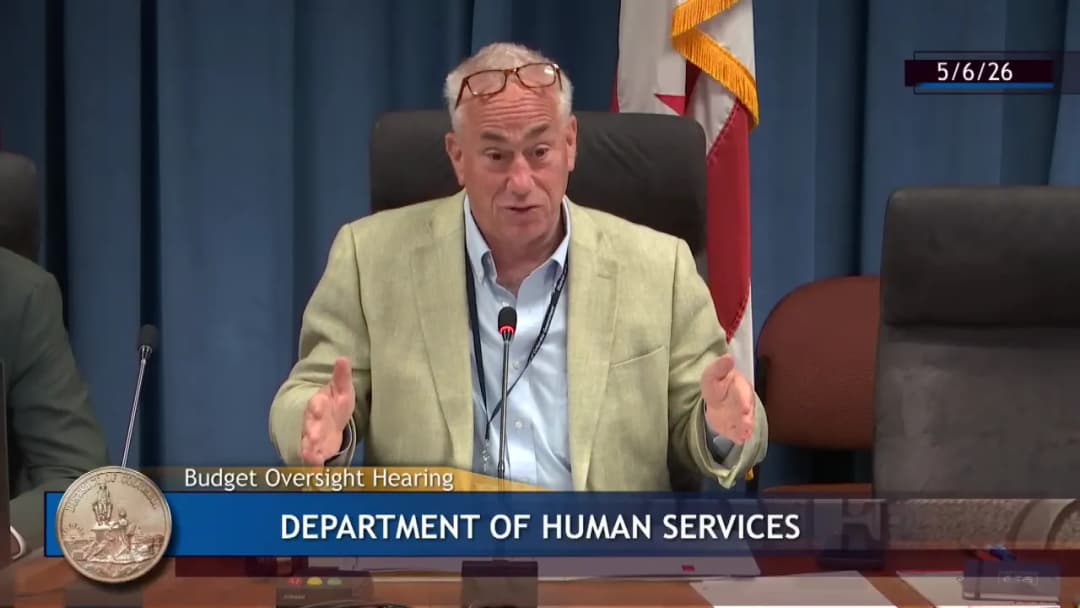
On May 6, 2026, the Committee on Human Services, chaired by Councilmember Matt Fruman (Ward 3), held the second of two budget oversight hearings on the Department of Human Services (DHS) Fiscal Year 2027 proposed budget. The hearing examined the impact of proposed cuts on homelessness services, TANF, workforce development, domestic violence services, and other safety net programs. Director Rachel Pierre testified, joined by Chief Operating Officer Tanya Mortensen and Fiscal Officer Hayden Bernard. Councilmembers Zachary Parker (Ward 5), Wendell Felder (Ward 7), and Christina Henderson (At-Large) participated. Discussion Items Shelter Capacity and Bridge Housing - Chairperson Fruman raised concerns about the Aston shelter, which is operating at 100 of its 190-bed capacity. He noted that 90 beds remain unused and that the FY27 budget includes $25 million in capital for a new bridge housing site (100 beds) but no operating funds for the Aston expansion. Director Pierre stated that the focus is currently on filling E Street (96 out of 170 beds) and that activating the Aston’s extra beds would require additional operating funds and executive authorization. The $25 million is for acquisition, not renovation, and no site has been identified. Councilmember Henderson noted that the new bridge housing site would likely take 2–3 years to open, similar to the Aston (purchased Jan 2023, opened Nov 2025). - The net year-round low-barrier shelter capacity is projected to decline from 1,795 in FY26 to 1,672 by winter 2030, a loss of 123 beds. Director Pierre committed to replacing Adams Place (175 beds) before closing it, but no funding for that replacement is in the FY27 budget. Housing Voucher Cost Pressures - DHS faces a $12–15 million cost pressure in FY27 to maintain existing Permanent Supportive Housing (PSH) vouchers. Additionally, 514 households supported by federal Emergency Housing Vouchers (EHV) may lose funding after Q1 FY27, requiring an estimated $14 million for the full year or $12 million for nine months. The executive has committed to keeping all currently housed and matched families housed, but the source of funds (within DHS or elsewhere) is not yet identified. DCHA administers the EHV program, and DHS provides supportive services. - The FY27 budget includes no new housing vouchers for families. DCHA received $22 million in the FY26 supplemental for PSH, but DHS’s FY27 budget only increases its PSH line by $389,000, leaving a $12–15 million gap. TANF Step-Downs and Hardship Policy - Beginning October 1, 2026, households receiving TANF for more than 60 months will see a 30% benefit reduction (step-down) in FY27, escalating to full elimination in FY28. The cost to reverse the FY27 step-down is $12.8 million; to restore full benefits in FY28 would be $43.2 million. A hardship policy is being developed in partnership with the National Academy of Public Administration and a working group; a report is expected May 18, 2026, with implementation by October 2026. Director Pierre stated that the step-down was a budget decision, not a policy one, and could be reversed if revenue improves. - The FY27 budget cuts TEP (TANF Employment and Education) by $11.5 million. However, actual spending this year is $23.7 million, and the FY27 budget is $20.1 million, a net reduction of $3.6 million from projected spending. The number of TEP providers will drop from seven to five, based on performance. DHS is restructuring payment incentives to focus on job placement and retention rather than outputs. Truancy Reduction Pilot - The truancy pilot, now in 10 schools (expanding to 18 next year), costs $3.5 million in FY27. Director Pierre highlighted a 71% figure: of 185 students referred in the first year (four schools), 131 (71%) were not referred again in the second year because they had fewer than 15 absences. Chairperson Fruman expressed skepticism about the pilot’s effectiveness, noting small improvements in attendance and GPA declines. Councilmember Henderson questioned the low acceptance of case management (47% in year two) and the high cost per participant. Director Pierre defended the pilot as promising but preliminary, and noted that the mayor’s BSA would make it permanent. The pilot will shift to focus on 9th and 10th graders. Domestic Violence Services - The budget reduces domestic violence services by $700,000: $500,000 in one-time funding (not renewed) and $200,000 in efficiencies from shifting case management for EHV households to Medicaid-eligible services. Director Pierre said the $200,000 cut can be absorbed without service reduction. Chairperson Fruman raised concerns about potential conflicts with VAWA (Violence Against Women Act) if DHS mandates services; Director Pierre agreed to review the issue. Interagency Council on Homelessness (ICH) - The FY27 budget eliminates four DHS-funded positions at the ICH, leaving only the Executive Director. Chairperson Fruman noted this would impair the ICH’s statutory duties (e.g., winter plans, needs assessment). Director Pierre said the cuts were necessary to balance DHS’s personnel budget, but she hopes the ICH can continue to collaborate with DHS and the Community Partnership. SNAP and EBT Changes - HR1 requires DHS to pay 75% of SNAP administrative costs (up from 50%), adding $22.8 million to the FY27 budget. DHS is investing $2.12 million to transition EBT cards to chip technology, with full implementation expected by March 2028. An additional $1.6 million is needed in FY28. The supplemental budget includes $790,833 for error rate reduction projects (income verification, OCR, AI). - DHS estimates 8,000–12,000 SNAP recipients are Able-Bodied Adults Without Dependents (ABAWD) who must meet work requirements starting June 1, 2026. The workfare program will have 1,800 slots, funded by $200,000 (50% federal match). A solicitation for host sites opens June 1. Workforce Development and SNAP ENT - DHS contracts with DOES for SNAP Employment & Training (SNAP ENT). In FY25, 375 participants were enrolled; 42 retained jobs (including 37 from Project Empowerment and 5 from Marion Barry Summer Youth). The average wage was $19,873. Director Pierre noted that SNAP ENT is a federal pass-through program, and DHS is not redesigning it this year. - The Office of Neighborhood Safety and Engagement (ONSE) partnership placed 50 individuals in full-time jobs in FY25, with an average wage of $13,115. Youth Homelessness and LGBTQ+ Programs - The budget cuts $600,000 for the transgender/non-conforming workforce development program, eliminating it. Director Pierre said the program was not achieving desired outcomes and that DHS will require all youth transitional housing providers to have employment specialists. The six percent cut to youth homelessness services ($1.6 million total) is distributed across providers; DHS aims to avoid bed reductions but has no specific plan. Case Management and Eligibility Staff - DHS is eliminating 55 FTEs that were historically unfunded vacancies, “right-sizing” the budget. Director Pierre said this does not reflect actual reductions in staff because the positions were not fillable due to insufficient local matching funds. Child Care Subsidy Waitlist - Starting May 12, 2026, OSSE will implement a waitlist for child care subsidies. DHS determines eligibility and notifies families via email. OSSE administers the program. DHS is coordinating communication and directing families to Pre-K3/Pre-K4 and Head Start as alternatives. CCNV Shelter and Clinic - Councilmember Henderson raised concerns that the planned renovation of the CCNV shelter (New York Avenue) does not include space for a medical clinic, despite the current site having one. Director Pierre said negotiations with RICO (the landowner) are ongoing, and no final decision has been made; she supports having a clinic on-site. Sunbucks - The Sunbucks program (summer nutrition benefits for children) will be implemented in FY27 with a mix of federal, local, and donated funds. Costs are expected to decrease after the initial setup. Key Outcomes - No formal votes were taken; this was a hearing to gather information for the committee’s budget report. - Chairperson Fruman indicated he will push to activate the 90 unused beds at the Aston, potentially by repurposing the $25 million capital for bridge housing to instead fund operating costs for the Aston and a replacement for Adams Place. - The committee will consider restoring $500,000 in domestic violence one-time funding and $200,000 for the EHV case management efficiency. - Director Pierre committed to providing the TANF hardship policy working group report to the committee by May 18, 2026. - DHS will work with MPD to improve referrals for truancy cases to the pilot program. - The committee will follow up on data for the truancy pilot, including control group comparisons and outcomes for different intervention levels. - Director Pierre stated that the executive is committed to keeping all currently housed and matched voucher families housed, though the funding source for the $12–15 million PSH shortfall and the $14 million EHV gap is not yet identified beyond the executive’s general commitment.
Public Meetings - Washington, District Of Columbia
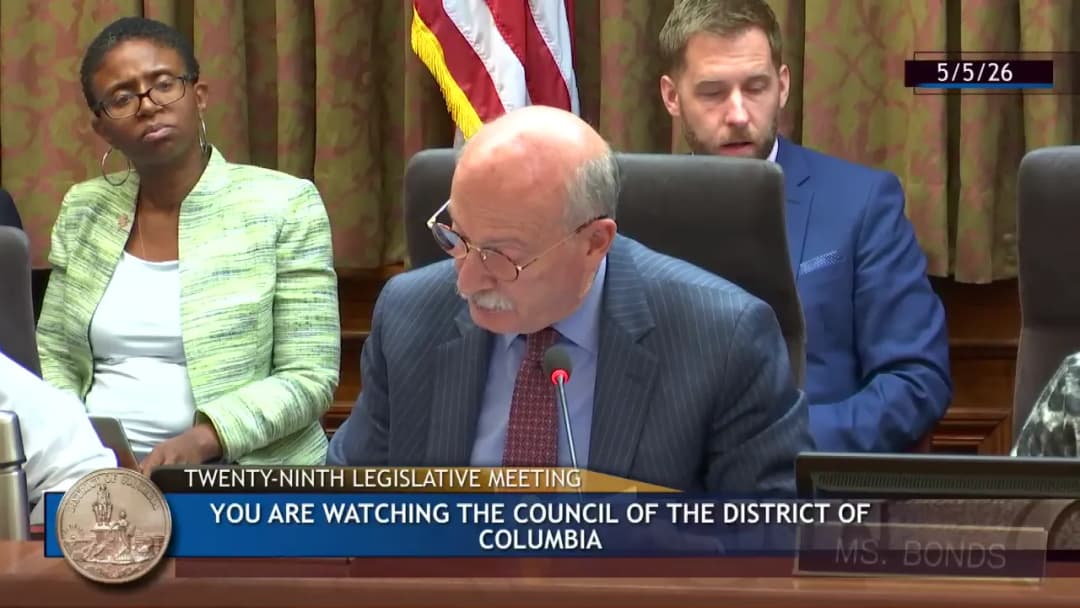
Public Meetings - Washington, District Of ColumbiaThis regular legislative meeting of the Council of the District of Columbia, the 29th of Council Period 26, was chaired by Phil Mendelson at 2:15 PM in the Johnny Wilson Building. The meeting covered numerous bills, including a contested youth curfew bill, housing relief legislation, and multiple emergency measures. Key votes and debates focused on the juvenile curfew, fair housing practices, and homeowner assistance. Consent Calendar - The consent agenda was revised by removing several items: Bill 26‑126 (Fair Housing Practices Amendment Act), Bill 26‑57 (Motor Vehicle Insurance Modernization Act), Bill 26‑545 (River East to Grandview Homeownership Relief), and two alley‑closure bills (Greenscourt, Harmony Park, Rodney Wright) that had not been marked up. PR 26‑577 (Citizen Review Panel reappointment) was also removed. - The consent agenda as revised was approved unanimously (voice vote). Discussion Items Fair Housing Practices Amendment Act (Bill 26‑126) - Councilmember Robert White moved the bill, which prohibits housing providers from separately charging tenants for common‑area utilities and requires 45‑day notice of unpaid amounts after vacating, with evidence of service 60 days before sending to debt collector. - Councilmember Pinto raised a concern about notifying tenants at a last‑known address if they have moved; Councilmember White clarified the bill already requires requesting a forwarding address or email. - The bill passed first reading unanimously. River East to Grandview Homeownership Relief (Bill 26‑545) - Councilmember Robert White described it as a budget‑neutral measure using the HPAP program to assist 30 remaining homeowners affected by shoddy construction. He stated the total government assistance to date was about $14.275 million for 46 units. - Councilmember Trayon White co‑introduced and emphasized the harm to families. - Chairman Mendelson expressed concern that the city had already provided substantial aid (mortgage cancellations, rental assistance, buyouts) and that this was not an isolated incident. - Councilmember Freeman supported the bill, arguing it delivers on the promise of homeownership and generational wealth. - Councilmember Bonds asked if the bill would bring closure; Councilmember Robert White confirmed it would end council involvement. - The bill passed with opposition: Chairman Mendelson voted no, Councilmember Trayon White voted present, and others aye. Open Meetings Clarification Temporary Amendment Act (Bill 26‑633) - Moved by Councilmember Parker; passed with Councilmembers Lewis George and Allen voting no. Citizen Review Panel Reappointment (PR 26‑577) - Chairman Mendelson supported the reappointment of Whitney Miller, noting he missed meetings due to personal losses but is now fully participating. - Councilmember Henderson opposed due to past attendance concerns. - The resolution passed with Councilmember Henderson recorded as voting no. Youth Curfew (Bill 26‑461) – Final Reading - Councilmember Pinto (sponsor) argued the curfew zones are a limited, preventive tool for teen takeovers and do not require overtime for MPD. - Councilmember Trayon White opposed, stating curfews criminalize youth and do not address root causes; he noted young people want safe spaces, not curfews. - Councilmember Nadeau introduced two amendments: 1. Sunset Amendment: The curfew law would expire on December 31, 2028. Debate included that the code would revert to the 1995 version. Passed on a voice vote (no roll call recorded but Chairman later said the amendment was approved). 2. Harm Reduction Amendment: Police would be prohibited from taking curfew violators to detention centers; instead they must release to parents, transport to home, youth programming, 24‑hour drop‑in centers, or CFSA as a last resort. This amendment was subject to appropriations (estimated $200,000 for two FTEs). Passed on a roll call vote: 7 yes (Lewis George, Nadeau, Parker, Robert White, Trayon White, Allen, Crawford) to 6 no (Freeman, Henderson, Mendelson, Pinto, Bonds, Felder). - Councilmember Parker moved an amendment to require DPR to operate at least four recreation centers in four wards from 3 PM to 11 PM on Fridays and Saturdays, subject to appropriations. Councilmember Lewis George urged deferral to her upcoming omnibus bill and budget markup. After discussion, Parker withdrew the amendment on the condition that it be considered during committee markups. - Final passage on roll call: Ayes heard; recorded no votes: Robert White, Trayon White, Parker, Lewis George (and possibly others? Chair said “record me as no” for those four). The bill passed as amended. One Front Door Amendment Act (Bill 26‑227) – Final Reading - Councilmember Pinto moved an amendment (with Nadeau) to limit buildings to four units per floor for safety (stairwell congestion). No objection; amendment accepted. Bill passed unanimously. Certified Business Enterprise Compliance (Emergency & Temporary) - Councilmember Felder moved emergency and temporary bills identical to expired legislation, with a technical amendment removing a citation to section 19 of the OAH Act to avoid confusion. Both passed unanimously. Volunteer Services Clarification (Emergency & Temporary) - Councilmember Pinto moved to extend legislation enabling OAG lawyers to provide volunteer legal services. Passed unanimously. Strengthening Probate Administration (Emergency & Temporary) - Councilmember Pinto moved to prevent a gap in current temporary law expiring May 14. Passed unanimously. DC Water Billing/Disconnection Clarification (Emergency & Temporary) - Councilmember Allen moved to continue provisions on late fees and reporting. Passed unanimously. Personal Delivery Device Weight Limit (Emergency & Temporary) - Councilmember Allen moved to extend law. On the emergency declaration, Councilmember Freeman voted no; on the temporary bill, Freeman voted no. Both passed otherwise. Reservoir District Tax Exemption (Emergency & Temporary) - Councilmember Parker explained the need to align tax abatement with HUD income limits for a stalled development. No fiscal impact. Passed unanimously. Key Outcomes - Bill 26‑126 (Fair Housing) – passed first reading unanimously. - Bill 26‑545 (River East to Grandview) – passed with opposition (Mendelson no, Trayon White present). - Bill 26‑633 (Open Meetings Clarification) – passed with Lewis George and Allen voting no. - PR 26‑577 (Whitney Miller reappointment) – passed; Henderson voting no. - Bill 26‑461 (Youth Curfew) – passed final reading as amended with sunset and harm reduction amendments. Roll call on harm reduction: 7‑6. Opposition recorded from Robert White, Trayon White, Parker, Lewis George. - Bill 26‑227 (One Front Door) – passed final reading unanimously with safety amendment. - Emergency and temporary bills for CBE compliance, volunteer services, probate administration, DC Water, delivery devices, and reservoir district – all passed as noted (some with lone no votes).
The Council of the District of Columbia held an additional Committee of the Whole meeting on Tuesday, May 5, 2026, at 12:43 PM in Room 500 of the John A. Wilson Building. Chaired by Council Chairman Phil Mendelson, the meeting addressed five measures for markup and several items from other committees. Key topics included increasing mandatory minimum motor vehicle insurance requirements, confirming Anthony Hood to the Zoning Commission, strengthening consumer protections, supporting nonprofit organizations, and providing relief to former homeowners of the River East at Grandview condominiums. Consent Calendar - The following measures were placed on the consent calendar for the subsequent legislative meeting: - Bill 26-174: Enhancing Consumer Protection Procedures Amendment Act of 2026 (from Committee on Public Works and Operations) - Bill 26-249: Nonprofit Services Preservation Amendment Act of 2026 (from Committee on Public Works and Operations) - PR 26-537, PR 26-538, PR 26-540, PR 26-542, PR 26-543: Confirmations of five nominees to the District of Columbia Housing Authority Board of Commissioners (from Committee on Housing) Public Comments & Testimony - No public testimony was taken during this committee markup meeting; testimony had been taken at prior hearings on the bills. Discussion Items Motor Vehicle Insurance Modernization Act of 2026 (Bill 26-57) - Chairman Mendelson introduced the bill, noting that mandatory minimum motor vehicle insurance requirements had not been updated since 1986. The bill would increase minimum coverage limits for bodily injury, property damage, and third-party liability to levels matching Virginia and North Carolina. It also requires insurers to offer enhanced underinsured motorist (EUIM) coverage, with an opt-out for consumers. An oral amendment changed the date of the first inflationary adjustment from January 1, 2029, to January 1, 2037. - Councilmember Trayon White expressed concern about affordability for low-income and working-class residents, noting DC's high insurance premiums and high uninsured driver rate. He cited a racial equity impact analysis indicating Black drivers pay higher rates. He also questioned the lack of a gradual phase-in. - Chairman Mendelson responded that the bill is a consumer protection measure, that many states have raised minimums without causing large premium spikes, and that the implementation date is October 1, 2027, providing over a year for adjustment. - Councilmember Henderson asked about phased increases, noting neighboring jurisdictions phased in changes. Chairman Mendelson said the bill catches up after 40 years, but offered to discuss further between first and second reading. - Councilmember Crawford supported the bill, noting it had not been updated in 40 years. Anthony Hood Zoning Commission Confirmation (PR 26-567) - Chairman Mendelson presented the resolution to confirm Anthony Hood for reappointment as a member of the Zoning Commission, highlighting his decades of service, leadership on zoning modernization, and focus on equity and community engagement. - Councilmember Parker supported the nomination, noting Hood had won over initial detractors and emphasizing the need for a more serious equity framework at the commission. - Councilmembers Nadeau, Pinto, Bonds, Trayon White, and Felder all spoke in support, citing Hood's balanced approach, transparency, and commitment to community engagement. Enhancing Consumer Protection Procedures Amendment Act of 2026 (Bill 26-174) - Councilmember Nadeau explained the bill expands enforcement tools for the Office of the Attorney General and the Department of Licensing and Consumer Protection (DLCP) against bad actors, including authority to close businesses posing health and safety threats. It also adds new prohibitions against abusive conduct, hidden fees, and fraudulent business ownership disclosures, and updates definitions to cover free services (e.g., social media) and charitable solicitations. - Councilmember Parker raised concerns about DLCP's historical reluctance to enforce existing powers. Councilmember Nadeau responded that the bill provides stronger tools to compel compliance. - Councilmember Lewis George supported the bill, citing enforcement gaps with tobacco shops and illegal auto repair operations. Nonprofit Services Preservation Amendment Act of 2026 (Bill 26-249) - Councilmember Nadeau said the bill clarifies and updates the Nonprofit Fair Compensation Act of 2020 to ensure nonprofits are reimbursed for indirect costs, raising the minimum indirect cost rate from 10% to 15% to match the federal rate. It also establishes a nonprofit relief grant program to cover funding gaps. - Councilmember Crawford noted the fiscal impact statement estimates $6.9 million in FY27 and $70.2 million across the financial plan, and asked about feasibility. Councilmember Nadeau said the bill reflects actual costs and called it an honest assessment, though full funding may not be found this year. DCHA Board of Commissioners Confirmations (PR 26-537, PR 26-538, PR 26-540, PR 26-542, PR 26-543) - Councilmember Robert White presented five nominees for the permanent DCHA Board of Commissioners, emphasizing the transition from the temporary Stabilization and Reform Board. The nominees were Christopher Murphy, Denise Blackson, LeRoy Clay III, Raymond Skinner, and Teresa Silla. Councilmember White stressed the need for urgency and accountability. - No further debate was held; the measures were placed on the consent agenda. River East at Grandview Home Ownership Relief and Restoration Amendment Act of 2026 (Bill 26-545) - Councilmember Robert White presented the bill to assist 46 families who lost their homes at River East at Grandview due to structural failures. The bill allows HPAP (Home Purchase Assistance Program) funds to be used as grants rather than loans for those repurchasing homes, converts existing HPAP loans to grants for those who already bought, provides limited support for those who bought without HPAP, and reduces the affordability covenant for inclusionary zoning units to 15 years. The authorization would expire in 2032. - Councilmember Henderson asked whether the bill only helps those pursuing homeownership. Councilmember White confirmed it only applies to those who purchase or have purchased a home before 2032. - Councilmember Bonds asked about total costs: the maximum total HPAP grant conversion would be about $2.6–$2.7 million if all remaining households apply. She also noted over $7 million in assistance already provided, including $4.2 million in rental assistance, $1.8 million in previous HPAP loans, and $602,000 in direct aid. - Councilmember Parker expressed concern about a uniform benefit versus individualized assistance, and noted that giving these families priority for HPAP could monopolize the program. Councilmember White replied that the bill does not change their priority status, but the maximum impact would be $2.7 million of the $27 million HPAP program. He said he tried uniform benefits last year but this was the best achievable. - Councilmember Crawford asked whether the executive has a plan to prevent similar failures. Councilmember White said he is not optimistic and has seen no such plan. - Councilmember Trayon White asked about prior assistance: rental assistance, forgiveness of previous HPAP loans, moving assistance, and negotiation with lenders to cancel mortgages for most owners. Councilmember White confirmed all these steps had been taken. Key Outcomes - Bill 26-57 (Motor Vehicle Insurance Modernization Act): Passed out of committee on a vote of ayes with only Councilmember Trayon White voting no. The bill will be treated as non-consent at the legislative meeting. - PR 26-567 (Anthony Hood Zoning Commission Confirmation): Approved unanimously and placed on the consent agenda. - Bill 26-174 (Consumer Protection): Approved and placed on the consent agenda. - Bill 26-249 (Nonprofit Services Preservation): Approved and placed on the consent agenda. - Five DCHA Board Confirmations (PR 26-537, PR 26-538, PR 26-540, PR 26-542, PR 26-543): Approved and placed on the consent agenda. - Bill 26-545 (River East at Grandview Relief): Approved and placed on the consent agenda (moved by Chairman Mendelson after discussion).
On May 4, 2026, the Council of the District of Columbia's Committee as a Whole, chaired by Phil Mendelson, held a public hearing on the proposed FY2027 budgets for the District of Columbia Auditor, the DC Retirement Board, and the Office of the Chief Financial Officer. The hearing featured testimony from agency heads, public witnesses, and extensive discussion on revenue forecasting, pension plan designs, tax compliance, and budget transparency. Public Comments & Testimony - Scott Goldstein: Praised the DC Auditor's education spending reports and recommended further study on administrative duplication and youth curfew effectiveness. He criticized revenue underestimates by the CFO and proposed new taxes, including a business activity tax and a wealth proceeds tax, to avoid safety net cuts. - Sam Bonar (DC Community Wealth Builders): Urged the council to fund a dedicated FTE in the CFO's office to advance work on a public bank and land bank, citing incomplete feasibility studies and potential savings from keeping financial returns local. - Aidan Simpson (DC Community Wealth Builders): Supported a public bank and land bank to address housing costs and small business fragility, arguing current incentive-based development fails communities. - Austin Cipriano: Asked for a public bank to reduce debt service costs and finance permanently affordable housing and grocery stores in underserved areas. - Daniel Dadragon (DC Community Wealth Builders): Called for a full-time employee at the CFO to complete public bank feasibility work, emphasizing that public investments should serve the public good rather than corporate incentives. - Jen Jenkins (Legal Aid DC): Urged adoption of a local net investment income tax, land value tax, and business activity tax to raise revenue equitably, and a comprehensive independent budget review. - Erica Wadlington (DCBIA): Supported office-to-residential conversions, workforce housing tax abatements, and urged against raising property taxes. She asked to fund the Vacant to Vibrant Amendment Act provisions. - Betty Gentle (SOME, Inc.): Supported Bill 26-125 for tax forgiveness on two affordable housing properties, noting financial strain from unresolved tax debts. - Erica Williams (DC Fiscal Policy Institute): Recommended piggybacking on the federal net investment income tax to raise hundreds of millions, and a feasibility analysis of a business activity tax. - Tazra Mitchell (DC Fiscal Policy Institute): Criticized the mayor's proposal to delay a sales tax increase and repeal the child tax credit, highlighting regressive impacts and suggesting alternative progressive revenue sources. - Brittany Pope (Bread for the City): Described positive outcomes from direct cash transfers and urged restoring the DC Child Tax Credit. - Olu Funke (Funke Ido): Asked for guaranteed basic income for residents with disabilities, funding for Bread for the City, and permanent child tax credit. - John Simmons: Emphasized the importance of the child tax credit for his family and community, and praised Bread for the City's Cash RX program. - Daisy Gomez Palacios (Bread for the City): Shared a client's story showing how unconditional cash enabled educational opportunities, and urged protecting the child tax credit. - Vincent Orange (former councilmember and mayoral candidate): Called for a revenue alignment commission to ensure funds are used as intended, and proposed allowing $600 million in federal tax benefits to circulate in the local economy. - Vernon Suggs: Supported child tax credit and programs like Bread for the City, linking them to crime prevention and community well-being. - Robert Rabin (Diverse Asset Managers Initiative): Accused the DC Retirement Board of refusing to disclose diversity data on asset managers, claiming FOIA denials used trade secret as pretext. - Abel Menne (Fair Budget Coalition): Advocated for a business activity tax to close loopholes for wealthy partnerships and corporations. - Catherine Lamfield (Fair Budget Coalition): Proposed revenue from decoupling, redirecting MPD overtime funds, and taxing capital gains and high incomes to avoid safety net cuts. - Eduardo Seraphim (DC Jobs with Justice): Supported fair tax policies including business activity tax, higher income taxes on top earners, and wealth taxes, calling the mayor's budget anti-worker. - Mary Rhodes (Archdiocese of Washington): Requested council reaffirm the emergency act allowing parishes to retitle property via supplemental deeds without transfer tax, citing OTR's refusal to comply. - Robert Warren (People for Fairness Campaign): Called for a tax-based voucher system for residents over 55, criticizing displacement and inadequate affordable housing. - Lauren Green: Asked to cut the Department of Behavioral Health budget, end forensic psychiatry, and rename shelters as cooperative development centers. Discussion Items - DC Auditor Kathy Patterson presented her office's budget ($11.6 million revised FY26, proposed $7.8 million for FY27). She highlighted ongoing litigation over an MPD officer report, reserve fund violations by OCFO, education staffing growth, MPD overtime, and the need to retain the Homeland Security Commission. She discussed transition of juvenile justice data reporting to DYRS. - Chair Mendelson questioned Patterson on MPD overtime, leave management, and the Events DC excess cash issue ($68.7 million owed, $62 million disputed). He asked for litigation cost details and out-year projections for the auditor's office. - DC Retirement Board Executive Director JP Balasti reported the fund is 104.2% funded ($13.8 billion assets), with strong investment returns, and outlined the $42.2 million proposed budget. He discussed the district's required $221 million contribution for FY27. - Chair Mendelson and Balasti had an extended exchange on a proposed Deferred Retirement Option Program (DROP) for police and firefighters. Balasti emphasized legal and fiduciary constraints, but indicated DCRB could potentially administer a DROP if properly designed, fully funded outside plan assets, and compliant with tax and regulatory requirements. Actuary Tom Vicente explained that DROP costs depend on design, especially whether participants enter earlier or later than normal retirement, and that the board is working to smooth contribution volatility from retroactive pay increases. - CFO Glenn Lee presented the OCFO budget ($222 million gross, $182 million local). He described a right-sizing effort reducing positions by 23, a vacancy rate near 10%, and hiring plans. He detailed $3.7 million in new tax compliance initiatives (adding 17 FTEs) and $3.9 million from a partnership with the Attorney General for collections litigation. - Chair Mendelson questioned Lee on space utilization, revealing that average badge swipes were below two per month and many workstations appeared unused. He criticized the policy of requiring only one in-person day per pay period. Lee agreed to reassess remote work policies and footprint. - Discussions also covered clean hands certificate issues (multiple entities, timeliness), the Archdiocese property deed dispute, and fund naming inconsistencies. Key Outcomes - The council will consider testimony and agency proposals as it prepares to mark up the budget. The first reading vote is scheduled for June 9, 2026. - Chair Mendelson requested written follow-ups from the DC Auditor (litigation costs, out-year budget projections), the OCFO (details on revenue officer/auditor productivity, independent analysis of public bank feasibility, background on TIF forward-funding change, authority for multi-entity clean hands enforcement, and a plan for naming convention consistency). - The Archdiocese deed issue will be revisited with proposed corrective language from the Attorney General. - The CFO committed to right-sizing space and revising remote work expectations, with a plan to increase in-office presence. - No final votes were taken; testimony will inform budget decisions.
On May 4, 2026, the Committee on Human Services, chaired by Ward 3 Councilmember Matt Fruman, held a public hearing on Bill 26-0656, the Internet Gaming and Consumer Protection Act of 2026. The bill, introduced by Councilmember Felder, seeks to legalize and regulate online casino-style gambling (iGaming) in the District of Columbia, establishing a licensing framework, consumer protections, responsible gaming requirements, and a 25% tax on revenue. The hearing included testimony from industry representatives, advocacy groups, addiction experts, former addicts, and the Office of Lottery and Gaming (OLG). Public Comments & Testimony - Les Burnell, National Director, Stop Predatory Gambling: Opposed the bill, arguing that legalized gambling does not displace illegal markets but expands addiction. He stated that DC residents lose $150 per minute to government-sponsored gambling and that 70% of online gambling profits come from 0.5% of users. He called the bill "taxation by exploitation." - Bernie Horn, ANC Commissioner 3D05: Opposed, citing that legalization will not stop illegal sites and will create more gamblers. He argued the bill is premature given upcoming elections. - Oliver Barry, National Association Against iGaming: Opposed, noting that iGaming imposes $350 million per year in social costs in New Jersey, and that illegal gambling still controls 74% of the $90 billion market. He raised legal concerns about the Johnson Act. - Briandora Schwal, Director, National Campaign for Fairer Gambling: Opposed, stating iGaming is 10 times more addictive than other forms, and that states with iGaming saw addiction rates triple. She cited that 71% of Connecticut's gambling revenue comes from 7% of players. - Keith White, Safe for Gambling Strategies: Did not take a position but urged the council to fund problem gambling services and adopt best-in-class responsible gaming regulations. He noted that channelization from illegal to legal markets is possible but requires enforcement and public education. - Matt Scalf, DraftKings: Supported the bill, stating DraftKings already operates responsibly in DC and that iGaming would generate an estimated $500 million over five years. He highlighted the company's responsible gaming tools, which 52% of users engage. - Rob O'Connor, BetMGM: Supported, noting that BetMGM has invested $65 million in DC sports betting and that competitive iGaming markets in neighboring states have succeeded. He emphasized the value of omnichannel experiences. - John Pappas, iDevelopment and Economic Association: Supported, arguing that over 100,000 monthly visits to illegal offshore sites occur from DC. He said the bill provides guardrails that do not exist in the illegal market. - Michelle McGregor, Sports Betting Alliance: Supported, stating that legalization paired with enforcement can reduce illegal gambling. She cited Michigan's 75% compliance rate with cease and desist orders after loopholes were closed. - Brian Schroeder, ARB Interactive (Moto Casino): Opposed the bill's provision banning social sweepstakes gaming, arguing it would push consumers to unregulated offshore sites. He requested regulation instead of prohibition. - Wayne Frazier, Maryland Washington Minority Companies Association: Opposed, stating iGaming offers few economic opportunities for minority-owned businesses and will devastate families. - Jessica Wellman (reading Rob Minick's testimony): Opposed, sharing a personal story of addiction exacerbated by iGaming in New Jersey. She warned that constant access leads to loss of control. - Alfonso Guida, DC resident and mental health lobbyist: Opposed, comparing iGaming advertising to the Sackler family's opioid marketing. He said addiction rates tripled in states with iGaming and that the industry's advertising vastly exceeds that of illegal operators. - Aaron Sanchez, Ward 7 resident and former EMT: Opposed, arguing iGaming disproportionately harms young men and extracts wealth from low-income communities without creating local jobs. - Ricardo Cornejo Rivas, Caesars Entertainment: Supported, emphasizing the 35% CBE requirement and the potential for live dealer jobs. He recommended limiting licenses to existing sports wagering operators. - Lloyd Melnick, VGW Holdings: Opposed the ban on social plus games, arguing they are not iGaming and that banning them would cost DC sales tax revenue. He stated that over 50% of their players never spend money. - David Nangle, former Massachusetts state representative and gambling addict: Opposed, sharing his personal story of addiction and warning that iGaming is up to 10 times more addictive. He said there is no "Narcan" for gambling. Discussion Items - Revenue Estimates and Social Costs: Councilmembers questioned the reliability of the $700 million wagered figure. Testimony conflicted: opponents cited the $350 million in social costs in New Jersey, while proponents pointed to potential $500 million in tax revenue over five years. - Channelization (Displacement of Illegal Markets): A key debate. Proponents argued that legalization with enforcement can move players to regulated markets. Opponents cited studies showing illegal markets grow even after legalization (e.g., Michigan's illegal market grew 64% in 2024). - Consumer Protections: Discussion focused on guardrails: age verification, KYC, geolocation, deposit limits, cooling-off periods, and banning credit cards. DraftKings noted 52% tool usage; OLG stated they will incorporate industry-standard protections. - Responsible Gaming Funding: The bill allocates $500,000 annually for problem gambling services. Director Burnside recommended increasing to $750,000–$1 million, citing West Virginia's experience. - CBE (Certified Business Enterprise) Participation: The bill requires 35% CBE involvement. Testimony from Wayne Frazier questioned the feasibility, while Caesars and others expressed commitment. Councilmember Felder inquired about concrete opportunities. - Speed of Play and Addictive Design: Councilmembers asked about slowing game speed to reduce harm. OLG indicated they could regulate this through play rules and minimum internal controls. - Social Sweepstakes Gaming: Multiple witnesses (ARB, VGW) argued that the bill's definition of unlawful gambling would ban their legitimate sweepstakes models, which they claim are not gambling. They requested regulation instead of prohibition. - Federal Legal Concerns: Oliver Barry noted potential violation of the Johnson Act, which the council would need to consider. Key Outcomes - No vote taken; the hearing was for testimony only. - Written testimony deadline: May 11, 2026, at 5:00 PM. - Technical changes proposed: Director Burnside suggested codifying certain responsible gaming measures and increasing problem gambling funding. He also noted that emergency rulemaking would be required within 90 days of passage, with a goal of full implementation within 6 months. - Councilmember Henderson expressed skepticism about revenue projections and requested more data from OLG. - Councilmember Felder committed to working with stakeholders on CBE requirements and strengthening enforcement against illegal operators. - The committee will continue to accept written testimony and consider amendments before reporting the bill.
The Chairman held a press conference on May 4, 2026, to preview the upcoming legislative meeting scheduled for May 5, 2026. The press conference covered a range of pending legislation, including bills on motor vehicle insurance, housing construction, taxes, ebooks, affordable housing, the Metro Rail Safety Commission, and the youth curfew. The Chairman also addressed questions from reporters on the curfew, the Motor Vehicle Insurance Modernization Act, a fatal fire in New York City, youth testimony, truancy programs, charter school funding, and federal takeovers of golf courses. Agenda Preview - The legislative meeting will be preceded by a Committee of the Whole meeting scheduled for 11:00 AM, which will mark up four bills and a reappointment confirmation. - Committee of the Whole bills include: - Motor Vehicle Insurance Modernization Act: Updates mandatory minimum insurance requirements for motor vehicles, which have not been updated in 40 years. The Chairman anticipates controversy and noted opposition from the insurance industry, but characterized it as a consumer protection issue. - Three symbolic designations. - Confirmation of Mayor’s nomination to reappoint Anthony Hood to the Zoning Commission. - Legislative session final readings include: - One Front Door Amendment Act: Permits low- and mid-rise multifamily buildings to have one stairwell instead of two. The Chairman cited research from New York City and Seattle showing no increase in deaths and noted the bill also requires life safety measures like sprinklers. He addressed a reporter’s question about a fatal fire in New York, stating the details were unknown and that a single stairwell alone is not the cause. - Transfer and Recreation Tax Appeals Amendment Act: Allows struggling office buildings to be sold based on actual sales price rather than inflated assessed value, aiming to unlock properties. - Library ebook licensing fairness amendment act: Aims to reduce monopolistic pricing libraries pay for ebooks. - Tax exemptions for affordable housing properties at 2607 Connecticut Ave and 411 Kansas Ave. - Appointment of Brad Belzak to the Washington Metro Rail Safety Commission, replacing Chris Hart. - Curfew Bill: The permanent version is up for final reading, with possible amendments. The emergency version failed to get two-thirds support in prior meetings. The Chairman expressed hope to reach nine votes but noted the impasse. He stated he had not spoken with Councilmember Parker recently about his vote. Curfew and Related Discussions - The Chairman explained the curfew does not ban juveniles entirely but restricts groups of eight or more in designated areas. He stated the goal is to enable police to break up large gatherings, not to arrest. - On the emergency vote impasse: The Chairman said the majority believes it is better to try to get nine votes than to have a failed vote. He noted discussions among members about alternatives for juveniles and accountability for parents, but expressed skepticism that juveniles involved in takeovers are seeking alternatives. - A reporter noted the curfew has been debated for nearly a year with members peeling off. The Chairman attributed the unease to a desire not to incarcerate youth and cited a recent incident of heavy-handed policing as fueling concerns. - Asked about youth testimony before the Youth Affairs Committee, the Chairman said it is valuable but questioned whether those testifying are the ones causing the problems. He emphasized the need to deal with destructive behavior. - A reporter raised a truancy diversion program with a reported 71% reduction in truancy among 800 participants. The Chairman countered that the oversight chair said the program has been underwhelming, and that expanding it citywide would cost $50–$60 million per year. He favored improving school climate over expensive programs. Q&A Highlights - Motor Vehicle Insurance: The Chairman noted the insurance industry opposes the bill, but said experience in other states does not support claims of increased premiums or uninsured motorists. - Language: When asked about using “juvenile” vs. “youth,” the Chairman said he appreciates Councilmember Crawford’s intent but will continue using “juvenile” without negative connotation. - Charter School Funding: The Chairman acknowledged charter school leaders’ concerns about DCPS receiving $100 million outside the per-pupil formula, calling it an equity issue. He said fixing it would require cutting other areas, which is challenging. He also noted the mayor’s budget stops the facilities allowance for charters. - Federal Takeover of Golf Courses: The Chairman called it inappropriate, stating the administration fabricated allegations against National Links Trust. Key Outcomes - No votes were taken during the press conference. The legislative meeting on May 5 will include votes on the curfew (permanent and possibly emergency), the Motor Vehicle Insurance Modernization Act, and other bills as previewed. The Chairman did not predict outcomes beyond expecting the curfew permanent bill to pass.
On May 4, 2026, the Council's Committee on Transportation and the Environment, chaired by Councilmember Charles Allen, held a budget oversight hearing on the Mayor's proposed FY2027 budget for the Department of Energy and Environment (DOEE) and the DC Sustainable Energy Utility (DC SEU). The hearing examined significant cuts to the agencies, including a 28.6% reduction in DOEE's operating budget (from $254M in FY26 to $181.5M) and a proposed 50% cut in Sustainable Energy Trust Fund (SETF) funding for DC SEU (from $24.6M in FY26 to $12M in FY27). Discussion Items - DC SEU Testimony (Ben Burdock): Mr. Burdock highlighted that over 15 years, every dollar invested through DC SEU has generated approximately $6 in lifetime energy cost savings. The proposed SETF reduction would eliminate at least 6-8 FTE positions, jeopardize the Solar for All program (840 single-family installations and 230 community renewable facilities since FY19), reduce workforce development (300+ graduates), and risk losing $6.5M in federal Inflation Reduction Act funds for the Affordable Home Electrification Program (AHEP) due to lack of local match. PJM wholesale electricity prices have risen 54% since 2024, increasing energy burdens. Councilmember Allen noted that the SETF cuts represent a deliberate choice by the mayor, not belt-tightening. - DOEE Testimony (Director Richard Jackson): Director Jackson stated the FY27 budget includes $89M in federal funds (49% of budget), $69M in special purpose revenue (SPR) funds, $14M in local funds, and $5.1M in private grants. The largest change is a $51M reduction in federal grants, including frozen Greenhouse Gas Reduction Fund ($7M budget authority retained), paused Charging and Fueling Infrastructure grant, and unawarded rail safety grant. SPR funds are being swept, including $10.5M from the SETF, reducing the fund to levels last seen in FY2012. The Budget Support Act (BSA) includes a subtitle to cap third-party electricity supplier prices, prohibit early termination fees, and require standard contract terms. Other BSA provisions extend the net zero energy code deadline by one year and delay the start of the second BEPS cycle to allow for learning and flexible compliance. The mayor's budget also increases the diversion of SETF funds to pay the District's own energy bills (from $33.5M in FY25 to an estimated $70M in FY26, with $80M projected for FY27), which Chair Allen criticized as disingenuous to ratepayers. - Programmatic Impacts: The following programs face significant reductions or elimination under the FY27 proposed budget: City Wildlife rehabilitation grant (eliminated), District Waterways contract (eliminated), Anacostia River Cleanup Fund ($542K reduction), stormwater permit compliance enterprise fund ($4.4M sweep to DPW street sweeping), and various water quality, trash-free communities, and environmental education grants (e.g., 61% cut to RiverSmart Landscaping, 65% cut to Trash-Free Communities). The weatherization budget declined by $4M, affecting 44 households served in FY25. The DOEE workforce would lose 34 FTE positions (all vacant, not filled positions), with 24 coming from the Natural Resources Administration. - MS4 Permit Compliance: DOEE Deputy Director Steve Saari confirmed the District is likely to fall out of compliance with its MS4 permit due to insufficient funding for green infrastructure installation and maintenance. The agency submitted a report to EPA stating it lacks sufficient finances and staff to implement the permit, though two years remain in the current permit cycle. - RFK Stadium: DOEE Chief of Staff Daniel Connor reported ongoing discussions with the Commanders about energy solutions, including battery storage and stormwater management. Chair Allen stressed that the net zero law must apply to new construction at RFK, as committed in the lease agreement, and that he cannot support any BSA provision that undermines that commitment. - Third-Party Electricity Suppliers: DOEE Deputy Director Nick Berger explained the urgency of the BSA subtitle to cap prices and increase transparency, noting that low-income households with third-party suppliers pay $75/month more than PEPCO standard service. Key Outcomes - No votes were taken; this was a budget oversight hearing to gather information for the committee's budget recommendations. - Chair Allen expressed strong opposition to the proposed cuts, stating the mayor's budget "takes the money" from ratepayers and harms core services. He committed to working to restore funding over the coming weeks. - The committee will continue to receive written testimony until May 15, 2026. - DOEE and DC SEU will provide additional data on federal match opportunities lost and detailed FTE impact breakdowns.
At-large Councilmember Christina Henderson, Chair of the Committee on Health, convened a hearing on May 4, 2026, at 9:35 AM in Room 500 of the John A. Wilson Building to review the proposed Fiscal Year 2027 budget for DC Health. The hearing was the second part of the oversight, following public witness testimony on April 28, 2026. The committee heard from over 60 public witnesses earlier. Dr. Ayana Bennett, Director of DC Health, testified along with her leadership team. The budget faces a $1.1 billion district shortfall, with DC Health relying on approximately 60% federal funding. Consent Calendar - No consent calendar items were noted. Public Comments & Testimony - The committee had already heard from over 60 public witnesses on April 28, 2026, who voiced support for critical public health programs (healthy food access, early childhood, rodent control) and expressed concerns about proposed cuts. Written testimony remained open until May 12, 2026. Discussion Items - School Health: Chair Henderson questioned a $600,000 reduction in school-based health center funding, which DC Health clarified was a transfer between accounts, not a cut. The agency discussed staffing vacancies (11% vacancy rate), the cluster model with RN oversight, and a proposed subtitle to allow LPNs and health techs alongside RNs. Henderson raised concerns about a child with epilepsy not receiving care due to missing trained staff. - Food Access: The mayor's proposal to repeal the Food Policy Council and Office of Food Policy was discussed. DC Health noted collaboration but said the Office of Planning is not the right home. Farmers market support grants were reduced from $250,000 to an unspecified lower amount; the chair asked if restoration would be spent down. The grocery access pilot (Produce Plus) has a waitlist of 2,000 residents, and the FY27 budget eliminates new funding after FY26. The pilot with MedStar will study chronic disease outcomes. - Maternal & Early Childhood Health: Multiple cuts were highlighted: $3 million total in maternal and early childhood reductions, including zeroing out $1.35M for Healthy Steps, cutting $182,000 from the Safe Care home visiting model, and eliminating a $103,000 lactation certification grant. The agency cited federal funding shifts and hard choices. - Tobacco Permits: A proposed subtitle requiring a tobacco sales permit (estimated to generate $15,000) was debated. Chair Henderson questioned the burden on businesses compared to neighboring jurisdictions; DC Health promised data. - HIV/AIDS & HASTA: The $5.2 million reduction to HIV surveillance was clarified as not actual due to continued federal funding. The bureau chief position for HIV prevention was swept, but the chair requested it be restored. The AIDS Drug Assistance Fund subtitle was discussed to align with federal requirements. - Food Safety & Environmental Health: Cuts to a supervisory sanitarian position were discussed. The rodent control pilot in Adams Morgan (including fertility control) begins May 5, 2026, with DPW collaboration. The pilot also covers Eastern Market and Chinatown. - Animal Care & Control: The contract with Brandywine was discussed; live release rate improved to 91%, euthanasia down from 420 to 230. Dog licensing compliance is low (2,800 active licenses). Proposed pet food registration fee ($50 per product) and changes to dog license fee allocation were debated. - Health Professional Licensing: The transition to direct payment for criminal background checks was explained. Dental assistant registration fees ($240) are much higher than in Maryland ($20) and Virginia ($100); a comprehensive fee review is underway. - Other: The chronic illness initiative cut of $168,000 will reduce cancer screenings. The high-needs healthcare career scholarship program has 120 enrolled students (80 EMT, 40 CNA) and will be completed with FY26 funding. The epidemiology capacity is reduced due to sunset of COVID-era federal funding, but contingency plans exist. Key Outcomes - No formal votes were taken during the hearing. Chair Henderson committed to following up on multiple items, including restoring the HIV prevention bureau chief position, clarifying dog licensing fees, and evaluating the tobacco permit subtitle by the next day (May 5) for the BSA conversation. - DC Health agreed to provide additional data on: number of schools with two AOM-trained staff, specific numbers for farmers market applications, and details on the pet food registration implementation. - The record will remain open until May 12, 2026, for additional written testimony. - The next hearing on the DC Health Benefit Exchange Authority budget is scheduled for May 6, 2026.
On May 4, 2026, from 9:07 AM to 11:37 AM, the Committee on Human Services, chaired by Councilmember Matt Freuman (Ward 3), held a budget oversight hearing on the Office of Lottery and Gaming (OLG). The hearing examined OLG's proposed fiscal year 2027 budget, operational challenges, and potential expansions of gaming in the District. Public witnesses testified on off-track betting (OTB) and historical horse racing (HHR), games of skill, and regulatory oversight. Government witnesses, led by Executive Director Randy Burnside, addressed the agency's budget, a recent drawing error, and the status of the lottery system contract. Public Comments & Testimony - Panel 1 – OTB and HHR Supporters: - Jordan Briggs (attorney, IFRA Law) argued that federal law does not prohibit the District from authorizing OTB sites and HHR machines, citing exemptions under the Johnson Act. She noted Virginia's HHR generated $6 million in statutory withholdings in 2024, benefiting the general fund and a veterinary college. - Elise Cohn (managing member, Long Shots LLC) urged the District to authorize OTB and HHR, projecting $92–$130 million in annual recurring tax revenue from a fully mature market of about 1,500 machines. She contrasted HHR's in-person, facility-based model with iGaming's online risks. - Christopher Khalitri (director of historical horse racing, Ainsworth Game Technology) explained that HHR terminals use paramutual wagering on anonymized past races, not random number generators, and are deployed in licensed in-person facilities as in Kentucky and Virginia. - Rich Baldwin (managing partner, GGHM) estimated a right-sized HHR market could support 1,500–2,000 terminals, generating $300–$350 million in annual gaming revenue, translating to $80–$115 million in direct tax revenue at a 25–35% tax rate. He noted that 90% of current sports betting revenue in DC is online. - Panel 2 – Technical and Small Business Perspectives: - Steve May (Gaming Laboratories International) offered independent technical support for HHR, iGaming, and OTB, emphasizing GLI's role in certifying gaming devices and conducting audits. - Tori Key (Key Play Advisors) advocated for inclusion of small businesses and Certified Business Enterprises (CBEs) in any gaming expansion, suggesting satellite models like Arizona's OTB agents or Virginia's Rosie's facilities. - Janice Richardson Sloan (legal counsel, Art Gaming) requested the District raise its maximum payout per play from $599 to $1,999 (to avoid federal reporting triggers) and expand games of skill terminals to off-premise alcohol retailers (Class A and B licenses). She estimated that these changes, with about 4,000 machines, could generate $141 million annually. Discussion Items - OLG Budget and Revenue: - Executive Director Randy Burnside testified that OLG's proposed FY27 operating budget is $222,201,452, a decrease of 18.4% ($49.99 million) from FY26, primarily due to the Sports Wagering Amendment Act of 2024, which moved sports wagering operations to commercial operators. The lottery transferred $32.5 million to the general fund in FY25, and the FY26 forecast is just over $30 million. Burnside noted that the District received over $51 million in total gaming revenue in FY25, the highest since 2017. - Burnside expressed concern about a funding gap of roughly $1.5–$2 million for regulatory oversight, as sports wagering and games of skill fees are low. He highlighted that 10 vacant positions provide flexibility but warned that future demands—such as commercial bingo, growth in games of skill, or new sports wagering operators—could strain resources. - DC 3/4/5 Drawing Error: - Burnside reported that from March 31 to April 21, 2026, a coding error in the RNG system prevented duplicate numbers (e.g., 111, 7765) from being generated in midday and evening drawings. The error was identified and corrected within 24 hours. OLG is providing coupons, free plays, and a second-chance drawing with $150,000 in prizes to affected players. He noted that the vendors (Smart Play International and GLI) have taken responsibility, and OLG is seeking to recover costs. - Lottery System Contract RFP: - Burnside explained that the previous RFP for the central gaming system, ticket printing, and iLottery was canceled after only one qualifying bidder declined to sign the contract. A revised RFP is expected to be sent to the Office of Contracts by the end of the week (May 8, 2026). The current contract expires July 15, 2026; a one-year renewal (with three options remaining) will be submitted to the Council for approval before the summer recess. Burnside emphasized the need for a balanced RFP that protects the District's interests while attracting bidders. - Advertising and Responsible Gaming: - OLG's FY27 budget authorizes up to $9 million in advertising, but actual spend was $7 million in FY26. Expenditures include sponsorships with local sports teams, signage, streaming ads, and bus wraps. All advertising includes a responsible gaming message. Burnside noted that the advertising contract is competitively bid and that the current contract is being renewed. - Commercial Bingo and Games of Skill: - Rules for commercial bingo are being drafted and expected to be filed by April 2026. One potential operator has expressed interest but is challenged by the need for large venues (25,000 sq ft). Burnside clarified that pop-up events at the Howard Theater were not bingo but talent-based game shows, falling outside OLG's regulation. - Games of skill machines are currently in about 30 bars/taverns, generating only $128,000 in tax revenue annually. Burnside anticipated growth but noted limited funding for oversight. Key Outcomes - No formal votes were taken. The hearing was informational, focusing on budget oversight and policy exploration. - Councilmember Freuman acknowledged the new proposals for OTB/HHR and stated they would not be considered in the current budget process but would be on the radar for future discussion. - OLG will proceed with issuing a revised RFP for the lottery system contract by the end of the week and will submit a one-year contract renewal to the Council for approval before July 15, 2026. - OLG will continue to remediate the DC 3/4/5 drawing error, with vendors expected to cover costs. The agency will strengthen internal controls and certification processes. - The committee will accept written testimony until 5:00 PM on May 11, 2026. - The hearing adjourned at 11:37 AM, with the next hearing scheduled on the Internet Gaming and Consumer Protection Act (Bill 26-0656).
The Committee of the Whole of the Council of the District of Columbia, chaired by Councilmember Phil Mendelson, held a public hearing on Friday, May 1, 2026, at 11:14 AM in Room 412 of the John A. Wilson Building to examine the Mayor's proposed Fiscal Year 2027 budget for DC Public Schools (DCPS). Chancellor Dr. Lewis D. Ferebee testified, joined by Deputy Chancellors Dr. Ashley and Dr. Bay. The hearing followed public testimony heard on April 22, 2026. Consent Calendar - No consent calendar items were discussed. Public Comments & Testimony - No public testimony was taken during this hearing (public testimony occurred on April 22, 2026). However, Chairman Mendelson referenced testimony from that hearing regarding funding equity at John Lewis Elementary School. Discussion Items Budget Overview and Priorities - Chancellor Ferebee reported that DCPS's four-year graduation rate reached its highest level, and students posted their largest gains on the state assessment since 2019. DCPS was ranked first among states in math and literacy recovery between 2022 and 2024. - On average, each school's budget is 6% larger than last year. For 27 schools, the FY27 budget either decreased or grew by less than 3%, primarily due to projected enrollment declines or shifts in special education classroom locations. School Funding Equity (John Lewis Elementary) - Chairman Mendelson presented data showing John Lewis Elementary is budgeted at $14,860 per pupil (excluding special education and ELL), while comparable schools received $16,154 (Tacoma), $18,970 (Dorothy Height), and $20,091 (Truesdale). He asked how this disparity arose. - Chancellor Ferebee explained that John Lewis received a $278,000 sustainability fund investment, but its rapid enrollment growth (38.2% over four years) contributed to the lower per-pupil figure, while Truesdale's enrollment declined 14%, inflating its per-pupil funding under the Schools First in Budgeting stability policy. Chairman Mendelson acknowledged the stability benefit but stressed the need for greater equity. Enrollment Projections and At-Risk Student Funding - The Mayor's budget reduces at-risk student funding for DCPS by $7.2 million, projecting a decline of approximately 2,000 at-risk students in the upcoming school year, while charter school at-risk enrollment is projected to remain flat. - Councilmember Henderson questioned whether the decline reflects actual student loss or changes in federal benefit eligibility (SNAP/TANF work requirements). Chancellor Ferebee noted that enrollment projections were made before those policy changes took effect and that DCPS is monitoring the situation. He also cited fewer school-age children citywide and some shift of adult education programs to charter schools as factors. English Language Learner (ELL) Funding - The budget cuts ELL funding by $4.2 million, attributed to a projected decrease of approximately 600 multilingual learners. Councilmember Henderson expressed concern that community trust may take time to rebuild after recent immigration enforcement actions, and asked about contingencies if enrollment rebounds. Dual Language Programs - Chancellor Ferebee confirmed plans to expand dual language programming into middle school at Jefferson Middle School, with a full strand (similar to McFarland) launching in SY 2027-28. The school currently offers Spanish humanities for grades 6-8. Councilmember Henderson asked how this model compares to charter school programs like DC International; the team had not conducted such a comparison but offered to learn from Dr. Walker Davis. Central Office and School Support - The budget shows a $46 million decrease in central school-wide services. Deputy Chancellor Ashley clarified that most of this ($49 million) is a transfer of utility-related costs to the Department of General Services (DGS), leaving an actual cut of about $17 million. - Central office personnel are projected to decrease by 8% this year, following a 6% decrease last year. Impacts include shifting some software licenses and teacher leadership stipends (TLI—Teacher Leadership Initiative, approximately $2,500 per stipend) to school budgets. Councilmember Henderson argued this reduces school flexibility, while Chancellor Ferebee maintained that schools have adequate resources. Security Contract - The security budget is projected to increase from $30 million to $39 million (30%), driven by higher labor costs, expanded after-school/extracurricular programming, and the rebidding of the contract (current contract expires Sept 30, 2026). Chairman Mendelson expressed concern about the lack of analysis on need or potential cost savings from in-house staffing. Dr. Ashley noted that the contract is a labor-hour model, covering school-day and after-school events, and that the RFP has been issued with an expected council review in June 2026. Food Services - Food service funding increases from $46.7 million (FY26) to $48.6 million (FY27). Chancellor Ferebee attributed the increase to higher meal participation (over 10 million meals served this year) and option-year contract cost escalations. A contract modification with Sodexo was submitted to the council on April 24, 2026, citing increased enrollment in the meal program (not student enrollment). Testing and Technology - Chairman Mendelson read a statement from a fifth-grade student reporting 93 required tests per year (including 9 iReady diagnostics, 20 growth checks, and 10 DC CAPE tests). Chancellor Ferebee argued that many assessments are brief and teacher-driven, but acknowledged the need for balance. He confirmed that DCPS is evaluating its assessment strategy, including potential reductions, and that a class-action lawsuit against iReady's developer was noted but no data compromise has been found. The council requested a copy of the iReady contract. - Councilmember Fruman raised concerns about screen time and reliance on technology. Chancellor Ferebee agreed to a broader fall conversation on technology's role in schools, comparing it to the recent cell phone ban which reduced altercations. Capital Investments - The capital improvement plan includes $2 billion over six years for 24 modernizations and numerous small capital projects, with over $150 million in FY27. FY27 projects include finishing Brent and King Elementary Schools, beginning construction at Bancroft Early Childhood Annex and a new Ward 1 middle school, and modernizations at Burrville, Chisholm, Drew, Ketchum, Seaton, and Whittier Elementary Schools. The PACE Act supplement is pending at the Office of the Attorney General and has not yet been transmitted to the council. Connected Schools - The number of connected schools will drop from 18 to 12 in FY27, as six schools opted out (principals chose to invest resources elsewhere). School-level costs range from $185,000 to $230,000 each (connected schools manager plus non-personnel funds). Four schools losing federal grants received budget assistance to maintain programming (Henley, Kimball, Malcolm X, Turner). New Initiatives - $600,000 for AI literacy and instructional innovation (2 FTEs for policy/guardrails and 4 for literacy). - $8.1 million for expanded after-school programming (about $1.2 million new): $3.9M for athletics, $700K for middle school extracurriculars, $1.5M federal funds for extended learning, $1.3M for extended learning staff, $400K for after-school staffing, $300K for 6th grade academy staff. - $700,000 to strengthen dual enrollment (all high schools offered minimum 6 additional courses, max 15 students per section). Other Items - Athletic Trainers: Chairman Mendelson raised concerns from athletic trainers about lack of dedicated funding for equipment maintenance ($10,000 requested), emergency supply replacement ($5,000), and a medical oversight position. Chancellor Ferebee said the current budget includes $36,000 for equipment and committed to follow up. - New Heights Program: Three positions were eliminated; support for parenting students will be absorbed into the connected schools team due to declining population. - Alternative Breakfast Program: The Mayor's BSA proposes repeal; Chancellor Ferebee did not know participation levels and promised data. - Special Education Extended School Year: Projected decline due to decreased at-risk and ELL enrollment. - iReady Contract: The council requested a copy; Deputy Chancellor Ashley confirmed data protection reviews are standard. Key Outcomes - No votes held during this hearing; it was a discussion-only session. - Chairman Mendelson stated that the committee will focus more on equity in per-pupil funding going forward. - The council requested the following follow-ups from DCPS: 1. A table of budget enhancement requests with attributes (due soon). 2. Small capital project list for FY27. 3. PACE supplemental information (still at OAG). 4. Details on the portion of security costs for after-school/weekend events. 5. A copy of the iReady contract. 6. Data on athletic trainer budget ($36,000) and equipment replacement needs. 7. Data on alternative breakfast program participation. 8. Clarification on a sole-source ELA curriculum contract ($5,281,572.64 multi-year; $846,000 in FY27). - The next education-related budget hearing (OSSE) will be on Thursday, May 7, 2026. First reading on the Local Budget Act for FY27 is scheduled for June 9, 2026.